Tech & AI
NC State Feather Star Robot Swims in Three Dimensions Using Only Two Actuators
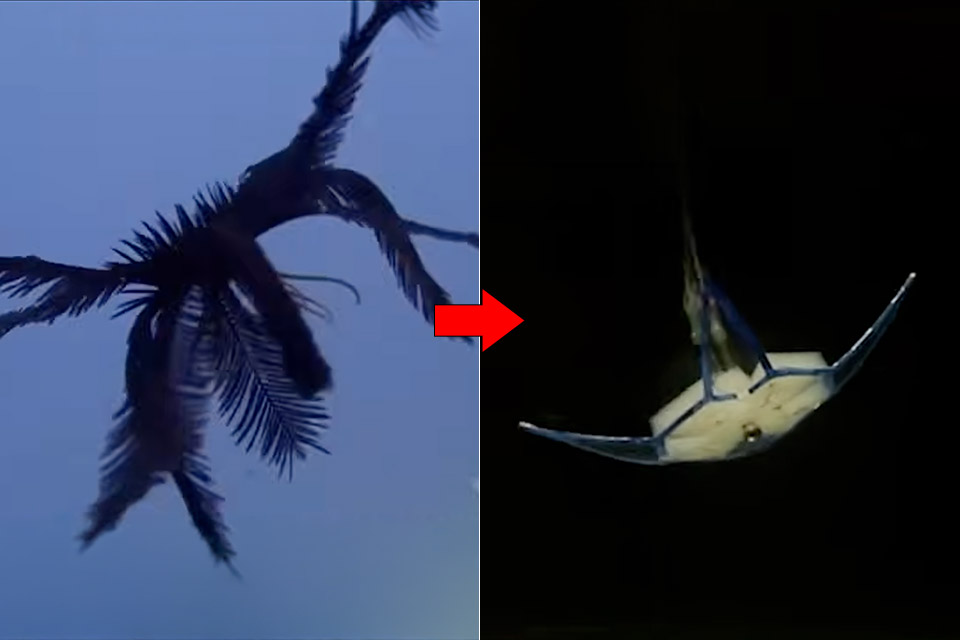
Marine invertebrates called feather stars drift and turn by coordinating clusters of flexible arms, rising, sinking, or hovering with almost no visible effort. Researchers at North Carolina State University copied that coordination in a soft underwater robot that manages the same range of motion with only two actuators.


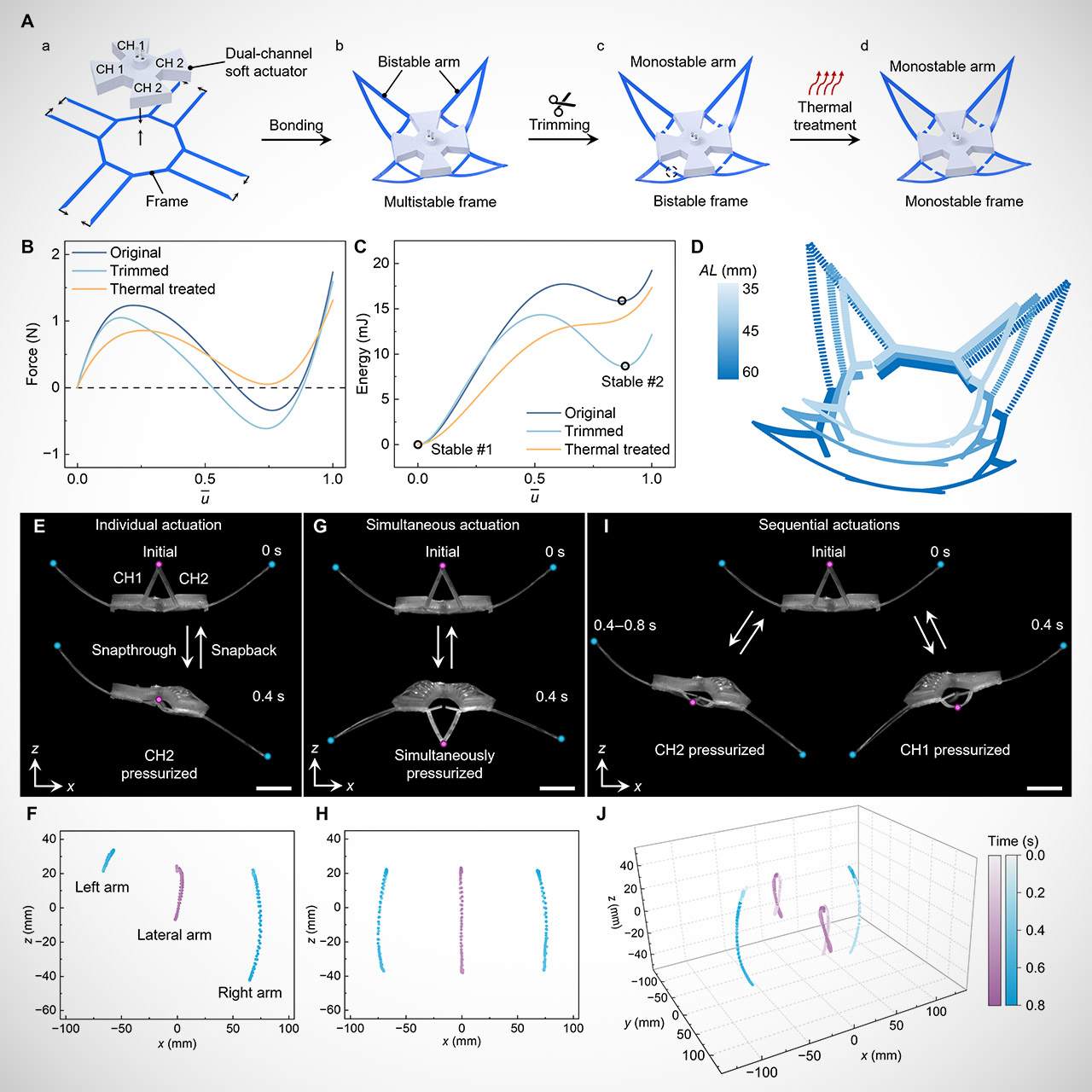
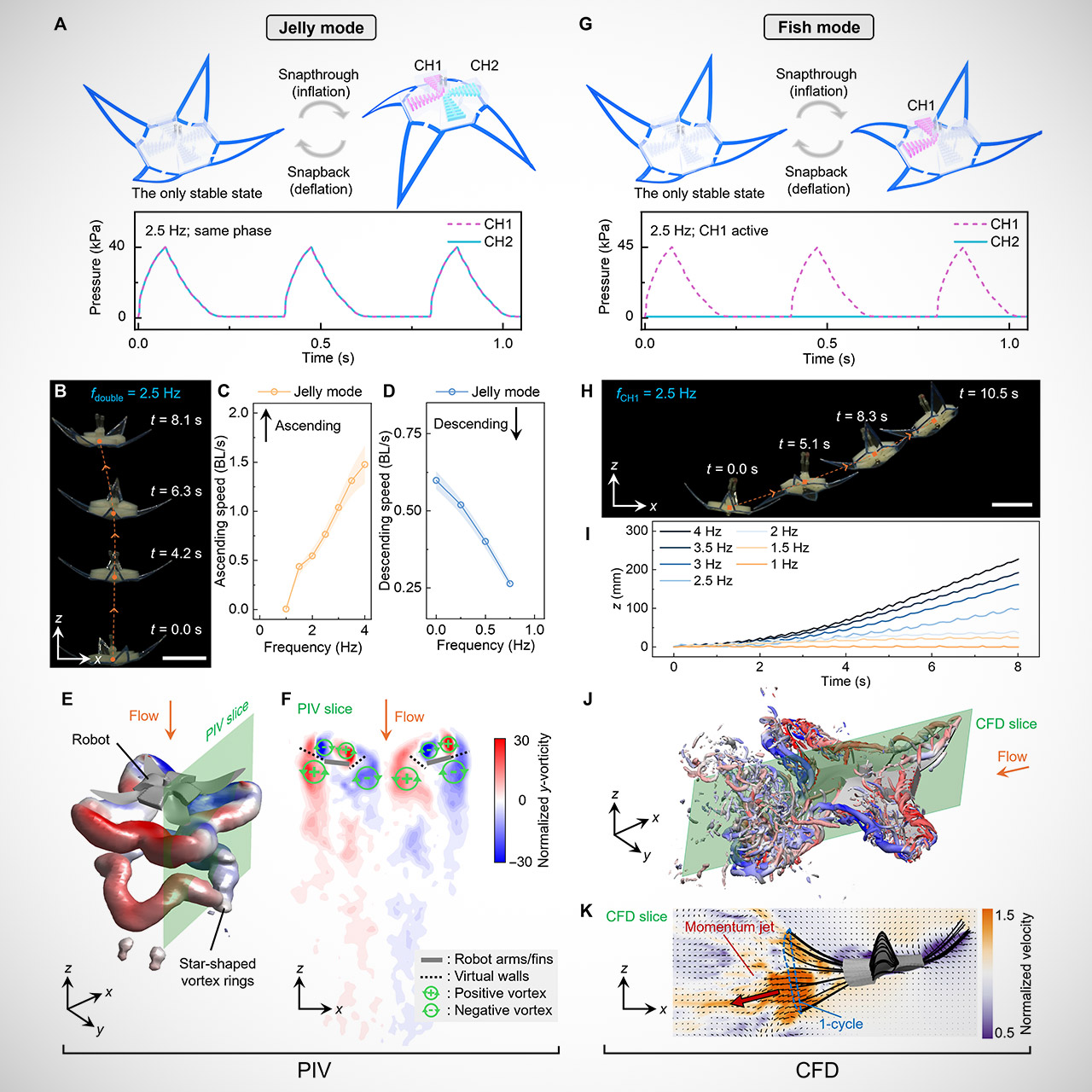
A core disk about 2.2 inches across has two separate air routes going through it. Four little arms made of thin plastic ribbon emerge from the center, curving into a bouncy triangle that snaps back into shape once bent. When both channels fill with air at the same time, all four arms snap down and drive the robot upward in around 26 milliseconds. Let the air go, and the arms will spring back on their own, allowing the machine to sink or stay steady depending on how quickly you repeat the pulses.


Bambu Lab A1 mini 3D Printer + LED Lamp Kit, Ready-to-Use for Beginners | Beginner-Friendly Ecosystem…
- A1 mini + LED Lamp Kit for Creative Light Projects: Bring your ideas to life with the included LED Lamp Kit. Simply print compatible lamp models and…
- The Perfect 3D Printer for Beginners: A1 mini 3D Printer is designed to make 3D printing easy from day one with automatic calibration, simple setup…
- Experience the Bambu Lab Ecosystem: Access MakerWorld’s huge library of ready-to-print models, manage prints through the Bambu Handy app, and enjoy…
Sending air into only one channel causes one arm to wobble like a tail fin, propelling the robot forward or back across the tank; however, alternating the two channels quickly enough causes the robot to spin around on its axis at up to 90 degrees per second. Being able to switch between these three modes, such as having all of the arms flap together for vertical travel, one arm wobbling for straight-line movement, and the two channels pulsing for turning, allows the robot to climb, change direction, and take off in an entirely different direction.
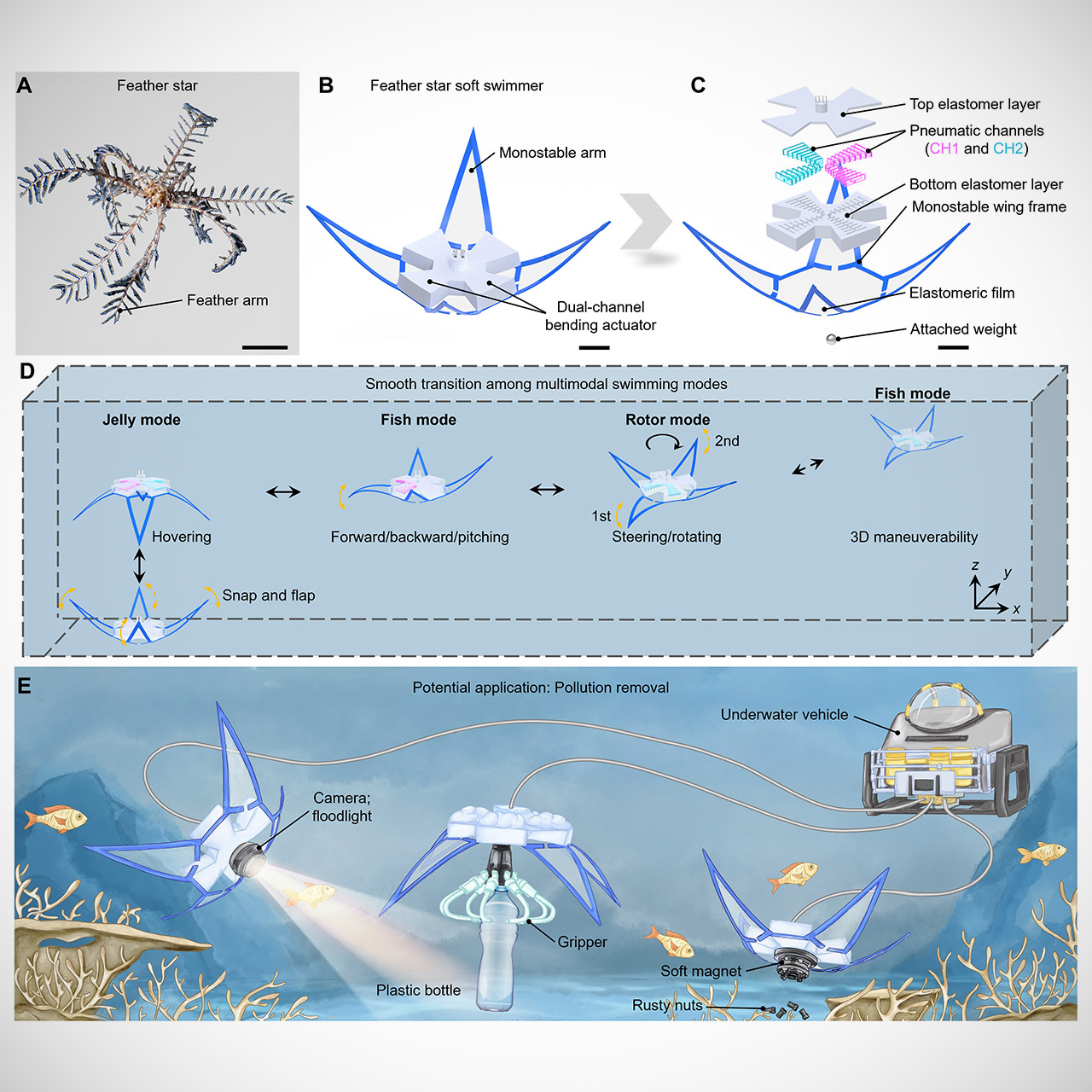
Machines attempting to achieve full 3D movement typically require at least a half-dozen additional actuators, but with this design, the body itself transforms two simple air inputs into numerous distinct swimming modes, a brilliant feat the team refers to as “mechanical intelligence.” It can move at 1.64 body lengths per second, which is significantly quicker than the 0.1 to 0.4 lengths per second achieved by other soft robots such as jellyfish. The entire item weights approximately half an ounce.

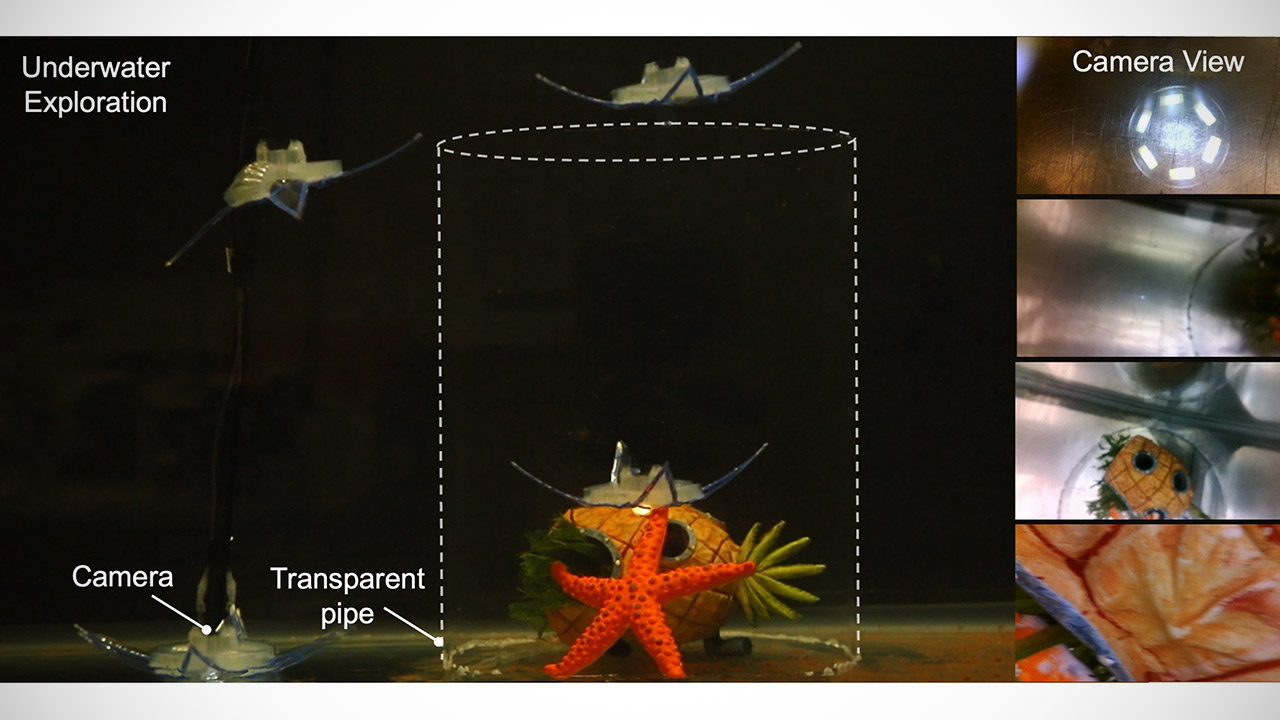
In lab tests, one robot carried a camera smaller than a pencil eraser into a clear tube, another used a magnet pad to pick up screws from the bottom of a tank, and pairs of robots lifted a crumpled bottle or a plastic bag using small hooks. An earlier robot from the same group, which resembled a manta ray, could swim quickly but was primarily limited to horizontal movement. However, this feather star design allows for vertical movement and 360-degree rotation without the use of additional motors.
The robot is still linked to its air supply, which generates some drag and can get stuck in tight spots. Currently, it only follows pre-programmed commands and lacks built-in sensors to adjust for currents or impediments, but the researchers are preparing a fully wireless version and hope to collaborate with experts who can identify methods to use this platform for specific underwater jobs.
Jie Yin, a professor of mechanical and aerospace engineering at NC State, and lead author Haitao Qing, who began this work as a doctorate student at the university, recently published an article presenting their findings in Science Advances. The National Science Foundation and the Office of Naval Research provided funding for this research. This method aims to simplify other soft machines that need to move through fluid by including useful motion into their design.
[Source]

You must be logged in to post a comment Login