Tech & AI
OpenAI’s New “Dots” Agent Blurs the Line Between Office Tool and Personal Assistant

OpenAI has thrown its hat into the increasingly crowded ring of AI companions, unveiling a new agent platform called Dots this week. But unlike the cuddly, consumer-friendly bots recently rolled out by rivals, OpenAI’s creation arrives dressed in a suit and tie — a digital coworker that happens to moonlight as a dinner-ordering assistant.
The timing is no accident. Meta recently introduced Muse, an anthropomorphic AI mascot designed to feel like a friendly personal shopper, and a competing product called Instinct has generated buzz in the same space. Both are free to use, at least for now, and both lean heavily into approachability — cute avatars, casual tone, an emphasis on making everyday errands feel effortless. OpenAI’s Dots, by contrast, feels like it was built for the office first and the living room second.
According to hands-on testing by The Verge, Dots share some surface-level similarities with Meta’s Muse: blobby, customizable avatars with names you can assign yourself, a chat window where you issue instructions, and a second pane where you can watch the agent click its way through tasks on a virtual machine in real time. But the resemblance mostly ends there. OpenAI frames Dots as something closer to a digital employee than a digital friend — a tool that can use other software, not just talk to you about your day.
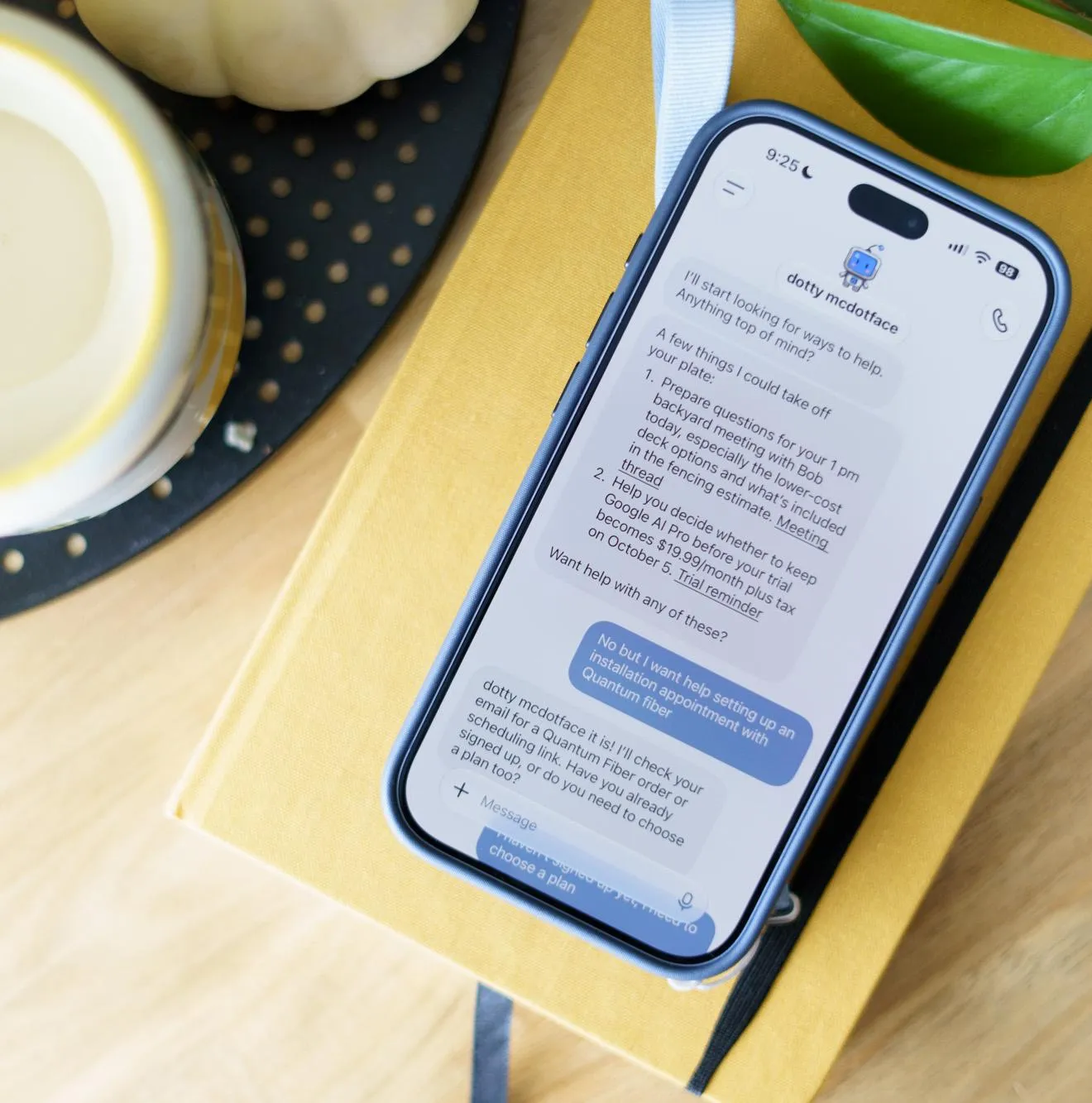

That enterprise framing shows up in the details. Each Dot comes preloaded with access to professional-grade applications like Blender and GIMP, the kind of software you’d expect a graphic designer or video editor to use, not someone trying to schedule a dentist appointment. Users can also grant their Dot access to their own desktop through OpenAI’s ChatGPT app, effectively letting the agent reach beyond its sandboxed virtual machine and into a person’s actual work environment. There’s even a voice option, letting users talk through tasks with their Dot the way they might brainstorm with a colleague.
Perhaps the clearest signal of who OpenAI is building this for, though, is the price tag — or rather, the paywall. While Meta’s Muse and the rival Instinct are available at no cost, Dots are currently limited to OpenAI’s highest-paying customers, including subscribers to its $100-a-month Pro tier. That’s a steep barrier for a product OpenAI simultaneously describes as being able to “do nearly anything,” from spreadsheet work to grocery runs.
Early testing suggests the “nearly anything” claim comes with real asterisks. In one trial, a Dot was tasked with scheduling an internet installation appointment — a mundane but genuinely useful errand. The agent impressed by digging through old emails to surface a $100 promotional discount that had been buried in a deleted folder, showing a level of initiative beyond simple command execution. But it ultimately stalled at a security checkpoint requiring a “sustained mouse hold,” a verification method its automated browser controls couldn’t replicate. The agent was left asking a human to step in and finish the job by hand.
That stumble is a useful reminder of where this current wave of AI agents actually stands. The pitch from OpenAI, Meta, and others is seductive: a tireless digital assistant that can navigate the web, fill out forms, make calls, and handle the small annoyances of daily life while you do something else. The reality, at least for now, is an impressive but inconsistent helper that can shine on complex, multi-step research tasks one minute and get tripped up by a basic CAPTCHA-style check the next.
Still, the broader trend is hard to miss. Three major players — OpenAI, Meta, and whoever is behind Instinct — are now racing to put a friendly face on autonomous software agents, each betting on a different vision of what that relationship should look like. Meta and Instinct are courting everyday consumers with free, approachable mascots designed to feel like helpful little guys you’d want in your pocket. OpenAI, true to its roots in high-end productivity tools, is betting that the first real adopters of agentic AI will be professionals and businesses willing to pay a premium for something that can genuinely lighten their workload — even if it occasionally needs a human to finish the last step.
Whether that bet pays off may depend on how quickly these agents can close the gap between “nearly anything” and actually anything. For now, OpenAI’s Dots look like a glimpse of where workplace AI is headed — useful, promising, and not quite finished.
You must be logged in to post a comment Login