Tech & AI
This Tech Can Help Fix Damaged Sewer Pipes Without Digging Up Your Yard


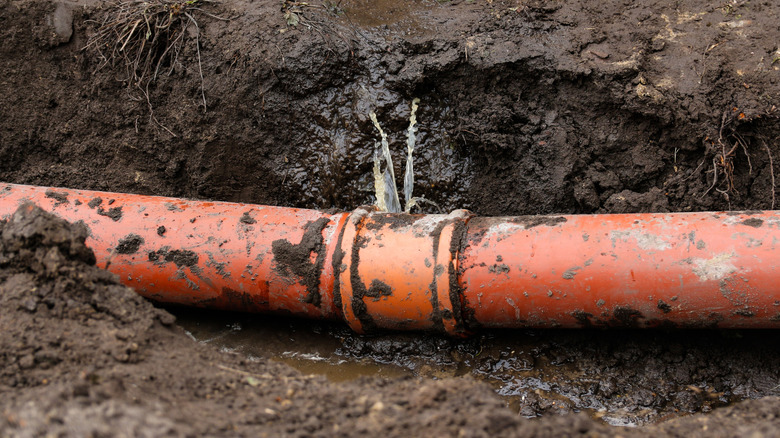
Every home has a sewer line that connects your home’s drainage to the city’s main system. Sometimes, though, that line may break. When it does, you’d spot some pretty unpleasant happenings in and around your house. Several of your drains may back up, while outside in the yard, random patches of grass would turn soggy and start to smell. That’s how you know it’s time to get the sewer line repaired.
Unfortunately, it isn’t the simplest job because the usual fix involves getting a crew to dig a trench along the pipe’s entire route, typically with a backhoe or excavator. It’s not only slow, but also pricey, considering the damaged lawn needs restoring afterwards. However, this can be a problem of the past, thanks to a technique called cured-in-place pipe, or CIPP. CIPP does away with the need for swapping out the whole pipe under a home and works on the existing line. This is done by passing a flexible felt tube soaked in a special liquid — resin – which hardens into a brand-new pipe in place inside the damaged one.
Getting this done first involves feeding a small inspection camera down the line to check things out. Water is then blasted through the pipeline in a technique called hydro-jetting to scrub out roots and buildup. Next, through a manhole or an existing opening in the pipe, that soaked tube is slid in, then inflated with air or water so it presses snugly against the old pipe’s walls. The resin is then hardened, effectively fixing the pipe.
What skipping the trench actually saves
The thing with resin is that it’s a syrupy liquid that turns into hard plastic once it cures, except in this case it doesn’t harden on its own. Instead, the crew actually needs to pump in hot water or steam, or by running a UV light through the tube. Again, the biggest sell with this method is that none of this needs a trench going through your yard. As a result, it’s not just your yard that stays largely untouched, but also your driveway, patio, or walkway sitting on top of the pipe.
The process is vastly quicker, too, so you can save up on paid hours. For a small cracked section of a home’s sewer line or a pipe burst by cold weather, the whole process just takes a day or two. By contrast, crews usually need two to three days to dig up and replace even part of that line. On top of that, lining a home’s line often costs less than replacing it.
It’s not just for individual houses, either, as cities can also employ the method for the larger sewer pipes running under the street that households drain into. The process is relatively quick, but while it happens you might want to go easy on showers and laundry or the water could back up.
However, there are still limits to where the technique can be used. It works best on pipes that are simply cracked, leaky, or rusted. If a pipe is properly caved in, though, the crews will likely still have to dig up. The technique is also not the most durable out there, at least compared to PVC pipes. Swapping those in ensures the line lasts over a 100 years. By comparison, a liner should last around 50 years, according to the Environmental Protection Agency, which isn’t bad, but it is only half the lifespan.
You must be logged in to post a comment Login