Tech & AI
What’s The Difference Between LG OLED And OLED Evo TVs?


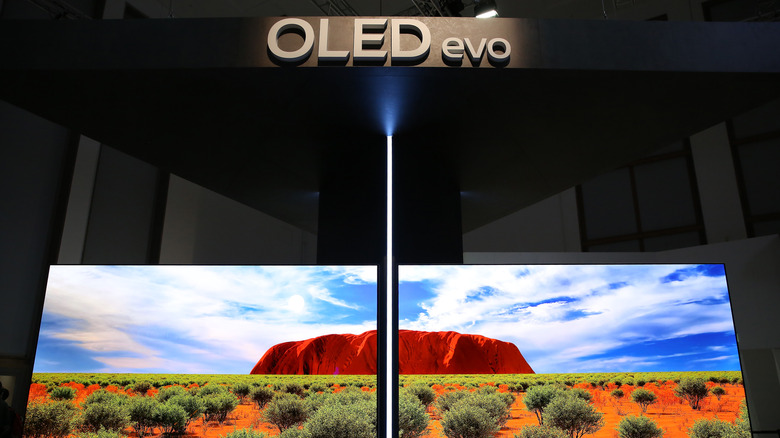
LG is one of the biggest names in televisions (and also makes a number of wild products you may not even know about). It makes such a wide range of TVs, in fact, that its lineup can become confusing to the uninitiated. Case in point: LG OLEDs versus the company’s LG OLED Evo line. Both share the primary advantages of OLED, including exceptionally deep blacks and what amounts to nearly infinite contrast, as well as its biggest drawbacks. OLED is also known for its wide viewing angles, and because individual pixels make their own light instead of relying on a backlight, there is very little bloom on bright objects that are set against dark backgrounds.
In LG’s parlance, Evo doesn’t refer to a fundamentally different display technology, but rather the name for OLED models with additional, model-dependent brightness and processing enhancements. Evo first appeared in 2021 with the G1 series. According to LG, its Evo panels use an extra green-emitting material to increase peak brightness, as well as a specific deuterium-based organic material made to withstand higher voltages. Modern versions also now include processing upgrades alongside model-dependent thermal and light-control features.
What OLED Evo adds
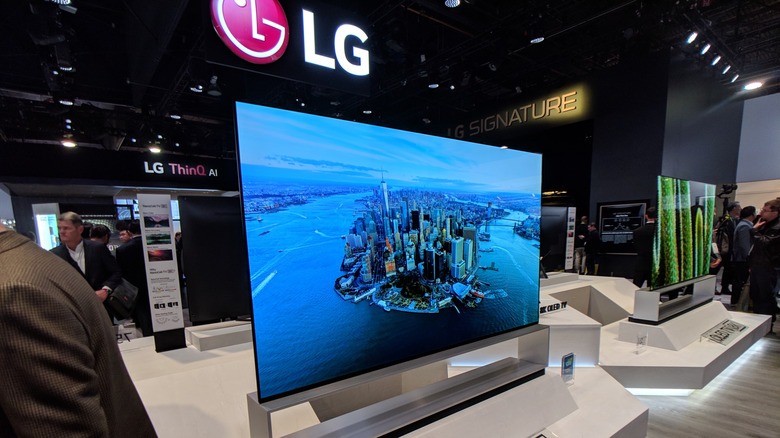
The main upgrade Evo buyers will notice is brightness, though you need to make sure you’re not ruining your viewing experience with the wrong settings. Extra brightness can not only add punch in well-lit rooms but can make HDR highlights, like the sun glinting off the crest of a wave or a billowing explosion, look more pronounced. Some of the newest Evo sets include what LG calls Hyper Radiant Color Tech, which leverages the company’s alpha 11 AI processor to enhance color, brightness, and clarity.
According to LG, some of the latest G6 models can reach levels up to 3.9 times brighter than conventional OLED. The panels also offer Perfect Black, meaning no loss of definition even when images of different brightness are side by side, and Perfect Color, verified by independent testers at UL Solutions.
For a dark home theater, a conventional LG OLED can already deliver most of what you want from OLED: great black levels, contrast, and light control down to the pixel level. The extra cost of entry for an Evo really only makes sense if your TV will have to battle ambient light, or if you really prioritize eye-popping HDR. Regardless, things like the exact model and feature set of a panel will also play a huge role, likely more significant than just the presence or absence of the Evo label.
You must be logged in to post a comment Login