Preschool teachers use generative artificial intelligence the least out of educators in grades pre-K-12, but they are starting to use it more despite lack of guidance, according to a new report.
According to research from nonprofit think tank RAND, 29 percent of preschool teachers use generative artificial intelligence in the classroom, though 20 percent of those teachers use it less than once a week. Comparatively, 69 percent of high school teachers use generative AI, with 64 percent of middle school teachers and 42 percent of elementary school teachers using the technology.
“To me it raises the question of how AI use is going to evolve in pre-K,” Jordy Berne, an associate economist at RAND and co-lead on this study, said during a press briefing. “Are we going to learn more about developmental impacts that will prevent it from becoming more common? Or will we find ways to use it really productively, and it’ll be a great boost to teachers and pre-K students?”
A significant factor is a worry that for the youngest students, technology, particularly personal devices like iPads, could detract from their developing communication and social skills.
Advertisement
“One of the key concerns is developmentally appropriateness,” Berne says. “Teachers expressed concerns about children having too much screen time, which can detract from human interaction they deem necessary for social skills.”
Plugged In
But pre-K teachers are plenty plugged in.
In addition to asking about AI, the RAND research, called “the spring 2025 American Public School Pre-K Teacher Survey,” also asked pre-K teachers about their use of instructional, curricular and administrative edtech products and services. The survey polled roughly 2,000 pre-K teachers working in public schools.
Almost all of those surveyed — 98 percent — use online video or audio with their students, with 92 percent using it daily or weekly. Many teachers reported using videos or music for their students to give breaks for the students in between lessons and dance time.
Advertisement
Interactive whiteboards were among the top edtech tools used with students, at 77 percent. The teachers reported using them because they are visually stimulating and tactile, while researchers estimate use is high because teachers are familiar with the tools, since they have been around for more than a decade. The researchers added in their report that the whiteboards are typically used in large-group settings, helping with socialization, versus games on devices that are individual-focused.
Electronic device-enabled games were also used among more than half (64 percent) of pre-K classrooms, while 37 percent reported using digital educational programs. While that had the lowest usage among teachers, the report said those using educational programs found them very helpful, particularly with students learning English as a second language and children with disabilities.
And for administrative edtech products, the majority of teachers surveyed — 82 percent — use platforms for family communication, with 75 percent using these tools daily or at least weekly. Most teachers (84 percent) agreed edtech could be particularly helpful in communicating with families.
Roughly the same amount (83 percent) used online and digital curriculum resources, though less than half (48 percent) used them daily or weekly. Over half also used assessment platforms and learning management systems (60 percent and 56 percent, respectively).
Advertisement
A majority say it could be helpful for bringing the “outside world” to their students, such as going on virtual field trips. There was also an optimism in sharing resources with other teachers through digital platforms, to stop them from “reinventing the wheel,” according to one teacher.
One of the largest concerns from the RAND researchers was the “critical gap” between familiarity with educational technology products and how to actually assess those products. While 7 out of 10 preschool teachers reported receiving professional training about using edtech, less than 4 in 10 received professional training on assessing the quality of edtech products.
“Especially as AI is evolving and the entire edtech landscape is evolving, it’s making it harder for teachers to know what is high and low quality,” Berne says. “So this is probably more important than ever.”
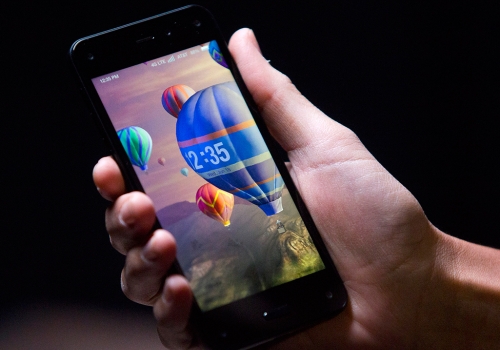
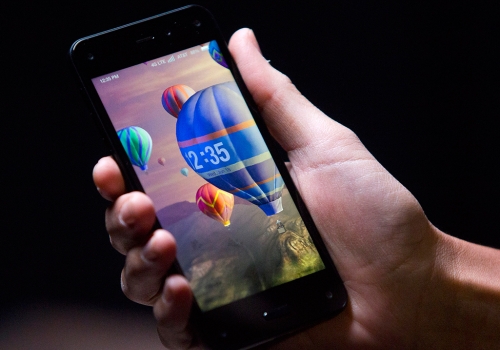
According to people familiar with the project who spoke to Reuters, Transformer is being built inside Amazon’s devices and services division as a “personalization device” that could tie together the company’s consumer services and its revamped Alexa assistant. Read Entire Article Source link
A new NYT Strands puzzle appears at midnight each day for your time zone – which means that some people are always playing ‘today’s game’ while others are playing ‘yesterday’s’. If you’re looking for Sunday’s puzzle instead then click here: NYT Strands hints and answers for Sunday, March 22 (game #749).
Strands is the NYT’s latest word game after the likes of Wordle, Spelling Bee and Connections – and it’s great fun. It can be difficult, though, so read on for my Strands hints.
Want more word-based fun? Then check out my NYT Connections today and Quordle today pages for hints and answers for those games, and Marc’s Wordle today page for the original viral word game.
Advertisement
SPOILER WARNING: Information about NYT Strands today is below, so don’t read on if you don’t want to know the answers.
Article continues below
NYT Strands today (game #750) – hint #1 – today’s theme
What is the theme of today’s NYT Strands?
• Today’s NYT Strands theme is… In pieces
NYT Strands today (game #750) – hint #2 – clue words
Play any of these words to unlock the in-game hints system.
Advertisement
WRECK
DICE
CRUSH
WHAT
DISHES
SUCK
NYT Strands today (game #750) – hint #3 – spangram letters
How many letters are in today’s spangram?
• Spangram has 9 letters
NYT Strands today (game #750) – hint #4 – spangram position
What are two sides of the board that today’s spangram touches?
First side: top, 4th column
Last side: bottom, 3rd column
Advertisement
Right, the answers are below, so DO NOT SCROLL ANY FURTHER IF YOU DON’T WANT TO SEE THEM.
Advertisement
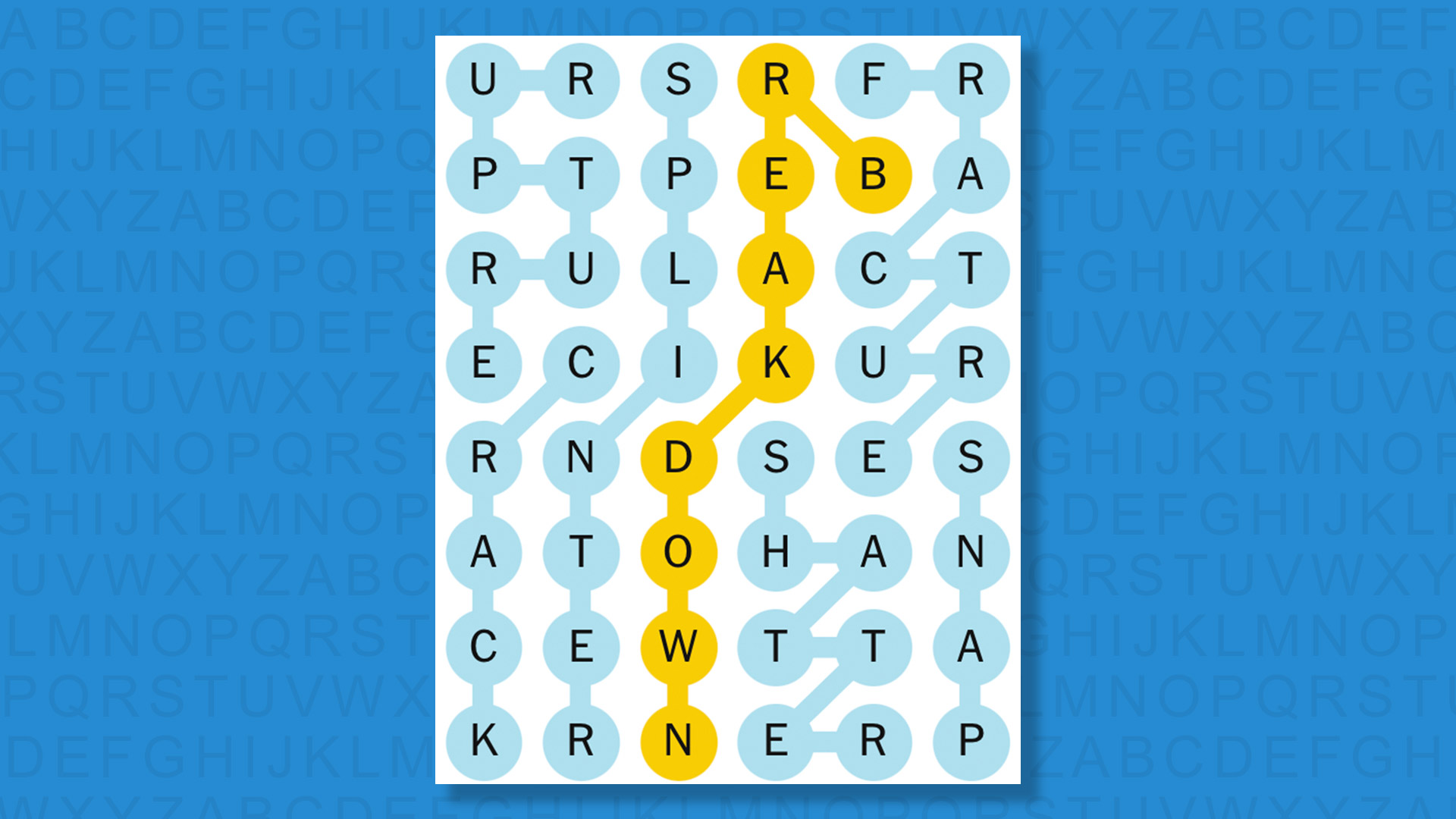
NYT Strands today (game #750) – the answers
(Image credit: New York Times)
The answers to today’s Strands, game #750, are…
SNAP
CRACK
SPLINTER
RUPTURE
FRACTURE
SPANGRAM: BREAKDOWN
My rating: Easy
My score: Perfect
A straightforward game to begin the week, with SNAP firing off a rapid search for me.
Sign up for breaking news, reviews, opinion, top tech deals, and more.
As I was connecting SPLINTER I felt sure it would be the spangram, as it’s unusual for words to span from top to bottom, but instead it was BREAKDOWN.
The other unusual thing about today’s search was how many non-game words qualified for the theme — I found three, but I’m sure there are more in there.
Advertisement
Yesterday’s NYT Strands answers (Sunday, March 22, game #749)
ZIPPER
THERMOS
ESCALATOR
ASPIRIN
DUMPSTER
SPANGRAM: GENERICTERM
What is NYT Strands?
Strands is the NYT’s not-so-new-any-more word game, following Wordle and Connections. It’s now a fully fledged member of the NYT’s games stable that has been running for a year and which can be played on the NYT Games site on desktop or mobile.
I’ve got a full guide to how to play NYT Strands, complete with tips for solving it, so check that out if you’re struggling to beat it each day.
It doesn’t sound like Crimson Desert, the recently released prequel to Black Desert Online, will support Intel Arc GPUs anytime soon, if at all. On the game’s FAQ page, its developer Pearl Abyss advised players expecting Arc support to apply for a refund. “If you purchased the game expecting Intel Arc support, please refer to the refund policy of the platform where the game was purchased for available options,” the company wrote. Apparently, though, it’s not from lack of guidance from Intel. The chipmaker told Wccftech that it reached out to Pearl Abyss “many times” over the past several years.
The Intel spokesperson said that the company has tried to help the developer “test, validate, and optimize support for Intel graphics” for years. Intel also tried to provide the developer “early hardware, drivers, and engineering resources” across several generations of GPUs, “including Alchemist, Battlemage, Meteor Lake, and Lunar Lake.” The chipmaker said it’s “hugely disappointed that players using Intel graphics hardware” can’t play the game, but that it remains “ready to assist Pearl Abyss” however it can. It also advised players to reach out directly to the developer for “details on the choice not to enable Intel support at launch.”
Pearl Abyss, of course, doesn’t have the obligation to tweak the game so that it runs on PCs with Intel Arc GPUs. The good news is that since the title came out just a few days ago, it will still be easy to get a refund. Steam, where Crimson Desert is now one of the top-selling games, issues refunds within two weeks of purchase.
The most unique thing about human beings is this: We are creatures who long to matter.
That’s according to Rebecca Newberger Goldstein, the philosopher and author of a new book called The Mattering Instinct. If you’ve ever wondered why we humans are so singularly obsessed with discovering the meaning of life, this book — and her ideas — are for you.
Goldstein presents an evolutionary explanation that starts off with a law of physics: the law of entropy, which basically says that things naturally tend toward disorder and destruction over time. All biological creatures need to devote a huge amount of energy and attention to resisting entropy — to surviving. But humans also have a special ability to self-reflect, and we can’t help but notice that we ultimately devote the vast majority of our attention to ourselves. To our own thriving, not the thriving of others. And so we feel the need to somehow justify that.
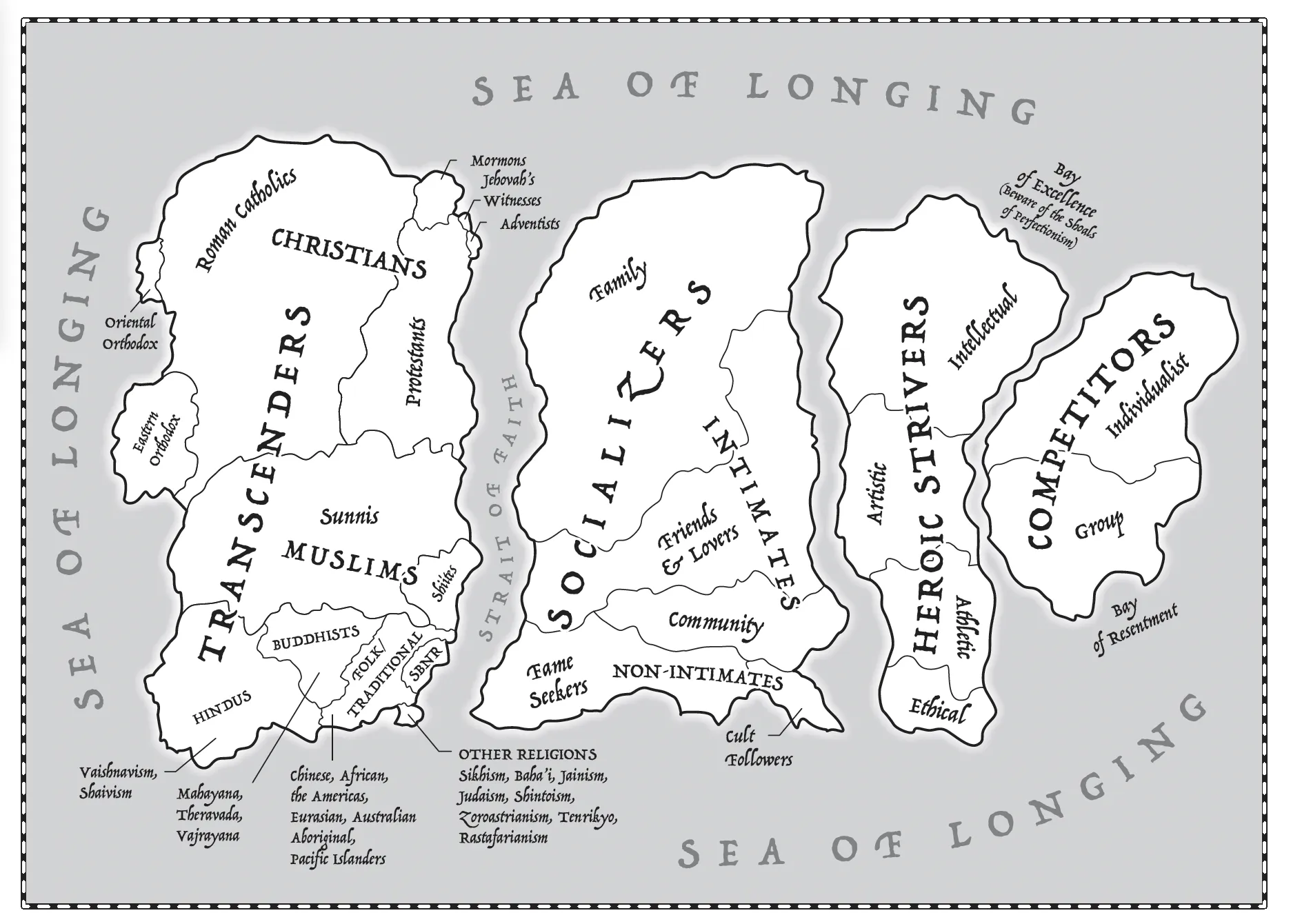
This, Goldstein says, is why we developed the “mattering instinct” — the drive that pushes us to find a “mattering project” that makes our lives feel purposeful and worthy. Goldstein sketches out four main ways people try to do that.
Advertisement
Some are transcenders, who seek to matter to a transcendent presence like God. Others are socializers, who find purpose in helping and mattering to other people. Then there are heroic strivers, who push themselves to achieve excellence in the domain that matters to them, whether it’s intellectual, artistic, athletic, or moral. And finally, there are competitors, who focus on mattering more than others.
In the newest installment of my Your Mileage May Vary advice column, I suggested that Goldstein’s “mattering map” (see below) can be a useful tool for anyone who’s worried that AI may soon replace them in an arena where they find meaning, like their career. Locating ourselves on the map can help us each think afresh about which of the four categories makes us feel a sense of purpose, so we can consider additional types of work that could form a satisfying mattering project for us in the future.
I was curious about how Goldstein is thinking about automation-induced joblessness, what she’d do if her own work gets automated, and whether she thinks we’re in danger of losing our human dignity. So I asked her for a follow-up chat. Here’s a smattering of our nattering about mattering.
Courtesy of Rebecca Newberger Goldstein
You argue that our drive to matter is one of the cornerstones of human life. What convinced you of that? How have you felt that drive show up in your own life?
Advertisement
I really feel justified in my righteous anger when people treat me as if I don’t matter!
I have a very favorite story about that. I mean, just being a woman, there are a lot of stories. But I was once at a party in Princeton with a bunch of physicists, and one very, very prominent physicist wanted to talk to another prominent physicist, and I was in the middle. So he just picked me up — I’m very slight — he picked me up and moved me like I was a potted palm!
And I had this real sense of…but I’m a person! I matter! That feels justified. And if I can justify that about myself, I have to universalize it to everybody. There’s no way it’s going to work for me and not work for everybody else.
Wow, that’s pretty appalling!
Advertisement
So from that, you offer this evolutionary account of how everybody ended up with a mattering instinct. I always find it hard to evaluate evolutionary stories because there’s an element of speculation in them. Your account about how we evolved the mattering instinct seems plausible, but I could also imagine another account being true. For example, maybe the drive for mattering is a way of making sure that others will think we matter, because we want society to think well of us and take care of us. What convinces you that your account is more likely than others?
To me, it explains more of the variety of ways that people try to go about this. If the more social story were true, we would all be socializers. But I mean, the fact that there is a very strong religious aspect — I spent a good part of my life as a transcender — means that to me, phenomenologically, it doesn’t ring true. And it doesn’t ring true to the diversity [of how different people find mattering].
But it might be that I’ve just spent too much time with mathematicians who don’t give a damn about social acceptance!
“What I’m thinking in my most optimistic moments is that the deepest questions, they’re still going to belong to us.”
Advertisement
Yes, we can see that from their fashion! But seriously, I have to say that I really love the mattering map in your book. I feel like I’m mostly one of the artistic-intellectual strivers, but I’m also a bit of a socializer in that I derive meaning from helping others with my work. Do you think most people live on only one island?
No, I don’t think so. I know that I don’t.
And I think all of us have a strong need for connectedness — it’s the other part of flourishing. We need people in our lives, and we often want to make a difference in people’s lives.
Maybe we have our main residence, and then we have our vacation home. You can definitely make a bridge [between the islands].
Advertisement
Why is the island of transcenders exclusively populated with different religions and spiritual traditions? I can imagine other sorts of people — like artists or psychedelic users — who feel there’s a transcendent dimension to the universe, and who derive their sense of mattering by tapping into that.
I think in some sense, all heroic strivers have some notion of the transcendent. They often talk in terms of these ideals. I mean, every artist I know talks about beauty. For knowledge workers, it’s knowledge.
But I really wanted to single out the ones who actually feel that there is some sort of personal presence in the universe that has intentions — that there’s an intentionality that permeates the universe. It’s just so very different.
I had a very religious childhood — I was brought up Orthodox [Jewish] — and it was like, God knows if I cheated and took a bite of a Hostess cupcake! And there was this sense of mattering, that I was created for a purpose. I really felt like I had a role to play in the narrative of eternity. God has his plan, and I’m part of it. And I know that when I went from believing that to not believing that, the universe changed in such a big way for me. It just felt a little meaningless, to tell you the truth. That [form of mattering through transcendence] seemed worthy of its own continent on the map.
Advertisement
You suggest that humans are the only animal that has a mattering instinct — we are “creatures of matter who long to matter.” You also call us “dust with dignity.” How does the mattering instinct connect with the idea of human dignity?
We are wired to take ourselves very seriously — the bulk of our attention is going to somehow be self-referential — and then we ask ourselves for justification. We feel we have to come up with some project, some story, and we devote so much energy to this justificatory project. I find that there’s a certain dignity in that. There’s something estimable, there’s something noble about a species that needs to prove to itself that it really matters.
That leads me to a very timely question: What happens to human dignity if AI replaces us in an important area, like our jobs, which is how many of us carry out our mattering projects? Are we in danger of losing our dignity, or is that some inalienable quality that we’ll just end up expressing in other ways?
The latter. I really think that when one is not able to minister to this, to appease this [mattering instinct], you end up with death within life, which is what extreme chronic depression is. So we will come up with something.
Advertisement
Here’s me at my most optimistic: I think about philosophy, because I’ve been speaking to a lot of philosophers who were worried about it. There’s a lot of shit work that’s done in philosophy, and yes, let AIs do it. Let them explain the 53 ways of interpreting Kant’s deontological argument. They’ll be able to do it and come up with all the utilitarian counterarguments and all of that.
But there’s still so many problems that I think come out of being human and knowing what it’s like to be motivated by the mattering instinct and how hard it is to live an ethical life, given how much attention we are wired to pay to ourselves. AI can’t do that for us. So what I’m thinking in my most optimistic moments is that the deepest questions, they’re still going to belong to us.
I think plenty of people could listen to this conversation and say, “I don’t get my meaning from my job. What is this obsession with your career? Maybe it’s great if AI takes your job because you’ll finally learn how to find mattering in ministering to others or something!” Should we perhaps start thinking more expansively about where we find our sense of mattering?
Yeah, I think it’s not a bad idea to be thinking about that. But I also think you can’t force mattering strategies on people. It comes from something very deep — temperament, interest, passions, all of this. I’ve always resented it very much when people say, well, this here is the meaning of life.
Advertisement
So I really want to be a pluralist about this. I do think that there always are going to be heroic strivers. There are people who have to meet or at least approach certain standards of excellence, including ethical and athletic and artistic.
With the artistic — just as when you have a forgery of a great painting and it’s indistinguishable from the original, it’s just not as valuable because it doesn’t come out of a human experience that came out of somebody’s individuality and what they’re struggling with — maybe that extra thing is always important in our aesthetic pleasure. If an AI writes something and it’s comparable to Shakespeare, I don’t believe that our aesthetic pleasure is going to be the same. It’s about knowing: Oh, this is a window into somebody else’s subjectivity!
Have a question you want me to answer in the next Your Mileage May Vary column?
In my recent advice column, I suggested that even if AI takes your job, you can hang onto a sense of mattering by looking at the mattering map, identifying the broader island of mattering that tends to make you feel satisfied, and seeing what other jobs might be an expression of that. If you yourself weren’t able to work as a philosopher and novelist anymore, what would you do instead to make ends meet while still fulfilling your drive for mattering?
Advertisement
There are two careers that I’ve often thought, Gee, I should have given them more thought. One is to work with children. I just love kids and I think they’re really fascinating. I have a daughter who’s a clinical psychologist, and she deals with a lot of kids, and I think it’s really interesting work. And it is that socializer [drive], which is very strong in me as well.
The other thing is to go to Africa and just live with animals, observing [them]. I love elephants, I love chimpanzees. And I could see doing that too — a more scientific career.
This is reminding me that ever since I was a kid, thinking of humanity makes me think of an injured animal — I always pictured a three-legged dog. It’s struggling, it’s limping along. And I feel like our search for meaning is that limp. It’s a burden on us, in a way, right?
Yeah, it’s hard to be a living thing. It’s that much harder to be a human and to want to get it right. You can think of that as our limp. But you can also think of it as our crown.
Advertisement
For me it’s precisely because humanity is saddled with this sort of struggle that I’m rooting for it extra, that I feel a special affinity for it.
That’s almost a protectiveness. And that’s a beautiful emotion. I mean, that is something to cultivate: Wherever there is humanity, there is a struggle, and that matters.
Samsung’s decision to quietly pull the plug on its most futuristic foldable might sound like a step backwards, but I don’t think it is.
The Galaxy Z TriFold has always been less a mainstream gadget and more a very expensive proof of concept – a flashy way for Samsung to show off what its foldable tech can do. That’s why the news that Samsung is reportedly winding down production, just months after launch, shouldn’t be seen purely as a loss.
Yes, it’s frustrating for fans who’ve no doubt been refreshing product pages only to watch restocks vanish within minutes, but with skyrocketing component prices, supply chain chaos and a mobile division under pressure to justify every penny it spends, the TriFold was always going to be first on the chopping block.
In reality, shelving the TriFold now could be exactly what Samsung needs: a chance to refocus on devices that more people can actually buy, that developers will actually support, and that move foldables forward in ways that matter – like the rumoured ‘Wide Fold’ and the next-gen Z Fold.
Advertisement
Losing the snazzy TriFold might sting right now, but it could make Samsung’s foldable future all the stronger for it.
Advertisement
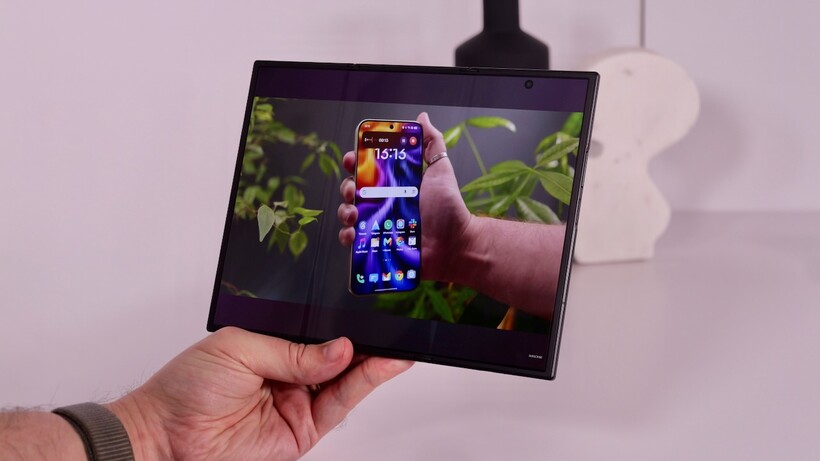
Samsung is reportedly winding down production of the Galaxy Z TriFold
A new report from South Korean publication Donga claimed this week that Samsung is preparing to wind down sales of the Galaxy Z TriFold, just months after its initial launch – a surprising move considering how quickly it sells out whenever stock does drop.
Per the report, Samsung is expected to release a final batch of TriFolds in its home region of South Korea this week, after which, sales could come to an end. Now it’s worth noting that the report is explicitly about sales in South Korea, with no word on whether the same pattern will play out in regions like the US – but it seems increasingly likely.
Advertisement
Image Credit (Trusted Reviews)
After all, Samsung has always been transparent about the TriFold and how it wasn’t a mass-market product, rather a showcase of what the company’s foldable tech is truly capable of.
That explains not only the incredibly high $2,899 price tag in the States, but also comments from those who have used it on build quality not quite matching that of the comparatively cheaper, mass-produced Samsung Galaxy Z Fold 7.
While that news will be disappointing for those still waiting to get their hands on the tri-folding 10-inch smartphone, the decision to stop sales isn’t all that surprising if you’ve been keeping an eye on Samsung more broadly recently.
Advertisement
Not a surprise given soaring costs
A separate report that also surfaced this week, this time from the South Korean outlet FNNews, claims that despite a record number of Galaxy S26 range pre-orders, the Device eXperience (DX) division is essentially in crisis mode. That includes not only Samsung’s smartphones, but also wearables, smart TVs and home appliances.
Advertisement
Of course, just like every other tech issue surfacing in 2026, it all seems to be down to the rapidly rising costs of components. The all-important RAM needed to power most tech has surged in the past nine months or so, with some estimates putting the rise as high as 850%, as AI data centres hoover up as much RAM as possible.
Image Credit (Trusted Reviews)
There’s also the ongoing conflict in the Middle East, which has reportedly increased logistics costs.
A Samsung spokesperson who spoke to FNNews explained that “with raw material costs under extreme pressure from rising semiconductor prices, and logistics costs increasing on top of that, we ultimately had no choice but to put the MX division under emergency management.”
With the DX division under such tight constraints, it makes sense for Samsung to stop production of the TriFold – it’s expensive and, no doubt, more difficult to manufacture than the flip- and book-style foldables the company has cranked out over the past few years – and double down on smartphones that it knows will sell well.
Advertisement
Advertisement
Samsung can now focus on more consumer-ready foldable tech – like the ‘Wide Fold’
It might sound like it’s all doom and gloom over at Samsung, but honestly, it’s probably for the best. Tighter purse strings should force Samsung to double down on its core products – both foldable and non-foldable – rather than putting increasingly limited resources into niche, hyper-expensive products like the TriFold that aren’t ready for prime time just yet.
Image Credit (Trusted Reviews)
That’s more important than usual right now, with Samsung rumoured to be working on not one but two book-style foldables for mass consumer release later this year.
The most recent reports claim that, in addition to a successor to the Galaxy Z Fold 7 that’s expected to offer a similarly slimline design and a boxy inner aspect ratio, the company is working on a second foldable, unofficially dubbed the ‘Z Wide Fold’.
The key difference, as the unofficial moniker suggests, is the shape of the foldable. While Samsung’s regular Z Fold offers a thin and narrow aspect ratio, even with big improvements on this front with the Fold 7, and an almost perfectly 1:1 inner display, the ‘Wide’ Fold is said to be more passport-shaped.
Advertisement
Advertisement
Image Credit (Trusted Reviews)
That’s not a new idea – it was used by the original Oppo Find N, as well as Google’s first-gen Pixel Fold – but it has fallen out of trend in recent times.
Samsung looks to revive it, and the foldable experience will be all the better for it; I’ve long been a fan of the passport-shaped foldable, not only because of the shorter, wider outer panel, but also because the inner screen more closely resembles a regular 4:3 tablet-sized screen.
That should hopefully put an end to apps that, even after all this time, still can’t quite handle the boxy aspect ratio of foldables. With an aspect ratio closer to a tablet or even a smartphone in horizontal orientation, it becomes almost trivial to support, with no major rejigging of the UI required.
If there were a choice between Samsung putting effort into its extremely expensive, not-quite-polished TriFold or the Wide Fold, especially under the new budget constraints, I know which I’d go for.
After updating its more powerful counterparts, Apple is still expected to update the base iPad with an A18 chip sometime in the first half of 2026.
The entry-level iPad may finally get Apple Intelligence support soon.
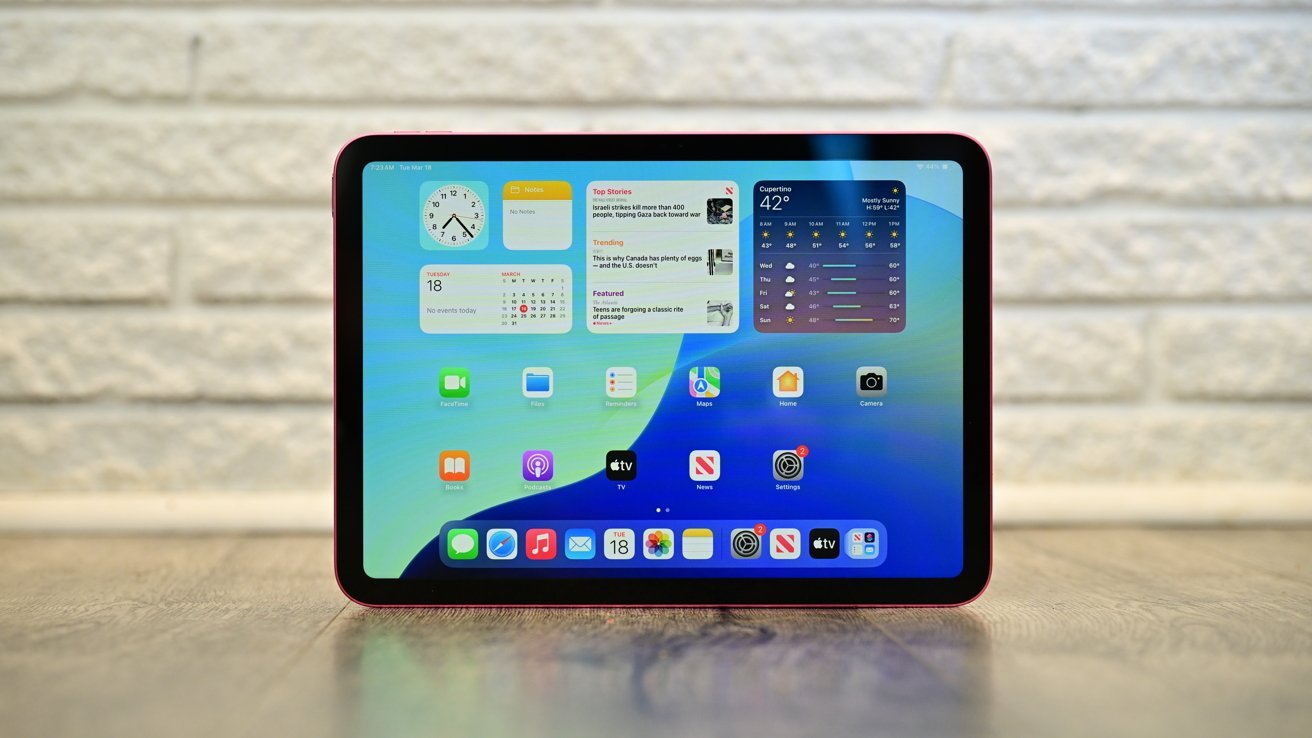
Apple’s release schedule has been busy for the earliest months of the year. However, after having already moved iPad Pro to M5 and doing a similar M4 update to the iPad Air in March, Apple can now turn its attention to the lower end of the range. According to Mark Gurman in Sunday’s “Power On” newsletter for Bloomberg, Apple is on track to refresh the entry-level iPad in the first half of 2026. Gurman doesn’t say when exactly, but that it was originally to be released at around the same time as iOS 26.4. Continue Reading on AppleInsider | Discuss on our Forums
The technology is being piloted in 40 secondary schools and is expected to impact 20,000 students from September.
Psychotherapist, broadcaster and former professional footballer Richie Sadlier has launched Let’s Talk SPHE (social personal and health education), which is reportedly Ireland’s first digital solution aligned with the updated SPHE curriculum.
By 2027, SPHE will be a mandatory subject for fifth and sixth year students. Figures from the Department of Education suggest that only 18pc of Ireland’s more than 700 secondary schools previously timetabled SPHE in fifth year.
Designed to support schools using the reformed course, Let’s Talk SPHE is being piloted in more than 40 schools and is expected to reach roughly 20,000 students from September. Established by Sadlier, as well as guidance counsellor and SPHE teacher Pam O’Leary, the subscription-based teaching solution provides structured SPHE lessons, multimedia learning and teacher guidance.
Advertisement
Commenting on the launch, Sadlier said: “When you introduce a requirement for 60 hours of structured delivery in every secondary school, that’s a significant shift for the system. It’s not a short-term initiative. By 2027, every post-primary school will be delivering a senior cycle SPHE. The question now is how prepared schools are to deliver it.
“For a long time, most education technology focused on examinable academic subjects. What this reform does is recognise that wellbeing and relationships education are just as important. That creates a responsibility to ensure schools have the right supports in place.”
The launch comes at a time when the media, via shows such as Adolescence and Louis Theroux’s Inside the Manosphere, have put an increased focus on the importance of having complex conversations with young people.
Sadlier has spent more than 10 years working with young people in workshops covering issues such as relationships, masculinity, consent and mental health. He also previously led an RTÉ documentary exploring Ireland’s sex education landscape.
Advertisement
In late February, Educate.ie, an Irish-owned publishing company, announced the creation of a new digital learning platform for the classroom called EdPal. The aim is to reduce the administrative burden for teachers, improve clarity for parents and give students a more consistent learning experience.
Developed specifically for post-primary and secondary school students, users will have access to interactive e-books, educational resources and tools to support lesson delivery, engagement and assessment.
Don’t miss out on the knowledge you need to succeed. Sign up for the Daily Brief, Silicon Republic’s digest of need-to-know sci-tech news.
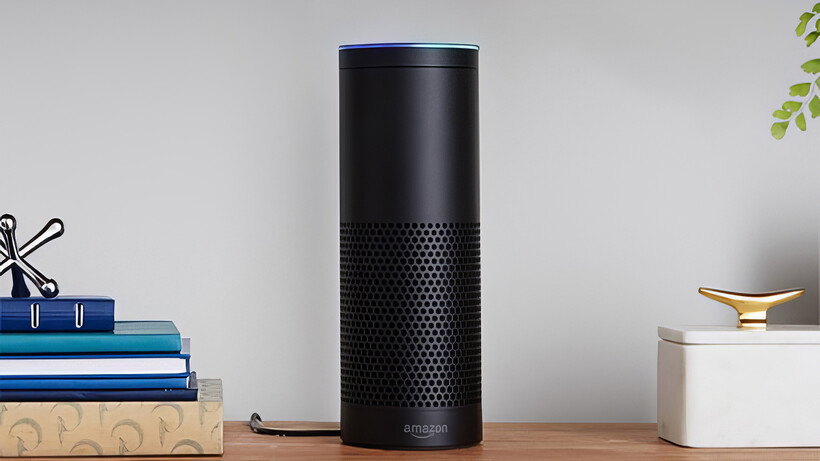
When Amazon first announced the Echo smart speaker and Alexa, it felt as though the future that Star Trek had promised us was finally upon us. Here was a computer we could interact with naturally, faster and more convenient than apps or traditional interfaces.
Unsurprisingly, Amazon sold a bucket load of Echo devices, and soon expanded the range with devices to fit in everywhere. Only, it turned out that perhaps the future wasn’t really here.
Image Credit (Trusted Reviews)
Alexa speak
As noted in my column from a few weeks ago, I largely use physical controls over voice commands alongside automated routines: it’s faster to turn a light on with a button, or to have my alarm turn off and blinds open when the office door unlocks, than it is to use a voice command for either job.
A lot of that was down to how Alexa (and other voice assistants) expected commands to be phrased. While Alexa is still the best of the bunch, its required terminology gave birth to the phrase, “Alexa speak”.
It’s that slightly unnatural way that you must phrase a command, such as, “Alexa, set the living room radiator temperature to 20°C.” That phrase doesn’t seem so bad, but it’s fraught with potential problems.
Advertisement
Advertisement
Get the order slightly wrong, and Alexa might not work; name the device you want to control incorrectly, and the command doesn’t work; or just pause while you try and think of the right words to use, and the command doesn’t work.
Outside of voice control, Alexa is good for basic requests or for answering simple questions, but it often can’t understand more complicated requests, can’t take actions on your behalf, and you still must phrase things as though you’re talking to a computer.
Natural conversations and context
Alexa+ promises to change that and, from what I’ve seen of it, delivers the end of Alexa speak, switching to natural language, so you can ask a question or issue a command as though you were talking to a real person. And Alexa+ remembers context and allows itself to be corrected.
Advertisement
At the Alexa+ UK launch event, I saw a demo where Alexa+ gave the latest Arsenal result; it knew the presenter was a fan, so it recounted the score with a positive tone.
Next, the presenter asked Alexa+ to tell someone else the Chelsea score. Alexa began retelling the loss with excitement, since the presenter hadn’t mentioned that the other person was a Chelsea fan.
A quick interruption to say that the other person was a Chelsea fan had Alexa+ start again, but with a neutral voice. There was no need to rephrase the entire question with something like, “Alexa, my friend is a Chelsea fan, tell him the latest score” or something similar.
Advertisement
Advertisement
Alexa+ understood that the change applied to the current request and adjusted its response accordingly. In addition, Alexa+ would then remember who’s a Chelsea fan for future requests.
Alexa+ is also agentic, which means it can take actions on your behalf. In the demo, Alexa+ could book a table at a restaurant using OpenTable, based on a few simple bits of information, all spoken naturally, and where the order of information was unimportant (the name of the restaurant, how many people the table was for, the date and when there was at least two hours free in the diary).
That kind of interaction seems better, easier and faster than having to search for the restaurant and do the job manually.
Not perfect, but certainly better
As part of Alexa+ launching in the UK, Amazon has fine-tuned the system to understand a wide range of British accents and to understand the way we speak. This information is also used in how Alexa+ responds. Is it perfect? No.
Advertisement
Particularly with responses about football, Alexa+ seemed to like using the word ‘mate’ a lot, which feels a bit false and over-friendly. I’m not sure I want Alexa+ to be my friend; I just want it to do what I want, when I want, with clear replies. I’ll have to see, once I have access to Alexa+ soon, if I can tone down its replies.
Then, there was a demonstration where Alexa+ was asked when the next match was for a football club. The result was right, but when asked to add the game to the diary, Alexa+ added it in for one hour from the start time.
Advertisement
Surely, if Alexa+ is so smart and understands context, it should know that a football match is 90 minutes, plus 15-minutes of halftime, plus extra time. That’s a minimum of one hour and 45 minutes, but two hours would be a safer bet.
Advertisement
I was told that because there was lots of background noise, Alexa+ might be struggling to work out what was said. It did get the match details right, and it did understand to add a calendar appointment, so we’ll have to see if Alexa+ can be smarter than this in real life.
Likewise, context can be hard to understand. When asked, on a Fire TV device, who won the Best Actress Oscar, Alexa+ correctly replied that it was Jessie Buckley for Hamnet. Next, what asked, “Can we watch it?”, I thought that would mean that Alexa+ would find a clip of the Oscar ceremony and show that. Instead, Alexa+ started to stream Hamnet from Prime Video (currently £15.99 to rent or £19.99 to buy).
Either response is correct, but does Alexa+ have a bias towards trying to sell you things, or is it just picking one option because that’s what it thinks is the right one? It’s hard to tell, as even humans can struggle with context and ambiguity.
Too many clichés?
Alexa+ also seemed to like its clichés and longer responses. When asked to recommend some coffee machines (all on Amazon, of course), it described one’s price as something that “won’t break the bank”.
Advertisement
Advertisement
Training any AI means pulling data in from lots of resources, but the issue is that lots of people use clichés, and there’s a horrible chance that any system will reinforce that behaviour.
When I used to work on a print title, our sub editor banned all clichés and had a list of banned phrases, opting for brevity, to deliver clarity. One example was ‘value for money’, as what else would something be value for? Value for cheese? Value for magic beans?
Likewise, there’s no ‘make use of’. It’s just use. You don’t say, make drive of my car, do you?
Advertisement
Nor should you overexplain and add filler words. It’s quite common to see reviews that say something like, “the best phone on the market”. What market? Portobello Road? Are you Del Boy? Are there better phones not on the market, but in shops? It’s word slop.
Commonly, people will use adjectives over a strong verb. As Stephen King explained in On Writing, you shouldn’t use “angrily closed the door” and should write “slammed the door”.
Good writing and good speech are noticeable. Lots of people may use too many words when writing or speaking, or fall back on clichés, but I want Alexa+ to be better, clearer, and more direct.
Advertisement
Advertisement
Let’s see whether that’s the case, and if it’s not, whether Alex+ can be fine-tuned not to spout clichés and if it can be made less Verbose. The original Alexa system had a Brief Mode, although this would replace a voice response with a short chime for simple request, such as asking Alexa to turn a light on. That’s too far, but a brief mode that makes Alexa+ less chatty and more to the point would be good.
Improvements will come
While there are things that I don’t like, my overall impression from seeing Alexa+ in live demonstrations is that the voice assistant is a big improvement over the old. Simply being able to talk naturally and have Alexa+ understand is a big improvement, while the ability to tweak a response partway through makes it all feel a lot more natural. As I get to try it out over the coming weeks, I’ll see if this is the future of voice communication. I do hope so.
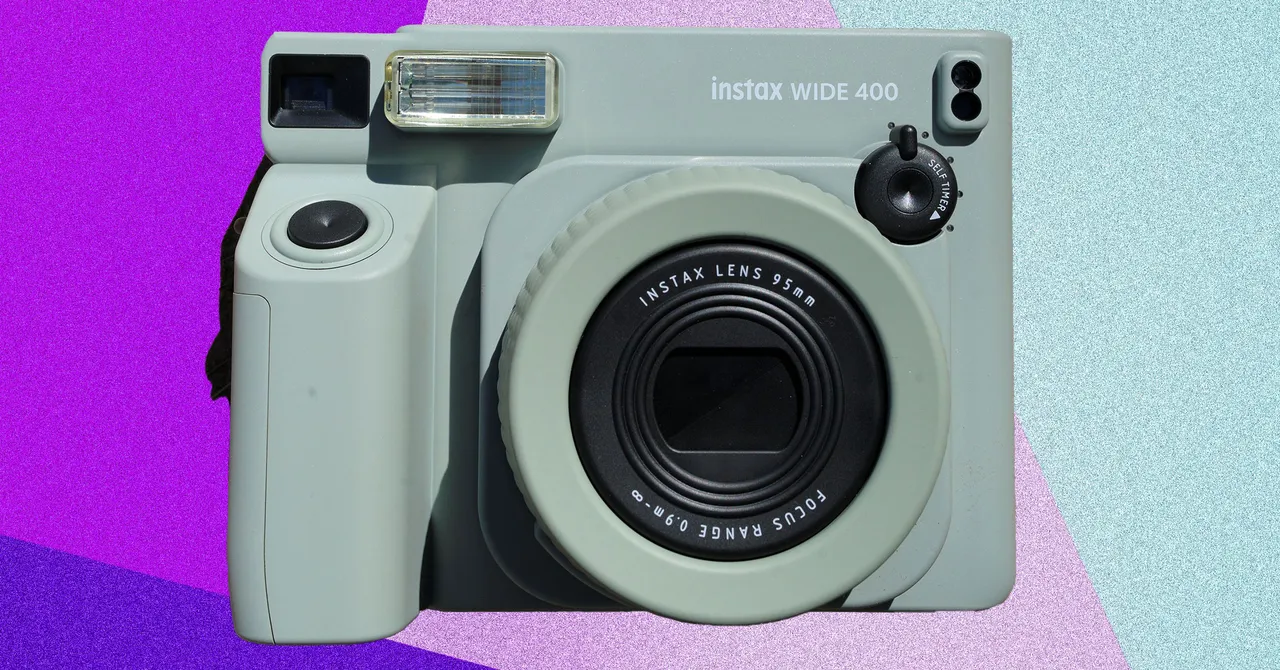
Go big or go home. The Instax Wide’s larger image has always made it the Instax of choice for photographers. Ingenious enthusiasts even figured out how to mod older models (the Wide 300) with custom lenses for even better quality images. The Instax Wide 400 is similar in most ways to the 300 that preceded it. It uses the same lens and the same full auto exposure system. If you want full exposure control, this is not the Instax for you. That said, I love this format and hence this camera.
It’s a rather chunky thing. The film is pretty good sized, so the camera is as well, but for me that just makes it easier to hold than some of the others here. There’s a nice big grip, which holds the 4 AA batteries, enough to shoot 100 images according to Fujifilm’s specs. Design-wise, the single color look is reminiscent of the SQ1 (see above), spare and simple. The 95mm f/14 lens is made of two elements (both plastic) and gives you the equivalent of a 35mm focal length on a full frame camera. Fujifilm did add a new close focus option to go with the 10 foot to infinity focus. I wish Fuji had reversed the order, as I sometimes forgot to turn the lens of the second click and ended up with out-of-focus images. Once you get used to it, though, it’s fine.
There’s not a lot to this camera, and that’s part of its appeal. The lens produces decent images, and large format makes it more fun to share with friends. I do wish there were a way to manually control … something, anything, as that would open up some more possibilities, but if you like this format this is the best camera to get.
Other Instax Wide Cameras:
Advertisement
Lomography Lomo’Instant Wide for $200: If you want to spend a bit more, Lomography’s Instant Wide shoots Instax Wide film and has some extra lenses you can add on. It shoots in both full auto and offers a programmatic shutter mode. I haven’t tested this one yet, so I can’t speak to the image quality, but the built-in 90mm Lens is roughly the same field of view.
Fujifilm Wide Evo for $409: At first glance the Wide Evo looks like a clone of our top pick, the Mini Evo, but for the wider format Instax film. Would that it were so. There are some similarities. You get the filter effects, a couple of new lens filters, and the “intensity” ring, which allows you to dial in how strong the various effects are. The lens can switch between wide angle (16-mm full-frame equivalent) and standard (28-mm full-frame equivalent), and there’s dials for controlling all the effects. The shutter button is an annoying lever-style shutter, where you flip down, rather than a button you press. This head-scratching design decision is, um, not good. It’s awkward and mars the experience of shooting in irredeemable ways in my experience. Combine that with a nasty shutter lag (even by Instax standards) and the price tag, and this one is hard to recommend. If you want a printer, go for the Instax Wide. If you want a camera, either the Wide 400 or the Lomography Lomo’Instant Wide are better deals and better cameras.
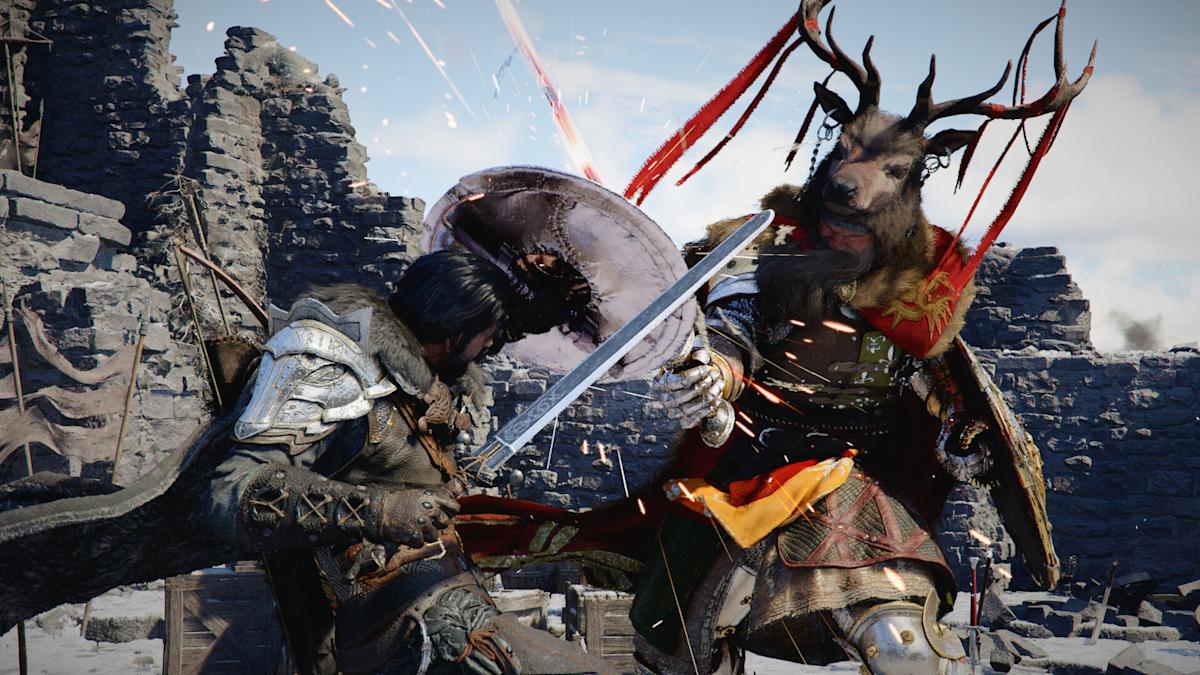
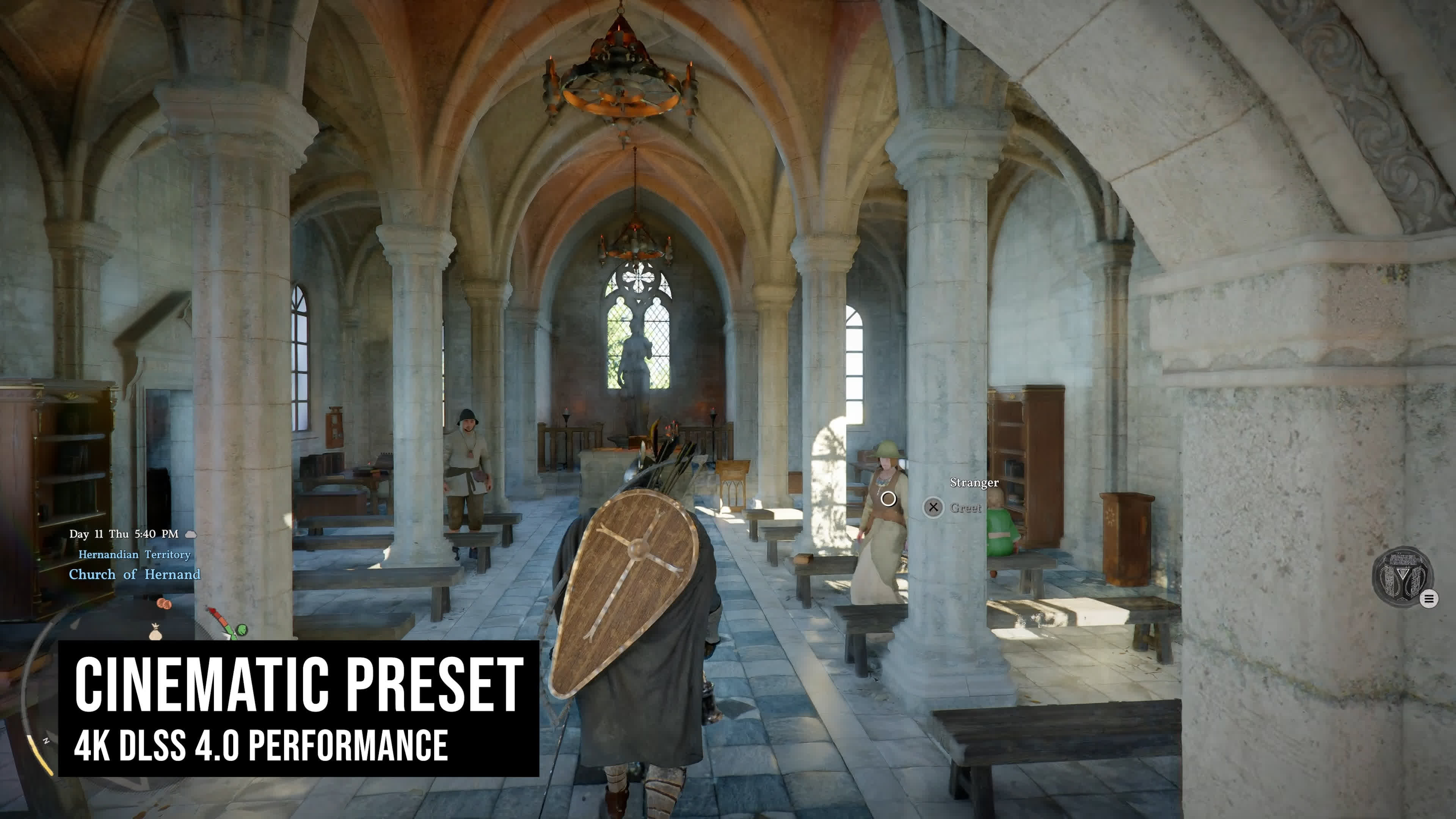
Crimson Desert looks great and runs well on most PCs, but some settings introduce visual noise and inefficiencies. We break down every option to find the best balance of image quality and performance.





















































You must be logged in to post a comment Login