Connect with us

Tech

10 Irish start-ups that raised funds early in 2026

Published

on

The funding rounds come as a Scale Ireland survey shows that start-ups still feel raising funds in Ireland is a huge challenge.

The Irish start-up ecosystem had a busy start to the year, with many announcing significant funding rounds. Chief among the raises is quantum start-up Equal1, which announced a $60m round to help with wider deployment of Ireland’s first homegrown quantum processing unit.

But a recent Scale Ireland survey found that businesses still feel raising funds is a huge challenge in the country. The finding is also in line with a 2025 Government report which found that Irish scale-up enterprises would face a €1.1bn gap in equity financing over three to five years.

Needless to say, financing start-ups is a daunting task. Here’s 10 across the island that managed to succeed.

Advertisement

Aerska

Emerging from stealth last October with a seed round of $21m, this Irish RNA biotech announced its second raise earlier this month.

The $39m Series A round was led by EQT Dementia Fund and Age1, with participation from Iaso Ventures and other existing investors, and takes its total raise to $60m.

Aerska is developing medicines that use RNA interference (RNAi), an approach that can silence harmful genes linked to brain diseases. It has developed ‘brain shuttles’ to deliver RNAi to fight diseases in the central nervous system.

AICertified

This Dublin-based edtech announced a €1m raise in January, led by Oyster Capital with support from Enterprise Ireland.

Advertisement

AICertified, a training platform on AI-related courses, was founded just last year by Ian Dodson, the co-founder of Digital Marketing Institute. Dodson wants his new business to set a “single reliable standard, provide an outcome-driven path and certify skills in a way employers and students can trust”.

The investment is intended to accelerate product development, grow AICertified’s team from eight to 15 and scale the company’s learning platform ahead of its first course, which launched this month.

Circit

Dublin-based fintech Circit secured $22m in growth equity this month to continue scaling its financial auditing and verification platform. The round was led by New York’s Ten Coves Capital, with participation from Aquiline and MiddleGame Ventures.

Founded in 2017, Circit offers audit confirmation, data validation and client collaboration services by directly connecting auditors with banks, financial institutions and other relevant parties through secure networks.

Advertisement

The new funding will be used for product innovation, network connectivity and team expansion, especially in the US. Circit was named in Deloitte’s Technology Fast 500 list for 2025.

Equal1

This Dublin-based quantum start-up made waves last year with the launch of Ireland’s first home-grown quantum processing unit, Bell-1. And this January, it announced a $60m round to help deploy Bell-1 to high-performance computing centres, including to the European Space Agency’s Phi-lab in Italy.

The funding round was led by Ireland Strategic Investment Fund, with participation from Atlantic Bridge, the European Innovation Council Fund, Matterwave Ventures, Enterprise Ireland, Elkstone and TNO Ventures.

The funding will also enable Equal1 to advance its roadmap towards “millions” of on-chip qubits, scale manufacturing and grow its team.

Advertisement

Eolas

Belfast’s Eolas Medical raised $12m in Series A funding in January to scale its existing AI functionality within the UK’s National Health Service and continue international expansion.

The 2019-founded company said its AI search platform aims to provide frontline healthcare professionals with knowledge tools supporting clinical safety, adherence and productivity via a dedicated AI-powered platform. The platform is already used at more than 400 clinical sites in the UK.

Eolas founder and CEO Dr Declan Kelly said: “Eolas has always been about solving a very practical problem: giving healthcare professionals fast, reliable access to the knowledge they need, when they need it.”

Linda AI

Dually-based in London and Dublin, this health-tech announced a €2.6m pre-seed raise in February to scale its agentic AI platform catering to dental practices.

Advertisement

Co-founded by Irish sisters India and Portia Healy O’Connor along with Lucio Tudisco, Linda AI’s platform aims to avoid lost bookings and wastage of capacity at dental practices by providing a voice AI agent to deal with patients on the phone even when a reception desk may be busy or closed.

Its AI agents integrate with existing practice management and communication systems to complete administrative tasks like appointment scheduling and rescheduling, confirmations, and patient follow-ups, working alongside front-desk teams while automating workflows through voice, text and system integrations when capacity is constrained.

Luna

Based out of Dublin, Luna is the creator of AI safety camera hardware for bicycles and motorcycles. It announced a €1.5m late seed round in January, led by cycling-focused VC firm Fundracer Capital and EIT Urban Mobility, with additional support from Enterprise Ireland, with plans to bring its hardware to market.

Luna takes inspiration from aspects of ‘advanced driver assistance systems’ – embedded computer vision technology in vehicles such as cars that make them safer to drive – and infuses them into AI-powered advanced assistance systems for bicycles and motorcycles.

Advertisement

Luna – which was in founded in 2020 at Dublin City University – said it plans to use this latest raise to accelerate to market as a full system provider, widening its commercial scope.

Neurent Medical

The Galway medtech led by Brian Shields closed a €62.5m Series C financing round in February for its Neuromark medical device that treats chronic rhinitis.

MVM Partners led the funding round, with participation from Sofinnova Partners, EQT Life Sciences, Atlantic Bridge, Fountain Healthcare Partners and Enterprise Ireland.

Neuromark employs the company’s proprietary Impedance Controlled Radiofrequency technology to target the overactive posterior nasal nerves that drive the symptoms of chronic rhinitis, which affects millions worldwide.

Advertisement

Shields said that the new investment will allow it to expand patient access, enable further evidence generation across broader populations and support the continued development of its pipeline offerings.

Overpath

2025-founded Dublin start-up Overpath raised €1.6m in late January – in a round led by Elkstone – to further develop its AI sales execution platform for revenue teams. AI-focused investor Sure Valley Ventures also participated in the funding round.

Overpath said it is building a new layer in the revenue stack focused on sales execution, which spans sales enablement, revenue operations and coaching software. The platform analyses live deal behaviour across systems, and attempts to identify execution gaps early.

The platform is powered by a domain-specific sales language AI model trained on real behaviour, deal methodologies and execution patterns used by high-performing teams, according to the company,

Advertisement

TeamFeePay

Also in January, Belfast-based sports technology start-up TeamFeePay announced the closing of a £9m equity funding round to help expand its coaching services platform into new markets and fuel a recruitment drive.

Founded in 2021, the start-up has developed a software platform that helps football coaches and clubs plan fixtures, training sessions and events, as well as track attendance and manage administrative tasks.

The platform has nearly 300,000 users and supports more than 1,500 clubs. The new funding is expected to help growth in the UK, enable further expansion into Europe and fund new product development.

YFM Equity Partners led the funding round with a £4.5m investment, Investment Fund for Northern Ireland funnelled £3m, and Techstart contributed £800,000.

Advertisement

Don’t miss out on the knowledge you need to succeed. Sign up for the Daily Brief, Silicon Republic’s digest of need-to-know sci-tech news.

Source link

Advertisement
Continue Reading
Click to comment

Leave a Reply

Your email address will not be published. Required fields are marked *

Tech

Latest Intel exit sees Foundry lead Kevin O’Buckley joining Qualcomm

Published

on

In the past year, Intel has lost its CSO, the CEO of products and the head of AI.

Intel Foundry’s senior vice-president and general manager Kevin O’Buckley is leaving the company to join Qualcomm, where he will be leading the company’s semiconductor operations.

Naga Chandrasekaran, whose remit was expanded to include Intel Foundry months earlier, will be leading the entire segment now, according to a statement from an Intel spokesperson.

In his new role, effective from 2 March, O’Buckley will be reporting directly to Qualcomm’s executive vice-president, chief financial officer and chief operations officer Akash Palkhiwala.

Advertisement

“Kevin brings deep operational expertise, proven commercial leadership, and decades of experience scaling complex semiconductor operations and delivering custom silicon products across data centre and edge devices,” said Palkhiwala.

“His leadership will further strengthen our global operations as we continue to deliver industry-leading products with high-performance, low-power computing, AI and connectivity at scale.”

O’Buckley served at Intel for less than two years, prior to which he led chipmaker Marvell as its senior vice-president. O’Buckley has also spent more than 17 years working across various roles in IBM.

“We thank Kevin O’Buckley for his contributions to foundry services and wish him the very best as he pursues an opportunity outside the company,” an Intel spokesperson told Tom’s Hardware.

Advertisement

“Intel Foundry remains one of Intel’s highest strategic priorities, and under Naga Chandrasekaran’s leadership the organisation is focused on disciplined execution and delivering for customers.”

Last September, Qualcomm CEO Cristiano Amon told Bloomberg that Intel’s production technology isn’t good enough currently for it to use as a supplier.

Qualcomm develops chips for mobile phones and computers. It is behind the Snapdragon series of processors for mobiles, laptops and extended reality sets.

Lip Bu-Tan has been attempting to flatten executive leadership, cut costs and secure new customers for Intel ever since he took over as CEO last March. Since then, the company has seen some major leadership exits.

Advertisement

In June, chief strategy officer Safroadu Yeboah-Amankwah left the company, which followed with chief executive of products Michelle Johnston Holthaus exiting the company in September after more than three decades of service.

While November saw Intel’s chief technology and AI officer Sachin Katti leaving to join OpenAI to build compute infrastructure for “artificial general intelligence”. Tan has taken over the company’s AI and advanced technologies groups.

The US government currently holds a 10pc stake in Intel, while Nvidia holds $5bn of the company’s stock and SoftBank invested $2bn in the company.

Intel has been closely collaborating with SambaNova, an up and coming chipmaker chaired by Tan. SambaNova recently announced a $350m raise and a strategic investment from Intel to accelerate an Intel-powered AI cloud.

Advertisement

Qualcomm subsidiary Qualcomm Technologies announced a €125m investment to upgrade its Cork city site and create 300 new jobs.

Don’t miss out on the knowledge you need to succeed. Sign up for the Daily Brief, Silicon Republic’s digest of need-to-know sci-tech news.
Source link

Advertisement
Continue Reading

Tech

NASA Reveals Identity of Astronaut Who Suffered Medical Incident Aboard ISS

Published

on

Longtime Slashdot reader ArchieBunker shares a report from NBC News: NASA revealed that astronaut Mike Fincke was the crew member who suffered a medical incident at the International Space Station in January, which prompted the agency to carry out the first evacuation due to a medical issue in the space station’s 25-year history. The rare decision to cut a mission short and bring Fincke and three other crew members home early made for a dramatic week in space early this year.

In a statement released by NASA “at the request of Fincke,” the veteran astronaut said he experienced a medical event on Jan. 7 “that required immediate attention” from his space station crew members. “Thanks to their quick response and the guidance of our NASA flight surgeons, my status quickly stabilized,” Fincke, 58, said in the statement. […] In his statement, Fincke thanked his Crew-11 colleagues, along with NASA astronaut Chris Williams and Russian cosmonauts Sergey Kud-Sverchkov and Sergei Mikaev, who were also aboard the space station at the time and are still in space. Fincke also thanked the teams at NASA, SpaceX and the medical professionals at Scripps Memorial Hospital La Jolla. “Their professionalism and dedication ensured a positive outcome,” he said.

Fincke ended his statement by saying he is “doing very well” and still actively involved with standard post-flight reconditioning at NASA’s Johnson Space Center in Houston. “Spaceflight is an incredible privilege, and sometimes it reminds us just how human we are,” he said. “Thank you for all your support.”

Source link

Advertisement
Continue Reading

Tech

Brazil is Apple TV's second largest market & is growing fast, says Eddy Cue

Published

on

Apple TV is doing great in Brazil, but services chief Eddy Cue says Apple doesn’t have any plans for new content developed in the country.

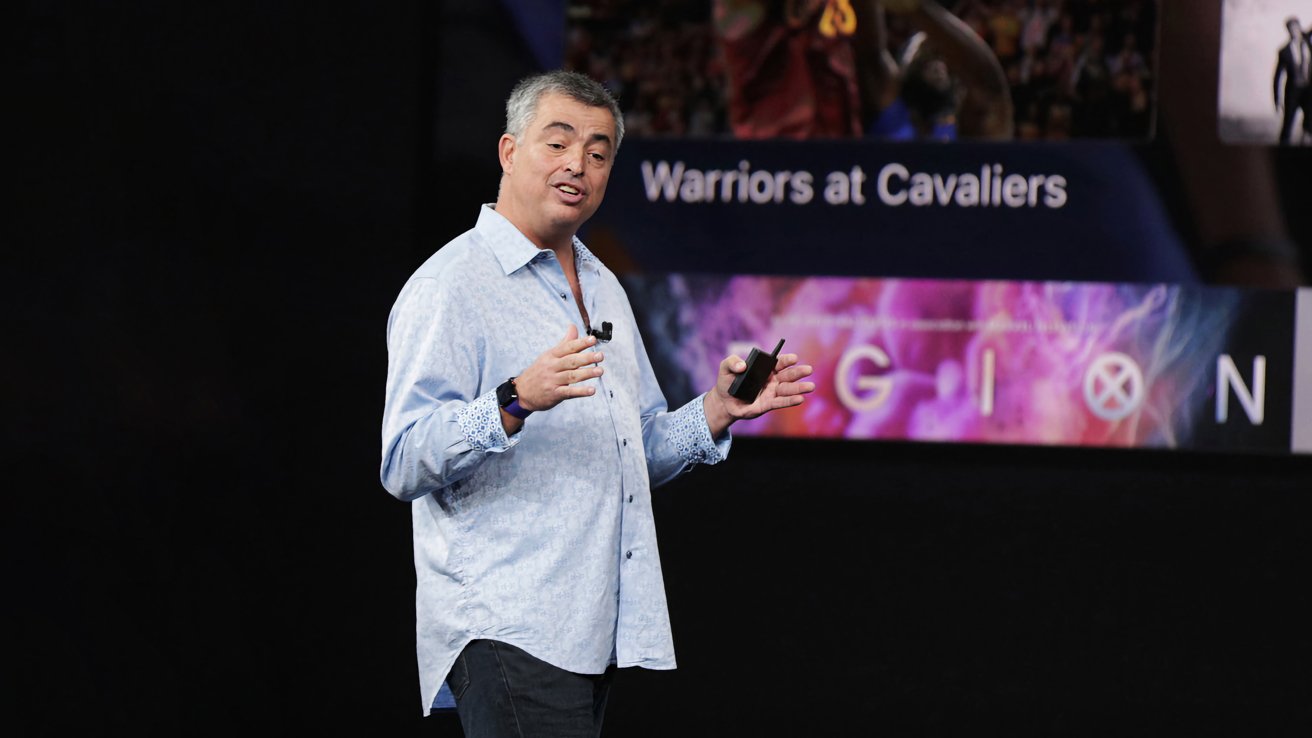
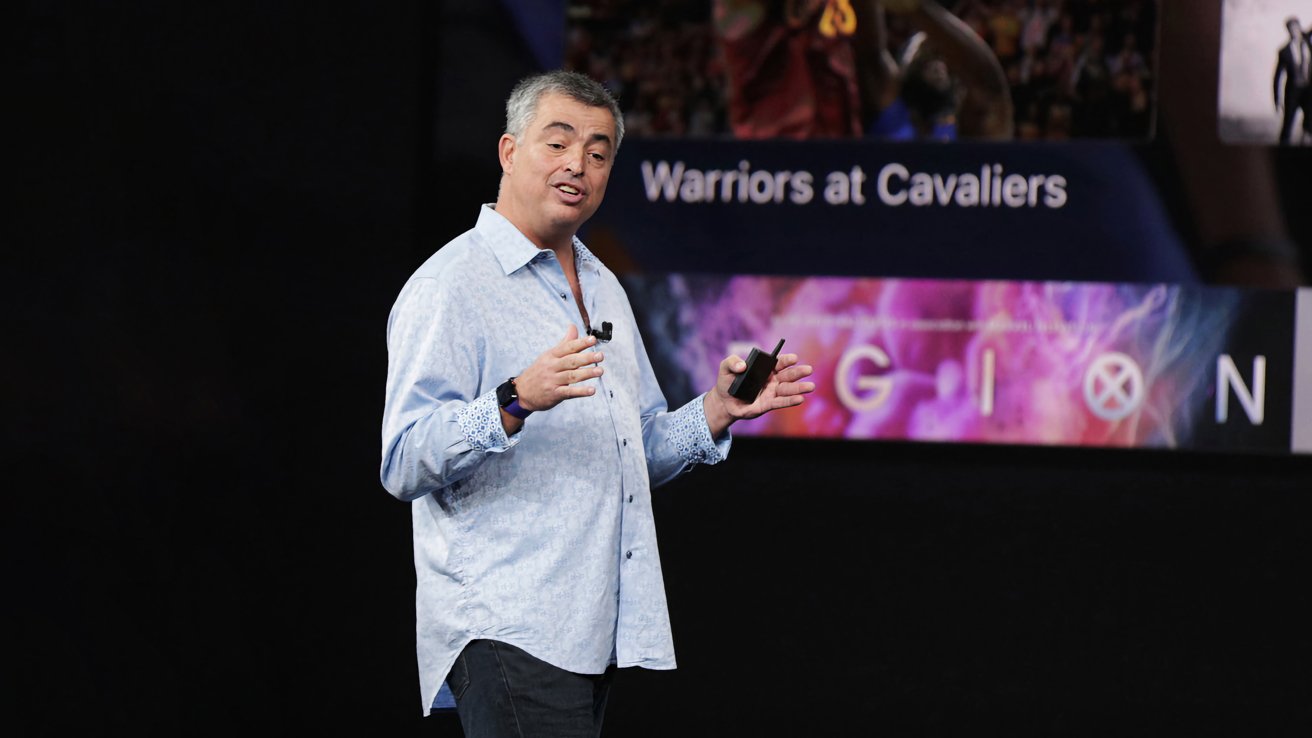
Middleaged man in a light blue shirt speaks onstage with a clicker, in front of a large screen showing Warriors at Cavaliers and colorful Legion graphics
Apple’s SVP of services, Eddy Cue, says Brazil is Apple TV’s fastest-growing market.

During a special press event on February 4, Apple previewed content coming to its streaming service in 2026, with several new films and series set to debut on Apple TV later in the year. However, we didn’t hear much about Apple’s international streaming-related endeavors — until now.
Apple’s Senior Vice President of Services, Eddy Cue, revealed a few key details about the future of Apple TV in an interview with the Brazilian publication Folha de Sao Paulo, spotted by 9to5mac.
Continue Reading on AppleInsider | Discuss on our Forums

Source link

Continue Reading

Tech

Only five left as Toby Pohlen latest co-founder to exit xAI

Published

on

This marks the seventh co-founder exit since xAI was founded in 2023.

Toby Pohlen is the latest co-founder to leave xAI, announcing his decision to resign just weeks after two others left.

The Elon Musk-owned xAI lost three co-founder in the weeks after his space-tech company SpaceX bought xAI for a reported $250bn. The combined business is worth an estimated $1.25trn, and could gain more after a planned initial public offering this year.

xAI had previously acquired X, the social media platform, last March.

Advertisement

In a post on X, Pohlen thanked Elon Musk for taking him on board. “I’ve learnt more about execution, speed, and product perfectionism than I could ever have imagined. Thanks for everything,” he said. Musk responded, “Thanks for helping get xAI to where it is.”

Pohlen is the seventh co-founder to exit xAI in three years, following Jimmy Ba and Tony Wu, who left earlier this month. Kyle Kosic left in 2024, followed by Igor Babuschkin and Christian Szegedy in 2025.

Greg Yang, another co-founder, announced last month that he would be stepping down after being diagnosed with Lyme disease. Pohlen had worked in Google DeepMind as a research engineer for more than six years before founding xAI.

The flurry of exits leaves behind Musk, Manuel Kroiss, Zihang Dai, Guodong Zhang and Ross Nordeen at the company.

Advertisement

Earlier this month, Ireland’s data protection watchdog launched a “large-scale” inquiry into X following the Grok ‘nudification’ fiasco. This investigation followed separate similar inquiries launched by the  European Commission and the UK government.

Meanwhile, a year-long inquiry by French authorities has expanded to probe Grok’s possible role in disseminating Holocaust denials and sexual deepfakes. California also launched a similar investigation into X and Grok’s parent company xAI last month.

Alongside this, the EU is continuing with a separate, years-long investigation into X to assess if the platform mitigated risks stemming from its recommender systems, including the impact of the recently announced switch to a Grok-based recommender system.

Don’t miss out on the knowledge you need to succeed. Sign up for the Daily Brief, Silicon Republic’s digest of need-to-know sci-tech news.
Advertisement

Source link

Continue Reading

Tech

Ctrl-Alt-Speech: Let Fly The Claudes Of War, With Casey Newton

Published

on

from the ctrl-alt-speech dept

Ctrl-Alt-Speech is a weekly podcast about the latest news in online speech, from Mike Masnick and Everything in Moderation‘s Ben Whitelaw.

Subscribe now on Apple Podcasts, Overcast, Spotify, Pocket Casts, YouTube, or your podcast app of choice — or go straight to the RSS feed.

In this week’s roundup of the latest news in online speech, content moderation and internet regulation, Ben is joined by Casey Newton, founder and editor of Platformer and co-host of Hard Fork, a podcast that makes sense of the rapidly changing world of tech. Together, they discuss:

Advertisement

Play along with Ctrl-Alt-Speech’s 2026 Bingo Card and get in touch if you win!

Filed Under: age verification, ai, artificial intelligence, casey newton, content moderation

Companies: anthropic, discord, reddit, tiktok

Source link

Advertisement
Continue Reading

Tech

Seattle-area startup Union.ai raises $19M to fuel AI workflow platform

Published

on

Bellevue, Wash.-based startup Union.ai announced that it closed a $38.1 million Series A round, led by NEA, with participation from Nava Ventures and new investor Mozilla Ventures. The total includes a previously announced $19.1 million portion raised in 2023.

Union is the company behind Flyte, an open-source orchestration tool used to run complex machine learning and data workflows. Union is positioning itself as broader “AI development infrastructure” — covering orchestration as well as pieces such as training, inference, and observability — aimed at helping engineering teams move from experimentation to production faster.

“Building AI requires a fundamentally different approach than traditional software, and engineering teams are now embracing that,” CEO Ketan Umare said in a statement.

More from the company’s post on LinkedIn:

Advertisement

This funding comes at an inflection point for AI: engineering teams are discovering that legacy software infrastructure and devtools struggle to handle AI development. They were designed for basic and deterministic processes of traditional data workflows, not for the non-deterministic processes of AI workflows, which expect agents to adapt and recover from failure at runtime. Union.ai is building the new category of AI development infrastructure. Engineering teams can develop dynamic, durable AI workflows and agents while dramatically reducing time spent maintaining brittle pipelines.

The startup says revenue grew 3X in 2025, and its customer base expanded 2.6X. Union’s customers include Spotify, HederaDx, Carfax, Hopper, and others.

The company says the round supports the commercial launch of Union 2.0 and continued development of Flyte 2, including “pure Python” authoring, improved debugging, runtime decision-making, and crash-resilient workflows.

Umare helped develop the underlying technology for Flyte while he was an engineer at Lyft. He previously worked at Amazon and Oracle. He co-founded Union.ai in 2020 with Haytham Abuelfutuh.

The company has more than 40 employees and is actively hiring.

Advertisement

Investors are backing various startups building behind-the-scenes infrastructure to help companies turn AI prototypes into reliable products. Temporal, a “durable execution” company rooted in the Seattle region, announced a $300 million round last week.

Source link

Continue Reading

Tech

Best Red Light Therapy for Hair Growth: WIRED-Approved (2026)

Published

on

Hair loss isn’t always dramatic. It can be incremental. You start noticing a bit more scalp in harsh bathroom lighting; a tiny bald spot when you tie your hair up in a ponytail. The shower drain is more clogged than usual. Not long ago, hair loss treatments meant topical remedies, supplements, or a flight to Turkey. Luckily, red light therapy brings the potential for hair regrowth into your home—no clinical appointment required.

Beyond skin rejuvenation, research suggests red light therapy can help energize hair follicles, increase blood circulation in the scalp, reduce inflammation, and lower dihydrotestosterone levels—a hormone that causes hair loss and thinning. Red light therapy also supports adenosine triphosphate (ATP) production, which helps provide oxygen and blood flow to the scalp and triggers follicles to remain in the hair growth phase.

To determine the best red light therapy for hair growth, I tapped three WIRED tech reviewers who’ve dealt with hair loss themselves. We assessed red light therapy caps, hands-free helmets with full scalp coverage, and low-level laser therapy or photobiomodulation devices for 16 weeks. Along the way, we reviewed the research, spoke with dermatologists, and tracked ease of use. These are the favorites that produced meaningful results and earned our trust.

Be sure to check out our other hair care guides, including Best Dry Shampoos, Best Heat Protectant Sprays, and Best Hair Dryers.

Advertisement

Jump to

Best Red Light Helmet

  • Photograph: Molly Higgins

  • Photograph: Molly Higgins

  • Photograph: Molly Higgins

  • Photograph: Molly Higgins

CurrentBody

LED Hair Growth Helmet

WIRED

Advertisement
  • Simple device with only one button and a charging port
  • Bluetooth-enabled so you can listen to your own tunes during treatment
  • Comes with a stand for easy storage
  • Observed new hair on scalp after 12-ish weeks

TIRED

  • Need to use daily for at least four months to achieve results, and use regularly (nearly every day) for maintenance
  • Even the smallest helmet size is large
  • Buffer cups can snag and pull hair during helmet removal
  • Ear cups can be somewhat difficult to adjust while worn

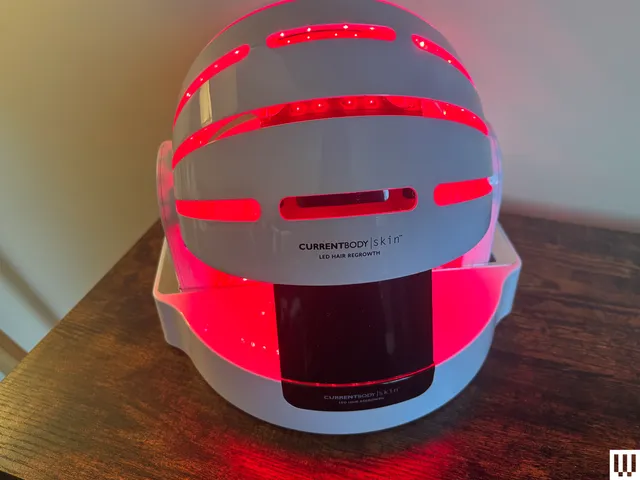
CurrentBody’s LED Hair Growth Helmet is a wearable, cord-free, Bluetooth-enabled device aimed at improving hair’s density, thickness, and overall condition. Each panel on the helmet has 12 red lights (120 total), which are on a spectrum of 620 to 660 nanometers (nm). The 620-nm red light helps improve scalp health by promoting circulation, and the 660-nm red light penetrates deeper, reaching through the epidermis and dermis to the hypodermis, where it stimulates growth and repair at the follicle root. According to CurrentBody, you only need to use the device for 10 minutes a day, and you’ll see results within 12 weeks.

My hair grows famously slow. I got a pixie cut in the spring of 2011, and my hair did not touch my shoulders until the end of 2013. My hair is also super fine. It tangles easily and often breaks off (my ends are chronically dry and split). After 12 weeks, I didn’t notice a huge difference in length (and I got a haircut halfway through testing), but I did notice that my hair seemed to be sprouting new follicles along my scalp and sideburn area in particular. I started to see small baby hairs along my hairline that I had never seen before. My stylist commented that my hair felt thicker, and I noticed less breakage and hair caught in bristles when brushing. My balding roommate also tested it (although not daily like me) and said that his hair felt thicker and that there was new growth around the scalp.

The helmet comes in two sizes: medium for a skull circumference of 21.3 to 23.2 inches, or large, for 23.3 to 25 inches. (I opted for medium, and it was too large for my head size.) The device sits on a base and is charged via a USB-C cord. It takes about three hours to fully charge, and it stays on a single charge for about a week. The device is powered on by the press of the single button located under the charging port. The circular earmuffs protect sensitive ears with a cushy, removable faux leather cloth, and they can be adjusted several inches up or down to ensure a comfortable fit. The screen on the right earmuff indicates the time left in the treatment session, and the helmet automatically turns off when the 10 minutes are up. You can also connect the device to Bluetooth and play any type of music or video while wearing it, because God forbid I be left alone with my thoughts for 10 minutes a day. Just make sure your hair is clean and dry before use.

My only complaints are that the ear covers aren’t the easiest to adjust while wearing and would oftentimes pull out my hair while I removed or adjusted the helmet. Nevertheless, this is the best red light therapy for hair growth. Just you wait, I’ll look like Fabio on the cover of a romance novel by next year. See full review here. —Molly Higgins

Source link

Advertisement
Continue Reading

Tech

Moon’s Ancient Magnetic Field May Have Flickered On and Off

Published

on

sciencehabit quotes a report from Science Magazine: For decades, planetary scientists have pored over a mystery hidden within the Moon rocks retrieved by Apollo astronauts in the 1960s and ’70s. Minerals in the rocks record the imprint of a magnetic field, nearly as powerful as Earth’s, that existed more than 3.5 billion years ago and seemed to persist for millions of years. But generating a magnetic field requires a dynamo — a churning, molten core — and most researchers believed the Moon’s tiny core would have long since cooled off, 1 billion years after it formed. Corroborating that picture are other ancient Moon rocks of about the same age that suggest the field was weak — leaving planetary scientists baffled.

Now, researchers are proposing a new way to solve the puzzle. A paper published today in Nature Geoscience theorizes that between 3.5 billion and 4 billion years ago, blobs of titanium-rich magma melted episodically just above the core, rising in plumes that drove volcanic eruptions on the surface. By intermittently stirring up the Moon’s core, these bouts of melting would have caused the Moon’s magnetic field to flicker on in short, powerful bursts. The paper “links a few different concepts that people were thinking about separately, but hadn’t actually brought together,” says Sonia Tikoo, a planetary geophysicist at Stanford University who was not involved in the study.

Source link

Continue Reading

Tech

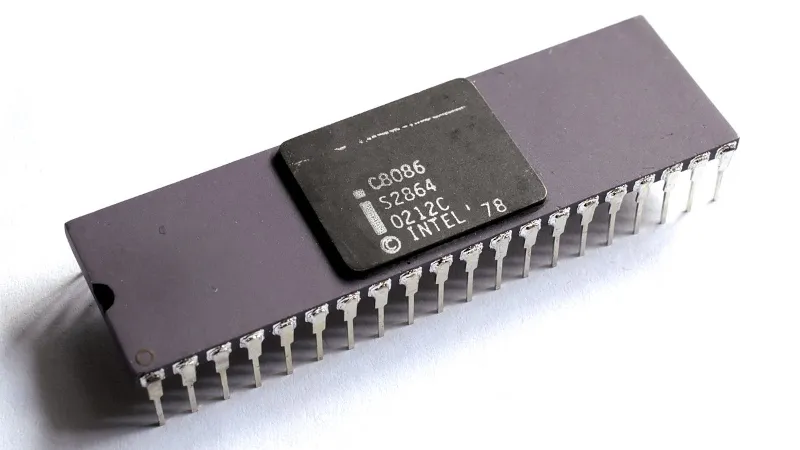
CSS, Now It’s Got Your 8086

Published

on

The modern web browser is now far more than a thing for rendering web pages, it’s a multi-faceted environment that can provide a home for almost any application you could imagine. But why should JavaScript or Wasm have all the fun? CSS is Turing complete now, right? Why not, as [Lyra Rebane] has done, write an 8086 emulator in pure CSS?

The web page at the link above may contain an 8086, but missing MMU aside, don’t expect it to run Linux just yet. Instead it has limited resources, just enough to run a demo program. It needs a Chrome-adjacent browser because it uses some CSS functions not available in for example Firefox, but we’ll forgive it that oddity. Its clock is provided by a small piece of JavaScript not because CSS can’t provide one, but because the JS version is more stable.

On one hand this is of little practical use, but to dismiss it as such is to entirely miss the point. It’s in the fine spirit of experimentation, and we love it. Perhaps a better way to look at it is to see what could be done more efficiently with the same idea. A 1970s CISC microprocessor might not be the best choice, but would for example a minimalist and optimized RISC design be more capable? We’re looking forward to where others take this thread.

Advertisement

It’s not the first unexpected computing environment we’ve found, who could forget the DOOM calculator!


Header: Thomas Nguyen, CC BY-SA 4.0.

Advertisement

Source link

Continue Reading

Tech

Olympique Marseille confirms ‘attempted’ cyberattack after data leak

Published

on

Olympique de Marseille

French professional football club Olympique de Marseille has confirmed a cyberattack after a threat actor claimed on Monday that it breached the club’s systems earlier this month.

Founded 126 years ago, Olympique Marseille competes in the Ligue 1, the top tier of the French football league system, and was the first French club to win the UEFA Champions League in 1993.

On Tuesday, Olympique Marseille issued a statement confirming that it had been hit by a cyberattack, following claims by a threat actor that they had breached some of its servers.

Wiz

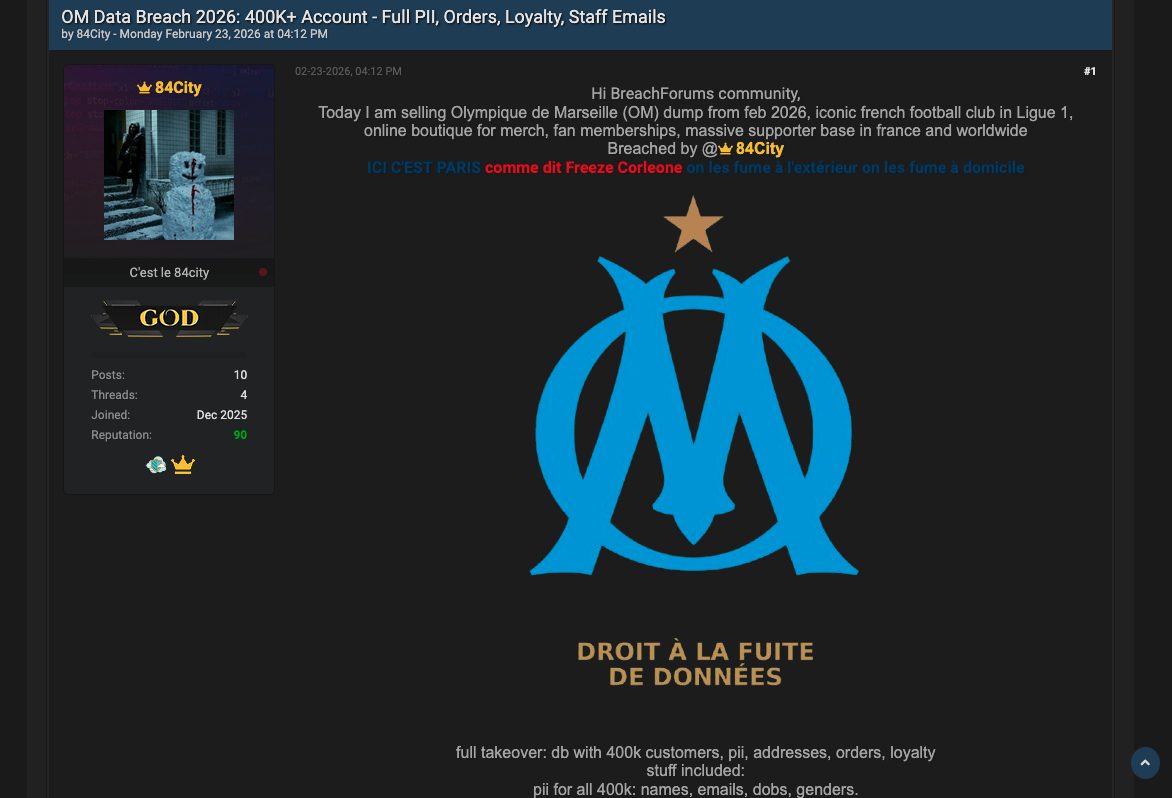
The threat actor has also leaked a sample of the allegedly stolen information on a hacking forum, claiming to have stolen a database containing Olympique Marseille staff and supporter information.

“Olympique de Marseille has announced that it was recently the target of an attempted cyberattack, in a national and international context marked by a resurgence of attacks targeting large organizations,” the football club said.

Advertisement

“Thanks to the immediate mobilization of our technical teams and specialized service providers, the situation was quickly brought under control. To date, all our activities are continuing as normal and in complete security, and we are continuing our investigations into the scope of the incident. The club would like to reassure its supporters that no banking details or passwords have been compromised.”

While Olympique Marseille didn’t provide further details about the incident, the threat actor says the stolen database contains information on 400,000 individuals, including their names, addresses, order information, email addresses, and mobile phone numbers.

Olympique de Marseille entry on hacking forum
Olympique de Marseille entry on hacking forum (BleepingComputer)

​They added that the allegedly stolen data also includes information on more than 2,050 Drupal CMS accounts, including 34 OM staff and 1,770 contributors and moderators.

“Today I am selling Olympique de Marseille (OM) dump from feb 2026, iconic french football club in Ligue 1, online boutique for merch, fan memberships, massive supporter base in france and worldwide,” the threat actor said.

Although Olympique Marseille has yet to confirm a data breach, it reported the incident to the French data protection authority (CNIL), filed a complaint, and advised fans to “remain vigilant against phishing attempts, and report any suspicious activity.”

Advertisement

An Olympique Marseille spokesperson was not immediately available for comment when contacted by BleepingComputer earlier today.

In November, the French Football Federation (FFF) also disclosed a data breach after attackers gained access to administrative management software used by football clubs using a compromised account.

Modern IT infrastructure moves faster than manual workflows can handle.

In this new Tines guide, learn how your team can reduce hidden manual delays, improve reliability through automated response, and build and scale intelligent workflows on top of tools you already use.

Source link

Advertisement
Continue Reading

Trending

Copyright © 2025