By most accounts, HIGH END Vienna 2026 was a success, and that is no small thing for an industry that could use some good news as we begin the slow crawl into summer. The move from Munich to Vienna was always going to be scrutinized, second-guessed, and overanalyzed by people who spend too much time arguing about cable elevators, but the first edition in Austria appears to have landed well. The rooms were busy, the product pipeline was stronger than expected, and manufacturers showed up with enough new hardware to suggest that high-end audio may finally be catching some tailwinds again.
Good. The industry needs them.
There are already five more shows on the calendar between now and September: T.H.E. Show SoCal, CanJam London, Audio Advice Live 2026, CanJam SoCal, and CEDIA. Audio Advice Live has become a more important stop this year, and I will be joining Chris Boylan in Raleigh in early August rather than covering SWAF in Dallas in late-July.
At some point, even editors need to recharge the batteries, spend time with their kids, clean up the house, paint a few walls, and fix whatever winter broke before summer arrives to break something else. The Jersey Shore is already preparing for its annual stress test: Netflix Studios construction, World Cup traffic threatening to paralyze half the Garden State, and the return of the Bennies, who descend every year like a seasonal weather event with beach chairs, parking issues, and questionable lane discipline.
Advertisement
So yes, I’m thinking very carefully about how to manage the rest of 2026 starting in late-July.
That is especially true when eCoustics is on pace for roughly 1,200 articles, videos, and podcasts in 2026. That puts us behind only What Hi-Fi? in terms of output, and well ahead of most of the specialist audio press. That kind of schedule is not powered by Austrian pastries and blind optimism. It takes planning, travel, editing, late nights, and a team willing to do the unglamorous work that most readers never really notice.
HIGH END Vienna 2026 Proved There Is Life After Munich, Even With More Schnitzel and Viennese Caffeine
Editor-at-Large, Chris Boylan will have more to say in his Best of Show report, along with more video reports from HIGH END Vienna dropping this week. My focus here is slightly different. These are the 11 new products from the show that most caught my attention, the ones I most want to review when they become available, and the products that say something meaningful about where the market may be headed next.
Because there is a bigger point here.
Advertisement
The audio industry may be finding some momentum again, but it still needs to learn how to market itself without tripping over the same gold-plated rake. Not every new product is a “new reference.”
Arnold Schwarzenegger once said, “The worst thing I can be is the same as everybody else.” For the hi-fi industry, that might be the most useful Austrian export of the week. HIGH END Vienna 2026 proved there is still life in the category, but the brands that matter going forward will be the ones willing to stop sounding, looking, pricing, and marketing themselves exactly like everyone else.
Advertisement. Scroll to continue reading.
The Dirty Eleven: 11 Vienna 2026 Products to Review
Acoustic Energy AE Active
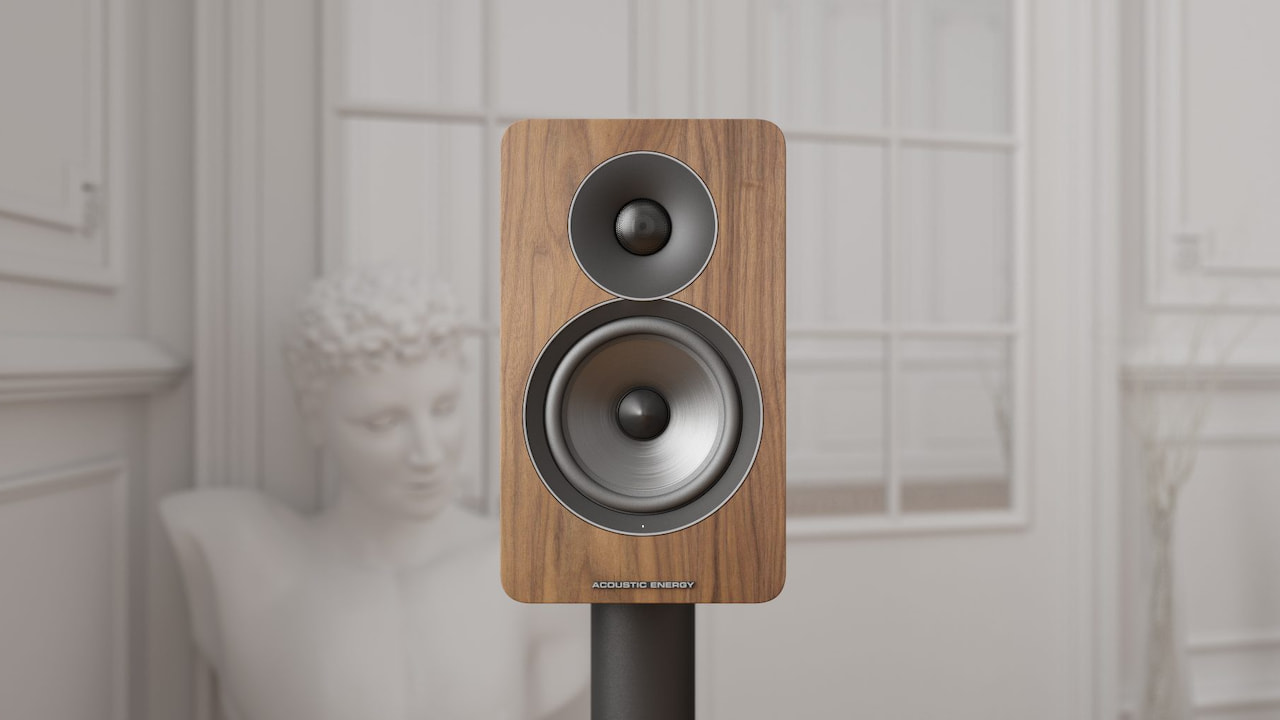
The Acoustic Energy AE Active is a fully analog active stand-mounted loudspeaker with Class A/B amplification, RCA and XLR inputs, room-trim controls, and an updated driver package that looks like a focused evolution of the AE1 Active.
That may sound almost quaint in 2026, which is precisely why I want to hear it. Most active speakers now arrive with apps, firmware updates, streaming platforms, Bluetooth logos, and enough software baggage to make you wonder whether you bought loudspeakers or adopted a small IT department. Acoustic Energy has gone in the other direction: wired inputs, analog signal path, onboard amplification, and a very clear focus on the box, the drivers, and the amplifier doing their jobs properly. Radical stuff, apparently.
Advertisement
I want to hear whether Acoustic Energy has improved on the AE1 Active without sanding down the speed, impact, and immediacy that made the original such a compelling compact loudspeaker. The real test will be placement, bass control, tonal balance at sane listening levels, and whether the room-trim controls are actually useful in smaller spaces, and not just switches added to make the rear panel look busy.
The other part of the review is the use case. The AE Active has a very limited number of inputs, so I want to hear how it interacts with the preamp sections in a range of network players and DAC/preamps. If the source/preamp pairing matters, and with active loudspeakers, it usually does — that needs to be part of the review, not an afterthought buried somewhere between “nice imaging” and “good for desktop use.”
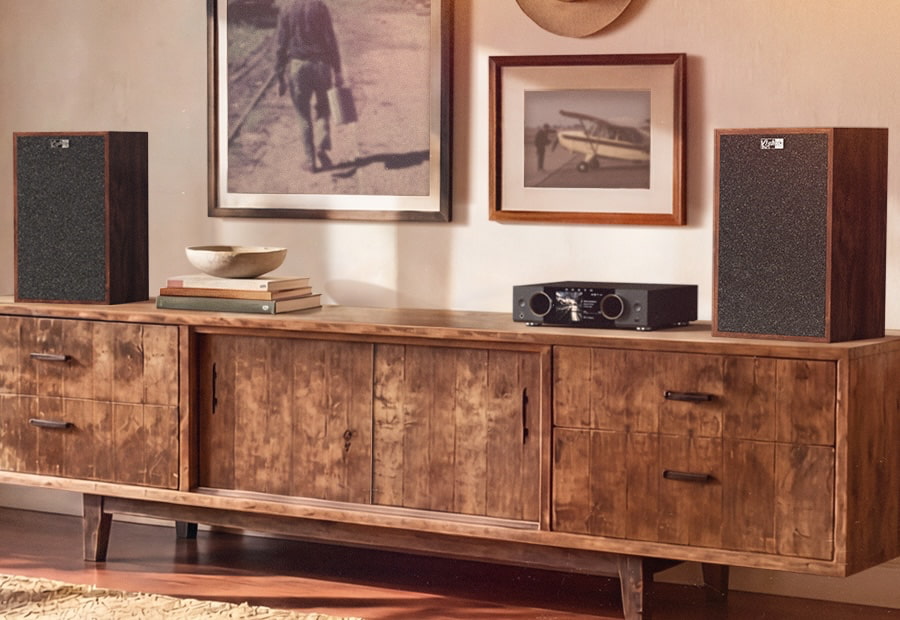
The Klipsch Rebellion is a premium Heritage-inspired standmount loudspeaker based on Paul W. Klipsch’s rare 1958 H8 design, using a K-702 tweeter mounted to a K-703 Tractrix horn with Mumps technology, a new K-81-EP woofer, and a rear Tractrix flare port.
Klipsch has been leaning hard into its 80th anniversary, and the Rebellion is far more interesting to me than another nostalgia badge glued to a walnut box. It is not cheap at $2,599 per pair, but the idea of a compact Heritage-flavored Klipsch loudspeaker that does not require La Scala real estate or a second mortgage has real appeal. The category needs speakers with high sensitivity, dynamics, personality, and some actual fun baked into the cabinet, because not everyone wants another polite rectangular box that sounds like it was voiced during a faculty meeting.
Advertisement
What I want to test is how flexible the Rebellion really is with amplification. On paper, this could be a very interesting match for everything from affordable Class D amplifiers like WiiM’s current crop, to older Class A/B integrated amps from NAD, Cambridge, and Rega, to tube integrated amplifiers from a wide range of manufacturers. The review has to find out whether the Rebellion keeps the Klipsch energy and immediacy without getting shouty, whether it can work in real rooms without punishing placement, and whether it has enough tonal refinement to win over listeners who like the Heritage attitude but do not want to live inside a live PA system.
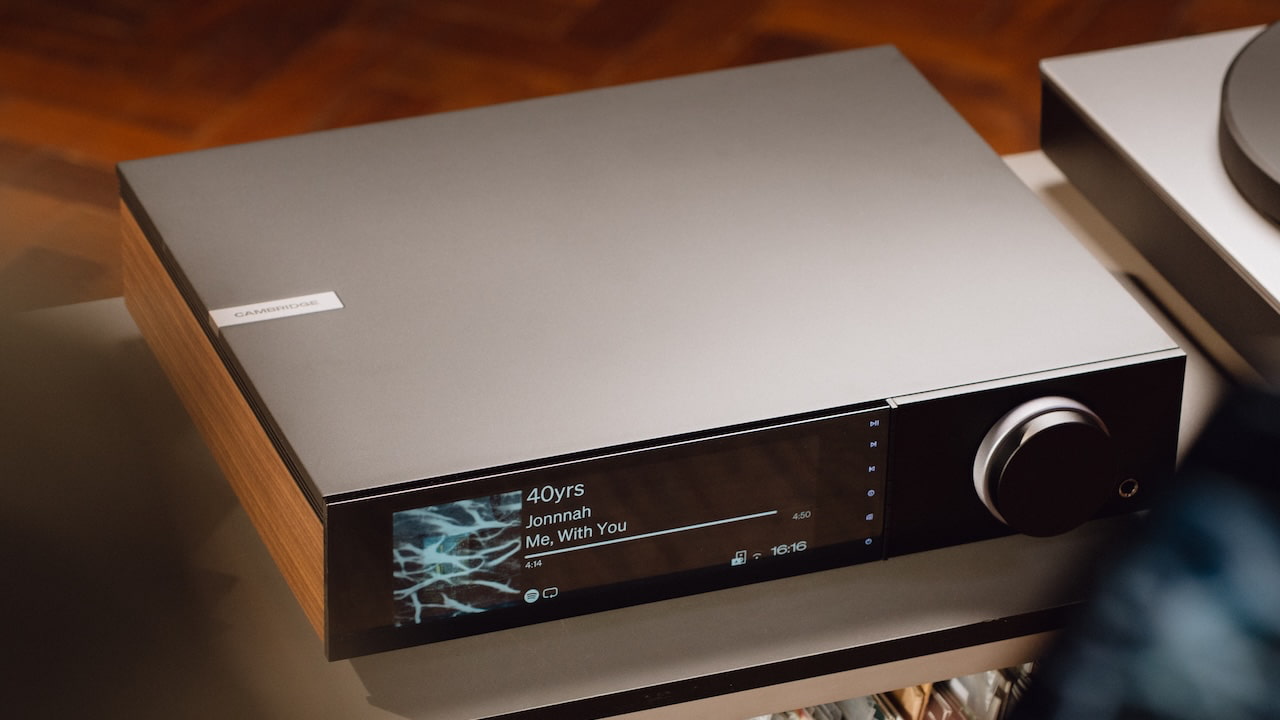
The Cambridge Audio Evo 300 is a 300Wpc streaming amplifier built around Hypex NCOREx power, StreamMagic Gen 4, HDMI eARC, MM phono, and the same basic “just add speakers and stop building equipment towers” argument that has made the Evo series so compelling.
The extra power is the headline, but it is not the only thing I care about. The Evo 75, Evo 150, and Evo 150 SE never really ran out of gas with the speakers I tried them with, including models from Q Acoustics, Acoustic Energy, PSB, Focal, and others. More power is rarely a bad thing, unless we are talking about politicians or subwoofers in apartments, but the Evo platform was already more capable than some people gave it credit for.
What I want to test is whether Cambridge has actually moved the amplifier section forward, not just added a bigger number to the brochure. Does the Hypex NCOREx implementation sound cleaner, faster, and more composed than the earlier Evo models? Is StreamMagic Gen 4 easier to use day to day? Does HDMI eARC behave properly with real TVs? Does the MM phono input feel like a serious part of the product or a convenience feature? The Evo 300 needs to prove that it is not just the Evo with more horsepower, but a more complete streaming amplifier for people who want fewer boxes without lowering their standards.
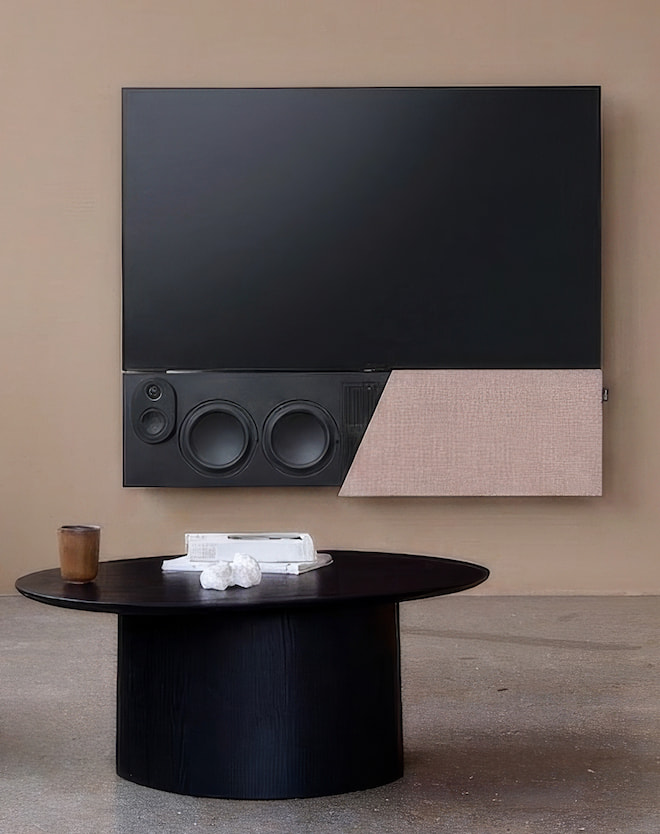
The Canvas L is a premium TV-mounted active speaker system that now supports larger screen sizes, offers more finish and grille options, and uses BACCH 3D+ processing to make the case that a very serious “soundbar” can replace a conventional front-channel system.
The price has gone up. A lot. That does not automatically make it a problem, but it does move the Canvas L into a very different conversation, especially when buyers can also look at strong active loudspeakers, compact 3.0 or 3.1 systems, and increasingly ambitious lifestyle audio products from brands with serious hi-fi credibility. The ability to pair it with larger TVs makes sense because that is where the market has gone, and I like the grille options because not everyone wants their living room to look like a demo room at an audio show staffed by people named Lars.
Can the Canvas L can actually replace a proper 3.0 or 3.1 system through output, tonal scale, dialogue clarity, center image stability, and BACCH 3D+ spatial processing — especially because there is no separate subwoofer in the system. I was a guinea pig for the original BACCH work at the lab in Princeton and at the designer’s home, and I have wanted this technology to work properly in a real consumer product for probably eight or nine years. The review has to answer the uncomfortable question: is this finally the elegant living-room solution that can satisfy movie and music listeners, or is it still asking too much from one very expensive box attached to a television?
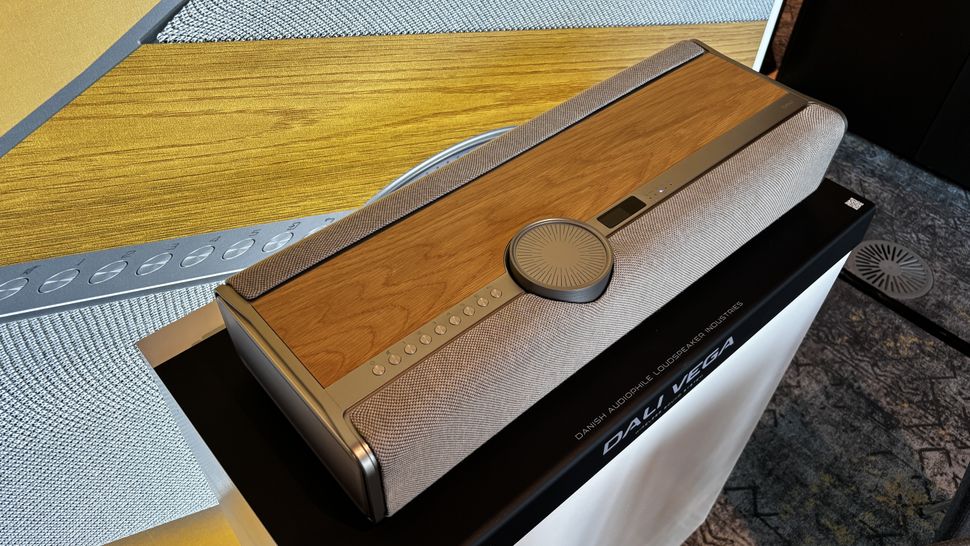
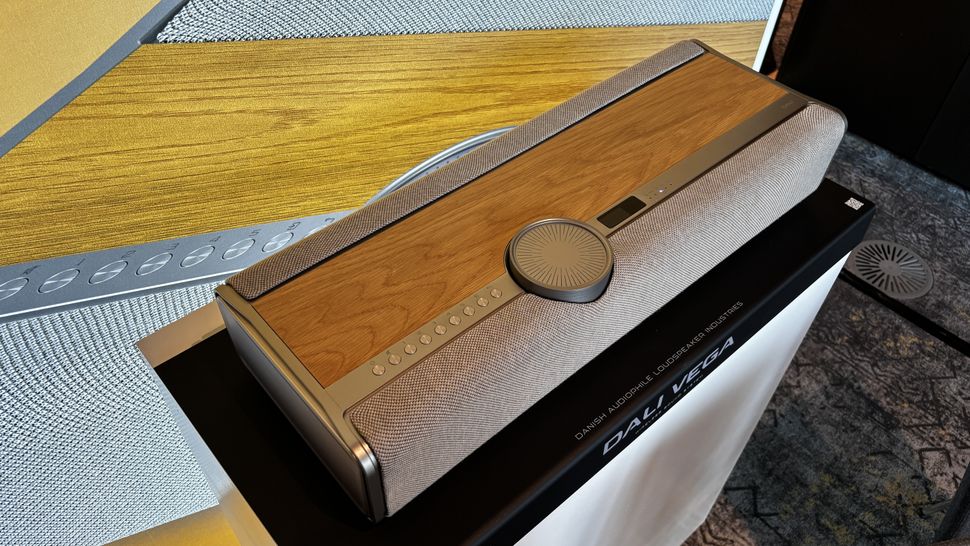
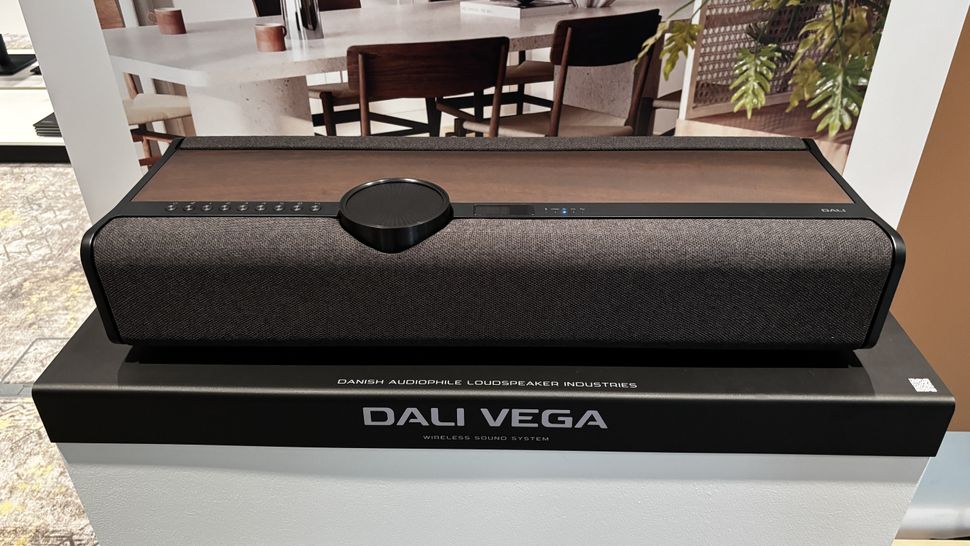
The DALI VEGA is a $4,500 single-box wireless hi-fi system with ten in-house-developed drivers, 400 watts of Class D amplification, BluOS streaming, HDMI ARC, AirPlay 2, TIDAL Connect, Spotify Connect, and adaptive processing that lets it work horizontally or vertically.
This type of system is becoming a real category, and I am perfectly fine with that. Products like the VEGA, Focal’s Mu-so Hekla, Canvas L, LIVEBOX, and Ruark’s larger all-in-one console systems are forcing people to pay attention because they are not just Bluetooth speakers with better tailoring. They are aimed at people who want serious sound without separates, speaker cables, and a rack that looks like it belongs in a regional airport control room.
The Naim influence is obvious; sorry, Salisbury, everyone found the big dial — but the category has moved beyond imitation. The Naim/Focal room at AXPONA 2026 was standing-room-only primarily because of the Mu-so Hekla demo, and people were not pretending to be impressed. They were impressed.
What I want to test is whether the VEGA can work as well in real rooms as it does on paper. The Adaptive Orientation Adjustment is not a gimmick if it can make the system sound convincing both horizontally on furniture and vertically on a wall, but that has to be tested with real placement compromises, not a brochure-perfect room with one chair and no family members. The dog can stay.
Advertisement
I want to hear whether DALI’s Adaptive Stereo Enhancement creates real width and scale without turning everything into processed vapor, whether the bass has enough weight without getting thick, and whether BluOS, HDMI ARC, presets, EQ, wall-distance adjustment, and that rather lovely control dial make the VEGA feel like a proper living-room hi-fi system rather than another expensive lifestyle object asking for Scandinavian forgiveness.
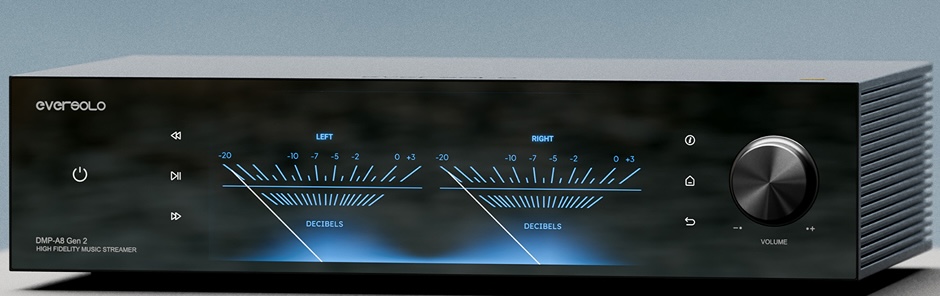
The Eversolo DMP-A8 Gen 2 is a digital hub that combines streaming, DAC, preamp, local music-server functionality, internal SSD support, HDMI ARC, subwoofer control, balanced analog outputs, AKM DAC architecture, Wi-Fi 6, and SFP fiber networking in one very polished box.
Advertisement. Scroll to continue reading.
Eversolo has become a serious player in network audio because its products usually offer strong hardware, useful software, and a feature set that makes some more expensive streamers look a little thin. The original DMP-A8 already made a strong case as a flexible digital front end, so the Gen 2 is interesting because it appears to refine the platform rather than reinvent it. The move to AKM, the addition of SFP fiber networking, broader system-control features, and continued emphasis on local storage all suggest Eversolo understands that many listeners want one digital component that can handle streaming, files, TV audio, and preamp duties.
Advertisement
What I want to test is whether the DMP-A8 Gen 2 improves the parts that matter in daily use. Does the AKM-based DAC architecture change the tonal balance or presentation in a meaningful way? Is the preamp section good enough to drive active speakers or a serious power amplifier without making a dedicated preamp feel mandatory? Does SFP fiber networking offer a practical benefit in a real home network, or is it mostly there for the people who already own three Ethernet switches and strong opinions about optical isolation?
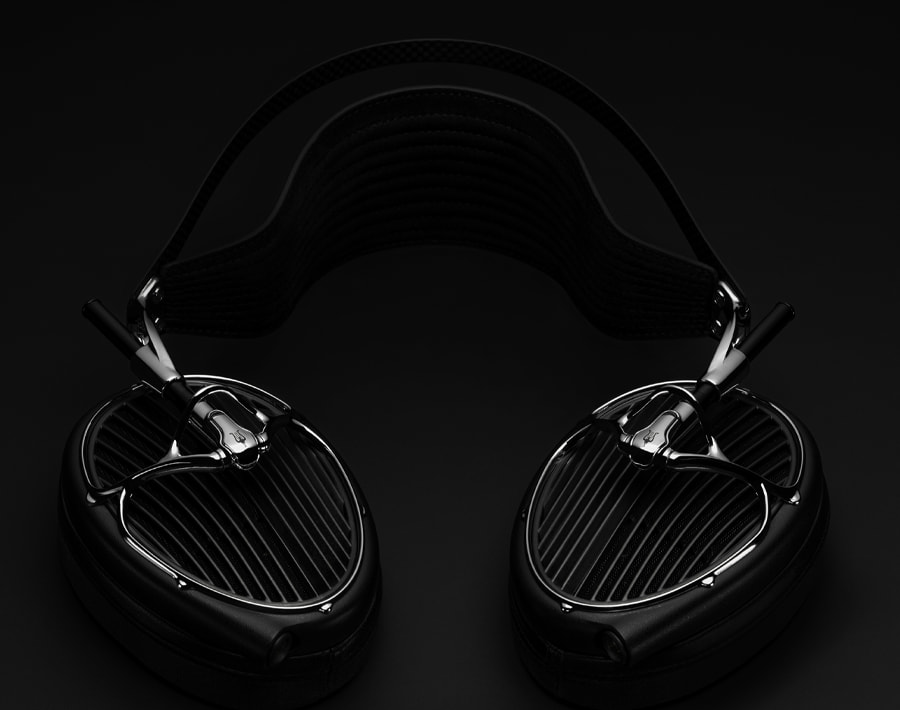
The Meze Audio ARTA is a $6,000 open-back flagship headphone built around a new 225-ohm Rinaro Isodynamic Hybrid Array driver, with the kind of industrial design, materials, and Romanian craftsmanship that have become central to Meze’s identity.
Having owned the Empyrean II for a few years, I can attest to how good Meze can be when it gets the balance right. The Empyrean II is brilliant from both a design and performance perspective: comfortable, beautifully made, musically generous, and far more than a piece of headphone jewelry for people who alphabetize their cables. That is why the ARTA interests me, but also why the price gives me pause. At $6,000, it is walking straight into the same rarefied air occupied by statement headphones from Audeze, HiFiMAN, ZMF, and others. The question is not whether Meze can build something spectacular. It can. The question is whether the ARTA can be thousands of dollars better in ways that matter.
What I want to test is whether we are getting too close to the sun in the head-fi space. If the ARTA is spectacular, I will be thrilled, because I have invested a lot of money and professional capital in this Romanian brand and still believe Meze brings something different to the category. But spectacular is now the entry fee at this price. I want to hear whether the ARTA delivers more resolution, scale, speed, tonal sophistication, and emotional pull than the Empyrean II without losing the comfort and humanity that make Meze special.
Advertisement
Compared with $1 million loudspeakers, perhaps a $6,000 headphone is a bargain even after you add the amplifier, DAC, source, cables, stand, and the quiet room you apparently now need to justify listening to music by yourself.
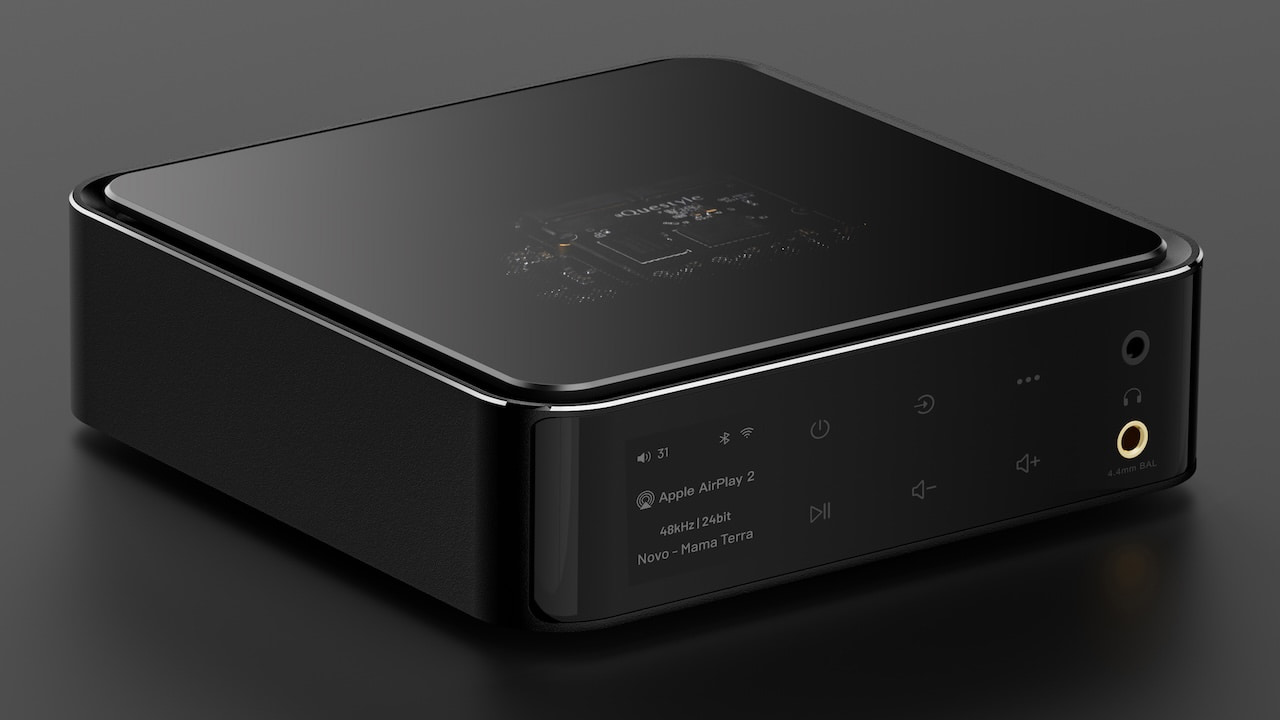
The Questyle QMS system pairs the iXStreamer with the E5 and E4 wireless active bookshelf speakers, using SEAS drivers, Wi-Fi 6, LDAC, aptX, HDMI ARC/eARC, and Questyle’s own DAC/amplification thinking to build a more serious lossless wireless ecosystem.
This will not be cheap, and nobody should pretend otherwise. Questyle makes superb products, even if not every one of them has landed on my “Best of” list, because the company usually tries to do something different rather than just chase the same safe feature set as everyone else.
What I want to test is whether Questyle can make the system feel like real hi-fi and not just another premium wireless speaker platform. The E5, especially the Oceanic Blue co-branded SEAS version, is the one I want in for review because the concept only works if the loudspeakers deliver proper imaging, scale, tonal balance, and low-latency stability with TV, streaming, and hi-res playback.
Advertisement
I also want to know whether the iXStreamer actually makes the ecosystem easier to use, whether HDMI ARC/eARC behaves properly, and whether Questyle’s current-mode DNA translates into active loudspeakers without turning the whole thing into an expensive proof-of-concept for people who already own three DACs and still claim they are “simplifying.”
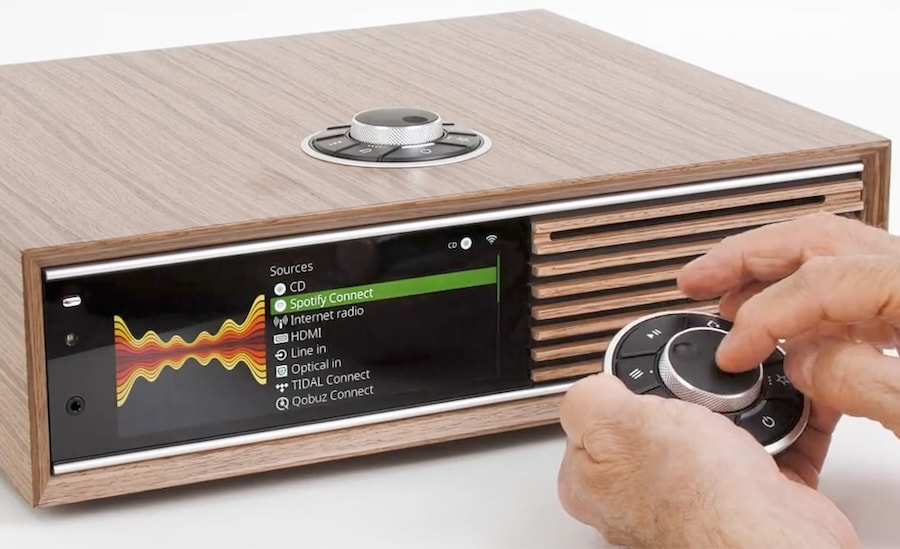
The Ruark R710 is a new CD hi-fi console in Ruark’s 100 Series, designed to sit above the R610 and work as a more ambitious all-in-one music system for listeners who still want CD playback, streaming, proper amplification, strong industrial design, and a system that does not require a rack of boring boxes.
I already heard the Talisman-R loudspeakers at a show, and they made a strong case for Ruark being far more than the company North American audiophiles seem determined to file under “nice radios.” But the R710 was the piece hiding in the wings, and that is the one that may tell us even more about where Ruark is headed. I have reviewed most of the brand’s recent kit, and the frustrating part is that it is consistently better than a lot of people on this side of the Atlantic seem willing to admit.
Advertisement
What I want to test is whether the R710 can finally make more North American listeners take Ruark seriously as a proper hi-fi brand, not just a lifestyle-audio company with good manners and better woodwork. The review needs to answer whether the R710 has enough amplifier control, scale, streaming stability, CD playback quality, and system flexibility to justify its position above the R610, especially with the Talisman-R as the obvious partner. Ruark has the design language, the usability, and the musical instincts. Now I want to know whether the R710 has the authority to make the “real audiophile gear” crowd stop smirking long enough to actually listen.
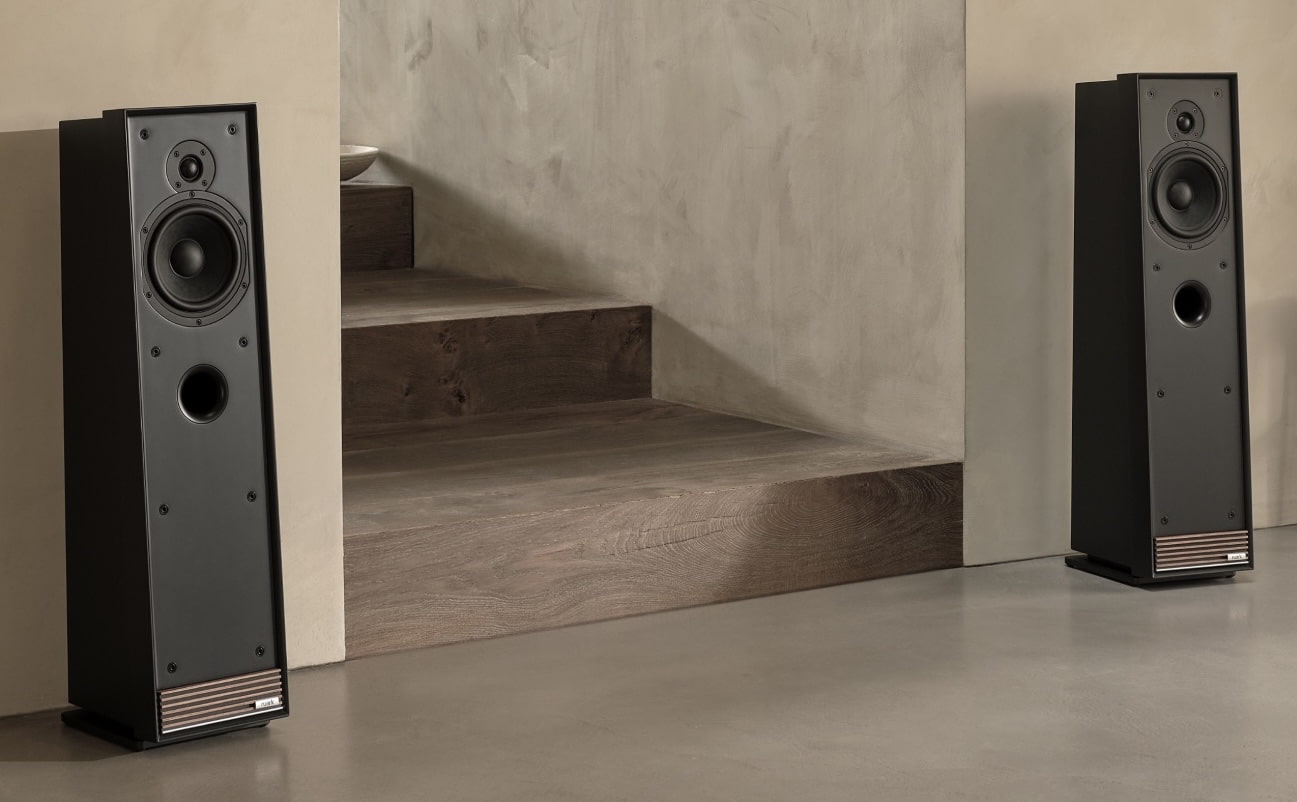
The Ruark Talisman-R is a compact two-way floorstanding loudspeaker; roughly 33.5 inches tall, rated at 87 dB sensitivity, with a 6-ohm nominal impedance that dips to 3.8 ohms, and Ruark recommends amplifiers between 50 and 250 watts.
Ruark is clearly positioning the Talisman-R as the natural partner for the new R710 CD hi-fi console, and that makes sense. But this speaker should not be treated as some locked-in accessory for one Ruark system. Those amplifier requirements open the door to a wide range of gear: modern Class D integrated amplifiers, older Class A/B amps, British integrateds with some grip and warmth, and better streaming amplifiers that need a compact floorstander with actual personality.
What I want to test is whether the Talisman-R is the Ruark product that finally makes more North American listeners stop treating the brand like a polite British radio company and start seeing it as serious hi-fi. If I had to pick a pair of speakers I am likely to buy by the end of 2026 for my new office, these, the Dynaudio Legend, and the DeVore Fidelity o/baby are the three strongest contenders. That is not a small compliment. I want to find out whether the Talisman-R has the tonal density, imaging, bass control, and amplifier flexibility to earn that spot — or whether I’m just being seduced again by British woodwork and my own terrible weakness for compact floorstanders.
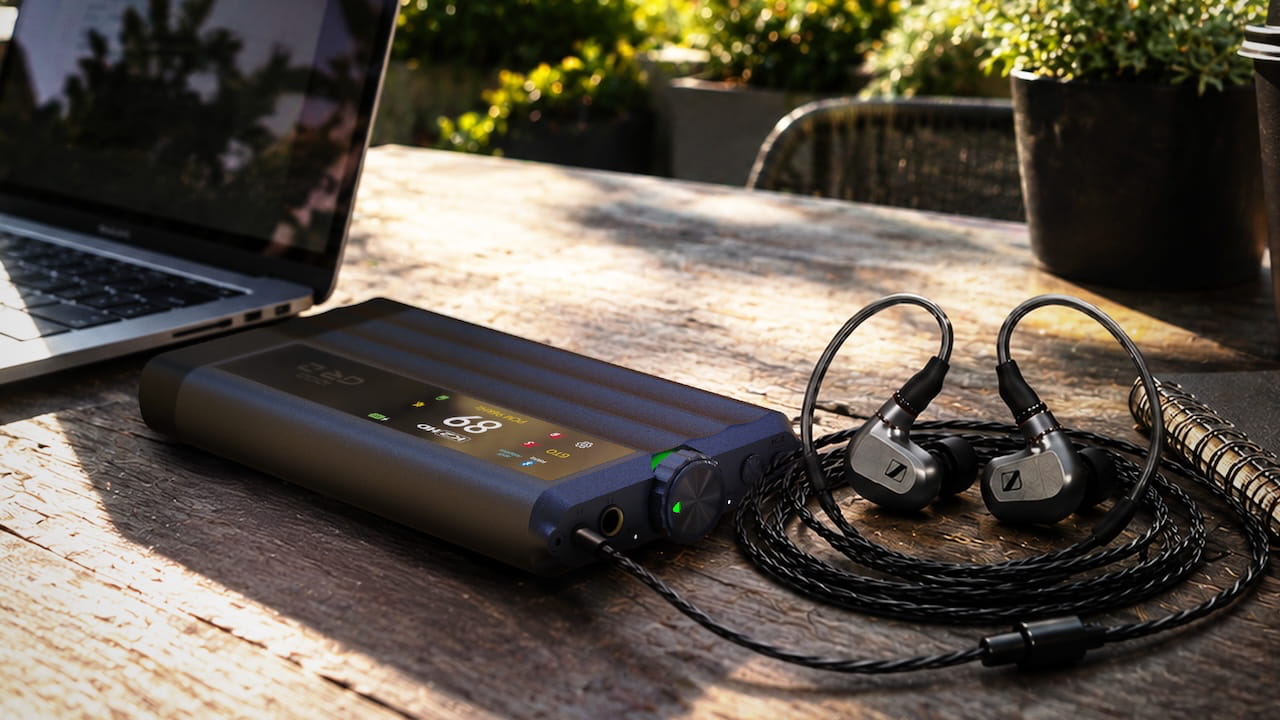
The iFi iDSD GR2 is a $529 portable DAC/headphone amplifier with a Burr-Brown PCM1795 DAC, USB-C and S/PDIF inputs, 3.5mm and 4.4mm headphone outputs, Bluetooth with LDAC and aptX Lossless, iFi’s Nexis app control, and up to 1,513mW RMS into 32 ohms.
iFi has been very good at making portable DAC/amps that feel overbuilt in the right ways, but the category has become crowded, aggressive, and surprisingly good at lower prices. That makes the GR2 interesting because it has to justify itself against dongles, desktop DAC/amps, and wireless headphones that keep getting better. The price is reasonable by iFi standards, and it is lower than the outgoing xDSD Gryphon, but $529 is still real money for a device that many people will carry around, drop in a bag, and eventually panic-search for under a car seat.
What I want to test is whether the GR2 still makes sense in 2026 as a serious portable hub. Does the Burr-Brown PCM1795 implementation deliver the tonal density and smoothness iFi fans expect without getting too soft? Is the output powerful enough for more demanding headphones without turning sensitive IEMs into a hiss festival? Does Bluetooth sound good enough to be useful rather than merely convenient? And does the Nexis app, touchscreen interface, battery life, and hybrid power system make the GR2 easier to live with day to day, or is this another portable box that sounds excellent but demands the patience of someone assembling IKEA furniture in the dark?
Prentis, a new AI research lab focused on computer use models, co-founded by serial entrepreneur Ritankar Das and tech heavyweights Reid Hoffman and Mark Pincus, is in talks to raise $100 million at a $1 billion valuation, according to two people familiar with the discussions.
Launched in April, Prentis is training models to learn how office workers navigate routine workflows across documents and systems, with the goal of building AI agents that can control computers to automate those tasks.
Prentis will ostensibly develop agents tailored to these customers’ needs, such as handling insurance claims and automating customs duty refund exceptions without needing a human to hunt down paperwork.
The startup has already signed contracts worth up to $50 million with several customers, including healthcare management service organization, a manufacturer, and goods and clothing manufacturers, the two people familiar with the discussions tell TechCrunch. This echoes investor materials obtained by TechCrunch that predict an estimated $75 million annualized run rate by the third quarter of this year. (Prentis’ pitch deck notes those figures reflect estimated annualized value based on a contracted fee equal to 20% of savings realized, not recognized revenue, and are “performance-dependent and subject to final execution.”)
Advertisement
By its own account, Prentis says its Hive-32B model outperforms rivals, including OpenAI’s GPT-5.4 and Anthropic’s Claude Opus 4.6, on two computer-use benchmarks: WindowsAgentArena, which measures end-to-end task completion on real Windows applications, and ScreenSpot-v2, which tests a model’s ability to locate the right on-screen control.
In its pitch deck, the company argues its edge comes from running a much smaller, cheaper model. In fact, it claims roughly 10 times lower cost per task than frontier APIs, saying it’s more economical to deploy across everyday workflows. TechCrunch hasn’t independently verified the company’s benchmark results.
The startup is betting that automating everyday office tasks will soon outpace coding as AI’s biggest use case, but it’s a crowded market. Anthropic, Open AI, and Mira Murati’s Thinking Machines Lab are also working on developing AI agents for computer use, one of the sources said. Anthropic has also been acquiring talent in the category directly — it bought the Seattle computer-use startup Vercept earlier this year, folding in its founders and shutting down its product.
Prentis didn’t respond to TechCrunch’s request for comment.
Advertisement
Ritankar Das, CEO of Prentis, is also the founder of Titan, a holding company that builds and operates AI companies. Das, now 31, was UC Berkeley’s youngest University Medalist in more than a century, graduating at 18 with a double major in bioengineering and chemical biology before earning a master’s in biomedical engineering at Oxford.
He founded Titan in 2014 after dropping out of an AI PhD program at Cambridge, where he’d been a Gates Cambridge Scholar. Das has described Titan as an intentional throwback to an old-fashioned holding-company model like Berkshire Hathaway, one that’s funded by its own exits rather than outside limited partners.
Other businesses launched and operated by Titan include AI-powered virtual care provider Tala Health, which raised a $100 million seed round last year, and Forta Health, an autism care startup that raised $55 million led by Insight Partners in 2024. Titan-founded disease prediction company Dascena was acquired by CirrusDx in 2022.
Prentis is a side project of sorts for its two other co-founders. Hoffman, the LinkedIn co-founder and Greylock partner, said last month that he was stepping down from Microsoft’s board after nearly a decade to go “founder mode” on Manas AI, an AI drug-discovery startup he’s also backing; he was an early OpenAI investor and co-founded Inflection AI with Mustafa Suleyman before Microsoft absorbed most of that team in 2024.
Advertisement
Pincus, the Zynga founder, now runs the investment firm Reinvent Capital with Hoffman as a senior adviser, and published a memoir, “Life at the Speed of Play,” last month.
Prentis has already hired more than 25 employees, including researchers who previously worked at OpenAI, Google DeepMind, Meta, Tencent, and Alibaba, according to its website.
When you purchase through links in our articles, we may earn a small commission. This doesn’t affect our editorial independence.
A woman who stole from a Wendy’s returned for her AirPods, a shooting followed an argument about an Apple Watch, and another FedEx robbery in Memphis, all in this week’s Apple Crime Blotter.
The latest in an occasional AppleInsider feature, looking at the world of Apple-related crime.
Second man arrested in FedEx theft of iPhones
A second suspect has been arrested in the $30,000 theft of Apple products from a FedEx shipment in Miami-Dade County in November of 2025, CBS Miami reported.
The suspect was arrested on July 15 and faces cargo theft charges.
Advertisement
The other suspect was arrested in June, and both men were FedEx employees.
Woman who stole from Wendy’s returned for her lost AirPod
A Delaware woman who was accused of attacking a worker and stealing from the register at a Dover Wendy’s later returned when she realized she’d left behind an AirPod.
According to NBC Philadelphia, police say the 33-year-old woman had attacked a store employee after complaining about her order and asking for a refund. After the worker refused, the woman took $15 from the register and “attacked” a worker standing in the way.
She then turned her attention to a second employee, whom she punched “multiple times in the chest,” before throwing the stolen money out the window. Before leaving, she “threatened to shoot restaurant employees.”
Advertisement
Shortly afterward, she returned to look for lost AirPods, and officers who were there to investigate arrested her. She was charged with strong-arm burglary, conspiracy, terroristic threats, and related offenses.
Non-fatal Burger King shooting followed argument over a stolen Apple Watch
In another incident at a fast food restaurant, a man was shot outside a Memphis Burger King on July 14, in a dispute that followed an argument over a stolen Apple Watch.
According to Fox 13 Memphis, two men accused a third man of stealing an Apple Watch from them. This led to a fight, in which one of the men was shot, and his son was injured. The man who was shot was reportedly in critical condition.
The two men accused of the shooting fled but were later caught. One was charged with attempted second-degree murder and the other with being an accomplice.
Advertisement
Two arrested for taking over $130,000 in iPhones
Also in Memphis, two men were arrested on July 15 and charged with stealing 120 iPhone 17 Pros and 50 Tinymoose smart pens from a FedEx processing facility.
According to Action News 5, the two men were caught on camera taking the items, which had a total value of $133,377.
Sheriff’s Deputy accused of taking, sharing nude photos of suspects
A sheriff’s deputy in Bucks County, Pa., was charged on July 21 with taking photographs of naked suspects and prisoners and using his personal iPhone to share the photos with colleagues and other contacts. He’s also accused of lying to investigators.
In an announcement from the Bucks County district attorney, the deputy has been charged with official oppression, unsworn falsification to authorities, possessing an instrument of crime, and obstructing the administration of law or other government function.
Advertisement
He was also removed from his position in June.
A court-authorized forensic search of the deputy’s iPhone uncovered some of the images, the D.A.’s office said.
During one incident, when he and other deputies arrived for an arrest, the then-deputy covered his own body camera.
However, “the body camera of another deputy in the room captured footage of [the deputy] removing his right glove, pulling out his personal cellphone, opening the camera application, and pointing the camera lens directly at the male.”
Advertisement
AirPods, other items stolen from 17-year-old during cancer surgery
A 17-year-old in San Diego had several items stolen from her at the worst possible time: While she was undergoing surgery for Stage 4 pancreatic cancer.
According to Fox 5 San Diego, Sahara Morquecho was in surgery at UC San Diego Health when her purse was stolen, containing her “wallet, jewelry, ID, cash and sentimental photos of her late father,” in addition to AirPods.
While recovering, the teen followed the Find My iPhone signal and discovered the AirPods at a residence in Lemon Grove.
When a deputy went to that address, the resident wasn’t home. However, the landlord provided the person’s name, and she had prior arrests for theft.
Advertisement
She also worked at that hospital.
Man who stole iPad from porch in Bronx fled in a Mercedes
Police are searching for a man who they say stole an iPad delivery from a porch in the Bronx.
Bronx News 12 reports the box was taken on June 12 by a man in an orange hoodie, who fled in a surprisingly fancy car. It was a black Mercedes-Benz.
AirTag placed in stolen campaign sign leads to theft charges for county commissioner
It’s far from rare for politicians’ lawn signs to be stolen, sometimes by a rival campaign. Such expeditions rarely lead to criminal charges, but that happened on July 20 in Tennessee, thanks to an AirTag.
Advertisement
According to WKRN in Nashville, Rutherford County Commissioner Romel McMurry surrendered to authorities after he was named in a theft arrest warrant. He’s accused of taking a sign for his opponent, Pat Clements.
After a series of sign-stealing incidents, Clements told the station that he placed an AirTag in one of his signs. That very sign went missing, and the signal later pinged near McMurry’s home.
McMurry told the station that he did not steal the sign, but rather “relocated” it.
Man accused of crime disconnected iPad during virtual hearing
A New Hampshire man accused of dragging a police officer during a June traffic stop in Massachusetts appeared in court virtually from his jail cell, via iPad. But during the hearing, he “started yelling, grabbed the iPad, and disconnected from the call,” WHDH reported.
Advertisement
He is charged with several crimes, including assault with intent to murder, assault and battery on a police officer, aggravated assault and battery, failure to stop for police, reckless operation of a motor vehicle, and resisting arrest.
Stolen iPhones recovered in Uganda
Police tracing the stolen iPhones belonging to a police officer in Kampala, Uganda, discovered a large cache of stolen iPhones, as well as other Apple products.
According to Pulse, investigators “traced the phone to an alleged network dealing in suspected stolen iPhones and spare parts.” The man who stole the phone admitted that he had sold it to a mobile phone shop.
Between the searches of the shop and the owner’s vehicle, police discovered over a hundred stolen iPhones, as well as iPads, laptops, and iPhone spare parts.
Advertisement
Four suspects have been arrested for their part in the scheme.
The world knows that Formula One is the pinnacle. It is the crown jewel of motorsport, where every facet is taken to its most extreme form. At any given moment, only 20 people in the world can brag that they compete in it, and only 10 of the wealthiest and most influential corporate teams can land a spot on the grid. The drivers themselves are almost superhuman. They rely on reflexes to make split-second maneuvers that can spell greatness or disaster. They know a track’s route, surface materials, elevation changes, and weather patterns as if it were their childhood home, and they train like fighter pilots to withstand the immense G-forces their cars dole out.
But the other component behind what makes the sport so exciting is the engineering. With their gargantuan budgets, Formula One teams have the freedom to experiment with esoteric and experimental automotive technologies consumer brands wouldn’t dream of touching. This freedom and creativity birth new racing innovations, but it also makes the Formula One track a proving ground. Many of the technologies discovered start with racing applications but are found to be beneficial in consumer cars as well, leading to a trickle-down effect. Many of the features we take for granted, or don’t even notice, in our cars have roots in this motorsport proving ground, and their prevalence becomes more apparent the more you look. Here are five Formula One innovations that shaped the cars we drive today.
Advertisement
Paddle Shifters
Octavian Lazar/Shutterstock
The most important aspect of a combustion-powered car behind the engine is its gear system. Transmissions help distribute power effectively, and while many of our gearboxes today are obscenely complicated, they used to be quite simple. As it was with consumer cars for much of their history, Formula One cars relied on manual transmissions for quite a while. The simplicity and communicative nature of a manual was good for both consumers and racing drivers. However, in 1989 the status quo was shaken. John Barnard, who we will revisit quite soon, was with Ferrari at the time, and for the 1989 Ferrari 640 F1 car, he introduced a new gearing system.
The 640’s cockpit traded one pedal and one lever for a pair of paddles designed by ergonomic experts from the University of Delft. The function was stupidly simple: press one paddle to upshift and the other to downshift. This allowed Ferrari drivers to retain the control of a manual without its setbacks. They could keep both hands on the wheel at all times; the shifts were light-years quicker, and these benefits were apparent when the 640 won its first race. Ferrari quickly pulled this tech into their road cars, starting with the F355 in 1997, and other automakers would soon follow suit. The feature started with performance cars, but with the introduction of dual-clutch transmissions in the 2010s, they’ve made their way onto the wheels of cars of all levels.
Advertisement
Carbon Fiber
M. Knijnenburg/Shutterstock
Nowadays, it seems you can’t talk to an engineer, read a spec sheet, or look at aftermarket parts without seeing the words “carbon fiber.” It’s hard to believe now, but in the not-so-distant past, carbon fiber was seen as a fascinating but impractical material whose potential usage did not stretch far beyond some niche aerospace parts and the pages of a science fiction novel. Remember John Barnard? Before he made Ferrari’s special gearbox, he was one of the few people pushing for the use of carbon fiber in Formula One. Working for McLaren at the time, Barnard had to hunt down a firm willing to manufacture a carbon fiber monocoque.
Barnard landed on American firm Hercules Aerospace, and the MP4/1 was born. Skeptics thought the material would be too brittle, but a crash at the 1981 Monza GP where the chassis saved driver John Watson quickly proved this angle wrong. Lightweight, twice as rigid, and five times stronger than steel, carbon fiber’s value was undeniable, and McLaren soon used it in the F1 road car. For a while, exotics were the only options for consumer cars that utilized the material to its full potential. You could find it on sports cars, but it was often used sparingly—due to cost—and as a cosmetic wrapping for components made of another material. As production methods improved, though, the material became cheaper, and today, just about any sport-related car has some somewhere.
Advertisement
Active Suspension
Sometimes in Formula One, a technology is so good it gets banned. When the Williams team was in its prime, it was the maker of one such technology. The FW14B, designed by the legendary Adrian Newey, had a host of amazing features. For one, it was one of the first times a Formula One team realized the potential of modern computing. The FW14B was fitted with a central control unit that featured a Controller Area Network bus system. We could write multiple articles explaining what this means, but the important part is that it meant any electronically connected component could communicate with any other component through a shared central nervous system rather than on delegated individual pathways.
Advertisement
The aero elements of an F1 car have very small fields of effectiveness, and as a car rises and falls and yaws, it can reduce the efficiency of these aero parts, as well as disperse grip force across the tires in an unpredictable manner. Engineers knew an active suspension system could fix this, but the level of communication and data processing to make it work was out of the realm of possibility, except for Williams and their CAN bus control unit. The technology was so effective that Williams cars were finishing almost half a minute before competitors, leading to its banning. That ban is only valid on the track, though, and today, many of us enjoy the smooth rides active suspension brings us.
Advertisement
KERS
Jack Taylor/Getty Images
Hybrid powertrain technology has become the baseline in modern-day Formula One, but back in 2009, the sport was just reaching the tip of the iceberg. The FIA wanted more exciting racing, and that usually translates to more overtaking. To achieve this, the 2009 regulations invited teams to build kinetic energy recovery systems to give drivers extra juice for temporary power boosts. These systems do exactly what the name suggests, but there are some variations in how it’s done.
Some KERS systems work by harvesting the rotational force under braking with a motor-generator unit, or MGU, mounted to the crankshaft. The MGU converts that kinetic energy to electrical energy, which is then stored in a battery. Mechanical KERS systems use a flywheel that spins a carbon fiber rotor under braking and stores the flywheel’s tensile potential energy, which can be reconnected to the wheels for that power boost at the driver’s whim.
KERS technology is very performance-oriented, but its concepts were quickly recognized for their application in electric and hybrid cars. Most cars with any amount of electric power already have MGUs connected to the wheels to spin them via electric power. However, they can also be used to provide resistance and harvest the kinetic energy under braking. The main difference is that, rather than storing the harvested energy in a separate battery for on-tap power boosts, the energy joins the main supply to increase range in what we now call regenerative braking.
Advertisement
Hot V Engine Configuration
To be transparent, while the other entries on this list are technologies you can find in many modern, entry-level consumer cars, the hot V engine configuration is still relegated to high-end sports cars and supercars like the Ferrari 296. However, its genius still makes it worth mentioning, as it solves a problem that is often thought of as an unfortunate but unavoidable law of turbocharging a car. The issue in question is turbo lag. A turbocharger works by spooling up a turbine with exhaust gases to pressurize the air, then injecting that pressurized air into the engine for more power. The issue is that when you first start on the gas, the turbine takes a moment to spin up to the appropriate RPM, leading to an uncomfortable gap in power delivery.
The Ferrari 126CK Formula One car solved this, though, with what we now call the hot V, where the turbochargers are placed inside the valley of the engine. This does a few things. It allows for a more compact engine profile, but more importantly, it shortens the travel distance the exhaust gases have to go before they reach the turbos. It also keeps the turbos in a warmer part of the engine bay, and the intake manifolds in a cooler part, both of which increase each component’s efficiency. The result is boost on tap and the effective elimination of turbo lag.
Apple TV paid a visit to San Diego Comic-Con, hosting a two-hour panel and revealing new trailers for “Dark Matter,” “Neuromancer,” and the loosely toy-based “Matchbox The Movie.”
Just like any major media company that streams movies and TV shows, Apple held a lengthy two-hour panel at San Diego Comic-Con. The panels are usually an opportunity for fans to see stars talk about past and upcoming projects, as well as the reveal of new trailers for inbound releases.
As part of Saturday’s panel, Apple introduced a trio of new trailers for two shows and a movie.
Matchbox The Movie
Hall H was given the first look at a new Apple Original Film based on a Mattel toy franchise. Coming from Skydance Media and Mattel Studios, “Matchbox The Movie” stars John Cena, Sam Richardson, and Jessica Biel, and takes an unusual direction.
Advertisement
While the usual expectation would be a very toy-focused approach, the film instead seems more like an homage to “The Fast and The Furious.” The toys do still appear in the film, though.
Cena stars as an undercover CIA agent who returns to a small town and teams up with a group of his childhood friends. Cue an international pursuit to save the world with lots of vehicular stunts.
“Matchbox The Movie” will air on Apple TV on October 9.
Neuromancer
AppleInsider first heard about “Neuromancer,” based on the William Gibson novels, in February 2024. More than two years later, there’s a trailer for the show.
Advertisement
A ten-episode series, it stars Callum Turner, who made a surprise virtual appearance for the panel. It also counts Briana Middleton, Mark Strong, Joseph Lee, Peter Sarsgaard and Clemence Poesy in its cast.
The show follows top-tier hacker Case, who lands in trouble involving high-stakes crime and espionage with assassin partner Molly, and a heist on a corporate dynasty.
Produced by Paramount Television and Anonymous Content, “Neuromancer” will premiere on Apple TV with two episodes on July 22, 2027, followed by one episode a week until March 19.
Dark Matter Season 2
Apple offered a sneak peek of the second season of “Dark Matter” in April, and continued the charge with a full trailer at Comic-Con.
Advertisement
Based on the novel by Black Crouch, the first season had physicist-professor Jason Dessen be abducted and taken to an alternate version of his life, and followed his attempts to return back home. The second season has Dessen getting used to a quiet life in a seemingly safe world, until they are forced to run once again.
Starring Joel Edgerton and Jennifer Connelly, the cast also includes Alice Braga, Jimmi Simpson, Oakes Fedley, Amanda Brugel, and Dayo Okeniyi.
This time, there will also be “Dark Matter: The Official Podcast” accompanying the show. Author Crouch and executive producer Jacquelyn Ben-Zekry will discuss the show’s biggest moments, the creative process, and the science behind the multiverse.
Produced by Sony Pictures Television, “Dark Matter” will premiere on Apple TV from August 28, 2026, with one episode a week released until October 30.
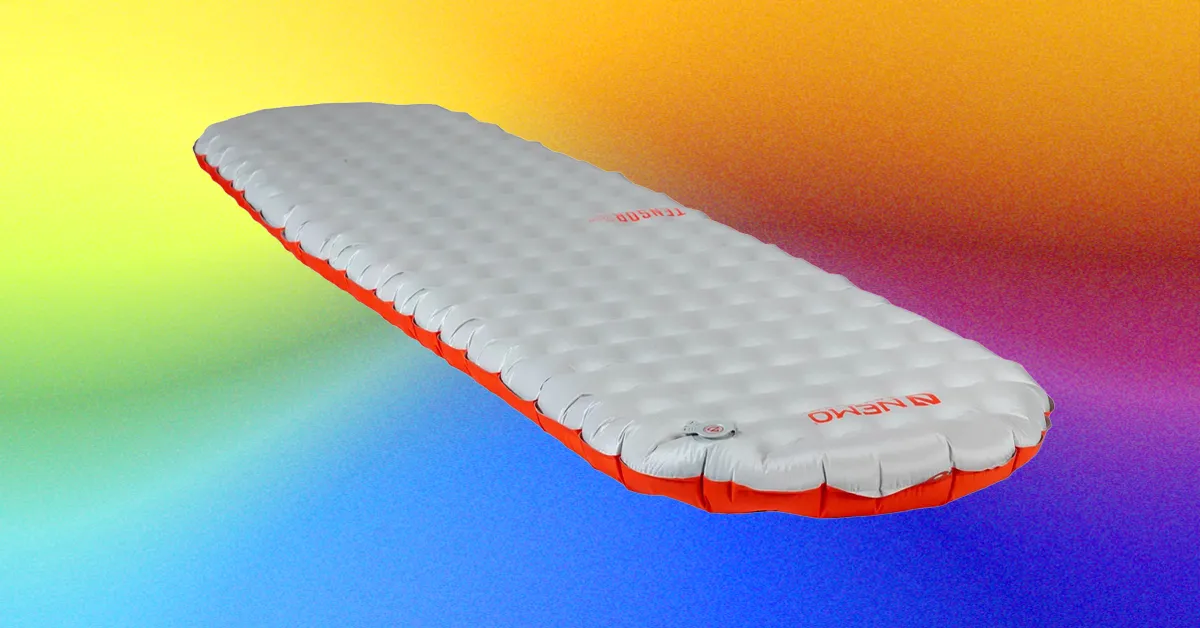
I’ve had very few problems with any inflatable sleeping pad I’ve tested. Some have lost air, but I’ve never had one deflate completely (knock on wood). That said, there are some tricks to getting the best night’s sleep and having a pleasant trip.
Don’t inflate your pad with your mouth: For one thing, some of these pads are huge, and it’s just a pain, but also your breath is warm and moist and you’re injecting into nylon, which is a recipe for mildew and mold. This worry may be somewhat overblown—a few people have cut open pads they’ve inflated by mouth for years and found no sign of mold—but considering what a pain it is to do anyway, it seems easier to just avoid it. Most manufacturers include some kind of pump sack these days, which makes quick work of inflating your pad. There are also motorized pumps that only weigh an ounce or two, like the Flextail pump.
Don’t over-inflate: Insulated sleeping pads work by putting air and material between you and the cold ground, but that doesn’t mean you need to inflate it until it’s taut. It varies by pad. I generally find that the best method is to inflate it taut, and then start to let out air, lying down to test it until you get to where it feels comfortable. The downside to this method is that your pad isn’t that thick and you’re more likely to bottom out if you let out too much air. I find this isn’t much of an issue for stomach or back sleepers, but if you’re a side sleeper it might take some time to find the sweet spot between comfort and warmth.
Carry a patch kit: Most sleeping pads these days include a patch kit. I rarely bring these kits and instead carry a small roll of Tenacious Tape ($6), which will solve rips and tears in everything from sleeping pads to tents. Make sure to test a small piece of tape on your pad beforehand to make sure the tape sticks, and bring an alcohol wipe to clean the affected area.
Advertisement
Women need higher R-value pads: Women generally have lower body mass than men, which means women should add roughly 1 R-value to get the same amount of insulation in the same situation. (I also recommend upping the R-value if you’re a cold sleeper in general.)
Sleeping bag ratings assume R5 pads: Most temp ratings you see on sleeping bags are true only if you’re using a sleeping pad with an R-value of 5 or higher (they also assume you’re wearing a base layer). If your pad is less, you will need to adjust your sleeping bag temp rating accordingly. For example, using your 30 degree quilt with a R4 pad will likely leave you cold if you encounter freezing temps. In that situation you’d want to either up the R-value of the pad, or bring a warmer sleeping bag.
Humans discovered the first exoplanet in 1992 and have since found approximately 6,000 other planets from outside our solar system. Not once have those researchers found a moon orbiting any of those planets, however. That may have changed with the recent discovery of the first moon-like object in another solar system.
The findings were published in a recent study. Kevin Hoy, lead author of the study and PhD student at the Instituto de Estudios Astrofísicos, says that this potential moon, known as CD-35 2722 B, orbits a brown dwarf instead of a traditional planet. It’s also approximately 90% the size of Jupiter and bigger than Saturn. This moon-like object takes 170 days to fully orbit its host.
Hoy and other researchers used a fairly old trick to discover this moon: radial velocity analysis, which is used to detect wobbles in stars and is an indication that an exoplanet is nearby. Planets get dimmer as they move away from their host star, and exoplanets are found by viewing the changes in spectral shift.
This is the same method scientists used to detect the first exoplanet, and it was used to detect this exosatellite, which is the name granted to objects that have not yet been defined as an exoplanet or an exomoon.
Advertisement
“This is the first time, to our knowledge, this technique has produced evidence of satellites around a companion brown dwarf,” Hoy said in the study.
Most people understand that a moon is an object that orbits another object that isn’t a star, like Earth’s moon or the various other moons in the solar system.
NASA
Schrödinger’s Moon?
The study’s findings aren’t without their controversy. Arguably, the biggest question is whether this is actually a moon. Brown dwarves, often referred to as failed stars, are far larger than a standard planet but did not have the chemical reactions in their core necessary to become a star. The exosatellite orbiting this brown dwarf is also bigger than all but one planet in our solar system and larger than most of the exoplanets discovered by researchers so far.
Complicating matters is the fact that no one actually knows what a moon is. There is no standard definition from the International Astronomical Union, the authority that usually comes up with such definitions. Most people understand a moon to be a naturally occurring object that orbits a larger object, like our moon orbits Earth.
There are some rules to this. The host object can’t be a star because then the orbiting object would be a planet. It also can’t be made by humans, or it’s deemed a satellite. The definition has expanded as astronomers find additional, unique types of moons. One example is Zoozve, a quasi-moon that would look like a moon from the surface of Venus but is actually an asteroid that orbits the sun and is close enough to look like a moon.
Advertisement
For CD-35 2722 B, Hoy told me that one problem is the special nature of brown dwarfs. Brown dwarfs are considered substellar objects because they’re too big and dense to be a planet but lack the hydrogen fusion needed to be a star. They exist in a middle ground between the two, so it’s unclear whether something orbiting a brown dwarf would be considered a planet or a moon.
That isn’t the only roadblock. “The object itself is at least the mass of Jupiter, which is far larger than the rocky and icy moons in the solar system,” Hoy said. “It’s not clear that anything that big should be considered a moon.”
Hoy says that the currently accepted IAU definitions group brown dwarfs in with stars, in that an object orbiting a brown dwarf of sufficient size would be considered a planet. However, this brown dwarf orbits its host star like a planet and CD-35 2722 B orbits the brown dwarf like a moon; therefore, it fulfills both the behavior of a moon and the definition of a planet.
“Maybe when a definition for exomoons is written, objects like this will meet both the definitions of planet and moon, but we’ll have to see,” Hoy said. “Those terms are mutually exclusive in the solar system, so I wouldn’t be surprised if they wrote the definition in such a way as to preserve that.”
Advertisement
Until that day comes, no one is quite sure what to make of CD-35 2722 B, and until the IAU opens up the metaphorical box and comes up with an official definition for what a moon is, CD-35 2722 B could realistically be considered both a moon and a planet.
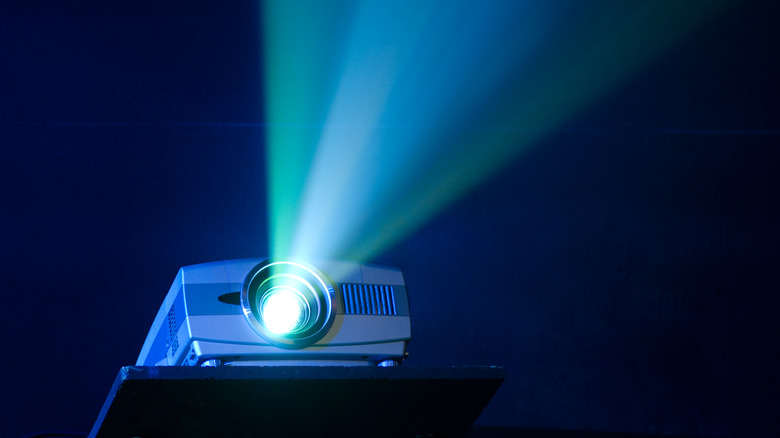
To get the best viewing experience when using a projector, you’ll want to follow the 4/6/8 rule. It’s a widely used guideline in the audio-visual industry for a reason: It’s a quick and easy way to find the optimal viewing distance for a screen based on its size and type of content being displayed.
Not all content one might view on a projector will benefit from the same viewing distance. The 4/6/8 rule knows this. It factors how much detail viewers need to see into account, then measures viewing distance as a multiple of the screen’s vertical display height. Ignore the rule, and you might end up putting your projector in a bad spot.
Each number in the 4/6/8 rule represents one of three viewing types: analytical, basic, and passive. Analytical viewing (like small text, numbers, charts, and detailed images) gets the shortest recommended distance. It should be limited to a maximum distance of four times the screen’s vertical height. Sitting any farther away than that could make those finer details too difficult to read. The less detailed the content, the greater the viewing distance can be.
Advertisement
How the 4/6/8 Rule changes with distance
Anton Gvozdikov/Shutterstock
Basic viewing, where viewers still need to see the information but don’t need to see details, allows for viewing distances of six times the screen’s vertical height. Passive viewing — movies, videos, games, photo slideshows, and anything else in that vein — increases to a maximum distance of eight times the screen’s vertical height.
But how does that factor into something like classroom design, where students might need to do analytical viewing one day but passive viewing the next? In this case, the 4/6/8 rule recommends designing spaces with a maximum viewing distance of six times the screen height whenever possible. That way, the room can comfortably do both analytical and basic viewing (and won’t be hurt by sitting closer than eight times the screen height for passive viewing, either).
Advertisement
If you’re trying to set up a movie room, you can also use the rule in reverse: determine the viewing distance you want (or can afford), then go with a screen that fits the 4/6/8 rule. Either way, remember that no matter how bright and sharp the projected image is, it can’t overcome distance.
Sources told the TWSJ that a deal could be announced soon. SiliconRepublic.com has reached out to Stripe to confirm the validity of the report.
Advertisement
Founded in 2023, OpenRouter is a new type of marketplace that offers users access to more than 400 large language models (LLMs) from around 70 providers. It routes requests to the best available provider, letting users shop around based on price and other factors.
It is claimed to be the first marketplace set up for LLMs, reflecting a growing appetite for AI models and a fast diversifying market. The company more than doubled its valuation in a year, after reaching the $500m milestone last June.
A number of other companies have also considered buying OpenRouter, sources further told TWSJ. The Information also reported on the buzz around the start-up.
OpenRouter co-founder and CEO Alex Atallah has described his company as an AI equivalent of Stripe, a payments processing platform with an array of different tools for businesses. Prior to his current venture, Atallah founded OpenSea, a similar type of marketplace for non-fungible tokens.
Advertisement
OpenRouter already uses Stripe’s services for billing, payment collection and tax, among other needs, under a partnership announced early this year.
Stripe, meanwhile, is also reportedly considering a joint acquisition of PayPal along with US private equity firm Advent International. Sources told TWSJ that PayPal is unhappy with the low-ball reported offer of $53bn. Stripe and Advent are considering their next move.
Don’t miss out on the knowledge you need to succeed. Sign up for the Daily Brief, Silicon Republic’s digest of need-to-know sci-tech news.
A Canadian lab has run a chemical process on real spent nuclear fuel “and pulled out 90% of the long-lived danger in 24 hours, the part that forces a burial site to last 100,000 years,” notes the blog Autonocio, “with the leftovers meant to fuel a reactor.”
The standard plan for spent nuclear fuel is to wait it out. You pull the used bundles from a reactor, sit them in a pool of water for seven to ten years while the heat and radiation come down, seal them in concrete casks, and look for somewhere deep and geologically dull to leave them for the next hundred thousand years. Canada has been hunting for that burial site since the 1980s and still doesn’t have one in the ground.
A company in Saint John, New Brunswick thinks most of what makes that waste dangerous never needed to go in the ground at all. Moltex Energy Canada says a chemical process it calls WATSS can strip 90% of the long-lived material out of used Canada Deuterium Uranium [CANDU] fuel in 24 hours, and that the concentrated leftovers become fuel for a reactor it wants to build on the same site. The recovery step isn’t a slide in a pitch deck anymore. In 2025, World Nuclear News reported that Canadian Nuclear Laboratories ran the process on real used fuel from a commercial Canadian reactor and confirmed the 90% figure.
None of it is generating power yet. What exists is a validated chemical step and a reactor design waiting in line at a regulator. The rest is a 2030s problem. “The chemistry has a lab result behind it. The reactor does not exist…” the article points out. “Moltex is aiming to have its first WATSS and SSR-W units running at Point Lepreau by the early-to-mid 2030s… Not everyone buys the pitch. Critics have argued the reprocessing creates its own stream of byproducts, that the economics are unproven, and that a single site’s stockpile is finite.”
Advertisement
But Moltex “isn’t alone in trying to burn nuclear waste instead of bury it,” the article notes, with Switzerland and Denmark “chasing the same goal a different way.”
Switzerland’s Transmutex drives a subcritical reactor with a particle accelerator, feeding it spent fuel alongside thorium… Denmark’s Copenhagen Atomics is building a thorium molten-salt reactor that fits inside a shipping container and runs on the leftovers from conventional plants.
Thanks to long-time Slashdot reader kwelch007 for sharing the article.
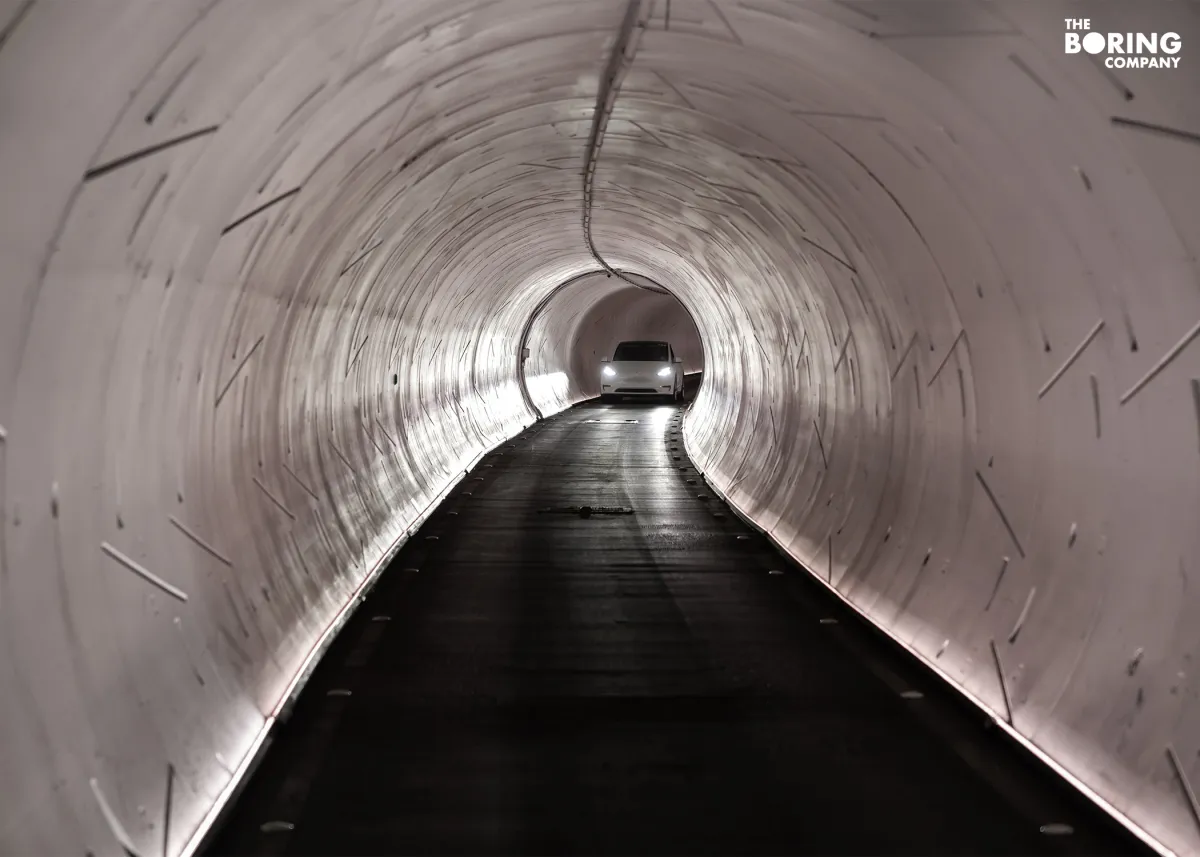
Elon Musk’s tunneling startup The Boring Company is in talks to raise a $4 billion funding round at a valuation of $20 billion, according to The Wall Street Journal.
The Boring Company has announced plans to build tunnel networks under Nashville and Dubai. The WSJ says the startup has also pitched projects in Baltimore, Chicago, and Los Angeles.





















































You must be logged in to post a comment Login