Connect with us

Tech

12 Handy Home Depot Gadgets To Upgrade Your Garage

Published

on


We may receive a commission on purchases made from links.

Home improvement retailers like Home Depot sell a long list of gadgets that will help you in the garage, whether that’s working on a project, maintaining a car, or simply cleaning the space. Of course, a gadget that makes plenty of promises doesn’t always turn out to be as useful or capable as it claims. That’s where user reviews come in handy — they can help verify that the product in question is actually worth your hard-earned money.

These 12 garage-ready gadgets all get consistently good reviews from Home Depot customers. Many can also be found for under $100, and some cost less than $50. Each pick here is available through Home Depot’s website at the time of writing, but stock levels in stores might vary, so it’s worth checking before you head down to your nearest branch.

Advertisement

Chamberlain myQ Smart Garage Control with Wi-Fi Hub

If you want to make your garage door opener smarter, there’s no need to buy an entirely new system. The Chamberlain myQ smart garage control is designed to work with most existing opener systems that were manufactured after 1993, yet it offers several advantages compared to a non-smart system. One of those advantages is its Amazon Key compatibility, which allows delivery drivers temporary access to your garage to drop parcels away from porch pirates. 

Advertisement

If you’d like to keep a closer eye on who’s using your garage and when they’re using it, you can also enable real-time notifications on the smartphone app to let you know when the door is opened. That’s a lot of additional functionality, particularly since the smart garage control retails for only $29.98. 

It’s a popular choice among Home Depot buyers, who have given it an average rating of 4.2 out of five stars from around 1,400 reviews at the time of writing. One reviewer calls it an “amazing upgrade for [an] old garage opener,” while another says they “would recommend it to anyone who needs to control their garage away from home.”

Advertisement

Sensor Brite Motion Activated Step Lights

Retailing for $9.98, the Sensor Brite motion-activated step lights are a cheap way to ensure you can always see clearly in your garage during the darker hours. They use motion sensors to automatically activate when you walk within ten feet of them, and they run on battery power, so there’s no need to worry about wiring them in. Screwing them into walls or stairways isn’t necessary either, since they come with adhesive backing.

Each pack contains two lights, but they’re cheap enough that you could buy enough packs to completely illuminate even the largest of garages without breaking the bank. The lights are well-liked by reviewers, and they’ve accrued more than 500 reviews on Home Depot’s website to date. Overall, the lights achieve an average score of 4.3 out of five stars, with reviewers saying they make “great lighting for garage steps” and are “an added benefit to the home.”

Advertisement

DeWalt 20V Max Cordless Electric Portable Inflator Kit

Alongside its core range of power tools, DeWalt also makes a range of useful gadgets including the 20V Max portable inflator kit. It’s a good entry point into the brand’s cordless 20V Max line for anyone who’s new to the DeWalt brand, since it includes everything you’ll need to get started. Alongside the inflator itself, the kit includes a 3Ah battery and a charger that’s compatible with both 12V and 20V DeWalt batteries.

DeWalt is far from the only tool brand that makes a portable inflator. Its arch-rival Milwaukee also sells a similarly priced tire inflator kit, and which one is better comes down to personal preference as much as performance. Still, anyone who buys the DeWalt inflator kit shouldn’t be disappointed. It’s a versatile offering, since it can run off battery power but can also be plugged into an outlet if you don’t have any battery charge remaining. It comes with all the usual features you’d expect to see at this price point — think auto-shut off, a high-volume inflation mode, and a choice of nozzles to fit everything from tires to sports balls.

Advertisement

Buyers are very positive about the inflator’s capabilities and versatility, awarding it an average score of 4.7 out of five stars from more than 2,700 reviews. 

Advertisement

TP-Link Wi-Fi 6 Range Extender Adapter

Spotty wi-fi in the garage can be a pain, but it doesn’t have to be. The TP-Link Wi-Fi 6 range extender adapter promises to increase your coverage area within your home, garage, or workshop, and it can connect to all TP-Link OneMesh compatible routers. The setup process is straightforward, with one reviewer saying they “set the relay up in our garage and everything from start to finish took no more than 15 minutes.”

Another reviewer explains that they “installed a couple of wi-fi cameras at the far corner of our garage that couldn’t connect with the router in the other end of [the] house.” They added that “while I was wondering what I’d have to configure to get it to work everything just started working.” Other reviewers are similarly positive, giving the device an average rating of 4.3 out of five stars from more than 100 reviews. While it might be a useful solution, wi-fi extenders do come with some drawbacks, so it’s worth considering whether a wi-fi booster or an extender is best for your network before you add the $84.99 TP-Link extender to your basket.

Advertisement

Klein Tools Jobsite Speaker With Magnetic Mount

A good soundtrack can make even the most tiring jobs more bearable, and if your garage needs a speaker to provide that soundtrack, it’s worth checking out the Klein Tools jobsite speaker. It’s available from Home Depot for $38.76 and it has accrued an average score of 4.4 out of five stars from around 200 reviews at the time of writing. The speaker features a magnetic mount and so it can be securely attached to tool chests or metal shelving, but it’s also compatible with tripods and even lanyards too.

Since it’s designed for the jobsite, it’s tough enough to withstand all of the common hazards that garage use presents. It’ll survive getting dusty or getting showered with debris, and it’s also resistant to water splashes thanks to its IP45 rating. When the speaker is connected to your smartphone, it can also be used to answer calls using the built-in microphone.

Klein Tools says it has a 10-hour battery life, and it can be recharged using the included USB charging cable. The brand’s reputation for durability seems to have carried over to the speaker, too, with one reviewer saying, “I’ve had mine for over five years now and it’s been the toughest, longest lasting speaker I’ve ever had.”

Advertisement

Chamberlain myQ Smart Garage Home Security Camera

To complement the myQ smart garage controller and build a comprehensive smart garage setup, buyers could consider the brand’s smart garage security camera. It’s available for $28.85, making it a cost-effective way to see who’s in your garage while you’re travelling or at work. The most affordable version of the camera needs to be plugged in to function, then connected to a wi-fi network. Its feed can then be accessed via the myQ app.

Advertisement

If you need to place the camera in a spot where there’s no outlet available, Chamberlain also offers a battery-powered option, but it’s considerably pricier. A two-pack of battery-powered cameras is available for $118.29. The cheaper option is more commonly reviewed by Home Depot buyers, and has received close to 1,000 reviews to date.

Across those reviews, it has been awarded an average score of four out of five stars. That’s less than most of the other products here, but it’s still enough to make the camera one of the best-reviewed products at Home Depot at its price point. Some of the more negative feedback focuses on the camera’s optional subscription fee to access features like video storage. However, one reviewer notes that “you don’t need a monthly subscription, it helps if you want to store a lot of video but [it’s] not necessary.”

Advertisement

Ryobi USB Lithium Clamp Fan Kit

Ryobi’s USB Lithium clamp fan kit will keep you cool in the garage, the house, or on the road. The kit retails for $39.97 and includes the fan, a 2Ah USB Lithium battery, and a charging cable. It can clamp to surfaces up to 1-¼ inches thick and can be attached to worktops and toolboxes, among many other things.

The kit racked up more than 1,800 reviews from Home Depot customers, and the vast majority are very positive. At the time of writing, it has an average score of 4.7 out of five stars. Even fans of other tool brands have been won over by its value for money, with one reviewer saying that “most of my tools for work are Milwaukee but Milwaukee doesn’t make a small [battery] powered fan.”

Surprisingly, the fan isn’t the only product that Ryobi makes that Milwaukee doesn’t either. The brand with the bright green tools also makes a power carver and a foam cutter, neither of which has a direct Milwaukee equivalent.

Advertisement

Ridgid 3 Gallon Handheld Wet/Dry Shop Vac

A range of manufacturers offer wet/dry shop vacs, but in our comparison of every major vac brand, it was Ridgid which came out on top. The brand’s reputation for durability and the useful extra features available with its vacuums were two reasons for its placement at the top of the pile. A third was the brand’s lifetime warranty, which covers key components against defects in their material or in the vac’s construction.

Advertisement

One of Ridgid’s most compact vacuums is its three gallon handheld wet/dry shop vac, which has an average rating of 4.6 out of five stars from more than 2,000 reviews. While a handful of reviewers report being irritated with the aforementioned warranty’s exclusion of the vac’s hose, most reviewers are satisfied with their purchase. One says that “From car to garage to shop, it is a champ,” while another says that it works “a lot better than dragging out my big Ridgid vac out just to do […] small things […] in the garage or in the house.” It’s available from Home Depot for $69.97.

Advertisement

Chamberlain Wireless Garage Door Keypad

Even if you’re not set on creating the perfect smart garage setup with app-connected door openers and cameras, there are still plenty of ways to add an extra dash of tech to your garage. The Chamberlain wireless garage door keypad is a great example: it costs $50.04, and it lets users with the correct code temporarily gain garage access. Temporary codes can be created for delivery drivers and can be configured to expire after a set amount of time.

Reviewers are generally in agreement that installing and programming the keypad is straightforward, with one calling it “a great product [that] works exactly as I expected.” Durability shouldn’t be a concern either, since according to one reviewer, their last Chamberlain keypad “worked for 22 years before I had to replace it.” At the time of writing, the keypad has amassed close to 2,000 reviews, with an average rating of 4.5 out of five stars.

Advertisement

Ryobi USB Lithium Magnetic Clamp Light Kit

Look beyond its tool range and there are a whole lot of underrated Ryobi finds that users swear by. One of the top-rated of the bunch is the USB Lithium magnetic clamp light kit, which has an exceptional average rating of 4.9 out of five stars from over 100 reviews at the time of writing. Home Depot reviewers say it “lights up the entire garage,” and that “the little clip that comes with it is very handy to hang it from anywhere you want.” Others call it “very convenient to use” and say that “the magnetic feature is especially helpful when you need both hands free.”

As well as its magnetic base, the light is also compatible with Ryobi’s Link storage system, and so can be hung on the wall with a suitable Link wall mount. The head of the light turns 360°, and it can also pivot up to 180°, making it easy to mount it in a wide variety of locations and still get the perfect lighting angle. The light is available as part of a kit for $49.97, and it’s bundled with a 2Ah USB Lithium battery and a charging cable.

Advertisement

Genie Signature Series 2 HPc Smart Garage Door Opener

If your garage door opener is in good working condition, the most affordable way to add extra smart features is to fit a myQ smart garage door controller. However, if you’re in need of a new opener system, the Genie Signature Series smart garage door opener is a worthy alternative. The system is integrated with the brand’s app from the get-go, and it also comes with two garage remotes for good measure.

When used with the companion app, the garage door can be opened using voice assistants like Google Assistant and Amazon Alexa. When it’s being lowered again, an infrared sensor cuts down the chance of the door accidentally coming into contact with a vehicle, object, or person by automatically stopping the door if it detects an obstruction. At a retail price of $379, the system is a larger investment than most of the other gadgets here, but it’s one of the best reviewed products in its category at Home Depot.

Advertisement

At the time of writing, it has an average rating of 4.2 out of five stars from more than 1,300 reviews. While some reviewers criticize its rail design and construction, others are won over by the system, calling it “one of the best purchases from Home Depot” and adding that it was easy to install.

Advertisement

Klein Tools 600V Digital Multimeter

Keeping a multimeter around is always a good idea, since you never know when it might come in useful. There are more ways to use one around the home and garage than you might think, from automotive diagnosis to battery testing. With any gadget, there can be a temptation to pay more for an example with additional features, but the Klein Tools 600V digital multimeter should strike the right balance of features and pricing for most people.

It offers lead alert protection, a backlit display, and a kickstand so it can stand freely during use or storage. Furthermore, it’s able to measure voltage, current, and resistance, and is designed to be easy to use for novices and professionals alike. Few reviewers have bad things to say about the multimeter, giving it an average of 4.7 out of five stars from almost 400 reviews. One reviewer summed up the tool’s appeal by saying it “works perfectly for my needs, [and] for the price and brand, [you] can’t really go wrong.”

Advertisement

How we picked these handy gadgets

Even the most attractively priced gadget is no good if it doesn’t live up to expectations when you actually start using it. To ensure that these handy garage gadgets were up to the task, we relied on feedback from reviewers at Home Depot. Each of the listed picks was among the top-rated products in its category at the retailer, with an average rating of at least four out of five stars from at least 100 reviews. All prices listed refer to the retail price on Home Depot’s website at the time of writing, and do not account for promotions or limited-time discounts.

Advertisement


Source link

Continue Reading
Click to comment

Leave a Reply

Your email address will not be published. Required fields are marked *

Tech

Apple's new MacBook colors nearly debuted in 2022 MacBook Air

Published

on

The colors that the upcoming budget MacBook will be sold in were reportedly first considered for the 2022 MacBook Air before Apple chose Silver, Starlight, and Space Gray.

Open gold laptop on a white desk, screen showing abstract yellow and black swirls and a fingerprint login prompt, with a small potted succulent in the background against a plain wall
Apple’s M2 MacBook Air nearly had some colorful options

Rumors currently have the low-cost MacBook shipping in blue, green, and yellow. Now, in a post on the Weibo Chinese social network, leaker Instant Digital says this isn’t the first time these colors have been in the works.
The post didn’t elaborate on why Apple decided against using the more colorful hues for the M2 MacBook Air. But they did add that Apple’s new color range “looks fresh.”
Continue Reading on AppleInsider | Discuss on our Forums

Source link

Continue Reading

Tech

AI-powered defenses help Google shield Android users from malicious apps

Published

on


According to Vijaya Kaza, Google’s VP of app and ecosystem trust, the company rejected more than 1.75 million potentially harmful apps during the review process and blocked over 80,000 developer accounts for various policy violations. Both figures are significantly lower than in 2024, when 2.36 million apps were rejected and 158,000 developer accounts were blocked.
Read Entire Article
Source link

Continue Reading

Tech

Canadian start-up chipmaker Taalas raises $169m

Published

on

The company’s customised AI chips aim to achieve cheaper and faster results than traditional AI hardware.

Toronto-based start-up Taalas has raised $169m for its specialised AI hardware models.

Total investment in the company stands at $219m, with funding from Quiet Capital and Fidelity, among others, according to Reuters.

In a blogpost from CEO Ljubisa Bajic announcing the release of its first models, the company said it wants to mitigate the “high latency and astronomical cost” of AI, and that its specialised method is faster and cheaper than traditional AI chip approaches.

Advertisement

The company said it took a team of 24 and a spend of $30m since its founding less than three years ago to bring to market its first product, a hard-wired Llama 3.1 8B, which is available as both a chatbot demo and an inference API service.

The company’s aim is to mitigate the need for vast and expensive data centres through the principles of specialisation, merging storage with computation, and simplification.

Taalas said its “platform for transforming any AI model into custom silicon” means that “from the moment a previously unseen model is received, it can be realised in hardware in only two months”.

It claimed its hardware output is “an order of magnitude faster, cheaper and lower power than software-based implementations”, achieved through physically customising chips depending on the bespoke needs of the AI model in question.

Advertisement

Taalas claimed its silicon Llama chip, for example, is nearly 10 times faster than the current state of the art, costs 20 times less to build and consumes 10 times less power.

Taalas aims to release two further models in 2026.

AI chipmaking giant Nvidia this week announced a huge deal with Meta to provide millions of chips for Meta’s AI infrastructure in exchange for billions of dollars.

Don’t miss out on the knowledge you need to succeed. Sign up for the Daily Brief, Silicon Republic’s digest of need-to-know sci-tech news.

Advertisement

Source link

Continue Reading

Tech

Latest leak confirms price hike for the Nothing Phone 4a series

Published

on

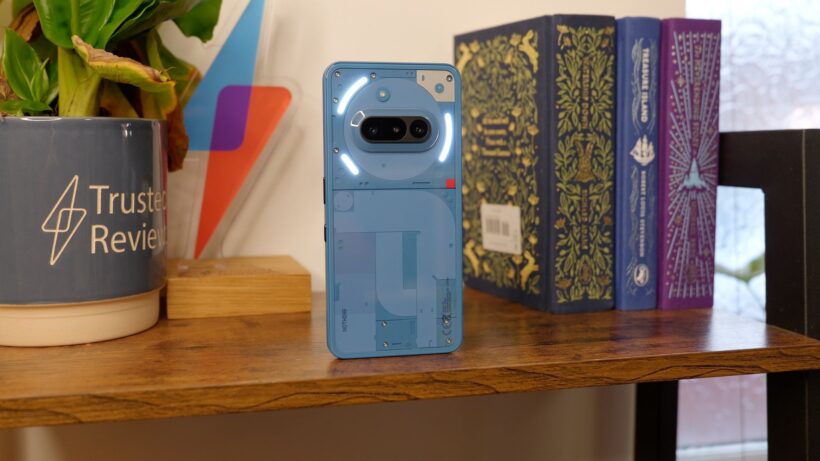
The Nothing Phone (4a) series is shaping up to be more expensive than its predecessor according to fresh leaks detailing pricing, specs and release dates ahead of the company’s March 5 launch event.

A new report from Dealabs suggests the Nothing Phone (4a) will start at around €400. This marks roughly a €50 increase over the Phone (3a), with pricing said to vary slightly by region. For instance, Germany and Spain will reportedly see a €389 starting price. Meanwhile, France, Belgium and Italy could see it land at €409. A 12GB RAM variant is expected to cost between €429 and €449.

The Nothing Phone (4a) Pro could see an even steeper jump. Dealabs claims pricing will begin at €479 in Germany and Spain. This rises to €499 in France, Belgium and Italy — around €90 more than the previous Pro model. A higher-tier 12GB version could reach as much as €569 depending on the market.

As for availability, the base Phone (4a) is tipped to release on March 12. The Pro model could potentially follow on March 26.

Advertisement

Advertisement

Specs are where things get slightly less clear.

Android Headlines, in a separate leak, claims the base model will instead include an 8MP ultrawide alongside a 50MP main sensor and a 3.5x telephoto lens. It also added that the Phone (4a) will run on Snapdragon 7s Gen 4, paired with a 5,400mAh battery and 50W charging. It will also include IP65 dust and water resistance.

Meanwhile, the Pro model is tipped to include a 50MP Sony main sensor, improved optical zoom, an aluminium chassis, a larger 6.83-inch 144Hz display, and a new “Glyph Matrix” lighting system on the rear. The standard model is expected to retain the familiar Glyph Bar and a 6.78-inch display.

Advertisement

Colour options are said to include black, white, pink and blue for the base model. The Pro may arrive in black, silver and pink.

Nothing founder Carl Pei previously hinted that price increases were on the way. These latest leaks appear to confirm that shift. We’ll have full details once Nothing makes it official next month.

Source link

Advertisement
Continue Reading

Tech

The Supreme Court’s Tariff Ruling Won’t Bring Car Prices Back to Earth

Published

on

It has never been more expensive to buy a new car. The average transaction price last month for buyers in the United States was $48,576, up nearly a third from 2019, according to Edmunds. The “affordable” car—$20,000 or less—is dead.

The high prices have been pinned on plenty of economic dynamics: lingering pandemic-era supply-chain issues, the introduction of expensive technology into everyday cars, higher labor and raw materials costs, and new tariffs by the Trump administration affecting imported steel, aluminum, and cars themselves.

Now, despite a US Supreme Court ruling that will nix some of those Trump tariffs, car buyers will likely get no respite.

“The core cost structure facing the auto industry hasn’t fundamentally changed overnight,” writes Jessica Caldwell, Edmunds’ head of insights, in an emailed statement. Put more simply: Cheaper cars aren’t coming, at least not because of this ruling.

Advertisement

The Supreme Court’s decision gets in the way of the president’s power to use the International Emergency Economic Power Act to levy tariffs in response to emergencies. Trump used this power to apply tariffs to countries around the globe, the emergency being “large and persistent” trade deficits. The administration applied other new duties on Canada, China, and Mexico because of what it called emergencies related to the flow of migrants and drugs into the United States.

But most of the tariffs that affect the auto industry come from another law, section 232 of the Trade Expansion Act. That provision can apply to imports that “threaten to impair” the country’s national security. Tariffs on steel, aluminum, copper—key raw materials for cars—and imported auto parts and vehicles themselves came under this provision and are still in effect. This includes 15 percent tariffs on cars built in Europe, Japan, and South Korea.

Automakers have actually done an OK job shielding consumers from the effects of tariffs, Caldwell says. Even as retailers have blamed tariffs for steadily rising prices of consumer goods like electronics and appliances, car prices are up just 1 percent since this time last year, the firm’s data shows. But as the tariff regime drags on, that could change in ways that make new-car buyers even less happy.

“If cost pressures continue to build, automakers may have less room to shield shoppers from higher prices,” Caldwell says, “but for now, the broader market impact is still playing out.”

Advertisement

Source link

Continue Reading

Tech

China’s ByteDance to expand US-based AI teams

Published

on

Reportedly, the organisation intends to hire up to 100 additional employees within its Seed artificial intelligence division.

According to Bloomberg, Chinese technology giant ByteDance has announced plans to employ up to 100 new people in its artificial intelligence (AI) division as a means of competing with some of the world’s leading US-based AI companies. 

The positions open to US-based professionals will be in Seed, which is ByteDance’s AI division with laboratories in the US, Singapore and China. 

Vacancies will be across various responsibilities and will include work in producing international data for ByteDance’s large language models, advancing its popular text, image and video generation tools, completing research to develop ‘human-like’ AI, and building science models that enable the organisation to pursue drug discovery and design. 

Advertisement

ByteDance’s announcement comes despite significant concerns from US lawmakers and regulators around national security. Those in the regulatory space in the US have long argued that there is potential for ByteDance to use TikTok in the collection of its citizens’ private, valuable data or in the spreading of a narrative in favour of Beijing’s leadership via the app’s algorithm. 

Last month, after a long period of deliberation, stalling and false starts, ByteDance and representatives in the US reached a deal wherein the organisation would create an entity for US TikTok operations – with non-Chinese majority owners – as a means of addressing some of the pressing security concerns. 

As noted by Bloomberg, many know ByteDance solely in the context of popular social media platform TikTok; however, it also operates as a well-known AI company in China, offering chatbot app Doubao, AI video generation model Seedance 2.0, and image generation mode, Seedream 5.0.

Earlier this week (16 February), ByteDance promised to “strengthen current safeguards” against intellectual property theft after Disney threatened legal action regarding videos generated by Seedance 2.0.

Advertisement

Via a cease and desist letter, Disney claimed that Seedance 2.0 operates a “pirated library” of Disney assets, taken from its biggest franchises. The company accused ByteDance of using its proprietary content assets as if they were in the public domain.

Don’t miss out on the knowledge you need to succeed. Sign up for the Daily Brief, Silicon Republic’s digest of need-to-know sci-tech news.

Source link

Advertisement
Continue Reading

Tech

EDB says AI sovereignty is a people strategy and only 13% of enterprises are ready

Published

on

In a year defined by sovereign AI and data, one truth has become unavoidable: humans will matter more than ever. Even the most ambitious AI strategies will stall if organizations fail to invest in their people.

More than 95% of enterprises worldwide now say they want to operate as their own AI and data platforms within the next 850 working days. It’s a stunning recognition from C-suite leaders across 13 countries representing a combined GDP of $48 trillion – and a signal of how rapidly the world is shifting. IDC estimates this transition could generate $17 trillion in GDP growth, effectively creating the world’s third-largest economy if counted as a country.

Yet despite this massive ambition, only 13% of more than 134,000 major enterprises are getting it right.

These early leaders have made AI and data sovereignty a mission-critical priority. Their infrastructure allows intelligence to be accessed securely – anywhere, anytime, and in any form. The results speak for themselves: they see 5x higher ROI than the rest, with 2x more GenAI and agentic systems deployed in mainstream production. They are also 250% more confident in their ability to thrive long term.

Advertisement

Enterprises such as Abbott, AIA Singapore, Aviva India, Boston Scientific, Danske Bank, ENOC, JP Morgan Chase, Mastercard, Singtel, Wells Fargo, Toyota, and others are already proving what scaled success looks like.

But this transformation is not a push-button upgrade. Digital transformation took nearly a decade. The AI and data revolution may peak in just three to four years, and its impact could far surpass anything seen before.

That is why the defining question of the next era is not purely technological. Sovereign AI will rise or fall on human readiness. Organizations that fail to reskill, align, and carry their workforce into this transformation will find their ambitions constrained before they ever scale.

There are three key reasons why.

Advertisement

The Intelligent Systems Economy Will Require Hundreds of Millions of Skilled People

This new AI-driven economy brings greater complexity than the cloud migration wave. According to the World Economic Forum’s 2025 Future of Jobs report, AI is expected to displace 92 million jobs, but also create 170 million new ones—a net gain of 78 million. In some countries, up to 70% of these new roles risk going unfilled due to skill shortages.

“We cannot realize the potential of this new intelligent systems economy unless we invest significant time and energy reskilling and enabling employees in new ways,” says Einav Lavi, CHRO at EDB. “Demand for qualified people will far exceed supply, emphasizing how central humans are to this revolution.”

Enterprise-Wide Agentic Success Requires Everyone – Not Just Specialists

The top 13% of enterprises treat AI and data sovereignty as a company-wide standard. Their 2x density of AI initiatives and 5x ROI stem from building a sovereign foundation that reaches everyone—from HR and frontline staff to product design, engineering, and finance.

They rolled out GenAI and agentic systems in a coordinated, enterprise-wide sequence that embedded AI into organizational DNA. Skill levels varied, but reskilling at scale produced transformation at scale.

As enterprises evolve into AI “factories,” every employee becomes part of the production line, sharing common standards, practices, and a unified vision.

The Future Workforce Will Demand Continuous Reinvention

For most of the past century, people held 1.5 careers across 5–10 employers. That era is ending. By 2050, 60–80% of today’s jobs will be automated, and individuals may have 20–30 roles across a dozen organizations.

“In this environment, continuous reskilling becomes one of the most valuable currencies of success,” Lavi notes. “The enterprises that thrive will invest as much in their people as they do in their AI.”

Advertisement

AI itself will accelerate this reinvention – surfacing internal opportunities faster, matching people to roles or stretch assignments, and building personalized development pathways. Growth will be driven increasingly by skills and contribution, not proximity or bias.

For HR and managers, AI-powered “people copilots” will reshape workforce planning by identifying early signals of burnout, workload imbalance, sentiment shifts, and retention risks – augmenting, not replacing, human judgment.

The goal is not the automation of humanity, but the elevation of what makes us human – freeing people to focus on creativity, judgment, empathy, and innovation, the very things machines cannot replicate.

Digital Trends partners with external contributors. All contributor content is reviewed by the Digital Trends editorial staff.

Advertisement

Source link

Continue Reading

Tech

NASA Eyes March 6 To Launch 4 Astronauts To the Moon On Artemis II Mission

Published

on

An anonymous reader quotes a report from NPR: NASA could launch four astronauts on a mission to fly around the moon as soon as March 6th. That’s the launch date (PDF) that the space agency is now working towards following a successful test fueling of its big, 322-foot-tall moon rocket, which is standing on a launch pad at the Kennedy Space Center in Florida.

“This is really getting real,” says Lori Glaze, acting associate administrator of NASA’s exploration systems development mission directorate. “It’s time to get serious and start getting excited.” But she cautioned that there’s still some pending work that remains to be done out at the launch pad, and officials will have to conduct a multi-day flight readiness review late next week to make sure that every aspect of the mission is truly ready to go. “We need to successfully navigate all of those, but assuming that happens, it puts us in a very good position to target March 6th,” she says, noting that the flight readiness review will be “extensive and detailed.” […]

When NASA workers first tested out fueling the rocket earlier this month, they encountered problems like a liquid hydrogen leak. Swapping out some seals and other work seems to have fixed these issues, according to officials who say that the latest countdown dress rehearsal went smoothly, despite glitches such as a loss of ground communications in the Launch Control Center that forced workers to temporarily use backups.

Source link

Advertisement
Continue Reading

Tech

Amazon pushes back on Financial Times report blaming AI coding tools for AWS outages

Published

on

Amazon Web Services issued an unusual public rebuttal to a Financial Times report about outages. (GeekWire File Photo / Todd Bishop)

Seven hours at the top of Techmeme was apparently too much for Amazon to take.

The tech giant’s cloud division, Amazon Web Services, issued an unusually pointed public rebuttal Friday afternoon to a widely cited Financial Times report asserting that Amazon’s own AI coding tools have caused at least two AWS outages in recent months. 

The story was picked up by numerous media outlets, and the widely followed tech news aggregator, as an example of the risks of deploying agentic AI tools, and the underlying question of who — or what —  is responsible when something goes wrong.

In a blog post titled “Correcting the Financial Times report about AWS, Kiro, and AI,” Amazon acknowledged a limited disruption to a single service in one region last December but attributed it to a user error in configuring access controls, not a flaw in the AI tool itself.

“The issue stemmed from a misconfigured role—the same issue that could occur with any developer tool (AI powered or not) or manual action,” Amazon said, noting that it received no customer inquiries about the disruption.

Advertisement

In addition, the company wrote, “The Financial Times’ claim that a second event impacted AWS is entirely false.”

This is where it gets into semantics, the key phrase being “impacted AWS.” In fact, the FT reported that Amazon itself acknowledged a second incident but said it did not affect a “customer-facing AWS service.”

In other words, if an incident doesn’t impact a service used by customers, does it count as an outage? The FT called it one. Amazon clearly thinks not. And this is ultimately the crux of the dispute.

As for the undisputed outage impacting AWS, the FT’s report cited four people familiar with the matter in describing a 13-hour interruption to an AWS system in mid-December. 

Advertisement

The sources said engineers had allowed Amazon’s Kiro AI coding tool — an agentic assistant capable of taking autonomous actions — to make changes, and that the tool determined the best course of action was to “delete and recreate the environment.”

Multiple Amazon employees told the publication that it was the second time in recent months that AI tools had been involved in a service disruption. According to the FT report, a senior AWS employee said the outages were “small but entirely foreseeable,” adding that engineers had let the AI agent resolve issues without human intervention.

AWS is Amazon’s most profitable division. It generated $35.6 billion in revenue last quarter, up 24%, and $12.5 billion in operating income. The cloud unit is a significant focus of the company’s planned $200-billion capital spending spree this year, much of it directed toward AI infrastructure.

In addition to using agentic tools in its own operations, Amazon is selling them to AWS customers, making any narrative about AI-caused outages particularly unwelcome.

Advertisement

Amazon’s core defense — that the December incident was “user error, not AI error” — was already included in the FT’s original story. The blog post largely restates that position in a more prominent and pointed way.

“We did not receive any customer inquiries regarding the interruption,” Amazon wrote in its response. “We implemented numerous safeguards to prevent this from happening again—not because the event had a big impact (it didn’t), but because we insist on learning from our operational experience to improve our security and resilience.”

Amazon said the disruption was limited to AWS Cost Explorer, a tool that lets customers track their cloud spending, in one of its 39 geographic regions. Reuters and The Verge reported that the affected region was in mainland China, citing an Amazon spokesperson. It did not affect core services such as compute, storage, or databases, the company said.

The company added that it has since implemented new safeguards, including mandatory peer review for production access.

Advertisement

Posting on X, New York Times reporter Mike Isaac called the Amazon response “the most prickly” he’d seen from Amazon in years, comparing it to the past era when former White House press secretary Jay Carney, who led public policy for the company, spoke out strongly in its defense.

Source link

Continue Reading

Tech

Real-world data shows plug-in hybrids use far more fuel than advertised

Published

on


Using data transmitted wirelessly from roughly one million PHEVs produced between 2021 and 2023, the researchers measured actual fuel consumption across diverse driving conditions and found an average of six liters per 100 kilometers – roughly three times the officially certified figures.
Read Entire Article
Source link

Continue Reading

Trending

Copyright © 2025