We may receive a commission on purchases made from links.
I’ve always been fond of creating and building things right from childhood, which is why I gifted myself a budget-friendly 3D printer a few years ago. With constant lockdowns and staying at home becoming the norm, I could spend a lot of time modelling objects and see them come to life. From home upgrades to making useful kitchen gadgets to building shelves for my home office, I’ve saved quite a bit of money thanks to my 3D printer. A 3D printer can also teach you several virtues. For starters — patience. Since prints can take several hours to complete, you automatically learn to wait patiently. Another important factor you learn as you keep using a 3D printer is that you may need many accessories to build an ecosystem that produces high-quality, reliable prints.
I realized this the hard way, after tons of failed prints, warping issues, clogged nozzles, and whatnot. To save you from these hassles, we’ve made a list of some must-have 3D printer accessories you can buy on Amazon. In my opinion, these accessories and peripherals can go a long way toward ensuring better prints and a more cohesive experience when 3D printing. Additionally, some of these accessories can even improve the functionality of your prints or let you print large objects in smaller parts and then join them together. I’ve used all of these gadgets personally and can attest that they’re super helpful, whether you’re new to the hobby or a 3D-printing veteran.
Advertisement
Layerneer 3D printer bed adhesive
If you’re new to 3D printing, you would assume that you can directly print an object on the print bed. While this is true, you may occasionally face issues with certain materials or print beds that have poor adhesion. A simple yet effective solution to this problem is using a glue stick. Spreading some glue on the print bed and printing on it prevents the object from getting detached from the bed during large prints. Generally, large prints take a lot of time, so there’s a chance the bed’s temperature may drop slightly — leading to the object getting detached and the print being ruined. The Layerneer 3D printer bed adhesive solves this problem.
Advertisement
Technically, you can use any standard glue stick to make sure your prints stay in place. However, the Layerneer adhesive stands out with its applicator design that’s specifically made for 3D printer beds. This makes it easier to apply and spread the glue evenly. Uneven application can lead to print issues since it could lead to bed leveling inaccuracies. Along with keeping your prints in place, the Layerneer adhesive is also useful to prevent warping. It has no odor, it’s water-soluble, and you can easily release the object from the bed once it cools down. This is an absolute must for large 3D prints.
Advertisement
Biqu CryoGrip Pro Glacier build plate
If you’re new to 3D printing, you would assume that you can directly print an object on the print bed. While this is true, you may occasionally face issues with certain materials or print beds that have poor adhesion. A simple yet effective solution to this problem is using a glue stick. Spreading some glue on the print bed and printing on it prevents the object from getting detached from the bed during large prints. Generally, large prints take a long time, so there’s a chance the bed’s temperature may drop slightly, leading to the object detaching and the print being ruined. The Layerneer 3D printer bed adhesive solves this problem.
Technically, you can use any standard glue stick to make sure your prints stay in place. However, the Layerneer adhesive stands out with its applicator design that’s specifically made for 3D printer beds. This makes it easier to apply and spread the glue evenly. Uneven application can cause print issues by introducing bed leveling inaccuracies. Along with keeping your prints in place, the Layerneer adhesive also helps prevent warping. It has no odor, it’s water-soluble, and you can easily release the object from the bed once it cools down. This is an absolute must for large 3D prints.
Advertisement
Aeorum 3D printing toolkit
There are a bunch of accessories and tools that are useful regularly when dealing with 3D printers. Instead of buying all the tools separately, Aeorum has made it easy by compiling them into a single toolkit that can be stored in a bag. The kit includes everything from a scraper to remove filament from the print bed to a finishing tool that can improve the quality of the final print by removing excess filament or irregular edges. Honestly, this tool is a worthwhile investment, as you can use it to make holes or cavities in your print to join multiple parts or add extras like magnets.
You also get filers, pliers, metallic brushes, screw drivers, and a carrying case to store them all. Whether you’re a beginner or planning to set up a print farm to mass-produce 3D-printed toys, this toolkit will certainly come in handy. In the latter case, the tools will help you achieve a more professional look with fewer sharp edges and rough corners. In turn, that should help with better reviews and repeat orders.
Advertisement
Cregrant 3D filament storage box
A couple of weeks into 3D printing, everything was going well until one fine day, I started experiencing stringing issues with my 3D prints. I looked on several online platforms and forums for solutions, which led me to adjust various parameters on the printer’s interface. The issue persisted despite that. After a little bit of digging around, I found that the issue was with the filament I was using. Thanks to the tropical climate in my region, my filaments had picked up moisture, which can lead to stringing issues. This issue is inevitable if you store your filament spools out in the open.
That’s when I realized the importance of filament storage boxes. These specialized containers are air-tight, meaning they do not allow moisture from the atmosphere to enter. As a result, your filaments stay dry and completely safe — which means no stringing issues anymore. The Cregrant 3D filament storage box is affordable, can store up to 10 filaments or five filaments and five raisin bottles if you also have an SLA printer, and is both dust- and waterproof. If your printer doesn’t have an AMS system and you use multiple filaments, this is the best way to store them.
Advertisement
Guulibera 3D printer stand
When I first got my 3D printer, I set it up next to my computer on my work desk. It didn’t take me long to realize why that was a bad decision. When printing at high speeds, 3D printers tend to shake and cause vibrations, regardless of whether you have a bed-slinger or a Core-XY machine. Now that’s definitely uncomfortable and distracting when I’m sitting at my desk while trying to get work done. I decided to invest in a dedicated table for the printer. The Guulibera printer stand is a good option that serves its purpose well while also providing additional functionality.
Advertisement
For starters, the top surface has ample space for a large 3D printer, a smaller SLA printer, or a filament dryer box like the one mentioned above. Then, there are three large rows to store your filament spools, so you don’t need extra shelves or cabinets. On the right side, there’s a drawer to store essential tools and accessories, with shelves below it for larger tools and products. Notably, the stand remains stable even with two 3D printers on it, which is commendable.
Advertisement
Verones sandpaper kit
Those of you who have already worked with wood for DIY projects may already know the importance of sanding your objects to give them a more polished look. That’s exactly why I recommend getting a bunch of sandpapers of different grits, even for your 3D-printed models. The Verones sandpaper kit includes 90 pieces ranging from 400 grit to 3,000 grit and can be used for both wet and dry sanding. There are nine grit levels with 10 sheets of each, so you’re sorted for a long duration with this pack.
If you’re a beginner and you just started printing your first few objects, you may not need a sandpaper kit. After all, the goal with your first few prints should be to have fun and try different models, experiment with supports, and learn how slicers, infill patterns, and walls work. But, once you get a little serious, you may want to smooth out rough edges, protrusions, and other imperfections in your prints. Additionally, if you’re printing with supports, you may want to sand the surface after removing the supports to give it a smoother finish.
Advertisement
Rhinocats magnets
This is a niche accessory that not everyone may find useful, but it’s certainly nice to have if you’re enthusiastic about exploring the depths of 3D printing. The Rhinocats magnets are small and can turn out to be useful in several ways. For instance, I use them a lot to print fridge magnets that I either use on my own refrigerator or give out to friends as gifts. Simply print a shape of your choice and attach two magnets to the back. Similarly, you can make badges or pins to attach to clothing.
Another use case for these magnets is making toys or objects that require printing in multiple parts and then attaching them. One way to do it is to attach magnets with opposite polarity, so the objects automatically align and snap together when they come close. You will also find several models on online forums that use magnets, such as wallets and cardholders. If you’re well-versed in designing your own objects, you can also create custom prints that use magnets to secure certain parts. The possibilities are endless.
Advertisement
Comgrow filament dryer box
Remember, I mentioned how moisture in your filament can ruin your prints? While a waterproof filament storage box can definitely help keep fresh spools from attracting moisture, what do you do if you already have a bunch of filaments that have been exposed to external moisture? Well, you get a filament dryer box. The Comgrow filament dryer box is one of the most affordable options that does the job well. It sucks out moisture from your filament, so if you have multiple spools lying around, it’s best to put them in this machine, dry them, and then store them in a dry box.
Alternatively, you can also use the dryer while printing. Route the filament to the printer via the dryer box. This way, the filament stays dry throughout the printing process. You can use PLA and ABS filaments with the Comgrow dryer box, and it also lets you set a temperature and a time duration for the filament to stay dry.
Advertisement
Kraftprotz 3D printer super glue
Along with glue to hold your prints in place on the print bed, you may also occasionally require adhesive to glue multiple 3D-printed parts together to form a larger object. Unfortunately, most traditional adhesives fall short in this regard, as they don’t adhere well to plastic surfaces. A standard glue stick may not be sticky enough to hold large parts together, while a stronger glue may just burn through the plastic layers of your print. The Kraftprotz 3D printing super glue solves that problem. It’s specifically made to stick PLA and PETG, so you don’t have to experiment with different adhesives.
Advertisement
Per the brand, the glue also works with ABS, TPU, and nylon, which is excellent, since a lot of large prints that need to be assembled generally need reinforcement, which is why they’re printed using harder materials like ABS. Kraftprotz also claims that the glue leaves no residue or doesn’t cause any warping, which is important if you’re going to sell your prints. I’ve also used 3D printing glue to stick a few of my broken prints, and it has done a fairly good job. However, don’t trust it to hold liquids without seepage.
Advertisement
Vacbird vacuum bags for filament storage
Ideally, a filament storage box should solve the issue with your spools attracting moisture when not in use. However, what if you have way too many filament spools lying around, some of which you may not be using regularly? In such instances, I would recommend storing your filaments in Vacbird’s vacuum bags. You get 30 bags in one pack, which is excellent if you have a large rack to store filaments. Simply dehydrate your filaments using the dryer box, pack them into vacuum bags, and use the built-in suction tool to remove any air.
The best part is that all of these bags are reusable, so if you’re going to use a spool regularly, get it out of the bag and replace it with another one. The suction tool uses USB for power, so you can even plug it into your phone or a power bank and carry out the suction process. Note that you can store a maximum of one kilogram filament in each bag. I’ve been using these bags to store all my filaments, and I would say they are even more effective than a storage container, especially if you live in a dusty environment.
Advertisement
Hardell digital caliper
When you first get a 3D printer, the first few prints are usually models you download from various websites and forums. In fact, that is exactly how I used my 3D printer for the first two years. Once I got bored with the prints online, and I felt the need to make custom objects to use around the house, I learned to design my own items. Handles for utensils, cup holders that fit my desk, and shelves built as per the specific dimensions of my bedroom wall — these were all possible because I decided to make my own models. An extremely important factor when designing your own objects is getting the dimensions right.
If you’re making a replacement handle for a broken pot, you need to get the measurements right to the millimeter. That’s when I decided to get a digital caliper. The Hardell digital caliper is an affordable option that just works. Stretch the prongs, measure the desired object, and you will see the reading on the display. Another reason behind recommending the Hardel caliper is USB-C charging. Instead of replacing cells, a quick 20-minute charge can give you three months of usage.
Advertisement
Preciva threaded inserts
You might be aware of the fact that 3D printers can also be used to make replacement parts for gadgets, appliances, and vehicles. If you’re going to be using these parts for serious work, it’s not ideal to glue them into place or use magnets to fasten them. For such objects, I always use nuts and bolts. Of course, you can’t use screws with plastic items, so you’ll first have to use Preciva’s threaded inserts. The kit includes a soldering iron with several tips that create cavities to insert screws and bolts. There are a plethora of projects that involve screwing multiple 3D-printed parts together.
Whether it’s gears, opening and closing mechanisms, or ball bearings, you can use nuts and bolts to put them together and create a functional object. I once printed a safe for my wardrobe that used bolts to keep the hinge in place. Similarly, the Raspberry Pi case I printed also used screws to fasten the top onto the bottom portion. Funnily, I have also printed replacement parts for my old 3D printer that I screwed into place using third-party screws.
Advertisement
Creality Clog Poke
One issue that plagues many 3D printers after a few weeks or months of use is a clogged nozzle. If your printer randomly stops extruding, it’s time to check the nozzle and remove any clogged filament. The simplest way to do that is using a dedicated accessory, like the Creality Clog Poke. Turn on your printer, set the nozzle temperature to the filament’s melting temperature, and then insert the Clog Poke tool into the nozzle. This particular version from Creality is quite long, which is useful if the clog is deep down inside the extruder. Notably, it’s best-suited for nozzles that extrude 1.75-millimeter filament.
Advertisement
Without a tool like this, you would have to dismantle the hot end to remove any clogs, and that would take up a lot of time. For beginners, it’s also risky since they may not know how to put the contraption back together. At just $10, it certainly deserves a place in your toolbox. A lot of people use a needle for this purpose, but the Creality Clog Poke is much more convenient because it can reach farther down.
Advertisement
How we picked these accessories
Since stepping into the world of 3D printing, I have gradually accumulated these accessories as and when I have needed them for specific use cases. For instance, I got a filament dryer when I realized I was facing stringing issues with my prints due to the filament being moist. Similarly, I added the nozzle declogger to my arsenal when the hot end of my printer kept facing clogging issues. Essentially, these are all accessories that have practical use cases when operating a 3D printer regularly. The idea is to make 3D printing an enjoyable experience while eliminating niggles that can ruin the ease of use for beginners.
Stripe has hit a $159bn valuation, according to a recent letter from company founders.
Irish fintech giant Stripe is considering acquiring some or all of PayPal, reports Bloomberg, citing insiders.
According to the publication, Stripe has already expressed preliminary interest in a potential acquisition of the US payments company or some of its assets. Stripe declined to respond to queries put forth by SiliconRepublic.com. PayPal has not yet responded.
PayPal share prices shot up by around 6.74pc since Bloomberg first reported the story yesterday (24 February).
Advertisement
The US company, which went public in 2002, has a market capitalisation of $43.2bn. The 2010-founded Stripe was valued at $159bn earlier this week. Stripe’s co-founders are seemingly in no rush to take the company public.
Founded in the late 1990s, PayPal has struggled to modernise against emerging rivals in the payments space such as Apple and Google.
However, the executive switch-up did not sway investor confidence after the company missed revenue expectations in the quarter past, sending share prices down by 20pc. Company shares have dropped more than 80pc over the last five years.
Advertisement
Stripe, however, has remained “robustly profitable”, according to a letter from the founding brother-duo Patrick and John Collison. The company is investing heavily in product development and making strategic acquisitions that include programmable wallet company Privy, stablecoin orchestration platform Bridge and Metronome, which “powers the intricate usage-based billing models used by companies like OpenAI, Anthropic, Confluent and Nvidia”.
Sam Altman describes current proposals for orbiting data centers as entirely unrealistic for this decade
Modern AI chips cannot survive space radiation, making orbital data centers currently unfeasible
Radiation-hardened semiconductor nodes lag behind advanced fabrication processes required for AI workloads
Sam Altman has publicly dismissed proposals to place large-scale data centers in orbit, describing the idea as unrealistic under current technological and economic conditions.
The OpenAI chief executive argued space-based computing infrastructure will not operate at a meaningful scale within this decade.
His comments come as the likes of Elon Musk and Jeff Bezos have spoken about the long-term potential of orbital facilities powered by abundant solar energy and freed from terrestrial constraints.
Hardware not built for space
Altman’s remarks directly challenge that optimism and draw attention to the practical limitations facing such projects.
“I honestly think the idea with the current landscape of putting data centers in space is ridiculous,” said Sam Altman at a press conference hosted by The Indian Express.
“It will make sense someday, but if you just do the very rough math of launch costs relative to the cost of power we can produce on Earth, not to mention how you are going to fix a broken GPU in space, and they still break a lot, unfortunately, we are not there yet.”
Advertisement
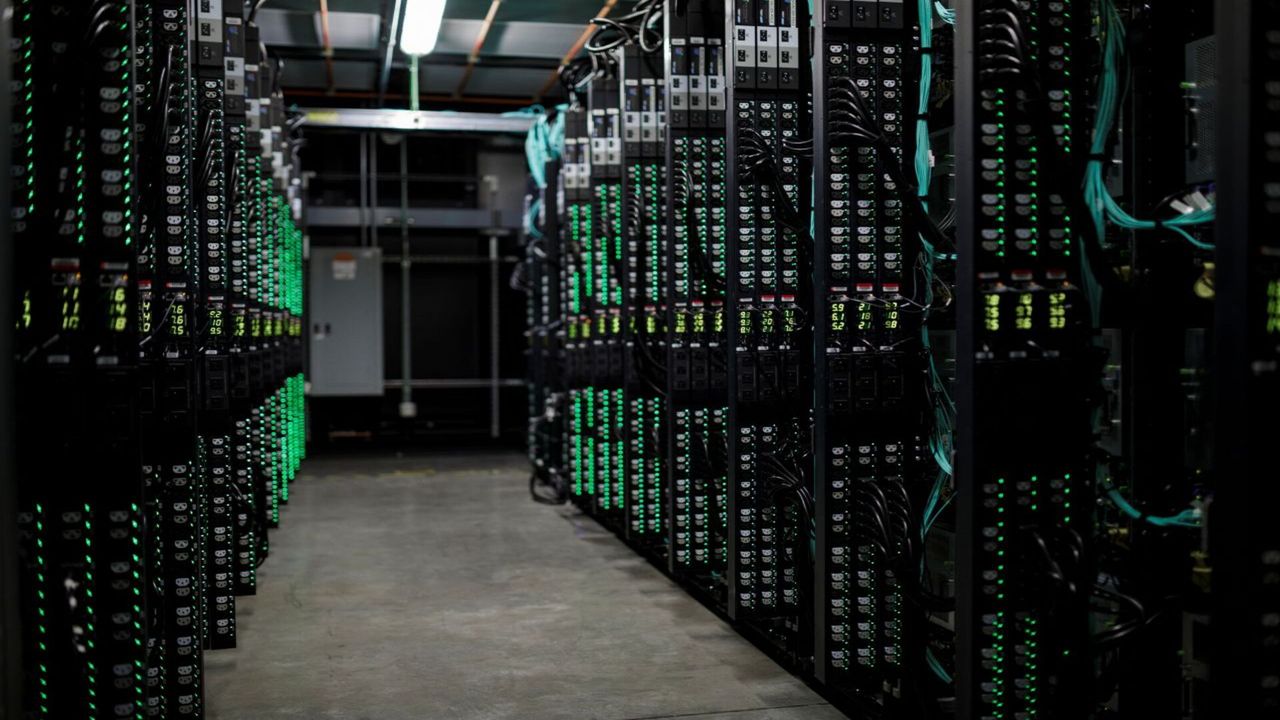
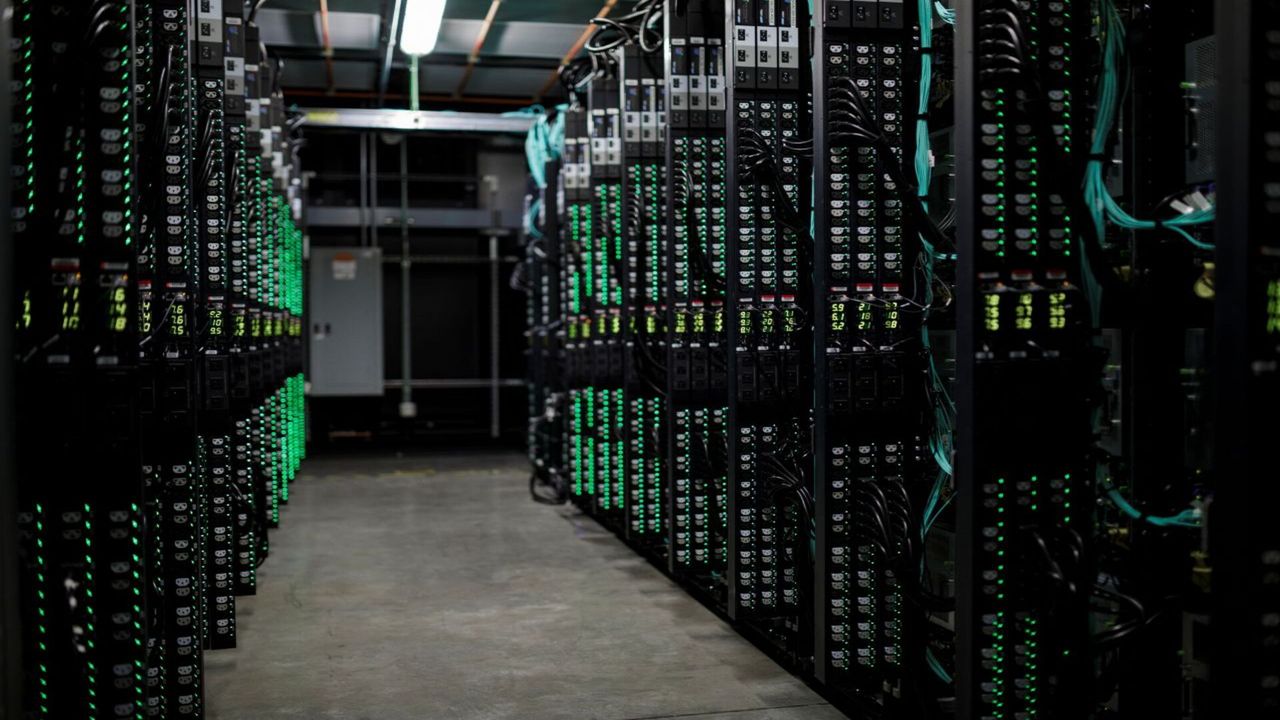
Modern AI accelerators and high-performance processors are manufactured using advanced fabrication nodes such as 4nm-class process technologies.
Sign up to the TechRadar Pro newsletter to get all the top news, opinion, features and guidance your business needs to succeed!
These cutting-edge chips are not radiation-hardened and therefore cannot withstand the harsh conditions of space.
Radiation-resistant semiconductor technologies do exist, although they rely on much older manufacturing nodes that lack the performance required for today’s large AI workloads.
Advertisement
Before orbiting facilities can handle meaningful computational demand, new fabrication approaches would need to combine advanced performance with radiation tolerance.
Beyond processing hardware, orbital data centers would require cooling systems and reliable power generation capable of sustaining millions of accelerators.
Launch providers such as SpaceX and Blue Origin are developing reusable rockets and space infrastructure, yet the supporting ecosystem for operating massive computing facilities in orbit remains incomplete.
Advertisement
Terrestrial data centers already depend on complex arrangements involving power grids, cooling systems, SSD arrays, HDD backups, and cloud storage integration, all of which would require adaptation for space environments.
Cost remains a central barrier to orbital deployment. Launching 800kg into low Earth orbit can cost several million dollars using current commercial rockets.
A single Nvidia NVL72 GB200 rack-scale solution weighs well over a metric ton without additional cooling or connectivity systems.
Scaling such infrastructure into orbit would multiply launch requirements and associated expenses.
Advertisement
Even if launch prices decline for larger payloads, the cumulative cost of transporting and assembling full-scale facilities would remain high under current conditions.
Altman has acknowledged that space will eventually support certain industries, although he maintains that orbiting data centers do not appear viable at scale this decade.
There has never been a “casual” way into Nagra. The Swiss manufacturer’s components are engineered like laboratory instruments and priced accordingly, which has historically placed the brand well beyond the reach of anyone not prepared to treat audio as a long term capital investment. Even so called entry level and mid-tier offerings such as the Compact Phono and PREAMP II-S demand serious financial commitment.
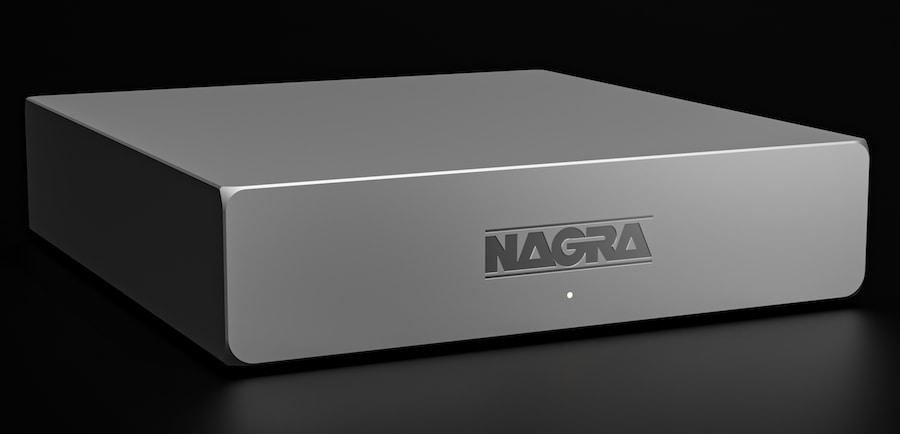
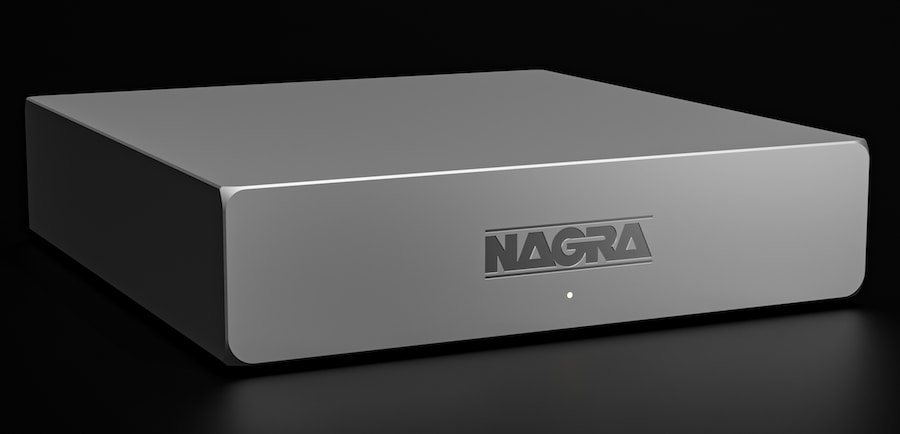
With the $7,500 Compact Player, Audio Technology Switzerland SA is addressing a long standing reality: for many listeners, Nagra has been admired from a distance. This model appears designed to narrow that gap without diluting the formula.
Nagra Compact Player
It is also important not to confuse it with the Compact Streamer. That unit relies on an external DAC, while the Compact Player is a complete digital front-end with its own internal conversion stage and analog output section. In practical terms, this makes it a far more self contained solution for systems that are not already built around a separate Nagra DAC.
What the Compact range does not yet include is a dedicated Compact preamplifier or power amplifier. Whether those arrive later remains to be seen. For now, the direction seems clear: these components function as a gateway. They allow owners to introduce a more attainable slice of Nagra into an existing system rather than requiring a full top to bottom commitment from day one.
Advertisement
But make no mistake, should a complete Nagra Compact Series emerge, the final system price is likely to be in the $25,000 to $30,000 range and that’s before adding loudspeakers, cables, and a turntable or CD player.
The Compact Player, however, is not positioned as a compromise piece. It is a deliberate entry point into the ecosystem, and from personal experience, Nagra components tend to reward those who keep things in the family; which is unlikely to make your accountant very happy.
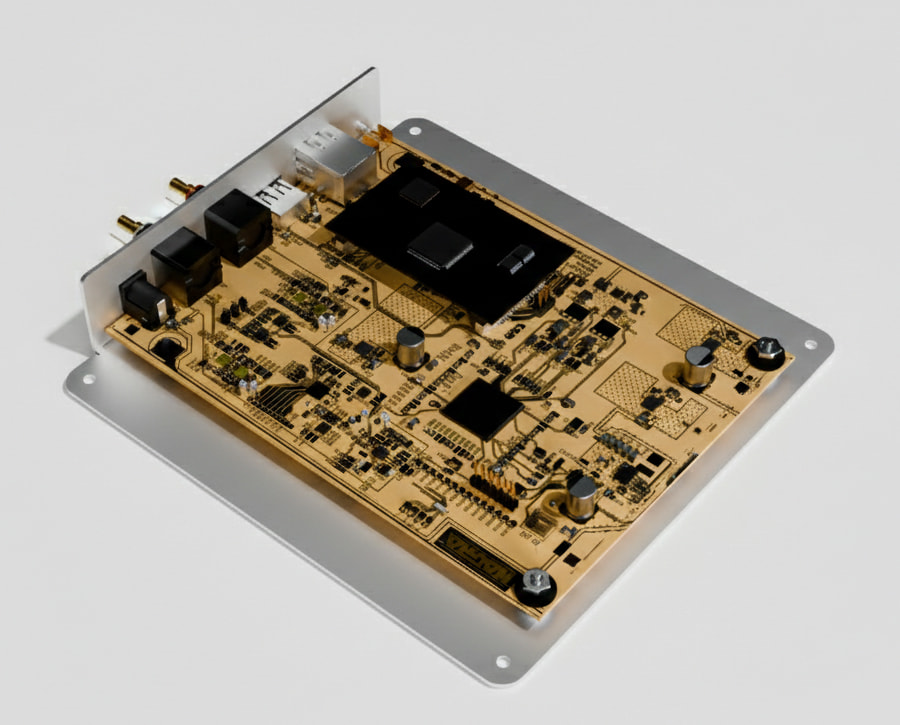
Nagra Compact Player (internal)
Lower Barrier to Entry, Full Swiss Engineering Inside
The Nagra Compact Player is a fully integrated network player and DAC built around the company’s established engineering priorities rather than feature chasing. It combines a modern streaming platform with a dedicated D/A conversion stage and a true dual mono analog output section, with separate circuitry for each channel to improve separation and reduce crosstalk.
The digital architecture centers on a high performance DAC followed by a carefully implemented analog stage. Nagra has paid close attention to clock design, power supply regulation, and PCB layout to keep jitter and noise low and preserve signal integrity through the entire conversion path. This is not unusual for the brand, but it matters in a product designed to serve as a primary source.
Advertisement
Format support is comprehensive. The Compact Player handles PCM up to 384 kHz 32 bit and DSD256, whether streaming from supported services or playing locally stored files via UPnP DLNA or USB storage. Measured performance includes a noise floor of -140 dB A weighted and a 14 ohm output impedance, which makes it easy to integrate with a wide range of preamplifiers and integrated amplifiers. It can also be connected directly to a power amplifier or active loudspeakers if system design calls for it.
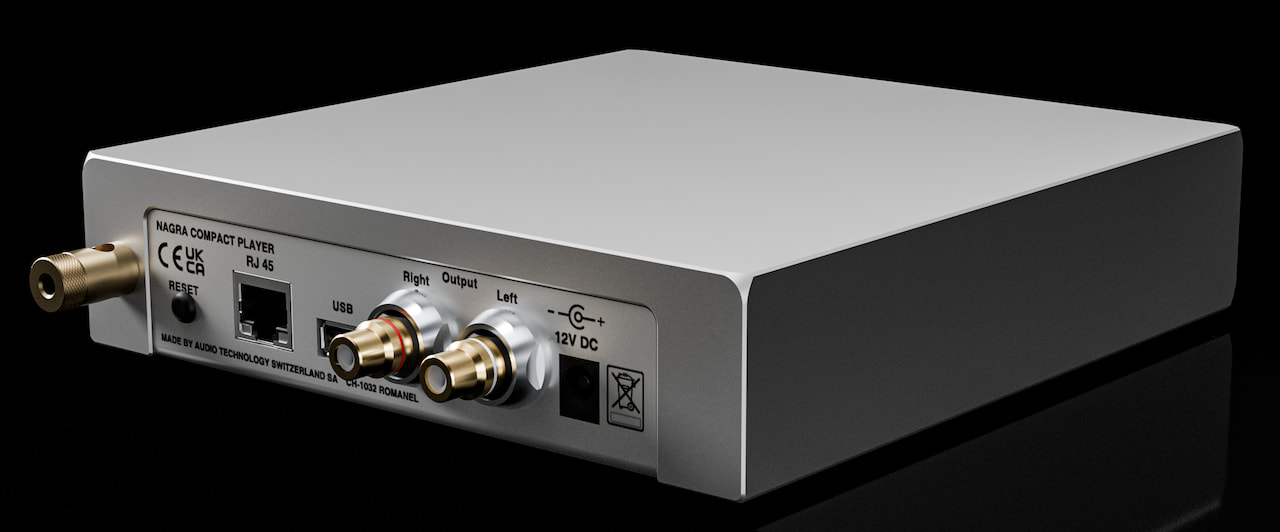
Nagra Compact Player (rear)
Control is handled through the free mConnect app, available for iOS and Android phones and tablets. The app manages local file playback, network streaming, and firmware updates, keeping day to day operation centralized in a single interface.
Streaming support is comprehensive and current. The Compact Player supports Qobuz Connect, TIDAL Connect, and Spotify Connect for direct in app control, along with AirPlay 2 for Apple devices. It is both Roon Ready and Roon Tested, integrates with Audirvana, and provides access to thousands of internet radio stations via vTuner. Local music libraries can be accessed over UPnP DLNA or through attached USB storage.
Advertisement. Scroll to continue reading.
Advertisement
It connects to your network via Ethernet and can also access music stored on a USB hard drive or memory stick. Analog output is via standard RCA connectors, so it will work with most preamplifiers and integrated amplifiers without any special requirements.
Power draw is modest. It runs on an external 12V DC supply and consumes about 10 watts, which is low enough for continuous operation without concern. That figure can rise slightly if a USB hard drive is attached, but not in a way that materially affects ownership.
Physically, it lives up to its name. Measuring 185 x 166 x 41 mm (7.2 x 6.5 x 1.6 inches) and weighing 1.9 kg (4.1 lbs), it is compact enough to fit easily on a standard shelf or rack without demanding extra space.
The chassis is CNC machined from solid aluminum, providing the rigidity and mechanical stability expected at this level. It is compact by Nagra standards, which makes it easier to integrate into real world systems without sacrificing build quality.
Advertisement
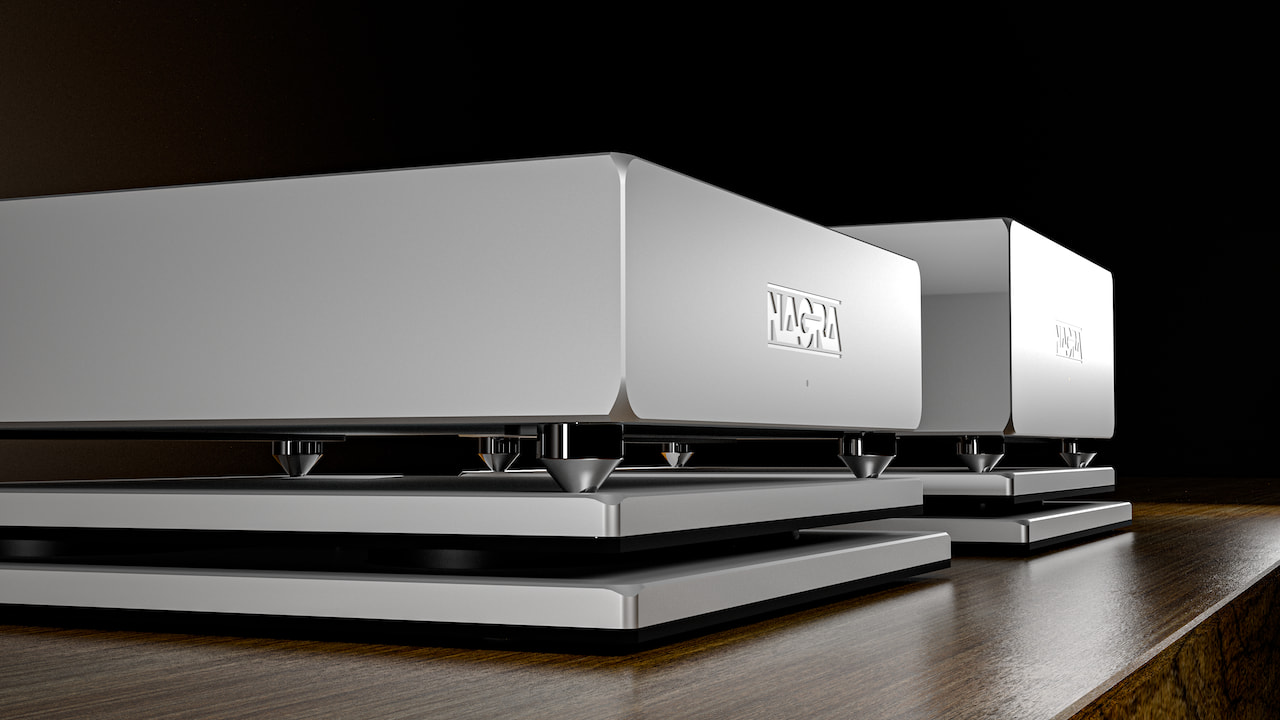
For those who want to take it further, the optional Compact PSU offers improved regulation and current delivery. Nagra also supports additional mechanical isolation and vibration control accessories aimed at refining resolution and spatial precision.
Nagra Compact Player with optional PSU and VFS (vibration free base)
The Bottom Line
The Compact Player is for listeners who want an integrated network player and DAC built to Nagra’s standards, but who may not be ready to commit to a full reference stack. It makes the most sense for existing Nagra owners, or for serious two channel listeners looking to anchor a high performance system with a compact, all in one digital front end.
That said, context matters. Below $1,000, brands like WiiM, Bluesound, Eversolo, and Cambridge Audio offer network players and DACs with extensive feature sets and strong measured performance at a fraction of the cost. On the other end, companies such as Aurender and Innuos sit closer to this price tier with more elaborate server based solutions.
The Compact Player does not try to win on price or feature count. It competes on execution, integration, and long term system building within the Nagra ecosystem. For buyers who value that approach and are comfortable with the investment, it is a deliberate and logical entry point.
Samsung’s Galaxy S26 Ultra is here, packing a wealth of upgrades from the design to its fancy new Privacy Display, which aims to keep people from spying on whatever shady things you’re up to on your commute. But the Ultra range has always been where Samsung has unleashed its latest, greatest camera technology, so let’s take a closer look at what’s new for the photographers among you.
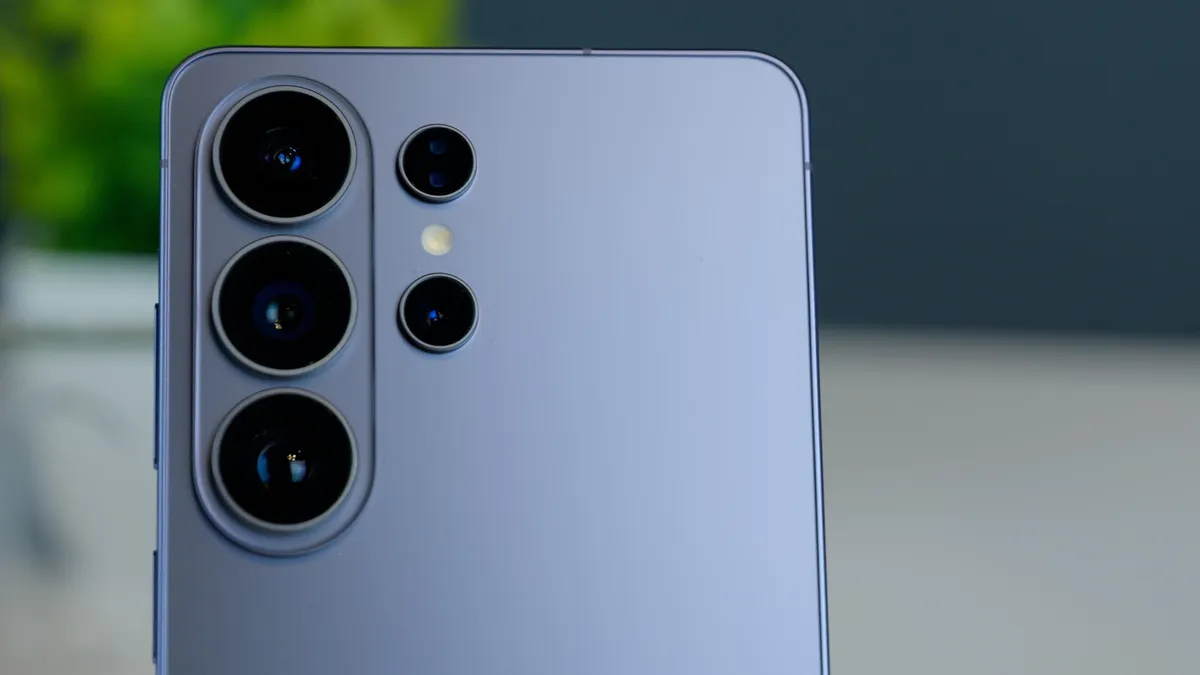
In terms of hardware, not a lot has changed. The main camera has a 200-megapixel resolution, a 50-megapixel ultrawide-angle camera, and 10-megapixel 3x telephoto and 50-megapixel 5x telephoto cameras. Those specs are the same as the previous S25 Ultra, so those of you hoping for a wild overhaul of the cameras to keep pace with Xiaomi’s upcoming 17 Ultra may be disappointed.
Advertisement
The bigger aperture in the main lens and 5x tele camera should help the Galaxy S26 Ultra capture better nightitme photos and videos.
Prakhar Khanna/CNET
But there have been some tweaks. The main and ultrawide cameras now have wider apertures, which should help capture more light and be especially useful in low-light situations. In fact, Samsung especially highlighted the improved performance of night mode imagery for both stills and video, with the night video mode employing more advanced software processing for noise reduction and improved colors.
Speaking of video, it’ll still shoot in 8K and supports Log codecs with built-in LUTs (which is what cinema pros call filters, essentially), which should make the phones more appealing to serious video creators. To show the phone means business, Samsung took a leaf out of Apple’s playbook and filmed and livestreamed its San Francisco launch event using the S26 Ultra.
Advertisement
Samsung filmed its event using Galaxy S26 Ultras.
Samsung/Screenshot by CNET
There’s also a feature called Horizon Lock, which aims to keep the horizon level while shooting video, no matter how you twist and turn your phone. This kind of stabilization exists in action cameras already, and it can be helpful for filming intense action, like if you’re running to keep up as you’re filming your friend skateboarding.
But because it’s 2026 and AI is the word on every tech company’s lips, many of the major updates come in the form of generative AI. It’s built deep into the camera experience, allowing you to use natural language prompts to edit images, including compositing one element of an image onto another, or even changing the outfit someone in your image is wearing.
Advertisement
During its Unpacked event, Samsung demoed the features, showing how its AI tools can take a picture of a dog and place it in the arms of a girl in another image. The company also showed how the phone can instantly change a woman’s outfit from a simple shirt to a cosy sweater, and then to a more grungy skater aesthetic.
There’s a lot of AI baked into the photography experience on the S26 Ultra.
Samsung/Screenshot by CNET
To be fair, the images looked photo-realistic — at least as far as I could see on the YouTube livestream — though how these tools actually work in everyday use remains to be seen until we spend some time with them. The bigger question is whether you actually need them. I won’t answer that for you, but I will say that I’m disappointed that Samsung is following the trend of using AI gimmicks as the main upgrades for its cameras rather than focusing on taking better pictures in the real world.
Advertisement
I’ll reserve judgment until I’ve had some time to take images around my beautiful home city of Edinburgh, Scotland. There, I’ll focus on finding out how well the phone can capture photographs I’d want to share with family and friends, not just how easily I can put on a fake sweater.
Tecno just unveiled a rather intriguing at MWC 2026. The standout feature here is likely the size. Most modular smartphone concepts start bulky and only get bulkier once attaching accessories. Tecno’s base smartphone is just 4.9mm thin, which is significantly thinner than a pencil .
Of course, the size increases with each attached module. However, snapping on the power bank module makes the thickness comparable to a standard modern smartphone. Another key feature here is how these various modular components stick together. Tecno has developed new interconnection technology that uses both magnets and pin connectors. This should make it easy to both attach and remove components.
The company says this phone has been designed to grow with the user through hardware expansion. To that end, Tecno has developed 10 modules. There are various camera lenses and something that looks like a dedicated gaming controller.
Tecno
While the magnets are for attaching, the pin connectors assist with power delivery. Data transmission between the phone and the modules is handled wirelessly, with the ability to switch between Wi-Fi, Bluetooth and mmWave depending on where the user is located.
Advertisement
There are two colorways for both the phone and the ecosystem of accessories. There’s a silver-aluminum edition and a nifty-looking grey version. This doesn’t matter to actual consumers because, well, it’s just a concept design. It does look like the company’s magnetic attachment technology could make it to some actual products down the line.
Tecno has always been a company that marched to the beat of its own drummer. It has developed a , a model with a and a foldable with a .
The industry hasn’t quite embraced modular smartphones just yet, even though there have been some nifty concept designs. Google’s goes back more than a decade, and the same can be said of that never saw the light of day.
There have been some modular phones released to the real world, but they weren’t nearly as ambitious as Tecno’s concept. LG launched a semi-modular phone , but it . Moto has also released a , but they didn’t set the world on fire.
We may receive a commission on purchases made from links.
When the first iPhone launched, it cost $500. This was considered very expensive for a cell phone, regardless of its smarts. Former Microsoft CEO Steve Ballmer infamously laughed at the price and expected it to fail, and few predictions have aged with less grace. Today, the iPhone 17 starts at $800 for the base model, while the 17 Pro Max can hit $2,000. On the Android front, Samsung’s new Galaxy Z TriFold retails for an eye-watering $2,900. At least it includes a charger in the box! What most phones do not include, though, is a case. And cases are more essential than ever for smartphone owners.
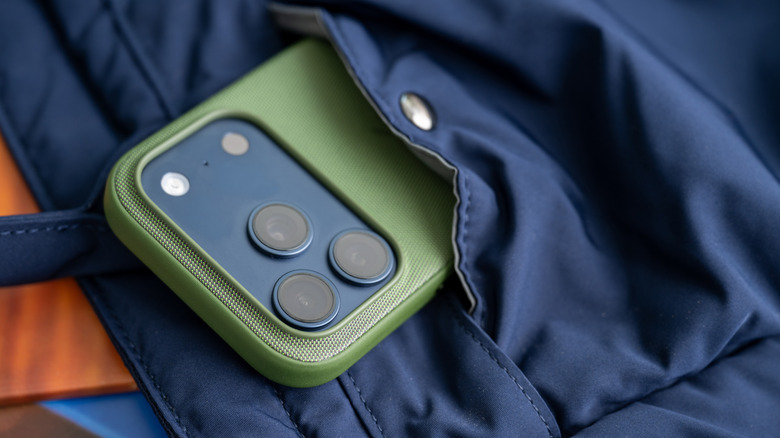
Devices like the TriFold are more delicate thanks to their folding designs, but even regular, slab-style phones like the iPhone 17 Pro break. Ironically, the more expensive your phone is, the more likely it is to be made out of delicate materials like glass. Companies like Corning, which provides Gorilla Glass to Apple, Samsung, and other manufacturers, can only do so much to overcome the reality of physics. And then there are the massive camera humps on flagship phones, which a good case will also protect.
Advertisement
Even with insurance or a care plan, breaking a phone may still lead to costly repairs, replacements that take a while to arrive, and data you can’t recover. In that light, a quality smartphone case is a small investment to avoid such headaches. But there are yet more benefits to using a case that you may not have considered.
Advertisement
The unsung benefits of smartphone cases
Anna Hoychuk/Shutterstock
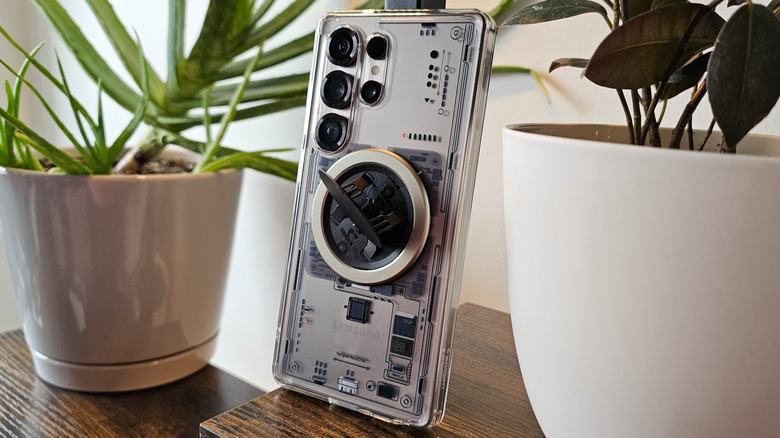
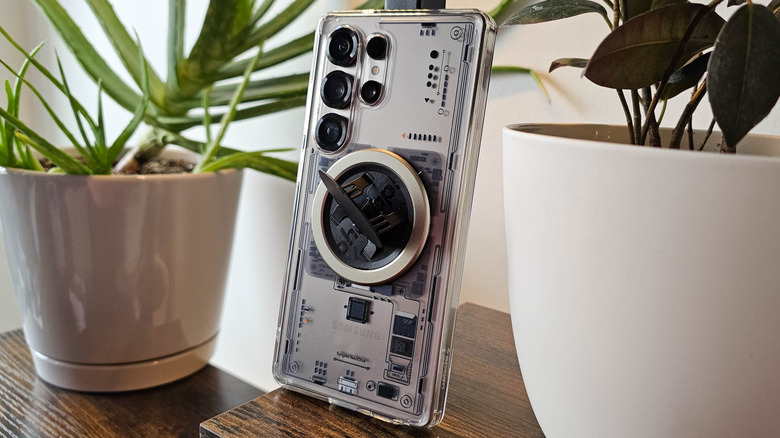
There are more benefits to using a case than protection alone, especially in 2026. If your smartphone does not have a MagSafe-style magnet ring on the back, you’re missing out on the most innovative accessory ecosystem in recent memory. Once you add a magnetic case and get a few accessories, it’s tough to beat the satisfying click that accompanies an instant connection to charging banks, tripods, and car smartphone mounts, not to mention what may be the best alternative to a Popsocket.
Cases can also improve the ergonomic experience of using a smartphone. Glass and metal may look pretty, but they’re not very comfortable to hold. Cases like the Speck Presidio 2 Grip fix this by having ridges and anti-slip materials that are easy to hold. Moreover, with nary a scintilla of bezel left around modern smartphone displays, those with large hands may find their nude smartphone constantly registering unwanted inputs from their palm. Cases put a bit of extra distance between a user’s hand and the touchscreen.
With that said, smartphone designers put a lot of work into crafting products that stand out, and going caseless is a valid decision. As long as you’re willing to bear the risks and have the means to get a new phone in the event yours breaks, go for it! Just be sure to back up your data first. But if you’re in the market for a great case, check out our ranking of major smartphone case brands.
Advertisement
Expensive phones mean expensive repairs and replacements
Evrim Ertik/Getty Images
According to a 2023 YouGov poll, 68% of smartphone users use a case. Some use them as a form of protection, others as a form of expression, and many, both. By 2024, the market for protective smartphone covers had grown to $21.51 billion, according to Grand View Research, a massive figure when you consider that the vast majority of phone cases retail for less than $50.
With phone costs continuing to rise and new designs making them more prone to damage, a case can be the difference between a costly mistake and business as usual. With that said, it’s hard to know how much to pay for a good case, or what makes a case good in the first place. After all, some popular cases cost just a few bucks, while others can cost close to $100. Not all cases are made equal: Some are merely aesthetic and offer very little protection against drops and scrapes, while others provide varying degrees of protection depending on design and materials.
A cheap case might not protect your device, but some expensive ones won’t, either. In general, the best protection will come from a case that uses high-quality, shock-absorbent materials such as TPU or has a two-layer design. The latter will be similar to a bike helmet, with a rigid exterior and a more malleable interior. No matter the case you choose, check that your buttons remain easy to press, your charging port can still accommodate your USB-C cable, and that the phone can still offload heat from its chassis. If you use wireless charging, also check that it works through the case.
The Sea-Scan research team from Trinity College Dublin has been awarded the Defence Innovation Challenge top prize, for its AI-enhanced real-time vessel detection system.
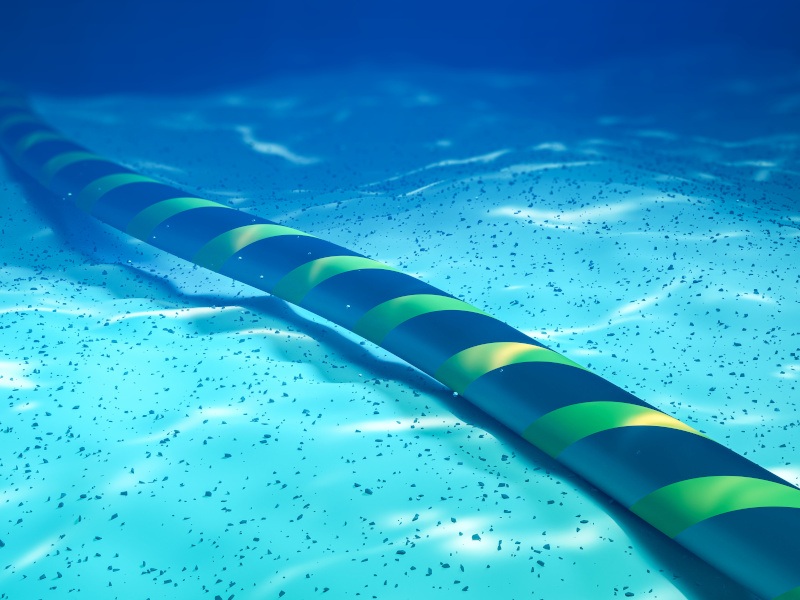
Given the growing threats to subsea communications and energy infrastructure, the need for continuous, reliable monitoring of Ireland’s maritime environment has come to the fore in recent years. This was reflected in the winning project at today’s announcement.
This morning (25 February), Irish Minister for Further and Higher Education, Research, Innovation and Science James Lawless, TD and Minister for Defence Helen McEntee, TD announced more than €1.8m in prize phase funding under the co-funded Research Ireland – Defence Innovation Challenge, with Trinity College Dublin-based project Sea-Scan winning the top award.
The Sea-Scan research team is working on a next-generation maritime situational awareness project to strengthen Ireland’s naval security. The Mash – Mobile Adaptable Shelter – team, led by Dr Daniel McCrum and Dr Kevin Roche from University College Dublin and Defence Forces liaison Captain Dave McKenna, was awarded runner-up funding.
Advertisement
Ireland’s ability to monitor maritime activity, including the detection of so-called “dark” vessels, has been much in the headlines in recent year, with fears over our ability to adequately protect the subsea cables that are the backbone of our international communications.
Sea-Scan will develop an AI-enhanced real-time vessel detection system to support early warning and improved situational awareness, while it also offers potential applications in environmental monitoring. The Sea-Scan team is led by Prof Marco Ruffini and Dr John Kennedy from Trinity College Dublin and Defence Forces liaison Commander Cathal Power. The prize funding was awarded under the Maritime Situational Awareness Challenge.
“Challenge-based research funding encourages researchers to work directly with those most affected by the problems they seek to address,” said Dr Diarmuid O’Brien, CEO of Research Ireland. “The teams being funded today have developed their solutions through close collaboration with Defence Forces personnel. The Sea-Scan team are developing a high-quality solution to a complex problem that will deliver a transformational capability for the Irish Defence Forces.”
“Maintaining strong awareness of activity in Ireland’s maritime domain is essential, particularly given the country’s role as an island nation and a key Atlantic gateway for digital connectivity,” said Ruffini.
Advertisement
“As subsea communications and energy infrastructure continue to grow in strategic importance, so too does the need for continuous, reliable monitoring of the surrounding maritime environment.”
Ruffini says the Sea-Scan team has demonstrated the potential to detect and characterise vessel activity using existing subsea fibre infrastructure, “showcasing a robust sensing capability embedded within operational communications assets and enabling effective vessel monitoring and subsea infrastructure protection”.
“The prize‑winning projects demonstrate how cutting‑edge research can deliver practical, real‑world solutions that strengthen national security while driving technological innovation,” said Lawless.
“Innovation is critical to ensuring our Defence Forces have the tools they need to operate effectively in an increasingly complex environment,” said McEntee. “This investment reflects our commitment to modernising defence capabilities and embracing innovative solutions for the future.”
Advertisement
Don’t miss out on the knowledge you need to succeed. Sign up for the Daily Brief, Silicon Republic’s digest of need-to-know sci-tech news.
When Alan Cole saw Elon Musk fans eagerly bidding up a contract on the prediction market Kalshi that the Department of Government Efficiency (DOGE) could effectively reduce federal spending in a year, he knew he had to take the bet, according to a story about Cole’s winnings in the Wall Street Journal.
If Cole, an international tax accountant, knew anything in life it was this: federal spending couldn’t be quickly whacked, he told the WSJ. Even if DOGE nixed some federal contracts and laid off workers (which it did), plenty of remaining obligations and the skyrocketing federal debt would remain.
So, he wagered his entire life savings — over $342,000 — to take the counter bet that the U.S. federal budget wouldn’t insta-shrink. He slowly amassed 3% of a Kalshi prediction market that had grown to $12 million (making a few hedging bets along the way), he told the WSJ.
When the government released the 2025 year-end spending report on February 20, showing increases compared to 2024, Cole walked away with $470,300 and a handsome $128,000 profit.
Japan’s SoftBank will be the first to deploy the new SN50 chips, while Intel is partnering with SambaNova to roll out its Intel-powered AI cloud.
Intel-backed Nvidia rival SambaNova has raised $350m in a Series E round led by Vista Equity Partners and Cambium Capital, with strong participation from Intel Capital.
Reuters was first to report the planned raise earlier this month. While details of the investment were not disclosed at the time, sources had told the publication that Intel Capital’s contribution would be around $100m, with potential commitments of up to $150m.
Other participants in the round included Gulf Development, Assam Ventures, Battery Ventures, Atlantic Bridge, GV and BlackRock.
Advertisement
According to SambaNova, proceeds from the raise will be used to expand the production of the company’s newly introduced SN50 chip – touted to deliver “the best tokens per watt” – as well as to scale ‘SambaCloud’ and deepen enterprise software integrations.
SoftBank will be the first to deploy SN50 within its AI data centres in Japan, powering inference services for sovereign and enterprise customers across the Asia-Pacific.
Intel has close ties with the 2017-founded SambaNova, with CEO Lip-Bu Tan serving as chairperson on SambaNova’s board. Alongside the raise, the two companies have also jointly announced a multi-year collaboration to deliver cost-efficient AI inference solutions for AI companies, model providers, enterprises and governments worldwide.
As part of the collaboration, Intel is making a strategic investment in SambaNova to accelerate the rollout of an Intel-powered AI cloud.
Advertisement
“AI is no longer a contest to build the biggest model,” said Rodrigo Liang, co‑founder and CEO of SambaNova.
“With the SN50 and our deep collaboration with Intel, the real race is about who can light up entire data centres with AI agents that answer instantly, never stall, and do it at a cost that turns AI from an experiment into the most profitable engine in the cloud.”
The company positions itself as a rising competitor looking to take some of Nvidia’s gigantic share in the AI chips market. Liang, who previously worked as an executive at cloud provider Oracle, said in 2024 that Nvidia had “lost some of its sheen” and that “rivals are biting at its heels”.
Kevork Kechichian, the executive vice-president and general manager for Intel’s data centre group, said: “Customers are asking for more choice and more efficient ways to scale AI.
Advertisement
“By combining Intel’s leadership in compute, networking and memory with SambaNova’s full-stack AI systems and inference cloud platform, we are delivering a compelling option for organisations looking for GPU alternatives to deploy advanced AI at scale.”
Other companies are also looking for alternatives to Nvidia. Meta yesterday (24 February) said that it would buy billions of dollars’ worth of AMD’s chips to develop AI tech and power new data centres. The deal could see Meta taking a stake of up to 10pc in AMD.
Positron, another Nvidia competitor that offers energy-efficient AI chips for inference, raised $230m from Arm Holdings and the Qatar Investment Authority in recent weeks, taking its valuation above $1bn.
Advertisement
Don’t miss out on the knowledge you need to succeed. Sign up for the Daily Brief, Silicon Republic’s digest of need-to-know sci-tech news.
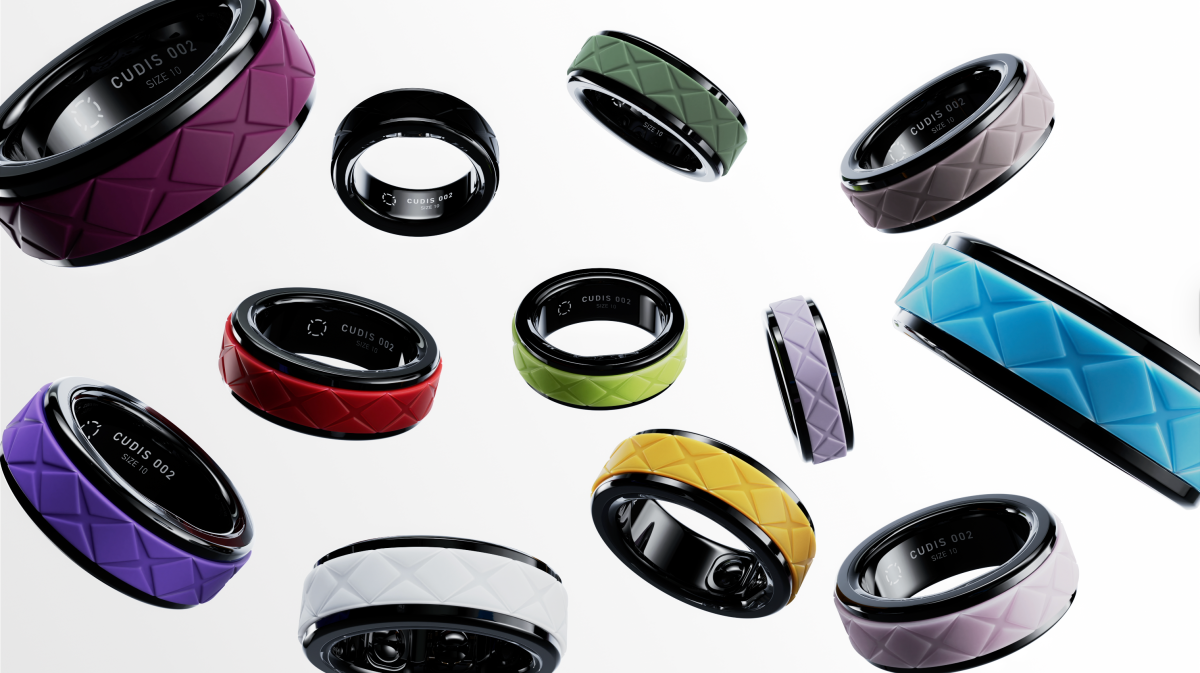
Wearables startup CUDIS is launching its newest series of health rings this week. The updated ring comes equipped with a number of features, including an AI “agent coach” designed to keep users on track to attain their fitness goals.
CUDIS says it differentiates itself from other wearables by not just delivering health metrics but also incentivizing healthy behavior through a points system. Users garner digital “health points” for healthy behaviors — things like daily sleep, 10,000 steps every day, sports activities, and conversations with the ring’s AI coach — which can then be redeemed through an integrated marketplace for discounts on health supplements and other products.
The ring’s AI Agent Coach, meanwhile, is designed to leverage generative AI to aid with healthy programs for exercise and daily health. The company says that its agent generates tailored programs including “daily tasks, recovery protocols, supplement recommendations, and direct referrals to licensed medical professionals.”
The ring also tracks a host of body metrics and daily behaviors, such as sleep quality, stress management, movement, and recovery. This helps them see how these metrics affect their Pace of Aging (PoA), showing whether their body is aging faster or slower than their chronological age, the company explains.
Advertisement
CUDIS CEO and co-founder Edison Chen told TechCrunch that since his company’s first wearable was launched in 2024, the company has sold over 30,000 units across its first two models. The app’s user base has also grown to 250,000 users across 103 countries, he added.
“Our strongest markets so far have been North America, Europe, and Asia,” Chen said. “What we’re good at is pattern recognition for healthy people trying to optimize,” Chen told TechCrunch.
“The AI spots when you’re trending in the wrong direction, such as chronic poor sleep, declining HRV, elevated resting heart rate, and either suggests lifestyle changes or connects you to a professional. The control is in the escalation pathway to the right care access,” he said.
Techcrunch event
Advertisement
Boston, MA | June 9, 2026
The company claims that it keeps user data encrypted and secure via the Solana blockchain. It has previously been described as a “web3 AI wellness company.” (TechCrunch was not able to test the smart ring directly to verify its security claims.)
Advertisement
CUDIS announced $5 million of seed funding in 2024. The round was led by Draper Associates and included a number of other investors, including a number of blockchain-associated investor groups like Skybridge, DraperDragon, Monke Ventures, and Foresight Ventures, among others. The company also plans to launch a Kickstarter soon.