Although Honda is known for legendary sports cars like the Honda Civic Type-R and the Honda NSX, it didn’t get its start with four-wheeled vehicles. Founder Soichiro Honda began the business with a motorized bicycle in 1947, meaning it has been making motorcycles for nearly 80 years now. While the company started in Japan, it has since expanded worldwide, building bikes in various countries around the world, including Vietnam, Pakistan, Indonesia, and China, and more.
Even as Honda is churning out motorcycles from these factories, it has been busy developing new models to launch in 2026. It has announced several available models across multiple categories, including adventure bikes, scooters, and dirt bikes for the model year. So, if you’re looking to get a new motorcycle, you can definitely find a Honda bike that fits your taste or needs.
Advertisement
Given that, we decided to pick out some of the coolest Honda motorcycles we expect to hit the showrooms this year. We included the MSRP of each of these models, giving you a rough idea of how much you’ll have to spend to get these two-wheelers into your garage.
Advertisement
XR150L
The XR150L is one of the cheapest motorcycles you can buy in 2026, but that doesn’t mean that you’re not getting much out of it. This dual-sport motorcycle straddles the best of both worlds — a capable bike that can handle off-road trails and a comfortable motorcycle that’s good for stop-and-go riding along city streets. Honda designed it to be simple and rugged, aiming to make it an affordable and reliable option for beginners, commuters, and lighter or smaller dual-sport fans.
This motorcycle is powered by a 149cc air-cooled single-cylinder engine mated to a five-speed manual transmission. This is then supported by a steel frame, ensuring it can withstand the rigors of off-road driving, while its conventional fork suspension and single rear shock help maintain comfort on both dirt and pavement. You also get a large 19-inch wheel up front and a 17-inch wheel in the back, helping you maintain control over rough terrain and poorly maintained infrastructure while still offering stability as you cruise through city streets and mountain roads.
More importantly, you don’t have to spend an arm and a leg just to get this bike. The XR150L starts at $3,399 (plus a $300 destination charge), making it one of the most affordable ways you can get mobility through town and country.
Advertisement
Dax 125
The Super Cub is one of the most reliable Honda motorcycles you can buy, but it looks pretty vanilla and is designed to cater to everyone. If you want the same reliability but desire something more distinctive, then you should look at the Dax 125. This model has been derived from the popular Super Cub through the CT series, but it comes with modern features that make riding easier. Aside from that, it’s designed with old-school charm in mind, making it stand out from the crowd.
Even though it only features a small 124cc engine with a four-speed semi-automatic transmission, it is still capable of cruising up to 55 mph, even with two passengers on board (depending on their weight, of course). You also don’t have to worry about shifting, as its centrifugal clutch design means that you don’t need a clutch lever to engage or shift gears — just choose the gear you want with the left foot lever and it will operate automatically and smoothly as you get going.
Advertisement
The Dax 125 costs at least $4,199, and you’ll have to shell out an extra $300 for the destination charge. But if you’re after its iconic looks and design, this premium is worth paying for.
Advertisement
Monkey
You might be thrown off by the name Monkey, but it’s one of Honda’s most recognizable minibikes thanks to its retro appearance. The model just received a facelift for 2026 — while it still kept the original styling its fans know and love, the company added several modern features, like all-LED headlights and taillights, plus a full-LCD circular display for its speedometer and odometer.
This little retro bike isn’t the fastest one on the market with its tiny 124cc single-cylinder engine paired with a five-speed manual transmission. But that is no issue because this isn’t designed for speed. It’s a commuter bike that is happiest puttering around town, enjoying life. Though it’s not meant to go very fast, it still comes with front-wheel ABS for safety, and even with 12-inch wheels, it’s still a pretty nimble bike. The Monkey has a tiny 1.5-gallon gas tank, but with an EPA rating of 162.6 MPG, one full tank could potentially last you several days inside the city.
One downside to the Monkey is that it’s a bit pricey for its small stature, coming in at $4,399 with a $300 destination charge. But if you want a motorcycle that looks good, is easy to ride, and fits easily in the back of your pickup truck, then this retro bike is definitely worth every penny.
Advertisement
CB500 Hornet/CBR500R
After focusing on smaller motorcycles, we’re now looking at the big boys of Honda’s motorcycle lineup, starting with the CB500 Hornet. This is Honda’s entry-level streetfighter, which originally hit the market in 2013. This bike comes with a 471cc two-cylinder engine mated to a six-speed manual transmission. Its engine performance is slowed by dual-disc brakes up front and a single-disc brake at the rear, both equipped with ABS for safety and maneuverability.
If you find the CB500 Hornet the perfect fit for your riding style, but desire more performance, consider the CBR500R instead. This sports bike has practically the same specifications, but it’s tuned for a sportier ride and a more aggressive riding position at the expense of a little bit of comfort. The differences between these two models are similar to what makes the CB650 and CBR650 different. The CB model is a naked street bike for day-to-day use, while the CBR is designed for more spirited riding
Advertisement
As one might expect, the sportier bike costs a bit more. The CB500 Hornet starts at $5,899 while the CBR500R costs $6,399, meaning you have to pay as $500 premium for the latter. Since these motorcycles are also larger than the previous models we’ve mentioned, they have a $600 destination charge.
Advertisement
NX500
While naked bikes are great for day-to-day commutes and sports bikes deliver speed and exhilaration, if you prefer taking the long way round on both dirt and pavement, Honda is continuing the NX500 for the 2026 model year. This adventure bike was first released in 2013 as the CB500X, but Honda renamed it in 2024 to set it apart from the CB500 family and give it its own distinct personality.
What makes this different from the CB500 Hornet is that Honda built this to be comfortable, not just as an urban cruiser, but also as a long-distance warrior. While it retains the same 471cc engine, six-speed manual transmission, and ABS brakes from the CB500 Hornet, the NX500 is taller, has a longer wheelbase, and a slightly greater fuel capacity, edging out the 4.5 gallons of the Hornet with a 4.7-gallon capacity. It also has a larger rake for better stability, especially at high speeds.
The NX500 starts at $6,899, with a destination charge of $600 — this makes it $1,000 more expensive than the CB500 Hornet and $500 pricier than the sporty CBR500R. But if you plan on going on long rides that will take you off the beaten trail, your body may thank you for spending that extra amount on this adventure bike.
Advertisement
SCL500
Some people love the retro looks of the Dax 125 and the Monkey, but find them too small. If you’re one of them, you should look in the SCL500. Just like the NX500, it has the same engine, transmission, and brakes as the CB500 Hornet and the CBR500R, but Honda built it with a scrambler-style body and frame. This gave it a natural, upright riding position that delivers an easy, comfortable ride for up to two people.
Despite its old-school aesthetics, this bike comes with several modern features for your convenience and safety. It comes standard with ABS brakes and LED lights, plus an LCD screen that displays crucial information, such as gear position and fuel consumption. More importantly, engine components are placed at an optimal position near the SCL500’s center of gravity, helping give the motorcycle a docile ride and making it perfect for both new riders and seasoned motorcyclists.
Advertisement
You can get the SCL500 starting at $6,999, but you’ll have to pay an extra $600 for the destination charge. This makes it the most expensive option among Honda’s 500-series bikes, but it’s also one of the most iconic.
Advertisement
CB650R/CBR650R E-Clutch
Experienced riders who find the Honda CB500 Hornet a bit too small may consider looking at the CB650R or CBR650R. These two models share the same powertrain — a 649cc four-cylinder engine with a six-speed manual transmission that utilizes Honda’s E-Clutch technology, which automates the clutch engagement on these motorcycles. But for the sport riders who enjoy more control over their shifts, these bikes still come with a manual clutch lever, allowing you to override the computer.
Since these bikes come with more powerful engines, Honda also equipped them with dual 310 mm discs with four-piston calipers at the front and a single 240 mm disc at the rear for added braking power. They also come standard with ABS, helping you maintain control during sudden stops and emergency braking. Both of these motorcycles are also equipped with LED headlights and a five-inch full-color TFT screen with a customizable display to suit your preferences.
Pricing for the naked street fighter CB650R starts at $8,699, while the fairing-equipped CBR650R is $500 more expensive at $9,199, with both models getting a $600 destination charge. These are more expensive than the entry-level Honda 500-series motorcycles, but you’re getting a larger four-cylinder engine that delivers more power in a middleweight sportbike.
Advertisement
NC750X DCT
This is the second adventure bike on our list of cool Honda motorcycles, delivering the best of both worlds for daily use and long-distance riding. The NC750X DCT comes with a more powerful 745cc parallel-twin engine and a six-speed dual-clutch transmission. This results in quick, seamless gear shifting that gives you a smooth ride, reducing the stress and fatigue caused by gear-change shock. It also uses throttle-by-wire control and offers four shifting schedules, allowing you to customize how easy or spirited the bike will respond to your throttle inputs.
The NC750X DCT also offers several electronic controls, allowing you to change the bike’s feel to your preference. There are five Riding Modes that adjust power levels, engine braking, and torque control — Sport, Rain, and Standard, plus two more customizable user modes. You can also manage rear-wheel traction with Honda Selectable Torque Control, or HSTC, through three different levels, or switch it off if you want full manual control.
Advertisement
You will have to shell out at least $9,499 to purchase this mid-range adventure bike. And when you add the $600 destination charge on the NC750X DCT, that means you’re paying over $10,000 for this motorcycle. This might seem like a pretty penny, but the performance and technology that this model offers do come at a cost.
Advertisement
Montesa Cota 4RT 260R/301RR
If dual-sport bikes aren’t enough to satisfy your desire for an off-road adventure, Honda is offering the Montesa Cota 4RT 260R and 301RR. These are hardcore trials bikes that are built with off-road performance in mind, so don’t expect creature comforts on these models. Honda consulted with FIM World Champion Toni Bou during the development of these models, helping them set the benchmark in their category.
The 2026 Montesa Cota 4RT comes in two flavors — the 260R with its 259cc engine and the 301RR with its larger 298cc engine. The former is designed for those who want a highly capable bike while still maintaining accessibility and affordability, while the latter is for competition-level performance. But whichever model you choose, you’re getting maximum mobility with its 26.7-inch seat height, as well as several protective barriers around the front-brake caliper, an aluminum skid plate with rubber protection under the engine, and a carbon fiber clutch guard. This allows it to absorb the punishment of the toughest trials while helping you stay agile with its low seat area.
Given that these are competition-focused bikes, they’re also priced accordingly. The 260R starts at $9,849, while the more powerful 301RR begins at $12,949. Each bike also demands a $600 delivery fee.
Advertisement
CB1000 Hornet SP
Literbikes are among the fastest street motorcycles available, with a majority of the most powerful Japanese sports motorcycles equipped with engines displacing around 1000 cc. However, unlike many supercars, you do not have to spend an arm and a leg for supercar performance. This is where the CB1000 Hornet SP comes in.
This naked street bike comes with a 1000cc liquid-cooled inline-four engine mated to a six-speed manual. All that power is managed by two 17-inch wheels, with the front equipped with dual 310mm disc brakes with four-piston Brembo calipers, while the back sports a single 240mm disc. Aside from that, they’re both equipped with ABS to ensure maneuverability and safety, especially in emergency stops.
Advertisement
You’ll also be spoiled for tech with the CB1000 Hornet SP, featuring a 5-inch full-color instrument display and Honda RoadSync. The latter lets you connect your phone to your motorcycle via Honda’s tech management app, letting you use your iOS or Android device for navigation and the option to make calls and listen to music via a Bluetooth helmet headset.
When you compare the CB1000 Hornet SP to some motorcycles on our list, you’ll find that it is quite pricey at $10,999 plus a $775 destination charge. You’ll be hard-pressed to find a sports car that offers the same kind of performance and adrenaline for the same price, making this 1000cc street bike your gateway to “budget” adrenaline.
Advertisement
NT1100 DCT
The NT1100 DCT is the first sport touring bike on our list. Now, these types of bikes are modeled after sport bikes for the speed they deliver, but offer much more in terms of comfort. This makes them ideal for high-speed long-distance riding that would be uncomfortable or impractical on a pure sportbike. Despite being built for the open road, Honda still managed to keep them agile for driving in tight city streets and remain comfortable and practical for your day-to-day needs.
Honda added several features to this motorcycle to make riding convenient. For example, its fairings envelope the rider, offering them protection from the wind and weather while cruising along the highway, and it also has a five-stage adjustable windscreen that you can change on the fly. It comes with two separate seats (unlike some smaller motorcycles that only come with a single, longer one), ensuring that both the rider and the passenger remain comfortable even on long rides.
If you want to get your hands on this bike, be prepared to spend at least $11,999, plus a $775 destination charge. This might seem like a lot, but you’re essentially getting two bikes in one with the NT1100 DCT.
Advertisement
Africa Twin
Honda claims the Africa Twin is the original adventure touring motorcycle and that this model is its offering for those who want to go anywhere on a two-wheeler. This bike is available in four trims, all of which are powered by a 1084cc liquid-cooled engine with either a six-speed manual or a six-speed DCT.
Advertisement
The base Africa Twin is ideal for riders who prefer a powerful dual-sport bike that they can take off-road, while the Africa Twin Adventure Sports ES is ideal for those who want a more comfortable ride and anticipate spending more time on the highways without sacrificing the motorcycle’s off-road capabilities. It includes less suspension travel than the base model. The ES also comes with Electronically Equipped Ride Adjustment (EERA), which allows the bike’s suspension to dynamically adjust to surface conditions.
The Africa Twin has a base price of $15,199, but you’ll have to shell out more if you want the higher trims. The most expensive variant with a DCT and the EERA will set you back $18,599, plus you’ll have to pay a $775 destination charge.
Advertisement
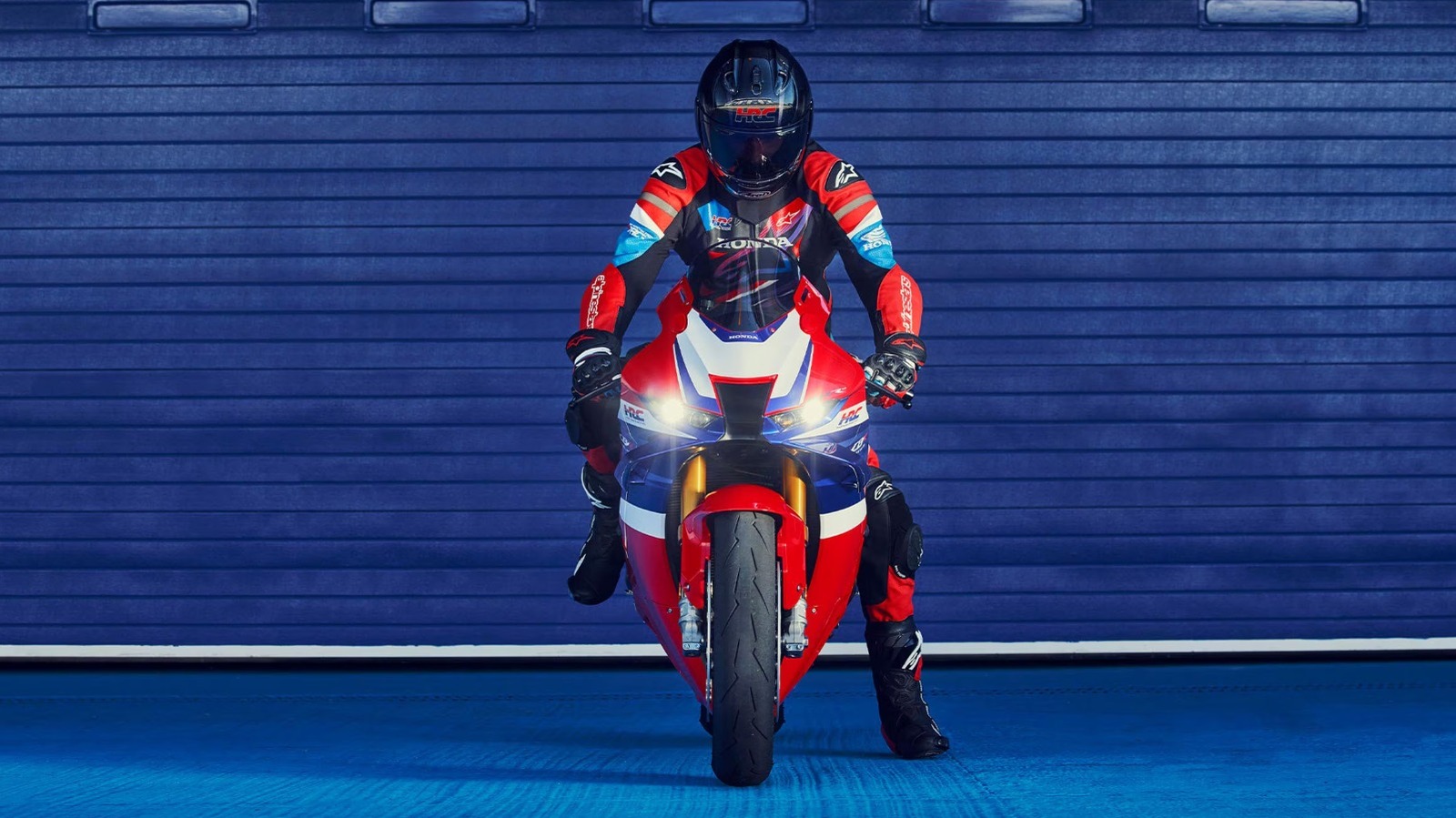
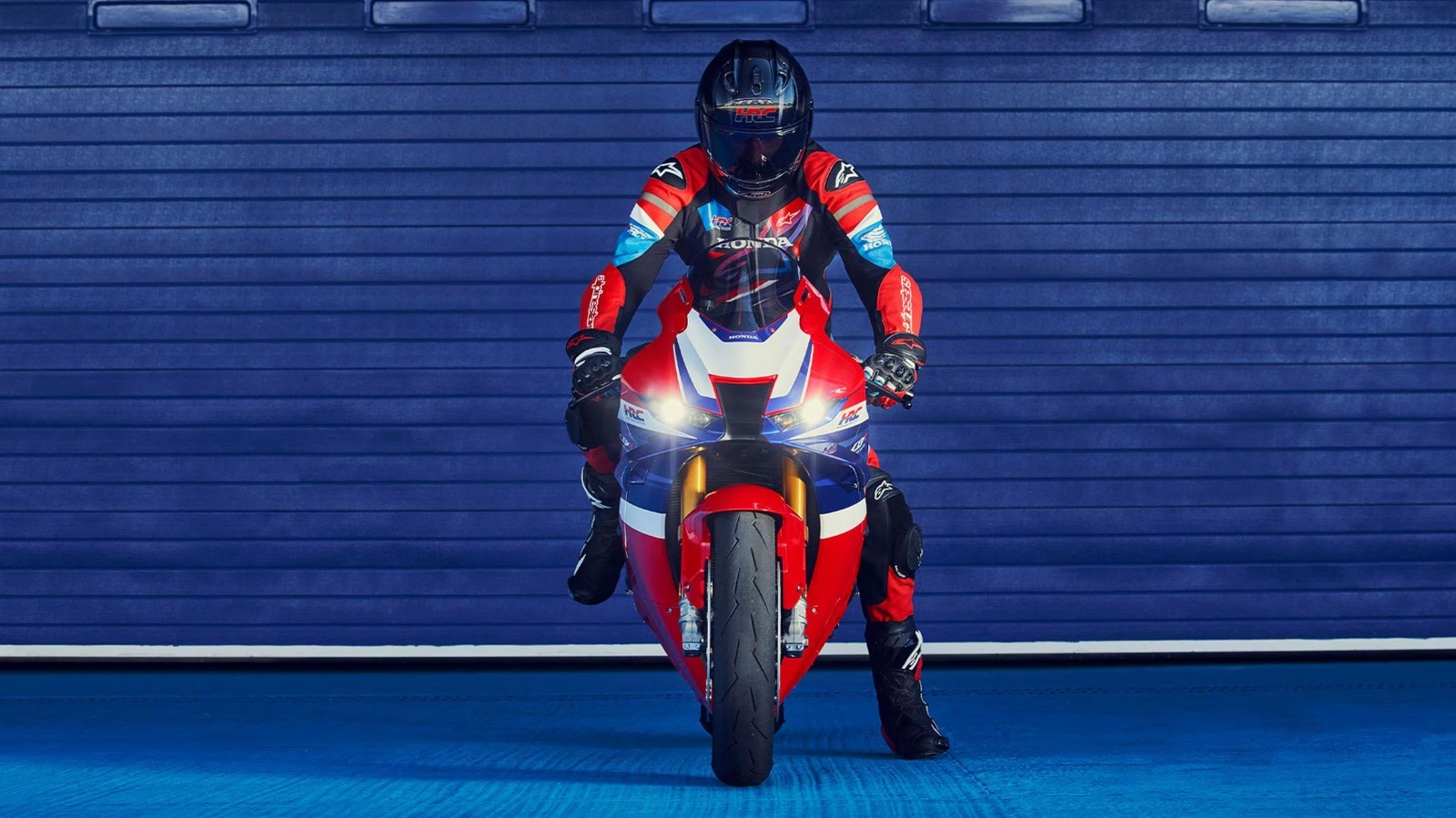
CBR1000RR-R Fireblade SP
If you want a motorbike that you can push to its limits on the race track but still bring you home at the end of the day, look no further than the CBR1000RR-R Fireblade SP. This is Honda’s flagship supersport model, and was built using Honda Racing’s experience developing MotoGP bikes.
While this has a similar 999.9cc inline-four engine as the other bikes we listed above, it uses special components that reduce friction and weight while increasing durability. It also features a throttle-by-wire system that delivers power in a linear manner, ensuring precise throttle inputs, as well as a plethora of electronic controls to help you manage the motorcycle.
As one would expect, this halo motorcycle comes at a price — the CBR1000RR-R Fireblade SP has a starting price of $28,999, with an additional $775 destination charge. Even though this is more than twice the price of most of the motorbikes in our list, you’re getting supercar performance in Honda’s premier street-legal sport bike.
Social community platform Discord is preparing to require users to verify their age by the second half of 2026, and users are concerned about the privacy of uploading a government ID or face scan to the network. While users can still access most features without verification, many remain uneasy giving more information to a company that suffered a breach last year that exposed the IDs of around 70,000 users.
For some users, this is motivation enough to seek out alternative platforms that prioritize security, privacy, or simply offer a different experience. Here’s a look at the most promising Discord alternatives, from open-source and secure options to voice-first platforms built for hardcore gamers.
Stoat
Image Credits:Stoat
Stoat (formerly Revolt) stands out as the closest Discord alternative in both design and usability. As an open-source project, it gives users more control over their data and appeals to those who value privacy and transparency. Overall, the platform is fairly easy for Discord users to pick up, offering similar text and voice channels as well as community servers.
However, Stoat is a relatively new platform (launched in 2021), and still faces growing pains. Recently, it experienced server capacity issues and the occasional lag during user surges. Feature support isn’t yet on par with Discord’s, and onboarding can be slow at times, especially when the platform’s popularity spikes. For those willing to trade a bit of stability for increased privacy, though, Stoat could be worth a try.
Element
Image Credits:Element
For users who prioritize privacy and control above all else, Element offers a compelling alternative. Built on the decentralized Matrix protocol, Element enables users to self-host servers, maintain end-to-end encryption, and federate with other Matrix-based services. This ensures that no single company controls your data.
While the setup and interface require a bit more technical savvy than Discord’s, Element is a good choice for users who value secure, decentralized communication.
Advertisement
TeamSpeak
Image Credits:TeamSpeak
If your primary need is high-quality, low-latency voice chat, TeamSpeak is the best alternative to Discord. While it remains popular among competitive gamers for its superior audio and private server hosting, its text chat and media sharing are quite basic. It’s also missing built-in video calls as well as emojis and gifs. So if you don’t mind not having as many features, it’s great for voice-centric groups that don’t need all the bells and whistles.
Techcrunch event
San Francisco, CA | October 13-15, 2026
Advertisement
Similar to Stoat, TeamSpeak has experienced a surge in new users, prompting the platform to expand its hosting capacity. In February, TeamSpeak introduced two new regions for community creation: “Frankfurt 3” and “Toronto 1.”
Mumble
Mumble is a free, open-source voice chat application. Like TeamSpeak, it provides high-quality, low-latency audio and allows users to host and customize their own servers. However, its interface is outdated and lacks some of the features found in Discord, making it more ideal for hardcore gamers focused on voice chat rather than community building through video calls, media sharing, or screen sharing.
Discourse
Image Credits:Discourse
Those who prefer long-form, organized discussions over rapid-fire chat may find Discourse more appealing. As an open-source forum platform, Discourse supports threaded discussions, making it ideal for educational groups, professional teams, and communities that value in-depth conversation. However, users looking for instant messaging, voice, and casual group chats may find it less familiar than Discord.
Slack, Microsoft Teams, Signal, or WhatsApp
Other notable mentions include Slack and Microsoft Teams, which serve well for professional and productivity-focused communication. Signal is also a top choice for those who want end-to-end encryption and privacy. Meanwhile, WhatsApp also offers free messaging and group voice calls, though it’s not designed for gaming or large communities.
What to know about age verification on Discord
Discord recently announced that it will soon implement age verification measures aimed at creating a safer environment, particularly for its younger users. This initiative is designed to ensure users meet the necessary age requirements to access certain features and communities on the platform. Users may be required to verify their age through various methods, which could involve submitting an ID, completing a facial age estimation, or using a credit card.
Advertisement
By default, all users will experience a “teen-appropriate” setting, and only those verified as adults will have the ability to modify certain settings or access age-restricted content. Adults will be required to verify their status to unblur sensitive content and to access channels and servers designated for an older audience.
After recent backlash, Discord postponed the official launch to the latter half of 2026, adding that 90% of users will not require age verification and can continue using the platform without changes, as many users do not engage with age-restricted content. The platform initially planned to roll out age verification in March.
Security researchers have disclosed a high-severity vulnerability dubbed “ClawJacked” in the popular AI agent OpenClaw that allowed a malicious website to silently bruteforce access to a locally running instance and take control over it.
Oasis Security discovered the issue and reported it to OpenClaw, with a fix being released in version 2026.2.26 on February 26.
OpenClaw is a self-hosted AI platform that has recently surged in popularity for enabling AI agents to autonomously send messages, execute commands, and manage tasks across multiple platforms.
According to Oasis Security, the vulnerability is caused by the OpenClaw gateway service binding to localhost by default and exposing a WebSocket interface.
Advertisement
Because browser cross-origin policies do not block WebSocket connections to localhost, a malicious website visited by an OpenClaw user can use JavaScript to silently open a connection to the local gateway and attempt authentication without triggering any warnings.
While OpenClaw includes rate limiting to prevent brute-force attacks, the loopback address (127.0.0.1) is exempt by default, so local CLI sessions are not mistakenly locked out.
The researchers found that they could brute-force the OpenClaw management password at hundreds of attempts per second without failed attempts being throttled or logged. Once the correct password is guessed, the attacker can silently register as a trusted device, as the gateway automatically approves device pairings from localhost without requiring user confirmation.
“In our lab testing, we achieved a sustained rate of hundreds of password guesses per second from browser JavaScript alone,” explains Oasis.
Advertisement
“At that speed, a list of common passwords is exhausted in under a second, and a large dictionary would take only minutes. A human-chosen password doesn’t stand a chance.”
With an authenticated session and admin permissions, the attacker can now interact directly with the AI platform, dumping credentials, listing connected nodes, stealing credentials, and reading application logs.
Oasis says this could allow an attacker to instruct the agent to search messaging histories for sensitive information, exfiltrate files from connected devices, or execute arbitrary shell commands on paired nodes, effectively resulting in full workstation compromise triggered from a browser tab.
Oasis shared a demonstration of this attack, showing how it could be used to steal sensitive data through the OpenClaw vulnerability.
Advertisement
Oasis reported the issue to OpenClaw, including technical details and proof-of-concept code, and it was fixed within 24 hours of disclosure.
The fix tightens WebSocket security checks and adds additional protections to prevent attackers from abusing localhost loopback connections to brute-force logins or hijack sessions, even if those connections are configured to be exempt from rate limiting.
Organizations and developers running OpenClaw should update to version 2026.2.26 or later immediately to prevent their installations from being hijacked.
Advertisement
With OpenClaw’s massive popularity, security researchers have been focusing on identifying vulnerabilities and attacks targeting the platform.
Threat actors have been seen abusing the “ClawHub” OpenClaw skills repository to promote malicious skills that deploy infostealing malware or trick users into running malicious commands on their devices.
Malware is getting smarter. The Red Report 2026 reveals how new threats use math to detect sandboxes and hide in plain sight.
Download our analysis of 1.1 million malicious samples to uncover the top 10 techniques and see if your security stack is blinded.
Anthropic’s Claude has surged past ChatGPT on the App Store charts, marking one of the most dramatic shakeups yet in the consumer AI race. As reported first by CNBC, Claude jumped to the top download spots shortly after controversy erupted around AI partnerships with the U.S. Department of Defence.
Digital Trends
The timing has raised eyebrows across the tech industry. While AI app rankings often shift based on new features or marketing pushes, this spike appears tied to public reaction and growing debate around how AI companies work with governments. The result: a sudden wave of interest in alternatives. The surge highlights how quickly public perception can influence the AI market. Just months ago, ChatGPT dominated the charts almost uncontested. Now, the rankings are becoming far more competitive.
A controversy-fueled download boost
The rise of Claude appears closely linked to the broader debate over AI’s role in defence and national security. Reports say the recent Pentagon-related controversy sparked heightened public scrutiny, pushing many users to explore alternative AI tools.
Claude just overtook ChatGPT as the #1 free app in the US App Store
not because of a new feature. because people found out OpenAI is deploying AI through Pentagon classified networks
turns out where your AI draws its ethical lines actually matters to people
Anthropic’s positioning has played a role here. The company has repeatedly emphasised strict usage policies that prohibit domestic surveillance and lethal autonomous weapons. That message has resonated with some users looking for reassurance about how AI is deployed. At the same time, the spike in downloads shows how quickly public trust and brand perception can shift in the AI space. In fact, it has given rise to the “Cancel ChatGPT” trend on social media, which has further amplified public discussion around AI ethics and government partnerships.
OpenAI CEO Sam Altman (left) with Anthropic CEO Dario Amodei (right)Reuters
Claude’s rise shows that the AI chatbot market is no longer dominated by a single player, as users now have multiple strong options and are willing to switch based on sentiment and trust. Technical performance alone is no longer enough, and transparency & public confidence matter just as much, making the AI leaderboard more volatile than ever.
Tool makers and sellers usually have all of the ordinary equipment you need for most basic jobs, everything from hammers and drivers to saws and other hardware. On top of that, they often have a selection of more niche products you might not be familiar with.
Fireball Tool in particular is known for selling inventive equipment designed with welding and metalworking in mind. Company founder Jason Marburger started his career as a welder and ran up against the limitations of existing metalworking tools, many of which were designed for woodworking and co-opted for metalworking. Those tools worked but not as well as they could have, so Marburger set out to make tools specifically with metalworking in mind. That meant being made of tougher materials and incorporating some unique design elements.
Advertisement
Marburger’s first product was a welding square designed to accept strong metalworking clamps and align materials before welding. Before long, his welding squares became popular enough that Marburger streamlined the production process and started selling them under the Fireball Tool brand. Today, the company has grown to offer a wide range of tools, primarily geared toward welding and metal work. You’ll find squares, clamps, and grinding wheels, but you’ll also find a collection of more less common products. Here are 12 niche Fireball Tool products and what they do.
Advertisement
Thread checker
When working with metal, a few millimeters can make a big difference. If your bolt is just a little too small it won’t hold firm; if it’s a little too big, it won’t fit into a slot or accept a nut. That’s why hardware comes in standard sizes and why it’s so important to make sure you’re using the correct gauge for your project.
A thread checker lets you confirm the precise size of your nuts and bolts before you go to the hardware store. Fireball Tool has two versions, one which is strung on a wire with a loop for storage and another that’s wall-mounted. The string thread checker comes in either jmperial or metric. Each unit on the wire has its gauge stamped on the side and can be used to check both nuts and bolts.
The wall-mounted thread checker looks like something you’d find in a high-tech aircraft or alien spaceship. If you look a little bit closer, you’ll see it’s really just a collection of threaded posts and holes so you can double check your hardware before you commit. The checker is made of half-inch PVC Sintra board and contains both imperial and metric checkers all in one.
Advertisement
Electronic angle finder
Whether you’re working with wood or metal, it’s important that your measurements are accurate. A tape measure can help you measure distances but won’t help you if you need to measure the angle of something. Accuracy is critical for angle measurements if you’re looking to save time, effort, and frustration in the long run; while a woodworking or metalworking square can help you confirm if your project has 90 degree corners, an angle finder is useful for most other angles. It’s one of those weird tools you’ll wish you had gotten sooner.
The TECH 700 DA digital electronic angle finder is made by Stabila and available from Fireball Tool. It measures both interior and exterior angles between 0 and 270 degrees with an accuracy of within one tenth of a degree. It can even show you angle bisections (splitting an angle into two equal parts) in the event that you need to cut and join corner pieces. A digital display shows you the angles you’ve measured and a locking mechanism allows you to easily transfer those angles to other materials. The display also has a dimmable backlight you can turn on and off. You can get this angle finder in two sizes, 18 inches or 32 inches, depending on your needs.
Advertisement
Combination square
You’re probably familiar with a conventional woodworking or metalworking square, a tool which allows you to make sure you’re achieving as close to a perfect 90 degree angle as possible. A combination square takes things one step further by combining a square with an adjustable ruler. Sliding the ruler allows you to make precise measurements and draw guide lines for making cuts with confidence. Sometimes you just need to slap something together even if it’s ugly, but when you need to build something precise, a combination square can help.
Advertisement
Fireball’s combination square is 5 inches long by 5 inches tall and 2 inches wide. It comes in cast aluminum or black oxide cast iron, depending on the sorts of materials you’re working with — aluminum can become damaged if you’re working with especially tough materials and tools. You can choose three different ruler sizes, either in imperial imperial (12 inches, 18 inches, or 24 inches) or in metric (300, 450, or 600 millimeters). The ruler sets completely into a recessed slot so it doesn’t interfere with your measurements. A built-in bubble level helps to ensure everything is as perfect as it can be.
Advertisement
Bulldog swivel plier
Many of Fireball’s offerings center on the fixture table, a shop surface designed specifically for metalworking. They come in various styles, including standard duty, heavy duty, steel top, and Fireball’s custom-designed, modular “dragon wagon”. Each table is made of metal and features a uniform grid of holes capable of accepting a wide variety of tools and accessories.
Bulldog swivel pliers are designed to set into any opening in the fixture table, adding a mounting clamp anywhere you want on your work table. When building something, you can lay your materials down on the table and clamp them in place before joining or welding. A locking mechanism in the pliers holds pressure on your target so you don’t have to; you can use the pliers’ quick release lever to easily unlock whatever it is you’re working on.
Designed to work with any Fireball Tool fixture table or those with equivalent grid holes, these one-armed pliers feature a rotating post for easy repositioning. Most clamps have to go around your material and the table, meaning you have to use them only around your table’s edges. These swivel pliers are advantageous since they allow you to clamp materials down to the table in a wide variety of positions and locations.
Advertisement
Double gooseneck clamp
Whether you’re fabricating something out of wood, metal, plastics, or any other material, it’s important that things connect in precisely the right way. You need your materials to be square and true before you fix them into their permanent positions. That means laying things out in advance and making sure they don’t slip while you’re working with them.
To line things up and hold them in place you can use jigs, templates, or premade frames. Fireball’s fixture tables allow you to create a frame and attach clamps to hold everything right where you want it. Fireball’s double gooseneck clamp is designed for use specifically with the fixture table, settling into any one of its ports much in the same way its bulldog pliers can. With the double gooseneck, you can point the clamp in pretty much any direction, allowing you to press on materials from the top, the sides, or even on the corner. You can also separate the upper and lower arm then use just the upper arm on its own. The wide foot pad helps the clamp make contact and prevent slipping so you can make cuts, join, or weld your materials with confidence.
Advertisement
Fence block
Fireball Tool’s fixture tables are designed to be hugely customizable. Each table features hundreds of pre-drilled three-quarter-inch ports into which you can slot clamps and other tools. Clamps can help you hold objects in place but a frame can help you get everything aligned before you clamp it down.
Advertisement
Fence blocks are yet another accessory designed to work with the fixture table, featuring compatible posts and holes so they can slot right into place with ease. They’re almost like oversized Lego bricks, and you can mix and match them to create the exact framing you need for the job at hand. Then when you’re finished, you can remove the blocks and reorient them for your next job.
Fireball Tool’s fence bricks come in a variety of shapes and sizes, including 1 inch by 1inch posts, 4 inch fence blocks, 6 inch stepped fences, and a double row riser block. You can use them to create a table border, to hold materials steady, or to align them squarely before joining.
Advertisement
Three-axis square
A woodworking or metalworking square helps you verify 90-degree angles on a two-dimensional plane. Put simply, it can check the angle moving in only one direction. Like movies and television at the turn of the millennium, a three-axis square takes things into the third dimension.
A three-axis square lets you align materials along not just length and width, but also height, and all at the same time. They’re useful if you’re framing the corner of a three-dimensional object like a box or a table. This square is made of cast iron and can be used with Fireball Tool’s fixture table or independently wherever you need it. One-inch feet and magnets help the square to stand up and resist falling over no matter where you’re working.
If you’re working at the fixture table, threaded holes in the bottom of the square will accept three-quarter-inch posts, allowing it to slot into any ports in the table. And depending on the size of your project, you can get a standard square with a 4-inch height limit or an extra large square with a 7–inch height.
Advertisement
Locking chain pliers
Chain pliers are a type of strap wrench, similar in form and function to an oil filter wrench. Where that uses a band of metal to unfasten stubborn oil filters, these pliers use a bicycle chain. Yet independent of the type of strap they use, these types of wrenches aim to use tension and static friction to grab hold of an object.
Advertisement
It’s an unconventional tool made of a plier handle and a chain. To use it, you wrap the chain around the intended object, feed the chain back through the clamp jaws, and tighten to turn or lock the object in place. Because it uses a semi-rigid chain instead of a band or a totally rigid tool head, it can deform to fit around awkwardly shaped objects, large ones, or things that are in hard to reach places.
Fireball Tool’s locking chain pliers, made by Strong Hand Tools, come with either a 24-inch or 48-inch chain, the latter of which can wrap around pipes as wide as 14 inches in diameter. Either way, the chain features a fishtail end to make it easier to insert the chain into the clamp jaws after wrapping around your target.
Advertisement
Polishing paste bar
Construction projects usually start with adding material to your project; ironically, they usually end with removing some of the same material you just added. You start by aligning your parts and fastening them together; when you’re done with fabrication, you typically use a variety of tools to remove imperfections for a clean finish. You can use a scraping tool or a file for bigger imperfections, but when you want to get a completely smooth surface, you’ll probably need a polishing or buffing compound.
Fireball’s small polishing paste bar is a high-gloss polish for plastics and other materials. It’s similar to the polishing compounds you can use to remove scratches from your car’s windshield. The polishing paste is made of an abrasive powder suspended in a wax-like binding agent. To use the paste bar, you’ll put some of the paste onto a flannel or other soft cloth and buff it into your project for a high-gloss finish. Polishing paste can remove small surface scratches but won’t be able to remove blemishes that go deeper. To achieve the desired finish, you might have to use several different polishing or buffing compounds with different types and levels of grit.
Called “The Fly” since they’re reminiscent of the eyes of the insect they’re named after, these goggles offer a slight tint with a shade level of three. This makes them suitable for some metalworking tasks, but not all — you’ll need different levels of shading depending on the type of welding you’re doing, the brightness of the arc, and personal preference. Many types of metalwork need significant shading protection, in the range of 10 to 14 on the lens shade scale. A three is good enough to protect you from the brightness of torch soldering and may be enough for torch brazing and light cutting.
Advertisement
These goggles feature cushioned edges to enhance comfort and open slots to improve ventilation and reduce fogging. They’re large enough that they can fit over the top of prescription glasses and other eyewear. They’re also large enough that you can’t see the edges when you’re wearing them, giving you an unobstructed and comfortable view of your workspace.
Advertisement
Downloads
One of the best things about woodworking, metalworking, and a DIY mindset is that you can build tools for yourself. Need a new workbench? Build one. Need a new chair or stool to rest your weary feet? Design and fabricate one yourself. It’s that same spirit which led Fireball’s Jason Marburger to create his welding squares and launch Fireball Tool in the first place. Following that spirit, the company offers not just a wide range of tools for purchase, but also a selection of plans so that you can experience the joy (and probable frustration) of making something useful on your own.
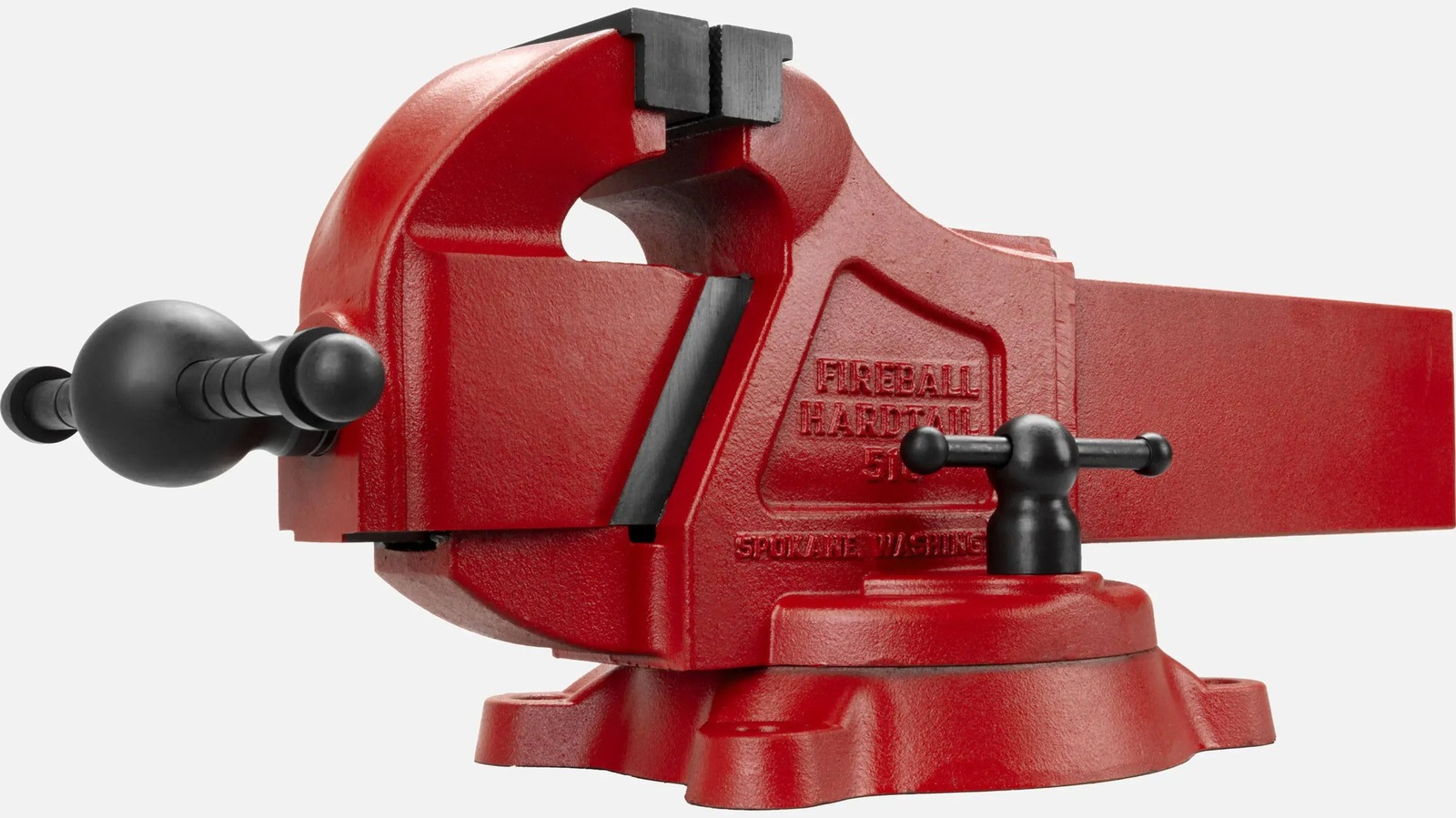
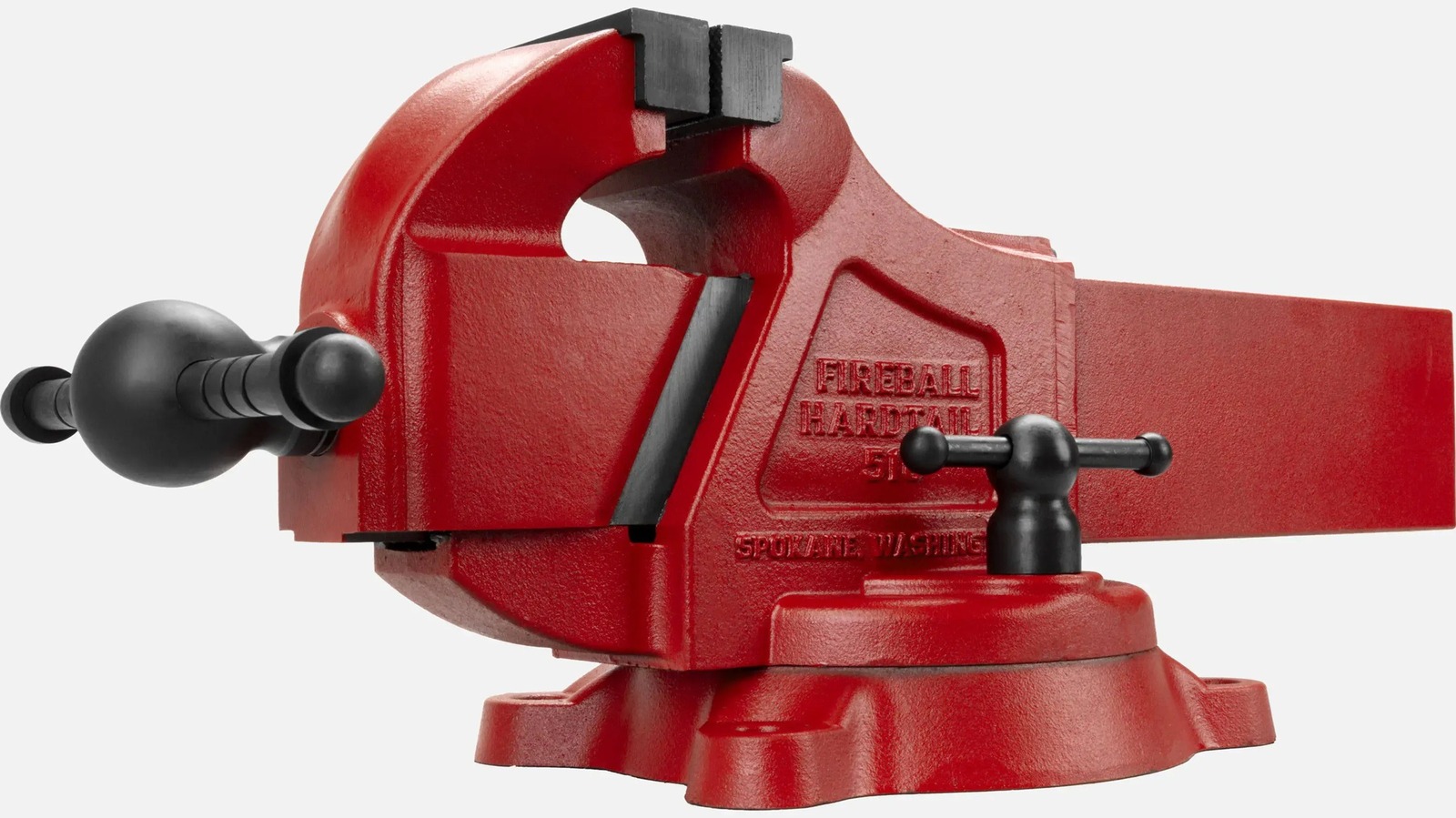
There’s a wide selection of designs from which to choose. You can build a comparator (a useful device for electronics projects, which compares two voltages or currents to determine which is larger), a folding saw horse, a vise, a woodworking vise, and a jack vise. Plans are significantly more affordable than the tools they describe (typically between $6 and $28), so if you’ve got the materials, the know-how, and the patience, you can save yourself some money and make a custom one-of-a-kind tool all your own. Additionally, Fireball has made all its CAD plans free to download, so you can cut or print your own fixture table accessories and other objects.
Advertisement
Maximus bar and dog clamp
Clamps come in many different styles. They’re useful for holding objects in place while you work on them or for keeping materials together while adhesive sets. Normally, the size of objects you can clamp is limited by the clearance of your clamp — typically just a few inches. Larger clamps are usually only a couple of feet long at the outside. If you need to clamp something larger than a conventional clamp can accommodate, then Fireball Tool’s Maximus bar and dog clamp could come to the rescue.
Instead of a single object, these clamps come in two separate pieces which can be attached to any two-inch by one-inch material. Using a bar or pipe as a spacer, you can customize your clamp to be whatever size you need it to be, then disassemble your clamp for easy storage between jobs.
The clamp comes in a couple of different sizes. You can choose between a 6-inch standard throat depth or a 3.5 inch short arm design, each of which operate on an 8-inch spindle. If you need something even smaller, you can also get the Mini Maximus bar and dog clamp kit, which has a 3.5-inch throat depth and a shorter 5-inch spindle. You can choose clamps made of either forged steel or ductile cast iron, depending on your purposes.
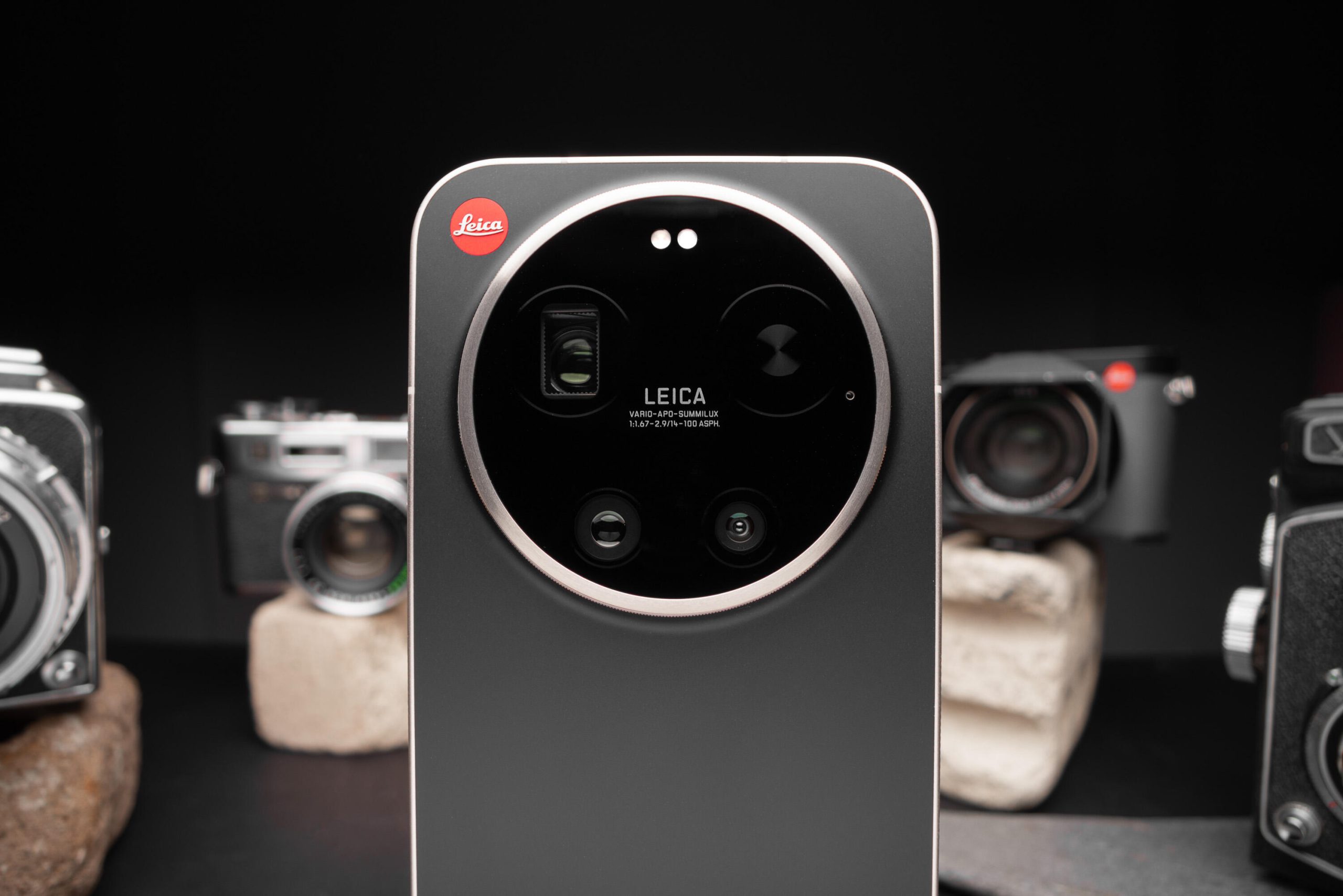
The Leica Leitzphone powered by Xiaomi is the latest flagship Android phone from Xiaomi, made this time with a deep collaboration with iconic German camera maker Leica. It’s arguably more camera than it is phone, with a large main image sensor, telephoto zoom that employs actual moving elements and a function ring around the camera unit that you can turn to control zoom or other settings.
It’s filled with Leica-specific touches, from the red dot logo and “Leica Germany” etching on the body to the Leica color profiles in the camera — the same ones you’ll find on Leica’s actual cameras.
It’s the best camera phone I’ve ever used, though at £1,700 in the UK, it doesn’t come cheap. But then nothing with a Leica logo ever does. It won’t be officially on sale in the US but that UK price translates to $2,300.
In this week’s “Reboot” column, the Apple Experience is a supply chain play, mini versions of old Macs are cute, and Godzilla’s drone show record.
Godzilla in drones and a pair of mini Macs
Reboot is a new weekly column covering some of the lighter stories within the Apple reality distortion field from the past seven days. All to get the next week underway with a good first step. This week, we saw Apple Store closures due to the Iran attacks, regulatory action in Brazil and Spain, Taiwan invasion fears, and more age verification shenanigans. At least next week will distract us with product launches. Continue Reading on AppleInsider | Discuss on our Forums
Prediction market users have made — and profited from — big bets around the bombing of Iran by the U.S. and Israeli military.
On Polymarket, $529 million was traded on contracts tied to the timing of the attack, according to Bloomberg. An analysis by analytics firm Bubblemaps SA found that six newly-created accounts made a profit of $1 million by correctly betting that the U.S. would strike Iran by February 28 — behavior that could indicate insider trading.
The bets might merely reflect broader speculation about U.S. intentions in Iran, but Bubblemaps CEO Nicolas Vaiman said the circulation of information “involving war or conflict,” coupled with Polymarket’s anonymity, “can create incentives for informed participants to act early.”
Back in January, analytics firm Polysights also noted an apparent spike in bets around the likelihood that Iran’s now-deceased Supreme Leader Ali Khamenei would no longer hold that role by the end of March.
Advertisement
Responding to concerns that such bets might essentially place a financial incentive on assassination, Kalshi CEO Tarek Mansour said, “We don’t list markets directly tied to death. When there are markets where potential outcomes involve death, we design the rules to prevent people from profiting from death.” He added that Kalshi would reimburse all fees from these bets.
When it comes to choosing the right power tool brand, pros and DIYers alike typically want reliability as well as versatility. That’s why Ryobi is a go-to brand, thanks to a selection of tools that do more than just one job. But when it comes to Ryobi’s electrostatic sprayers, it can be tricky to figure out what these tools do and whether or not they’re safe. But the truth is that these sprayers are pretty straightforward, as they can be used to both clean and sanitize.
In fact, the Ryobi 18V One+ 1/2 gallon electrostatic sprayer allows you to apply everything from disinfectants to herbicides, insecticides, and other lawn-safe chemicals. The liquid is stored in a tank, and using electrostatic technology, it’s transformed into droplets so you can spray large areas. There’s even an adjustable nozzle so you can control the size of the droplet for even wider coverage from longer distances. To stay safe when using the sprayer, wear proper protective gear like gloves, safety glasses, and a mask if necessary.
Advertisement
When it comes to other types of liquids you can use, Ryobi explicitly warns against flammable substances like gasoline. Bleach, hydrogen peroxide, and alcohol-based or abrasive chemicals shouldn’t be used either. Be sure you check a chemical’s label for any important directions as some liquids can actually damage the sprayer or cause potential injury. When you’re done with the sprayer, empty the tank and don’t leave any chemical residue inside. Be sure it’s cleaned before storing.
Advertisement
Important details about the Ryobi electrostatic sprayer
If you’re wondering whether Ryobi’s electrostatic sprayer is worth buying, beware that while it’s good for several different uses, painting is not one of them. Though the company doesn’t specifically address this in product descriptions, a Ryobi representative confirmed as much in a reply to a user review for the 18V One+ 15oz Tank Handheld Sprayer on Ryobi’s site. Plus, since many paints are flammable or not water-soluble, it’s not a good idea to use them in any Ryobi electrostatic sprayer.
The Ryobi sprayer will come in handy for flipping houses, but it’s important to know that the electrostatic tech alone doesn’t guarantee a full wrap-around on every surface. According to a study from the EPA, maintaining wet contact time is an important factor, especially when disinfecting surfaces. Droplet size and how they’re dispersed directly impacts this. That means Ryobi’s adjustable nozzles give you a better chance of properly coating a surface when spraying.
Pro Tool Reviews put the Ryobi 18V Electrostatic Sprayer to the test and found that it does indeed cover surfaces as advertised. However, in those tests, what came out was more of a wet spray and not the fine mist you might expect. But the sprayer did perform well and was considered to be a better alternative to physically cleaning surfaces by hand. ExitCleanup reviewed the backpack version of the sprayer and determined that the tech was very effective. Though priming time and hose length were both longer than expected, no performance issues were detailed.
OpenAI CEO Sam Altman, left, and Amazon CEO Andy Jassy announced a multi-year strategic partnership on Friday that includes a $50 billion investment from Amazon into the AI company. (GeekWire File Photos)
Amazon’s OpenAI investment and cloud partnership made big headlines Friday, but the mechanics of the deal — including how the money flows, what triggers the payments, and what happens if things go sideways — are buried in SEC filings that tell a more complicated story.
Here’s how it works, what the filings say, and what they’re still keeping under wraps.
The money: Amazon is investing up to $50 billion in OpenAI, in two stages.
$15 billion in OpenAI Series C Preferred Stock, due March 31.
A $35 billion commitment that comes later, with the timing dependent on a series of triggers. (The filing puts the exact figure at $34,999,999,447.98. The share price didn’t divide evenly into $35 billion, leaving it $552.02 short. Every penny counts!)
It’s part of a larger funding round: OpenAI raised $110 billion total at a $730 billion pre-money valuation, with SoftBank and Nvidia each contributing $30 billion alongside Amazon’s $50 billion. OpenAI said additional financial investors are expected to join as the round progresses.
Microsoft, OpenAI’s largest existing investor, has not yet participated in the round. CNBC reported that Microsoft still has an option to join. Microsoft and OpenAI put out a joint statement saying their partnership remains unchanged. (More on that below.)
Microsoft did, however, invest $5 billion in Anthropic last year, so with the latest deals, both Seattle-area tech giants now have their own stakes in the makers of Claude and ChatGPT.
Advertisement
The triggers: Amazon can buy its remaining shares whenever it wants, at its discretion, according to the filings. But two events can force its hand, requiring the additional investment.
A “Mandatory Funding Event” that requires Amazon to buy all remaining shares within five business days. The filing doesn’t disclose the milestone. The definition is redacted.
An initial public offering by OpenAI. If OpenAI notifies Amazon after filing for an IPO confidentially with the SEC, Amazon must buy every remaining share. It gets four weeks from the notice or five business days after the public S-1, whichever is later.
OpenAI CEO Sam Altman, talking about the deal in a joint appearance with Amazon CEO Andy Jassy on CNBC on Friday, said OpenAI is “open to going public at the right time.”
The form of the investment could also change. If Amazon buys its remaining shares before an IPO, it gets Series C Preferred Stock. If the purchase happens after OpenAI goes public, the filing says Amazon receives common stock instead.
The expiration date: The equity commitment expires Dec. 31, 2028. If the triggers haven’t happened and Amazon hasn’t invested the full amount by then, the obligation ends.
If either side fails to meet its obligations under the equity agreement, monetary damages are capped at the unfunded commitment amount. Each company has the right to seek a court order forcing the other to follow through. Both sides waived their right to a jury trial.
Advertisement
The underlying cloud deal: The equity is only part of the arrangement. On the same day, Amazon and OpenAI signed a Joint Collaboration Agreement (JCA) and a cloud services deal, both of which are referenced but not included in the public filings. OpenAI already had a $38 billion multi-year agreement with AWS. This expands it by $100 billion over eight years.
The cloud services agreement includes a commitment by OpenAI to consume 2 gigawatts of Trainium capacity through AWS. Gigawatts measure power draw, and serve as a proxy for the scale of computing involved. For reference, a large nuclear power plant produces about 1 gigawatt.
Trainium is Amazon’s custom AI chip, designed as a lower-cost alternative to Nvidia’s GPUs. Anthropic is already training its next version of Claude on Trainium, according to Jassy, making OpenAI the second major AI lab to commit to the chip.
Amazon and OpenAI are also co-building a Stateful Runtime Environment, powered by OpenAI models, that will run in Amazon Bedrock, AWS’s AI model platform. This runtime environment will let AI agents maintain context, remember prior work, and act across multiple systems over time. OpenAI says it will launch in the next few months.
Advertisement
The filing doesn’t mention Amazon Alexa specifically, but the press release says OpenAI will develop “customized models available to power Amazon’s customer-facing applications,” supplementing Amazon’s own Nova family of AI models.
The equity investment and cloud partnership deals are contractually linked. If the Joint Collaboration Agreement terminates, the additional $35 billion equity commitment dies with it. But because the JCA isn’t public, we don’t know how it could be terminated.
OpenAI and Amazon have been talking for years: The filing references a mutual nondisclosure agreement dated May 23, 2023. That’s nearly three years before Friday’s announcement, and four months before Amazon’s first $4 billion investment in Anthropic.
One reason they probably didn’t do a deal sooner: Microsoft had a right of first refusal to be OpenAI’s compute provider, and OpenAI couldn’t jointly develop products with third parties.
Advertisement
Those restrictions were loosened in October 2025, when Microsoft and OpenAI announced a restructured partnership agreement that included new provisions allowing OpenAI to jointly develop products with third parties and removing Microsoft’s right of first refusal on compute.
In exchange, OpenAI committed to purchase an additional $250 billion in Azure services.
In their joint interview Friday, Jassy told CNBC that he and Altman had been talking “for a while” and that the OpenAI partnership was already in Amazon’s projections when the company announced plans for $200 billion in capital spending this year.
What’s hidden: The filing is heavily redacted. Key deal terms left out include: the milestone that could require Amazon to invest the remaining $35 billion on five business days’ notice; events that could terminate the $35 billion investment obligation; what constitutes a material breach of the deal; and the conditions to be satisfied before Amazon buys additional shares.
Advertisement
The Verge and others have speculated that the redacted milestones may be tied to OpenAI achieving artificial general intelligence, or AGI, a loosely defined threshold at which AI systems can match or exceed human-level reasoning across a wide range of tasks.
An AGI clause exists in Microsoft’s OpenAI deal. But Altman signaled that’s not the case here. “We’re not doing new deals that stop when AGI gets reached,” he told CNBC.
What about Microsoft? OpenAI and Microsoft put out a joint statement of their own on Friday, coinciding with OpenAI’s funding news, saying that Microsoft Azure remains the exclusive cloud provider for stateless OpenAI application programming interfaces.
Stateless refers to a useful but basic building block, where an application sends a prompt, gets a response, and the connection ends. That’s in contrast with stateful APIs, more sophisticated connections that maintain context and memory across multiple interactions.
Advertisement
Microsoft also keeps its exclusive license to OpenAI’s intellectual property, which powers Copilot, Bing, and the Azure OpenAI Service. Under the existing partnership, Microsoft receives a share of OpenAI’s revenue. That arrangement is unchanged, and it includes revenue from OpenAI’s partnerships with other cloud providers.
The joint Microsoft-OpenAI statement said, “Collaborations like the partnership between OpenAI and Amazon were always contemplated under our agreements and Microsoft is excited to see what they build together.”
OpenAI’s own products, including Frontier, still run on Azure. Frontier is OpenAI’s enterprise platform for building, deploying, and managing teams of AI agents.
AWS becomes the exclusive third-party cloud distributor for Frontier, meaning enterprises that want to access it through a cloud provider other than OpenAI go through Amazon. But the product itself remains hosted on Microsoft’s infrastructure.
Advertisement
Bottom line: The era of exclusive AI relationships is over. Microsoft keeps the core API business, the intellectual property license, and the revenue share. Amazon gets the Stateful Runtime Environment, the Trainium workloads, and third-party Frontier distribution.
Both companies are investing in Anthropic. OpenAI is getting investment from everyone. The biggest players in AI are no longer just picking partners, they’re playing all sides.
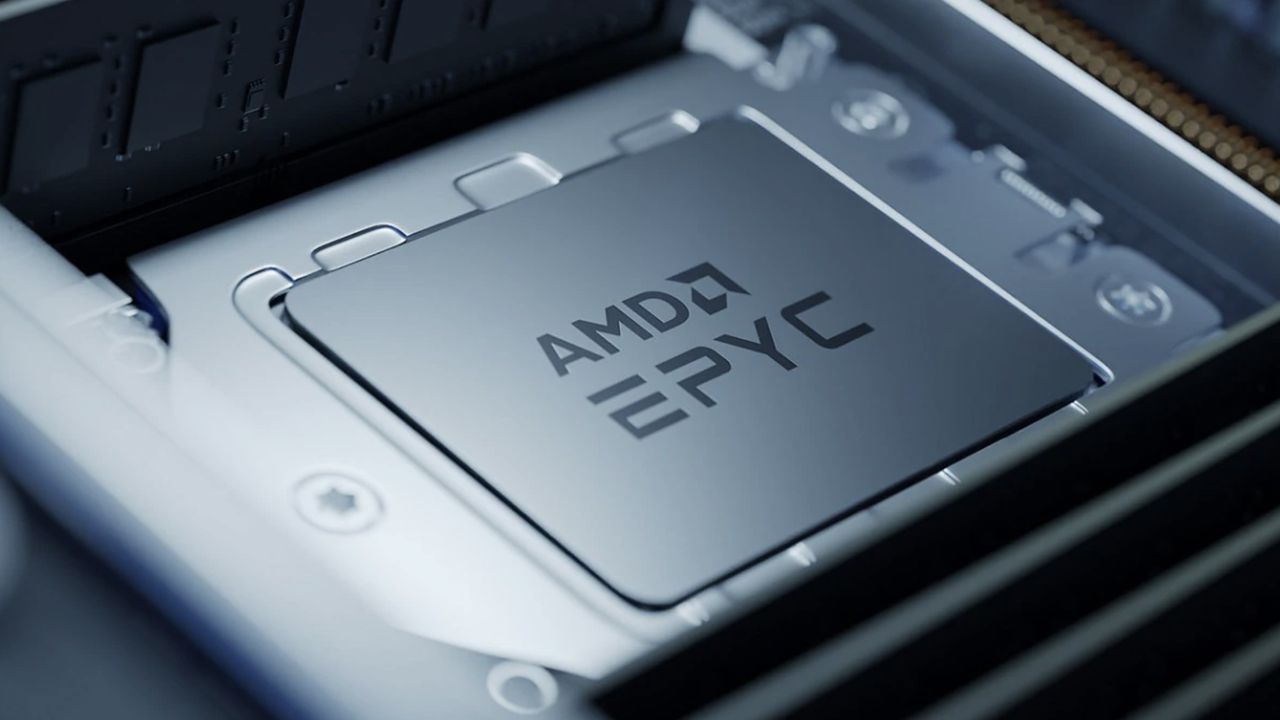
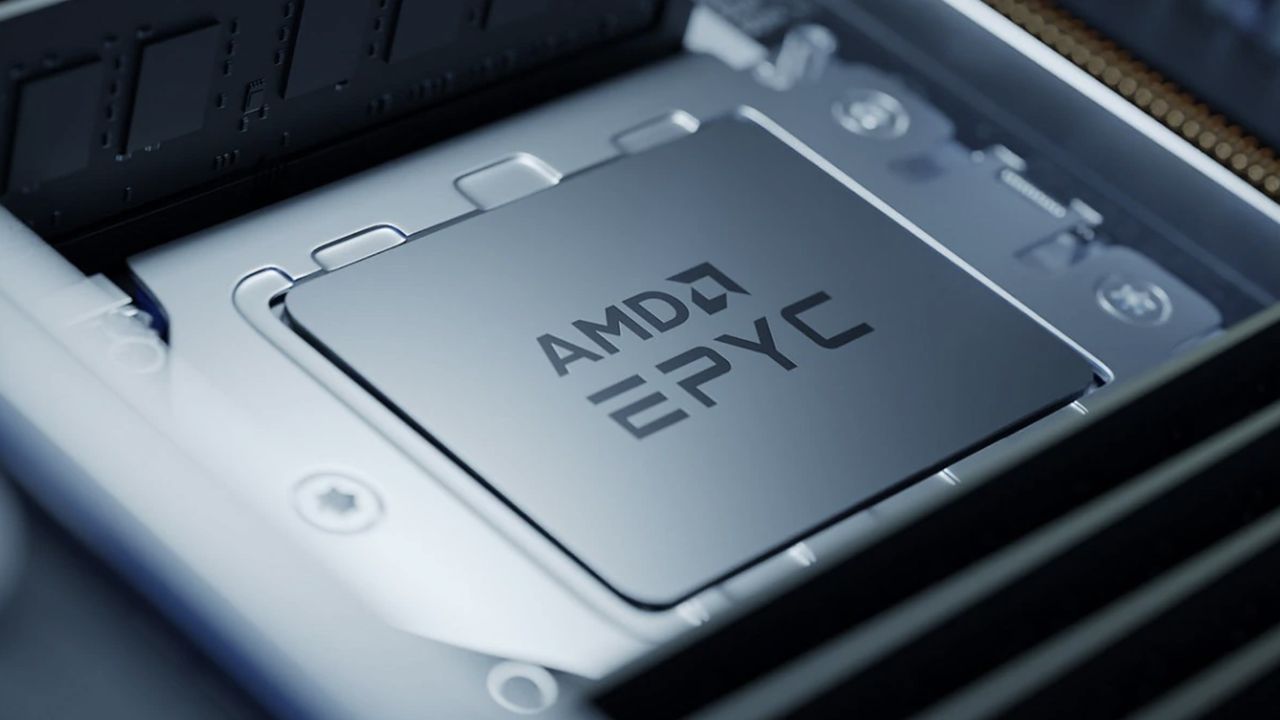
AMD has introduced its latest 8005-series Epyc processors, codenamed Sorano, with a clear focus on telecom and edge infrastructure.
The new chips raise core counts to as many as 84 Zen 5 cores, marking a notable jump from the earlier Siena generation.
Its power consumption is rated at up to 225 watts, while lower thermal envelopes may follow based on previous designs.
Expanding the Zen 5 Epyc lineup for edge workloads
Sorano is built for virtualized radio access network deployments, where operators increasingly rely on standard server hardware instead of proprietary systems.
In this environment, both CPU throughput and predictable latency matter more than peak clock speed.
AMD says the architecture includes a full 512-bit data path for vector instructions, reflecting broader Zen 5 changes already disclosed by the company.
Advertisement
A central claim around Sorano involves improvements to low-density parity check decoding, a core requirement in 5G networks.
Sign up to the TechRadar Pro newsletter to get all the top news, opinion, features and guidance your business needs to succeed!
According to AMD, greater efficiency in LDPC handling allows operators to free compute capacity for additional Layer 1 and Layer 2 processing, which could translate into more network functions running per server inside a data center or edge facility. The company is also emphasizing energy efficiency alongside higher core density.
If Sorano mirrors Siena’s lower power variants, telecom operators may see configurations under 100 watts for specific deployments.
Advertisement
In edge scenarios, where thermal limits and environmental tolerances are stricter, the balance between performance and consumption carries financial implications.
AMD’s latest move does not occur in isolation. Intel continues to develop its own telecom-focused processors, including the Xeon 6E and Xeon 6 SoC lines.
The Xeon 6700E can scale up to 144 efficiency cores, trading advanced instruction features for density and lower power draw.
Advertisement
Meanwhile, the Xeon 6 SoC integrates accelerators aimed at vRAN workloads, alongside high-speed networking and support for AI and media tasks often handled by a GPU in broader deployments.
Companies such as Ericsson and Nokia continue to deploy Intel-based platforms in commercial networks, showing that long-term partnerships still influence procurement decisions.
AMD will need to show measurable gains beyond core counts to shift entrenched vendor relationships.
Sorano may represent the last major Zen 5 Epyc release before the arrival of Venice, AMD’s next-generation server CPU planned for 2026.
Advertisement
Whether this iteration materially changes telecom infrastructure economics remains uncertain — core increases alone rarely determine purchasing cycles in a conservative industry.