Connect with us
DAPA Banner
DAPA Coin
DAPA
COIN PAYMENT ASSET
PRIVACY · BLOCKDAG · HOMOMORPHIC ENCRYPTION · RUST
ElGamal Encrypted MINE DAPA
🚫 GENESIS SOLD OUT
DAPAPAY COMING

Tech

2026 Hackaday Supercon: Call For Proposals

Published

on

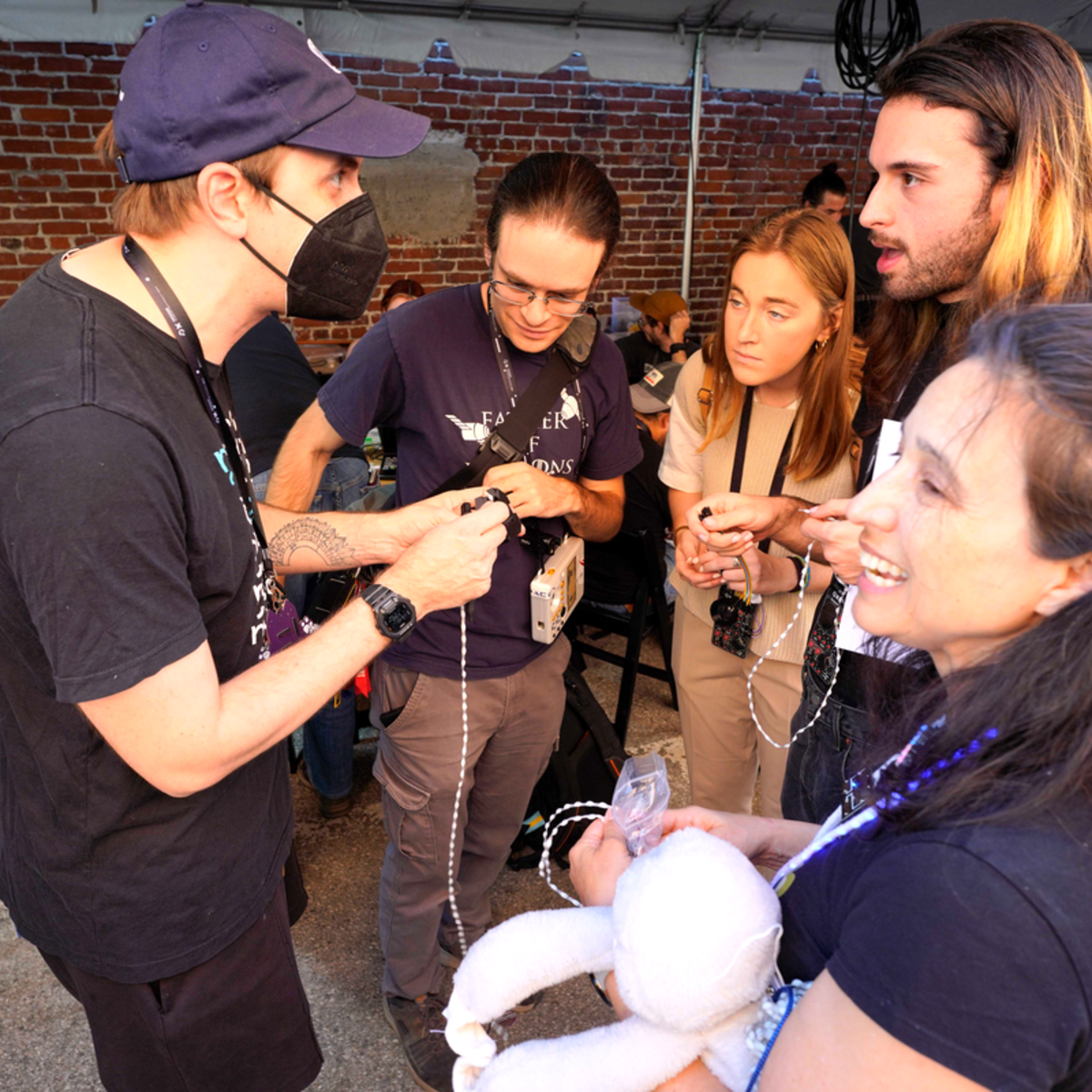
We are absolutely stoked to announce that the Hackaday Superconference is taking place this year November 6th through 8th in glorious Pasadena California, and we want to see you there!

If you’ve been to any of the previous nine Supercons, you know that it’s a fantastic gathering of the most motivated and interesting hackers around — but it’s also been a relatively small gathering. And while we love the very high signal-to-noise ratio of folks who show up, we’re always a little bit sad when the tickets sell out because it represents hackers who couldn’t be there.

So this year, we’re celebrating Supercon Ten by expanding out of our traditional location at the Design Lab so that we can accommodate 20% more hackers, while still keeping the cosy nature of the event intact. So if you’ve been wanting to come to Supercon, but procrastinated the ticket sales every year, this year is looking 20% better.

Call for Proposals

If you want to give a talk to an interested audience of hackers just like you, now is your chance. Fill out the Call for Participation form before Wednesday, Aug 12th to put your hat in the ring. Presenters not only get to share their work with a like-minded audience, but they get in the door free! Presenting really is the best way to attend a conference like this – it’s the ultimate ice-breaker. (Plus, did we mention free?)

Advertisement

We will have two tracks of talks on two stages, and both are a mix of shorter 20-minute talks and longer 40-minute sessions, so whatever the size of your ideas, we have the slot for you. As always, we like to hear about your projects: hardware, software, creation, destruction, or anything in-between. In short, if you have a talk that would interest the readers of Hackaday, it fits. Check out last year’s slate if you’re curious, but bear in mind that we like to see new stuff, so don’t feel constrained by precedent. If you’re into it, there’s a good chance that many of us are too!

All you need is an abstract, a title, and a solid general idea of how the talk is going to go. First time speaker, or grizzled veteran: get your proposal in now.

Plus ça Change…

Supercon Ten starts out as usual with a casual badge-hacking day at Supplyframe HQ on the morning of Friday Nov 6th. We love this day because there’s “nothing” to do! It’s the perfect way to ease into the conference: the doors open, and the food and coffee starts flowing. As the solder melts, brought-along hacks get demoed, friendships form, and plans get hatched. We go on well into the night, with music and festivities to keep you motivated or distracted – the choice is yours.

Saturday and Sunday are chock-full of talks, workshops, challenges, and other events. This year, we’ll be a few blocks south at the ArtCenter South Campus, which means that we’ll be relocating our traditional back-alley ambiance to significantly fancier digs. But of course, we’ll have space for hacking, mingling, and watching the talks.

Sunday evening comes too soon, and at the end of this second day of talks, we’ll let you showcase all of the badge hacks that you’ve been working on before spilling out into the town and falling far too late into bed.

Advertisement

Just because enough is never enough, we’ll probably also meet up informally sometime Thursday night if you’re already in town. And if you’re able to finagle a half-day Monday into your schedule, you’ll find that a bunch of folks have off-schedule side trips that are always popular.

Get Excited!

We know that we’re announcing late this year. The new venue, combined with a late Hackaday Europe, made for a lot more planning to be done. But now that all of our ducks are in a row, we’re very much looking forward to November. And of course, we can’t wait to see what you all are going to bring with you to Supercon. After all, it’s the Hackaday community that makes it great.

Get your talk proposals in now, and in the next few weeks, we’ll open up ticket pre-sales. Tell your friends, neglect to mention it to your enemies, and start making your Supercon plans today.

Advertisement

Source link

Continue Reading
Click to comment

You must be logged in to post a comment Login

Leave a Reply

Tech

12 states sue to block the $110bn Paramount-Warner deal

Published

on

A dozen states have sued to block Paramount Skydance’s takeover of Warner Bros. Discovery. The suit, led by California attorney general Rob Bonta, was filed in federal court in California’s Northern District, CNBC reports.

The timing is pointed. The Justice Department approved the roughly $110bn deal last month without conditions or divestitures, after an eight-month review.

The states are, in effect, doing what the federal government declined to do. It was flagged as a possibility last week, and now it has happened.

What the states are actually claiming

The complaint alleges a violation of the Clayton Act, which bars mergers likely to substantially lessen competition. It identifies three markets.

Advertisement

The 💜 of EU tech

The latest rumblings from the EU tech scene, a story from our wise ol’ founder Boris, and some questionable AI art. It’s free, every week, in your inbox. Sign up now!

Those are wide-release theatrical distribution, top-grossing or blockbuster theatrical distribution, and basic cable licensing. The states put the combined company at 27% of wide-release distribution, 30% of anticipated blockbusters, and 27% of the basic cable bundle.

Bonta framed the harm in consumer terms. The merger would mean higher prices, lower quality, and less content, he said, hurting cinemas, cable distributors, and audiences.

Advertisement

He also reached for a political register. America has no kings in government or in its economy, he said.

Paramount’s defence is not weak

The company called the suit fundamentally flawed and wrong on both the facts and the law. That is boilerplate, but the underlying argument is more serious than the rhetoric.

Paramount contends the market has been redrawn by Netflix, Amazon, and Apple, making a share of theatrical distribution a poor measure of power. On this reading, the states are litigating a business that is already dying.

There is precedent on its side, too. Disney absorbed most of Fox’s Hollywood assets in 2019 on much the same reasoning, and regulators let it.

Advertisement

The irony is that the challenger Paramount beat is the strongest exhibit for its case. Netflix had a deal for Warner’s studios and HBO Max, walked away rather than be outbid, and authorised a $25bn buyback instead.

Why this is a tech story

Strip away the studio lots and this is about the Ellisons. Paramount is chaired by David Ellison, but the bid was financed and guaranteed by his father Larry, the Oracle co-founder.

Larry Ellison is a Trump supporter and adviser who has sat on a White House board advising on artificial intelligence. Last year the administration granted him and Oracle a controlling stake in TikTok’s US operations.

Consider what that assembles. Oracle supplies infrastructure that a large share of American commerce and government runs on, and the same family would now control TikTok’s US arm, CBS News, CNN, two major streamers, and a wall of cable channels.

Advertisement

That concentration of distribution on top of infrastructure is the part that should interest anyone who covers technology. It is not a claim of wrongdoing, and Bonta’s complaint does not rest on it, but it is the reason this deal is bigger than Hollywood.

The process questions

The DOJ’s approval has itself become contested. The Wall Street Journal reported that senior officials fast-tracked clearance before career attorneys weighing a challenge could intervene, a characterisation the outgoing antitrust chief has denied.

Paramount’s chief legal officer is Makan Delrahim, who ran the DOJ’s antitrust division in Trump’s first term. He led the failed attempt to block AT&T’s takeover of Time Warner, the same assets now in play.

Trump has been publicly supportive of the Ellisons and has openly discussed CNN’s future. The president’s willingness to comment on a pending media transaction is a break with the convention that antitrust regulators operate at arm’s length.

Advertisement

The FCC has still not signed off, because Paramount holds licences for 28 local stations. Chairman Brendan Carr, a Trump appointee, has already called it a good deal that should get through quickly.

The money is on the clock

Delay is expensive, which is the point of suing. From October, Paramount owes Warner shareholders roughly $650m for every 90 days the deal slips.

Miss June next year and the bill is $7bn. The financing already involves $80bn of new debt and non-voting stakes from Saudi, Qatari, and Emirati sovereign funds, which makes the combined company a near-certain candidate for deep cuts.

Integration is not waiting for the courts either. Paramount has been consolidating its streaming tech stack in preparation for HBO Max, an asset it is also pushing into markets like India.

Advertisement

All twelve attorneys general are Democrats, and Paramount will say so loudly. But the states cleared a federal review that imposed no conditions at all, and a court, not a press release, will now decide whether 27% of the blockbuster market is a problem.

Source link

Advertisement
Continue Reading

Tech

This GE Appliances plant couldn’t keep workers until it built an app, like an Uber for factory work

Published

on

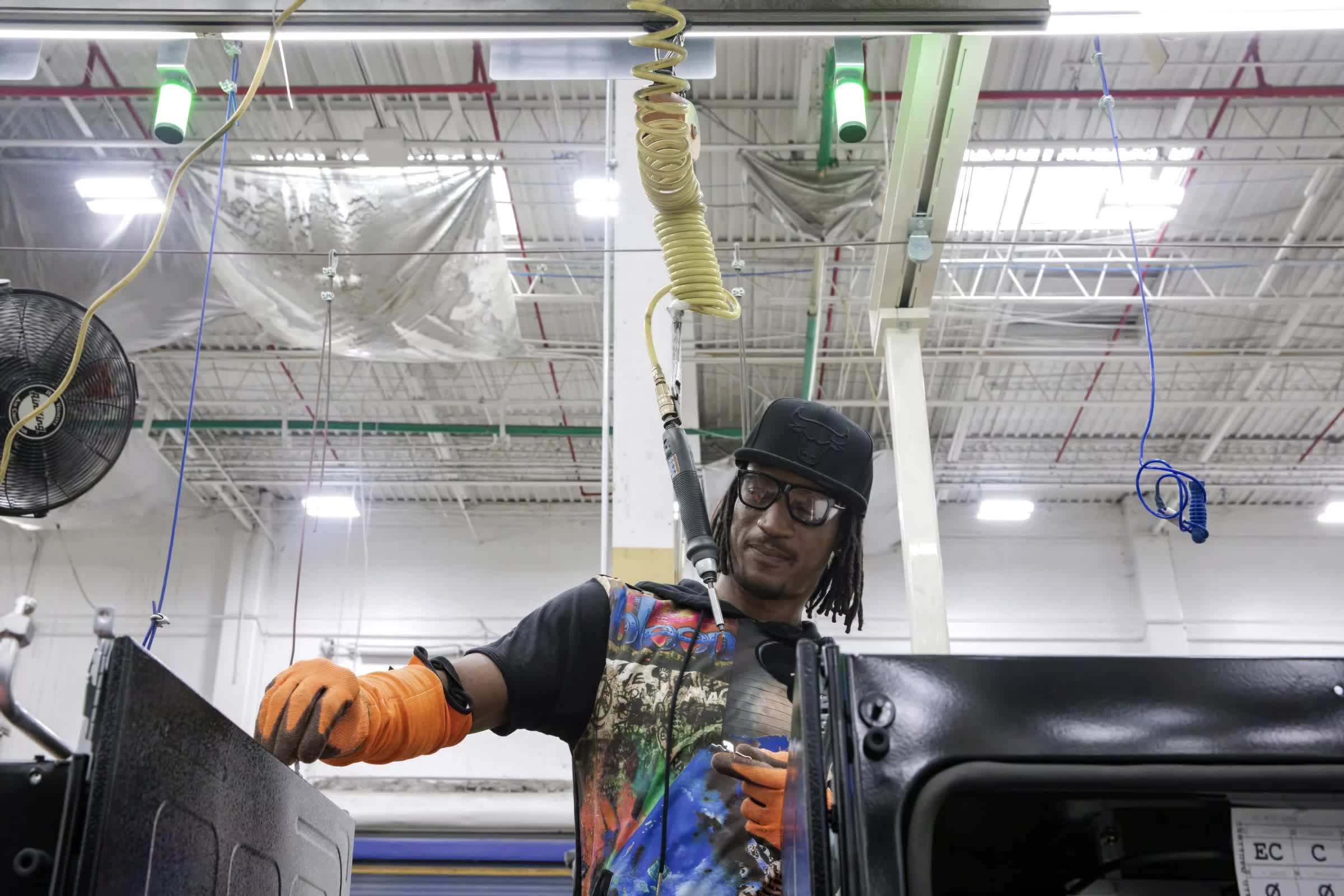
The takeaway: Manufacturing jobs have long been built around fixed schedules and predictable shifts. At a GE Appliances plant in northwest Georgia, that structure is starting to loosen, replaced by a system where workers pick their hours through an app. The setup is run through staffing firm MyWorkChoice, which maintains a pool of more than 900 people trained to handle different roles across the plant.

The employees log in to an app and choose when to work, signing up for four-hour blocks that fit their schedules. In a typical week, roughly half the pool – around 450 workers – pick up shifts, averaging about 24 hours.

The model took shape during the pandemic, when demand for appliances surged, but the company struggled to keep its lines staffed. “People were buying appliances in record numbers, because they were staying at home and they were cooking,” Tony Gabbert, the plant’s director of manufacturing operations, told NPR. “It was a great time, great problem to have when you’re just selling product so fast that you can’t hardly make them quick enough.”

The bigger issue was labor. Absences and resignations left the plant short by hundreds of workers on some days, forcing salaried staff to step in to keep production moving. That pressure pushed the company to consider alternatives, including MyWorkChoice’s app-based staffing model.

Advertisement

The idea was not an easy sell. “I did say this is crazy,” says Bill Good, vice president of manufacturing. After decades in the industry, he was used to a system built on consistency. Letting workers sign up for short shifts, sometimes just a few hours at a time, raised concerns about stability. “The two-hour increments scared the heck out of me, because I was envisioning people coming and going at a rate that we could not control,” Good says. The company ultimately landed on four-hour shifts and rolled the program out gradually.

The system now operates more like a gig platform than a traditional factory schedule. Workers choose shifts, build their own schedules and are rated on reliability. Those with stronger ratings get first access to available hours. “This is like the Uber of manufacturing,” says Darcy Duvall, the plant’s director of human resources operations.

Their contributions have been key to GE Appliances’ $180 million expansion of the Georgia plant, completed last year, which added 600 new jobs. It has also changed who the jobs appeal to.

Some workers are not looking for full-time roles at all. Ruth Ransom, 68, had considered herself retired before joining the program. She now picks shifts that fit her schedule, often choosing quality-control work over more physically demanding assembly-line roles. “It’s your choice,” she says. “I love it.”

Advertisement

Others use the flexibility to balance multiple jobs. Kwame Crockett started picking up shifts to supplement his work managing and remodeling properties in a mobile home park. He now often works close to full-time at the plant but has chosen not to convert to a permanent role with benefits. “I’ve thought about it,” he says. “But I never know when my other remodeling or anything might kick up. So I might need a vacation or a little time off, you know?”

The trade-off is lower pay and almost no benefits, though MyWorkChoice employees can opt into a group healthcare plan. Duvall says many workers prize flexibility, even with those trade-offs.

The system has also helped retain experienced workers who might otherwise leave. Doris Hamby, who spent 35 years at the plant, shifted to part-time work after her husband died. Now 62, she works three to four days a week while helping care for family members.

What started as a stopgap during a labor crunch has stayed in place. The plant now relies on the app to fill shifts, rather than relying solely on fixed schedules.

Advertisement

Image credit: NPR

Source link

Advertisement
Continue Reading

Tech

Why Was The Toyota Highlander Called Kluger In Australia?

Published

on


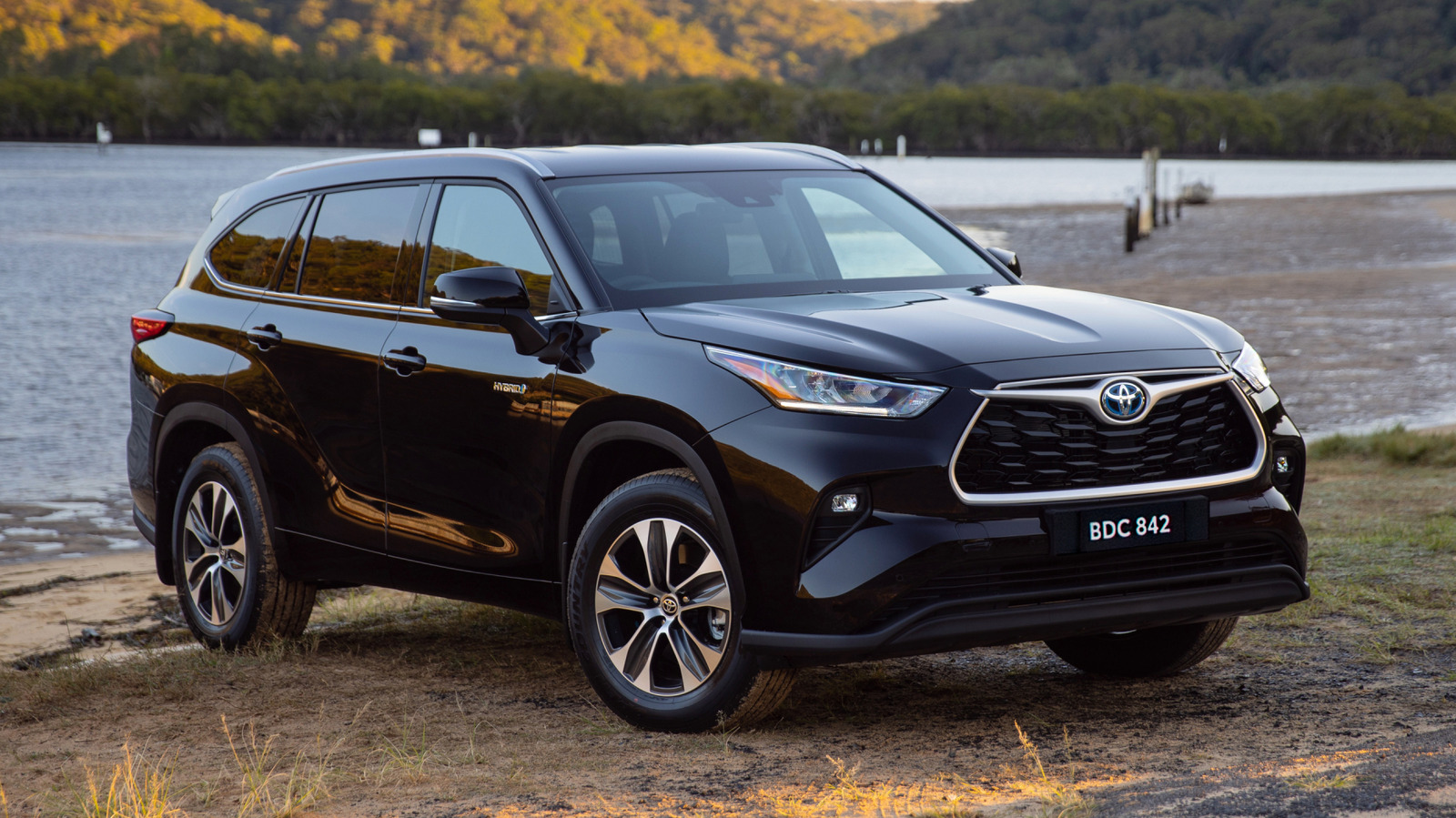
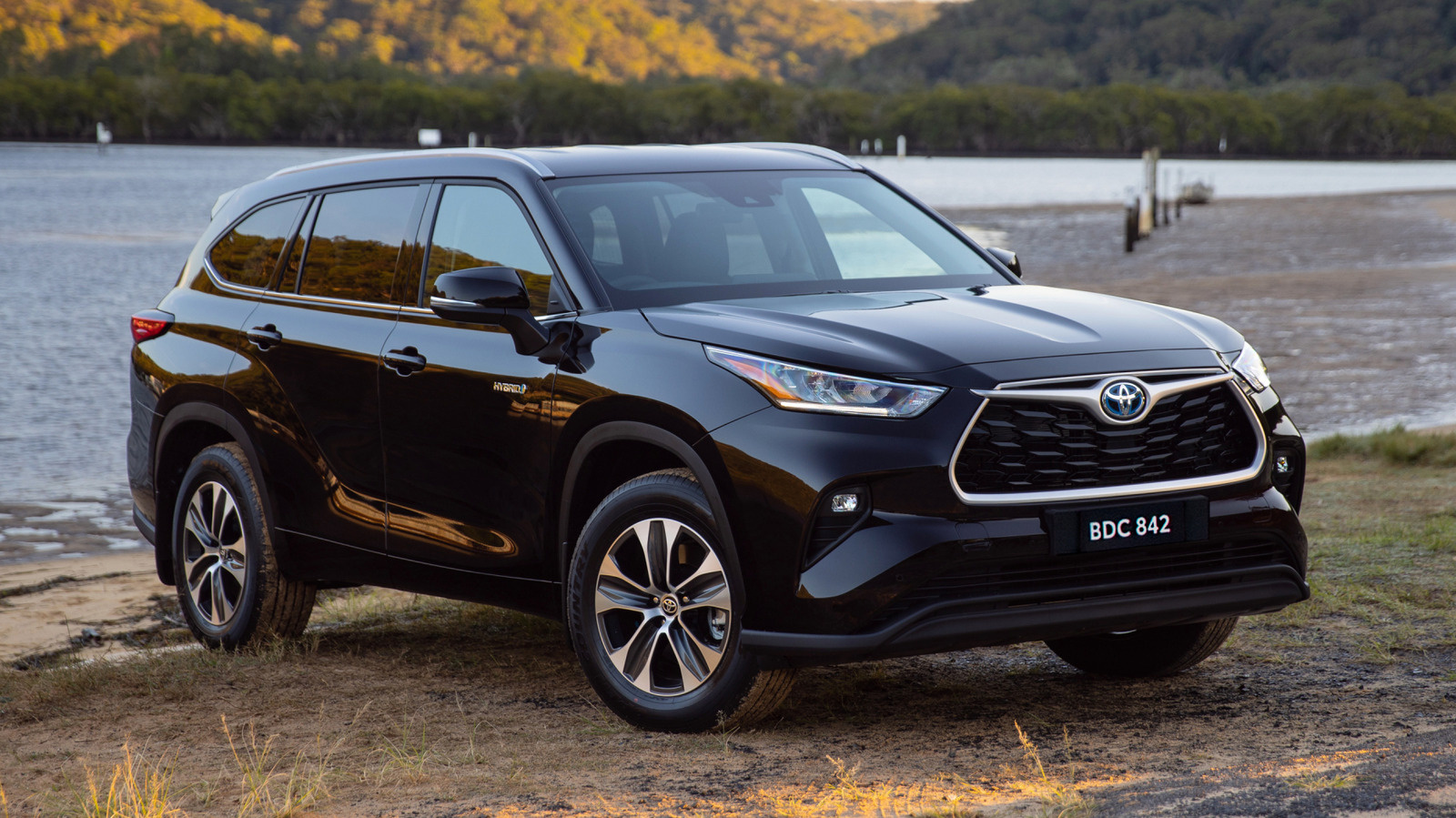
Toyota has reinvented the Highlander for the 2027 model year, with an entirely new look and new drivetrain technology, both of which are arguably overdue. We’ve previously concluded that the 2026 Highlander had outstayed its welcome, and at first glance, there are very few similarities between the new and outgoing versions of the car. However, rather than launch a new nameplate to reflect the all-new model, the Japanese automaker has chosen to stick with the Highlander moniker.

It’s a name that carries plenty of weight with American buyers, but elsewhere in the world, the same SUV is known by a very different name. In Australia, the Highlander is called the Kluger, a name which Toyota says is derived from “klug,” a German word that means wise or smart. Toyota was blocked from using the Highlander name in Australia because Hyundai already owned the trademark, which it used for the top trim of its Terracan SUV.

Advertisement

Hyundai first filed for the Highlander trademark in Australia in 1999, while Toyota applied to use the name in 2003. That application was denied, leaving Toyota with no choice but to hastily find an alternative. In Japan, the Highlander had already been marketed as the Kluger V since its introduction in 2000, and so Toyota borrowed the name for use in Australia.

Despite being denied the use of the name 20 years prior, Toyota filed again for the use of the Highlander trademark in Australia in 2024. Yet again, the application was not accepted, since Hyundai still uses the Highlander name for certain model trims.

Advertisement

Toyota dropped the Kluger name in Japan

Although it actively tried to claim the Highlander trademark, Toyota Australia told Drive in 2024 that there are “no plans to use the name ‘Highlander’ locally.” While it seems that the Kluger name isn’t going anywhere in Australia, the Japanese market version of the SUV no longer uses it.

The original Japanese Kluger V that launched at the turn of the century was never very popular with buyers. They mostly preferred its sister model, the Harrier. Incidentally, the Harrier is another model that’s known by different names in different markets, with American buyers knowing it as the Lexus RX. While the Harrier gained a reputation as being ahead of its time and became a big commercial success in Japan, the Kluger V was mostly overlooked. The launch of a three-row variant and another sister model, the Kluger L, didn’t do anything to boost its popularity, and Toyota axed the Kluger in Japan altogether in 2007.

The model remained absent from the Japanese market for almost two decades, but it’s now being relaunched. This time around, the model uses the Highlander name, with the first examples set to hit dealers in Japan in August 2026. Strangely though, the brand new Japanese-market Highlander isn’t actually configured for the Japanese market at all. 

Advertisement

It’s instead designed for the New Zealand market, and as a result, Toyota says that some drivers aids and most of the infotainment system won’t work in Japan. The Japanese launch of the Highlander SUV, albeit in New Zealand market form, means that Australia is the only major market to continue using the Kluger name.

Advertisement

Land Rover nearly launched a Highlander SUV

Toyota Japan is marketing the new Highlander as a rugged, North American-made SUV that can deal with all kinds of terrain with ease. Ruggedness and utility were key themes in picking the Highlander name in the first place, and the term itself is synonymous with the Scottish Highlands.

Neither the Japanese manufacturer nor its Korean rival can claim any real connections to the Highlands, but a different manufacturer with British roots nearly launched a Highlander SUV long before Toyota or Hyundai. In the late ’80s and early ’90s, Land Rover considered launching both the Discovery and the Freelander under the Highlander name, before a separate trademark issue saw the company abandon the idea.

Land Rover even went as far as trademarking the Highlander name in Australia, beating Hyundai by around a decade. However, when the company went to trademark the name in its home market, the U.K., it found that Volvo Trucks already owned the trademark there.

The story goes that the Freelander name was partly chosen because Land Rover had already designed the recess mould for the name badge, and needed something that took up the same amount of space as “Highlander.” Freelander sounded similar enough and wasn’t already trademarked, so it became the name of the production model. If it hadn’t been for Volvo’s British truck division, it’s likely that Land Rover would have launched its new model as the Highlander, and Toyota fans would know its current Highlander under a different name today — perhaps it might have even been known globally as the Kluger.

Advertisement


Source link

Advertisement
Continue Reading

Tech

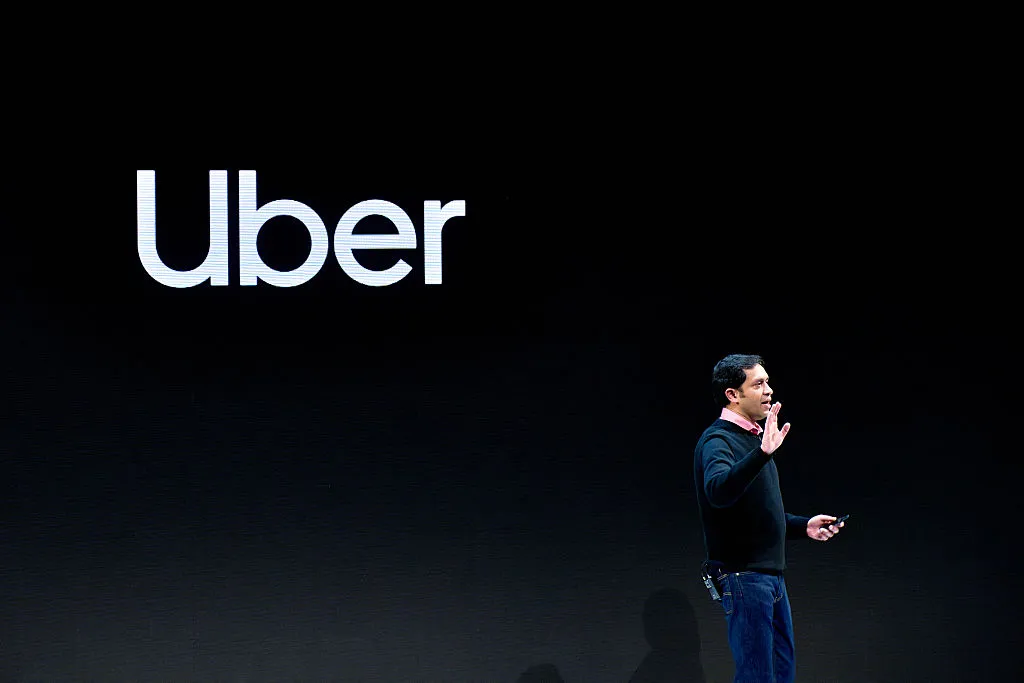
Uber’s product chief on hotels, robotaxis, and why the company doesn’t want to be “everything for everyone”

Published

on

Uber has spent the last year quietly pushing beyond the two businesses most people associate it with. There’s ride-hailing, of course, and delivery, but spend time in the app and you’ll now find hotel bookings powered by Expedia, “shop for me” concierge features, and boat rentals in Europe.

Under the hood, so to speak, there’s also a lot happening. Think debit cards for drivers, a data-labeling side hustle for these same earners looking to make more moolah, and a six-month-old, business unit called AV Labs, which is developing a fleet of sensor-equipped vehicles that’s separate from Uber’s regular driver network and designed to gather ever-larger amounts of driving data. Uber frames the initiative as a way to strengthen its relationships with autonomous vehicle partners, several of which it also holds equity in, but it sure looks like a hedge, as well. Uber competes directly with some of those same partners, with Waymo chief among them, and owning the data layer gives Uber both some leverage and optionality.

Whether Uber becomes a full-blown “everything app” similar to some Asian super-apps like Grab, remains an open question. But in this conversation, Uber Chief Product Officer Sachin Kansal walks TechCrunch through the company’s financial-services ambitions, its increasingly complicated relationship with Waymo, its new AV Labs data operation, and how AI is starting to show up in ways riders and drivers will actually notice.

This interview has been edited for length and clarity.

Advertisement

TC: You unveiled hotels, boat rentals, and more shopping features earlier this year. How did that list get made, and what didn’t make the cut?

SK: Every year our teams are obviously building a lot of stuff, and a subset of that we decide is worth sharing with the world on the biggest stage. This year the theme that we gravitated towards was really travel. 1.5 billion trips on the Uber platform every year actually happen outside of a user’s home city, so we know that travel is something that’s a very common use case for Uber users. Our headline announcement this time was actually introducing hotels on Uber as a partnership with Expedia. But travel is so much more than that — you need rides to go from the airport to the hotel, and you need food. We heard from a lot of our users that a lot of them had stopped using room service and were just using the Uber Eats app. With “shop for me,” the goal was for us to enable you to shop from any local store even if that store is not available on Uber Eats with the entire catalog. Travel really is, in my opinion, the third leg of the stool — we had rides, then we added eats, and now we are adding travel.

Is Uber moving toward offering its own financial services, the way “everything apps” in Asia do?

Financial services for us cuts across multiple different entities — consumers, but also drivers and couriers, and merchants. We have multiple products today focused mostly on drivers and couriers, where we have what we call the Uber Pro card, which they can use as a debit card and transfer all their earnings onto. We are starting to experiment with some of those products for merchants in certain parts of the world right now. As far as consumers are concerned, we’ll see if that makes sense for us in the long term. Right now there is a currency for consumers to use — we call them Uber credits — and this ties to our membership program. On hotels, for example, members get 10% cash back on a $1,000 transaction, that’s $100 back as credit that you can then use on rides and eats.

Advertisement

Would Uber ever offer its own buy now, pay later product?

I’m not sure, because we want to make sure that the experts do what the experts do. We already have announced partnerships with others in the industry who are already providing that service, so that at checkout you have the ability to do that. In terms of our general product strategy, we’re not trying to be everything to everyone.

With boat rentals, in Europe, tapping the tab hands users off to a partner’s own booking flow rather than checking out inside Uber. Is that handoff model a template for what’s coming?

Definitely there are some instances, especially when we are doing something new, for us to rely on our partners, because a two-way integration just does take a lot of time, and in some cases it’s good for us to try before we integrate deeply. In the case of Expedia, we decided it just makes sense to integrate deeply — we built the entire UI on our own in partnership with Expedia. But in some cases it may make sense for us to hand off the rest of the experience to the experts in that field, and if you get great traction, we can always integrate them deeply.

Advertisement

Your Uber One membership product now has 51 million members and accounts for roughly half of bookings. Do you have data showing the cross-sell actually works — that a delivery user later starts taking more rides?

On the delivery side, it takes you two to three orders for you to break even the monthly fee that you pay. As members get more habituated to the program, it’s increasing their frequency within the line of business they are already using. And it’s also leading to more usage of the other sides of the business — we are seeing people who are mobility only also start to use delivery, and people who are delivery only also start to use mobility.

Delivery has been one of the hardest businesses in tech to make profitable. Is Uber Eats still leaning on ride-hailing to stay healthy?

During the early years of Uber Eats it was not profitable yet, but over the last several quarters, Uber Eats has been independently a profitable business for us, and generating a lot of profit.

Advertisement

A story I wrote this spring framed Uber as unexpectedly competing more directly with Airbnb, which is now offering airport transfers through a partner. Do you see it that way? Who are you most focused on?

There’s no dearth of competitors — Lyft in the U.S., Didi and 99 in Latin America, Bolt, Ola around the world, and on delivery, DoorDash, Delivery Hero. But I only spend a very small percentage of my time thinking about that. The bigger percentage of my time, or what keeps me up at night, is are we providing our users all the value that we can provide.

You recently wound down the Waymo pilot in Phoenix while scaling elsewhere. How do you keep the experience coherent when you’re partnering with — and in some cities competing with — the same supplier?

Phoenix was the first city that we launched with Waymo, with about a dozen cars, but our scale launches have been in Austin and Atlanta, where we have hundreds of cars with them. When we recently looked at the Phoenix pilot, we mutually decided that it doesn’t make sense for us to continue. Waymo is an excellent partner of ours, but in many cities they’re also a competitor. We are not in the race to be an L4 autonomy provider — what we are focusing on is laying down the race tracks so we can work with multiple players. We believe in the hybrid network, human drivers as well as autonomous vehicles in the same city, because it allows us to balance demand and supply.

Advertisement

Regarding AV Labs, what can Uber offer autonomy partners that they don’t already have?

We are going to be equipping hundreds of cars with sensors, deployed through our fleet partners, and through that we’ll be collecting millions of miles worth of driving data. That really helps with the long-tail problem — you want to see all the edge cases, not just the P95, P99 level. Beyond the data itself, there’s so much know-how from our 10 million earners in terms of how pickups and drop-offs work. We handle 25 million lost items every single year — how do you operationally handle that in the world of autonomy? That’s the kind of operational expertise we can bring.

Is Uber selling driver and rider data to Gen AI companies?

I would divide this into two parts. In terms of Gen AI companies, we are able to label data for them using our earner base, or through audio collection, and yes, we have commercial relationships with them and we are selling it to them — that’s a part of the business that is new, and we are extremely bullish about it. AV Labs is separate, and we are still figuring those models out for sharing that data with partners. It’s a little early.

Advertisement

Are drivers recording conversations with riders for this data work?

No, no, no — I want to be very clear, there’s no conversation being recorded as part of that while they’re on a ride. When they’re not on a trip, they’re not driving, they’re not delivering, they’re just talking, or they’re listening to a piece of audio and transcribing it. They get paid for doing that, by the way.

Where has AI actually shown up in ways a rider or driver would notice?

If you are an earner on our platform, we have an earner assistant — the number one question on their mind is how do I make more money, and it will say, look, it’s actually pretty light in the South Bay, but you may want to go five miles away where there’s a lot of demand. On the Eats side, there’s a grocery cart assistant where you can say “I want milk, eggs, bread” and it creates the cart very quickly. And on rides, you’re able to use voice to request a ride — say “I’m looking for a ride to the airport, I have six pieces of luggage, six people.”

Advertisement

So a fully agentic Uber — “plan and book my whole trip” — is on the horizon?

I can’t put a date on it, and I can’t tell you exactly what the feature set will be, but I think AI is going to be a huge enabler of that, where I can leave the complexity to the platform and just tell an agent what exactly I want. Easier said than done — we want to make sure we’re not just checking a box by shipping an agent that maybe doesn’t work that well.

As CPO, how do you personally prioritize with so many ideas in flight?

I would say I spend 70% to 80% of my time making sure that our existing products, or the products we are about to launch, are as solid as possible. All the new ideas are like shiny objects — if you have 100 ideas, maybe five of them are good, and those five then need a lot of cultivation and conviction. So probably 20% of the time is on new ideas — including, by the way, I go out and drive and deliver myself, just to see our product from the other side firsthand.

Advertisement

When you purchase through links in our articles, we may earn a small commission. This doesn’t affect our editorial independence.

Source link

Continue Reading

Tech

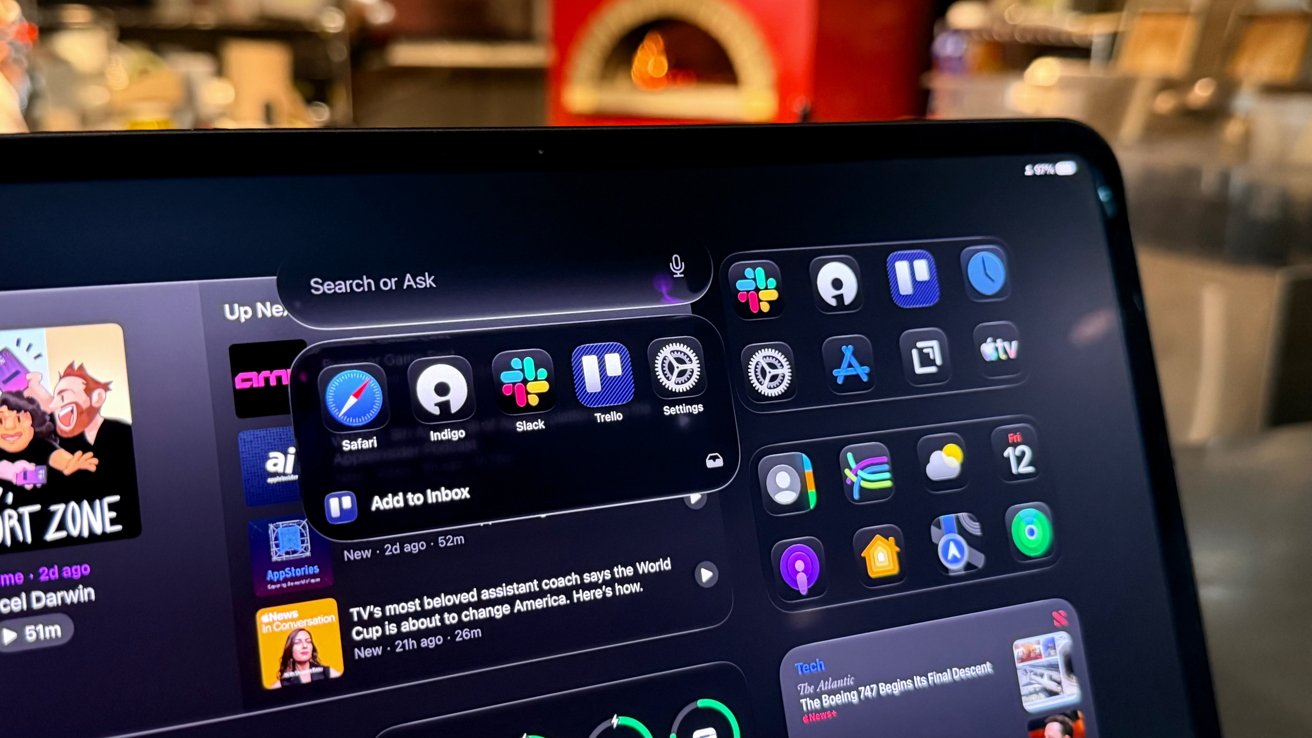
iPadOS 27 & macOS 27 beta 3 get a version 2 update

Published

on

It’s OS 27 public beta day, but developer beta testers are getting a little treat with version 2 updates of the iPadOS 27 and macOS 27 beta 3 release.

While it isn’t clear exactly what Apple might have changed in its second version of macOS 27 beta 3 and iPadOS 27 beta 3, they are now available. Every other OS 27 beta retained its beta 3 build numbers for the public beta.

The build number for macOS 27 beta 3 version 2 is 26A5378n, up from 26A5368g. The iPadOS 27 beta 3 version 2 build number is 24A5380I, up from 24A5370h.

There is a chance that there was some specific bug or security fix between the two operating systems that needed to be addressed for the public release. Apple tends to keep the developer beta and public beta on the same release version.

Advertisement

The release notes for iPadOS 27 and macOS Golden Gate 27 don’t have any specific references to the version 2 update. The update dialog in Settings doesn’t state any specific changes either.

For those using the developer betas already, it is important to install the new updates as soon as is reasonable to ensure stability and security. For those still not using any betas, AppleInsider continues to advise users to avoid installing betas on critical hardware.

Find any changes in the new builds? Reach out to us on X at @AppleInsider or @Andrew_OSU, or send Andrew an email at [email protected].

Advertisement

Source link

Continue Reading

Tech

The UK’s New Under-16 Social Media Ban Will Cause More Harm Than It Prevents

Published

on

from the moral-panic-with-a-british-accent dept

Recently, politicians in the UK pushed forward with plans to eviscerate privacy and free speech on the internet by announcing a ban on social media for users under 16 that is set to take effect in Spring 2027. 

The UK government continues to falsely characterize this policy as a necessary response to growing concerns about online harms for young people. In reality, much like the Online Safety Act, it will cause more harm than it will prevent. 

Users of all ages are burdened with proving their age before accessing content, with social media platforms such as Snapchat, TikTok, YouTube, Instagram, Facebook, and X included in the ban. There remains no reliable, privacy-preserving method of verifying the age of every internet user and methods vary from one platform to the next.

Young people will not simply be protected from being contacted by adults or endlessly scrolling—they’ll also lose access to educational videos on YouTube, local events on Facebook, and potentially cut off from distant friends and family. 

Advertisement

Public policy must be effective, proportionate and respectful of fundamental rights. Young people deserve better than a policy built on panic, and all internet users deserve a safe and free internet. A social media ban generates headlines, but it will not solve the problem. 
A Brief History of Age-Gating in the UK

Age restriction proposals in the UK date back to a decade ago, when the proposed Digital Economy Bill was put forth to (among other things) restrict young people from accessing pornographic websites. While the Digital Economy Act of 2017 passed without age-based restrictions, it laid the groundwork for later age verification measures.

Over the next few years, age checks for porn websites were announced then delayed several times. But it wasn’t until a consultation under the 2016-2019 May government and the 2020 publication of the Online Harms Whitepaper that age verification became a broader idea.

In 2023, the UK passed the controversial Online Safety Act, establishing powers that could weaken privacy protections and freedom of expression for internet users worldwide. In July 2025, the government implemented age assurance measures on sites hosting “harmful” content. 

Advertisement

And despite politicians affirming repeatedly that the Online Safety Act would solve all of the problems with online safety, this year they decided it in fact did not go far enough. American social psychologist and The Anxious Generation author Jonathan Haidt—who has called for age-related social media bans around the world, despite significant scientific doubt about his research—met with the UK Health Secretary in February to push for the ban.

In March, politicians introduced plans for a social media ban into the Children’s Wellbeing and Schools Bill to “prevent children under the age of 16 from becoming or being users” of “all regulated user-to-user services,” to be implemented by “highly-effective age assurance measures”—effectively banning under-16s from social media. 

When this proposal came before the House of Commons, MPs defeated and proposed their own amendment: enabling the Secretary of State to introduce provisions “requiring providers of specified internet services” to prevent access by children, under age 18 rather than 16, to specified internet services or to specified features; and to restrict access by children to specified internet services which ministers provide. 

But the social media ban does not stop there. The provision also requires internet service providers to limit the time kids spend online, and has rules about who can contact them online. These extreme rules will take decisions about using technology away from families and put them in the hands of government regulators. 

Advertisement

The history of this proposal shows that the UK government has repeatedly returned to the same flawed idea: restricting access to online services by requiring age checks for everyone. But the fundamental problems have not changed. There is still no widely available way to verify age online without compromising privacy—but even if there were, broad restrictions on social media will inevitably limit access to lawful speech, and valuable online communities, and arts and culture.

Republished from the EFF’s Deeplinks blog.

Filed Under: age verification, kids, online safety act, social media, social media ban, uk

Advertisement

Source link

Continue Reading

Tech

Ford’s Super Mustang Mach-E Delivered the Weekend’s Fastest Time at Goodwood Festival of Speed

Published

on

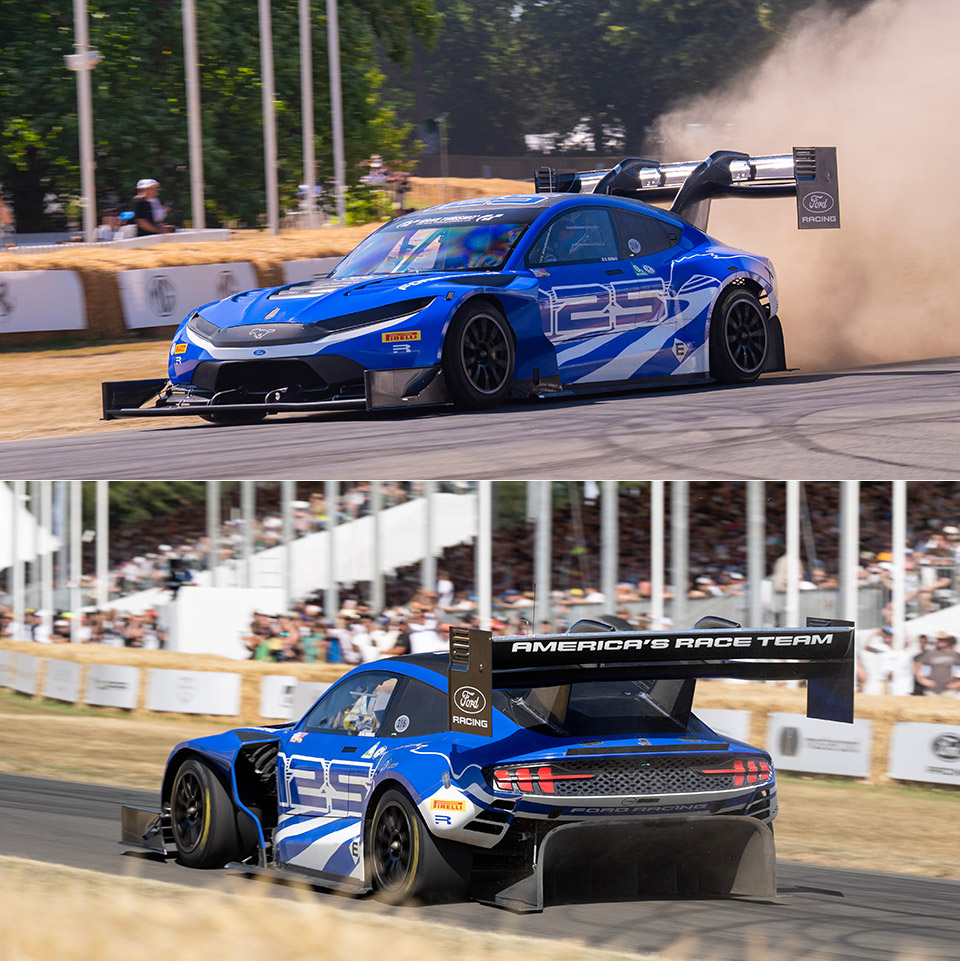
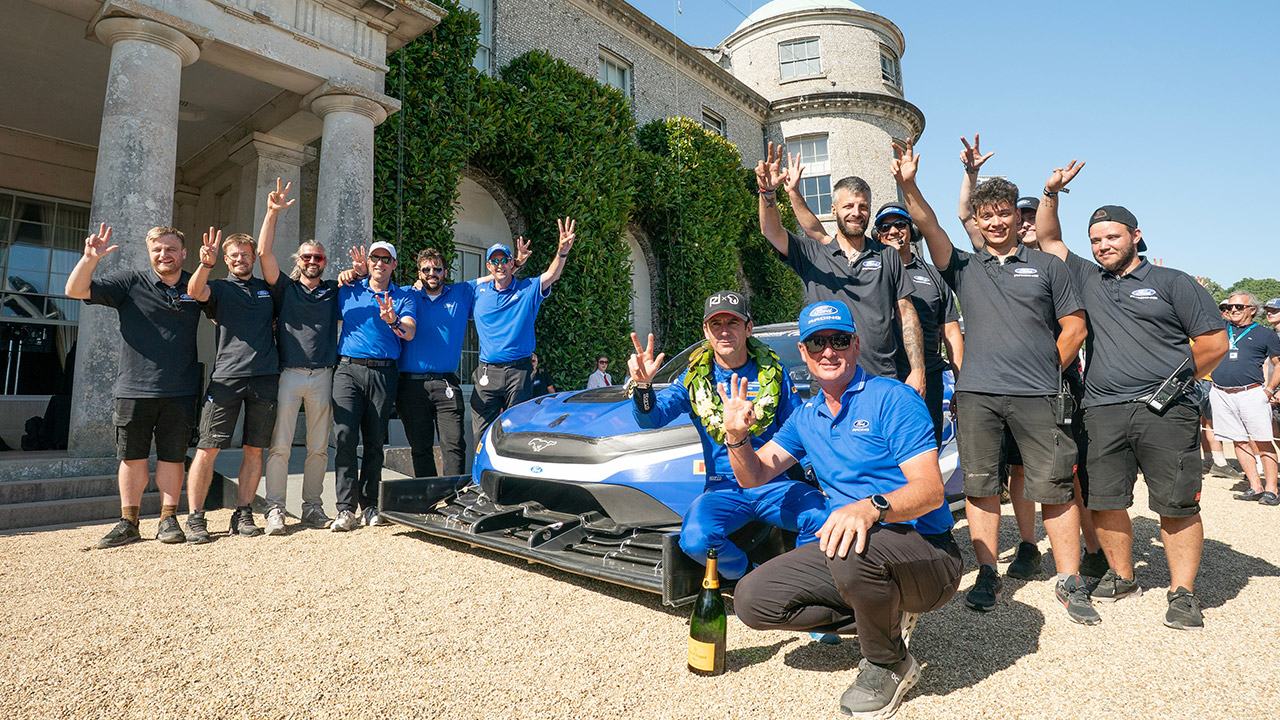
Ford Super Mustang Mach-E 2026 Goodwood Shootout
Romain Dumas guided Ford’s Super Mustang Mach-E up the Goodwood hill in 41.98 seconds during Sunday’s Timed Shoot-Out. That mark beat the next quickest entry, a new Gen4 Formula E car driven by Daniel Ticktum, by 0.48 seconds. It also left the rest of a strong field more than four seconds behind.


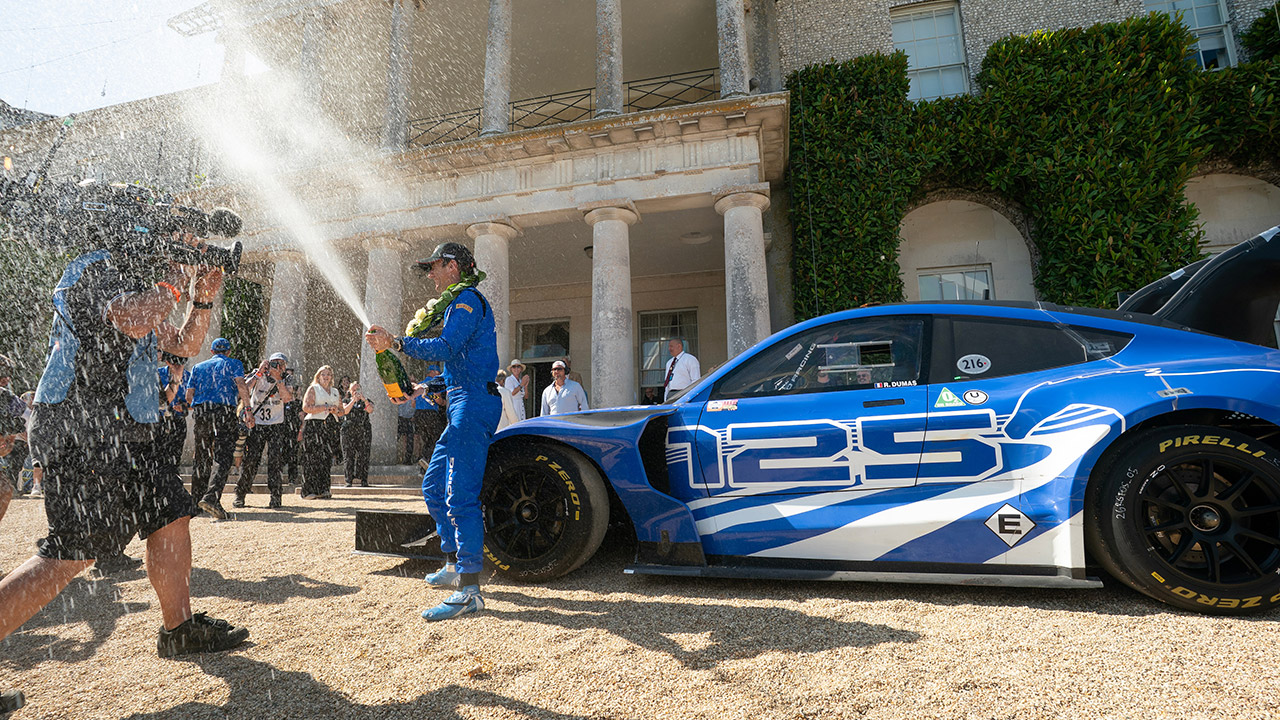
Ford had previously won the top spot with the SuperVan 4.2 in 2024 and the F 150 Lightning SuperTruck in 2025, making this their third consecutive win. So this came as no surprise, but it was still cause for celebration for Dumas, who won his fifth Shoot-Out overall and third in a row. This time it was with the electric Super Mustang Mach-E, a beast of a car designed from the ground up to be a real electric hillclimb monster, rather than a production car with an electric motor slapped in. These three UHP 6 phase motors provide 1600 horsepower, but they are distributed to all four wheels, which helps keep it on track. The power comes from a 50 kWh battery pack, and regenerative braking can reach 710 kW, which should help slow it down on the tiny course.

Sale


LEGO Technic 1966 Ford GT40 MKII Race Car Building Set for Adults – Collectible Toy W/Realistic Functions…
  • BUILD A RACING LEGEND – Relive motorsport history with the LEGO Technic 1966 Ford GT40 MKII Race Car model kit for adults ages 18 years old and up
  • REALISTIC FEATURES & FUNCTIONS – Steer using the knob on top, open the doors to explore the interior, lift the engine cover to reveal the V8 engine…
  • AUTHENTIC 1966 DESIGN – This vintage race car model features iconic black and silver design inspired by the real Ford GT40 MKII champion car

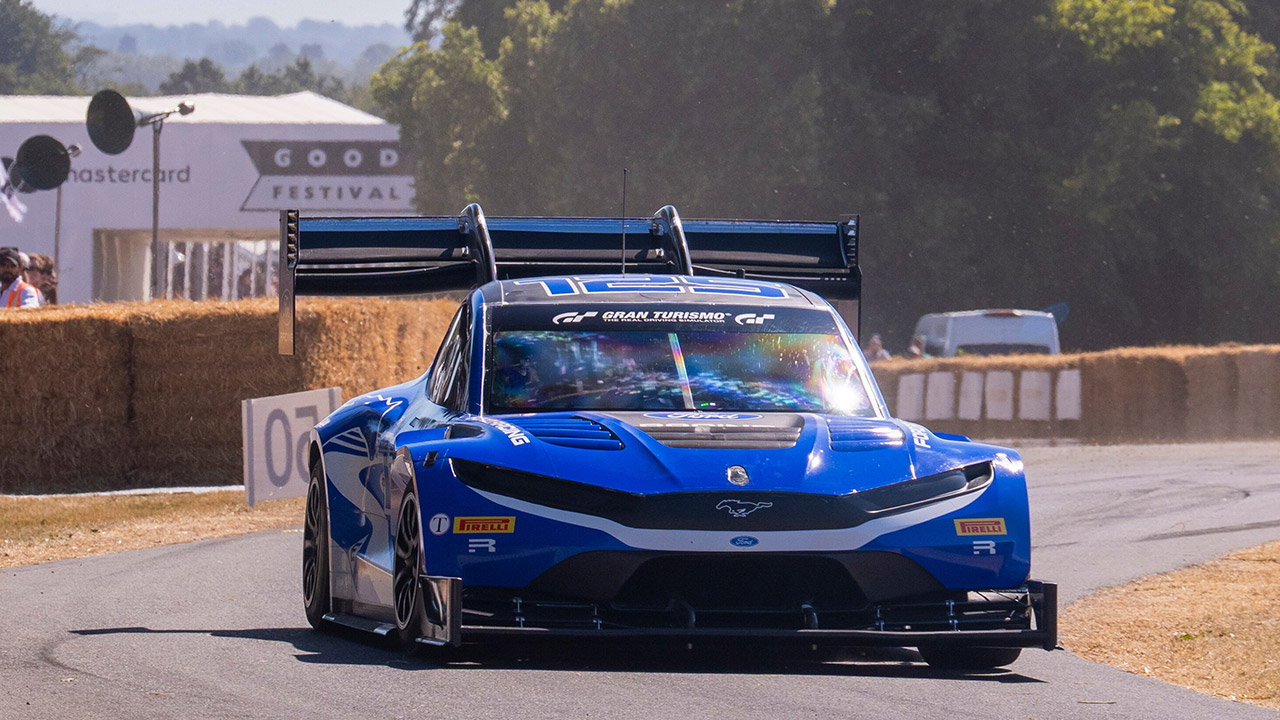
They’d made a few changes, including a large rear wing, lowering the ride height, upgrading the brakes, and adjusting the suspension. All to go through the brief yet demanding course as quickly as possible. That new aero kit generates a remarkable 6900 pounds of downforce at 150 mph, which you can guarantee helps when you’re on a narrow strip of tarmac with walls and hay bales surrounding you. And you know Dumas is fairly good at managing tight courses. In fact, just three weeks before, he won the Pikes Peak International Hill Climb in the identical car in 8 minutes, 18 seconds. He had come from a 12-mile mountain route and was still able to maintain a good speed on the 1.16-mile English hill.

Advertisement


Qualifying demonstrated that the car was pretty quick, but Sunday appeared to be a challenge, with the heat and dust making grip difficult for many of the drivers. Dumas got out to a shaky start, but eventually gained momentum and carried it all the way to the finish. It ended up being the top two electric cars for the first time in the event’s history, and to make matters even better for Ford, all combustion vehicles were well behind.

Ford Super Mustang Mach-E 2026 Goodwood Shootout
It’s noteworthy to state that the time difference between first and second is less than half a second, but the time difference between second and third is more than four seconds. When competing against great drivers and automobiles, that kind of margin is significant. The top ten results were rather unambiguous, with a 1974 Shadow DN4 finishing third at 46 points 31 seconds and a VW Polo Rallycross coming in fourth at 46 points 32 seconds.

Ford Super Mustang Mach-E 2026 Goodwood Shootout
Ford collaborated with the STARD team to develop build this monster. They had also collaborated with them on the previous two winning electric vehicles. Each time, they refine what works and what doesn’t, and this knowledge is taken forward into larger racing efforts and future road car development. So, even though this was a unique hillclimb car, it remains relevant. Ford even stated that this 41.98-second performance was faster than their own computer simulations predicted the car could do on this track, indicating that there is still more work to be done.

Source link

Advertisement
Continue Reading

Tech

Microsoft Is Making The Windows Search Box More Streamlined And Useful

Published

on

Bit by bit, Windows 11 is healing.

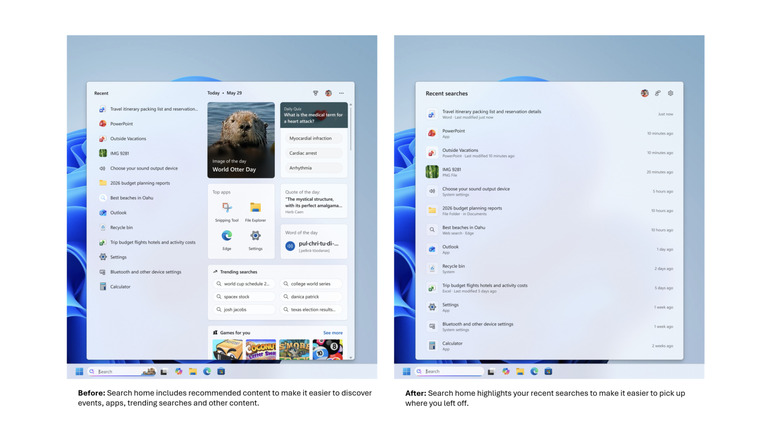
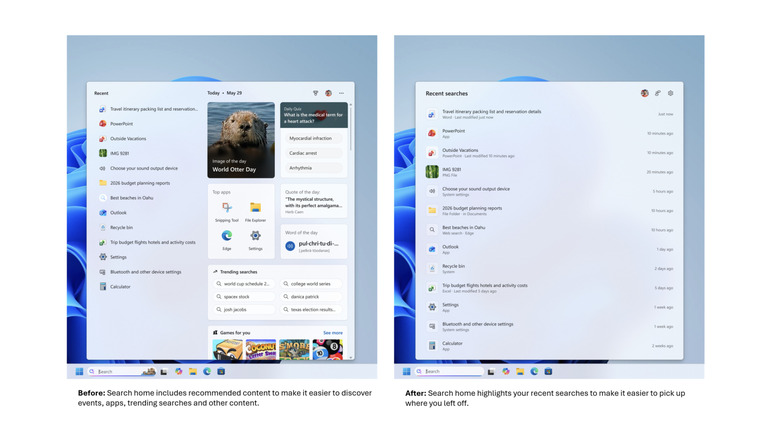
Microsoft announced that a bunch of new adjustments are coming to the Windows Search Box in Windows 11. Each individual item is a minor improvement, but hopefully in aggregate, the changes will add up to a better experience for search. Members of the Windows Insider program may start seeing the changes beginning today.

The whole user experience for the Windows Search Box will be streamlined. The home screen has been pared back for less visual clutter, which should make it easier to access recent searches easily. The results display also looks cleaner, with larger spacing creating room to show useful metadata for hits. Users can now toggle whether they want to see hits from the web and the Microsoft Store beside local results. Web searches will no longer show sponsored content such as products and promotions at the top of the results. The improved search should also do a better job of finding both files and apps.

After a long, not terribly successful push to try and make Copilot happen, Microsoft has been shifting focus back toward making quality of life improvements to Windows 11. There have been incremental updates, like allowing users to adjust the size of the Start menu, alongside more meaningful changes such as a system for rolling back faulty drivers.

Advertisement

Source link

Advertisement
Continue Reading

Tech

The Best Movies to Stream This Month (July 2026)

Published

on

Summer is firmly here and the temperatures are feeling borderline apocalyptic in much of the northern hemisphere. Why not avoid the angry sun and stay inside where it’s (hopefully) cooler and distract yourself with some of the best movies on streaming right now?

Your choices are notably rich too. The spring hit sci-fi movie Project Hail Mary, about the global freeze threatening Earth as a result of the sun mysteriously going out, is now on Prime Video, after winning theater audiences over with the help of an adorable pile of pebbles. If, however, you want to embrace the flames, you’ll find some like minds in Avatar: Fire and Ash on Disney+, where a violent new tribe of Na’vi just want to see the world (well, a semi-sentient living moon) burn.

If you instead find the heat hellish, then a double bill of Satanic panic might be more fitting. Both Ready or Not 2, also on Disney+, and They Will Kill You on Hulu tap into a previously unexplored yet surprisingly rich subgenre of “estranged sisters with melee weaponry killing murderous cultists”—insert the “weird it happened twice” meme here, but just go with it. Or if you prefer not to switch your brain entirely off for entertainment, there’s also the far more cerebral Archive or the dark dystopia of The Long Walk to take your mind off the unbearable heat.

Here are WIRED’s picks of the best movies to watch right now.

Advertisement

Project Hail Mary

Waking up aboard a spaceship to find himself the only crew member still alive, amnesiac middle school science teacher Ryland Grace (Ryan Gosling) makes for an unlikely astronaut. Even worse, he’s Earth’s last hope for survival, sent out into space in search of a way to stop a strange phenomenon devouring the sun itself—and almost every other star in the sky. It’d be an impossible task solo, but luckily Ryland has back-up in the form of Rocky (James Ortiz), the first alien humanity has ever met, a five-legged stone creature who communicates in song.

Adapted from the book of the same name by Andy Weir (author of The Martian), Project Hail Mary is a fantastic slice of survival drama and hard science fiction, but the real heart of the movie is Ryland’s and Rocky’s growing friendship. Prepare to fall in love with an excitable rock spider-thing—fist my bump, friends.

Avatar: Fire and Ash

Picking up from 2022’s The Way of Water, human-soldier-in-a-Na’vi-body Jake Sully (Sam Worthington) and his family are in mourning following the death of their eldest son Neteyam, leading wife Neytiri (Zoe Saldaña) down a dark path. As the family struggles to stay together, the colonialist human forces led by Miles Quaritch (Stephen Lang) forge a deadly alliance with a warmongering tribe of fire-worshipping Na’vi ruled by the nihilistic Varang (Oona Chaplin)—who aims for destruction to spite the Na’vi’s god, Eywa. James Cameron’s almost inconceivably ambitious saga returns with a visually spectacular outing taking viewers through striking new regions of the lush jungle moon Pandora. Fire and Ash is no jumping on point, but thankfully you can binge the entire trilogy (for now; Avatar 4 and 5 are planned) on Disney+.

Ready or Not 2: Here I Come

The first Ready or Not from 2019 was something of a sleeper hit. A gory slasher with a sense of humor, it played with the fears and uncertainties of marriage and joining a new family, with bride-to-be Grace (Samara Weaving) caught in the murderous traditions of her fiance’s clan. This sequel, helmed by returning codirectors Matt Bettinelli-Olpin and Tyler Gillett, picks up right after that first film’s credit roll, leading to Grace’s reunion with her estranged sister Faith (Kathryn Newton)—just in time to be swept into another murder game against a cabal of billionaires and aristocrats looking to fill a power vacuum left by Grace’s almost-inlaws. Schlocky, campy comedy horror, elevated by the presence of Sarah Michelle Gellar in an almost anti-Buffy role, Ready or Not 2 isn’t high art but it’s a hell of a lot of fun.

Advertisement

They Will Kill You

If Ready or Not 2 is schlock, then They Will Kill You is a step up the ladder—an almost exploitation-level hack-’em-up that takes liberal inspiration from Sam Raimi’s original Evil Dead trilogy and smashes it unapologetically together with Gareth Evans’ one-man-against-a-tower-block action epic The Raid.

Source link

Continue Reading

Tech

‘We have not ruled this out’: The water-based battery that could turn whole data centers into energy storage

Published

on


  • QinetiQ testing of SuperDielectrics’ water-based zinc cells showed up to 13x longer high-power cycle life, 100C discharge in 36 seconds, and zero thermal runaway
  • The company is pitching its solution to AI datacenters as a ‘shock absorber’ that can deal with power requirement spikes safely and reliably
  • SuperDielectrics’ Faraday 3’s first commercial deployment is slated for early 2027 as it goes up against existing Lithium-ion battery-based energy storage as an alternative that can be deployed inside the data center

Cambridge-based advanced battery technology company SuperDielectrics recently published independent test results for its upcoming water-based Zinc battery, which could help cement its de facto presence in most projects that leverage renewable energy, whose output is often inconsistent.

The next-generation battery offers up to 13 times longer life cycle under high-power cycling, zero thermal runway, and charging and discharging gains that eclipse those of Lithium-ion-based batteries.

Source link

Advertisement
Continue Reading

Trending

Copyright © 2025