Modern-day homes consist of a wide array of gadgets and devices. Some of these are smart, featuring lots of built-in functionalities, while others are rather simple. Either way, every device benefits from a quick reboot. When you restart a device, you clear the built-up cache and eliminate idle processes, both of which can have a major impact on the device’s performance. While the more powerful devices like your laptop or smartphone can run plenty of processes at once without showing signs of slowdown, ones that come with fewer resources like your smart TV can feel noticeably faster after a restart.
The biggest benefit of restarting devices periodically is that it helps prevent common problems from showing up. Through regular reboots, you are effectively nipping problems in the bud instead of troubleshooting them later, saving you time and effort.
Keep in mind that restarting and resetting a device are entirely different concepts, and we are specifically discussing the former. A restart entails power cycling the device, which is basically cutting off power for a short period. A reset, on the other hand, involves completely wiping the device, which reverts it to a new-like state. While a reset can help at times, it should preferably be used as a last resort.
Advertisement
Smartphones and tablets
HakanGider/Shutterstock
Smartphones are among the devices we use the most. Whether you’re browsing the web, shopping online, playing games, or any number of things, it’s the first device we usually go to. That’s why it’s important to restart smartphones from time to time, preferably once a week. The same idea applies to tablets. Even if you don’t use it as frequently as a smartphone, a tablet will ultimately benefit from a quick reboot, improving your overall experience. On smartphones and tablets, the restart process can vary based on the phone maker, but usually the easiest way is to press and hold the side button and the volume down button at the same time. Some phones will also have a power button in the notification shade.
As surprising as it may sound, restarting smartphones also has a security-related benefit. Some malware will run entirely in your phone’s RAM to avoid detection, since antivirus systems typically scan the storage for threats, not the memory. During the restart or power cycle, the RAM is cleared, and any threat that was lingering on it is effectively eliminated. However, if you are seeing signs of malware infection on a smartphone, it’s best to run a system-wide virus scan or reset the device.
Advertisement
Desktops and laptops
Nwz/Shutterstock
Just like smartphones, your computer, whether it’s a desktop or a laptop, should be restarted regularly, ideally once every week. This applies to all PC operating systems, whether it’s Windows, macOS, Linux, or ChromeOS. However, among the more popular options, macOS is significantly better at memory management. This means you may not have to restart your MacBook as frequently as a Windows laptop. While Microsoft suggests restarting Windows PCs at least once every week, Apple recommends doing so only when you notice an impact on your MacBook’s performance. Still, weekly restarts are the best option for most users.
To restart your PC, you can utilize the built-in options. Windows has a Restart option in the Start menu, while macOS has the same in the Apple menu. Additionally, you can configure your Windows PC or MacBook to restart automatically. For Windows, you can create a dedicated task within the natively available Task Scheduler utility, while on macOS, you can do the same via Terminal.
Advertisement
Regular reboots also have another benefit — they allow the device to install any pending updates. Some of these updates add new features, others patch known bugs, and a few are aimed at improving the system’s security.
Advertisement
Home routers
SOLDATOOFF/Shutterstock
In the past decade, the number of devices that require uninterrupted connectivity has been on the rise, making the often-ignored router the most important device in almost every home. In addition to smartphones, tablets, gaming consoles, and computers, you now have smart plugs, TVs, refrigerators, washing machines, security cameras, thermostats, and a wide range of similar devices competing for the same bandwidth. As the number of connected devices increases, your router naturally has to work harder, making restarts all the more important. Remember, periodic restarts also help if your home network feels relatively unstable.
As for the frequency, you should restart your router once every month if it’s a modern one, and seven to fifteen days if it’s fairly old. You can also restart the router if you are facing issues with connectivity. This is often the most effective fix. To restart a router, simply unplug it from the power source, wait for 30-45 seconds, and then plug the router back in.
To streamline the process, you can automate these restarts. Some routers come with a built-in auto-reboot feature that allows you to set a preferred schedule. It’s usually accessible through the admin panel or the companion app. If your router doesn’t have this feature, another convenient option is to use a smart plug. Instead of the router, you can configure the smart plug to automatically cut off power and then resume it after 30-60 seconds. Keep in mind that this only works with smart plugs that have built-in memory, which most — but not all — do.
Advertisement
Smart TVs
Proxima Studio/Shutterstock
When it comes to smart TVs, there’s no definite answer as to how often these should be rebooted. That’s because there are no detailed guidelines from manufacturers on the subject. But given the fact that smart TVs now run a host of background processes, you should restart your smart TV once a month. This will clear out the memory and restart the OS and background processes. In most cases, the TV should run faster after a reboot.
Remember, restarting the TV is not the same as pressing the power button on the remote, since that only turns off the display and puts the TV into a low-power state. For a full restart, turn off the TV, unplug it from the power source, wait for 30-60 seconds, and then plug the smart TV back into the power outlet.
Of course, you can always restart smart TVs at a shorter interval or when problems show up. Examples of common smart TV problems that can be fixed with a quick restart include random slowdowns, apps failing to launch, and software glitches triggering issues with Wi-Fi connectivity.
Advertisement
Smartwatches
Traceyaphotos/Getty Images
Smartwatches have become increasingly popular in recent years, and they are another device you should restart more frequently than you probably do. But as surprising as it may sound, many people never restart their smartwatch. It just keeps running for weeks and months at a stretch, and the only time it reboots is when the battery runs out. However, for the best performance and a seamless experience, you should restart the smartwatch once every week.
Like smartphones and computers, your smartwatch has a dedicated operating system and a wide array of active background processes. So, it makes sense to restart it every once in a while, even if you can’t do it weekly. As for the steps to reboot a smartwatch, pressing and holding the power button does the trick in most cases. If that doesn’t work, check the watch’s manual or the manufacturer’s website for the exact steps.
Remember, the list isn’t exhaustive, and there are so many other household gadgets and devices that benefit from regular reboots. This includes speakers, streaming devices and sticks, gaming consoles, printers, and smart bulbs, among others. So, if you have any of these, consider rebooting them at least once a month or according to the manufacturer’s recommendations.
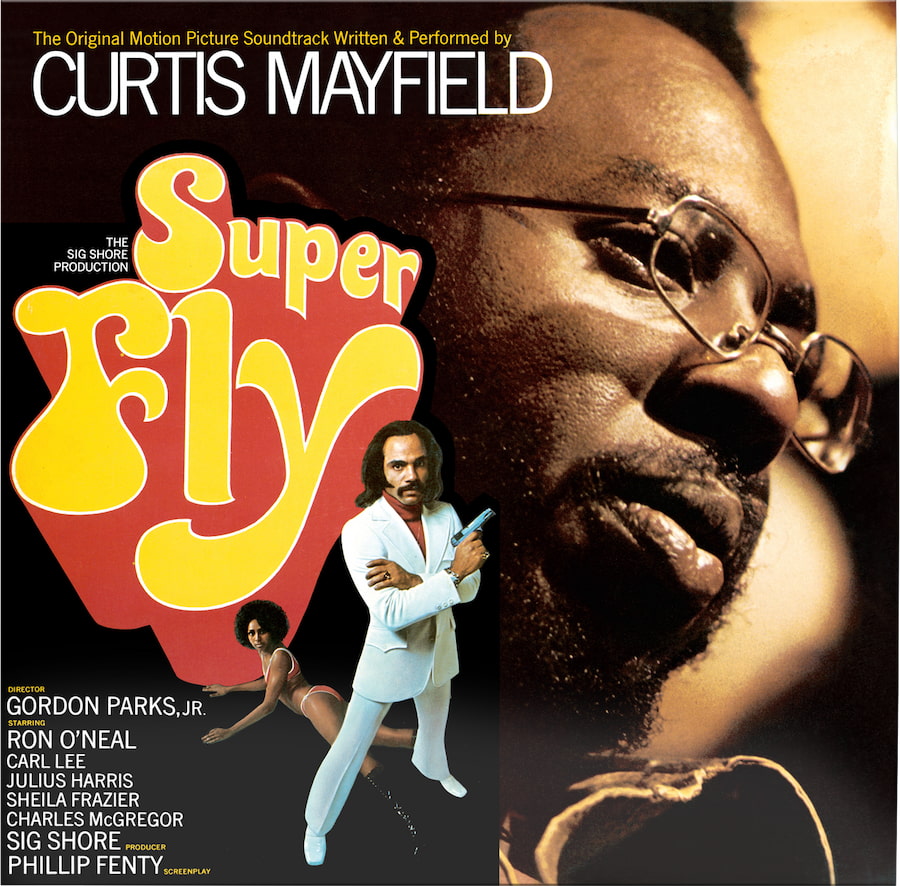
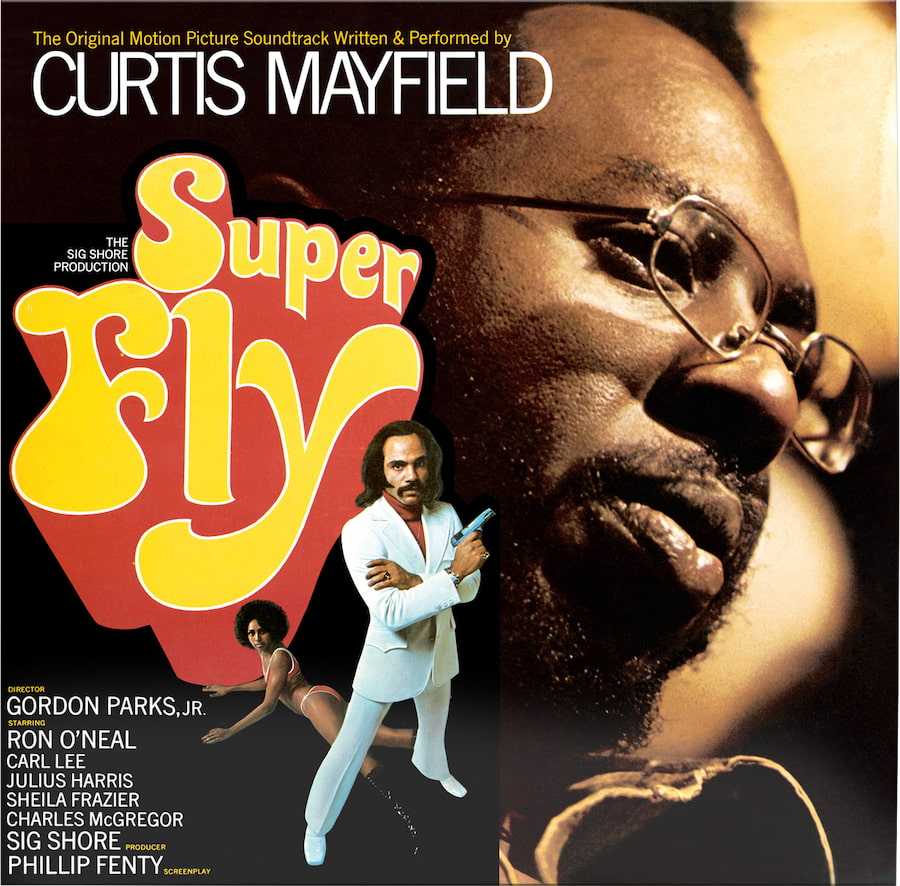
Legendary singer, songwriter, and producer Curtis Mayfield’s third solo album, released in 1972, was also his first soundtrack, created for the controversial blaxploitation film Super Fly. Although the film was not a major success, Mayfield’s Grammy-nominated, soulful, and funky score took on a life of its own, reaching No. 1 and eventually selling millions of copies worldwide.
Super Fly’s combination of timely themes opposing drugs and violence, which ran counter to the film’s message, and killer grooves proved irresistible, keeping the music in heavy rotation on the radio. The album features at least three bona fide soul classics: “Freddie’s Dead” and the title track, both million sellers, along with the poignant “Pusherman
Over the years, as I began seriously collecting Curtis Mayfield’s albums on vinyl, I came to understand just how popular this album was and remains. It took me ages, with several upgrades along the way, to find an affordable original Curtom Records pressing with the super cool die cut half cover in good condition.
Super Fly was a party album, and like many hit soul and jazz records of the era, it was played hard, often on the average automatic record changers of the day. As a result, clean original pressings in excellent condition are fairly scarce and can command high prices on the secondary market, ranging from about $50 to well over $100. Check Discogs for an idea of what I am talking about.
Advertisement
Fortunately for audiophile oriented Super Fly fans, that is no longer an issue. Rhino High Fidelity’s excellent edition is readily available and actually sounds better than my original pressing. The overall presentation is far less compressed, with richer bass, more expressive midrange, and cleaner highs. The stereo soundstage also feels wider, more spacious, and more natural.
That is not entirely surprising given Rhino High Fidelity’s exemplary track record for presenting classic recordings in their best light. Kevin Gray of Cohearent Audio cut the new lacquers, and Optimal Media in Germany manufactured the 180 gram vinyl pressings.
The glossy laminated tip on style cover is arguably more attractive than the original, save for one crucial detail: Rhino did not recreate the die cut design. In a way, I get it. You cannot play the cover, right? True. But it remains a very cool and iconic part of the album’s visual identity.
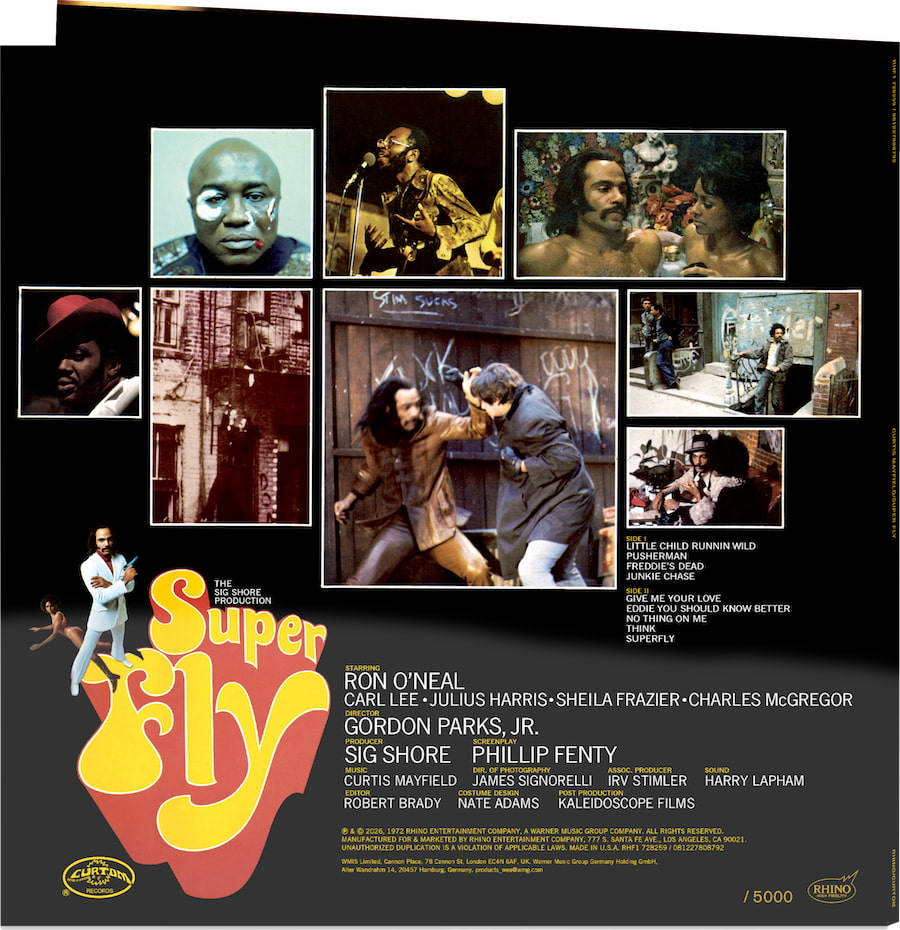
Still, you know what? I am learning to live with it. The overall production quality of the new Rhino High Fidelity edition is superior, with crisper photography, clearer details, and a full gatefold featuring newly included period images.
At the end of the day, it is all about the music, and Rhino High Fidelity’s Super Fly reissue sounds terrific. More than five decades later, the album remains timeless. While the album will probably eventually be available on other outlets, the current numbered limited edition (of 5000) is available direct from Rhino’s website for $39.98 so get one while you can.
Advertisement
Advertisement. Scroll to continue reading.
Our Ratings
★★★★★★★★★★ (5 out of 5) Music
★★★★★★★★★★ (5 out of 5) Sound
★★★★★★★★★★ (4.9 out of 5) Packaging
Advertisement
Mark Smotroff is a deep music enthusiast / collector who has also worked in entertainment oriented marketing communications for decades supporting the likes of DTS, Sega and many others. He reviews vinyl for Analog Planet and has written for Audiophile Review, Sound+Vision, Mix, EQ, etc. Learn more about him at LinkedIn.
The start-up was co-founded by Dublin-born chief operating officer Robbie Falkenthal in 2023.
Irish co-founded legal-tech Wordsmith AI is extending its Series B to $84m led by new investment from Toronto-based Intact Private Capital.
The $14m extension to the round first announced in June also includes investment from existing backers Highland Europe and Index Ventures.
Wordsmith also added the corporate venture arm of the Financial Times (FT) Group, FT Ventures, as a shareholder.
Advertisement
The New-York headquartered company is the creator behind an AI platform designed to assist in-house legal teams with routine tasks, and is used by the likes of Canva, BT, Trip.com, FT and Trustpilot.
The additional investment comes as the company recorded a 14-fold growth in revenue year-over-year, following a positive trend seen across this niche sector in AI that is expected to grow at an compound annual growth rate of nearly 10pc.
The funding deepens Wordsmith’s presence in North America, where demand from enterprise legal teams is accelerating, it said.
Wordsmith said it planned to expand its global workforce to 300 by the end of the year, adding to its 130 employees across offices in the US, the UK, and Europe, Middle East and Africa.
Advertisement
A new Irish office to meet local demand is also on the cards for the company this year. It hasn’t confirmed the location for its EU headquarters, but said in June that Ireland was a strong contender.
Wordsmith was co-founded in 2023 by Dublin-born chief operating officer Robbie Falkenthal, who spent six years at KPMG in Dublin before occupying senior roles at Flutter Entertainment, RSM Ireland and TravelPerk.
Alongside Falkenthal as co-founders are CEO Ross McNairn, a former lawyer who helped scale Perk and held senior roles at Skyscanner, and chief technical officer Volodymyr Giginiak, who held senior engineering roles at Facebook and Instagram.
“In-house legal teams at financial services and insurance companies need legal infrastructure that can operate at enterprise scale while maintaining the control and auditability required in highly regulated environments,” said Justin Smith-Lorenzetti, the managing director at Intact Private Capital.
Advertisement
“Wordsmith is built precisely for that challenge, with a deep understanding of how these organisations work and the infrastructure to match.”
Don’t miss out on the knowledge you need to succeed. Sign up for the Daily Brief, Silicon Republic’s digest of need-to-know sci-tech news.
For years, John Deere had actively made repairing their tractors near-impossible for anyone but itself and the few “authorized” repair shops—regardless of the ability of its customers to actually visit such shops. Now, in a major win for farmers and right to repair advocates, John Deere must soon provide farmers with not just the tools and resources to finally repair their own John Deere equipment, but also access to future updates for said equipment.
In 2025, the Federal Trade Commission (FTC) brought a suit against farm equipment manufacturer John Deere, alleging John Deere used their control over equipment repair tools and resources to limit the ability of farmers and independent repair providers (IRPs) to repair John Deere equipment. Earlier this month, John Deere reached a settlement with the FTC in which they will immediately make available a tranche of repair resources, then continue to make further resources available until the end of the year. Five states joined the FTC in this suit, and over the next 10 years these states will work alongside the FTC to ensure John Deere complies with this settlement.
It is worth noting there is a second, farmer-initiated antitrust lawsuit against John Deere, also concerning a farmer’s right to repair their own equipment. In April, John Deere agreed to a $99 million settlement in that case, which also includes right to repair provisions.
This fight is just one example of how, as machines become increasingly computerized, companies like John Deere restrict your ability to repair machines behind software subject to legal regimes that don’t just lock down repair, but make unauthorized repair a potential criminal offense.
Advertisement
John Deere’s market dominance in farm equipment led to an extraordinary power over access to the tools and resources of repair. John Deere actively restricted who had access to repair tools, and monopolized who could do the repair. This revenue stream—and control of it—is built into the business models of a lot of the technology we buy today. It also encourages companies to move away from the kinds of devices that can be easily fixed at home to ones that offer bells and whistles no one wants but makes repair difficult—like app-enabled toasters.
This whole saga with John Deere has been an exemplar of the greater need for right to repair laws, policy, and enforcement. There was a time when you bought a tractor and with some know-how and a manual could fix it yourself. It is easy to envision why someone with John Deere farm equipment might find it inconvenient to wait for John Deere approved repairpeople to come and fix any broken equipment. Especially when it meant waiting for days or weeks. Especially if it meant their crop was withering on the vine. This settlement will help ensure this is no longer the case.
But it’s not just about farm equipment; If you can’t fix it, you don’t own it. While some might feel more willing to agree they “shouldn’t” futz with laptops or smartphone, it still stands that — whether it’s farm equipment, a car, a laptop, or even your phone — if you legally cannot fix it yourself, if you must go hat in hand to an “approved provider,” you are at the mercy of a corporation. It is why EFF continues to support right to repair laws that ensure people truly own what they buy. And it is why EFF continues to fight for exemptions to the law that makes it most difficult to tinker and repair your own devices.
Wondering what to watch this weekend but too lazy to dig around? No worries, I have rounded up three hidden gems you can binge-watch in a single weekend. There is a technothriller stuffed with cold-case flashbacks, a tense two-hander that unfolds almost entirely inside a basement, carried by sharp dialogue, and a divorce story that turns messier and more human with every episode. I recommend these three limited series on Hulu for their unexpected plot twists and stellar performances.
Genre: Mystery, thriller, drama IMDb: 7.0/10 Rotten Tomatoes: 89%
Advertisement
Darby Hart (Emma Corrin), an amateur sleuth and hacker, is invited to a secluded Arctic retreat hosted by a reclusive tech billionaire (Clive Owen). When one of the other guests turns up dead, Darby has to use her investigative skills to prove it was murder before the killer strikes again. The show splits its time between the present-day retreat and flashbacks to an earlier road trip Darby took with a fellow hacker, layering a cold-case mystery underneath the main one.
Beneath the whodunit setup, this underrated TV show is really about isolation, technology, and how much control we have handed over to people who never asked for our trust. Emma Corrin plays Darby with a sharp, guarded intelligence that makes her easy to root for even when she is the only person who suspects anything is wrong. Clive Owen plays the tech mogul with a quiet menace that keeps you questioning his real motives. It’s a slow burn that rewards patience, especially once the final twist comes into focus.
You can watch A Murder at the End of the World on Hulu.
The Patient (2022)
Genre: Psychological thriller, drama IMDb: 7/10 Rotten Tomatoes: 89%
Advertisement
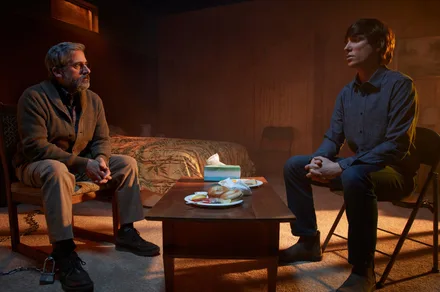
Therapist Alan Strauss (Steve Carell) gets kidnapped and held captive in a basement by his own patient, Sam (Domhnall Gleeson). Sam turns out to be a serial killer who wants Alan’s help to suppress his urge to kill again. Trapped on a chain, Alan must navigate his captor’s twisted mind while confronting his own family trauma. This underrated show on Hulu displays much of the tension through dialogue, since Alan spends most of the series chained up in a single room with almost no physical way to fight back.
Steve Carell delivers a phenomenal performance that relies on micro-expressions and quiet vulnerability. I really liked how he stripped away every trace of his usual comedic energy to create an uncomfortable atmosphere that grips you instantly. Meanwhile, Domhnall Gleeson matches him scene for scene, making his character feel disturbingly human rather than a typical movie villain. If you enjoy high-stakes, nerve-wracking stage play, this limited TV series is for you.
Toby Fleishman (Jesse Eisenberg), a recently divorced doctor, is finally enjoying success on dating apps when his ex-wife Rachel (Claire Danes) vanishes without warning, leaving him to care for their two kids alone. As Toby scrambles to find her, the show slowly peels back both sides of their marriage, revealing a much messier and more sympathetic picture than either of them originally let on. What starts as a story about one man’s midlife reinvention also sheds light on ambition, resentment, and how differently two people can remember the same relationship.
I enjoyed how this show makes its characters unlikable before earning your sympathy for them. Jesse Eisenberg brings a jittery, self-absorbed energy to Toby, and Claire Danes delivers one of the show’s best performances in a late-series episode that changes everything you thought you understood about Rachel. I admit the show takes a bit of patience early on, but the payoff is worth it.
Klipsch is arriving at Audio Advice Live 2026 with considerably more than a few familiar copper-colored woofers under its arm. The American loudspeaker manufacturer will use the Raleigh show for the full debut of its new Reference Premiere III speaker lineup, following an early preview at CES 2026, with Onkyo electronics helping power the demonstration.
A second system will move considerably further up the Klipsch food chain, pairing the Limited Edition 80th Anniversary Klipschorn with the company’s Heritage Active Crossover for what should be one of the more interesting two-channel demonstrations of the weekend.
The timing and venue are significant. Audio Advice Live returns to the Sheraton Raleigh Hotel from August 7 through 9, 2026, with more than 60 experience rooms, more than a dozen immersive Dolby Atmos theater systems, major product debuts, educational sessions, simulators, and live music. More importantly for enthusiasts, you can actually buy a ticket and walk through the front door. Unlike CES and CEDIA, which are primarily industry events, Audio Advice Live is built around giving consumers direct access to manufacturers, engineers, designers, and the equipment itself.
That increasingly makes Raleigh a destination for hi-fi and home theater enthusiasts who want an actual ears-on experience with new products rather than forming an opinion from a YouTube video, measurement chart, or 47-message forum argument between people who have never heard the product.
Advertisement
The company behind the show is also becoming much harder to describe as merely a regional retailer. Raleigh-headquartered Audio Advice has expanded beyond its North Carolina locations in Raleigh, Charlotte, and Wilmington into Nashville and St. Louis, recently acquired Sound Components in Miami, and has a new Las Vegas location listed as “coming soon.”
That gives the retailer an increasingly national footprint at the same time Audio Advice Live is evolving into one of the more important consumer-facing audio and home theater shows in the United States.
We have already reported on several of the more significant products making their way to Audio Advice Live 2026, along with an in-depth look at the rather ambitious Ascendo, Trinnov, and Christie 9.7.4 home cinema showcase systembeing demonstrated in Raleigh.
Playback Distribution is also taking over three rooms at this year’s show, giving attendees a much broader look at its growing portfolio of high-end audio, networking, furniture, subwoofer, and acoustic-treatment brands.
Advertisement
Klipsch and Onkyo Go Big With a 7.4.4 Channel Home Theater System
For its primary home theater demonstration at Audio Advice Live 2026, Klipsch and Onkyo are building a 7.4.4-channel system around the global debut of Klipsch’s new Reference Premiere III loudspeaker lineup, powered by Onkyo’s current flagship TX-RZ70 11.2-channel AV receiver.
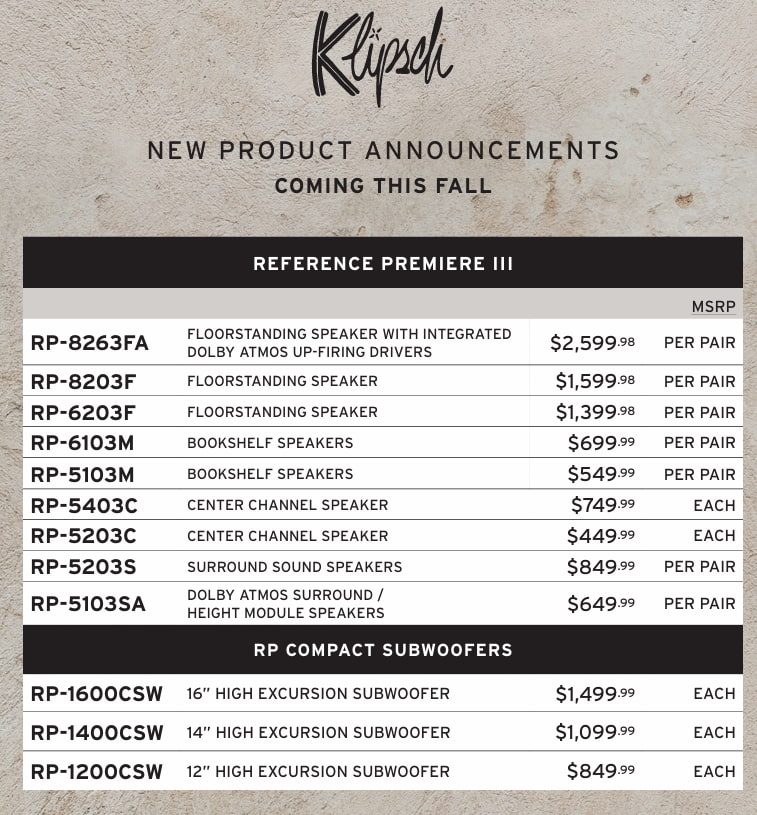
And Klipsch is not exactly easing the new range into the shallow end of the pool. The system uses four RP-8203F floorstanding loudspeakers, four RP-1600CSW subwoofers, four in-ceiling height channels, and enough amplification and processing to give attendees a proper sense of what the new Reference Premiere III models can do inside a full-scale Dolby Atmos home theater.
Klipsch and Onkyo 7.4.4 System
Klipsch RP-8203F Floorstanding Speakers (Walnut) x4: $799.99 each
Klipsch RP-6103M Bookshelf Speakers (Walnut) x2: $699.99 each
Klipsch RP-5403C Center Channel Speaker (Walnut) x1: $749.99
Klipsch Pro-180RPC In-Ceiling Speakers (Black) x4: $699.99 each
Klipsch RP-1600CSW Compact Subwoofers (Black) x4: $1,499.99 each
Onkyo TX-RZ70 11.2-Channel AV Receiver (Black): $2,899.99
Audio Advice Live System Price: approximately $17,050
Advertisement. Scroll to continue reading.
Klipsch Reference Premiere III Series
The Klipsch Reference Premiere III Series consists of nine models in total, with four of them featured in the company’s 7.4.4-channel Audio Advice Live demonstration and compared in our chart below.
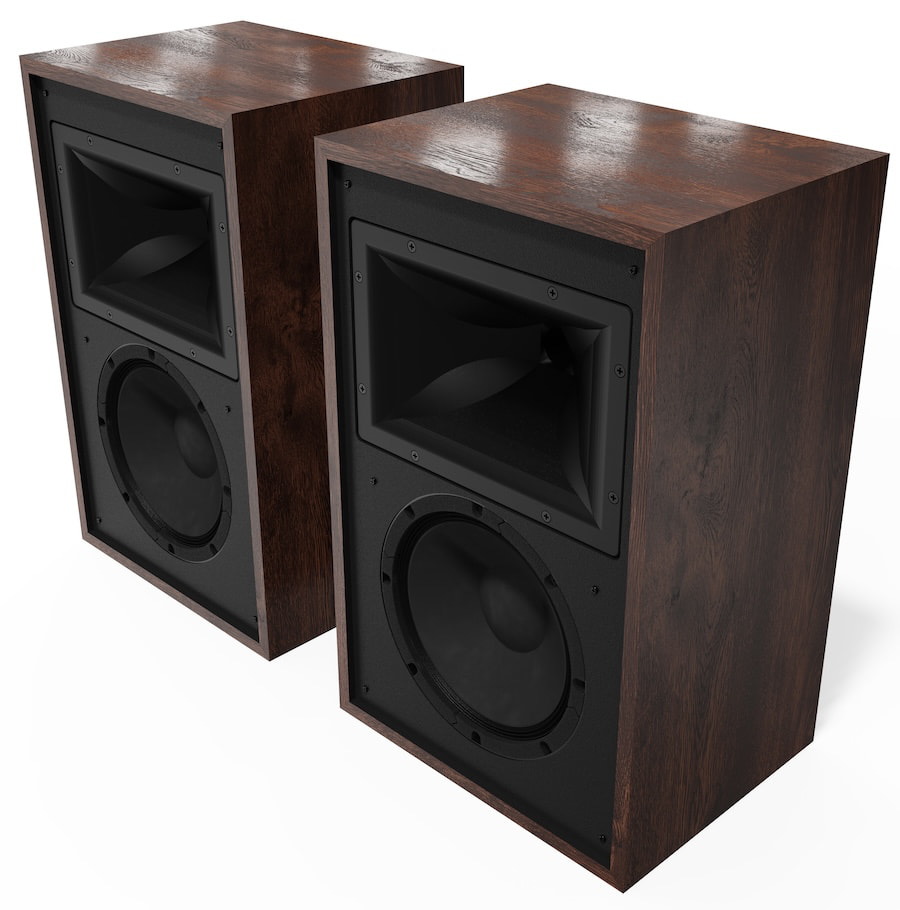
The new Reference Premiere III lineup builds on the previous Reference Premiere II Series with a redesigned high-density Tractrix horn tweeter that uses an upgraded BMC material intended to reduce unwanted resonance. Klipsch has also flush-mounted the horn assembly into the front baffle to minimize wave breakup, improve off-axis response, and create a wider, more consistent listening sweet spot.
Advertisement
Klipsch has also given the Reference Premiere III Series a cleaner and more contemporary industrial design. New knife-edge cabinets are designed to improve structural rigidity while giving the speakers a more streamlined appearance that should integrate more easily into modern living spaces.
The technology may be familiar territory for Klipsch, but the changes suggest the company is focused on refining the Reference Premiere formula rather than reinventing it — probably the smarter move for one of its most important speaker families.
Klipsch RPIII Speakers Compared
Klipsch Speaker Model
RP-8203F
RP-6103M
RP-5403C
Pro-180 RPC
Speaker Type
Floorstanding
Bookshelf
Center Channel
In-Ceiling
Price (each)
$799.99
$699.99
$749.99
S699.99
Frequency Response ( +/- 3dB)
35Hz-25kHz
44Hz-25kHz
50Hz-25kHz
52Hz-23kHz
Sensitivity (@ 2.83V / 1m)
98dB
94.5dB
96dB
96 dB
Power Handling (Continuous/Peak)
150W / 600W
100W / 400W
150W / 600W
50W / 200W
Impedance
8 ohm (3.46 min. @162Hz)
8 ohm (3.4 min @185Hz)
8 ohm (3.4 min @210Hz)
8 Ohm Compatible
Crossover Frequency
1630Hz
1500Hz
650Hz / 1950Hz
None
High Frequency Driver
1″ Titanium LTS Vented Tweeter with Flush Mount BMC Axial Tractrix® Horn
1” Titanium LTS Vented Tweeter with Flush Mount BMC Axial Tractrix® Horn
1” Titanium LTS Vented Tweeter with Flush Mount BMC Axial Tractrix® Horn
1″ (2.54cm) Titanium Dome Tweeter mated to a composite coated round Tractrix® Horn
Low Frequency Driver
Dual 8” Cerametallic Cone Woofers with Faraday rings
6.5” Cerametallic Cone Woofer with Faraday rings
Quad 5.25” Cerametallic Cone Woofers with Faraday rings
8″ (16.51cm) Cerametallic Woofer
Enclosure Material
MDF (Internally Braced)
MDF (Internally Braced)
MDF (Internally Braced)
ABS
Enclosure Type
Bass Reflex via dual chamber rear-firing Tractrix® Ports
Bass Reflex via dual chamber rear-firing Tractrix® Port
Bass Reflex via rear-firing Tractrix® Port
Infinite Baffle
Inputs
Dual aluminum binding posts / bi-wire / bi-amp
Dual aluminum binding posts / bi-wire / bi-amp
Single aluminum binding posts
Spring-Loaded Speaker Wire Terminals
Height
43.10” (109.5 cm)
15.75” (40.0 cm)
6.87” (17.4 cm)
10.75” (27.3cm)
Width
10.84” (27.5 cm
7.95” (20.2 cm)
32.06” (81.4 cm)
10.75” (27.3cm)
Depth
18.25” (46.3 cm)
13.00” (33 cm)
15.08” (38.3 cm)
4.5” (11.5 cm)
Weight
TBD
TBD
TBD
7.4 lbs (3.36kg)
Finish
Ebony, Walnut
Ebony, Walnut
Ebony, Walnut
Black Baffle/Frame, White Paintable Grille
Accessories
Not Indicated
Not Indicated
Angle screw
Round Grille, Square Grille, Paint Shield
Install Kit (sold separately)
N/A
N/A
N/A
IK-800-C (Sold Separately)
Fire Rated Enclosure (sold separately)
N/A
N/A
N/A
ME-800-C (Sold Separately)
Four Klipsch RP-1600CSW Subwoofers Bring the Low-End Muscle
Klipsch Model
RP-1600CSW
Product Type
Powered Subwoofer
Price (each)
$1,499.99
Frequency Response (+/- 3dB)
14.5Hz – 175Hz
Maximum Acoustic Output
123dB
Amplifier Type
Class D with Analog Preamp Stage
Amplifier Power
800W RMS / 1600W Peak
Driver
16” Ultra Long Throw Cerametallic
Enclosure Material
MDF
Enclosure Type
Compact Sealed Acoustic Suspension
Inputs
Dual RCA/LFE Line In, WA-2 Wireless Port
Height
19.22” (48.8 cm)
Width
18.33” (46.6 cm)
Depth
18.33” (46.6 cm)
Weight
78.8 lbs (35.7 kg)
Finish
Ebony Vinyl
The Reference Premiere Subwoofer Line
The Klipsch Reference Premiere Subwoofer Series consists of three models, with one of them featured in the company’s 7.4.4-channel Audio Advice Live demonstration.
Each subwoofer combines a rigid sealed enclosure, a high-excursion front-firing Cerametallic woofer, a precision analog preamplifier, and a high-efficiency Class D amplifier designed to deliver clean, articulate bass with impressive depth and output from a relatively compact cabinet.
The new Reference Premiere subwoofers are equally at home in two-channel and home theater systems, and are designed to integrate with Klipsch loudspeakers or just about any system in need of more low-frequency authority. Klipsch says the compact designs can extend bass response by as much as an additional octave, adding greater impact and realism to music, movies, and gaming without demanding a ridiculous amount of floor space.
Advertisement
And then there is the most important specification of all: the rear-panel gain control goes up to 11.
The spirit of Spinal Tap is alive and well in Hope, Arkansas.
Klipsch and Onkyo Go Old School With a Heritage Reference Two Channel System
If high-end two-channel listening is more your speed, Klipsch and Onkyo are also teaming up on what they are calling the “ultimate” two-channel system, anchored by the Limited Edition 80th Anniversary Klipschorn with Heritage Active Crossover.
Advertisement
Priced at $24,998 per pair, the anniversary Klipschorn sits at the opposite end of the Klipsch universe from the Reference Premiere III system being demonstrated elsewhere at the show. The system pairs the legendary horn-loaded loudspeakers with Onkyo’s new Icon Series P-80 preamplifier and M-80 power amplification, giving attendees an opportunity to hear one of Klipsch’s most historically significant designs with decidedly modern electronics and active crossover technology.
Klipsch and Onkyo Heritage Two Channel System
Klipsch Limited Edition 80th Anniversary Klipschorn with Heritage Active Crossover: $24,998/pair
Onkyo Icon P-80 Preamplifier: $1,999
Onkyo Icon M-80 Power Amplifier: $1,999 each
Audio Advice Live System Price: approximately $32,000
Advertisement. Scroll to continue reading.
The Klipschorn has been around in one form or another since 1946, but pairing an 80-year-old loudspeaker concept with an active crossover and Onkyo’s latest flagship separates is hardly an exercise in looking backward. If you want to understand how Klipsch intends to carry its Heritage lineup into its next chapter, this might be the more revealing of its two demonstrations in Raleigh.
Klipsch Brings the New Rebellion Heritage Bookshelf Speaker to Raleigh
Beyond the components featured in its 7.4.4-channel home theater and two-channel Heritage systems, Klipsch will also be showing the Rebellion, one of the company’s most interesting new loudspeakers of 2026.
Advertisement
Klipsch Rebellion
First shown at HIGH END Vienna 2026, the Rebellion expands Klipsch’s Heritage lineup into a more compact form factor while drawing heavily on the company’s horn-loaded design history. That alone makes it one of the more intriguing Klipsch products to hear in Raleigh, particularly for listeners who appreciate the Heritage aesthetic and dynamics but do not necessarily have room for a Klipschorn or La Scala.
Onkyo will also bring several products first introduced in Vienna, including the Muse Series Y-50 Network Integrated Amplifier Anniversary Edition, along with the CREATOR GX-30ARC and GX-10DB Powered Monitor Anniversary Limited Edition compact speakers.
The Bottom Line
Klipsch and Onkyo appear to be entering one of their strongest product cycles in years, with a complementary approach to home theater, two-channel audio, and increasingly ambitious product development. Audio Advice Live 2026 gives consumers a rare opportunity to hear much of that progress in one place.
The $17,050 Reference Premiere III 7.4.4 system should be especially compelling for home theater enthusiasts because it is relatively attainable compared with many of the more elaborate demonstrations at the show. Heritage fans will gravitate toward the anniversary Klipschorn and Rebellion, although we still wish Klipsch had brought the much-discussed OJAS kO-R2 along for the ride.
Microsoft Edge is finally making the same controversial move that Google Chrome did earlier this year, and it could mean the end of some of the browser’s most popular ad blockers. Microsoft has announced that Edge is officially transitioning its extensions ecosystem to Manifest Version 3 (MV3), Google’s newer extension platform that promises better security, privacy, and performance. As part of that shift, the browser will gradually stop supporting older Manifest V2 (MV2) extensions over the coming months, meaning legacy extensions such as the original uBlock Origin will eventually stop working in Edge.
What is Manifest V3, and why is Microsoft adopting it?
Manifest V3 is the latest version of the browser extension framework used by Chromium-based browsers. Microsoft says it offers a more secure architecture by limiting background processes, tightening extension permissions, and reducing the attack surface for malicious extensions. According to the company, the update also improves performance by making extensions more efficient and less resource-intensive.
Microsoft
Microsoft says the transition will happen gradually. Beginning this month, remaining Manifest V2 extensions will start being disabled by default in Canary, Dev, and Beta versions of Edge before expanding to the Stable release in the coming months. Consumer devices are expected to complete the transition by the end of 2026, while enterprise-managed devices will continue supporting MV2 until early 2027. Microsoft also notes that only 58 MV2 extensions on the Edge Add-ons Store still see meaningful usage, and all but three already have Manifest V3 alternatives available.
What this means for Edge users
For most users, the biggest change will affect ad blockers and privacy extensions. Manifest V3 replaces the more powerful WebRequest API with the stricter Declarative Net Request API, meaning older extensions like the original uBlock Origin can no longer work without being rewritten. Fortunately, many developers have already released compatible alternatives, including uBlock Origin Lite, AdGuard, and Ghostery.
uBlock / Digital Trends
The shift has been controversial ever since Google introduced Manifest V3. Supporters argue it makes browser extensions safer, faster, and less resource-intensive, while critics believe it limits what advanced ad blockers and privacy tools can do, stripping away some of the power they previously had.
By adopting Manifest V3, Microsoft is bringing Edge fully in line with the Chromium ecosystem. For most users, the transition should be relatively smooth, but anyone still relying on older Manifest V2 extensions—especially classic ad blockers—should start looking for MV3-compatible replacements. The browser itself isn’t losing ad blocking, but some of the most capable tools will never work quite the same way again.
The transition from a purely technical expert or individual contributor position to a broader leadership role is one of the most challenging phases in a STEM career. It requires moving away from relying solely on technical excellence toward mastering systems thinking, adaptive leadership, and team alignment.
To help mid-career professionals navigate the shift, the inaugural IEEE International Leadership Conference is designed to provide attendees with practical tools to step into broader responsibility and champion an entrepreneurial mindset.
The ILC event is scheduled for 3 and 4 October in Budapest. Registration is open.
Thinking beyond technical contributions
To successfully step into a leadership role, technical professionals need to look beyond their individual output and focus on “understanding the larger system, and championing innovation by building trust and aligning new ideas with organizational goals,” says IEEE Life Senior Member Daniel Sniezek, cochair of the ILC program committee.
Advertisement
Because engineering decisions don’t exist in a vacuum, navigating the larger system requires recognizing how technical choices intersect with the organization’s broader business, operational, and ethical realities, Sniezek says.
By letting go of the need to be the sole technical expert and focusing instead on collaborative empowerment, he says, engineers can pivot into transformational leaders who align new initiatives with the organization’s strategic vision.
Ultimately, over the span of a career, an individual’s leadership journey evolves far beyond personal advancement to “creating a lasting legacy through the people you develop, the knowledge you share, and the innovations you inspire,” he says.
Solving the intrapreneur’s dilemma
Championing disruptive ideas within established corporate structures—sometimes called the intrapreneur’s dilemma—does not mean working against the organization. Rather, it requires emerging leaders to act like business owners instead of passive task-takers.
Advertisement
To begin thinking like an entrepreneur from within, professionals should shift their focus from merely executing assigned work to proactively identifying hidden areas that would create value for the company, building trust with colleagues, and presenting bold innovations as solutions to the organization’s long-term strategic goals.
That kind of self-starting entrepreneurial mindset is how leaders create opportunities out of institutional constraints.
IEEE Senior Member Deyasini Majumdar, cochair of the ILC program committee, advises professionals to exercise leadership and strategic thinking skills without being asked.
“Within the constraints of established organizational structures you can unearth a treasure trove of opportunities to innovate,” Majumdar says. “Remember: A key trait of an effective leader is to engineer solutions and lead, even in the face of difficulties.”
Advertisement
A multidirectional exchange
Leadership is a multidirectional exchange of ideas across generations—which is one focus of the ILC.
Although emerging leaders can gain invaluable strategic guidance from seasoned executives, the relationship is a dynamic, two-way street.
Modern leadership requires established executives to remain active learners. Addressing what senior leaders can glean from their mid-career counterparts, Majumdar emphasizes, the leaders must maintain “the openness to seek opportunities, to quickly adapt, and to learn and grow with everyone around them.”
A continuous-learning mindset is what keeps leaders agile and effective in a rapidly changing technological landscape, he says.
Advertisement
The mutual openness can serve as a bridge between generations.
Whether an emerging professional is making a mid-career pivot from technical expert to manager, or a senior executive is transitioning into a mentoring and advisory role, the fundamental rule of transformational leadership is similar. Success means shifting your focus from individual achievement to enabling the capability, growth, and legacy of others.
Building influence and impact
To help with the shift toward transformational leadership, the ILC is featuring sessions focused on questions professionals must ask at key career inflection points.
Rather than a single workshop, the distributed sessions aim to address diverse professional transitions, such as evaluating promotions, learning how to influence laterally, pitching innovative projects, and sustaining leadership energy.
Advertisement
Inflection points include evaluating new internal roles; building lateral or upward trust; pitching an idea about a disruptive project; and facing rapidly expanding responsibilities.
The questions include:
How do I evaluate career transitions without discarding hard-won experience?
How can I exercise leadership through credibility and collaboration, regardless of formal authority?
How do I use an entrepreneurial mindset to create value and gain sponsorship for new ideas?
How can I avoid the early warning signs of burnout while taking on more responsibility?
The conference is designed to equip attendees with systems thinking and communication mastery needed to cultivate influence.
Leadership is not just about reaching the top; it is also about engaging in a collaborative effort to multiply your impact across the ecosystem.
WiiM has spent the past few years making some much larger audio companies uncomfortable by offering an absurd amount of streaming functionality, connectivity, room correction, and amplification for considerably less money.
Now the company gets to make that argument inside Best Buy.
WiiM has announced its first nationwide brick and mortar retail partnership in the U.S., giving its streamers, amplifiers, wireless speakers, and expanding home theater ecosystem a much larger physical presence. Products are already appearing on BestBuy.com, while WiiM has indicated that additional inventory will begin reaching physical stores as the rollout expands.
For a company that initially became an enthusiast favorite with inexpensive little streaming boxes, this represents a significant change. WiiM now sells the Ultra network player, Amp and Amp Ultra streaming amplifiers, Sound wireless speakers, Sub Pro, and the new Dolby Atmos capable WiiM Bar.
Advertisement
That is not a collection of unrelated products anymore. It is an ecosystem, and Best Buy gives WiiM access to mainstream shoppers who may have never read an audio forum, watched a YouTube review, or even heard the name before walking into the store.
The opportunity is obvious. How Best Buy demonstrates all of this is considerably less obvious.
Related Reviews:
Putting WiiM on a Shelf Is the Easy Part
WiiM Pro Plus
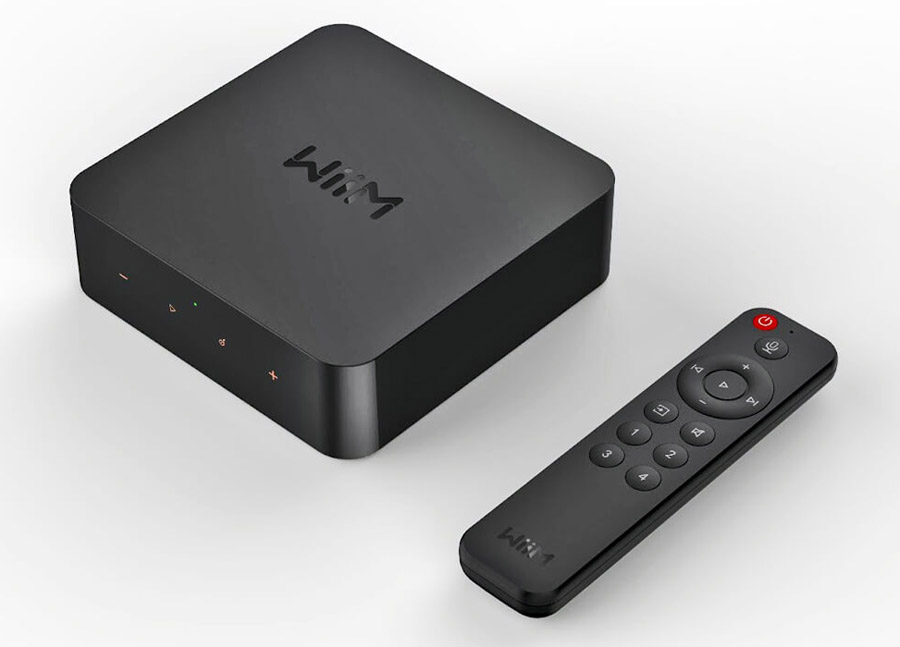
The WiiM Pro Plus barely needs an explanation. Connect it to an existing audio system, open the app, select a streaming service, and you are largely off to the races.
The WiiM Amp and Amp Ultra require a better conversation.
A shopper needs to understand that these are not merely small integrated amplifiers with streaming tossed into the chassis. The real appeal is how WiiM combines amplification, HDMI connectivity, subwoofer integration, extensive EQ, multiroom playback, streaming services, and RoomFit room correction inside one platform.
Advertisement
That raises some rather obvious questions about the Best Buy experience.
Who is going to show customers how the WiiM Home app works? Who explains how easily Spotify, TIDAL, Qobuz, Amazon Music, or another supported service can be integrated? Who demonstrates RoomFit, shows customers where to adjust the subwoofer crossover, or explains why somebody might use TIDAL Connect instead of initiating playback inside the WiiM app?
Advertisement. Scroll to continue reading.
WiiM Amp Ultra
The Amp Ultra at least gives Best Buy something visually interesting to work with. Its 3.5-inch touchscreen can display album art, playback information, and VU meters, helping it stand out from the usual collection of anonymous black boxes. But getting someone to stop and look is only half the battle. The real test will be whether the in-store demonstration shows shoppers what the Amp Ultra can actually do once it is connected to a capable pair of loudspeakers.
If the sales demonstration consists of pointing at a product card and saying, “It streams music too,” somebody has rather spectacularly missed the point.
Advertisement
And What Speakers Will They Use?
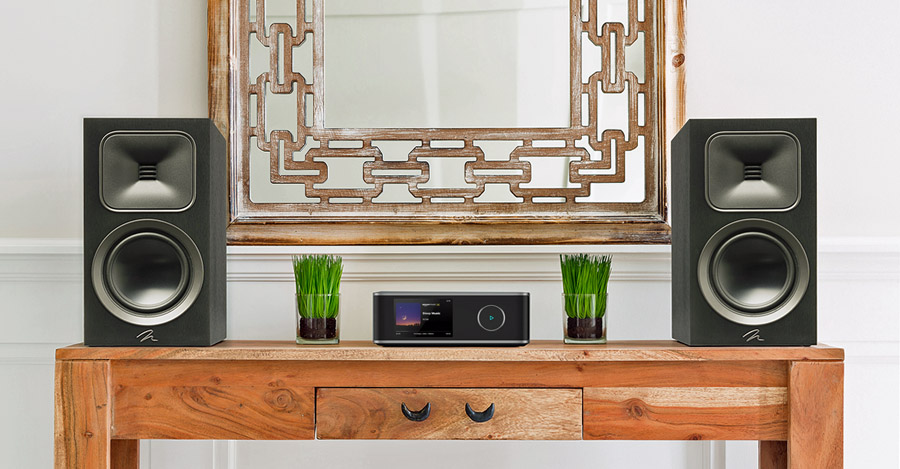
WiiM Amp Ultra with MartinLogan Foundation B1 Speakers
There is another part of the equation that matters even more.
What exactly will Best Buy connect the WiiM Amp and Amp Ultra to?
Best Buy already sells WiiM Amp packages with MartinLogan Motion Foundation B1 loudspeakers, which suggests at least one sensible direction. A proper demonstration with a capable pair of bookshelf or floorstanding loudspeakers would allow shoppers to hear that a compact streaming amplifier can anchor a genuinely good two channel system without requiring a rack full of electronics.
That matters because WiiM’s potential audience inside Best Buy is much broader than somebody already searching specifically for a network streamer.
Imagine somebody shopping for a Sonos system, soundbar, AV receiver, or pair of passive loudspeakers who suddenly discovers that one small WiiM amplifier can handle music streaming, television audio over HDMI, room correction, a powered subwoofer, and a pair of speakers.
Advertisement
That is the sale.
But only if somebody demonstrates it.
Connecting a WiiM Amp Ultra to mediocre loudspeakers in the middle of a noisy sales floor and letting it play Spotify for thirty seconds is not going to explain why enthusiasts have been making such a fuss about these products.
The Software Is Where WiiM Earned Its Reputation
WiiM Home App
WiiM has built its reputation partly because the company keeps improving products consumers already own rather than treating software as something finished on launch day.
The WiiM Home app has evolved considerably, adding deeper EQ controls, room correction, improved bass management, and broader system integration. RoomFit is particularly important because it gives consumers a tool that was historically uncommon on inexpensive two channel amplifiers.
Advertisement
Advertisement. Scroll to continue reading.
We have used it extensively during our reviews of WiiM products, and it can make a meaningful difference when properly configured.
That creates both an opportunity and a challenge for Best Buy.
A customer can purchase a WiiM Amp Ultra, connect speakers and a television, add a subwoofer, run RoomFit, log into their preferred streaming services, and have a rather sophisticated audio system running without spending the afternoon studying the back of an AV receiver with a flashlight.
Advertisement
That simplicity is precisely what Best Buy needs to demonstrate.
Because there is a big difference between simple to use and self explanatory from across the aisle.
Best Buy Changes Who WiiM Is Competing Against
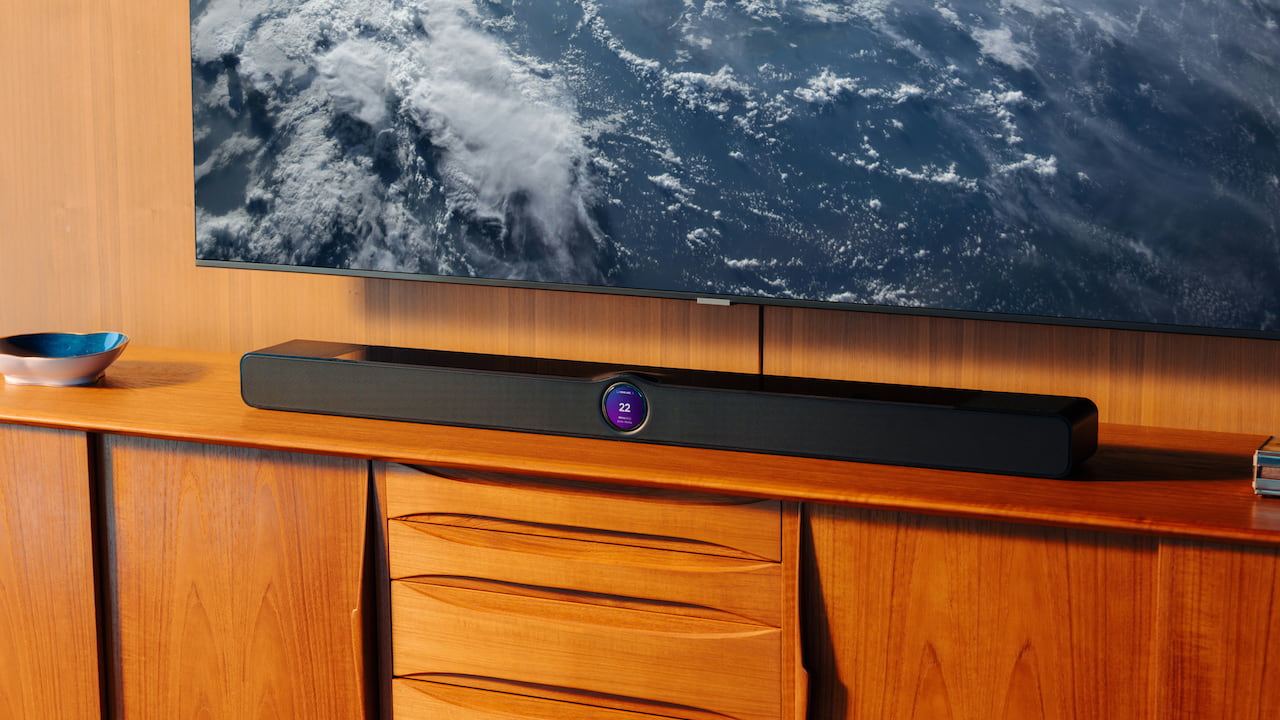
WiiM Bar
The other reason this deal matters is that WiiM is no longer competing only with Bluesound, Cambridge Audio, Eversolo, and traditional network audio products.
The WiiM Bar,Sound speakers, and Sub Pro move the company directly toward Sonos territory, while the Amp and Amp Ultra increasingly offer an alternative to conventional integrated amplifiers and receivers for consumers building compact music and television systems.
Best Buy is where all of those categories collide.
Advertisement
Someone buying a television might start by looking at a soundbar and end up considering a WiiM Amp with a pair of passive speakers. Another shopper considering Sonos could discover that WiiM offers a different route toward whole home audio with considerably more flexibility for traditional loudspeakers.
That type of discovery rarely happens when the products exist primarily online.
It can happen at Best Buy.
The Bottom Line
WiiM getting nationwide exposure through Best Buy is a much bigger deal than another distribution announcement. The company has grown from selling inexpensive streaming adapters into offering amplifiers, speakers, subwoofers, and home theater products that increasingly operate as one ecosystem.
Advertisement
Advertisement. Scroll to continue reading.
But Best Buy and WiiM need to demonstrate what makes that ecosystem compelling.
Show customers the app. Run RoomFit. Connect an Amp Ultra to loudspeakers worthy of it. Demonstrate television audio over HDMI. Add a subwoofer. Let somebody connect their preferred streaming service and discover that the entire process does not require an engineering degree or three calls to customer support.
Do that properly and WiiM suddenly becomes accessible to millions of consumers who previously had no idea the brand existed.
Advertisement
Put the products on a shelf beside another dozen anonymous black boxes and hope somebody understands what all those logos mean?
Best Buy already has plenty of shelves that can do that without assistance.
A scene from the short film Subway 3 from director David Ahn, which will be shown at the Seattle AI Film Festival later this month.
As debates over AI’s role in creative work intensify, the second annual Seattle AI Film Festival (SAIFF) is betting that filmmakers don’t have to choose between human creativity and artificial intelligence. The festival — now in its second year — returns this month with 200 films that explore what happens when filmmakers say yes to both.
Held at Seattle’s McCaw Hall from Aug. 29 to 30, the festival wants to cement the city’s status as an AI film hub, dispel doubts about the medium’s capabilities and showcase what the tools can enable when guided by passionate filmmakers.
“We launched an AI film festival here because there’s world class AI, a large and largely quiet creative economy, and the ability to develop a cultural scene that’s simultaneously distinct but globally relevant,” says John Gauntt, the festival’s creative director.
By championing AI as part of the creative workflow, the festival hopes to broaden access to the rarefied visual language of cinema while keeping storytelling and creative direction in human hands. Gauntt says they are on a mission to help “human creators tell better stories,” while also recognizing the ability to “create cinematic content under radically different economics, timescales and formal expertise.”
The event will show select films that use generative AI for animation, visual effects, editing, and sound design, and feature panels from film creators and industry experts.
Advertisement
Featured trailers highlight offerings that flex directors’ creative muscles:
La Pornographefrom Canada shows experimental O’Keefe-like dreamscapes of dew-soaked flowers.
Half Psychopath from Korea is a high-energy action thriller.
Submissions come from 34 countries. South Korea alone accounted for 23 of the films submitted, with others coming from Kazakhstan, India, Iran, and Argentina. But hosting in Seattle was an obvious choice for organizers.
“When I’m outside this bubble and say ‘Seattle AI Film Festival’ — it makes sense to people. Like Milwaukee and beer make sense,” Gauntt quips.
The festival also aims to strengthen the relationship between the city’s strong tech ecosystem and its creative economy.
Gauntt also emphasized that the event would steer away from slop. AI filmmaking backlash, he said, is “real with some valid points,” but it’s largely driven by fear, uncertainty and doubt.
Advertisement
“This has cast Generative AI as poster child/punching bag for the general pace of change in creative industries which is a proxy for the rest of the economy and society,” Gauntt tells GeekWire. “So our value to attendees is partial immunization to AI FUD (fear, uncertainty, doubt) combined with being on the ground floor of a rapidly evolving global scene.”
By seeing that the cutting edge of AI filmmaking can avoid the genre’s tropes — of plasticky AI aesthetics, short-form snippets, and “In a dystopian cyberpunk world run by killer robots…” narratives, Gauntt said attendees could be “immunized” against sweeping negative generalizations.
Attendees will instead be greeted with creative and careful use of AI, he said. He pointed to longer films, between 15 and 30 minutes, more natural dialogue, and improved visual consistency as evidence.
The scale of the festival has evolved from its guerrilla origins. Organizers anticipate up to 500 attendees across the event’s two days, a jump from last year’s 110.
Advertisement
Beyond screenings, the festival offers panels and workshops for creators to share generative AI techniques and connect with tech sponsors and production studios. Attendees can demo AI filmmaking tools to see under the hood how the films are generated.
Alongside the festival, the team is launching its Creative AI Accelerator, a program to train 30-50 Seattle creators to use AI in their workflows. The program, in partnership with other national and global AI film organizations, wants to establish a network of AI creators to collaborate on projects and reach global audiences, furthering growth in a field the team has already seen rapid improvement.
Tickets are available on Luma and start at $25 for single-day passes. Full weekend passes are available for attendees looking to catch the complete lineup of screenings, workshops and networking sessions.
Here’s a look at The Cinema That Never Was from Germany, which considers the films that never left writers’ imaginations.
If you spend more time on Hulu scrolling through rows of titles than actually watching anything, you are not alone. To save you from decision paralysis, I’ve put together a lineup of three underrated rom-com movies that range from a breezy London romance to a quiet drama about connection and vulnerability. Whether you are in the mood for something playful or something more reflective, there is a pick here for you. Given below are three Hulu titles worth adding to your watchlist this weekend.
Yas and Dom meet in a restroom of an art gallery while recovering from brutal breakups. They end up spending an entire day wandering South London together. I know the premise sounds familiar. It has the classic walk-and-talk formula, but the specific detours these two take, including an awkward run-in with an ex, keep it feeling fresh.
I recommend this movie for its visual style. Director Raine Allen-Miller shoots the city in warm, saturated colors that make even a restroom meet-cute look vibrant. David Jonsson and Vivian Oparah share an effortless chemistry that comes through in their rapid-fire dialogue, which never feels scripted. By the end, you will want to book a flight to London just to walk their route.
Genre: Comedy, drama IMDb: 7.2/10 Rotten Tomatoes: 94%
Nancy Stokes is a retired schoolteacher looking for the intimacy she missed during her uninspiring marriage. She books a hotel room to meet a sex worker named Leo Grande. Their scheduled hookup quickly evolves into a series of deep, witty conversations about body image and vulnerability.
Advertisement
I liked how this Hulu movie skillfully turns what could be an awkward premise into a gentle, funny reflection on self-acceptance. The scenes remain mostly confined to a single hotel room, yet the conversation between the two carries the entire film without feeling stagnant. Lead actors Emma Thompson and Daryl McCormack share a tender dynamic that ends up saying more about self-acceptance than most bigger movies manage.
You can watch Good Luck to You, Leo Grande on Hulu.
Nyles wakes up at a wedding, stuck reliving the same day over and over, and he has fully given up trying to escape it. Everything changes when Sarah, the bride’s sister & maid of honor, accidentally ends up getting stuck in the loop. Together, they bounce between chaotic antics, nihilistic freedom, and existential dread.
Even though the premise leans on a sci-fi plot, the movie focuses mostly on emotional isolation, burnout, and what two people do when consequences stop existing. I liked the chemistry and playful banter between Andy Samberg and Cristin Milioti and how funny, strange, and surprisingly tender it gets by the end.





























































You must be logged in to post a comment Login