Tech
7 Gas Cars That Get More MPG That The Honda Accord

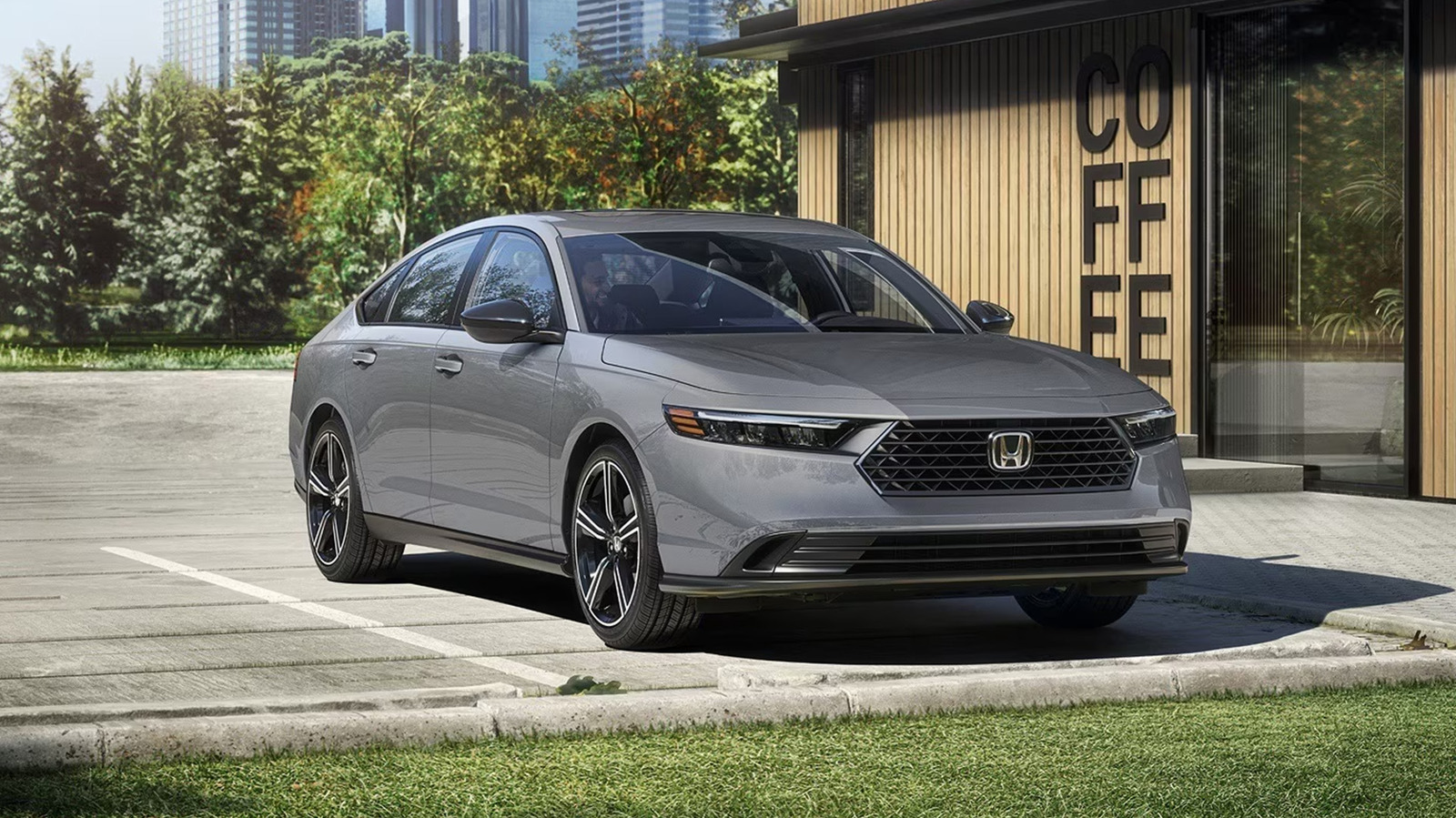

It’s easy to see why the Honda Accord is one of Honda’s most successful cars, and among the bestselling midsize sedans of last year. It’s consistently at or near the top of recommendation lists from big authorities like Car and Driver and Edmunds, and yes, even we’re fans of it. The gas versions of the car are also fairly affordable, ranging up to roughly $32,000 before the hybrid powertrains take over in the lineup. The Accord is quiet, smooth, and decently fun to drive as well, making it a good all-rounder for most people.
However, Honda isn’t making as many gas-only models these days. In 2026, the gas model only has two trim levels, and they’re the two lowest trims. The hybrid powertrain has largely taken over the lineup, much like what Toyota did with the Camry. That means if you want a gas car, there’s a real chance you might have to branch out from the Accord.
Since fuel prices are what they are, one of the most important metrics for shoppers is no doubt fuel economy. So, if you’re looking for a car to cross-shop with the Accord, and you’re wanting to keep fuel economy in mind, then you’ve come to the right place. The list below includes every sedan we could find that meets or exceeds the Honda Accord’s 32 mpg (29 mpg city and 37 mpg highway) in fuel economy. It is worth nothing that all of these pale in comparison to the hybrid leaders in fuel economy.
Three other cars at 32 mpg
Three other gas-only cars match the Accord’s 32 mpg combined. They include the Mini Cooper, the Acura Integra, and the Hyundai Sonata, which only gets 32 mpg on its base trim (all other trims are in the high 20 mpg range). This is already a list of interesting prospects. The base trim of the Hyundai Sonata costs about as much as the base Honda Accord, and given that it has the same fuel efficiency, that gives you a direct one-to-one comparison since the two are fairly similar in terms of virtually all of their specs.
The Acura Integra is also an interesting option because it shares the same platform as the Honda Civic, which means the two cars are very similar. It costs about the same as the hybrid models of the Accord, ranging up to $40,000 for a fully loaded trim. It loses the fight in terms of size but gains it back by being slightly faster than the Accord. It also comes with a manual transmission, which is becoming increasingly rare.
Of the three, the Mini Cooper seems like the most entertaining option. It comes with an optional 201-hp engine that scoots it to 60 mph a whole second and a half faster than the gas-only Accord, at 5.8 seconds, while still getting the same fuel economy. Mini Coopers are fun to drive and are surprisingly spacious for how small they are.
Kia K4 (33 mpg)
The K4 is the smallest gas-only car in Kia’s lineup, replacing the Kia Forte in 2025. It’s also one of Kia’s most affordable vehicles — the base trim goes for $23,000 and the top-of-the-line trim costs a hair over $30,000. That means you can get a maxed-out Kia K4 for the price of a Honda Accord SE, provided you don’t mind the fact that the K4 is smaller overall.
The Kia K4 gets 30 mpg in the city, 40 mpg on the highway, which adds up to 33 mpg combined, just barely edging out the Accord. You only get that fuel economy with the base engine, however, which is notably slower and a little sluggish in general, according to reviews. The more exciting drivetrain is a 1.6-liter turbo-four that outputs 190 hp, and that’s a few tenths of a second faster than the Accord to 60 mph but reduces fuel economy to 26 mph in the city, 36 mph on the highway, and 29 mpg combined.
This will be a running theme in this article. Most cars that are more fuel efficient tend to be smaller, slower, and more sluggish, and the Kia K4 is the first of several such cars. That’s part of what makes the Accord so compelling is that it’s reasonably quick and reasonably fuel efficient at the same time, and you usually have to give up one to get more of the other.
Nissan Sentra (34 mpg)
The Nissan Sentra has been around for decades, and it remains a good budget value for car shoppers. Nissan fully redesigned the car for the 2026 model year, kicking off the ninth generation of the Sentra. Like most other small cars, it costs significantly less than most other models, starting at $23,000 for the base S trim and ranging up to $29,000 for the SL trim. That means you can get a fully loaded SL for around the same price as a base model Honda Accord.
The Sentra nets 31 mpg in the city, 39 mpg on the highway, and 34 mpg combined. It does this by pairing a 149-hp naturally aspirated four-cylinder engine to a CVT transmission. CVT transmissions have their own set of woes, but fuel efficiency isn’t one of them, and that is on full display here. The downside is that the Sentra’s one single engine option is much slower than the Accord, hitting 60 mph eventually, or if you want actual numbers, about a second and a half slower than the Accord.
On the plus side, reviewers agree that the Sentra is comfortable and composed, so while it may take you a bit longer to do things, at least it won’t be uncomfortable. In any case, we’d still take an Accord over a Sentra, since the 2 mpg isn’t really worth the weaker engine and smaller dimensions in this case, but if you’re pinching every penny, the Sentra is cheaper at the dealership and at the pump.
Volkswagen Jetta (34 mpg)
There’s been a lot of Volkswagen Jetta generations over the years, but the car is still good enough to be in the conversation when looking at sedans, particularly compact sedans (we warned you this would be a running theme). This is one of Volkswagen’s smallest and most affordable cars. It starts at $25,000 and ranges up to $31,270 for the top trim, which puts it in the same price category as a Honda Accord SE. That top trim also includes niceties like ventilated seats, which usually come in autos costing way more.
The Jetta gets 29 mpg in the city and 40 mpg on the highway, averaging out to 34 mpg combined. The 29 mpg figure matches the Accord, which means all of its fuel economy gains are on the freeway. Volkswagen equips all Jettas with a 1.5-liter four-cylinder that makes 158 hp, which is mated to an eight-speed automatic. The combo brings the Jetta to 60 mph in 7.8 seconds, which is only half a second slower than the Accord.
There is a Jetta GLI with an optional manual transmission and a faster engine, but its fuel economy dips into the high 20 mpg range, so it’s not necessarily a good comparison to a modern Accord. However, in the prior Accord generation, there was a 2.0-liter turbo-four that did 22 mpg in the city and 32 mpg on the highway. The Jetta GLI compares more to that version of the Accord than it does any of the newer models.
Hyundai Elantra (35 mpg)
The Hyundai Elantra is the second Hyundai to make the list, and as you may have guessed, is also one of Hyundai’s smallest cars. It’s a pretty good example of the modern sedan landscape, as half of its trims, including the most expensive ones, are for hybrid powertrains. Unlike most automakers, it does have a performance model with the Elantra N that is surprisingly zippy. In any case, gas models of the Elantra start at $23,800 and range up to $28,420 for the Limited trim, which makes it cheaper all-around than the Honda Accord.
The Elantra has two gas-only powertrains. The first is a 147 hp four-cylinder that nets 31 mpg in the city and 40 mpg on the highway, for a combined 35 mpg. It scoots the car to 60 mph in 8.1 seconds, which nearly a second slower than the Accord. The engine is mated to a CVT transmission, which helps explain the fuel economy figures. It’s slow, but there are slower cars out there. If this is too small, the Sonata matches the Accord’s 32 mpg and is in the same size class.
Much like the Volkswagen Jetta, the most entertaining variant of the Elantra is its performance model, the Elantra N. This model ranges up to $40,000 and comes with an engine that makes it go to 60 mph in a scant 4.8 seconds. However, its fuel economy is substantially worse than the Honda Accord, so it’s not applicable in this comparison.
Toyota Corolla (35 mpg)
The Toyota Corolla is Toyota’s third most popular car, following only the Rav4 and the Camry. It earned that spot by being affordable, fuel efficient, and reliable, ranking among the best in its segment. Toyota has added a hybrid powertrain to the Corolla, but still sells several gas-only trims that range from $24,000 to around $28,000, or up to $30,000 if you opt for the hatchback. The current model is in its 12th generation, and it’s probably due for a refresh soon since that generation started in 2020.
The Corolla is one of the most fuel-efficient gas-only cars left on the market. It delivers 32 mpg in the city, 41 mpg on the highway, which adds up to 35 mpg combined. It accomplishes this with a 169-hp 2.0-liter four-cylinder engine mated to a CVT. The excellent fuel economy comes at a cost, though, and that cost is speed. The all-wheel drive Corolla gets to 60 mph in about 9 seconds, which almost 2 seconds slower than the Accord and it’s the slowest car on this list. On the plus side, it’s one of the few sedans with all-wheel drive, although you have to get a hybrid to get it.
The Corolla is a pretty easygoing car. It’s slow, sure, but it’s also fairly comfortable to be in, and the fuel economy is hard to argue with. Toyota sells a couple hundred thousand of these a year for a reason.
Honda Civic (36 mpg)
At the top of the list sits the Honda Civic. This car has been around for 50 years and remains one of Honda’s all-time greatest selling cars. It comes in both hatchback and sedan flavors, and costs much less than an Accord. The base trim starts at a hair under $26,000 and ranges up to $29,000. It gets more expensive after that, but that’s when you get into the hybrid drivetrains. Thus, you can get a pretty good mid-trim package for around the same price as an Accord SE.
The Civic nets 32 mpg in the city and 41 mpg on the highway. That’s good for a 36 mpg combined. We’re not sure why this gets 36 mpg and the Corolla gets 35 mpg, given that they have the same city and highway numbers — the EPA creates these figures, not us. In any case, the gas-only Civic comes equipped with a 150-hp 2.0-liter four-cylinder mated to a CVT, which is very much like the Corolla. It goes to 60 mph in 8.9 seconds, which is one tenth of a second slower than the Corolla. In short, if you want the best fuel economy, you have to get a hybrid or go slow.
Despite its slow engine, the Accord is known for being even more zippy and fun to drive around than the Accord. It features sharp handling but enough on-road refinement to avoid feeling too firm or bouncy. The most fuel-efficient alternative to a Honda is, as it turns out, another Honda.
You must be logged in to post a comment Login