Over 30 years after the premiere of Neon Genesis Evangelion, Studio Khara announced that a new Evangelionanime is in the works. The franchise follows depressed teenager Shinji Ikari and his allies as they pilot giant robot EVAs to protect the world from the destructive Angels, only to discover another conspiracy at play that threatens all of humanity.
As an Evangelion fan, the prospect of seeing another series in the franchise is very exciting. However, the question lingers: will this new Evangelion anime live up to its predecessor with the talent behind it, and is such a series even necessary?
Evangelion already ended on a high note
Studio Khara / Studio Khara
Through Evangelion’s tumultuous history, audiences have witnessed three different endings to its story in the original anime series, The End of Evangelion, and Evangelion 3.0+1.0 Thrice Upon A Time. The latter film ended with Shinji overcoming his depression and recreating the world into one without EVAs, allowing him and his friends to grow up and have normal lives, giving them all the happy ending they deserve.
This film delivered a satisfying, uplifting conclusion to the long-running anime. Shinji’s decision to break the vicious cycle of trauma and remake the work aligned with the story’s themes of courage and moving forward in life, even if it means feeling pain or making mistakes. which is supposed to bring him and the audience closure after all these years. It was honestly my favorite of the franchise’s three endings, and it didn’t feel like Evangelion needed to go any further.
Advertisement
It’s unknown whether the next Evangelion series will be a prequel, sequel, or remake of the original anime. We may or may not see Shinji and his friends again in this new anime. Fortunately, Evangelion has left open some room for the story to progress after the most recent film.
Evangelion 3.0+1.0 revealed that Shinji and the rest of the cast were trapped in a time loop, forcing them to relive the franchise’s story as seen in the original show and films. This concept makes it easier for us to imagine the upcoming anime starting fresh while continuing where Evangelion’s story left off.
The new anime’s creators suggest a fresh, faithful follow-up
Studio Khara / Studio Khara
Though Evangelion creator Hideaki Anno won’t helm this new anime, it still features some returning talent working behind the scenes. Rebuild of Evangelion film director Kazuya Tsurumaki will lead the project alongside Evangelion 3.0+1.0 assistant director Toko Yatabe. Tsurumaki has worked closely with Anno since the days of Neon Genesis Evangelion, so someone with this much experience with the franchise should ensure the new anime stays true to the source material.
What is truly remarkable is that the upcoming Evangelion series will be written by Yoko Taro, who created the hit sci-fi video game series NieR. Similar to Evangelion, the NieR franchise has told subversive stories about characters who grapple with loneliness and seek purpose in life, all while depicting robots fighting in a post-apocalyptic world. Yoko has gone as far as to call NieR: Automata‘s story a retelling of Evangelion. Given Yoko’s success as a subversive storyteller and reverence for Evangelion, his writing a new chapter in the latter’s story would be interesting, to say the least.
The new anime will also be produced by Hideaki Anno’s animation company, Studio Khara, which produced the four Rebuild of Evangelion films. It will also be produced by CloverWorks, the animation studio behind popular shows like Darling in the Franxx, The Promised Neverland, Rascal Does Not Dream of Bunny Girl Senpai, and My Dress-Up Darling.
Advertisement
We’ve seen both Khara and CloverWorks deliver some top-tier animation with their respective projects. The two of them working together to revive Evangelion would lead to a dynamic, layered, and vibrant installment to an already stunning anime.
Will Evangelion be the same without Anno?
Studio Khara / Studio Khara
The Evangelion anime has long been the brainchild of Hideaki Anno. The acclaimed writer poured his experiences with clinical depression into the characters’ psychological journeys, particularly Shinji’s, presenting a harrowing, thought-provoking anime unlike any other.
Anno seemed to have finally made peace with his beloved anime with his final Rebuild of Evangelion film. Just as Shinji broke free from the cycle of sadness and violence that dominated his life, Anno finally concluded his magnum opus after writing multiple endings, allowing him to move on from the franchise after working on it for so long.
It’s hard to imagine this franchise without Anno at the helm. It’s also unclear what the new Evangelion creators will add to such a personal story that will allow it to stand out while honoring Anno’s work. However, Anno said in a 2016 interview that he hopes other creators will work on Evangelion in his stead.
“…I want them to be appealing works; it won’t be without specific conditions, but I will not confine them to what my works have established. Just like Gundam, which keeps continuously supporting the animation world, Eva can become a new pillar. After all, it is the purpose that led me to resume through the New Theatrical Versions. I want to maintain this pillar, which carries the animation world…,” said Anno. ‘I do this for the well-being of the animation industry. Gundam can be enjoyed through various works, and it would be nice if Eva can develop in the same way. I think it’s better if there is a diversity in the works.”
Advertisement
While Evangelion has long been a reflection of the man who created it, it is clear that the franchise has grown far beyond Anno, and he is happy to let the saga move forward with someone else.
Ultimately, Evangelion’s story is destined to repeat itself, but it seems to be for the better. An installment to such a prestigious franchise will undoubtedly be a huge economic boon for the animation industry. It will also keep Anno’s legacy alive and allow a new generation of viewers and creators to take in this story and conjure their own interpretations. Whatever this anime has in store for us, it will be a bold, new beginning for Evangelion worth watching.
American manufacturer of medical devices, UFP Technologies, has disclosed that a cybersecurity incident has compromised its IT systems and data.
UFP Technologies is a publicly traded medical engineering and manufacturing company that produces a broad range of devices and components used in surgery, wound care, implants, orthopedic applications, and healthcare wearables.
The company employs 4,300 people, has an annual revenue of $600 million, and a market cap of $1.86 billion, according to recent data.
In a filing submitted yesterday with the U.S. Securities and Exchange Commission (SEC), UFP Technologies disclosed that it detected suspicious activity on its IT systems on February 14.
The firm immediately deployed isolation and remediation measures and engaged external cybersecurity advisors to help with the investigation.
Advertisement
Preliminary results of the investigation indicate that the threat has been removed, but the hacker was able to steal data from compromised systems.
“Through the Company’s efforts, the Company believes that the third party responsible for this cybersecurity incident has been removed from the Company’s IT systems, and the Company’s ability to access information impacted by this incident has been restored in all material respects,” reads the SEC filing.
“The incident appears to have impacted many but not all of the Company’s IT systems and affected functions such as billing and label making for customer deliveries. Certain Company or Company-related data appear to have been stolen or destroyed.”
The data destruction note suggests a ransomware or wiper attack, although the nature of the malware remains unclear.
Advertisement
BleepingComputer has contacted UFP Technologies to ask about the attack and whether it involved data encryption/ransom payment demands, but a comment wasn’t immediately available.
At the time of publishing, no ransomware group has publicly claimed the attack on UFP Technologies.
UFP Technologies mentioned that, at this time, it has not determined whether personal information has been exfiltrated. If confirmed at a later time, notifications will be sent to impacted individuals as required by law.
The company stated that, despite the cybersecurity incident, its primary IT systems remain operational. Based on current evidence and assessments, UFP Technologies states it is unlikely that the incident will have a material impact on its operations or financials.
Advertisement
Modern IT infrastructure moves faster than manual workflows can handle.
In this new Tines guide, learn how your team can reduce hidden manual delays, improve reliability through automated response, and build and scale intelligent workflows on top of tools you already use.
An anonymous reader shares a report: Some Uber employees have built an AI clone of CEO Dara Khosrowshahi — internally dubbed “Dara AI” — and have been using it to rehearse and fine-tune presentations before delivering them to the actual Khosrowshahi, he revealed on a recent podcast.
Khosrowshahi said a team member told him that some teams “make the presentation to the Dara AI as a prep for making a presentation to me,” and that the bot helps them adjust their slides and sharpen their delivery. Asked by the podcast host whether employees might eventually show Dara AI to the board, Khosrowshahi laughed but noted that AI models still can’t process and act on new information the way executives do. “When the models can learn in real-time, that is the point at which I’m going to think that, yeah, we are all replaceable,” he said.
New York Times Games subscribers can play the Midi in the New York Times Games app for iOS and Android devices, or on mobile or desktop web. It’s online-only, not in the print newspaper.
“We’re really leaning into the digital-first nature of the puzzle,” NYT Games Puzzle Editor Ian Livengood said in a Times article about the new puzzle. “About once a week, the puzzle will have a visual effect — an extra flourish when you start or after you solve. This could be a cool animation or colorful shading.”
Advertisement
As the name “Midi” suggests, this is a mid-sized crossword puzzle. Where the Mini Crossword usually only has 5 Across and 5 Down clues, the Midi is usually a 9-by-9 puzzle, sometimes as long as 11-by-11.
“If you feel like the Mini is not enough but the Daily is too much, this will be the perfect puzzle for you,” Livengood said.
Each Midi Crossword has a theme that hints at the topics of the clues and answers. Unlike the other puzzles, Livengood says the Midi might occasionally have two-letter words and repeating answers.
I tried the Midi Crossword
Advertisement
I tried Wednesday’s Midi Crossword and solved it in just over 3 minutes. That’s much longer than I spend on the Mini Crossword, but much faster than the original New York Times crossword puzzle takes me.
I thought most of the clues were pretty simple, and the few tricky ones filled themselves in once I moved from Across to Down.
If you’re a New York Times Games subscriber, this is a nice addition to your daily puzzle stable. It tests your mind a bit more than the Mini, but you can also solve it while watching TV or waiting for someone to text you back.
Looking for the most recent regular Connections answers? Click here for today’s Connections hints, as well as our daily answers and hints for The New York Times Mini Crossword, Wordle and Strands puzzles.
Today’s Connections: Sports Edition is a fun one. I started mentally connecting the purple category answers right away. Movie-goers and TV watchers, this is a good puzzle for you. If you’re struggling with today’s puzzle but still want to solve it, read on for hints and the answers.
Connections: Sports Edition is published by The Athletic, the subscription-based sports journalism site owned by The Times. It doesn’t appear in the NYT Games app, but it does in The Athletic’s own app. Or you can play it for free online.
Hints for today’s Connections: Sports Edition groups
Here are four hints for the groupings in today’s Connections: Sports Edition puzzle, ranked from the easiest yellow group to the tough (and sometimes bizarre) purple group.
Yellow group hint: Meet the new boss.
Advertisement
Green group hint: SNL star.
Blue group hint: WNBA player.
Purple group hint: They’re not real.
Answers for today’s Connections: Sports Edition groups
Way, way back in the days when men wore beards and wide-lapelled suits in exotic colors, only NASA had access to photovoltaics and ‘solar’ meant solar thermal. In those days of appropriate technology, it was thought that the ultimate in thermal mass was a phase-change material– a salt or wax that in melting and re-freezing could hold far more heat than plain rock or water, which were more often used. Well, now that it’s the 21st century, we’ve got something even better. As Ars Technica reports about a recent paper in Science Magazine, Molecular Solar Thermal (MOST) energy storage can blow that old stuff right out of the water.
Molecular energy storage? That’s where the sunburn comes in. A sunburn occurs because proteins in your skin are denatured– kinked, twisted, and knocked out of shape– by ultraviolet light. The researchers realized that those kinky proteins are pretty energetic: like a spring, they’re storing energy in their distorted structure. Even better, certain chemicals, like the pyrimidone in the study, don’t ‘relax’ the way a phase change material does. It’s not a matter of warming up and giving up the energy stored in the molecular structure when cooling down– the energy needs coaxed out, in this case by an acidic solution.
That poses problems for a closed-loop system, since you’d be continuously diluting the pyrimidone with heat-releasing acid and neutralizing base. On the other hand, 1.65 MJ/kg of energy storage is nothing to sneeze at, especially when you’re collecting it with nothing more technically advanced than a fluid running through clear tubing. Conveniently enough, researchers found a way to make this stuff liquid at room temperature.
Comparing the heat in this MOST storage material to electrical potential in a battery is a case of apples and oranges, but in terms of pure energy density the pyrimidone cooked up for the paper is in the same range as Li-Ion batteries. There is some self-discharge, in that the altered “dewar” state of the pyrimidone decays naturally, but with a half-life of upto 481 days, you could imagine storing up a tankful UV-altered pyrimidone all year round to provide your winter’s heat.
Advertisement
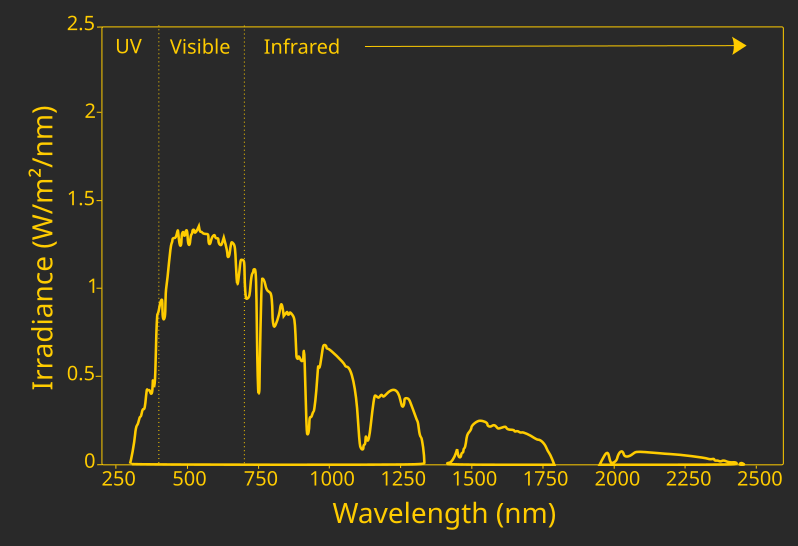
There’s not much power making it to surface in the UV, but lower energy photons cannot effect the transition.
It’s not perfect. Right now you get about 20 “charge cycles” before the molecules break down, but then, if you’re using this for seasonal load-spreading, a two-decade service life is nothing to shake a stick at. It’s only collecting energy from the UV range of the spectrum, which is a tiny fraction of the energy from our sun. The quantum efficiency of the molecule is rather poor as well– it takes a lot of photons to get a dewar transition.
With solar photovaltaics being as cheap as they are, thermal builds are few and far between– even solar water heaters are powered by PV these days. Of course if you’re somewhere that doesn’t get much sun, you could always go for wind power instead.
Thanks to [zit] for the tip! If you’ve seen a bright idea in the wild, or have one yourself, our tips line is open rain or shine.
Salesforce pulled out all the stops to convince investors that the AI revolution won’t be its death when it announced fourth-quarter earnings on Wednesday.
Salesforce reported a solid quarter of $10.7 billion in revenue, up 13% year-over-year. For the year, it reported $41.5 billion in revenue, up 10% over the previous year, with both results boosted by its $8 billion acquisition of data management company Informatica last May.
Net income landed at $7.46 billion, and the company offered strong guidance for the year ahead, projecting revenue of $45.8 billion to $46.2 billion — a 10% to 11% increase. It also said its “remaining performance obligation,” or RPO, is over $72 billion. That’s a figure that shows revenue under contact that has not yet been delivered or recognized as earned revenue.
The numbers, though, could only do so much. Software-as-a-service stocks, with Salesforce as their poster child, have been getting hammered lately. Investors fear the rise of AI agents will undermine these companies, making their per-employee-seat business models obsolete. The situation has been dubbed the “SaaSpocalypse.”
Advertisement
The concept hung so heavily in the air during the earnings call that CEO Marc Benioff mentioned the term at least six times.
“You’ve heard about the SaaSpocalypse? And it isn’t our first. We’ve had a few of them,” he said, later adding, “If there is a SaaSpocalypse, it may be eaten by the Sasquatch because there are a lot of companies using a lot of SaaS because it just got better with agents.”
In an attempt to convince the world of its continued health, Salesforce threw everything and the kitchen sink into this earnings report. The company increased its dividend by nearly 6% to $0.44 per share. It launched a new $50 billion share buyback program. That’s always a favorite with shareholders because it both creates a sturdy buyer of shares and reduces the number of shares in circulation (which can boost the stock price).
Techcrunch event
Advertisement
Boston, MA | June 9, 2026
The company also revamped the earnings call itself. It was part podcast, part infomercial, and part normal Q&A with a few questions from Wall Street analysts.
Advertisement
Instead of running through the numbers, Benioff interviewed three Salesforce customers on camera to testify to their love of its new agentic options: the CEO of home appliance company SharkNinja; the CEO of Wyndham Hotels and Resorts; and, just to hammer the point, the CEO of SaaStr, the software industry conference and media company. We’ll truncate the interviews to the shortest summary: They all love Salesforce’s AI agent products.
Salesforce also introduced a new metric for its agentic products: agentic work units (“AWU”). The idea here is that rather than simply counting “tokens” — the standard unit of AI processing volume — AWU attempts to measure something more meaningful: whether an agent actually completed a task, like writing to a record, rather than just generating text. (Salesforce logged 19 trillion tokens last quarter, which sounds like a lot but really is not in the AI world.)
“You can ask it a question and it can write you a poem, but that’s not really all that valuable in the enterprise world,” Salesforce president and CMO Patrick Stokes said on the call. So AWU is intended to measure when the agent writes to a record or does some other verifiable task.
On top of that, Salesforce also presented its own architectural vision of the coming world of agents. It shows SaaS software like itself owning most of the tech stack, with the AI model makers on the bottom as unseen, interchangeable, and commoditized work engines.
Advertisement
This was a direct counter to one of the causes of a SaaSpocalypse sell-off earlier this month, after OpenAI released its enterprise agent, Frontier. OpenAI’s architectural vision shows OpenAI owning most of the stack, with systems-of-record SaaS providers (the databases and business-software platforms where companies store their core data) on the bottom as the unseen engines.
And if all that wasn’t enough to influence investors: Benioff was dressed in a black leather jacket, echoing the signature look of the CEO clearly crushing it in the AI world: Nvidia’s Jensen Huang.
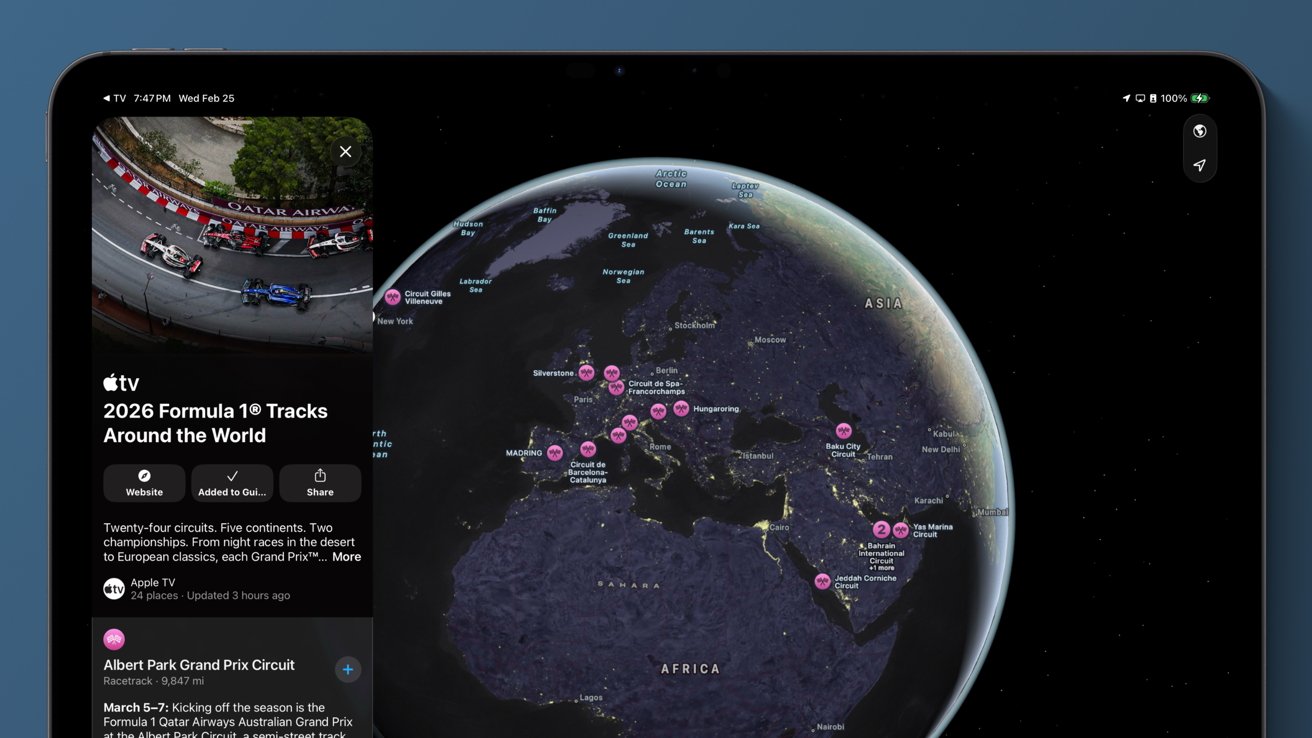
Apple Maps has been updated with a new “2026 Formula 1 Tracks Around the World” guide that showcases each racing location. Updated 3D art will be added throughout the season, starting now with Albert Park in Australia.
Looking for the most recent Mini Crossword answer? Click here for today’s Mini Crossword hints, as well as our daily answers and hints for The New York Times Wordle, Strands, Connections and Connections: Sports Edition puzzles.
Need some help with today’s Mini Crossword? Read on for all the answers. And if you could use some hints and guidance for daily solving, check out our Mini Crossword tips.
If you’re looking for today’s Wordle, Connections, Connections: Sports Edition and Strands answers, you can visit CNET’s NYT puzzle hints page.
The Galaxy S26 lineup runs on a customized version of Qualcomm’s latest Snapdragon 8 Elite Gen 5 SoC. Compared to last year’s Snapdragon 8 Gen 4, the new silicon delivers a 19% uplift in CPU performance, a 24% gain in GPU power, and a 39% boost in AI acceleration via… Read Entire Article Source link
Samsung‘s new Galaxy S26 lineup is by no means a reinvention of the popular smartphone brand. Instead, it’s a collection of design tweaks and some important, even one-of-a-kind, under-the-hood updates that could change the way you use your phone.
The best features, like the actually unique Privacy Display (a first for mobile phones), are confined to the Galaxy S26 Ultra. Not surprising when you consider it’s the true flagship, and the S26 and S26 Plus are more or less like bridesmaids carrying the bride’s lengthy train.
However, Samsung did something unusual this go around. It raised the prices of the Samsung Galaxy S26 and S26 Plus by $100 compared to the S25 versions. So instead of $799.99 to start, the S26 is now $899.99 / £879.00, and instead of $999.99, the S26 Plus is $1,099.99 / £1,099.00.
Advertisement
I sort of expected some price hikes, given the skyrocketing cost of RAM and the potential impact of persistent US tariffs on virtually all imported goods (Samsung is a South Korean company, after all).
What’s strange is that the Galaxy S26 Ultra, despite new features like brighter cameras, a new vapor chamber, and a thinner, lighter design, is the same price as it was last year: $1,299.99 / £1,279.00.
Advertisement
Tell me why
Look at what the S26 Ultra gives you (Image credit: Future)
Every Galaxy S26 model starts with 256GB of storage and 12GB of RAM (the Ultra pops up to 16GB with a terabyte of storage). So it’s not significant differences in storage or RAM that are making the difference.
I’m not saying the S26 Ultra is suddenly a cheap phone. It’s not, and I encourage anyone checking it out to look for solid trade-in offers (there are many). And it’s not like the S26 Ultra has fewer AI features. It boasts all the same Bixby (with Perplexity-enhanced), Gemini (with new Circle to Search), and emerging Agentic capabilities as the rest of the lineup. Now Brief, Now Nudge, Now – you get the idea – are all the same. You can chat with this phone’s various AI systems, just as you can on the S26 and S26 Plus.
Sign up for breaking news, reviews, opinion, top tech deals, and more.
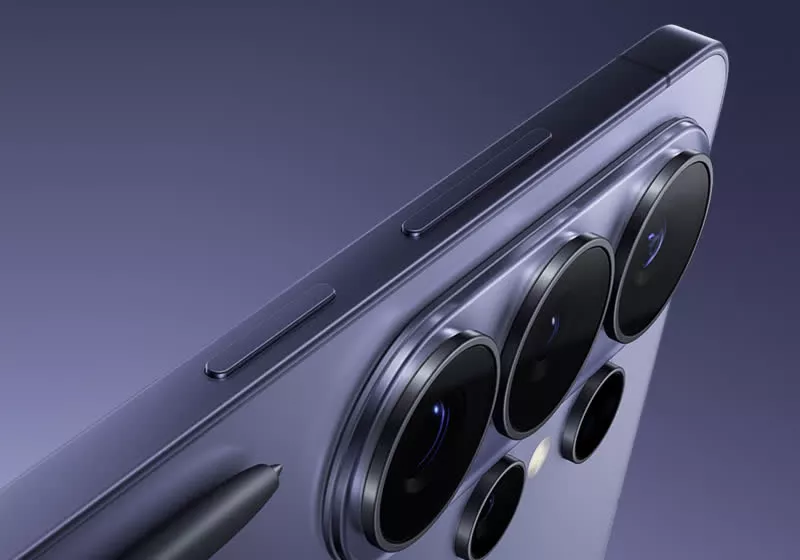
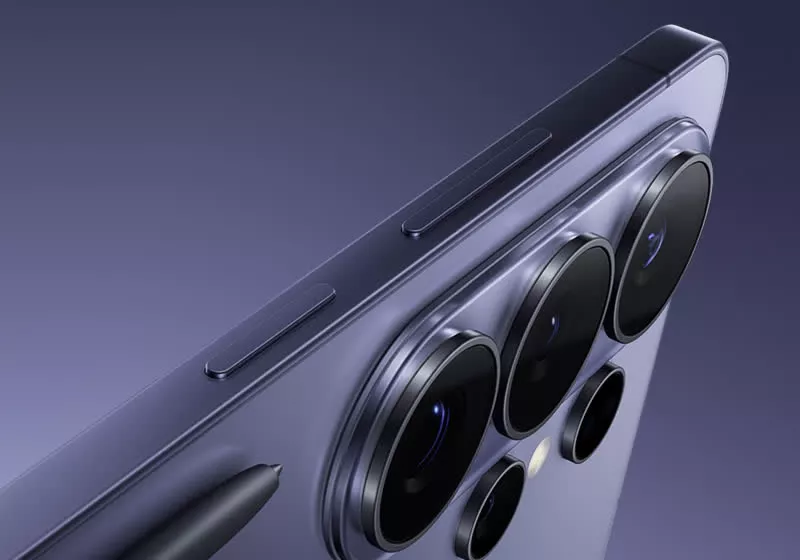
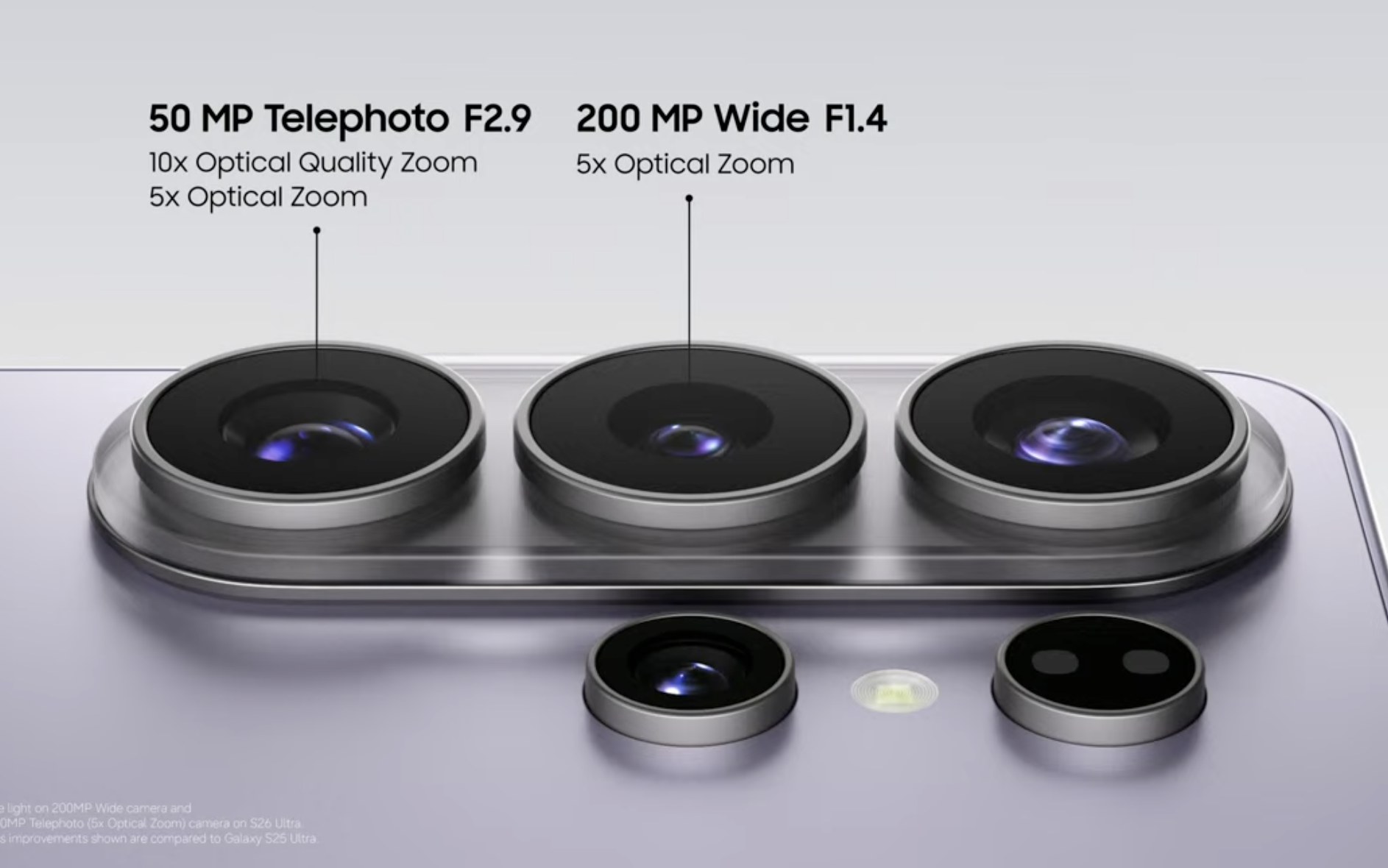
On the other hand, the S26 Ultra far exceeds the other phones in camera capabilities with two telephoto cameras and one 200MP main camera. The lenses even have wider apertures on some of them. The S26 and S26 Plus didn’t get any of that.
Advertisement
A nudge to the top
I think I know what’s going on here. In any given year, the base models for the Galaxy line tend to outsell the more expensive Ultra by a fairly significant margin. The S26 Ultra, though, is a showcase for everything that Samsung does well. The best cameras, most powerful video (8k, 30fps, a virtual gimbal), biggest screen, and don’t forget the S Pen.
People go for the more affordable phones because they’re good enough for most of their needs. However, by closing the gap just a bit between the S26, S26 Plus, and the S26 Ultra, I think Samsung is pushing (or gently squeezing) people toward the higher end. It makes the S26 Ultra seem like more of a bargain, especially with all you get for essentially spending $200 more than the S26 Plus. So you get the big screen (the Plus is 6.7 inches) and the best cameras.
I might be wrong, but there has to be a reason Samsung did not raise the price for the entire line, especially when all three phones have the same Qualcomm Snapdragon 8 Elite Gen 5 for Galaxy. Aside from dropping titanium, I don’t see where Samsung saved the money.
Perhaps it was the titanium. Apple, too, fell out of love with the material on its latest flagships. I have no idea how much titanium was costing Samsung. Was it $100 per unit? Maybe. Or perhaps Samsung would like you to consider a Galaxy S26 Ultra for your next Android purchase.