Connect with us
DAPA Banner
DAPA Coin
DAPA
COIN PAYMENT ASSET
PRIVACY · BLOCKDAG · HOMOMORPHIC ENCRYPTION · RUST
ElGamal Encrypted MINE DAPA
🚫 GENESIS SOLD OUT
DAPAPAY COMING

Tech

Adding Weight To A 3D Print With Plaster Of Paris, Cleanly

Published

on

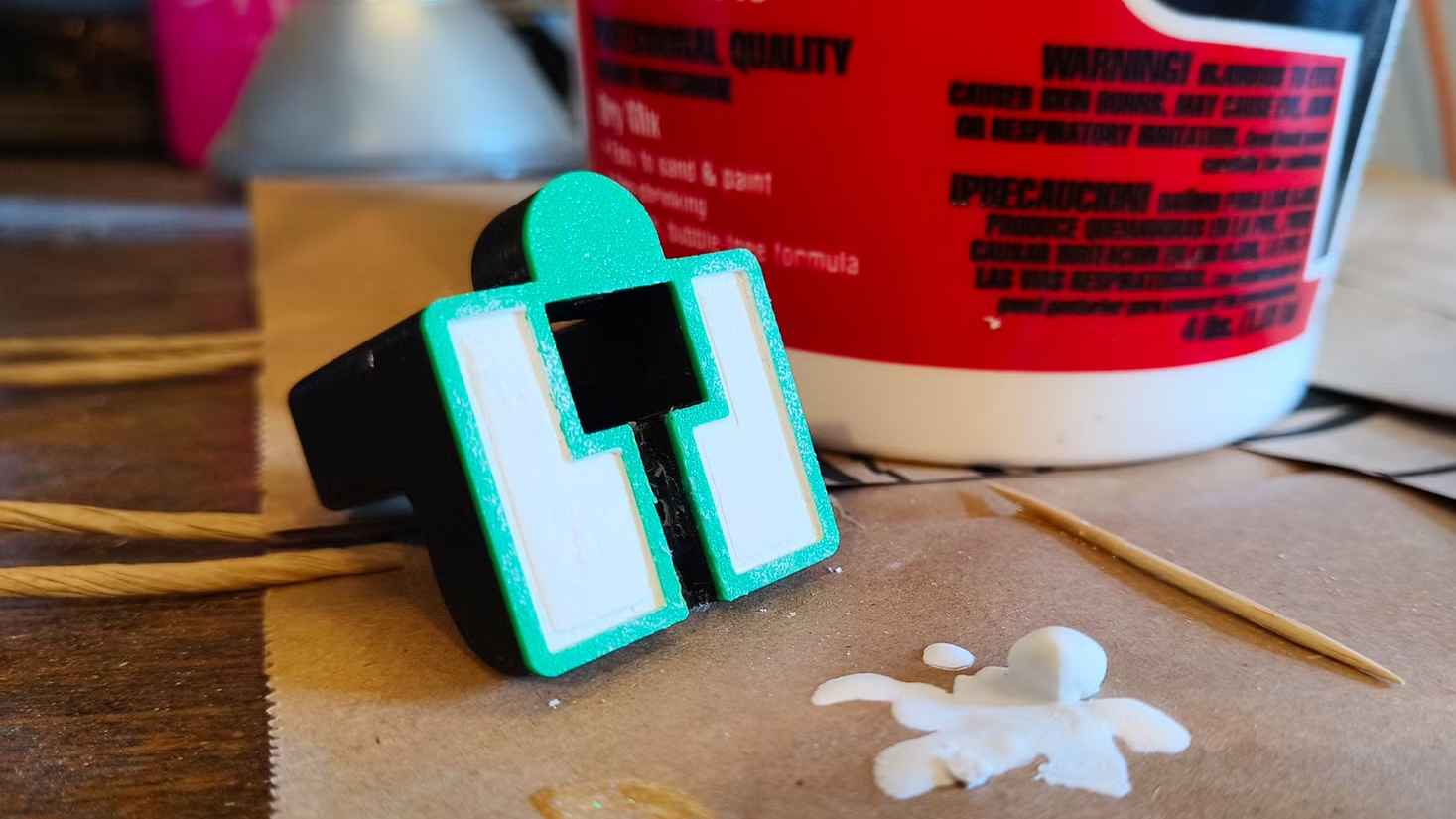
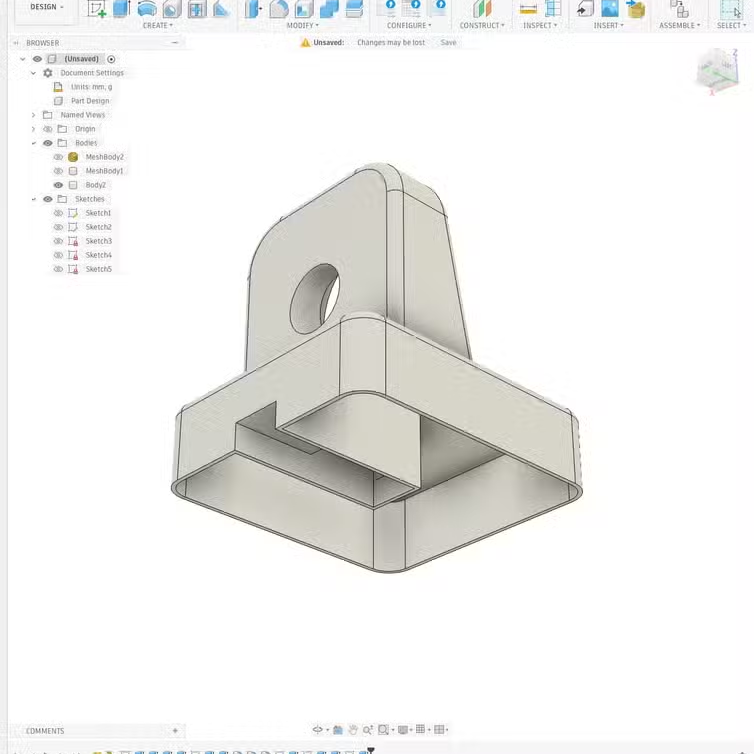
Sometimes it’s useful to add extra mass to a 3D print, and [Joe Fedewa] shared a simple and effective technique that uses plaster of Paris. Rather than pause the print and insert hardware or weighted bits inside, he designed the base as hollow. Not in the sense of zero infill, but in the sense of modeling a cavity into the open bottom of the object.

An open cavity in the base is perfect for filling with plaster of Paris.

After the print is complete, he mixes the dry plaster with water until it creates a thick but pourable mixture. Then the object gets turned upside-down and the cavity filled. In about an hour, it will have set up enough to be handled and worked.

Plaster of Paris has a good heft to it, but more importantly it can be made perfectly presentable thanks to being very friendly to post-processing. Any rough spots can be easily sanded and the whole bottom smoothed, so one doesn’t even need to cap it off. Completely cured plaster can be sealed with a clear coat for a more durable finish, if desired.

This basic concept has been used in other ways, such as reinforcing prints with concrete to yield parts solid enough to make tools out of. But using plaster of Paris not just to add mass, but specifically to create a presentable surface that doesn’t need covering up is a neat and highly economical adaptation of the idea.

Advertisement

Other methods of adding mass to a 3D print include inserting metal balls or chunky nuts, bolts, or other hardware, but this method doesn’t require pausing prints to insert things. Nor does it require sealing off or capping the print, messing with goopy epoxies or resins, or spending a lot of money — making it a good one to keep in mind in case it comes in handy someday.

Source link

Advertisement
Continue Reading
Click to comment

You must be logged in to post a comment Login

Leave a Reply

Tech

Microsoft CEO Satya Nadella on Xbox: ‘We have to turn this into a sustainable business’

Published

on

Microsoft has spent years subsidizing Xbox rather than profiting from it, CEO Satya Nadella acknowledged this week, as he addressed the gaming division’s need for a new approach. 

His comments came during a Wednesday evening taping of The New York Times’ “Hard Fork” podcast, released Friday. Hosts Kevin Roose and Casey Newton pressed Nadella on the future of Xbox a few hours after the division’s leadership signaled an upcoming reset.

“No one can accuse Microsoft of not having invested for the last 25 years,” Nadella said of the Xbox and games business. “And now we have to turn this into a sustainable business.” 

For all the entertainment value Xbox provides, he said, Microsoft hasn’t been monetizing that entertainment, and has actually been subsidizing it. He added with a chuckle, “In fact, there’s more monetization of Xbox games happening on YouTube than at Microsoft.”

Advertisement

Earlier in the day, Xbox CEO Asha Sharma had told employees in a memo that the division’s heavy spending and declining revenue cannot continue. Sharma, about 100 days into the job, said Xbox will finish the fiscal year at roughly a 3% margin by an internal Microsoft measure, after the company spent more than $20 billion over five years even as annual revenue fell.

@media (max-width: 600px) {
aside.callout { float:none !important; max-width:100% !important; margin-left:0 !important; margin-right:0 !important; }
aside.callout .callout-img { display:none !important; }
}

Bloomberg News reported that the division is planning major job cuts next month. 

On the podcast, Nadella described two pressures on the business. One is temporary: a run-up in prices driven by the shortage of semiconductors and memory, which is squeezing PCs, phones and other consumer electronics, and which he said Microsoft will get through. 

The other is lasting — the question of what the Xbox business model should be going forward. 

Advertisement

“I think we have to find ways to deliver the games in which it’s economically relevant for the customer and for us,” Nadella said when Newton asked whether he could offer any sort of “carrot” for gamers, or whether consoles and games would simply get more expensive. 

Nadella didn’t detail what the new model would look like. Sharma said in her memo that she’ll spend the next 100 days taking what she called a fresh look at the business.

The Information reported Friday that Microsoft hasn’t ruled out restructuring Xbox — potentially as a wholly owned subsidiary, a joint venture, or a spin-off — though it has no imminent plans to do so. The outlet, citing three people with direct knowledge, said Sharma plans to pair layoffs with heavier investment in big franchises like Halo and Fallout, a plan Nadella and CFO Amy Hood have signed off on.

See above for the full conversation, which otherwise focuses largely on artificial intelligence, including the AI backlash over data centers, AI’s impact on jobs, whether the U.S. government should take stakes in AI companies, and how much he buys the idea that AI is about to automate entire jobs.

Advertisement

Source link

Continue Reading

Tech

The SpaceX IPO Broke Robinhood For Some People

Published

on

The brokerage says it saw “record-breaking traffic.”

It looks like trading platform Robinhood may not have been fully prepared for SpaceX IPO Day. Shortly after shares of Elon Musk’s rocketship/AI/social media company began trading publicly, users started reporting issues with the brokerage service, according to The Wall Street Journal.

Reports of disruptions spiked Friday morning on downdetetcor.com, a website that monitors service outages, peaking at more than 5,500 reports. There were also numerous reports of Robinhood crashing on Reddit and X. In a post on r/raceto10million, numerous users said they were unable to access Robinhood at all, though some said they were able to place orders for SPCX before the app crashed.

Robinhood confirmed the issues, which it described as “intermittent,” in a post on X. “Robinhood saw record-breaking traffic today,” the company said. “As a result, some customers experienced latency and intermittent issues. Essential systems have recovered and our teams are closely monitoring.”

Advertisement

A look at the replies, however, suggests that the technical problems are ongoing, at least for some users. Robinhood didn’t immediately respond to a request for comment.

It’s not the first time the brokerage has struggled during a high-profile moment. The company faced numerous technical issues during the 2021 meme stock craze that was largely fueled by retail traders on Robinhood. A congressional report later revealed that executives and employees had struggled to keep up with the sudden influx of new users and the massive spike in trading volume.

Advertisement

Source link

Continue Reading

Tech

GitHub outages persist as AI coding drives traffic surge

Published

on

Software

GitHub caught off guard by customers actually using the AI being evangelized

GitHub has been struggling with service availability in recent months as traffic on the platform has surged, driven in large part by AI-assisted coding and agentic development workflows. The code-sharing site has been trying to address those issues by expanding capacity and migrating more workloads to Azure infrastructure, but reliability remains uneven.

In the May 2026 GitHub Availability Report, GitHub acknowledges nine incidents that degraded performance, one fewer than its April report.

Advertisement

That’s something. But Jakub Oleksy, SVP of software engineering at GitHub, says there’s more to be done.

“We are making structural changes that permanently remove failure modes,” he said in the report. “We acknowledge that we have work to do, but we’re committed to getting it done and making GitHub reliable when and where you need it.”

Microsoft’s code hosting site also briefly halted new Copilot subscriptions to reduce the cost impact of its AI services and to adjust its Copilot pricing to account for shifting model provider policies.

As noted in an April post, GitHub had planned to increase its capacity by 10x back in October 2025, but by February 2026 it had become evident that a 30x expansion would be needed to accommodate the surge of pull requests, commits, and new repos.

Advertisement

Last year, GitHub reportedly handled 1 billion commits for the entire year. Now it receives 1.4 billion commits every month.

“We’re now serving 40 percent of monolith traffic from Azure (up from 8 percent in February), with Git traffic at 30 percent and repository replication at 99 percent,” said Oleksy. “We’ve more than doubled our effective capacity in four months.”

Oleksy notes that efforts to isolate GitHub’s primary database cluster by moving users, authentication, and authorization into separate domains should prevent failures that cascade across the system.

That hasn’t quite solved GitHub’s ongoing availability challenges, in part because Azure has also confronted capacity problems recently. There were nine incidents in May compared to 10 incidents in April. And June is on pace for a similar number.

Advertisement

The Missing GitHub Status Page, an unofficial project to track GitHub service problems, counts 12 incidents in May and reports uptime over the past 90 days at 87.26 percent. By month, the project puts GitHub availability at 78.33 percent in April, 93.86 percent in May, and 88.39 percent for June so far.

GitHub’s Official Status Page presents a far more flattering view of availability, with uptime figures mostly around 99.9 percent for the listed services.

These figures depend upon what gets counted and the duration of the disruption. GitHub’s own incident history page cites 26 incidents in April, 23 in May, and 12 to date in June.  ®

Source link

Advertisement
Continue Reading

Tech

PeopleSoft 0-day affecting hundreds of organizations steals gigabytes of data

Published

on

“While several organizations successfully blocked the activity or remediated the vulnerabilities, others experienced compromise, resulting in stolen data being published on the ShinyHunters DLS,” Mandiant said. (DLS is short for data leak site.)

An analysis of a bash script left in the staging environment shows the attackers performed reconnaissance on compromised organizations, including mapping the PeopleSoft configurations, viewing process scheduler, and WebLogic server XML configurations. Eventually, the threat actors established an outbound SSH connection to 176.120.22.24, the IP address hosting ShinyHunters’ DLS. The stolen data was first compressed using the zstd tool. The DLS claimed to have recovered 48GB of data from a single victim.


A partially redacted section of the ShinyHunters’ DLS.

Credit:
Mandiant

Advertisement
Advertisement

A partially redacted section of the ShinyHunters’ DLS.


Credit:

Mandiant

Advertisement

ShinyHunters has been active since at least 2019. Over the past several years, it has executed scores of hacks against some of the world’s largest companies, affecting millions of people downstream. A small sample of victims includes Ticketmaster (through the breach of Snowflake, which hosted the data), Spain’s biggest bank, Santander, and Salesforce (and, through it, Google and, reportedly, many other companies). ShinyHunters uses various techniques to gain initial access, including exploiting cloud misconfigurations and software vulnerabilities, stealing OAuth tokens, supply chain attacks, voice phishing, and other forms of social engineering.

Mandiant and Rapid7 are providing detailed indicators of compromise. They are also advising PeopleSoft customers on the steps they should take immediately. Given ShinyHunters’ success rate, all PeopleSoft users would do well to heed the calls.

Advertisement

Source link

Continue Reading

Tech

ISTE+ASCD Names 2026-27 Voices of Change Fellows

Published

on

AI and technology are fundamentally changing what it means to teach and learn, and schools across the country are reimagining their instructional approaches, roles and systems to ensure students receive an education that meets the demands of today — and tomorrow.

To navigate this shift, the ISTE+ASCD Voices of Change Fellowship empowers the people closest to the classroom to lead the conversation. By highlighting first-person essays and multimedia stories on EdSurge, the program provides a platform for K-12 educators and school leaders to share how they are tackling these challenges in real-time. During the application process for the 2026-27 cohort, we heard from countless applicants who are already guiding their communities toward innovative practices that will define the future of learning.

That vision is reflected in the educators selected for this year’s fellowship. As the program editor, I am thrilled to announce our sixth cohort: six exceptional educators who will share their expertise and insights throughout the 2026-27 academic year.

Meet the Fellows

Tambra_Clark-1778006467.png

Tambra Clark, technology integration facilitator, Birmingham City Schools (AL)

Tambra is advancing AI literacy and STEM equity through both district leadership and research.

Advertisement
Nathan_Kraai-1778006478.png

Nathan Kraai, director of Innovation and Design Thinking, The Fenn School (MA)

Nathan is reimagining learning for an AI-driven world by centering curiosity, creativity and human-centered design.

Pattie_Morales-1778006488.JPG

Pattie Morales, instructional technology specialist, Indian Community School (WI)

Pattie is shaping equitable access to AI and digital learning across schools and communities.

Court_Shuller-1778006611.jpeg

Court Shuller, middle school ELA teacher, Gloucester Township Public School (NJ)

Court is bridging research and practice in literacy through innovative, accessible professional learning.

Monika_Guerrero_Vereb-1778006499.jpeg

Monika Vereb, principal, Herndon Elementary School (VA)

Monika is driving school turnaround through instructional coherence and systems-level improvement.

Advertisement
Beth_Yirga-1778006585.jpg

Beth Yirga, assistant head of school, Freire Charter School Wilmington (DE)

Beth is leading with a focus on educational equity and environmental justice to support whole-child success.

Bringing Voice to the Future of Learning

In the coming months, each fellow will produce a series of first-person essays, articles and videos. Their work will help readers understand how classrooms and school systems must adapt to our rapidly shifting digital landscape. Some of the questions fellows will explore:

  • How are you and/or your school community using technology or AI tools to support educator and student well-being — and what practices ensure those tools are used responsibly and equitably?

  • How do you and/or your school community leverage data, learning science, or AI-driven insights to design instructional strategies and assessments that help diverse learners succeed?

  • How do you and/or your school support students and educators in developing the digital citizenship and media literacy skills needed to critically and responsibly engage with AI and emerging technologies?

Celebrating Our Legacy

As we welcome this new group, I’d like to extend a sincere thank you to our 2025-26 cohort — April Jackson, Dan Clark, Melinda Medina, Nikita Khetan, Patrice Wade and Sofia Gonzalez. Their stories on mental health, engagement and changing school dynamics underscored a core truth: teaching must evolve alongside how students learn in the age of AI.

As our team embarks on this journey with the 2026-27 fellows, I hope you enjoy their dispatches from the field. You can follow their stories across our publications, primarily on EdSurge – the digital news site of ISTE+ASCD. We invite you to join us in meeting this moment with curiosity and a commitment to building the classrooms our students and teachers deserve.

Advertisement

This program has been made possible in part by a grant from Learning Commons, an advised fund of Silicon Valley Community Foundation.

Source link

Continue Reading

Tech

80 Texas residents are suing SpaceX, saying rocket launches are literally destroying their homes

Published

on

TL;DR

80 residents near SpaceX’s Starbase are suing over home damage from rocket launches. One plaintiff needs $100K in foundation repairs. Housing costs have doubled since 2014.

Eighty residents of towns near SpaceX’s Starbase facility in South Texas have filed a class-action lawsuit alleging that the company’s constant rocket launches are physically destroying their homes. The lawsuit accuses SpaceX of negligence, gross negligence, and trespass based on the Commercial Space Launch Act of 1984.

One plaintiff showed Reuters her home in Port Isabel, less than six miles from Starbase. Cabinets no longer sit evenly. Doors will not close. Flooring warped after a waterline burst during a launch. She estimates $100,000 in foundation repairs, more than the home is currently worth. “They’re wanting to get to Mars,” she said. “But what about us that are here?

The lawsuit alleges damage from 11 Starship test flights conducted between April 2023 and October 2025. Sonic booms, vibrations, and overpressure waves cracked walls, shattered windows, damaged roofs, and broke foundations across dozens of households in Port Isabel, Laguna Vista, and South Padre Island.

Advertisement

The economic pressure extends beyond structural damage. The influx of SpaceX money has doubled housing costs in Cameron County. Average home prices rose from $131,000 in 2014 to over $281,000 in 2026, according to Moneywise. For the poor and working-class communities that were there first, the combination of physical damage and inflated costs is squeezing them out.

Advertisement

SpaceX built Starbase as a company town for its 22,000 employees, complete with subsidised housing, a corporate medical clinic, and an employee-only gastropub. But the benefits stay inside the perimeter. Outside it, locals have lost access to Boca Chica Beach, a free public beach that was, as one resident told ABC, “a poor man’s beach” where families gathered without paying anything. SpaceX’s operations have made it largely inaccessible.

The timing is notable. The lawsuit was filed weeks before SpaceX’s record $75 billion IPO, which debuted Friday at a $2 trillion valuation. The company’s S-1 filing valued its total addressable market at $28.5 trillion. The 80 plaintiffs are asking for compensation for homes that are, in some cases, worth less than it costs to fix them.

The Commercial Space Launch Act gives the Secretary of Transportation power to terminate or suspend launches if they are “detrimental to the public health and safety.” No such action has been taken. SpaceX’s IPO prospectus disclosed regulatory risks but did not specifically address the class-action lawsuit or the structural damage claims.

The case echoes the growing resistance to tech infrastructure across the United States. Whether it is data centres straining power grids or rockets cracking foundations, the pattern is the same: the communities absorbing the physical costs of the tech industry’s ambitions are organising, and they are no longer willing to absorb them quietly.

Advertisement

Source link

Continue Reading

Tech

Free and inexpensive upskilling courses

Published

on

It takes significant upskilling to stay abreast of changes along the Industry 4.0 career path, but courses don’t have to cost an arm, a leg and all of your time.

Click here to check out the full Industry 4.0 Focus content.

Regardless of the industry you find yourself in, the majority of professionals will at some stage in their career find themselves in need of new skills. Online courses are a key way to upskill in a cost-effective, timely manner that suits the individual.

When it comes to Industry 4.0 specifically, there are a wide range of career routes to choose from – be it a role in AI, machine learning, supply chains, manufacturing or sustainability, just to name a few. With that level of choice comes a plethora of opportunities to learn new skills, broaden your career horizons and even make a real-world impact in a space that has near endless potential. 

So, for professionals working in Industry 4.0 careers, what courses are worth taking a look at?

Advertisement

Robotics and automation

Robotics and automation are a core pillar of Industry 4.0, as more and more of the processes and technologies within the workplace are powered by advanced tech and AI. Skills in robotics and automation are absolutely essential for jobseekers and established professionals aiming for career longevity.

With that in mind, edtech Udemy has multiple free and fee paying options on the subject of robotics. Courses include a free Mechanisms and Motion Robotics Focus tutorial, which takes roughly five hours to complete, has downloadable materials and can be accessed when needed. The course is designed for students interested in 3D CAD design, mechanical engineering and robotics.

For beginners, there is also a free two-hour Robotics Introductory Course that provides a comprehensive foundation for beginners, hobbyists and professionals alike. The course offers opportunities for hands-on learning that covers everything you need to know ahead of building and programming robots. This will include the fundamentals of robotics, basic electronics, programming languages and the robot operating system. 

Coursera also has interesting options open to professionals, including a Generative AI Automation Specialisation course from Vanderbilt University. The programme offers a free trial, takes four weeks to complete and comes with a certificate of completion. There is also a Fundamentals of Robotics & Industrial Automation course available, that will take around a week to complete, consists of three modules and aims to provide a comprehensive understanding of essential concepts and practical skills.

Advertisement

Smart manufacturing

Similar to robotics and automation, smart manufacturing is a defining feature of Industry 4.0 and skills in this area are a must.

For those at an intermediate level, Coursera has a Digital Manufacturing: Introduction and Smart Design course. The programme takes eight hours to complete, can be engaged with flexibly and consists of three modules. It also comes with a sharable certificate upon completion of the course. Created for mechanical, manufacturing and mechatronics engineers, the course is intended for those who want to comprehend and navigate the transformative concepts and technologies that shape modern industry. Participants will learn about the fundamental principles of digital manufacturing, the path to Industry 4.0 and emerging technology.

Springboard+ and Chevron College are offering a level 9 post-graduate microcredential course on smart factories. The part-time programme is funded by the Micro-credential Learner Fee Subsidy 2026 programme and fees will be subsidised at 80pc for all eligible learner categories – criteria for eligibility are available on the website. The programme will introduce learners to modern and emerging developments in manufacturing engineering, with a focus on the digital technologies powering smart factories and connected production systems. Core topics include digital twins, simulations, smart sensors, artificial intelligence, IoT, robotics, machine learning and virtual reality, covering their applications and deployment in manufacturing. 

Additive manufacturing

3D printing or additive manufacturing skills are highly relevant for Industry 4.0 careers and there are plenty of upskilling opportunities available to professionals and jobseekers. Learning platform Alison is hosting a future of additive manufacturing technologies course – published by Indian platform The National Programme on Technology Enhanced Learning – that is free, takes three to four hours and is CPD accredited. Intermediate level students will learn how to explain the objectives of machine intelligence, break down the features of blockchain technology, define additive manufacturing, outline the categories, describe the process chain, analyse the design for additive manufacturing and discuss the supply chain.

Advertisement

Coursera have similar paid and free trial programmes, such as Additive Manufacturing offered by University of Arizona, Essentials of Additive Manufacturing offered by the Indian Institute of Technology Guwahati, and Aerospace 3D Printing Additive Manufacturing, among others. 

Don’t miss out on the knowledge you need to succeed. Sign up for the Daily Brief, Silicon Republic’s digest of need-to-know sci-tech news.

Source link

Advertisement
Continue Reading

Tech

Chipmaker Infineon readies to open new German fab

Published

on

The new fab marks a win for the EU in its attempts to improve the bloc’s chipmaking capacity.

Global semiconductor company Infineon Technologies is set to open a new €5bn chip factory in Germany, extending its existing campus in Dresden.

The factory represents Infineon’s single largest investment, according to Bloomberg, and was built with support from European Union subsidies. The Smart Power Fab will be opening doors on 2 July.

EU support for Infineon is part of a strong effort aimed at honing the bloc’s chipmaking capabilities and improving resilience to foreign pressures on the industry. Last year, the European Commission approved a direct grant of up to €920m for Infineon to support its investment in Dresden.

Advertisement

The fab also received support under a different programme aimed at supporting common European interests on microelectronics and communication technologies. The company said that the total funding for the newly expanded Dresden site amounts to around €1bn.

The new “first-of-a-kind” European plant will produce two types of semiconductor technologies to be used in industrial, automotive and consumer applications, according to the Commission.

Infineon claimed that the development will create up to 1,000 new jobs, aside from jobs created in the investment ecosystem.

“The AI data centres currently being built and planned around the world will consume twice as much electricity in 2030 as they do today,” Alesander Gorski, Infineon’s chief operating officer, told media at a walk-through of the site. “That’s as much as the entire Federal Republic of Germany.”

Advertisement

Chip production at the fab will be scaled over a period of time depending on demand, Gorski said, adding that it could potentially add as much as €5bn in revenue every year.

The Smart Power Fab is a welcome success for the EU, coming less than a year after Intel scrapped plans for a chip factory in Germany and an assembling and testing facility in Poland.

Earlier this year, Infineon opened a new Cork-based R&D centre focused on its newest innovations in the automotive and consumer microelectronics space, in areas such as battery management, motor control and touchscreens.

Don’t miss out on the knowledge you need to succeed. Sign up for the Daily Brief, Silicon Republic’s digest of need-to-know sci-tech news.

Advertisement

Source link

Continue Reading

Tech

Building A 1:150 Scale Toyota ProBox Micro Remote Control Car

Published

on

Although in our imagination those scale models of cars certainly can drive and steer just like their full-scale counterparts, there’s something incredibly satisfying about watching them truly come to life. Here [diorama111] is an absolute master at the craft, with the most recent conversion of a 1:150 Toyota Probox car model once again demonstrating these skills with casual ease.

We previously covered such conversions, with another recent one in 2024 involving another 1:150 scale model. That particular one demonstrated driving around on scale model roads, which shows a good practical use of this conversion if you want to have e.g. a scale model town with cars that actually drive around.

In the video you can see how first the base of the scale model has a tiny 25 mAh Li-polymer battery installed, along with two motors, one for steering and one for driving using a rod-linkage system and a lead screw.

The tiny gears used were salvaged from mechanical watches, with photoreflectors keeping track of the driving and steering positions. Remote control is done by infrared, with a tiny SMD IR receiver module in the car, while charging and programming of the MCU is done via terminals installed on the bottom.

Advertisement

In the final part of the video the car is demonstrated driving around, with working head- and rear lights, as well as blinkers and stop lights, including the top rear one. In the video description links are provided to the various schematics and software on Google Drive for those who are feeling like a fun Sunday afternoon project.

Advertisement

Source link

Continue Reading

Tech

Oregon data center battery maker ZincFive to go public via SPAC deal valued at $600 million

Published

on

One of ZincFive’s stacked battery units. (ZincFive Photo)

ZincFive, an Oregon company providing nickel-zinc batteries for data centers, announced Thursday that it’s partnering with SparkLabs Group to go public through a SPAC (Special Purpose Acquisition Company). The deal is valued at $600 million before additional investments.

ZincFive has nearly 2 gigawatts of battery systems either sold or under contract, and reports that its revenue more than doubled from 2024 to approximately $66.9 million last year. It ended the year with a backlog of orders totaling $81 million.

The new capital will allow ZincFive to scale manufacturing at two plants in China, and it plans to explore opportunities for opening a facility in the U.S., Bloomberg reported.

Tod Higinbotham, CEO of ZincFive. (LinkedIn Photo)

The company, based in Tualatin, Ore., just south of Portland, promotes its battery chemistry as a safer energy storage solution with a smaller footprint compared to traditional lead-acid and lithium-ion batteries.

“We believe we are well-positioned to expand globally and deliver long-term value as the data center market continues to evolve,” Tod Higinbotham, ZincFive’s CEO, said in a statement.

SparkLabs, an accelerator and venture capital firm, is using Spark I Acquisition Corp. to take ZincFive public through a reverse merger. The battery maker expects to be listed on the Nasdaq exchange under the ticker symbol ZFIV.

Advertisement

The deal is expected to bring in at least $100 million from investors (with up to $25 million more possible), which meets the minimum cash needed to complete the merger. Current ZincFive owners are rolling all of their equity back into the new company. ZincFive also took out a $35 million short-term loan, most of which will be paid back when the deal closes.

The company has previously raised $254 million from investors including Helios Climate Ventures, Climate Investment, Senator Investment Group and Standard Investments, according to PitchBook. The company began as EnSite Power and a decade ago acquired PowerGenix System.

Source link

Advertisement
Continue Reading

Trending

Copyright © 2025