Connect with us

Tech

AI Data Centers Study High-Temperature Superconductors

Published

on

Data centers for AI are turning the world of power generation on its head. There isn’t enough power capacity on the grid to even come close to how much energy is needed for the number being built. And traditional transmission and distribution networks aren’t efficient enough to take full advantage of all the power available. According to the U.S. Energy Information Administration (EIA), annual transmission and distribution losses average about 5 percent. The rate is much higher in some other parts of the world. Hence, hyperscalers such as Amazon Web Services, Google Cloud and Microsoft Azure are investigating every avenue to gain more power and raise efficiency.

Microsoft, for example, is extolling the potential virtues of high-temperature superconductors (HTS) as a replacement for copper wiring. According to the company, HTS can improve energy efficiency by reducing transmission losses, increasing the resiliency of electrical grids, and limiting the impact of data centers on communities by reducing the amount of space required to move power.

“Because superconductors take up less space to move large amounts of power, they could help us build cleaner, more compact systems,” Alastair Speirs, the general manager of global infrastructure at Microsoft wrote in a blog post.

Copper is a good conductor, but current encounters resistance as it moves along the line. This generates heat, lowers efficiency, and restricts how much current can be moved. HTS largely eliminates this resistance factor, as it’s made of superconducting materials that are cooled to cryogenic temperatures. (Despite the name, high-temperature superconductors still rely on frigid temperatures—albeit significantly warmer than those required by traditional superconductors.)

Advertisement

The resulting cables are smaller and lighter than copper wiring, don’t lower voltage as they transmit current, and don’t produce heat. This fits nicely into the needs of AI data centers that are trying to cram massive electrical loads into a tiny footprint. Fewer substations would also be needed. According to Speirs, next-gen superconducting transmission lines deliver capacity that is an order of magnitude higher than conventional lines at the same voltage level.

Microsoft is working with partners on the advancement of this technology including an investment of US $75 million into Veir, a superconducting power technology developer. Veir’s conductors use HTS tape, most commonly based on a class of materials known as rare-earth barium copper oxide (REBCO). REBCO is a ceramic superconducting layer deposited as a thin film on a metal substrate, then engineered into a rugged conductor that can be assembled into power cables.

“The key distinction from copper or aluminum is that, at operating temperature, the superconducting layer carries current with almost no electrical resistance, enabling very high current density in a much more compact form factor,” says Tim Heidel, Veir’s CEO and co-founder.

Liquid Nitrogen Cooling in Data Centers

A man poses in front of a server rack next to a large display showing graphs. Ruslan Nagimov, the principal infrastructure engineer for Cloud Operations and Innovation at Microsoft, stands near the world’s first HTS-powered rack prototype.Microsoft


HTS cables still operate at cryogenic temperatures, so cooling must be integrated into the power delivery system design. Veir maintains a low operating temperature using a closed-loop liquid nitrogen system: The nitrogen circulates through the length of the cable, exits at the far end, is re-cooled, and then recirculated back to the start.

Advertisement

“Liquid nitrogen is a plentiful, low cost, safe material used in numerous critical commercial and industrial applications at enormous scale,” says Heidel. “We are leveraging the experience and standards for working with liquid nitrogen proven in other industries to design stable, data center solutions designed for continuous operation, with monitoring and controls that fit critical infrastructure expectations rather than lab conditions.”

HTS cable cooling can either be done within the data center or externally. Heidel favors the latter as that minimizes footprint and operational complexity indoors. Liquid nitrogen lines are fed into the facility to serve the superconductors. They deliver power to where it’s needed and the cooling system is managed like other facility subsystem.

Rare earth materials, cooling loops, cryogenic temperatures—all of this adds considerably to costs. Thus, HTS isn’t going to replace copper in the vast majority of applications. Heidel says the economics are most compelling where power delivery is constrained by space, weight, voltage drop, and heat.

“In those cases, the value shows up at the system level: smaller footprints, reduced resistive losses, and more flexibility in how you route power,” says Heidel. “As the technology scales, costs should improve through higher-volume HTS tape manufacturing and better yields, and also through standardization of the surrounding system hardware, installation practices, and operating playbooks that reduce design complexity and deployment risk.”

Advertisement

AI data centers are becoming the perfect proving ground for this approach. Hyperscalers are willing to spend to develop higher-efficiency systems. They can balance spending on development against the revenue they might make by delivering AI services broadly.

“HTS manufacturing has matured—particularly on the tape side—which improves cost and supply availability,” says Husam Alissa, Microsoft’s director of systems technology. “Our focus currently is on validating and derisking this technology with our partners with focus on systems design and integration.”

From Your Site Articles

Related Articles Around the Web

Advertisement

Source link

Continue Reading
Click to comment

Leave a Reply

Your email address will not be published. Required fields are marked *

Tech

Microsoft’s new gaming CEO vows not to flood the ecosystem with ‘endless AI slop’

Published

on

Microsoft announced a major gaming shakeup on Friday, with Microsoft Gaming CEO Phil Spencer departing the company, along with Xbox President Sarah Bond.

Spencer will be replaced by former Instacart and Meta executive Asha Sharma. With Sharma’s most recent role as the president of Microsoft’s CoreAI product, these moves suggest that Microsoft might be doubling down on bringing AI into video games.

The company had already been experimenting with ways to combine AI and gaming, for example developing an AI gaming companion and releasing a buggy, AI-generated level from “Quake II.” 

Indeed, in an internal memo published by The Verge, Sharma wrote that Microsoft “will invent new business models and new ways to play” and said that “monetization and AI” will both “evolve and influence this future.” At the same time, she said that the company “will not chase short-term efficiency or flood our ecosystem with soulless AI slop.”

Advertisement

“Games are and always will be art, crafted by humans, and created with the most innovative technology provided by us,” Sharma added.

That’s just one of three “commitments” Sharma made in her memo. The others involve building “great games beloved by players” and prioritizing Xbox.

Source link

Advertisement
Continue Reading

Tech

Daily Deal: The Academy of Game Art Bundle

Published

on

from the good-deals-on-cool-stuff dept

The Academy of Game Art Bundle teaches you the basics of how to create video game art. You’ll learn how to use Inkscape to create logos, 2D backgrounds, pre-defined modules, UI designs, and characters. A course on using DragonBones will teach you how to animate your characters as well. The bundle is on sale for $25.

Note: The Techdirt Deals Store is powered and curated by StackCommerce. A portion of all sales from Techdirt Deals helps support Techdirt. The products featured do not reflect endorsements by our editorial team.

Filed Under: daily deal

Source link

Advertisement
Continue Reading

Tech

Wikipedia blacklists Archive.today after alleged DDoS attack

Published

on

Wikipedia editors have decided to remove all links to Archive.today, a web archiving service that they said has been linked to more than 695,000 times across the online encyclopedia.

Archive.today — which also operates under several other domain names, including archive.is and archive.ph — is perhaps most widely used to access content that’s otherwise inaccessible behind paywalls. That also makes it useful as a source for Wikipedia citations.

However, according to the Wikipedia discussion page about this topic, “There is consensus to immediately deprecate archive.today, and, as soon as practicable, add it to the spam blacklist […] and to forthwith remove all links to it.” (Ars Technica first reported on the decision.)

The discussion page says that Archive.today was previously blacklisted in 2013, only to be removed from the blacklist in 2016.

Advertisement

Why reverse course again? Because, the discussion page says, “Wikipedia should not direct its readers towards a website that hijacks users’ computers to run a DDoS attack.” Plus, “evidence has been presented that archive.today’s operators have altered the content of archived pages, rendering it unreliable.”

The distributed denial of service (DDoS) attack in question was allegedly directed at blogger Jani Patokallio. Patokallio wrote that beginning on January 11, users who loaded the archive’s CAPTCHA page have been unknowingly loading and executing JavaScript that sends a search request to his Gyrovague blog, in an apparent attempt to get Patokallio’s attention and increase his hosting bill.

Back in 2023, Patokallio published a blog post examining Archive.today, whose ownership he described as “an opaque mystery.” And while he wasn’t able to track down a specific owner, he concluded the site was likely “a one-person labor of love, operated by a Russian of considerable talent and access to Europe.”

Techcrunch event

Advertisement

Boston, MA
|
June 9, 2026

More recently, Patokallio said the webmaster at Archive.today asked him to take the post down for two or three months.

Advertisement

“I do not mind the post, but the issue is: journos from mainstream media (Heise, Verge, etc) cherry-pick just a couple of words from your blog, and then construct very different narratives having your post the only citable source; then they cite each other and produce a shitty result to present for a wide audience,” the webmaster said, according to emails shared by Patokallio.

Patokallio said that after he declined to take the post down, the webmaster responded with “an increasingly unhinged series of threats.”

Wikipedia editors also pointed to webpage snapshots in Archive.today that appeared to have been altered to insert Patokallio’s name — hence the concern that it’s become “unreliable” as an archive.

Wikipedia’s guidance now calls for editors to remove links to Archive.today and related sites, replacing them with links to the original source or to other archives like the Wayback Machine.

Advertisement

On a blog linked from the Archive.today website, the site’s apparent owner wrote that Archive.today’s value to Wikipedia was “not about paywalls” but rather “the ability to offload copyright issues.” They later wrote that things had turned out “pretty well” and said they would “scale down the ‘DDoS’.”

“Why didn’t you write about such events earlier, folks of the tabloids?” they said. “I don’t expect you to write anything good, because then who would read you, but there was plenty of dramas, wasn’t there? Because there was no Jani to nudge you?”

Source link

Advertisement
Continue Reading

Tech

After the 2026 Winter Olympics, Figure Skating Will Never Be the Same

Published

on

These athletes here have reminded a lot of people that Americans are good people. Americans are kind people. And Americans stand up for the little guy and they stand up for their communities and they speak out because those are rights that Americans are given.

You watch the news and see what the current administration is saying and doing and it’s really awful. It’s fucked-up shit. I don’t even think that what these people are saying is political. They’re talking about things that are happening in their own communities.

And some of them have faced backlash for speaking out. Amber Glenn said she got “a scary amount of hate/threats.” Vice President JD Vance and President Trump have responded to some of the athletes who’ve made comments. They seem to be putting themselves out there, and the echo chamber seems even louder than it was a few years ago.

One hundred percent. This is 100 times louder than it was during the first Trump administration. It sometimes feels scary to say something, because it feels like there might be repercussions. They’re targeting people, and they’re sending people away without due process. So it’s even more important to speak out now. It’s also scarier.

Advertisement

I don’t want to take too much of your time, but I do want to end on perhaps a lighter note. Have you been watching Heated Rivalry?

I have all the time in the world to talk about Heated Rivalry.

Then by all means, go ahead.

I wasn’t watching it when everybody was really into it at first. Finally, it was like maybe the second or third week it was out and I was like, “OK, now I have to watch it.” People really built up how smutty it was. I was like, “I’ve definitely seen this on a different Netflix show before.”

Advertisement

Right?

There was a lot of sex in the first few episodes. By the time we got to maybe the fourth or fifth episode, I understood why there was so much sex, because like you had to just know all the heat-of-the-moment stuff. Because that fifth episode was one of the best episodes of TV I’ve ever seen.

Yeah, it was really good.

With the kiss on the ice, and then as soon as I thought the episode was amazing, Ilya calls Shane and says, “I’m going to …”

Advertisement

“I’m coming to the cottage”!

That was when I was like, “Oh my God.” It’s just amazing. The performances were great. I think that’s why it transcended. I loved it.

And now we have a new group of fans getting into hockey.

Stuff like that is amazing for sports as long as the sport embraces those kinds of shows, and it feels like they really want to. Sports really should be for everybody.

Advertisement

Source link

Continue Reading

Tech

Apple's latest Ferret AI model is a step towards Siri seeing and controlling iPhone apps

Published

on

Apple is still working on ways to help Siri see apps on a display, as a new paper explains how it is working on a version of Ferret that will work locally on an iPhone.

Curious dark brown ferret with a white snout and ears peeks up from dense green grass and leaves, framed closely by foliage outdoors
A ferret in the wild – Image Credit: Pixabay/Michael Sehlmeyer

The work by Apple to bring Siri up to speed with other AI systems usable on a smartphone is gradually accelerating. While immediate attempts to bring a new more contextual Siri to fruition isn’t quite ready for primetime, Apple is still looking to the future for other updates it can do to its assistant and Apple Intelligence.
It seems that the path ahead is to focus on its strength: local processing of queries.
Continue Reading on AppleInsider | Discuss on our Forums

Source link

Continue Reading

Tech

T2 Linux Restores XAA In Xorg, Making 2D Graphics Fast Again

Published

on

Berlin-based T2 Linux developer René Rebe (long-time Slashdot reader ReneR) is announcing that their Xorg display server has now restored its XAA acceleration architecture, “bringing fixed-function hardware 2D acceleration back to many older graphics cards that upstream left in software-rendered mode.”


Older fixed-function GPUs now regain smooth window movement, low CPU usage, and proper 24-bit bpp framebuffer support (also restored in T2). Tested hardware includes ATi Mach-64 and Rage-128, SiS, Trident, Cirrus, Matrox (Millennium/G450), Permedia2, Tseng ET6000 and even the Sun Creator/Elite 3D.

The result: vintage and retro systems and classic high-end Unix workstations that are fast and responsive again.

Source link

Advertisement
Continue Reading

Tech

The Salvation Army Opens a Digital Thrift Store On Roblox

Published

on

Slashdot reader BrianFagioli writes: The Salvation Army has launched what it calls the world’s first digital thrift store inside Roblox, an experience named Thrift Score that lets players browse virtual racks and buy digital fashion for their avatars.

While I understand the strategy of meeting Gen Z and Gen Alpha where they already spend time and money, I feel uneasy about turning something that, in the real world, often serves low income families in genuine need into a gamified aesthetic inside a video game, even if proceeds support rehabilitation and community programs, because a thrift store is not just a quirky brand concept but a lifeline for many people, and packaging that reality as entertainment creates a strange disconnect that is hard to ignore.
“To be clear, proceeds from Thrift Score are intended to support The Salvation Armyâ(TM)s programs nationwide…” this article points out. “If it drives awareness and funds programs that help people in need, that is a win. But if it turns thrifting into just another cosmetic skin in a digital marketplace, then we should at least be willing to say that it feels off.”

Source link

Continue Reading

Tech

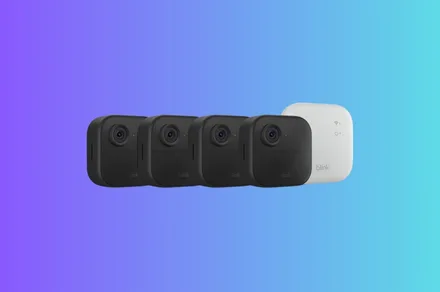
This Blink Outdoor 4 XR 4-camera kit is 45% off, and it’s a smart way to cover more of your property for less

Published

on

Home security deals can get expensive fast once you start adding multiple cameras, which is why this one stands out. The Blink Outdoor 4 XR 4-camera system is down to $164.99 for a limited time, which is a big drop from $299.99. That’s 45% off, and more importantly, it gets you a full multi-camera setup at a price that feels realistic for most households.

The angle here is coverage. A lot of people start with one camera and then realize they need another for the driveway, one for the backyard, and one near a side entrance. This bundle skips that slow, piecemeal process and gives you a more complete setup from day one.

What you’re getting

This is a 4-camera wireless security system built around convenience and range. The standout features are the two-year battery life claim and the extended wireless range, with up to 1000 feet open-air range (or around 400 feet with typical use).

That matters because placement is usually where camera systems get annoying. If you’ve got a detached garage, a longer driveway, or a larger yard, range can be the difference between “works great” and “constant headaches.”

Advertisement

A four-camera kit also gives you flexibility right away. You can cover the obvious spots first, then move things around as you learn where your blind spots are.

Why it’s worth it

This deal works because it solves a practical problem without overcomplicating it. You’re getting a recognizable, battery-powered outdoor camera setup at a price that’s well below what many four-camera packages cost. The long battery life is also a big part of the appeal, because fewer battery swaps mean you’re more likely to keep the system running consistently.

The other reason this is worth a look is the timing. Security camera deals this deep don’t always show up on full bundles, and when they do, the best value is usually in the multi-pack rather than buying individual units later.

The bottom line

At $164.99, this Blink Outdoor 4 XR 4-camera system is a genuinely good deal if you want broad home coverage without spending a ton upfront. The long battery life and strong range make it especially appealing for larger properties or tricky camera placements. If you’ve been putting off a home security setup because the cost adds up too quickly, this limited-time price makes the decision a lot easier.

Advertisement

Source link

Continue Reading

Tech

We tested Amazon’s speedy delivery live on the podcast: Here’s what it says about the future of retail

Published

on

GeekWire’s Todd Bishop unpacks an Amazon Now delivery that was ordered when the show began, and arrived well before it ended.

Amazon promises 30-minute delivery with its new Amazon Now service. We put it to the test — live on the GeekWire Podcast — with help from Michael Levin and Josh Lowitz, co-founders of Consumer Intelligence Research Partners and two of the sharpest Amazon watchers we know.

While we wait for our order of yogurt, blueberries, and flossers (long story), Levin and Lowitz explain why Amazon closed its grocery stores, what its massive future 225,000-square-foot superstore in suburban Chicago could mean, and why Amazon’s real play is becoming the ultimate convenience store.

“They’ve totally rewritten so much of retail, and I don’t think they’re done,” Levin said. Amazon has essentially substituted its logistics operation for its physical retail presence, with well over half of orders now arriving same day or next day, up from a small fraction five years ago.

In other words, don’t take the store closures as capitulation.

“Their investments in logistics are working, and I wouldn’t expect them to take their foot off the gas at all,” Lowitz said. “They’re not scared of making mistakes.”
Plus: Test your Amazon knowledge in our trivia segment. Will Josh and Mike get it right?

Advertisement

Related stories and links: 

Audio editing and production by Curt Milton.

Source link

Continue Reading

Tech

How Mike Markkula transformed Apple from garage experiment into the business that reshaped personal computing

Published

on


Long before Apple became synonymous with Steve Jobs’ product launches and minimalist design philosophy, the company’s survival depended on a quieter figure operating behind the scenes.

An InfoWorld article published on July 18 1983 described Mike Markkula as the person who turned Apple from a clever engineering experiment into a real business — the man who wrote its first proper business plan, secured crucial funding, and helped build the company that would later dominate consumer technology.

Source link

Continue Reading

Trending

Copyright © 2025