Wheelchair users with severe disabilities can often navigate tight spaces better than most robotic systems can. A wave of new smart-wheelchair research, including findings presented in Anaheim, Calif., earlier this month, is now testing whether AI-powered systems can, or should, fully close this gap.
Christian Mandel—senior researcher at the German Research Center for Artificial Intelligence (DFKI) in Bremen, Germany—co-led a research team together with his colleague Serge Autexier that developed prototype sensor-equipped electric wheelchairs designed to navigate a roomful of potential obstacles. The researchers also tested a new safety system that integrated sensor data from the wheelchair and from sensors in the room, including from drone-based color and depth cameras.
Mandel says the team’s smart wheelchairs were both semiautonomous and autonomous.
“Semiautonomous is the shared control system where the person sitting in the wheelchair uses the joystick to drive,” Mandel says. “Fully autonomous is controlled by natural-language input. You say, ‘Please drive me to the coffee machine.’ ”
Advertisement
This is a close-up of the wheelchair’s joystick and camera.DFKI
In contrast to semiautonomous mode, where the participant controls the wheelchair with a joystick, in autonomous mode, control involves the open-source ROS2 Nav2 navigation system using natural-language input. The wheelchairs also used simultaneous localization and mapping (SLAM) maps and local obstacle-avoidance motion controllers.
One scenario that Mandel and his team tested involved the user pressing a key on the wheelchair’s human-machine interface, speaking a command, then confirming or rejecting the instruction via that same interface. Once the user confirmed the command, the mobility device guided the user along a path to the destination, while sensors attempted to detect obstacles in the way and adjust the mobility device accordingly to avoid them.
When Are Smart Wheelchairs Bad Value?
According to Pooja Viswanathan, CEO & founder of the Toronto-based Braze Mobility, research in the field of mobile assistive technology should also prioritize keeping these devices readily available to everyday consumers.
Advertisement
“Cost remains a major barrier,” she says. “Funding systems are often not designed to support advanced add-on intelligence unless there is very clear evidence of value and safety. Reliability is another barrier. A smart wheelchair has to work not just in ideal conditions, but in the messy, variable conditions of daily life. And there is also the human factors dimension. Users have different cognitive, motor, sensory, and environmental needs, so one solution rarely fits all.”
For its part, Braze makes blind-spot sensors for electric wheelchairs. The sensors detect obstacles in areas that can be difficult for a user to see. The sensors can also be added to any wheelchair to transform it into a smart wheelchair by providing multimodal alerts to the user. This approach attempts to support users rather than replace them.
According to Louise Devinge, a biomedical research engineer from IRISA (Research Institute of Computer Science and Random Systems) in Rennes, France, the increased complexity of smart wheelchairs demands more sensing. And that requires careful management of communication and synchronization within the wheelchair’s system. “The more sensing, computation, and autonomy you add,” she says, “the harder it becomes to ensure robust performance across the full range of real-world environments that wheelchair users encounter.”
In the near term, in other words, the field’s biggest challenge is not about replacing the wheelchair user with AI smarts but rather about designing better partnerships between the user and the technology.
Advertisement
This image shows data representations used by the 3D Driving Assistant. These include immutable sensor percepts such as laser scans and point clouds, as well as derived representations like the virtual laser scans and grid maps. Finally, the robot shape collection describes the wheelchair’s physical borders at different heights.DFKI
Where Will Smart Wheelchairs Go From Here?
Mandel says he expects to see smart wheelchairs ready for the mainstream marketplace within 10 years.
Viswanathan says the REXASI-PRO system, while out of reach of present-day smart wheelchair technologies, is important for the longer term. “It reflects the more ambitious end of the smart wheelchair spectrum,” she says. “Its strengths appear to lie in intelligent navigation, advanced sensing, and the broader effort to build a wheelchair that can interpret and respond to complex environments in a more autonomous way. From a research standpoint, that is exactly the kind of work that pushes the field forward. It also appears to take seriously the importance of trustworthy and explainable AI, which is essential in any mobility technology where safety, reliability, and user confidence are paramount.”
Mandel says he’s ultimately in pursuit of the inspiration that got him into this field years ago. As a young researcher, he says, he helped develop a smart wheelchair system controllable with a head joystick.
However, Mandel says he realized after many trials that the smart wheelchair system he was working on had a long way to go because, as he says, “at that point in time, I realized that even persons that had severe handicaps [traveling through] a narrow passage, they did very, very well.
Advertisement
“And then I realized, okay, there is this need for this technology, but never underestimate what [wheelchair users] can do without it.”
The FBI has issued a public service announcement warning that Russian intelligence-linked threat actors are actively targeting users of encrypted messaging apps such as Signal and WhatsApp in phishing campaigns that have already compromised thousands of accounts.
The FBI’s PSA is the first public attribution linking these campaigns directly to Russian intelligence services, rather than a broader description of just state hackers.
According to the FBI, the campaigns are designed to bypass the protections of end-to-end encryption in commercial messaging apps (CMAs), not by breaking encryption, but through account hijacks.
The FBI says the techniques used in these attacks can be applied to multiple CMAs but predominantly target Signal users.
Advertisement
Depending on the access they obtain, attackers can read private messages and contact lists, impersonate victims, and launch additional phishing campaigns as trusted people.
The FBI says the attacks have affected “thousands” of accounts worldwide and primarily target those with access to sensitive information.
“The activity targets individuals of high intelligence value, such as current and former U.S. government officials, military personnel, political figures, and journalists,” reads the FBI’s PSA.
The FBI’s attribution comes after earlier advisories from Dutch and French cybersecurity authorities that described similar account-hijacking operations.
Advertisement
Earlier this month, Dutch intelligence agencies warned that state-backed attackers were targeting Signal and WhatsApp users in phishing campaigns aimed at gaining access to secure communications.
The advisory highlighted that the attacks relied on tricking users into allowing attackers to add the account to their devices or link attacker-controlled devices to the account.
Today, France’s Cyber Crisis Coordination Center (C4) also published an alert about the same tactics targeting instant messaging platforms, stating the activity is widespread and ongoing across multiple countries.
Signal phishing attacks
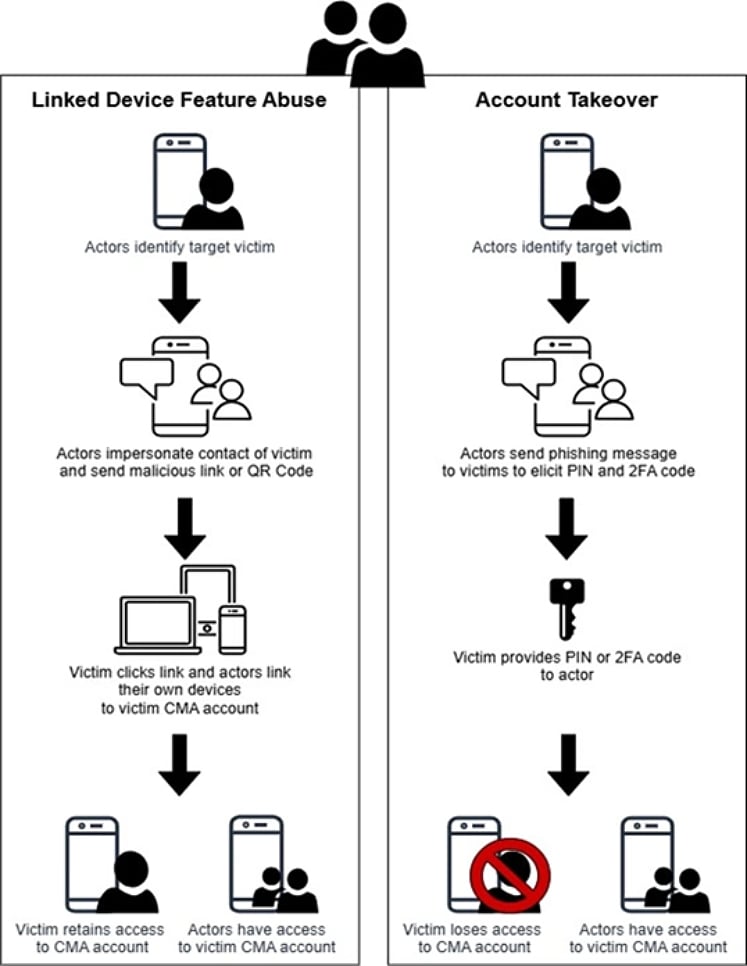
All three advisories state that the phishing attacks follow the same tactic of bypassing the platform’s encryption by hijacking accounts or linking devices to an existing account.
Advertisement
Two different phishing methods seen targeting Signal Source: FBI
The FBI says that most phishing messages impersonate support accounts, which request that the target perform an action that secretly grants threat actors access to the account.
Victims are typically tricked into sharing verification codes or scanning malicious QR codes that link their accounts (Signal and WhatsApp) to attacker-controlled devices.
Samples of Signal phishing messages used in the phishing campaign Source: France’s Cyber Crisis Coordination Center (C4)
Once the threat actors gain access to accounts, they can silently monitor communications, join group chats, and send messages as the compromised user, making detection more difficult and enabling further phishing campaigns.
The PSA emphasizes that encryption in Signal, WhatsApp, and similar platforms is not broken and no vulnerabilities are being exploited.
The FBI says the campaign has already led to unauthorized access to thousands of messaging accounts, which were then used to target additional victims.
Users are advised to remain suspicious of unexpected messages, be wary of requests to scan QR codes or link devices to their accounts, and never share verification codes with anyone, including accounts claiming to be a platform’s support personnel.
Advertisement
Malware is getting smarter. The Red Report 2026 reveals how new threats use math to detect sandboxes and hide in plain sight.
Download our analysis of 1.1 million malicious samples to uncover the top 10 techniques and see if your security stack is blinded.
FiiO isn’t just busy in 2026, it is borderline relentless. The company has already rolled out close to 20 new products this year, with a roadmap that stretches for pages. DACs, amps, streamers, dongles you name it. But buried in that flood of new gear is something far less flashy and arguably more important: the DARKSIDE PRO.
Because here is the reality most brands do not like to talk about. A lot of entry level and mid tier gear from FiiO, Topping, SMSL, Schiit, WiiM, Eversolo ships with pretty mediocre power supplies. Cheap switching adapters. Lightweight wall warts that get the job done, technically, but do not exactly help performance. Noise creeps in, dynamics flatten out, and the gear never quite sounds like it should.
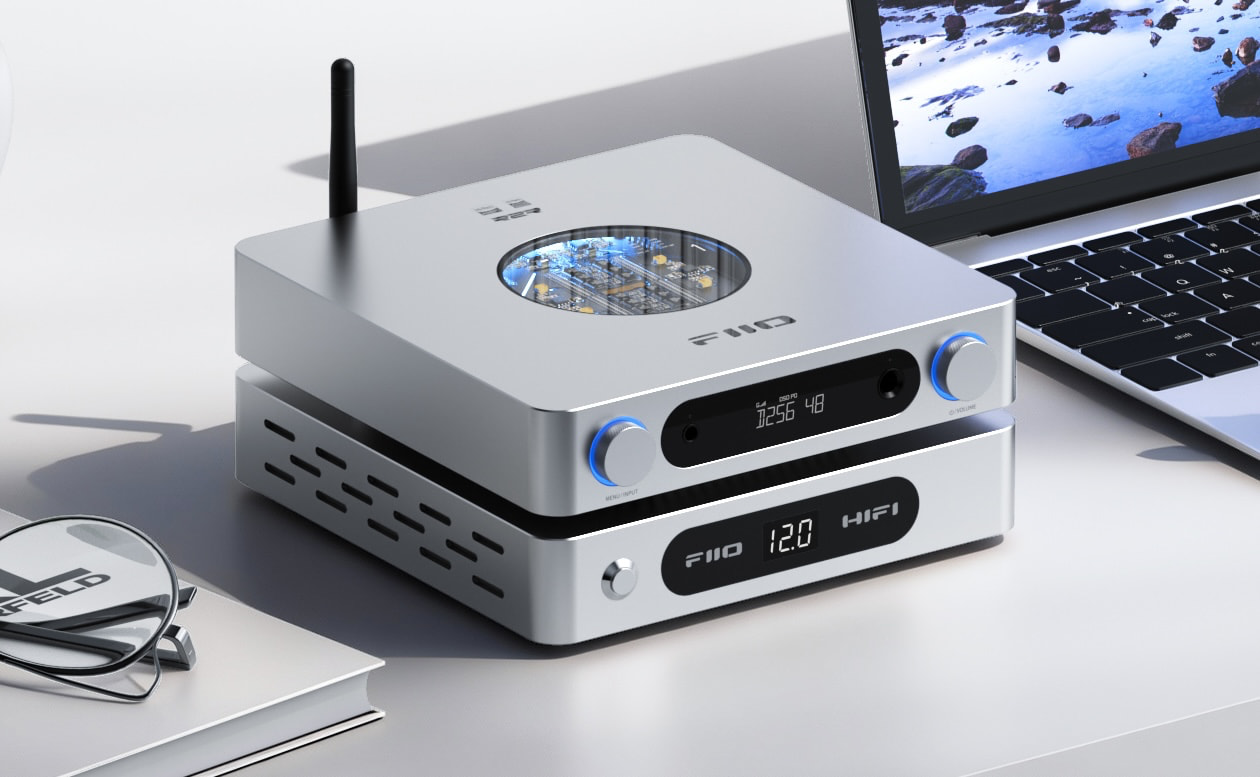
The FiiO DARKSIDE PRO goes straight at that problem. It is a linear power supply designed to clean up the foundation of your system, not dress it up. And it does not just work with a handful of FiiO products, it is compatible with a wide range of DACs, headphone amps, and streamers from multiple brands, provided the voltage and current match.
At $159, it is also not a major financial leap. Which is why it makes a lot of sense as a first upgrade, often more impactful than swapping cables, and sometimes enough to hold off on replacing the component entirely. I have already got one on order for the K11 R2R and a few other pieces on my desk. That probably tells you everything you need to know.
Advertisement
The DARKSIDE PRO is built to address something most desktop systems overlook until it becomes a problem: power quality. Instead of relying on a standard switching adapter, FiiO uses a linear power supply design, which is inherently better at reducing high-frequency noise and electrical interference that can bleed into sensitive audio circuits. That matters because DACs and headphone amplifiers don’t just amplify music—they amplify whatever noise is riding along with the power.
At the heart of the DARKSIDE PRO is a 75W toroidal transformer paired with a fully discrete voltage regulation stage. Toroidal transformers are preferred in audio applications because they generate less electromagnetic interference and deliver more stable current under load. The discrete regulation stage further refines that output, reducing ripple and ensuring that voltage remains consistent even when the connected device demands more current during dynamic passages.
The unit provides selectable 12V or 15V output with up to 3A of current, which makes it compatible with a wide range of desktop gear. That includes FiiO’s own DACs and amplifiers like the K11, K13 R2R, K7, and other low-voltage components, as well as third-party DACs, streamers, and headphone amps that rely on external DC power. The ability to switch voltage is not just about compatibility—it allows users to match the exact requirements of their gear, avoiding underpowering or unnecessary stress on the circuit.
Performance-wise, the benefit comes down to lowering the noise floor and improving system stability. With less ripple and cleaner DC output, connected devices can operate closer to their intended design limits. That can translate into tighter bass control, cleaner transients, and improved low-level detail—not because the power supply “adds” anything, but because it removes interference that shouldn’t be there in the first place.
There’s also a practical advantage in current reserve. With up to 3A on tap, the FiiO DARKSIDE PRO avoids the bottlenecks that cheaper switching supplies can introduce when a system demands more instantaneous power. That helps prevent compression or softening of dynamic peaks, especially with more demanding headphones or complex music.
Advertisement
What makes the DARKSIDE PRO useful is its role as a system-level upgrade. It doesn’t change your gear—it lets your gear perform the way it was designed to. For users building around FiiO’s growing desktop ecosystem, it’s a logical companion piece. And for anyone running sensitive DACs or headphone amps on generic wall adapters, it’s one of the few upgrades that can improve everything downstream without touching the signal path itself.
FiiO K13 R2R: Architecture, Power, and Real Control
FiiO DARKSIDE PRO under K13 R2R
The K13 R2R has been a long time coming. First announced last September, it took a few extra months to actually land, but now that it’s here, the value proposition is a lot clearer.
Advertisement. Scroll to continue reading.
At its core is something you still almost never see at this price: a true, fully differential 24-bit resistor ladder DAC. FiiO’s four-channel design uses 192 precision thin-film resistors with tight tolerances, which isn’t just engineering flex—it directly improves linearity, channel balance, and low-level detail. The result is a presentation that feels more continuous and less clinical than the usual delta-sigma approach.
FiiO also gives you both NOS and OS modes, so you can choose between a smoother, more analog-leaning sound or something tighter and more technically precise. The DAC feeds a fully balanced amplifier capable of up to 2400mW per channel into 32 ohms, with low output impedance and multiple gain settings that make it flexible enough for everything from IEMs to planars.
Advertisement
On the digital side, it’s fully loaded: USB with up to 384kHz/32-bit PCM and DSD256 via XMOS, plus optical, coaxial, and I²S inputs, and Bluetooth 5.4 with LDAC for wireless. In other words, it covers just about every use case you’re likely to throw at a desktop unit in this range.
What makes the K13 R2R unique is obvious—the R2R DAC at $319. What matters just as much, though, is everything around it. Because here’s the part most people ignore: no DAC or headphone amp at this level reaches its potential on a cheap switching power supply. A better power source often delivers more meaningful gains than swapping cables—and in some cases, enough of an improvement that you don’t feel the need to upgrade the device at all.
Which is exactly why something like the FiiO DARKSIDE PRO exists in the first place.
FiiO DARKSIDE PRO under K13 R2R
The Bottom Line
The FiiO DARKSIDE PRO is for anyone running a DAC, streamer, or headphone amp on a basic wall adapter and wondering why it sounds a little flat. It makes sense because cleaner, more stable power can unlock performance you already paid for. At $159, it is a low risk upgrade that can deliver real gains without replacing your gear.
Anthropic cannot manipulate its generative AI model Claude once the US military has it running, an executive wrote in a court filing on Friday. The statement was made in response to accusations from the Trump administration about the company potentially tampering with its AI tools during war.
“Anthropic has never had the ability to cause Claude to stop working, alter its functionality, shut off access, or otherwise influence or imperil military operations,” Thiyagu Ramasamy, Anthropic’s head of public sector, wrote. “Anthropic does not have the access required to disable the technology or alter the model’s behavior before or during ongoing operations.”
The Pentagon has been sparring with the leading AI lab for months over how its technology can be used for national security—and what the limits on that usage should be. This month, defense secretary Pete Hegseth labeled Anthropic a supply-chain risk, a designation that will prevent the Department of Defense from using the company’s software, including through contractors, over the coming months. Other federal agencies are also abandoning Claude.
Anthropic filed two lawsuits challenging the constitutionality of the ban and is seeking an emergency order to reverse it. However, customers have already begun canceling deals. A hearing in one of the cases is scheduled for March 24 in federal district court in San Francisco. The judge could decide on a temporary reversal soon after.
Advertisement
In a filing earlier this week, government attorneys wrote that the Department of Defense “is not required to tolerate the risk that critical military systems will be jeopardized at pivotal moments for national defense and active military operations.”
The Pentagon has been using Claude to analyze data, write memos, and help generate battle plans, WIRED reported. The government’s argument is that Anthropic could disrupt active military operations by turning off access to Claude or pushing harmful updates if the company disapproves of certain uses.
Ramasamy rejected that possibility. “Anthropic does not maintain any back door or remote ‘kill switch,’” he wrote. “Anthropic personnel cannot, for example, log into a DoW system to modify or disable the models during an operation; the technology simply does not function that way.”
He went on to say that Anthropic would be able to provide updates only with the approval of the government and its cloud provider, in this case Amazon Web Services, though he didn’t specify it by name. Ramasamy added that Anthropic cannot access the prompts or other data military users enter into Claude.
Advertisement
Anthropic executives maintain in court filings that the company does not want veto power over military tactical decisions. Sarah Heck, head of policy, wrote in a court filing on Friday that Anthropic was willing to guarantee as much in a contract proposed March 4. “For the avoidance of doubt, [Anthropic] understands that this license does not grant or confer any right to control or veto lawful Department of War operational decision‑making,” the proposal stated, according to the filing, which referred to an alternative name for the Pentagon.
The company was also ready to accept language that would address its concerns about Claude being used to help carry out deadly strikes without human supervision, Heck claimed. But negotiations ultimately broke down.
For the time being, the Defense Department has said in court filings that it “is taking additional measures to mitigate the supply chain risk” posed by the company by “working with third-party cloud service providers to ensure Anthropic leadership cannot make unilateral changes” to the Claude systems currently in place.
Pinterest’s CEO has thrown his support behind an Australia measure banning social media for younger teens and is calling for governments around the world to implement similar bans. “Social media, as it’s configured today, is not safe for young people under 16,” Ready writes in a piece published byTime. “We need a clear standard: no social media for teens under 16, backed by real enforcement, and accountability for mobile phone operating systems and the apps that run on them.”
Ready is one of the highest-profile tech CEOs to come out in favor of a broad ban on social media for teens. That may also seem like a bold stance for someone who runs a platform with a user base that’s more than 50 percent Gen Z, but Ready doesn’t think that ban should apply to Pinterest. Pinterest, as he notes, already bars teens under 16 from accessing messaging features and other social features. It also makes teen accounts private by default.
A spokesperson for Pinterest confirmed the company has no plans to change its own policies regarding users under 16, and said Pinterest considers itself a “visual search platform” not social media. Pinterest, like most social media and social media-adjacent companies, doesn’t allow users under 13 to sign up.
Social media or not, Pinterest has encountered child safety-related issues in the past. In 2023, NBC Newsreported that Pinterest’s recommendation algorithm was surfacing photos and videos of young girls to adults who were “seeking” such content. Some of those users had created Pinterest boards featuring images of young girls with titles like “sexy little girls,” their investigation found. The company made profiles for teens under 16 private and “not discoverable” six months later.
Advertisement
According to Ready, Pinterest’s popularity with younger users is proof its policies are also good for the company’s business. “Our experience shows that prioritizing safety and well-being doesn’t push young people away; it builds trust,” he writes.
The deal provides both companies with strategic advantages. For Uber, access to a dedicated robotaxi fleet supports its broader push to integrate multiple self-driving partners across its platform. For Rivian, the capital infusion offers financial breathing room and a guaranteed customer as it accelerates the development of autonomous technology. Read Entire Article Source link
A civil jury in California on Friday ruled that Elon Musk intentionally misled Twitter investors when he tried to back out of his $44 billion acquisition of the platform in 2022.
At the time, Musk had tweeted that Twitter had too many bots, which is why he later tried to renege on the acquisition. (Twitter ended up suing Musk to force him to seal the deal.)
“Twitter deal temporarily on hold pending details supporting calculation that spam/fake accounts do indeed represent less than 5% of users,” Musk wrote on the platform that he has since renamed X.
Twitter deal temporarily on hold pending details supporting calculation that spam/fake accounts do indeed represent less than 5% of usershttps://t.co/Y2t0QMuuyn
In the days after Musk posted this, Twitter shares declined 8%. Investor Giuseppe Pampena filed suit against Musk on behalf of other former Twitter investors who had sold Twitter shares between May 13 (the day of the tweet) and October 4, the day the deal was finalized.
Pampena’s lawsuit argued that Musk intentionally posted about his concerns with Twitter to create uncertainty about the platform’s stability to artificially drive down its stock price, causing those who sold shares during that window to suffer losses. Musk’s attorneys argued that he was expressing legitimate concerns about the number of bots on the app. But the jury was more convinced by the plaintiff’s argument.
It is not yet clear how much money Musk will have to pay to those former Twitter shareholders, but Pampena’s attorney said that damages could reach up to $2.6 billion, according to CNBC. It’s not a huge blow for Musk, as Bloomberg estimates his net worth at over $660 billion.
This isn’t Musk’s first experience going to court over tweets. In 2018, he tweeted that he had secured funding to take Tesla private at $420 per share, meaning he planned to buy out public shareholders and delist the company from stock exchanges. The SEC alleged that these posts were misleading, charging Musk with securities fraud. Musk later had to testify in court that he was not making a marijuana joke (420 being a widely recognized reference to cannabis) and maintained that he earnestly believed that he would take Tesla private at $420 per share, which was a substantial premium on Tesla’s stock price at that time.
Advertisement
Techcrunch event
San Francisco, CA | October 13-15, 2026
Advertisement
Musk emerged victorious in a similar lawsuit that shareholders filed about the “funding secured” tweet, but this time, he’ll have to pay up.
After acquiring Twitter, Musk rebranded the company as X, then merged it with his newer AI company, xAI. The combined company was valued at $113 billion, according to Musk. Then, last month, SpaceX merged with xAI. Musk has said that the merger was motivated by his desire to build data centers in space.
The new facility will require ‘no additional grid power’, Equinix has claimed.
Equinix has begun construction on a new $92m data centre in Dublin’s Blanchardstown, expected to be operational from 2028.
This adds to nine data centres that Equinix already owns in Dublin, according to Data Centre Map, including two from BT, which it acquired for €59m in 2025. The company owns more than 270 data centres worldwide.
The new centre, called DB7x, will be “100pc flexible to support the national grid” and “will require no additional grid power”, said Equinix. According to the company, the new building will be constructed on an existing Equinix site and use the power already allocated to that facility.
Advertisement
DB7x will be situated close to two of the company’s existing data centres for “enhanced connectivity”, Equinix added. Investment is expected to be split into $78m for the facility and $14m to support a retail International Business Exchange (IBX) buildout.
The company’s retail IBX data centres provide enterprises with digital infrastructure to tackle growing AI workloads and scale services locally while connecting to customers internationally.
Equinix said that retail capacity in its new data centre will directly support foreign direct investment (FDI) into Ireland, adding to the 200 FDI corporations that the company already provides its infrastructure to.
“This is an exciting development for Equinix’s operations in Ireland, as we celebrate 10 years of being in Ireland, investing in its infrastructure and economy,” said Peter Lantry, the managing director of Equinix Ireland.
Advertisement
“This announcement strongly supports the Government’s recently published Digital and AI Strategy, which outlines a path for keeping Ireland at the forefront of global digital innovation. It also reaffirms our commitment to Ireland and its importance to businesses worldwide.”
He added: “This is positive news for the Irish economy. By expanding colocation capacity in Dublin, we will enable domestic and international enterprises to scale, innovate and connect across Equinix’s global digital infrastructure platform with ease.”
Data centre providers in Ireland are set to benefit from the Government’s new strategy for large energy users, which aims to improve hyperscale data centre developments with better State coordination and national infrastructure planning.
Advertisement
Don’t miss out on the knowledge you need to succeed. Sign up for the Daily Brief, Silicon Republic’s digest of need-to-know sci-tech news.
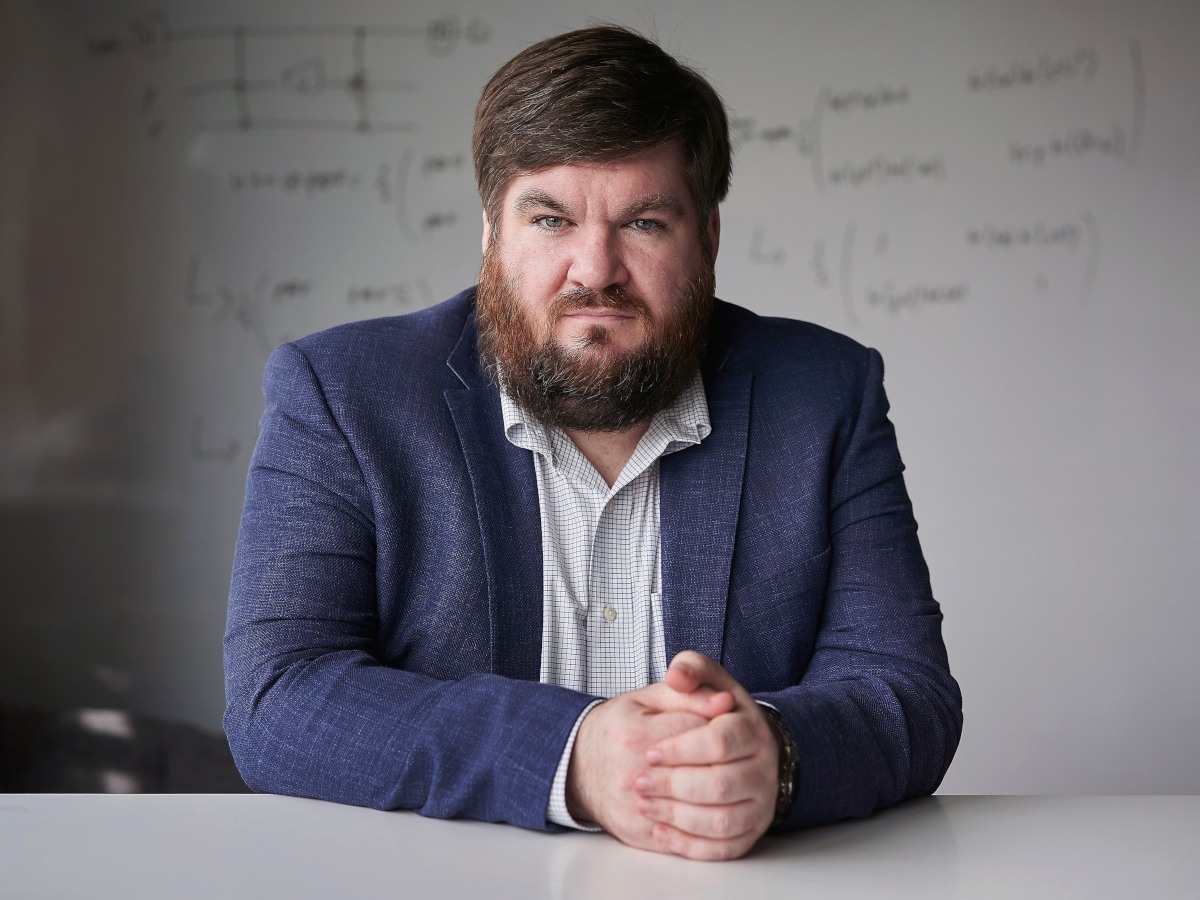
Singapore-based, but founded by Irishman Dr Joe Fitzsimons, Horizon Quantum begins trading on the Nasdaq today under the HQ symbol.
Horizon Quantum Computing specialises in software infrastructure for quantum applications, and yesterday (19 March) announced it had completed the previously announced merger with the special purpose acquisition company (SPAC) dMY Squared Technology Group.
“Recent rapid progress in advancing quantum computing hardware and breakthroughs in error correction mean that the field is reaching an inflection point,” said Dr Joe Fitzsimons, Founder and CEO of Horizon Quantum. “With today’s closing and our Nasdaq listing, Horizon Quantum is positioned to deliver the software infrastructure that will power this next phase of computing and help enable broad quantum advantage across tough computational problems.”
“While there is still much work needed before quantum computers reach their full potential, with more than 20 years in quantum computing research, I have never been more excited about the prospects and future of the technology.”
Advertisement
“Horizon Quantum is compelling because the company is approaching the quantum industry with hardware-agnostic software infrastructure that stands to benefit regardless of which way the market share ultimately falls across the competing quantum modalities, including the cloud,” said Harry You, Chairman and CEO of Las Vegas-based dMY.
Horizon Quantum says the closing of the merger yesterday provides it with gross proceeds of some $120m before transaction costs. It says this injection of cash will be used to “accelerate its investments in research and development, strengthen its hardware testbed, and further advance its integrated development environment Triple Alpha”.
Horizon Quantum is developing a way to transform programmes written in conventional programming languages such as C or Python into accelerated quantum applications. To accomplish this, the company has created a method to automatically construct quantum algorithms from conventional languages in a way that preserves the code’s original functioning in a process called algorithm synthesis.
Fitzsimons, a former professor at the Singapore University of Technology and Design and the president of the Southeast Asia Quantum Industry Association, also co-invented universal blind quantum computing – technology used to secure cloud-based quantum systems. Horizon Quantum raised $18.1m in a Series A funding round in 2023.
Advertisement
Don’t miss out on the knowledge you need to succeed. Sign up for the Daily Brief, Silicon Republic’s digest of need-to-know sci-tech news.
The internet you use every day could soon be dominated by artificial intelligence. Cloudflare CEO Matthew Prince says that AI bots may generate more traffic than humans within the next year or two, marking a major shift in how the web works.
Speaking about the current trends with TechCrunch, Prince said bot activity is growing rapidly as AI systems crawl and interact with websites at scale.
Before the rise of generative AI, bots were responsible for only 20% of internet traffic. Most of that traffic came from search engines like Google, and some malicious activity. Now, that number is climbing much faster.
Why is AI bot traffic growing faster?
Sensor Tower
According to Prince, the key reason behind this surge is how AI systems operate. He explains that a human might visit a handful of websites to complete a task. An AI agent, on the other hand, can hit thousands of pages in seconds to gather information and complete the same task.
This creates a huge spike in traffic. AI systems constantly scan and collect information to function, which means they generate far more requests than human users ever could. That growing demand is what could push bot traffic past human activity in the coming years.
Advertisement
How sandboxing could help manage the AI traffic surge
Prince believes this shift will require entirely new systems built for AI. One idea is creating temporary ‘sandboxes’ where AI agents can run tasks, then shut down once finished.
Google
For example, if you ask an AI to plan a vacation, it could spin up a dedicated environment to browse, compare, and organize information before disappearing.
These sandboxed environments would allow bots to perform tasks without overwhelming websites or infrastructure.
Prince imagines millions of these sandboxes could be created every second. However, handling traffic at this scale would also require major infrastructure, including more data centers and servers to support constant AI activity.
For Prince, this is not just another tech trend. “I think the thing that people don’t appreciate about AI is it’s a platform shift,” he said, comparing it to the move from desktop to mobile. “AI is another platform shift … the way that you’re going to consume information is completely different.”
A group of former Twitter investors have prevailed at a federal civil trial over Elon Musk’s actions amid his $44 billion acquisition of the social platform in 2022. A jury in San Francisco found Friday that tweets made by Musk about fake accounts on the platform had defrauded investors in the company. The jury sided with Musk on other allegations in the case.
It’s not yet clear how much Musk will owe in damages as a result of the case but, as the Associated Press reports, it could amount to billions of dollars. Jurors calculated that shareholders should get “between about $3 and $8 per stock per day.”
The class action lawsuit, one of several brought against Musk in the months following his takeover of the company, cited Musk’s tweets about fake accounts on the platform. Facing a sinking Tesla share price in the days after announcing he would buy Twitter for $54.20 a share, the suit said Musk made tweets and statements that were intentionally meant to drive down Twitter’s share price in an attempt to renegotiate or exit the deal.
The suit called out Musk’s May 13, 2022, tweet that claimed the Twitter deal was “temporarily on hold” due to the number of fake accounts and bots on the platform, as well as one a few days later that suggested fake accounts might account for more than 20 percent of users. Twitter’s stock dropped significantly following the May 13 tweet.
Advertisement
During the trial, Musk said the tweets were him “speaking his mind” and maintained that Twitter executives had “lied” about the number of bots on the platform, according toKQED. Former Twitter shareholders, on the other hand, said “they sold shares at deflated prices amid Musk’s public waffling.”
Musk faced several lawsuits during and after his $44 billion takeover of the company. That includes other shareholder lawsuits related to his delay in disclosing his stake in the company, as well as one from former executives related to unpaid severance benefits (Musk later settled those claims). He also narrowly avoided a trial over his attempts to back out of the deal.


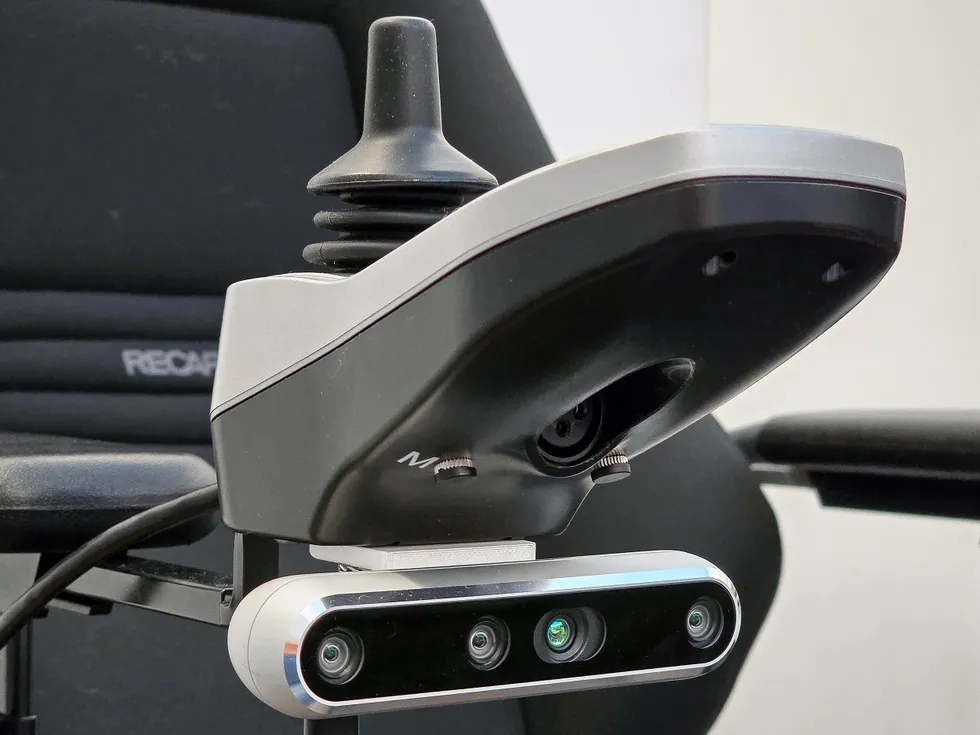
 This is a close-up of the wheelchair’s joystick and camera.DFKI
 This image shows data representations used by the 3D Driving Assistant. These include immutable sensor percepts such as laser scans and point clouds, as well as derived representations like the virtual laser scans and grid maps. Finally, the robot shape collection describes the wheelchair’s physical borders at different heights.DFKI


























































You must be logged in to post a comment Login