“The Scuba V3 punches above its weight-class with both outstanding performance and value”
Pros
Lightweight
Cleans well
Intuitive app
Cons
Will not clean the water surface
Mediocre battery life
Instant Insight
I have always maintained that owning a pool is like owning a boat – you will spend 90% of your time maintaining and cleaning it and 10% of your time enjoying it, especially if you live in Oregon as I do. Over the years, we have seen robot cleaners evolve from erratic, cord-tangled wall-bumpers to reliable vacuums, and technology keeps getting better, especially in the age of AI. Priced at $1,199 MSRP (with a street price currently around $970 USD), the Aiper Scuba V3 is not trying to be the cheapest impulse buy at the pool store, but instead, positions itself as a premium AI-driven assistant that brings sophisticated navigation of high-end robot vacuums to the bottom of your backyard oasis.
New for 2026, the Aiper Scuba V3 robotic pool cleaner has new AI features and more value, although it sacrifices some tech to offer such a good value. The Scuba V3 is currently priced between the top-of-the-line Scuba X1 Pro Max ($1699) and the Scuba X1 ($899.99), offering newer AI-focused features for just $70 more. The Scuba V3 is equipped with AI Vision and dToF(Direct Time of Flight) sensors, which give this pool cleaner more of an organized purpose than recklessly bouncing around the pool.
Ian Bell / Digital Trends
During my tests, the Scuba V3 proved to be a reliable, hardy worker with long battery life. If you already have a pool cleaner that is a few years old and working great, it’s not worth spending money on the Scuba V3, but if you are in the market, then I would recommend jumping into the pool cleaner ecosystem. Paired with the Aiper EcoSurfer S2 skimmer, both of these devices should do the job in keeping your pool spotlessly clean.
Aiper V3 Specifications:
Here is how the Aiper Scuba V3 measures up :
Advertisement
Specification
Details
Dimensions (L x W x H)
17.48 x 14.96 x 8.58 inches
Weight (Dry)
18.1 pounds
Suction Power
4,800 Gallons Per Hour (GPH)
Filtration Level
3-micron MicroMesh™ Multi-layer Filtration
Debris Basket Capacity
3.5 Liters
Battery Energy Content
149.76 Watt Hours (Lithium-ion)
Run Time
Up to 150 minutes per charge
Charging Time
5 Hours via Wireless Charging Dock
Navigation Technology
AI Patrol, dToF, VisionPath™ Adaptive Planning
Drive System
Tank treads with dual scrubbing brushes
Cleaning Zones
Floor, Walls, Waterline (JetAssist™)
Design and Weight: Like a paper tank
Like most pool cleaners on the market, the Scuba V3 uses a tank tread design to move the unit around. And like the rest of the products in the Aiper robot pool cleaner line-up, the casing is made up of a piano black finish that looks high-quality. Rather than the gold or carbon fiber surround found on the more expensive Aiper units, the V3 has some light blue trim, which would indicate more of a value virtue signal. Dimension-wise, the Scuba V3 is considerably smaller than the Scuba X1 or Scuba X1 Pro Max, which are not only taller, longer, and wider, but also considerably heavier.
I put some charts below that show the weight of the Scuba V3 compared to others in its price range – it comes in on the lighter side in the comparison (when not wet), which is nice for those who really have trouble pulling these cleaners out of their pool. Aiper sells a caddie to help you transport their pool cleaners to and from the pool, but would surmise that most people can skip the caddie, as the V3 is pretty light.
Ian Bell / Digital Trends
I found that the tank treads did a great job moving the V3 around my pool, and they stuck to the side of the pool without issue, despite a suction lower than that of higher-end models. Underneath, you have four scrubbing brushes – two in the front and two in the back – that do a good job agitating algae, mineral deposits, and debris before the suction kicks in. The debris is funneled into a newly designed 3.5-liter collection basket wrapped in a Micromesh filter.
The overall build quality feels premium; the plastics are thick, the moving parts feel solid, and there are no flimsy latches that feel destined to snap off after a single summer in the sun. I noted in my Beatbot Aquasense 2 Ultra review that they put extra screws and parts in the box, which is a clear sign to me that something is going to wear out.
The Aiper Scuba V3 is a thoughtful and rugged piece of engineering.
Ian Bell / Digital Trends
When you are dealing with robotic pool cleaners, dry weight directly correlates to user experience, specifically, how miserable it is to pull the machine out of the water once it has finished its cleaning cycle. Here is how the competitive landscape breaks down:
The Featherweights (Under 20 lbs): The Aiper Scuba V3 (18.1 lbs) and the Dolphin Liberty 400 (17.9 lbs) are the clear winners here. Aiper managed to pack the V3 with a complex AI vision system and heavy-duty tank treads without inflating its mass. It is incredibly easy to retrieve one-handed using the included hook. We also included the corded Dolphin Nautilus CC Plus (20.8 lbs) as a baseline to show that premium cordless tech doesn’t necessarily mean a heavier machine.
The Middleweights (23 to 25 lbs): The highly anticipated Beatbot Sora 70 (23.0 lbs) sits right in the middle of the pack. While it is about five pounds heavier than the Scuba V3, that extra weight is justified by its internal buoyancy chambers, which allow it to float up and clean the surface of the water (a feature the V3 lacks). The older Aiper Scuba S1 Pro (25.0 lbs) and Beatbot Aquasense Pro (24.3 lbs) also live in this tier, representing the maximum weight most users can comfortably lift without straining their backs.
The Heavyweight (30+ lbs): Aiper’s flagship model, the Scuba X1 Pro Max (33.1 lbs), is an absolute behemoth. While it offers a staggering 5-hour battery life and 8,500 GPH of suction, pulling 33 pounds of dead weight (plus trapped water) out of the deep end is a genuine physical workout.
Ian Bell / Digital Trends
Ultimately, the Scuba V3 strikes a near-perfect balance, offering premium AI navigation in a chassis light enough that anyone in the family can confidently deploy and retrieve it.
Navigation: The most important part of any robot cleaner
I get asked a lot about what makes these pool cleaners so much better than the other, and the answer is simple: Does it clean the pool to your satisfaction, and is it low maintenance? Sounds simple, but as you know, it’s not that easy. Pools come in a lot of shapes and depths, so to get a pool clean, you need a good brain to tell the cleaner how to navigate (and you need long battery life, too).
Advertisement
Powered by what Aiper calls its “Cognitive AI Navium Mode” and “VisionPath Adaptive Path Planning,” this robot uses an integrated underwater camera combined with dToF (Direct Time of Flight) optical sensors. Think of dToF as a form of laser radar; it sends out light pulses and measures how long they take to bounce back, creating a highly accurate 3D map of your pool’s interior. When you drop the Scuba V3 into the water, it doesn’t just wander. It assesses the shape of the pool, detects obstacles with its optical sensors, and plans a precise, overlapping, lawnmower-style route.
Ian Bell / Digital Trends
But the really cool trick is the “AI Patrol” mode. I actively tested this by tossing a handful of fine potting soil and a few sunken leaves into the deep end. The Scuba V3’s camera has a 2-meter detection range and is trained to recognize over 20 different types of debris. As it cruised nearby, I literally watched the robot alter its path, turn directly toward the dirt pile, and suck it up before resuming its standard grid.
It was like watching a predator spot its prey.
There is a very visible difference in how the Scuba V3 seems to navigate compared to the Scuba X1, for example. The V3 looks very “aware” almost like a living being; it’s creepy at first. Furthermore, Aiper equipped the front of the unit with dual LED headlights. This allows the AI vision system to function perfectly during night cleanings, illuminating the murky depths so it never loses its way. And for the privacy-conscious, Aiper guarantees zero image storage and zero image upload – what happens in your pool, stays in your pool.
Performance: Suck it up, kid
In all my robot pool cleaner testing, I am still wondering what the point of diminishing returns is when it comes to gallons per hour (GPH) of suction. Spend more on a pool cleaner and get a higher suction rate, but what is the minimum you need for good performance in the category? I have yet to find that out. The Scuba V3 measures in at 4800 GPH, which isn’t nearly at the top of its class, but not weak either. The higher-end and slightly more expensive Scuba X1 comes in at 6600 GPH, which feels like A LOT more compared to the V3, but in my tests, the Scuba V3 did just fine.
Ian Bell / Digital Trends
During my two-week testing period, my pool was subjected to a barrage of spring pollen, wind-blown sand, and the inevitable barrage of leaves. The V3 offers multiple cleaning modes, but “Auto” (which hits the floor, walls, and waterline) and “AI Patrol” were my easy-option choices. Let’s talk about the filtration first. The basket utilizes a 3-micron MicroMesh filter. For context, a single strand of human hair is about 70 microns thick.
This mesh is so fine that it doesn’t just trap leaves and twigs; it captures that incredibly annoying, cloudy silt and fine sand that usually blows right through the exhaust of cheaper robotic vacuums. You can pull the micro-mesh filter out and use the standard filter if you want. I’m located here in Western Oregon, where I do not need to deal with sand or fine debris, as you might get in Arizona or Nevada, so I typically stick with the standard filter.
Advertisement
Ian Bell / Digital Trends
Wall climbing is where the Scuba V3 truly shows off. It scales the vertical walls of my pool effortlessly. But the standout feature is the JetAssist™ horizontal waterline cleaning. Many robots will climb a wall, poke their nose out of the water, and fall back down. The V3 climbs up to the waterline and then uses a directed jet of water to push itself horizontally along the pool tile, vigorously scrubbing the scum line with its dual brushes.
It looks like it is defying gravity.
It did a solid job of cleaning the waterline, cleaning about 1 inch higher up on the side; it literally hit the brick surround that hangs over the pool. One area that the V3 needs help with (and most pool cleaners do) would be the stairs. The Scuba V3 would make it up the first step no problem, then struggle with the second on occasion. I still had to manually clean the stairs every couple of weeks to finish the job thoroughly, though.
It is important to understand where the Scuba V3 sits in terms of raw power. Here is a quick visual breakdown of how it compares to its direct competitors:
Aiper Scuba X1 Pro Max: 8,500 GPH
Aiper Scuba S1 Pro: 6,000 GPH
Beatbot Aquasense Pro: 5,500 GPH
Aiper Scuba V3: 4,800 GPH
Dolphin Nautilus CC Plus: 4,500 GPH
The Aiper App and connectivity: Now with a weather forecast
I’ve always liked the Aiper app and find it to be easy to operate their products. It’s also easy to set up a new Aiper device with the app. Like their previous products, you need to install the app, turn the Scuba V3 into Bluetooth mode, connect the device to the app, and then set up Wi-Fi. 9/10 on the ease of use scale.
Ian Bell / Digital Trends
I find the interface to be clean and functional. It’s easy to find instructions and support for your product through the app in the event that you throw out the setup guide. Aiper calls their app AI Navium because it’s an “advanced, cognitive AI mode designed for intelligent pool and yard management”. The key selling points by Aiper include:
Cognitive Cleaning plans: It will generate weekly cleaning plans based on AI analysis
Weather/History Sync: Analyzes local weather and past cleaning logs to determine optimal cleaning times
Vision Path Integration: Combines AI vision and dToF (direct time of flight) sensors for precise navigation
Smart Yard management: You can store different yards and products so that the system can schedule devices based on yards.
Ian Bell / Digital Trends
AI Navium is an attempt by Aiper to get you to buy into their entire ecosystem of products so they can fully automate your yard. From sprinkler systems to pool cleaners and pool skimmers. I can’t really give you a detailed review of the AI Navium ecosystem based on a couple of products.
I love the idea of scheduling based on the weather, but it feels more gimmicky than anything. For me, it’s as simple as dumping the cleaner into the pool and coming back a few hours later and expecting the pool to be clean. How the cleaner does that isn’t really important to me.
Ian Bell / Digital Trends
I want to point out, like I do for all of my pool cleaner reviews, that once the cleaner is submerged, you will lose a Wi-Fi connection to it. WiFi signals will not travel through water unless you have a special Wi-Fi communication device like the Aiper HydroComm, which will set you back $300-$400.
The Aiper HydroComm product not only extends Wi-Fi to your submerged cleaner, but also gives you pool chemical readings so you know if you need to add more chemicals to your pool. You decide if you need something like that. For me, personally, I am not changing the cleaning settings mid-cycle, so I am perfectly fine without a Wi-Fi connection while it’s underwater.
Advertisement
Skimming off the top
Image used with permission by copyright holder
The Aiper Scuba V3 does have one feature missing that might be important to a lot of people – the ability to skim the top of the water to get floating debris. Here is why I don’t think this is that important: I would prefer to have a dedicated skimmer like the Aiper EcoSurfer S2 than to have it built into the pool cleaner itself. Once my pool bottom and walls are clean, I will pull the cleaner out, but I like to keep the EcoSurfer S2 running all day and sometimes all night.
Since it’s powered by solar, the battery literally never runs out, so you have a product that will likely suck up the debris before it hits the bottom of the pool. It’s like preventative maintenance, and I think the Aiper Ecosurfer S2 is the best skimmer on the market. Aiper sells both the Scuba V3 and the Ecosurfer S2 together in a package that saves you around a hundred bucks; that’s what I would personally recommend.
If you want a pool cleaner that also skims on the top, there are plenty to choose from, but I highly recommend you get one with long battery life so it has plenty of time to clean the surface. Larger pools might give your pool cleaner an impossible challenge in this department if you do not size up the cleaner’s battery with your pool. You can read my Aiper Surfer S2 review if you want to know more about it.
Battery life
Battery life is what will really matter to you, especially if you have a larger pool. In my real-world testing, a full charge reliably delivered around 140 to 150 minutes of continuous cleaning. For my standard 15,000-gallon pool, this was more than enough time for the V3 to meticulously scrub the entire floor, climb every wall, and trace the entire waterline. Once the V3 was finished with the floor and walls, I had about 30 minutes of batter life leftover, not enough for another cleaning before it needed a recharge, but enough time leftover for me to run some errands and know that it’s still floating at the surface waiting for retrieval (the Scuba V3 will find an edge of the pool and float there thanks to its fans, waiting for you to pick it up out of the pool).
Aiper packs a wireless charging dock with the Scuba V3, which lets you just set the robot on the dock without plugging anything into it. Typically, only more expensive robot cleaners come with a dock like this. The Beatbot Sora 70, for example, doesn’t come with a wireless dock and has a price tag of over $300 more. Using the charging dock, fully charging the Aiper Scuba V3 took a few hours to get to a full charge – pretty standard.
Advertisement
Ian Bell / Digital Trends
The chart at the top of this response illustrates how the Aiper Scuba V3’s battery life stacks up against leading cordless robotic pool cleaners in the $900 to $1,900 price bracket.
As the data shows, the Aiper Scuba V3 ($949) sits squarely in the middle of the pack with its 150-minute run time. Here is a breakdown of what that means for your purchasing decision:
The Direct Competitors: The Scuba V3 goes toe-to-toe with the Polaris Freedom, which typically retails for around $1,300 and offers an identical 150-minute battery life. However, the V3 heavily outperforms the similarly priced Dolphin Liberty 400 (~$1,200), which taps out after just 90 minutes of cleaning.
The Budget Alternative: Interestingly, Aiper’s own older model, the Scuba S1 Pro ($549), actually delivers 30 more minutes of runtime (180 minutes total) for less money. While you sacrifice the V3’s advanced AI Vision navigation and wireless charging dock by dropping down to the S1 Pro, it remains a fantastic option if sheer battery longevity on a budget is your top priority.
The Premium Upgrades: If you have an exceptionally large pool that demands marathon cleaning sessions, you will have to pay for it. The Beatbot Aquasense Pro ($1,861 and one of my favorites) pushes past the 3-hour mark with 205 minutes of bottom-cleaning endurance, while Aiper’s flagship Scuba X1 Pro Max ($1,830 and another favorite of mine) dwarfs the competition with an astonishing 300 minutes (5 hours) of battery life on a single charge.
Ultimately, while the Scuba V3 doesn’t claim the crown for the longest-lasting battery on the market, 150 minutes is more than sufficient for the average 15,000-to-20,000-gallon residential pool.
Durability and Warranty
Ian Bell / Digital Trends
When you drop $1,199 on a piece of technology that lives underwater, you want absolute confidence that it isn’t going to short out or fall apart after a few months. The Aiper Scuba V3 feels incredibly robust. The outer shell is made of a high-impact, UV-resistant plastic that showed absolutely no signs of fading or chalking despite sitting out in the sun for hours on end. The tank treads are thick rubber, showing minimal wear even after aggressively scrubbing abrasive pool plaster for two weeks.
Internally, the brushless motors are sealed tightly, and the elimination of the physical charging port via the new wireless dock removes the most common point of failure for underwater electronics (water leaking into the battery compartment).
Aiper backs the Scuba V3 with a comprehensive 2-year warranty. In the world of pool robotics, 2 years is the standard benchmark, though some higher-priced competitors (like Beatbot) stretch to 3 years. Aiper’s customer service has built a solid reputation over the last few years, offering 24/7 support and a 30-day free return window if the robot simply doesn’t gel with your pool’s specific layout. Furthermore, Aiper regularly pushes over-the-air firmware updates via the AI Navium app, ensuring the robot’s navigation algorithms continue to improve over time.
Ian Bell / Digital Trends
Full disclosure on my part: I only had the Aiper Scuba V3 for about a month, and while I had no issues with reliability, one month isn’t nearly long enough to test a pool cleaner in my opinion. So I’ll come back to the review and update it after I have the Scuba V3 for a while longer. I would recommend checking out the customer reviews on their website and any user reviews that might show up on Amazon, Google, and Reddit.
Should you buy the Aiper Scuba V3?
If you are in the market for a new pool cleaner, I would highly recommend the Scuba V3 and the Ecosurfer S2. With both products, you will have a spotless pool in no time. I think the Scuba V3 is a great value for the price; you get an effective cleaner built by a supportive company, a wireless charging doc and a very intuitive app to use.
Advertisement
How I Tested The Aiper Scuba V3
To evaluate the Aiper Scuba V3, I used it as my exclusive pool cleaning solution for 14 consecutive days in a 15,000-gallon, rectangle-shaped, in-ground plaster pool located in a high-wind environment prone to heavy debris. Testing involved subjecting the robot to both high-load days (deliberately dumping measured amounts of fine potting soil, sand, and larger cherry tree leaves into the deep end) and low-load days featuring standard ambient dust and bugs.
I tested the robot in all available app modes, closely monitoring the AI Patrol’s ability to recognize and divert toward specific debris clusters. Battery runtimes were measured from the moment the robot submerged to the exact moment it engaged its Smart Waterline Parking feature. Navigational efficiency was visually tracked to ensure overlapping floor coverage without repeated blind spots, and the wireless charging dock was evaluated for ease of use and consistent charging times in an uncovered outdoor environment.
RightsCon, the world’s largest digital rights conference, was canceled this year due to pressure from the Chinese government, according to the nonprofit organization that organizes the annual event.
In a statement, Access Now says it was “told that diplomats from the People’s Republic of China (PRC) were putting pressure on the Government of Zambia because Taiwanese civil society participants were planning to join us in person.”
The Chinese Embassy in Washington, DC, and the United States Taipei Economic and Cultural Representative Office did not immediately respond to requests for comment. When WIRED called the Zambian embassy in Washington, a member of the staff answered the phone and transferred the call to another staff member who then picked up for several seconds before hanging up. A follow-up call went unanswered.
Access Now says it was told “informally from multiple sources” that “in order for RightsCon to continue, we would have to moderate specific topics and exclude communities at risk, including our Taiwanese participants, from in-person and online participation.”
Advertisement
RightsCon 2026 was set to feature several panels on China’s international influence, including about how Beijing exports digital authoritarianism and spreads disinformation in regions like Africa, as well as discussions on Chinese cyberattacks and the global spread of its censorship and surveillance technologies.
Arzu Geybulla, the co-executive director of Access Now, tells WIRED that “multiple pieces of information we received indicated that foreign interference by the People’s Republic of China played a role in the abrupt disruption of RightsCon 2026.”
A week before the conference was scheduled to take place in Lusaka, Zambia, the Zambian government abruptly announced that it would be postponed to an unspecified date. In a statement on April 28, the country’s minister of technology and science, Felix Mutati, said that certain “speakers and participants remain subject to pending administrative and security clearances.” The following day, Thabo Kawana, Zambia’s minister for information and media added that the “postponement was necessitated by the need for comprehensive disclosure of critical information relating to key thematic issues proposed for discussion during the Summit.”
On April 27, two days before the Zambian government’s announcement, Access Now “became aware that the in-person participation of people from Taiwan had caught the attention of the Government of the People’s Republic of China. In turn, Chinese authorities were, apparently, trying to influence the Zambian government’s approach to Taiwanese participants’ movement across the border,” says Geybulla. “Soon after, the Zambian government publicly referred to ‘diplomatic protocols’ and ‘pending administrative and security clearances’ of participants as reasons for their disrupting RightsCon.”
Advertisement
Open Culture Foundation, a Taiwanese nonprofit organization that was scheduled to attend RightsCon this year, says that it was warned by Access Now that Taiwanese citizens may have problems entering Zambia due to possible concerns from the Chinese Embassy. They were told to pause their travel plans while the host coordinated with Zambian officials.
Nikki Gladstone, RightsCon director at Access Now, confirmed to WIRED that the organization had been in contact with Taiwanese participants about potential issues traveling to Zambia. “Given the potential access issues this would present to that community, many of whom were set to begin traveling imminently, we felt a duty to inform our registered Taiwanese participants of this development while we sought more details and information,” says Gladstone. “We said we would be hesitant to recommend travel until there was more clarity.”
An employee of another human rights organization, who asked not to be named for security reasons, tells WIRED that after RightsCon was officially postponed, they were told by one of their grant funders that the Chinese government had been pressuring the Zambian government for days over the presence of a Taiwanese delegation at the conference.
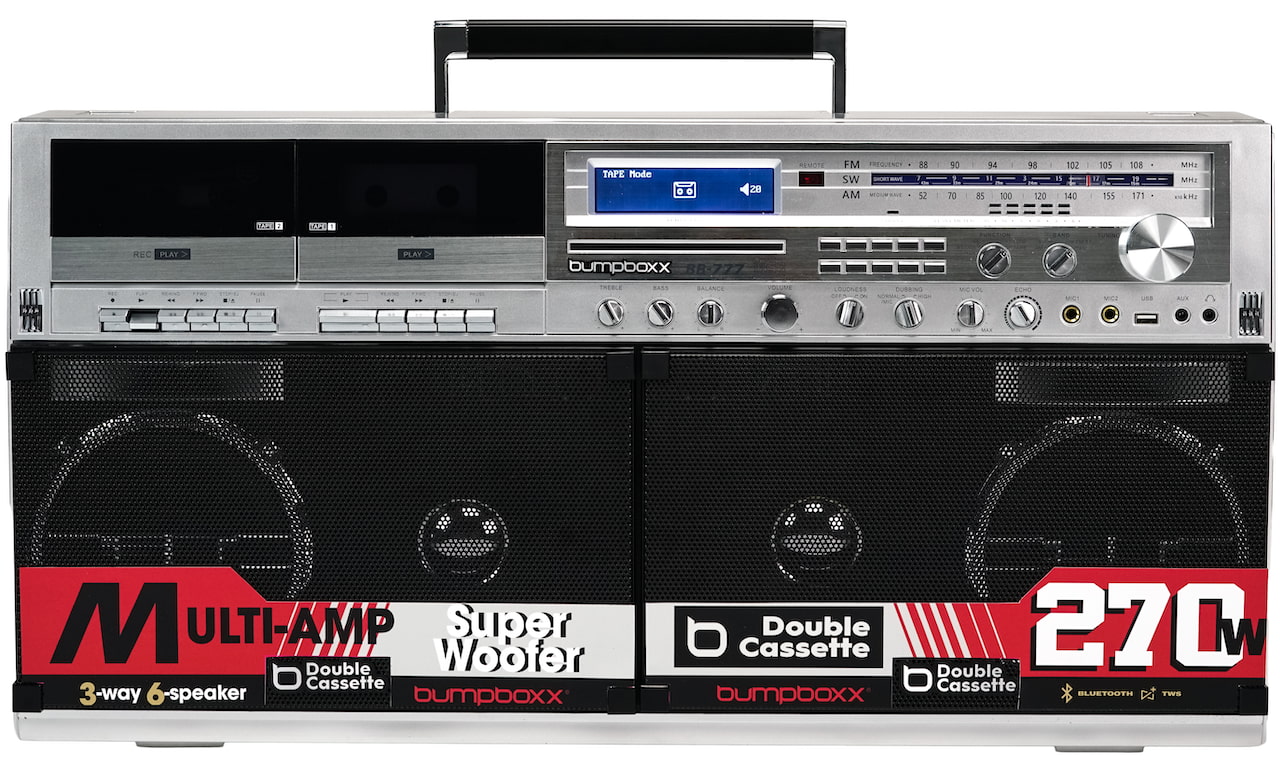
The retro audio wave isn’t slowing down—it’s getting louder. And heavier. Bumpboxx, founded in 2016, is leaning all the way in with the BB-777, a modern boombox modeled after the legendary Sharp GF-777. Developed over three years, this isn’t a gimmick. It’s a full-format system with dual cassette decks, a CD player, AM/FM/Shortwave radio, Bluetooth, and USB playback—built for people who still own music across multiple formats and want one machine that actually plays all of it.
Sharp GF-777
Boomboxes, also known as ghetto blasters, are suddenly back in rotation, especially with Gen Z and younger millennials. What has changed is perspective. A lot of them never carried one of these monsters loaded with eight D cell batteries in the middle of summer, so the idea feels fresh instead of punishing. We also never saw Radio Raheem sitting at a Starbucks drinking an oat milk macchiato while blasting Public Enemy, but here we are. The BB-777 keeps the scale and presence, adds modern power management and connectivity, and somehow makes this whole thing feel usable in 2026 without needing a chiropractor on standby.
Bumpboxx BB-777
Despite the oversized footprint, the BB-777 is not just for show. Bumpboxx built this around a high output speaker system with dual super woofers, precision tweeters, and a chambered bass enclosure, rated at 270 watts for room filling sound. If one is not enough, two BB-777 units can be paired for a larger stereo or party setup.
Format support is where this thing separates itself from most modern portable audio. Bluetooth streaming and USB playback are here, but so are a CD player, dual cassette decks, AM FM and shortwave radio, auxiliary input, and wired microphone support. It also goes a step further with direct USB recording from tapes, CDs, or radio broadcasts, which makes it more than just a playback device.
Power has been updated for 2026 reality. A TSA approved rechargeable battery is included with up to 15 hours of operation, and interchangeable battery packs allow for longer sessions without downtime. Multi voltage 100 to 240 volt AC compatibility means it can be used in multiple regions without needing external converters.
Advertisement
“We didn’t want to make a retro speaker,” says Rob Owens, Founder and CEO of Bumpboxx. “We wanted to build the boombox we grew up with, but engineered for today. Something powerful, reliable, and complete. The BB-777 is our way of proving that physical sound still matters.”
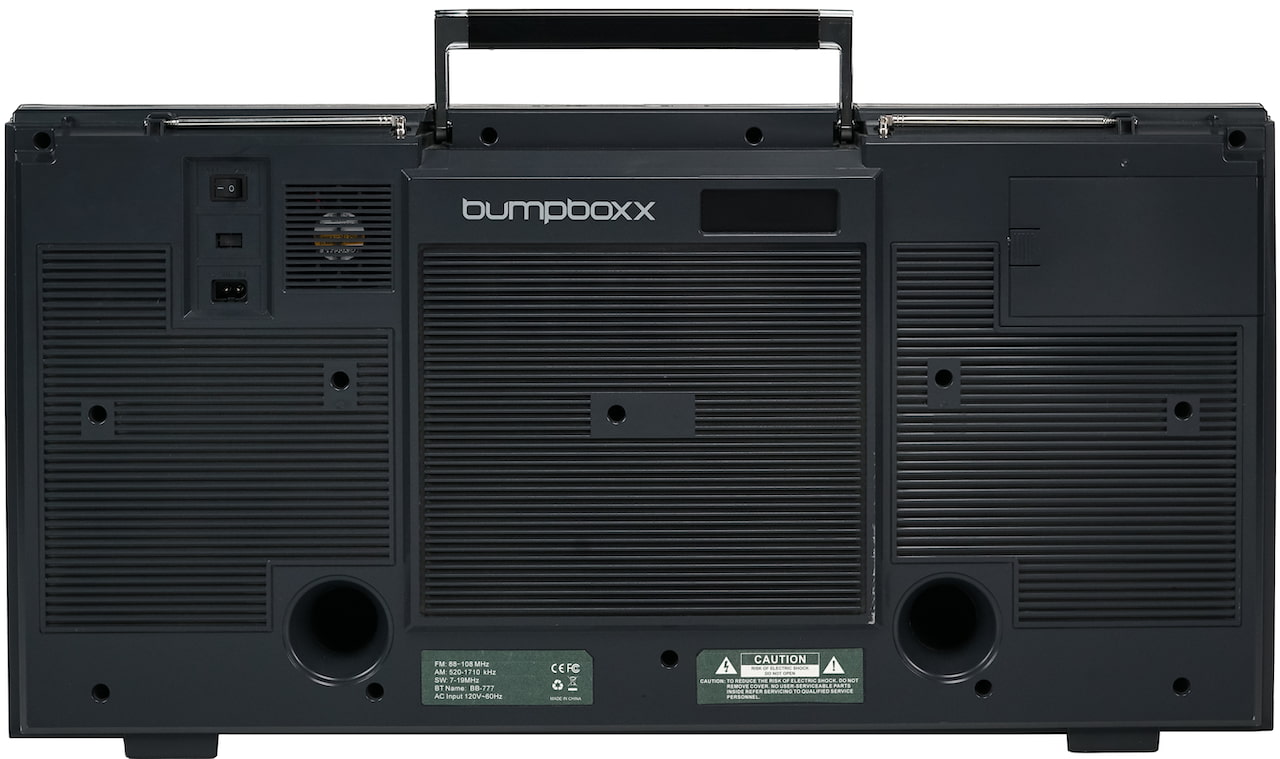
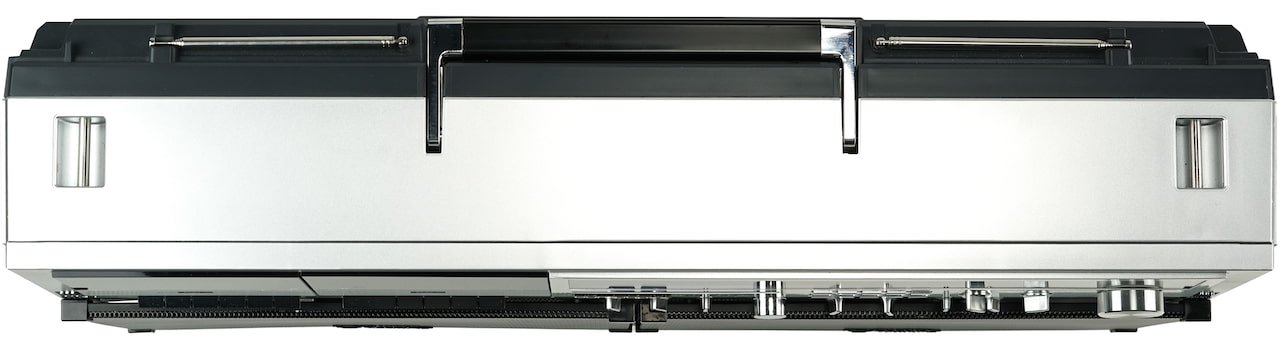
Bumpboxx BB-777 Views
Bumpboxx BB-777 Specifications
Bumpbox Model
BB-777
Product Type
Portable Boombox
Price
Starts at $649.00
Power Output
270W
Woofers
2 x 6.25″ Super Woofers with Independent Channel Gain for deep, controlled low-frequency performance
Midrange
2 x 6.25″ Coaxial Speakers for balanced mids and detailed clarity
Tweeters
2 Horn Tweeters for crisp, high-frequency projection
Ports
Yes
Bluetooth
Yes
USB Audio Playback
MP3, WMA, WAV, FLAC, and ACC
USB Recording
Yes – From Cassettes, CDs, Radio
Dual Audio Cassette Deck
Yes
CD Player
Yes
CD Disc Compatibility
CD, CD-R, CD-RW, and MP3
Radio
AM / FM / FM Stereo / Shortwave and Standard Wave (ST) Radio
Auxiliary Input
Yes – RCA
Microphone Input
2 Wired
Microphone Built-in
2
Headphone Output
Yes
Rechargeable Battery
TSA-Approved 97.6Wh Li-Ion
Battery Play Time
Up to 15 hours
Battery Charge Time
4-6 hours
Power Input
100-240V AC
Status Display
4.5” Dot Matrix LCD
Grilles
Removable Magnetic Front Grilles
Antenna
2 x Screw-On Telescoping Antennas
Shoulder Strap
Included
Dimensions
29.6 x 6.5 x 15 inches
Weight
28 pounds (12.7 kg)
The Bottom Line
The Bumpboxx BB-777 knows exactly what it is and doesn’t pretend to be anything else. At $649, it’s one of the very few modern systems that actually consolidates this many playback options into a single portable unit. Dual cassette decks, CD player, radio, Bluetooth, USB playback, and even direct USB recording from legacy formats—there’s nothing else at this price doing all of that in one box with this kind of output and physical presence. That’s the hook.
Who is this for? Not minimalists. Not the “everything lives on my phone” crowd. This is for people sitting on shelves of tapes and CDs who are tired of digging out multiple components just to play them. It’s also for a younger audience that wants something loud, visual, and different from another anonymous Bluetooth speaker. And yes, for anyone who understands that audio used to be something you carried, not just something you tapped on a screen.
What’s missing? Quite a bit if you look at it through a modern audiophile lens. There’s no Wi-Fi streaming, no AirPlay or Chromecast, no app ecosystem, no hi-res audio support, and no real ecosystem integration with anything else in your home. There’s also no mention of advanced codec support or a headphone output, which feels like an odd omission for something positioned as an all-in-one. And while it does a lot, it’s not trying to replace a dedicated hi-fi system in terms of refinement. If that lines up with how you actually listen to music, it makes a lot more sense than most of the “smart” gear being pushed right now. Fight the power.
Advertisement
Price & Availability
BB-777 is available on Kickstarter. Backers will have access to prices based on the reward level. Prices start at $649. Campaign details and launch updates are available on the official BB-777 campaign page.
Tracy Drinkwater engaging with visitors at the Seattle Universal Math Museum, which she founded. (SUMM Photo)
Tracy Drinkwater bristles when people — sometimes proudly — declare they “can’t do math.” No one, she notes, would similarly boast about being bad at reading or history. But she understands the sentiment.
Math education, she argues, was designed decades ago to produce NASA engineers, not curious learners — reflected in all-or-nothing grading and a fast-paced curriculum that pushes kids into calculus before high school graduation.
“It ends up making a lot of people feel really stupid,” Drinkwater said.
So the former middle and high school teacher set out to change that by creating math experiences that are playful, exploratory and pressure free.
In 2019, Drinkwater launched the Seattle Universal Math Museum, an initiative that began as a mobile program visiting classrooms, farmers’ markets and partnering with organizations such as the Pacific Science Center and the Museum of Flight. The museum, which goes by the clever acronym SUMM, recently opened its own facility on March 14 — also known as Pi Day in honor of the mathematical constant π.
For her STEM leadership, Drinkwater is being honored at the GeekWire Awards as STEM Educator of the Year, alongside Fidel Ferrer, founder of Portland’s Project LEDO. First Tech is sponsoring the award, and Drinkwater and Ferrer will be recognized at the GeekWire Awards event May 7 at Seattle’s Showbox SoDo.
Advertisement
SUMM has filled its space in Kent, Wash., with displays that cleverly tuck math concepts into puzzles, games and other activities. The museum has already welcomed 1,000 visitors and will host its first school field trip next month. It asks guests for a $5 donation.
SUMM guests try navigating the museum’s giant Etch A Sketch-like device as SUMM founder Tracy Drinkwater looks on. (SUMM Photo)
Exhibits include:
A giant Etch A Sketch-like device requires two people to work together — one controlling the X axis and the other the Y — to trace patterns such as Seattle streets and landmarks. The task incorporates concepts including linear equations and the Cartesian plane, making graphing tangible through a collaborative drawing challenge.
A motion-capture exhibit transforms visitors into living fractal trees. As participants move their arms, fingers and legs, the camera mirrors and multiplies the movements into branching, repeating patterns that look like cherry blossoms and other trees. The repetition is the essence of fractals, which have real-world applications such as measuring irregular coastlines.
An origami exhibit invites visitors to fold their own own paper cup, octagon, picture frame or other multi-sided shapes like cubes or tetrahedrons. The colorful, symmetrical creations are aesthetically beautiful while also demonstrating concepts of 3D shapes such as vertices, edges and faces.
Advertisement
Other displays explore lesser-known mathematical heroes; tessellations, which are patterns made from repeating identical tiles; and a video game that creates Sierpiński triangles.
“We’re trying to provide the setting for that kind of joyous math that gets people hooked,” Drinkwater said. If you can spark a child’s interest in math at a space like SUMM, she added, that excitement will help them push through the harder work of school math.
SUMM has a 15-person staff and a one-year, rent-free lease at Kent Station. The nonprofit is supported by donations from individuals and foundations, and is holding a public fundraising event May 8 in Seattle. It also receives state and King County grants. When SUMM visits schools, it charges on a sliding scale to ensure access to lower-income communities.
“It’s been a really amazing journey,” Drinkwater said, encouraging people to visit. “And if you like it, donate, because funding is the only thing holding us back.”
Impacted employees reportedly received retrenchment notices on Apr 15
Global real estate consultancy JLL has laid off some staff in Singapore following a recent organisational restructuring exercise.
According to a report from The Straits Times, the firm confirmed the restructuring but did not disclose the number of roles impacted.
A former employee who spoke to the publication said that those affected, including colleagues in the US market, received retrenchment notices on Apr 15. Staff were given the option of an early release or serving out their full notice period.
Separately, some JLL employees have also shared on LinkedIn about the layoffs. One post even reportedly stated that at least four employees from the same department were let go.
Advertisement
A spokesperson from JLL told The Straits Times that the restructuring is part of a global effort to streamline operations and position the company for long-term growth amid shifting conditions in the real estate market.
“As a global company, JLL undertakes organisational realignment to streamline operations and position the business for long-term growth in a rapidly evolving real estate services market,” the spokesperson said.
“As part of this broader transformation across multiple markets, we have made the difficult decision to restructure certain functions in Singapore over recent weeks, which has impacted a limited number of roles.”
The firm added that it has notified the Ministry of Manpower and complied with Tripartite Guidelines on responsible retrenchment.
Advertisement
Vulcan Post has reached out to JLL for comments.
Read other articles we’ve written on Singaporean businesses here.
Nahla Davies looks at the blind spot between information security controls and genuine data integrity governance.
There’s a strange kind of confidence that comes with getting ISO 27001 certified. The audit’s done, the certificate’s on the wall, and suddenly everyone in the building sleeps a little better at night. It feels like you’ve handled the security question once and for all.
But here’s what nobody talks about at the celebration dinner: most of the data risks that actually burn companies in 2026 have very little to do with whether you passed an audit. They’re messier than that.
They live in the mundane, everyday chaos of how teams create, move, copy and forget about data. And that’s exactly where ISO 27001, for all its value, starts running out of answers.
Advertisement
The certification covers the framework, not the mess
ISO 27001 is genuinely useful. Let’s get that out of the way. It gives organisations a structured approach to information security management, and it forces leadership to actually think about risk in a systematic way. For companies that had nothing before, it’s a massive step forward.
But the standard was designed to assess whether you have the right policies, controls and processes in place. It’s checking that the architecture exists. What it can’t do is follow your data around on a Tuesday afternoon when someone in marketing copies a client list into a personal Google Sheet to ‘just quickly check something’.
That’s where the gap lives. The certification tells auditors you’ve built the walls. It doesn’t tell anyone what’s happening inside the rooms. And in most organisations, what’s happening inside the rooms is borderline chaotic.
Think about how data actually moves through people in a modern company. It starts in one system, gets exported into a spreadsheet, emailed to a colleague, uploaded to a shared drive, duplicated across three departments, and eventually forgotten in a folder nobody’s opened since last quarter. None of that necessarily violates your ISO 27001 controls. All of it creates risk.
Advertisement
The standard asks whether you have an asset inventory and data classification policy. Most certified companies do. But the reality of enforcing classification at scale, across thousands of files and dozens of tools, is a completely different problem. It’s like having a fire evacuation plan pinned to the wall while half the exits are blocked with furniture. Technically compliant, but practically dangerous.
Data governance is the part everyone skips
There’s a reason data governance keeps coming up in security conversations, even though it sounds painfully boring. It’s because governance is the layer that sits between policy and reality. It’s the part that answers questions like: who actually owns this dataset? When was it last reviewed? Does anyone know it’s still being stored in three places?
ISO 27001 touches on some of this. Annex A has controls around information classification, access management and asset ownership. But the standard treats these as boxes to check during an audit cycle. In practice, data governance requires constant, active attention. It’s operational, not periodic.
Most companies that get certified build their documentation, assign their roles, and move on. Six months later, the data landscape has shifted entirely. New tools get adopted, teams reorganise, people leave and their access lingers. The certificate stays valid. The risks multiply.
Advertisement
And this is particularly true with unstructured data, which makes up the vast majority of what most organisations hold. Emails, documents, chat logs, shared files. ISO 27001 doesn’t have a great answer for the sheer volume and unpredictability of unstructured data. It assumes you can classify and control it. Anyone who’s tried knows that’s optimistic at best.
What’s really needed alongside certification is a living, breathing data governance practice. One that maps where sensitive data actually resides (not just where it’s supposed to), monitors how it moves, and flags when something drifts outside acceptable boundaries. That’s not an audit exercise. It’s an ongoing operational function.
Compliance creates a floor, not a ceiling
There’s a broader point here that applies beyond ISO 27001. Compliance frameworks, by their nature, set a minimum bar. They define what ‘acceptable’ looks like at a given point in time, even with edge cases like using AI for software testing. But threats evolve, technology changes, and the way people work shifts constantly. A standard that’s reviewed every few years simply can’t keep pace with how quickly the data landscape moves.
This is especially relevant as AI tools become embedded in everyday workflows. Employees are feeding company data into large language models, using AI assistants to summarise internal documents, and generating content based on proprietary information. ISO 27001 wasn’t written with that reality in mind. The 2022 update made strides, sure, but the speed of AI adoption has outpaced what any standard can reasonably address.
Advertisement
Companies that treat certification as the finish line tend to develop blind spots in exactly these areas. They’re compliant on paper but exposed in practice. The data risks they face aren’t coming from sophisticated external attacks (though those matter too). They’re coming from inside the house, from the everyday, unglamorous ways people interact with information.
The smartest organisations use ISO 27001 as a foundation and then build upward. They invest in data discovery tools that map shadow data. They implement real-time monitoring for sensitive information. They train employees not just on policy, but on the practical habits that keep data from wandering into places it shouldn’t be. Certification becomes the starting point of the security conversation, not the conclusion.
Final thoughts
ISO 27001 deserves its reputation as a serious, credible framework. Getting certified takes real effort, and it signals that an organisation takes information security seriously.
But there’s a growing disconnect between what the certificate proves and what modern data environments actually demand. The biggest risks today come from data sprawl, from duplication and drift and the quiet entropy of information that nobody’s actively managing.
Advertisement
Addressing that takes more than a framework. It takes a culture of continuous governance, practical tooling, and an honest look at the gap between how data should behave and how it actually does. The certificate opens the door. What you build behind it is what actually matters.
Nahla Davies is a software developer and tech writer. Before devoting her work full time to technical writing, she managed – among other intriguing things – to serve as a lead programmer at an Inc 5,000 experiential branding organisation, where clients include Samsung, Time Warner, Netflix and Sony.
Advertisement
Don’t miss out on the knowledge you need to succeed. Sign up for the Daily Brief, Silicon Republic’s digest of need-to-know sci-tech news.
Enterprise technology failures are largely invisible. Research from TeamViewer, based on a global survey of 4,200 managers and employees, finds that the majority of digital dysfunction never reaches the IT help desk.
Employees work around slow applications, failed logins, and intermittent glitches rather than reporting them, leaving organizations without an accurate picture of how their technology is performing. The cumulative cost is significant: employees lose an average of 1.3 workdays per month to digital friction, with impacts ranging from delayed projects and lost revenue to increased employee turnover.
The research, which surveyed managers and employees across nine countries, confirms what many have long suspected: the productivity loss from digital friction is significant, and most of it never surfaces in an IT support queue, says Andrew Hewitt, VP of strategic technology at TeamViewer.
Advertisement
“Enterprise outages are visible because they trigger clear, system-level failures,” Hewitt says. “But much of the real disruption happens earlier, in the form of digital friction: slow apps, login issues, or intermittent glitches that don’t cross alert thresholds. These smaller issues often go unreported or are normalized by employees, even though they quietly drain productivity.”
What is digital friction and why does it go unreported?
The most common sources of friction — connectivity failures, software crashes, hardware problems, and authentication issues — aren’t edge-case scenarios, but everyday experiences employees have learned to absorb without escalating. Connectivity problems were the most widespread, with nearly half identifying them as the top productivity killer among common technology issues.
That tendency to absorb rather than report is central to the problem. Many workers don’t trust their IT team to resolve issues quickly or effectively, so when a login fails or an application stalls mid-task, the path of least resistance is to restart the device, switch tools, or use a personal phone.
“Employees are under more pressure than ever to prove output,” Hewitt says. “When reporting feels unlikely to result in a quick resolution, it creates a false sense of stability at the system level while the employee experience quietly deteriorates.”
Advertisement
How much productivity does digital friction cost organizations?
The business consequences extend beyond inconvenience. Many organizations report delays in critical operations, revenue loss, and lost customers as a result of IT dysfunction. Most respondents lose time each month, and few expect improvement, citing increasing complexity of workplace technology as a primary concern.
The human cost runs parallel. Workers link digital friction to frustration, decreased motivation, and burnout, and many believe it contributes to turnover, with onboarding replacements stretching to eight weeks or more.
“Employees are happiest when they feel productive and accomplished at the end of the day,” Hewitt says. “When people can’t make progress in their day-to-day work, frustration builds and burnout follows. Great technology might not be a main attractor of talent, but bad technology can certainly play a role in driving it away.”
Why employees use personal devices and unauthorized tools instead of reporting IT problems
When workplace technology consistently fails to meet employee needs, workers find alternatives, with a substantial share of respondents admitting to using personal devices or unauthorized applications as workarounds. That’s the entry point for shadow IT, or the use of unapproved hardware, software, or cloud services outside IT’s visibility and control. While employees turn to these tools simply to stay productive, they introduce security vulnerabilities, data leakage risks, and compliance gaps that IT teams may not discover until a breach occurs.
Advertisement
“Quite simply, it demonstrates that the IT environment is not meeting the employees’ needs,” Hewitt said. “While this helps maintain short-term productivity, it introduces significant risks and pushes work outside of IT’s visibility and control.”
TeamViewer ONE addresses this by combining remote connectivity with real-time endpoint monitoring, giving IT teams the ability to detect and resolve device and application issues before employees reach for an alternative. When the underlying environment is stable and support is fast, the impulse to work around it diminishes.
How fragmented IT infrastructure creates blind spots across devices, apps, and networks
Addressing digital friction at scale requires more than faster help desk response times. Traditional metrics such as mean time to resolution and ticket volume capture only a fraction of actual issues. A more complete picture requires measuring lost time, interrupted workflows, and employee sentiment across devices, applications, and network environments.
“Leaders need to move beyond measuring performance through IT tickets alone,” Hewitt said. “Performance should be viewed through the lens of employee experience and real-time digital workplace data.”
Advertisement
Fragmented infrastructure makes this difficult. When devices, applications, and networks operate in separate silos, IT teams struggle to trace root causes or identify systemic issues before they spread, often responding to symptoms rather than underlying problems.
TeamViewer ONE is designed to close that gap, integrating digital employee experience analytics, remote support, and device management into a single platform. Instead of piecing together signals from disconnected tools, IT teams get a consolidated view of endpoint health, application performance, and network conditions across the entire organization.
How organizations can shift from reactive IT support to proactive system monitoring
Achieving proactive IT is not a single-step transformation. Hewitt describes it as a progression: starting with endpoint management and security, building toward real-time visibility into the digital employee experience, and ultimately using automation and AI to resolve issues before they reach employees.
TeamViewer AI is built to support each stage of that progression, using continuous monitoring to surface anomalies and correlate signals across the digital environment, identifying patterns of poor experience before they escalate. When issues are detected, it suggests remediations, generates scripts to fix problems autonomously, and handles routine tasks such as common troubleshooting without requiring IT intervention, shifting the workload from reactive firefighting toward proactive oversight.
Advertisement
And while AI’s effectiveness depends on the completeness of the data it works with, consolidating onto a platform like TeamViewer ONE removes that limitation by giving AI a complete, real-time data foundation to work from.
How system performance lays the foundation for productivity, retention, and competitive advantage
TeamViewer ONE isn’t a wholesale replacement of existing IT infrastructure, but a unifying layer that connects insight with action, which enables organizations to ramp up productivity, improve retention, and ultimately realize a significant competitive advantage. It begins with visibility into what is actually causing friction across their environment. From there, leaders can use that data to prioritize fixes, and then scale remediation through automation as confidence and capability grow.
“Reducing digital friction isn’t about overhauling everything at once,” Hewitt said. “Leaders should start small, gain visibility into what’s actually causing friction, fix the biggest pain points, then scale those improvements through automation and AI. Even incremental progress can make an impact on employee engagement and productivity.”
Sponsored articles are content produced by a company that is either paying for the post or has a business relationship with VentureBeat, and they’re always clearly marked. For more information, contact sales@venturebeat.com.
Spotify is adding “Verified by Spotify” badges to distinguish human artists from AI-generated personas, using signals like linked social accounts, consistent listener activity, merchandise, and concert dates. The BBC reports: The world’s most-used music streaming service said the ‘Verified by Spotify’ text and green checkmark icon would appear next to artist names when they meet “defined standards demonstrating authenticity.” This could include having linked social accounts on their artist profile, consistent listener activity or other “signals of a real artist behind the profile,” the company said, such as merchandise or concert dates.
In its blog post, Spotify said “more than 99%” of the artists listeners actively search for will be verified, representing “hundreds of thousands of artists.” It said the process would prioritize acts with “important contributions to music culture and history”, rather than “content farms,” with the platform rolling out verification and badges over the coming weeks.
Oura just announced a couple of new features that keep an eye on hormonal health for women. The pre-existing Cycle Insights feature, which tracks menstrual cycles, will now take hormonal birth control methods into consideration. The smart ring maker says that this “first-of-its-kind experience” will help users see how these methods can impact overall biometric data.
This has been designed to provide “personalized guidance during complex hormonal changes,” so it can integrate data from over 20 combinations of birth control methods. These include pills, patches, IUDs and implants. Users should be able to use Cycle Insights to gauge whether or not these methods are impacting temperature patterns, sleep and recovery, in addition to keeping an eye on bleeding and various potential side effects.
Advertisement
There’s also a partnership component here. Oura has teamed up with virtual health platform Twentyeight Health. The pair developed a portal within the smart ring app that users can tap to “seamlessly connect” with a licensed health provider to discuss birth control options, and they can provide new prescriptions.
This is, however, a post-Roe v. Wade United States. There are valid fears that period-tracking data could be used in court cases. In other words, there are more than a few reasons why people might consider keeping this kind of stuff private and away from the prying eyes of tech companies.
Oura has also announced a new Menopause Insights feature that tracks quality of life across 22 potential symptoms. The app includes a questionnaire that provides a “fully personalized, on-demand explanation of results, based on personal response and longitudinal biometric data.” The company promises this can give users “actionable results” that can inform lifestyle changes.
Both of these tools will be available globally, with a rollout beginning on May 6. There is a spot of bad news here, however, as these features are only for Oura Ring 3 and 4. The Oura Ring 4 is likely the best smart ring out there, for those considering wading into the wearable waters.
Over a decade ago, Microsoft was getting set to release its new Xbox One console. In the lead-up to launch day, a bunch of rumors began swirling about some of the online requirements the console would come with. Details weren’t to be found, so the public was left to speculate what these requirements would entail. Would the console always need to be online when launching games? Would it need to check in online on a certain cadence for games to work, such as every day? Every 30 days?
Microsoft did very little to calm the waters in all this speculation. Very little came out from the Xbox team prior to launch, and what did come out was often confusing. What became very obvious, however, was that the lack of clear and direct messaging from Microsoft made a bad situation much worse. The backlash to the requirement rumors was severe and Xbox largely ended up scrapping them.
Fast forward to the present and the internet has exploded the past few days with claims that an update pushed to PlayStation consoles has introduced a 30 day online check in requirement for newly purchased games.
Some PlayStation users have noticed a new online DRM policy for digital games purchased on the PlayStation Store: newly purchased digital games now display a “Valid Period” tag showing a start date, an end date, and a countdown timer. If the console does not connect to the internet within 30 days, the game’s license reportedly expires, and the title becomes unplayable until an online connection is restored.
The story broke over the weekend through Lance McDonald, the well-known modder who managed to patch Bloodborne to run at 60 frames per second. He posted on X: “Hugely terrible DRM has now been rolled out to all PS4 and PS5 digital games. Every digital game you buy now requires an online check-in every 30 days. If you buy a digital game and don’t connect your console to the internet for 30 days, your license will be removed.
Advertisement
We thought about reporting this story as soon as McDonald surfaced it. However, several users also swore they saw nothing of the sort in their libraries, so we waited. Thus far, Sony has not made any official public statement, but a few hours ago, a PlayStation Support assistant confirmed to a user that the 30-day timer is not a bug at all.
That support assistant being referenced is a bot, however, not a human being behind a keyboard. You can see the response it gave in the screenshot below.
That is, at the time of this writing, the most that Sony has said about whatever the hell is going on here. As a result, all kinds of people, big and small within the gaming community, are losing their shit over this new “online DRM requirement” for existing consoles that previously didn’t have it. Oh, and it’s a requirement that Sony mocked Microsoft for trying to require way back in 2013 before the backlash.
The silence is, as they say, deafening. Is this fully intentional? Not all the reporting suggests that at all. Other reports indicate that this is just a bug in the update and this was not intended to be rolled out at all.
Shortly after the issue surfaced, video game preservation site Does it play? weighed in on the matter. It reported hearing from an anonymous insider that the timer was actually just a bug. “From what we gathered, Sony accidentally broke something while fixing an exploit. They’ve known about the confusing UI for a while, but didn’t see it as urgent,” their X post read.
However, many noted that an accidental deployment still implies Sony was testing the concept, since the interface had already been built. Throughout the confusion, Sony has yet to provide an official comment regarding the issue.
Advertisement
That last sentence is the most important one. Hey, Sony: what the actual hell is going on here?
The fact that all of this rumor, speculation, and angst has gone on for at least a couple of days now without a single word being uttered directly from Sony is remarkably stupid. The waters need to be calmed and that’s only going to happen by the company speaking up. Was it a bug? Cool, say so and let’s move on. Is the online requirement DRM now a thing? Much less cool, but at least we’ll know where the company stands (though, then we can start talking about Sony changing its policies on consoles after they are sold).
What can’t happen is this vacuum of information because Sony wants to give the public the silent treatment. That’s just bad business.
The U.S. Pentagon in Washington, D.C. (BigStock Photo)
Microsoft and Amazon joined other leading artificial intelligence companies in signing deals to deploy their technology in classified Pentagon networks, the Defense Department announced Friday, accelerating a push to build what the military is calling an “AI-first fighting force.”
The agreements — which also include OpenAI, Google, Nvidia, SpaceX and the startup Reflection — will give those firms’ AI systems access to the military’s most classified network environments, known as Impact Level 6 and Impact Level 7. The Pentagon said the technology will be used to analyze data and improve battlefield decision-making.
“Together, the War Department and these strategic partners share the conviction that American leadership in AI is indispensable to national security,” the Pentagon said in a statement, using the Trump administration’s preferred name for the Defense Department.
The Pentagon says the effort is already well underway. More than 1.3 million Defense Department personnel have used GenAI.mil, the military’s official AI platform, generating tens of millions of prompts and deploying hundreds of thousands of agents in just five months, according to the department. Officials say the technology has cut some tasks from months to days.
The deals come as the Pentagon is locked in a legal battle with Anthropic, one of the nation’s leading AI labs, which had sought guarantees its technology would not be used for mass domestic surveillance or fully autonomous weapons. The Defense Department moved to blacklist Anthropic earlier this year, calling the company a national security risk — a designation Anthropic is contesting in court.
Advertisement
On Thursday, Defense Secretary Pete Hegseth called Anthropic CEO Dario Amodei an “ideological lunatic” and slammed the company during a Senate Armed Services Committee hearing.
Bloomberg reported that the Pentagon negotiated its deal with Amazon Web Services late into Thursday night, according to two officials briefed on the talks.
“We look forward to continuing to support the Department of War’s modernization efforts, building AI solutions that help them accomplish their critical missions,” AWS spokesman Tim Barrett said in a statement.
Hundreds of Google employees sent a letter to company leadership this week urging them to refuse to let the Pentagon use its AI on classified data.
Advertisement
“We want to see AI benefit humanity; not to see it being used in inhumane or extremely harmful ways,” they wrote, according to The Washington Post.

































































You must be logged in to post a comment Login