Baidu, ByteDance, Tencent and MiniMax have all released OpenClaw-powered apps in recent weeks.
Alibaba is the latest Chinese tech giant to launch an OpenClaw-powered app, as state officials in the country move to curb usage of such apps amid growing cybersecurity concerns.
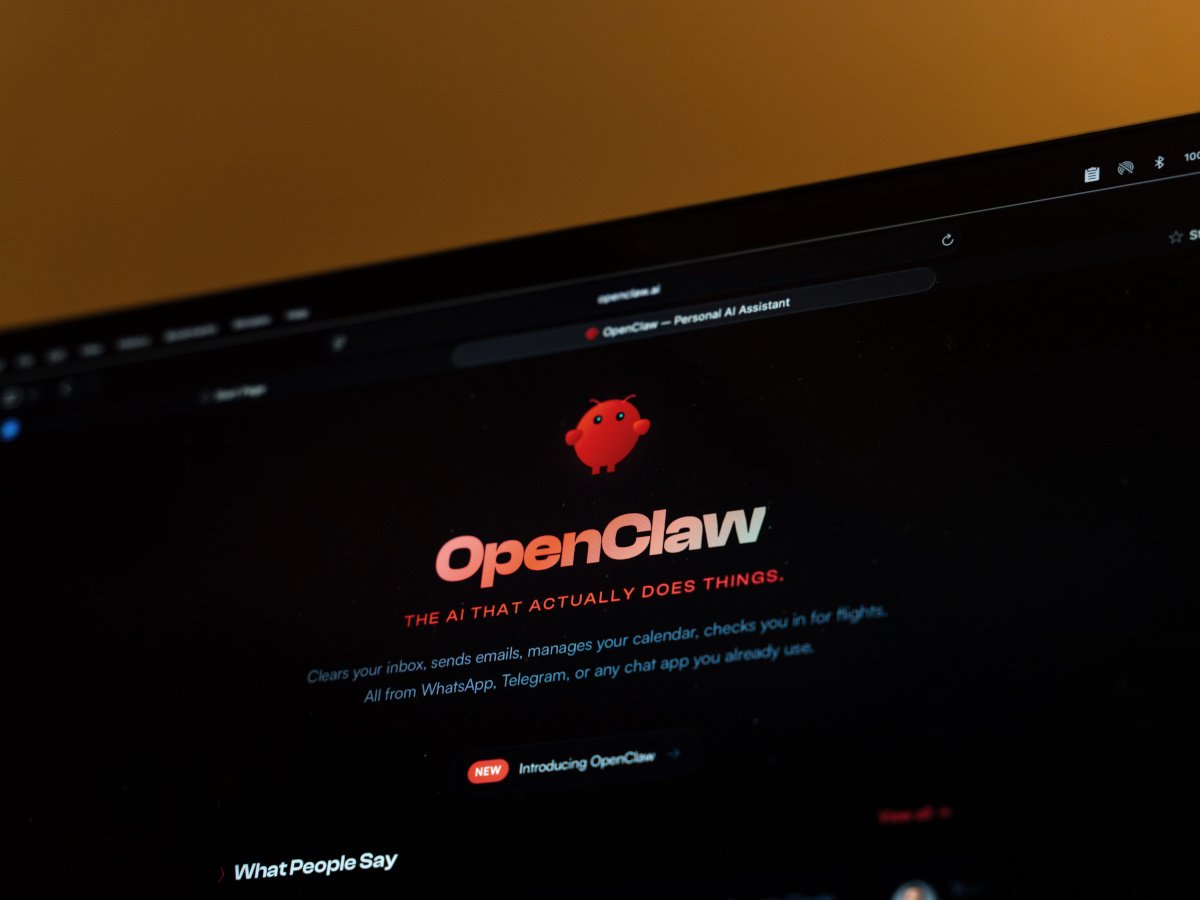
Since launching last November, OpenClaw has found itself a large and growing fanbase worldwide. The open-source AI model is easy to use, with simple use cases such as running communication apps, clearing inboxes, sending emails and managing calendars.
Latest figures show that the project has crossed more than 300,000 GitHub stars, becoming the most starred non-aggregator software project ever on the platform in just four months.
Advertisement
The low barrier to entry to use OpenClaw has made it a darling in China, pushing people to experiment with agentic AI. Dubbed ‘raising lobsters’, the agentic AI frenzy is pushing businesses in the country to launch new products built using OpenClaw.
Alibaba has just debuted ‘JVS Claw’, a mobile app that helps Android and iOS users without coding knowledge to install and deploy OpenClaw in minutes. The company’s enterprise mobile office platform is also integrated with the open-source project.
Earlier this week, Baidu released its own workspace management plug-in tool with OpenClaw called ‘DuClaw’. Last month, the company launched a program to allow developers to deploy OpenClaw on Baidu’s AI cloud infrastructure.
Meanwhile, Tencent launched ‘WorkBuddy’, an AI agent for workplace tasks powered with OpenClaw, and MiniMax, Zhipu and ByteDance each launched their own integrated products.
Advertisement
China has a market hungry for agentic AI, especially as enterprises lead its uptake and consumers experiment with the technology. US AI giants such as Anthropic, with its Cowork offering, and OpenAI don’t provide their services commercially in China, leaving even more space for Chinese companies attempting to take advantage of the interest.
The strong agentic AI uptake has moved authorities in Beijing to restrict state-run enterprises and government agencies from running OpenClaw apps on office computers, fearing potential cybersecurity risks.
However, the fears are not widespread, with some municipalities offering subsidies for deploying the AI platform, according to Bloomberg.
Meanwhile, Meta has bought Moltbook, a Reddit-style social media network created with OpenClaw where only AI agents can post, and humans can observe. The platform went viral after observers watched as AI agents generated a new religion.
Don’t miss out on the knowledge you need to succeed. Sign up for the Daily Brief, Silicon Republic’s digest of need-to-know sci-tech news.
Oracle’s Cloud Experience Center in downtown Seattle. (GeekWire File Photo / Todd Bishop)
Oracle is laying off 491 employees in Washington state, according to a filing Tuesday from the state Employment Security Department.
The cuts impact workers at two Seattle offices as well as remote employees and take effect June 1. The cloud and database giant stated in its WARN letter that the offices will not be closing.
Earlier this month, Bloomberg and others reported that Oracle was planning to cut thousands of jobs across the company as it tries to fund the high-cost deployment of new data centers. The reductions are also the result of AI-driven efficiencies within the organization, according to comments by Mike Sicilia, Oracle’s co-chief executive, in an earnings call March 10.
“The use of AI coding tools inside Oracle is enabling smaller engineering teams to deliver more complete solutions to our customers more quickly,” Sicilia said, according to the publication CIO.
Oracle declined to comment on the newest job cuts.
Advertisement
The Washington layoffs affect more than 230 software developers across multiple seniority levels and an additional 48 employees with the title of software development. The cuts include workers in senior director and vice president roles, as well as managers, product developers, product managers, program managers, site reliability developers, technical analysts, user experience developers and others.
The layoffs are the latest in a series of Oracle reductions. In August the company laid off 161 workers, followed by 101 employees in October. By last fall, Oracle had approximately 3,800 employees in the Seattle area, according to LinkedIn.
Oracle has grown its presence in the region over the past decade, tapping into the area’s engineering talent pool as it battled Amazon and Microsoft in the cloud. In recent years, the company has establishedpartnerships with both Seattle-area giants.
Now all three, plus other tech companies, have been undergoing multiple rounds of job reductions, with recent Meta cuts impacting 168 Washington workers and T-Mobile confirming new layoffs last Friday.
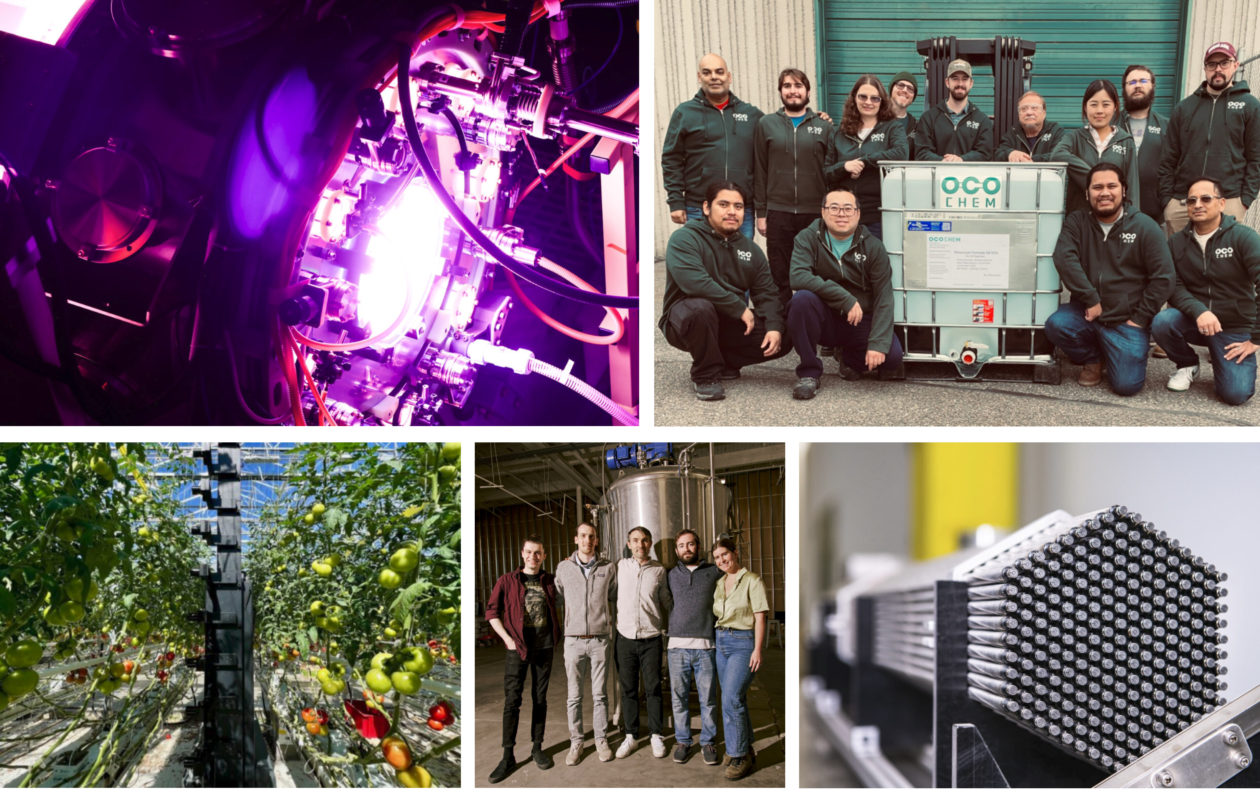
Finalists for GeekWire’s 2026 Sustainable Innovation Award, from left going clockwise: Helion Energy fusion device (Helion Photo), OCOchem team (OCOchem Photo), TerraPower’s mock fuel rods (TerraPower Photo), Ravel team (Ravel Photo), and IUNU’s image capturing system. (IUNU Photo)
Climate change is battering the earth with record-setting high temperatures, more powerful storms and devastating wildfires. A slate of cutting-edge sustainability companies are fighting back with technologies that aim to curb carbon emissions and help humanity navigate a change world.
This award, presented by Amazon, recognizes the Pacific Northwest’s leaders in this space. The Sustainable Innovation Award finalists this year are Helion, IUNU, OCOChem, Ravel and TerraPower.
Now in its 18th year, the GeekWire Awards is the premier event recognizing the top leaders, companies and breakthroughs in Pacific Northwest tech, bringing together hundreds of people to celebrate innovation and the entrepreneurial spirit. It takes place May 7 at the Showbox SoDo in Seattle.
Carbon Robotics, an ag-tech company building weed-killing machines that use artificial intelligence and computer vision to recognize and zap unwanted plants, won the category last year.
Continue reading for information on this year’s finalists, which were chosen by a panel of independent judges from community nominations. You can help pick the winner: Cast your ballot here or in the embedded form at the bottom of this story. Voting runs through April 16.
Advertisement
Helion Energy has spent 13 years working to replicate the physics that power the sun and stars — pursuing nearly limitless clean energy for the grid. The Everett, Wash.-based company is currently developing its seventh-generation prototype while simultaneously building what it hopes will be the world’s first commercial fusion plant, in Eastern Washington.
Backers include OpenAI CEO Sam Altman, and Microsoft has signed a deal to purchase power from that first facility. Helion has raised more than $1 billion toward its goal — though whether it can deliver remains an unanswered question.
The Seattle ag tech startup IUNU wants to bring computer vision and AI to the commercial greenhouse — deploying autonomous rail-mounted cameras and canopy-level sensors that can spot early signs of disease, track plant growth, and tell growers exactly what to do about it.
Pronounced “you-knew,” IUNU was founded in 2013 by CEO Adam Greenberg, the son of a botanist and co-founder of a clean water startup called Pure Blue Technologies. The company has deployed its technology across six countries, has additional offices in Canada and Netherlands, and has raised $60 million.
Advertisement
Unwanted carbon dioxide has a higher purpose thanks to OCOchem. The Richland, Wash., startup is taking water and captured industrial CO2 and turning them into chemicals that can be converted into clean-burning hydrogen fuel, used in aviation deicers, or fed to microorganisms that biosynthesize proteins.
The company has raised $11.2 million from investors plus additional grant dollars, and has multiple pilot projects underway as it scales up production. Todd Brix launched OCOchem in 2017 after a nearly two-decade career at Microsoft.
Seattle’s Ravelhas developed a proprietary, planet friendly technology that unwinds the components of fabric blends through a process it calls “purification recycling.” Ravel’s target is elastane, which is known as spandex or Lycra and added to essentially every category of apparel.
The startup recovers the elastane, turning it into cost-competitive, recycled plastic pellets that serve as the raw material for making polyester fabrics. Ravel launched in 2019 and last year announced a pre-seed funding round.
Advertisement
In March, TerraPower became the first next-generation nuclear company in the U.S. to receive federal construction approval — a milestone for the Bill Gates-backed startup, which is engineering smaller, modular reactors designed to be assembled from factory-built components. Each reactor generates 345 megawatts and pairs with a molten salt energy storage system that can supply additional power.
The Bellevue, Wash., company broke ground on a demonstration plant in Kemmerer, Wyo., in 2024 and aims to start splitting atoms there by the end of 2030. TerraPower has raised $1.66 billion from investors and secured a $2 billion federal grant.
The event will feature a VIP reception, sit-down dinner and fun entertainment mixed in. Tickets go fast. A limited number of half-table and full-table sponsorships available. Contact events@geekwire.com to reserve a spot for your team today.
Advertisement
(function(t,e,s,n){var o,a,c;t.SMCX=t.SMCX||[],e.getElementById(n)||(o=e.getElementsByTagName(s),a=o[o.length-1],c=e.createElement(s),c.type=”text/javascript”,c.async=!0,c.id=n,c.src=”https://widget.surveymonkey.com/collect/website/js/tRaiETqnLgj758hTBazgd5M58tggxeII7bOlSeQcq8A_2FgMSV6oauwlPEL4WBj_2Fnb.js”,a.parentNode.insertBefore(c,a))})(window,document,”script”,”smcx-sdk”); Create your own user feedback survey
Although many of us associate hotels with cushy business trips or relaxing holiday getaways, frequent travelers will know that it does come with its own set of issues. While some minor annoyances, like not being able to stream your content, can be solved by bringing a fire TV stick, other problems, such as bed bugs, are harder to solve.
Despite being around for millions of years, bed bug infestations are still a recurring problem, even for expensive hotel chains. And, as anyone who has to deal with them can tell you, you may need to hire professional help if they ever reach your home. Because of this, it’s best to follow the standard bed bug prevention protocol, such as using suitcase stands and inspecting the room with tools like UV flashlights. If you’re looking for one such tool that is affordable, Harbor Freight sells a UV flashlight for under $8 that might be perfect for your next business trip.
Harbor Freight has been known to sell well-rated flashlights, with most of them under the Braun label. Priced at $7.99, the Braun UV Leak Detector LED Flashlight can generate 395 nM UV light and is the cheapest UV flashlight on offer at Harbor Freight as of March 2026. Apart from helping you spot pests, UV flashlights can also be used to detect all kinds of stains, leaks, and even counterfeit currency, which could all be valuable uses when you’re on the road or at home. Here’s what else you should know.
Advertisement
The Braun UV flashlight is rated highly by those who have bought it
Running on three AAA batteries, Harbor Freight says this flashlight has a 5.5-hour total run time, so it can be convenient when traveling to locations with no sockets or portable chargers. For an improved grip, this flashlight has both a knurled body as well as a ridged collar. It has a 10-foot range, but this model can’t be used as as normal flashlight and it doesn’t have the standard white light.
Advertisement
As of this writing, the Braun UV Leak Detector does not have a significant number of reviews, so it’s hard to say what customers think of it. For what it’s worth, however, the four buyers who have left reviews all rated it 5 stars, with one reviewer saying it was “not super bright but gets the job done.” If you want a tool that has both UV and white lights, Braun sells a more compact UV flashlight that can also double as a normal flashlight. For $24.99, the Braun 400 Lumen Rechargeable Penlight with UV Light is highly rated and can run an extra half hour more than the $8 UV model. Of course, these extra features are going to cost you.
Man City vs. Liverpool will air in the US on ESPN and ESPN Plus, and is also available via ESPN Select or ESPN Unlimited.
The pick of this weekend’s FA Cup quarterfinals sees Man City host Liverpool in a blockbuster cup clash at the Etihad Stadium.
Advertisement
Man City’s goal with this last-eight faceoff is to move a step closer to claiming the prize following last month’s Carabao Cup triumph over Arsenal. City’s route to the quarterfinals has seen it beat Exeter and Salford before easing past Premier League Newcastle 3-1 at St. James’ Park in the previous round.
Liverpool, meanwhile, comes into this cup tie looking to get back to winning following their Premier League defeat to Brighton before the international break. With the Reds out of the EPL title race and also eliminated from the Champions League, this tournament provides their final opportunity to claim the silver cup this season, as well as ease the mounting pressure on manager Arne Slot amid what has so far been a disappointing campaign.
Manchester City takes on Liverpool at the Etihad Stadium on Saturday. Kickoff is set for 12:45 p.m. BST local time in the UK, which is 7:45 a.m. ET or 4:45 a.m. PT in the US and Canada, and 10:45 p.m. AEDT in Australia.
Advertisement
Pep Guardiola’s Manchester City have won each of their last 17 home fixtures in the FA Cup.
Adam Davy/ PA Images / Getty Images
Livestream Man City vs. Liverpool in the US
Every match from this point in the tournament will be available to stream live on ESPN Plus, which is accessible via the network’s ESPN Select or ESPN Unlimited streaming packages. ESPN Select carries ESPN Plus and is the cheaper option at $13 per month.
ESPN’s streaming platforms have been shaken up in recent months. The sports network now offers two tiers with its new direct-to-consumer setup: ESPN Select and ESPN Unlimited. ESPN Select is essentially what ESPN Plus used to be, with the same content available to subscribers, including FA Cup soccer, for $13 per month. If you want full access to ESPN’s networks and services, such as ESPN, ESPN2, ESPN3, ESPNews and ESPN Deportes, as well as all of ESPN Select’s content, then ESPN Unlimited is the way to go. It costs $30 per month.
Livestream Man City vs. Liverpool in the UK
TNT Sports and the BBC are sharing duties for the FA Cup this season, with this Sunday afternoon game set to be shown on TNT Sports 1.
You can access TNT Sports via Sky Q, Virgin Media and EE TV as part of a TV package.
Alternatively,TNT Sports has a new streaming home with the launch of HBO Max in the UK. It costs £31 either way and comes in a package that includes Discovery Plus’ library of documentary content.
A bundle including HBO Max’s entertainment plan alongside TNT Sports currently costs £31 per month.
Advertisement
Livestream Man City vs. Liverpool in Canada
Canadian soccer fans looking to watch this FA Cup fixture can watch all the action live via Sportsnet.
Sportsnet
Sportsnet is available via most cable operators, but cord-cutters can subscribe to the standalone streaming service Sportsnet Plus instead, with prices starting at CA$30 per month or CA$250 per year for the standard plan.
Advertisement
Livestream Man City vs. Liverpool in Australia
Football fans in Australia can watch FA Cup matches live on the streaming service Stan Sport.
Stan
Stan Sport will set you back AU$20 a month, on top of a Stan subscription, which starts at AU$12. It is worth noting the streaming service is offering a seven-day free trial. On top of select FA Cup matches, a subscription gives you access to Premier League, Champions League and Europa League action, along with international rugby and Formula E.
Looking for the most recent Mini Crossword answer? Click here for today’s Mini Crossword hints, as well as our daily answers and hints for The New York Times Wordle, Strands, Connections and Connections: Sports Edition puzzles.
Need some help with today’s Mini Crossword? When you solve it, the puzzle makes a colorful shape and spells out a very California phrase. Read on for all the answers. And if you could use some hints and guidance for daily solving, check out our Mini Crossword tips.
If you’re looking for today’s Wordle, Connections, Connections: Sports Edition and Strands answers, you can visit CNET’s NYT puzzle hints page.
Mercedes-Benz is about to change something fundamental about how cars feel to drive, and it’s not just another software update. The company is bringing steer-by-wire tech to a production vehicle for the first time, starting with the refreshed EQS, and it’s a pretty big departure from how steering has worked for over a century.
Mercedes-Benz
And yes, this is the same kind of tech that’s been used in aircraft for years, and was even showcased on the Mercedes-Benz Vision Iconic. Now, it’s finally making its way into a luxury sedan.
What does “steer-by-wire” actually mean here?
In simple terms, Mercedes is removing the physical connection between the steering wheel and the front wheels. Instead of a mechanical linkage, your inputs are sent electronically to actuators that turn the wheels.
Mercedes-Benz
That might sound a bit unnerving at first, but Mercedes says it has built in multiple redundancies, sensors, and control systems to ensure safety. In fact, the company has already tested the setup for over a million kilometers before bringing it to production. There are also some real advantages here. Because everything is software-controlled, the steering ratio can change dynamically depending on speed, making parking easier while keeping things stable at highway speeds.
Mercedes-Benz
And then there’s the design twist. Since there’s no need for a traditional steering column, Mercedes is pairing this system with a yoke-style steering wheel. It’s flatter, more futuristic, and designed to improve visibility of the instrument cluster.
Why this could be a turning point for cars
With steer-by-wire, carmakers get far more flexibility in how steering behaves, how interiors are designed, and even how future autonomous features are integrated. It also opens the door to a more “software-defined” driving experience. Things like steering feel, responsiveness, and feedback can be tuned digitally, rather than being locked in by hardware.
Mercedes-Benz
Of course, there’s still a trust factor to overcome. Removing a direct mechanical link between driver and wheels is a bold move, and not everyone will be comfortable with it right away. But if Mercedes gets the balance right, this could end up being one of those changes that feels strange at first… and completely normal a few years down the line.
With a denser battery the Arlo Pro 6 adds more battery life over the previous iteration, while maintaining the excellent 2K image quality and flexible installation. With an Arlo Secure subscription you get very powerful object detection, with the highest tier offering person and vehicle recognition into the mix, plus a custom AI detection where you can spot an open gate, missing wheelie bin or pretty much anything else you can think of. All of this together makes the Arlo Pro 6 one of the best and most comprehensive security cameras, but subscriptions are also very expensive and have relatively short video history periods compared to the competition.
You need Arlo Secure for cloud storage and object detection
Introduction
The Arlo Pro 6 2k+ is a somewhat familiar-looking device.
Advertisement
In fact, it looks pretty much like every Arlo camera back to the Arlo Pro 3. Don’t judge this camera on its external looks, as there are enough internal changes that make it a worthy successor to the previous generation (the Arlo Pro 5), including easier setup and a denser battery.
With a more powerful cloud subscription service behind the camera, the Pro 6 can form part of a very capable security system, just don’t expect it to be cheap.
Advertisement
Design and Installation
USB-C Charging
Wall mountable
Can connect to Wi-Fi or a Smart Hub
You can buy the Arlo Pro 6 2K in packs of one, two, three or four, with more expensive kits working out cheaper per camera.
Take a look at the Arlo Pro 5, and the Pro 6 doesn’t seem that different: both look the same, have the same resolution, have a spotlight and are controlled via the same app and cloud service.
Advertisement
But, look a little more closely, and there are some clear changes. First, the camera has a USB-C port, rather than the old magnetic connector of the previous model. That’s a good change, as any USB-C cable can be used, and you don’t have to worry about losing the proprietary connector. In my experience, the USB-C cable seems to charge the battery slightly faster, too.
Image Credit (Trusted Reviews)
Advertisement
Talking of the battery, the new version has a higher-density pack, with 15% more battery life. That should help reduce how often you have to take the camera down for charging, although where it’s pointed and how often recording is triggered.
Image Credit (Trusted Reviews)
Bluetooth is a new addition to the camera, too, which speeds up discovery time when installing the camera. Guaranteed, you only need that the once, but I’ll take anything that makes life easier.
This camera can be connected to Wi-Fi directly or to a Smart Hub, if you have one. A Smart Hub also provides offline recording, although you do lose many of the camera’s best features if doing so.
If you want to go offline and avoid paying for a cloud subscription, something like the EufyCam S4 might make more sense.
Advertisement
Image Credit (Trusted Reviews)
Advertisement
The Arlo Pro 6 comes with a fully adjustable wall mount, which is the same as the one the company has used for years. That’s handy, as you can unscrew and older camera and fit the new one if you need to.
If starting from scratch, the mount is easy to attach to a wall and gives plenty of flexibility to point the camera where you want it.
Features
Needs a subscription to get the most out of the camera
Custom AI detection with the highest subscription tier
Flexible object detection
The Arlo Pro 6 slots into the Arlo app alongside any other cameras you might have. It remains one of my favourite security apps, as it’s so configurable. There’s a home screen that lets me select the location’s modes: Arm Away, Arm Home and Standby.
Just like with a security system, such as the Ring Alarm, these modes let me choose which cameras are active at any time. For example, I have my outdoor cameras record when set to Arm Home, and everything turned on when set to Arm Away.
Advertisement
Advertisement
This page also has customisable widgets, so you can have shortcuts to any camera you want, but you don’t have to have previous of all cameras.
As mentioned above, if you have a Smart Hub you can record offline, but you lose out on all of the smart features. Realistically, then, you need to have an Arlo Secure plan, just be prepared to pay a lot for it.
Arlo Secure gives you cloud recording for one camera at a resolution of up to 2K, with just seven days of history (very stingy), plus Person, Animal, Vehicle and Package Detection.
Upgrade to Secure Multi-Cam and you get cloud storage for four cameras, but otherwise the same features as the single camera package. This costs £11.99 a month, which is still expensive but better overall value than the single camera option if you have more than one camera.
Advertisement
The most advanced features come with the Arlo Secure Plus subscription, which upgrades recording to a maximum of 4K (not relevant here, but it is if you have an Ultra camera), 14 days of cloud history and the new AI detection features, which I’ll get into shortly. This costs £19.99 a month, making it very expensive.
With the more basic package, I can easily cut down on alerts by using motion zones to focus the camera on important areas, and then the excellent people, animal and vehicle detection. Get the right mix, and the number of alerts plummets.
Advertisement
Image Credit (Trusted Reviews)
Pay for the more expensive package and you get person recognition (facial recognition, as most people would call it). You can let the camera pick up people and name them, or feed in photos from your photo library to give the Pro 6 a head start.
Image Credit (Trusted Reviews)
Oddly, people detection is only available on a single camera in your home, so pick the one that makes most sense; most other systems that I’ve tested run facial recognition across all devices.
Vehicle recognition is another new feature. It’s like facial recognition for cars, in that you can tell the camera to spot certain vehicles. This can run on all cameras.
Advertisement
There’s also Custom Detection, which involves taking two snapshots with something different between them: a gate open or a wheelie bin missing, for example. You can then get alerts when the action is detected, either through motion being triggered, by firing the rule at a set time, or when the mode changes.
Advertisement
I set up one to watch for the back door opening, but this proved to be not very reliable, often triggering when there was any motion. I think that the glass doors, and the distance from the camera, confused the system, so Custom Detection might work better with bigger, more obvious changes.
It’s all very clever, and the system is virtually limitless, provided you can train the system, but it’s a very expensive option to have.
Advertisement
All video is recorded to the cloud (assuming you have a subscription), and is available in the Feed section. This can be filtered by date, by device, and then by event type, of which there are far too many to name here. There’s enough granularity to quickly find a clip, although Arlo doesn’t have the fancy AI search that Ring now has.
Image Credit (Trusted Reviews)
Performance
Sharp 2K video
Excellent night vision
Arlo has long been towards the top of the quality tables, and the Pro 6 keeps that record up. Footage is very similar to that from the Pro 5, which isn’t a criticism.
Advertisement
During the day, the footage is exceptionally sharp, and detailed through the frame, with the 160° lens capturing a lot of what’s going on. Colours are excellent and there’s detail through the frame. This is about as good as you can expect from a 2K video camera.
Image Credit (Trusted Reviews)
At night, the Pro 6 can use its spotlight to shoot in full colour, and the results are impressive, with almost as much detail as during the day. The only real change is that motion gets a bit blurry, so it takes a bit of hunting to find a clip where someone’s face is clear; those frames do exist. Again, I’ve not seen better from a 2K camera.
Image Credit (Trusted Reviews)
Arlo says that the battery can last up to eight months on a single charge, although how that pans out will depend on where the camera’s pointing. I recommend angling any battery powered security camera away from high activity areas, such as a main road, to increase battery life.
Based on initial testing, I think that I’d get a good five months between charging, if not longer.
Advertisement
Advertisement
Should you buy it?
You want excellent quality and flexibility
Brilliant 2K footage day and night, flexible placement and long battery life all make this camera a winner whether it’s inside or out.
Advertisement
You want something cheaper to run
Advertisement
This camera works best with an Arlo Secure subscription, which is very expensive compared to the competition, even though it is very good.
Final Thoughts
The overall Arlo system and app remain one of the best available, and the new AI features let you do more than with any other camera, thanks to the training mode. But you have to be prepared to pay for the luxury, and Arlo Secure is expensive and has limited video history compared to the competition.
Advertisement
If you’ve got Arlo Pro 5 cameras, there’s very little here to make it worth the upgrade, but if you’ve got older cameras or are starting from scratch, the Arlo Pro 6 is a brilliant, high-quality camera. If you’d rather have something with cheaper running costs, then read my guide to the best outdoor security cameras.
How we test
Unlike other sites, we test every security camera we review thoroughly over an extended period of time. We use industry standard tests to compare features properly. We’ll always tell you what we find. We never, ever, accept money to review a product.
Find out more about how we test in our ethics policy.
Used as our main security camera for the review period
We test compatibility with the main smart systems (HomeKit, Alexa, Google Assistant, SmartThings, IFTTT and more) to see how easy each camera is to automate.
We take samples during the day and night to see how clear each camera’s video is.
FAQs
Do you need a cloud subscription to use the Arlo Pro 6 2K?
Advertisement
Without a subscription you can view the live feed and get basic notifications, and record to a hub; you need a subscription for cloud storage and for the more advanced detection options.
What’s the difference between the Arlo Pro 6 2K and the Arlo Pro 5?
The Pro 6 has a higher density battery, USB-C charging and it has Bluetooth for faster setup.
Anthropic announced a few hours ago that starting tomorrow, Saturday, April 4, 2026, at 12 pm PT/3 pm ET, it will no longer be possible for those Claude subscribers to use their subscriptions to hook Anthropic’s Claude models up to third-party agentic tools, citing the strain such usage was placing on Anthropic’s compute and engineering resources, and desire to serve a wide number of users reliably.
“We’ve been working hard to meet the increase in demand for Claude, and our subscriptions weren’t built for the usage patterns of these third-party tools,” wrote Boris Cherny, Head of Claude Code at Anthropic, in a post on X. “Capacity is a resource we manage thoughtfully and we are prioritizing our customers using our products and API.”
The company also reportedly sent out an email to this effect to some subscribers. However, it’s not certain if subscribers to Claude Team and Enterprise will be impacted similarly. We’ve reached out to Anthropic for further clarification and will update when we hear back.
Advertisement
To be clear, it will still be possible to use Claude models like Opus, Sonnet, and Haiku to power OpenClaw and similar external agents, but users will now need to opt into a pay-as-you-go “extra usage” billing system or utilize Anthropic’s application programming interface (API), which charges for every token of usage rather than allowing for open-ended usage up to certain limits, as the Pro and Max plans have allowed so far.
The reason for the change: ‘third party services are not optimized’
The technical reality, according to Anthropic, is that its first-party tools like Claude Code, its AI vibe coding harness, and Claude Cowork, its business app interfacing and control tool, are built to maximize “prompt cache hit rates”—reusing previously processed text to save on compute.
Third-party harnesses like OpenClaw often bypass these efficiencies. “Third party services are not optimized in this way, so it’s really hard for us to do sustainably,” Cherny explained further on X.
He even revealed his own hands-on attempts to bridge the gap: “I did put up a few PRs to improve prompt cache hit rate for OpenClaw in particular, which should help for folks using it with Claude via API/overages.”
Advertisement
Prior to the news, Anthropic had also begun imposing stricter Claude session limits every 5 hours of usage during business hours (5am-11am PT/8am-2pm ET), meaning that the number of tokens you could send during those sessions dropped.
This frustrated some power users who suddenly began reaching their limits far faster than they had previously — a change Anthropic said was to help “manage growing demand for Claude” and would only affect up to 7% of users at any given time.
Discounts and credits to soften the blow
Anthropic is not banning third-party tools entirely, but it is moving them to a different ledger. The new “Extra Usage” bundles represent a middle ground between a flat-rate subscription and a full enterprise API account.
The Credit: To “soften the blow,” Anthropic is offering existing subscribers a one-time credit equal to their monthly plan price, redeemable until April 17.
The Discount: Users who pre-purchase “extra usage” bundles can receive up to a 30% discount, an attempt to retain power users who might otherwise churn.
Capacity Management: Anthropic’s official statement noted that these tools put an “outsized strain” on systems, forcing a prioritization of “customers using our core products and API.”
‘The all you-can-eat buffet just closed’
The response from the developer community has been a mixture of analytical acceptance and sharp frustration.
Advertisement
Growth marketer Aakash Gupta observed on X that the “all-you-can-eat buffet just closed,” noting that a single OpenClaw agent running for one day could burn $1,000 to $5,000 in API costs. “Anthropic was eating that difference on every user who routed through a third-party harness,” Gupta wrote. “That’s the pace of a company watching its margin evaporate in real time.”
However, Peter Steinberger, the creator of OpenClaw who was recently hired by OpenAI, took a more skeptical view of the “capacity” argument.“Funny how timings match up,” Steinberger posted on X. “First they copy some popular features into their closed harness, then they lock out open source.”
Steinberger claimed that he and fellow investor Dave Morin attempted to “talk sense” into Anthropic, but were only able to delay the enforcement by a single week.
Advertisement
User @ashen_one, founder of Telaga Charity, voiced a concern likely shared by other small-scale builders: “If I switch both [OpenClaw instances] to an API key or the extra usage you’re recommending here, it’s going to be far too expensive to make it worth using. I’ll probably have to switch over to a different model at this point.”
.“I know it sucks,” Cherny replied. “Fundamentally engineering is about tradeoffs, and one of the things we do to serve a lot of customers is optimize the way subscriptions work to serve as many people as possible with the best mode
Licensing and the OpenAI shadow
The timing of the crackdown is particularly notable given the talent migration. When Steinberger joined OpenAI in February 2026, he brought the “OpenClaw” ethos with him.
OpenAI appears to be positioning itself as a more “harness-friendly” alternative, potentially using this moment as a customer acquisition channel for disgruntled Claude power users.
Advertisement
By restricting subscription limits to their own “closed harness,” Anthropic is asserting control over the UI/UX layer. This allows them to collect telemetry and manage rate limits more granularly, but it risks alienating the power-user community that built the “agentic” ecosystem in the first place.
The Bottom Line
Anthropic’s decision is a cold calculation of margins versus growth. As Cherny noted, “Capacity is a resource we manage thoughtfully.”
In the 2026 AI landscape, the era of subsidized, unlimited compute for third-party automation is over.
For the average user on Claude.ai, the experience remains unchanged; for the power users running autonomous offices, the bell has tolled.
Microsoft is investigating and working to resolve Exchange Online mailbox access issues that have intermittently affected Outlook mobile and macOS users for weeks.
When it first acknowledged this service issue (tracked under EX1256020) last week, Microsoft said it started on March 11 and that the root cause was a newly introduced virtual account. While the company flagged it as resolved on April 1, the incident has been re-added to the admin message center under a different tag (EX1268771).
“We’ve received reports from affected tenants that the impact scenario originally communicated through SHD EX1256020 is still ongoing. We’re working to restart the Notification Broker service on affected portions of Exchange Online service infrastructure to remediate impact while we continue our analysis into the underlying root cause,” Microsoft says.
“Impact may occur intermittently for some users accessing their Exchange Online mailboxes in the Outlook mobile apps or the new Outlook for Mac desktop client. This section may be updated as our investigation progresses.”
Advertisement
In the latest update issued on Thursday evening, the Exchange Online team said it’s still investigating the root cause and working on additional measures to prevent this issue from recurring.
While Microsoft has yet to share which regions or how many users have been affected by this issue over the last three weeks, it flagged this as an incident, which typically applies to critical service issues with noticeable user impact.
Earlier this month, Microsoft mitigated an Exchange Online outage that prevented users from accessing mailboxes and calendars via Outlook on the web, Outlook desktop, Exchange ActiveSync, and other Exchange Online connection protocols.
The same day, it fixed a separate issue that caused Office.com or Microsoft 365 Copilot web sign‑in problems affecting the Microsoft Copilot desktop app, Copilot in Microsoft Teams, and Copilot in Office apps.
Advertisement
Another Exchange Online service outage that intermittently blocked email via the Internet Mailbox Access Protocol 4 (IMAP4) was addressed in January, while a similar incident blocked Exchange Online access via the classic Outlook desktop client in November.
Automated pentesting proves the path exists. BAS proves whether your controls stop it. Most teams run one without the other.
This whitepaper maps six validation surfaces, shows where coverage ends, and provides practitioners with three diagnostic questions for any tool evaluation.
The Qilin ransomware group has stolen data from Die Linke, a German democratic socialist political party, and is threatening to leak it.
On March 27, a day after the threat actor compromised its network, the party disclosed a cyber incident but stopped short of confirming a data breach.
Founded in 2007, the Die Linke (Left Party) is currently represented in the German parliament (Bundestag) through 64 members. It has 123,000 registered members and participates in several state governments, especially in eastern Germany.
“According to current findings, the attackers aim to publish sensitive data from the internal areas of the party organization as well as personal information of employees at the party headquarters,” Die Linke says.
Advertisement
“It is currently unclear whether and to what extent this has succeeded or has already occurred. However, such a risk exists.”
The party clarified that its membership database wasn’t impacted, specifically stating that the attackers failed in their effort to obtain member data.
Die Linke said that it received information that behind the attack is the Qilin ransomware group, describing the threat actor as Russian-speaking cybercriminals that are both financially and politically motivated. The German party also said that the attack on its systems “does not appear to be coincidental in this context.”
“Such digital attacks, and ransomware use in particular, are often part of hybrid warfare and constitute an attack on critical infrastructure,” commented the party.
Advertisement
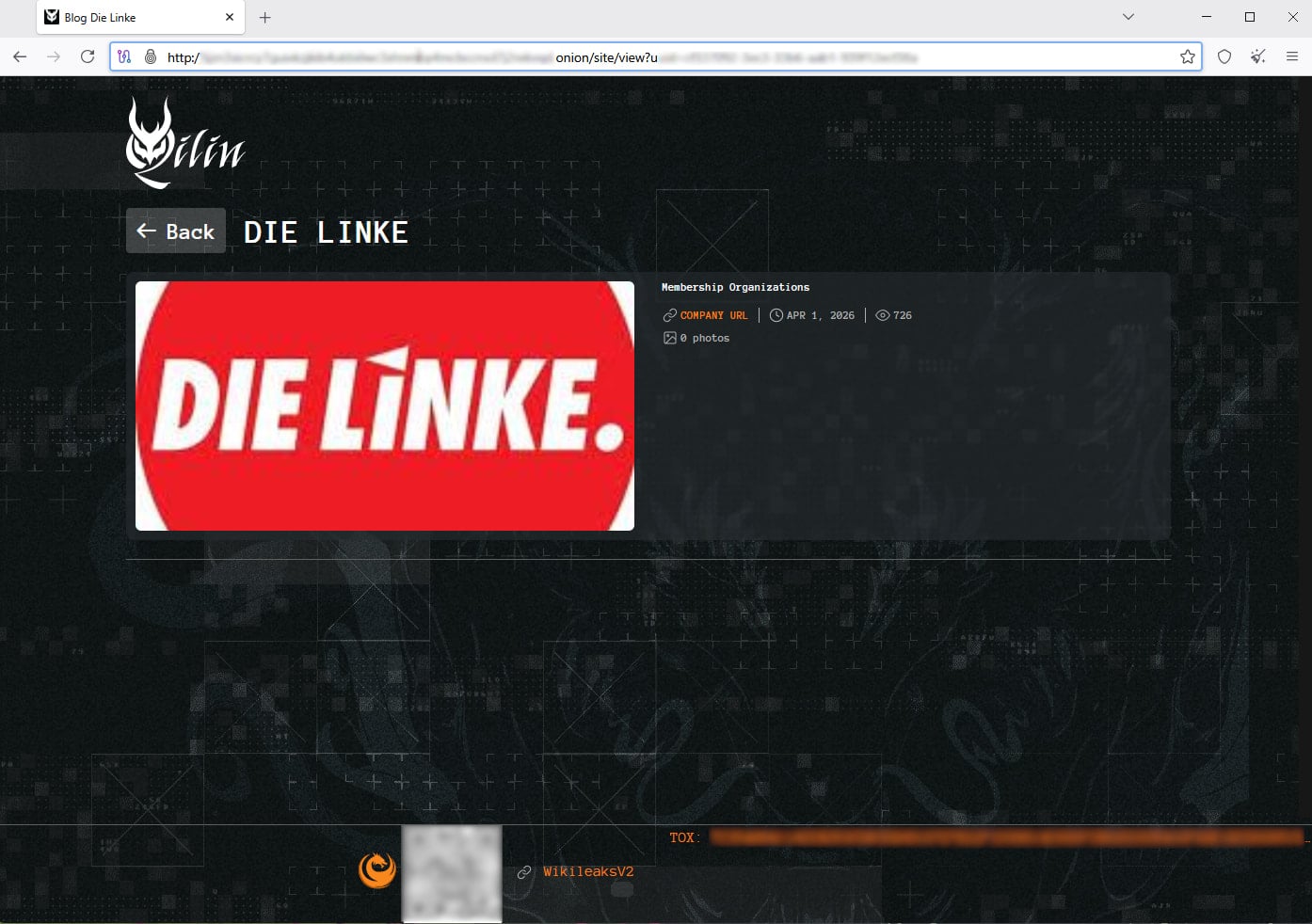
On April 1st, Qilin claimed the attack on Die Link publicly, adding it to the list of victims on its data leak site without publishing any data samples.
Qilin’s post on the dark web Source: BleepingComputer.com
Threatening to publish stolen data is a standard pressure tactic to coerce victims into paying a ransom.
Die Linke has notified the German authorities and filed a criminal complaint with the police. Additionally, the party is working with independent IT experts to help them safely restore impacted systems.
Russia-linked threat actors have targeted political parties in Germany in the past. In 2024, Mandiant uncovered a campaign from APT29 targeting CDU, a major political party in the country, with a backdoor named WineLoader.
Automated pentesting proves the path exists. BAS proves whether your controls stop it. Most teams run one without the other.
This whitepaper maps six validation surfaces, shows where coverage ends, and provides practitioners with three diagnostic questions for any tool evaluation.































































You must be logged in to post a comment Login