Alphabet’s life sciences business Verily is restructuring and raising money as a new corporate entity. Verily announced that with its $300 million investment round, it will change from an LLC to a corporation and rename itself Verily Health Inc. As a result, Alphabet now has a minority stake rather than a controlling one in the business.
Similar to every other tech business, this chapter for Verily will be focused on AI. “From research to care, our customers need solutions that bring the best of clinical and scientific rigor together with AI to deliver the next generation of healthcare – one that is as precise as it is personal,” Chairman and CEO Stephen Gillett said.
Looking for the most recent Strands answer? Click here for our daily Strands hints, as well as our daily answers and hints for The New York Times Mini Crossword, Wordle, Connections and Connections: Sports Edition puzzles.
Today’s NYT Strands puzzle could be tricky for some. First off, it’s an unusual topic. And some of the answers are difficult to unscramble, so if you need hints and answers, read on.
If that doesn’t help you, here’s a clue: A resilient, metal device.
Clue words to unlock in-game hints
Your goal is to find hidden words that fit the puzzle’s theme. If you’re stuck, find any words you can. Every time you find three words of four letters or more, Strands will reveal one of the theme words. These are the words I used to get those hints but any words of four or more letters that you find will work:
These are the answers that tie into the theme. The goal of the puzzle is to find them all, including the spangram, a theme word that reaches from one side of the puzzle to the other. When you have all of them (I originally thought there were always eight but learned that the number can vary), every letter on the board will be used. Here are the nonspangram answers:
COIL, GYRE, HELIX, SPIRAL, CURLICUE, CORKSCREW
Today’s Strands spangram
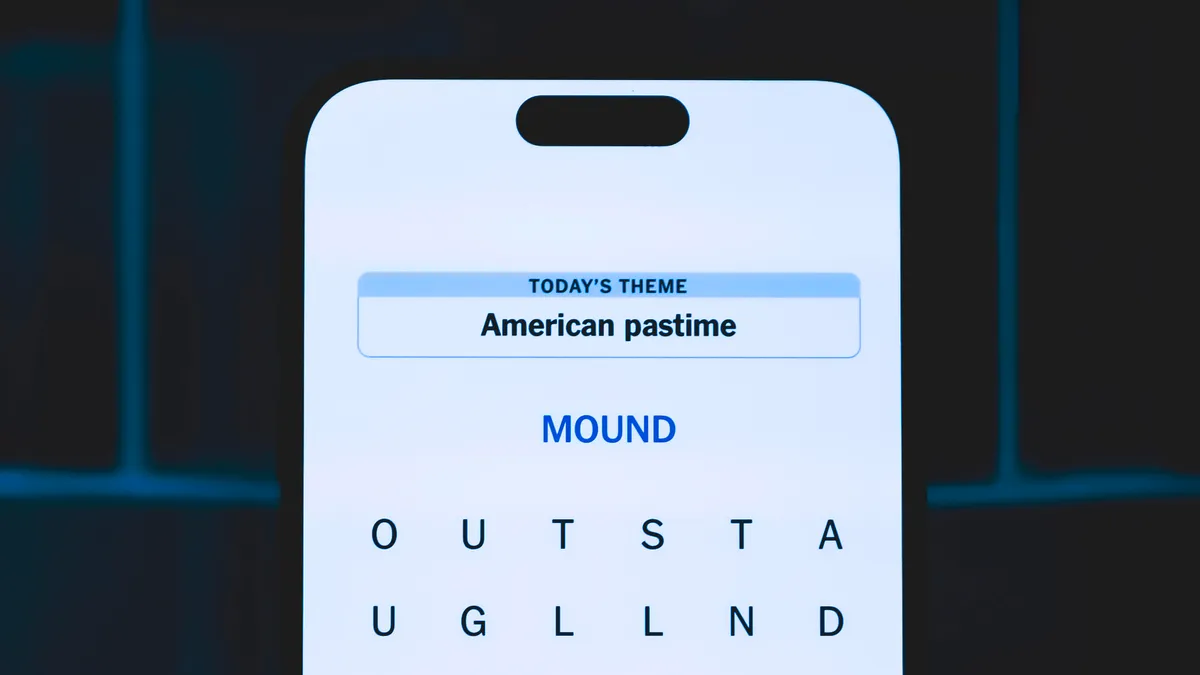
The completed NYT Strands puzzle for March 20, 2026.
NYT/Screenshot by CNET
Today’s Strands spangram is TWISTANDTURN. To find it, start with the T that is the bottom letter on the far-right vertical row, and wind up.
Advertisement
Toughest Strands puzzles
Here are some of the Strands topics I’ve found to be the toughest.
#1: Dated slang. Maybe you didn’t even use this lingo when it was cool. Toughest word: PHAT.
#2: Thar she blows! I guess marine biologists might ace this one. Toughest word: BALEEN or RIGHT.
#3: Off the hook. Again, it helps to know a lot about sea creatures. Sorry, Charlie. Toughest word: BIGEYE or SKIPJACK.
We’re not exactly worried about Armageddon here at Hackaday, but should we end up facing the end of the world as we know it, having something to pass the time would be nice. That’s why we were intrigued by [Janus Cycle]’s latest video where he both plays and powers a Game Boy by candlelight.
You’ve probably figured out the trick already: he’s using a Peltier module as a thermoelectric generator. Candles, after all, release a lot more energy as heat than light, and all that high-quality heat is just begging to be put to use somehow. It’s hardly a new idea; [Janus] references space-age radioisotope thermoelectric generators (RTGs) in the video, but back in the day the Soviets had a thermoelectric collar that fit around a kerosene lantern to power their tube radios.
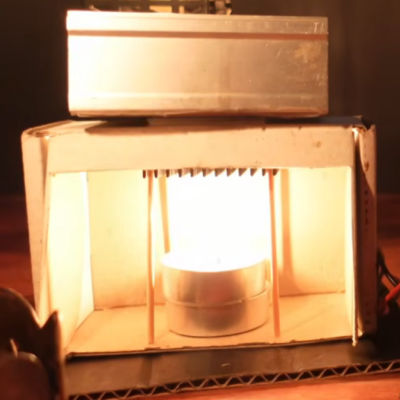
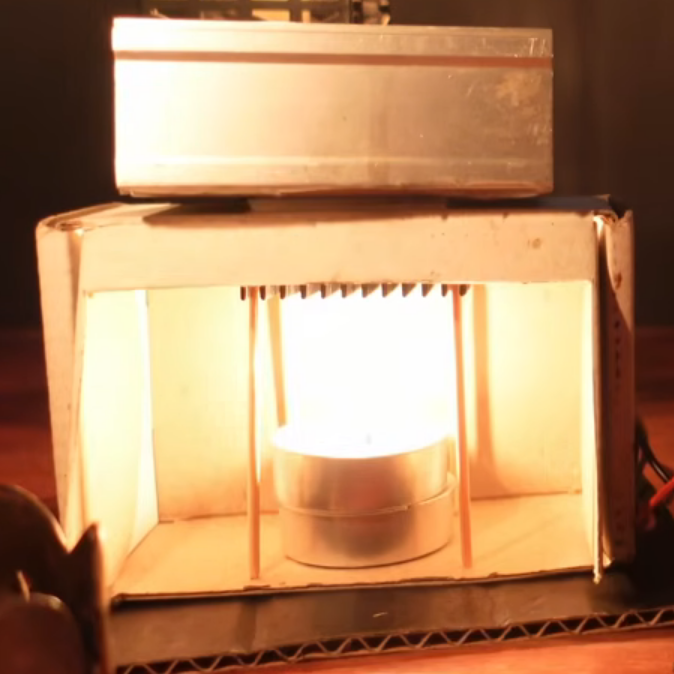
In [Janus]’s case, he’s using a commercial module sandwiched between two heatsinks with the rather-questionable choice of a cardboard box reinforced with wooden skewers to hold it over the candle. Sure, as long as the flame doesn’t touch the cardboard, it should be fine, but you will not be at all surprised to see the contraption catch fire in the video’s intro. For all that, he doesn’t get enough power for the Game Boy — one module gets him only 2 V with tea light, but he has a second module and a second candle.
Doubling the energy more than doubles the fun, since a working Game Boy is way more than twice as fun as an un-powered one. But one candle should be more than enough power, so [Janus] goes back and optimizes his single-Peltier setup with a tall candle and actual thermal grease, and gets the Game Boy going again. Any fire marshals in the audience should look away, though, as he never gives up on keeping a candle in a cardboard box.
The “power something with a Peltier module” project is probably a right of passage for electronics enthusiasts, but most are more likely to play with the irony of candle-powered LEDs, or fans to cool the cold-side heatsink. We did see a phone charger one time, and that didn’t even involve open flames, which seems much safer than this. Remember — no matter how much you want to game after the end of the world, it’s not worth burning down your fallout shelter.
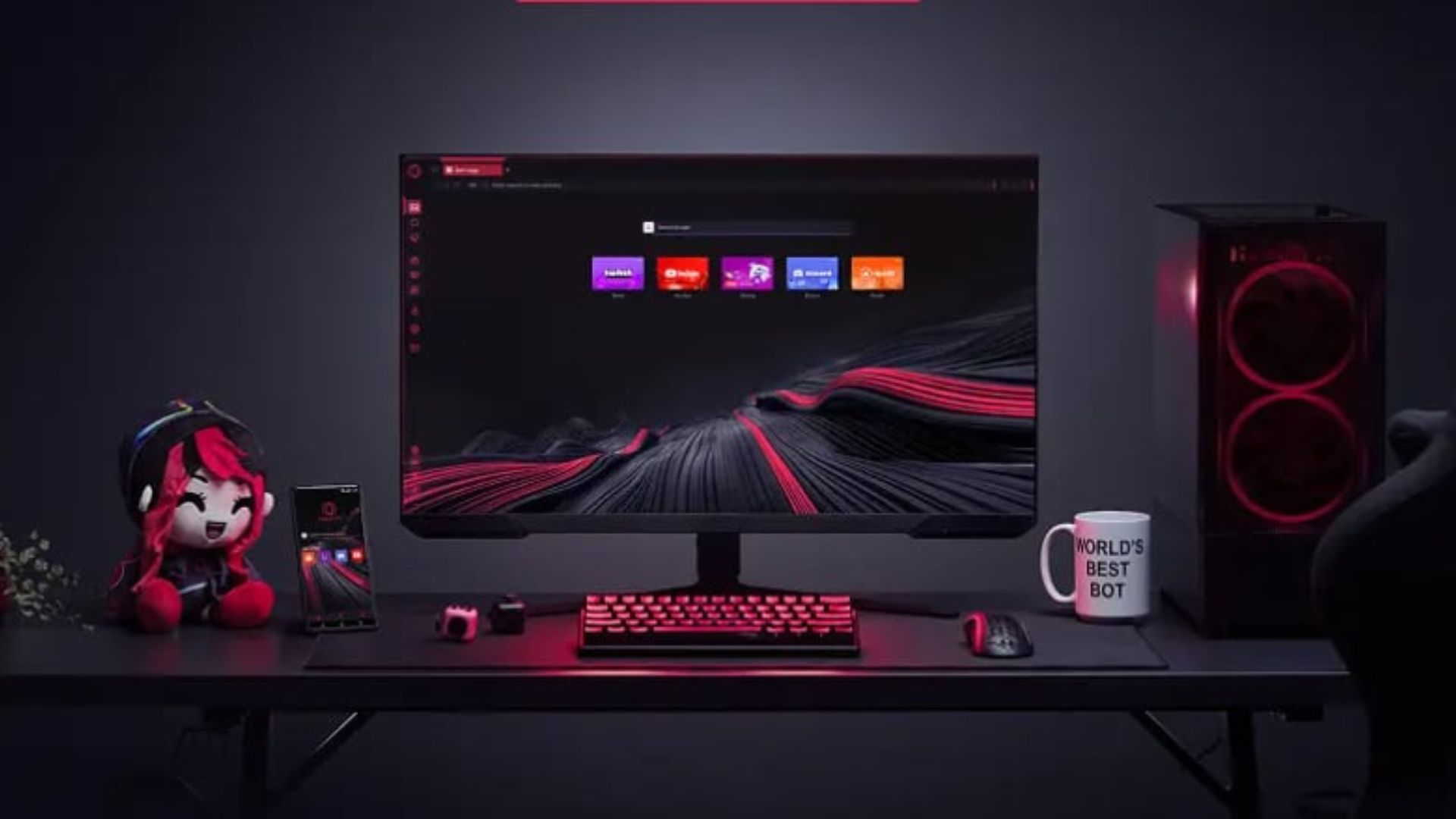
Opera has finally brought its gamer-focused browser, Opera GX, to Linux.
This happened following what the company describes as sustained demand from communities across Reddit, Discord and developer forums.
The launch means Linux users can now access the same performance tools and customisation features that have helped Opera GX grow to more than 34 million users since its debut in 2019. More importantly, it plugs a long-standing gap for gamers and power users. These users prefer Linux but haven’t had access to a browser built specifically with gaming in mind.
At its core, Opera GX is all about control. The standout feature here is GX Control, which lets users cap how much RAM, CPU and network bandwidth the browser can use. This is handy if you’re trying to keep a game running smoothly in the background. There’s also built-in Twitch and Discord integration in the sidebar, so you can watch streams or chat without constantly switching tabs.
Advertisement
Customisation is another big part of the experience. GX Mods allow users to tweak everything from themes and sounds to visual effects. This makes it easier to match the browser to a wider desktop setup. Linux users, in particular, tend to care about this.
Advertisement
Opera is also leaning into privacy, which aligns neatly with Linux’s usual audience. The browser includes built-in ad and tracker blockers, protection against cryptojacking, and an optional VPN that operates under a zero-log policy. According to Opera, it doesn’t collect sensitive data like browsing history, search queries or form inputs. Furthermore, it follows European GDPR standards.
Compatibility-wise, Opera GX supports Debian, Ubuntu, Fedora and OpenSUSE-based distributions, with installation available via .deb and .rpm packages. Flatpak support is still in the works. Opera says the Linux version will receive weekly updates, shaped by community feedback.
Advertisement
It’s a fairly straightforward release, but one that feels overdue. Linux gaming has been steadily growing. Opera GX arriving here gives users another tool that actually plays nicely with that ecosystem, rather than treating it as an afterthought.
In an omnichannel landscape, a brand kit is an efficiency engine. While you can operate without one, the friction of manually styling every asset eventually becomes a bottleneck that stifles growth. Having a brand kit allows you to do more in less time—infusing designs with your signature elements and boosting brand recognition across the internet.
The best part? Designing a brand kit has never been easier! With an abundance of tools available to create and store visual styles, there’s little reason to hold back. Ready to stand out with a strong visual brand identity? Read on to learn how to do it successfully.
Decoding visual brand identity
Visual brand image is the holistic collection of sensory elements that represent your brand’s internal character. Going beyond a logo, it functions as a visual language—one designed to communicate values without speaking a word. The logotype, along with color and typography, forms the essential tangibles. There are also intangibles: the emotional responses visuals trigger when paired with your on-brand elements.
Think of your identity as a thread of continuity. Whether a customer encounters a printed banner or uses a mobile app, the visual image ensures they never lose sight of your company. Brand identity is the soul, while a brand kit is the toolbox that houses it. Once your kit is defined, the goal becomes seamless execution. To keep this process lean, businesses often rely on automation tools such as the VistaCreate API. By integrating a brand kit directly into your workflow app, you remove guesswork and maintain a professional standard—ensuring every asset stays on-brand and is ready for immediate use.
FAQ: What is the main component of a brand kit?
If forced to name a single primary component, typography and color often outweigh the logo. The reason is simple: even without a visible logotype, consistent color grading and font choices can still signal exactly which brand is speaking. Consistency is paramount, acting as the conductor of the brand kit symphony.
Advertisement
How to create a brand kit in 6 manageable steps
#1. Focus on foundational strategy
Purpose is the first thing to define if you want to build an exemplary, comprehensive brand kit. Design should be a direct byproduct of your “why.” Begin by identifying three common visual tropes in your industry and intentionally avoiding them (for example, a corporate blue palette and generic isometric illustrations in tech and SaaS). This creates competitive differentiation. Modern consumers increasingly gravitate toward brands that project authenticity and a distinct personality rather than defaulting to industry clichés.
Next, factor in the human element. If you encountered your brand on the street, what would it look like? How would it dress? Would it wear a tailored suit with casual sneakers, lean sporty, or take an entirely different approach?
#2. Build an elastic design system
Omnichannel success requires assets that can stretch from a 16px favicon to a 16-foot banner. To achieve this level of flexibility, focus on three pillars:
Responsive logos: Include stacked, horizontal, and logo-mark (symbol only) versions for tight spaces.
The 60-30-10 color rule: Define a primary (60%), secondary (30%), and accent (10%) color to help non-designers balance palettes.
Type hierarchy: Assign clear roles to fonts. Use a display font for personality and a UI font for legibility in body text.
#3. Focus on a multi-dimensional world
Iconography, texture, depth, and photography POV all play a role in a complete brand kit. These elements give you an edge when core components start to feel familiar to users looking for something more distinctive.
Iconography style: Commit to one style—line-art for a modern, lightweight feel or solid icons for a bold, authoritative tone.
Texture and depth: Define whether your brand uses flat vectors, 3D gradients, brushstrokes, or organic paper textures.
Photo POV: Establish clear photo pillars to give visuals a recognizable style, such as natural lighting, indirect eye contact, or urban settings.
#4. Tune the brand voice
Clear voice and verbiage can set you apart in a crowded social media landscape. While your brand voice will evolve over time, consistency matters most. A distinct personality helps audiences stay engaged across platforms. To sharpen your voice:
Use a slider to define your tone spectrum (e.g., 70% professional, 30% playful).
Create a list of 10-15 “green light” words that reflect your mission (a power glossary).
Define grammar preferences, including Oxford commas, emoji usage, or selective slang.
#5. Operationalize your designs
Make adoption easy by creating a library of ready-made layouts—social media posts, banners, posters, flyers, business cards, and other templates—designed for quick content input and publishing. “Safe zone” templates for Instagram Reels, Facebook posts, and TikTok ensure UI elements don’t obscure key messaging and are ready for immediate release.
With online graphic design editors like VistaCreate, you can create cohesive branding at scale. Applying brand kit templates turns any layout into a compelling asset in one click, ensuring speed-to-market never compromises quality. Internal slide decks and invoices can follow the same system, extending the brand experience 360 degrees.
#6. Update your brand kit as needed
Evolution is natural, and your brand style is no exception. Use your brand kit actively, but regularly reassess where your company is headed and how market changes may require adjustments. For example, ask your social media manager which elements are hardest to use and address that friction quickly.
Advertisement
Finally, update your kit whenever your business changes—whether that’s introducing a new color palette for a product launch, adding a typeface for blog content, or expanding into new platforms. After updating, don’t forget to register your brand kit in the online design tool you use (e.g., “brand kit v2.1 – 2026”) to prevent outdated assets from being reused.
Bottom line
Crafting a brand kit doesn’t have to be complicated. Think of it not as a static document, but as a living ecosystem that reflects your visual brand identity. The initial time investment pays off across every post, ad, and email you publish. Whether you build a full system from the start or begin with core elements only, remember that a brand kit is dynamic—and should evolve as your company scales.
The UK regulator Ofcom fined 4chan nearly $700,000 (520,000 pounds) for failing to implement age checks and address illegal content risks under the Online Safety Act, but the platform mocked the penalty and signaled it won’t pay. A lawyer representing the company responded with an AI-generated cartoon image of a hamster, writing in a follow-up post on X: “In the only country in which 4chan operates, the United States, it is breaking no law and indeed its conduct is expressly protected by the First Amendment.” The BBC reports: The fines also include 50,000 pounds for failing to assess the risk of illegal material being published and a further 20,000 pounds for failing to set out how it protects users from criminal content. 4Chan has refused to pay all previous fines from Ofcom. “Companies — wherever they’re based — are not allowed to sell unsafe toys to children in the UK. And society has long protected youngsters from things like alcohol, smoking and gambling. The digital world should be no different,” said Ofcom’s Suzanne Cater. “The UK is setting new standards for online safety. Age checks and risk assessments are cornerstones of our laws, and we’ll take robust enforcement action against firms that fall short.”
Adobe is making a bigger bet on AI, turning its creative apps into something that feels more like a collaborator than a traditional tool. The latest Adobe Firefly update adds an AI coworker across Photoshop, Express, and Acrobat, letting you describe edits in plain text instead of digging through menus.
At the center of this shift is a new class of AI agents that can carry out tasks for you. You explain what you want, and the system applies those changes using Adobe’s existing tools.
Firefly now acts as a unified environment where generation, editing, and guided input happen in one place. Adobe is clearly moving away from tool-first design toward something that responds more directly to intent.
Chat replaces traditional editing flow
Adobe is bringing these AI agents into Photoshop, Express, and Acrobat so you can turn simple requests into actual edits. Instead of navigating layers, panels, or menus, you describe your goal and let the app handle the execution.
Advertisement
That shift changes how everyday tasks feel. Adjusting an image, refining a layout, or updating a document can now happen through natural language, with the system applying changes and letting you refine them as needed.
Adobe FireflyAdobe
You’re still in control, but you spend less time managing the mechanics of the software and more time shaping the result.
Project Moonlight points to what’s next
Adobe is also previewing Project Moonlight, a new interface in private beta that pushes this idea further. It works across apps and helps you move from concept to a finished asset without breaking your flow.
Project MoonlightAdobe
Moonlight can recognize your style and draw from your own assets and libraries, so you’re not starting from zero each time. You guide the direction, and the system builds alongside you as the work evolves.
This is where the AI coworker idea starts to feel real. The system adapts to how you work and supports the process instead of waiting for detailed instructions.
Firefly ties it all together
All of this sits inside Adobe Firefly, which now combines generation, editing, and access to more than 30 AI models in a single environment. You can create images or video, refine them, and compare outputs without jumping between tools.
Advertisement
Different models bring different strengths, whether that’s video, illustration, or photorealism, and you can switch between them depending on what the project needs. New tools like Quick Cut and expanded image controls also tighten the loop between rough drafts and polished results.
The bigger question is how much time this actually saves. If these chat-driven tools reduce friction in real workflows, they could change how creative work gets done day to day.
AleRunner writes: “China is helping Cuba race to capture renewable solar energy as the United States imposes an effective oil blockade on the Caribbean island, creating its worst energy crisis in decades,” reports The Washington Post. Later in the article, it states that “China’s decades-long push into clean energy technology is now helping to protect it from the soaring oil and gas crisis spurred by Trump’s war against Iran,” and that “Chinese exports of solar equipment to Cuba skyrocketed from about $5 million in 2023 to $117 million in 2025 and show no sign of stopping.” According to researchers from Ember, solar could be responsible for as much as 10% of Cuba’s electricity generation. “That would be among the fastest expansions of solar energy anywhere […] and place Cuba ahead of most countries — including the U.S. — in the share of electricity generated by sun power,” the report says.
As the Iran war drives energy prices higher, countries around the world are working overtime to reduce their reliance on fossil fuels. China sees this as a big opportunity. “Chinese authorities have made clear that they intend to replicate what they’re doing in Cuba elsewhere,” reports the Washington Post.
California, Massachusetts, Connecticut and New York are leading a group of 20 other states in suing the US Environmental Protection Agency for renouncing its ability to regulate greenhouse gas emissions, The New York Times reports. The lawsuit specifically argues that the EPA’s decision to rescind a 2009 study that determined greenhouse gases are dangerous to public health was illegal. The study, which is the source of what’s called the “Endangerment Finding,” was one of several justifications — along with things like the Clean Air Act — for the agency’s ability to regulate emissions.
Rescinding the finding nullified the EPA’s evidence for things like emissions standards and a variety of other regulations that attempted to reduce the amount of greenhouse gases produced by the automotive, coal and oil industries. The Trump administration framed the rollback as a cost-saving measure, but it was also a major blow to the government’s ability to fight climate change. Greenhouse gases, which include things like carbon dioxide, methane and nitrous oxide, collect in the atmosphere and warm the planet, upsetting weather patterns and negatively impacting the environment. Determining the changes caused by greenhouse gases posed a risk to public health gave the EPA the authority to regulate them under its existing mandate to address air pollution. An authority it could have again, depending on the result of this litigation.
Of course, winning a lawsuit isn’t necessary to restore the EPA’s role in fighting climate change. Congress could do that now by passing a new law. The legal route is just faster, and potentially riskier. The New York Times writes that this new lawsuit was filed in the US Court of Appeals for the District of Columbia, and could ultimately be combined with an existing lawsuit from environmental groups. Depending on how the case fairs in the lower court, it may eventually be appealed to the US Supreme Court, who could decide on an even more restrictive interpretation of the EPA’s role.
The Nothing Phone 4a Pro is one of the most unique phones on the market, with distinctive hardware design, software and features you won’t find elsewhere. It’s a genuine joy to use for non‑demanding users, and a great choice if you’re bored of the same old glass rectangle slabs.
Unique design and wonderful metal build
Glyph matrix can actually be useful
Strong battery life
Brilliant, big display
No interactive Glyph Toys
Inconsistent camera stabilisation performance
Not the fastest phone out there
SQUIRREL_PLAYLIST_10208357
Advertisement
Key Features
Review Price:
£499
Advertisement
Unique metal build
We very rarely see all-metal phones like the Nothing Phone 4a Pro these days, offering a durable alternative to the usual glass designs.
Advertisement
Polished, stylised hardware
Nothing OS is a visual treat, offering one of the most visually interesting Android skins around, packed with unique features.
Advertisement
A big, gorgeous screen
The Nothing Phone 4a Pro’s 6.8-inch AMOLED screen feels anything but mid-range in use.
Introduction
It’s safe to say that few companies make phones the same way that Nothing does. And while it’s a bit of a departure from some of its previous efforts, there’s something quite special about the 4a Pro.
Advertisement
Sure, there might be some compromises in some parts of the experience, but there’s so much to love about it. I’ve been putting it to the test for the past few weeks, and here’s what I think.
Advertisement
Design
Mostly metal design
Glyph Matrix, but it’s not interactive
Only IP65-rated
For its first few generations of products, Nothing phones all shared a similarity in design: transparent backs. Each phone – including the regular non-Pro 4a – has that in common. With the 4a Pro, Nothing has gone in a different direction, but still has imbued it somehow with a clear sense of Nothing-ness.
Image Credit (Trusted Reviews)
Rather than have an entire back cover made of transparent glass with interesting details and texture beneath it, the phone is all metal. It’s got a solid aluminium unibody design, the likes of which we rarely see these days. In fact, apart from OnePlus’ brief flirtation with the OnePlus Nord 4, it’s generally not been seen at all in years in the Android space.
One thing that can be said about that decision is that it gives the phone a real sense of solidity. And I can’t deny it, I’ve actually missed that feeling of aluminium in my hand. It’s not as slippery as glass, and gives you that sense of security that if you drop it, that back panel isn’t going to crack.
Image Credit (Trusted Reviews)
Advertisement
It wouldn’t be Nothing without at least some playful iteration of transparency though, and so the company decided to make it a feature of the camera island. Which, again, I think is a great decision.
Advertisement
For many manufacturers, that bump on the back of the phone is very much thought of as a practical necessity to make space for the lenses needed for modern smartphone cameras. At best, they’re a featureless, inoffensive bump. At worst, they’re hideous mounds.
With Nothing, it’s a feature that catches the eye, thanks to its playful arrangement of textures, exposed screws, and the round Glyph Matrix display, along with a simple square LED that flashes when you’re recording video or audio.
Image Credit (Trusted Reviews)
That Glyph Matrix display is similar to the one introduced on the Nothing Phone 3 in 2025, but, despite being larger, isn’t as feature-rich as that version. You can still use it as a countdown timer, or to flash when notifications come in, or even use it as a very basic selfie mirror, but the interactive Glyph Toys have gone.
On the Phone 3, you could press a small button on the back of the phone to play spin the bottle, or ask a virtual Magic 8 Ball a question. There’s no button on the Phone 4a Pro, just a slightly recessed dimple in the bottom corner which looks like it could be a button, but, sadly, is not.
Advertisement
Advertisement
That’s not to say there are no Glyph Toys at all. They’re just not interactive. You can enable a feature where you have an always-on Glyph Toy when the phone is flipped on its front. In this menu, you can choose a digital clock, battery level indicator, solar path tracker, or moon phase graphic. And if you wiggle the phone, it can show a charging meter when charging or a caller ID when someone is ringing you.
Image Credit (Trusted Reviews)
Still, what it lacks in fun it more than makes up for in usefulness and customisation. You can create your own rules in the software based on notifications from specific apps, contacts or even keywords in the messages. You can even create your own custom graphic to show when a particular notification comes through.
You could, for instance, enable a custom graphic every time you get a message from a particular family member or loved one. If you have the time, it’s well worth putting it in to create the experience you want. It may not be as interactive as the Phone 3, but it’s got more going for it than the simple stack of LEDs on the regular Phone 4a.
All built into a phone which sadly doesn’t have full water and dust protection, but will give you at least splash resistance at IP65. So if you buy one, don’t go taking it underwater for photos.
Image Credit (Trusted Reviews)
Advertisement
I will say this too: the phone is pretty hefty, despite being Nothing’s thinnest phone to date. With its flat edges, large sides and weighty metal, it’s certainly not the most palm-friendly phone in the world.
Advertisement
Software
Nothing OS 4.1 based on Android 16
A very visually appealing Android skin
Plenty of unique features
As well as the industrial design of its products, the feature set and the software play a big role in creating the feeling of a company that’s different from the others.
Most Android phone makers have a unique take on software, but few of them tie the user interface’s aesthetics and features so well to the hardware design. The retro-futurism that so clearly defines the outward appearance is very evident and consistently applied throughout the software skin.
Image Credit (Trusted Reviews)
There’s a huge collection of widgets, folders, and app icons, all of which fit together really well. There’s a sense of playfulness to some of those, and an effort to make the widgets interactive too. All presented with the usual monochrome flat and dot-matrix fonts.
Advertisement
The widget collection also includes Nothing’s community-driven Playgrounds widgets, which lets community members create their own widgets for the Home Screen. There are loads in there, from clocks and F1 calendars through to mini games. Once I discovered the Pokémon hunting widget, I ignored all the rest. Because, obviously, I’ve got to catch them all now.
Image Credit (Trusted Reviews)
There’s not much new to talk about here that we haven’t mentioned in previous Nothing reviews. Essential Space remains on the new models, along with its dedicated button on the side. With this, you can save screenshots and voice memos to a dedicated space in the software. AI will then make sense of it all, transcribing any memos, creating to-do lists or just describing what’s in the screenshot.
All in all, it’s one of my favourite custom Android skins on the market, also helped by the fact that it’s incredibly light on bloat. There are no additional or duplicate apps that don’t need to be there, or where Nothing hasn’t put its own distinct stamp on the design. You will find a weather app, but Nothing is otherwise content to leave the standard app set to Google.
Advertisement
Image Credit (Trusted Reviews)
Screen
6.8-inch 144Hz AMOLED display
Excellent in everyday use
Optical fingerprint scanner
Advertisement
From a hardware performance perspective, it’s the display that stands out to me as a feature that outperforms its price tag. It’s big, bright and fluid. With a peak of 5000 nits for HDR scenes, even darker scenes in HDR movies look good on it. It can reach up to 144Hz if you enable the highest refresh rates, and has a pixel density over 400ppi.
In short, for the most part, it keeps up with the best of them and even has competitive PWM dimming levels to stop flicker at low brightness levels from straining your eyes. It’s not LTPO-based sadly, so can’t adapt refresh rates at small increments automatically. That means you may see a very slight stutter when going from a static page to a moving one as it jumps to the next refresh rate.
Image Credit (Trusted Reviews)
There’s very little negative I can say about it at all, and, as Nothing points out, it is the best display in the company’s entire portfolio. Measuring 6.83 inches diagonally, it’s super expansive, and the skinny uniform bezels around the sides mean you get an immersive view with zero distractions.
My only complaint has nothing to do with the display, but the fingerprint sensor built into it.
As more manufacturers move towards fast, instant ultrasonic fingerprint scanners, it can feel a little jarring to have to take the time to set up an optical scanner. But at this sort of price point, it’s one of the compromises you expect to find. And in truth, to use day in and day out to unlock, I rarely had an issue with its reliability. It failed to scan only once during my entire testing period.
Advertisement
Advertisement
Image Credit (Trusted Reviews)
Cameras
50MP main camera is the best performer
50MP 3.5x zoom lens works well to 30x
8MP ultrawide is a little basic
For a phone in its price range, the triple-camera system on the back of the 4a Pro is very capable. For the most part, when shooting in bright conditions, even when HDR is needed to balance bright backlighting with darker foreground objects, it can contain the highlights and deliver sharp images with great colour from all three lenses.
Image Credit (Trusted Reviews)
It’s not without its weaknesses, though. As is typical of most phones, the ultrawide camera appears to be the weakest. It’s not horrendous at all, but there was some noticeable distortion towards the edges of the photos from that camera in the daytime. And at nighttime, it can’t draw in as much light as the main camera. Neither can the telephoto 3.5x zoom lens.
That telephoto zoom can go further, using a mix of machine learning, processing and digital cropping, you can go all the way up to around 140x. But I found that once I’d reached the 30x mark, I didn’t want to push any further, as the image quality started to look a little rough.
Advertisement
And while it is great for zooming further into far away scenes, its strength I think is in taking photos of small leaves, plants and flowers in the medium distance. It can’t focus super closely, but it’s close enough that it almost passes as a solid macro lens. And it delivers great detail and a lovely depth-of-field effect.
Advertisement
There were a couple of general weaknesses I found with the system as a whole, though. Regardless of which lens I used, there were times when the camera struggled with motion blur and focus. So I’d have shots, particularly at night time when the night mode was keeping the shutter open for longer, when photo results were blurry or soft.
Compared to much more expensive phones I have also been testing around the same time, that’s the one thing that stood out to me. It’s that consistency in that when you press the shutter, it instantly captures an in-focus, blur-free shot, where the Phone 4a Pro didn’t. If you keep your hands steady, that shouldn’t often be a problem.
Like the Phone 4a, you get access to a number of different photo styles too, adding what are essentially filters to the photos to add grain, contrast and adjust the temperature for a particular vibe.
Advertisement
Advertisement
Performance
Mid-range Snapdragon 7 Gen 4 power
Runs smoothly in everyday use
Not the most powerful chipset for the money
Just like the Nothing Phone 4a, the performance of the company’s Pro variant won’t blow anyone away, but with the Snapdragon 7 Gen 4 inside, it’s got more oomph than its non-Pro sibling with either 8- or 12GB of RAM.
Those who really care about gaming performance and how a phone handles demanding graphics would be better off looking at phones from the likes of Poco, with the recently announced X8 Pro series definitely worth a look.
Image Credit (Trusted Reviews)
Running it through our usual suite of benchmarks, it became clear quite quickly that this phone doesn’t sit at the top of the pile. But at the same time, it can keep its performance running consistently for long periods, even if it doesn’t blow you away with mega frame rate stats.
Still, for most tasks, especially the everyday, casual type use-cases, there’s enough speed and responsiveness here to keep most people happy. I’d be perfectly happy using it as my daily device for communication, less-demanding games, and social media.
Advertisement
Test Data
Nothing Phone 4a Pro
Nothing Phone 4a
Google Pixel 10a
Oppo Reno 13 5G
Geekbench 6 single core
1315
1236
1753
1322
Geekbench 6 multi core
4169
3312
4551
3846
Geekbench 6 GPU
4701
3549
8803
–
3D Mark – Wild Life
2076
–
2608
–
3D Mark – Wild Life Stress Test
97.2 %
–
91 %
–
On the communication theme, it’s worth noting that the 4a Pro supports eSIM. At least, it does in markets except India, where you’ll get an extra beefy battery at 5400mAh, rather than the 5080mAh you’d get in other markets.
Advertisement
Battery life
5000mAh battery
Easily lasts all day
50W wired charging
Battery life depends largely on how you use a phone, where it’s used, and how many of its features you enable. Cranking the display up to 144Hz and keeping the Glyph Matrix on all the time while travelling around a lot in a busy urban 5G environment will drain more than if you’re someone like me in a quiet rural 4G-only area with the display set to its automatic defaults.
Image Credit (Trusted Reviews)
Still, my sense from using this particular phone is that the battery should last even the most demanding users a full day on a fully topped-up battery. Even on the days when testing the camera, video recording and benchmark stress tests, I wasn’t able to completely drain it. And most days I’d have more than half of the battery left over with my typical quite light usage.
Advertisement
I rarely use more than three hours of screen time in a day, and when I do, it’s pretty casual gaming, YouTube, reading news, sports, social media and messaging. At just over 5000mAh, it’s not the largest battery around, but the software appears well optimised to make the most of it.
And when it’s empty, it takes just over an hour to fully refill it using a 50W charger, providing you have a compatible one handy.
SQUIRREL_PLAYLIST_10208357
Advertisement
Should you buy it?
You want a stylish phone with equally stylish software
Very few manufacturers marry the style of hardware and software as well as Nothing.
Advertisement
You want the best performance possible
The Snapdragon 7 Gen 4 is fine for everyday use, but it’s not the most powerful you can get for the money.
Advertisement
Final Thoughts
The Nothing Phone 4a Pro is one of the most unique phones on the market, for a number of reasons. Nothing’s approach to hardware design, software and features means there’s nothing quite like it available from anyone else.
It’s a genuine joy to use, and as long as you’re not super demanding, you’ll have a great time using it, and maybe even be delighted by those little touches that make it special. If you’re bored with the same old glass rectangle slabs, give it a go, but if not, our list of the best mid-range phones should point you in the right direction.
Advertisement
How We Test
We test every mobile phone we review thoroughly. We use industry-standard tests to compare features properly and we use the phone as our main device over the review period. We’ll always tell you what we find and we never, ever, accept money to review a product.
Used as a main phone for over a week
Thorough camera testing in a variety of conditions
Tested and benchmarked using respected industry tests and real-world data



 In [Janus]’s case, he’s using a commercial module sandwiched between two heatsinks with the rather-questionable choice of a cardboard box reinforced with wooden skewers to hold it over the candle. Sure, as long as the flame doesn’t touch the cardboard, it should be fine, but you will not be at all surprised to see the contraption catch fire in the video’s intro. For all that, he doesn’t get enough power for the Game Boy — one module gets him only 2 V with tea light, but he has a second module and a second candle.
















































You must be logged in to post a comment Login