Amazon is betting that an AI assistant best known for turning on lights and answering trivia questions can become a sought-after benefit of its Prime membership, in the same league as free shipping and streaming video.
The company is making Alexa+, the generative AI-powered upgrade to its voice assistant, available free starting today to all U.S. Prime members, nearly a year after it was unveiled.
Tens of millions of customers used Alexa+ through an early access program, the company says. Today’s rollout opens it up to Amazon’s full U.S. Prime membership base, which is estimated at more than 200 million individual members by Consumer Intelligence Research Partners.
Alexa+ offers more natural, free-flowing conversations than its predecessor, along with agentic capabilities such as ordering takeout, and booking dinner reservations and rides, in addition to core features such as coordinating across family calendars and checking smart-home cameras.
But the broad rollout comes more than three years into the generative AI era, with AI habits already ingrained for many users around ChatGPT, Claude, Gemini, and others.
Advertisement
Given its late start, Amazon is hoping that unlimited access to Alexa+ via Prime (including a browser-based chat experience at Alexa.com) will help close the gap against those rivals.
In that way, the option to subscribe to Alexa+ for $19.99/month outside of Prime feels less like a play for standalone subscribers and more like a way to reinforce the market value of what Prime members will be getting for free.
Amazon is also offering a free but limited version of the Alexa+ chat experience at Alexa.com and in the Alexa app for non-Prime users.
ChatGPT’s free tier limits users to a handful of messages before downgrading to a less-capable model. Google plans to replace its Google Assistant with the AI-powered Gemini across Android devices, making Amazon’s timing all the more urgent.
Advertisement
Daniel Rausch, Amazon’s vice president of Alexa and Echo, said in an interview that the Prime benefit is aimed at customers who use AI tools but can’t or don’t want to pay for a standalone subscription.
Rausch cited the example of students and others who “bounce around between different chat assistants” when they hit usage limits on free tiers. He said offering unlimited access to what amounts to a paid AI service, without those usage caps, is “a really big deal for Prime customers.”
Whether consumers see it as a true replacement for other AI chatbots remains to be seen. Working on this story, for example, I tried uploading the interview transcript, past coverage, and Amazon’s blog post to Alexa.com for reference and analysis. The site was only able to accept one document at a time, unlike other chatbots that can handle multiple uploads simultaneously.
It’s a small but telling limitation for anyone accustomed to the competition.
Advertisement
But that’s a business use case that may not represent consumer patterns. Amazon’s larger pitch isn’t that Alexa+ is a better ChatGPT, it’s that it can do things other AI assistants can’t.
For example, having uploaded those materials individually, I can now ask Alexa+ on my Echo devices to reference them in its responses — something I’ve been doing already in the Alexa+ early access program with emails from our kid’s school and other family documents.
Rausch said 76% of what customers do with Alexa+ is unavailable in any other AI, according to Amazon’s own internal data. He cited functionality such as smart home controls, family calendar management, music discovery, booking reservations, and the thousands of device and service integrations that Amazon has built up over a decade.
Based on the early access period, customers are conversing with Alexa+ two to three times more than they did with the original version, according to Amazon, and engagement continues to grow week over week rather than tapering off after an initial honeymoon period.
Microsoft has stopped automatically installing the Microsoft 365 Copilot app on Windows PCs with M365 apps, after initially planning to roll it out to users by default.
The app was supposed to act as a central hub for Copilot, consolidating AI features across tools like Word, Excel, and PowerPoint into a single location.
Microsoft has now temporarily disabled the automatic installation of the Microsoft 365 Copilot app on eligible devices. This update was confirmed through the company’s Microsoft 365 message center, though no clear reason was shared for the sudden pause.
Earlier, the rollout had already started in December and was expected to expand to more users outside the European Economic Area. Even then, IT admins had the option to opt out, while users in the EEA were excluded by default.
Advertisement
If the rollout resumes in the future, the app will show up in your Start Menu and be enabled automatically. For now, that plan is on hold.
What if the app is already on your PC
If you already have the Microsoft 365 Copilot app installed, nothing changes. Microsoft is not removing it from your system, but you can uninstall it yourself if you want.
Microsoft
Admins can still deploy the app manually using other methods, and Microsoft is expected to share more updates before restarting the rollout.
Microsoft has not explained why it paused the rollout, but the move comes as the company faces growing pressure to be more careful about how it introduces AI features into Windows.
As immigration became one of the defining focuses of Donald Trump’s second administration, the Department of Homeland Security (DHS) has taken center stage. Under the 2025 One Big Beautiful Bill Act, DHS, which oversees Immigration and Customs Enforcement (ICE), Customs and Border Protection (CBP), US Citizenship and Immigration Services (USCIS), and several other agencies, received more than $80 billion in additional funding, and in January the agency announced that it had hired more than 12,000 new agents.
Even as cities like Los Angeles and Minneapolis have seen a surge of immigration officers descend upon them, DHS has maintained a high level of opacity around its operations. Officers carrying out raids and arrests are often masked and driving in unmarked cars. As enforcement has pulled in federal law enforcement personnel from across the government, it has become difficult to tell what agency a given officer works for, let alone who they actually are. Though DHS has been combative with the media, ICE agents themselves have been mostly quiet, even if some have mixed feelings about their work and where the agency is headed.
Karl Loftus, an independent journalist who runs the Instagram account @deadcrab_films, started a new project following the immigration surge in Minneapolis called Confessions of an ICE Agent. There, he publishes interviews with people who work in immigration enforcement across DHS. This includes agents and officers with the two main divisions of ICE—Homeland Security Investigations and Enforcement and Removal Operations—as well as CBP officers. He offers them anonymity and a place to speak their minds outside the structures of traditional media, and in return gets a glimpse of what the people inside the agency are experiencing, creating an archive of this moment in its history.
In one post, a biracial agent speaking shortly after Trump announced that he would be replacing DHS Secretary Kristi Noem told Loftus he believed Noem was a “DEI” hire. In another, an HSI agent called the people leading the US government “imbeciles,” saying they were “disgusted by nearly all of them.” Another HSI agent expressed concerns about DHS colleagues violating the law, and complained of having to pause investigation into child sexual abuse cases to focus on immigration work. “If they gave child exploitation cases a fraction of the attention, funding, resources, personnel, analytical support, etc. that they’re now giving immigration enforcement, we could do so much good,” they said.
Advertisement
WIRED spoke to Loftus about the public response to a polarizing topic, how he vets his sources, and the pressure to pick a side. A DHS spokesperson responded to WIRED’s request for comment saying that they cannot verify anonymous interviews but that DHS and its Homeland Security Investigations unit “is not slowing down and remains committed to all aspects of its mission, leveraging a whole-of-government approach to address threats to public safety and national security.”
This conversation has been edited for length and clarity.
WIRED: Before this project, your account mostly focused on things like disaster recovery after Hurricane Helene and similar topics. How did you start working on ICE?
Karl Loftus: In 2018 I was a volunteer in North Carolina during Hurricane Florence. I was there during the hurricane for four days doing search and rescue. That kind of started my passion for disaster response. I had been in Jamaica for seven weeks responding to Hurricane Melissa, working with a handful of different NGOs. I worked with Global Empowerment Mission repairing roofs of hospitals and medical centers to try to get the medical infrastructure back on track. I worked with World Central Kitchen. I was there documenting. I had planned to go to Wisconsin for the holidays, which is where I’m from, to visit some family, but I ended up staying in Jamaica. In early January, I finally made it up to the Midwest to see some family, and that’s when the Renee Good shooting happened. I was like, “Man, I know shit’s about to go insane the following day, and there’s going to be protests and riots and all this stuff.” So I decided to make the trip to Minneapolis.
We may receive a commission on purchases made from links.
As we settle into March and the gray skies finally start to clear up a bit, many of you might be looking to take on a few of the projects that have been sitting on the back burner during the icy winter months. Maybe you want to tackle some home DIY projects like making a few repairs or replacing some fixtures, whip your yard into shape by cleaning up your lawn and getting rid of those pesky weeds, or browse appliances and home furnishings for ideas to give your living areas a little refresh. Whatever the project might be, you’ll likely find that Home Depot has the tools and supplies you need to get it done.
Advertisement
Home Depot is easily one of the largest home improvement retailers in North America. Most of the company’s brick-and-mortar outlets house roughly 35,000 products at any given time, while its digital marketplace is home to more than a million. On top of that, the company is adding new inventory and replacing old stock all the time, with several new Home Depot products coming out in 2026 outside of its usual power tool turnover.
Home Depot’s warehouse-style stores are absolutely massive, though, so there are a lot of goodies that you might miss when you browse the aisles of your local outlet. So, it’s definitely worthwhile to take a look at some of the more unique and interesting products that are available in March 2026.
Advertisement
Ryobi 18V One+ HP Brushless 8-inch Pruning Chainsaw
It’s hard to make a list of Home Depot products without checking out at least one tool from Ryobi. The store’s officially partnered power tool brand is broadly known for its blend of performance and affordability, with many of its new battery-powered outdoor tools being lighter, quieter, and much easier to maintain than conventional gas-powered alternatives.
The Ryobi 18V One+ HP Brushless 8-inch Pruning Chainsaw is a prime example of this. For just $149 for the bare tool or $179 for a kit that comes with a 2.0 Ah battery and charger, you can get a small, one-handed chainsaw that you can use to cut limbs up to 6 inches in width. This makes it the perfect size for pruning and limbing those dangerous branches that start to hang precariously or get a little too close to the windows, while still allowing you to keep one hand on the ladder for stability. It has an oil-free design, on-board tool storage, a tooled chain tensioning system, a variable speed trigger, and a chain guard to protect against kickback. It’s also part of Ryobi’s HP system, which promises both more power and more efficient battery life than its standard tools. In fact, Ryobi claims you can get up to 65 cuts per charge on a single 2.0 Ah battery.
Users seem to like this tool as well. It currently has a 4.8 out of 5 on the Home Depot website, with 97% of customers stating that they would recommend it. Reviewers regularly claimed that the chainsaw is lightweight, quiet, easy to use, and that it is able to cut through large branches of hardwood with relative ease.
Advertisement
Mammotion Luba 2 AWD 5000HX 15.8-inch Robot Lawn Mower
Hate mowing your lawn? Good news! Home Depot sells several robot lawnmowers that can take that chore off your hands. Many of the older versions of these required you to use a perimeter wire, which added expense, and installing it could be a sizable chore in and of itself. But many of the newer models are different, which is a big part of the reason robotic lawn mowers took the CES spotlight this year. One prime example is the Mammotion Luba 2 AWD 5000HX 15.8-inch Robot Lawn Mower.
Advertisement
This handy little robot costs a pretty penny, at $2,999. But for that price, you get a mower that’s able to cover up to 1 ¾-acres of lawn via a real-time kinematic (RTK) navigation system that is assisted by the company’s UltraSense AI Vision. This allows it to map your yard while also avoiding trees, fences, edges, and other obstacles. The company also promises the ability to navigate steep slopes (up to 38 degrees), rough terrains, potholes, and thick grass without getting stuck. It’s powered by a 165 W motor with four-wheel-drive, coverage up to 13,000 square feet per charge, app control and monitoring systems, GPS tracking, and the ability to differentiate and manage up to 50 different mowing areas.
Buyers have given this mower a 4.6 out of 5, with 95% of them suggesting that they would recommend it. The robot was regularly praised for the ease of setting it up, the low volume of its operation, its ability to manage steep hills, and the stripe pattern that it leaves on the lawn. It’s worth noting, however, that a handful of customers have reported connectivity issues.
Advertisement
Rachio R3 Smart Sprinkler Irrigation Controller
Another clever way to automate your lawn and garden care is to invest in a smart sprinkler system. There are a few different models out there with varying feature sets, but one of the cooler ones you can find on the shelves at Home Depot is the Rachio R3 Smart Sprinkler Irrigation Controller, which is frequently hailed as one of the best smart sprinkler controllers you can buy.
This device is sold in two configurations: an 8-zone model and a 16-zone model. Both versions of the R3 connect to an app that allows you to set schedules, monitor water usage, and make adjustments whenever you like. That’s all well and good, but a particularly nice feature is its Weather Intelligence Plus tech, which allows the device to monitor local weather and automatically skip watering sessions during rain, heavy wind, or freezing temperatures. This combination of capabilities promises to save users 30% to 50% of their water usage while keeping their plants healthy by preventing overwatering. The Rachio app can also help you create custom-tailored schedules based on the specific needs of whatever you’re watering, the kind of soil it’s growing in, and the amount of sun exposure in the area.
This device has a 4.7 out of 5 on the Home Depot site with an 80% recommendation rate. Buyers generally appear to like the app itself, the device’s scheduling capabilities, and the amount of water it’s saved them over other systems. Once again, the primary complaint seems to be that a relatively small number of users experience connectivity issues.
Do you hate having to switch your laundry from the washer to the dryer? The Samsung Bespoke Ventless Ultra Capacity All-In-One Washer Dryer Combo is a 5.3 cubic foot unit that, as the name suggests, performs the tasks of a washer and a dryer. Now, there are a lot of stacked units that are called washer/dryer combos, but this one only uses a single basket and promises to wash and dry a load of laundry in 98 minutes without the user needing to do anything in between.
Advertisement
It has an AI-powered system that uses sensors in the basket to monitor things like the dryness of your clothes and make adjustments accordingly, an auto door opening feature that keeps the internal air from stagnating, a power steam setting for stain removal, an auto-clean system that automatically washes the heat exchanger to prevent lint build up, and compatibility with the SmartThings app, which opens the door to a whole host of other features, such as voice control. It retails for $3,299, but Home Depot currently has it on a Special Buy sale for $1,999 at the time of writing.
This appliance has a 4.2 out of 5 on the Home Depot site with a 79% recommendation rate. Customers generally seemed to like how quiet it is, how much laundry it can tackle in a single load, its energy efficiency, and the general convenience of its features. The biggest complaint most people seem to have is that it takes a long time to do a single load, though others have reported difficulties with the drainage and the sheer complexity of trying to fix the machine when something goes wrong.
Advertisement
Walker Edison Furniture Company Rustic Industrial Wood Hall Tree Bench
Home Depot
Keeping your halls and entryways organized can be a challenge as the spaces are often narrow and not overly accommodating to the things you might want to leave at the door, such as shoes, hats, coats, pet leashes, and handbags. That said, there are several pieces of furniture out there that are designed for this exact purpose.
One option that you might consider for these spaces is the Walker Edison Furniture Company Rustic Industrial Wood Hall Tree Bench, which retails for $81.99. This is a moderately small and narrow bench (40-inch W x 17-inch D) with an undershelf for you to store your shoes. From the rear of the bench sprouts the hall tree, a simple metal frame with wooden slats that host seven double hooks. The rails are made of black powder-coated metal, while the wooden elements consist of high-density MDF that is covered in a gray-brown “driftwood” veneer, giving it a clean, yet industrial aesthetic.
The Rustic Industrial Wood Hall Tree Bench has a 4.7 out of 5 on the Home Depot page with an astounding 100% recommendation rate. People generally seem to like the style and functionality of the piece, claiming that it adds an abundance of storage and is easy to assemble. Some have noted minor build issues, such as hooks being slightly misaligned, though these appear to be a relative minority.
A McDonald’s in the Chinese megacity of Shanghai is testing humanoid robots in roles usually the preserve of human workers, with other types of robots also let loose inside the restaurant to greet and entertain diners.
Truth be told, the robots don’t look particularly advanced, but a video (below) showing them in action does hint at a future where bipedal bots and other machines handle routine tasks at fast food restaurants, from welcoming customers and taking orders to delivering food and cleaning the floor.
A McDonald’s in Shanghai has begun deploying humanoid robots (from KEENON Robotics) to serve customers.
> These humanoid robots provide information, greet guests, and help enliven the atmosphere. > Food delivery robots serve meals to customers and collect used trays.
The McDonald’s trial, using robots supplied by Chinese firm Keenon Robotics, comes at a time of economic contradiction in China, where businesses in some sectors are struggling to hire even as millions of young people face difficulty finding work.
It’s this tension that makes the McDonald’s trial stand out, with restaurant operators interested in deploying a reliable, potentially low-cost workforce in a strategy that raises fears of displacement among human workers in the service sector, which up to now has been a popular route into the workforce.
The reality, however, is more complicated. China’s workforce is shrinking as the population ages, while many younger job seekers are reluctant to take on low-paid, repetitive work. In that case, robot technology could be used to fill gaps rather than simply replace people. Still, the presence of robots in such a visible, everyday setting highlights how quickly that balance could shift.
Advertisement
While it could be a while before McDonald’s deploys humanoid robots in a more meaningful way, adding them to restaurants as greeters and entertainers could potentially draw curious diners, especially families with kids who might want to interact with the machines while waiting for their meal to arrive.
Even if the fast food giant eventually wants robots to run its restaurants, such a scenario is almost certainly many years away, simply because the technology isn’t yet up to it. What feels more likely, at least in the short term, is a hybrid setup where human workers handle the majority of tasks while the robots take on more basic, customer-facing roles out front.
ConnectWise is warning ScreenConnect customers of a cryptographic signature verification vulnerability that could lead to unauthorized access and privilege escalation.
The flaw affects ScreenConnect versions before 26.1. It is tracked as CVE-2026-3564 and received a critical severity score.
ScreenConnect is a remote access platform typically used by managed service providers (MSPs), IT departments, and support teams. It can be either cloud-hosted by ConnectWise or on-premise on the customer’s server.
An attacker could exploit the security issue to extract and use the ASP.NET machine keys for unauthorized session authentication.
Advertisement
“If the machine key material for a ScreenConnect instance is disclosed, a threat actor may be able to generate or modify protected values in ways that may be accepted by the instance as valid,” reads the vendor’s advisory.
“This can result in unauthorized access and unauthorized actions within ScreenConnect.”
The vendor addressed this by adding stronger protection for machine keys, including encrypted storage and improved handling starting ScreenConnect version 26.1.
Cloud users have been automatically moved to the safe version, but system administrators managing on-premises deployments must upgrade to version 26.1 as soon as possible.
Advertisement
ConnectWise also stated that researchers observed attempts to abuse disclosed ASP.NET machine key material in the wild, so the risk from CVE-2026-3564 is tangible right now.
However, the vendor told BleepingComputer that it has no evidence of active exploitation in the wild as of writing, and therefore has no indicators of compromise (IoCs) to share with defenders.
“We do not have evidence that this specific vulnerability (CVE-2026-3564) was exploited in ConnectWise-hosted ScreenConnect, so we do not have any confirmed IOCs to share,” stated ConnectWise to BleepingComputer.
“We encourage any researchers who believe they have identified active exploitation to engage in responsible disclosure so findings can be validated and addressed appropriately.”
Advertisement
However, there are claims that the issue has been actively exploited by Chinese hackers for years, but it is unclear if the same security flaw was leveraged.
There have been in the past attacks from nation-state hackers that exploited CVE-2025-3935 to steal the secret machine keys used by a ScreenConnect server.
Apart from upgrading to ScreenConnect version 26.1, the software vendor also recommends tightening access to configuration files and secrets, checking logs for unusual authentication activity, protecting backups and old data snapshots, and keeping extensions up to date.
Malware is getting smarter. The Red Report 2026 reveals how new threats use math to detect sandboxes and hide in plain sight.
Download our analysis of 1.1 million malicious samples to uncover the top 10 techniques and see if your security stack is blinded.
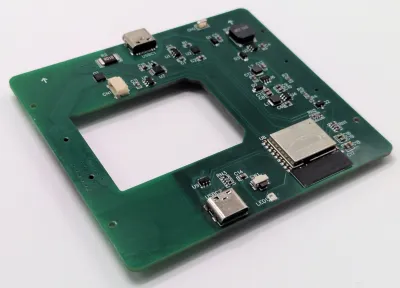
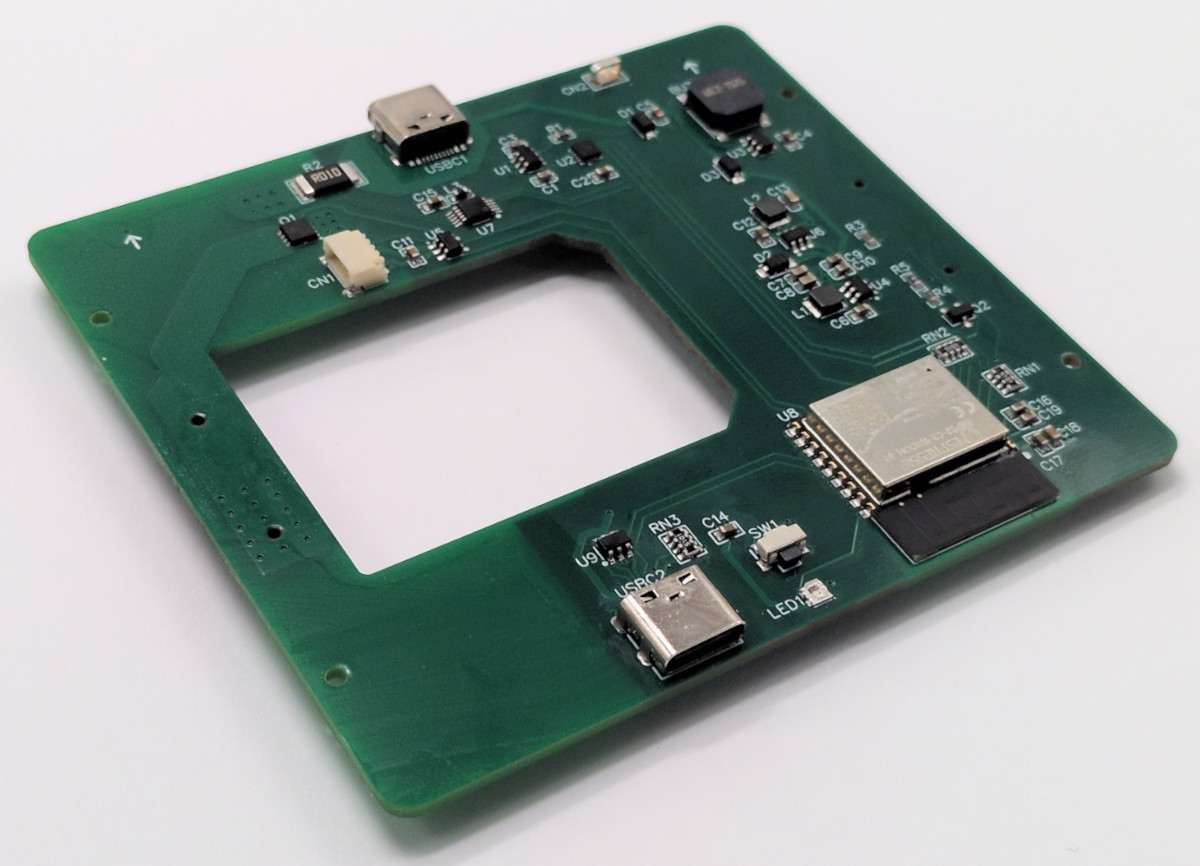
This reflow rig is designed for smaller work, with a working area of 80 mm x 70 mm. There are two options for the heating element—either a metal core PCB-based heater, or a metal ceramic heater. The former is good for working with Sn42Bi58 solder paste at 138 C, according to [Vitaly], while the latter will happily handle Sn63Pb37 at 183 C if the dirty stuff is more your jam.
Running the show is an ESP32-C3-WROOM, which serves up a web-based control panel over Bluetooth for setting the heating profiles. Using Bluetooth over WiFi might seem like an odd choice at first, but it means you don’t have to add the hot plate to the local wireless network to access it, handy if you’re on the move. It’s also worth noting that you can’t run this off any old USB charger—you’ll need one compatible with USB Power Delivery (PD) that can deliver at least 100 watts.
If you’re needing to whip up small boards with regularity, a hotplate like this one can really come in handy. Files are on GitHub for those eager to build their own.
The Information reported that an AI agent within Meta took unauthorized action that led to an employee creating a security breach at the social company last week. According to the publication, an employee used an in-house agentic AI to analyze a query from a second employee on an internal forum. The AI agent posted a response to the second employee with advice even though the first person did not direct it to do so.
The second employee took the agent’s recommended action, sparking a domino effect that led to some engineers having access to Meta systems that they shouldn’t have permission to see. A representative from the company confirmed the incident to The Information and said that “no user data was mishandled.” Meta’s internal report indicated that there were unspecified additional issues that led to the breach. A source said that there was no evidence that anyone took advantage of the sudden access or that the data was made public during the two hours when the security breach was active. However, that may be the result of dumb luck more than anything else.
Many tech leaders and companies have touted the benefits of artificial intelligence, this is just the latest incident where human employees have lost control over an AI agent. Amazon Web Services experienced a 13-hour outage earlier this year that also (apparently coincidentally) involved its Kiro agentic AI coding tool. Moltbook, the social network for AI agents recently acquired by Meta, had a security flaw that exposed user information thanks to an oversight in the vibe-coded platform.
During a Senate hearing, FBI Director Kash Patel confirmed that his agency has bought information that could be used to track individuals’ movement and location. “We do purchase commercially available information that’s consistent with the Constitution and the laws under the Electronic Communications Privacy Act, and it has led to some valuable intelligence for us,” he said.
Law enforcement is required to obtain a warrant in order to get location data from cell service providers following the Carpenter v United States ruling from 2018. But why bother with all that hassle when they can just buy the information from the open market?
“Doing that without a warrant is an outrageous end run around the Fourth Amendment, it’s particularly dangerous given the use of artificial intelligence to comb through massive amounts of private information,” Sen. Ron Wyden, (D-Ore.) said during the Intelligence Committee hearing. Wyden is one of several lawmakers pushing for an overhaul of when and how the government can obtain citizens’ personal information.
It’s an overhaul that’s badly needed. Patel already has a history of dubious use of government resources, such as ordering SWAT protections for his girlfriend and somehow horning in on men’s hockey victory celebrations at the recent winter Olympics, so one would hope he’s not also stretching the limits of the few privacy protections that do exist. Then outside the FBI, we have the Department of Homeland Security being sued for illegally tracking immigration raid protestors and the Pentagon’s labeling of Anthropic as a supply-chain risk after the AI company refused to let its products be used for mass surveillance of Americans.
Cloudflare is appealing a 14.2 million-euro fine from Italy for refusing to comply with its “Piracy Shield” law, which requires blocking access to websites on its 1.1.1.1 DNS service within 30 minutes. The company argues the system lacks oversight, risks widespread overblocking, and could undermine core Internet infrastructure. Ars Technica’s Jon Brodkin reports: Piracy Shield is “a misguided Italian regulatory scheme designed to protect large rightsholder interests at the expense of the broader Internet,” Cloudflare said in a blog post this week. “After Cloudflare resisted registering for Piracy Shield and challenged it in court, the Italian communications regulator, AGCOM, fined Cloudflare… We appealed that fine on March 8, and we continue to challenge the legality of Piracy Shield itself.” Cloudflare called the fine of 14.2 million euros ($16.4 million) “staggering.” AGCOM issued the penalty in January 2026, saying Cloudflare flouted requirements to disable DNS resolution of domain names and routing of traffic to IP addresses reported by copyright holders.
Cloudflare had previously resisted a blocking order it received in February 2025, arguing that it would require installing a filter on DNS requests that would raise latency and negatively affect DNS resolution for sites that aren’t subject to the dispute over piracy. Cloudflare co-founder and CEO Matthew Prince said that censoring the 1.1.1.1 DNS resolver would force the firm “not just to censor the content in Italy but globally.”
Piracy Shield was designed to combat pirated streams of live sports events, requiring network operators to block domain names and IP addresses within 30 minutes of receiving a copyright notification. Cloudflare said the fine should have been capped at 140,000 euros ($161,000), or 2 percent of its Italian earnings, but that “AGCOM calculated the fine based on our global revenue, resulting in a penalty nearly 100 times higher than the legal limit.”
Despite its complaints about the size of the fine, Cloudflare said the principles at stake “are even larger” than the financial penalty. “Piracy Shield is an unsupervised electronic portal through which an unidentified set of Italian media companies can submit websites and IP addresses that online service providers registered with Piracy Shield are then required to block within 30 minutes,” Cloudflare said. Cloudflare is pushing for the law to be struck down, arguing that it is “incompatible with EU law, most notably the Digital Services Act (DSA), which requires that any content restriction be proportionate and subject to strict procedural safeguards.”
Advertisement
In addition to appealing the fine, Cloudflare says it will continue to challenge Piracy Shield in Italian courts, engage with EU officials, and seek full access to AGCOM’s Piracy Shield records.
Gaming is growing every day, and a big part of that can be attributed to Tencent Games, which has been behind games like BGMI. Now, MoreFun Studios, a subsidiary of Tencent, has launched the Closed Beta Test (CBT) for its mobile tactical shooter Arena Breakout in India. Players can now download the game’s beta version on Android and iOS and experience hardcore FPS gameplay ahead of its official launch.
What is Arena Breakout?
Arena Breakout is a hardcore tactical first-person shooter in which survival and strategy play a key role. Unlike traditional mobile shooters, the game focuses heavily on realistic combat, inventory management, and extraction-based gameplay.
Players enter the war-torn region of Kamona, a fictional battlefield devastated by civil war. The objective is simple but challenging: explore the combat zone, collect valuable loot, and reach the extraction point safely.
However, players must survive encounters with enemy combatants and other players along the way. Every item carried into battle can be lost if the mission fails, making each run a high-risk, high-reward experience. Arena Breakout has already gained significant global traction, with the developers claiming over 100 million downloads.
Advertisement
Extensive Weapon Customization
Another highlight of Arena Breakout is its Ultimate Gunsmithing System, which allows players to build and customize weapons in great detail. The system includes:
700+ weapon accessories
10 modification slots
Extensive gun customization options
Players can modify weapons to suit different playstyles, whether that means building stealth-focused loadouts or heavily armored combat setups.
How To Access the Closed Beta?
If you can’t wait to get your hands on Arena Breakout, the closed beta test is live in India. You can download it on your phone by clicking the link here. Just remember that since it’s a closed beta, there may be random glitches or bugs. So, keep an eye out for those.
























































You must be logged in to post a comment Login