Tech
AMD, Nebius and Starmer pour billions into UK AI at LTW

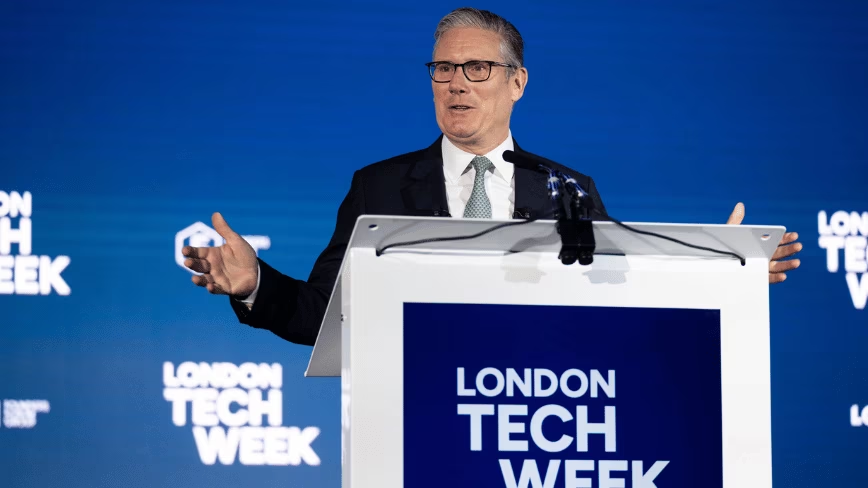

London Tech Week opened the way these events increasingly do: with a leaderboard of investment pledges. By the end of the first morning, the UK had collected several billion pounds in AI commitments, most of it aimed at the unglamorous machinery of compute.
Prime Minister Keir Starmer kicked off the keynotes with a new national AI compute strategy, including £400mn to buy specialist AI chips and expand the country’s computing capacity, part of a push he framed around keeping British firms able to “start here, scale here and stay here”.
The bigger numbers came from industry.
AMD committed up to £2bn over five years, backing high-performance computing with the University of Cambridge and Imperial College and taking direct stakes in UK startups, with chief executive Lisa Su on stage to announce it.
Cloud provider Nebius pledged around £1.7bn to build out UK AI capacity, funding three new deployments of Nvidia infrastructure that will reach 65 megawatts by 2027 and expanding its London R&D hub.
London’s mayor, Sadiq Khan, added a smaller but pointedly different commitment: £12mn to help the city’s small businesses actually adopt AI, through readiness checks and mentoring, rather than build it. The Prince of Wales is due to appear later in the week, tying technology to his Homewards anti-homelessness initiative.
The backdrop is a UK tech sector that, by Tech Nation’s count, is now worth £1.2tn, with British AI startups raising more than £8.2bn in venture capital in the first half of 2026 alone, close to half of all European tech investment by the prime minister’s reckoning. Europe’s IT spending is forecast to grow 8.2 per cent this year to $1.3tn, its fastest in half a decade.
For a country anxious about being squeezed between the US and China, the figures are a useful retort.
There is a familiar tension under the optimism. Much of the money is for compute infrastructure, and most of that infrastructure runs on American technology: AMD’s chips, and Nvidia’s hardware inside Nebius’s data centres.
The UK’s sovereign-AI ambitions, real as they are, still lean heavily on US suppliers, a dependence the same week’s launch of Cosine’s home-grown “Lumen Sovereign” model was explicitly designed to chip away at. Building capacity in Britain is not the same as owning the stack.
Still, for one morning at Olympia, the direction of travel was clear, and loud.
Between government money, a US chipmaker’s billions, and a cloud firm’s data centres, the UK is betting it can be the place where Europe’s AI gets built. The harder question, as ever, is whether that turns into companies, jobs, and breakthroughs that stay, or simply more rented compute.
London Tech Week runs until 10 June, with the pitches, and the pledges, set to keep coming.
You must be logged in to post a comment Login