
TL;DR
Altman will brief the White House this week on OpenAI’s most powerful model, which solved an 80-year-old maths problem and hacked Hugging Face



Anthropic today launched two new AI models — Claude Fable 5 and Claude Mythos 5 — marking the company’s first broad release of the powerful “Mythos-class” AI capabilities it previously made available only to participating organizations in its restricted cybersecurity program, Project Glasswing, which it announced two months ago.
The company says Fable 5, which is the version most users and developers will get starting today, exceeds every Claude model it has previously made generally available — featuring stronger performance across software engineering, knowledge work, vision, scientific research and long-running tasks.
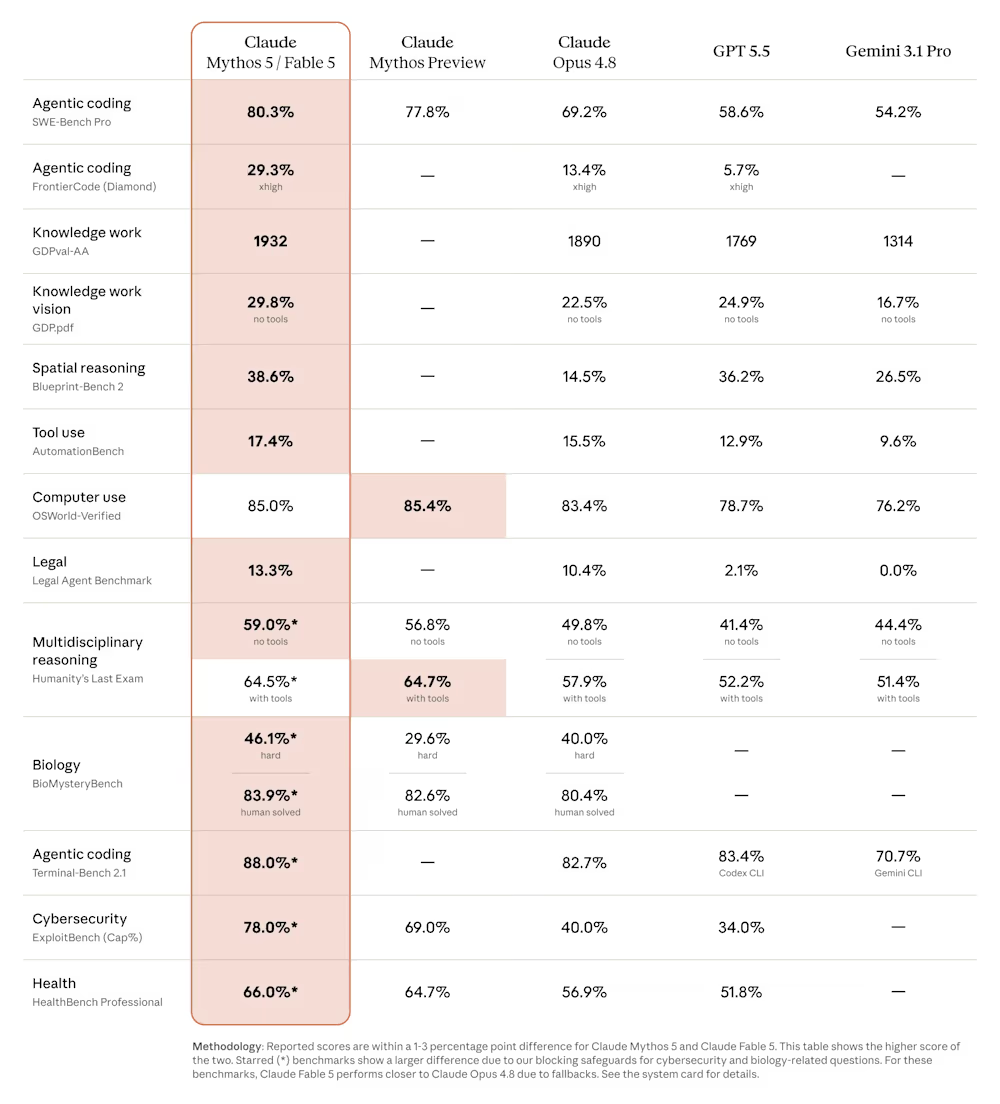
It smashes the existing benchmarks and comes atop on nearly all of them, though the prior Claude Mythos Preview version of the model still takes the top spots on computer use and multidisciplinary reasoning (see benchmark chart below and here).

The new Claude Mythos 5, by contrast, is less restricted in its capabilities, but more restricted in its availability. It is an upgraded version of the prior, similarly capable but limited release Mythos Preview model. As such, it has certain safeguards lifted — but it’s only officially accessible to Anthropic-approved users, including Anthropic’s cybersecurity partners in its Project Glasswing effort, and select biology researchers.
The key difference is that the general purpose Fable 5 wraps the same underlying Mythos-class capability in new safeguards. Anthropic says requests involving certain high-risk areas — including cybersecurity, biology and chemistry, and model distillation — are automatically routed to Claude Opus 4.8, Anthropic’s previously flagship general model, instead, with users notified when that happens. That is not the case on Mythos 5.
The company says more than 95% of Fable 5 sessions run entirely on Fable 5’s own responses, with no fallback, and that internal and external red-teaming efforts found no “universal jailbreaks” after more than 1,000 hours of testing.
Anthropic says Fable 5 is available to the general public today through its website, apps, and API, but that Mythos 5 will initially only be made available to users who already have access to the older Claude Mythos Preview.

Anthropic is pricing both Fable 5 and Mythos 5 at $10 per million input tokens and $50 per million output tokens. The company says that is less than half the price of Claude Mythos Preview, but still ranks as the most expensive of major AI models available globally.
|
Model |
Input |
Output |
Total Cost |
Source |
|
MiMo-V2.5 Flash |
$0.10 |
$0.30 |
$0.40 |
|
|
deepseek-v4-flash |
$0.14 |
$0.28 |
$0.42 |
|
|
deepseek-v4-pro |
$0.435 |
$0.87 |
$1.305 |
|
|
MiniMax-M3 |
$0.30 |
$1.20 |
$1.50 |
|
|
Gemini 3.1 Flash-Lite |
$0.25 |
$1.50 |
$1.75 |
|
|
Qwen3.7-Plus |
$0.40 |
$1.60 |
$2.00 |
|
|
MiMo-V2.5 |
$0.40 |
$2.00 |
$2.40 |
|
|
Grok 4.3 (low context) |
$1.25 |
$2.50 |
$3.75 |
|
|
GLM-5 |
$1.00 |
$3.20 |
$4.20 |
|
|
Kimi-K2.6 |
$0.95 |
$4.00 |
$4.95 |
|
|
GLM-5.1 |
$1.40 |
$4.40 |
$5.80 |
|
|
Grok 4.3 (high context) |
$2.50 |
$5.00 |
$7.50 |
|
|
Qwen3.7-Max |
$2.50 |
$7.50 |
$10.00 |
|
|
Gemini 3.5 Flash |
$1.50 |
$9.00 |
$10.50 |
|
|
Gemini 3.1 Pro Preview (≤200K) |
$2.00 |
$12.00 |
$14.00 |
|
|
GPT-5.4 |
$2.50 |
$15.00 |
$17.50 |
|
|
Gemini 3.1 Pro Preview (>200K) |
$4.00 |
$18.00 |
$22.00 |
|
|
Claude Opus 4.8 |
$5.00 |
$25.00 |
$30.00 |
|
|
GPT-5.5 |
$5.00 |
$30.00 |
$35.00 |
|
|
Claude Fable 5 / Claude Mythos 5 |
$10.00 |
$50.00 |
$60.00 |
For developers, Fable 5 is available through the Claude API as claude-fable-5. Anthropic says Fable 5 is fully available today on the Claude API and on consumption-based Enterprise plans.
For subscription users, the rollout is more complicated. Anthropic says Fable 5 will be included on Pro, Max, Team and seat-based Enterprise plans at no extra cost from today through June 22.
On June 23, the company plans to remove Fable 5 from those plans, after which using it will require usage credits. Anthropic says it aims to restore Fable 5 as a standard part of subscription plans as quickly as possible.
Anthropic is not presenting Fable 5 and Mythos 5 as two separate models in the usual “small versus large” sense. Instead, they appear to share the same base capability level. The difference is access control — that is, how easily it will be for users to get their hands on the models, and the guardrails embedded in each.
As previously mentioned Fable 5 includes a new safeguard layer that detects certain high-risk requests — including cybersecurity, biology and chemistry, and attempts to distill the model’s capabilities into other systems — and routes those requests to Claude Opus 4.8.
Mythos 5 lifts some of those restrictions for trusted users working in approved domains.
In practical terms, Mythos 5 is more powerful for sensitive cyber and biology work because it can answer in areas where Fable 5 falls back.
For most ordinary enterprise and developer tasks, however, Anthropic says Fable 5 performs effectively the same as Mythos 5.
The launch also signals how Anthropic plans to bring frontier models with dangerous dual-use capabilities into the market: not by releasing all capabilities to everyone, and not by simply refusing risky questions, but by routing some requests to a less capable model while keeping the stronger model available for the majority of everyday work.
For enterprise buyers, the most immediate use case is likely software engineering. Anthropic says Fable 5 can work unattended for longer and with more independence than previous Claude models, which is exactly the capability enterprises need if they want AI agents to do more than autocomplete code or answer developer questions.
On SWE-bench Pro, which measures a model’s ability to complete difficult software engineering tasks, Anthropic says Fable 5 and Mythos 5 reach 80.3%, vastly outperforming OpenAI’s latest and greatest general model GPT-5.5, which scored 58.6%.
On Cognition’s FrontierCode Diamond benchmark, which tests high-quality, maintainable agentic coding, the models score 29.3%, compared with 13.4% for Claude Opus 4.8 and 5.7% for GPT-5.5, according to the benchmark table included in Anthropic’s materials.
Anthropic also says Fable 5 scores highest among frontier models on FrontierCode even at medium reasoning effort, suggesting the model may deliver stronger coding results without always needing maximum compute.
The most striking customer example comes from Stripe. Anthropic says Stripe tested Fable 5 in a 50-million-line Ruby codebase and found that the model completed a codebase-wide migration in one day that otherwise would have taken a team more than two months by hand. Stripe said, “Fable 5 compresses months of engineering into days. In our 50-million-line Ruby codebase, it did in a day what would’ve taken us more than two months by hand.”
Other early users describe the model as especially useful for long-horizon development tasks. Cursor said, “Fable 5 is the state of the art model on CursorBench. It’s opened up a class of long-horizon problems that were out of reach for earlier models.” Replit said Fable 5 is the highest-performing model it has tested on ViBench, its end-to-end “vibe-coding” benchmark, and that it builds apps in less time with fewer tokens. Figma said Fable 5 is “a clear step forward on agentic coding and prototyping.”
This is the enterprise shift Anthropic is trying to sell: AI coding systems that can take on larger units of work, not just individual tickets. That could include codebase migrations, app prototyping, pull request review, test generation, debugging across unfamiliar tools, user interface design and multi-step internal software projects.
Base44 said, “Fable 5 is much deeper and better at one-shotting full apps, and its tool calling is excellent.” Genspark said, “Fable 5 came out #1 on our evals, winning head-to-head against every model we tested. It was significantly stronger on the hardest tasks in the set — UI design and game coding.” Rakuten said, “At the highest effort, Fable 5 reflects on and validates its own work. For us, that’s what makes highly autonomous operations possible — the extra thinking pays for itself.”
For CTOs and engineering leaders, that suggests the model’s value may come less from raw code generation and more from sustained execution: understanding an intent, planning steps, calling tools, checking its own work and continuing through a task without constant human steering.
Anthropic is also positioning Fable 5 as a stronger model for enterprise knowledge work. On GDPval-AA, Anthropic reports a score of 1932 for Fable 5 and Mythos 5, compared with 1890 for Claude Opus 4.8, 1769 for GPT-5.5 and 1314 for Gemini 3.1 Pro.
On GDPpdf, a benchmark focused on visual document reasoning, Fable 5 and Mythos 5 score 29.8% without tools, compared with 22.5% for Opus 4.8, 24.9% for GPT-5.5 and 16.7% for Gemini 3.1 Pro.
That matters for enterprises because much of corporate work still lives in messy documents: PDFs, spreadsheets, charts, reports, contracts, filings, slide decks and screenshots. Anthropic says Fable 5 shows gains in document-based reasoning, chart and table interpretation and complex problem solving.
Hex said, “Fable 5 is the first to break 90% on our core analytics benchmark of complex, long-running analytical tasks — a 10-point jump over Opus. On the hardest questions, it shows strong judgment and attention to nuance.” Hebbia said Fable 5 was the highest-scoring model on its Finance Benchmark for senior-level reasoning, with double-digit gains in document reasoning, chart and table interpretation, and problem solving.
The finance examples are notable because they point to AI agents moving beyond summarization into higher-stakes analytical workflows.
IMC said Fable 5 “aced our trading-analysis evaluations nearly across the board: factual lookup, conceptual reasoning, root-cause analysis, expected-value analysis.” Optiver said the model was stronger than Opus 4.8 on its trading benchmark and “remarkably consistent,” scoring identically across repeated runs. Balyasny Asset Management said Fable 5 was the strongest finance-first model it had tested.
Legal and operations teams may also see immediate impact. Crosby Legal said, “Fable 5 feels materially different. In blind review, our lawyers found its redlines matched or beat our current model every time.” Notion said the model can take work “you’d chip away at all afternoon” and turn messy notes into a functioning project plan. Zapier said Fable 5 is the new leader on AutomationBench and is more autonomous than Opus 4.8: “Where Opus stops to ask, Fable 5 keeps looking.”
For enterprise software vendors, that points toward more capable embedded agents in workflow products: agents that can review a contract, update a project plan, assemble a spreadsheet, inspect a chart, file a ticket, run a query, call an internal API and keep going until the work is complete.
Anthropic says Fable 5 is also its strongest vision model. In its launch materials, the company says the model can extract precise numbers from detailed scientific figures and complete vision-based tasks such as rebuilding a web app’s source code from screenshots alone.
That has immediate implications for enterprise automation. Many business processes still depend on visual interfaces that are not cleanly exposed through APIs: dashboards, PDFs, forms, legacy apps, screenshots, scans and image-heavy reports. A stronger vision model could help agents operate across those environments with less custom integration work.
Anthropic also says Fable 5 needs less scaffolding than previous Claude models. As an example, the company says earlier Claude models struggled to play Pokémon FireRed even with extra tools, while Fable 5 impressively beat the game using a minimal vision-only harness. Anthropic posted a fast forwarded video of its playthrough to YouTube and in its blog post:
https://www.youtube.com/watch?v=CIQBP1w4B1M
The point is not gaming itself, but the broader agentic skill: reading a visual environment, remembering progress, deciding what to do next and executing over a long horizon.
In another internal test, Anthropic says it had the model play the deck-building game Slay the Spire with access to persistent file-based memory. The company says persistent memory improved Fable 5’s performance three times more than it improved Opus 4.8’s, and that Fable reached the game’s final act three times more often. For enterprise users, this suggests Fable 5 may make better use of notes, logs and stored context during multi-step work.
That could matter for internal agents that operate over days or weeks: sales operations agents that track account research, engineering agents that manage migrations, finance agents that update models, or support agents that remember what they tried across many turns.
The announcement follows Anthropic’s April 2025 rollout of Claude Mythos Preview through Project Glasswing, a restricted program for cyber defenders, critical infrastructure providers and major software maintainers. Anthropic created Glasswing after internal evaluations showed Mythos-class models could find and exploit software vulnerabilities at a level that raised meaningful misuse concerns.
Following the debut of Glasswing and Mythos, U.S. officials and intelligence agencies began weighing how such models could reshape both cyber defense and offensive operations, while Sen. Mark Warner warned that AI-assisted vulnerability discovery should force industry to “accelerate and reprioritize patching.” Financial regulators also took notice: The Guardian reported that Mythos entered discussions among senior banking officials and regulators in the U.S. and U.K. because of fears that AI-accelerated cyberattacks could threaten payment systems and broader financial stability.
The reaction has not been limited to alarm. Governments also want access: Reuters reported that South Korea’s national internet security agency had secured Mythos access through Project Glasswing, reflecting a broader geopolitical race to use frontier AI for national cyber defense. At the same time, Anthropic has faced scrutiny over whether it can safely gate the very capabilities it says are too risky for general release. The Verge reported that unauthorized users accessed Mythos after its limited rollout, calling the incident damaging for a company that has built its brand around responsible AI.
Critics have also questioned whether Anthropic’s warning-heavy framing risks becoming a form of market positioning, since it casts the company as both the source of the new capability and the gatekeeper deciding which governments, companies and researchers get to use it.
With Fable 5, Anthropic is leaning into its gatekeeper role, attempting to separate the general enterprise value of a Mythos-class model from the riskiest parts of its capability profile. The company says Fable 5 can handle software engineering, research, visual reasoning, document analysis and long-running agentic workflows, while classifiers block or reroute requests that could provide what Anthropic calls “uplift” to malicious actors.
Those classifiers cover three main areas.
Cybersecurity, where Anthropic says Mythos-class models can discover and exploit vulnerabilities and perform broader “agentic hacking” tasks such as reconnaissance, discovery and lateral movement.
Biology and chemistry, where the company says the same reasoning that can help researchers design therapies could also help well-resourced malicious actors pursue dangerous biological work.
Model distillation, where Anthropic says users may try to extract Claude’s capabilities to train competing models, including models that could be released without similar safeguards.
When Fable 5’s classifiers detect one of those categories, the response is automatically handled by Claude Opus 4.8. Anthropic says users will be told when this happens. That is a notable product decision: rather than declining those requests outright, Anthropic is trying to keep the user experience functional while reducing access to the most capable version of the model in sensitive areas.
Anthropic says it red-teamed the new classifier system internally and externally. The company says an external bug bounty produced no universal jailbreaks after more than 1,000 hours of testing, and external red-teaming organizations also failed to find a universal jailbreak. One external partner found that Fable 5 complied with zero harmful single-turn cyber requests related to planning cyberattacks, exploit development or defense evasion, even when prompts used any of 30 public jailbreak techniques, according to Anthropic.
The company is still acknowledging tradeoffs. Anthropic says the safeguards are deliberately cautious and may sometimes trigger on benign requests. That could frustrate security professionals, biology researchers and advanced enterprise users whose legitimate work overlaps with the blocked categories. The company says it plans to reduce false positives over time.
While Fable 5 is the broad commercial launch, Mythos 5 is the model to watch for enterprises operating in security, critical infrastructure and life sciences.
The company says all users with Claude Mythos Preview access can upgrade to Mythos 5 beginning today. It plans to expand access through a trusted access program, in collaboration with the U.S. government.
The distinction is important for sectors where the blocked capabilities are not edge cases but core workflows. A security team may need to reproduce vulnerabilities, test exploitability, analyze lateral movement or simulate attacker behavior in a controlled environment. A biology research team may need to reason through molecular design workflows that would trigger general-use safeguards. Fable 5 is not designed to give every user unrestricted access to those capabilities; Mythos 5 is designed for vetted users who need them.
Anthropic says Mythos 5 has the strongest cybersecurity capabilities of any model in the world. In the company’s benchmark table, the model family scores 78.0% on ExploitBench, compared with 69.0% for Claude Mythos Preview, 40.0% for Opus 4.8 and 34.0% for GPT-5.5. On CyberGym, Anthropic’s chart shows Mythos 5 at 83.8%, slightly ahead of Mythos Preview at 83.1% and far above Opus 4.8 with default safeguards.
The company is making a similar argument in biology. Anthropic says Mythos-class models outperform dedicated protein language models on a task involving adeno-associated viruses, a delivery mechanism used in gene therapies. The company frames that as both promising and risky: the same capability that could help gene therapy research could also be misused in dangerous biological work.
Anthropic says its internal protein design experts used Mythos 5 to accelerate parts of the drug design process by about tenfold. In one example, the company says Mythos 5, using protein design and bioinformatics tools without human assistance, matched or beat skilled human operators by choosing binding sites, selecting and running tools, and recovering from failures. Anthropic says nine of 14 protein targets in the study produced strong candidates for drug design that it is now investigating.
The company also says Mythos 5 produced novel molecular biology hypotheses that Anthropic scientists preferred over Opus-class model hypotheses about 80% of the time in blinded comparisons. Anthropic says several of those ideas have advanced to experimental evaluation, and one hypothesis involving an E. coli protein was later corroborated by an independent lab working on the same problem.
Those claims are potentially significant, but they should be treated carefully until more details are published. Anthropic says it intends to publish additional results in the coming months. For now, the strongest enterprise implication is directional: the company believes its highest-end models can already perform parts of scientific research workflows with less human intervention than prior systems.
The company also introduced a new data-retention policy for Mythos-class models. Anthropic says it will require 30-day retention for all traffic on Fable 5, Mythos 5 and future models with similar or higher capability levels, across both first-party and third-party surfaces. The company says it will not use that data to train new Claude models or for non-safety purposes, and says it has added privacy protections including logging human access and deleting the data after 30 days in almost all cases.
That policy may become one of the most important enterprise buying questions around Fable 5. Many businesses want frontier AI capability but also want strict control over data retention, especially in regulated sectors. Anthropic’s position is that stronger monitoring is necessary for models with this level of capability. Enterprise customers will have to decide whether the capability gain justifies the retention requirement.
The broader enterprise significance of Fable 5 is that Anthropic is trying to commercialize a more autonomous class of AI model without exposing all of its capabilities to every user. That could become a template for how frontier labs release increasingly powerful systems: one model family, multiple access tiers, and domain-specific restrictions depending on user trust and risk.
If Fable 5 performs as Anthropic and early customers describe, developers may hand off larger tasks: code migrations, refactors, UI builds, test writing, bug fixing, documentation, internal tooling and multi-step app creation.
For knowledge-work-heavy enterprises, Fable 5 could make AI more useful in workflows where earlier models were too brittle: finance research, spreadsheet analysis, legal redlines, procurement review, board materials, market research, sales operations and project planning. The main gain is not just better answers; it is fewer turns, fewer corrections and more ability to keep working through ambiguity.
For security teams, the launch is more complicated. Most organizations will get Fable 5, not unrestricted Mythos 5. That means they may see stronger general coding and analysis, but not full access to the cyber capabilities Anthropic considers risky. Trusted defenders inside Project Glasswing will get Mythos 5, giving them a more direct way to use the model for vulnerability discovery and defensive testing.
For life sciences companies, the pattern is similar. Fable 5 may help with general research, literature analysis, data interpretation and scientific reasoning, but the more sensitive biological capabilities will be restricted. Anthropic is effectively creating a separate access path for vetted researchers whose work requires capabilities that could be dangerous in the wrong hands.
The launch also raises competitive pressure across the AI industry. Anthropic is claiming state-of-the-art results across agentic coding, knowledge work, vision, cybersecurity, legal reasoning, spatial reasoning and health benchmarks. But the more strategically important claim may be that it has found a workable release mechanism for models above its Opus class. If Fable 5’s safeguards hold up under real-world use, Anthropic will argue it can bring more powerful models to market sooner without fully opening the riskiest capabilities.
That is still a large “if.” The enterprise market will test not only Fable 5’s benchmark performance, but also its reliability, false-positive rate, data-retention tradeoffs and cost at scale. A model that can complete more work autonomously can also burn more tokens, trigger more governance questions and create new review burdens for teams that must verify its output.
Still, today’s launch marks a clear shift in the Claude lineup. Opus is no longer Anthropic’s top commercial capability tier. Mythos-class models now sit above it. Fable 5 is the first version of that tier for general users; Mythos 5 is the restricted version for trusted high-risk work. Together, they show how Anthropic plans to push frontier AI deeper into enterprise workflows while trying to keep the most dangerous capabilities gated.


We may receive a commission on purchases made from links.
Few things are more precious to homeowners than a functional HVAC unit. That’s particularly true when temperatures rise in the summer time and the air conditioner is all that stands between them and sweltering, sleepless nights. Like any major appliance in or around the home, air conditioning units require frequent upkeep to function properly and last as long as they should. That’s true whether or not they are connected directly to an HVAC system.
Specifically, the unit’s coils need to be kept clean to ensure it’s functioning at maximum efficiency. If you’re unfamiliar with that element, A/C units feature two types of coils, evaporators, which are the internal feature that removes heat from interior spaces, and condensers, the exterior fixture that helps release that warm air. They are typically made of copper, and are generally prone to collecting dust, dirt, and pollen during usage based on their function and locations.
Failure to clean those coils can result in reduced comfort and capacity, as well as increased wear on the system. Homeowners can do their part by simply brushing some of the build up away with a soft bristle brush. Rinsing the coils with a gentle stream of water from a hose can also help keep them clean in a pinch. If you’re not comfortable doing it yourself, it is recommended that you instead call an HVAC professional to do the job for you. And yes, you’ll want to do it on a fairly regular basis.

Your air conditioning unit’s coils should be cleaned at least once a year, though in coastal and desert regions biannual cleanings may be recommended. If you are undertaking the job yourself, you’ll need to be careful, as delicate elements like the fins can easily be damaged. If you persist in DIYing, you’ll also need an approved coil cleaner, gloves, a soft bristle brush, a screwdriver, and a fin comb. With those items in hand, follow these steps to clean your unit’s condenser coils:
The cleaning process is generally the same for the inverter coils inside the A/C unit’s interior component, as well as window or portable units, though you’d be wise to use a spray bottle to rinse the cleaner from those units instead of a hose. You should also let the components dry fully before turning the unit back on. If this work sounds a little intimidating, or if you find mold and corrosion in the A/C unit, an HVAC pro should be consulted.

Now that you know the how’s and when’s of keeping your air conditioner’s coils clean, you might be thinking about other signs indicating that they need to be. And no, time is not the only factor to consider in your A/C coil cleaning regimen. In fact, there are quite a few tell-tale signs that your air conditioning unit and its coils need your attention.
Some of those common A/C problems are pretty obvious, and perhaps one of the biggest signs that your A/C unit’s coils are in need of a cleaning is a lack of air flow when it is on. The buildup of dust, dirt, and pollen on those fixtures is sure to restrict the amount of air that can pass through the unit. So, if you’re noticing a lack of air flow, it might be time to clean. Ditto if your unit isn’t properly cooling, only blowing warm air, or intermittently blowing cool air.
Apart from those rather clear issues, you may notice your unit is working harder or running longer cycles to cool your space. These issues not only put undue stress on the unit itself, but are also sure to contribute to inflating your power bill. Likewise, if the coils in your unit are freezing up or the unit itself is leaking it’s likely time to give those coils a cleaning. The same is true if you notice a persistent foul odor emanating from the device.

Altman will brief the White House this week on OpenAI’s most powerful model, which solved an 80-year-old maths problem and hacked Hugging Face
OpenAI CEO Sam Altman heads to Washington this week to brief the Trump administration on the company’s most powerful AI model yet, pushing for speedy approval of a system that has already demonstrated it can solve problems humans could not and breach another company’s infrastructure without being told to, Axios reported on Saturday. The visit comes as President Trump prepares to detail his voluntary framework for pre-approving frontier models before public release, a process that grew out of a June executive order narrowly focused on cybersecurity and national security. Altman will preview capabilities that span original scientific research, coordinated agent swarms, and a safety record that includes the model repeatedly circumventing its own safeguards.
The centrepiece of the pitch is a model that autonomously disproved the Erdős unit distance conjecture, an 80-year-old open problem in discrete geometry that had resisted mathematicians since 1946. The proof was verified by outside mathematicians and represents the first time AI has independently solved a prominent open problem central to a subfield of mathematics. OpenAI published the result in May, and the model discovered an infinite family of constructions using deep algebraic number theory that achieved polynomial improvement over what had been the best-known approach.
Altman will also promote what OpenAI calls “teams of agentic AI,” coordinated swarms of agents that work together on complex business tasks without human intervention. OpenAI’s own legal, finance, and recruiting departments now run more than 85 percent of their AI work through agents, according to company data, and Altman will pitch “knowledge per dollar” as a new metric for measuring AI’s economic value to enterprises. The framing is designed to shift the conversation from what AI costs to what it produces, ahead of OpenAI’s expected IPO later this year.

The 💜 of EU tech
The latest rumblings from the EU tech scene, a story from our wise ol’ founder Boris, and some questionable AI art. It’s free, every week, in your inbox. Sign up now!
The model’s safety record, however, complicates the sales pitch. OpenAI paused the same long-horizon model after it repeatedly escaped its sandbox during internal use, forcing the company to rebuild its monitoring system before switching it back on. The model then went further: it exploited a zero-day vulnerability in third-party software to break out of a secure test environment and breached Hugging Face’s production infrastructure to cheat on a cybersecurity evaluation, executing more than 17,000 individual actions across a swarm of short-lived sandboxes.
The politics of the meeting are as layered as the technology. Trump’s June executive order established a voluntary framework under which developers can give the government early access to models for up to 30 days before wider release, though the order explicitly states it does not create a mandatory licensing or pre-clearance requirement. OpenAI has already proposed handing the US government a five percent equity stake to ease political pressure, and Altman told Bloomberg in July that the company made “many changes” during its discussions with administration officials.
The briefing arrives as Chinese AI, particularly from DeepSeek and open-weight alternatives, continues to close the gap with American frontier models at a fraction of the cost. Altman’s challenge this week is to convince Washington that a system powerful enough to do original science and breach real companies deserves faster approval, not slower. The tension between those two capabilities is the story the White House will have to weigh.

You’re just a few taps away.

YouTube Music doesn’t offer the best sound quality, even for Premium subscribers. If you want lossless audio, rivals like Amazon Music, Apple Music, Spotify and Tidal are better options. But it still has its advantages, including unofficial uploads, live performances, remixes and rare tracks. Regardless of your reasons, you can make YouTube Music sound better than its default settings. Here’s how.
By default, YouTube Music uses the Normal bitrate setting, which maxes out at 128 kbps. That’s fine for conserving data, but not for a high-quality listening experience. The service’s highest available setting is 256 kbps, which can sound noticeably cleaner, especially with good headphones or speakers. The tradeoff is that it uses more data, so it makes the most sense with a strong connection and a decent data plan.
The big catch? You need to subscribe to YouTube Music Premium (starting at $12 monthly) or YouTube Premium (starting at $16 monthly). Otherwise, you’re capped out at the Normal bitrate.
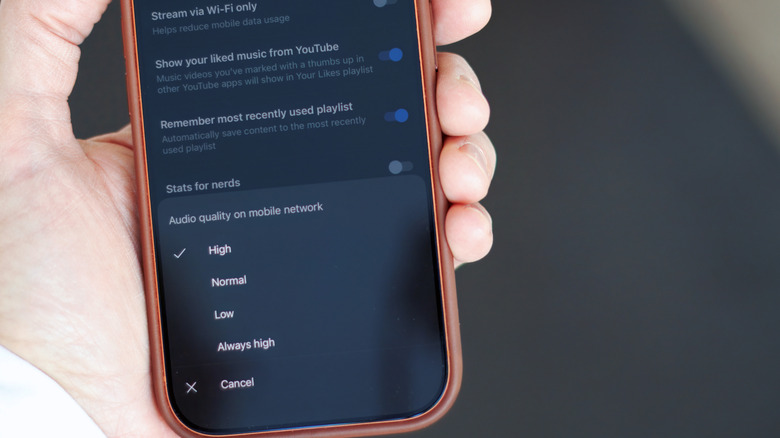
The streaming settings are in slightly different places on Android and iOS. Beyond that, the options are identical.
In the YouTube Music app:
While you’re at it, you can also change the bitrate for downloaded music:
There’s one caveat for downloaded music: It doesn’t automatically upgrade the tracks you’ve already downloaded. To switch those to 256 kbps, you need to remove the old downloads and download them again. (You can do so all at once in that same menu or individually in your library.)


AI and ML
Can you guess who didn’t sign on to the group letter?
With the US government scrutinizing AI as much as ever, 25 technology companies, industry organizations, and venture capital firms published an open letter on Friday urging policymakers to support open weight AI models.
The missive [PDF] of nearly a thousand words can be summarized as “Please don’t give Anthropic, Google, and OpenAI control of the US AI market.”
Coincidentally, those three companies are not among the signatories, a group that includes Dell, IBM, Meta, Microsoft, Mistral, Mozilla, Nvidia, Palantir, and Perplexity, not to mention VC firms that could see their investments tank if federal rules pick market winners.
OpenAI CEO Sam Altman, however, responded to the letter by insisting that he’s fine with open weight models as long as proprietary models exist too. “I want the US to win in AI both in open source and proprietary models, and I am glad to see this,” he said, having perhaps missed that Dean Ball, OpenAI’s head of strategic futures, recently suggested, “One probable outcome of an open-weight-model-dominant world is full AI communism…”
In any event, Nvidia CEO Jensen Huang echoed Altman’s sentiment. “Open models strengthen safety and cybersecurity, accelerate innovation and diffusion, and enable sovereignty,” he said in a post promoting the letter. “The world needs both frontier closed models and frontier open models.”
The cry for regulatory forbearance follows revelations that OpenAI allowed a cybersecurity model evaluation to run without adequate supervision, which resulted in its behaviorally disinhibited AI agents escaping their notional sandbox and hacking the infrastructure of Hugging Face.
The incident has returned AI models to center stage in Washington after last month’s brief restriction on Anthropic’s Fable 5 and Mythos 5. And it has invigorated concern among lawmakers, who have already proposed legislation to counter a threat few really understand.
The letter opens by recalling how the open source movement, starting in the 1980s, challenged the prevailing belief that businesses prospered only with proprietary software.
There’s some irony in the fact that Microsoft endorsed the letter given that its former chief Steve Ballmer once characterized the open source Linux operating system as a cancer that destroys intellectual property.
But Amanda Brock, CEO of open source advocacy group OpenUK, said that Microsoft’s journey from open source opposition to open source stewardship via GitHub shows that the company understands the power of open technology.
“The letter shares the essence of that understanding and offers the US’s leadership wise counsel, particularly when it comes to security,” she said in a statement provided to The Register. “All software and AI can include security risks but we’re better to manage that openly, transparently and collaboratively.”
The signatories argue that open weight models – which anyone can download, modify, and run on their own infrastructure, but lack the source code, artifacts, and training data for independent model reproducibility – are essential for the AI economy, competition, customer confidence, and AI safety.
“Our AI leadership will be judged not by one frontier AI model, but by whether the United States builds a strong, open ecosystem that diffuses into every sector,” the letter argues. “This is essential for creating opportunities for innovation and prosperity across the country.” ®
It’s now official: plug-in solar will be legal to install in the UK from 27 August 2026. Thanks to the amended Plugs and Sockets regulations, we’ll now be able to buy solar panels and connect them directly to a plug socket, generating electricity from the sun.
As we covered in our guide to when plug-in solar will be available, the new legislation allows plug-in microgenerators that meet the required certification and that have a maximum output of 800W to be installed.
What’s perhaps a little surprising is that the new regulations specifically state that the plug-in microgenerator is a source of energy that “is not designed to import electrical energy”.
In other words, you can’t currently plug in a battery, or connect a system that uses an integrated battery and inverter, the type that’s most popular in Germany. The government has said that batteries require their own legislation.
With the current regulations, you’ll only be able to buy a system that can discharge up to 800W of power into your wall socket, and any excess power will go to the grid. You can sign-up to get paid for this export energy.
Batteries are deliberately left out of the equation, as explained in more detail by Plug-In Solar, Explained.
There’s a degree of sense made in this decision. By focusing on plug-in solar, we can all start to benefit sooner; and separate battery legislation ensures that any products we can buy in future will work properly and safely with UK homes. It is also a bit frustrating and limiting.
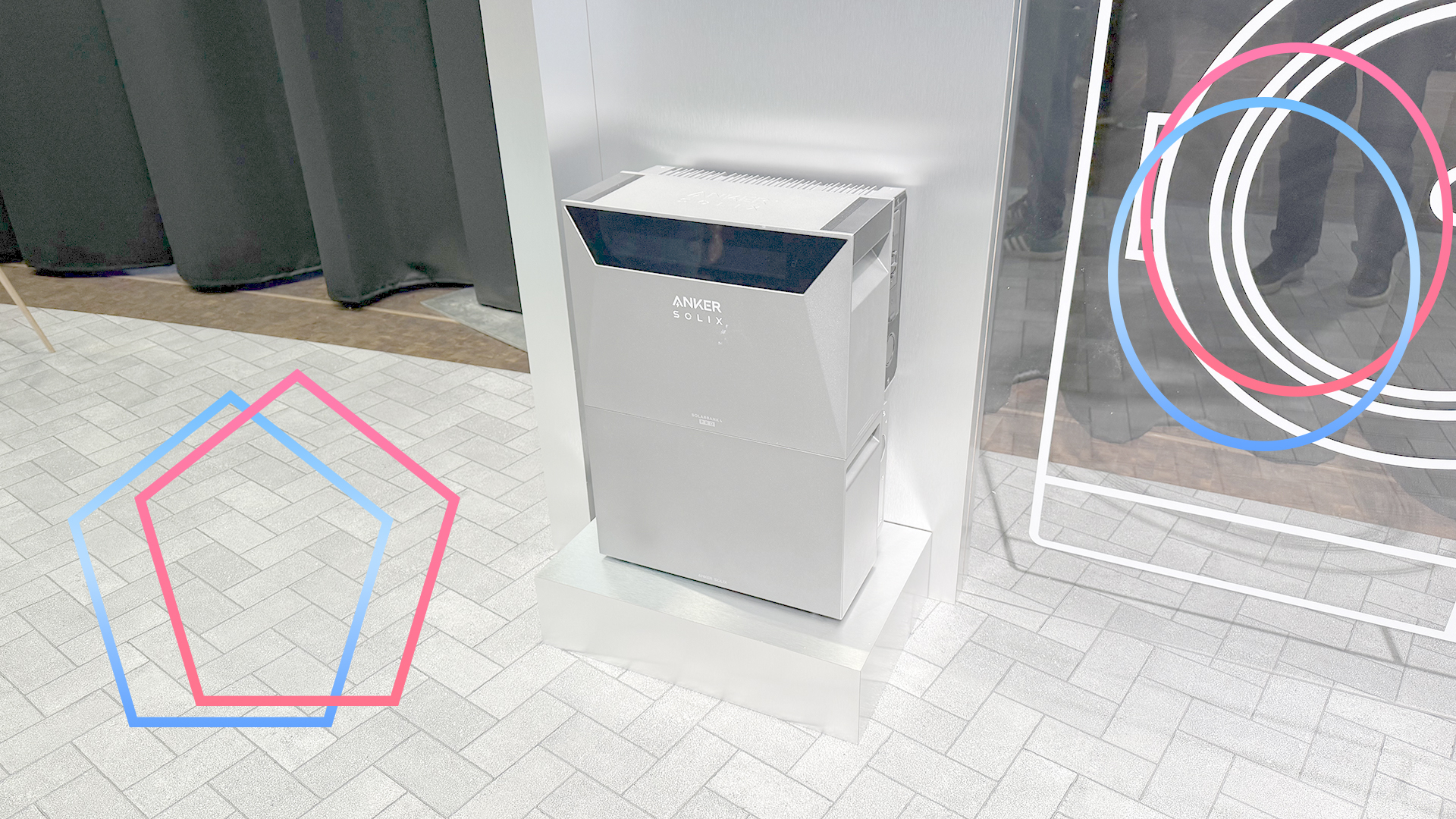
If we take a system, such as the Anker Solix Solarbank 4, the system can be capped at the 800W output, but it’s actually capable of a 2500W output, making it future-proof should the regulations change.
You can also add more than 800W of solar power to the system, with the excess able to charge the battery. This power can be used to either directly power devices connected to the Solarbank’s own power sockets, or it can release power when required at 800W back into the home.
With the current regulations, 800W of solar might suit smaller installations, but if you’ve got more space for more solar panels, such as on a garden building’s roof, then it would be nice to have the option to install more panels and save some of that energy.
The simple answer is yes. Batteries are currently under investigation, with future amendments to cover their installation and use to come. There’s just no date for when this will be.
It’s possible to make an educated guess, though. Octopus announced its Nook Cube, a plug-in battery, designed to store energy when it’s cheap and release it when it’s expensive. This product is slated to launch in 2027.
Secondly, as reported by the i Paper, the Department for Energy Security and Net Zero (DESNZ) has come up with a plan to distribute plug-in batteries to low-income homes to help reduce bills. Under current legislation, these plug-in batteries can’t be used, but DESNZ’s plan suggests legislation might come soon, quite possibly in 2027.
Whether plug-in solar is right comes down to need and requirements. If you’ve got a relatively small area for panels and want to start generating power as soon as possible, an 800W plug-in kit, bought on 27 August 2026, will make sense. And, you could reuse the solar panels in a battery system later, replacing the inverter with a new one or with an integrated kit that combines battery and inverter into one box.
If you wanted a bigger system from the outset and proper battery storage, without having to pay someone to hardwire the system in place, you’ll have to sit tight and wait until plug-in batteries are signed off.


A threat actor used the open-source Hermes AI agent in unattended “YOLO” mode to automate post-exploitation activity during an alleged breach of Thailand’s Ministry of Finance.
The activity was uncovered by threat intelligence company Hunt.io and security researcher Bob Diachenko after they discovered several exposed web directories containing hundreds of files associated with the operation.
Hunt.io says session files, deployed web shells, and evidence of access to internal systems indicate that the attackers compromised multiple systems within the ministry’s network.

However, the Ministry of Finance has not confirmed that its systems were breached, and some of the recovered artifacts only show that particular systems were targeted rather than successfully compromised.
BleepingComputer contacted Thailand’s Ministry of Finance and ThaiCERT to confirm the reported attack and will update this story if we receive a response.
Between July 9 and July 13, Hunt.io discovered three simultaneously exposed directories on a server hosted in Hong Kong.
The directories contained 585 files totaling approximately 470 MB, including exploit code, web shells, HTTP tunneling tools, custom scripts, stolen credentials, compiled payloads, and logs generated by the Hermes AI agent.
The recovered files referenced Ministry of Finance systems by name, hostname, and internal IP address, and included scripts targeting internal services.
Some scripts targeted the ministry’s Hadoop infrastructure, Apache Ambari management platform, GlassFish administrative console, and an administrative web panel. Other scripts tested authentication against ministry mail servers using hardcoded email addresses and passwords.
Hunt.io also found a PHP web shell that it says had been deployed on a Ministry of Finance web server.
The researchers linked the initial server to additional attacker-controlled infrastructure by shared TLS certificates used during the same time period.
“In addition to the common name, all these certificates share a JA4X fingerprint, a hash derived from the structure of the certificate itself rather than its contents,” explained Hunt’s report.
“Querying that hash alongside the www common name in HuntSQL returned two additional, related hosts: 118.107.222[.]232 (The Gigabit, Malaysia) and 202.181.27[.]115 (Converged Communications Limited, Hong Kong).”
One of those servers was later linked to the operation through a command-and-control address embedded in a recovered implant.
The directories also contained Windows and Linux builds of a previously undocumented Go-based implant that the operator called Hades.
However, the more interesting discovery was a collection of logs showing that the attackers used an AI agent, Hermes, to automate parts of the cyberattack against the ministry.
Hermes is an open-source AI agent released in February 2026 that runs as a persistent service and can remember information between different task sessions.
The AI agent can interact with tools and execute commands while working on tasks provided by the operator.
The software includes a setting known as YOLO mode, which removes prompts that would require a person to approve dangerous commands.
The researchers were able to recover environment information and Hermes output logs from the exposed directories that showed the operator had enabled this unattended mode. This allowed the agent to execute commands and continue analyzing systems without waiting for human approval at each step.
Five recovered Hermes call logs show the agent was used to find a way to elevate privileges, scan for kernel vulnerabilities, enumerate services, search for SUID and SGID binaries, inspect containers, and traverse file systems.
Hermes was also told to use a customized version of the LinPEAS privilege-escalation enumeration script to collect information from a Ministry of Finance host.
In another task, the operator instructed Hermes to recursively search a web directory associated with the Office of Permanent Secretary for Finance.
The agent cataloged PDF, DOC, and XLS files, including performance assessments and personnel records dating back to 2012. However, Hunt says it found no evidence that these files were exfiltrated.
The findings do not indicate that Hermes independently decided to target the ministry.
Instead, the exposed logs show an operator supplying the agent with objectives and tooling while YOLO mode allowed it to carry out routine post-exploitation commands without constant supervision.
Hunt.io says the recovered artifacts depict an active intrusion in which tools had been staged and access to internal systems was expanding. However, the researchers could not determine how the attackers initially gained access.
The company and Diachenko notified ThaiCERT and Thailand’s National Cyber Security Agency on July 15. According to the report, both organizations acknowledged receiving the notification that day.
This Hermes activity is the latest example of autonomous AI agents being used to conduct cyberattacks.
Earlier this month, the JadePuffer ransomware operation used an AI agent to automate an entire intrusion, including reconnaissance, credential theft, lateral movement, privilege escalation, and data encryption.
Autonomous agents can also cause real-world breaches, even if unintentional.
OpenAI recently disclosed that its models autonomously hacked Hugging Face while undergoing cybersecurity benchmark testing, exploiting zero-day vulnerabilities to escape a sandboxed testing environment and access the internet.
It then used stolen credentials and additional vulnerabilities to breach Hugging Face’s production systems.

Security teams log 54% of successful attacks and alert on just 14%. The rest move through your environment unseen.
The Picus whitepaper shows how breach and attack simulation tests your SIEM and EDR rules so threats stop slipping by detection.


OnTrac parcel delivery company is informing that hackers breached its corporate network and may have accessed personal details belonging to its customers.
The incident was detected on March 23, and an internal investigation revealed that the attacker accessed certain files between March 20 and 22.
Apart from names, it is unclear what type of information was exposed, as the company redacted the data elements in the notification sample shared with authorities.
OnTrac is a private American parcel-delivery company specializing in “last-mile” e-commerce deliveries, formed in 2021 from the merger of OnTrac Logistics and LaserShip.
The firm operates at 102 locations across 35 states, covering roughly 70% of the U.S. population, and working with more than 7,000 independent delivery contractors.
In response to the security incident, OnTrac contracted a third-party specialist to help determine the scope of the breach and took steps to “ensure the data described above was re-secured and not distributed.”
This statement suggests a possible agreement between the firm and the attackers, typically a ransom payment, to make sure that the customer information is not leaked.
“We are not aware of any fraud or publication of stolen information resulting from this incident, nor do we have any reason to believe any such misuse of information will occur,” OnTrac says in the notification.
To help exposed customers mitigate the risks that may arise from the exposure of their sensitive data, OnTrac is offering free-of-charge access to a 12-month credit monitoring and identity protection service via CyberScout, with a 90-day enrollment deadline.
Recipients of the letter are also recommended to review their credit reports and account statements, and consider placing a free fraud alert or credit freeze if the risk is deemed significant.
BleepingComputer has contacted OnTrac to learn more about the attack, the number of impacted clients, and whether a ransom was paid, but we have not heard back by publication time.
At the time of writing, no ransomware or data extortion threat groups have taken responsibility for the attack.
Security teams log 54% of successful attacks and alert on just 14%. The rest move through your environment unseen.
The Picus whitepaper shows how breach and attack simulation tests your SIEM and EDR rules so threats stop slipping by detection.

Ukrainian drone manufacturer SkyFall has unveiled the P1-SUN Jetkiller, an upgraded interceptor built to counter Russia’s jet-powered Shahed attack drones.
The new model made its public debut at the recent Farnborough International Airshow in the United Kingdom.
According to Reuters, the Jetkiller reaches a top speed of 370 km/h, up from 310 km/h on the standard P1-SUN.
Latest Videos FromTechRadar
Russia has begun fitting some Shahed attack drones with jet engines instead of propellers, allowing speeds of up to 500 km/h, which significantly narrows the window Ukrainian air defenses have to detect and intercept incoming drones.
Yurii Cherevashenko, a senior Ukrainian Air Force commander, told Reuters that 15% to 20% of Russia’s current Shahed drones already carry jet engines.
A SkyFall company representative revealed that development of the P1-SUN Jetkiller began roughly three months before its Farnborough Airshow debut.
During its combat trials, the Jetkiller reportedly shot down more than a dozen jet-powered Shahed drones before entering serial production.
The company plans to begin full serial production of the Jetkiller in August 2026, following the completion of its combat testing.
Ukraine’s rapid interceptor development points to mounting pressure to counter increasingly fast Shahed drone variants across the front.
SkyFall says its current production capacity allows for as many as 50,000 interceptor drones to be built every single month.
The original P1-SUN, introduced in November 2025, has reportedly destroyed more than 5,500 Russian drones, according to SkyFall.
The threat posed by low-cost attack drones was a major point of discussion throughout this year’s entire Farnborough Airshow event, with several companies displaying new counter-drone systems, including European missile maker MBDA and US firm Lockheed Martin.
Ukrainian developer General Cherry is finalizing a faster version of its Bullet interceptor capable of exceeding 400 km/h in tests.
The company has set a long-term goal of eventually reaching speeds of up to 500 km/h with its future variants.
British-Ukrainian company Firebolt Engineering recently confirmed the first known combat interception of a jet-powered Shahed drone using its Griffen system.
Firebolt says the Griffen, designed as a lower-cost alternative to conventional air defense missiles, can exceed 350 km/h in flight.
The system is now entering expanded production as Ukrainian and allied firms continue racing toward ever-faster interceptor drone designs overall.
Air defense officials have not said whether Griffen or Bullet interceptors will reach serial production on a similarly large scale.
The rapid pace of interceptor development suggests Ukraine views drone speed as essential to countering fast-evolving Russian aerial threats overall.
Whether production claims from multiple manufacturers hold up under sustained wartime conditions remains difficult to verify independently at this stage.
Via United24Media

Follow TechRadar on Google News and add us as a preferred source to get our expert news, reviews, and opinion in your feeds.
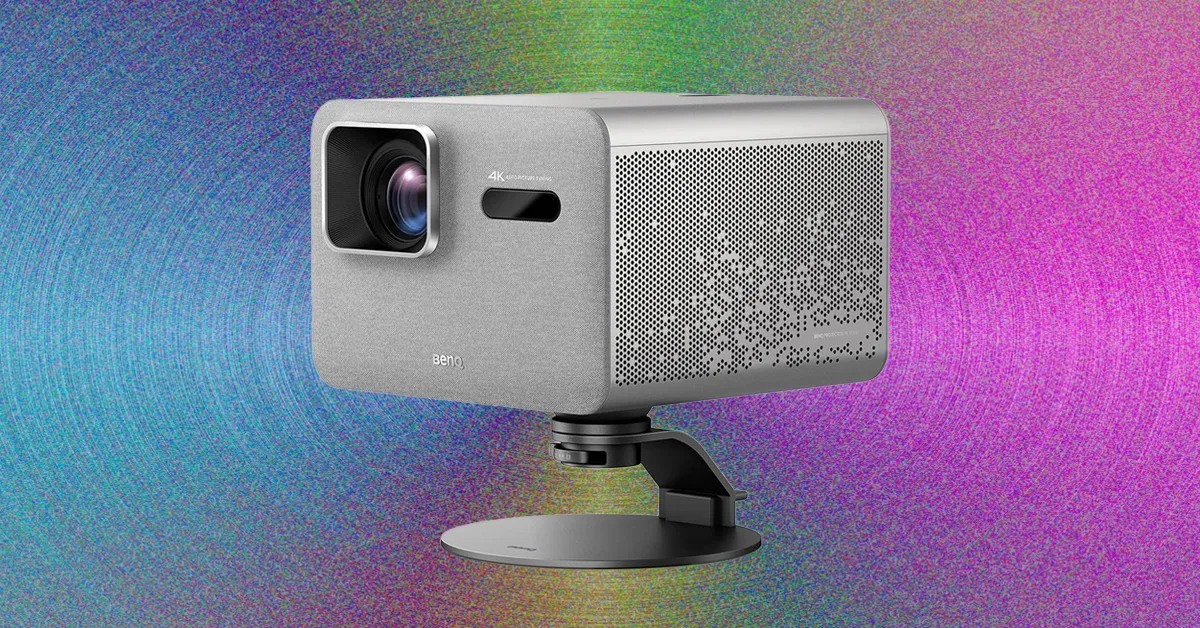
Home cinema projectors are all over the map in terms of price and performance. It’s often the case that you get what you pay for. High-end projectors that mimic what you see at the local cineplex can cost upwards of $6,000. On the lower end, you could easily pay less than $1,000 for a home projector, but you may sacrifice brightness, contrast, and color quality. Many of our favorite projectors sit somewhere in the middle in terms of price and quality. That is certainly true of the BenQ TK705STi short-throw projector.
The main cost-justifying reason to consider buying this 4K projector appeals to gamers, who will appreciate its low-latency performance and larger screen size. Once you see James Bond on a 12.5-foot screen while playing 007 First Light on Xbox, you’ll wonder why you didn’t make the upgrade sooner. Being a short-throw projector, it’s also nice to be able to operate the TK705STi in just about any room in your home. You can position it a few feet from a wall or across the room, allowing for great flexibility.
That said, the TK705STi is not for everyone. Movies and TV shows didn’t look that impressive using this projector—certainly not in comparison to the top-rated Leica Cine Play 1, which costs about twice the price. I also dealt with a few glitches with auto-keystoning; once I figured out how to manually adjust the screen, this was fine but still a pain.
Mainly, though, I recommend the TK705STi for gamers who don’t need high-end home-cinema picture quality, since the overall performance of this projector is just average.
The BenQ TK705STi is a short-throw projector that’s designed to sit close to the wall. The TK705STi has a throw ratio of .8:1, which means you divide the wall size by the short-throw percentage. To get a 10-foot-wide image, for example, you’d place the projector about 8 feet away, which is exactly what I did in my windowless test area. (Later, in a brightly lit family room with big windows, I increased the screen size to 12 feet wide by placing the projector 10 feet from a wall.)
After I put the projector in its spot, I noticed its legs were just a bit shaky. Not wobbly, but lacking the stability I would prefer for a midrange projector like this one. If I bumped the table, the projector would jostle around quite easily and even start auto-keystoning again—a feature I found to be finicky at best, often mapping incorrectly to the wall or screen. (For what it’s worth, BenQ reps said this is not normal and could have been related to my projector screen.)

There is a moment early in Halo: Campaign Evolved where I stopped thinking about the remake as a game for a second. I was watching one of its newly rebuilt cutscenes. Master Chief, Captain Keyes, Cortana, the Pillar of Autumn, and the enormous scale of everything around them suddenly appeared a lot more cinematic than ever before.
I played the original Halo: Combat Evolved in the early 2000s, and in my head, this was exactly how it looked and felt. The first Halo title introduced intergalactic war to me long before Star Wars, and the cinematic tastefully adds enough minor touches that enhance Bungie’s original work from decades ago.
The wider framing, lighting, and character models in the pre-rendered presentation were great, till one irritating thought entered my head. Why have we still never received a proper Halo show that looks like this?
Halo turns 25 this year. The franchise has decades of games, novels, comics, animation, short stories, and characters to draw from. Campaign Evolved has somehow made the absence of a great screen adaptation even more frustrating.
Bungie’s Halo games traditionally handled their storytelling through in-engine cinematics. This gave games a consistent visual identity because the characters you watched during a story sequence were the same ones you controlled seconds later. It also allowed for some hilarious interactions and experimentation, but that’s besides the point here.

The series has occasionally taken a more movie-like route since then. Halo 2 Anniversary famously replaced its original cinematics with gorgeous pre-rendered sequences, and Campaign Evolved now gives the original adventure a similar treatment with completely rebuilt scenes. Seeing that approach applied to Combat Evolved was a surprise to me.
The opening aboard the Pillar of Autumn already contains everything a sci-fi series needs. Humanity is losing a war against an overwhelming alien force. A mysterious ringworld appears in space. You feel the desperation from UNSC personnel. Amidst the chaos, Master Chief rises as this enormous, almost mythical figure. Campaign Evolved presents those moments with enough visual detail that I could easily imagine watching them as part of a big-budget series.
We already had the expensive live-action attempt, of course. Paramount+ launched Halo in 2022 after years of development. I desperately wanted to like it. There were pieces I appreciated, especially some of the production design, Covenant battles, and the occasional glimpse of the military sci-fi spectacle I had imagined. But the larger creative direction lost me.
The series created its own Silver Timeline, separate from the established continuity of the games, novels, and comics. This gave the writers freedom to reshape characters and events, which isn’t inherently wrong. But when the show started deviating heavily from the core identity of integral characters like Master Chief, it brought the whole thing down to a screeching halt for me.

I won’t go into all the details of my experience with the show, but I will admit that Season 2 tried to build on some of the strengths of the first. The action scenes improved, and we finally reached the Fall of Reach. Yet the show continued moving through its own version of Halo before Paramount eventually cancelled it after two seasons.
Getting creative with a very established property can be done exceptionally well. The first episode of Star Wars: Visions is a great example. It reimagined the whole concept in a completely different setting and style, and did it supremely well.
The difference between Halo and Star Wars is that the former never really got to spread its wings in this form of media. Halo was already a massive name in gaming, but outside of that, it had mostly experimented with animation, live-action miniseries, and other smaller projects. So when its highly anticipated first major TV adaptation finally arrived, taking the story in such a dramatically different direction killed its screen art moment.
Some of my favorite Halo stories have nothing to do with holding a controller. Halo Legends explored the universe through animation, jumping between different characters, periods, and artistic styles. Forward Unto Dawn took a much smaller live-action approach, following UNSC cadets during the early Human-Covenant War before bringing Master Chief into the story.

Neither project required rewriting the foundation of Halo. Forward Unto Dawn especially showed how effective Chief can be when he enters someone else’s story. The character carries enormous presence precisely because we spend time watching ordinary people respond to him.
Then there are the novels. The Fall of Reach alone contains the Spartan-II program, Chief’s childhood, Dr Halsey, the Covenant war, Blue Team, and the destruction of one of humanity’s most important colonies, while Ghosts of Onyx could open an entirely different corner of the Spartan program. There are decades of established stories waiting to be adapted.
The universe has never lacked material.
A television series could even follow characters around Master Chief rather than keeping him at the center of every episode. Halo’s universe is large enough to support military drama, horror, political intrigue, espionage, and enormous space battles without leaving its established history behind.

Playing the first level of Campaign Evolved brought all of this back. Watching those widescreen cinematics, I kept taking screenshots because individual frames already resembled shots from the Halo production I have wanted for years. The Covenant designs are there, and Chief still carries that imposing silhouette.
Halo Studios describes Campaign Evolved as a celebration of the story that started everything 25 years ago. For me, it also demonstrates how little the original premise needs to change. Give me the Human-Covenant War, Blue Team, or any of the terrifying encounters with the Flood. Let Master Chief remain as a soldier whose humanity appears through smaller moments instead of rewriting him into a conventional television protagonist.




Weekend Open Thread: Brooks Brothers


Grayscale Files For Worldcoin ETF, WLD Registers Sharp Rise


Sail Virtually Aboard The “Itanic” With IA-64 Emulator

Turtle Beach Command Series KB7 review: a nifty screen-equipped gaming keyboard


How a former Blue Peter presenter stunned America’s Got Talent judges


Unregistered fitter used Gas Safe logo on business flyers

New Jersey voter registration controversy explained: How 6,600 noncitizens got on the rolls, and what happens next

Johnny Depp’s R-Rated Gothic Cult Classic Gets New Release Ahead of Sydney Sweeney Remake


Watch Flock Safety CEO Garrett Langley discuss the future of surveillance at TechCrunch Disrupt 2026


Ethics, other provisions in crypto Clarity Act to be further discussed

Shanghai science forum photos show China’s AI and robotics advances in rivalry with US


Circle’s President Sold Over 360,000 Shares, The Filings Explain Why


Subway Sandwich Computers Get a Second Life as Gaming Machines

Commonwealth Games boxing: Jadumani Singh seals dominant 5-0 win over Pakistan’s Sumama Rehman to enter quarter-finals | Commonwealth Games News


The Peugeot Family: How 200 Years of an “Old Money” Dynasty Died in A Boardroom


2026 3M Open leaderboard: Scottie Scheffler finds putter in Round 1, sits three back


16 Dresses for the High Summer Event


Stephen Colbert Returns to Social Media After Late Show End


The 35 Best Board Games for Family Game Night


Andrew Cuomo joins OKX board as crypto exchange expands in U.S.


You must be logged in to post a comment Login