


Security teams log 54% of successful attacks and alert on just 14%. The rest move through your environment unseen.
The Picus whitepaper shows how breach and attack simulation tests your SIEM and EDR rules so threats stop slipping by detection.


Anthropic is now rolling out Sonnet 5, and it’s almost as good as the Opus range, but it is designed to be cheaper than the company’s flagship model.
In a blog post, Anthropic said Claude Sonnet 5 is “built to be the most agentic Sonnet model yet,” and added that it comes with advanced features, such as the ability to make plans and use tools like browsers and terminals.
Previously, these features were mostly locked to Opus 4.8, but now Sonnet 5 can do almost everything the flagship model can.

According to Anthropic, Sonnet 5 is a big upgrade, especially for those who rely on Claude for coding, research, automation, document work, and other multi-step tasks.
“Sonnet 5 narrows the gap,” Anthropic said, confirming the new model is a step closer to the expensive Opus 4.8 model.
I personally found the Sonnet 5 experience similar to Opus, which means it’s better at creating plans or calling tools, and it’s also surprisingly good at verifying its own work.
In other words, it handles “Can you fix your code?” queries much better, almost closer to Opus.
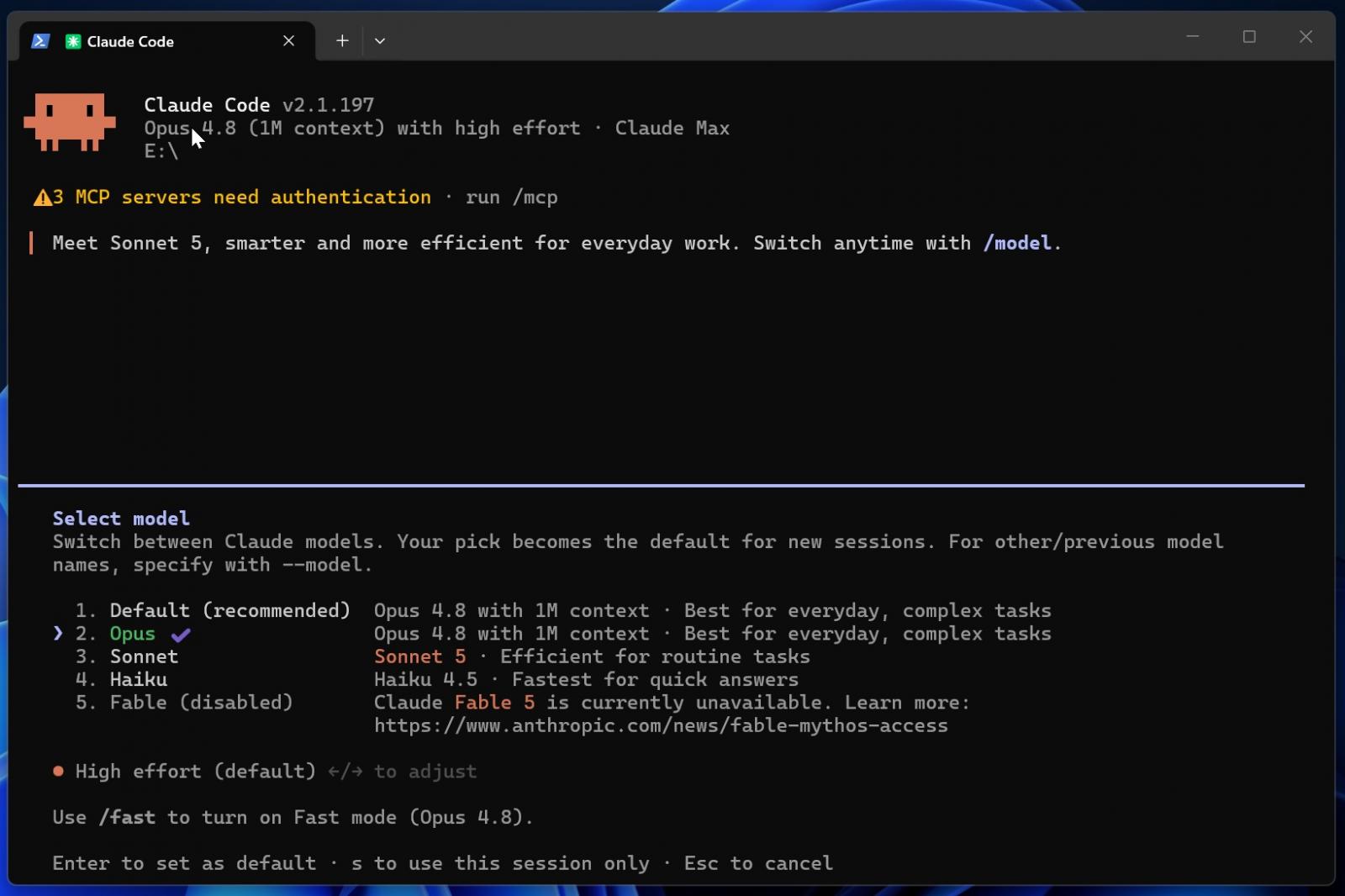
Anthropic argues that the agentic AI era began with Sonnet-class models, referring to earlier models such as Claude Sonnet 3.5, 3.6, and 3.7.
However, more recently, the largest gains in agentic capability had been limited to its Opus-class models.
Anthropic no longer wants to limit agentic gains to just the Opus-class or more expensive models. That’s why Sonnet 5 is meant to bring some of those improvements back to the cheaper Sonnet tier.
Anthropic said testers described Sonnet 5 as “much more agentic than its predecessors,” and noted that it can check its own output without always being explicitly asked.
As a developer, I love Opus 4.8, and I still strongly believe nothing comes close to Fable, which was recently pulled after orders from the United States government. But Sonnet 5 is one of those models that becomes a better cost-performance option compared with Opus 4.8 or Fable.
I personally pay for the Max subscription, which costs $200, and I often run out of my usage because Opus can use more tokens than Sonnet, and it costs far more. But even as a heavy user, I like to interact with the model to understand my own code, and in those cases, it makes sense to use a cheaper model.
However, Sonnet 4.6 wasn’t a great model at planning or understanding a massive code base. That seems to have changed with Sonnet 5.
In my tests so far, I’ve found Sonnet 5 to be far better than Sonnet 4.6 at following instructions, and also for agentic search.
These performance gains are also justified by benchmarking companies, including BrowseComp and OSWorld-Verified.
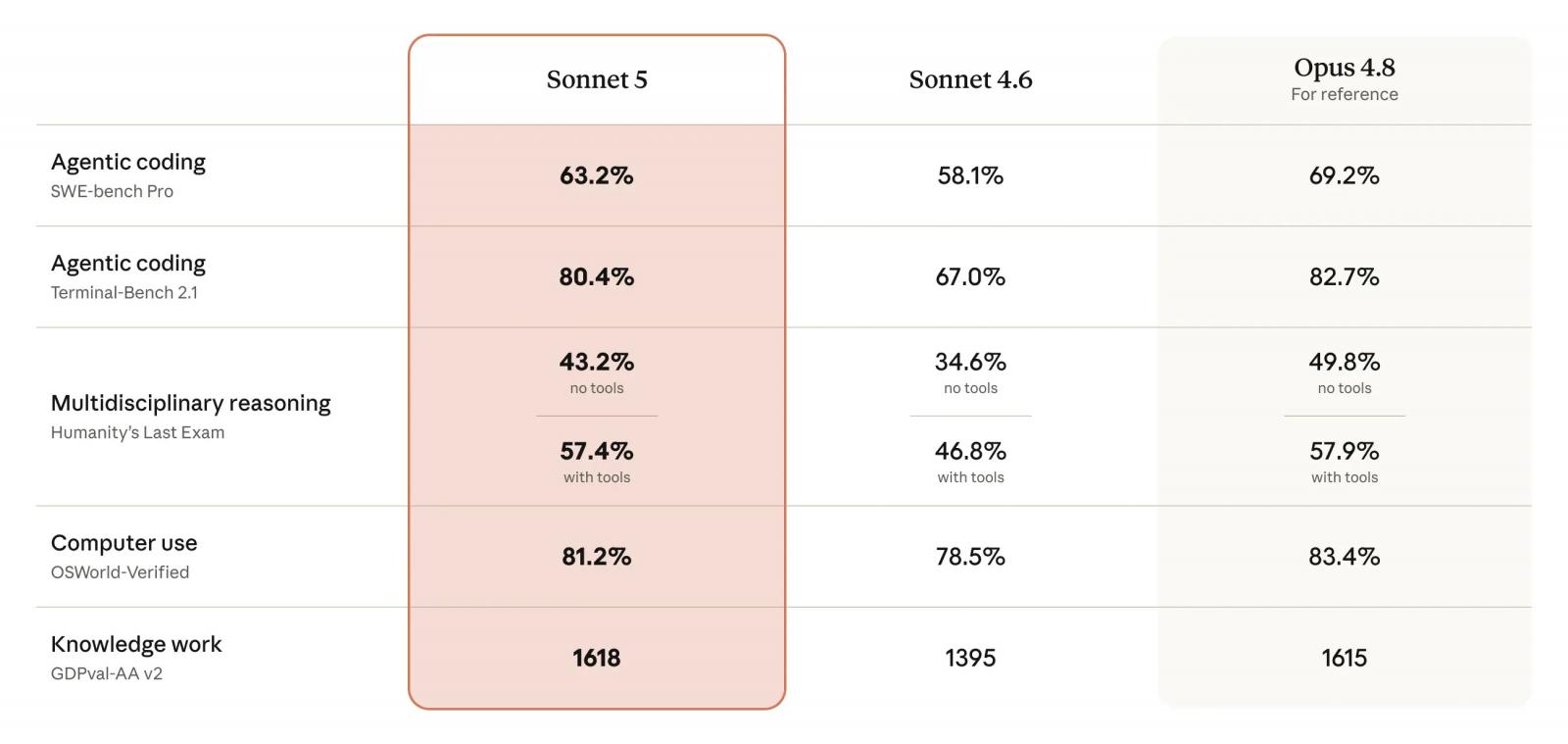
Anthropic says users can adjust effort levels between Sonnet 5 and Opus 4.8 depending on whether they want lower cost or maximum performance.
The company says Sonnet 5 is launching with introductory API pricing of $2 per million input tokens and $10 per million output tokens through August 31, 2026.
After that, Sonnet 5 will cost $3 per million input tokens and $15 per million output tokens.
That is still cheaper than Opus 4.8, which Anthropic lists at $5 per million input tokens and $25 per million output tokens.
For regular users. Sonnet 5 is available to everyone with Free, Pro, and Max subscriptions.

Security teams log 54% of successful attacks and alert on just 14%. The rest move through your environment unseen.
The Picus whitepaper shows how breach and attack simulation tests your SIEM and EDR rules so threats stop slipping by detection.
You must be logged in to post a comment Login