Tech
Apple-1 Prototype Board #0, “Celebration,” Just Changed Hands for $2,750,000

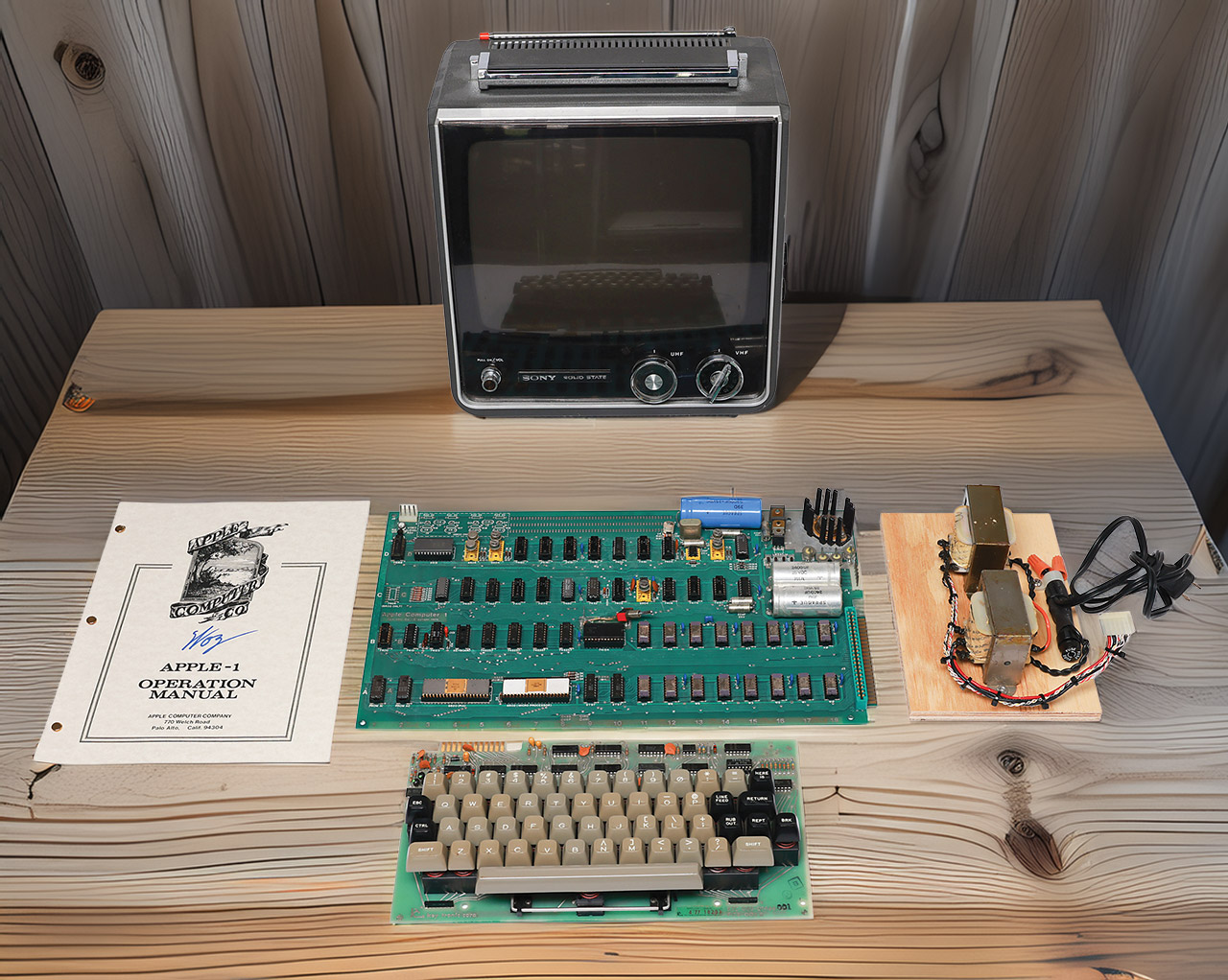
This single circuit board represents the first fiberglass version of the Apple-1, which Jobs and Wozniak assembled in the spring of 1976, before moving the first customer versions out of the garage. Jobs and Wozniak wanted to show their improved design worked correctly on fiberglass, since an earlier, cheaper version made from a low-cost composite had shown serious flaws.


The engineers worked on fixing the original board’s flaws, such as layout and timing problems. This ‘Celebration’ board was used as validation to make sure that all the fixes were implemented before it was put in a production environment. The truth is that if it didn’t pass with flying colors, Paul Terrell’s fifty boards for his Byte Shop would not have been delivered, and Apple would have been stuck from the very beginning.
Sale


Apple 2025 MacBook Air 15-inch Laptop with M4 chip: Built for Apple Intelligence, 15.3″ Liquid Retina…
- SPEED OF LIGHTNESS — MacBook Air with the M4 chip lets you blaze through work and play. With Apple Intelligence,* up to 18 hours of battery life,*…
- SUPERCHARGED BY M4 — The Apple M4 chip brings even more speed and fluidity to everything you do, like working between multiple apps, editing videos,…
- BUILT FOR APPLE INTELLIGENCE — Apple Intelligence is the personal intelligence system that helps you write, express yourself, and get things done…
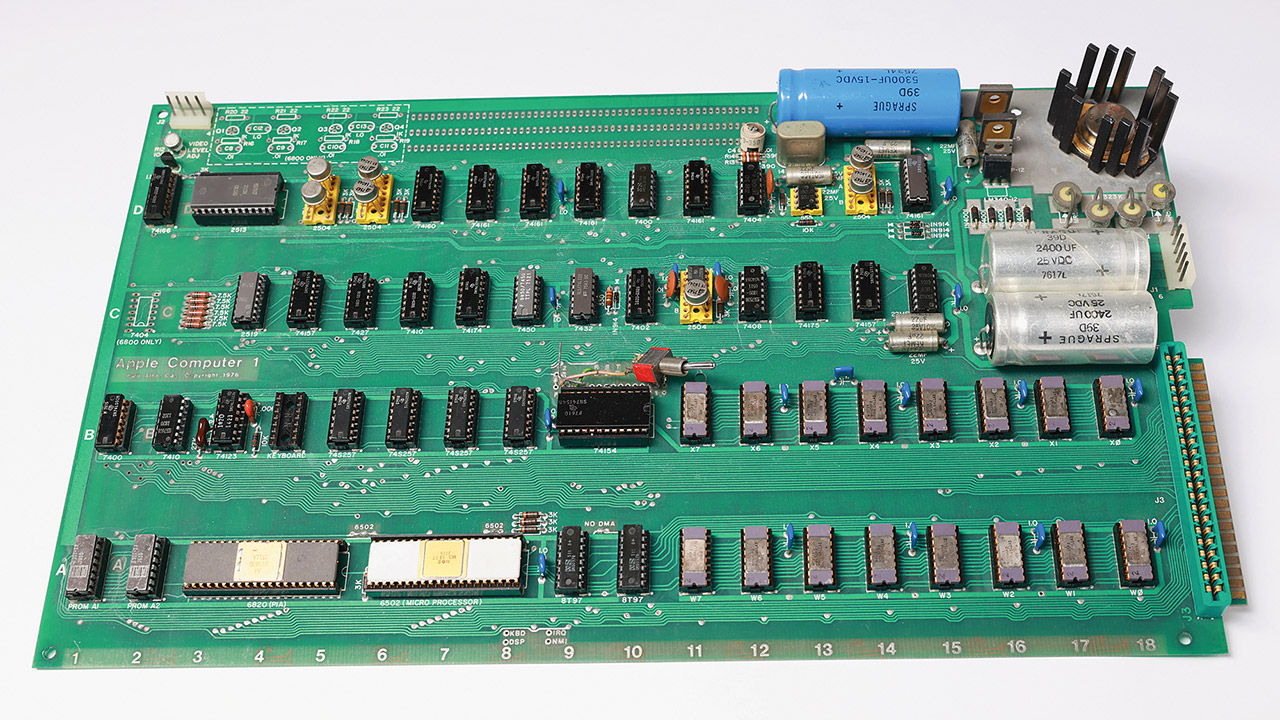
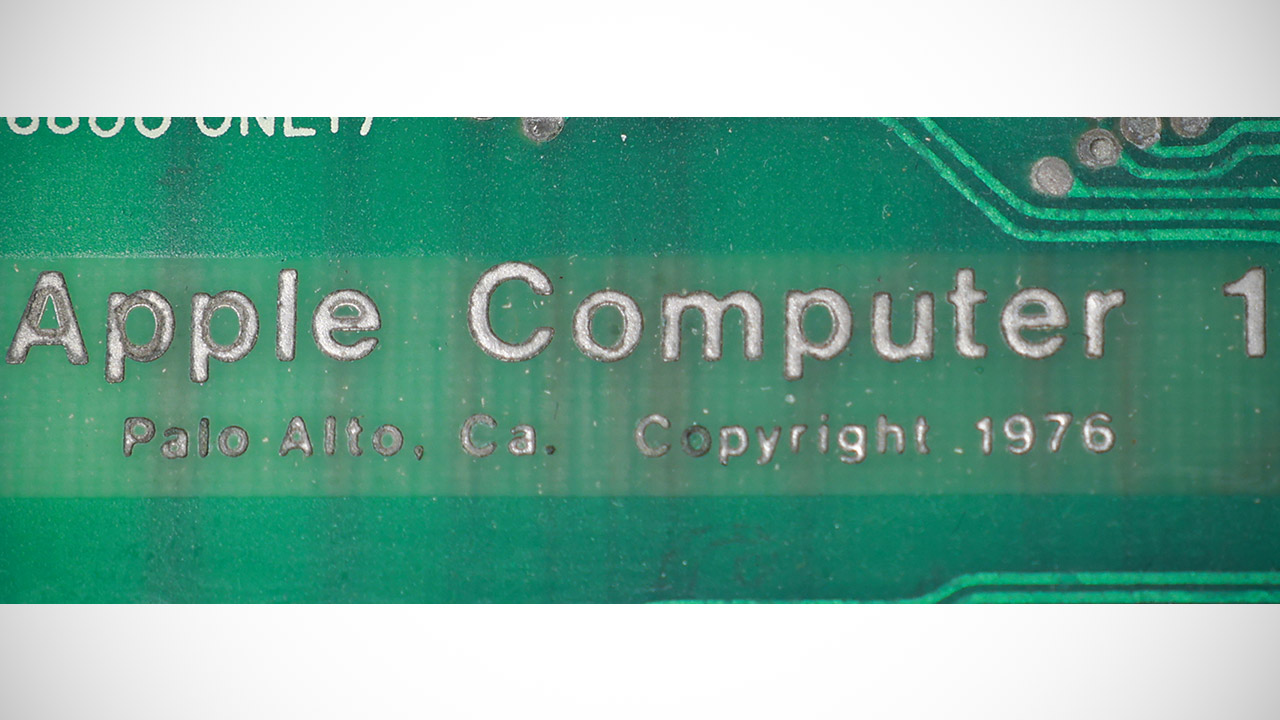
Experts have identified a number of peculiarities that make this board different from the 200 or so production Apple-1 computers. Wave soldering was used on this board with Robinson-Nugent sockets rather than the Texas Instruments ones that were used later. The components on this board were those that happened to be available rather than those that were specifically purchased in quantity as was done later. Two Sprague 39D capacitors, being standard components that happened to be available locally in a nearby radio shop, ended up in positions where the manufacturing boards used a variety of different components. A smaller heatsink was used over the voltage regulators, and there was no indication that the larger one was ever fitted. A modification to the 74123 timing circuit to accommodate the changes to the DRAM refresh that they had to make to deal with those early reliability issues. This is a transitional piece that was never intended to be sold; its purpose was to get from the prototype to the final product.

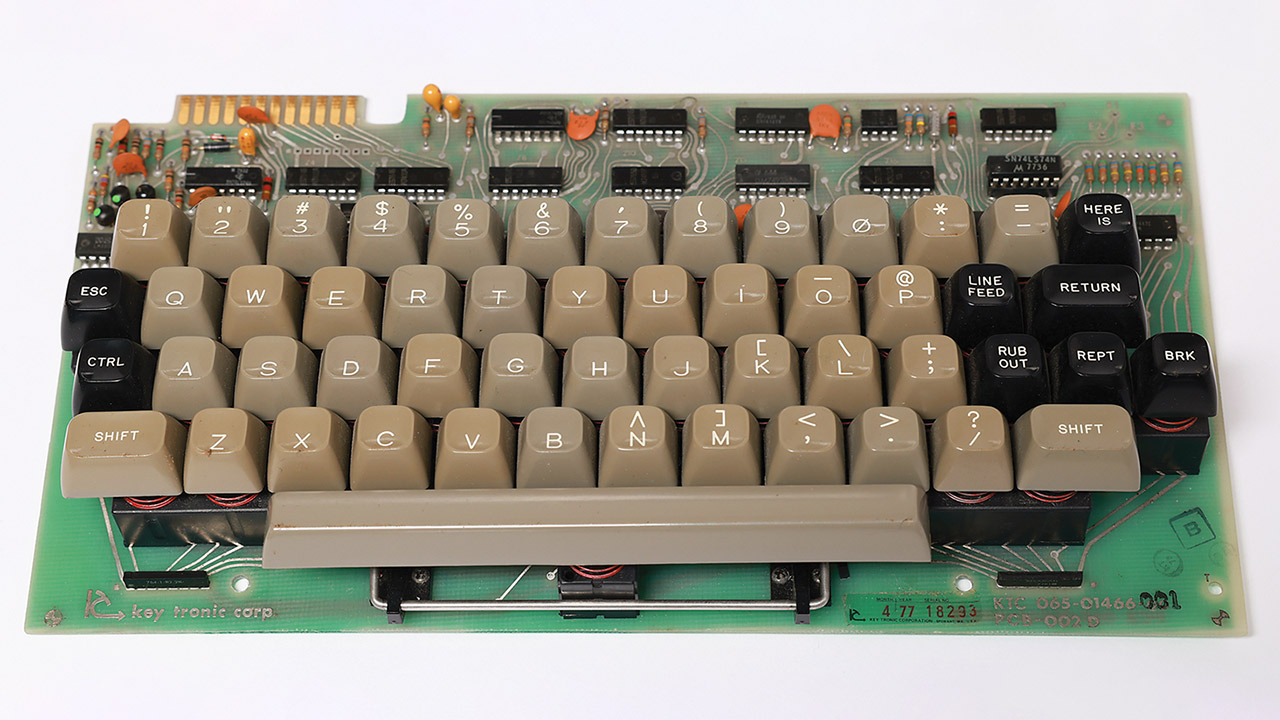
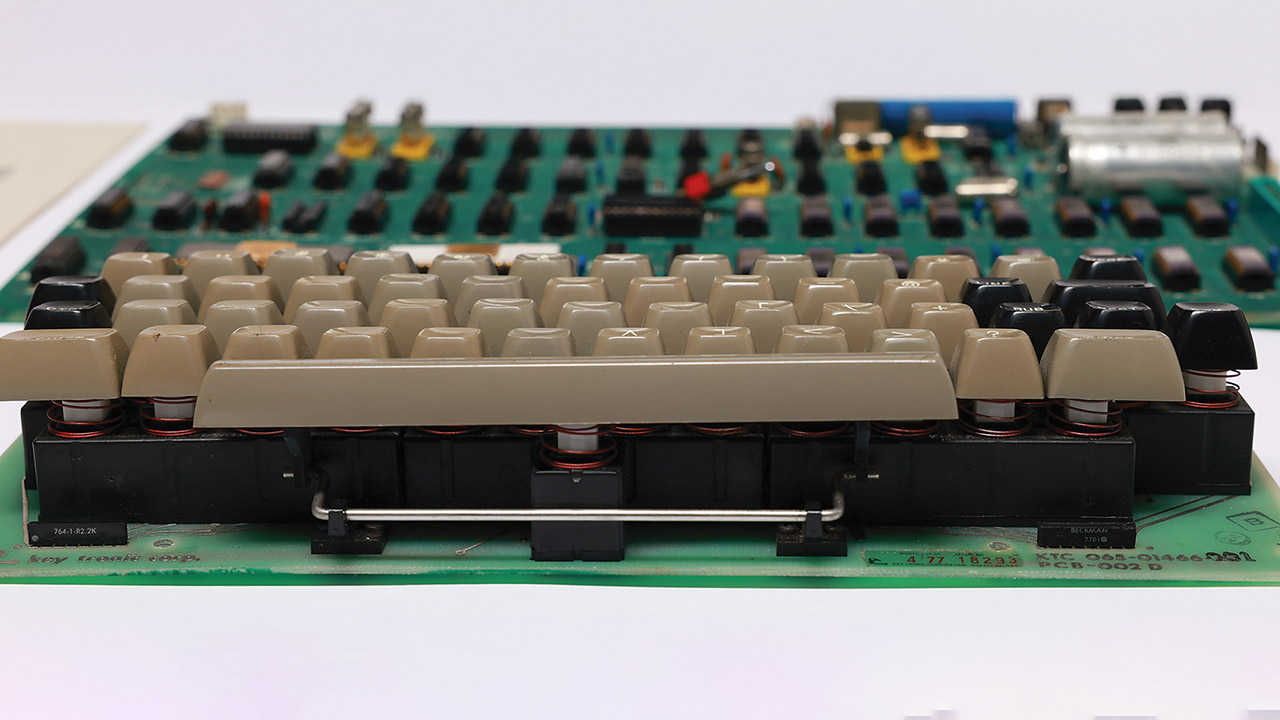
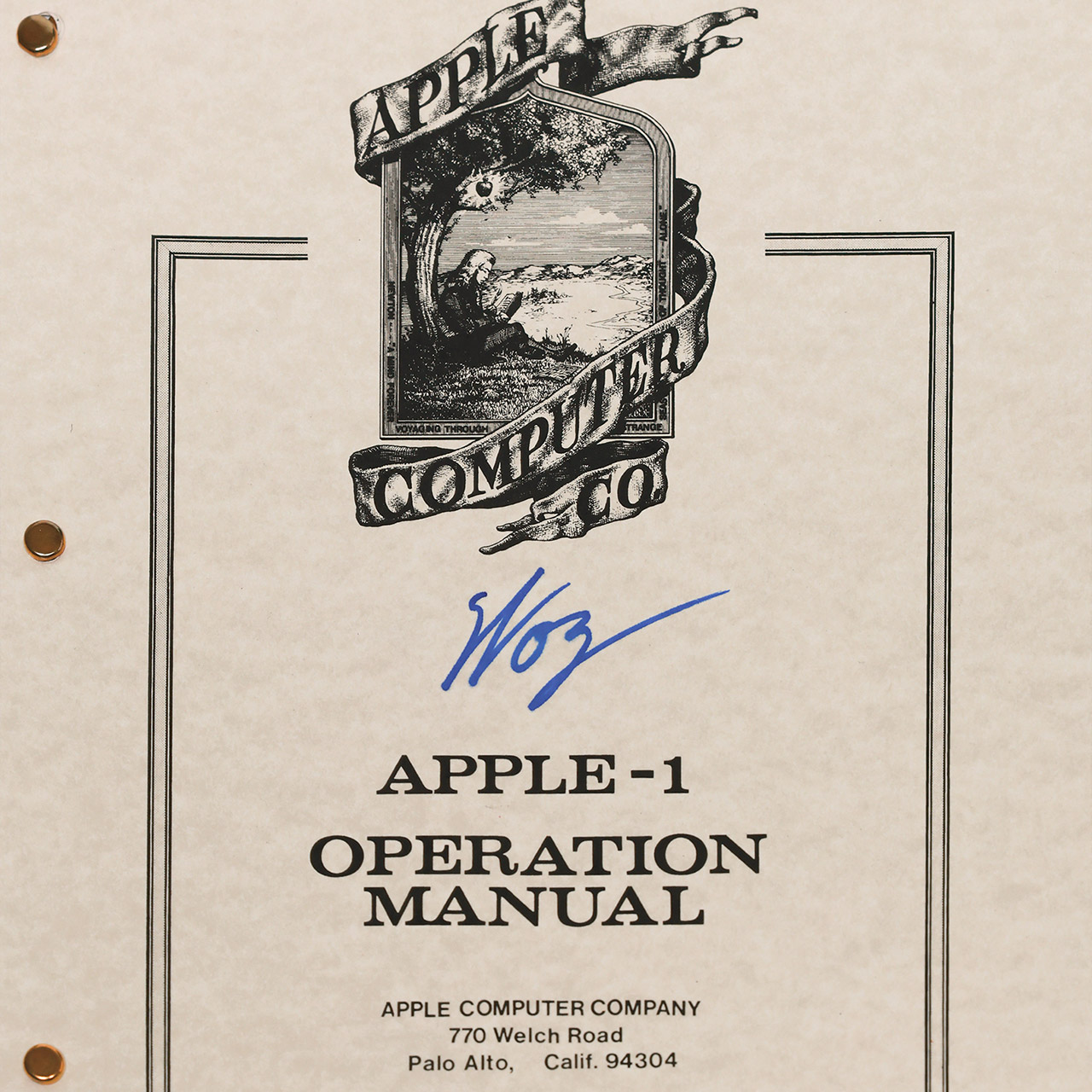
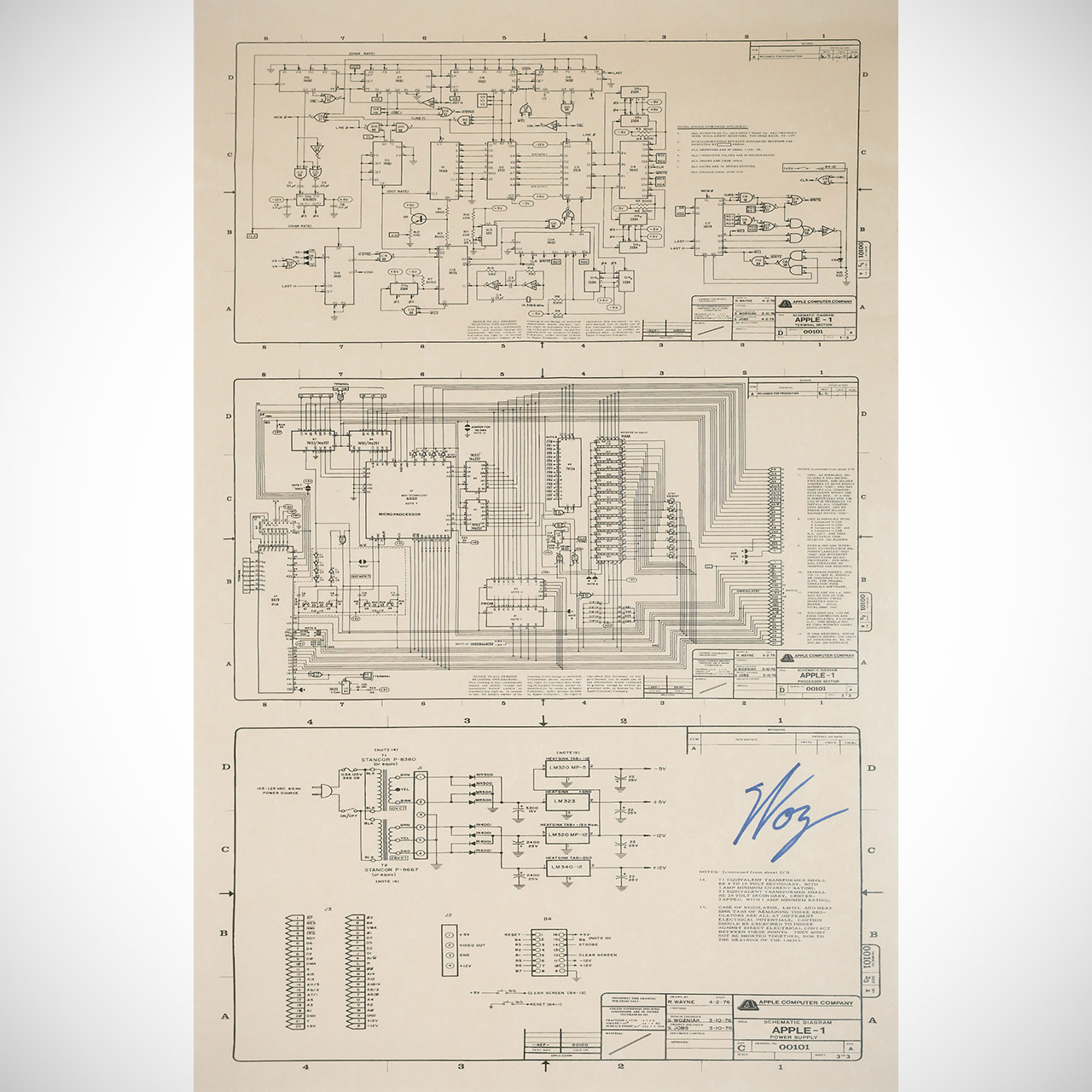
In fact, Corey Cohen, an Apple historian and repair specialist, has closely examined this board in 2016, and in late 2025, he updated his observations on it. According to him, it is a pre-production board, predating the Byte Shop run, and it has been assigned a number, 75, in the Apple-1 Registry. There, it has been given the nickname ‘Celebration.’ The lot includes many more items than just this board, such as a Key Tronic keyboard, which is original to 1977, as well as a power supply and a Sony TV monitor. To round out the bundle, Wozniak autographed a duplicate operation manual and a schematic in blue felt-tip. Cosmetically, it falls somewhere between 6.5 and 7.0, despite the fact that the board was never powered up for full testing.
When the hammer fell at on January 29, 2026, bidding blew the expected price of $500,000 out of the water, resulting in a final price of $2,750,000 once all buyer’s premiums were factored in. It was part of RR Auction’s Steve Jobs & the Computer Revolution event, which was conveniently scheduled to coincide with Apple’s 50th birthday. Some of the other objects in the auction generated comparable levels of interest, including the first cheque Apple ever received in 1976, which helped boost overall sales to an impressive $8 million.

You must be logged in to post a comment Login