Tech
Apple AirPods 5 Could Launch in September as Apple Tightens Its Audio Ecosystem

Apple may have a new pair of entry-level AirPods coming much sooner than expected, although “pair” is technically selling Cupertino short.
According to Bloomberg’s Mark Gurman, Apple is preparing two AirPods 5 models that could debut as early as its expected September 2026 iPhone event. As with AirPods 4, one version is expected to include Active Noise Cancellation, while a less expensive model would go without it. References to both unreleased models have already been discovered inside the macOS Tahoe 26.7 Release Candidate, giving the report considerably more credibility than the usual blurry photograph of something allegedly spotted near Shenzhen.
Apple has not announced AirPods 5, however, and there are currently no confirmed specifications, prices, battery-life figures, drivers, Bluetooth version, or audio-performance claims. Reports suggesting a new H3 chip remain speculation rather than confirmed product information, so we’re not putting that in the specifications column just yet.
The timing becomes much more interesting when you look at everything else Apple has been doing.
Related Reviews: AirPods Pro 3 Review
AirPods 5 Are Not the Camera AirPods


First, we need to separate two products that are already getting mashed together online.
The expected AirPods 5 are successors to the AirPods 4, which Apple introduced in September 2024 at $129 without ANC and $179 with it. Bloomberg reports that the fifth-generation models will maintain that two-tier approach, although Apple has not confirmed whether pricing will remain the same.
Those are different from the camera-equipped AirPods that eCoustics has covered extensively this year. Apple inadvertently included references and even a demonstration video for camera-equipped AirPods in macOS 26.7, showing Visual Intelligence using sensors in the earbuds to understand what the wearer is looking at.
Current reporting indicates that those more ambitious AirPods are not expected until 2027. They appear to represent a much larger transformation of AirPods into wearable AI devices rather than simply another generation of wireless earbuds.
That distinction is important because AirPods 5 may turn out to be evolutionary hardware arriving ahead of something much more significant.
Will the New Mac mini Support AirPods 5?
Almost certainly, yes — although Apple cannot officially list compatibility with a product it hasn’t announced.

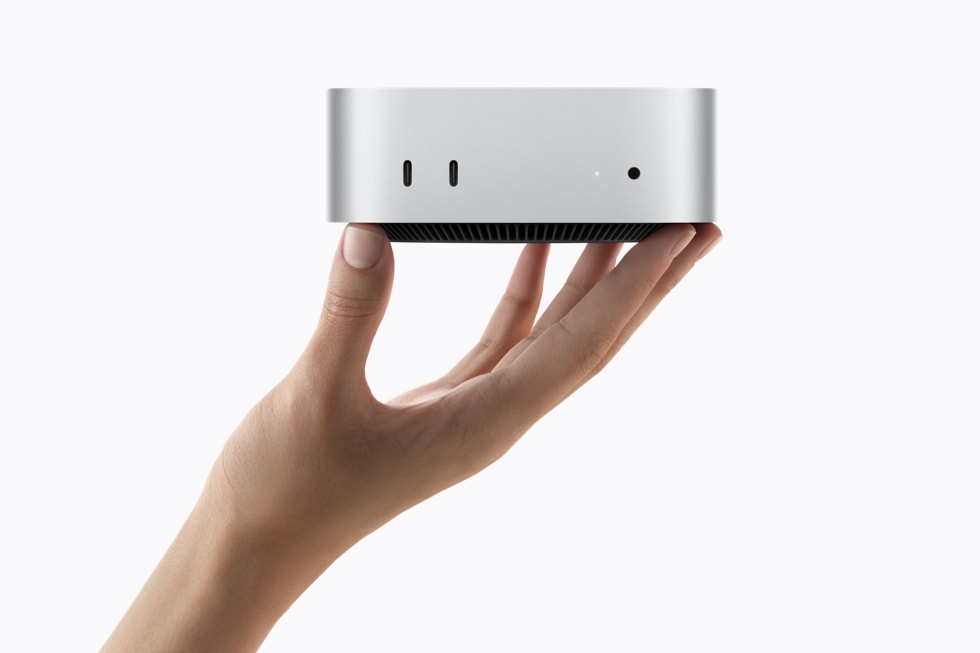
Apple unveiled its new Mac mini on August 25, 2026, with a choice of the new M6 or M5 Pro processors, along with Bluetooth 6, Wi-Fi 7, macOS 27, upgraded Ethernet, Thunderbolt connectivity, and substantially increased AI processing capabilities. The M6 version starts at $899, while the M5 Pro configuration starts at $1,699; both begin shipping September 22.
There is no technical reason to expect AirPods 5 compatibility to be an issue. Apple’s existing AirPods support Macs running the appropriate version of macOS, and current AirPods can already provide Spatial Audio and dynamic head tracking on Apple silicon Macs. Personalized Spatial Audio profiles created with an iPhone also synchronize across compatible Macs, Apple TVs, iPads, and other Apple devices signed into the same Apple Account.
The strongest clue is sitting inside Apple’s own software: macOS 26.7 already contains references to both AirPods 5 models. Apple is clearly preparing Mac software support before the hardware has even been announced.
So yes, somebody buying the new M6 or M5 Pro Mac mini should reasonably expect to use AirPods 5 with it. We would stop short of promising specific AirPods 5 features on the Mac until Apple actually announces the earbuds.
Apple’s Bigger Play Is the Ecosystem
This is where AirPods 5 become more interesting than their specifications might initially suggest.
Apple just introduced a much more powerful Mac mini with Bluetooth 6 and Wi-Fi 7, while macOS 27 brings the next generation of Apple Intelligence and Siri AI. At WWDC 2026, Apple also announced custom EQ for AirPods users, adding another layer of personalization to its headphone platform.
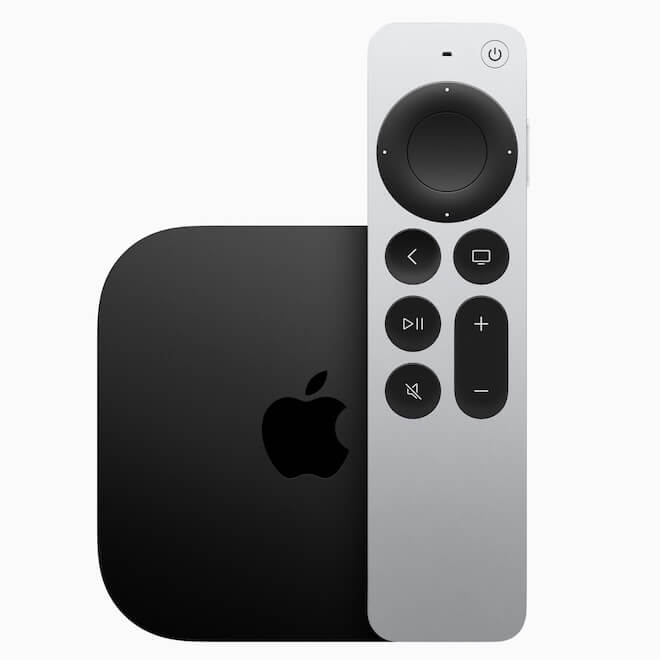
Meanwhile, eCoustics recently reported that Apple appears to be preparing a long-overdue Apple TV 4K refresh with faster processing, Wi-Fi 7, a new wireless chip, deeper Siri AI integration, and potentially a revised Siri Remote. Apple hasn’t announced that hardware yet, but the direction makes sense when viewed alongside the new Mac mini and AirPods roadmap.
AirPods already move between iPhone, iPad, Mac and Apple TV, while Personalized Spatial Audio profiles travel with the user’s Apple Account. Apple TV 4K can deliver Dolby Atmos Music through Apple Music and supports Spatial Audio with dynamic head tracking through compatible AirPods. Add Siri AI, the Mac, Apple Watch, Fitness, Find My, and eventually Visual Intelligence, and Apple’s headphones become another interface into the entire platform.
That is considerably harder for competitors to attack than frequency response or another hour of battery life.
What Could Make AirPods 5 Unique?
We don’t yet know whether AirPods 5 themselves will introduce anything technically groundbreaking. Anyone claiming otherwise has access to information Apple has not released.
Their more interesting characteristic may be where Apple places them within the lineup. Offering both standard and ANC versions of an open-fit earbud gives consumers who dislike silicone ear tips an unusual choice, and Apple has already demonstrated with AirPods 4 that effective noise reduction is possible without creating the full seal used by AirPods Pro.
Samsung is now attacking essentially the same customer with the Galaxy Buds4, a $179.99 open-type earbud offering adaptive ANC, Bluetooth 6.1, Samsung’s 24-bit Hi-Res codec, and deeper integration with Galaxy devices. For Android users — particularly Galaxy S26 owners — that is probably the most direct ecosystem competitor.
Sony’s LinkBuds Open take a more radical approach with an open-ring design that deliberately allows environmental sound through, although their $229.99 price puts them above the current standard AirPods range. Shokz and others have also made open-ear listening a rapidly growing category rather than the niche experiment it was a few years ago.
Apple therefore doesn’t own the concept. What Apple does exceptionally well is make the earbuds feel like an extension of devices consumers already own.
What About AirPods Pro 3?


AirPods 5 also need enough separation from the $249 AirPods Pro 3, which remain Apple’s premium in-ear model.
AirPods Pro 3 add stronger ANC, heart-rate sensing, hearing features, Live Translation, workout integration, and a sealed in-ear design. Our own review found the feature set impressive but the sound quality less convincing than AirPods Pro 2, proving once again that adding more technology doesn’t automatically make music sound better.
That leaves room for AirPods 5 to succeed simply by being comfortable, affordable, easy to use, and hopefully better sounding than their predecessors. Not every pair of earbuds needs to monitor your pulse, translate the waiter, and eventually identify the paperback you’re staring at.
Sometimes headphones should also be good headphones.
The Bottom Line
AirPods 5 may initially look like a routine refresh: two open-fit models, one with ANC and one without, replacing hardware introduced two years ago. Until Apple reveals the specifications, there is no basis for claiming revolutionary sound, a new processor, longer battery life, or dramatically improved ANC.
The larger Apple picture is considerably more compelling.
Within the same period, Apple is rolling out an M6/M5 Pro Mac mini with Bluetooth 6 and Wi-Fi 7, macOS 27 with Siri AI, new AirPods software features, a likely next-generation Apple TV 4K, and development work on future camera-equipped AirPods that could turn the earbuds into wearable Visual Intelligence devices.
AirPods 5 don’t have to win every specification comparison with Samsung, Sony, Shokz, Bose, or Sennheiser. Apple’s advantage remains the same one that has kept millions of people buying AirPods even when competitors offer better battery life, more codecs, or arguably better sound.
They work with everything else Apple sells.
And Apple appears determined to make “everything else” work together even more closely.
You must be logged in to post a comment Login