The year 2026 is going to be a stacked one for Apple’s portfolio, but one of the most eagerly-awaited products is the upcoming foldable iPhone. Heavily rumored to debut in the Fall season this year alongside the iPhone 18 series, it would mark the first time that Apple is entering the foldable phone segment, one where Samsung currently reigns supreme.
A surprise shift
But it seems Apple is working on an even more ambitious idea, one that is more pocketable, and possibly, more pocket-friendly, as well. We’re talking about a clamshell-style foldable iPhone, one that would challenge the likes of Samsung Galaxy Z Flip 7 and Motorola’s Razr series.
Andrew Martonik / Digital Trends
“Now there’s another foldable device under consideration inside Apple labs (and it won’t come as a shock given what Motorola and Samsung Electronics Co. have already done): a square, clamshell-style foldable phone,” says a report by Bloomberg. This is the first time we are hearing about such a device, though the outlet warns that it could be canned or delayed.
So far, Samsung, Motorola, and Chinese labels such as Honor and Xiaomi have put clamshell-style foldable phones on the shelves. Reeling under the hot competition, Samsung even added a more affordable “Fan Edition” aka FE model to its Galaxy Z Flip series.
What to expect?
Motorola, on the other hand, offers its clamshell foldable phones in multiple flavors across different price points. Huawei, on the other hand, has even experimented a vertically-folding, yet pretty pocketable, format called the Pura X.
Advertisement
Digital Trends
Now, the report of Apple potentially making a clamshell-style foldable phone is going to send shockwaves through the market. However, a lot hinges on the success of Apple’s initial book-style foldable phone set to arrive later this year.
Apple is already said to have solved the crease problem on its upcoming phone, and it would be interesting to see whether that display innovation eventually appears on a clamshell-type folding iPhone, too.
When exactly does the “iPhone Flip” come out? That remains unknown as the project is still in the early stages of development. But it certainly looks like Apple’s hardware team is going back to its experimenting ways.
With multiple rovers currently scurrying around on the surface of Mars to continue a decades-long legacy, it can be easy to forget sometimes that repeating this feat on other planets that aren’t Earth or Mars isn’t quite as straightforward. In the case of Earth’s twin – Venus – the surface conditions are too extreme to consider such a mission. Yet Mercury might be a plausible target for a rover, according to a study by [M. Murillo] and [P. G. Lucey], via Universe Today’s coverage.
The advantages of putting a rover’s wheels on a planet’s surface are obvious, as it allows for direct sampling of geological and other features unlike an orbiting or passing space probe. To make this work on Mercury as in some ways a slightly larger version of Earth’s moon that’s been placed right next door to the Sun is challenging to say the least.
With no atmosphere it’s exposed to some of the worst that the Sun can throw at it, but it does have a magnetic field at 1.1% of Earth’s strength to take some of the edge off ionizing radiation. This just leaves a rover to deal with still very high ionizing radiation levels and extreme temperature swings that at the equator range between −173 °C and 427 °C, with an 88 Earth day day/night cycle. This compares to the constant mean temperature on Venus of 464 °C.
To deal with these extreme conditions, the researchers propose that a rover might be able to thrive if it sticks to the terminator, being the transition between day and night. To survive, the rover would need to be able to gather enough solar power – if solar-powered – due to the Sun being very low in the sky. It would also need to keep up with the terminator velocity being at least 4.25 km/h, as being caught on either the day or night side of Mercury would mean a certain demise. This would leave little time for casual exploration as on Mars, and require a high level of autonomy akin to what is being pioneered today with the Martian rovers.
Advertisement
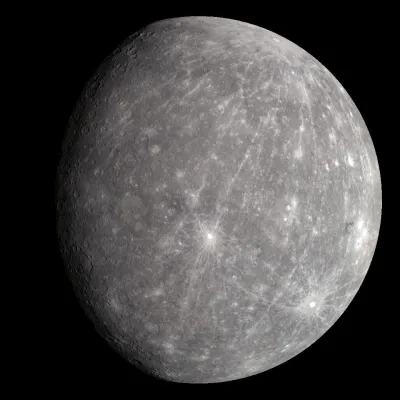
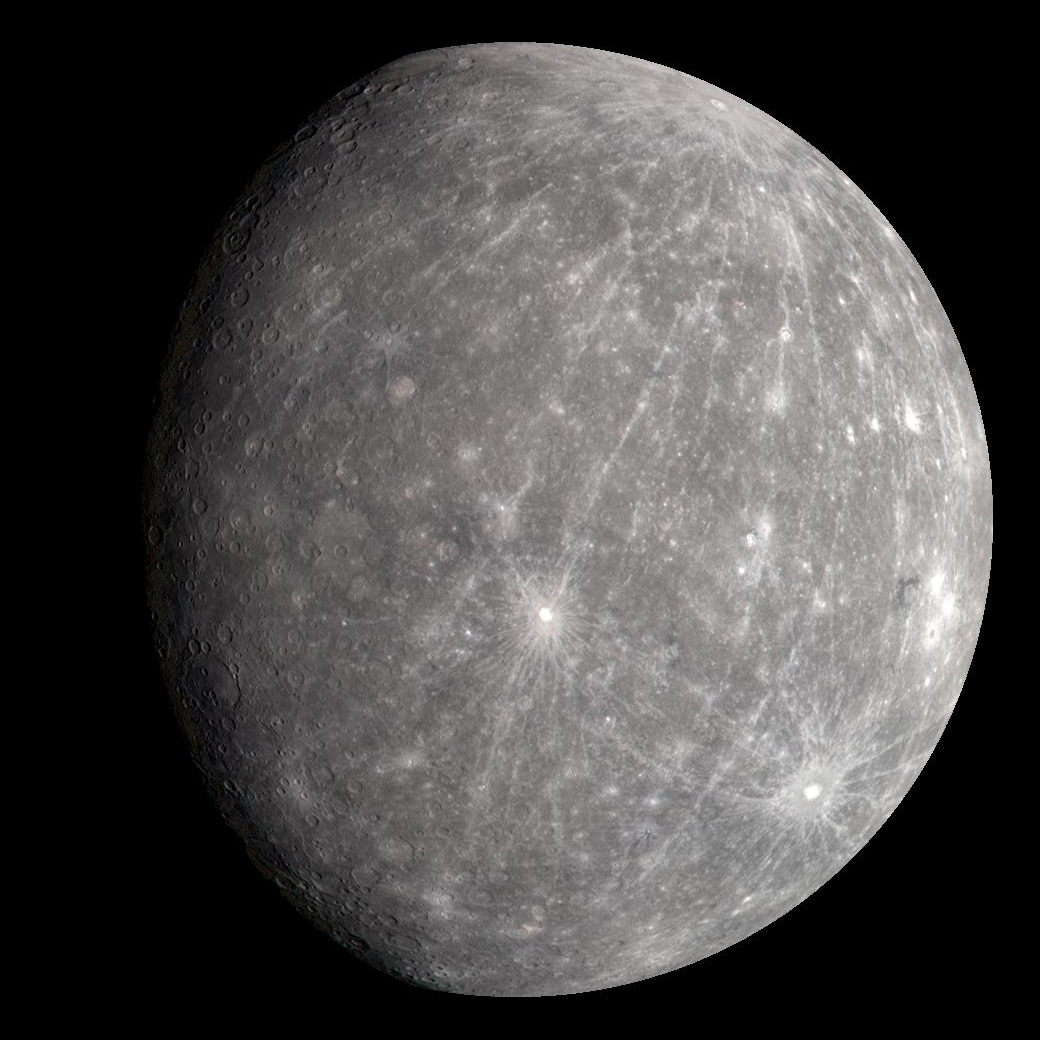
Top image: the planet Mercury with its magnetic field. (Credit: A loose necktie, Wikimedia)
The farthest journey in human history concluded Friday evening when NASA’s Artemis II astronauts returned to Earth after a flight around the moon. The crew’s Orion space capsule named Integrity splashed down in the Pacific Ocean off the coast of San Diego shortly after 5 pm Pacific Time, marking the end of a 10-day, more than 695,000-mile voyage beyond the lunar far side and back.
The four-person crew of Artemis II—commander Reid Wiseman, pilot Victor Glover, mission specialist Christina Koch, and mission-specialist Jeremy Hansen—traveled a greater distance from Earth than ever before, reaching 252,756 miles from our home planet.
“We most importantly choose this moment to challenge this generation and the next to make sure this record is not long-lived,” said Canadian astronaut Hansen as the crew passed the previous record of 248,655 miles set during Apollo 13.
Integrity began its fiery descent when the spacecraft hit Earth’s atmosphere at about 24,000 miles per hour, entering a communication blackout and decelerating from friction as its heat shield reached temperatures of roughly 3,000 degrees Fahrenheit. The plan was for the capsule to deploy two drogue parachutes at an altitude of about 22,000 feet, slowing it to about 200 miles per hour, then deploy pilot chutes pulling the three main parachutes at roughly 6,000 feet. This would further slow the spacecraft to around 20 miles per hour before it splashed into the ocean.
Advertisement
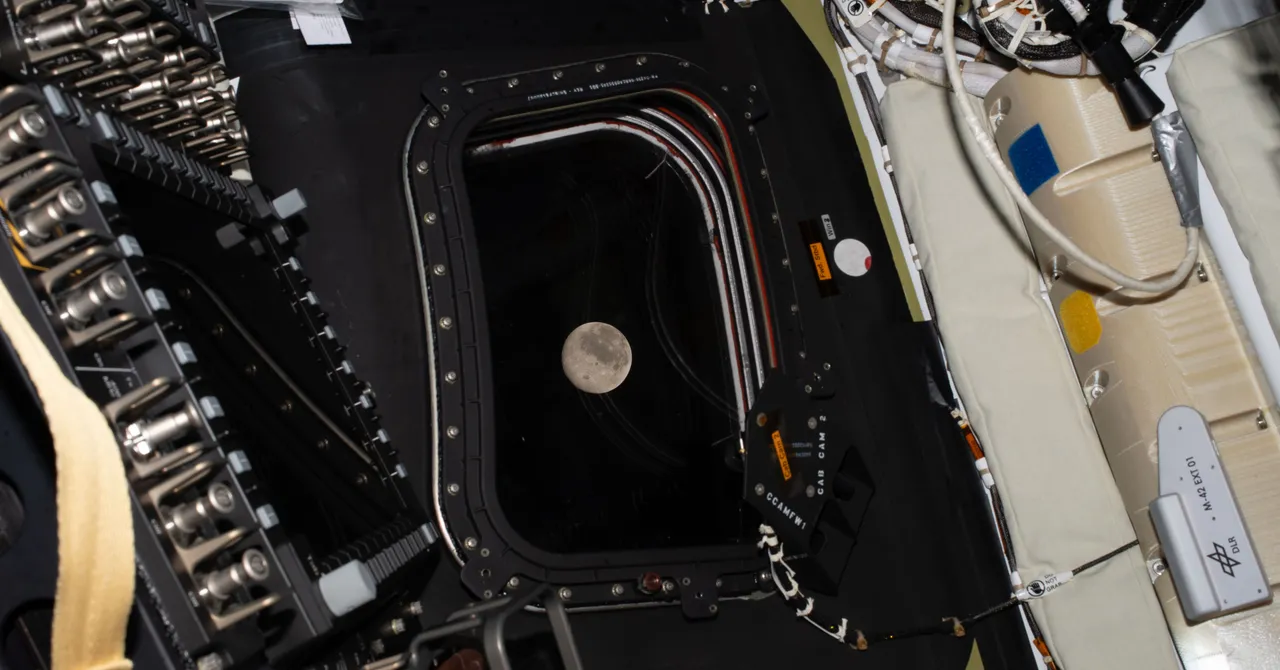
During their mission, the Artemis II crew saw things that no human has seen before. Flying higher above the lunar surface than the Apollo missions, the astronauts were the first people to see the entire disk of the moon’s far side. They also witnessed a solar eclipse from the vicinity of the moon as the sun slipped behind the lunar disk and illuminated it from behind.
“Humans probably have not evolved to see what we are seeing,” said NASA astronaut Glover during the eclipse. He and the rest of the crew described a halo of light surrounding the moon while one side of the lunar surface was bathed in earthshine. Venus, Mars, and Saturn shone among the stars. “It is truly hard to describe. It is amazing.”
Artemis II began on April 1 when the crew launched from NASA’s Kennedy Space Center in Florida atop the 322-foot-tall Space Launch System rocket, the most powerful vehicle to ever carry humans. After conducting multiple altitude-raising engine burns and testing the manual controls of the spacecraft, the crew proceeded with the engine firing known as translunar injection on day two of the mission, which sent them on a trajectory to the moon.
For the next three days, the crew tested the Orion spacecraft’s systems, practiced putting on their spaceflight suits, conducted additional course correction burns, manually flew the Orion capsule again, and prepared for the lunar flyby around the far side of the moon. They also had trouble venting wastewater from the Orion capsule’s toilet into space.
Advertisement
“We definitely have to fix some of the plumbing,” NASA administrator Jared Isaacman said during a conversation with the crew.
At 12:41 am Eastern Time on April 6, Artemis II entered the lunar sphere of influence, where the moon’s gravity overcomes that of Earth. That day, the crew made their closest approach to the moon, flying to about 4,000 miles above the lunar surface. During the lunar flyby, the crew communicated with a team of scientists on the ground, both before and after a roughly 40-minute communication blackout on the far side, to describe geologic features such as craters and canyons.
Just after breaking the distance record, the crew proposed names for two young, unnamed craters on the moon. The first they called Integrity, after their spacecraft, and the second they named Carroll, in honor of commander Reid Wiseman’s wife, who died of cancer in 2020.
In short:France’s Interministerial Digital Directorate (DINUM) announced on 8 April 2026 that it is migrating its own workstations from Windows to Linux and has ordered every government ministry to formalise a plan to eliminate extra-European digital dependencies by autumn 2026. The directive covers operating systems, collaborative tools, cloud infrastructure, and artificial intelligence platforms. It follows France’s January 2026 mandate to replace Microsoft Teams and Zoom with its domestic Visio platform across 2.5 million civil servants by 2027, and is the most comprehensive digital sovereignty measure the French state has yet announced.
What France is actually committing to
An interministerial seminar convened on 8 April by the Directorate General for Enterprise, the National Agency for Information Systems Security, and the State Procurement Directorate produced a directive with two immediate obligations. DINUM itself, which employs roughly 250 agents, will migrate its workstations from Windows to Linux. All other ministries, including their operators and affiliated bodies, must produce their own reduction plans before autumn 2026. The plans are required to address eight categories of dependency: workstations and operating systems, collaborative and communication tools, antivirus and security software, artificial intelligence and algorithms, databases and storage, virtualisation and cloud infrastructure, and network and telecommunications equipment.
No specific Linux distribution has been named in the public announcement, and individual ministries retain the flexibility to choose their migration path within that framework. The software replacement strategy for the most common desktop tasks is already in place in the form of La Suite Numérique, a stack of sovereign productivity tools developed and maintained by DINUM. It includes Tchap, an end-to-end encrypted messaging application already deployed to more than 600,000 civil servants, Visio for video conferencing, a sovereign webmail service, file storage, and collaborative document editing.
The entire platform is hosted on Outscale servers, a subsidiary of Dassault Systèmes, and is certified SecNumCloud by the French information security agency ANSSI. As of April 2026, La Suite had been tested by some 40,000 regular users across departments before the broader mandate. The next milestone is a first set of “Industrial Digital Meetings” scheduled for June 2026, where DINUM intends to formalise public-private coalitions to support the transition.
Announcements of government Linux migrations have a long and largely disappointing history. Most have quietly reversed course under the weight of compatibility problems, vendor pressure, and the path dependence of legacy software. France has a reason to believe this time is different, and the reason is the Gendarmerie nationale. Beginning in 2004 with a phased adoption of OpenOffice, Firefox, and Thunderbird, the Gendarmerie progressively built the internal competencies and governance structures required for a full operating system switch. In 2008 it launched GendBuntu, its customised Ubuntu-based deployment.
Advertisement
By June 2024, GendBuntu ran on 103,164 workstations, representing 97% of the force’s computing estate. The financial outcome has been unambiguous: the project saves approximately two million euros per year in licensing costs and has reduced the total cost of ownership by an estimated 40%. In February 2026, the Gendarmerie was cited explicitly by DINUM as the governance model for the national rollout.
The international context adds further validation. Germany’s state of Schleswig-Holstein, which began its own Microsoft-to-Linux transition in earnest in 2024, completed nearly 80% of its 30,000-workstation migration by early 2026 and recorded savings of €15 million in licensing costs in 2026 alone. The lesson both cases illustrate is the same: phased migration with coherent governance, strong internal support functions, and sustained political will consistently outperforms big-bang approaches that attempt to switch everything at once.
The geopolitical trigger
The April 8 announcement does not exist in isolation. It is the operating-system layer of a digital sovereignty strategy that France has been accelerating visibly since late 2024, driven in significant part by the changed relationship with the United States under the Trump administration.Trump’s tariffs reignited Europe’s push for cloud sovereigntyfrom April 2025 onward, with OVHcloud and Scaleway reporting record client growth as European institutions began actively seeking to reduce their exposure to American vendors. In November 2025, France and Germany convened a joint summit on European digital sovereignty, establishing a task force to report in 2026.
In January 2026,France announced it would replace Teams and Zoom with its homegrown Visio platform for all 2.5 million civil servants by 2027, a move described at the time as digital sovereignty moving from slogan to policy. The April 8 Linux mandate is the same logic applied to the operating system itself. Anne Le Hénanff, Minister Delegate for Artificial Intelligence and Digital Technology, has framed the imperative plainly: “Digital sovereignty is not an option, it is a strategic necessity.” David Amiel, Minister of Public Action and Accounts, who led the announcement alongside Le Hénanff, stated that France “can no longer accept that our data, our infrastructure, and our strategic decisions depend on solutions whose rules, pricing, evolution, and risks we do not control.”
Advertisement
The context for that framing is structural: US cloud providers control an estimated 85% of the European cloud market, according to Synergy Research Group, and spending on sovereign European cloud infrastructure is forecast to more than triple to €23 billion by 2027.Europe’s broader bid to reclaim its technology stackhas moved from a niche policy concern to a headline political priority across the continent, and France is now moving faster than any other EU member state at the level of government desktop infrastructure.
The limits and the open questions
The April 8 directive is a mandate, not a completed migration. The absence of a specified Linux distribution means each ministry will face its own procurement and compatibility decisions, and the history of public sector IT projects suggests that autumn 2026 plans will vary enormously in ambition and specificity. Certain categories of specialist software, particularly in defence, healthcare, and financial regulation, have deep dependencies on Windows-specific applications for which open-source alternatives either do not exist or are not yet production-ready.
DINUM has acknowledged this through the flexibility it has built into the framework, but the question of how many of those remaining dependencies can realistically be resolved by a government-mandated roadmap is one that will only be answered over the next two to three years. The sovereignty strategy also contains a structural irony that will persist regardless of which operating system runs on civil servant desktops. Even as France replaces Windows with Linux and Teams with Visio,the twelve European AI startups selected for Amazon’s 2026 AWS Pioneers cohortillustrate that the continent’s most ambitious technology projects continue to be built and scaled on American cloud infrastructure. Replacing the desktop layer matters, but it sits above a cloud and compute substrate that remains predominantly American.
The full sovereignty project, if France and its partners are serious about it, will eventually have to address that substrate too. For now, the direction is clear, the political will is real, and the Gendarmerie’s 103,000 Linux workstations provide proof that the goal is achievable at scale.2025 established AI as the defining technology of the decade, and the decisions governments make now about which infrastructure that AI runs on, and under whose legal jurisdiction, will shape the continent’s digital autonomy for the next generation.
Thanks to a $150 discount, shoppers can grab Apple’s 2026 M5 MacBook Air 13-inch for a record low $949.
Get the lowest 13-inch MacBook Air price this weekend at Amazon – Image credit: Apple
The 13-inch MacBook Air (2026) is now equipped with Apple’s M5 chip that features a 10-core CPU with 4 super cores and 6 efficiency cores. This allows a performance boost over the M4 model. In the standard spec, which is on sale for $949 at Amazon this weekend, you’ll also get an 8-core GPU, 16GB of unified memory, and 512GB of storage. Get 13″ MacBook Air M5 from $949 Continue Reading on AppleInsider | Discuss on our Forums
Few people believe they are bad drivers, which is exactly why terrible drivers remain blissfully unaware that they are menacing the road. In 1981, a Stockholm University study found that the majority of drivers reported having “above average” driving and safety skills. This wasn’t a one-off, either, as a 2021 study by five researchers at the University of Hong Kong and Linköping University reaffirmed the widespread tendency to overstate one’s abilities.
Try an experiment the next time you’re in a group setting. Ask people what they’d rate their own driving skills, and you’ll probably receive answers ranging from “above average” to “excellent,” which can’t be true. By math and logic, most drivers have to be “average”, as that’s the definition of the word.
This cognitive dissonance — as the researchers call it — happens because bad driving rarely results in fiery crashes and police chases on TV. It happens every day, through many small failures like poor spacing, inconsistent speeds, late or harsh braking, hesitant decisions, and more such minor problems. Together, these small, irritating problems endanger everyone on the road. Also, all of the signs on this list are objectively measurable failures in vehicle control, not just driving preferences. With all that said, here are five worryingly common signs of a bad driver.
Advertisement
Thinking everyone else is the problem
Phoenixns/Getty Images
Perhaps the most definitive metric of what defines a bad driver is the “I’m never in the wrong” attitude. If someone you know is constantly bemoaning the state of drivers on the road, then it’s extraordinarily likely that they are the bad driver themselves. Furthermore, if anyone says something along the lines of “that crash was unavoidable,” that indicates a poor or inexperienced driver. In 2016, a Proceedings of the National Academy of Sciences study found that driver-related issues were to blame in over 90% of cited crashes.
While most literature on driver confidence is published outside the U.S., a 2013 National Library of Medicine (NLM) study by two researchers from NYU and Elizabethtown College found that Americans are prone to thinking they are better drivers than average.
Advertisement
Tailgating other drivers
Scm Jeans/Getty Images
Many people don’t realize that even if you’re in front of someone going the speed limit, the law requires giving way to someone faster than you. That is why it can be very frustrating to be stuck behind a driver who is camping in the left lane on a highway, especially if you’re in a rush. However, this is not an excuse to tailgate the slowpoke in the left lane, and doing so is dangerous and a telltale sign of a bad driver. Studies have shown that tailgating drastically impacts reaction time and road safety, should an incident occur.
In most cases, the two or three-second rule should be applied, wherein you look at a fixed object on the road, and ensure at least three seconds pass between your passing that fixed object, and the car in front of you.
This leaves adequate braking distance should something require a quick stop of the car ahead of you. Furthermore, the evidence overwhelmingly suggests that younger drivers are more likely to be tailgaters than older drivers, though it is one of many common mistakes that even experienced drivers make.
Advertisement
Never missing an exit
Trygve Finkelsen/Shutterstock
A lot of you must have seen the “I turn now, good luck everybody else” snippet from “Family Guy”, Seth MacFarlane’s Disney-owned running animated sitcom. There’s a famous saying that goes along the lines of “bad drivers never miss their/an exit”, which is what that snippet plays on. The idea is that someone who is an objectively bad driver will do dangerous things, like cutting across several lanes of traffic, crossing solid yellow or white lines, or braking extremely hard before taking an off-ramp in order not to miss their exit.
The underlying assumption is that someone who is a “good” driver will prioritize road safety, and if that means adding time and distance to their journey, they’d do it over making a hazardous exit. Of course, the situation can be quite frustrating, especially in certain areas of the U.S. where a single missed exit can result in 15 or even more minutes of extra driving time each journey. The easiest way to not miss exits is to be prepared for them, which might sound intuitive, but is easier said than done. You could be on a new road, visibility could be bad, road markings and signs could be faded, and if you’re going fast, GPS callouts might be a bit delayed. Nonetheless, it’s always better to have a bit more driving time and not cause an accident than to make a risky turn to save a bit of time.
Advertisement
Hard or late braking
jpreat/Shutterstock
Arguably, knowing when to brake (and how much to brake) is the most important skill that a driver can possess, and having a car with a good stopping distance goes a long way in keeping you safe. If you think back to your driving classes, many instructors would have emphasized checking at least the rearview mirror before braking hard, though this may not be possible all the time. On that note, it’s worth taking a look at our guide on how to minimize blind spots in your car, as many drivers fail to set up their mirrors properly.
Anyway, smooth braking is a skill that not a lot of drivers have, because it does take a fair bit of time to develop. Highway traffic can often meet standstill cars, especially near major interchanges in and out of the city. An example would be the Mass Pike interchange in Massachusetts (the U.S. state with the worst drivers, statistically). It is at places like these where you’ll typically hear tires squealing, and more than one person moving into the emergency lane to avoid a crash.
Advertisement
If your passengers are constantly doing the invisible passenger-side brake stomp, it’s probably worth taking a closer look at your braking habits. The easiest fix to this problem is to drive slower, as you would have more control over the vehicle.
Advertisement
They hesitate at predictable situations
Bill Pugliano/Getty Images
We’ve all been at an intersection, free-right, stuck behind a new driver who cannot judge the speed of an oncoming vehicle before merging onto the road. This either causes frustration among the people waiting in line to turn, or downright danger as the oncoming vehicles need to brake or swerve to avoid an incident. These situations often freak people out, especially beginner drivers. Examples that spring to mind are four-way stops, California stops, free right turns, U-turn areas, roundabouts, and, of course, the notorious zipper merges.
Poor decision-making in these situations is a telltale sign of a bad driver, such as not matching speed during on-ramp merging, waiting too long to enter a roundabout, taking a U-turn without gauging oncoming traffic, and more. There is strong evidence to suggest that this hesitation disproportionately affects newer drivers.
A study conducted by four researchers from Jilin University and Yanshan University in January 2021 found a moderate relation between the driver’s total experience and driving violations. This suggests that the more one drives, the easier it becomes to gauge and judge road situations and react to them appropriately. It also means that if you find yourself hesitating with right-of-way and safety decisions, you shouldn’t be too hard on yourself, and that things will get better the more you drive.
It’s been a wild week for folding iPhone rumors, with battles about what it will be called, release timing, when orders will ship, and more. On Friday, one prolific leaker jumped in and claims the device will ship in October at the latest.
Apple’s foldable iPhone is now closer to release than ever
This comes following numerous back-and-forth reports that foldable iPhone buyers would have to wait until as late as December for their new devices. Writing in a post on the Weibo social network, leaker Instant Digital says that the most likely outcome is that Apple will be able to debut the foldable iPhone in September. However, if Apple does choose to split the releases, the leaker doesn’t anticipate a long wait. They say the iPhone Fold will ship a month after the iPhone 18 Pro. Continue Reading on AppleInsider | Discuss on our Forums
Researchers say the world’s largest known wild chimpanzee community in Uganda fractured into rival factions and has been locked in a vicious “civil war” for the last eight years. “It is not clear exactly why the once close-knit community of Ngogo chimpanzees at Uganda’s Kibale National Park are at loggerheads, but since 2018 the scientists have recorded 24 killings, including 17 infants,” reports the BBC. From the report: [O]ver several decades, [lead author Aaron Sandel] said the nearly 200 Ngogo chimpanzees had lived in harmony. There were divided into two sets – known to researchers as Western and Central – but they had existed overall as a cohesive group. Sandel said he first noticed them polarizing in June 2015, when the Western chimpanzees ran away and were chased by the Central group. “Chimpanzees are sort of melodramatic,” he said, explaining that following arguments there would ordinarily be “screaming and chasing” and then later, they would grooming and co-operating.
But following the 2015 dispute, the researchers saw that there was a six-week avoidance period between the two sets, with interactions becoming more infrequent. When they did occur, Sandel said they were “a little more intense, a little more aggressive.” Following the emergence of the two distinct groups in 2018, members of the Western group started attacking the Central chimpanzees. In 24 targeted attacks since the split, at least seven adult males and 17 infants from the Central chimps have been killed, the study found, although the researchers believe the actual number of deaths are higher. The researchers believe many factors such as the group size and subsequent competition of resources, and “male-male competition” for reproducing may be to blame.
But they say there were three likely catalysts: – The first, were the deaths of five adult males and one adult female — for reasons unknown — in 2014, which could have disrupted social networks and weakened social ties across the subgroups – The following year, there was a change in the alpha male, which the study says coincided with the first period of separation between the Western and Central groups. “Changes in the dominance hierarchy can increase aggression and avoidance in chimpanzees,” it explained – The third factor was the deaths of 25 chimpanzees, including four adult males and 10 adult females, as a result of a respiratory epidemic, in 2017, a year before the final separation. One of the adult males who died was “among the last individuals to connect the groups,” the research paper said. The study has been published in the journal Science.
Forrester’s research has shown that a failure to commit to long-term, inclusive AI education can greatly impact an organisation.
Research and advisory firm Forrester has published the results of a report in which it explored the ramifications for employers and their organisations, when there is a failure to promote AI education across the entirety of a company.
The AIQ 2.0: Employees (Still) Aren’t Ready To Succeed With Workforce AI report found that while the majority of AI decision-makers and their organisations are using predictive and generative AI (GenAI), only half say they offer training in this area to non-technical employees. As a result, many companies are failing to invest in AI understanding, skills and ethics among the wider workforce.
The report said: “Those that have tried to upskill haven’t been particularly successful, yet people remain central to the success of your AI strategy.”
Advertisement
Employer readiness
According to a previous report issued by Forrester, the State of AI 2025 survey, almost 70pc of AI decision-makers said they are using GenAI in deployed production applications, while 20pc use it to run experiments and among automation decision-makers. 81pc of automation decision-makers also said AI copilots that assist employees in their work are important applications.
Forrester suggests that this is indicative of a growing problem in which there is a growing disconnect between the AI needs of a company and the actions being taken.
“AI is becoming more important to the work lives of employees and employees must adapt,” said the organisation. “But adaptation isn’t coming quickly or easily. Many employers remain mired in an environment of low skills and employee fears that isn’t conducive to successfully adopting workforce AI or driving productivity from its use.”
Research found that the proportion of AI decision-makers across six countries who said their organisations offer internal training on AI to non-technical employees only grew from 47pc in 2024 to 51pc in 2025, an improvement of just 4pc. Also only growing by 4pc was the number of AI decision-makers who said that their organisations offer training on prompt engineering – which Forrester finds to be a key skill for using most workforce AI tools in the modern era – which grew from 19pc to 23pc.
Advertisement
Fear factor
Forrester also noted that fears around ‘stunt adoption’ and AI-related job loss are hindering implementation, despite Forrester’s opinion that “very few jobs were lost to AI in 2025”. Data indicated that future job loss, while possible, will not constitute a job apocalypse, yet fears persist, due in part to a failure by organisations to correctly or consistently discuss and explain the process of introducing AI.
The report said: “Forrester’s 2025 data shows that 43pc of employees fear that, in general, many people will lose their jobs to automation in the next five years, while 25pc fear it will impact their own job during that span. This creates an ambient environment of fear and mistrust.”
The organisation added that one business leader said some of their employees fear job less, which turns them away from AI “altogether”.
“Organisations that fail to frame workforce AI as an opportunity builder for employees and that don’t articulate the benefits from an employee perspective see fears of job loss magnified,” said Forrester.
Advertisement
So, how might fears and anxieties be reduced so employers and employees can better embrace the changing landscape?
According to Forrester’s research, comprehensive learning and engagement programmes are key, with the report noting that leading organisations move beyond formal training and invest in continuous, hands-on learning and peer-based approaches that drive real adoption and impact.
Commenting on the findings of the report, JP Gownder, a vice-president and principal analyst at Forrester said: “Employers aren’t giving their people the skills, understanding, or ethical grounding they need to succeed with AI and it’s becoming a clear bottleneck to productivity and ROI. Our research shows most organisations are rolling out AI tools without investing in employees’ ability to use them effectively.
“To close the gap, businesses must move beyond surface-level training and build continuous, hands-on learning that demystifies AI, addresses employee concerns and develops real capability. This isn’t about replacing workers, it’s about enabling them to work smarter with AI.
Advertisement
“The organisations that treat AI literacy as a strategic priority, not a box-ticking exercise, will be the ones that unlock meaningful productivity gains and long-term competitive advantage.”
Don’t miss out on the knowledge you need to succeed. Sign up for the Daily Brief, Silicon Republic’s digest of need-to-know sci-tech news.
A new NYT Strands puzzle appears at midnight each day for your time zone – which means that some people are always playing ‘today’s game’ while others are playing ‘yesterday’s’. If you’re looking for Friday’s puzzle instead then click here: NYT Strands hints and answers for Friday, April 10 (game #768).
Strands is the NYT’s latest word game after the likes of Wordle, Spelling Bee and Connections – and it’s great fun. It can be difficult, though, so read on for my Strands hints.
Want more word-based fun? Then check out my NYT Connections today and Quordle today pages for hints and answers for those games, and Marc’s Wordle today page for the original viral word game.
Advertisement
SPOILER WARNING: Information about NYT Strands today is below, so don’t read on if you don’t want to know the answers.
Article continues below
NYT Strands today (game #769) – hint #1 – today’s theme
What is the theme of today’s NYT Strands?
• Today’s NYT Strands theme is… You’re putting me on
NYT Strands today (game #769) – hint #2 – clue words
Play any of these words to unlock the in-game hints system.
Advertisement
RUDE
QUOTE
FADE
PAGE
TOWER
ERODE
NYT Strands today (game #769) – hint #3 – spangram letters
How many letters are in today’s spangram?
• Spangram has 7 letters
NYT Strands today (game #769) – hint #4 – spangram position
What are two sides of the board that today’s spangram touches?
First side: left, 5th row
Last side: right, 3rd row
Advertisement
Right, the answers are below, so DO NOT SCROLL ANY FURTHER IF YOU DON’T WANT TO SEE THEM.
Advertisement
NYT Strands today (game #769) – the answers
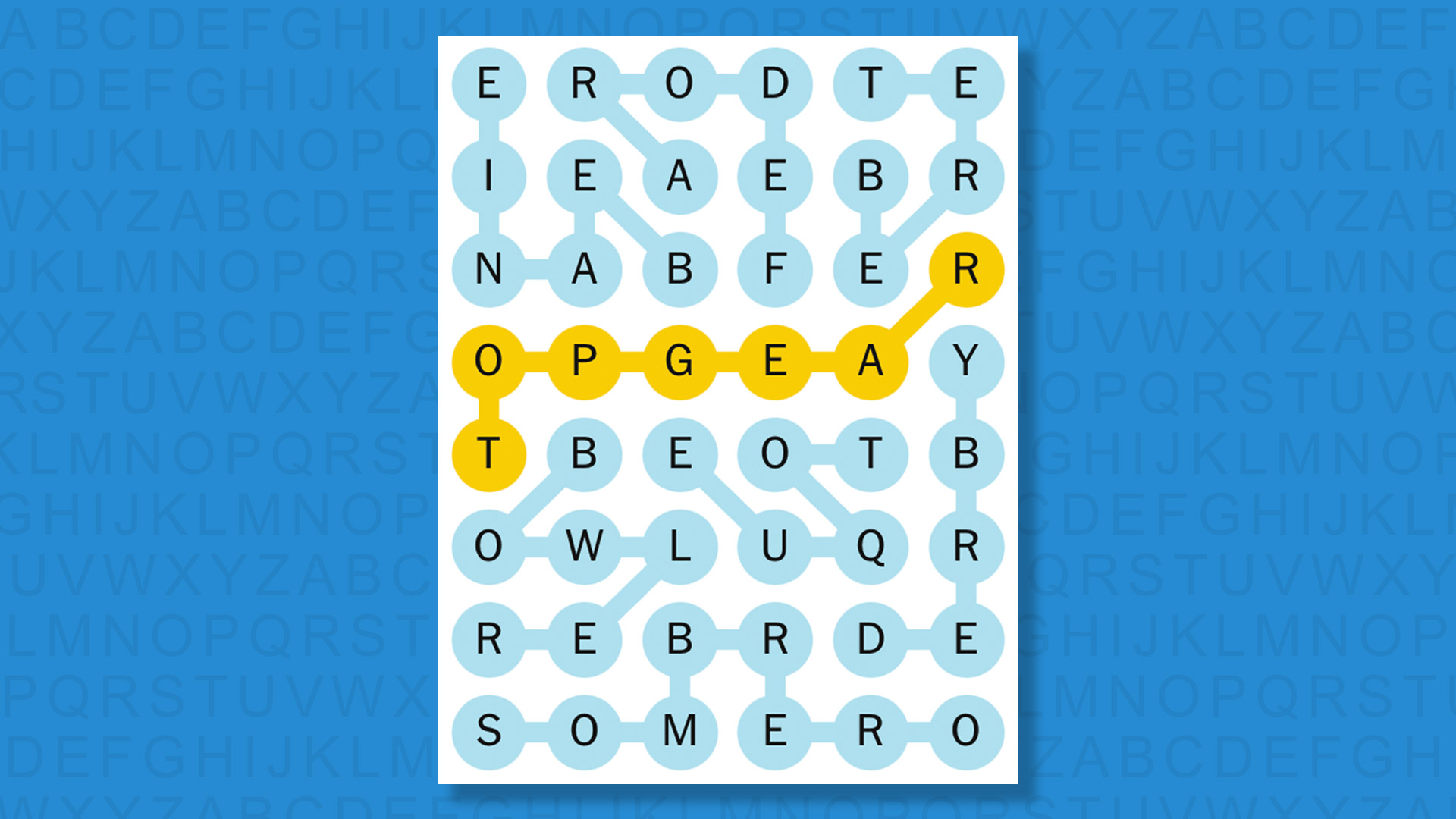
(Image credit: New York Times)
The answers to today’s Strands, game #769, are…
BERET
SOMBRERO
DERBY
BOWLER
FEDORA
BEANIE
TOQUE
SPANGRAM: TOPGEAR
My rating: Hard
My score: Perfect
The theme “you’re putting me on” had me briefly searching for the phrase ‘just kidding’, which would have made the perfect spangram — but there wasn’t even a letter K.
Sign up for breaking news, reviews, opinion, top tech deals, and more.
It was at this point that I decided it must be something to do with clothes instead and after spotting BERET it appeared the clothes in question were hats.
I managed to spot most of the TOPGEAR in our search, but TOQUE I would not have found unless it was last — though I now know it’s a variant of the humble BEANIE.
Advertisement
Yesterday’s NYT Strands answers (Friday, April 10, game #768)
WILY
CANNY
SHREWD
SLICK
CRAFTY
CUNNING
SPANGRAM: LIKEAFOX
What is NYT Strands?
Strands is the NYT’s not-so-new-any-more word game, following Wordle and Connections. It’s now a fully fledged member of the NYT’s games stable that has been running for a year and which can be played on the NYT Games site on desktop or mobile.
I’ve got a full guide to how to play NYT Strands, complete with tips for solving it, so check that out if you’re struggling to beat it each day.
Meta debuted its upgraded Meta AI chatbot this week, showing off plenty of tricks made possible by the new Muse Spark model embedded in the chatbot. The social media giant’s AI can’t deny its origins, behaving more than a little like a social media influencer who’s not scrolling their feeds. It’s notable when compared to ChatGPT‘s endless equivocating in the name of fairness.
I tested some of Meta AI’s highlights against ChatGPT, and the split shows up fast when you ask for more than facts. The Muse Spark model has Meta AI reach for the social layer and all its opinions first, while ChatGPT keeps a cooler head.
1. The local fun radar
Advertisement
Meta AI’s link to local social media became apparent in my first test about activities nearby. I asked both chatbots, “What are people doing for fun this summer in my area? Give me ideas based on what’s trending locally.”
Article continues below
Meta AI had a lot of specifics for my region, including sunset kayaking meetups at the local state park every Thursday at 6:30 p.m., the summer concert series at the Hopper House, and a cold brew tasting workshop this Saturday.
Advertisement
ChatGPT kept things high-level by comparison. It suggested categories of activities, like hikes, restaurants, and open mic nights, but only offered a hyperlink to the local tourism page instead of citing what people are talking about. The advice was solid, but it wasn’t anchored to a map or a calendar.
2. The summer fit check
(Image credit: ChatGPT and Meta AI)
Keeping up with the summer theme, I decided to inquire about what looks would be trendy and to see what they would look like on me based on an uploaded photo.
Specifically, I asked the chatbots to “Find out what the popular trending summer looks are going to be. Make an image of me wearing one of the looks.”
Advertisement
Sign up for breaking news, reviews, opinion, top tech deals, and more.
ChatGPT produced the image on the left: a relaxed beach boardwalk at sunset. It went with a butter yellow open short-sleeve shirt over a gray tank, color-blocked cargo pants, and round sunglasses. The AI described the look but didn’t indicate much about why it was supposed to be a look of the summer.
Meta AI put me in a crisp white double-breasted suit, complete with a tennis racket and aviators. It discussed the “Tenniscore” and “old money summer” discussion that people in fashion are discussing on social media.
Advertisement
3. Influencing geography
Meta AI had hinted at a willingness to make a choice when presenting options by leveraging the Muse Spark model’s multipagent approach. I told the two chatbots that “I’m deciding between working from home or going out to a café today. Help me choose based on productivity and mood.”
ChatGPT wrote out a somewhat traditional pros and cons list, discussing how being home offers control and fewer distractions, while cafés provide “environmental variety and social micro-interactions” that can make people feel better. Its recommendation was to experiment and track the results myself.
Meanwhile, Meta AI broke down productivity research about ambient noise and light in one thread, while another checked the weather and noted that my area had a nice day, perfect for a walk to a café. Meta AI didn’t bother going over the benefits of staying home; it simply said that going to a café today wins and suggested a couple nearby.
Advertisement
The difference was agency. Meta AI is willing to stake a bet on telling me what’s better, while ChatGPT just provided more details without much guidance.
4. Caffeine scores
(Image credit: ChatGPT and Meta AI)
For the next test, I wanted to see how Meta AI’s coding compared to ChatGPT, with a creative twist.
I wrote: “Make a small web app for tracking my sleep and caffeine habits that gives me a daily ‘energy score.’ Make it visual and a bit fun.
Advertisement
Meta AI took me at my word, and you can see the places for inserting sleep and caffeine intake on the right. ChatGPT responded with something pretty similar, albeit with an extra option for exercise and water. The design was still neat and readable. Despite Meta AI’s boasts, though, the results came out pretty similar.
5. Direct dishwasher help
(Image credit: ChatGPT and Meta AI)
Finally, I tried to combine several of the previous elements, mixing some creativity with image creation.
So I asked the chatbots to “Put me in a fun, original mascot costume. Give it a unique, entertaining backstory.”
Advertisement
Meta AI immediately got theatrical. It turned me into “Sir Sips A Lot,” a velvet-robed otter who runs a traveling tea cart. The backstory said I left a productivity app and was pursuing herbalism and handing out chamomile to stressed commuters while reciting haikus about inbox zero. You can see the otter above, tiny kettle crown and all. It cited the popularity of both tea and otters to justify the choice.
ChatGPT took a slightly more grounded approach, but in a very odd coincidence, went with a hot beverage theme again. So there stood “Captain Brewster,” a cheerful coffee-themed character, complete with a textured lid and a subtle swirl of “steam” made from semi-transparent fabric.
Captain Brewster was described as a former café regular who became a local legend for always having the perfect advice at the perfect time, eventually transforming into a mascot that appears wherever people need a boost of focus.
Meta AI’s more strongly expressed opinions stood out, but in most cases, the choice between it and ChatGPT depends on what kind of help feels most useful. Meta AI is at its best when trend awareness, locality, or a gentle push in one direction would help.
Advertisement
ChatGPT might be better when you want broad, neutral reasoning without any nudges. In practice, the ideal setup might involve both, switching between them depending on whether the day calls for a spark of inspiration or a steady hand.





























































You must be logged in to post a comment Login