Apple is already moving on to its next update. It is rolling out the first developer beta of iOS 26.5 just a week after the stable iOS 26.4 release.
And while this isn’t a headline-grabbing upgrade, it quietly adds a handful of features. These hint at where Apple is heading next.
The biggest change is tucked inside Maps. A new ‘Suggested Places’ section has appeared within the search interface, surfacing recommendations directly in the app. It lines up with Apple’s broader push to expand discovery, and potentially advertising, within its own services.
Elsewhere, iOS 26.5 beta 1 brings a mix of smaller but meaningful tweaks. There are new purchase options in the App Store, alongside improvements to accessory pairing and broader support for connected devices. Apple is also continuing its slow expansion of RCS messaging. Plus, there are enhanced sharing options for message attachments between iPhone and Android, a move that should make cross-platform chats feel a little less clunky.
Advertisement
Some features are more region-specific. Users in the EU will see Live Activities support extended to third-party accessories. Meanwhile, the update also introduces a new Inuktitut keyboard layout, expanding Apple’s language support.
Advertisement
Digging into the code, there are also references to a ‘Year in Review for 2026’ feature in Apple Books. This suggests Apple is working on more personalised, end-of-year summaries across its ecosystem. It is something we’ve already seen roll out in Apple Music and other services.
I’ve been trying to become fluent in Spanish for the last decade. After spending most of my adult life surrounded by multilinguals, I often feel like I’m playing an impossible game of catch-up. Like everyone else, I’ve tried to become regimented with practicing on an in-phone app like Duolingo, which attempts to ‘game-ify’ language learning, but mostly ends up with a sad and sick-looking green bird icon guilting me to practice every time I open up my phone.
Babbel aims to help people actually learn the language through practical conversation and grammar, using proven pedagogical methods and speech recognition technology. Each lesson is short, with 10 to 15 minute lessons developed by a team of over 150 linguists. Instead of learning the same simple phrases in ad-ridden games on an endless loop, take charge of your language learning this year and make that commitment a reality. No more excuses—we’ve got a Babbel promo code and a Babbel coupon to help you hit your goals. Maybe you’ll be fluent by your next vacation (or at least able to order a chopped cheese with confidence at the bodega).
Unlock Your Babbel Promo Code and Save Big in April 2026
Not only is Babbel a helpful interactive app to simplify language learning, but it also has holistic services to help introduce the language to every part of your life. These are things like Babbel videos, which do a deep dive into what makes a language so fascinating, Babbel podcasts, which are led by Babbel experts who take an inside look at local culture and break down language secrets, and Babbel magazine, which highlights stories from around the world so you can better understand the history, culture, and people from the language you’re learning (and maybe will inspire you to take a trip to practice that language IRL!).
Make sure you check back often to find the latest Babbel promo code for sitewide savings. There are often discounts on the subscription tiers, which range from three month plans to annual memberships. Plus, springtime is usually when there are significant Babbel discounts for new users. And, if you sign up for the Babbel newsletter, you can receive a link for a Babbel coupon in your inbox.
Advertisement
Save 60% on 6-Month Plans With the Healthcare Workers Discount
As stated, knowing another language is an invaluable life skill, and a skill that is immeasurably valuable to healthcare workers, who may be able to more easily give lifesaving care. Healthcare professionals and nurses get a Babbel discount of 60% off a six-month Babbel subscription. To claim the Babbel discount, users just need to verify their medical credentials via ID.me.
Claim Your 60% Military Discount on 6-Month Subscriptions
This Babbel discount also applies to active duty military, veterans, and their families, who are also eligible for 60% off six-month Babbel subscriptions. This Babbel military coupon is valid for National Guard, reserve members, and immediate family members of service personnel, and all you need to do is verify your status at ID.me.
Snag a 60% Teacher Discount on Your Next 6 Months
Babbel is also extending the 60% discount to the real unsung heroes, teachers. Knowing more than one language is an invaluable tool for educators to be able to talk more effectively to parents or guardians, as well as to more deeply understand their students’ cultural identities. Educators and teachers, like K-12 teachers, university professors, and other educational staff members, are eligible for 60% off a six-month Babbel subscription. And like the others, you just need to verify credentials through ID.me.
Grab Top Lifetime Subscription Deals and Save in April 2026
Everyone knows that learning a language is a lifetime process, and Babbel wants to make it even easier for you to commit to it. If you pay once, you’ll get access to all available Babbel languages forever with Lifetime deals. You’ll just need to look for the “Lifetime Subscription” Babbel promos that could potentially save you hundreds of dollars over several years. Be sure to check back often, as these rotating deals often pop up during major holiday sales. While the upfront cost is higher, you’ll get access to all 14 available languages with this Babbel promo code lifetime subscription deal.
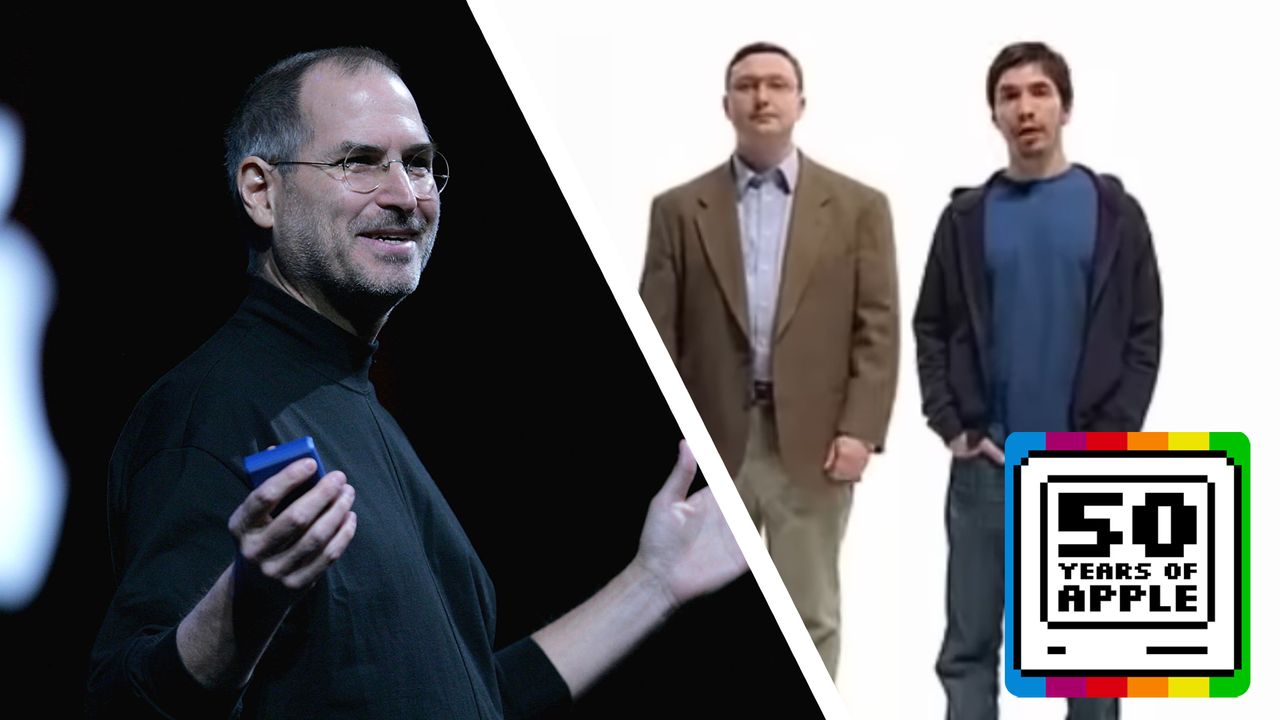
From carefully crafted marketing lines to terms the company would probably rather forget, these phrases capture the impact, influence and missteps of Apple over the last 50 years.
The Apple of 1976 is unrecognizable compared to today’s gigantic corporation, and yet key early decisions by Steve Jobs, Steve Wozniak, and more, are still having their effect today, half a century later.
Steve Jobs with the original Macintosh, made eight years after Apple’s founding
Apple has long had a reputation for never looking back, and it’s usually justified. “Let’s go invent tomorrow rather than worrying about what happened yesterday,” said Steve Jobs in an interview that has long been lost, but is forever quoted in motivational speeches. He was consistent about this even when talking about himself and his work, though. “[Technology] is not a field where one paints a painting that will be looked at for centuries,” he said in 1994, “or where one builds a church that will be looked at, admired, and looked at in astonishment for centuries.” Continue Reading on AppleInsider | Discuss on our Forums
Space may truly be the final frontier, but maybe that frontier can be closer than you thought. Pictures of nebulae and planets bring the colorful sights of deep space right to your screen. You may even have models of some of the rockets used for those missions on a shelf. However, did you know that you could even have a model of those nebulae or planetary surfaces from [NASA]?
While we have covered some distributed models from [NASA] here before, the catalog has expanded far past what 2016 had in store. Additionally, the catalog has been sorted into a more user-friendly, filterable interface than a simple GitHub repository. Most models even have a description attached, giving some basic background information on what the Crab Nebula is, for example.
There could always be more; there don’t appear to be many models of the space shuttle or some other expected files, but what is there is incredible. Some non-3D model files can also be found from star maps to full planetary maps.
Advertisement
While this file repository is cool and all, it’s not all [NASA] does. When not sending rockets deep into space for cool pictures, [NASA] has to make sure the Moon doesn’t explode. Was that a possibility at some point? Of course it has been!
We’ve been saying for years now that Jonathan Haidt’s crusade against social media and kids is a moral panic dressed up in academic robes, and that the evidence simply does not support the sweeping claims he’s been making. A new piece in the Wall Street Journal by Jacob Mchangama and Jeff Kosseff drives that point home with a framing that cuts straight to the absurdity of it all: this fear of new ideas “corrupting the youth” is literally as old as democracy itself.
In 399 BCE, Socrates was put on trial before a jury of some 500 of his fellow Athenians. The indictment accused him of impiety and added, “Socrates is…also guilty of corrupting the youth.” Despite the Athenian democracy’s commitment to free and equal speech, Socrates was found guilty and sentenced to death.
Two and a half millennia later, democracies are still deeply concerned about dangerous ideas corrupting the youth. This time, the target isn’t dangerous philosophy but an increase in teen mental-health issues blamed on social media.
Mchangama and Kosseff are particularly well-positioned to make this argument (and are both former Techdirt podcast guests). Mchangama’s prior book, Free Speech: A History from Socrates to Social Media, traced the full arc of free speech battles across civilizations, and the two of them have a forthcoming co-authored book, The Future of Free Speech, on the global decline of free speech protections. Meanwhile Kosseff’s three previous books all cover related free speech territory: The Twenty-Six Words that Created the Internet, Liar in a Crowded Theater, and The United States of Anonymous. These are people who have spent their careers studying exactly these patterns — the recurring cycle of moral panic, political opportunism, and the quiet erosion of rights that tends to follow.
Their piece walks through the problems with both the evidence and the policy responses that have sprung from Haidt’s work. On the evidence:
Advertisement
In 2024, a review of the scientific literature by a committee at the National Academies of Sciences, Engineering, and Medicine had found that despite some “potential harms,” the review “did not support the conclusion that social media causes changes in adolescent health at the population level.” A 2026 longitudinal study in the Journal of Public Health reached a similar conclusion.
We covered these studies at the time, noting that they were far from the only such studies to go hunting for the alleged evidence of inherent harms to children using social media — and coming up empty. It is amazing how little attention these studies get compared to Haidt’s book. So it’s good to see Mchangama and Kosseff call them out.
They also highlight what gets lost when you reduce this to a simple “social media = bad” story:
“Social media has the potential to connect friends and family. It may also be valuable to teens who otherwise feel excluded or lack offline support,” according to the National Academies of Science report. It also highlights the possible benefits of online access for “young people coping with serious illness, bereavement, and mental health problems” as well as opportunities for learning and developing interests.
That point is especially important for vulnerable teenagers whose offline environments may be isolating or hostile. This is why comparing social media to tobacco is questionable: The scientific consensus on smoking’s harms is unanimous and no one claims smoking has benefits. Neither is true for social media.
This is consistent with what experts told TES Magazine last fall — actual researchers in the field described Haidt’s work as “fear” rather than science, said they couldn’t believe a fellow academic wrote it, and pointed out basic logical flaws in his causal claims. It’s also consistent with what I found in my own detailed review of the book when it came out two years ago, where the cherry-picked data, the ignored contrary evidence, and the policy proposals based on gut feelings rather than research were all on full display.
Advertisement
What makes this even worse than a standard “well-meaning but wrong” situation is a study we wrote about earlier this year showing that the social media “addiction” narrative itself may be more harmful than social media. Researchers found that very few people show signs consistent with actual addiction, but every time the media amplifies stories about social media addiction, more people claim they’re addicted. And that belief makes them feel helpless — convincing them they have a pathological condition rather than habits they could simply change.
In other words, the moral panic is doing the exact same thing it accuses social media of doing: making people anxious, helpless, and convinced they can’t control their own behavior.
The cost of being wrong here is that parents, politicians, and schools ignore the real causes of teen mental health struggles: poverty, the closure of youth services, reduced access to mental health care, and the erasure of community support systems. And the cost is that kids who genuinely rely on online communities — LGBTQ+ youth, kids with chronic illnesses, kids in hostile home environments — lose a lifeline. Mchangama and Kosseff make the same point, and now we can see the policy consequences playing out in real time.
And it goes even further. As Mchangama and Kosseff note, authoritarian governments are already using the “protect the children” framework as cover for broader censorship:
Advertisement
Authoritarian and illiberal states provide a grim window into how the protection of children can be weaponized to suppress dissent. In 2012, Russia enacted an internet blacklist law, with the stated intention of protecting children from harmful content. The law laid the groundwork for Russia’s heavily censored “Red Web” that now entirely prohibits many foreign social-media platforms.
The same goes in Indonesia which this month announced a ban on social media for those under 16. But Indonesia is also a country that has used the pretext of child protection to block and censor gay social networking apps and content.
It’s a remarkable blind spot for those pushing Haidt’s arguments. They never seem to consider that these are the exact same tools authoritarian governments use to silence marginalized voices. You would think that politicians championing this book — particularly Democrats who claim to care about civil liberties and LGBTQ rights — might pause when they see Russia and Indonesia deploying identical justifications.
And yet politicians across the spectrum continue to treat Haidt’s book like scripture, despite an overwhelming expert consensus that his claims don’t hold up.
Mchangama and Kosseff close with what should be obvious, but apparently still needs to be said:
Advertisement
Democracies have always worried about dangerous ideas corrupting the young. Intellectuals and lawmakers should absolutely be concerned about how and when our children navigate social media. But they should also be concerned about whether, in our rush to protect our children, we are building an infrastructure of surveillance and censorship that will ultimately threaten the hard-won freedoms we want future generations to enjoy.
Speech is powerful. Ideas have consequences. But we protect such speech from legal liability for that very reason. The power of speech to change minds and influence people is exactly why those in power are so often afraid of it and looking to tamp it down. It’s also why Mchangama and Kosseff can tie the urge back all the way to Socrates.
Every generation gets its moral panic. Every time, someone insists “this time it’s different.” Every time, the evidence eventually catches up and the panic looks ridiculous in retrospect. The tragedy is how much damage gets done in the meantime — to kids who lose a real lifeline, to free expression, to privacy, and to the actual causes of teen suffering that never get addressed because everyone was too busy blaming the latest app.
The verdict from the people who actually study this stuff has been clear for a while now. Maybe it’s time for politicians to put down Haidt’s book and pick up the actual research.
An unknown technical problem caused a number of robotaxis owned by the Chinese tech giant Baidu to freeze on Tuesday in the middle of traffic, trapping some passengers in the vehicles for more than an hour.
In Wuhan, a city in central China where Baidu has deployed hundreds of its Apollo Go self-driving taxis, people on Chinese social media reported witnessing the cars suddenly malfunction and stop operating. Photos and videos shared online show the Baidu cars halted on busy highways, often in the fast lane.
A college student in Wuhan tells WIRED that she was stuck in a Baidu robotaxi with two friends for about 90 minutes on Tuesday. (She asked to be only identified with her last name, He, to protect her privacy.) The student says the car malfunctioned and stopped four or five times during the trip before it eventually parked in front of an intersection in eastern Wuhan. Luckily, it was not a busy road, and the group was not in immediate danger. The screen display in the car asked the passengers to remain in the car with seatbelt on and wait for a company representative to come “in five minutes,” according to a photo He shared with WIRED.
He says it took about 30 minutes to reach a Baidu customer representative on the phone. “They kept saying it would be reported to their superior. But they didn’t explain what caused [the outage] or let us know how long we needed to wait for the staff to come,” He says. But no one ever came, and after another hour of waiting, the three passengers decided to just get out and go home by themselves (the doors weren’t locked).
Advertisement
On Chinese social media, other passengers also complained about being unable to reach Baidu’s customer support. “I tried every way I could think of to call for help using the options the app showed, but the phone line wouldn’t go through, and when I pressed the SOS button it told me it was unavailable. So then what exactly is the SOS for?” wrote one person in a post on RedNote alongside a video showing the button not working. She said she had to force the door to open and get out of the car as traffic halted to a complete stop behind her robotaxi. “Apollo Go, you really owe me an apology,” she wrote.
Baidu didn’t immediately respond to a request for comment. Local police in Wuhan issued a statement around midnight in China that said the situation was “likely caused by a system malfunction,” but the incident is still under investigation. No one was injured and all passengers have exited the vehicles, the police added. It’s unclear how many of Baidu’s robotaxis may have been impacted.
One dash cam recording posted to RedNote shows a car passing 16 Apollo Go vehicles parked on the road in the span of 90 minutes. On several occasions, the video shows the driver narrowly avoiding hitting the robotaxis by braking or changing lanes at the last minute.
Others were apparently not as fortunate. In another RedNote post, a man claimed he crashed into one of the malfunctioning Baidu vehicles. The man wrote in the caption that he was driving over 40 mph on a highway when the car in front of him suddenly changed lanes to avoid the stopped robotaxi. He couldn’t react fast enough and ended up running into the self-driving car. Photos of the man’s orange SUV being towed away show that the car’s front-right fender was completely torn off, and other parts appeared to have sustained major damage.
Polestar and Volvo are ending Polestar 3 production in Chengdu, China, and consolidating all output of the electric SUV at Volvo’s plant in South Carolina. “The move to consolidate global Polestar 3 production in Charleston help[s] generate efficiencies for both companies, whilst also underscoring our confidence in the plant and the role it plays in our manufacturing footprint,” said Hakan Samuelsson, chief executive of Volvo Cars. “The U.S. is a very important market for Volvo Cars, both to support our growth ambitions as well as a strategic production site to meet regional and export demands.” Ars Technica reports: Volvo had a challenging 2025, with sales falling by 7 percent. Meanwhile, Polestar, which was spun out from the Swedish OEM’s performance arm into a standalone startup in 2017, had a rather good 2025, seeing a 34 percent increase in sales. So increasing the proportion of Polestar 3s to come out of South Carolina seems sensible. And as we learned last September, the midsize electric Volvo EX60 will also go into production at the South Carolina site later this year, and then we’ll see a still-unnamed hybrid Volvo in 2030.
The two companies also announced today that Volvo agreed to extend part of a shareholder loan it made to Polestar and will convert the rest into Polestar shares. Polestar will still owe Volvo $661 million, due at the end of 2031, and another $274 million will become Polestar stock now, with a further $65 million in the second quarter of the year. Since December, Polestar has also raised $1 billion through three equity financing investments.
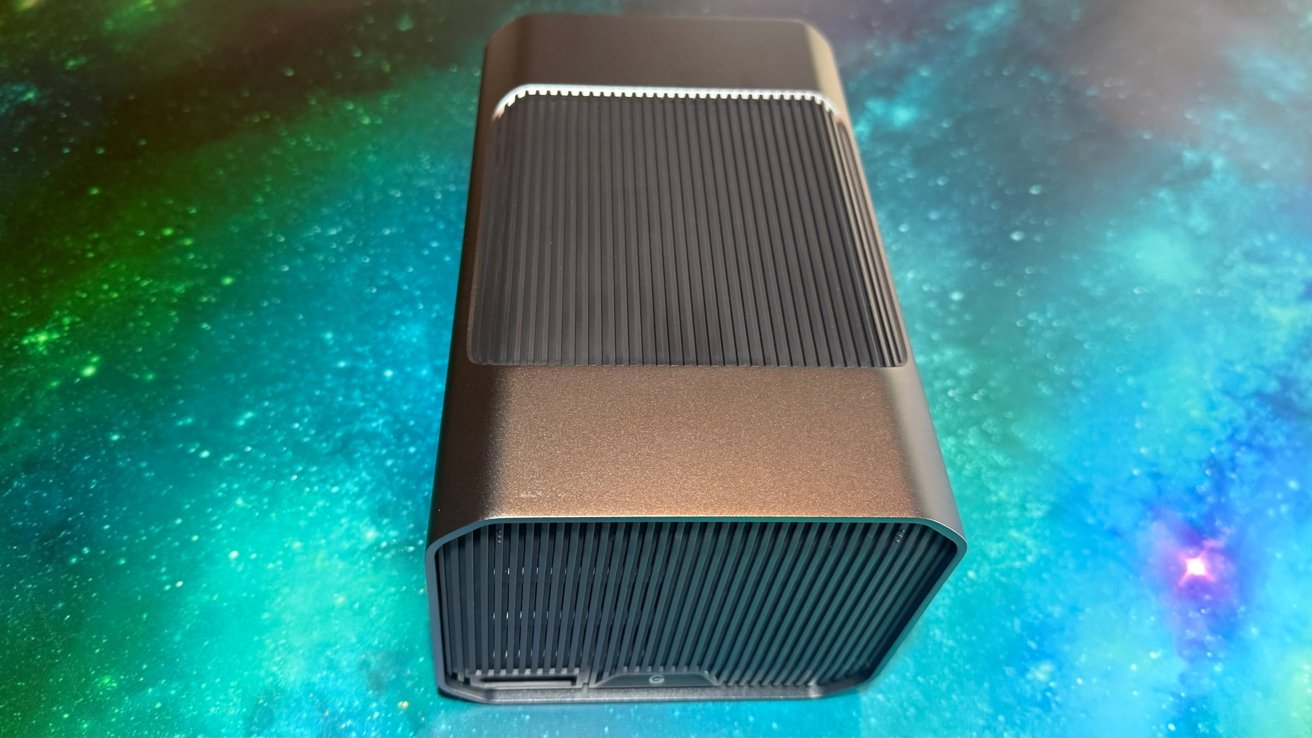
The 52TB G-Raid Project 2 is costly, yes, but it provides a large amount of reliable and well-supported storage for your Mac, plus fast access speeds for serious data warehousing needs.
G-Raid Project 2 review
It’s been interesting watching storage trends over the last two decades. In that span, we’ve gone from 250GB hard drives being enough, to multi-terabyte drives a few years later. Then we all went back down to lower capacity, but very high speed SSDs being the order of the day. Continue Reading on AppleInsider | Discuss on our Forums
Anthropic has built its public identity around the winning idea that it’s the careful AI company. It publishes detailed research on AI risk, employs some of the best researchers in the field, and has been vocal about the responsibilities that come with building such powerful technology — so vocal, of course, that it’s right now battling it out with the Department of Defense. On Tuesday, alas, someone there forgot to check a box.
It is, notably, the second time in a week. Last Thursday, Fortune reported that Anthropic had accidentally made nearly 3,000 internal files publicly available, including a draft blog post describing a powerful new model the company had not yet announced.
Here’s what happened on Tuesday: When Anthropic pushed out version 2.1.88 of its Claude Code software package, it accidentally included a file that exposed nearly 2,000 source code files and more than 512,000 lines of code — essentially the full architectural blueprint for one of its most important products. A security researcher named Chaofan Shou noticed almost immediately and posted about it on X. Anthropic’s statement to multiple outlets was nonchalant as these things go: “This was a release packaging issue caused by human error, not a security breach.” (Internally, we’d guess things were less measured.)
Claude Code isn’t a minor product. It’s a command-line tool that lets developers use Anthropic’s AI to write and edit code and has become formidable enough to unsettle rivals. According to the WSJ, OpenAI pulled the plug on its video generation product Sora just six months after launching it to the public to refocus its efforts on developers and enterprises — partly in response to Claude Code’s growing momentum.
Advertisement
What leaked was not the AI model itself but the software scaffolding around it — the instructions that tell the model how to behave, what tools to use, and where its limits are. Developers began publishing detailed analyses almost immediately, with one describing the product as “a production-grade developer experience, not just a wrapper around an API.”
Whether this turns out to matter in any lasting way is a question best left to developers. Competitors may find the architecture instructive; at the same time, the field moves fast.
Either way, somewhere at Anthropic, you can imagine that one very talented engineer has spent the rest of the day quietly wondering if they still have a job. One can only hope it’s not the same engineer, or engineering team, from late last week.
The story of Sung Jinwoo in Solo Leveling is characterized by his special power of creating a shadow army. He is capable of using his System power to pull out shadows from enemies who are defeated and command them using the word “Arise.” From being called the weakest hunter, Jinwoo becomes the powerful Shadow Monarch and creates his own army. In this article, we will rank all of Jinwoo’s shadows based on their powers.
11. Kaisel
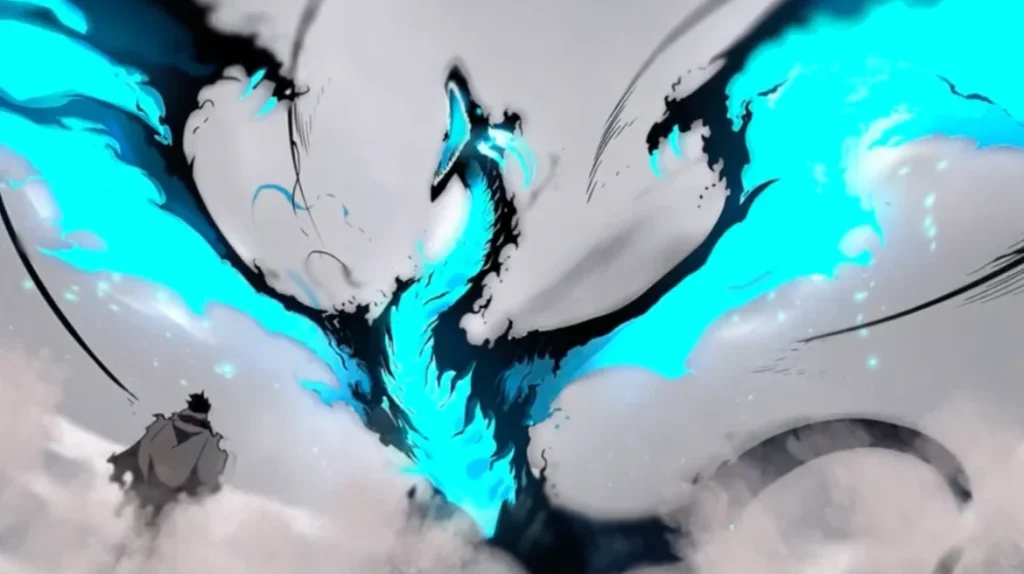
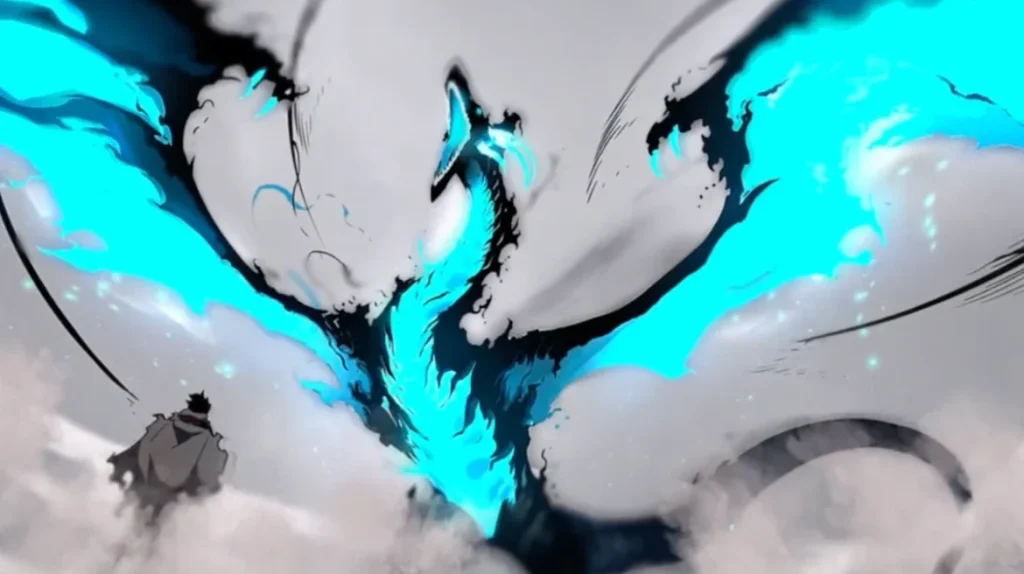
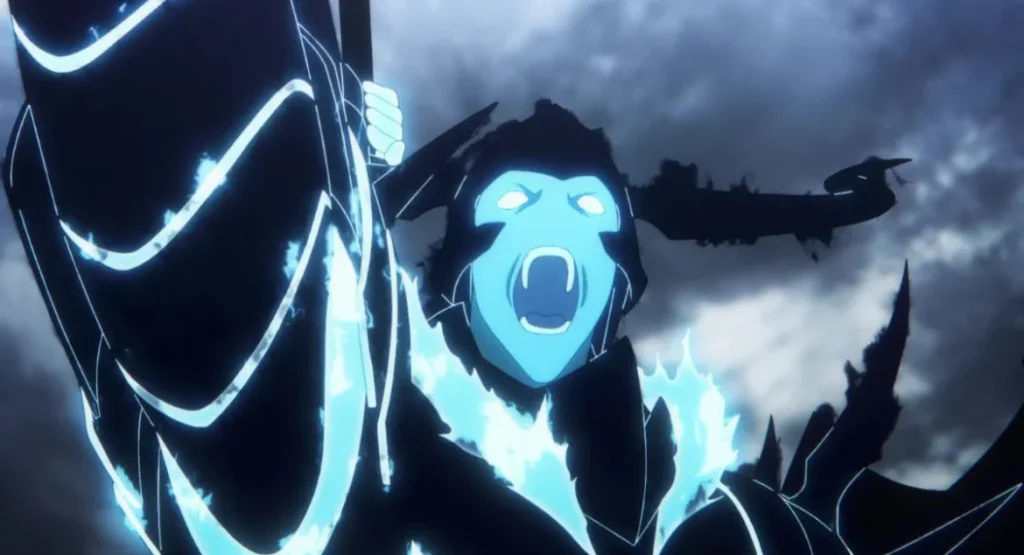
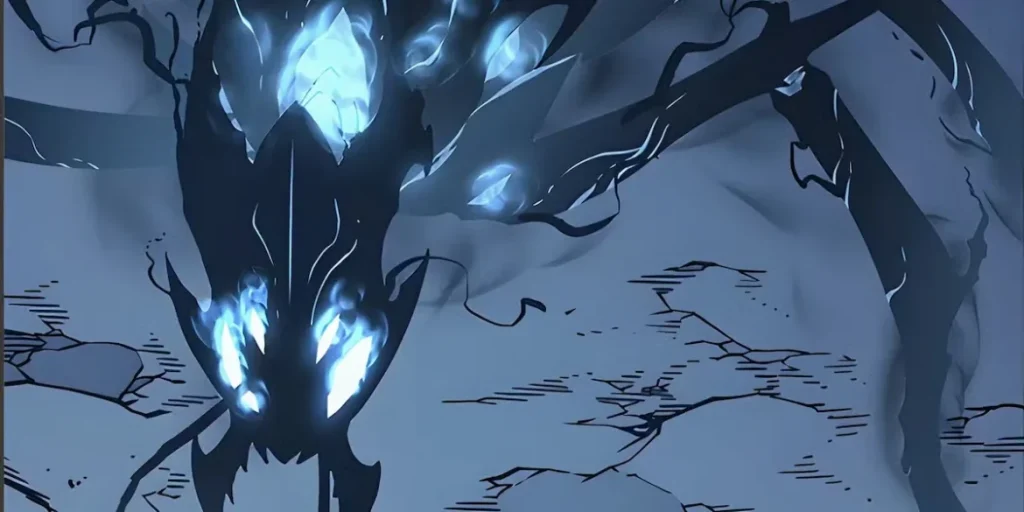
Kaisel is a wyvern-type shadow obtained by Sung Jinwoo during his journey in the Demon Castle arc of Solo Leveling. He was originally known as Kaisellin and served as a demon baron. After defeating them in battle, Jinwoo extracted the wyvern’s shadow and added him to his growing army. He was later given the name Kaisel and classified as a Knight Grade shadow.
However, Kaisel’s biggest drawback is his limited role in the story. Instead of fighting, he is mostly used as a flying mount. This means fans never get to see his full combat potential. Even though he looks like a powerful dragon, his lack of action makes him rank lower compared to shadows like Igris or Beru.
10. Min Byung-Gyu
Min Byung-Gyu stands out as one of the most emotional cases in Solo Leveling. As an S-Rank hunter, he was respected for his combat ability, stealth, and healing powers, making him one of the best support-type fighters in Korea.
After he died during a raid, Sung Jinwoo temporarily extracted his shadow. Jinwoo did this mostly because he wanted to use his healing skill at this critical moment. Yet, rather than forcing him to stay as his shadow, Jinwoo chose to let him go, which demonstrates his respect for Byung-Gyu.
9. Greed
In the story Solo Leveling, the character Hwang Dongsoo is portrayed as an S-Rank hunter who seeks revenge by killing Sung Jinwoo because of the death of his brother. His greed makes him do crazy things, even hurting innocent people like Yoo Jinho.
After being defeated, Jinwoo turned him into a General Grade shadow. While Greed is one of the stronger shadows in terms of raw power, he does not get enough opportunities to shine in battle compared to top-tier shadows.
Advertisement
8. Jima
In Solo Leveling, Jima was originally the Boss Naga of a high-end A-Rank Gate. During a joint raid between the Ahjin Guild and the Knights Guild, Sung Jinwoo faced this powerful serpent-like enemy and defeated him with ease.
After his extraction, Jima still possessed his core skills, making him an Elite Knight Grade shadow, which proves his high value in battle. His durability, regeneration, and ability to change size make him suitable for fighting on the front lines. Although he might not be as popular as other powerful shadows, such as Igris or Beru, Jima is a powerful warrior in Jinwoo’s army.
7. Iron
Iron, also known as Kim Chul, is a tank-type shadow in Solo Leveling. He was made a shadow by Sung Jinwoo after the Red Gate incident. Iron’s high durability, defense, and regeneration skills make him suitable for use as a damage absorber in battles. As an Elite Knight Grade shadow, Iron might not be the best attacker, but he makes a great protector in the army of Jinwoo.
6. Kamish
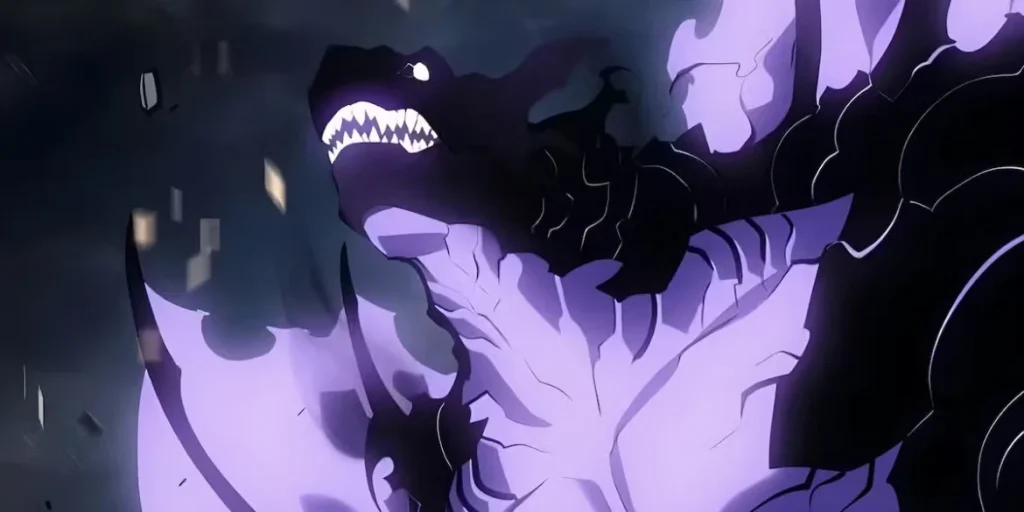
Kamish was a legendary dragon in Solo Leveling, known as humanity’s greatest calamity. He was incredibly powerful and required five top S-Rank hunters to defeat him. Much later, Sung Jinwoo used Shadow Extraction on Kamish’s preserved body and successfully revived him. However, the revival was only temporary because Kamish’s mana had faded over time. As a result, the dragon vanished shortly after. Despite this, Kamish’s legacy remains as one of the most powerful and feared monsters in the series.
5. The Ant Queen
In the world of Solo Leveling, the Ant Queen was the last boss of the dangerous Jeju Island S-Rank Gate. She played a crucial part in the creation of the ant army by constantly producing more powerful and advanced ants over the course of time. This made the Ant Queen one of the biggest threats to hunters.
During the raid, she showed impressive durability and strength by surviving against a team of S-Rank hunters. Later, Sung Jinwoo attempted to turn her into a shadow. However, due to interruptions, she could not remain a permanent shadow soldier. Despite this, she was powerful enough to be considered equal to a high-level S-Rank fighter.
4. Tusk
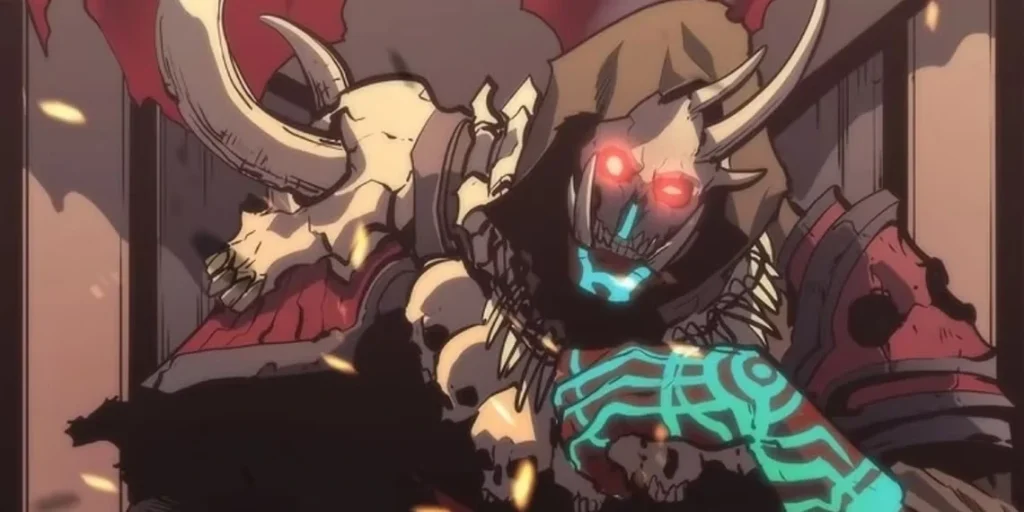
Tusk is one of the strongest mage-type shadows in the army of Sung Jinwoo in Solo Leveling. He was originally Kargalgan, a powerful High Orc shaman and the boss of a Hunters Guild Gate. After defeating him in a tough battle, Jinwoo extracted his shadow and renamed him Tusk.
Tusk is a master of magic-based attacks, including fire, shields, and size-related spells. As a General Grade, with the enhancement of the Orb of Avarice, he is arguably the strongest and most potent shadow in the entire army.
3. Igris
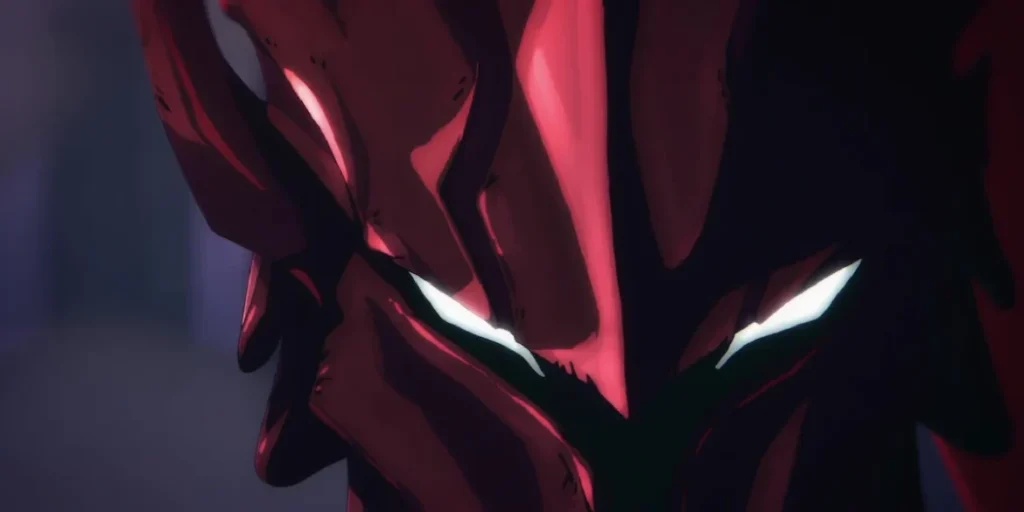
Igris is a very vital character in the Solo Leveling series, being the very first shadow that Sung Jinwoo gets. He was once a loyal knight of Ashborn, sent to evaluate whether Jinwoo was worthy of becoming the new Shadow Monarch.
However, after being defeated, Igris joins Jinwoo and remains loyal throughout the series. He also becomes increasingly stronger, achieving Marshal Grade, which is a testament to his potential. Igris is arguably the best close-range fighter that Jinwoo has, owing to his proficiency in sword fighting, speed, telekinesis, and regeneration.
Advertisement
2. Beru
Beru is considered one of the strongest and most popular shadows of Sung Jinwoo in Solo Leveling. He was once an Ant King, a fearsome monster that was born from the Ant Queen, who commanded the ant army in the Jeju Island arc. Beru was already strong enough to win against several S-Rank hunters with ease, even before becoming a shadow.
However, he was defeated by Sung Jinwoo in a fierce fight, turning him into a shadow. After that, Beru became one of the most trusted soldiers of Sung Jinwoo. Beru has the abilities of super speed, super strength, flying, and healing, which make him a complete character. This is why he is considered one of the top three strongest shadows.
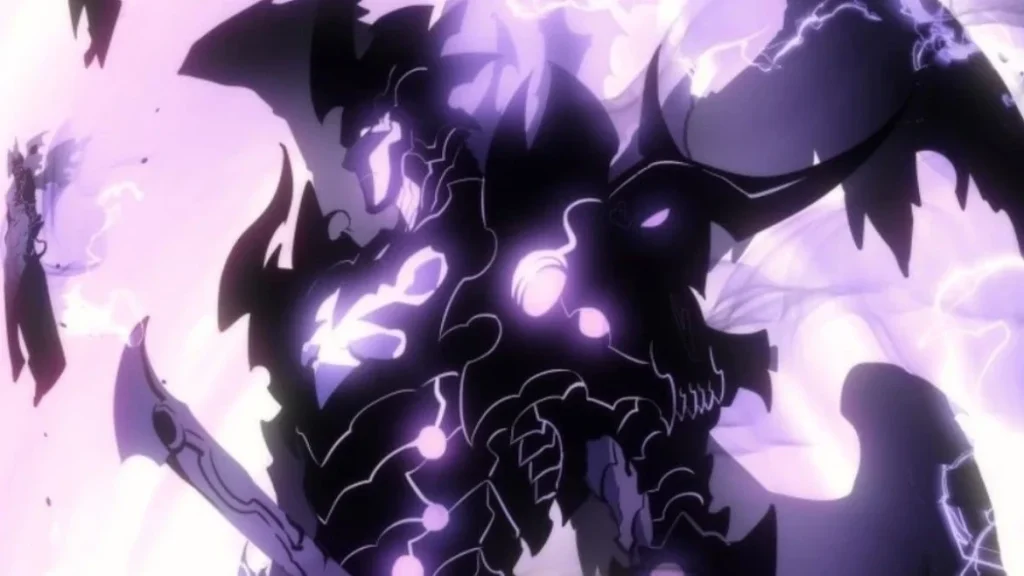
1. Bellion
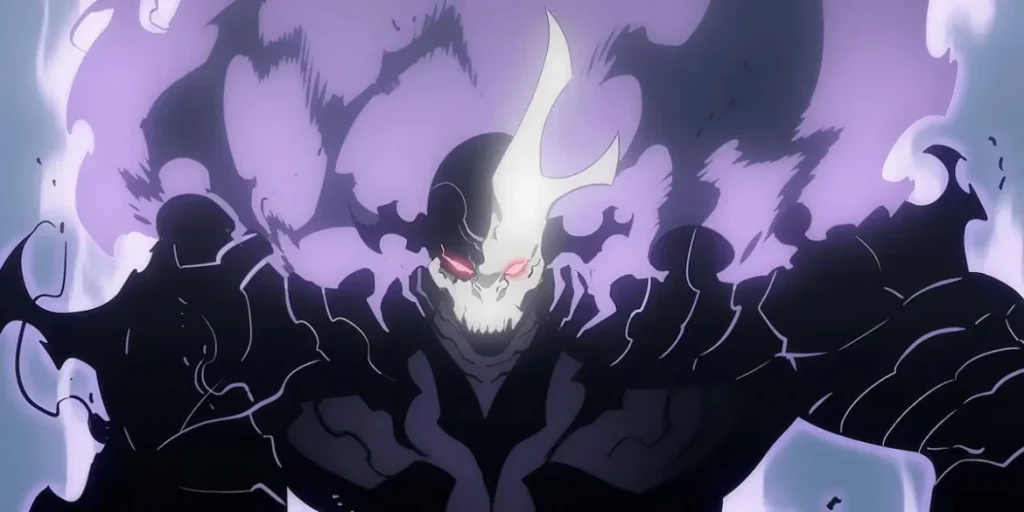
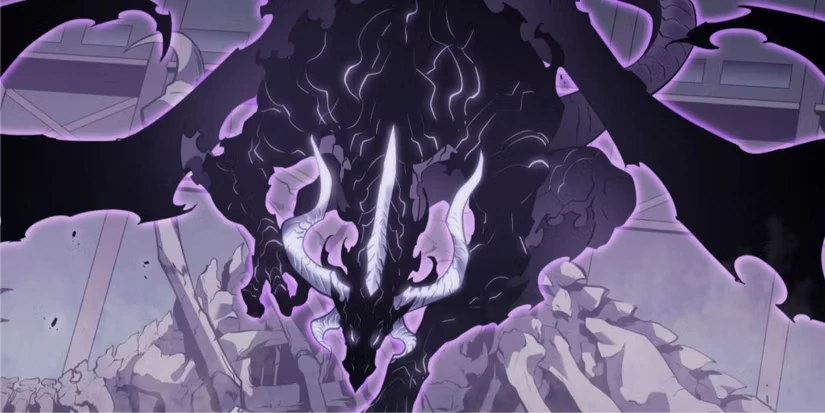
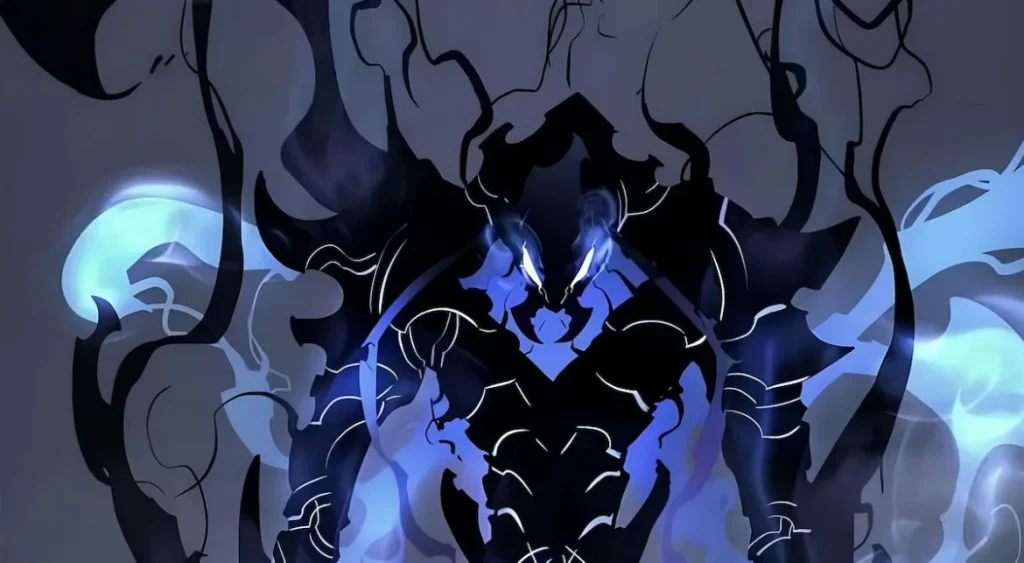
Bellion is the strongest shadow in the army of Sung Jinwoo in Solo Leveling. He was originally the Grand Marshal of Ashborn’s shadow army and is considered the first shadow ever created using Ashborn’s power. When Jinwoo inherited the Shadow Monarch’s abilities, Bellion became part of his army as well.
As soon as Bellion arrives, he proves his superiority by defeating Beru in a fight, earning himself a higher rank than even the title of Marshal- Grand Marshal Grade. His power, speed, and proficiency with his weapons make him one of the best fighters, and his leadership skills make him Jinwoo’s right-hand man in a fight.
Finally, we conclude our ranking of the strongest shadows of Sung Jinwoo in Solo Leveling. From powerful warriors like Igris and Beru to the unmatched power of Bellion, Jinwoo’s army is filled with powerful warriors that make his journey even more exciting.















![[S03:E42] Permainan dunia automotive China kotor? - Hezeri Samsuri, Careta](https://wordupnews.com/wp-content/uploads/2026/04/1775015969_hqdefault-80x80.jpg)
































You must be logged in to post a comment Login