Connect with us

Tech

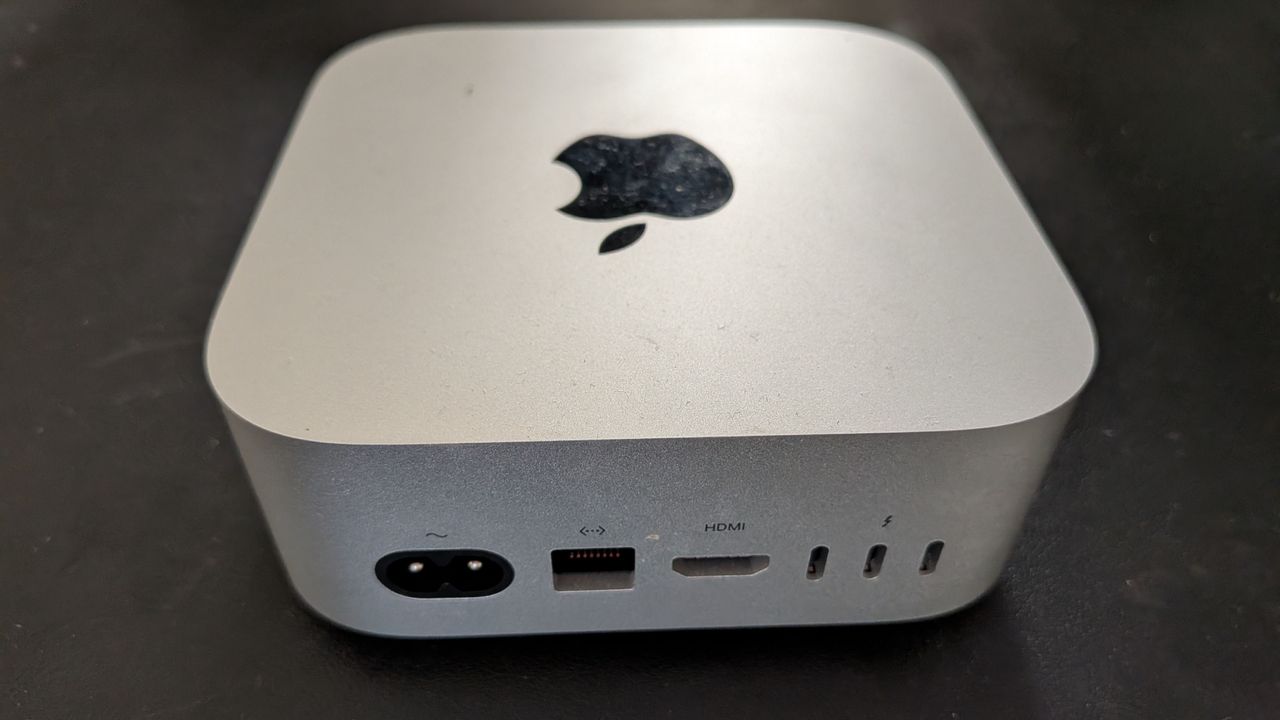
Apple will finally start building Mac mini computers in the U.S., significantly reshaping desktop, workstation, and mini PC production

Published

on


  • Apple will manufacture the Mac mini in the United States starting later this year
  • Production will shift from Vietnam and China to a Houston Foxconn facility
  • The Houston warehouse conversion provides 220,000 square feet of Mac mini assembly space

Apple has announced it will begin manufacturing the Mac mini, its compact mini PC, in the United States later this year, shifting part of its production from Vietnam and China.

The company plans to use a Foxconn facility in north Houston, converting a 220,000-square-foot warehouse into manufacturing space.

Source link

Continue Reading
Click to comment

Leave a Reply

Your email address will not be published. Required fields are marked *

Tech

16-inch M4 Pro MacBook Pro vs. Acer Predator Helios Neo 14: Apple's never been so far behind

Published

on

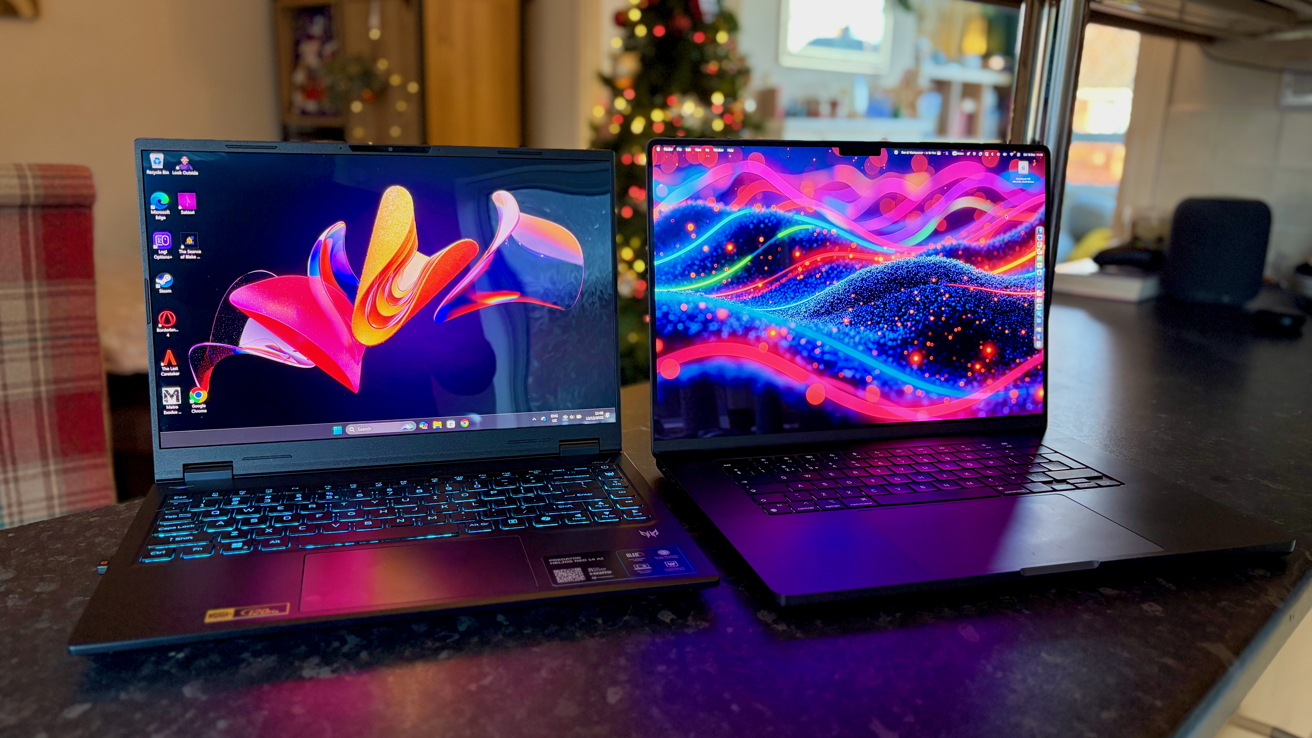
Apple’s 16-inch MacBook Pro has been my notebook of choice in recent years, but it isn’t perfect, and that led me to check out the competition — namely, Acer’s $2,000 Predator Helios Neo 14 AI laptop.

Two open laptops on a kitchen counter, both displaying bright abstract neon wallpapers, with a softly lit Christmas tree and home interior blurred in the background.
Two very different notebooks at very similar price points

My current notebook is an M4 Pro 16-inch MacBook Pro, and that replaced my M1 Pro 16-inch MacBook Pro after it took an unfortunate tumble from a table. As you might expect, I’m very comfortable with macOS, and switching to Windows full-time isn’t in the cards.
But that doesn’t mean that there isn’t room for a Windows PC in my life. Because as much as Apple might try to tell you otherwise, Mac gaming just doesn’t quite cut it.
Continue Reading on AppleInsider | Discuss on our Forums

Source link

Continue Reading

Tech

Vend-o-Vision: Trading Quarters For Watching TV In Public

Published

on

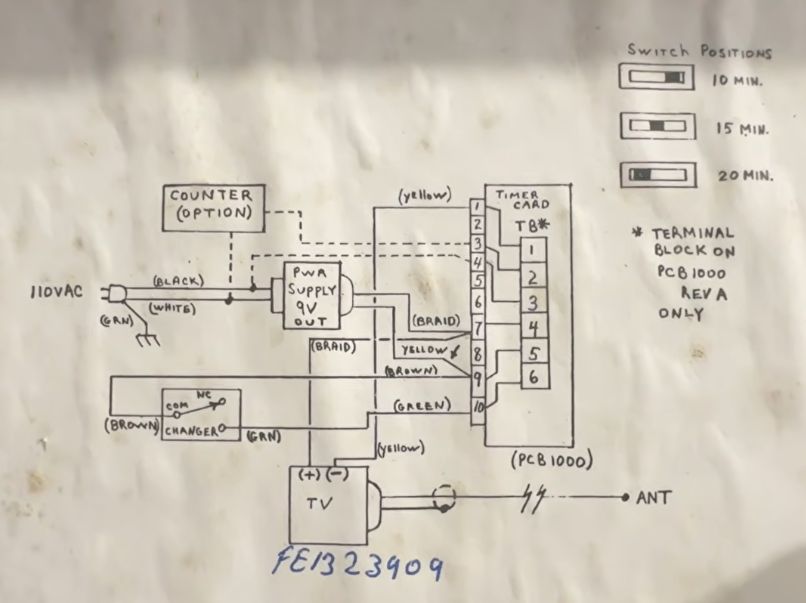
The timer mechanism of the Vend-o-Vision. (Credit: SpaceTime Junction, YouTube)


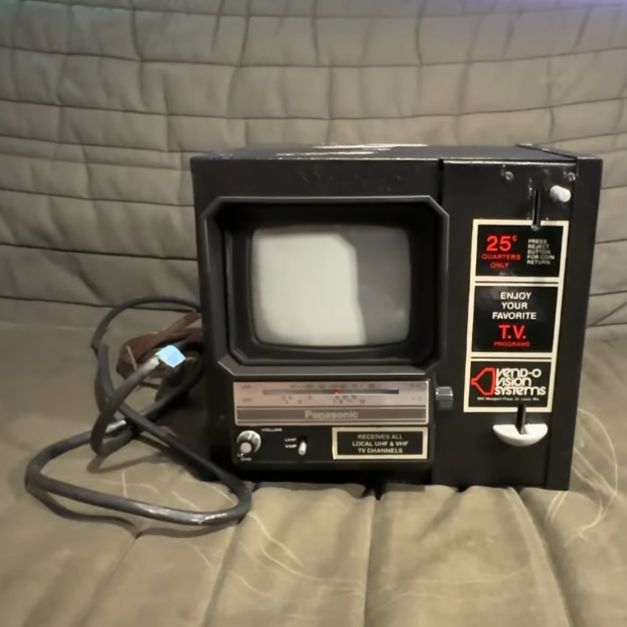
There was a time before portable TVs and personal media players when the idea of putting coin-operated TVs everywhere, from restaurants to airports and laundromats, would have seemed like a solid business model. Thus was born the Vend-o-Vision by Mini-TV USA, which presented itself as a cash earner for businesses and a way to make their customers even happier. One of these new-in-box units recently made its way over to [Mark] of the SpaceTime Junction YouTube channel.

This unit is very simple, with what appears to be an off-the-shelf Panasonic black-and-white TV with UHF and VHF reception capability, inside a metal box that contains the timer mechanism, which is linked to the coin mechanism. Depending on a physical slider with three positions, you get anywhere from 10 to 20 minutes per quarter, with the customer having to tune into the station themselves using the TV’s controls. A counter mechanism is provided as an option.

Time to enjoy your favorite TV shows. (Credit: SpaceTime Junction, YouTube)

As would be expected from a new-in-box unit, after chiseling off the 30-odd-year-old Styrofoam packaging, it fires right up and works fine. Of course, it’s a small black-and-white TV, so it’s not incredibly useful, and clearly wasn’t even back in 1989 when the Vend-o-Vision first appeared.

After some finagling with adapters, [Mark] gets everyone’s favorite movie playing on the tiny screen, giving us the first glimpse of what it would have been like to gaze at this miracle of technology back around the early 1990s in a noisy laundromat or restaurant. One can hardly imagine why it didn’t catch on.

We can see a patent for this appear in a 1990 scan of the USPTO’s gazette, where it’s listed as being first in commercial operation on the 29th of November 1989. The system was short-lived, however, with in 1995 the FTC settling with the company for deceptive practices, as the company had overinflated the projected earnings per TV when it started flaunting it at tradeshows in 1990. A few years prior, Mini TV USA appears to have already ceased operations, making these remaining Vend-o-Vision quite rare indeed. These types of coin-operated TVs were usually in public places or hotels. But we’ve seen coin-operated TVs that briefly appeared in homes, too.

Advertisement

Source link

Continue Reading

Tech

Running A Desktop PC Off AA Alkaline Cells

Published

on

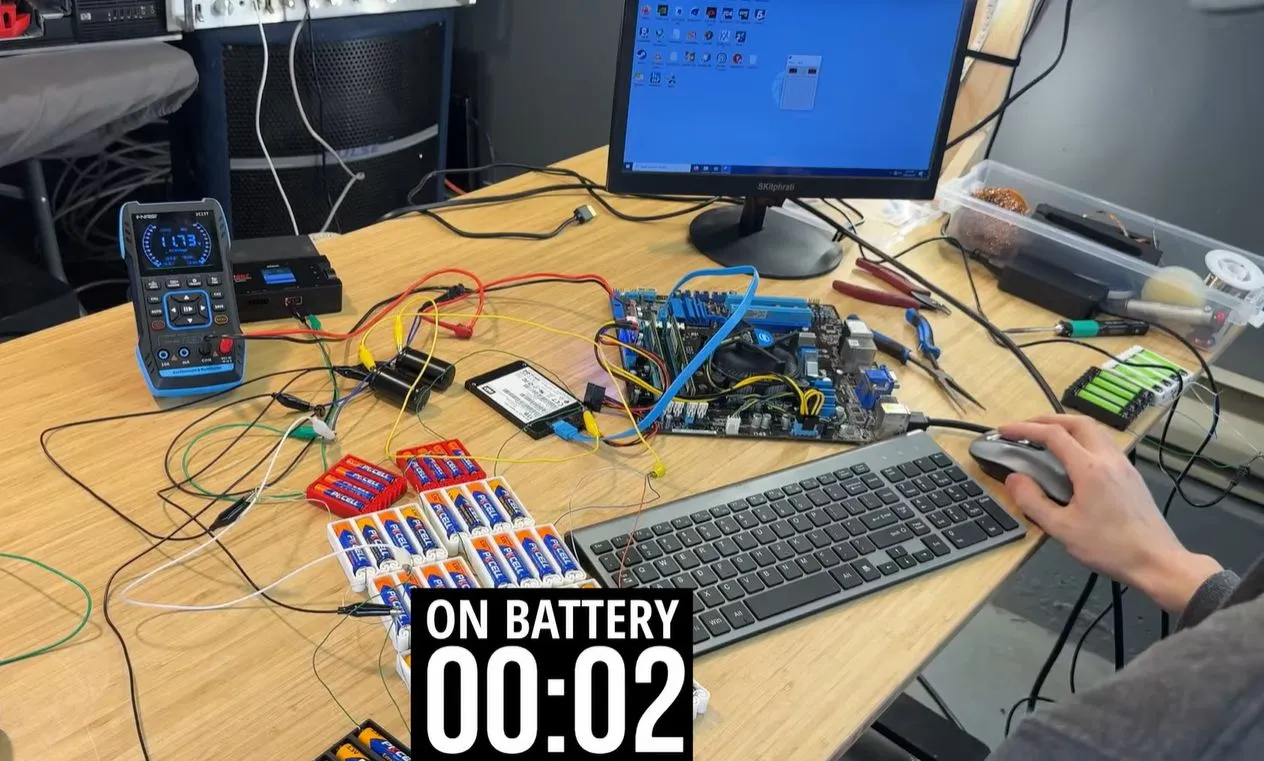
Everyone is probably familiar with the concept of battery-powered devices, but generally, this involves a laptop with a beefy battery pack and hardware optimized for low power draw. You could also do the complete opposite and try to run a desktop PC off alkaline AA cells, as [ScuffedBits] recently did out of morbid curiosity. Exactly how many alkaline cells does it take to run a desktop PC for any reasonable amount of time?

One nice thing about using batteries with a desktop PC is that you can ditch the entire AC-DC power conversion step and instead use a DC-DC adapter like the well-known PicoATX and its many clones. These just take in 12 VDC and tend to have a fairly wide input voltage range, which is useful when your batteries begin to run out of juice. In this case, just above 10 VDC seemed to be the cut-off point for the used DC-DC adapter.

In the end, [ScuffedBits] used what looks like 56 alkaline AA cells connected in both parallel and series, along with two series-connected 6,800 µF, 40V electrolytic capacitors to buffer the spikes in power demand, after early experiments showed that the cells just cannot provide power that quickly. Although admittedly, the initial thin wiring didn’t help either. With alkaline rather than carbon AA cells, improved wiring, and some buffer capacitors, it turns out that you can indeed run a desktop PC off AA cells, if only just about long enough for a small game of Minesweeper.

Advertisement

Amusingly, the small LCD monitor used in the experiment drew so little power that it happily ran on eight NiMH cells for much longer, highlighting just how important power conservation is for battery-powered devices. We wonder if you could marry this project to a battery project we saw and end up with something practically portable?

Advertisement

Source link

Continue Reading

Tech

Silicon Valley’s Ideas Mocked Over Penchant for Favoring Young Entrepreneurs with ‘Agency’

Published

on

In a 9,000-word expose, a writer for Harper’s visited San Francisco’s young entrepreneurs in September to mockingly profile “tech’s new generation and the end of thinking.”

There’s Cluely founder Roy Lee. (“His grand contribution to the world was a piece of software that told people what to do.”) And the Rationalist movement’s Scott Alexander, who “would probably have a very easy time starting a suicide cult…”

Alexander’s relationship with the AI industry is a strange one. “In theory, we think they’re potentially destroying the world and are evil and we hate them,” he told me. In practice, though, the entire industry is essentially an outgrowth of his blog’s comment section… “Many of them were specifically thinking, I don’t trust anybody else with superintelligence, so I’m going to create it and do it well.” Somehow, a movement that believes AI is incredibly dangerous and needs to be pursued carefully ended up generating a breakneck artificial arms race.

There’s a fascinating story about teenaged founder Eric Zhu (who only recently turned 18):

Clients wanted to take calls during work hours, so he would speak to them from his school bathroom. “I convinced my counselor that I had prostate issues… I would buy hall passes from drug dealers to get out of class, to have business meetings.” Soon he was taking Zoom calls with a U.S. senator to discuss tech regulation… Next, he built his own venture-capital fund, managing $20 million. At one point cops raided the bathroom looking for drug dealers while Eric was busy talking with an investor. Eventually, the school got sick of Eric’s misuse of the facilities and kicked him out. He moved to San Francisco.

Eric made all of this sound incredibly easy. You hang out in some Discord servers, make a few connections with the right people; next thing you know, you’re a millionaire… Eric didn’t think there was anything particularly special about himself. Why did he, unlike any of his classmates, start a $20 million VC fund? “I think I was just bored. Honestly, I was really bored.” Did he think anyone could do what he did? “Yeah, I think anyone genuinely can.”
The article concludes Silicon Valley’s investors are rewarding young people with “agency”. Although “As far as I could tell, being a highly agentic individual had less to do with actually doing things and more to do with constantly chasing attention online.” Like X.com user Donald Boat, who successfully baited Sam Altman into buying him a gaming PC in “a brutally simplified miniature of the entire VC economy.” (After which “People were giving him stuff for no reason except that Altman had already done it, and they didn’t want to be left out of the trend.”)

Shortly before I arrived at the Cheesecake Factory, [Donald Boat] texted to let me know that he’d been drinking all day, so when I met him I thought he was irretrievably wasted. In fact, it turned out, he was just like that all the time… He seemed to have a constant roster of projects on the go. He’d sent me occasional photos of his exploits. He went down to L.A. to see Oasis and ended up in a poker game with a group of weapons manufacturers. “I made a bunch of jokes about sending all their poker money to China,” he said, “and they were not pleased….”

Advertisement

“I don’t use that computer and I think video games are a waste of time. I spent all the money I made from going viral on Oasis tickets.” As far as he was concerned, the fact that tech people were tripping over themselves to take part in his stunt just confirmed his generally low impression of them. “They have too much money and nothing going on…” Ever since his big viral moment, he’d been suddenly inundated with messages from startup drones who’d decided that his clout might be useful to them. One had offered to fly him out to the French Riviera.
The author’s conclusion? “It did not seem like a good idea to me that some of the richest people in the world were no longer rewarding people for having any particular skills, but simply for having agency.”

Source link

Continue Reading

Tech

Hackers can now track your car's location through tire pressure sensors

Published

on


The device in many automobiles that warns drivers when their tire pressure is low transmits the data in unencrypted cleartext and carries a unique identifier for each vehicle. Researchers from IMEDA Networks and several European universities recently discovered that relatively inexpensive wireless devices can track Tire Pressure Monitoring System (TPMS)…
Read Entire Article
Source link

Continue Reading

Tech

Alaska could be the next state to crack down on AI-generated CSAM and restrict kids’ social media use

Published

on

Alaska’s House of Representatives unanimously passed HB47, a bill that imposes sweeping limits on when and how minors use social media apps, along with bans on generating or distributing harmful deepfakes of children.

The bill’s original form was focused on prohibiting the possession and distribution of sexually explicit images of children using AI, but Alaska lawmakers decided to add amendments that would impose social media restrictions. The proposed limitations include a statewide curfew on using social media between 10:30 PM and 6:30 AM, banning “addictive design features” and requiring social media platforms to verify user ages and get parental consent if they are minors.

While the House bill saw 39 votes in favor and zero against, the amendments offered some hints at potential upcoming revisions. Before the bill went to a vote, some of the House representatives expressed concern about adding such broad rules on social media without consulting the companies behind them first.

The bill still has to make its way through the Alaska State Senate, which already has presented a companion bill, and the governor. Alaska is following the footsteps of many other states, and the House even modeled its social media amendments in the HB47 bill after Utah. While Utah was the first to propose social media restrictions for kids, it was later met with a preliminary injunction.

Advertisement

Source link

Continue Reading

Tech

Alphabet-owned robotics software company Intrinsic joins Google

Published

on

The move comes amid Google’s strategy to move further into the physical AI space.

Intrinsic, an Alphabet-owned software and AI company, is joining Google. The platform, which was established in 2021 as one of Alphabet’s ‘other bets’ under the ‘moonshots’ research and development segment X Development, builds AI models and software designed to make industrial robots more accessible. 

In joining Google, Intrinsic will continue to operate as a distinct entity, however, it will work closely with Google DeepMind and will tap into Google’s Gemini AI models and cloud services. Thus far, Alphabet has declined to share information regarding funding or the purchase price.

Commenting on the news, Wendy Tan White, the CEO of Intrinsic said: “The Intrinsic team has been working for years to enable access to intelligent robotics through a democratised platform, so more people can build and benefit from robotics applications. 

Advertisement

“Combined with Google’s incredible AI and infrastructure, we’re going to unlock the promise of physical AI for a much broader set of manufacturing businesses and developers. This will fundamentally shift production, from its economics to operations and enable truly advanced manufacturing.”

Hiroshi Lockheimer, the chief product officer of Other Bets, added: “At Google, we see the immense opportunity in bridging the gap between the digital and physical world, that is also true for intelligent robotics in industries like manufacturing and logistics. We’re excited to welcome the Intrinsic team to Google, so we can bring breakthrough AI to more businesses and industries, at scale.”

In other Alphabet news, Alphabet and Google were in hot water earlier this month as both were at the centre of a new antitrust complaint filed by the European Publishers Council with the European Commission on 10 February. 

The complaint alleged that Google and Alphabet are abusing their dominant position in general search services via the use of AI overviews and AI mode embedded within Google Search.

Advertisement

 Don’t miss out on the knowledge you need to succeed. Sign up for the Daily Brief, Silicon Republic’s digest of need-to-know sci-tech news.

Source link

Advertisement
Continue Reading

Tech

Have You Ever Used A Tick Stick?

Published

on

Picture this: you have an irregular opening you need to fabricate a piece to fill. Maybe it’s the stonework of a fireplace; maybe it’s the curved bulkhead of a ship. How do you get that shape? The most “Hackaday” answer would be to 3D scan the area, create a CAD model based on the point cloud, and route the shape with CNC. Of course, none of those were options for the entirety of human history. So how do you do it if you don’t have such high-tech toys? With a stick, as [Essential Craftsman] takes great pains to show us in the video below.

It’s not just any stick, of course. Call it a “tick stick”, a “speil stick”, or a “joggle stick” — whatever you call it, it’s just an irregularly shaped piece of wood. The irregular shape is key to the whole process. How you use it is simple: get some kind of storyboard — cardboard, MDF, whatever — that fits inside your irregular void. Thanks to the magic of the stick, it need not fit flush to the edges of the hole. You put the tick stick on the storyboard, press the pointy end against a reference point on the side of the hole, and trace the stick. The irregular shape means you’re going to be able to get that reference point back exactly later. Number the outline you just made, and rinse and repeat until you’ve got a single-plane “point cloud” made of tick stick outlines.

Your storyboard is probably going to look mighty confusing, but that’s what the numbers are for. Bring your storyboard and your tick stick onto the workbench and whatever you want to cut out– plywood, cardboard, 1/4″ steel armor plate, you name it–and simply repeat the process. Put the tick stick inside outline #1 and mark where the pointy end lands on the material. Then do it again for the other outlines, reproducing the points you measured on the original piece. After that, it’s just a game of ‘connect the dots’ and cutting with whatever methodology works for your substrate. A sharp knife will work for cardboard, but you’ll probably want something more substantial for steel plate.

It’s not often you’re going to need the tick stick– the [Craftsman] reports only needing it a few times over the course of a decades-long career, but when you need it, there’s not much else that will do the job. Well, unless you have a 3D scanner handy, that is.

Advertisement

Source link

Advertisement
Continue Reading

Tech

This LED Strip Clock Aims To Make Your Next One Easier, Too

Published

on

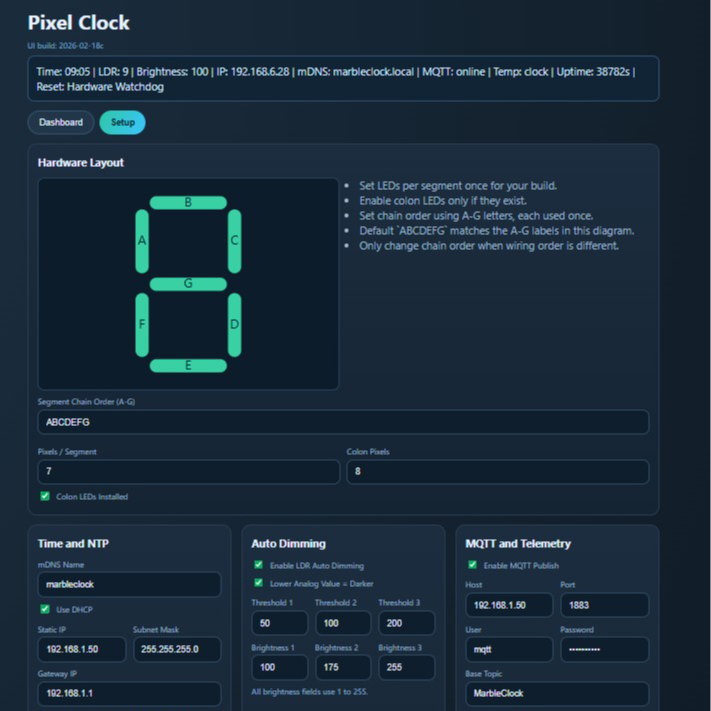
At first glance, it may look like [Rybitski]’s 7-segment RGB LED clock is something that’s been done before, but look past the beautiful mounting. It’s not just stylishly framed; the back end is just as attentively executed. It’s got a built-in web UI, MQTT automation, so Home Assistant integration is a snap, and allows remote OTA updates, so software changes don’t require taking the thing down and plugging in a cable.

A slick web interface allows configuring which LEDs belong to which segments without code changes.

Pixel Clock is code for the Wemos D1 Mini microcontroller board and WS2812/WS2812B RGB LED strips, but it’s made to be flexible enough to support different implementations. For example, altering which LEDs in the strip belong to which segments on which digits can be configured entirely from the web interface. Naturally, one could build an LED strip clock using the same layout [Rybitski] did and require no changes at all — but it’s very nice to see that different wiring layouts are supported without needing to edit any code. There’s even automatic brightness adjustment if one adds an LDR (light-dependent resistor), which is a nice touch.

[Rybitski]’s enclosure is CNC-routed MDF, framed and given a marble finish. The number segments are capped with laser-cut frosted white acrylic, which serve as both diffuser for the LEDs and an attractive fit with the marble finish at the front. MDF is dense and opaque enough that no additional baffles or louvers are needed between segments.

With this code and an RGB LED strip, you can implement your own 7-segment clock any way you like, focusing on an artful presentation instead of re-inventing the wheel in software. Of course, there’s nothing that says one must use 7-segment numerals; some say your LED clock need not display numbers at all.

Advertisement

Source link

Advertisement
Continue Reading

Tech

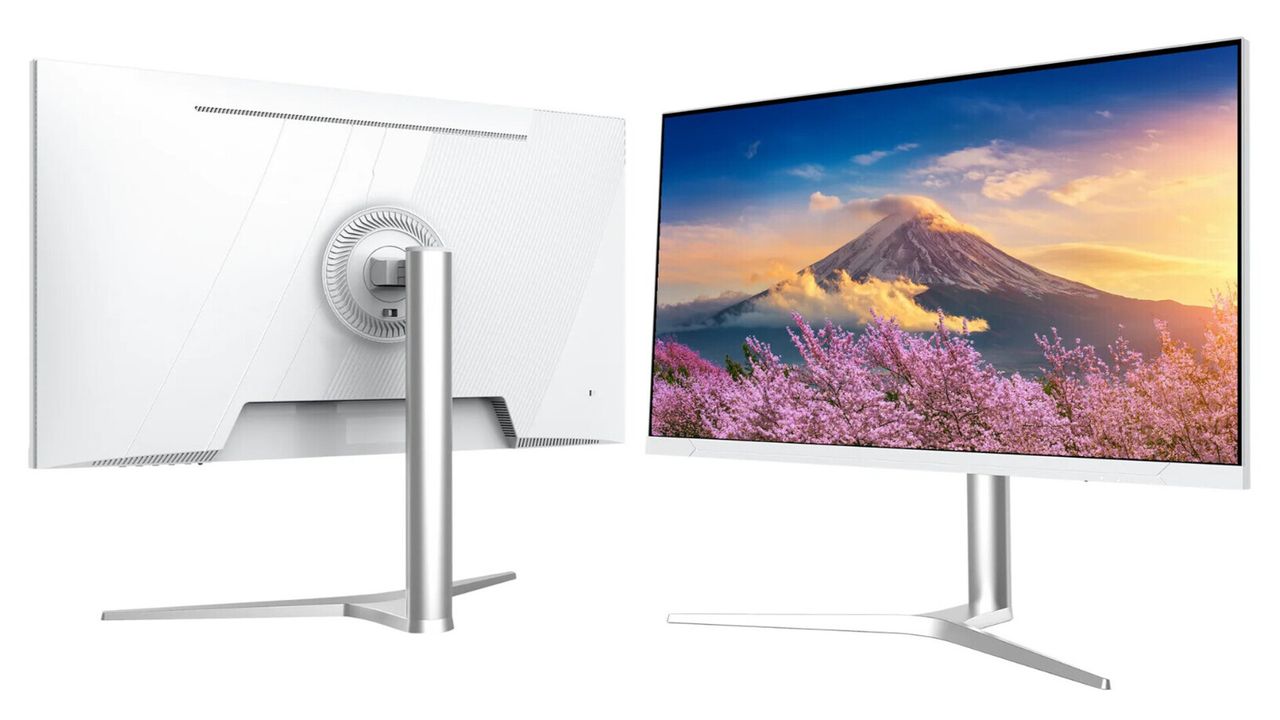
This 6K monitor delivers extreme resolution, multitasking tools, and full connectivity for home and office users without blowing the budget

Published

on


  • JapanNext 31.5-inch 6K panel increases pixel density for sharper interface elements
  • 60Hz refresh and 8ms response focus on productivity usage
  • 500 nit brightness and 1500:1 contrast suit standard office lighting

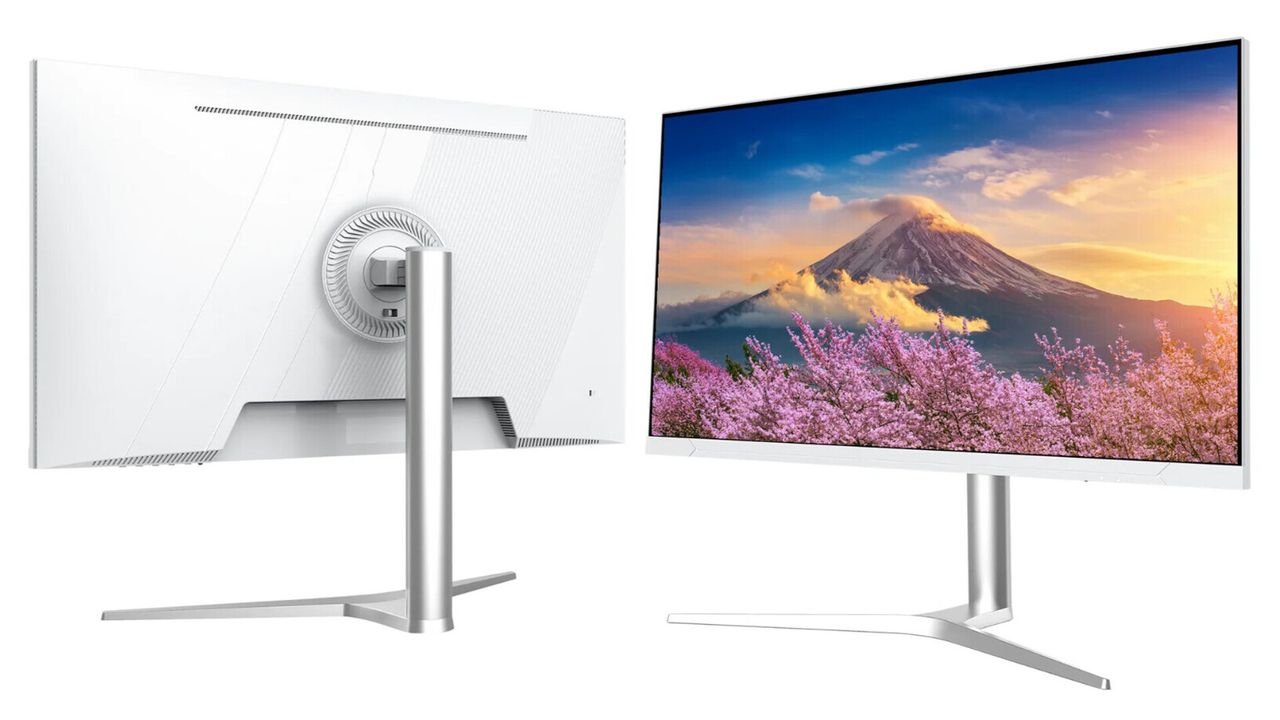
JapanNext has released the JN-IPS326K-HSPC9, a 31.5-inch IPS monitor with a 6016 x 3384 resolution aimed primarily at home and office users.

This resolution exceeds the 3840 x 2160 pixel count commonly associated with 4K displays, resulting in a pixel pitch of 0.1159mm on this panel size.

Advertisement

Source link

Continue Reading

Trending

Copyright © 2025