Tech
Apple’s 1999 Power Mac G3 Pro Tower Still Feels Like a Different World

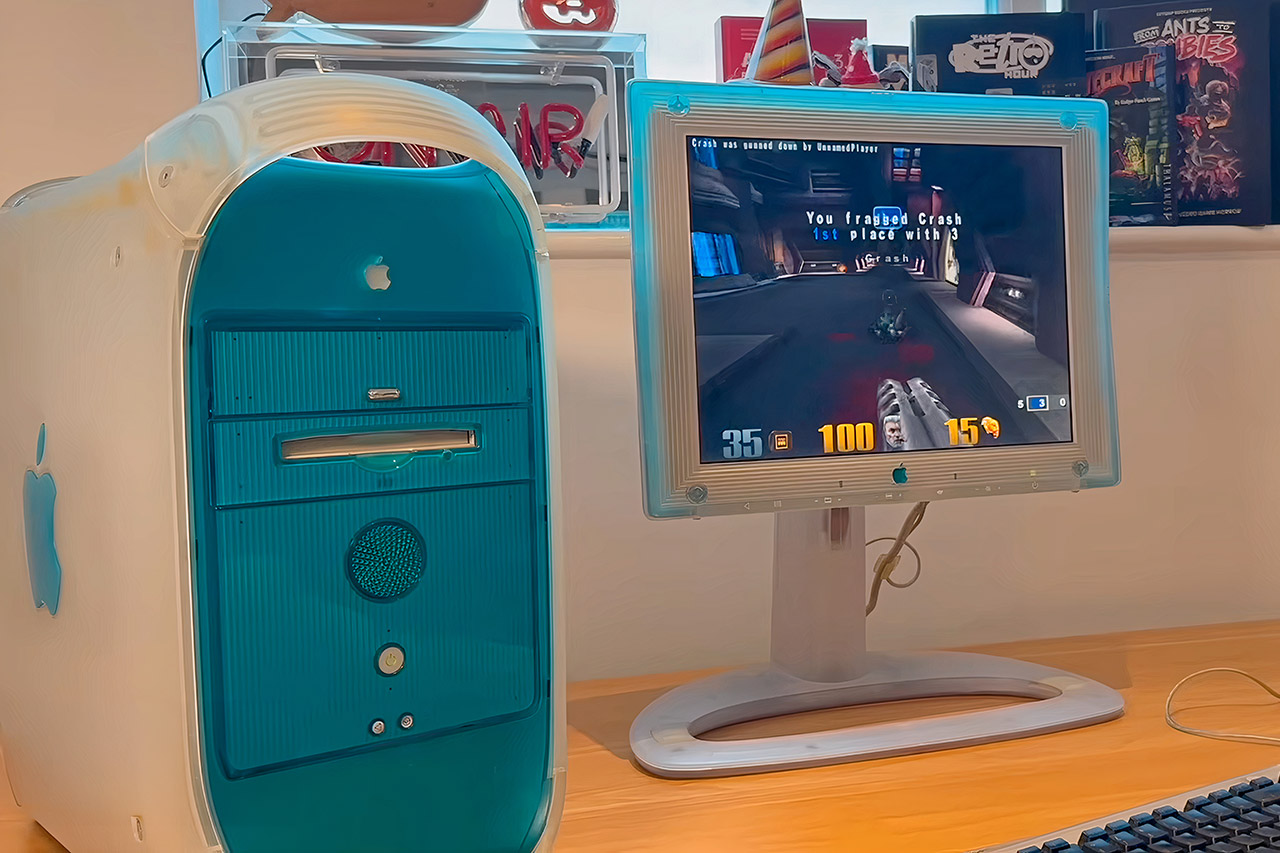
Dan Wood sat down with the same kind of machine that once filled university labs and design studios, the blue-and-white Power Mac G3, and rebuilt the exact setup he remembered from the early 2000s. Nearly three decades later the computer boots, runs its original software, and still feels purposeful in a way modern machines rarely do.


This tower, released in January 1999, appeared only fourteen months after the first aggregation of beige G3 models that were the standard for late 1990s PCs, which were essentially a lot of beige boxes. The blue and white version took a page from the iMac’s book, borrowing some of the same translucent plastic and curved design but applying it to a serious desktop system. Steve Jobs had returned to Apple, they had acquired NeXT, and suddenly the professional line had the same design swagger as the consumer goods. Dan’s particular machine is a 400 MHz model, which happens to be one of the fastest configurations available at the time.
Sale


Apple 2024 iMac All-in-One Desktop Computer with M4 chip with 8-core CPU and 8-core GPU: Built for Apple…
- BRILLLLLLIANT — iMac is the ultimate all-in-one desktop computer, powered by the M4 chip and built for Apple Intelligence.* With a stunning 24-inch…
- FITS PERFECTLY IN YOUR SPACE — The all-in-one desktop design is strikingly thin, comes in seven vibrant colors, and elevates any space with style.
- BUILT FOR APPLE INTELLIGENCE — Apple Intelligence is the personal intelligence system that helps you write, express yourself, and get things done…
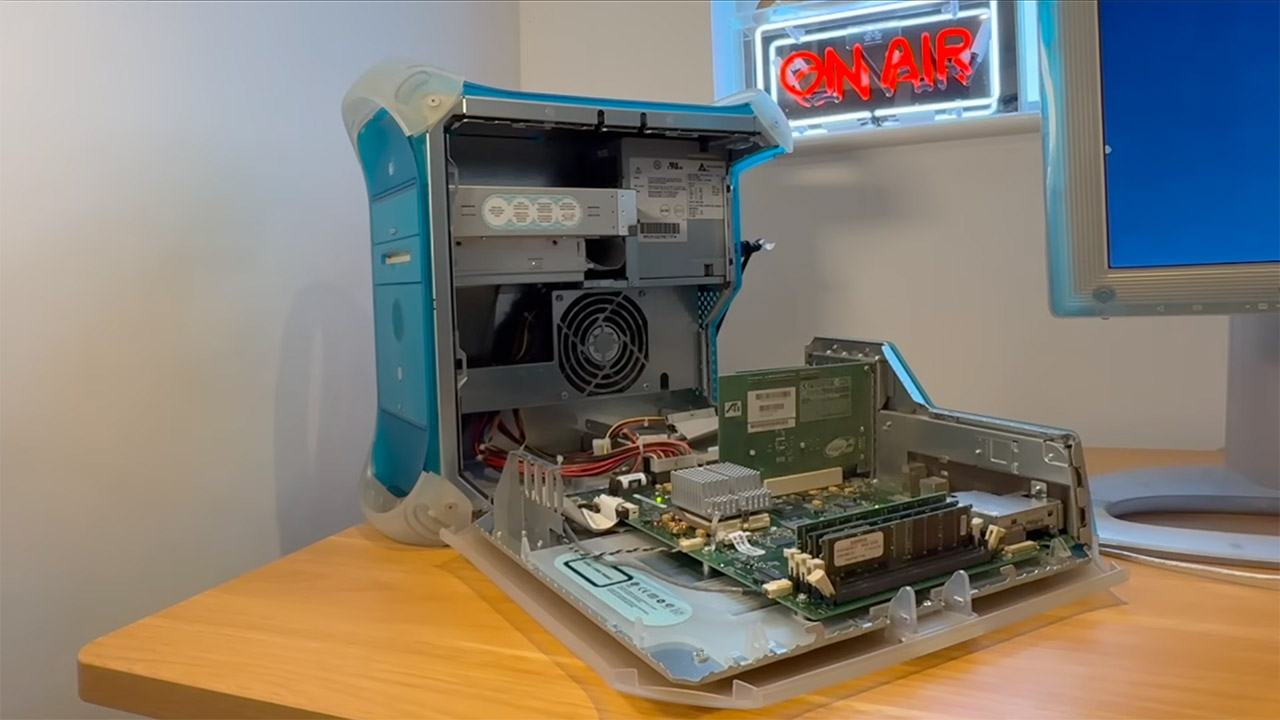
Opening the case is simple, as there is only one catch on the side that lowers the entire top and swings the motherboard and all of the expansion cards out of the way. Inside, you’ll find a quiet G3 processor sitting pretty under a smallish heatsink, three of the four memory slots filled with 64MB sticks for a total of 192MB, an ATI Rage 128 graphics card with a DVD decoder daughterboard, and a front loading DVD-ROM drive, which was a real premium feature back in 1999. You have Firewire connectors next to the USB ones, an Ethernet port, and only one ADB connector for older keyboards or software that still uses those ugly old dongles. By the way, there is no disk drive in sight since Apple abandoned them with the iMac (1998) a year prior.

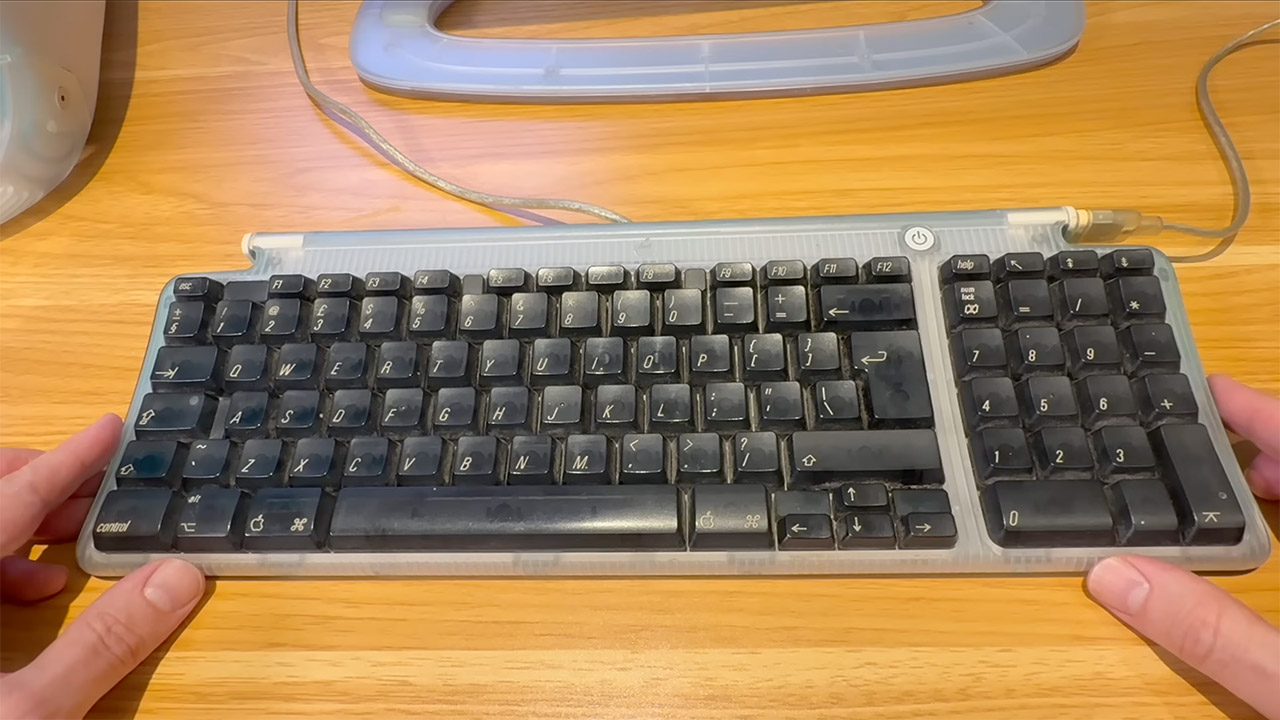
The matching keyboard feels soft and flimsy in comparison to older mechanical versions that many people still rely on. The function and arrow keys are half height, as Steve Jobs insisted, but I don’t see the benefit. The mouse that came with it is, of course, the round one-button “hockey puck,” which still elicits a strong reaction from anyone compelled to use one in a lab. Getting it to track properly requires some work, and the single button drives you into some awkward grip positions. Dan is utilizing the tower with a 15-inch Apple Studio Display, a thin screen with an active matrix that is nearly identical to the computer’s translucent blue and white plastic, and it connects by VGA and ADB.
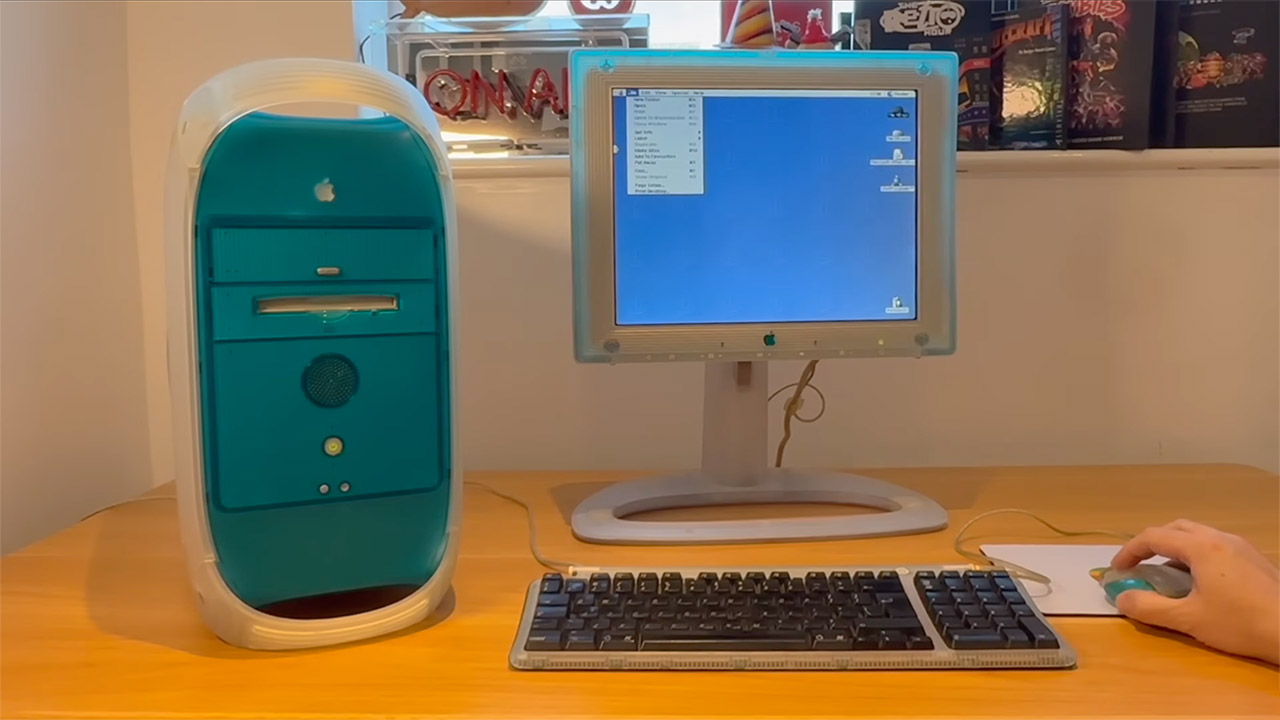
Mac OS 8.6 boots up quickly and remains snappy, as Dan runs all of the same software that used to populate those university multimedia suites: early versions of Photoshop, QuarkXPress for page layout, and Microsoft Office 98. The machine sat in a church office for years, producing fliers and documents until being retired. Internet Explorer for Mac still works, but getting modern websites to load is nearly hard without special services that only provide a limited version of things. An outdated FTP client may still move files like people used to do.
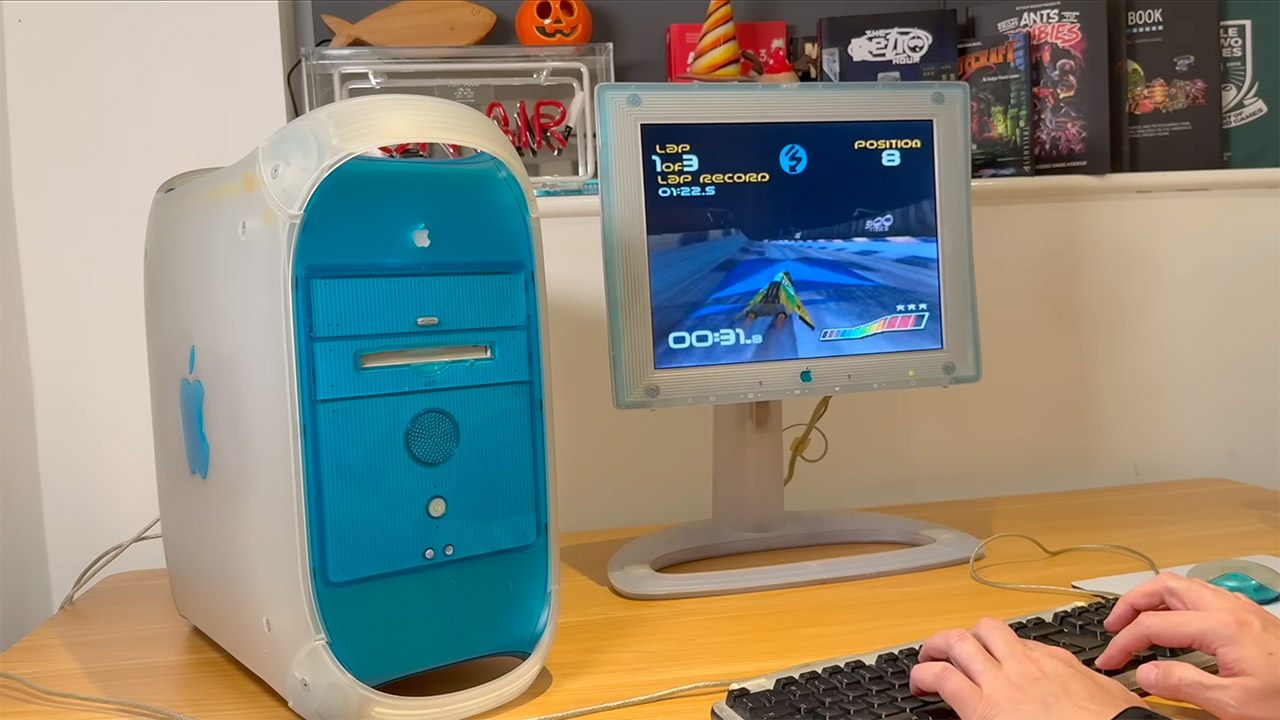
Two or three pieces of Connectix software still work on Dans machine: Virtual Game Station allows the G3 to boot up actual PlayStation discs at full speed, Wipeout runs fairly smoothly, which is a pleasant surprise, and Virtual PC boots up Windows 2000 in a matter of minutes and remains usable for older business applications. On the native side, the Rage 128 card runs Unreal and Quake III Arena with the same heavy-duty lighting and shadows that Steve Jobs used to demonstrate on stage with John Carmack.
You must be logged in to post a comment Login