



Connect with us
DAPA Banner
DAPA Coin
DAPA
COIN PAYMENT ASSET
PRIVACY · BLOCKDAG · HOMOMORPHIC ENCRYPTION · RUST
ElGamal Encrypted MINE DAPA
🚫 GENESIS SOLD OUT
DAPAPAY COMING

Tech

Apple's fight with Epic over App Store fees reaches the Supreme Court

Published

on


The justices have agreed to hear Apple’s appeal against a lower-court ruling that found the company in contempt of a 2021 injunction from US District Judge Yvonne Gonzalez Rogers.
Read Entire Article
Source link

Continue Reading
Click to comment

You must be logged in to post a comment Login

Leave a Reply

Tech

Godox C100 Has No Screen, is a Camera You Look Straight Through

Published

on

Godox C100 Screenless Camera
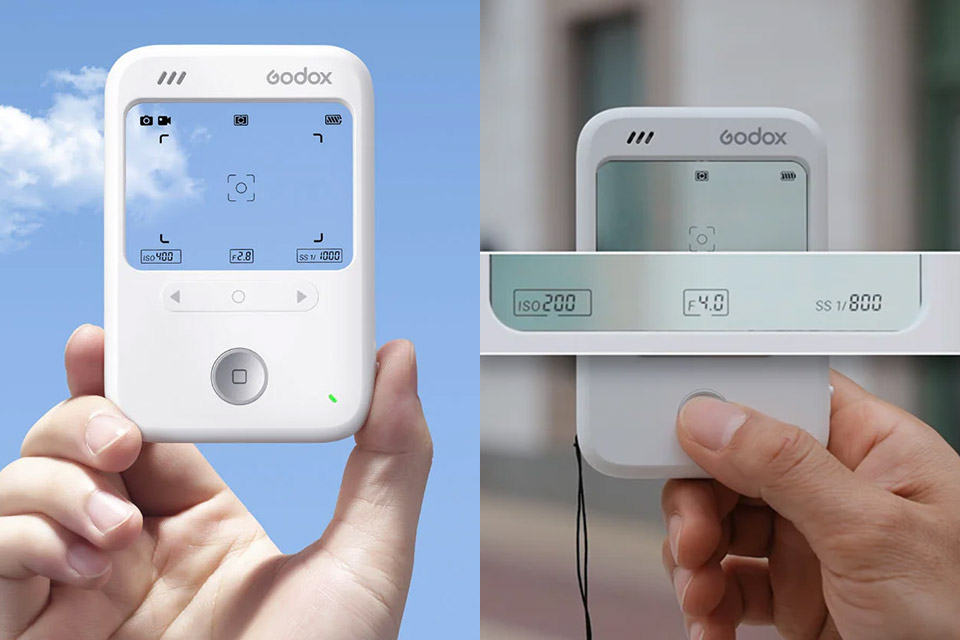
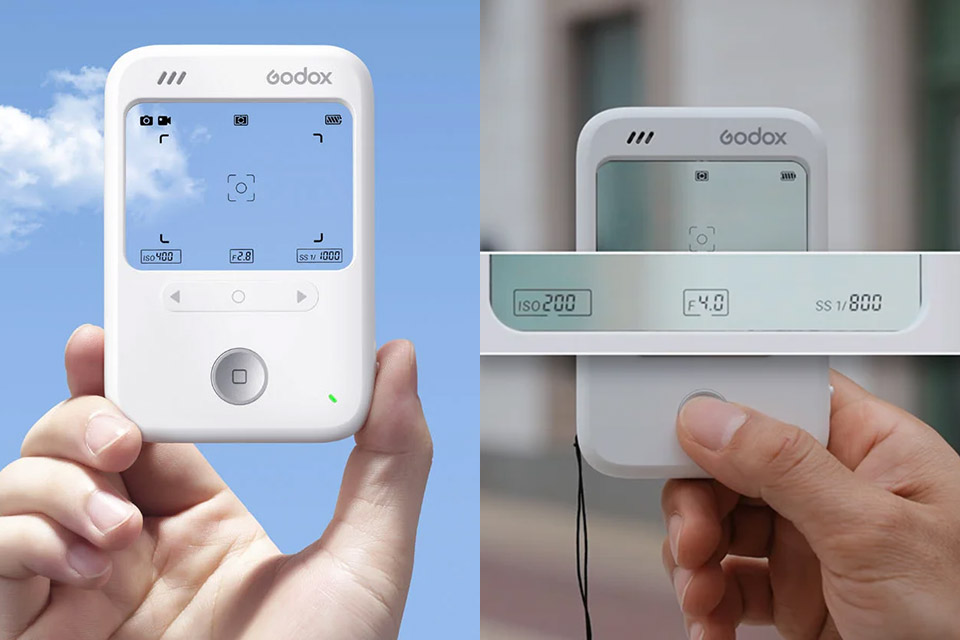
Godox spent years building lights that help photographers shape what they see. The company’s first camera flips the usual relationship between photographer and device. Instead of a bright rear screen that pulls attention away from the scene, the C100 gives you a clear window you compose through while key information floats on the glass itself.


The C100 camera’s body is 104 x 72 x 19 millimeters and weighs 65 grams, making it light enough to fit easily into a shirt pocket or be attached to a strap like a tiny accessory. The front panel is dominated by a sleek 60.8 x 47.8 millimeter transparent window that allows more than 50% of light to pass through, allowing you to see the real world directly in front of the lens. At the same time, the panel displays some extremely helpful information, like frame lines, exposure data, and battery level, without having to resort to a video feed and muck up the scene.


Polaroid Now 3rd Generation I-Type Instant Camera + Film Bundle – Now Black Camera + 16 Color Photos…
  • Sharp autofocus: The Polaroid Now’s twin-lens autofocusing system chooses which lens is right for the shot, without you having to do anything.
  • Double-exposure and self-timer modes: Take photos so nice you shot them twice with double-exposure mode. Or set up the perfect self-portrait with the…
  • Shoots Polaroid i-Type & 600 Film: Capture modern life in the original Polaroid aesthetic. And see every detail of each beautifully imperfect picture…

Changing the aspect ratio brings the frame lines on the panel up to speed in real time, and you can select from a variety of settings such as 16:9, 4:3, 3:2, and 1:1. The center-weighted meter performs an excellent job of reading the scene and provides a wealth of helpful information, including ISO, aperture, and shutter settings ranging from 100 to 800 in manual steps. Aperture and shutter are linked in ranges from f/1.0 to f/64 and 1/8000 second to 1 second, so as you change one, the other is suggested in the background, which is quite useful if you’re trying to get everything just right before putting up any real film elsewhere.

Godox C100 Screenless Camera
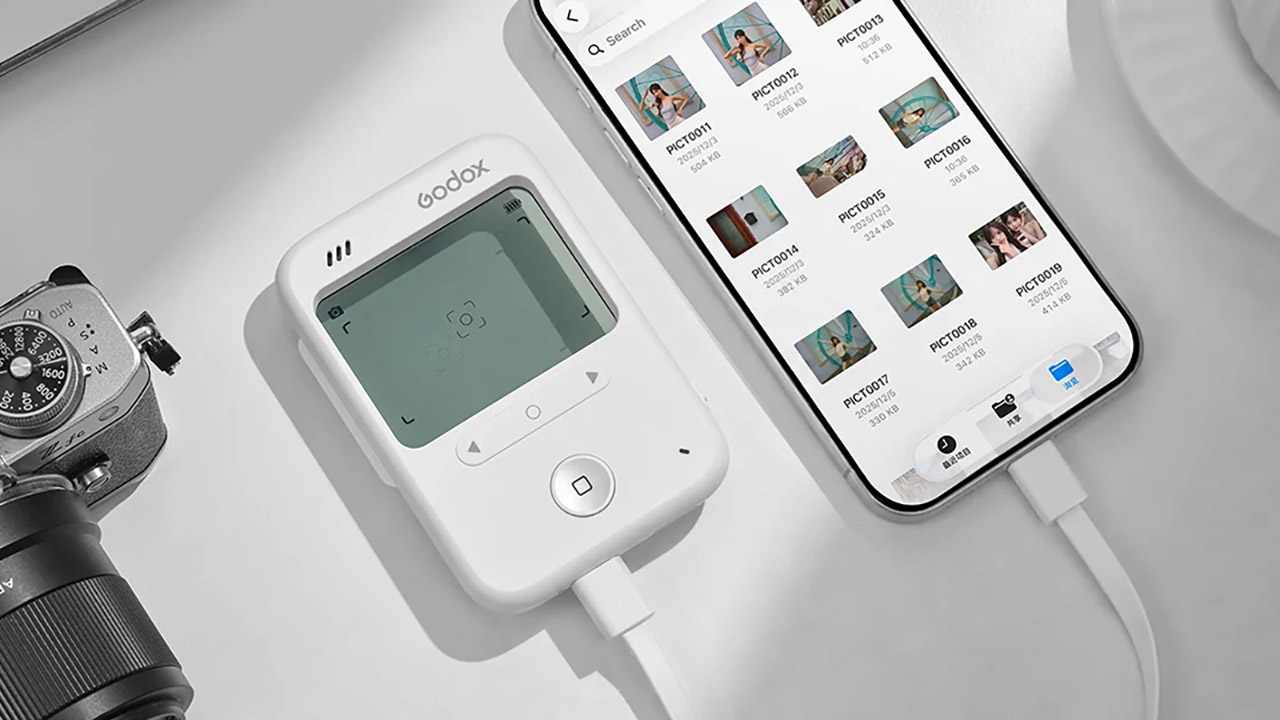
The controls are as simple as you’d imagine, with only a few of arrow keys and a select button on the back for menu navigation and settings, and the shutter is ready to go with a quick click. There is no standard screen to see the photos you’ve just taken; the image is saved directly to the microSD card as soon as you press the shutter. Once it’s there, you may use USB-C to transfer content to your phone or computer, or you can just remove the card.

Godox C100 Screenless Camera
Godox claims that the C100 was created to be an all-day camera that allows you to get to the core of the moment with no worry or hassle, as it’s all about seeing and feeling first, then clicking the shutter, and, of course, analyzing your images afterward, when you’re feeling more relaxed. They believe that the wait between snapping the shot and viewing the outcome will make each snapshot feel like a small surprise when you open the files. The actual resolution of the images appears to be on the low side, ranging from 320 to 570 kilobytes, so don’t expect to be making any large prints very soon. Oh, and the camera also shoots video, though the exact specifications are not yet available.

Godox C100 Screenless Camera
At 199 yuan (or roughly 29 USD), the C100 is clearly in the same category as some of the other recent basic cameras that are all about providing an experience rather than just a set of specifications. It’s a step up from some earlier transparent-window cameras because it has live data overlays rather than static printed graphics, and its creators see it as an ideal companion for film photographers looking for a lightweight metering and framing tool that will fit nicely in their bag alongside their medium-format body.
[Source]

Advertisement

Source link

Continue Reading

Tech

The Sharper, Quicker 2026 BMW M2 CS Is An (Expensive) Gift To Driving Enthusiasts

Published

on


More than most automakers, BMW knows that having a loyal fanbase is as much a curse as it is a blessing. With cars like the 2002 and 3 Series, Bavaria’s automaker generated enormous goodwill among enthusiasts by putting drivers first. BMW cemented that loyalty with a line of motorsports-inspired M models, until, that is, it felt the need to change things up.

Instead of the nimble sedans and coupes that built its reputation, BMW now mostly sells SUVs. That’s a reality of a new-car market where every driving enthusiast is vastly outnumbered by people who barely know what kind of car they’ve bought. So is the creeping complexity of tech features that make the average modern BMW far from a pure, distraction-free driver’s car. Purists howl, and BMW goes on making the cars most people actually buy. But once in a while, it throws in a bit of fan service.

The 2026 BMW M2 CS is the latest in a series of special-edition M cars that prove BMW is still listening to its fans. Like the M4 CSL, M5 CS, and the previous-generation M2 CS, it gets back to basics with more power and less weight. That comes with an elevated price and enough ergonomic compromises to sow doubts in the minds of fair-weather dans. Because true fandom requires true commitment.

Advertisement

What makes it a CS?

“CS” stands for “Competition Sport” and it’s been used on more hardcore special editions of BMW M models since the F82-generation M4 CS of 2017. It fits nicely between the Competition moniker BMW uses for more-powerful versions of the standard M cars, and the more rarely used CSL (Competition Sport Light) designation that harkens back to the iconic 3.0 CSL coupe and is applied to the occasional road car as a nostalgia hit.

This G87-generation M2 CS follows a similar template to the previous F87 version that debuted as a 2020 model. It’s got the same engine under the hood, but with more power, and with less weight to push. A carbon fiber roof is standard, along with a CS-specific trunk lid made from carbon fiber-reinforced plastic and incorporating a ducktail spoiler. The big rear diffuser sitting between perfectly menacing quad exhaust tips is specific to the CS as well, and is also made of carbon fiber. Staggered (19-inch front, 20-inch rear) forged wheels and throwing some interior accoutrements in the dumpster complete the weight-saving measures, which cut 97 pounds compared to a standard M2, according to BMW.

Advertisement

However, being lighter doesn’t improve the G87 M2’s looks. It’s got the classic proportions of a 2002 or E30 M3, with a tall cabin and stubby front and rear ends, plus boxy fender flares that make the E30 connection even stronger. But the flared-nostril grille and excessive detailing are hard to love.

Advertisement

More power unlocked

The M2 is the sawed-off shotgun of the BMW M lineup, repackaging the powertrain and running gear from the M4 in something better suited to close quarters. Both cars are powered by the same S58 twin-turbocharged 3.0-liter inline-six, but the CS has the engine-management tuning previously reserved for the M4 Competition xDrive all-wheel drive model. So its engine produces 523 horsepower and 479 pound-feet of torque—50 hp and 36 lb-ft more than the standard M2—with rear-wheel drive and less weight than the M4 Competition xDrive.

The only available transmission is an eight-speed automatic, which is a shame because the CS seems like an especially good application for a manual. It’s built for people who want to enjoy the experience of driving, and there’s actually a benefit to shifting yourself. Peak torque arrives at 2,700 rpm, but peak power doesn’t come on until 6,250 rpm. From there, you’re just a flex of your big toe from the 7,200 rpm redline. The M2 CS hits those high notes with gusto, sounding like it’s auditioning to be a racecar. Even at lower rpm in conservative drive modes, there’s an energetic thrum that’s very endearing.

BMW says the M2 CS will do zero to 60 mph in 3.7 seconds. That’s 0.2 second quicker than the standard M2 but still 0.3 second slower than the all-wheel drive M4 Competition xDrive. The twin-turbo motor also pulls strongly throughout its rev range, perfect for launching out of corner exits.

Advertisement

Pure fun

Setting up for those corner exits is easy, thanks to the precise steering typical of BMW and a surplus of grip and stopping power. This test car had optional ($8,500) carbon ceramic brakes that likely save a few more pounds, and Michelin Pilot Sport 4S tires (stickier Cup 2 tires are also available). Like the standard M2, the CS has the Active M rear differential and adaptive damping suspension, but the latter has unique tuning that also lowers the ride height by 0.2 inch.

That these ingredients are cooked to perfection is, frankly, not surprising. BMW M engineers have been doing this for so long that it’s easy to imagine they developed the controversial M5 plug-in hybrid not out of necessity but because they were bored. Like so many great M cars before it, the M2 CS is unbothered by any combination of camber and curve radius, but doesn’t let its astounding competence get in the way of fun. It’s entertaining at moderate speeds and thrilling when you really push it.

I didn’t have the opportunity to get to a track during my week with the CS, but given how unbothered it felt at public-road speeds, it’s hard to imagine it being unfit for that environment. And its Nürburgring Nordschleife lap time of 7:25.5 is a record for compact cars. BMW M engineer Jörg Weidinger got the M2 CS around the 12.9-mile track eight seconds quicker than the previous record, set by the Audi RS 3.

Advertisement

It makes boring driving tolerable

Real life unfortunately doesn’t include many racetracks, or even fun roads that aren’t populated with less-sporty drivers. The pair of M buttons on the steering wheel help deal with that, allowing you to save presets for each so you can quickly call up the spicier settings when there’s a gap in traffic or that delivery truck finally makes a turn and leaves you with a clear road ahead.

Like other modern M cars, the M2 CS has plenty of settings to mix and match, starting with a mild “Efficient” mode for the engine and “Comfort” for the suspension, steering, and brakes. A “Sport” setting is available for all four, as well as “Sport Plus” for the engine and suspension, along with multiple levels of traction control. Owners will definitely want to program the M buttons, because the only other way to change these settings is via the touchscreen, which isn’t easy to do on the fly.

The suspension’s Comfort mode is decently compliant for what is supposed to be a hardcore track toy, but still too harsh for the scarred pavement likely to be found in any locale that experiences real winters. With everything dialed down, the CS was actually more than tolerable on highways. It was surprisingly quiet and—on the Pilot Sport 4S tires, at least—didn’t feel nervous. However, the M2’s 13.7-gallon tank and observed 17.7 mpg (against a 19 mpg EPA combined rating) aren’t road-trip material.

Advertisement

Performance erodes practicality

Whether you’re blasting down a backroad or stuck in traffic, you won’t forget that the CS is no ordinary M2. Heaps of carbon fiber are layered onto the more pedestrian plastics of the standard M2 interior, which can’t hide the lineage of the base 2 Series from which it’s derived. The oversized, Alcantara-wrapped M steering wheel is a nice distraction, though, as are door panels with light-up “CS” logos.

The weight-reduction scheme also takes a draconian turn with a simplified center console that lacks an armrest and cupholders (the doors still have bottle holders, though) and carbon-fiber seats. They still have power adjustment and a separate backrest, but the tall, rigid side bolsters make getting in and out an undignified affair. In my preferred driving position, I kept getting stuck between the seat and wheel. That begs the question of why BMW didn’t go all the way and fit a quick-release wheel, race-car style. But that would probably be hard to make work with an airbag.

Advertisement

The M2 is a good-size car, feeling compact but not cramped. Its 13.8 cubic feet of trunk space is also pretty good for a coupe: it’s more than you get in a Ford Mustang or Chevrolet Corvette, and nearly three times that of a Porsche 911. It’s also a lot more than the CS’ Nürburgring rival, the Audi RS 3. But that sedan has usable back seats.

Advertisement

Tech isn’t the main attraction

Because there’s no such thing as a lightweight infotainment system, the M2 CS keeps the setup from the standard car. A 12.3-inch digital instrument cluster and 14.9-inch touchscreen are grouped together in one housing that’s easily taken in at a glance from the driver’s seat, but isn’t tilted away the front-seat passenger. The instrument cluster’s angular readouts are a nice alternative to the traditional round speedometer and tachometer that take full advantage of the possibilities of a digital cluster. And wireless Apple CarPlay and Android Auto are still standard, along with a head-up display.

Version 8.5 of BMW’s operating system—added as part of the M2’s 2025-model-year refresh—incorporates climate controls into the touchscreen, joining the drive modes and many other settings. Such reliance on the screen isn’t ideal in a performance car, although BMW includes an audio volume knob, voice assistant, and its traditional rotary control knob that mitigate this somewhat.

M-specific features include a lap timer and the M Drift Analyzer, which shows the angle and duration of drifts (on a closed course, naturally). Driver-assist features are fairly limited for this price point, but basics like adaptive cruise control and lane keep assist are included, and they’re not really the point of this car anyway.

Advertisement

2026 BMW M2 CS verdict

The 2026 BMW M2 CS starts at $99,775; carbon-ceramic brakes brought the as-tested price of the car you see here to $108,275. Even that is almost $30,000 less than a base Porsche 911 Carrera, which is down 135 hp on the M2 CS. That only translates to a slim 0.2-second advantage in factory-estimated zero to 60 mph times, however.

Thinking laterally, you could have a four-door Audi RS 3 that’s also very engaging to drive (albeit with a completely different character) for a lot less than the M2 CS. Or a Chevrolet Corvette Stingray that’s quicker from zero to 60 mph, but nowhere near as sharp as the BMW in the corners. The CS is also nearly $10,000 more than an M4 Competition xDrive, which has the same output but is slightly quicker, more spacious, and is probably a better daily driver. But it’s not as special as the CS, and can’t match the smaller car’s purer driving experience.

Whether that driving experience is worth $29,600 is the real question, because that’s how much more the CS costs than the standard M2. The CS is great, but it’s not a complete reinvention like a 911 GT3. Its high price and uncomfortable seats should help sell a few standard M2s, and many of the buyers that do take home a CS will likely be motivated by future resale values. That’s the cynical truth of what is nonetheless one of the best driver’s cars of the moment.

Advertisement


Source link

Advertisement
Continue Reading

Tech

Venice AI becomes a unicorn with $65M Series A as its privacy-first AI platform takes off

Published

on

Concerns over the impact of AI chatbots on mental health, personal safety, harassment, and disinformation have forced AI developers to implement safeguards to better control how and what their AI models are allowed to respond or do.

But concerns and worries can’t erode demand. AI offers a lot of promise, and people don’t want a faceless tech company to restrict their access to that potential. And if they can preserve their privacy while they use AI models however they want, why not?

Venice AI, which offers access to more than 200 AI models while allowing users to retain their privacy, is raking it in thanks to that demand. Just two years in, the company already has more than 850,000 unique visitors to its website, and serves more than 3 million active users and an average of 1.7 million API calls per day.

The startup hosts “uncensored,” open source models on its own data centers, and routes queries to closed-source models, such as those by OpenAI or Anthropic. All user input is encrypted and unencrypted client-side, and routed through an external proxy before it is processed and returned, with no data stored on Venice’s own systems. It also provides end-to-end encryption on some models, though you have to pay for a subscription to get that feature.

Advertisement

The company is already profitable, with annualized run-rate revenues of over $70 million, its CEO Erik Voorhees (pictured above, in the center) told TechCrunch during an exclusive interview.

Understandably, investors have flocked to get a piece of that traction. Venice AI on Wednesday said it had raised a $65 million Series A at a $1 billion valuation, its first external fundraise. The round was led by crypto-focused venture firm Dragonfly, with participation from Coinbase Ventures, North Island Ventures, and others.

The overlap between Voorhees, Venice’s focus on privacy, and its new crypto investors is hard to miss, especially given the CEO’s background and past work. An early bitcoin advocate, Voorhees has founded a few crypto companies, including bitcoin gambling site Satoshi Dice and cryptocurrency exchange ShapeShift, and has long advocated in favor of preserving users’ privacy.

In fact, when a Wall Street Journal investigation accused ShapeShift, which initially didn’t require its users to identify themselves, of processing millions of suspect funds, Voorhees reportedly said: “I don’t think people should have their identity recorded to catch an occasional criminal.”

Advertisement

He struck a similar note when asked how Venice AI thinks about offering access to AI models in light of recent cases of AI psychosis and resulting harm, saying his team treats their service as a “neutral tool or a neutral platform.”

“This is the same principle that you have in Bitcoin, where Bitcoin, as a neutral protocol, works the same way for all people,” he said. “I think it’s actually quite dangerous from a safety perspective, for the world to enter this next phase and have everyone be constantly watched. To me that is actually much more dangerous than any particular person asking a controversial question or something that might be considered bad.”

There’s a considerable focus on giving users agency, too. Users can freely choose from AI models that can generate text, images, audio, and video — all of which vary in their performance, quality, and the amount of censorship applied. The website prominently features several AI “characters” that you can customize and chat with, and the company proudly states it offers an “uncensored” experience.

“We’re optimizing for freedom and actually respecting users as adults, which is, I think, rare these days,” Voorhees said.

Advertisement

The founder said Venice also works on some open models’ system prompts to instruct them to answer more openly, though it doesn’t add any restrictions to the models.

Unsurprisingly, there are two crypto tokens associated with the effort. Venice launched a token called “VVV” in early January, in a bid to attract users, Voorhees said, and in August last year added another, called “DIEM.” Users can buy VVV and then stake it to mint DIEM, which generates $1 worth of AI credits per day that you can spend on Venice. However, Voorhees said only about 8% of the company’s users pay with crypto.

The founder credited the company’s growth to the good performance of the crypto tokens, though he said the strongest driver was getting close to feature parity with ChatGPT. “When we launched, we were very far away from what ChatGPT could do, but people would use us because it was private. And today, we’re very close to what ChatGPT can do […] so as we’ve closed that gap, it’s become an increasingly compelling alternative,” he said.

Looking forward, Venice AI wants to use the fresh cash to start buying GPUs and building its own data centers so it can stop leasing GPUs and increase its gross margins.

Advertisement

When you purchase through links in our articles, we may earn a small commission. This doesn’t affect our editorial independence.

Source link

Continue Reading

Tech

Transkriptor Review: Is It the Best Speech-to-Text App?

Published

on

Manual transcription takes much time that most people do not have. I usually spend hours every week turning interviews and meetings into text, so I tried Transkriptor through a test to see if it could take notes and save me time. Transkriptor is an AI speech-to-text tool. It converts audio and video files into editable transcripts, and it supports 100+ languages. Over a week, I uploaded my clean and slightly messy recordings, ran them against accented audio, and also linked them to Zoom and Google Meet calls.

Here is how Transkriptor does well, where it goes wrong, and who should use it. 

How Do You Get Started With Transkriptor?

To start with Transkriptor, it does not take more than 1 minute. You can sign up with Google, Microsoft, Apple, or email. Transkriptor leans on a row of recognizable logos, from Pfizer and Tesla to Harvard and Microsoft, to build your trust before using it.

Transkriptor offers a clean, easy-to-navigate dashboard with 5 ways to create a transcript. You can record live audio, upload a file, pull a video from YouTube, join a meeting, and import audio-video files from the cloud. A left rail holds the heavier tools, including text-to-speech, AI content generation, and a calendar for scheduled meetings. The core action is never more than one click; you get transcription without any technical difficulties.

Advertisement

How Accurate is Transkriptor at Converting Speech to Text?

Accuracy is the most important thing, and an honest answer is better than a flawless one. On clean English audio, meaning a single speaker in a quiet room, Transkriptor landed in the high-80s to low-90s percent range in my tests, which matches what independent reviewers report. If you upload a clean 30-minute file, it will take you only a few minutes to check for grammar mistakes, mostly punctuation marks.

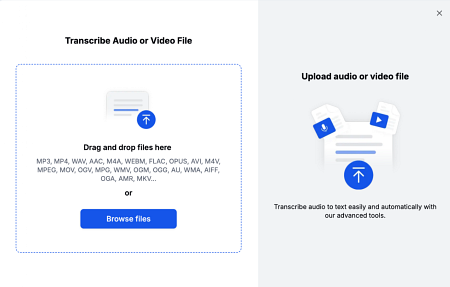
I started testing the tool by uploading different audio and video files, and Transkriptor supports a wide range of formats, so I never had to convert the file before uploading.

Upload file section in the app

Audio with background noise and overlapping speakers leads to less accurate transcription. Also, non-native heavy accents reduced accuracy. Transkriptor supports 100+ languages and adds domain-specific vocabulary for medical, legal, and IT terms, which helped with a jargon-heavy recording, though non-English audio was less even than English.

Transkriptor’s editor did the real work. Every line of transcription carries a timestamp and speaker label. You can play back the audio while reading the transcription to ensure everything is up to the point. Additionally, AI chat and summary let you pull a quick recap of the whole conversation. You get richer insights, such as sentiment analysis and speaker talk time, but it is locked behind the Team plan.

Home page of transkriptor

Does Transkriptor Handle Zoom, Google Meet, and Teams Meetings?

Yes, Transkriptor handles Zoom, Google Meet, and Teams meetings with ease. You paste the link to add a recording bot to the live call. Or you can connect your Google or Outlook calendar so Transkriptor auto-joins scheduled meetings. I connected my Google Calendar in 2 clicks and set it to auto-detect the platform and record the meeting.

Live meeting section

After each call, I got a transcript with speaker labels and an auto-generated summary with action items, which is exactly what a remote team wants from a note-taker. The bot-joins-the-call model is the same approach Otter uses, and Transkriptor matches it while supporting far more languages.

What Does Transkriptor Cost, and How Does It Compare to Otter and Sonix?

To get access to all features, you need to buy a Transkriptor subscription. It’s a limited free tier with a small daily allowance that lets you test it. Lite plan starts at $9.99 per month for 5 hours of transcription. Pro is $19.99 per month or $8.33 per month on annual billing ($99.99 a year) and unlocks 2,400 minutes per month with unlimited files. 

Advertisement

Team runs $30 per seat monthly, or $20 per seat on annual billing ($240 a year per seat), adding 3,000 minutes per seat, shared workspaces, call analysis, and custom vocabulary. A custom-priced Business tier is available for larger orgs. Transkriptor is also ISO 27001, SOC 2, and GDPR compliant, which matters for regulated work.

Against the alternative transcription tools, Transkriptor lands in a useful middle ground. Otter is the polished meeting assistant with strong CRM sync, but it transcribes only 6 languages and caps your minutes. Sonix charges per hour and delivers the highest audio accuracy. Here is how the three line up.

Tool Entry pricing Languages Best at Watch out for
Transkriptor $9.99/mo, free tier available 100+ Files plus live meeting recordings in one tool Accuracy dips on noisy or accented audio
Otter Free, then $8.33/mo annual 6 languages Live meeting notes and CRM sync Few languages, strict minute caps
Sonix $10 per audio hour, pay as you go 50+ High accuracy on clean files No live meeting recording

Who is Transkriptor Best For?

With Transkriptor, you get a practical mix of transcription, meeting recording, AI summaries, and multilingual support. During my testing, Transkriptor handled clean audio and video files well and integrated smoothly with Zoom, Google Meet, and Teams. It made it easy to turn speech into readable meeting notes and summaries.

While accuracy can vary with heavy background noise or challenging accents, the overall experience is reliable enough for most everyday transcription needs. The combination of 100+ language support, meeting integrations, and competitive pricing gives it a broader feature set than many alternatives.

For students, journalists, podcasters, and remote teams working across multiple languages, Transkriptor is a capable and cost-effective speech-to-text solution.

Advertisement

Source link

Continue Reading

Tech

UDP Broadcasting And Easily Finding Network Services

Published

on

Local area networks (LANs) that use technologies like Ethernet and Wi-Fi are incredibly useful for letting devices talk with each other. Yet a core problem here is knowing which devices are where on the network, as anyone who has ever tried to add a network printer or network share to their system can probably attest to. Unless you happen to know the IP address of the LAN device, the port, and protocol, the target device may as well be located on the Moon without further help, such as automatic network discovery in lieu of waddling over to the device and reading the label listing its IP address.

Over the decades quite a few ways have been developed to enable such network discovery, with many of them using UDP broadcast as the first step. By broadcasting a global message on the entire LAN, any device that has an actively listening UDP socket on that particular port can parse said message and decide whether it’s feeling sociable enough to reply.

The topic of UDP broadcasting is however not as straightforward as it may sound if you’re just getting started, including the existence of many opinions on the ‘right way’. There is also a massive divide between a sprawling service discovery protocol like mDNS and a light-weight one like that one that I had to implement a few years ago for an open source project.

Network Broadcasting

The obvious advantage of a broadcast message is that a client device that seeks its protocol soul mate on the LAN doesn’t need to ping all possible IP address and subnets. Instead,  a broadcast message is designed so that all connected networking devices know that it should be forwarded to all other known devices. Thus with a single message from the client, in theory, only a single message will then neatly land at every single other connected system.

Advertisement

Of course, this ignores happy joy fun things such as convoluted network configurations, such as those involving overlapping Wi-Fi repeaters and subsequent routing, but in general we can assume that this is how it works. Various edge cases and fascinating complications of these will be considered in a later section.
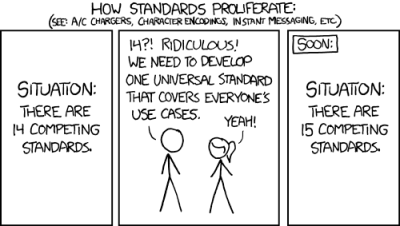
Much of this service auto-discovery is tossed under the header of ‘zero-configuration networking‘, or zeroconf for people who don’t like typing. The best part about zeroconf is probably that there are so many standards here, ranging from DNS-SD to mDNS, UPnP, SLP and others. Perhaps unsurprisingly, one of the major issues here is that platform support here is spotty, with mDNS – despite being one of the most universal – not having much support outside of MacOS/OS X with Bonjour and Linux/BSD with Avahi.

Thus while trying to add the auto-discovery of NymphCast receivers and media servers by NymphCast clients, I found myself asking the daunting question of whether I was at risk of being about to embark on reinventing the proverbial wheel. After all, nobody wants to become the subject of an xkcd comic.

UDP Discovery Basics

As it turns out, I ought not to have been too worried, as despite looking everywhere I could find nothing along the lines of the NyanSD network service discovery (NSD) protocol that I ended up implementing and integrating into NymphCast. What I wanted after all was the most no-frills NSD possible that could be easily integrated, while working the same across just about any desktop, server and embedded platform imaginable.

All that’s needed for this is a way to create an appropriate UDP socket, and a way to either broadcast a query and receive the response, or to listen for incoming UDP packets. Here you can figure out the platform-native method for each target platform, or not reinvent the wheel and use an existing networking library for C++ like Poco. This is what I used for NyanSD, along with my ByteBauble utility to handle endianness conversions.

Advertisement

For the UDP server — the listening side — the procedure is fairly standard, with a regular UDP listening socket. As UDP is a connectionless protocol, there is not a lot of preamble here, just a UDP socket instance (here Poco::Net::DatagramSocket), which is bound to the target port and regularly polls for any fresh UDP packets to process. This can all be seen in the single source file for NyanSD which covers both the client and server side code.

Where things get spicy is with the client that sends the broadcast query and waits for any replies. If we were to just shove the query data into the socket along with the request to toss it over to a regular IP address, not a lot would happen. To make it into a broadcast request we need a few things:

  1. Let the network subsystem know that we want to do broadcast things.
  2. Create the special broadcast address for the target network interface.

With Poco the first point is easily handled by simply calling setBroadcast(true) on the UDP socket instance. For BSD sockets this sets the appropriate flag on the socket, which is essentially repeated across all OS implementations due to how prevalent the BSD socket library is.

The second point can be summarized for IPv4 as a curt ‘make it end with .255’. For example 192.168.0.255 when the client network interface’s IP address is 192.168.0.42. If there are multiple interfaces on the client system, you can go through the list one by one to broadcast on each of them before filtering out potential duplicate returns.

As for how to do broadcasting with IPv6: you don’t, as this protocol relies on multicast and special multicast receiver groups, which is another kettle of fish and of not much relevance for LANs.

Advertisement

Complications

If you look at the NyanSD API, it may give the impression that the query process is incredibly straightforward, with the sendQuery() function neatly returning a stack of remote systems that responded to our query. While these are definitely all the responses, it’s important to remember that NyanSD queries every single network interface. This means that the responses are likely to contain duplicates, which may even come from the loopback address when a service runs locally.

The filtering of this is captured in the NymphCast client library (libnymphcast) where the findServers() function in the main source file calls the isDuplicate() and isDuplicateName() functions, as well as the removeLoopback() function that nukes any responses that match a remote service found via a non-loopback interface. This last filtering is essential for NymphCast when e.g. using playback groups that would otherwise get confused by a stray loopback address.

Although one may think that such in-depth filtering is unnecessary if all you have is a single Wi-Fi or Ethernet interface in your system, one of the curveballs that I encountered during real-life testing was apparently related to Wi-Fi repeaters. For some reason it seems that the way that the repeaters did their broadcasting led to erroneous duplication of packets and thus multiple returns from a single system.

Depending on your exact use case and network configuration you may encounter any such issues and perhaps an exciting new one.

Advertisement

NyanSD Findings

Over the years that NyanSD has been used in the NymphCast project, it has proven to be one of the most reliable and probably nearly zero-fuss components. I have so far used it on Windows, various Linux distributions, FreeBSD, Haiku, Android, and the ESP32 via FreeRTOS and ESP-IDF. What this experience has proven to me most of all is that service discovery doesn’t have to be complicated.

The basic UDP protocol is simple and reliable enough that, barring a very sick LAN, there shouldn’t be any issues here. Assuming you get your filtering sorted of the responses, it’s probably the last part of a project to worry about.

One thing that I’m also very happy with in NyanSD is that there’s no set port in the protocol, like how mDNS always uses port 5353. What this means is that I can have NyanSD listen with a UDP socket on the same port as the NymphCast server’s TCP socket, which also means that different services with their own port can be targeted directly rather than every NyanSD-enabled service on the network getting blasted by every NyanSD query.

I did also do some work on a NyanSD daemon as a more central services database, but so far I have had no real need for it in a practical deployment. I guess that such a thing could be very useful if the port of a service is not set in stone, but generally that’s the one aspect of network services that tends to be boringly predictable.

Advertisement

Source link

Continue Reading

Tech

Microsoft set for new round of job cuts next week, spanning Xbox, sales and consulting

Published

on

GeekWire File Photo

Microsoft is preparing to cut thousands of jobs next week, continuing to rein in operating costs as the company pours unprecedented sums into AI infrastructure. 

Business Insider broke the news Tuesday afternoon, saying that the cuts will impact less than 2.5% of the company’s global workforce of about 220,000 people. It includes not just Xbox, where cuts have been signaled for weeks, but also layoffs in sales and consulting. 

GeekWire confirmed the details of the report with a person familiar with the company’s plan. Microsoft isn’t commenting on the report.

The timing follows a familiar pattern. Microsoft often restructures its operations around the close of its fiscal year on June 30, and the cuts would come just as the new year begins. 

The reductions were bigger last year. Microsoft laid off more than 15,000 people in two rounds of cuts a few weeks apart: about 6,000 in May 2025, then around 9,000 (roughly 4% of the company at the time) in early July 2025.

Advertisement

One difference this year: Microsoft’s first-ever voluntary retirement program. About a third of the approximately 8,750 eligible U.S. employees took the buyout, reportedly allowing the company to cut a smaller share of its workforce through layoffs than a year ago. 

@media (max-width: 600px) {
aside.callout { float:none !important; max-width:100% !important; margin-left:0 !important; margin-right:0 !important; }
aside.callout .callout-img { display:none !important; }
}

The company is on pace to spend more than $100 billion building AI and cloud infrastructure in the fiscal year that just ended — up from $88.7 billion the year before — with about two-thirds going to the chips that power AI. 

Microsoft shares closed Tuesday at $373.02, down 19% over the past month and near a 52-week low, as Wall Street questions whether its heavy AI spending will pay off.

The layoffs come amid a broader wave of restructuring across the tech industry, which has shed more jobs than any other sector this year. U.S. tech companies have announced 123,653 cuts so far in 2026, up 66% from the same stretch of 2025, according to a report from outplacement firm Challenger, Gray & Christmas. 

Advertisement

Across all sectors, not just tech, AI was the most commonly cited reason for job cuts in May — the third straight month it has led the list. The 38,579 cuts attributed to AI were the most in any month since Challenger began tracking the cause in 2023. For the year, AI has been linked to 87,714 cuts, already surpassing the 54,836 attributed to it in all of 2025.

Source link

Continue Reading

Tech

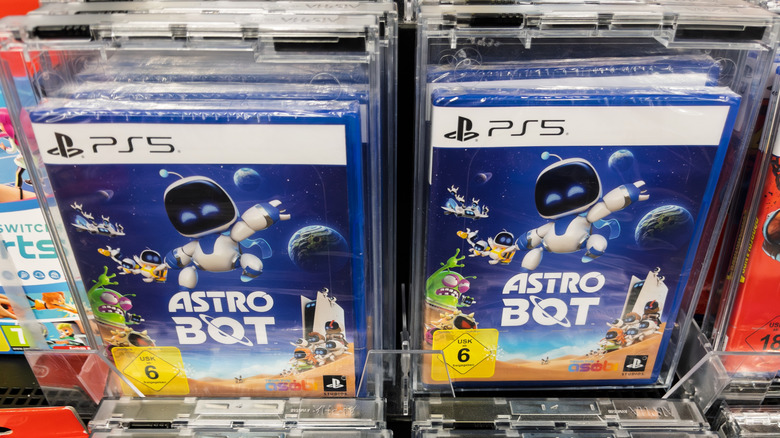
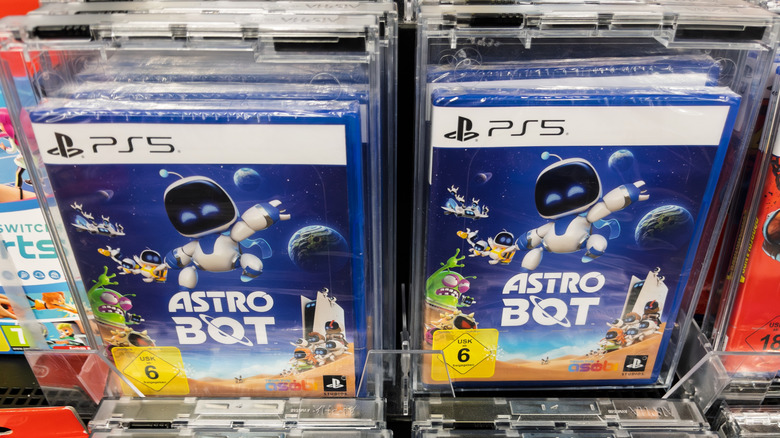
Sony Will Stop Making Disc-Based PlayStation Games Starting 2028

Published

on

Xbox and Nintendo have also been pushing consumers towards digital games.

Sony has announced that PlayStation is going all digital, with physical game disc production being discontinued starting January 2028. After this date, you’ll only be able to purchase new games digitally on the PlayStation Store and in retailers.

Sony says its decision is a response to “shifting trends in consumer preference,” with digital sales significantly outweighing physical. Last year, physical game distribution accounted for just three percent of PlayStation’s revenue, and the fact that the PS5 Pro launched in 2024 without a disc drive was a pretty good indication of Sony’s future direction.

The strategic shift will have no impact on physical games already released or those that are planned for release before January 2028, but the ramifications of the announcement are huge. The second-hand video game market will obviously take an enormous hit if people were no longer able to trade in their unwanted PS5 games. Retailers are also likely to feels some negative effects too.

Advertisement

The writing was already on the wall when Rockstar announced that it’s ditching discs for GTA 6, and today’s news will quash any hopes of that being an outlier. Physical discs might be good for the consumer and those who care about preservation, but the cost benefit of a digital-only model to companies like Sony is clear. Xbox has been moving away from physical for a while now, and even Nintendo, which remains the dominant force where physical game sales are concerned, seems to be nudging customers towards digital with comparatively cheaper prices and game-key card cartridges that don’t contain the whole game.

Sony waving goodbye to discs isn’t the only PlayStation-related news today. The company has also announced that it’s closing the PlayStation Store on PS3 and the PS Vita. Once they’re gone, it’ll no longer be possible to purchase new games or content on those platforms, although Sony will still allow people to download previous purchases “for the foreseeable future.”

In some markets these store closures will happen as soon as August 2026, but in the US you have until next summer, July 2027, to load up on any games you might want to add to your libraries. “We know this news may be disappointing to PS3 and PS Vita players who hold a special place in their hearts for this generation of gaming,” Sony said in a press release. “PS3 and PS Vita represent an important era in our PlayStation history, so this was not an easy decision for us to make.”

Advertisement

Source link

Continue Reading

Tech

Hey Ezra Klein: Why Did You Stop Talking About Broadband And The Infrastructure Bill?

Published

on

from the you-got-boondoggle-in-my-boondoggle dept

Last fall, Ezra Klein was getting a lot of attention for his book Abundance, which basically argued that American had become bureaucracy-obsessed and fallen out of love with building things. I thought it was mostly simplistic cack, downplaying or ignoring the fact that the U.S. government has become so blisteringly corrupt, it clearly no longer functions in the public interest.

As a longtime telecom beat reporter I was particularly struck by Klein’s chapter on broadband, which mostly seemed to amplify Republican attacks. One of Klein’s biggest targets was the infrastructure bill and Broadband, Equity, Deployment, and Access (BEAD) program, which was part of the 2021 infrastructure bill, and set aside $42.5 billion for improved internet access.

BEAD was never going to be a poster child for government efficiency. But as I noted at the time, Klein’s criticism of the program was bizarre and simplistic, downplayed why the program was taking so long (we had to remap the entirety of U.S. internet access, for one), and ignored how other legislation that same year (like ARPA) was delivering much of the abundance Klein claimed to be looking for.

I could tell from reading Klein’s Abundance chapter on broadband that he didn’t spend much time talking to telecom policy experts. After Klein’s attacks made inroads on the podcast circuit (including on Jon Stewart’s) they were then picked up again by right wing media, further perpetuating the idea that BEAD was a completely useless boondoggle:

Advertisement

I bring it up because a little more than a year later and this BEAD program really is now a boondoggle under Trumpism, as Sean Gonsalves and I explored in a new feature over at The Verge.

Republicans, it should be noted, voted against the infrastructure bill and ARPA, but can still routinely be found taking credit for the improvements they opposed.

Last election season, Republicans ran on the idea that they’d reshape BEAD and trim the fat. Instead they’ve stripped away all oversight, eliminated any requirements that taxpayer-funded broadband be affordable or equitably deployed, and gone out of their way to redirect money away from future-proof fiber toward Elon Musk and Jeff Bezos low-Earth-orbit satellite broadband networks.

Republicans — and the Joe Rogan infotainment universe — are positively convinced that Starlink is akin to magic. So they’ve decided to throw billions of taxpayer money at Bezos and Musk in exchange for slower, more expensive, congested low-Earth orbit satellite connectivity that chips away at the ozone layer. It’s worth noting they’re being given billions for service that already exists and was already set to be deployed.

In our Verge piece, we talked to minority communities in Louisiana who were slated to get fiber upgrades, but are now being shoveled toward Starlink service (that already existed) thanks to Republican BEAD changes. They are very aware they’re now getting the short-end of the stick:

Advertisement

“The most frustrating part is that it was a zero dollar investment in infrastructure,” Wills told The Verge. “Nothing fundamentally changed. People with Starlink are going to just get mailed a box and many won’t be able to install it. And we still won’t have anybody really served,” leaving the community with “no growth in our economic potential.”

“No money will stay here,” he said. “No jobs will be created from this — no installation jobs, zero construction jobs, or even any small stimulus.”

Republicans are then claiming they “saved taxpayers money” by throwing money at billionaires for satellite broadband they already planned to deploy. States and the Trump administration are now bickering over these $20 billion in “non deployment funds.” Congress said this money had to be used for broadband access; but the law under Trumpism is very clearly optional. It’s a giant mess.

All of this corrupt retooling has caused endless new delays, pushing real-world deployments out by another year or two. As of this writing, the $42.5 billion program has only provided new (fixed wireless) connections to a handful of homes in Louisiana and Nebraska (the Trump administration tried to use this as a press op highlighting how amazingly successful their revamp has been).

Due to the higher costs of deployment created by stupid tariffs and pointless wars, many additional fiber deployment bids originally supposed to be funded by BEAD are likely to go into default and be cancelled, opening up the possibility of Musk and Bezos getting billions more in taxpayer subsidies. It’s expected that this whole mess will get significantly uglier later this year.

Advertisement

Curiously, Ezra Klein hasn’t made a peep. All the press coverage last election season about how BEAD was a boondoggle is nowhere to be found now that the program is a bigger boondoggle than ever. And it’s a bigger boondoggle than ever because the U.S. is too corrupt to function, something that needs to be addressed (and candidly acknowledged by our press) before we can even begin to sniff “abundance.”

I’ve always felt that the abundance movement was an influence campaign by affluent centrists to pre-empt genuine populist progressive reform as the response to authoritarianism. The abundance movement always struck me as Clinton-era vibes-based deregulatory corporatism with a new coat of paint; something seemingly supported by its proponents’ curiously limited attention span.

Filed Under: abundance, bead, broadband, donald trump, elon musk, ezra klein, high speed internet, internet access, jeff bezos, ntia, taxpayers, telecom

Companies: spacex, starlink

Advertisement

Source link

Continue Reading

Tech

Playstation To Stop Producing Physical Discs In 2028

Published

on


In a move that’s sure to not win any fans, Sony announced today that it will stop making physical discs for new Playstation titles starting in 2028. A press release on Sony’s Playstation blog states: “In response to shifting trends in consumer preference, new games will be released on PlayStation Store and at retailers in digital formats only.”

This news comes after it was discovered that Sony would remove over 500 purchased titles from Playstation users in the UK due to the expiration of licensing agreements. To make matters worse, the Playstation Blog also announced that the PS3 and PS Vita online stores will be shutting down over the course of this and next year.

Sony’s announcement wasn’t entirely unforeseen, of course. Grand Theft Auto VI, maybe the most anticipated game of the decade, won’t be launched on a physical disc. Additionally, both the Playstation 5 and Xbox are available without a disc drive entirely. 

Advertisement

It’s not just Sony

As unfortunate as it is among those of us who still like physical media, the rest of the gaming and movie-watching market just don’t follow that trend. In a cold, unfeeling financial sense, it’s logical why Sony decided to cease production of physical discs. It sees that most people just download or stream movies or games anyway, negating the need to have a production facility for physical copies. Let’s also not forget the graveyard of “dead” Sony media formats. 

For everyone else, however, it follows a concerning trend among big publishers, showing that you don’t truly “own” your digitally purchased games or movies in the traditional sense and your library of titles could be erased based on the whim of the publisher. It’s not just Sony who is to blame.

Advertisement

Of course, there is still a huge market for physical copies of media. There’s a reason why, for example, vinyl records are still popular. There will always be a group of people who want to physically hold a copy of something in their hands. Records, cassettes, Blu-Rays, CDs, and DVDs will probably always exist in some form or another, but for the moment, it looks like new Playstation games won’t be joining that list.


Advertisement

Source link

Continue Reading

Tech

Turning Indicators into Intelligence in OpenCTI with Criminal IP

Published

on

Criminal IP + OpenCTI header

Cyber threat intelligence becomes more valuable when indicators are enriched with context that supports investigation, correlation, and decision-making. Through the Criminal IP integration with OpenCTI, security teams can transform IP addresses, domains, and URLs from isolated indicators into structured intelligence within the OpenCTI knowledge graph.

The integration automatically enriches indicators with Criminal IP’s reputation scoring, infrastructure intelligence, vulnerability data, behavioral signals, and phishing analysis.

The resulting information is structured as OpenCTI entities and relationships, allowing analysts to investigate connected infrastructure, identify potential attack surfaces, and prioritize high-risk indicators.

Integration Highlights

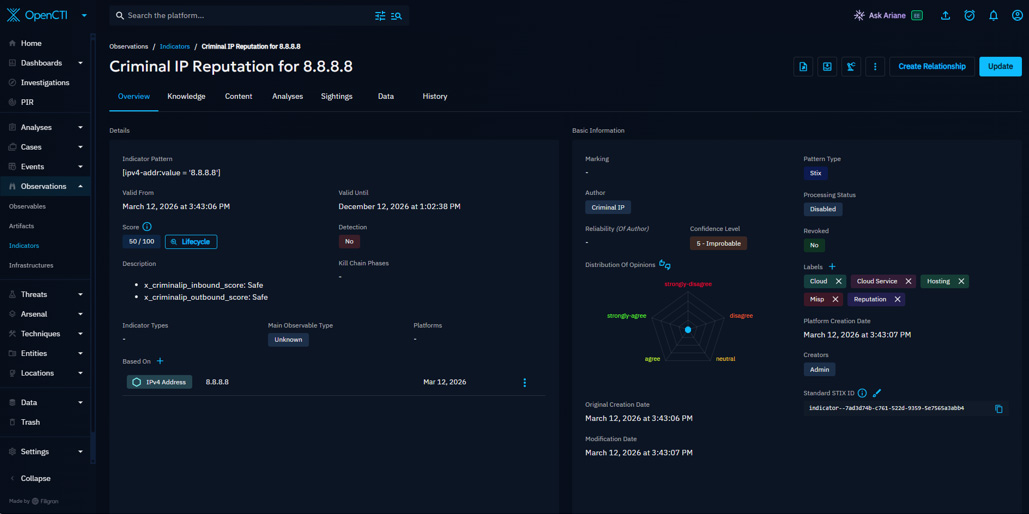
Criminal IP enrichment results for an IP address within OpenCTI, showing contextual risk scoring and behavioral indicators
Criminal IP enrichment results for an IP address within OpenCTI,

showing contextual risk scoring and behavioral indicators

Contextual Risk Scoring Beyond Simple Reputation

Criminal IP provides dual-perspective risk scoring (inbound and outbound), reflecting both how an IP is targeted and how it behaves externally. This gives analysts a more nuanced signal than traditional single-score reputation models and improves prioritization of high-risk infrastructure.

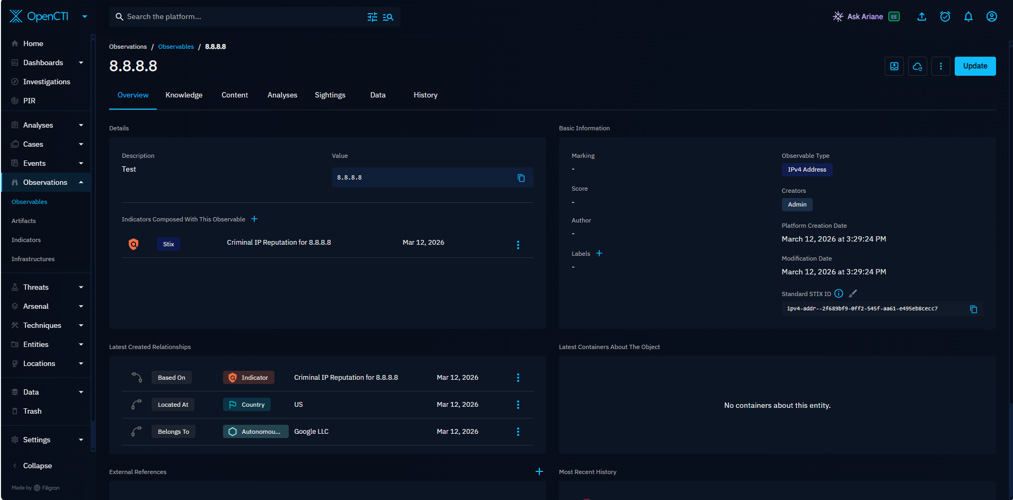
Criminal IP enrichment structures IP intelligence as connected OpenCTI entities,

enabling analysts to pivot across indicators, network ownership, and geographic context

Deep Infrastructure Intelligence Embedded in the Graph

Enrichment goes beyond tagging indicators, Criminal IP creates structured OpenCTI entities and relationships, including vulnerabilities (CVEs), Autonomous Systems (ISPs), and geolocation. This enables analysts to pivot across infrastructure, uncover shared components, and identify related infrastructure within the graph.

Service Exposure & Vulnerability Correlation

By linking observed services to known CVEs, the integration provides immediate insight into potential attack surfaces. Analysts can quickly assess whether an IP is not only malicious, but also exploitable or actively leveraged in attacks.

Advertisement

High-Fidelity Threat Labeling & Behavioral Signals

Automatically generated labels incorporate multiple data points such as anonymization technologies (VPN, proxy, TOR), hosting characteristics, and malicious classifications. This layered labeling approach provides richer context than binary “malicious/benign” tagging.

Advanced Domain & Phishing Intelligence

For domains, Criminal IP performs full URL analysis to detect phishing activity, credential harvesting, suspicious files, and impersonation techniques. Confidence scores are directly tied to phishing probability, giving analysts a quantifiable measure of risk.

Infrastructure Mapping & Analysis support

The integration links indicators to network ownership (Autonomous Systems), physical locations, and resolved IP infrastructure. This allows teams to identify hosting patterns, regional clustering, and and infrastructure patterns across indicators.

Integrate Criminal IP with OpenCTI to enrich IP addresses, domains, and URLs with contextual threat intelligence.

Advertisement

Automatically add dual-perspective risk scoring, infrastructure relationships, vulnerability data, behavioral signals, and phishing analysis to the OpenCTI knowledge graph, enabling faster investigation, correlation, and prioritization.

Explore Criminal IP Integration

How Integration Works

Indicators such as IP addresses, domains, and URLs are first ingested into OpenCTI.

The Criminal IP connector then automatically enriches each indicator with reputation scoring, infrastructure intelligence, vulnerability information, behavioral signals, and phishing analysis.

The enriched data is structured into entities and relationships within the OpenCTI knowledge graph. Analysts can then use the resulting intelligence for investigation, correlation, infrastructure pivoting, and threat analysis.

Advertisement

The process can be summarized as follows:

  1. Indicators (IP addresses, domains, URLs) are ingested into OpenCTI
  2. The Criminal IP connector automatically enriches each indicator with reputation scoring, infrastructure intelligence, and phishing analysis
  3. Enriched data is structured into entities and relationships, enabling investigation, correlation, and analysis within the OpenCTI knowledge graph

Key Use Cases

SOC Triage and Alert Validation

Rapidly validate suspicious IPs and domains using dual risk scoring, infrastructure context, and phishing intelligence, enabling analysts to prioritize high-risk indicators and support prioritization of high-risk indicators.

Threat Hunting and Infrastructure Pivoting

Leverage enriched relationships such as CVEs, Autonomous Systems, and geolocation to pivot across connected infrastructure and uncover related assets used in attacker operations.

Phishing and Campaign Analysis

Identify and analyze malicious domains, credential harvesting pages, and supporting infrastructure to track phishing activity and understand broader campaign patterns.

OpenCTI Platform

OpenCTI is an open-source cyber threat intelligence platform designed to structure, store, and analyze threat data using a graph-based model. It enables organizations to connect indicators, vulnerabilities, threat actors, and campaigns into a unified knowledge base for investigation, collaboration, and intelligence sharing.

Advertisement

Criminal IP

Criminal IP delivers decision-ready cyber threat intelligence by analyzing IP addresses, domains, and URLs across the global internet. Powered by AI and OSINT, it provides reputation scoring, infrastructure visibility, and real-time detection of malicious activity, including phishing, exposed services, and anonymization technologies such as VPNs and proxies. Its API-first architecture enables seamless integration into security platforms to enhance visibility, automation, and response.

Sponsored and written by Criminal IP.

Source link

Advertisement
Continue Reading

Trending

Copyright © 2025