Connect with us
DAPA Banner
DAPA Coin
DAPA
COIN PAYMENT ASSET
PRIVACY · BLOCKDAG · HOMOMORPHIC ENCRYPTION · RUST
ElGamal Encrypted MINE DAPA
🚫 GENESIS SOLD OUT
DAPAPAY COMING

Tech

Apple’s Siri revamp could include auto-deleting chats

Published

on

Privacy will be a major theme when Apple unveils a new version of Siri at the Worldwide Developers Conference in June, according to Bloomberg’s Mark Gurman.

The Siri relaunch is widely seen as Apple’s big chance to reestablish its relevance in artificial intelligence. As part of that effort, company executives will argue that they’re taking a more privacy-friendly approach than most other AI companies, Gurman said.

Apple will reportedly launch the first standalone Siri app, powered by Google Gemini and offering users a chatbot experience reminiscent of ChatGPT.  But compared to those other chatbots, the app is supposed to have more limitations on how long user information can be used and stored.

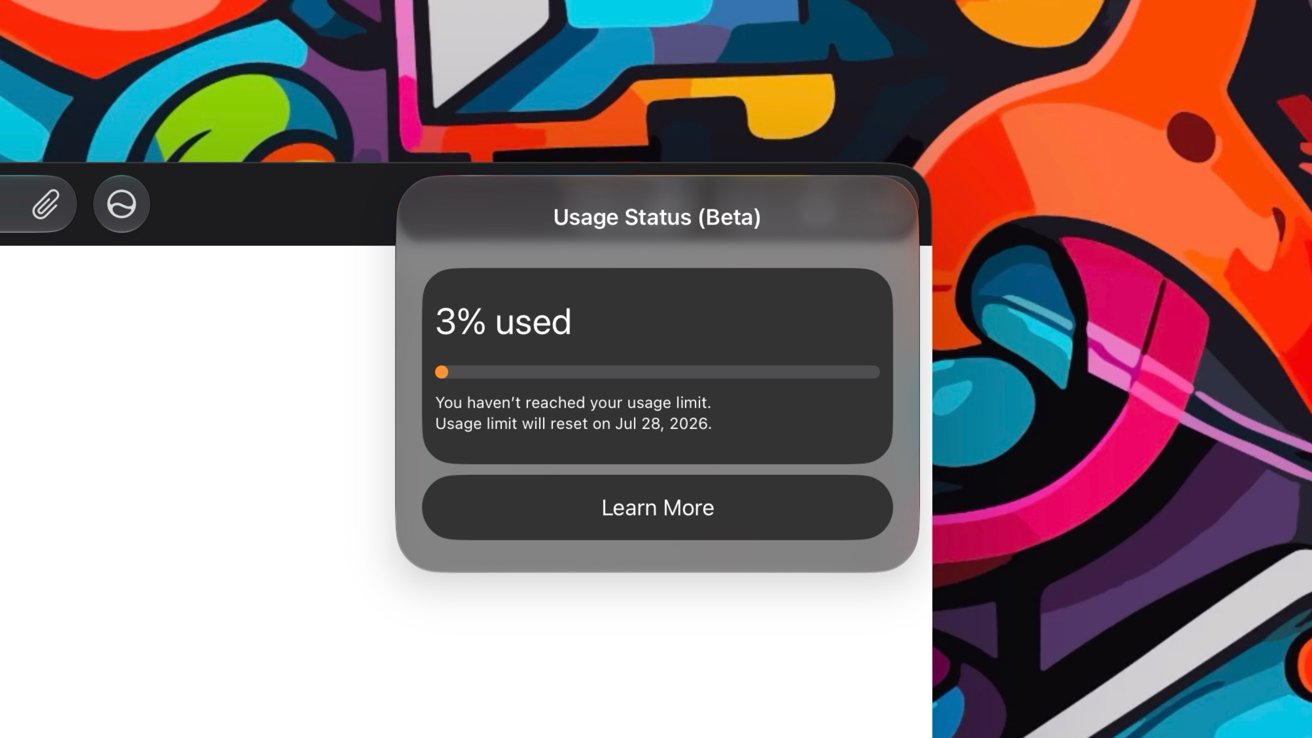
For example, Gurman said Siri could include a feature similar to the Messages app, allowing users to automatically delete conversations after 30 days or one year — or to keep them indefinitely.

Advertisement

Gurman also suggested that Apple might be emphasizing privacy as a way to excuse Siri’s shortcomings compared to competing products — and that this emphasis might obscure the fact that Google is handling some the security.

Source link

Continue Reading
Click to comment

You must be logged in to post a comment Login

Leave a Reply

Tech

Rugged looks, but too many compromises

Published

on

Verdict

The Polar Street X gets some of the basics right, with a rugged design, solid sleep tracking and a useful built-in flashlight, but too much of the experience feels underdeveloped for the price, particularly its GPS accuracy, heart rate reliability and limited smartwatch features. While its distinctive G-Shock-style look may appeal to some, stronger battery life, navigation and overall value can be found in rival watches from Garmin, Coros and others.

  • Likeable G-Shock-style look

  • A good mix of sports tracking features

  • LED flashlight is nice and bright

  • Misses out on Polar’s latest sensor technology

  • Limited smartwatch features compared to competition

  • Desperately needs a better companion app

Key Features

  • Trusted Reviews IconTrusted Reviews Icon

    Advertisement

    Review Price:
    £219

  • Rugged city-ready design

    Advertisement

    Built to military-standard durability, the Polar Street X pairs a tough G-Shock-style look with 50m water resistance and a bright LED flashlight.

  • Broad sports tracking

    Advertisement

    The Polar Street X tracks over 170 sports, from running and cycling to gym sessions, with useful extras like FitSpark and FuelWise.

  • Useful navigation tools

    Advertisement

    Alongside built-in GPS, the Polar Street X offers breadcrumb navigation, back-to-start guidance and turn-by-turn support for outdoor workouts.

Introduction

The Polar Street X is a multisports watch that Polar says is made for hybrid athletes and people who live, work and train in the city. 

So what makes the Street X a perfect fit for city-dwelling fitness fans over other watches? It’s built to military-standard durability, can track over 170 sports, and includes a built-in flashlight to make nighttime outings easier.

Advertisement

The Street X is a new watch line for Polar, but did it need to make it? I’ve been putting it to the test for two weeks to find out.

Advertisement


Design and screen

  • Uses bioplastic for case and bezel
  • AMOLED touchscreen
  • Built-in LED flashlight

The Street X is what I’d describe as a mix of a Casio G-Shock and Garmin’s Instinct watch. It wraps up a 1.28-inch, 416 x 416 resolution AMOLED display in a plastic shell that’s nicely weighted and, as mentioned, has been tested to military standards for durability. That means strong protection against drops and bumps. It’s also waterproof up to 50 metres depth, like most other watches around this price. 

Polar Street X on a bedPolar Street X on a bed
Image Credit (Trusted Reviews)

It’s not as hulking as your typical G-Shock watch, with the 45mm case size sitting in between the 40mm-50mm sizes that you can grab Garmin’s similarly rugged Instinct in.

There are five physical buttons dotted around the case, all with a textured finish to improve interactions with sweaty hands or gloves. They’re good-sized buttons, if maybe a little too encased in that shock and weather-resistant frame. It can make using them in a rush a bit awkward.

Advertisement

Advertisement
Polar Street X flashlightPolar Street X flashlight
Image Credit (Trusted Reviews)

At the top of the case is an LED flashlight, a trendy feature for sports watches and marks the first Polar watch to include one. The flashlight is activated by the top-left button, where you can also adjust brightness or switch to red light mode for a less distracting, better penetrating light. It’s a bright flashlight that was useful for nighttime runs and for getting around a room without needing to hit the light switch.

There’s a 22mm silicone strap that’s available in three different colours, with a sliding pin mechanism to release it from the watch case. I wouldn’t say it’s the most comfortable strap I’ve worn on a sports watch. It sits quite snug, which means it stays well in place, but there were also a couple of occasions when I felt I needed to take it off to give my wrist a break.

Polar Street X strapPolar Street X strap
Image Credit (Trusted Reviews)

That strap can also be replaced with one of Polar’s payment-enabled straps, which will cost you an additional £51 and adds the ability to make contactless payments.

The AMOLED screen, which is protected from scratches with Gorilla Glass 3, is a perfectly good quality AMOLED with good colour accuracy and overall sharpness. You can adjust the screen brightness, though I found that even at maximum, it felt a little dull compared to other watches I’ve tested at this price point. The screen responsiveness, while generally fine, does seem to experience slight lag at times, causing it to float between menus and modes.

Advertisement

Polar Street X on the wrist outdoorsPolar Street X on the wrist outdoors
Image Credit (Trusted Reviews)

Performance and software

  • Works with Android and iOS 
  • Works with Polar Flow app
  • Displays notifications and music playback controls

Like other Polar watches, the Street X runs on Polar’s in-house operating system and can be set up using either the Polar Flow phone app or the desktop app. I did the former, which is relatively straightforward, aside from having to update the watch out of the box. That took about 20 minutes to complete.

Polar Street X weather watch facePolar Street X weather watch face
Image Credit (Trusted Reviews)

The Polar Flow app dearly needs some love. It’s a very text-heavy app where data and insights aren’t particularly glanceable, and it all just seems a bit dated. Things are better on the watch, where that array of physical buttons and touchscreen makes it easy to get around a pretty straightforward user interface.

Something Polar lacks compared to Garmin is a rich array of smartwatch features. You can change watch faces, and while there are some nice options to pick from, most of the faces aren’t that exciting or memorable. You do have the ability to control music playing on your phone with controls well optimised for the touchscreen display. You can also simply view phone notifications and view some nicely detailed weather forecasts. 

Advertisement

Advertisement

Polar Street X music controlsPolar Street X music controls
Image Credit (Trusted Reviews)

While this watch can share data with third-party apps like Strava, Komoot and TrainingPeaks, when it comes to storing data on the watch, there’s just 32MB to play with. 

As a smartwatch, Polar is behind the competition not only in features, but in the execution of those features.

Tracking and features

  • Over 170 sports modes
  • Misses out on dual-band GPS and newer Polar Elixir sensor
  • Breadcrumb navigation with turn-by-turn support

The Street X seems to have everything in its locker to be a very capable and competent multisports watch. It can track sports such as running, cycling, and swimming, as well as indoor workouts like strength and circuit training. It has built-in GPS, a heart rate monitor to track effort levels and the ability to help you find your way or your way back home on a run in a new location.

Polar Street X HR sensorPolar Street X HR sensor
Image Credit (Trusted Reviews)

Advertisement

What it doesn’t do is give you the best that Polar has to offer on those hardware and software fronts. You’re getting a multi-GNSS setup for outdoor activity tracking, instead of a newer dual-band one. You miss out on Polar’s Elxir sensor, which means missing Polar’s latest heart rate sensor technology. That also means missing out on an ECG sensor and its latest skin temperature sensor technology. You also don’t get full offline maps to view your surroundings in greater detail, either.

Some of Polar’s standout software features do make it in. Like its useful FitSpark workout suggestions, with running, cycling and fitness tests along with Fuelwise fueling reminders. This is to help make sure you don’t crash during endurance-like training sessions due to a poor fueling strategy.

Advertisement
Polar Street X FitSpark integrationPolar Street X FitSpark integration
Image Credit (Trusted Reviews)

Let’s deal with the outdoor tracking performance first. While plenty of multi-GNSS-based watches can still serve up strong tracking results, the Street X isn’t a good example of that. Given that this is a watch designed for training in the city and doesn’t include dual-band technology to improve performance around tall buildings, this feature feels like an odd omission.

On most of my outdoor tests, the GPS performed fine, but I also had some bad moments on routes that I’ve tested other multi-GNSS watches on that have performed better.

Polar Street X on the wrist during a workoutPolar Street X on the wrist during a workout
Image Credit (Trusted Reviews)

Advertisement

The Precision Prime optical heart rate sensor technology is, unfortunately, not a fantastic performer all the time, as I’ve found on previous Polar watches that included it. On some sessions, like indoor bike rides, it matched up pretty well with graphs generated from a heart rate monitor. Average and maximum readings looked good, too.

There were also times when graphs and, particularly, maximum heart rate readings were off compared to a chest strap heart rate monitor. Thankfully, you do have the option to pair an external heart rate monitor to improve the accuracy of heart rate data during workouts.

Polar Street X cardio suggestionsPolar Street X cardio suggestions
Image Credit (Trusted Reviews)

Missing out on offline maps isn’t the worst thing here, as the breadcrumb navigation and features like back to start mode are effective enough in offering assistance when you’ve got a bit lost or need some guidance.

Sleep tracking is a strength for Polar’s ecosystem, and that remains true on the Street X. Whether that’s the recovery insights or Polar’s own take on telling you how ready you are to train, the core data underpinning those insights felt good enough to make those recommendations and guidance worth taking on board.

Advertisement
Polar Street X sleep tracking resultsPolar Street X sleep tracking results
Image Credit (Trusted Reviews)

Advertisement

Battery life

  • Up to 10 days battery life
  • Up to 35 hours GPS battery life
  • Uses proprietary charging cradle

The Street X features a 385mAh capacity battery that Polar says can go up to 10 days without its proprietary charging cable. Features like continuous heart rate monitoring and keeping the screen on 24/7 will lower that number a bit.

Polar Street X on fabricPolar Street X on fabric
Image Credit (Trusted Reviews)

I found that the average daily battery drop was around 10%. When I switched to using the always-on display mode, the battery was closer to 3 to 4 days. The battery dropped by around 5% within an hour of switching to that more power-hungry mode.

Polar also quotes a 35-hour battery for GPS battery life, which can be extended to 170 hours when you switch the watch into its eco training mode. This reduces heart rate tracking and samples GPS positioning data less frequently. An hour’s worth of GPS use saw the battery drop by 5%. That works out to 20 hours, which is short of the promised 35 hours.

Advertisement

Should you buy it?

You want a sports watch with a G-Shock-style look

Advertisement

The Polar Street X has a design that will certainly appeal to fans of the durable yet lightweight appearance associated with one of Casio’s most iconic watch lines.

Advertisement

You want the best mid-range sports watch and smartwatch

The mix of performance and level of features here means the Street X simply doesn’t match up to rival watches.

Advertisement

Final Thoughts

Polar has made a watch that struggles to justify its place in an already crowded mid-range sports watch market.

While the Street X gets some of the basics right, including a rugged design, solid sleep tracking and a useful built-in flashlight, too many parts of the overall experience feel undercooked for the price. GPS performance is inconsistent, heart rate tracking isn’t always reliable, and the software and smartwatch features lag behind key rivals.

That leaves the Street X in an awkward position. It looks distinctive and will appeal to anyone who wants a sports watch with a more durable, G-Shock-style aesthetic, but once you start comparing it to what Garmin, Coros and others offer for similar money, its shortcomings become much harder to ignore. Better battery life, stronger navigation features and a more polished smartwatch experience are all available elsewhere.

Ultimately, the Street X feels like a watch with a few good ideas that hasn’t been fully backed up by the performance, hardware or software needed to make it stand out. For loyal Polar fans, there may still be enough here to like, but for most people shopping around this price, there are better all-around options in our roundups of the best fitness trackers and best smartwatches.

Advertisement

How We Test

We thoroughly test every smartwatch we review. We use industry-standard testing to properly compare features, and we use the watch as our primary device throughout the review period. We’ll always tell you what we find, and we never accept money to review a product.

  • Worn as our main tracker during the testing period
  • Heart rate data compared against dedicated heart rate devices

FAQs

Does the Polar Street X sync with Strava?

Yes, the Polar Street X can sync data to Strava and also offers a dedicated Strava Live Segments mode for Strava Premium subscribers.

Can you make payments with the Polar Street X?
Advertisement

Yes, you can make contactless payments with the Street X. You will need to purchase the optional payment strap to enable it, as they’re not directly supported from the watch.

Full Specs

  Polar Street X Review
UK RRP £219
USA RRP $249
Manufacturer Polar
Screen Size 1.28 inches
IP rating IP68
Waterproof 5ATM
Battery 385 mAh
Size (Dimensions) 45 x 13.8 x 45 MM
Weight 48 G
Release Date 2026
First Reviewed Date 15/05/2026
Colours Black, White, Green
GPS Yes

Source link

Advertisement
Continue Reading

Tech

America’s Library of Congress Officially Inducts… the Soundtrack for the Videogame ‘Doom’

Published

on

America’s Library of Congress “is preserving a little piece of Hell,” jokes Engadget, “by inducting the soundtrack to the original Doom into the National Recording Registry.”

The album of demon-slaying tracks is joined by several other notable 2026 additions to the registry, like Weezer’s self-titled debut album (colloquially known as “The Blue Album”), Taylor Swift’s “1989,” Beyonce’s “Single Ladies (Put a Ring On It) and the original “Mambo No. 5.”

“Doom” was created by Bobby Prince, a freelance composer who worked on lots of id Software games, and also scored Doom’s ’90s rival Duke Nukem 3D. The soundtrack draws clear inspiration from metal bands, but also touches on techno and ambient music throughout its track list, making for an eclectic soundscape for tearing through enemies. That it all fits together is also impressive in its own right: All of the music for Doom was written before the game had completed levels to play through, according to Prince.
The official announcement from the Library of Congress says Doom “brought a heavy metal energy to MS-DOS systems across the globe,” while also pioneering first-person shooter videogames.

“Key to Doom’s popularity was the adrenaline-fueled soundtrack created by freelance video game music composer Bobby Prince. Prince, a lifelong musician and practicing lawyer, was fascinated by the MIDI technology that rose in prominence in the mid-1980s as a means for instrument control and composition… For “Doom,” Prince took inspiration from a pile of CDs loaned by the game’s chief designer, John Romero, including seminal works by Alice in Chains, Pantera and Metallica.

Advertisement

Despite the limitations of the 1993-era sound card drivers, Prince composed the perfect riff-shredding accompaniment for the game’s demon-slaying journey to hell and back. Taking advantage of his knowledge of MIDI, Prince even worked to ensure that the sound effects he created could cut through the music by assigning them to different MIDI frequencies.

Source link

Continue Reading

Tech

The AI stack replacing a $50k hire: 11 AI tools doing the work of a full-time employee

Published

on

Time for a reality check.

AI can’t call on years of industry experience to fix a nuanced problem. It can’t demonstrate empathy over shared frustrations or build strong human connections. It won’t even laugh at your bad jokes unless you tell it to.

Source link

Advertisement
Continue Reading

Tech

FSR 4 upscaling is finally coming to older Radeon GPUs, and the image quality gains are real

Published

on


AMD’s gaming and graphics VP, Jack Huynh, recently confirmed that Radeon RX 7000 graphics cards will begin supporting FSR 4.1 this summer, with support for RX 6000 arriving in early 2027. The company’s presentation confirms what recent leaks indicated: the older GPUs will rely on INT8 processing, a slower alternative…
Read Entire Article
Source link

Continue Reading

Tech

Turning A Junk Laptop Screen Into A Portable Monitor

Published

on

Sure, you can buy a portable monitor off your favorite e-tailer, but with perfectly fine displays in devices like laptops being tossed out every single day, why not repurpose those instead? That’s what [ScuffedBits] recently did with the panels  pulled from some old laptops.

A good question with any such salvaged panel is just how practical it is to still use them, with disqualifying features being things like passive-matrix TFTs as well as the use of CCFL backlighting as with one of the three panels demonstrated in the video.

Looking up the model number of a panel on a site like panelook.com will tell you the display technology, resolution and other important details before you decide to commit to using it. If it’s using a LED backlight and at least Low-Voltage Differential Signaling (LVDS) but ideally eDP you can likely find a cheap driver board for it that has all the requisite inputs like HDMI and power.

Advertisement

The hardest part is probably the case for the panel, as they’re rather thin and fragile. Here [ScuffedBits] opted to 3D print two different types of cases, with the second variant probably being the best version as it protects most of the panel. Installing these is quite easy: slide the panel into the first half, then add the second half of the case to close it up. Permanently keeping the case in place was left as an exercise to a future [ScuffedBits], while demonstrating why it’s definitely the hardest part of repurposing an old laptop display.

Advertisement

Source link

Continue Reading

Tech

Why trust is a big question at the Elon Musk-OpenAI trial

Published

on

Lawyers for Elon Musk and OpenAI made their closing arguments this week, and now it’s up to jurors to decide whether OpenAI did anything wrong as it’s transformed into a slightly-more-for-profit organization. 

But as Kirsten Korosec, Sean O’Kane, and I noted on the latest episode of TechCrunch’s Equity podcast, a big theme in the trial’s final days was whether OpenAI CEO Sam Altman is trustworthy — for example, Musk’s attorney Steve Molo grilled Altman about whether statements he’d made during congressional testimony were truthful.

Kirsten noted that Musk has made plenty of misleading statements of his own, and that trust isn’t just an issue for Altman.

“This is a fundamental question [for] a lot of tech journalists, policymakers, and more and more consumers, about all the AI labs,” she said. “It’s really come down to trust, because we don’t have the insight, necessarily — these are all privately held companies, there’s a lot behind the veil still.”

Advertisement

Keep reading for a preview of our conversation, edited for length and clarity.

Anthony Ha: [The end of the trial] led to this really provocative headline from one of our writers, Tim Fernholz, [that] just says, “Who trusts Sam Altman?” Does anyone want to take a stab at answering this? 

Kirsten Korosec: Yeah, Anthony, I’m going to throw it right back to you. Do you trust Sam Altman? 

Anthony: It’s an interesting question because it feels like something that’s kind of a wild question to discuss in a journalistic context, but actually that’s the core of the trial, in a lot of ways. 

Advertisement

Sean O’Kane: That’s not a yes.

Anthony: And it actually seems to be [at the] core of understanding so much of what’s happened at OpenAI, especially this big executive power struggle that they now call The Blip.

It just seems like a lot of people who’ve worked with Altman don’t trust him. And he’s acknowledged this a little bit, because he’ll talk about the fact that he recognizes he’s been conflict averse, telling people what they want to hear, and he’s trying to work on that.

I mean, it sounds plausible, and I can understand how that can lead to misunderstandings in some situations. [But] I’m also a very conflict-averse person and I’d like to think that if any of this stuff went to trial, that people would not be asking, “Is Anthony Ha trustworthy?”

Advertisement

Sean: Still not a yes! 

Kirsten: I think that people would say that you are trustworthy. I will say that question, while provocative, doesn’t just encapsulate what this trial was about. I would zoom out even more and say this is a fundamental question [for] a lot of tech journalists, policymakers, and more and more consumers, about all the AI labs. It’s really come down to trust, because we don’t have the insight, necessarily — these are all privately held companies, there’s a lot behind the veil still.

Maybe when they all IPO, we can get a peek, but it is fundamentally about trust and misuse, and do we believe the intent? And what I would throw back is, sometimes the intent can be worthy, noble, and still misused. It can still end up as a bit of a shit show. I think it’s more than who trusts Sam Altman — although that was very interesting in this trial — but more of that bigger question that we can apply to the entire industry. 

Sean: I’ll say it: I don’t trust him. But you know, I don’t trust most people, so I guess that’s just the baseline. 

Advertisement

We’ll see where this goes. The trial wraps up today. I’ve been very curious to hear how the jury decides this all. I think at the start of this, a big motivator of this was Elon Musk trying to sling mud, at a perceived rival and someone who he feels slighted him. And I don’t know if we know enough yet to say that that was completely accomplished, and whether or not he has a shot at winning. But I think all these people came out of this looking a little bit worse. 

Anthony: And just to get specific, why this is coming up this week is that [Altman] was on the stand and he was basically getting grilled about some statements he’s made in the past, in testimony to [Congress], basically saying he didn’t have any equity in OpenAI. And that is not true because he had a stake through Y Combinator, which he used to run. And tried to brush that off by saying, “I assume that everybody understands what it means to be a passive investor in a VC fund.” And I think [Elon Musk’s] lawyer, somewhat fairly, said “Really? You think the congressman who was interviewing you knew that?”

Kirsten: Yeah, I mean, he was playing the whole semantics game. What I thought was so interesting about [this] is the style of how Sam Altman answered questions [compared to] Elon Musk on the stand. 

So Elon Musk, in many, many, many scenarios and many instances, we can point to the fact that he put something out on Twitter that was a lie or a bit of a fib, and on the stand corrected the record. So there’s a history of, I would say, non-truthfulness-slash-lying, blatant or otherwise, in Elon Musk’s world, but how he treated it was incredibly combative and very different than Altman who really took this [attitude of], “I’m working on it,” and tried to seem sort of affable and I don’t know if it’ll work for him.

Advertisement

Because it really comes down to the core facts, and hopefully that’s what the jury pays attention to. But I thought that that was really interesting — both being untruthful, but how they dealt with it was very different.

When you purchase through links in our articles, we may earn a small commission. This doesn’t affect our editorial independence.

Source link

Advertisement
Continue Reading

Tech

NFC Record Player Promotes Intentional Listening

Published

on

Streaming services have enabled many of us to have easy access to the world’s media library at the touch of a screen, but [Coconauts] thinks we’ve lost something along the way. To bring some intentionality back to the listening experience, they built an NFC record player called Minilos.

Like a normal record player, Minilos requires the user to select an album to play on the machine. These were originally decorative coasters with records printed on them, so they are much smaller than even a 45. Each one features an NFC tag that instructs ESP32 microcontroller hidden in the device to play the requested song. Once placed on the record player, it will then play through that album and come to a stop.

In [Coconauts]’s current setup, the ESP32 is connected to a Home Assistant server which then instructs a Google Speaker to play the requested song via Spotify, although we could easily imagine this being used to play music directly from an SD card or other digital storage device instead.

Advertisement

If you want complete control over your music listening while still keeping that authentic vinyl experience, you could always look into cutting your own records with a laser.

Source link

Advertisement
Continue Reading

Tech

Linus Torvalds says AI-powered bug hunters have made Linux security mailing list ‘almost entirely unmanageable’

Published

on

Security

Multiple researchers using the same tools to find the same bugs are creating ‘unnecessary pain and pointless work’

Linux kernel boss Linus Torvalds has declared the project’s security mailing list has become “almost entirely unmanageable” due to multiple researchers using AI to find bugs and then filling the list with duplicate reports.

Torvalds used his weekly state of the kernel post to deliver release candidate four for Linux 7.1 and report “fairly normal” progress towards a full release.

Advertisement

He then pointed kernelistas to the project’s documentation, which he wrote “might be worth highlighting” as “the continued flood of AI reports has basically made the security list almost entirely unmanageable, with enormous duplication due to different people finding the same things with the same tools.”

“People spend all their time just forwarding things to the right people or saying ‘that was already fixed a week/month ago’ and pointing to the public discussion,” Torvalds complained.

The Penguin Emperor believes that kind of chatter is “all entirely pointless churn” and isn’t productive because “AI detected bugs are pretty much by definition not secret, and treating them on some private list is a waste of time for everybody involved – and only makes that duplication worse because the reporters can’t even see each other’s reports.”

He then offered an opinion on how best to use AI to improve software security.

Advertisement

“AI tools are great, but only if they actually help, rather than cause unnecessary pain and pointless make-believe work,” he wrote. “Feel free to use them, but use them in a way that is productive and makes for a better experience.”

“The documentation may be a bit less blunt than I am,” he added, “but that’s the core gist of it.”

“So just to make it really clear: If you found a bug using AI tools, the chances are somebody else found it too. If you actually want to add value, read the documentation, create a patch too, and add some real value on *top* of what the AI did. Don’t be the drive-by ‘send a random report with no real understanding’ kind of person. OK?”

Torvalds’ remarks contrast with recent comments from fellow kernel maintainer Greg Kroah-Hartman, who recently told The Register that AI has become an increasingly useful tool for the FOSS community. ®

Advertisement

Source link

Continue Reading

Tech

Terraria Developer Confirms Cross-Play Is Coming And Teases 15th Anniversary Collector’s Items

Published

on


Terraria turned 15 this weekend, and it’s still got plenty of life left in it. In a Steam post celebrating the game’s 15th anniversary, developer Re-Logic promised there’s still more to come with update 1.4.6 and beyond — including cross-play, which is “on deck soon.” The team also announced an upcoming collector’s edition box set and a retrospective book that will offer a behind-the-scenes look into the making of the game, alongside a promise that “the world of Terraria remains and will remain vibrant and alive for as long as we have anything to say about it.”

Re-Logic only shared a teaser for the 15th Anniversary Collector’s Edition box set, so we don’t know what it’ll include, but pre-orders are expected to open in early June. For the book, which will be available on its own or as part of a Deluxe Edition, Re-Logic partnered with Lost In Cult to bring Terraria to the latter’s Design Works series. “For those that are not familiar, the Design Works series offers a glimpse behind the curtain — into the journey of Terraria the game and the team behind it,” the Steam post explains. “A retrospective look back on the phenomenon that is Terraria. Fun stories from dev-land, never-before-seen artwork, and more!” Pre-orders for Terraria: Design Works open on May 28.

The developer also shared some fun stats about the game, including that it’s sold a staggering 70 million copies across PC, console and mobile. Terraria players on PC log an average of 101 hours and 18 minutes.

Advertisement


Source link

Advertisement
Continue Reading

Tech

Amazon Is Facing A Class Action Lawsuit For Not Refunding Its Customers After ‘Unlawful’ Tariffs

Published

on


Amazon Customer Service might not be able to help for this type of refund. The online retail giant was hit with a class action lawsuit, as first reported by Reuters, where customers are seeking refunds for increased product prices caused by the tariffs instituted by the Trump administration. The suit was filed on Friday in Seattle and accused Amazon of profiting “hundreds of millions of dollars in unlawful tariff costs.”

The lawsuit explained that Amazon is legally entitled to recover these costs, following a 6-3 decision from the US Supreme Court that ruled against the legality of the sweeping tariff policy put in place by President Trump. Corporations were allowed to recover restitution for these tariff costs and several companies confirmed to CNBC last week that they started to receive money back from the US government. However, the lawsuit claimed that Amazon hasn’t engaged in this refund process, since it’s looking to “curry favor with Trump by allowing the federal government to retain the funds.”

“Amazon has not returned any portion of those costs it passed on to consumers, and it has no intention of doing so,” the lawsuit read. “It has, in short, generated and retained a windfall from unlawful government action, and consumers — not Amazon — are the ones left paying for it.”

Advertisement

Meanwhile, shipping companies like DHL, FedEx and UPS who were impacted by the tariffs said they started the refund process and will pass the proceeds onto affected customers. Other companies have taken even more drastic measures, like Nintendo, who filed a lawsuit against the US government for having to pay the imposed tariffs to get its products into the country. We’ve reached out to Amazon for comment on the lawsuit and we’ll update the story when we hear back.


Advertisement

Source link

Continue Reading

Trending

Copyright © 2025