Tech
Are Inline Engines Better Than Flat Engines?


Most cars on the road today use an inline engine. You’ll find them in everything from economy hatchbacks to performance models. In fact, the inline six engine has been making a comeback in recent years, with several manufacturers ditching V6 layouts in its favor.
In inline engines, all cylinders sit in a single row, one behind the other. That’s different from the other V engines, where cylinders are arranged in two separate angled banks. The debate between inline engines and V engines is as old as time, but what doesn’t get enough attention is the inline versus flat engines debate. It’s an interesting one, because both sit at completely opposite ends of the engine design spectrum, and yet, both claim to deliver a smoother ride than the V.
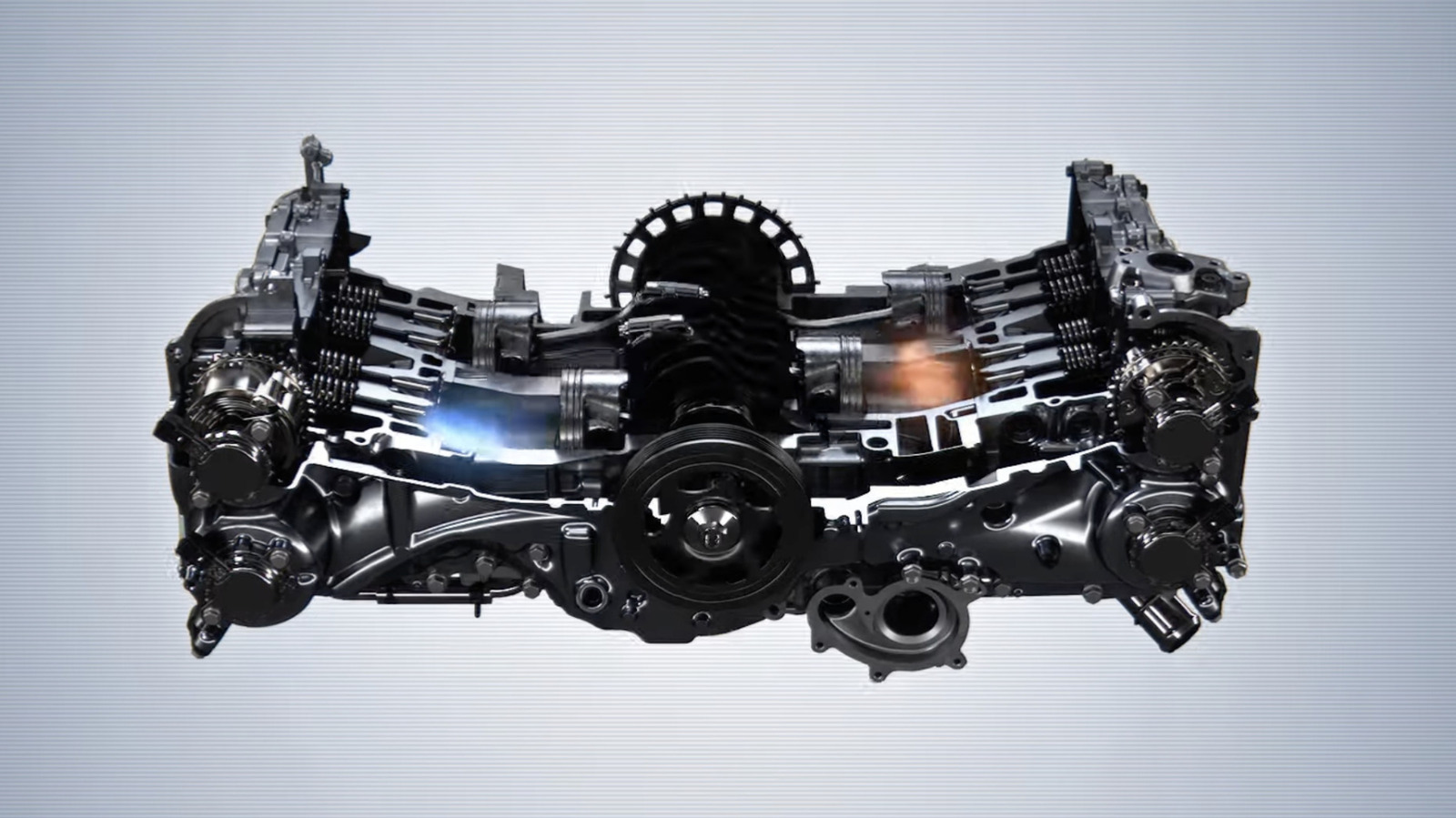
What are flat engines, actually? In flat engines, the cylinders are laid out horizontally, with each pair facing the other on opposite sides of the crankshaft. When one piston fires outward, the one across from it fires at the same time in the opposite direction — kind of like how two boxers throw punches at each other. In fact, that’s where their alternate name, boxer engine, comes from, and it’s a different mechanism from inline engines where all pistons move straight up and down in a single row and take turns firing. Whether it’s actually better than traditional inlines is a different argument altogether, and it doesn’t exactly have a definitive answer.
How do they compare?
Before we get started, there’s a subtle important distinction worth knowing. While people use flat and boxer interchangeably, they’re technically not the same. While every boxer engine is a flat engine, not every flat engine is a boxer — and it’s all to do with differences in the crankshaft. In a true boxer, each piston gets its own individual crankpin, so opposing pistons mirror each other’s movements perfectly. Meanwhile, in a non-boxer flat engine, opposing pistons share a single crankpin.
The main advantage offered by a boxer engine is balance. Because the horizontally opposed pistons constantly counteract each other, vibration basically cancels itself out. Horizontally sitting cylinders also mean the engine has a flatter profile, which is also why they’re called flat engines, and that profile allows the engine to sit lower in the car. As a result, the car’s center of gravity drops, giving the driver noticeably better handling and stability around corners. There’s a safety angle too; in a frontal collision, the low mounting position lets the engine slide underneath the cabin. In inlines, it can get pushed into the cabin.
Non-boxer flat engines aren’t being produced anymore, so every flat engine you’ll find in a new car today is, in fact, a boxer. Even so, they aren’t exactly the most popular engine design when compared to an inline. In fact, Subaru and Porsche are the only two major manufacturers that still use them today.
The practicality angle
Inline engines win on practicality, though. Their single-row cylinder arrangement doesn’t need the extra components a boxer engine requires, like two separate cylinder heads and two valve trains. This translates to less complexity and, in turn, lower manufacturing costs. They also tend to produce stronger torque, thanks to the longer stroke.
Boxers also lose out on accessibility. Working on them can be a pain because the cylinder heads sit right up against the sides of the engine bay. As a result, repairs tend to run costlier. Even something as simple as swapping spark plugs can turn into a whole project. Moreover, the wider profile of any flat engine can also limit where it fits in a vehicle’s architecture. Inline engines don’t have that problem. They’re slimmer, more straightforward to service, and their parts are generally cheaper to replace.
Of course, boxer engines are known for their reliability too, so you won’t need to get under the hood very often. If driving feel is what matters most to you, the low centre of gravity and natural balance of a boxer are hard to match, and it’s a big part of why Porsche has stuck with the flat-six engine for so long. So there isn’t really a definitive winner here. It just depends on what matters to you most. That could either be the driving dynamics or the long-term cost of ownership.
You must be logged in to post a comment Login