In recent years, people have been increasingly looking for new ways to form platonic connections, as loneliness and social isolation have become more prevalent.
In 2023, the U.S. Surgeon General went so far as to label this issue a public health crisis. Remote workers, who miss the everyday interactions found in an office, and younger individuals eager to create their adult social circles based on shared interests and hobbies, are among those seeking meaningful friendships.
Thanks to online dating apps, the stigma associated with finding connections online has largely faded away. This has welcomed a new wave of apps focused on fostering friendships and building local communities.
According to estimates from Appfigures, over a dozen local-focused friendship apps have collectively generated approximately $16 million in consumer spending in the U.S. so far this year. Some notable examples include Timeleft, Meet5, and Bumble’s BFF. Additionally, these apps have garnered approximately 4.3 million downloads thus far in 2025.
Advertisement
The apps aim to provide a less awkward solution than, for instance, approaching a stranger at the gym or local café and trying to strike up a conversation. These platforms clearly indicate that everyone using the app is looking for the same thing — friendship, not romance — making it much less intimidating to initiate conversations.
From major players like Meetup to newer ones like 222, there are plenty of apps that cater to the growing demand for meaningful friendships. We’ve compiled a list of them for you to try out.
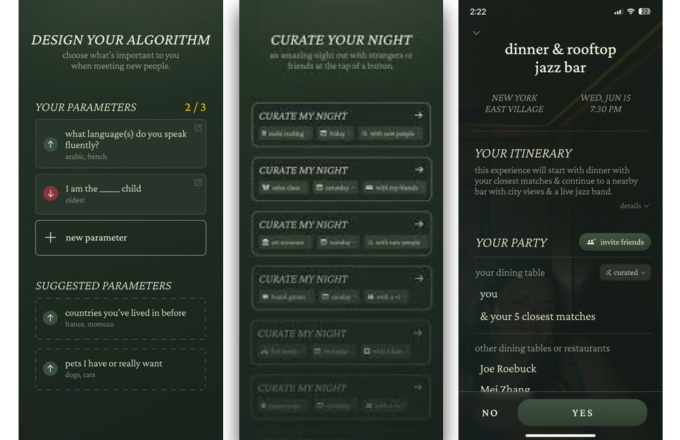
222
Image Credits:222 (screenshot)
The app 222 is an iOS-only social events platform that facilitates in-person meetups by pairing a group of strangers based on their personality test results. The app sends invitations to nearby public social events, such as wine bars and comedy clubs. There is then a vetting process, and selected participants are notified on the day of the event. A bonus for those who feel socially anxious: You’re allowed to bring a plus-one.
Techcrunch event
San Francisco, CA | October 13-15, 2026
Advertisement
The service charges a $22.22 curation fee or a monthly subscription for the same price.
BFF
Image Credits:Bumble
Dating giant Bumble is among the more established players to enter the friendship space, launching its friend-finding feature in 2016, which then spun out into a stand-alone app in 2023. The friend-making app has recently undergone a significant redesign, with an increased emphasis on facilitating group meetups, catering to users’ desires to grow their social circles.
BFF is available for free download on iOS and Android devices.
Advertisement
Clyx
Image Credits:Clyx
Clyx is another emerging app in the group-based social networking landscape, with a strong focus on discovering local events. The social platform helps users find community events by integrating data from platforms like Ticketmaster and TikTok. Additionally, Clyx allows users to upload their contact lists, helping them see which events their friends plan to attend. The app also includes a feature that recommends other users to connect with at these events.
As of now, Clyx operates exclusively in two cities: Miami and London. However, it has plans to expand to additional areas in the near future, with New York City and São Paulo at the top of the list. The app is available on the App Store and Google Play Store.
Les Amís
Image Credits:Les Amis
Les Amís is a friendship app tailored for women, transgender, and LGBTQ+ individuals that leverages AI to match users based on similar interests and encourages participation in local events, such as pottery classes, book clubs, and wine tastings. Matches are made every Monday, allowing users to chat and plan meetups later in the week.
Available on iOS and Android, Les Amís serves cities across Europe, including Amsterdam, Barcelona, Berlin, Madrid, Paris, and Stockholm. In the U.S., the app is available in Austin and New York, with plans to expand to Boston, Miami, and Los Angeles.
The app uses a paid membership model that varies by city, with fees of $70 in New York and €55 in Amsterdam.
Meetup
Image Credits:Meetup
The local event-discovery platform has been around since 2002, helping millions of users connect with others who share similar interests. Users can RSVP to events; join groups that cater to a variety of hobbies, professions, or social causes; and create their own groups and events. They can also chat with group members and post updates and photos from gatherings.
Meet5
Image Credits:Meet5
This European community-building app recently launched in the U.S., targeting users over 40 who want to meet new people in their area and participate in group activities such as picnics, concerts, and hiking. Notably, in a short time, there have been around 777,000 U.S. downloads so far across the App Store and Google Play Store, according to Appfigures estimates.
Pie
Image Credits:Pie
Pie is another one of the newer social apps on the market. It features an AI-driven quiz designed to predict which users are most likely to be compatible with each other. Each person who RSVPs to a Pie event takes a brief personality assessment, and the algorithm organizes attendees into groups of six, who are then added to a group chat within the Pie app, allowing them to interact with each other before the event.
Currently, the app is only available in Austin, Chicago, and San Francisco. Users can download Pie from the App Store and Google Play Store.
Advertisement
Timeleft
Image Credits:Timeleft
Timeleft is a relatively new platform that helps you organize weekly dinner dates with groups of strangers. The app uses a special algorithm to match you with others, taking into account your age, gender, and personality. Users are matched with four other people, but they only learn minor details about them the night before, including their occupations and zodiac signs.
Dinners take place at a selected restaurant on Wednesday evenings at 7:00 p.m. To help everyone break the ice, the app offers a game with conversation starters. After dinner, there is an after-party at a local bar.
Users can book dinners online or through the app. In terms of pricing, it varies depending on the country and restaurant. Users pay for a ticket up front and are responsible for covering their own dinner and drinks.
Washed Up
Image Credits:Washed Up
Washed Up is a social event discovery app that launched in early 2026, designed for people in the Los Angeles area who want an easier way to find things to do and meet new people.
The app helps users discover local events, such as concerts, trivia nights, and comedy shows, while also giving them a built-in way to connect with others who plan to attend. Instead of going to events alone, users can create or join “plans,” which are small group meetups tied to specific events. Users can browse these plans and request to join, chat with the group, and add new friends, making it easier to show up to events with people rather than by themselves.
Wyzr Friends is an activity-based friendship app designed for adults 40 and older, catering to empty nesters, those who are divorced, and other users seeking to connect with like-minded individuals. Users can thumbs up or down potential friends and arrange in-person activities based on shared interests, such as going to the movies or hiking.
It’s available on iOS and Android devices in the U.S., Canada, Australia, Ireland, the Philippines, Singapore, and Mexico.
Mmotion
Image Credits:Mmotion (Image has been modified)
Mmotion is a newly launched friendship app that blends location tracking with social discovery to help users connect with people nearby and explore new bars and restaurants in their area. Upon joining, users can participate in interest-based groups — such as hiking, basketball, or art — view a map of active users, and send messages to those nearby. The app also highlights new places on the map, making it easy to find a restaurant or venue to try.
Mmotion is currently only available to users in New York City on iOS and Android devices. Users must first submit an application to be considered.
Need something new for your reading list? This week, we recommend A.D. Sui’s The Iron Garden Sutra, a meditative horror sci-fi/fantasy and murder mystery.
I don’t typically gravitate toward locked room mysteries, but the description of this book ticked all the right boxes to win me over: “a death monk and a team of researchers trapped onboard a spaceship of the dead encounter something beyond human understanding.” It has all the makings of a compelling murder mystery, which is fine on its own, but thanks to the philosophical musings of its main character, Vessel Iris, and a setting that almost demands existential contemplation, it becomes something much deeper.
Vessel Iris is a monk some time in the far future whose mission is to perform funeral rites for the dead so their souls may reach their ultimate destination, according to the beliefs of his religion, the Starlit Order. “Vessels” like Iris share their mind with an AI companion, which creates a really interesting dynamic for the reader, as there is a constant dialogue going on between the two from the start (carrying a tone that sometimes verges on “old married couple,” which I quite enjoyed). Iris shows up to an ancient ship called the Counsel of Nicaea expecting to perform his duties for the long-deceased on board and instead finds himself facing a group of researchers who are very much not dead — and a jumbled mess of bones from the hundreds of bodies they disturbed by moving, which he’ll have to sort in order to properly bless.
Despite being a ghost ship in most respects, it turns out the Nicaea is alive with vegetation and gardens that would have once supported the humans that lived there. And, there’s seemingly something else, as Iris’ AI begins to pick up strange pings from a presence on the ship, and one by one the team of researchers starts getting picked off. As everything unravels, Iris begins to question his faith and his purpose.
This was such a great read, and I was excited to learn it’s the first in a two-book series, The Cosmic Wheel series. Fans of horror sci-fi/sci-fantasy should definitely check this one out.
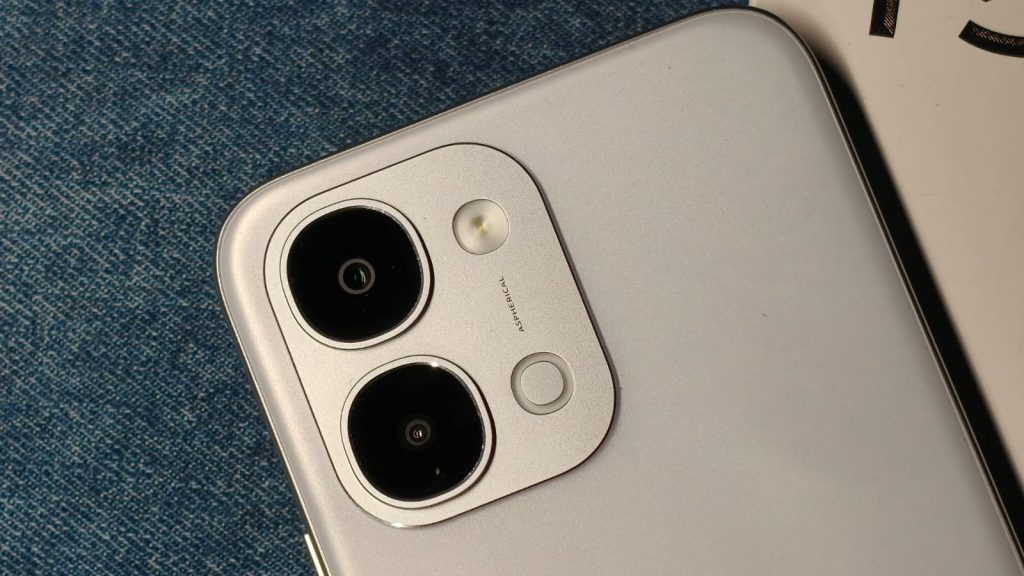
vivo has just taken the covers off the design of the upcoming vivo T5x, which is set to bring some major upgrades for the T-series lineup. And we have it with us, currently testing what the phone can do. We can’t talk about the performance or camera samples just yet, but we can talk about the design and show you how it looks in person.
vivo has confirmed that the T5x 5G will launch in India on March 17 at 12 PM IST. After the official announcement, the smartphone will be available for purchase through Flipkart, the vivo India online store, and authorised offline retail outlets across the country.
Design & Hardware
The T5x follows vivo’s recent language, with a camera island on the back, albeit smaller. It’s a comfortable phone to use day to day, and I do like the matte finish very much since it doesn’t attract fingerprints.
The front houses a fairly sizeable full HD+ display that’s plenty sharp for everyone and even stays readable in direct sunlight. The phone will also have IP68 and IP69 ratings, meaning you can technically submerge it underwater and be fine.
Optics will be handled by a 50 MP Sony main camera sensor with Electronic Image Stabilisation and the ability to capture 4K videos. We’ve taken the T5x cameras for a spin, and they seem plenty decent. Though you should wait for our full review, it’ll drop next week after the launch.
Advertisement
Battery & Performance
The biggest highlight of the vivo T5x is obviously the 7,200 mAh battery. vivo says it’s the biggest in the segment and should last multiple days on a charge. We can’t really say much about that claim, but the phone also has 44W fast charging.
The new vivo T5x 5G will have a new MediaTek Dimensity 7400 Turbo processor. The processor should deliver smooth performance for daily tasks and gaming, and the Chinese smartphone maker is currently advertising an AnTuTu score of over one million.
On the software side, the vivo T5x 5G will run OriginOS 6 based on Android 16. This new version is designed to deliver smoother navigation and improved performance. Users can also expect more customization features and a cleaner interface.
Expected Price in India
vivo plans to bring the phone to India with an expected price under ₹23,000. The phone will target the mid-range segment where strong performance and large batteries attract buyers. Furthermore, vivo will launch the smartphone on March 17 at 12 PM IST, and customers can buy it through Flipkart, the official vivo India website, and offline stores.
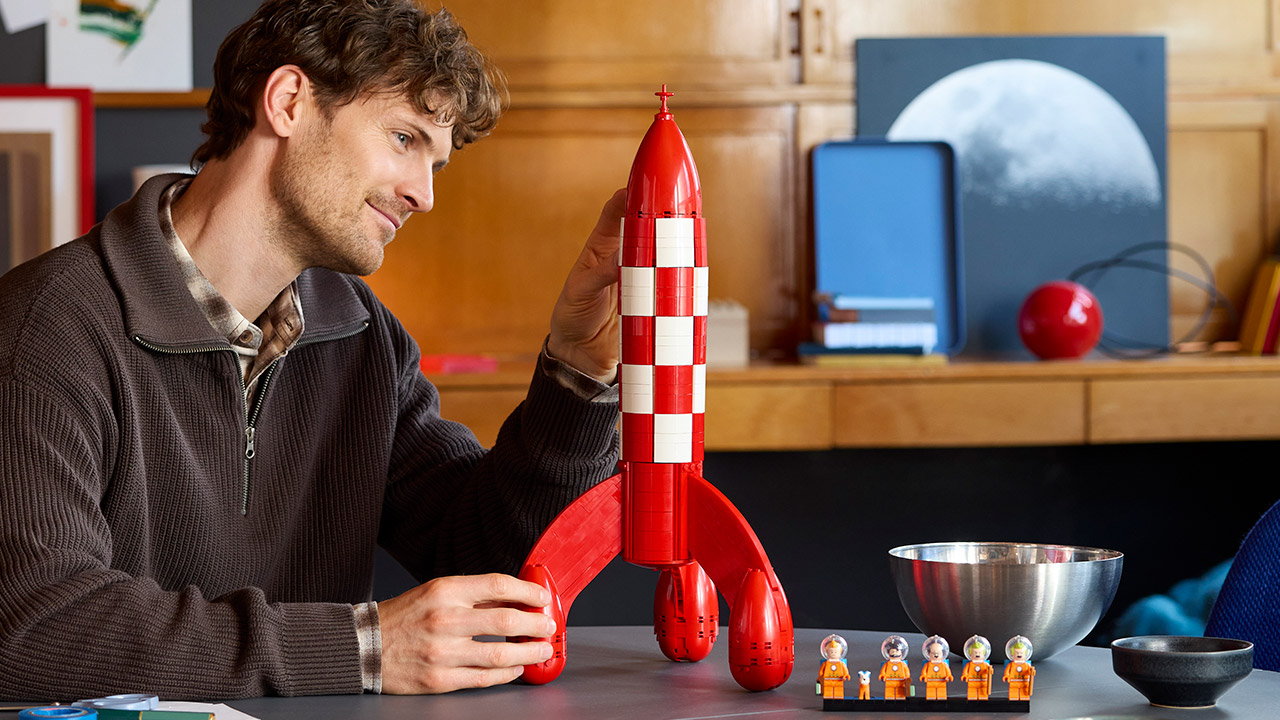
Tintin fans who grew up reading comic book pages late into the night can now hold his iconic Moon Rocket (set 21367) in their hands, a complete replica built from the ground up with bricks. This finished LEGO Ideas model is made up of over 1,283 pieces, and clearly aimed at adult fans, specifically those aged 18 and up.
Once fully assembled, the rocket stands nearly 50 centimeters tall, stretches 20 centimeters from nose to tail, and spreads 23 centimeters across its base. Every inch of it is wrapped in the iconic red and white checkered panels straight out of the original Tintin comics, instantly recognizable to anyone who grew up with the moon adventure stories.
RELIVE CHILDHOOD MEMORIES – Spark nostalgia with the LEGO Minifigure Vending Machine (21358) building blocks for adults 18 years and up
LEGO COIN-OPERATED ACTION – Builders can construct their own vending machine, then drop a LEGO coin element in the slot and turn a handle that…
16 LEGO MINIFIGURES – Build characters from classic LEGO themes including Castle, Paradisa, and Fabuland, as well as 4 fan-selected minifigures, a…
Six crew members are packed inside and ready to go, with Tintin at the helm, dressed in a full space suit with a helmet and oxygen tank attached to his back. Captain Haddock stands immediately alongside him, dressed in same gear, and Professor Calculus wears his helmet with a contemplative expression. Thomson & Thompson, the detective pair, follow suit (pun intended), wearing identical clothes and, you guessed it, the same brilliant green hair coming out from behind their visors, plus there’s Snowy, a separate molded figure who doesn’t require a helmet because, well, he’s a dog. One panel near the top of the nose cone detaches with the touch of a button, revealing a little control room hidden up there, and of course, any minifigure can occupy that spot to recreate the precise moment the crew notices the Earth drifting in the distance.
The design comes from a Portuguese fan known as TKel86 on the official LEGO Ideas platform, and looking at his early sketches it’s clear he had something far more ambitious in mind at first, complete with launch towers and desert bases. What survived the journey from concept to shelf is arguably better for it though, a clean and focused interpretation that lets the rocket speak for itself.
The minifigures sit at a satisfyingly accurate scale, and some clever building techniques give the whole structure a beautiful gentle curve that you wouldn’t necessarily expect from a LEGO set. The individual floors lock together snugly too, so there’s no risk of the whole thing coming apart in your hands. It’s available to order right now and hits shelves on April 1st, priced at $159.99 in the United States with regional pricing available elsewhere.
Plug-in (or “balcony”) solar panels can also be hung out a window or be set up in a backyard, reports NPR. They channel energy from the sun straight into a home’s electrical outlet, generating enough electricity to power a refrigerator or microwave while “displacing electricity that otherwise would come in from the grid…”
But what’s holding up their adoption in America?
For the panels to become more widely available in the U.S., state lawmakers are proposing bills that eliminate complicated utility connection agreements, which are required for larger rooftop solar installations and, most utilities say, should apply to plug-in solar too. Those agreements, along with permitting and other installation costs, can double the price of solar panels. Utah enacted the first law, last May, supporting plug-in solar, and now some 30 pieces of similar legislation have been introduced around the United States. [And Virginia seems poised to pass a similar law.]
But the drive toward plug-in solar is facing pushback from electric utilities. They are raising safety concerns and prompting legislators to delay votes on the bills. So far, utilities have won over lawmakers in five states and convinced them to delay votes on plug-in solar bills… Plug-in solar advocates say that safety concerns about the new technology have been addressed and that utilities are really just worried about losing business, because every kilowatt-hour generated by a plug-in solar panel is one less the utility sells to a customer… There are safety risks with any electrical appliance, and it’s true that plug-in solar panels present some unique problems. But safety experts also say those issues can be managed….
Advertisement
German utilities expressed many of the same concerns nearly a decade ago when plug-in solar started to become popular in Germany. But with more than a million systems installed, no safety incidents have been reported for customers who used the panels as instructed, according to a research paper funded by the U.S. Department of Energy.
Samsung Display could soon begin producing screens for Apple’s long-rumored foldable iPhone, with a new leak pointing to a manufacturing ramp beginning in mid-2026.
Render of a folding iPhone
The timeline posted on Weibo by Instant Digital matches earlier analyst estimates and fits Apple’s usual production window for a fall iPhone launch. A May panel ramp would align with Apple’s typical iPhone production schedule. Apple usually increases manufacturing during the summer ahead of its fall iPhone launch window. Rumor Score: 🤔 Possible Continue Reading on AppleInsider | Discuss on our Forums
Getting 1TB of storage on the MacBook Neo is possible, assuming you have skill in micro soldering, the ability to remove the chip, and disdain for Apple’s warranty.
MacBook Neo teardown. Image credit: DirectorFeng
Apple introduced MacBook Neo on March 4 as its most affordable notebook, starting at $599 with 256GB of storage. It uses the same A18 Pro chip found in the iPhone 16 Pro models and includes 8GB of unified memory. The company offers the 13-inch system with either 256GB or 512GB of storage. And that’s it. There aren’t any larger options, and the chip is not socketed like it is in the Mac mini or Mac Studio. Continue Reading on AppleInsider | Discuss on our Forums
There may have been some extra incentive for the Trump administration to get the TikTok US deal done. According to a report from The Wall Street Journal, the Trump administration is set to receive a total of $10 billion in the deal that allowed TikTok to remain in the US. The new investors who acquired stakes in the US entity of TikTok already paid a $2.5 billion fee to the administration when the deal closed in January, but WSJ‘s latest report noted that the group of investors would continue to make payments until the total hits $10 billion.
After a group of investors, which includes Oracle along with the Silver Lake and MGX investment firms, acquired stakes in the US-based TikTok entity called TikTok USDS Joint Venture, the WSJ previously reported that the administration would receive a “multibillion-dollar fee” for its work on the deal. To better contextualize the recently-revealed $10 billion fee the Trump administration is receiving, the US entity of TikTok was valued at $14 billion by Vice President JD Vance.
The Trump administration has previously involved itself in major deals with other US corporations. Last year, the administration invested $8.9 billion into Intel and received a nearly 9 percent equity stake. In terms of unprecedented windfalls, the Trump administration also received a Boeing 747-8 as a gift from the Qatari government in May.
Long-timetechjournalistCliveThompson interviewed over 70 software developers at Google, Amazon, Microsoft and start-ups for a new article on AI-assisted programming. It’s title?
Published in the prestigious New York Times Magazine, the article even cites long-timeprogrammingguruKent Beck saying LLMs got him going again and he’s now finishing more projects than ever, calling AI’s unpredictability “addictive, in a slot-machine way.”
In fact, the article concludes “many Silicon Valley programmers are now barely programming. Instead, what they’re doing is deeply, deeply weird…”
Advertisement
Brennan-Burke chimed in: “You remember seeing the research that showed the more rude you were to models, the better they performed?” They chuckled. Computer programming has been through many changes in its 80-year history. But this may be the strangest one yet: It is now becoming a conversation, a back-and-forth talk fest between software developers and their bots…
For decades, being a software developer meant mastering coding languages, but now a language technology itself is upending the very nature of the job… A coder is now more like an architect than a construction worker… Several programmers told me they felt a bit like Steve Jobs, who famously had his staffers churn out prototypes so he could handle lots of them and settle on what felt right. The work of a developer is now more judging than creating…
If you want to put a number on how much more productive A.I. is making the programmers at mature tech firms like Google, it’s 10 percent, Sundar Pichai, Google’s chief executive, has said. That’s the bump that Google has seen in “engineering velocity” — how much faster its more than 100,000 software developers are able to work. And that 10 percent is the average inside the company, Ryan Salva, a senior director of product at the company, told me. Some work, like writing a simple test, is now tens of times faster. Major changes are slower. At the start-ups whose founders I spoke to, closer to 100 percent of their code is being written by A.I., but at Google it is not quite 50 percent. The article cites a senior principal engineer at Amazon who says “Things I’ve always wanted to do now only take a six-minute conversation and a ‘Go do that.” Another programmer described their army of Claude agents as “an alien intelligence that we’re learning to work with.” Although “A.I. being A.I., things occasionally go haywire,” the article acknowledges — and after relying on AI, “Some new developers told me they can feel their skills weakening.”
Still, “I was surprised by how many software developers told me they were happy to no longer write code by hand. Most said they still feel the jolt of success, even with A.I. writing the lines… ”
Advertisement
A few programmers did say that they lamented the demise of hand-crafting their work. “I believe that it can be fun and fulfilling and engaging, and having the computer do it for you strips you of that,” one Apple engineer told me. (He asked to remain unnamed so he wouldn’t get in trouble for criticizing Apple’s embrace of A.I.) He went on: “I didn’t do it to make a lot of money and to excel in the career ladder. I did it because it’s my passion. I don’t want to outsource that passion”… But only a few people at Apple openly share his dimmer views, he said.
The coders who still actively avoid A.I. may be in the minority, but their opposition is intense. Some dislike how much energy it takes to train and deploy the models, and others object to how they were trained by tech firms pillaging copyrighted works. There is suspicion that the sheer speed of A.I.’s output means firms will wind up with mountains of flabbily written code that won’t perform well. The tech bosses might use agents as a cudgel: Don’t get uppity at work — we could replace you with a bot. And critics think it is a terrible idea for developers to become reliant on A.I. produced by a small coterie of tech giants.
Thomas Ptacek, a Chicago-based developer and a co-founder of the tech firm Fly.io… thinks the refuseniks are deluding themselves when they claim that A.I. doesn’t work well and that it can’t work well… The holdouts are in the minority, and “you can watch the five stages of grief playing out.” “How things will shake out for professional coders themselves isn’t yet clear,” the article concludes. “But their mix of exhilaration and anxiety may be a preview for workers in other fields… Abstraction may be coming for us all.”
It’s Pi Day, and while we know that many of you celebrate privately, those that take a moment to put aside their contemplation of all things circular and join us on this mathematically-significant day will likely know the name [Cristiano Monteiro]. Since 2022 he’s made it a yearly tradition to put together a themed project every March 14th, and he’s just put the finishing touches on the 2026 edition.
Generally, [Cristiano] sends in some interesting hardware device that visualizes the calculation of pi, but this year he surprised us a bit by delivering a software project. His Orbital Pi Simulator allows you to see what would happen to an orbiting spacecraft if it’s navigation system suddenly believed the value of pi was something different.
In broad strokes, we can imagine what would happen. If you plug in something significantly higher than 3.14, the orbit becomes elliptical to the point that the craft can fly off into deep space. Drop the value down, and the orbit will intersect with the Earth — a guaranteed recipe for a bad time.
The Kerbal Space Program players in the audience will no doubt point out that in the absence of drag a spacecraft in a stable orbit would more or less stay on that same trajectory indefinitely and not need to manually adjust its velocity in the first place. Further, they would argue that said spacecraft suddenly firing its thrusters retrograde because a flipped bit in its computer resulted in the value of pi suddenly being 1.2 isn’t very realistic. Those people would be correct, but they would also be no fun at parties.
Looking for the most recent Strands answer? Click here for our daily Strands hints, as well as our daily answers and hints for The New York Times Mini Crossword, Wordle, Connections and Connections: Sports Edition puzzles.
Today’s NYT Strands puzzle is fun and timely, relating to a certain big ceremony held this weekend. Some of the answers are difficult to unscramble, so if you need hints and answers, read on.
If that doesn’t help you, here’s a clue: The envelope, please.
Clue words to unlock in-game hints
Your goal is to find hidden words that fit the puzzle’s theme. If you’re stuck, find any words you can. Every time you find three words of four letters or more, Strands will reveal one of the theme words. These are the words I used to get those hints but any words of four or more letters that you find will work:
RATE, RATED, DATE, DOTE, DATED, DOTED, GATE, GATES, TROD, TRODS
Answers for today’s Strands puzzle
These are the answers that tie into the theme. The goal of the puzzle is to find them all, including the spangram, a theme word that reaches from one side of the puzzle to the other. When you have all of them (I originally thought there were always eight but learned that the number can vary), every letter on the board will be used. Here are the nonspangram answers:
SONG, ACTOR, ACTRESS, SOUND, DIRECTOR, PICTURE
Today’s Strands spangram
The completed NYT Strands puzzle for March 15, 2026.
NYT/Screenshot by CNET
Today’s Strands spangram is ACADEMYAWARD. To find it, start with the A that’s five letters down on the farthest-left row, and wind over and up.
























 In broad strokes, we can imagine what would happen. If you plug in something significantly higher than 3.14, the orbit becomes elliptical to the point that the craft can fly off into deep space. Drop the value down, and the orbit will intersect with the Earth — a guaranteed recipe for a bad time.