
TL;DR
ASML is cutting EUV build cycle from 22 weeks to 15-16 weeks. Nearly sold out for 2027, substantial 2028 orders. Raised guidance to €43-45B. 30% capacity boost planned.

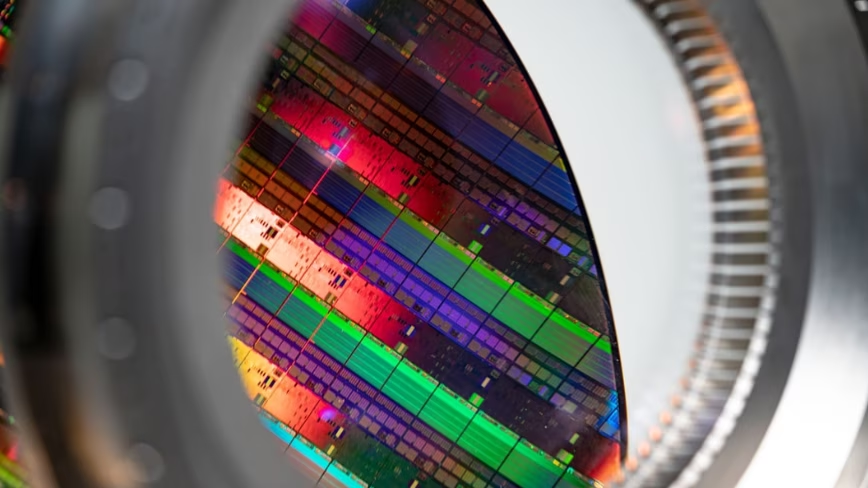
ASML is cutting EUV build cycle from 22 weeks to 15-16 weeks. Nearly sold out for 2027, substantial 2028 orders. Raised guidance to €43-45B. 30% capacity boost planned.
ASML is working to cut the time it takes to build and test its extreme ultraviolet lithography machines by roughly a third, CFO Roger Dassen told reporters on Wednesday. The cycle time, the period between starting production in ASML’s clean rooms and shipping, was about 22 weeks a few quarters ago. “We’re now looking at bringing that down to 15 to 16 weeks,” Dassen said.
The Dutch company is “close to being fully booked” for EUV machines in 2027, with a “substantial number” of orders for 2028. Dassen called it “rare” to have orders that far in advance, a signal of how aggressively chipmakers are building capacity for AI. ASML raised its full-year sales guidance to between €43 billion and €45 billion ($49.2 billion) and plans to increase capacity by 30% for 2027, while “investigating” a further 30% boost for 2028.
The company outlined plans to produce about 65 units of its low-NA EUV machines this year. To hit higher numbers, ASML is reducing testing protocols while maintaining quality, reorganising clean room cabins to dedicate all space to output rather than R&D, and working with its supply chain to remove bottlenecks. “We see opportunities to reduce the testing protocol and still maintain quality,” Dassen said. “We can crank out more tools, and customers are open to that.” AI infrastructure demand is driving long-term supply commitments across every layer of the semiconductor stack, from memory to the machines that make the chips.
EUV machines take more than a year to deliver after an order is placed, and ASML is the only company in the world that makes them. Every advanced chip from TSMC, Samsung, and Intel requires ASML’s tools. The capacity constraints mean that the pace at which AI data centres can be built is ultimately gated by how fast ASML can ship lithography equipment. The AI memory shortage is already driving up consumer electronics prices, and ASML’s production bottleneck sits one step further upstream, at the machines that make the chips that go into everything.
You must be logged in to post a comment Login