








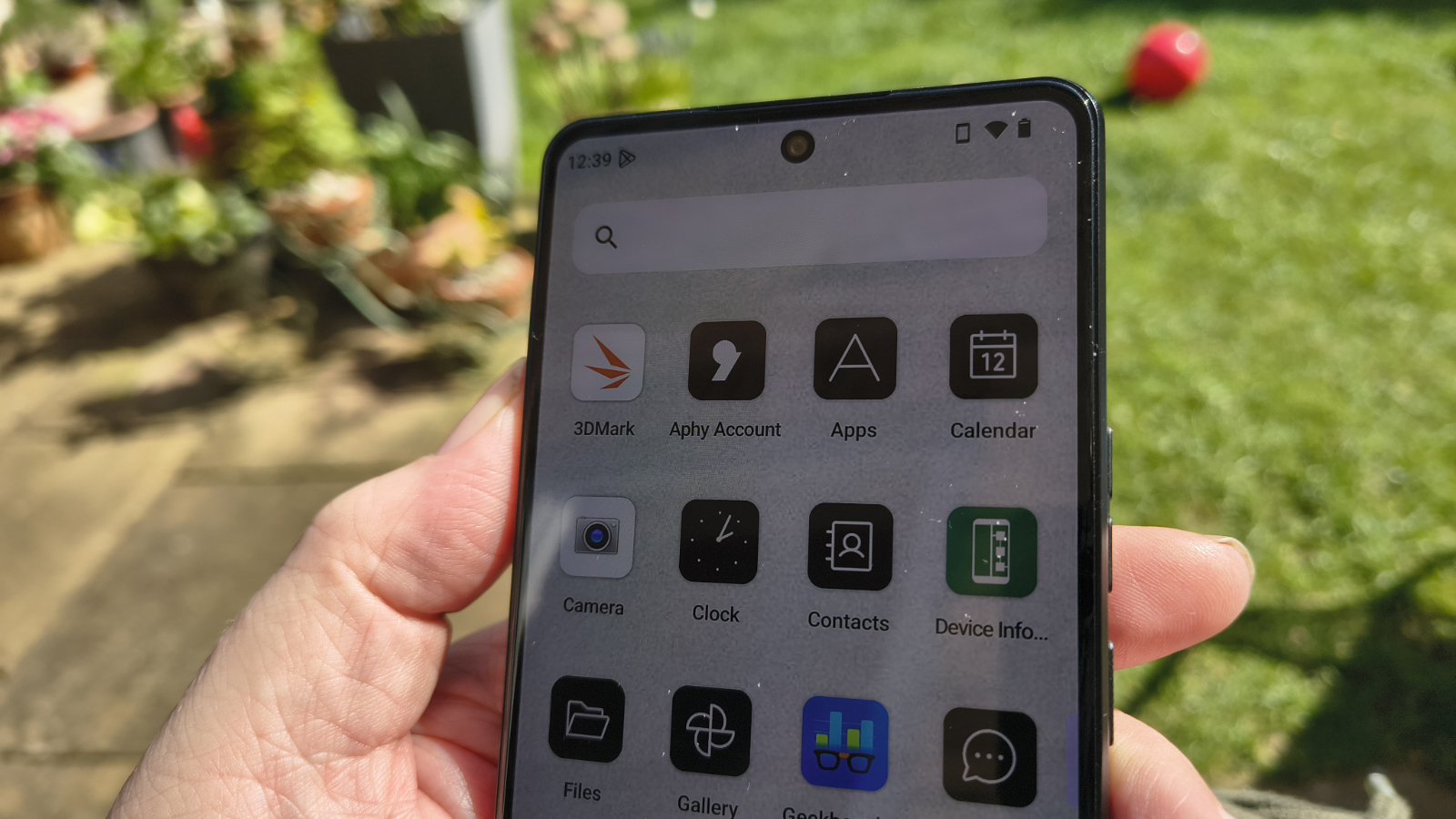
As this product isn’t available, consider this a hands-on, as between now and its release, some of the issues I’ll talk about might well be fixed.
Punkt. is a Swiss company that manufactures in Germany, and the MC03, as the name suggests, is the third iteration of its secure, minimalist phone design.
Since this device hasn’t officially launched yet, it’s way too early to say whether it is one of the best rugged phones yet.
Punkt. MC03: Price and availability
- How much does it cost? $699/£660/€699
- When is it out? On Pre-order
- Where can you get it? You can order it directly from Punkt.
Based on the most recent information, in Europe, the MC03 is on pre-order from the official site here, with the intention to ship at the end of April 2026. North American customers should be able to see this device in early Summer 2026, hopefully.
The pre-release pricing is $699/£660/€699. When exchange rates are taken into consideration, the most expensive place to buy is the UK, followed by Europe, where it’s made, and the least expensive is the USA, which has tariffs on European goods. This makes zero sense, other than perhaps the market for secure phones in the USA is greater than in Europe.
As an alternative, Google‘s Pixel phones can run GrapheneOS, and a Pixel 10 is around $650 with 12GB of RAM and 256GB of storage. And that phone has an optical zoom on its camera.

Punkt. MC03: Specs
|
Item |
Spec |
|---|---|
|
MediaTek Dimensity 7300 (MT6878), octa-core 2.5GHz |
|
|
GPU: |
Mali-G615 MC2 |
|
NPU: |
MediaTek NPU 655 |
|
RAM: |
8GB |
|
Storage: |
256GB |
|
Screen: |
6.67-inch OLED, 120Hz, HDR |
|
Resolution: |
2436 x 1080 pixels |
|
SIM: |
1x Nano SIM + eSIM + TF |
|
Weight: |
|
|
Dimensions: |
163 x 76 x 11mm |
|
Rugged Spec: |
IP68 |
|
Rear cameras: |
64MP Primary Camera + 8MP Wide + 2MP Macro |
|
Front camera: |
32MP |
|
Networking: |
5G bands, WiFi 6, Bluetooth 5.4 |
|
Bands: |
GSM 850/900/1800/1900 |
|
UMTS B1/2/5/8 |
|
|
LTE B1/2/3/5/7/8/9/18/19/20/28AB/34/38/40/41(194 MHz)/42/43(194 MHz) |
|
|
5G NR n1/3/5/7/8/20/26/28/38/40/41/77/78 (SA) |
|
|
OS: |
AphyOS (based on Android 15 / AOSP 15) |
|
Battery: |
5200 mAh removable (33W wired, 15W wireless) |
|
Colours: |
Black |
Punkt. MC03: Design
- Minimalist
- By-the-numbers layout
- Internal access and battery replacement

Punkt has always been a design company that happens to make phones rather than the other way around. The MC03 carries that forward. The aesthetic is stripped back and deliberate, favouring clean lines over the glossy excesses that dominate this market.
This device is assembled at Gigaset’s facility in Bocholt, Germany, which Punkt uses as a selling point and rightly so, given that German assembly brings with it a baseline assumption of quality control that assembly lines elsewhere do not always guarantee.
The dimensions are 163 x 76 x 11mm with a mass of just 240 grams. That is a meaningful presence in the hand and not a light phone by any measure, but it’s also significantly closer to a normal phone than those typically marketed as rugged. The IP68 rating for dust and water resistance is where it should be at this price point and covers immersion up to a metre for 30 minutes, which is the standard you would expect.
The frame is aluminium, and I suspect the display is Gorilla Glass protected, though Punkt’s own materials are somewhat vague on those specifics.
The button layout is as derivative as it gets, with the volume rocker and power button on the right, and a custom button on the left.
However, due to unresolved beta issues with AphyOS, the fingerprint reading doesn’t currently work, and there is no way to define what the custom key does. By accident, I discovered it takes a shot while using the camera, but there is no tool to adjust what it does at this time. I’m assuming that the fingerprint will be read via the power button, because I don’t see the rear sensor that the phone mentioned when I tried to use this feature.
The bottom edge of the phone has the SIM tray and USB port, which doesn’t require a rubber plug, thankfully. It’s slightly odd that there is an external SIM tray, since the entire back of the MC03 comes off, revealing the replaceable battery and the TF card slot. Since there is only one Nano SIM supported by the external slot, why this wasn’t placed inside is a mystery. You can have a second SIM by eSIM, so you can have two phone numbers and a TF card in place simultaneously.
Having a battery you can replace is certainly a great feature, especially in an IP68-rated phone, although the capacity of only 5200 mAh isn’t huge. On top of the battery is a wireless charging coil that enables the phone to charge at 15W without a cable being inserted if you have a Qi-compatible charger.

Probably the other standout feature of the MC03 is the screen, a 6.67-inch OLED with a 120Hz refresh rate, a dramatic improvement over the IPS panel the MC02 got. However, I do find a strong sense of irony in putting OLED on a phone that uses monochrome icons as part of its minimalist ethos.
Although not in the Punkt. specs, the peak brightness is around 550 nits, which is workable but not especially impressive for outdoor use in strong sunlight. OLED’s inherent contrast advantage helps considerably, and the 120Hz refresh makes the interface feel responsive rather than sluggish in a way the old panel never could. Punkt describes the display as supporting HDR, which should benefit anything streamed from Proton or accessed via the Wild Web environment.
The MC03 certainly has a love-or-hate aesthetic based on how you feel about minimalism as a design concept. While I’m not a massive fan of excessive embellishments, there isn’t much to get excited about here from a style perspective either. Because I have the view that a lack of style isn’t an actual style, in the same way that black isn’t truly a color.
But, you might think differently, and the replaceable battery is something few alternatives can match.
Punkt. MC03: Features
- MediaTek Dimensity 7300
- 5200 mAh battery
The Dimensity 7300 is such a common SoC that I must have written a sixteen-part white paper’s worth of words about this octa-core chip that uses 2x Cortex-A78 @ 2.5GHz + 6x Cortex-A55 @ 2.0GHz.
Technically, it can address up to 16GB of RAM and 512GB of storage, but on this device, you get half of that amount in each case. The issue here isn’t that the Dimensity 7300 is a poor SoC, because it’s far from that, but frankly, it’s a mid-range SoC, not something built for a premium design.
That said, I’m wondering if the sort of customer Punkt. is aiming the MC03 at will care, because it’s unlikely they’ll be running the sort of tasks that demand more performance than the Dimensity 7300 has to offer. But it should be clear that if this phone were made in China, and not Germany, the justification for its asking price would be even more contradictory than it already is.
The one advantage of using a 4nm SoC design is that it can make the battery go a long way, and with only 5200 mAh of capacity under the hood, then maybe it was the right choice.
While it is possible to change this battery, this isn’t one of those situations where you would want to buy an extra battery to carry along to swap when you need more power. Replacing the battery requires partially dismantling the phone, and the connectors aren’t designed for repeated detachment and reattachment cycles. Swapping the battery is something you might do when it doesn’t hold a charge reliably, maybe three years from now, not because you forgot to charge it up.

With a battery of this size and 33W charging, it can be recharged from empty reasonably quickly, I estimate in under two hours.
And using wireless charging, it should take about twice that timeframe. That there doesn’t appear to be a provision for reverse charging is no huge surprise on a battery of this capacity.
Punkt. MC03: Software

AphyOS, developed by the Swiss firm Apostrophy, is the entire reason the MC03 exists and the source of its most interesting commercial divergence. The operating system is built on AOSP 15, meaning the Android foundation is familiar and functional, but Apostrophy has replaced the tracking and monetisation infrastructure that normally sits on top of that foundation with its own privacy-first layer.
The most visible expression of that approach is the dual environment. The Vault is the primary home screen and contains only applications that have been vetted and approved by Punkt and AphyOS.
In practice, that means the full Proton suite, including Mail, Calendar, Drive, VPN and Pass, alongside Threema for encrypted messaging and Punkt’s own curated app selection. The interface in this environment is intentionally monochrome and minimal, which sounds austere, but the logic here is that it actively discourages the aimless scrolling that characterises most smartphone use.
The Wild Web is the second environment, accessible via a swipe, and it is where the MC03 reveals its pragmatism. Google Play is not installed by default, but users can enable it during the setup process if they wish. Third-party applications installed here operate within sandboxed environments with visible, adjustable permissions. The MC03 does not pretend the wider Android ecosystem does not exist; it simply insists that applications within it be contained and transparent about their data appetites.
Additional AphyOS features include Digital Nomad, a built-in VPN that encrypts traffic, and the Ledger, which gives per-app privacy controls ranging from full access to complete lockdown. The Ledger also includes a Carbon Reduction view showing background energy consumption by application, which is either a genuinely useful tool for the environmentally conscious or a conversation starter, depending on how you look at it.
The snag? The first twelve months of AphyOS are included with the device. After that, continued access to the full feature set costs $9.99 per month, or around $120 per year. Multi-year bundles reduce this significantly: three years of future subscription is priced at $129 (a saving of 45 per cent), and five years at $199 (a saving of 60 per cent).
Without a subscription, the phone reverts to a basic AOSP device, which means losing the Vault environment, the Proton integration, the VPN, and the managed app ecosystem.
Given the device’s relatively high cost, is this additional subscription justified?
The honest answer is that value depends entirely on your existing outgoings and your threat model. If you already pay for Proton Mail and a separate VPN service, the MC03 subscription bundles several things you are already paying for into a device-level solution.
Many Proton users pay $9.99 per month for Proton Unlimited on its own, and that does not include device-level hardening or a Threema subscription. From that angle, the MC03 subscription is competitive with the status quo rather than additional to it.
For journalists, legal professionals, medical practitioners, activists in high-risk environments, or anyone handling commercially sensitive communications, the total cost-of-ownership argument is reasonably straightforward. For a general-purpose user who mostly wants social media and a decent camera, the case is harder to make.
Punkt. MC03: Cameras

- 64MP, 8MP and 2MP on the rear
- 32MP on the front
- Four cameras in total
Rear camera: 64MP Omnivision OV64b40 Primary Sensor, 8MP GalaxyCore GC08A3 Wide Angle, GalaxyCore GC02M1 Macro
Front camera: 32MP GalaxyCore GC32E1
Let’s cut to the chase, some of these sensors are decent, others less so, the thing they all have in common is that they are inexpensive. Evidently, Punkt. doesn’t consider its core audience to be interested in photography, which is why we see Omnivision and GalaxyCore sensors across the board.
While the 64MP Omnivision OV64b40 isn’t a bad primary sensor, it’s not something I’d expect to see on a premium device, but rather on a low- to mid-tier device.
It can take some sharp photos in good light conditions, and it has ML-PDAF focusing, but it only has digital zooming, not optical, and its native 0.7μm pixels are smaller than many competitors.
But as I’ve seen more of the results of this sensor, I’ve also noticed that the dynamic range isn’t wide, and it tends to wash out bright areas too easily. Some of its deficiencies can be addressed by post-capture software processing, but I see little evidence of this on the MC03, resulting in missing detail in shadows, for example.
The redeeming aspect of this camera cluster is that it will take 4K video, even if the storage capacity of this phone isn’t ideal for doing that.
One disappointment is that Punkt. wouldn’t pay for the Widevine L1 license, only L3, so if you use the MC03 to watch streams from the likes of Disney or Netflix then the resolution will only be 480p, even if you have an HDR-rated display capable of better than 1080p.
In short, not a photographer’s phone, although it can take the odd decent image.
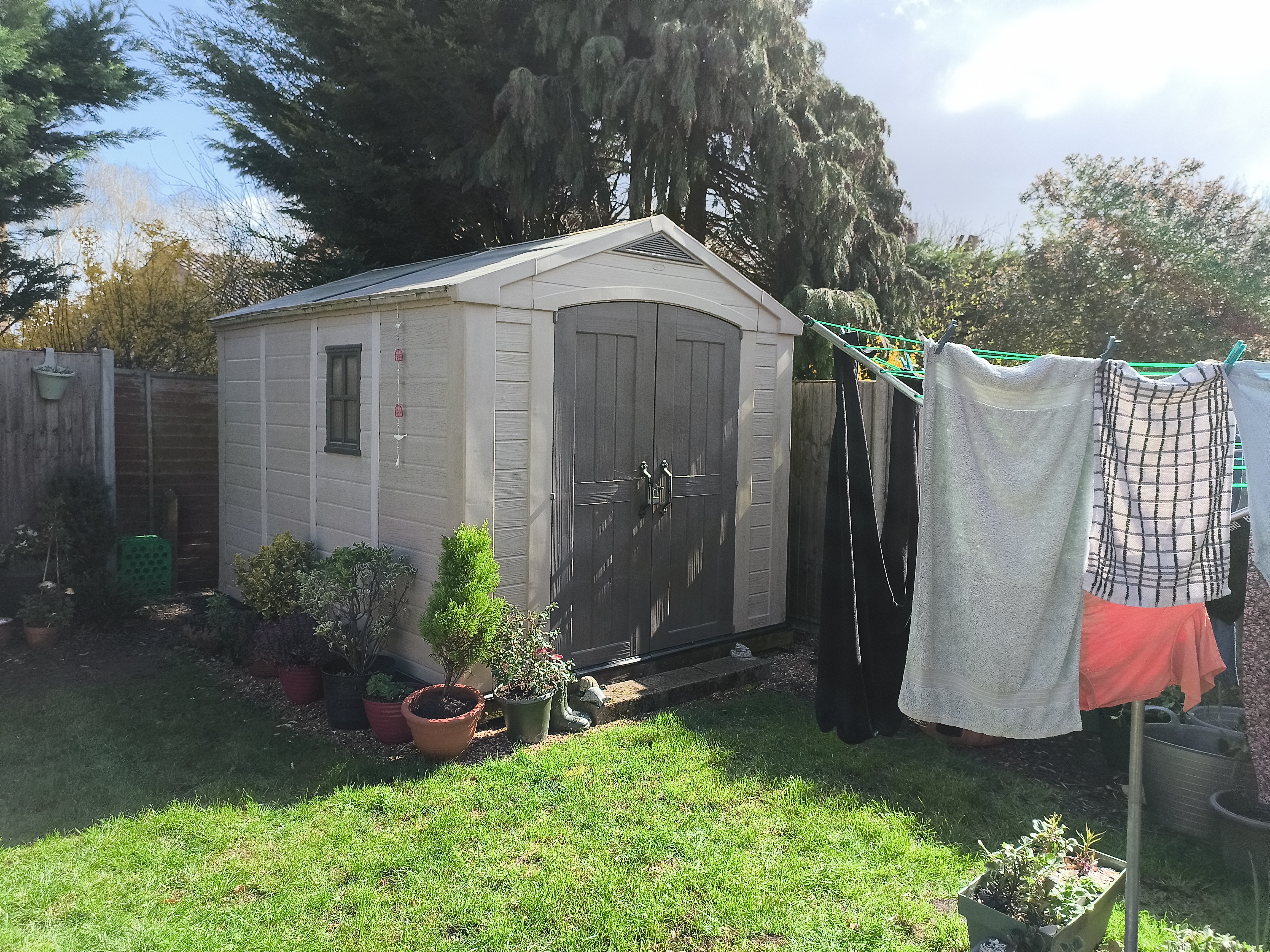
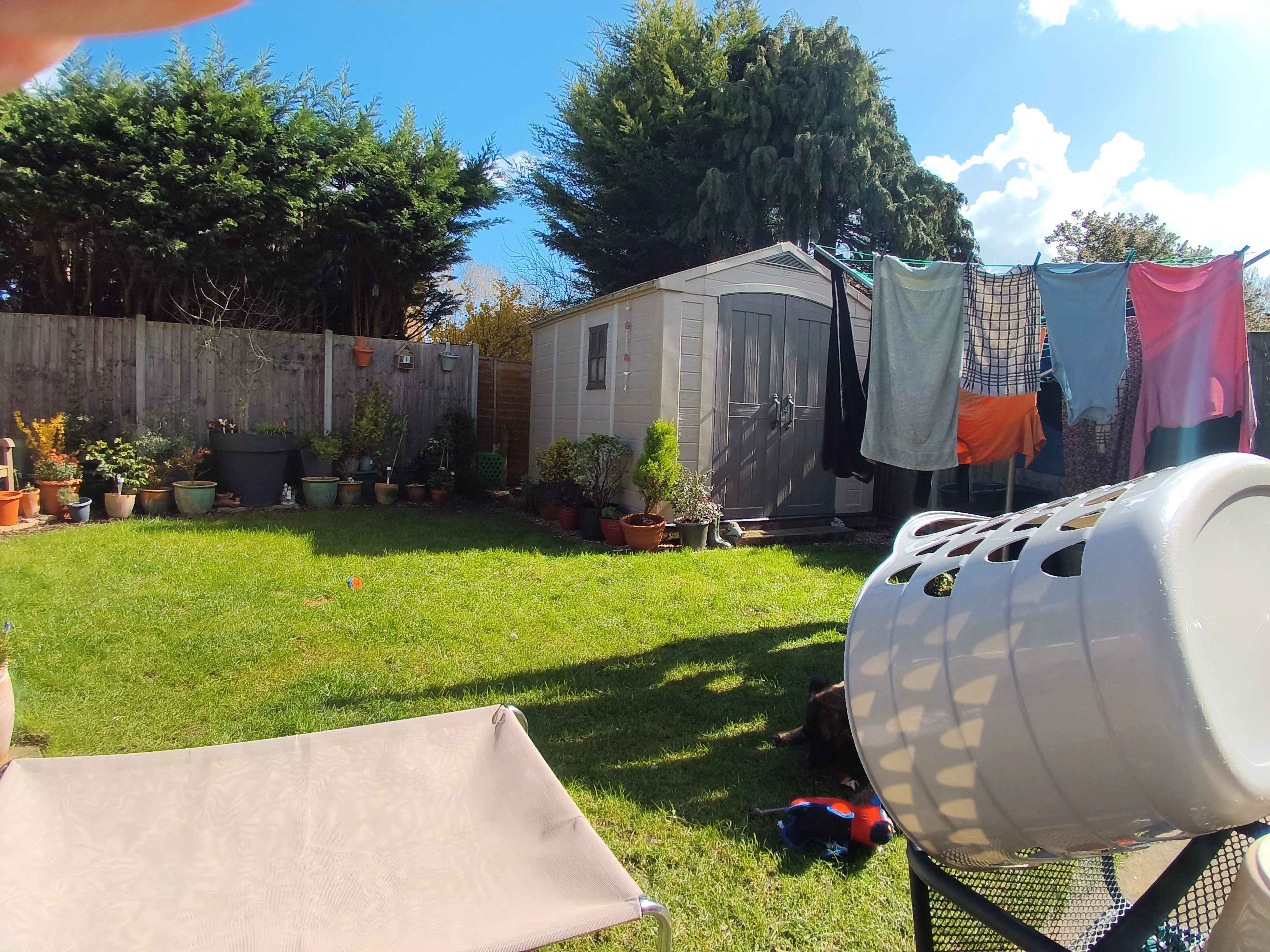
Punkt. MC03 Camera samples
Image 1 of 18









Punkt. MC03: Performance
|
Phone |
Punkt MC03 |
Motorola ThinkPhone 25 |
|
|
SoC |
MediaTek Dimensity 7300 |
Mediatek Mediatek Dimensity 7300-Ultra |
|
|
GPU |
Mali-G615 MC2 |
Mali-G615 MC2 |
|
|
NPU |
MediaTek NPU 655 |
MediaTek NPU 655 |
|
|
Memory |
8GB/256GB |
8GB/256GB |
|
|
Weight |
240g |
171g |
|
|
Battery |
5200 |
4310 |
|
|
Geekbench |
Single |
1013 |
1050 |
|
Multi |
2974 |
2998 |
|
|
OpenCL |
2481 |
2602 |
|
|
Vulkan |
2478 |
2527 |
|
|
PCMark |
3.0 Score |
13082 |
15115 |
|
Battery |
13h 15m |
14h 21 |
|
|
Charge in 30 Mins |
% |
39 |
55 |
|
Passmark |
Score |
13819 |
14125 |
|
CPU |
6912 |
7077 |
|
|
3DMark |
Slingshot OGL |
6642 |
6090 |
|
Slingshot Ex. OGL |
5188 |
5037 |
|
|
Slingshot Ex. Vulkan |
4905 |
3676 |
|
|
Wildlife |
3184 |
3185 |
|
| Row 20 – Cell 0 |
Nomad Lite |
350 |
349 |
Originally, I was going to compare this phone to the AGM G3 Pro, since it uses the same SoC, but instead, I went with the Motorola ThinkPhone 25, which also uses that platform. I could have used the Doogee V Max LR, Ulefone Armor 34 Pro or Ulefone Armor 30 Pro, as these all use it too.
As you can see from these numbers, the performance of the Dimensity 7300 is reasonably consistent irrespective of the brand of phone, and it delivers reasonable if unexciting results.
However, what I found genuinely interesting was that with less battery, 20% less, the Motorola managed to run for a little longer. That hints that when you reorganise the OS to be more secure, there might be an impact on power efficiency. And, the Motorola also charges more rapidly, because it can charge at 68W, not 33W.
But the most damning aspect of this comparison isn’t in these benchmark scores. It’s that the ThinkPhone costs only £275 in the UK (not available in the USA), and it comes with a far superior camera platform that includes an optical zoom.
Therefore, if you strip away the AphyOS part of the MC03 offering, it appears to be more than double the price that the hardware can reasonably justify.
Punkt. MC03: Early verdict

I can rationalise that some people find minimalist tech attractive, probably because of companies like Microsoft and others that overstuff their products with features their customers never asked for.
However, my experience with the MC03 didn’t make me want to embrace the ringfenced mindset behind this design for numerous reasons.
As a reviewer of this device, along with the device I was provided by the makers with a long list of critical, major and minor known problems with the MC03. Having had the phone for a month, none of these has been addressed so far, and I’ve found additional problems along the way. Considering that this phone is meant to be ready for customers at the end of April, it’s concerning that I haven’t seen a rapid succession of updates.
If I do see a bug-squashing firmware release before it is available to purchase, I’ll add a note to that effect below.
But those flaws aside, my first complaint is that this device assumes, probably because the customer bought it, that they’ve entirely bought into the Punkt. ecosystem even before they’ve used the phone.
When you run through the typical question-and-answer system of a phone initialisation, you are told to create an Aphy account, which gives you one year of free use, and then it’s a paid subscription. You don’t get to skip this and come back to it later, which I personally hated.
Then it asks you which Aphy apps you want to install, even if you have no idea which ones you want, and it won’t accept the answer ‘none of them’. Again, the same approach to the customer is blatantly to do as you are told.
I randomly picked Proton VPN, and then I discovered that while you need an Aphy account to access the app, you also have to pay extra to use it.
It’s like at every turn, this device holds its hand up and declares that where you are heading is out of bounds. A personal favourite, and not one of the documented bugs, was that I couldn’t take screenshots of my benchmark results.
It told me that either the app or my organisation had not given permission for that! Yes, that overburdening corporation I work for decided I couldn’t take screenshots, even though I’m self-employed.
I could go on, but it’s all rather tedious to recount, and it made me just want vanilla Android more than ever.
Yes, I’m sure that what Punkt. has been built is technically more secure, and reducing the app model to this form has undeniable benefits. But, as has been the complaint with previous Punkt. phones, they’re expensive and can have significant bugs that the company seems slow to fix.
Others have commented that the security credentials of AphyOS come from companies that Punkt. does business with, where alternatives like Graphene have had independent third-party appraisals. I don’t have the inside knowledge to confirm or refute that view, but it would be interesting to see what the Mythos AI, created by Anthropic, made of this platform from a vulnerability perspective.
The security angle aside, the biggest issue here is asking this much for a phone with mid-tier components and additional subscriptions for the secure apps seems to shrink the number of potential customers for the MC03. But since this company has sold enough MC01 and MC02 devices to remain in business, it must be doing enough right to have brought us the MC03.
For more options, check out our selection of the best business smartphones we’ve tested.


















































You must be logged in to post a comment Login