Tech
Astell&Kern x Volk Audio Stella IEM Review: Flagship IEM Pushes EST Detail and Luxury Build to the Limit

Astell&Kern built its reputation on high end digital audio players, but its parallel run of flagship IEM collaborations with 64 Audio, Campfire Audio, and Empire Ears has been just as important in defining the summit tier of personal audio. The new Stella continues that strategy, developed with Volk Audio following the success of the Volk Audio Etoile.
The Stella combines a restrained industrial design with tuning shaped by studio engineer Michael Graves, aiming for a more deliberate and reference focused presentation. Astell&Kern knows how to build expensive earphones. The question is whether this one does enough to justify its asking price.
About My Preferences: This review is subjective and shaped by my own listening biases, even if I try to keep them in check. My ideal sound leans toward solid sub bass, textured mid bass, a slightly warm midrange, and extended treble, though I do have mild sensitivity in the top end.
Testing equipment and standards can be found here.

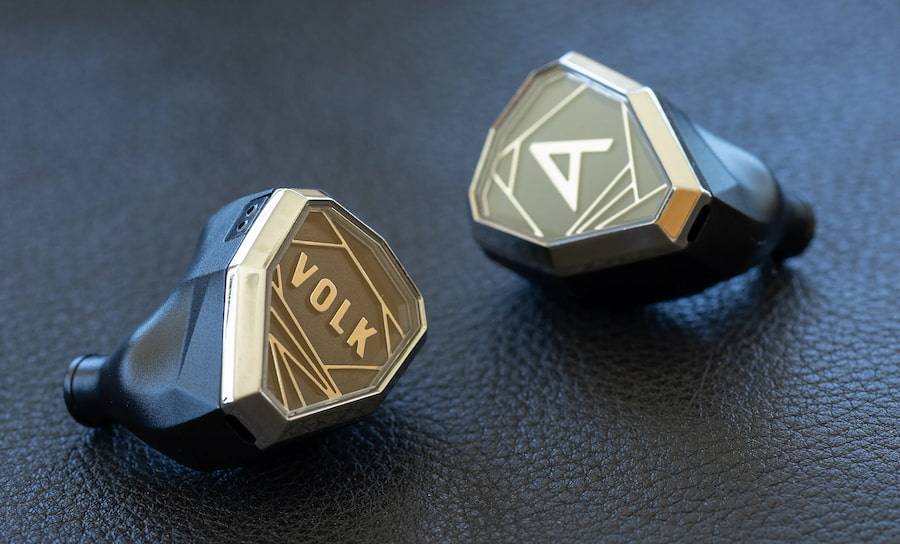
Stella IEM: Driver Configuration, Crossover Design, and Build Materials
- Driver Configuration:
- 1 x 9mm dynamic driver,
- 5 x Sonion balanced armature,
- 2 x planar,
- 4 x Sonion EST
- Crossover: 6-way
- Sensitivity: 103.8 dB SPL/mW
- Impedance: 7.17 ohms
- Cable: 0.78 mm 2-pin with 4.4 mm termination
- Materials: 6061-T6 aluminum chassis, 6061-T6 aluminum central plate, sapphire glass panel, 316 stainless steel faceplate frame
Build Quality
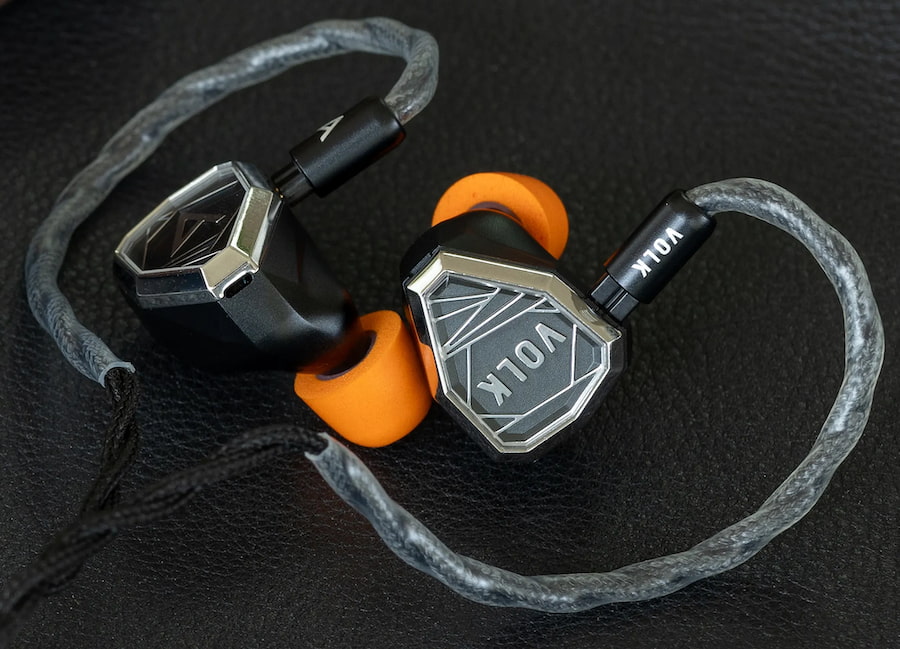
Without diving too deep into a lesson on metallurgy and material science, not all metals are created equally. Beyond process refinement and quality control, different alloys of the same metal can have wildly different physical properties. That is especially true for steel and aluminum, which are two materials commonly-found in IEMs. The Stella makes generous use of both. This IEM is one of the very few that I feel is truly built like a high-end luxury watch — the hand-feel is conspicuously similar to my Omega Speedmaster.

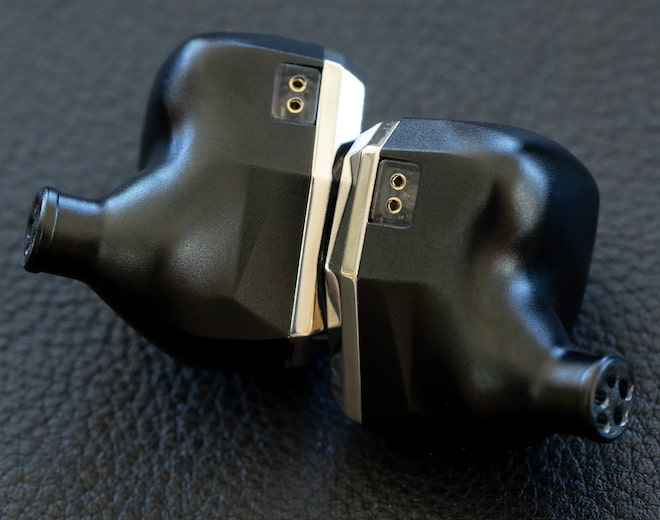
In fact, Omega and Astell&Kern use the same type of steel alloy, called Steel 316, in the Speedmaster and Stella. The rest of the faceplate uses high-grade sapphire glass, which again, is what you’d find in a pricey luxury watch. The Stella’s main chassis material is not steel, though — it’s aluminum. A&K went with a nice aluminum alloy for the Stella, opting for 6061-TG, a high-strength blend of aluminum, magnesium, and silicon. There’s a lot of practical benefits for this choice of metal, but its inherently resistant to corrosion, making it a great choice for a product that is exposed to skin oils, sweat, and the elements.
Even with a 6-way crossover, the Stella uses metal nozzles. This is a big win for durability and longevity, especially when compared to Volk’s other IEM, the Etoile, and its plastic nozzles. That said, it’s worth noting that the Stella, even with a 6-way crossover, only features 5 distinct sound tubes at the nozzle’s edge.

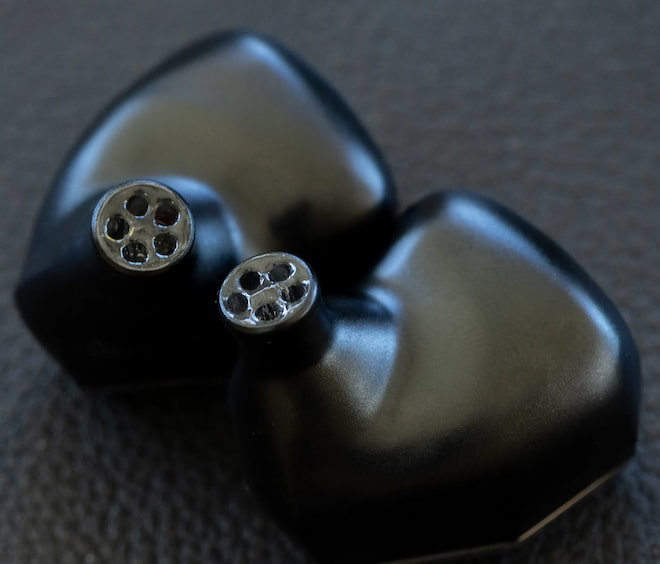
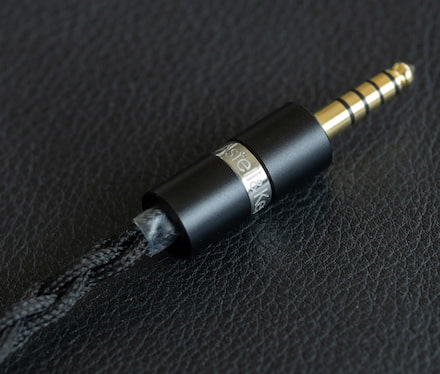
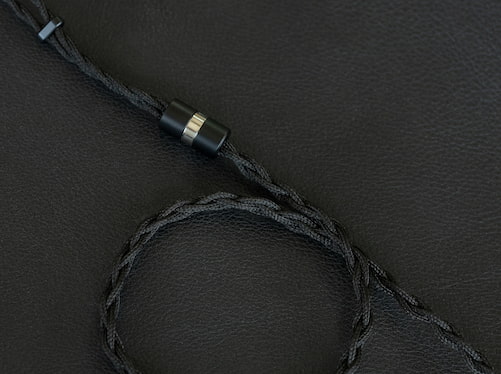
The Stella’s cable features a four-strand chain braid, coated in soft fabric. This all-black design matches the Stella’s fairly reserved and understated aesthetic, allowing owners to simply focus on listening rather than fussing over an over-developed cable. The fit and finish on the Stella is great across the board, barring a single design choice: the Stella’s cable features short 0.78mm pins. This results in a slightly looser fit at the sockets. It’s not an issue while wearing the Stella, but it becomes noticeable when pulling it out of its padded case.
I’ve had it accidentally disconnect on me a few times , which is a frustrating experience on a nearly-$4000 IEM. Aftermarket cables with properly-sized pins sit more-sturdily within the Stella’s sockets.
The Stella’s construction is among the best I’ve seen in the high-end IEM space. Handling it truly is reminiscent of my favorite watches which, at these prices, I feel is a must. Astell&Kern really outdid themselves with the Stella, and its going to be interesting to see how Volk’s future solo-developed IEMs measure up to this collaboration.
Accessories

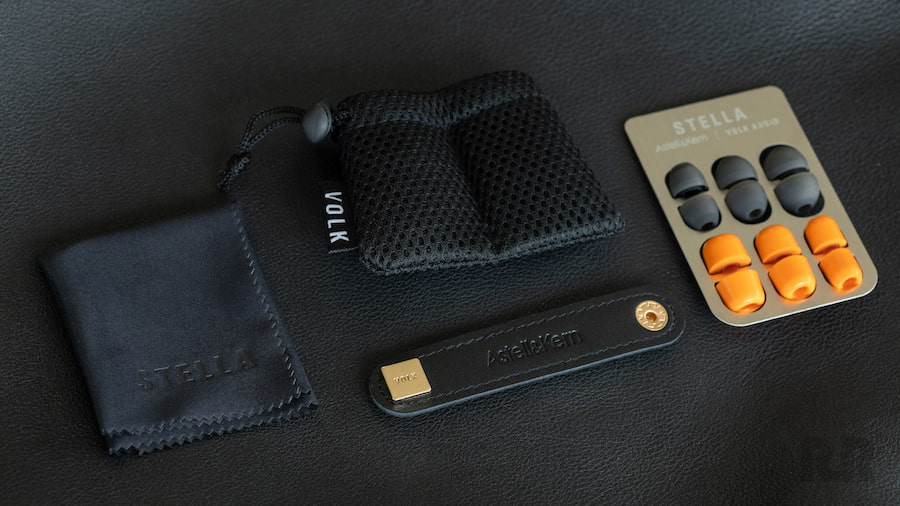
Inside the box, you’ll find:
- 1x Semi-hard leather carrying case
- 1x Leather cable strap
- 1x Padded IEM baggie
- 1x Microfiber cleaning cloth
- 3x Pairs foam ear tip
- 3x Pairs silicone ear tip
Volk’s “Deliberate and Minimal” approach is clear here, but at $4,000 the accessory package feels a bit restrained. What’s included is high quality, but it doesn’t offer the same range or sense of completeness you’ll find with some less expensive IEMs. Campfire Audio, for example, includes liquid-silicone ear tip varieties, spare cables, and often a variety of padded travel bags.
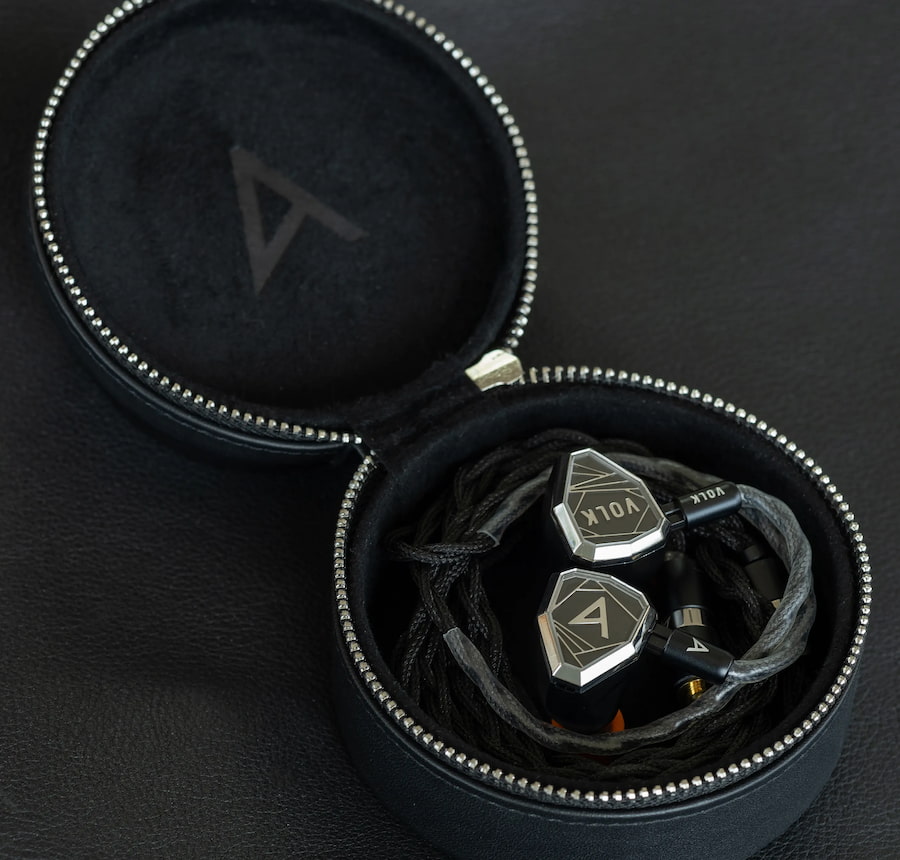

I like the Stella’s carrying case, but only for static, at-home storage. It is perfectly-sized to store the Stella in a loose coil and has enough space to use both the (fairly large) leather cable tie and padded IEM baggie. That said, there’s really not any extra space for a small dongle, let-alone something larger and more-capable like the Astell&Kern HC5. That, combined with the case’s lack of water resistance, makes me hesitant to use it for transport outside the house.
For that, I’d recommend grabbing a Pelican 1010 and a block of high-density foam so you can cut some additional protective pieces for the Pelican’s interior. That comes out to less than $35, but it’s $35 you shouldn’t have needed to spend in the first place.
Comfort
Comfort is a metric that relies heavily on factors influenced by your individual ear anatomy. Mileage will vary.
The Stella is large, and there’s no way around that. But in spite of its size, I didn’t have many major issues with comfort. Multi-hour listening sessions were tolerable, and I experienced only minor outer-ear soreness after 2.5 hours of continuous listening. I was able to increase comfort and ease-of-positioning by swapping to a 3rd-party cable that does not feature plastic ear guides. This allowed to me to pull the cable over the top of my ear with better precision and prevent the Stella from sagging under its own weight.
The Stella’s cable is cloth-coated, but it doesn’t translate much noise in practice. I was able to move around without any distracting microphonics coming through.
I got great passive isolation with the included foam ear tips. Even loud, crowded coffee shops posed a minimal risk of disruption at normal listening volumes. Volk’s choice of foam ear tip is excellent, delivering comparable performance and comfort to Comply.
Listening
The Stella’s sound signature doesn’t fit cleanly into a particular box, but is loosely V-shaped. Its sub-bass is lifted beyond its mid-bass, giving it pronounced sub-bass presence. The Stella’s mid-bass isn’t particularly forward, but is not awkwardly cut like some of its more meta-styled competitors. This allows it to articulate subtle punches, even if it isn’t emphasizing them as much. The Stella’s upper mids are forward and clean, sitting in front of its gently-warm lower-mids. The Stella’s upper mids blend nicely into its treble, synergistically projecting a profound sense of air and space. Volk’s inclusion of EST drivers in the Stella’s upper-register pays dividends here, as the IEM renders a well-controlled, smooth sense of sparkle and shimmer. The Stella’s upper-treble is rock-solid and avoids major peaks, allowing most listeners to enjoy its massive resolution without serious fatigue.
Profoundly Smooth Treble
The Stella is unusually fit-dependent for me. When using standard silicone eartips, its treble was bright, though sometimes uncomfortably-sharp. It would hang with particular emphasis on overexcited upper-treble elements, but after switching to foam ear tips I found that its resonance peak around 12KHz smoothed-out, radically refining the upper-register’s disposition. What was once a borderline-tiring affair became a comfortable one. The Stella captures background treble details with extreme prejudice, exhibiting strong synergy with sources that pair well with sensitive transducers. The Stella’s resolving ability is effectively limited by how low your source’s noise floor is.
I found myself pulled into the Stella’s airy, spacious rendering of “December” by Collective Soul. It keeps the rapid hi hat hits organized and layered, while still picking up the faint edge of electric guitar distortion during the bridge without smearing it.
It handles “Same Damn Life” by Seether just as well, maintaining the contrast between the background piano and sharper high hats. Each element holds its own space, with enough separation to make the textures easy to follow without feeling forced.
Even after tip rolling and experimenting with fit, the Stella can lean a bit too hard into the 8–12 kHz region. It’s not extreme, but it’s enough to draw attention to itself at times, especially if you’re sensitive up top. That’s a trait I tend to notice with EST based IEMs, and while the Stella is more controlled than most, it’s still present.
On “Gotta Get Away” by The Offspring, that upper treble push can make the mix feel slightly uneven. The track’s rougher mastering doesn’t hide it, and the Stella doesn’t smooth it over either.
Midrange Performance: Emphatically Neutral and Uncolored
These days, it is common for trend-chasing brands to scoop out significant emphasis from both the lower-mids and mid-bass, ultimately giving their IEMs a cold and sterile disposition. The Stella, thankfully, balances its pursuit of “clean” sound with harmonic completeness, delivering what I consider to be a truly tonally-neutral midrange.
The Stella handles vocals with a clean, unforced presentation. On “MY LOVE” by HEIR, it places the voice clearly against the track’s hauntingly-empty background without adding weight or gloss that isn’t there.
It carries that same control into heavier material. “Bullet With Butterfly Wings” by The Smashing Pumpkins comes through with solid contrast and enough body to keep the vocal grounded in the mix. Beyond tonality, the Stella does a strong job resolving small vocal details. Intelligibility is high, and layering stays organized even when the track gets busy.
The Stella’s midrange is clean and precise, and it translates directly into strong positional cues. Its control over a wide, deep stage is obvious. On “Sweetest Thing” by U2, instrumentation is spread deliberately across the soundscape, with clear placement that doesn’t feel exaggerated.
That sense of space carries into more delicate material. “End of Beginning” by Djo comes through with strong contrast and texture, letting the quieter elements breathe without losing structure. The Stella’s midrange strikes a balance between richness and precision that works especially well with tracks like this.
Truly “Hi-Fi” Bass Response
Bass is divisive. At first I was unimpressed with the Stella’s lower-register, as it sounded thin and lacking. Turns out, that was an artifact of the included foam eartips needing a bit of break-in to achieve a proper seal. Once properly fitted, I had a very different experience.
The Stella is definitely a sub-bass-centric IEM. It doesn’t quite have a “meta-styled” mid-bass scoop, but doesn’t lean too hard into that range either. This balance oriented tuning lets the Stella deliver tight, clean, and properly weighted low end. On “Neverland” by Mazde, the sub bass comes through with control and depth without bleeding upward.
It handles impact just as well. The drum hits in “Way Down We Go” by KALEO land with real punch, but stay composed. Atmosphere is the right word here. On tracks like “Do You Feel It” by Chaos Chaos and “Fantasy” by Alina Baraz, the Stella extends as far as it needs to, building a solid low end foundation without drawing attention away from the rest of the mix.
With rock and alternative, the Stella’s bass is punchy but not dominant. On “Perforated” by Nominee, it renders the mid bass with strong clarity and speed, but never in a way that pulls focus from the rest of the mix. That slightly reserved mid bass still moves enough air to give the track proper weight, adding depth to the bass guitar and drum hits without overplaying its hand.
Comparisons
Comparisons are chosen based on what I find interesting. If there’s something you’d like to see added, let me know in the comments.
Campfire Audio Andromeda 10

The Andromeda 10 is Campfire Audio’s new all-BA flagship. It also features high-quality metal shells and backs 10 drivers per side. It runs $1,799, costing about half the Stella’s price tag. The Andromeda 10 comes with a wider selection of ear tips, notably including a set of liquid-silicone ear tips. The Stella’s silicone ear tips aren’t bad, but don’t seal for me as well as Campfire Audio’s do. Both IEMs come with foam eartips, but I find Campfire Audio’s to be overly-stiff. The Stella comes with great foams, second only to Comply in comfort. I like the Andromeda 10’s case more for travel, though neither the Andromeda 10 nor the Stella come with cases that are suitable for anything other than a short jaunt into the office. The Andromeda 10’s case is large-enough to store supporting accessories like a compact DAP or large USB-C DAC, which gives it a leg up in terms of practicality.
Jumping straight to the Andromeda 10 with ears accustomed to the Stella is a bit disorienting — the Andromeda 10 places its sonic emphasis in very different places on the frequency-response spectrum. The Andromeda 10 has a more-linear bass shelf, tilted very slightly towards the mid-bass. The Stella, by contrast, picks up steam starting right towards the bottom of the mid-bass and carries out strongly down past 20Hz. This cements the Stella as a more rumble-prone, bass-happy IEM. The Stella pulls a bit of warmth out of its lower-mids by recessing the lower-mids, which is again quite different from the Andromeda 10’s warmer and more-flat lower-mids.
The Andromeda 10’s upper-mids peak around 2KHz, giving vocals a natural, but cohesive, placement. The Stella’s upper-mids are broadly-similar, but shift emphasis a little more towards the 3KHz and 5Khz ranges. Both IEMs are pretty transparent and detail-forward, though they render treble-bound elements pretty differently.
The Andromeda 10’s upper-treble is pretty well-behaved, strategically placing emphasis at the 8Khz and 12KHz ranges to pull out air and sparkle without becoming sharp. The Stella, by contrast, leans more-heavily into the upper-treble with some larger spikes around 10KHz. This gives the Stella a brighter, and occasionally sharper, tonality.
Both of these IEMs are slugging as hard as they can to deliver their respective visions of peak audio enjoyment. Neither are reference tools, and that’s what allows them to be so incredibly-expressive. The Andromeda 10 is warm, inviting, and subtle. Its strength comes from its incredible cohesion. The Andromeda 10 renders bright details with a vivid contrast that defies its fairly-flat lower-register and mild midrange. The Stella is quite different and textures out from the track boisterously — with big, bold strokes of bass and fine streaks of bright color lavished onto a broad canvas.
Flowery expressions aside, the key differentiator here is that the Stella is more V-shaped, with a broader sub-bass presence and brighter upper-register. If you’ve got a treble sensitivity, as I do, then the Andromeda 10’s more-relaxed upper-mids and upper-treble will likely be better-tolerated by your ears. If you’re looking for big, imposing bass presence, then the Stella will probably appeal more to you.
EarAcoustic Audio VSA-PM Crown

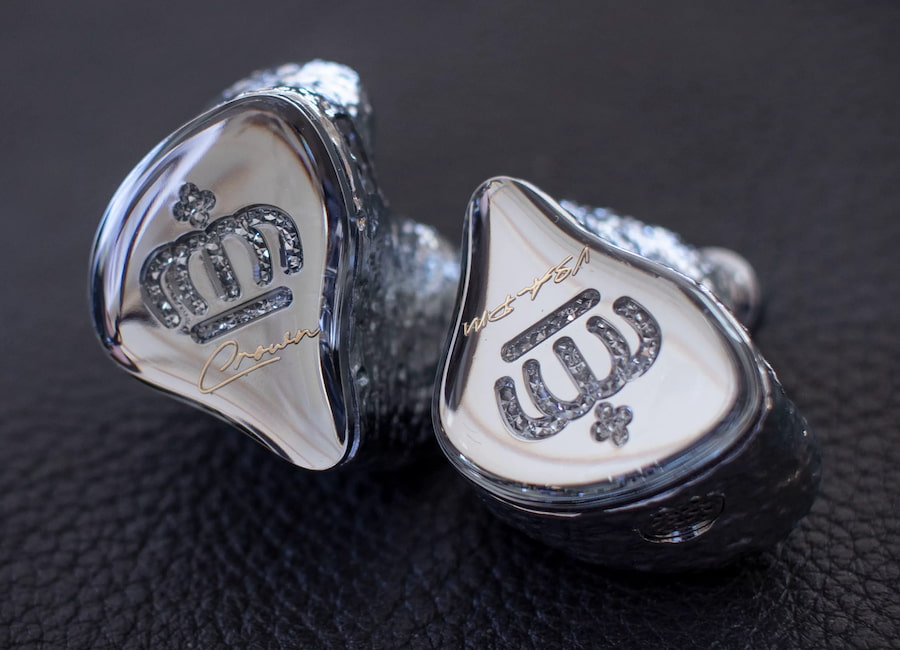
The EarAcoustic Audio VSA-PM is the brand’s flagship (and only) planar-based IEM. It features top-shelf metal shells and a gorgeous bespoke 4.4mm cable. It costs $849, a small fraction of the Stella’s MSRP. It may not be a fair fight on price, but both still land in territory that appeals to buyers who aren’t particularly concerned about cost.
Neither the Stella nor VSA-PM are particularly light, though the VSA-PM has a smaller, more-ergonomic shell. This makes it easier to find a fatigue-free position on the ear than the Stella, which requires more careful placement.
The VSA-PM comes with a decent accessory package, but one that lacks the excellent foam eartips included with the Stella. The Stella’s silicone eartips are also better-sealing in my ears and more comfortable for long listening sessions, though you’ve got plenty of leftover budget with the VSA-PM to pick up Plussound Hybrid liquid silicone eartips, a full Campfire Audio Flight, or Comply Foam eartips. I actually run the VSA-PM with Comply Foam eartips for casual listening because it creates the best seal for my particular inner-ear anatomy.
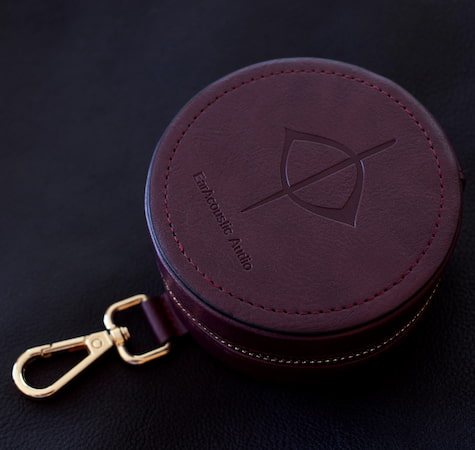
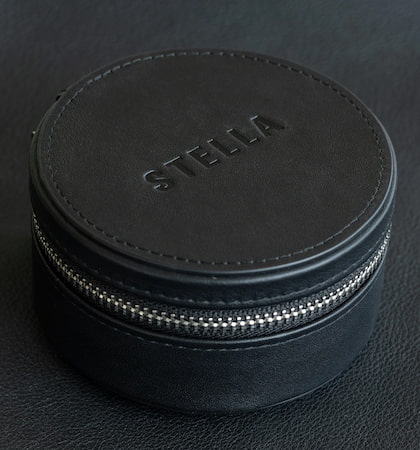
Neither the Stella nor the VSA-PM includes a particularly protective case, and both use similar round zip designs. The Stella’s case does have a nicer, softer finish.
Sonically, the VSA-PM is a cooler, brighter IEM. The Stella has a substantial increase in bass presence across the board, though the VSA-PM isn’t exactly rolled-off or linear either. The Stella has a more-forward lower-midrange, giving it a bit of increased warmth compared to the colder, more-indifferent presentation on the VSA-PM. The Stella’s upper-mids aren’t as forward, and the VSA-PM places vocals and bright instrumentation more towards the front of the sound stage. The Stella’s upper-register is not as bright as the VSA-PM’s, featuring reduced lower and upper treble presences.
The VSA-PM’s major strength is the sheer magnitude and smoothness of its treble, which is why I selected it to compare against the Stella and its EST drivers. There’s a lot of tonal similarities between the upper-treble on these two IEMs, and it boils down to just how smooth their upper-trebles are. That’s not to say either IEM features rolled-off treble — far from it. Neither experience a single hint of grain or grit, which is a timbral strength very few other IEMs possess. There’s a certain transparency and crystalline clarity possessed by the Stella’s drivers that the VSA-PM just barely misses out on. “Cheap” as the VSA-PM is, it’s pretty impressive how close it actually gets to the Stella.
The Stella, as the bassier and more V-shaped IEM, is the easier companion for casual listening. While it is occasionally sharper-sounding than the VSA-PM, the VSA-PM’s significant “treble shelf” tilts its presentation towards a magnitude of brightness that doesn’t line up with my preferences. That said, those that love treble will have an absolute field-day with the VSA-PM. Its planar driver does a great job of approximating the sensation of an EST driver. Those that are looking for richer, bassier sound will definitely prefer the Stella.
Meze Astru


The Astru is Meze’s new flagship IEM. It features titanium shells and a single high-performance dynamic-driver per-side. The Astru costs $899 which, while pretty substantial, is much less than the Stella’s $3,900 price tag. Both IEMs are built nicely, but the Astru’s small, space-efficient shells have much better ergonomics. Less weight and easier positioning make for a “set and forget” experience, versus the Stella’s fairly precise positional demands. The Astru’s cable is quite nice, and features thick wires coated in a clear plastic. The Stella’s woven cable is also nice and actually transmits less noise when walking versus the Astru’s cable.
Both IEMs feature 4.4mm terminations are feel solidly-constructed. Neither the Stella nor the Astru feature particularly “generous” accessory packages, and both cost enough to where you’d be right to expect more. The Astru’s eartip selection is particularly disappointing, as I didn’t get much a seal with them. The Stella’s eartips are a lot better for my ear.
Sonically, the Astru has a less-emphasized sub-bass a bit more weight behind its mid-bass. It resolves drum hits with a more consistent tactility, but doesn’t dig as deep during bass-heavy passages in EDM tracks. The Astru has a warmer, richer lower register overall, really capturing the smooth and relaxing Meze house sound. The Stella, while not cold in absolute terms, is cooler than the Astru. Its lower-mids are a bit more-recessed, giving the upper-mids a more-forward presentation. The Stella’s vocal range is more-forward and distinct than the Astru’s, trading a small bit of sound-stage cohesion for increasing perceived separation.
The Astru has a less-dramatic upper-register, pulling back relative to the Stella for basically the entire rest of the sonic spectrum. The Stella’s increase treble emphasis allows it to surface details more-easily and capture subtle treble details that the Astru will sometimes fuzz a little during very complex passages. At the peaks of instrumental complexity, the Astru can combine some layers that the Stella manages to stage with air. But in spite of the Astru’s lower price point and simpler driver configuration, it doesn’t sound too far behind, in technical terms.
The Astru’ fights its strongest in the lower-register, capturing nearly everything the Stella does. Subtle mid-bass textures, deep bass tones — the Astru and Stella are in lockstep. Where the differences begin to emerge is the upper-midrange and upper-treble. In these two particular regions, the Stella exhibits subtle improvements in dimensional sophistication and layering, allowing it to go the extra mile in immersion.
Between the two IEMs, I’d go with the Astru when I’m on the go or need to listen for long periods of time. Its lesser sub-bass production can be corrected with aftermarket eartips or warmer sources, while the Stella is simply as large as it is. The Stella makes for a better desk companion, delivering increased levels of depth and sophistication, particularly on somber rock and chaotic EDM tracks. If you’re treble-sensitive, or simply prefer warmer sound, then the Astru’s less-recessed lower mids and broader mid-bass may actually appeal to you more than the Stella.

The Bottom Line
The Stella is about execution. The build is legitimately on the level of a luxury watch, and the tuning makes full use of its EST drivers without losing control. It delivers an open, expansive stage with strong depth and clarity, clean and well-layered mids, and tight bass with real sub bass presence. When it clicks, it offers a highly resolving, spatially precise presentation that feels deliberate rather than forced. It’s also more ergonomic than it looks, and the included tips are better than expected.
The tradeoffs are just as clear. Mid bass impact is restrained, so it won’t satisfy anyone looking for physical slam. The upper treble has a noticeable emphasis that can become fatiguing, especially on less refined recordings. The cable connection is easier to dislodge than it should be, the case leans more toward presentation than protection, and the shell size demands careful positioning to stay comfortable.
This is for the cost-is-no-object listener who values build as much as sound and wants a detail forward, airy presentation with strong spatial cues and a refined V-shaped tilt. If you’re treble sensitive, want more mid bass weight, or expect practicality to match the price, there are more forgiving options that cost a lot less.
Pros:
- Built like a comparably-priced luxury watch
- Skillfully-implemented EST driver tuning
- Open and expansive soundstage
- Intense depth and clarity
- Tight bass control, potent rumble
- Ergonomic, in spite of its size
- Great stock eartips
Cons:
- Lacking a sense of tangible mid-bass impact
- Large upper-treble emphasis may trouble sensitive listeners
- Short pins on cable connector permit the IEM to detach with less force than expected
- Carrying case is more for looks than actual protection
- Sizeable shells demand precise positioning to avoid ear irritation
You must be logged in to post a comment Login