Tech
Astronomers Uncover a Gigamaser, the Strongest Known Microwave Laser in the Universe
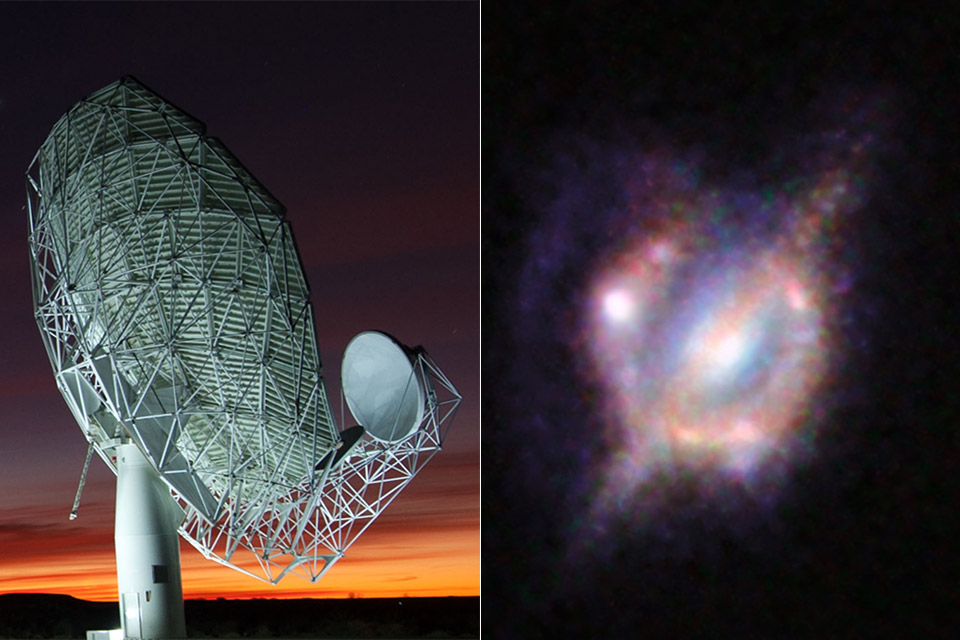
Photo credit: SARAO
Astronomers discovered a strange beacon deep in space: a natural microwave laser so powerful that physicists refer to it as a gigamaser. A team utilizing South Africa’s MeerKAT radio telescope discovered an extraordinarily strong signal at 1667 megahertz while scanning the sky for distant galaxies rich in molecular hydrogen.

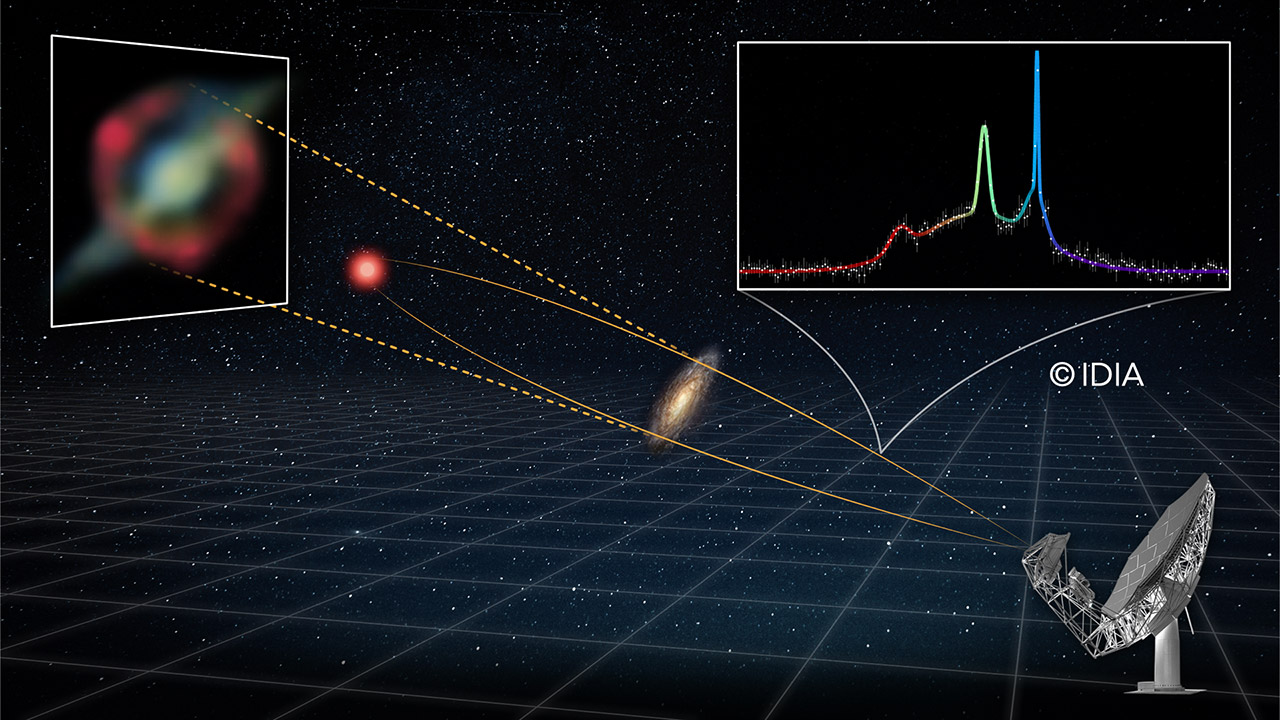
Photo credit: Inter-University Institute for Data-Intensive Astronomy
The signal came from H-ATLAS J142935.3-002836, a merging galaxy system located 8 billion light years away. Light from this system takes a long time to reach us, back when the universe was only a fraction of its present age. According to the experts, this is the brightest and most distant hydroxyl maser ever measured. The name “megamaser” has already been used to describe other cases of amplified power, but this one is so powerful that the team dubbed it a “gigamaser.” Its total power is 100,000 times that of a typical star, and it all arrives in a stunningly tiny slice of the microwave spectrum.


LEGO Icons Project Hail Mary Collectible Building Set for Adults – Room or Office Decor for Men & Women…
- PROJECT HAIL MARY SCI-FI MODEL – Launch into the world of cinematic science fiction with the LEGO Icons Project Hail Mary (11389) microscale…
- WHAT’S IN THE BOX – Includes everything you need to build a microscale replica of the Hail Mary spacecraft, a functional display stand, plus a…
- FUNCTIONAL SPACE MODEL – Turn the crank on the display stand to send the crew module into orbit, simulating the spaceship’s centrifugal gravity…
When galaxies collide, as they do when they “slam together,” gravity expands the gas and dust. In this chaos, hydroxyl molecules, which are just a simple mixture of hydrogen and oxygen, are pushed into a frenzy. Radio waves from the active core, which is often powered by a massive black hole, then cause these molecules to release all of their energy in perfect rhythm, much like a flawlessly synchronized orchestra. This produces coherent microwave radiation. The same principle that powers lasers on Earth, but with a wavelength around the length of a regular dinner plate, or 18 cm.
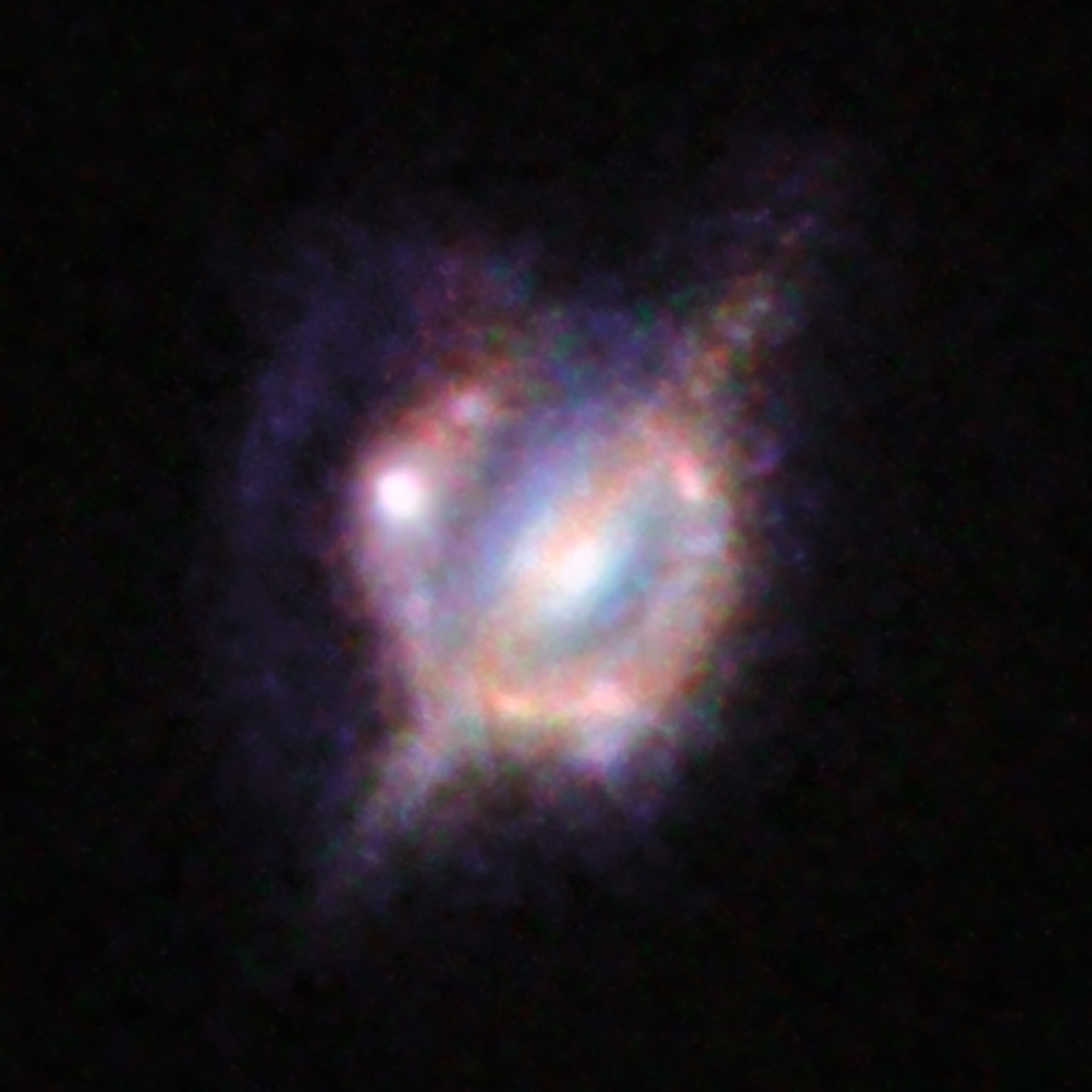
The merger significantly accelerates star formation and feeds the center black hole, creating the ideal conditions for all of this amplification to occur. As all of these new stars develop and heat the dust, they begin to light brightly in the infrared, and as all of the gas is squeezed together, it makes excellent small pockets for a maser to burst into action.

It’s a miracle that we can detect this phenomenon at such a long distance; it’s as if a galaxy in the center of the line of sight is bending the radio waves coming towards us via gravitational lensing. That’s what Einstein said would happen; large objects warp space and time, so in this situation, the galaxy acts as a lens, magnifying the signal and making it strong enough for MeerKAT to detect. If that galaxy wasn’t there, the signal would be too faint for the telescope to detect.
Masers of this power are excellent indicators of when galaxies were undergoing massive mergers in the distant past, which is what drives star formation and black hole expansion, both of which are important factors in the evolution of present galaxies. The gigamaser provides an excellent perspective on all of this at a time when such mergers were far more typical.
[Source]