Tech
ASUS ROG Kithara Review: Open-Back Headphones With HiFiMAN Tech for Audiophile Gamers?

ASUS does not need an introduction. The company makes everything from motherboards and monitors to gaming laptops, routers, mice, and the kind of RGB-soaked gear that can make a desktop look like it is trying to contact low Earth orbit. But headphones? That is where things get more interesting.
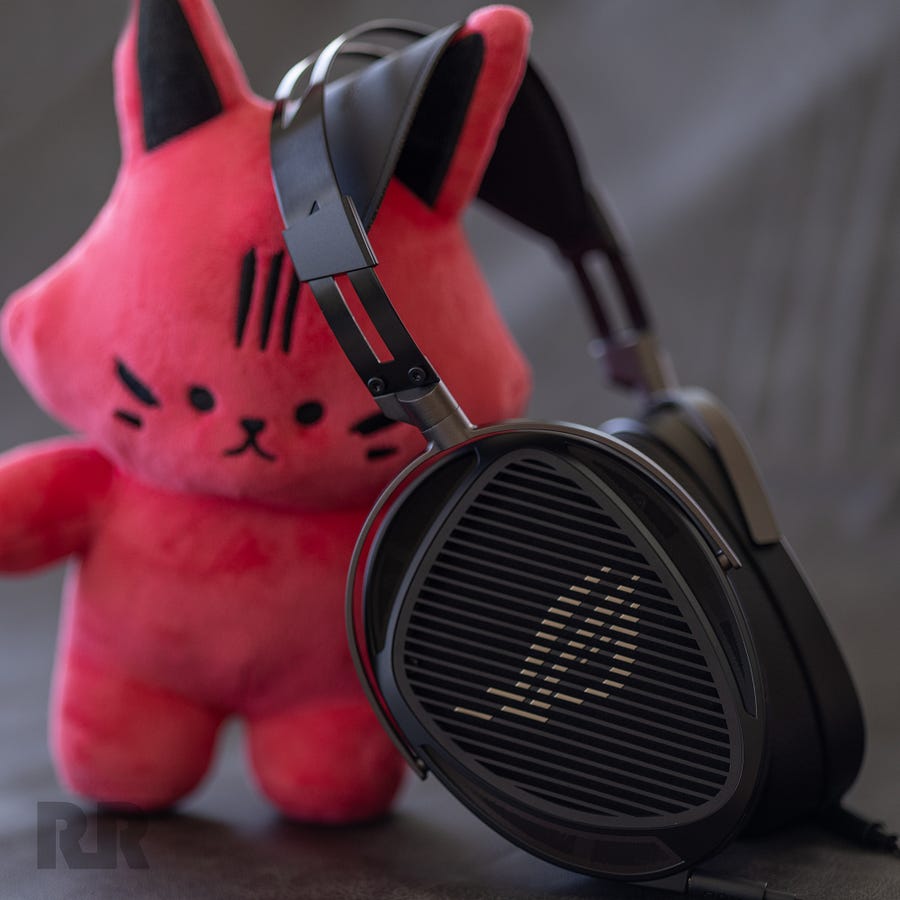
The ASUS ROG Kithara is not just another gaming headset with a detachable mic and a logo large enough to be seen from the hallway. Developed with HiFiMAN, it uses custom 100mm planar magnetic drivers and takes a very different path from most gaming headsets: open-back, wired, unapologetically audio-first, and priced at a surprisingly competitive $299.
That price matters because the 800-pound planar gorilla in the room is Audeze’s Maxwell 2, the wireless audiophile gaming headset that has already made the case that gamers do not have to settle for bloated bass, plastic build quality, and “immersive” tuning that sounds like someone threw a blanket over a subwoofer. The Kithara is not trying to beat Audeze at the same game.
It is ASUS and HiFiMAN asking a more focused question: what happens when you strip away wireless convenience, lean into planar performance, and build a gaming headset for listeners who care just as much about music as they do about footsteps?
Related Articles:
About My Preferences: This review is a subjective assessment and is therefore shaped by my personal preferences. While I try to mitigate this as much as possible during my review process, I’d be lying if I said my biases were completely erased. So, for you, my readers, please keep the following in mind:
My ideal sound signature includes competent sub-bass, textured mid-bass, a slightly warm midrange, and extended treble.
I have mild treble sensitivity.
My testing equipment and standards can be found here.

Key Specs:
- Price: $299
- Design: Open-back, wired
- Driver: 100mm planar magnetic, developed with HiFiMAN
- Frequency Response: 8Hz to 55kHz
- Impedance: 16 ohms
- Weight: 420 grams
- Microphone: Full-band MEMS boom mic
- Microphone Response: 20Hz to 20kHz
- Connections: 3.5mm, 6.3mm, 4.4mm balanced, USB-C adapter
- Wireless: No
- Bluetooth: No
- ANC: No
- RGB: No
Build
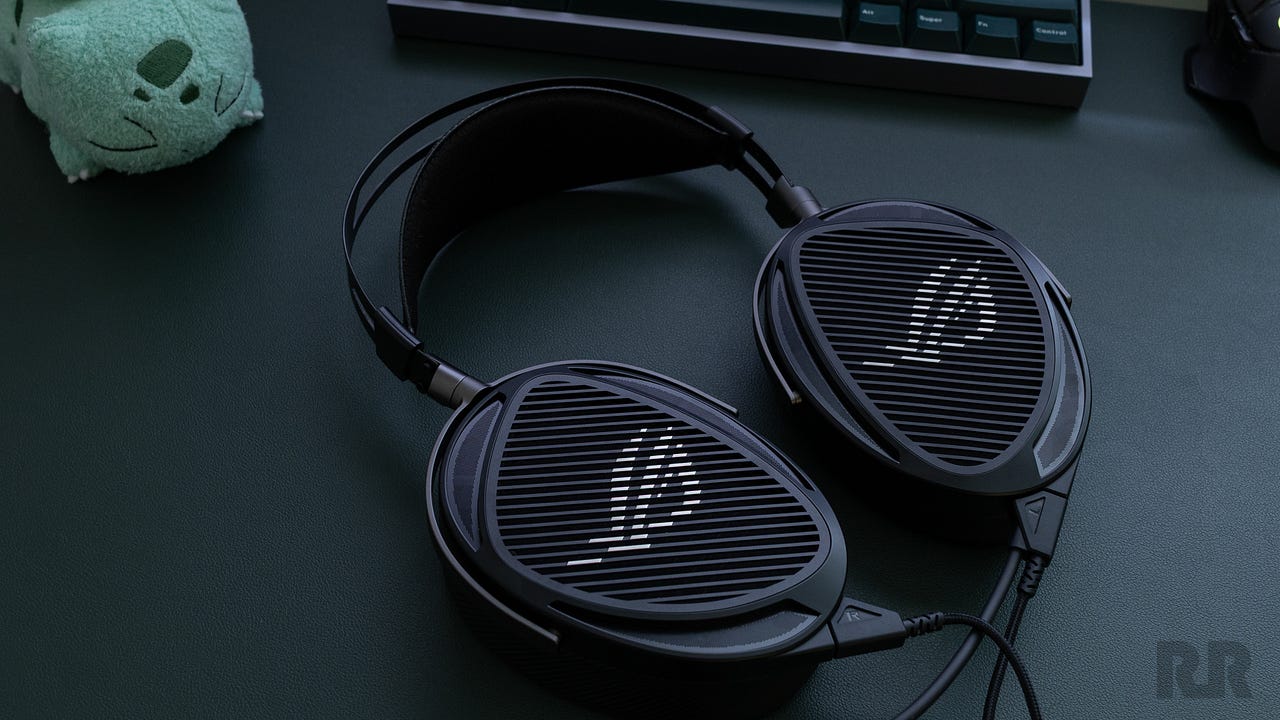
The Kithara feels nicely built in the hand. ASUS’s gamer-focused branding is emblazoned on the metal earcup grilles, which are cleanly machined and precisely installed into the earcup shells.
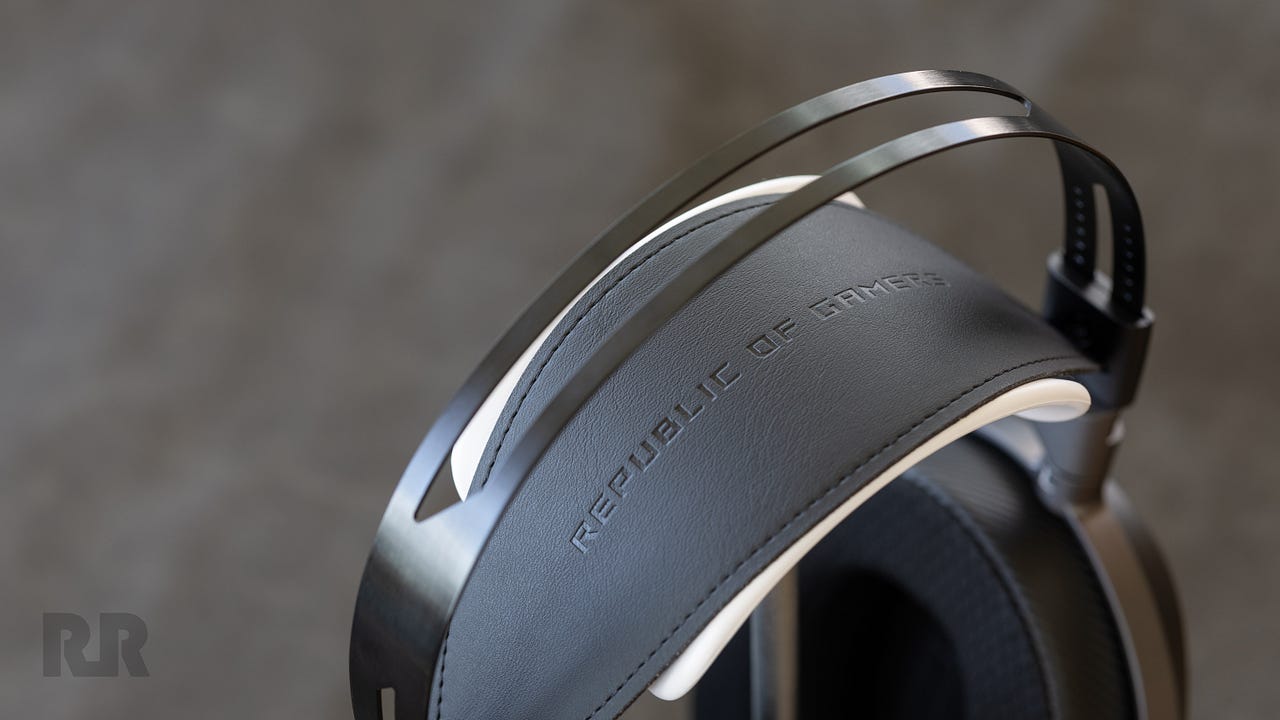

The Kithara is quite large, but not particularly heavy. Its adjustable headband slides along a spring-steel insert, and the notched adjustments feel tactile when moved. However, I encountered instances where the headband slipped out of its notches even while I was sitting still. That proved irritating, especially after carefully setting the headband to fit my head and properly angling the earcups.
As is tradition with HiFiMAN headphones, the Kithara’s cables are detachable. It uses standard dual-mono 3.5mm sockets, so aftermarket cables should be easy to source.
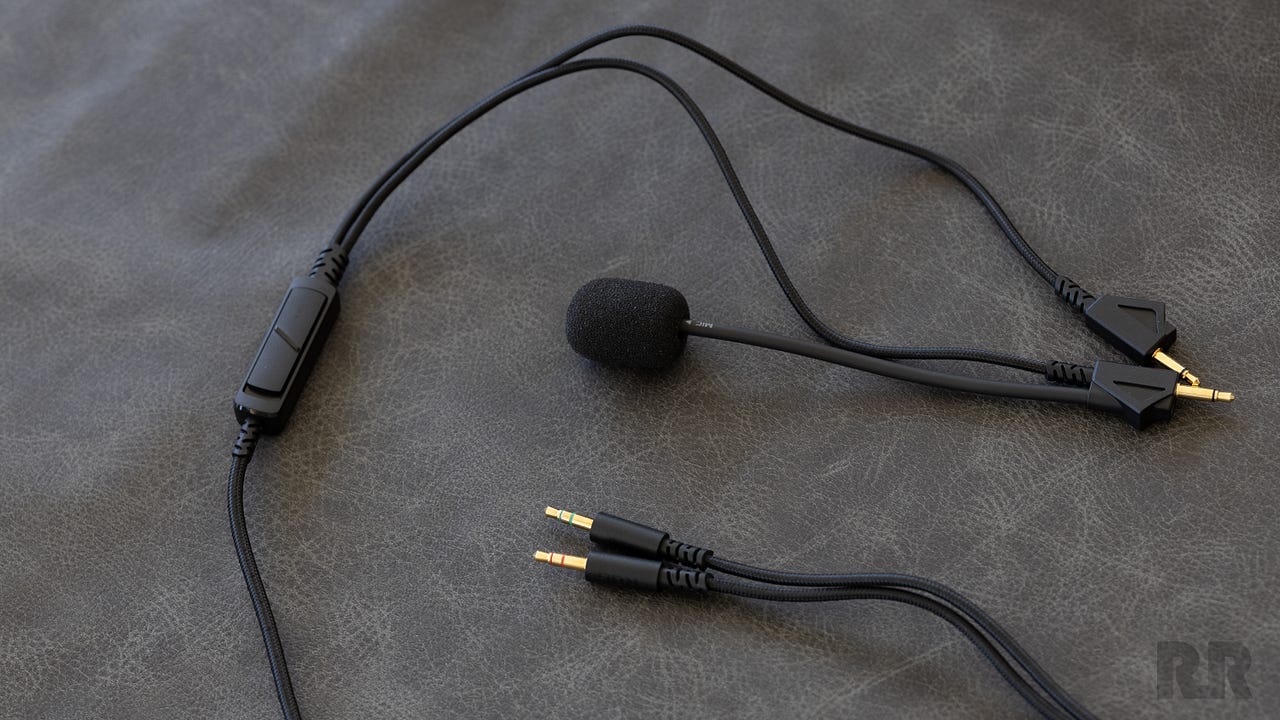
ASUS includes several cables in the box: one with a built-in boom microphone and one for standard headphone use. The boom-mic cable features in-line volume control and splits into two 3.5mm plugs, one for headphone audio and one for microphone input. That makes it easy to connect the Kithara to separate headphone and microphone jacks on a PC motherboard or case.
For devices without analog 3.5mm jacks, ASUS also includes a USB-C adapter. In my testing, it worked properly with Windows 10, Windows 11, and Linux Mint.
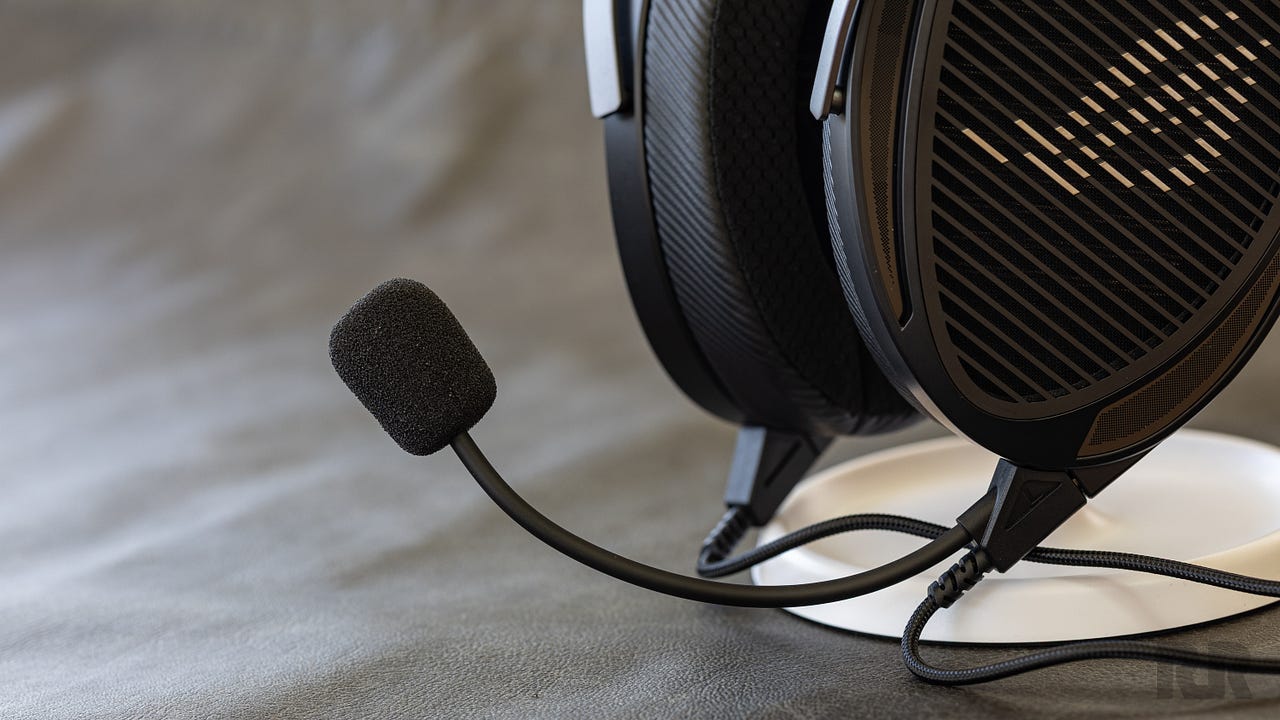

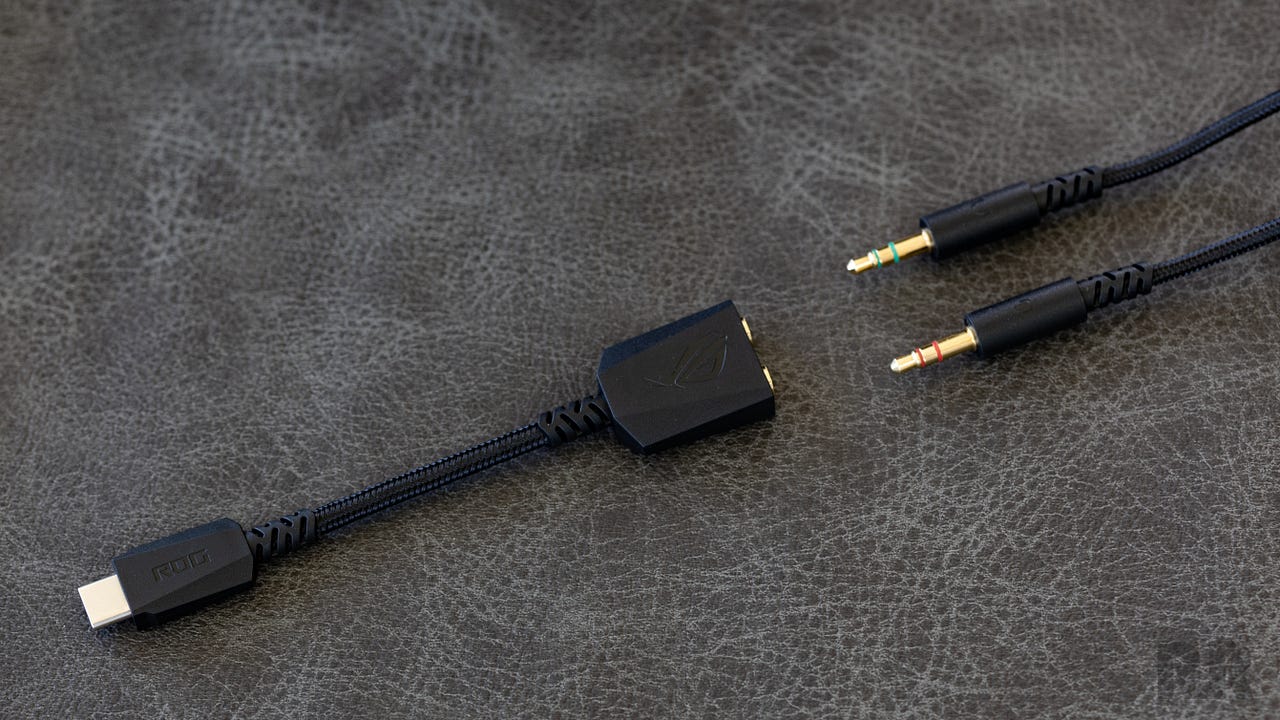
Platform compatibility is broad, but there are some caveats. ASUS lists support for PC, Mac, PlayStation 4, PlayStation 5, Nintendo Switch, iPad, iOS, Android, and Xbox consoles via 3.5mm connection. For PlayStation consoles, the USB-C adapter is the safer route for full headset and microphone support. Xbox support is more limited: audio works through the 3.5mm jack on the controller, but microphone support should not be assumed. Regardless, the mic’s performance, on supported devices, is strong. It ignores significant amounts of background noise while delivering strong voice pickup.
The second cable is fairly standard, with a simple black chain braid and modular terminations. ASUS includes 6.35mm, 4.4mm balanced, and 3.5mm plugs in the box, making the Kithara compatible with a wide range of headphone amps, DACs, PCs, consoles, and portable devices.
Comfort
Comfort depends heavily on individual ear anatomy, so your mileage may vary.

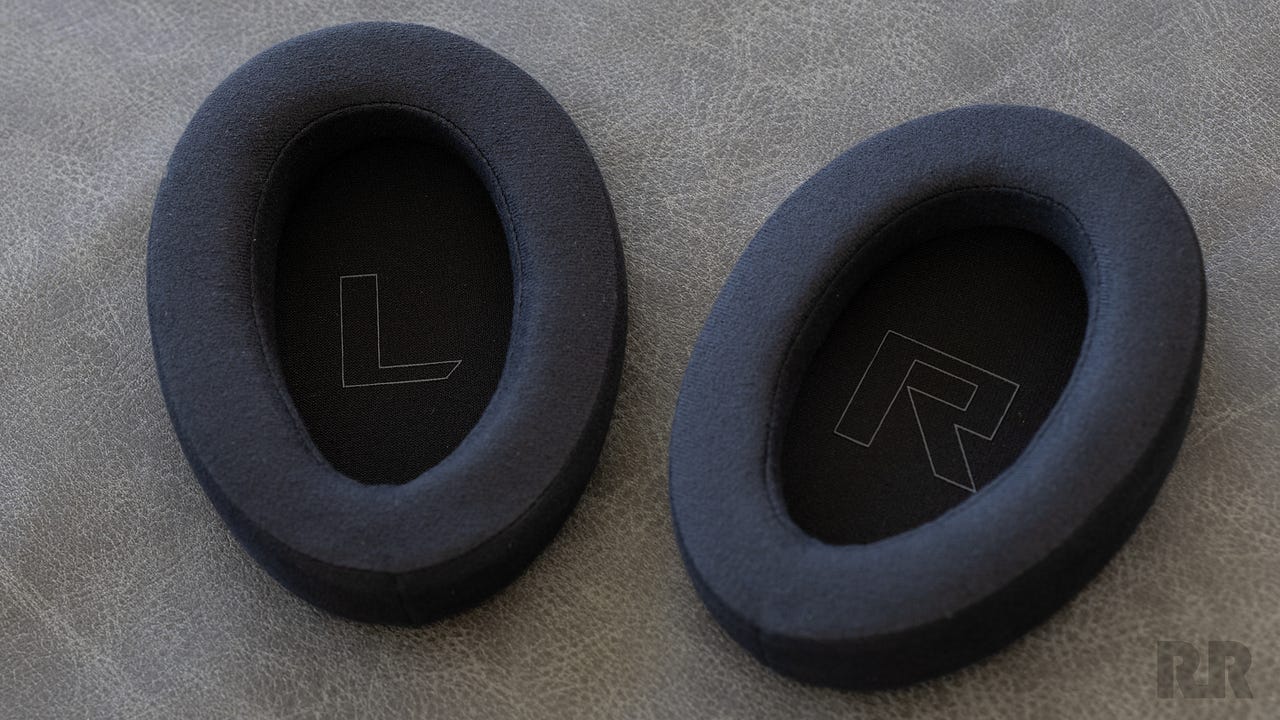
The Kithara is physically large, but it doesn’t feel especially heavy on the head. Despite weighing 420 grams, I found it very comfortable during extended listening sessions, even when my office had warmed up. My head is average in size, but my wife’s is quite small. She was able to use the Kithara, though only at its smallest headband setting. Even then, the headset floated slightly and didn’t make ideal contact with the top of her head. She reported no discomfort around her ears, however.
For context, the Kithara is lighter than the Audeze Maxwell 2, which weighs roughly 490 grams, but heavier than many mainstream gaming headsets from SteelSeries, Logitech, and HyperX that typically fall in the 300-400 gram range. Its comfort is helped by good weight distribution and large earcups rather than a particularly low overall weight.
Listening
Each Kithara comes with a unique frequency-response certificate that details the measured behavior of that specific unit. While the Kithara’s overall sound signature should remain consistent from unit to unit, some variance is still possible.
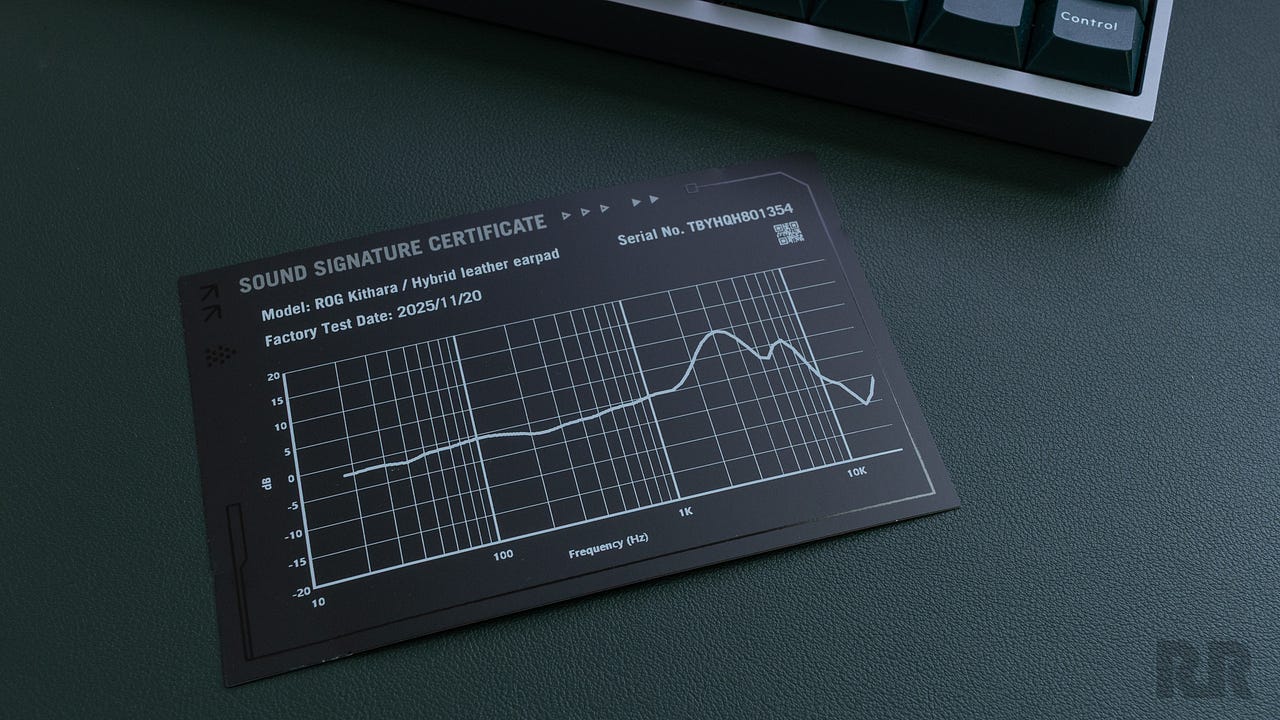
Broadly speaking, the Kithara has a V-shaped sound signature, with elevated bass and treble. Its midrange is neutrally toned, sounding full and rich without becoming thick or heavy. The Kithara’s soundstage is wide and deep, complemented by its speedy, responsive drivers. Extension is excellent, with the upper treble and sub-bass reaching toward the extremes with minimal roll-off.
Energetic Treble
As is tradition with headphones made by HiFiMAN, the Kithara’s treble is bright and forward. It renders metallic elements crisply and with precision, layering hi-hats and cymbals effortlessly. The Kithara’s ability to capture lifelike timbre is impressive. For example, I was able to clearly make out the ringing guitars being strummed in the background of “Throw Me in the Water” by WILD, even as the chorus became progressively busier.
The cost of having such forward and energetic treble is that the Kithara can occasionally sound harsh or sibilant. The vocals and synthetic effects in “Satisfy” by Nero pushed close to the edge of comfort for me at my normal listening volume, creating a bit of distraction that is not present with my less-bright headphones.
Crunchy, Textured Midrange
The Kithara has a subtly cool midrange that slightly deviates from neutral tonality. This clean style of tuning complements the Kithara’s speed and technical ability, allowing it to render impressive textural depth. While listening to “In Exile” by Thrice, I was impressed by the consistency and delicacy with which the Kithara resolved the vibration of guitar strings against the fretboards. And it’s not just guitars; the Kithara’s midrange is tuned to perform well across the board.
I found that the Kithara was more than capable of staging subtle and nuanced vocal performances, pulling plenty of detail from tracks like “What a Shame” by Shinedown. Elements with complex harmonics, like the piano in “The Ocean” by Manchester Orchestra, are delivered with fullness and a sense of cohesion, which is not always common in headphones with cooler-leaning mids like the Kithara.


Dynamic Bass Performance
The Kithara’s bass is surprisingly forward, delivering full-sounding mid-bass while still extending well into the sub-bass. It synergizes well with drums in rock and alternative music, generating subtle, rich drum beats. They are not thunderous, but they do have a delicate tactility to them. This allows the Kithara to develop a solid, full foundation on tracks like “My Hero” by Foo Fighters.
It is with this undercurrent of richness that the Kithara builds its high-contrast presentation. With this depth, it renders a convincingly weighty atmosphere on tracks like “Kids” by MGMT and “Lisztomania” by Phoenix. Their respective bass lines sound phenomenal on the Kithara, and I almost thought I had been listening to a dynamic-driver headphone.
As bassy as the Kithara can be, it is ultimately still an open-back planar headphone. As such, there is a limit to how much punch and rumble its drivers can produce. While articulate and full-range, the Kithara does not generate enough bass output to feel truly immersive on electronic tracks like “No Way (Bassnectar Remix).” I was likewise a bit disappointed by the amount of rumble it produced while listening to “Blackout” by Mike Hawkins.
Gaming
The Kithara is sold under ASUS’s gaming sub-brand, ROG. As such, we put it through the wringer, using it for both competitive multiplayer games and robust, story-driven single-player experiences.
In fast-paced FPS titles like Call of Duty: Black Ops 7 and Battlefield 6, the Kithara performed admirably. Directional cues, even subtle ones, were rendered crisply and intelligibly. The Kithara’s forward treble was not particularly fatiguing during prolonged gunfights, though I do not typically play games at very high volumes.
I was also impressed with the Kithara’s ability to manage chaotic scenes in battle-royale games. Titles like Apex Legends, which often demand precise placement of sonic cues generated by multiple competing squads, can be challenging for warmer headphones, but not for the Kithara. Tense, audio-oriented extraction shooters like Arc Raiders are an even better match for the Kithara’s precise and well-measured tuning.
The Bottom Line
The ASUS ROG Kithara is a high-fidelity gaming headset built for listeners who care as much about music as they do about competitive play. Its HiFiMAN-developed planar magnetic drivers, open-back design, detachable cables, useful accessory package, and full-band boom microphone make it a far more serious audio product than most headsets wearing a gaming badge.
What makes the Kithara unique is its focus. It is not trying to be a wireless do-everything headset like the Audeze Maxwell 2. There is no Bluetooth, no ANC, no battery, no app, and no virtual surround processing trying to dress up mediocre drivers. Instead, ASUS and HiFiMAN have built a wired, open-back planar headset with wide staging, fast transient response, strong detail retrieval, and enough bass presence to avoid sounding thin.
That focus also creates limitations. The Kithara leaks sound, offers little isolation, and its forward treble may be too much for gamers or listeners with stronger treble sensitivity. The fit may also be less ideal for smaller heads, and some users may not need the boom mic or USB-C adapter enough to justify the full package. At $299, it faces real competition from traditional audiophile headphones and feature-rich gaming headsets alike.
But for the right user, the Kithara makes a lot of sense. If you want planar-driver speed, an open and spacious presentation, strong gaming positional accuracy, and a tuning that works well for both music and FPS titles, the ASUS ROG Kithara is one of the more interesting wired gaming headsets in its class.
Pros:
- Aggressively priced
- Lots of useful accessories
- Strong, deep bass response
- Crisp and articulate upper-register
- Tons of performance
- Comfortable and lightweight
- Breathable
- Wide console/PC compatibility
- Excellent mic performance
Cons:
- Occasional treble sharpness
- Large earcups don’t fit on shorter headphone stands
- No storage case
- Headband occasionally “slips”
Our Ratings:
★★★★★★★★★★ Sound Quality
★★★★★★★★★★ Comfort
★★★★★★★★★★ Usability
★★★★★★★★★★ Build Quality
★★★★★★★★★★ Value
You must be logged in to post a comment Login