AT&T updated its unlimited data phone plans to 2.0 versions on Thursday, launching AT&T Premium 2.0, AT&T Extra 2.0 and AT&T Value 2.0 options. In software, when products get boosted by a full version number, it means there’s plenty of new material. But does this move signal an overhaul of the company’s 5G lines or just a cosmetic refresh?
These plans replace the AT&T Value Plus VL, Unlimited Extra EL and Unlimited Premium PL plans. However, the carrier also cut its Unlimited Starter SL plan, which served as the entry-level plan (you had to know where to look to find the limited, but cheaper, Value Plus VL plan). Essentially, all but the highest-tier plan are slightly more affordable; while the AT&T Premium 2.0 plan is pricier than the one it replaced, it offers unlimited high-speed data and much more hotspot data.
If you’re looking to upgrade your existing AT&T plan, shopping for a new provider or looking to compare carriers, keep in mind that AT&T plans let each person on an account have their own plan. So you might set up a package where one person has the Premium 2.0 plan for unthrottled 5G speeds and another, such as a child, is set up with the Value 2.0 plan to save money.
Advertisement
Also, if you’re on a current AT&T plan, you won’t be automatically moved to one of the new plans. If you do want to make the jump, you’ll incur a line activation fee of up to $50. And keep in mind that the pricing below is the AutoPay amount; carriers provide a discount (usually $10) if you sign up for automatic payments.
One nice change is that the new plans are priced with round numbers. For example, the Value Plus VL plan was priced at $50.99 for one line, and the Value 2.0 plan is $50 (in comparisons below, I’ve rounded up the old prices to full-dollar amounts). Taxes and fees get added on top of that, so you’ll never see a round-number bill, but I’d like to think it’s a quiet acknowledgement that pricing things one penny below a larger number is insulting to customers.
Let’s dig into the details.
Advertisement
Choose from AT&T’s mobile plans.
Jeff Carlson/CNET
Value 2.0, the budget plan
The Value 2.0 plan replaces both the Value Plus VL plan and the retired Unlimited Starter SL plan and costs $50 a month for a single line or $120 a month when you have four lines on the account. That’s $1 per line cheaper than Value Plus VL.
For that, you get 5GB of high-speed 5G data, and then unlimited data dropped to a paltry 128Kbps speed for the rest of the month. Calling and texting are unlimited.
You can also use up to 3GB of high-speed hotspot data to share the cellular connection with other devices, also slowed to 128Kbps after hitting the limit. The Value Plus VL plan did not offer hotspot data.
Advertisement
It also includes unlimited talk, text and data between the US, Mexico and Canada.
Extra 2.0, more fast data for not much more money
The Extra 2.0 plan costs $70 a month for a single line or $160 a month for four lines, which is $6 cheaper for one line and $4 cheaper for four lines compared with the old Unlimited Extra EL plan.
The Extra 2.0 plan includes 100GB of high-speed data (with the caveat that speeds can be slowed if the network is busy), which drops to 128Kbps speed until the next month’s billing cycle. That’s a boost over the 75GB offered on the Unlimited Extra XL plan.
For hotspot data, the new plan includes 50GB of high-speed data, which is 20GB more than its predecessor.
Advertisement
As with the Value 2.0 plan, international options include unlimited talk, text and data between the US, Mexico and Canada.
Premium 2.0, for faster everything
Replacing the Unlimited Premium PL plan is the Premium 2.0, which costs $90 a month for a single line and $220 a month for four lines. Those prices are actually higher than the Unlimited Premium PL plan, which came in at $86 for a single line and $204 for four lines.
For that bump in cost, you’re getting unlimited 5G talk, text and high-speed data with no throttling.
Hotspot data has a 100GB cap before dropping to 128Kbps speed, which is 40GB more than the Unlimited Premium PL plan.
Advertisement
As for international calling and data, unlimited talk, text and high-speed data are available in 20 Latin American countries.
AT&T also has plans for cellular-enabled tablets ($21 a month) and wearables like smartwatches ($11 a month). If you subscribe to the Premium 2.0 plan, that pricing is reduced by 50%.
A few thoughts on the new AT&T plans
What AT&T’s plans lack, at least compared to the other carriers, is any streaming perks or bundled services. The 4K streaming option of the Premium 2.0 plan opens a wider data pipeline for services such as Netflix that support 4K playback, but you’re still paying separately for those entertainment subscriptions.
In contrast, T-Mobile bundles Netflix and Hulu (both with ads) and offers Apple TV for an extra fee on its Experience Beyond and Better Value plans. Verizon takes a different approach with streaming packages, which you can choose at discounted prices instead of subscribing to them separately.
Advertisement
I also want to mention that I’m glad the plan names are no longer burdened with the VL, EL and PL extensions. Mobile plans are full of details as it is — always read the fine print before you sign up for one — so I appreciate conveying them to customers in ways that don’t sound like internal spreadsheet codes.
Even though the new plans carry 2.0 version numbers, I’d honestly rate them more like 1.5 based on their features and pricing, except for the Premium 2.0 plan, which is more expensive than the Unlimited Premium PL plan. As usual, if you’re happy with the plan you’re on, you’re fine sticking with it. But if you’re running up against high-speed data limits or considering AT&T as a replacement for another carrier, it’s worth looking at the details to see if one of the new plans works for you.
Read more: Speaking of AT&T, this week marked the 150th anniversary of the first phone call and the company committed to spending $250 billion on infrastructure improvements. I also spoke with AT&T FirstNet folks during the 2025 Las Vegas Grand Prix about how they support customers and first responders during massive events like the Formula 1 race.
AT&T 2.0 Plans and Plans They Replace
Advertisement
Price for 1 line, per month
Price for 4 lines, per month
High-speed data
Mobile hotspot
AT&T Value 2.0
$50
$120
5G
3GB
AT&T Extra 2.0
$70
$160
100GB
50GB
AT&T Premium 2.0
$90
$220
Unlimited
100GB
Old: AT&T Value Plus VL
$51
$124
Unlimited, but could be slowed if network is busy
None
Old: AT&T Unlimited Starter SL
$66
$144
Unlimited, but could be slowed if network is busy
5GB high-speed, then unlimited at 128Kbps
Old: AT&T Unlimited Extra EL
$76
$164
75GB, then speeds could be slowed if network is busy
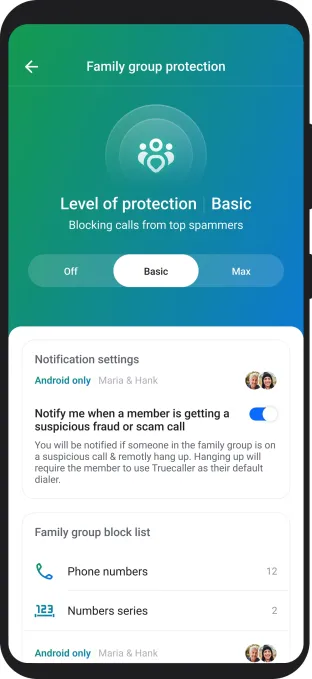
Caller identity platform Truecaller recently launched a new feature that lets one person become an admin of a family group, get alerts about fraud calls received by other members, and even end a call on their behalf if they suspect a family member might get scammed.
The company, which has over 450 million users, first launched the feature in December in a handful of countries like Sweden, Chile, Malaysia, and Kenya. Truecaller said that after seeing promising results, it decided to roll it out worldwide, including in India, the company’s biggest market. The feature is free, and users can create groups even if they are not on a paid Truecaller plan.
Image Credits: Truecaller
With this feature, the tech-savvy member of a family or friends group can become the admin of an up to five-member group. Once the other members join the group, the admin can get alerts about potentially fraudulent calls those members receive. If the admin believes that the call could harm the member, they can remotely end the call as well. While the admin can get alerts for fraud calls when a member is using iOS or Android, they can only end calls for members on Android.
On Android, members can also grant permission to the admin to detect real-time activity such as walking or driving, battery level, and phone sound settings (to check if the phone is in silent mode). Truecaller said this is helpful for admins to keep tabs on elderly members and to only call them when they are not walking or driving.
Image Credits: Truecaller
The admin can also block certain numbers and international calling codes, and share a blocklist with group members.
Truecaller noted that the admin can’t see the non-spam call history or SMS history of group members.
Advertisement
“I think, unfortunately, all of us know somebody or another in our families or friends who have been impacted by fraud,” Kunal Dua, Chief Product Officer, at Truecaller, told TechCrunch over a call. “In that sense, it’s a fundamental shift for Truecaller in terms of what we’ve been focusing on as a problem,” he added.
Techcrunch event
San Francisco, CA | October 13-15, 2026
Advertisement
Image Credits: Truecaller
Last year, Truecaller introduced a voicemail feature for Indian users featuring an AI assistant that listens for calls when a user is unavailable and provides a summary of the transcript. The company is exploring a similar AI approach for family protection to potentially alert the admin about what kind of fraud call a group member is receiving.
The company is also exploring using AI to screen calls and automatically disconnect them when certain words associated with scams are detected, such as “digital arrest” — a tactic in which perpetrators impersonate law enforcement officers to extract information or money from call recipients.
In India, scam calls have risen over time and caused financial losses across the country. Truecaller said that it identified over 7.7 billion fraud calls last year. Indian authorities have launched multiple initiatives, including a controversial policy called SIM binding that could hamper the working of apps like WhatsApp and Telegram.
Truecaller is facing headwinds. Its stock has dwindled by over 80% in the last 12 months. During its Q4 2025 report, the company said that its EBDITA– a measure of operating profitability — dipped 49% year-on-year, with ad revenue declining 31%. The company is also facing challenges from India’s Caller Name Presentation (CNAP) system, which displays the name of the caller as registered with their phone carrier. Truecaller has maintained that just displaying a caller’s name won’t reduce spam calls, arguing that its platform goes further by offering community-based reports.
Advertisement
“In India, there has been much talk about the imminent rollout of CNAP,” Truecaller CEO Rishit Jhunjhunwala said during the Q4 2025 earnings call. “CNAP is partially rolled out, and so far, the impact on our user growth is limited. As we have said in the past, we expect that CNAP might have some impact on user growth, but that remains to be seen as CNAP reaches a full rollout.”
Continued Jhunjhunwala, “Our focus continues to be on delivering a superior product, and as you are aware, the consumer can choose to have CNAP and Truecaller in parallel, where we provide a lot more information and a lot more context and various other solutions, for the consumer.”
The newly verified X account for Iran’s supreme leader could be putting the company on the wrong side of US sanctions, according to a watchdog group. The Tech Transparency Project, which last month published a report on X granting premium perks to sanctioned officials in Iran, now says that the verified account for the country’s new leader raises fresh questions about the issue.
The TTP notes that the X account for Iran’s new supreme leader, Mojtaba Khamenei, appears to be paying for an X premium subscription despite being on the US government’s list of sanctioned individuals since 2019. As the group points out, the Iran-based account was created this month and currently bears a blue checkmark, which typically indicates the account holder is paying for a subscription.
The account belonging to Mojtaba Khamenei has been boosted by other state-linked accounts in Iran, including the one that previously belonged to Khamenei’s father. That account has had a gray checkmark, which indicates it belongs to a verified government official. Verified accounts on X are rewarded with extra visibility on the platform, along with other perks. The younger Khamenei’s verified account has already gained more than 20,000 new followers in the hours since TTP first posted about it.
“The new Supreme Leader’s account is just the latest account for a sanctioned entity apparently paying X for premium services,” TTP director Katie Paul said in a statement to Engadget. “TTP has identified dozens of accounts, many linked to designated terrorists, that subscribed to X premium over the past three years. What’s more concerning than the blatant disregard for U.S. sanctions law is the fact that Musk’s companies have a contract with the Pentagon while X is actively profiting from U.S. adversaries.”
Advertisement
As Paul notes, this isn’t the first time TTP has raised questions about whether X is running afoul of US sanctions via its premium service. In 2024, the group published a report noting that X was accepting paid verification from more than two dozen sanctioned individuals and groups. The company said at the time that it had a “a robust and secure approach in place for our monetization features.”
X didn’t immediately respond to a request for comment. The company removed blue checks from a handful of Iran-based accounts flagged by TTP last month following reporting from Wired.
Google Maps just released the most significant navigation update in over a decade, and Gemini is at the center of it all. Two new features take center stage: a conversational tool called Ask Maps and a revised driving mode dubbed Immersive Navigation, which finally incorporates super-realistic 3D views with turn-by-turn directions.
Ask Maps replaces the old search bar with something far more powerful. Users hit this icon near the top of the app to begin asking actual inquiries in clear language. Gemini handles the rest, gathering data from all of the locations, ratings, and user tips contained in Maps. So, if you live in San Francisco and want to travel to Muir Woods for breakfast along the way, simply ask the question, and the system will be developed. It will provide you with a detailed route with stop-by-stop directions, as well as suggestions based on previous searches or remembered preferences… such as vegetarian options. Just ask follow-up questions, and the plan will be updated on the fly. If you want, recommendations will take you directly to directions or allow you to save places to lists without having to navigate. Ask Maps is available today in the United States and India for Android and iOS users, with desktop support coming soon.
Google Pixel 10a is a durable, everyday phone with more[1]; snap brilliant photography on a simple, powerful camera, get 30+ hours out of a full…
Unlocked Android phone gives you the flexibility to change carriers and choose your own data plan; it works with Google Fi, Verizon, T-Mobile, AT&T…
Pixel 10a is sleek and durable, with a super smooth finish, scratch-resistant Corning Gorilla Glass 7i display, and IP68 water and dust protection[4]
Immersive Navigation completely overhauls the way you actually follow directions. You can now see the road you’re traveling in 3D, rather than just lines and icons. Buildings, overpasses, and road landscape seem with realistic depth because Gemini models evaluate Street View images and aerial shots to determine what’s crucial to show. See-through structures protect things from becoming congested, and when it comes down to it, lane markers, crosswalks, traffic signals, stop signs, and other elements are always visible when needed. The map scales up and down to provide a clear glimpse of what’s coming up, avoiding last-minute panics.
Voice instructions keep up with the upgrade and sound much more natural today. So, on the highway, it might instruct you to pass the next exit and then take the following one instead than simply counting down the distance. Alternate routes put out the advantages and cons for you, so you get a longer travel with less traffic or no tolls, and you can decide whether it’s worth the trade-off. As you get closer to your location, Street View shows you entrances and parking areas to help you arrive stress-free.
Advertisement
Google claims that this is the biggest shift in driving direction since the app’s inception, and early feedback suggests that it significantly reduces confusion in congested cities or unfamiliar areas. Both updates, for Immersive Navigation (which will be available on additional devices in the coming months, including CarPlay, Android Auto, and built-in auto systems) and Ask Maps, will be available in the United States and India. Android and iOS phones receive the initial peek, however full coverage will take some time.
joshuark shares a report from Reuters: Microsoft has filed an amicus brief on Tuesday in support of Anthropic’s lawsuit asking the court to temporarily block the U.S. Department of Defense designation of the AI startup as a supply-chain risk. In an amicus brief filing in a federal court in San Francisco, Microsoft backed Anthropic’s request for a temporary restraining order against the Pentagon order, arguing that its determination should be paused while the court considers the case. Microsoft, which integrates the AI lab’s products and services into technology it provides to the U.S. military, said that it was directly impacted by the DOD designation.
“Should this action proceed without the entry of a temporary restraining order, Microsoft and other government contractors with expertise in developing solutions to support U.S. government missions will be forced to account for a new risk in their business planning,” the company said. Microsoft’s filing argued the TRO is needed to prevent costly disruptions for suppliers, who would otherwise have to rapidly rebuild offerings that rely on Anthropic’s products. The judge overseeing the case must approve Microsoft’s request to file the brief before it is officially entered, but courts often permit outside parties to weigh in on important cases.
Eighteen months after selling his startup to chipmaker AMD for $665 million, Finnish entrepreneur Peter Sarlin has left his role as CEO of the unit now known as AMD Silo AI. He is now chairman at two new ventures: physical AI lab NestAI, and QuTwo, an AI startup aimed at helping companies prepare for the era of quantum computing
Currently fully funded by Sarlin’s family office, PostScriptum, QuTwo describes itself as “an AI lab for the quantum era.” Rather than waiting for quantum computing to mature, however, it is already working with enterprise customers — including European fashion retailer Zalando, with which it is developing what the two companies call “lifestyle agents,” AI tools designed to go beyond product search and proactively suggest products and experiences.
QuTwo is built on the premise that AI is hitting an efficiency wall that quantum computing may eventually help solve. But the company is not betting on when that will happen, Sarlin told TechCrunch. Instead, the startup is building QuTwo OS as an orchestration layer that allows companies to shift from classical to quantum computing — making use of hybrid computing along the way.
Sarlin invested in Finnish quantum companies IQM and QMill through PostScriptum, and is one of a growing number of investors who believe it will eventually outperform classical computers in a wide range of industry applications while easing AI’s energy demands. But he also thinks that initial use cases will require mixed hardware environments, and that enterprises would rather focus on their business problems while QuTwo OS takes care of the routing.
Advertisement
In that respect, the potential advantage of the middle ground known as “quantum-inspired” computing is that it is already viable today, because it uses classical hardware while simulating quantum behavior, working around the hurdles that still hinder quantum hardware. Meanwhile, QuTwo OS is designed to be flexible, supporting quantum or non-quantum algorithms and chips alike.
QuTwo’s team brings experience on both sides of the quantum-AI divide. On the quantum side, there’s IQM cofounder Kuan Yen Tan and board member Antti Vasara, also chair at SemiQon, a Finnish semiconductor startup focused on quantum chips. The enterprise side is equally represented, by Sarlin himself and Kaj-Mikael Björk, one of his former cofounders at Silo AI. Pekka Lundmark, the former CEO of Finnish telecom giant Nokia, also joined QuTwo’s board.
Across both areas, the team counts over 30 quantum and AI scientists, and Sarlin is clear where the company stands. “We’re building for the quantum world, but QuTwo is an AI company,” he said, meaning that QuTwo is “pushing AI workloads from classical to quantum.”
Techcrunch event
Advertisement
San Francisco, CA | October 13-15, 2026
This also means that its customer base could be quite broad. Beyond Zalando, QuTwo also launched a joint quantum AI research initiative with OP Pohjola, a major Finnish financial services provider.
Advertisement
From the outset, QuTwo has been commercially minded and already has “large design partnerships which are in the tens of millions,” Sarlin said. Design partnerships — in which a vendor co-develops its product alongside enterprise customers — are a way for QuTwo to learn what those customers expect as it builds its product. They are also a bet from enterprises looking to establish early footing when and if quantum computing does arrive.
The software engineering world is currently wrestling with a fundamental paradox of the AI era: as models become more capable, the “systems problem” of managing them has become the primary bottleneck to real-world productivity. While a developer might have access to the raw intelligence of a frontier model, that intelligence often degrades the moment a task requires a long horizon or a deep context window.
But help appears to be on the way: San Francisco-based, Y Combinator-backed startup Random Labs has officially launched Slate V1, described as the industry’s first “swarm native” autonomous coding agent designed to execute massively parallel, complex engineering tasks.
Emerging from an open beta, the tool utilizes a “dynamic pruning algorithm” to maintain context in large codebases while scaling output to enterprise complexity. Co-founded by Kiran and Mihir Chintawar in 2024, the company aims to bridge the global engineering shortage by positioning Slate as a collaborative tool for the “next 20 million engineers” rather than a replacement for human developers.
With the release of Slate V1, the team at Random Labs is attempting to architect a way out of this zone by introducing the first “swarm-native” agentic coding environment. Slate is not merely a wrapper or a chatbot with file access; it is an implementation of a “hive mind” philosophy designed to scale agentic work with the complexity of a human organization.
Advertisement
By leveraging a novel architectural primitive called Thread Weaving, Slate moves beyond the rigid task trees and lossy compaction methods that have defined the first generation of AI coding assistants.
Strategy: Action space
At the heart of Slate’s effectiveness is a deep engagement with Recursive Language Models (RLM).
In a traditional setup, an agent might be asked to “fix a bug,” a prompt that forces the model to juggle high-level strategy and low-level execution simultaneously.
Random Labs identifies this as a failure to tap into “Knowledge Overhang”—the latent intelligence a model possesses but cannot effectively access when it is tactically overwhelmed.
Advertisement
Slate solves this by using a central orchestration thread that essentially “programs in action space”. This orchestrator doesn’t write the code directly; instead, it uses a TypeScript-based DSL to dispatch parallel worker threads to handle specific, bounded tasks.
This creates a clear separation between the “kernel”—which manages the execution graph and maintains strategic alignment—and the worker “processes” that execute tactical operations in the terminal.
By mapping onto an OS-style framework, inspired by Andrej Karpathy’s “LLM OS” concept, Slate is able to treat the limited context window of a model as precious RAM, actively, intelligently managing what is retained and what is discarded.
Episodic memory and the swarm
The true innovation of the “Thread Weaving” approach lies in how it handles memory. Most agents today rely on “compaction,” which is often just a fancy term for lossy compression that risks dropping critical project state. Slate instead generates “episodes”.
Advertisement
When a worker thread completes a task, it doesn’t return a sprawling transcript of every failed attempt; it returns a compressed summary of the successful tool calls and conclusions.
Because these episodes share context directly with the orchestrator rather than relying on brittle message passing, the system maintains a “swarm” intelligence.
This architecture allows for massive parallelism. A developer can have Claude Sonnet orchestrating a complex refactor while GPT-5.4 executes code, and GLM 5—a favorite for its agentic search capabilities—simultaneously researches library documentation in the background. It’s a similar approach taken by Perplexity with its new Computer multi-model agent
By selecting the “right model for the job,” Slate ensures that users aren’t overspending on intelligence for simple tactical steps while still benefiting from the strategic depth of the world’s most powerful models.
Advertisement
The business of autonomy
From a commercial perspective, Random Labs is navigating the early beta period with a mix of transparency and strategic ambiguity.
While the company has not yet published a fixed-price subscription sheet, the Slate CLI documentation confirms a shift toward a usage-based credit model.
Commands like /usage and /billing allow users to monitor their credit burn in real-time, and the inclusion of organization-level billing toggles suggests a clear focus on professional engineering teams rather than solo hobbyists.
There is also a significant play toward integration. Random Labs recently announced that direct support for OpenAI’s Codex and Anthropic’s Claude Code is slated for release next week.
Advertisement
This suggests that Slate isn’t trying to compete with these models’ native interfaces, but rather to act as the superior orchestration layer that allows engineers to use all of them at once, safely and cost-effectively.
I’ve reached out to
Architecturally, the system is designed to maximize caching through subthread reuse, a “novel context engineering” trick that the team claims keeps the swarm approach from becoming a financial burden for users.
Stability AI
Perhaps the most compelling argument for the Slate architecture is its stability. In internal testing, an early version of this threading system managed to pass 2/3 of the tests on the make-mips-interpreter task within the Terminal Bench 2.0 suite.
Advertisement
This is a task where even the newest frontier models, like Opus 4.6, often succeed less than 20% of the time when used in standard, non-orchestrated harnesses.
This success in a “mutated” or changing environment is what separates a tool from a partner. According to Random Labs’ documentation, one fintech founder in NYC described Slate as their “best debugging tool,” a sentiment that echoes the broader goal of Random Labs: to build agents that don’t just complete a prompt, but scale like an organization.
As the industry moves past simple “chat with your code” interfaces, the “Thread Weaving” of Slate V1 offers a glimpse into a future where the primary role of the human engineer is to direct a hive mind of specialized models, each working in concert to solve the long-horizon problems of modern software.
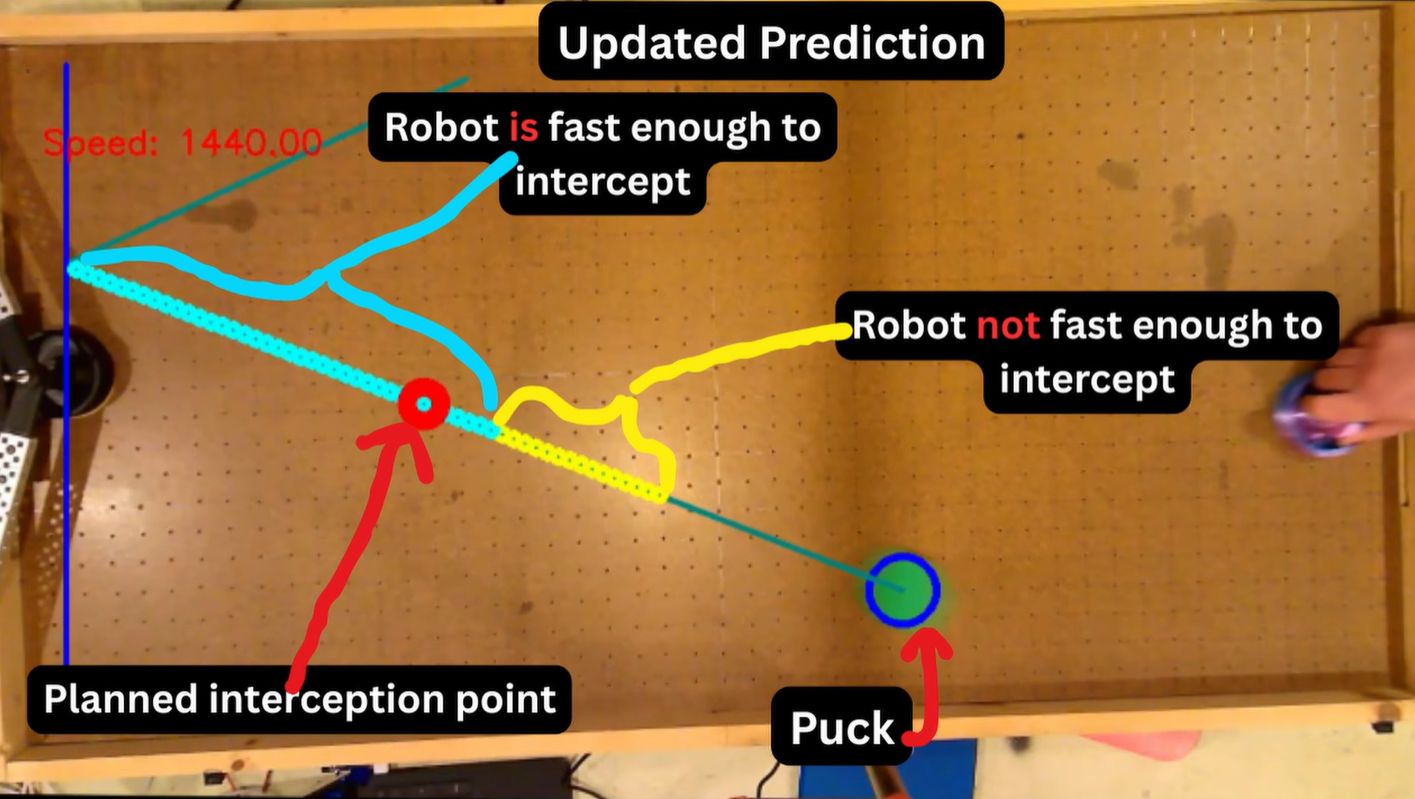
Air hockey is one of those sports that’s both incredibly fun, but also incredibly frustrating as playing it by yourself is a rather lonely and unfulfilling experience. This is where an air hockey playing robot like the one by [Basement Builds] could come in handy. After all, after you finished building an air hockey table from scratch, how hard could it be to make a robot that merely moves the paddle around to hit the puck with?
An air hockey table is indeed not extremely complicated, being mostly just a chamber that has lots of small holes on the top through which the air is pushed. This creates the air layer on which the puck appears to float, and allows for super-fast movement. For this part countless chamfered holes were drilled to get smooth airflow, with an inline 12VDC duct fan providing up to 270 CFM (~7.6 m3/minute).
Initially the robot used a CoreXY gantry configuration, which proved to be unreliable and rather cumbersome, so instead two motors were used, each connected to its own gearbox. These manipulate the paddle position by changing the geometry of the arms. Interestingly, the gearbox uses TPU for its gears to absorb any impacts and increase endurance as pure PLA ended up falling apart.
Advertisement
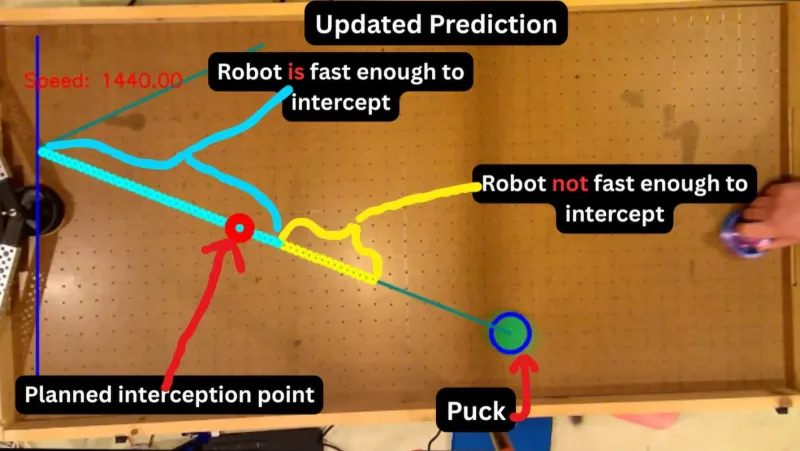
The position of the puck is recorded by an overhead camera, from where a Python script – using the OpenCV library running on a PC – determines how to adjust the arms, which is executed by Arduino C++ code running on a board attached to the robot. All of this is available on GitHub, which as the video makes clear is basically cheating as you don’t get to enjoy doing all the trigonometry and physics-related calculating and debugging fun.
If you agree with me that what RFK Jr. has done at HHS — particularly when it comes to altering vaccine schedules, approvals, research, and access — is bad well, you ain’t seen nothing yet.
Kennedy road Trump’s coattails, building his own Make America Health Again (MAHA) movement on the back of the wider MAGA orgy of fascism Trump has constructed. The MAGA people are generally those who have followed Kennedy’s checkered career for years and not only act as his public ally for all the crazy shit he says and does, but also serve to push him even further than he’s already gone. And while not every idea coming out of the MAHA people is horrible, the majority certainly are.
So, back to vaccines. Kennedy has already done immense harm to vaccination policy and research in America, particularly when it comes to children. But the MAHA Institute, a D.C. think tank that pushes Kennedy’s wider agenda, would like to please just do away with all childhood vaccine schedules until each shot can “be proven” to be safe.
Leaders of the MAHA Institute, the Robert F. Kennedy Jr.-allied think tank pushing Make America Health Again movement policies, stated their position on vaccines unequivocally on Monday: “The childhood vaccination schedule needs to be eliminated,” the policy group’s president, Mark Gorton, said.
“All vaccines need to be removed from the market until they can be proven to be safe and effective,” Gorton told an audience of supporters gathered in the Willard Hotel’s Crystal Room for a panel discussion on the “Massive Epidemic of Vaccine Injury.”
Advertisement
Now, Kennedy didn’t attend the event. He doesn’t determine its agenda. He isn’t directly responsible for what is said by this group. But if you go through all the other nonsense these people are saying, you will recognize that much of it aligns directly with claims Kennedy has made over the years and into the present. And the history of MAHA Institute events and its guests certainly portrays a sense that the government listens to these people.
The event, just a block from the White House, comes at an interesting time for the MAHA movement in Washington. It is clear that the institute, and the movement it is part of, have the administration’s ear; attendees of past events have included senior HHS adviser Calley Means and Food and Drug Administration official Sara Brenner.
And that should be particularly terrifying, given that you can very easily get these same people to admit that they just make shit up when it suits them.
Gorton displayed slides with titles like “The Polio Fraud” and “The flu shot has given 1,900,000 Americans Alzheimer’s,” and, simply, “VACCINES ARE THE GREATEST SCAM IN MEDICAL HISTORY.”
At another moment, Gorton claimed that HHS had commissioned more than 100 studies into vaccine injuries. When asked by NOTUS where he got that number, he said Kennedy had previously stated his desire to further study vaccines.
“I don’t know much more than they’re commissioning a bunch of studies,” Gorton told NOTUS.
Advertisement
So what would eliminating approval for childhood vaccinations in a full sweep in America mean if it happens? Healthcare facilities would be entirely overrun. Hospitals would have to exponentially increase the size of their pediatric wards. Trillions of dollars would need to be spent to deal with the illnesses that would result. Real estate would have to be set aside to serve as graveyards filled with tiny little coffins.
Among children born during 1994–2023, routine childhood vaccinations will have prevented approximately 508 million cases of illness, 32 million hospitalizations, and 1,129,000 deaths, resulting in direct savings of $540 billion and societal savings of $2.7 trillion.
Gone are the days of any of us thinking that an idea or plan is just too crazy for this particular administration to enact. We simply can’t afford to bet on that sort of minimal sense-making occurring any longer.
So sit up and pay attention, because anything that remotely looks like the eradication of childhood vaccines in America would be no less than a childhood healthcare holocaust.
The International Brotherhood of Teamsters, the union that covers warehouse workers, drivers and a diverse collection of other laborers, has come out against Paramount Skydance’s merger with Warner Bros. Discovery. In a press release, the Teamsters announced that it has submitted a report to the US Department of Justice’s Antitrust Division outlining its concerns about the impact of the deal, and is urging the DOJ to intervene in the merger.
“This merger threatens the livelihoods of the very workers who built these studios into industry giants,” Teamsters General President Sean M. O’Brien said in a statement. “We’ve seen what happens when corporations consolidate power: jobs disappear, production leaves American communities and workers pay the price. The DOJ has a responsibility to stop deals that eliminate competition and harm working families. Unless Paramount and Warner Bros. can guarantee enforceable protections for domestic production and labor standards, this merger can’t be allowed to move forward.”
The Teamsters are primarily concerned with how merging the two companies will consolidate power, and eliminate jobs in the process. “Previous mergers have a well-documented track record of harming workers — Disney’s 2019 acquisition of 20th Century Fox resulted in eliminated production units, significant job losses and canceled projects,” the union says. Motion Picture Teamsters, the division of the union concentrated in Hollywood that transports the equipment, props and crew members that make productions possible, stand to be most impacted.
The high likelihood the merger impacts competition in the market is why the Teamsters expect the DOJ to step in, or in the case Paramount and Warner Bros. aren’t able to provide “enforceable commitments to increasing and maintaining domestic production, strong labor standards and guarantees against layoffs and erosion of union jobs,” block the deal entirely.
Advertisement
Engadget has asked the Teamsters union what it plans to do if the Department of Justice doesn’t intervene. We’ll update this article if we hear back.
If it’s allowed to eat Warner Bros., Paramount Skydance has committed to producing 30 theatrical films annually, evenly split across the two studios’ slates. The larger issue is that the company’s offer to acquire the studio is predicated on the idea it will quickly pass the muster of government regulators. Paramount Skydance CEO David Ellison is the son of Oracle co-founder Larry Ellison, who’s known to have close ties with President Donald Trump, and has already benefited from favorable treatment from the administration. There’s a real possibility that Paramount’s new merger could similarly sail through, regardless of the Teamsters’ concerns.
Rust, or corrosion, is a silent enemy that has been plaguing the United States Navy and its sea-going vessels as long as they’ve been at sea. In the viral photograph below, you can see evidence of the rust caused by an unrelenting barrage of saltwater spray.
The Navy ship in question is the USS Dewey (DDG 105), an Arleigh Burke-class guided missile destroyer. The photo was captured as it pulled into port at Sembawang, Singapore, on February 18, 2025. With hundreds of shares across various social media platforms, comments surrounding that photograph express concern over the ship’s readiness and the Navy’s apparent lack of concern for its maintenance. However, similar to how you protect your car from rust, the Navy invests considerable time and effort in combating the silent enemy attacking its ships.
The Navy notes that its ships are designed to endure the harsh climate associated with life on and near the ocean, but preventive maintenance to reduce rust damage is never-ending. Over the years, the Navy’s war on rust involved boatswain’s mates and other Sailors assigned to the deck department cleaning, sanding, and painting surfaces inside and out of their assigned ships. However, a new plan of attack rolled out in February 2026 will take the battle to the next level.
Advertisement
The US Navy’s revised war on rust
A video released by the U.S. Defense News YouTube channel reports on a new plan being instituted by the Navy to fight rust on its warships. The multi-pronged plan aims to improve the outward appearance of Navy ships, reduce maintenance costs, and ensure readiness of the fleet after “years of deferred corrosion work.” The Navy’s war on rust is nothing new. It’s been ongoing since the Navy began using ferrous metals on its wooden ships, way before the first steel-hulled Navy ships entered the fleet in 1886. While the U.S. Navy still uses ships with wooden hulls, the majority of its current warship fleet is made primarily of steel.
Advertisement
The Navy’s newly released plan to combat rust on its ships starts with their design. Improved designs, which could be incorporated into the U.S. Navy’s newest battleships, allow seawater to fully drain from the ships’ surfaces to help reduce standing water that can seep into crevices and cause corrosion. At the same time, employing rust-resistant materials, like composites and stainless steel, for fittings and structures reduces maintenance efforts, which can be refocused elsewhere.
A key part of the new plan is ensuring all existing rust is removed before painting. Sailors performing the task at sea are encouraged not to paint over rust on surfaces. They’re also receiving improved tools and cleaners to make the job more effective. When ships are docked at shipyards for maintenance, dedicated teams of contractors employ specialized methods to control corrosion and install new fittings and scuppers with improved water-shedding designs.

















![BITCOIN IS ABOUT TO BREAKOUT!!!!! [GET READY]](https://wordupnews.com/wp-content/uploads/2026/03/1773381137_maxresdefault-80x80.jpg)