Record law enforcement officers whenever you can. Sure, they’ll hate it, but it helps all the people they seek to do harm to.
Last summer, recordings and other evidence undercut a lot of the administration’s attempts to convert First Amendment activity into criminal charges. Prosecutors who dropped cases after watching recordings or talking directly to the government’s witnesses noted a plethora of “untruthful statements” or “material misrepresentations.”
Six months later, the losing streak created by unforced (but deliberate) “errors” continued. Federal immigration officers just couldn’t stop lying, forcing DOJ prosecutors to voluntarily dismiss a bunch of felony assault cases that were completely reliant on statements made by officers who were later shown to be lying.
Here’s another case that’s hit a dead end because an ICE officer lied and an ICE supervisor decided to pass on these lies to a federal prosecutor. (h/t Aaron Reichlin-Melnick)
Gabriel Hurtado-Cariaco, 31, was referred to by DHS as a “criminal illegal alien” and a “known Tren de Aragua terrorist.” The agency said he “violently attacked an ICE agent” by slamming her head into the ground and attempting to choke her to death. At a preliminary hearing, a Homeland Security agent and a federal prosecutor said Hurtado-Cariaco received “special forces-type training” in the Venezuelan military and may have been involved in “killing people, hurting people, [and] committing human rights violations.”
The only thing true here is that Hurtado was once a member of the Venezuela military. But he deserted, fled to the US, and filed an asylum claim. He was paroled into the US in 2024 and, since then, had been steadily working as a delivery driver.
The arrest of Hurtado didn’t look great. Two ICE officers tried (and failed) to subdue him. He managed to escape custody, but was arrested successfully shortly after he fled the scene of the first attempted detention.
Perhaps the (attempted) arresting officer was too embarrassed to tell the truth. But the lies he told had serious consequences.
Advertisement
The initial narrative of what happened during Hurtado-Cariaco’s arrest was provided by Immigration and Customs Enforcement agent Craig Allrich. Allrich, who was not at the scene of the arrest, penned the affidavit that would be used to secure a criminal complaint against Hurtado-Cariaco.
The first complaint actually told the truth. It simply said that Hurtado had resisted arrest. But that apparently wasn’t good enough for Allrich and/or the officer who failed to subdue Hurtado during his first encounter with him. Things got worse for Hurtado in a hurry.
It was in the amended complaint that Allrich laid out how Hurtado-Cariaco allegedly attempted to murder the female ICE officer, referred to as “Victim 1” throughout the document.
[…]
[A]s the two agents struggled to detain Hurtado-Cariaco, he was “able to get control of Victim 1 and place [her] in a chokehold.” Allrich said the male agent gave repeated commands to Hurtado-Cariaco to release the chokehold, but he “chose to continue choking Victim 1 rather than simply fleeing the scene.”
Advertisement
This assertion was a lie. Two recordings made by bystanders who witnessed the attempted arrest made it clear Hurtado had definitely resisted arrest, but at no point did he pin down the female ICE officer, nor did he ever place her in a chokehold.
At no point in either video is Hurtado-Cariaco seen choking the female agent. Instead, the videos show agents placing Hurtado-Cariaco into a chokehold on two separate occasions as he attempts to break free.
Hurtado’s federal public defender, Richard McWilliams, says federal prosecutors sat on these recordings and refused to remove the attempted murder charge despite having evidence proving otherwise. US Attorney Lesley Woods says this isn’t true, claiming the public defender refused to turn over the recordings he had obtained.
But Woods’ claims are difficult to believe, especially when prosecutors waited months to rewrite the indictment, excising the bogus attempted murder charge just so that they could replace it something nearly as damaging.
By November, prosecutors filed a superseding indictment, which abandoned the attempted murder charge and replaced it with another serious felony – providing material support to a terrorist organization.
According to prosecutors, the mere existence of a tattoo — one that doesn’t actually demonstrate a connection to Venezuelan gang Tren de Aragua — was enough to hit Hurtado with terrorism charges.
Advertisement
Oh, and the guy was almost certainly not in Tren de Aragua either, as ICE accused. Like with make-up artist Andry Romero, it seems ICE’s reason for declaring him a gang member was… a tattoo. Of a clock. With his son’s birthday. Showing a man holding a kid’s hand.Seriously. ICE can’t be trusted.
(And that charge is only possible because the Trump administration unilaterally declared this gang to be foreign terrorist organization — something it only did in an attempt to legalize its unconstitutional detain-and-deport program.)
None of this bullshit impressed the judge handling Hurtado’s criminal case.
U.S. District Court Chief Judge Robert Rossiter said at the sentencing that the allegations made in the initial complaint were “at worst a misrepresentation and at best complete negligence.” Though Rossiter said there is “no doubt” that Hurtado-Cariaco committed the offense that he pleaded guilty to by fleeing the officers and struggling with them, he found the law enforcement reports “embellished” and “troubling.”
That’s a polite way of saying either the ICE officer at the scene lied or that the ICE supervisor who prepared the affidavit didn’t care whether or not he was being lied to.
Advertisement
And the judge isn’t happy with the government’s last ditch attempt to stick Hurtado with a lengthy sentence by belatedly adding some terrorism charges to the mix. As it stands now, Hurtado’s guilty plea to resisting arrest nets him a 14-month sentence, most of which he has already served because he’s been in jail since his arrest last June.
“To refer to him as a terrorist, attempted murderer, that he had put a chokehold on these victims… It’s just not borne out by the evidence,” Rossiter said. “And it’s troubling.”
If you can’t do your job without lying, you can’t be trusted to hold that position. If the administration can’t find enough people to arrest and deport without having to make up stories about murder or terrorism, then it needs to restrain itself to the promise that has always been empty: go after the worst of the worst. These lies were caught. Dozens or hundreds of others will go undetected.
Given what we know about the people “leading” this country and these agencies, I firmly believe they’d lie even if they didn’t have to. That’s just the kind of people they are. And the foot soldiers willingly serving this rolling atrocity of an administration need to be filmed whenever possible, because it’s the only way to keep them honest.
Chris Fall, the director of the Center for AI Standards and Innovation (CAISI), has resigned, the agency confirmed to multiple news outlets.
He was appointed just three months ago after the last appointee, Collin Burns, left in less than a week, The Washington Post reported at the time. Burns was reportedly “pushed out” of the job in April because he previously worked for Anthropic and the Trump administration had been battling with the company, sources told the Post.
No reason was given for Fall’s departure. Prior to leading CAISI, Fall was the director of the Department of Energy’s Office of Science during the first Trump administration and had been the acting director of the DOE’s Advanced Research Projects Agency-Energy. He worked in the DOE’s Office of Naval Research (ONR) prior to that.
Before Burns and Fall, the agency was led by venture capitalist David Sacks, whose title at the time was White House AI and crypto czar. Sacks stepped down in March.
Advertisement
CAISI, which operates under the National Institute of Standards and Technology, is the primary organization for developing technical standards and testing methods for AI models as well as assessing cybersecurity risks. Yet it was not the agency at the center of the most recent model-risk brouhaha.
That occurred in June when the U.S. Commerce Department invoked an obscure export control directive that effectively forced Anthropic to pull its Mythos and Fable models from the market. The ban was lifted by the end of the month, when Secretary of Commerce Howard Lutnick said he was satisfied with Anthropic’s safety plans.
Earlier this month, the White House also signed an executive order for a new AI safety oversight program called “Gold Eagle” that creates a clearinghouse for cybersecurity vulnerability coordination. A host of federal organizations were named as part of the program, including the Commerce Department and Department of Homeland Security. But, as CNBC pointed out, CAISI was not among the federal organizations mentioned.
Meanwhile, after Anthropic’s models were freed from the ban, Google DeepMind CEO Demis Hassabis began calling for the creation of an independent, industry-run standards body to regulate frontier AI modeled after FINRA — the same sort of mission that CAISI was formed to tackle.
Advertisement
Fall’s resignation also follows this weekend’s handwringing over Chinese AI lab Moonshot’s new version of its open model Kimi, which performed competitively against flagship frontier models. The administration was weighing efforts to somehow ban Chinese open models, Axios reported. This sparked immediate debate and outrage over the weekend, including from Sacks, who argued that regulations shouldn’t be used as a protectionism strategy for U.S. proprietary AI labs.
While CAISI has released a few reports on the capabilities of Chinese open-weight models Z.ai’s GLM-5.2 and DeepSeek V4 Pro, it hasn’t talked much about its processes for testing. (Open weight means these models can be publicly downloaded and run locally, but its training code and datasets are not available). Since July 9, TechCrunch has sent multiple inquiries to both the DoC and NIST about how its LLM evaluations work and has not received a response.
When you purchase through links in our articles, we may earn a small commission. This doesn’t affect our editorial independence.
A new NYT Connections puzzle appears at midnight each day for your time zone – which means that some people are always playing ‘today’s game’ while others are playing ‘yesterday’s’. If you’re looking for Monday’s puzzle instead then click here: NYT Connections hints and answers for Monday, July 20 (game #1135).
Good morning! Let’s play Connections, the NYT’s clever word game that challenges you to group answers in various categories. It can be tough, so read on if you need Connections hints.
What should you do once you’ve finished? Why, play some more word games of course. I’ve also got daily Strands hints and answers and Quordle hints and answers articles if you need help for those too, while Marc’s Wordle today page covers the original viral word game.
Advertisement
SPOILER WARNING: Information about NYT Connections today is below, so don’t read on if you don’t want to know the answers.
Latest Videos From
NYT Connections today (game #1136) – today’s words
(Image credit: New York Times)
Today’s NYT Connections words are…
MUSIC
GRAM
DRIVER
VISION
TUBE
CROP
BOOK
APP
ORCHESTRATION
EXTENSION
TANK
KINESIS
PROMPTER
HALTER
LYRICS
PLUGIN
NYT Connections today (game #1136) – hint #1 – group hints
What are some clues for today’s NYT Connections groups?
Advertisement
YELLOW: Types of a similar garment
GREEN: Computer terms
BLUE: Parts of a composition
PURPLE: Begin with word that rhymes with Nelly
Need more clues?
We’re firmly in spoiler territory now, but read on if you want to know what the four theme answers are for today’s NYT Connections puzzles…
Sign up for breaking news, reviews, opinion, top tech deals, and more.
NYT Connections today (game #1136) – hint #2 – group answers
What are the answers for today’s NYT Connections groups?
Advertisement
YELLOW: KINDS OF TOPS
GREEN: SOFTWARE DOWNLOADS
BLUE: ELEMENTS OF A MUSICAL
PURPLE: TELE____
Right, the answers are below, so DO NOT SCROLL ANY FURTHER IF YOU DON’T WANT TO SEE THEM.
NYT Connections today (game #1136) – the answers
(Image credit: New York Times)
The answers to today’s Connections, game #1136, are…
BLUE: ELEMENTS OF A MUSICAL: BOOK, LYRICS, MUSIC, ORCHESTRATION
PURPLE: TELE____: GRAM, KINESIS, PROMPTER, VISION
My rating: Easy
My score: Perfect
This happens very rarely to me, but I saw the hardest group immediately today, with PROMPTER and VISION helping me connect GRAM and KINESIS.
It felt like an easy purple, but maybe telegram caught a few people out seeing as they are now a fairly pointless form of communication.
Regardless, I was rewarded with my 50th Purple First badge — it has taken me a while to reach this milestone, with my haphazard play style instead being to just connect the first group I see, rather than looking for the most likely to be a purple. I can’t imagine being that tactical with Connections.
In truth, this felt like a game where any of the groups could have been yellow on any other day, although all of the groups did contain things that have largely disappeared.
Advertisement
Yesterday’s NYT Connections answers (Monday, July 20, 2026, game #1135)
YELLOW: ANNOUNCE: BLARE, HERALD, SOUND, TRUMPET
GREEN: THINGS TO CLICK: BUTTON, ICON, LINK, MENU
BLUE: ASSOCIATED WITH PEARLS: BUBBLE TEA, OYSTER, SWINE, WISDOM
PURPLE: STARTING WITH ALCOHOLIC BEVERAGES: ALEXA, MEADOW, PORTOBELLO, SAKES
What is NYT Connections?
NYT Connections is one of several increasingly popular word games made by the New York Times. It challenges you to find groups of four items that share something in common, and each group has a different difficulty level: green is easy, yellow a little harder, blue often quite tough and purple usually very difficult.
On the plus side, you don’t technically need to solve the final one, as you’ll be able to answer that one by a process of elimination. What’s more, you can make up to four mistakes, which gives you a little bit of breathing room.
It’s a little more involved than something like Wordle, however, and there are plenty of opportunities for the game to trip you up with tricks. For instance, watch out for homophones and other word games that could disguise the answers.
It’s playable for free via the NYT Games site on desktop or mobile.
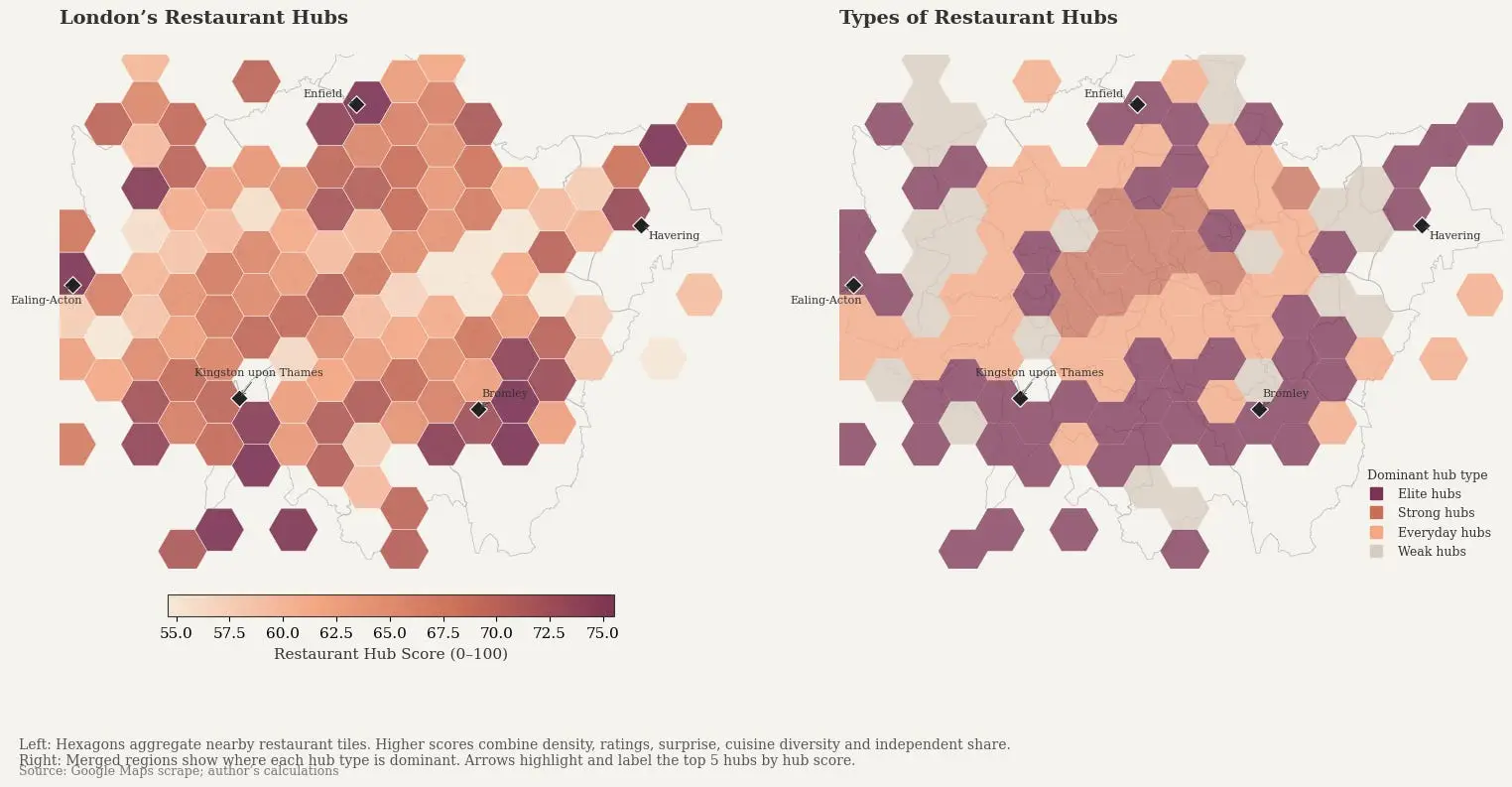
We all know that Google and other big players pick and choose what information people see, but we sometimes overlook it outside of the search and social media space. [Lauren Leek] decided to take a look at how Google Maps picks winners and losers in the restaurant scene in London.
Building a machine learning model to determine a new restaurant recommendation (as one does), [Leek] uncovered interesting, and perhaps concerning, elements of how Google Maps ranks restaurants. Broken down by relevance, proximity, and prominence, many new restaurants face the issue of not drawing traffic without reviews and vice-versa causing a vicious cycle. Relevance and proximity are fairly straightforward, but what goes into “prominence?”
[Leek] found that “it is not just what people think of a place – it is how often people interact with it, talk about it, and already recognise it.” This leads to chains and high foot traffic areas awash in reviews while more out-of-the-way places find it more difficult to draw traffic. Some of this is expected and would be happening even when word of mouth was the primary way to find out where to eat, but as with many things, the algorithm amplifies this, along with the undisclosed paid placement of restaurants in Maps results.
While still in its infancy, [Leek] built a public dashboard where people can sort restaurants in the city. The machine learning algorithm is designed to identify places that are hidden gems that punch above their Google Maps weight and may make you look like the trendy one (if you live in London).
Advertisement
Zooming out further, [Leek] found larger clusters that revealed restaurant “diversity, in other words, is not just about taste. It is about where families settled, which high streets remained affordable long enough for a second generation to open businesses, and which parts of the city experienced displacement before culinary ecosystems could mature.”
We spend hours testing every product or service we review, so you can be sure you’re buying the best. Find out more about how we test.
Adobe is a popular brand when it comes to all things creative, including AI content generation and editing. With its newly improved Firefly tool, Adobe has taken AI content generation a step further with realistic, real-time outputs.
In addition to being highly accurate, Firefly is also one of the most affordable tools on the market today. But is it the best AI video editor for your needs? Read on to find out. In this article, we’ve put Firefly to the test, examining its features, pricing, ease of use, and overall value for money.
Advertisement
Adobe Firefly: Plans and pricing
Adobe Firefly is available online by clicking here, as well as part of the Creative Cloud suite of apps.
Latest Videos From
It offers one of the most generous free video editing software we’ve seen. Instead of capping your monthly or one-time usage, Adobe allows you to generate a limited number of images and videos each day. This means you can continue using Firefly for a longer period, provided you stay within the daily limits.
What we like about the free plan is that Firefly does not lock its image or video editing features behind paywalls. Even on the free plan, you get access to features such as Generative Fill, Background Removal, AI Markup, video upscaling, text-based editing, as well as audio features such as generating soundtracks, speech, text-to-avatar, and more. Unlike other platforms, Firefly’s free plan can actually come in handy for limited individual use.
(Image credit: Adobe Firefly)
Its paid plans are also among the most inexpensive we’ve seen in the category, with the Standard plan starting at $8.49 per month when billed annually, which comes with 2,000 credits.
Advertisement
With this plan, you get access to all the AI models Firefly has to offer, with hard upper limits on the number of images and videos you can generate with each model. Videos, however, are capped at a maximum duration of five seconds, which might not be enough for users looking to generate long-form content. Besides this, you get access to unlimited Firefly Boards, while the remaining features stay the same as those in the free plan.
Sign up to the TechRadar Pro newsletter to get all the top news, opinion, features and guidance your business needs to succeed!
Next is the Pro plan at $16.99 per month (4,000 credits), billed annually, where you get unlimited access to several AI models such as Gemini 2.5 Flash, FLUX.1 Kontext, and others. The maximum number of images and videos you can generate is also higher than in the Standard plan.
Then there’s the Pro Plus plan, priced at $29.38 per month, where you get up to 10,000 credits and higher limits on image and video generation. In this plan, a wider range of models comes with unlimited access, including Gemini 3.0, ChatGPT Image, Runway Gen-4.5, and Gemini 3 Nano Banana Pro 2K.
Advertisement
Finally, there’s the Premium plan at $118.93 per month, offering 50,000 credits and unlimited access to almost all AI models except a few. This plan is ideal for large content creation and creative teams.
Adobe Firefly: Features
Right off the bat, what impressed us most about Firefly is its brainstorming and early-stage concepting feature called Firefly Boards. It is essentially an infinite-canvas mood board and ideation workspace that lets you upload your own images, sketches, or stock images, or generate new ones.
You can select multiple assets and combine elements while brainstorming ideas with your creative team. This is similar to Midjourney- or Discord-style iteration, giving remote creative teams a space to flesh out new ideas.
Advertisement
(Image credit: Adobe Firefly)
Moreover, Firefly offers access to more than 10 popular video, audio, and image models, each with its own limits on the amount of content you can generate. Some notable features are Generative Expand and Generative Fill, which let you expand the canvas of an image or video after it has been generated using Adobe’s AI engine. Similarly, there’s also Generative Remove, which helps you remove elements from a piece of content.
Firefly also throws in a range of audio features, such as the ability to generate speech, translate videos from one language to another, or add text-to-sound effects to your content. However, we were a bit disappointed with its video editing features, such as trimming, arranging, and refining content, all of which are still in beta. Its AI assistant is also at a very early stage and currently supports only one conversation at a time.
You also have the option to upload an image to provide Firefly with a style or structure reference and create a consistent look across a batch of images. Unlike many other AI tools, Firefly allows you to use your own images to train its AI models and create custom models. This is still an early-stage feature, and we expect it to improve over the next year or so.
Firefly has also expanded its multilingual reach and now supports prompts in more than 100 languages, along with translations in more than 20 languages. There’s also an option for bulk actions such as background removal, color grading, and cropping.
Advertisement
Its mobile apps have also improved a lot over the past year and now offer native iOS and Android apps with an experience that’s very close to the web interface. And of course, Firefly is part of Adobe’s broader AI-powered content generation and editing ecosystem, integrating directly with apps like Photoshop and Illustrator.
Adobe Firefly: Interface and in use
Adobe Firefly is by far one of the most improved image and video editing software we have seen in a long time. One of the biggest criticisms of Firefly was that it did not offer any option to edit the images it generated. However, all that has changed with its revamped user interface.
Not only did it generate a pretty high-quality image for us, but it also provided several editing options. We especially liked its Tune feature, which is currently in beta and allows you to change the look of an image by selecting from a list of preconfigured options.
Advertisement
There is also a prompt option, which lets you keep fine-tuning your generated image with follow-up prompts.
(Image credit: Future)
However, if that is too much work, there are several fine-grained controls available. For instance, there is a Fill feature that lets you fill any blank spaces in the image with an element of your choice. Similarly, there’s the Remove feature, which lets you remove any element you do not want in the final result.
What we liked the most is its Select feature, where you can select a particular element in an image or video and then type a prompt to edit only that selected portion. This helps avoid unwanted changes in other parts of the image or video and ensures that the edit is applied only to the section you selected.
(Image credit: Future)
The generation interface itself is pretty simple. You’ll see a prompt box at the bottom of your screen, along with a panel on the left-hand side where you can control the generation settings.
Advertisement
For instance, you can select the model you want to use, the resolution, the aspect ratio (16:9 or 9:16), and the duration of the video. There is also an advanced setting where you can enter a random seed value to experiment with the AI engine settings.
What we found particularly eye-catching is the prompt enhancement feature, which lets you improve your prompts before generating an image or video. This helps you create more detailed prompts, which in turn result in more accurate outputs.
Adobe Firefly: How we tested
We tried the free version of Adobe Firefly over several days and were quite impressed with the results. We first tried to create an AI image with the following prompt:
Advertisement
“A tired line cook in a stained white apron, frowning with exhaustion, wiping sweat off his forehead while chopping six carrots on a wooden cutting board. Behind him, a dim, cluttered restaurant kitchen with steam rising from a pot. Photorealistic, dramatic low lighting, shot on 35mm film.”
As soon as we hit Generate, Firefly got to work and produced a pretty impressive image that closely matched our prompt.
(Image credit: Future)
However, it’s worth noting that Firefly is a tad slower compared to the likes of Fliki or Kapwing. That said, the accuracy of the results is worth the wait.
Once the image was generated, we clicked on it to open the editing panel and played around with the settings. For instance, we selected the burning steel pot behind the cook and prompted Firefly to change it to a wooden pot instead.
Advertisement
Rather than simply making the change, Adobe gave us an Edit Strength slider, allowing us to control how strongly the wooden effect was applied to the pot.
(Image credit: Future)
We then tried the Remove feature by selecting a bunch of carrots and asking Firefly to remove them. Adobe once again impressed us, as it accurately removed the carrots without distorting the chopping board around them.
(Image credit: Future)
Lastly, we used the Upscale feature to improve the quality of the image. This took the longest, more time than it took to generate the image in the first place. However, we were once again very satisfied with the final result.
We also generated an AI video using the following prompt:
Advertisement
“A woman in a red coat walks across a rain-soaked city street at night, neon signs reflecting in the puddles, camera slowly tracking alongside her.”
(Image credit: Future)
The results were again highly accurate, the colors were vibrant, and we were impressed by how closely Firefly followed the prompt without significantly diverging from the intended output.
Adobe Firefly: Alternatives
Although Adobe Firefly is a much-improved product, it does have a few shortcomings, which is why you may want to consider some alternatives. For instance, Adobe isn’t the best choice if you want to generate AI avatars. Although it offers the feature in a limited capacity, the results are not what you’d expect from a dedicated AI avatar generation tool.
Advertisement
In that case, you can try Kapwing, which offers one of the most extensive collections of AI avatars. You can choose from a wide range of characters, including traditional human-inspired faces and more outlandish options such as aliens, Cupid, demons, cyborgs, Dracula, and more.
Kapwing produces some of the best photorealistic AI avatars we have seen in the industry. It is also one of the few tools that can render videos in 4K quality. That said, it is a bit on the expensive side, with plans starting at $16 per month.
If you need a dedicated AI assistant to help with content generation and editing, you can try Fliki, which offers an AI Copilot that understands natural language inputs and helps you achieve your desired results more effortlessly. It also includes licensed YouTube music and advanced video generation options such as stop-motion videos.
Fliki also offers a wider range of customization options compared to Adobe Firefly, such as choosing the format and template, customizing the type of character, selecting the AI model you want to use, and adding voiceovers, captions, and AI avatars.
Advertisement
Adobe Firefly: Final verdict
Adobe Firefly is one of the best-known names in the content creation industry, and its recent improvements put it right at the top of our list of the best AI video editors. Firefly offers more than 10 AI models for image, video, and audio generation, helping you create photorealistic images, videos, and audio with simple prompts.
We were particularly impressed by Firefly Boards, which helps you brainstorm ideas on an endless online canvas in real time while collaborating with your content team. Firefly has also improved its editing interface and tools and now supports follow-up prompt editing, along with features like Generative Fill and Generative Remove.
That said, it has a few drawbacks, such as the lack of mature video editing tools, which are still in beta, and rather limited AI avatar generation capabilities. That said, if you already use Adobe tools like Illustrator or Photoshop, adding Firefly to your repertoire is a no-brainer.
Single datacenter and just three services taken down by ‘upstream’ power problem, while the rest of a zone and region kept humming
Google Cloud last week experienced an outage that analysts say demonstrates that not all promises of cloudy resilience are created equal.
Google’s incident report explained that three services – the VMware Engine (GCVE), NetApp Volumes, and Bare Metal Solutions (BMS) – experienced a 15-hour outage due to a cooling failure in its europe-west4-a zone.
Advertisement
The report includes the following detail: “The datacenter serving europe-west4-a for GCVE, BMS, and NetApp has experienced a power failure, which subsequently caused a cooling failure.”
The important detail there is that Google uses a discrete datacenter for those three services.
Another notable element of the incident report is the admission that “An electrical fault occurred on the utility grid upstream of the datacenter, disrupting the electrical distribution gear and cooling equipment.”
Google hasn’t explained how an upstream failure caused that disruption but did say it “proactively turned down workloads in order to protect customer data from any risks posed by running infrastructure in a high temperature environment.”
Advertisement
Whenever your correspondent talks to hyperscalers or datacenter operators about how they ensure resilience, they tell me about their use of multiple redundant pieces of energy infrastructure, plus on-site generation capabilities that can keep a datacenter powered for days if necessary.
We’ve asked Google if it had generators or other energy sources at this site, and if so, why it nonetheless had to turn down workloads. We’ve not received a response at the time of writing. Google told us its incident analysis “is currently ongoing” and promised to follow up once it is available.
Hidden dependencies
We also asked Google if it advertises the fact that some of its services are tied to a single datacenter, a matter of interest because like other hyperscalers it divides its cloud into “regions” that typically comprise multiple “zones” spread across a city or other locale. Like its hyperscale peers, Google recommends placing workloads across different zones and regions to ensure resilience. Yet this incident shows some services can be tied to a single datacenter in a zone – and that those single datacenters can experience problems while the rest of the zone keeps working.
Analysts told The Register the outage shows organizations need to dig into clouds’ promises of resilience.
Advertisement
“The real issue is transparency: customers are generally told to use multiple zones and regions for resilience but are rarely given visibility into whether a particular managed service has a single-datacenter dependency within a zone,” said Biswajeet Mahapatra, principal analyst at Forrester. “As a result, many organizations assume the cloud abstraction provides more facility-level redundancy than may actually exist for specialized services.”
“The underlying architecture is not necessarily unusual,” he added. “AWS, Azure, and Google all operate services that rely on dedicated hardware, storage platforms, or tightly coupled infrastructure that may not be distributed across multiple facilities in the same way as core compute and storage services.”
Gartner Director Analyst Adrian Wong reminded The Register of the 2023 outage at Google Cloud’s europe-west9-a region, the cause of which was a water leak that Google said “originated in a non-Google portion of the facility.”
Google uses a tool called “Spanner” to replicate data across zones, but in the flooded zone Google’s Spanner configuration didn’t work once one building became unavailable.
Advertisement
“It is very hard to figure out how an individual region is architected,” Wong said. “Our customers are often surprised by that,” he added.
The incident report for last week’s outage includes an apology.
“We know how much you rely on Google Cloud, and we regret the impact on your productivity,” the document states, before promising a final incident report will detail “preventative actions.”
But as this incident shows, knowing how Google plans to avoid future incidents of this sort won’t arm customers with the knowledge to understand if those mitigations will address hidden design issues that can reduce resilience. ®
Newegg is knocking $50 off AMD’s Ryzen 7 7700X3D with promo code PKC337, bringing it down from its $329 to $279. At that price, it becomes a stronger value proposition against the Ryzen 7 7800X3D while gaming performance stays nearly identical. Our full review is coming this week.
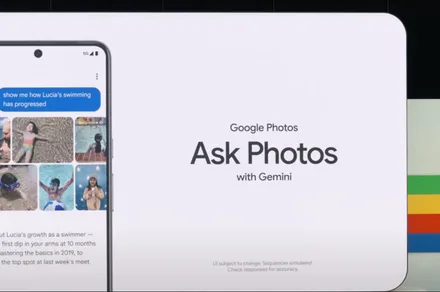
Google Photos is giving users an easier way to leave its Gemini-powered search when a simple keyword would do. A new toggle now sits at the top of the results page, letting users switch between Ask Photos and classic search without digging through settings.
The change appears to address feedback from people who opted into Ask Photos but wanted a quicker way to return to classic search when Gemini was slower or less useful for a straightforward query.
Why did Google add the toggle?
Ask Photos is built for complicated requests. It can understand natural-language questions and search for details inside images, including prompts such as “What’s my license plate?” Classic search is quicker when you only need to find a person, place, object, date, or keyword.
Reddit users complained about irrelevant results, missing keyword matches, and the disappearance of an obvious route back to classic search. Some found that the most reliable workaround was disabling Ask Photos through the Gemini settings entirely.
Advertisement
Google had already acknowledged the problems. It paused the rollout in June 2025 over latency, quality, and user-experience concerns before bringing Ask Photos back with faster handling for simple searches.
What the new toggle actually does
Users who have enabled Ask Photos will see classic search on the left and Ask Photos on the right. Google still chooses which system it believes suits the query, but either view is only a tap away. Classic search can remain selected across several basic searches. A more complicated question may switch the app back to Ask Photos, where it stays until changed manually.
People who have not opted in can continue using regular search. Google may still show them the toggle, but selecting the AI side opens the onboarding process first. Gemini still gets a prominent place in Google Photos. At least users no longer have to hunt through settings whenever classic search would work better.
A new Quordle puzzle appears at midnight each day for your time zone – which means that some people are always playing ‘today’s game’ while others are playing ‘yesterday’s’. If you’re looking for Monday’s puzzle instead then click here: Quordle hints and answers for Monday, July 20 (game #1638).
Quordle was one of the original Wordle alternatives and is still going strong now more than 1,500 games later. It offers a genuine challenge, though, so read on if you need some Quordle hints today — or scroll down further for the answers.
Enjoy playing word games? You can also check out my NYT Connections today and NYT Strands today pages for hints and answers for those puzzles, while Marc’s Wordle today column covers the original viral word game.
Advertisement
SPOILER WARNING: Information about Quordle today is below, so don’t read on if you don’t want to know the answers.
Latest Videos From
Quordle today (game #1639) — hint #1 — Vowels
How many different vowels are in Quordle today?
• The number of different vowels in Quordle today is 4*.
* Note that by vowel we mean the five standard vowels (A, E, I, O, U), not Y (which is sometimes counted as a vowel too).
Advertisement
Quordle today (game #1639) — hint #2 — repeated letters
Do any of today’s Quordle answers contain repeated letters?
• The number of Quordle answers containing a repeated letter today is 2.
Quordle today (game #1639) — hint #3 — uncommon letters
Do the letters Q, Z, X or J appear in Quordle today?
• Yes. One of Q, Z, X or J appears among today’s Quordle answers.
Rheya combines emergency battery power with software designed to predict sewage spills
Power failures at pumping stations can turn routine blackouts into environmental pollution
Rheya battery will predict the underlying causes of spills before they occur
UK startup Rheya Labs has developed backup batteries designed specifically to keep sewage pumping stations running during power failures across Britain.
The company was named one of 20 finalists in Ofwat’s £7.5 million Water Discovery Challenge, run by the Water Innovation Fund.
Each finalist receives up to £100,000 in seed funding, forming part of a wider £7.5 million pot distributed over 20 months.
Latest Videos From
A different approach to an old problem
Sewage spills are a longstanding, common issue, often blamed on overloaded systems or heavy rainfall.
Advertisement
England recorded around 290,000 sewage discharges from storm overflows during 2025, lasting roughly 1.9 million hours combined across the network.
Power failures at pumping stations are widely recognised as one trigger for these spills, alongside heavy rainfall and ageing infrastructure
Rheya Labs is now working on a system that pairs instant battery backup with software designed to flag faults before they cause spills.
Advertisement
Sign up to the TechRadar Pro newsletter to get all the top news, opinion, features and guidance your business needs to succeed!
When power cuts strike, Rheya’s batteries instantly take over the pumps, preventing raw sewage from spilling into rivers and streets.
The system also applies machine learning to pump data, aiming to predict the underlying causes of spills before they occur.
Co-founder Ben Taylor said sewage pollution remains an ever-growing crisis across the UK, calling power resilience at pumping stations a hidden but major cause.
Advertisement
Predictive analytics may give Rheya the edge
Elsewhere, Sydney Water has trialled sodium-ion battery packs at its Bondi pumping station, offering a cheaper alternative to lithium-ion systems.
That Australian project, backed by a $10.6 million grant, pairs a 30-kWh sodium-ion pack with rooftop solar generation for backup power.
Advertisement
In New York, Viridi’s 150 kWh lithium-ion battery system replaced diesel generators, supplying backup power for between 32 and 90 hours.
Unlike those systems, Rheya’s technology reportedly combines instant power backup with predictive analytics, potentially spotting faults before failures actually happen.
“With our rapidly changing climate, it is more vital more than ever that we double down on our efforts to create a water system able to support lives and livelihoods,” said Jo Jolly, Ofwat’s Director of Innovation.
“The array of new ideas from new players is astounding. The challenge is getting these ideas delivering impact on the ground, with the sense of urgency these times need.”
Advertisement
Whether Rheya’s approach genuinely outperforms established sodium-ion and lithium-ion systems remains unproven outside controlled trials and early pilot deployments so far.
Independent verification of Rheya’s spill-prediction claims has not yet appeared in public trials, leaving the early results largely anecdotal for now.
Up to ten finalists, potentially including Rheya, will share £550,000 each next April, funding further testing before wider rollout across the water network.
The success of this project will ultimately depend on whether predictive software matches the reliability already demonstrated by simpler sodium and lithium alternatives.
A painting of Jimothy, the viral raccoon, by Seattle artist Ryan Henry Ward. (@henry_beyond_museums via Instagram)
Jimothy isn’t just a viral internet sensation — he’s a cause for good.
A painting of the beloved raccoon by Seattle artist Ryan Henry Ward attracted a winning bid of $6,543.21 in an informal Instagram auction this weekend, with all proceeds directed to the Ballard Food Bank.
The winning bidder for the 24-by-24-inch painting was identified by Ward as Angela Galdabini, who posted a picture of the painting hanging on her wall.
Now the auction gift is going viral in its own way, attracting a matching donation from Amazon, which encouraged other Seattle-area companies to follow suit. According to the tech giant on Monday, T-Mobile, Alaska Air and Brooks have all gotten on board.
“When we saw a local artist giving back to the Ballard Food Bank, inspired by a little raccoon that’s brought so much joy, we wanted to help,” Kara Hurst, Amazon’s chief sustainability officer, said in a statement. “Amazon is proud to match the winning bid, and we’re calling on other Seattle-based companies to join us.”
Jimothy seemed destined to be captured by Ward, a prolific muralist whose colorful, whimsical work is seen across the Seattle region on buildings, fences, garage doors and elsewhere. His art frequently features a variety of animals and other characters, including Sasquatch.
Ward called Jimothy “the hero we needed” in his Instagram post on Saturday, and said he was giving to Ballard Food Bank because the organization helped him through some of his hardest times.
The viral Jimothy sensation took off last week when the raccoon was spotted in Ballard and a video attracted millions of views on Instagram. The craze spread around the world and other videos have emerged online, sparking immense curiosity and adoration, and a flood of memes, artwork, food, crafts, poetry, songs and more.

























































You must be logged in to post a comment Login