Tech
Audma’s ELISA Technology Enables Speaker Like Soundstage from Any Headphones: AXPONA 2026

At AXPONA 2026, the EarGear section was filled with the usual heavyweight brands, but a smaller name managed to stand out. Audma may be a new company on paper, founded in 2024, but its story reaches back to 1978 when Cesare Mattoli began chasing a stubborn idea: getting headphones to sound more like speakers in a room.
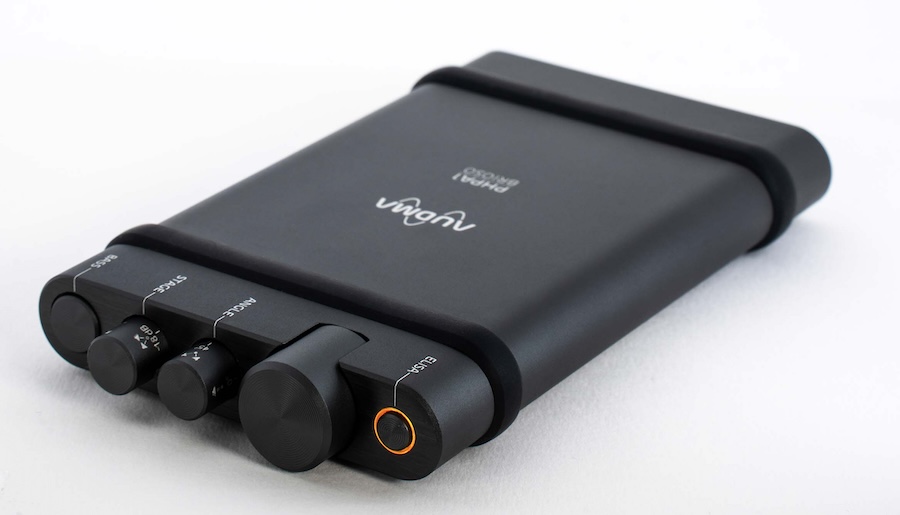
For decades, that goal remained out of reach. Mattoli built and rebuilt designs that never quite delivered, held back more by the limits of available technology than a lack of vision. That changed in 2022 with the arrival of ELISA, the Electronic Loudspeaker Imaging Simulating Amplifier, which finally brought his concept into focus. The company later rebranded as Audma in 2024, keeping ELISA as the core technology behind its products. Since then, Audma has introduced two amplifiers, the Maestro HPA1 desktop model and the Brioso PHPA1 portable, both demonstrated at AXPONA as a different way to tackle soundstage without changing your headphones, just the signal path.
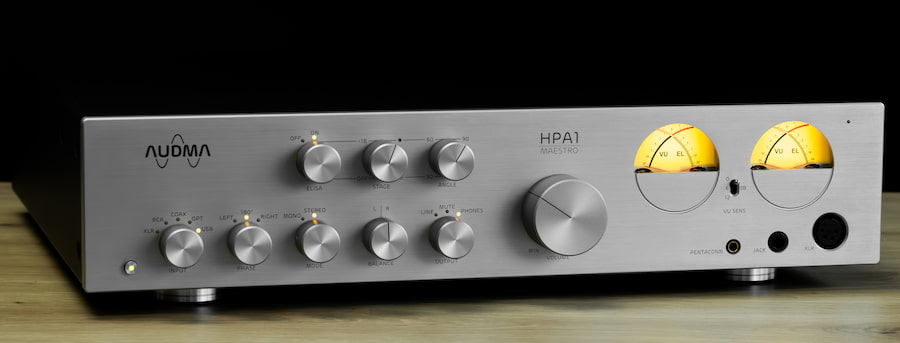

While most headphone manufacturers try to squeeze more space out of their designs by tweaking cup geometry, airflow, and damping materials, Audma takes a different route. Its approach centers on delay line processing at the amplification stage, shaping how the signal reaches each ear rather than altering the headphone itself. The idea is straightforward: keep your existing headphones and source, insert one of Audma’s amplifiers into the chain, and let the processing do the heavy lifting in creating a more speaker like presentation.

How Audma ELISA Reworks Spatial Cues Inside Your Headphones
The ELISA circuitry uses delay line processing to create an image that more closely approximates what a listener hears with speakers or live music. One of the core issues it addresses is that headphones separate channels too well. In real world listening, the brain determines direction and distance based on the time delay between when a sound reaches each ear and the reduction in level at the farther ear.
With headphones, that mechanism is largely lost because each channel is delivered almost entirely to one ear. Some amplifiers and digital audio players attempt to compensate with crossfeed. Crossfeed mixes a portion of each channel into the other with reduced level and a slight delay so that both ears receive both signals, more like real listening conditions. Different implementations vary the amount of delay and level, which is why reactions to crossfeed tend to be mixed.
Audma builds on that same principle but with a more advanced approach. ELISA allows adjustment of both delay and perceived direction rather than just blending the channels. On both the desktop and portable amplifiers, listeners can control the apparent distance and angle of the sound, effectively expanding or narrowing the stage and shifting their position relative to it. In practice, that means you can move closer to the performance or further back by making a few adjustments, rather than changing headphones.
ELISA Enabled Products

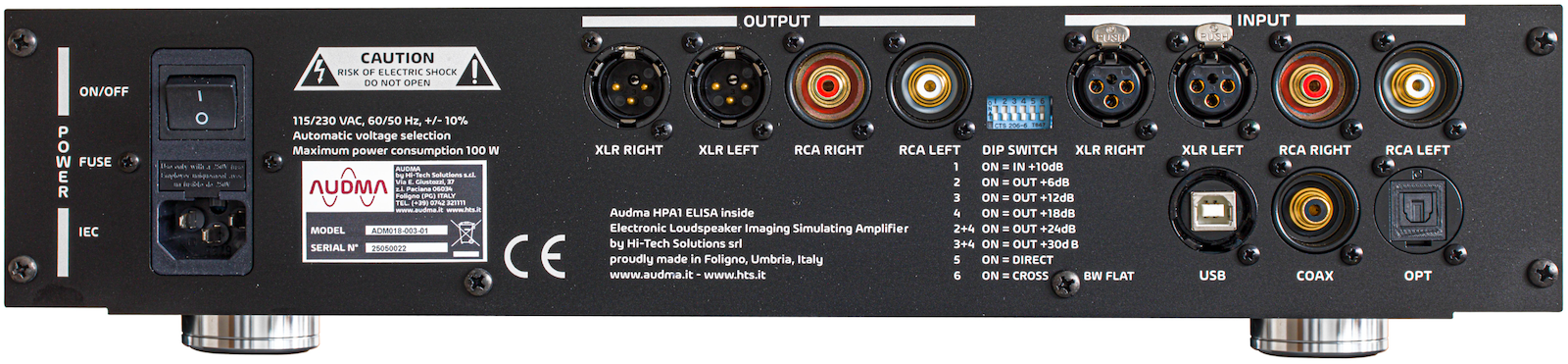
The Maestro was Audma’s original release and is designed to function as both a headphone amplifier and a preamp. Connectivity is extensive, with XLR, RCA, coaxial, optical, and USB inputs, along with both RCA and XLR outputs. The chassis follows a fairly standard full size footprint at 16 x 4.5 x 16 inches (W x H x D) and is available in either brushed metal or black, with weight ranging from roughly 20 to 25 pounds depending on configuration.
On the digital side, the Maestro incorporates an AKM 4499REQ DAC capable of up to 768 kHz/32-bit PCM and DSD256, making it a serious standalone DAC as well. As a headphone amplifier, it offers an output impedance of 6 ohms and six selectable gain levels at 0, +6, +12, +18, +24, and +30 dB, allowing it to accommodate a wide range of headphones. Output power is rated at 4 watts into 32 ohms and 8 watts into 300 ohms, and it had no issue driving 600 ohm headphones during the demo, including a borrowed Beyerdynamic headphones.

Along with the standard controls and ELISA stage and angle adjustments, the Maestro also includes phase control, giving the listener another layer of tuning to better match personal preference and system synergy.
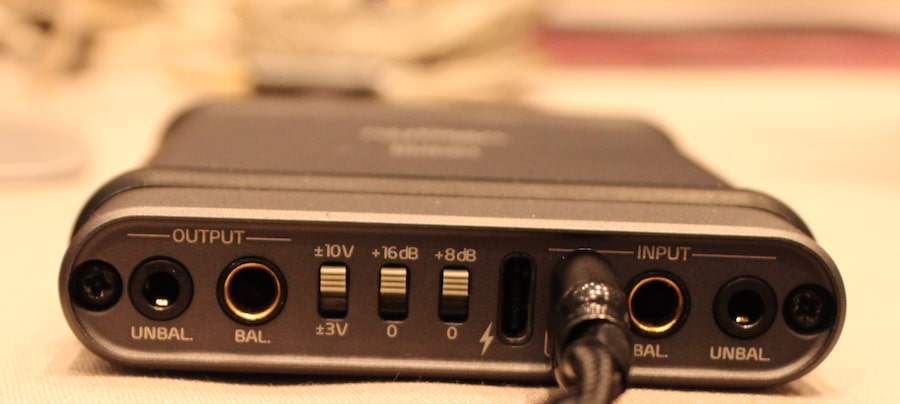
The portable Brioso PHPA1 offers both headphone amplifier and DAC functionality but drops the preamp role in favor of battery operation. Its size and shape are roughly comparable to a Samsung Galaxy S25+, measuring about 3 inches wide, three quarters of an inch thick, and just under 6 inches tall. Weight comes in at around half a pound, making it easy enough to carry on a daily basis.
Internally, it uses the AKM 4499EXEQ DAC paired with the 4191EQ modulator, supporting up to 768 kHz PCM and DSD256. For those who prefer an external DAC, both 3.5 mm and 4.4 mm analog inputs are included. The amplifier section provides four gain settings at 0, +8, +16, and +24 dB, with output power rated at 4 watts into 32 ohms and 5.4 watts into 150 ohms, which is more than enough for the vast majority of headphones.
Battery life is rated at up to 5 hours per charge, depending on listening levels, DAC usage, and headphone load.
Both Audma amplifiers are priced at approximately $5000 USD and are available directly from Audma or through select distribution partners.
The Bottom Line
Audma is chasing something most headphone brands only nibble at from the edges. By moving spatial processing into the amplification stage, ELISA offers a level of control over stage width, depth, and positioning that goes well beyond typical crossfeed. It’s clever, and in the right setup, it works.
The problem is the price of entry. At around $5000, you’re being asked to rethink your entire signal chain for an effect that some headphones, like the Grell OAE2, already attempt to deliver for well under $500. No, they don’t offer the same level of adjustability or precision, but the gap in cost is hard to ignore.
If ELISA delivers on its promise in a controlled environment, Audma might be onto something genuinely different. But at this level, different isn’t enough. It has to be indispensable.
For more information: audma.it
You must be logged in to post a comment Login