




Connect with us
DAPA Banner

Tech

Australian tea brand T2 Tea to shutter all Singapore stores

Published

on

The closures come nine years after the brand opened its first outlet here

Australian premium tea retailer T2 Tea is set to close all three of its outlets and exit Singapore, according to a report from The Business Times.

Its stores at 313@Somerset, Suntec City, and VivoCity are currently running clearance sales with discounts of up to 30%.

When the publication visited the Suntec City branch yesterday (Mar 16), most of its stock had been cleared from the shelves. The store is expected to cease operations on March 25.

Despite the closures, customers can still purchase products via T2 Tea’s online store.

Advertisement

T2 Tea closed all of its UK outlets in 2023

T2 Tea was founded in 1996 in Melbourne, with retail stores in Australia, New Zealand and Singapore. As of June 2025, it reportedly had 62 stores across these markets.

A T2 Tea store at Melbourne Central./ Image Credit: Ian via Google Reviews

In 2013, it was acquired by Unilever, and later sold to private equity group CVC Capital Partners for about S$6.6 billion in 2021.

T2 Tea entered Singapore in 2017 with a flagship outlet at 313@Somerset, marking its first expansion into Asia. The store offered more than 100 tea blends, ranging from classic options like English Breakfast to signature creations such as Melbourne Breakfast. It also launched a Singapore-exclusive blend inspired by kaya toast.

In recent years, however, the company has faced challenges.

In 2023, it exited the UK market, closing all stores and its online platform there, citing “unprecedented changes” at the time. It had said it would refocus on markets closer to home, including New Zealand and Singapore.

Advertisement

Vulcan Post has reached out to T2 Tea for more information.

  • Read other articles we’ve written on Singaporean businesses here.

Featured Image Credit: Gemma Chin via Google Reviews/ T2 Tea Singapore via Instagram

Advertisement

Source link

Continue Reading
Click to comment

You must be logged in to post a comment Login

Leave a Reply

Tech

Amazon Speeds Up Delivery Even More With 1- and 3-Hour Options

Published

on

Same-day delivery apparently isn’t fast enough for some Amazon shoppers. The retail giant said on Tuesday it’s adding new shipping options that will get products to front doors within a one- or three-hour window.

The company said in its announcement that the one-hour option is available in hundreds of cities across the US, while the three-hour option is now live in more than 2,000 areas. Amazon’s web page at amazon.com/getitfast shows whether those options are available to shoppers for their location. More than 90,000 products will be available for those shipping windows, the company said.

For those who can’t get those services (including the author of this post, who lives between Austin and San Antonio in Texas), a message will display: “3-hour delivery is currently unavailable. Check back at a later time or shop products with Same-Day delivery below. “

Advertisement

Pricing for the faster delivery options is not cheap: It’ll cost you $20 for one-hour delivery and $15 for three-hour delivery for those without an Amazon Prime account, or $10 and $5 for customers who subscribe to Prime.

Last year, the company rolled out faster Amazon delivery options to 4,000 additional areas

In a video of the podcast Learn and Be Curious with Doug Herrington, hosted by Amazon’s CEO of worldwide stores, Kandace Kapps, the director of the company’s same-day strategy team, spoke in more detail about the challenges of fast shipping. Kapps discussed shifts in customer buying habits over the last few years, such as more people buying household essentials like toilet paper on Amazon.

She said that Amazon can deliver so quickly by placing same-day delivery hubs close to customers in metro areas and by getting products ready to ship within 15 minutes, aided by warehouse robots.

Advertisement

“I think customers are going to continue to get magically surprised by how fast we can deliver to their doorstop,” Kapps said. 

Herrington said fast shipping increases sales: “When we speed up the service, the probability that somebody buys a product from us goes up.”

Other retailers, including Walmart, have been adding same-day delivery options or exploring other ways to speed up shipping times to compete with Amazon. 

Removing buyers’ moments of hesitation

Part of Amazon’s strategy, which has involved a massive buildout of locations, deployment of thousands of trucks, deals with other delivery services and investment in logistics software, is actually pretty simple: being there when people need last-minute items or make impulse buys.

Advertisement

“It’s about removing the last moment where you would’ve reconsidered the purchase,” said Stephanie Carls, retail insights expert at coupon and promotional-code website RetailMeNot, a sibling site of CNET. “It changes how you shop, not just how fast you get things.” 

Carls said that Amazon’s super-fast delivery is removing the timeframe when people might change their minds about a purchase.

“There used to be a gap between deciding to buy something and actually having it. That’s when you’d price check, rethink it, or decide you didn’t need it after all,” she said. “This closes that gap.”

The retail expert said that competitors, including Walmart and Target, have been speeding up delivery times in some markets. Still, they’re not matching Amazon’s scale or product range at those speeds or levels of consistency. 

Advertisement

“And that’s what starts to make everyone else feel slow,” Carls said. “Amazon’s advantage is how tightly connected its technology, inventory and delivery networks are, which makes this level of speed more repeatable.”

Source link

Advertisement
Continue Reading

Tech

Dog Health Goes Digital With New AI Chatbot

Published

on

It might be time to rethink what it means to be sick as a dog. On Tuesday, Fi, a smart pet technology company, announced a new AI-powered chatbot to help owners stay on top of their dog’s health using a blend of personal information and generalized dog breed data.

AI Atlas

The AI agent, which the company is calling Fi Intelligence, is integrated directly into the Fi app. It has access to all the information gathered about your dog across the entire suite of Fi products, including the Fi Series 3 Plus and Fi Mini dog collars, as well as information and documents uploaded by the pet owner. The service is for dogs only (not cats, rabbits or other pets).

If you already own a Fi smart collar, existing data will be incorporated into the AI agent’s dataset to help it answer your questions.

Advertisement

When creating Fi Intelligence, the company identified a multitude of common questions that dog owners have, including whether their animal friend is walking or sleeping enough, or scratching more than usual. The chatbot was created to help owners find answers to these questions quickly and easily, according to Fi.

Fi designed its agent to answer these questions using a mix of general information about a dog’s breed, personal information and biometric data gathered by Fi smart pet collars. 

Fi Intelligence conversation with the in-app chatbot.

This mock conversation between a pet owner and the Fi Intelligence AI agent shows how the chatbot uses detailed biometric data and uploaded documents to answer questions.

Advertisement

Fi

Pet owners can ask the chatbot questions in plain English and get back detailed responses. Fi Intelligence is equipped to answer general questions, contrast your dog’s current data to previous time periods and compare your dog’s data to other dogs of the same breed.

Fi says its chatbot is different from general-purpose AI agents because it has been trained on a proprietary dataset containing “the largest repository of real-world canine activity, sleep and behavior data in the world.”

Fi Intelligence doesn’t replace a trip to the vet — and the company stresses it’s not supposed to. Rather, the agent is supposed to grant owners “informed confidence” about their dog’s health and can help them “show up [to the vet] with specific, documented observations drawn from weeks of continuous data.”

“The strongest signal from our beta was that owners aren’t using this to replace their vet,” said Fi’s Vice President of Product Darrell Stone. “They’re using it to show up better prepared.”

Advertisement

According to Fi, the Fi Intelligence integration will provide the most complete dog health profile available in the app so far. Fi Intelligence is available to all Fi members immediately.

Source link

Advertisement
Continue Reading

Tech

‘A lot of people are saying AI is coming, we’re going to run out of jobs – I think the opposite’: Nvidia CEO Jensen Huang says we don’t need to fear AI

Published

on


  • Nvidia CEO Jensen Huang predicts AI will make us “feel superhuman”
  • Says he is “getting busier and busier” due to increased AI usage
  • Huang also warns of “scaring” people about AI, says we need to be “a little bit more humble”

Jensen Huang has once again outlined his belief that harnessing the power of AI will help make humanity more effective, productive, and efficient.

Speaking at a Q&A session for media at Nvidia GTC 2026, the CEO and co-founder spoke on what AI can do for us, as well as his own personal experiences utilizing AI at work.

Source link

Advertisement
Continue Reading

Tech

Your Google Search is going to get more personalized than ever

Published

on

Google is expanding its Personal Intelligence feature (previously available to paid users), bringing it to all users in the US through its AI-powered search experience. This feature changes how you search by using your own data to deliver more relevant answers.

Instead of giving you generic results, Google can now tailor responses based on your personal context, making search feel more like a conversation that understands you.

Today, anyone in the U.S. can opt into Personal Intelligence for AI Mode in Search on their personal accounts. It’s also starting to roll out in the @GeminiApp and Gemini in Chrome.

Personal Intelligence allows you to securely connect the dots across your Google apps — like… pic.twitter.com/pX2jJxy06c

— Google (@Google) March 17, 2026

Advertisement

At the center of this update is AI Mode, Google’s conversational search tool for complex queries. With Personal Intelligence enabled, it can blend public information with your private context from services like Gmail and Google Photos.

What Personal Intelligence can do for you?

The feature connects your Google apps to Search, letting it understand your plans, habits, and preferences. You do not need to repeat details in every query. The system already has that context.

For example, if you are planning a trip, the AI can review your past hotel bookings in Gmail and travel photos to suggest activities tailored to your style.

It can also recommend products based on your past purchases or suggest places that match your interests, even picking up patterns from your photos.

Personal Intelligence can reduce the effort you spend searching and piecing together information. By using what Google already knows about you through its services, it can answer faster and more accurately.

Advertisement

What about privacy and control?

Google is positioning this as a fully optional feature. You can opt in to connect Gmail or Photos, and disconnect it anytime. The company also says it does not directly train its AI models on your emails or photo libraries. Instead, it uses limited interaction data like prompts and responses.

For now, the rollout applies to personal Google accounts in the US, not business or education users. Free-tier users can try Personal Intelligence in the Gemini app and in Gemini on Chrome.

Source link

Advertisement
Continue Reading

Tech

Zip-Drive Emulator Puts Big Disks Back On LPT

Published

on

Iomega’s Zip drives filled an interesting niche back in the 1990s. A magnetic disk that was physically floppy-sized, but much larger in capacity– starting at 100 MB, and reaching 750 MB by the end–they never quite had universal appeal, but never really went away until flash memory chased them out of the marketplace in the early 2000s. While not everyone is going to miss them, some of us still think it’s a better form factor than having a USB stick awkwardly protruding from a computer, or microSD cards that are barely large enough to see with the naked eye. [Minh Danh] is one of those who still has affection for Zip drives, and when his parallel port Zip 100 drive started to give up the ghost last year, he decided to do something bold: reverse engineer it, and produce an emulator. First software, and then in hardware.

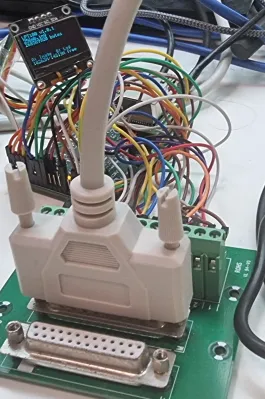
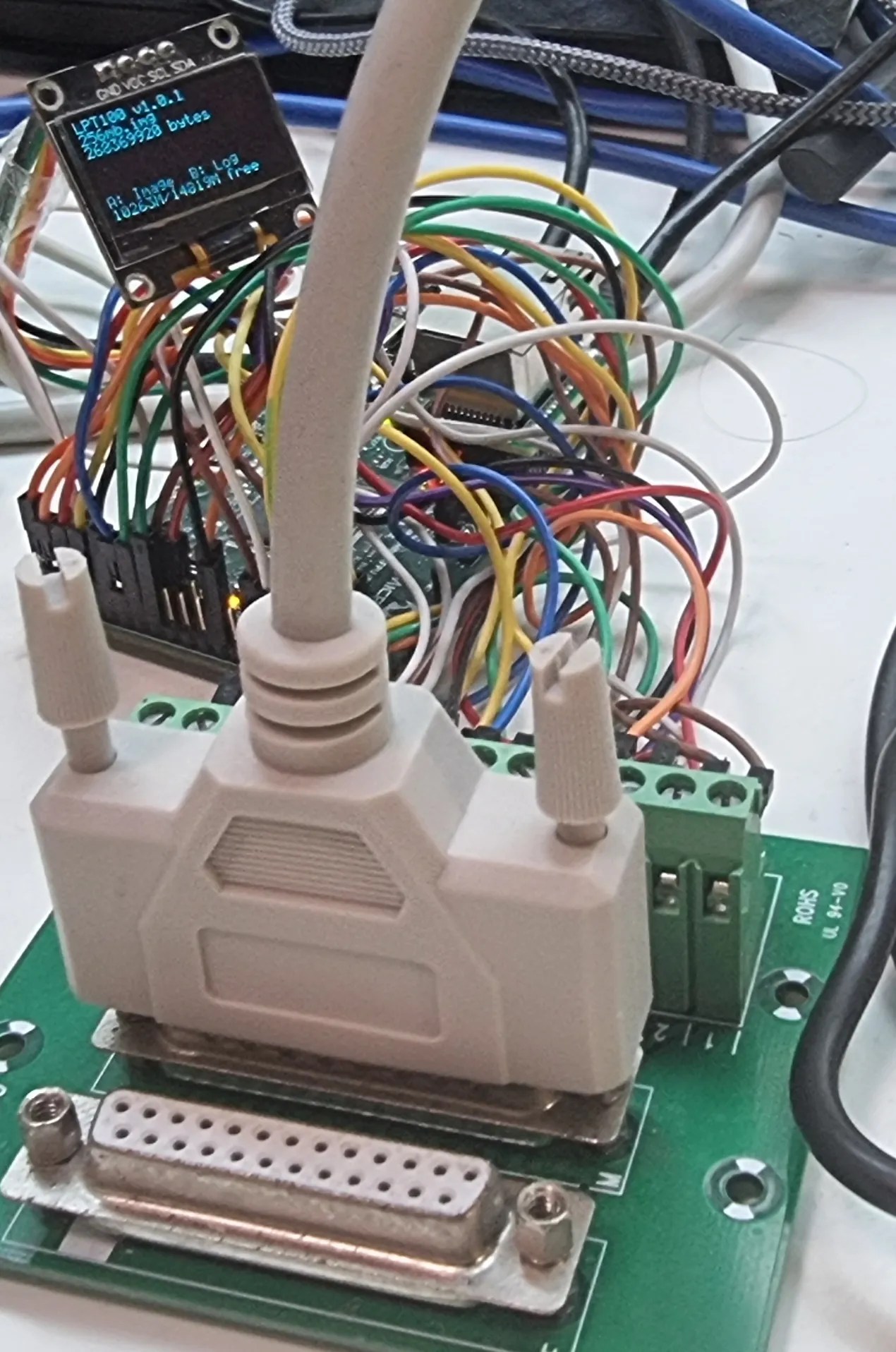
It’s not the prettiest-ever prototype, but lots of great things start with a mess of wires.

The first was to create a virtual zip drive that could run on a virtual machine and be accessed with DOS or Windows up to XP. The next task was to move that functionality onto a microcontroller to create something like a GoTek floppy emulator for LPT Zip drives that he’s calling the LPT100. Yes, Zip drives were built for APATI, SCSI, FireWire and USB, too, but [Minh]’s was on the parallel port and that’s what he wanted to replace, so the LPT interface is what set out to recreate.

It works, too, though took more guts than was expected– the 8-bit PIC18F4680 he started with just wasn’t up to the task. He moved up to a 32-bit PIC, the PIC32MZ2048EFH144 to be specific, which proved adaquate when testing with his Book 8088, a new DOS PC from 2023. Iomega’s official driver won’t run on an 8088, but the PALMZIP utility does and was able to transfer files, though only at the slow nibble rate due to limitations with the Book8088’s LPT hardware. Watch it in action below.

Alas, moving up to the Pocket386, it seemed the PIC just could not keep up. [Minh] says he’s thinking of moving to the faster Teensy 4.1, which sounds like a good idea. Considering the Teensy can be configured to serve as a drop-in replacement for a 68000, bit-banging the bus at 7.8 MHz, we’d think it should handle anything a parallel port can throw at it.

Thanks to [Minh Danh] for the tip!

Advertisement

Source link

Advertisement
Continue Reading

Tech

Arizona Charges Kalshi With Illegal Gambling Operation

Published

on

Arizona has filed criminal charges against Kalshi, accusing it of operating an illegal gambling business. “Kalshi may brand itself as a ‘prediction market,’ but what it’s actually doing is running an illegal gambling operation and taking bets on Arizona elections, both of which violate Arizona law,” Arizona Attorney General Kris Mayes said in a statement. The case could ultimately head to the Supreme Court to decide whether federal oversight by the Commodity Futures Trading Commission overrides state gambling laws. Bloomberg reports: While state regulators have taken steps to crack down on what they say is unlicensed betting on Kalshi’s site, Arizona appears to be the first state to escalate to criminal charges. The charges cited in the complaint are misdemeanors, which carry less serious penalties than felonies. […] Prediction market exchanges like Kalshi have said they should continue to be regulated by the US Commodity Futures Trading Commission despite opposition from some state officials, who argue the trading should come under state gambling laws.

Arizona’s criminal complaint follows Kalshi’s move last week to block the state’s gaming department from taking enforcement action against the company. “These are the first criminal charges of any kind filed against Kalshi in any court in the United States, but it will likely be the first of several,” said Daniel Wallach, a sports and gaming attorney.

Source link

Continue Reading

Tech

GlassWorm malware hits 400+ code repos on GitHub, npm, VSCode, OpenVSX

Published

on

GlassWorm malware hits 400+ code repos on GitHub, npm, VSCode, OpenVSX

The GlassWorm supply-chain campaign has returned with a new, coordinated attack that targeted hundreds of packages, repositories, and extensions on GitHub, npm, and VSCode/OpenVSX extensions.

Researchers at Aikido, Socket, Step Security, and the OpenSourceMalware community have collectively identified 433 compromised components this month in attacks attributed to GlassWorm.

Evidence of a single threat actor running the GlassWorm campaigns across multiple open-source repositories is provided by the use of the same Solana blockchain address used for command-and-control (C2) activity, identical or functionally similar payloads, and shared infrastructure.

GlassWorm was first observed last October, with attackers using “invisible” Unicode characters to hide malicious code that harvested cryptocurrency wallet data and developer credentials.

Advertisement

The campaign continued with multiple waves and expanded to Microsoft’s official Visual Studio Code marketplace and the OpenVSX registry used by unsupported IDEs, as discovered by Secure Annex’s researcher, John Tuckner.

macOS systems were also targeted, introducing trojanized clients for Trezor and Ledger, and later targeted developers via compromised OpenVSX extensions.

The latest GlassWorm attack wave is far more extensive, though, and spread to:

  • 200 GitHub Python repositories
  • 151 GitHub JS/TS repositories
  • 72 VSCode/OpenVSX extensions
  • 10 npm packages

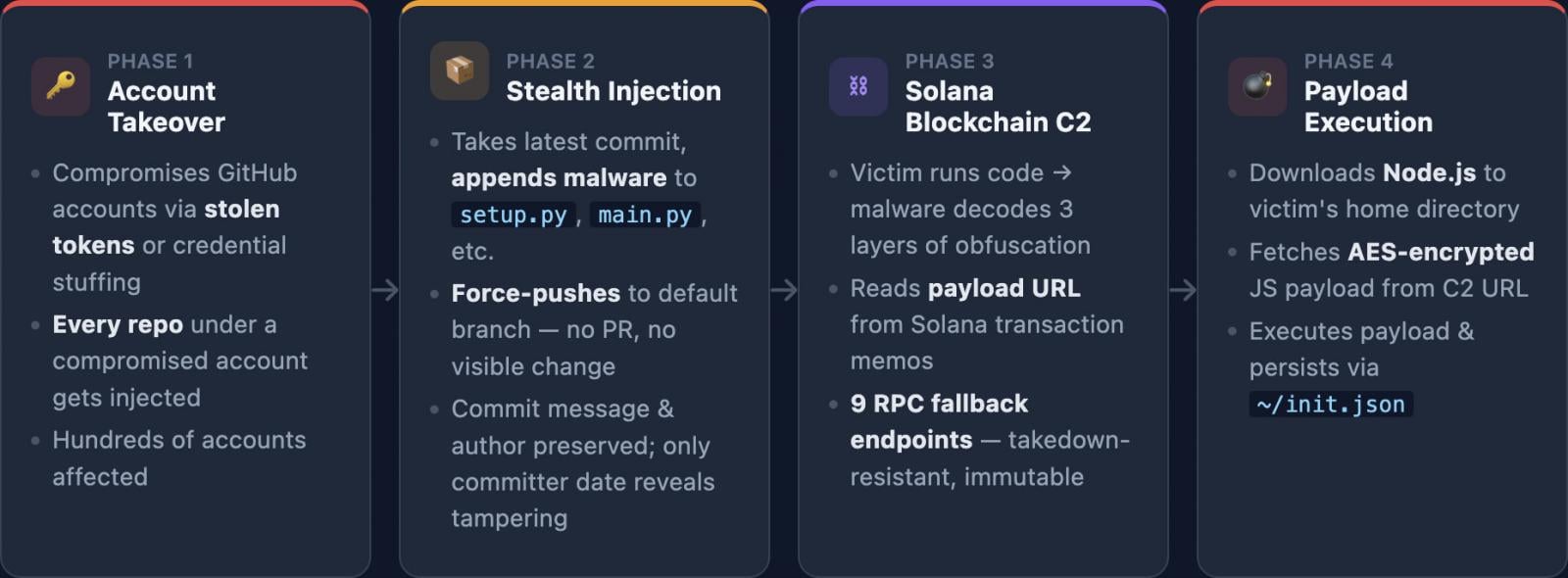
Initial compromise occurs on GitHub, where accounts are compromised to force-push malicious commits.

Then, malicious packages and extensions are published on npm and VSCode/OpenVSX, featuring obfuscated code (invisible Unicode characters) to evade detection.

Advertisement
Malicious package on OpenVSX
Source: Aikido

Across all platforms, the Solana blockchain is queried every five seconds for new instructions. According to Step Security, between November 27, 2025, and March 13, 2026, there were 50 new transactions, mostly to update the payload URL.

The instructions were embedded as memos in the transactions and led to downloading the Node.js runtime and executing a JavaScript-based information stealer. 

GlassWorm attack chain
Source: Step Security

The malware targets cryptocurrency wallet data, credentials, and access tokens, SSH keys, and developer environment data.

Analysis of code comments indicates that GlassWorm is orchestrated by Russia-speaking threat actors. Additionally, the malware skips execution if the Russian locale is found on the system. However, this is insufficient data for confident attribution.

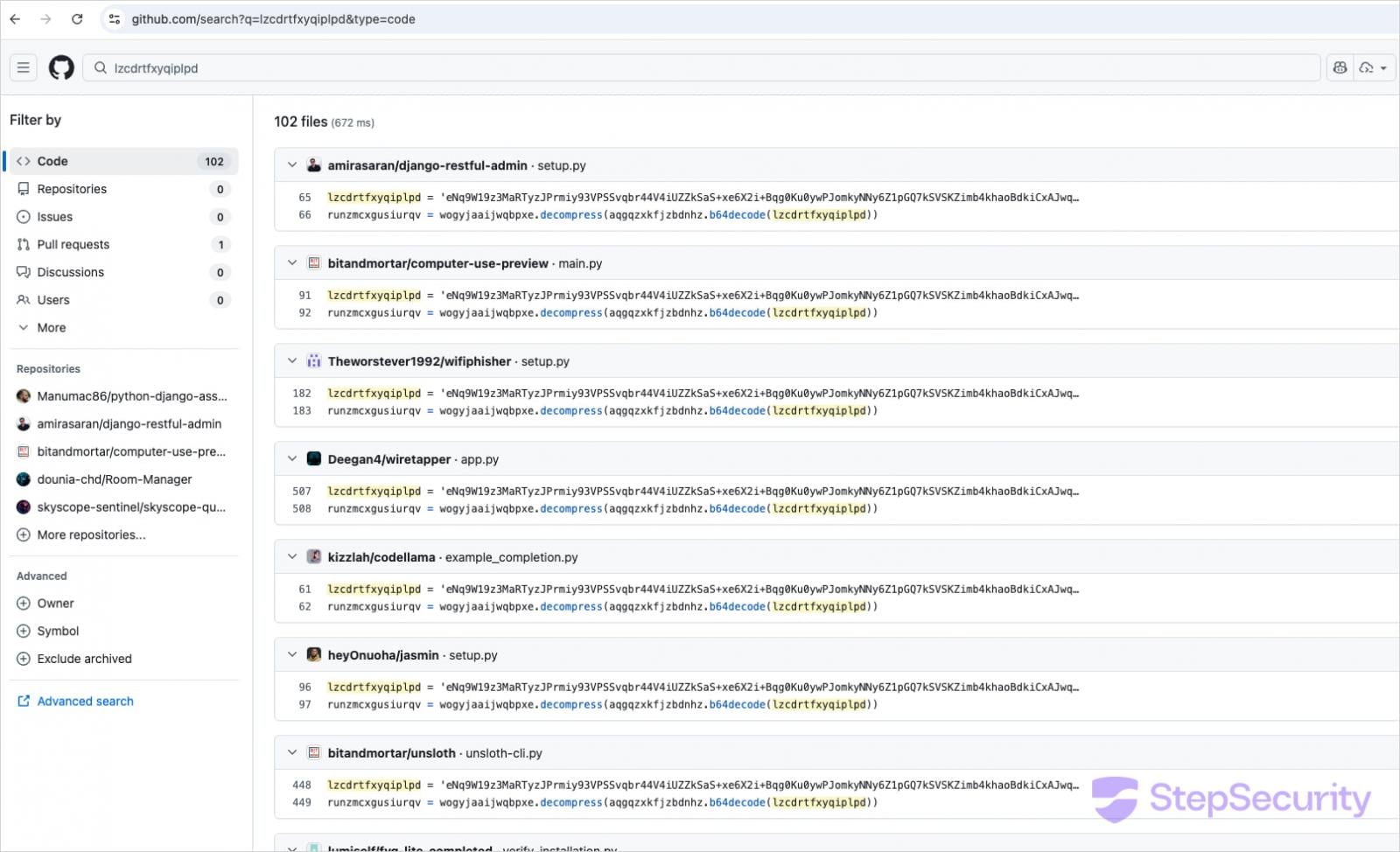
Step Security advises developers who install Python packages directly from GitHub or run cloned repositories to check for signs of compromise by searching their codebase for the marker variable “lzcdrtfxyqiplpd,” an indicator of the GlassWorm malware.

Malicious GitHub files
Source: Step Security

They also recommend inspecting systems for the presence of the ~/init.json file, which is used for persistence, as well as unexpected Node.js installations in the home directory (e.g., ~/node-v22*).

Additionally, developers should look for suspicious i.js files in recently cloned projects and review Git commit histories for anomalies, such as commits where the committer date is significantly newer than the original author date.

Advertisement

Malware is getting smarter. The Red Report 2026 reveals how new threats use math to detect sandboxes and hide in plain sight.

Download our analysis of 1.1 million malicious samples to uncover the top 10 techniques and see if your security stack is blinded.

Source link

Continue Reading

Tech

Techdirt Podcast Episode 446: Mike & Karl Talk AI

Published

on

from the not-so-opposed dept

There’s a notion that pops up in the comments here on Techdirt that Mike and our writer Karl Bode are deeply opposed in their opinions on AI and engaged in an epic ongoing debate. Alas, the truth is a little less spectacular: while they might have some differences of opinion here and there, they actually agree on most things, and would both prefer to hear (and have) more thoughtful and nuanced discussions about the technology without going to the extremes. By way of demonstration, Karl joins this week’s episode of the podcast for a long conversation with Mike all about AI, its role in our society, the challenges it raises, and where things go from here.

You can also download this episode directly in MP3 format.

Follow the Techdirt Podcast on Soundcloud, subscribe via Apple Podcasts or Spotify, or grab the RSS feed. You can also keep up with all the latest episodes right here on Techdirt.

Advertisement

Filed Under: ai, artificial intelligence, podcast

Source link

Advertisement
Continue Reading

Tech

Fascinating Look Back at the Akai PJ-11, an Innovative Mini Stereo with Rotating Speakers from 1984

Published

on

Akai PJ-11 Mini Stereo Rotating Speakers 1984
Back in 1984, Akai released the PJ-11, a compact stereo system that brought some fresh ideas to portable audio. Small enough to slip into a bag, it came with two independent speakers connected by cables that carried both power and audio signals, and those speakers could detach from the unit, lock into position at various angles, and be adjusted however the situation called for.


Each speaker could be swiveled precisely into position using 45 degree markers, giving you full control over where the sound was directed. Point them straight ahead for a traditional stereo image, tilt them upward for cleaner vocals, or angle them downward depending on the room. Flip them backward and the left and right channels swap, creating a surprisingly interesting effect in smaller spaces. The whole point was to put the sound where you actually were, rather than just firing it blindly forward the way most systems of the era did.

Sale


JBL Boombox 3 Black Portable Bluetooth Speaker with Massive Sound, Deepest Bass, IPX7 Waterproof, 24H…
  • Massive sound and deepest bass: Enjoy your music with massive JBL Original Pro Sound. The new 3-way speakers deliver higher sensitivity of our…
  • 24 Hours of play time: Celebrate every moment with the sounds you love. From your early morning workout to a late-night hang with friends, we’ve added…
  • IP67 dust and water proof: To the pool. To the park. The JBL Boombox 3 is IP67 dustproof and waterproof, so you can bring your speaker anywhere, rain…

Akai PJ-11 Mini Stereo Rotating Speakers 1984
Battery power came from four C-cells tucked inside each speaker, meaning the full system ran on eight batteries when you were out and about. That added some noticeable weight, but it also gave the speakers a reassuringly solid feel in your hands. Back at home a separate power adapter plugged into the rear of the main unit, sliding into place on a dedicated rail to keep everything sitting level and stable on a shelf or table. Pull the adapter and speakers off and the whole thing becomes a genuinely compact grab and go setup with no extra bulk to worry about.

Akai PJ-11 Mini Stereo Rotating Speakers 1984
The front panel features four sliders that allow you to make rapid adjustments on the fly. On the left is your overall level, and the following three are a super simple graphic equalizer that allows you to shape the bass, midrange, and treble with a twiddle. One of the buttons opens the cassette door, but the mechanism itself is turned upside-down, so you may have to squint to figure out what’s what, especially if some of the labels on the controls appear a little strange as a result. There’s a separate metal tape playback lever, and the built-in mono microphone can easily record speech or ambient sound, automatically adjusting the settings so you don’t have to.

Akai PJ-11 Mini Stereo Rotating Speakers 1984
Tuning in is handle by a four-band radio component with AM, FM, and shortwave reception that can pull in distant broadcasts when conditions are favorable. The FM side is very sensitive, and it includes a mono mode and a beat-cut filter to reduce interference. There’s a 3.5 millimeter connection on the front panel that allows you to connect signals from external players or recorders, allowing you to play them via the speakers or record them directly into the cassette without having to look for hidden ports.

Akai PJ-11 Mini Stereo Rotating Speakers 1984
Many users were caught off guard by the PJ-11’s unusually full and rich sound despite its small size. Voices came through clearly on angled up speakers, and the overall balance was pleasing, rather than harsh and tinny like some other radios. During high solar activity years, you could pick up shortwave broadcasts loud enough to fill a room, and cassettes had a pleasant warmth that kept the listener listening in for longer than you’d expect from a budget model priced around one fifty at introduction in 1984.

Akai PJ-11 Mini Stereo Rotating Speakers 1984
Akai only produced a small number of PJ-11s before going on to larger models such as the PJ-33, which is probably why they are so hard to come by now. You had all these convenient features, such as detachable speakers that spun around, a front-facing aux in, and the ability to run on batteries. All of this combined to create a design that felt refreshingly practical for ordinary listeners in 1984, and forty years later, it retains a certain attractiveness because it solved simple difficulties in a way that appears to have been completely forgotten these days

Advertisement

Source link

Continue Reading

Tech

Researchers disclose vulnerabilities in IP KVMs from four manufacturers

Published

on

Researchers are warning about the risks posed by a low-cost device that can give insiders and hackers unusually broad powers in compromising networks.

The devices, which typically sell for $30 to $100, are known as IP KVMs. Administrators often use them to remotely access machines on networks. The devices, not much bigger than a deck of cards, allow the machines to be accessed at the BIOS/UEFI level, the firmware that runs before the loading of the operating system.

This provides power and convenience to admins, but in the wrong hands, the capabilities can often torpedo what might otherwise be a secure network. Risks are posed when the devices—which are exposed to the Internet—are deployed with weak security configurations or surreptitiously connected to by insiders. Firmware vulnerabilities also leave them open to remote takeover.

No exotic zero-days here

On Tuesday, researchers from security firm Eclypsium disclosed a total of nine vulnerabilities in IP KVMs from four manufacturers. The most severe flaws allow unauthenticated hackers to gain root access or run malicious code on them.

Advertisement

“These are not exotic zero-days requiring months of reverse engineering,” Eclypsium researchers Paul Asadoorian and Reynaldo Vasquez Garcia wrote. “These are fundamental security controls that any networked device should implement. Input validation. Authentication. Cryptographic verification. Rate limiting. We are looking at the same class of failures that plagued early IoT devices a decade ago, but now on a device class that provides the equivalent of physical access to everything it connects to.”

Source link

Advertisement
Continue Reading

Trending

Copyright © 2025