Tech
Auto Enthusiast Recreates the Mazda Suitcase Car from the 90s

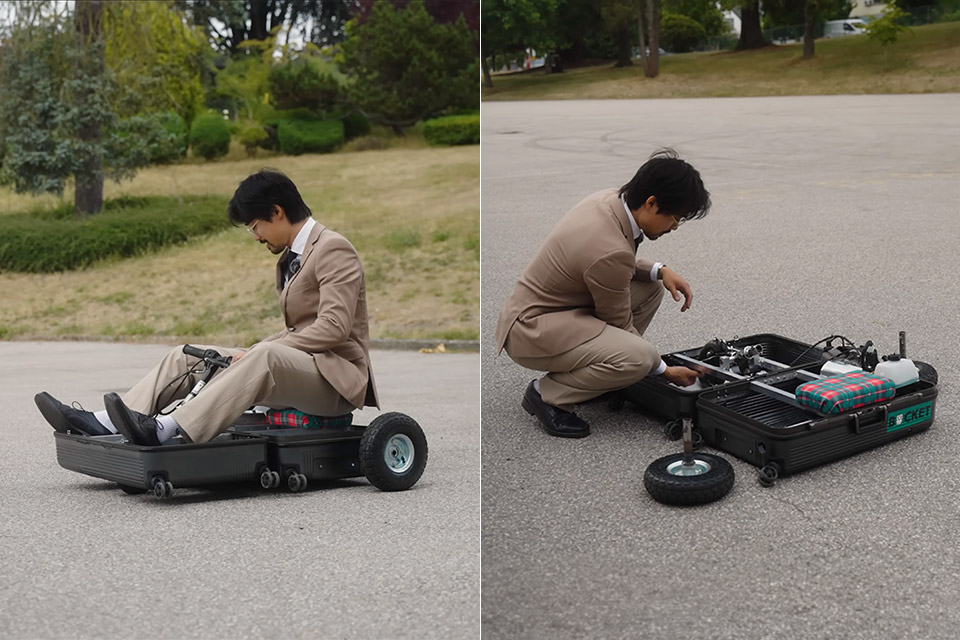
In 1991, seven Mazda transmission research engineers combined a hard-shell Samsonite and a pocket bike to create something no airline would ever allow. Their submission for the company’s Fantasyard contest was a three-wheeled motorcycle that folded into luggage, weighed seventy-one pounds, and could reach speeds of nearly nineteen miles per hour with a 33.6-cubic-centimeter two-stroke engine. Assembly takes approximately one minute. The thing was highlighted on Oprah and at major auto shows, but just one original remains today.


Years later, the team behind the YouTube channel Bucket decided it was time to take on the challenge. They began gathering information about the prototype, tracking down its caretaker to get the lowdown on measurements and mechanics. Contact was eventually made, and with the owner’s OK, the crew took the necessary measurements and hit the ground running to try to build a working replica. They’ve collaborated with ArcCaptain to arrange welding equipment and make metalwork possible.
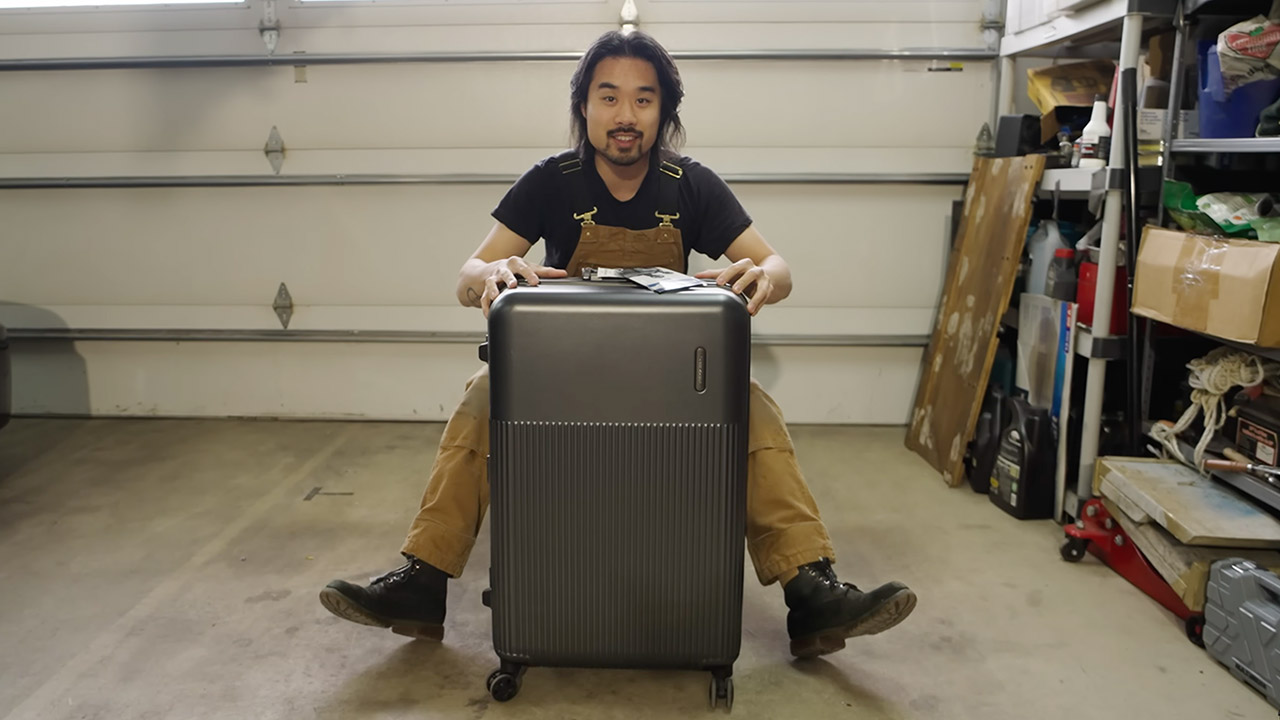
They started with a heavy-duty Samsonite Rexton hard case, which gave them a little more room to work with than the original. They then ground down the inside frame so that the aluminum tubing would fit snugly against it. Some of the rear chassis components were made from square tube and flat stock, which they put together with a TIG welder (although they were still learning how to weld aluminum with that machine) – holes for the axle bearings also had to be punched out precisely. The engine mounting plate came out incorrectly the first time, failing to line up properly with the small two-stroke engine. Luckily, a second plate constructed of thicker quarter-inch aluminum solved the problem.

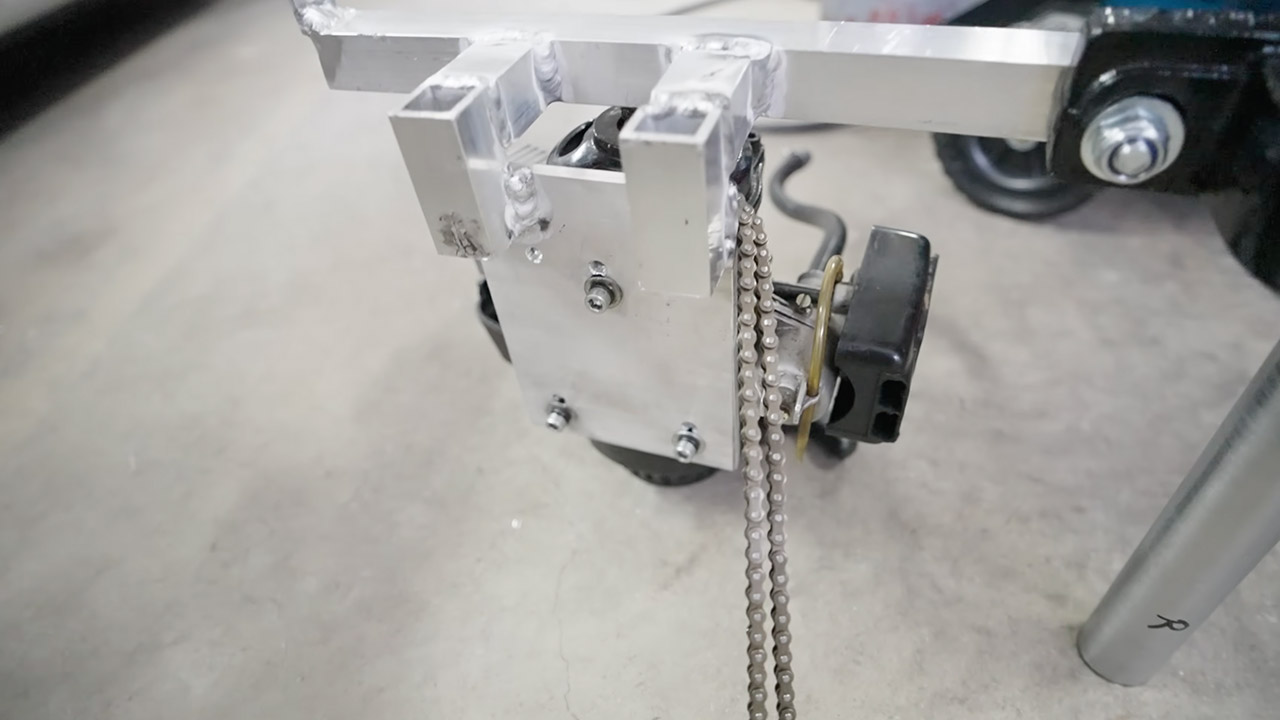
When it came to driving, they welded a sprocket from a Razor E300 to the axle using a MIG machine. The front end components came from a Razor scooter (can’t remember which one), and the fork and wheel need a stronger mount after the initial batch of quick-release hardware became too soft, so they replaced them with solid aluminum blocks and captive nuts instead. To allow the thing to turn without binding, they welded pillow-block bearings together around the axle, allowing the one rear wheel to freewheel. This one-wheel-drive system avoided the tight-radius problem, which would have rendered a solid axle useless.
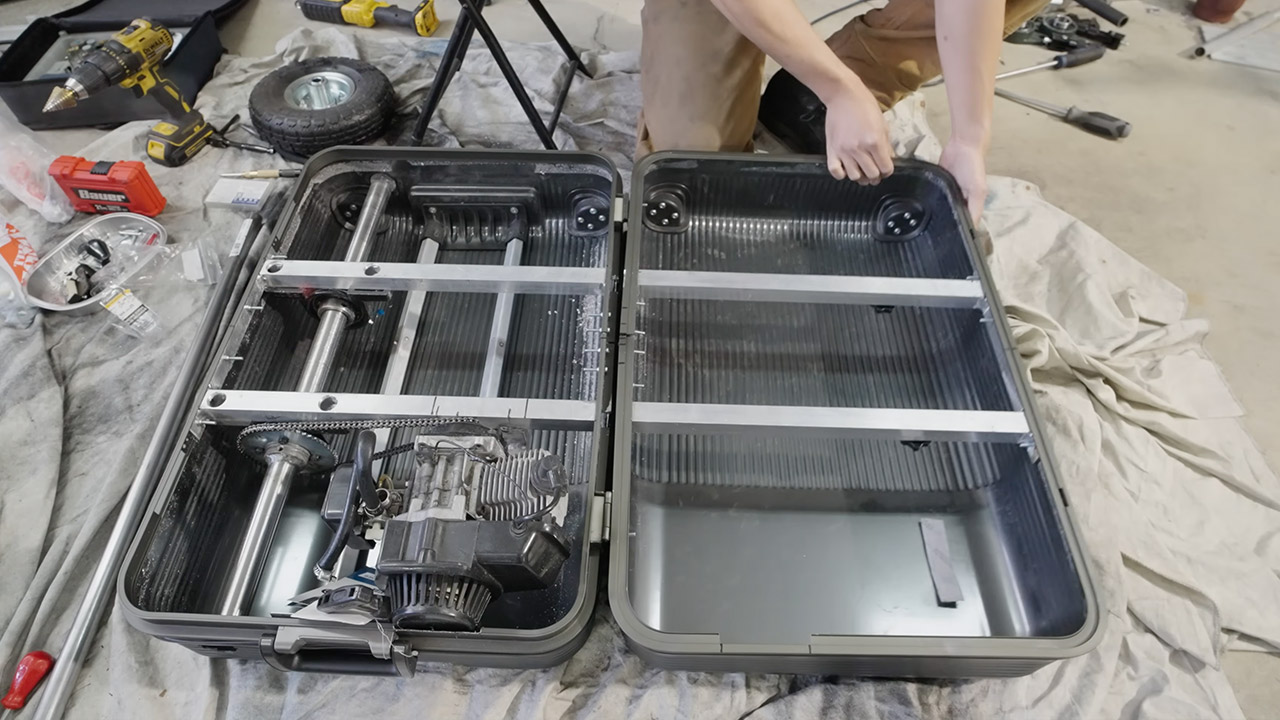
Some slots were carved into the suitcase shell with a Dremel to let the front & rear frames slide together on pins, while threaded knobs secure the two parts firm once the pins are home. The plywood seat base received some foam and batting to increase weight, and the upholstery came from an old rice bag (they were striving for a retro look), since the foot pegs were created using a 3D printer and they were able to slip the seat into place fast. Throttle cable, exhaust, chain guard, and a small fuel tank completed the mechanical side of things.
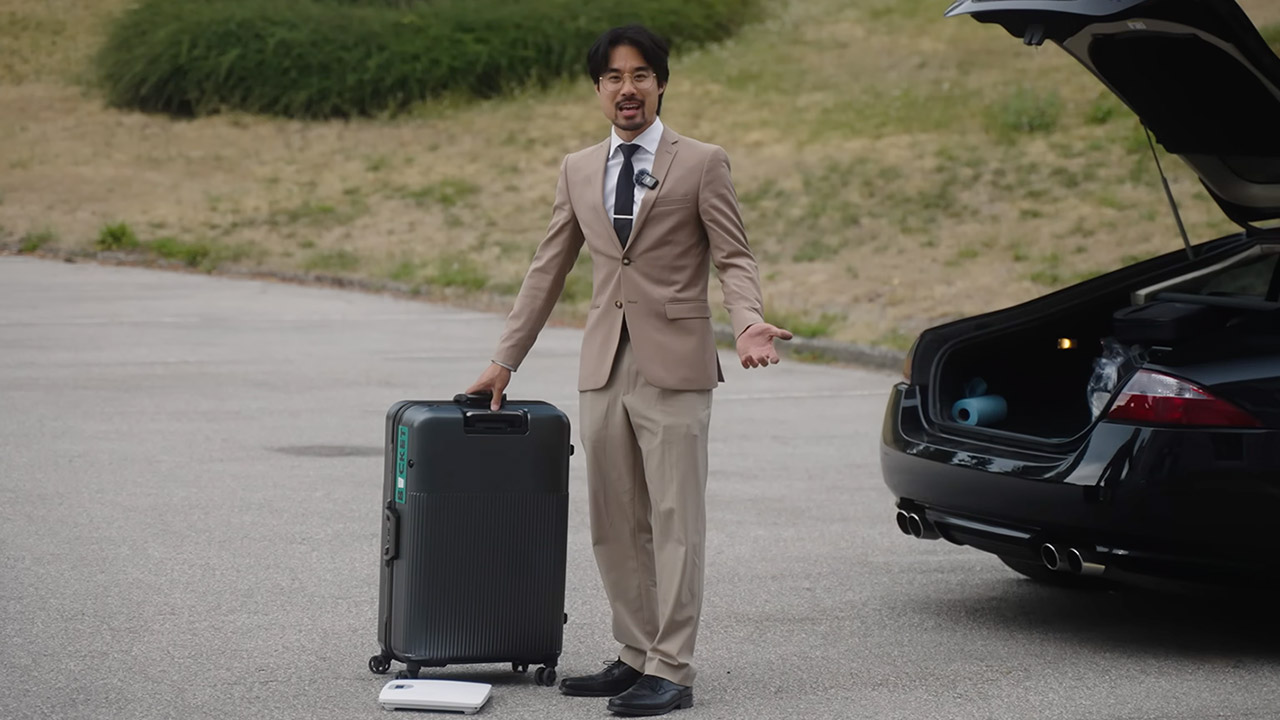
The finished weight was 56.8 pounds, which is lighter than the original Mazda. On a quiet stretch of road, it reached 33 km/h, somewhat faster than the 1991 version. The setup is quite straightforward: unlock the latches, remove the stored wheels, drop the seat onto the pegs, slide the frame pins home, lock the handlebars, and attach the rear wheels. Overall, it takes minutes rather than hours.
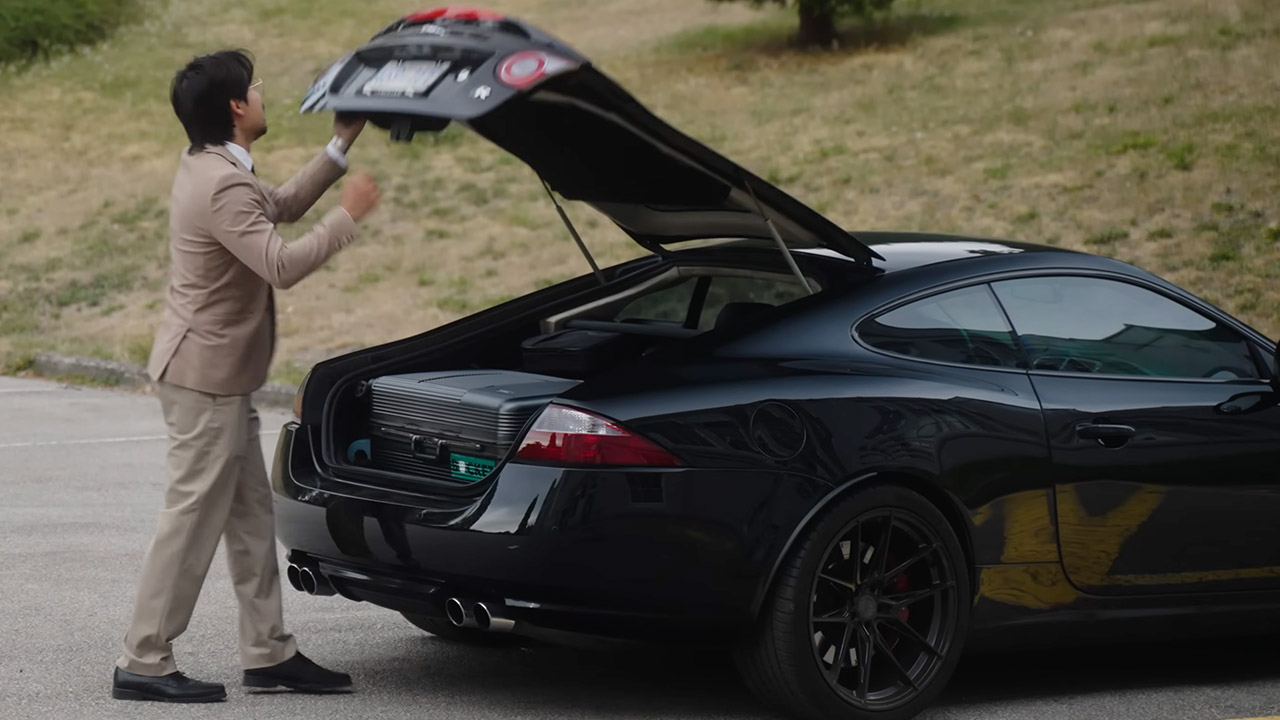
This closed-up case can easily fit into the trunk of a regular automobile, ensuring portability. It barely makes the standard airline weight limit, so you might get strange looks if you try to sneak it aboard. Carrying 70 pounds of metal and plastic through an airport will still feel like a chore, but this contraption does exactly what Mazda engineers imagined 35 years ago: it opens up like a typical suitcase and changes into a little, noisy, three-wheeled vehicle that travels on its own.
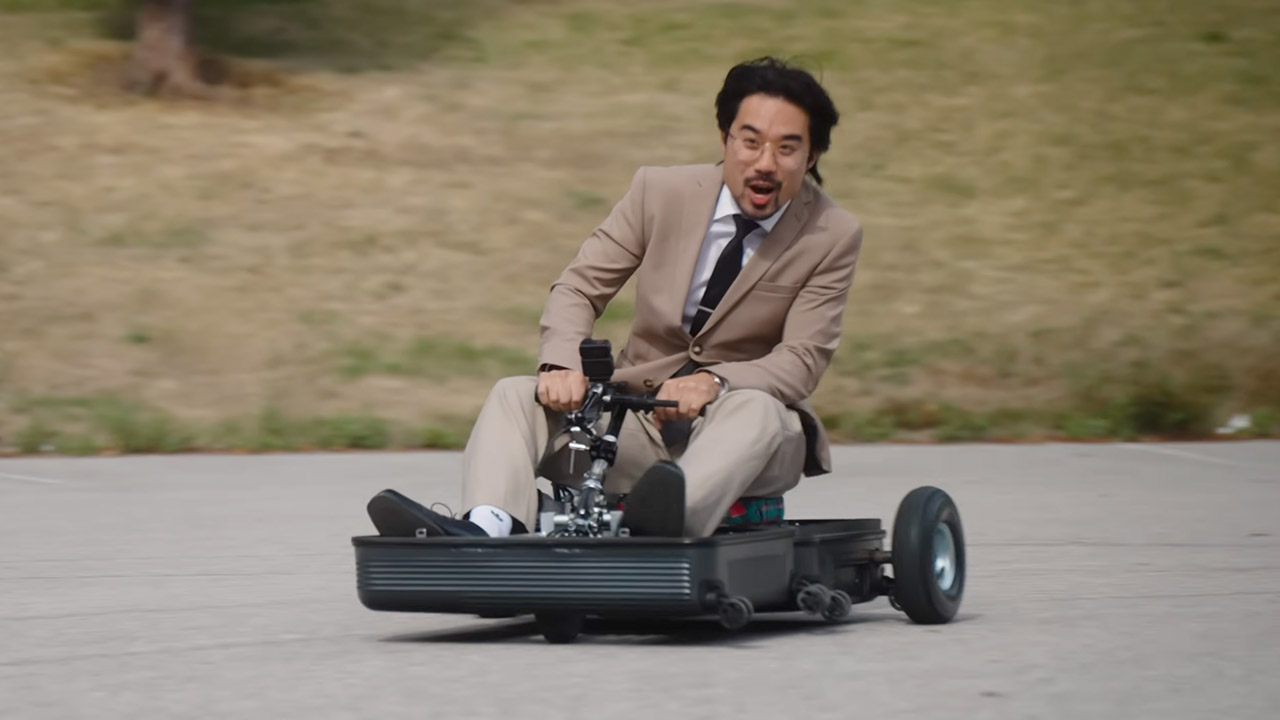
Bucket’s version includes a few upgrades that the original didn’t require. The custom freewheeling axle, reinforced front mounting, and aluminum structure were all developed through real-world testing rather than from a textbook. The finished product is a rather nice replica that nevertheless feels homemade, complete with tiny defects indicating that the person who created this thing was learning to weld in a hurry and still managed to get it to move.
You must be logged in to post a comment Login