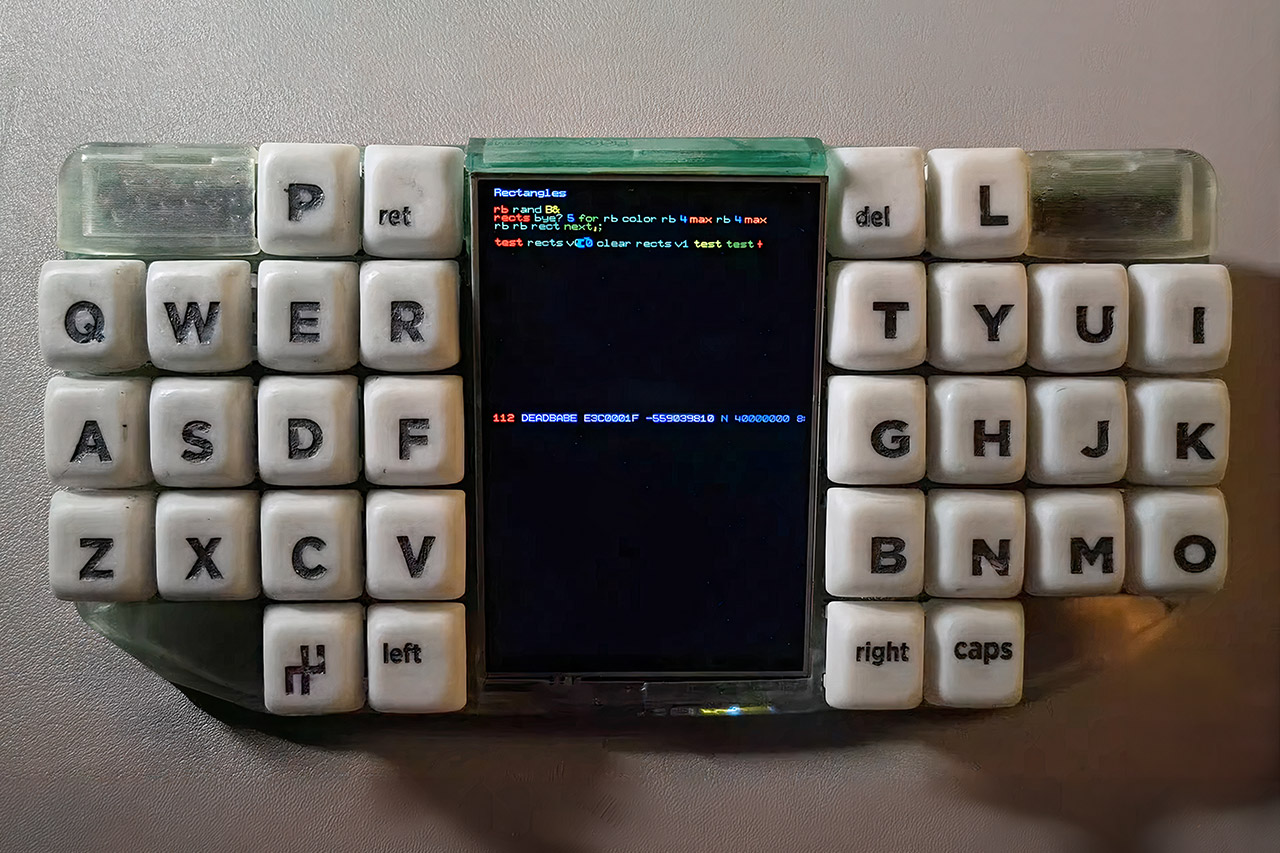
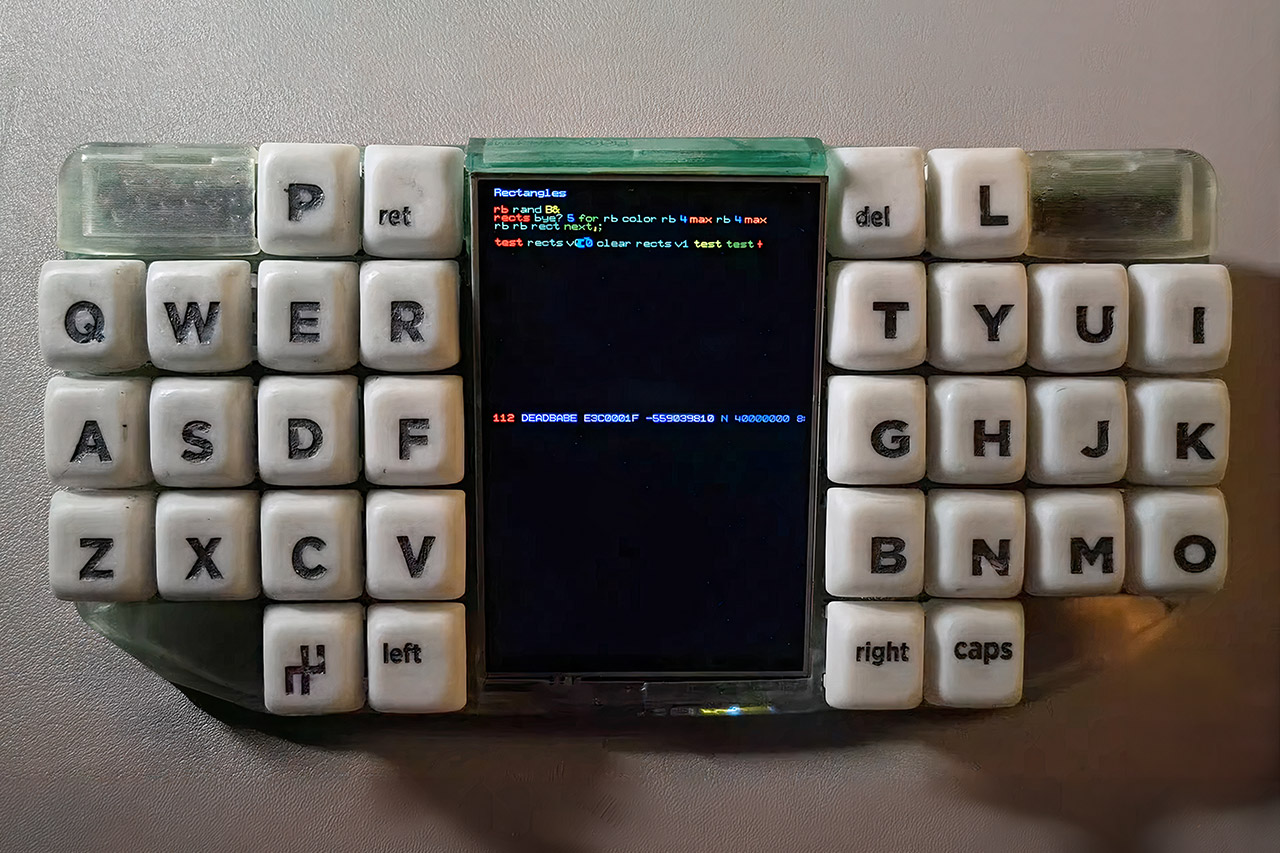
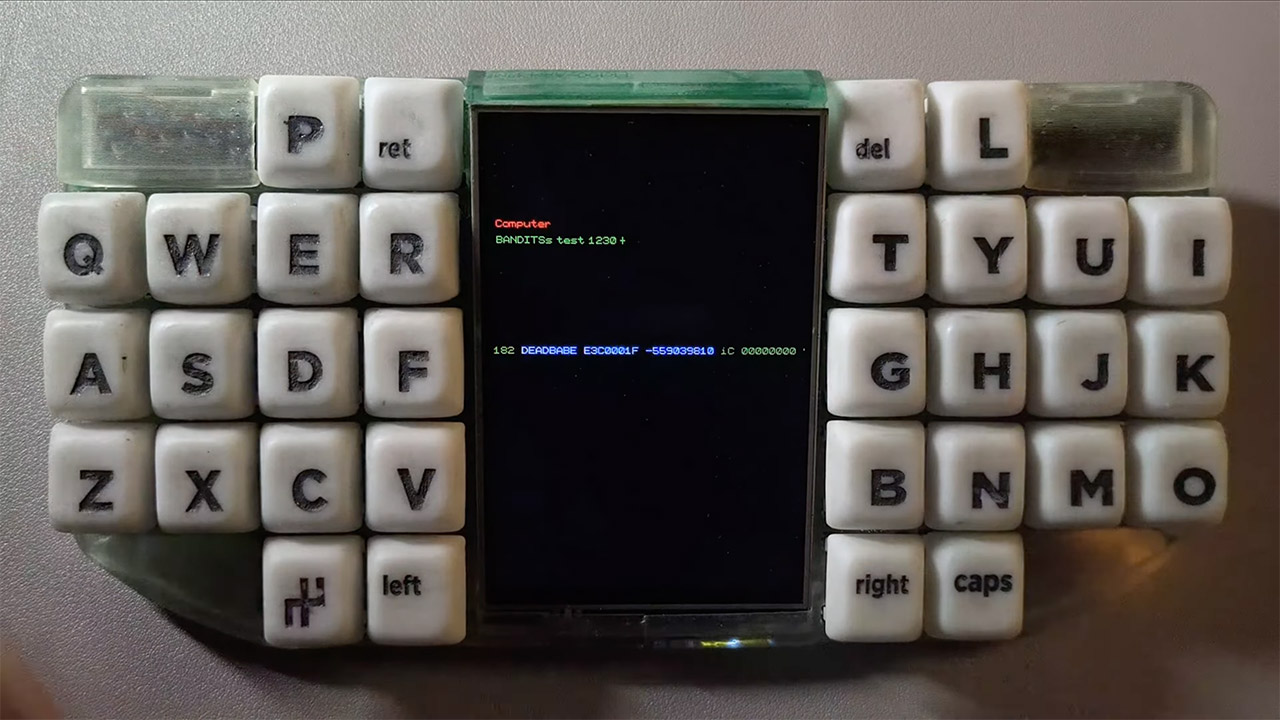
BANDIT is a fully functional computer that sits comfortably in both hands and is ready to go the moment you power it on. The keys are split across each side with a color display sitting in the middle, and rather than typing one character at a time, the whole thing runs on a chording system where pressing multiple keys simultaneously produces complete letters or commands. Every possible combination the keyboard can produce is mapped to a single clean number within the system, keeping things elegantly simple under the hood.
Pick it up, flip it open, and you are straight into it with no waiting for anything to load or update. The four inch color display is touch sensitive and can be divided into multiple regions handling different functions simultaneously. If you need more screen real estate, plugging in an HDMI cable will push the same output to a larger monitor or television without any extra setup required.
XBOX EXPERIENCE BROUGHT TO LIFE BY ROG The Xbox gaming legacy meets ROG’s decades of premium hardware design in the ROG Xbox Ally. Boot straight into…
XBOX GAME BAR INTEGRATION Launch Game Bar with a tap of the Xbox button or play your favorite titles natively from platforms like Xbox Game Pass…
ALL YOUR GAMES, ALL YOUR PROGRESS Powered by Windows 11, the ROG Xbox Ally gives you access to your full library of PC games from Xbox and other game…
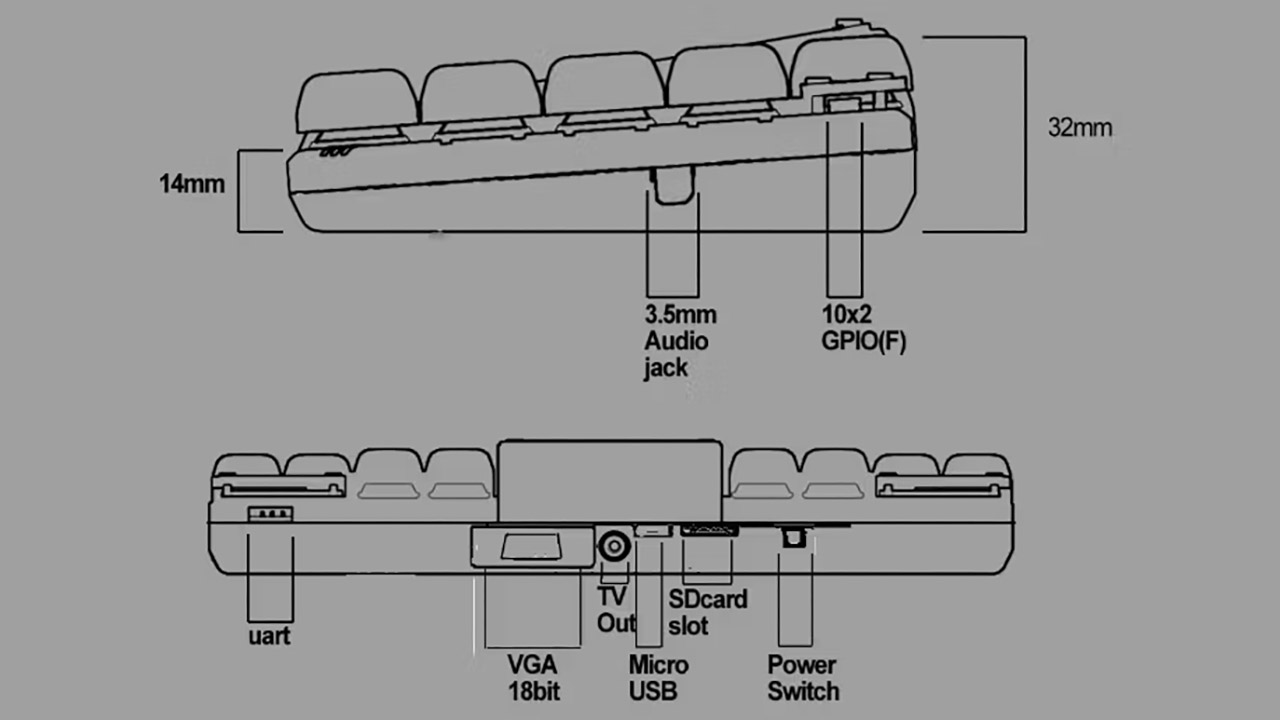
Power comes from a 700 megahertz Allwinner processor, which is backed up by 32 megabytes of RAM. Storage options include a microSD card or shared folders via the built-in wireless connectivity. Two regular battery cells are sufficient to keep everything running for several hours away from the power source. If you have a project in mind that requires additional input, 35 convenient pins provide direct access to external circuits or sensors through easy connectors.
The beauty of BANDIT is that it does not require a regular operating system to function. ColourForth runs the entire show, creating, compiling, and executing code in a single fluid motion. Built-in editors cover source text, pixel graphics, tile layouts, music patterns, assembly, and live debugging, and the greatest part is that your work is never lost because the system remains awake and resumes precisely where it left off.
On the performance side, the display handles over three thousand sprites at sixty frames per second without breaking a sweat, and the audio engine generates six channels of FM sound on the fly with full support for high resolution digital samples. It sounds complicated, but the learning curve is more forgiving than you might expect. Chording takes a little getting used to, though once it clicks you can move surprisingly fast, and the system is deep enough to build fully fledged games or tools if you want to go that far.
Wireless connectivity lets you link up with phones, laptops, or other BANDIT units and move files between them without any fuss. Preorders are open right now at $170 with a handful of casing colors to choose from, and units will ship as soon as the team finishes their final inspection. Every BANDIT arrives fully assembled and tested, keyboard switches, screen, and wireless module included, so you can get straight to it out of the box. [Source]
Adding to a home entertainment library is largely about the intentionality of the deep dive. While the digital landscape offers a wide, often fleeting pool of content, physical media remains the gold standard for those who value archival quality, creative and historical context, and the quiet joy of a well-curated shelf. We’re celebrating that spirit of discovery with a mix of recent titles, from high-energy animation to meticulously restored musical treasures to a couple of complete sets of television series that might have flown under your radar. Whether you’re looking for a Technicolor escape or a laugh at the expense of a lovable oaf, these releases offer the permanence and performance that only Blu-ray can provide.
Looney Tunes Collector’s Vault Volume 2 Blu-ray (Warner Archive)
Given the whims of HBO Max and other purveyors of Looney Tunes over the decades, nothing beats having them on physical media in some of their finest quality ever. Disc One proudly presents 26 shorts* that have never before been released on DVD or Blu-ray in remastered form, while Disc Two packs 25 more, remastered in HD for the first time as part of a WB cartoon collection. There are ample helpings of Bugs (every one a gem), Daffy, Porky and the Road Runner, a couple with favorites Ralph & Sam and some fascinating one-offs, too. The list of creators is a who’s-who of animation: Chuck Jones, Friz Freleng, Robert McKimson, one each from Tex Avery and Bob Clampett, among other legends, totaling some six solid hours. Keep in mind, these are unrated, uncensored cartoons for the adult collector, with a handful of previously recorded/released audio commentaries from animation historians.
*It would have been a nice round 25, but an extra ‘toon is included here to make up for an oversight on last year’s Volume 1.
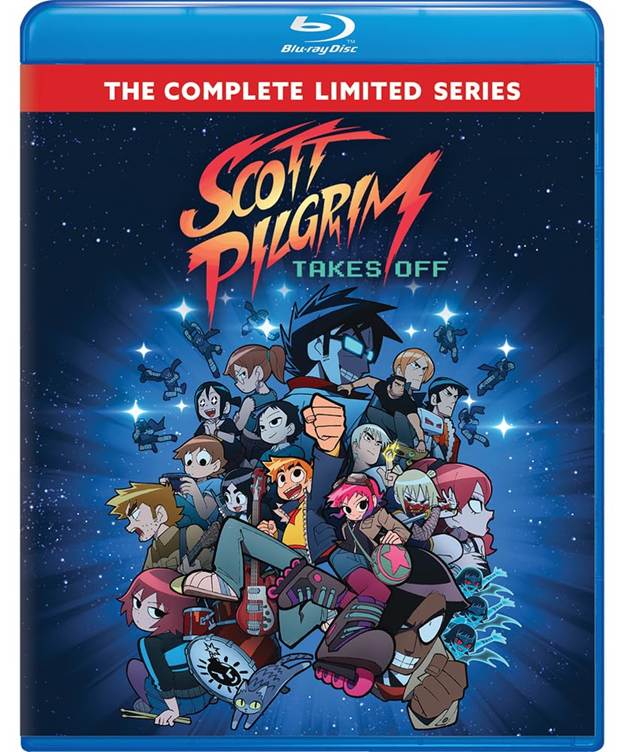
Scott Pilgrim Takes Off The Complete Limited Series Blu-ray (Universal Pictures Home Entertainment)
The 2010 cult favorite Scott Pilgrim vs. the World was apparently so much fun to make, the ensemble cast remained friends ever since. That might have been the only way to gather a lineup of this magnitude which includes Michael Cera, Mary Elizabeth Winstead, Kieran Culkin, Chris Evans, Anna Kendrick, Brie Larson, Alison Pill, Aubrey Plaza, Brandon Routh, Jason Schwartzman, and Mae Whitman for an anime on Netflix. Scott Pilgrim Takes Off is neither a remake nor a direct adaptation of a specific volume from Bryan Lee O’Malley’s manga. Instead, it functions as a “remix” of the original film, unfolding in an alternate timeline that reimagines the story.
Scott (Cera) once again battles the seven evil exes of girlfriend Ramona (Winstead), but he disappears after losing a fight, and she investigates. Across its 3.5-hour runtime, the story spends more time exploring the exes, while the Asian-inspired source material naturally complements the over-the-top anime style of this wild saga. The high-energy soundtrack by Anamanaguchi and Joseph Trapanese sounds fantastic in DTS-HD Master Audio 5.1, and Bryan Lee O’Malley and series co-creator BenDavid Grabinski provide audio commentaries for all eight episodes.
Broadway on the Big Screen Collection Blu-ray (Warner Archive)
These high-value (and slim, shelf-friendly!) repackagings make it easy to catch up on some all-time great toe-tappers you might have missed the first time around, boasting the lovely restorations for which the Warner Archive is so well-known. “Broadway” assembles an eclectic half-dozen adaptations spanning almost two decades in what might have been the heyday of the Hollywood musical:
Brigadoon (1954) – Romance transcends time for Gene Kelly and Cyd Charisse in this dance-filled fantasy, with a surreal “Metrocolor” palette and wide 2.55:1 frame, both meticulously preserved.
Guys and Dolls (1955) – Frank Sinatra and Marlon Brando shine, but for me it’s Frank Loesser’s magnificent lyrics that make G&D such a treasure.
The Pajama Game (1957) – Doris Day stars and Bob Fosse choreographs, and everything we need to know about him is right there in the “Steam Heat” number.
Damn Yankees (1958) – Fosse stages once again, this time providing his only onscreen appearance with future wife, Gwen Verdon, starring as the temptress Lola.
Gypsy (1962) – Rosalind Russell and Natalie Wood attack their roles as a mother-and-daughter stage family, with timeless Stephen Sondheim/Jule Styne songs and grand Technirama cinematography.
The Boy Friend (1971) – The stage musical that catapulted young Julie Andrews to stardom, boldly reimagined as only Ken Russell could do it, restored to its full length and in 5.1 to recreate the 70mm six-track experience from the British premiere.
Across the six discs we’re given a range of bonus content, from basic trailers to modern and vintage featurettes to quite a few deleted musical numbers.
The Fred Astaire set meanwhile hones in on the legendary hoofer, specifically the years following his iconic partnership with Ginger Rogers, all of these in glorious Technicolor:
Advertisement. Scroll to continue reading.
Easter Parade (1948) – This one-and-done pairing of Mr. Astaire and Judy Garland is joyful from beginning to end, with irresistible dance numbers highlighted by the slow-mo/full-speed wonder “Steppin’ Out with My Baby.”
The Band Wagon (1953) – Widely regarded as one of the finest movie musicals ever, with must-rewatch numbers including “Girl Hunt Ballet,” “A Shine on Your Shoes” and the mesmerizing “Dancing in the Dark.”
Silk Stockings (1957) – This remake of Ninotchka is considered Astaire’s last full-on musical role, showcasing both his versatility and still-got-it legwork alongside Cyd Charisse.
Finian’s Rainbow (1968) – Directed by a pre-Godfather Francis Ford Coppola (assisted by George Lucas), it’s a bit more whimsical and psychedelic than Astaire’s earlier films, trippy and a total hoot, presented here in its full roadshow A/V splendor.
The bonus content in this four-disc set is particularly generous, with multiple documentaries, classic cartoons and short subjects, audio rarities, as well as commentaries for three of the titles: Fred’s daughter Ava Astaire McKenzie on Easter Parade, director Vincente Minelli’s daughter Liza on The Band Wagon, and Coppola himself on Finian’s Rainbow.
The show I didn’t know I needed in my life, this unabashedly comedic return to the world of The Karate Kid centers largely on erstwhile bad boy Johnny Lawrence (William Zabka, a revelation), who peaked in high school and is still living in the ’80s. He’s a strangely endearing loser with a dark side that ebbs and flows across six seasons, alternately allied and at odds with his perceived nemesis, Daniel-san (Ralph Macchio). Throw in a whole bunch of deep-cut guest stars, new characters and a modern generation of teen drama, and Cobra Kai turns out so much better than it could have in lesser hands. Thank superfans Josh Heald, Jon Hurwitz, and Hayden Schlossberg, who created the show out of an obvious love for the franchise.
Cobra Kai began its run in 2018 as the flagship scripted series on YouTube Red (now YouTube Premium), ironically to compete with Netflix, which is where it completed its tenure with huge viewership, higher production values and a globetrotting scope. Sony’s six-season boxed set is the only way to get any of them on Blu-ray, porting the extras from the legacy DVDs (deleted scenes, bloopers, featurettes), in addition to brand-new creator commentaries on both the pilot and the finale.
Resident Alien The Complete Series Blu-ray (Universal Pictures Home Entertainment)
Harry Vanderspeigle is an extraterrestrial visitor on a mission to destroy humanity when he crash-lands in the quiet mountain town of Patience, Colorado. As the title character, he’s a fish out of water whose growing connection to the locals complicates his objective, all while he displays a slapstick awkwardness in his social ineptitude and more than a little heart. It takes one hell of an actor to pull off Harry for four Syfy/USA seasons, and fortunately they cast Alan Tudyk, the Juilliard-trained performer who makes the role endlessly watchable with his what-will-he-do-next comedic brilliance. Tudyk is also widely known as the voice of K-2SO in the film Rogue One: A Star Wars Story and its prequel series Andor, and has voiced a wide range of characters over the years, including Optimus Prime and The Joker.
We see him evolve from reluctant invader into a loyal protector, bonding with his new neighbors to defend Earth against other out-of-this-world threats, all while balancing some engaging subplots backed by a strong supporting cast. The ten discs arrive slipcased, in individual season cases, supplemented with featurettes and an assortment of deleted scenes, including several from the 2025 series finale.
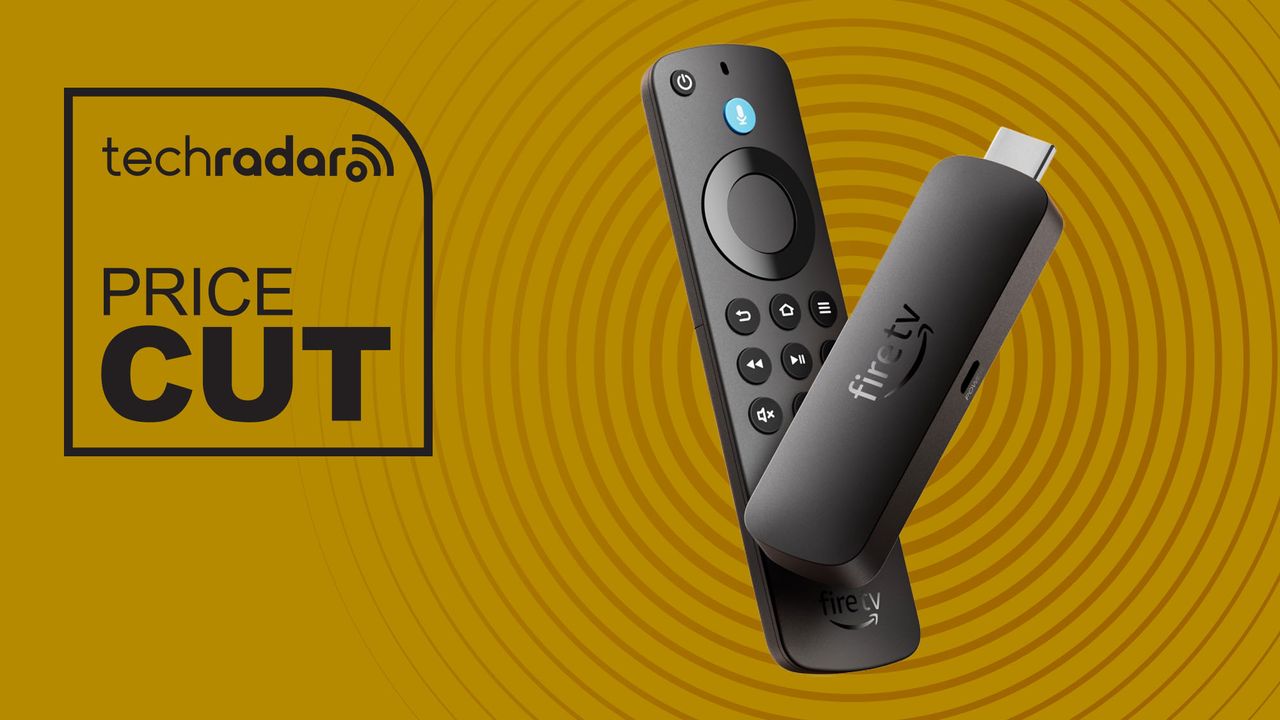
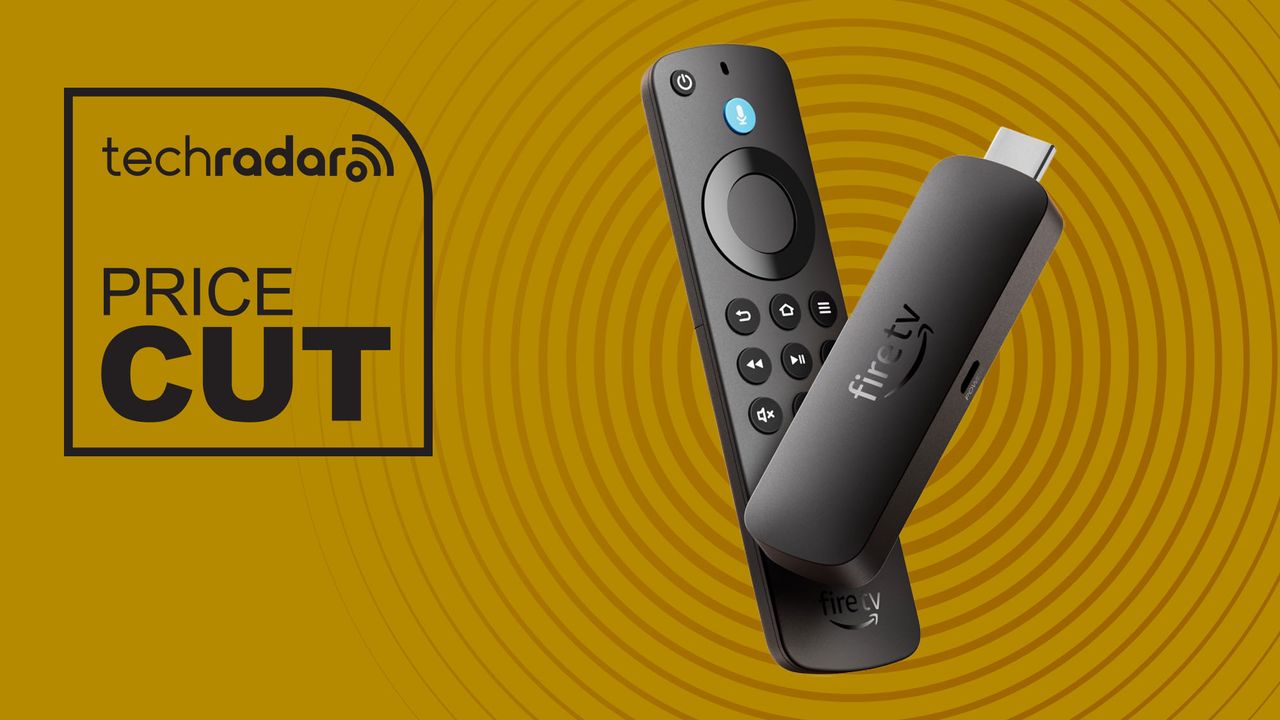
The Amazon Fire TV Stick 4K Select is a sweet deal at its full price of $39.99, let alone now that it’s been discounted by an unreal $25. That means you can bag yourself the Amazon Fire TV Stick 4K Select for just $14.99 (was $39.99).
To get this record-low price, you’ll need to enter the code FTV4K at checkout or tap the “Redeem” button underneath the price information. Amazon will then take care of the rest.
The Fire TV Stick 4K Select is the perfect choice for those who want 4K streaming capabilities without paying a ton for it. It lacks Dolby Vision and Dolby Atmos, but if simple high-resolution streaming is what you’re after, the Select is hard to beat at this price.
Advertisement
Today’s best cheap streaming stick deal
When I think of streaming sticks, my thoughts go directly to Amazon. As creators of many of the best streaming sticks, you know you’ll be getting feature-rich devices at affordable prices.
That is exactly the case for the Fire TV Stick 4K Select. Despite not having reviewed this particular model, we were big fans of both the Fire TV Stick 4K (now the Fire TV Stick 4K Plus) and the Fire TV Stick 4K Max, each scoring 4.5 out of 5 stars.
The Fire TV Stick 4K Select delivers essential 4K streaming with High Dynamic Range 10+ (HDR10+). It also opens up a whole world of content with curated recommendations. And, of course, Alexa is built into the heart of the interface, so you can ask the well-known assistant to search and launch TV programmes across your apps.
Advertisement
With so many options available, it can be difficult to know which device to go for. We’d recommend checking out our Amazon Fire TV Stick 4K Select vs Amazon Fire TV 4K Stick comparison to help with understanding the pros and cons of these two options.
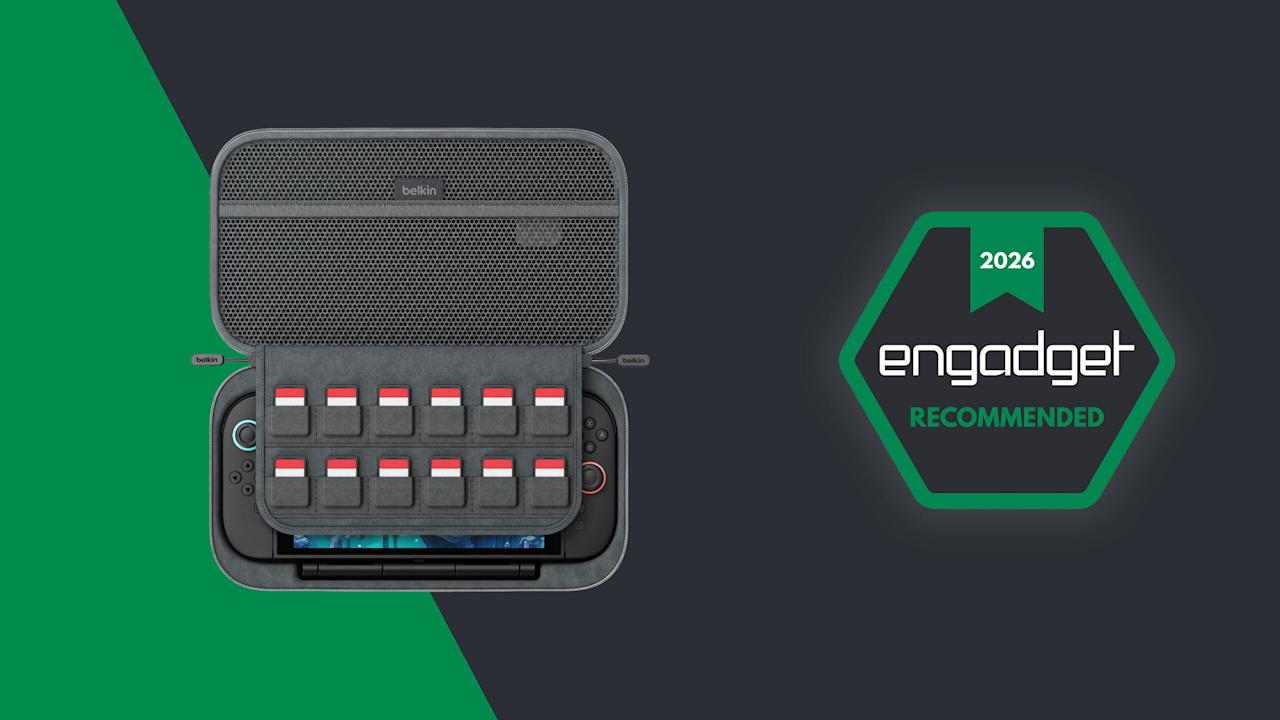
Last year, Belkin released a couple of cases for the Nintendo Switch 2 just in time for launch, including one that came with a handy battery pack. That one was simple and effective, but it felt a bit crude because it wasn’t much more than a basic travel pouch with a generic power cell tossed inside. Now, Belkin is back with a Pro version of its Charging Case for the Nintendo Switch 2, featuring a more sophisticated battery pack along with a higher price tag ($100 vs. $70). So here’s the question for any Switch 2 owners still looking for a way to protect their console while keeping it topped off: Is a more elegant charging solution really worth the extra money?
Belkin / Engadget
The pro version of Belkin’s Switch 2 charging case is a more sophisticated and versatile power solution. But it’s also more expensive, so unless you’re comfortable shelling out an extra $30 for the same basic features, you’re probably better off sticking with the non-pro option.
Pros
Advertisement
Included 10,000mAh battery pack
Battery pack also doubles as a stand
Built-in game storage
Solid construction
Hidden AirTag pouch
Cons
Costs more than the non-Pro version
A touch bigger and heavier too
No included USB-C cable
Case design
At 11.7 x 6.1 x 2.5 inches and weighing 1 pound 12 ounces, the Pro Charging Case is a touch larger and heavier than its non-pro sibling. It also features a very similar design with the same color options and materials, including a tough polyester outer shell that’s balanced by a softer, velvet-like material and cutouts for your Switch 2 on the inside.
The Pro Charging Case (bottom) is a touch bigger and heavier than the previous model, but aside from that its sports a nearly identical design. (Sam Rutherford for Engadget)
Once again, Belkin has done a good job of providing a snug cabin to store your console while still making it easy to take it in and out. That said, if your system also has an extra-thick protector or hardshell case like the Killswitch from Dbrand, it may not fit. There’s also a padded flap that swings down to protect your Switch 2’s screen that also pulls double duty as a place to stash up to 12 game cartridges, which is a very thoughtful touch.
However, the biggest change to the Pro Charging Case’s exterior design is a new cutout on the front edge, which allows you to top off other gadgets (or a Switch) by plugging a USB-C cable into Belkin’s included battery pack. Unfortunately, the case doesn’t come with a cord, which seems a bit odd until you take a closer look at the power pack’s layout. That’s because once you open up the case, you’ll see a second port designed to fit right into the bottom power jack on the Switch 2 without the need for a cable.
The inside of the Pro Charging Case features a handy mesh pocket, 12 slots for game carts and a hidden AirTag pouch. (Sam Rutherford for Engadget)
Other small touches on Belkin’s Pro Charging Case include a mesh pocket for storing things like cables, Joy-Con straps or cleaning cloths, which is very handy. However, my favorite thing might be the AirTag pouch that’s also hidden inside that pocket, which could give you a fighting chance of recovering your system if it’s ever lost or stolen (though I wouldn’t count on it).
Battery pack
The arrangement of the included 10,000mAh battery pack and the placement of its internal USB-C port makes it a cinch to recharge your Switch 2 every time you put it in the case. (Sam Rutherford for Engadget)
Despite the increased size of the Pro Charging Case’s included battery, it has the same 10,000mAh capacity as what you get from its less expensive sibling. That means you’ll typically have enough juice for a little more than 1.5 recharges for your Switch 2 and its onboard 5,220mAh cell. Instead of relying on a simple external power pack like before, Belkin’s bundled battery comes with a second USB-C port and a kickstand. This makes it super easy to plug in your Switch 2 every time you put it in the case. This way, you know the next time you turn it on, it’ll be at 100 percent.
Advertisement
Here’s what the battery pack looks like when you take it out of the case. As you can see, its size and shape means it’s not a great standalone external power pack any more. (Sam Rutherford for Engadget)
Alternatively, you can raise the kickstand to prop up the Switch 2 and game on it while it stays nestled inside the case. This might seem a bit redundant as Nintendo’s console already has its own kickstand, but Belkin’s allows you to continue charging the system while you’re playing without needing a cord. There’s even a handy display on the side of the battery, so it’s super easy to see how much juice is left, even when the case is closed. Furthermore, when you need to recharge the power pack, you can do so without removing it from the case or disconnecting your Switch thanks to that bonus USB-C port on the outside. Compared to the previous model, this is certainly a more elegant solution that provides some subtle quality of life improvements. The one downside is that the battery pack is somewhat awkwardly shaped, so you won’t really want to use it on its own.
Wrap-up
There’s no doubt the Pro Charging Case’s new battery pack is a more premium solution that’s easier to use and manage. When you need to recharge it, you can do so from the outside without opening the pouch. It also lets you charge a Switch 2 without ever needing a cable. The built-in kickstand is another bonus that helps elevate the whole kit from a simple case to something closer to a tiny all-in-one gaming booth.
One of the neat things about giving the battery a kickstand is that it turns the case into a mini all-in-one. This makes me wish Belkin gave the included power pack some sort of docking functionality for connecting the Switch 2 to an external display. (Sam Rutherford for Engadget)
That said, after using it for a couple of weeks, I’m still not sure the added convenience is worth an extra $30 over the original. Due to the battery packs’ new shape, it’s less useful as a standalone power cell, and the rest of the case’s design is largely unchanged. Of course, it’s always nice to have options, and if you’re the kind of person who doesn’t mind spending a little extra for a more streamlined and convenient kit, Belkin’s Pro Charging Case for the Switch 2 is still very much worth consideration.
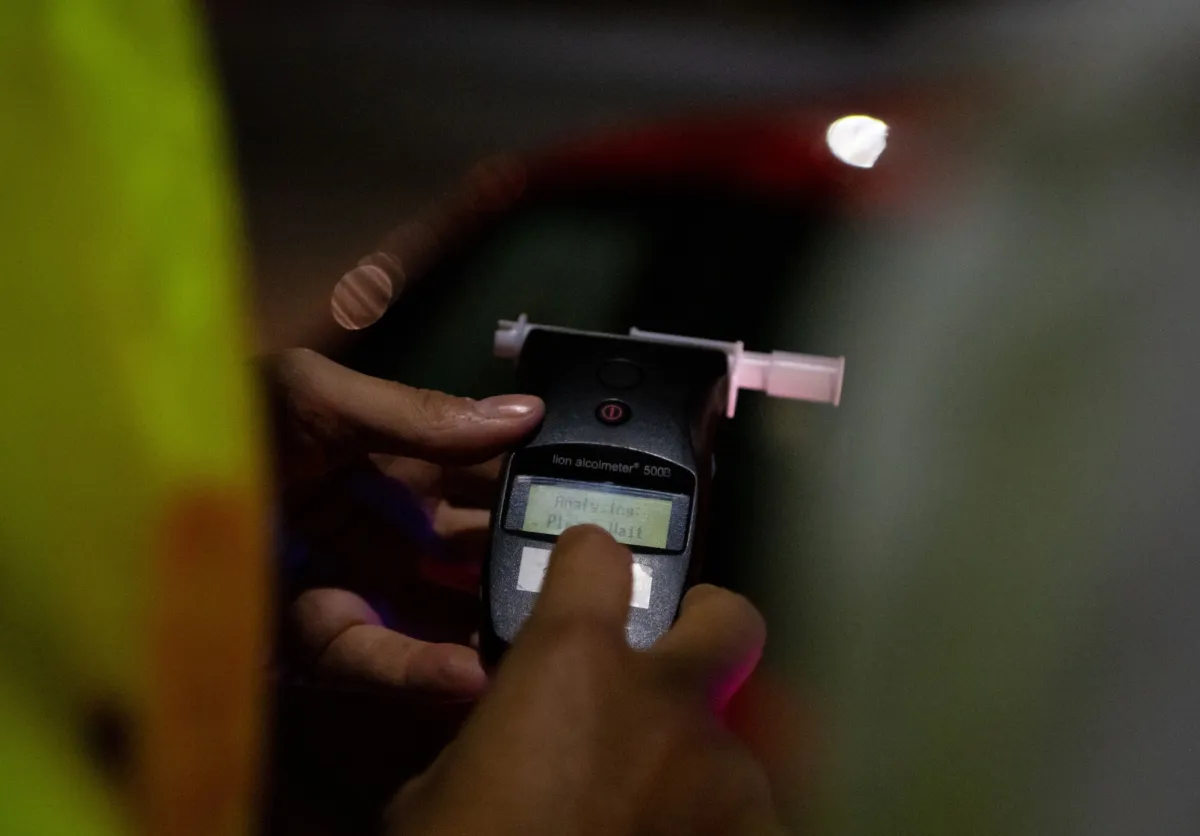
A cyberattack on a U.S. vehicle breathalyzer company has left drivers across the United States stranded and unable to start their vehicles.
The company, Intoxalock, says on its website that it is “currently experiencing downtime” after a cyberattack on March 14. Intoxalock sells breathalyzer devices that fit into vehicle ignition switches, and is used by people who are required to provide a negative alcohol breath sample to start their car.
Intoxalock spokesperson Rachael Larson confirmed to TechCrunch that the company had been hit by a cyberattack. Larson said the company took steps to “temporarily pause some of our systems as a precautionary measure.”
These breathalyzer devices need to be calibrated every few months or so, but the cyberattack has left Intoxalock unable to perform these calibrations. The company said customers whose devices require calibration may experience delays starting their vehicles.
Advertisement
Drivers postingon Reddit say that cars are unable to start if they miss a calibration, effectively locking drivers out of their vehicles.
According to local news reports across Maine, drivers are experiencing lockouts and some have been unable to start their vehicles. One auto shop in Middleboro told WCVB 5 in Boston that it has had cars parked in its lot all week due to the cyberattack.
News reports from across the United States show drivers are affected from New York to Minnesota, and drivers have been unable to drive because their vehicle-based breathalyzers cannot be immediately calibrated.
Intoxalock would not say what kind of cyberattack it was experiencing, such as ransomware or if there was a data breach, or whether it had received any communications from the hackers, including any ransom demands. The company’s technology is used in 46 states, its website says, and it claims to provide services to 150,000 drivers every year.
Advertisement
Intoxalock did not provide an estimated timeline for its recovery.
It’s a chilly March morning in the undisclosed mid-Atlantic hotel hosting Palantir’s developer conference. The defense contractors, military officers, and corporate executives in attendance are unprepared for the weather; they’d assumed the previous day’s mid-70s temperatures would hold. A cold rain turns to steady snowfall, and Palantir passes out heavy blankets. As people move between open-air pavilions, it looks like they were pulled from shipwrecks. Nonetheless, spirits are high. To this self-selecting crowd, Palantir is delivering on its promises. The company’s stock price is soaring. The gathering is infused with the giddy groupthink of a multilevel marketing event.
After securing an invite to the conference—a task made challenging by Palantir’s disapproval of WIRED’s recent coverage—I was eager to get an inside glimpse of the mysterious company. Founded in 2003 by Peter Thiel and his then obscure former Stanford classmate Alex Karp, the company has become part of the Pentagon’s AI-based combat transformation. In the past few years, though, its biggest growth has been in the commercial sector. “The commercial business is growing at 120 percent year over year. We’re very proud of the 60 percent growth in government, but they’re not even on the same glide slope,” says Palantir’s CTO, Shyam Sankar, who is also part of a four-person contingent of tech execs serving as lieutenant colonels in the Army Reserve.
Generative AI has helped fuel Palantir’s rise, supercharging the hands-on support the company provides to its customers. Early in its evolution, Palantir would embed “forward deployed engineers” into companies, helping them weave Palantir’s software into their operations. Large language models allowed Palantir to build products with more power, and now the engineers concentrate on helping customers build their own tools with Palantir’s technology. “Every time those models got better it seemed like they were tailor-made exactly for us,” says Ted Mabrey, an early employee who now heads the commercial business. Sankar elaborates: “Our whole thesis has been that we’re building Iron Man suits for cognition,” he says. “We were rate-limited by the number of people, the creativity of the questions, all those sorts of things. And then [with Gen AI] that rate limiter was eliminated, and that changed the rate of growth.”
The morning’s keynotes include a US Navy vice admiral, the officer in charge of the Maven AI battlefield project, and executives from Accenture, GE Aerospace, SAP, and the Freedom Mortgage Corporation. The range reflects the company’s trajectory from defense work to the commercial sector. During the breakfast hour I watch a demo from a family-run fashion business with 450 employees. CEO Jordan Edwards of Mixology Clothing says that he found Palantir through an Instagram ad, and that the AI-powered system has transformed his business. He uses Palantir’s software to help make buying decisions and then has it send emails to negotiate prices. For one line he sells, “it drove a 17-point margin swing—from losing $9 a unit to gaining $9 a unit,” he claims. Edwards now describes himself as a “forward deployed CEO.”
Advertisement
Even though Palantir’s major growth is in the commercial sector, its soul remains in defense contracting. During its long struggle to become part of the defense establishment (at one point, it sued the Army to be considered for a contract), it adopted a focus on outcomes. Palantir likes to think that this experience forced it to adopt a level of rigor that has allowed it to eclipse its rivals in the commercial arena. One chapter of Sankar’s just-published book, Mobilize: How to Reboot the American Industrial Base and Stop World War III, is called “The Factory Is the Weapon.” Both Sankar and CEO Alex Karp believe that American industry, especially in Silicon Valley, has shown insufficient patriotism. Their hope is that Palantir’s example will inspire other corporations to produce national defense products in addition to their consumer work.
Karp’s introductory remarks at the conference emphasized how defense work defines the company, especially now that America is at war. Atypically garbed in a blazer (“This is to convince my family I have a job,” he jokes), he says that normally, he would be talking to commercial customers about how to make them wealthier and happier and help them destroy their competitors. (He refers to rivals as “noncompetition” because in his mind, they don’t rank in Palantir’s class.) But with an active battlefield in Iran, the company’s sole priority is now supporting the troops. “At Palantir we were built to give our warfighters … an unfair advantage,” he says. “It was, ‘Yeah, we’re going to really F- our enemies.’ And I take great pride in that.”
Amnezia VPN Free is now officially available for users located in Brazil
The free version only tunnels traffic for specific blocked websites and apps
The launch comes as Brazil has enforced new mandatory age checks
Open-source privacy provider Amnezia VPN has announced that its free VPN service is now officially available to users in Brazil. The launch aims to provide an accessible, zero-cost workaround for citizens navigating changes in the country’s internet landscape.
Announced via the company’s official X account, the rollout is specifically tailored to the Brazilian market. Unlike the full-service Amnezia Premium, which encrypts all device traffic and allows users to spoof their location across 20 global locations, Amnezia Free utilizes a highly targeted approach. The free tier uses split-tunneling to route only specific, socially important websites and apps through the encrypted tunnel. All other internet traffic remains on the user’s regular connection, utilizing their actual IP address.
By focusing its server resources strictly on restricted platforms, Amnezia Free offers unlimited bandwidth and high-speed performance without charging a subscription fee or requiring user registration. The application is completely ad-free and relies on the provider’s custom AmneziaWG protocol.
Built as an open-source offshoot of WireGuard, the AmneziaWG protocol is explicitly designed to resist network blocking. It dynamically alters the appearance of traffic, making it highly resilient against the deep packet inspection (DPI) techniques often used by internet service providers and government censors to detect and block VPN usage.
Advertisement
🇧🇷Amnezia Free works in Braziiiil!!It proxies all websites, helps bypass age verification, and boosts your online privacy.You can request a configuration key directly in the apphttps://t.co/ktpBE2YUj8 pic.twitter.com/YQVQmP8jI9March 19, 2026
Because the free version is designed purely as an anti-censorship tool, it will not hide a user’s IP address on standard websites. If a Brazilian user discovers that a vital website is blocked and not currently supported by the free tier, they can request its inclusion by emailing Amnezia’s support team.
However, the company’s policy explicitly states that it will not unblock resources containing “immoral, potentially dangerous, or inappropriate content.”
For users who require system-wide encryption, the ability to bypass geo-blocks for streaming libraries, or support for P2P downloading, the provider notes that a classic, premium VPN is still required.
Advertisement
A growing reputation for anti-censorship
Amnezia has steadily built a strong reputation within the cybersecurity community as a reliable tool for circumventing internet restrictions. The open-source nature of the project means its code is publicly available for independent experts to review, ensuring transparency.
Its effectiveness in hostile network environments has even caught the attention of major global tech platforms. Recently, Meta’s messaging giant WhatsApp officially named Mullvad and Amnezia VPN as go-to tools for bypassing censorship, recommending the service to users who find themselves abruptly cut off from the communication app.
With its arrival in Brazil, Amnezia Free is positioning itself as a secure option for those worried about the privacy implications of sharing their sensitive data to access age-gated content.
By keeping the service completely free and easy to operate, requiring just a single tap to connect, the provider is cementing its core mission — promote a free and open internet for all.
Advertisement
We test and review VPN services in the context of legal recreational uses. For example: 1. Accessing a service from another country (subject to the terms and conditions of that service). 2. Protecting your online security and strengthening your online privacy when abroad. We do not support or condone using a VPN service to break the law or conduct illegal activities. Consuming pirated content that is paid-for is neither endorsed nor approved by Future Publishing.
Ryan Gosling heads to space in Project Hail Mary, the big-budget sci-fi adventure movie from Oscar-winning directing duo Phil Lord and Christopher Miller that hit theaters this weekend. The film, adapted from Andy Weir’s best-selling novel of the same name, finds school teacher Ryland Grace immersed in a top-secret government operation. The sun is dying, and he’s enlisted to find out why and to stop it.
If I didn’t mention the people involved in the movie, that description can easily be pegged to a variety of space disaster films that have come and gone. But this ain’t no Michael Bay movie. In fact, Project Hail Mary is unlike most titles of its kind in that the story avoids the bleak, hopeless tone that comes with galactic doom-and-gloom, race-against-time survival tales. And there’s an alien in there, to boot.
When I settled in for the IMAX press screening, the person introducing Project Hail Mary said it is ultimately a story about the power of friendship. I rolled my eyes at the notion, but I ate my words once the credits rolled. It is exactly that, and it shows how a simple emotional connection and a drive to solve a shared problem can bring together people from different backgrounds, including a rock-spider alien without a face.
Advertisement
“It’s a bromance,” Weir told me over Zoom. “It’s a story of two people who become friends and then work together. So collaboration, cooperation… I’m optimistic and have these positive views of humanity and stuff, and therefore I project those views onto imaginary aliens.”
Author Andy Weir on the set of Project Hail Mary.
Advertisement
Amazon MGM Studios
I had the opportunity to chat with Weir earlier this week about Project Hail Mary. I wanted to explore the story’s hopeful, fun vibe, and the celebrated sci-fi author taught me a few things he learned when he first brought the story to life.
“I believe humanity is pretty frickin’ awesome,” he began, “and I think we do great things, especially when we’re pushed. So, I think we’re an amazing species, and we do amazing things.”
That’s a perspective that makes Project Hail Mary such a breath of fresh air. I told him so, acknowledging the “science is cool” message the movie imparts early on, when Grace is seen teaching his students. In turn, he put on his proverbial teacher hat and schooled me on a deeper concept that underlies nearly all space exploration stories in science fiction.
“I wrote down a list of everything that I think an alien species would need to have to get up to the point where they can make a spaceship,” he said. “What do you need?”
Advertisement
(Insert my baffled blink and shoulder shrug, here.)
Ryan Gosling stars in Project Hail Mary.
Amazon MGM Studios
“You need information transfer, which means you need language,” he continued. “You need to be able to communicate with each other, which allows knowledge to live beyond a given individual member of the tribe. It’s like grandpa told me how to weave this rope, and now I’m going to tell my grandson how to weave the rope, and that knowledge stays with the tribe, right?”
Advertisement
Yes. But so far, this all seemed pretty basic. What does this have to do with spacecraft? I did my best not to interrupt.
“And then I thought of another really important aspect: having a tribe,” he continued. “You have compassion and concern for other members of your tribe. You’re like, ‘I care about that guy even though, if he dies, it doesn’t affect me directly.’ That evolves so that the tribe as a whole cares about each other. So it’s almost like a single multi-family entity, right?”
Ryan Gosling and Sandra Hüller star in Project Hail Mary.
Advertisement
Amazon MGM Studios
Right, so not like Star Trek: The Next Generation’s alien species, the Borg. I was pretty proud of this statement, which I actually said out loud.
And, without skipping a beat, he corrected me: “The most compassionate thing the Borg can do is assimilate people. Because then they’re part of the Borg, which is the best thing you can be like.”
I suppose if Weir didn’t make it as a writer, he, like Gosling’s Grace, could’ve carved out a solid career as a teacher. Anyway, back to the lesson…
“In order to get to the point where you’re making a spaceship, your species must have the concept of compassion and concern for each other,” he said, while watching my mind being blown in real time. “You would never have made a spaceship if you didn’t have that.”
Advertisement
What does this all have to do with the overall optimistic vibe of the movie? Well, as he told me, the film’s emotional foundation (which absolutely includes empathy, compassion and concern) is built on the friendship between Ryland and his new alien friend, whom he names Rocky.
“When Rocky and Ryland meet in space on spaceships that their respective species built, they are both entities that, by definition, have to have this concept of compassion and concern for the other,” he said. “This concept of empathy and concern is a necessity to get where we are. It’s the best part of humanity. And I think any intelligent alien race we meet would also have to have it.”
I’ll be honest. I’ve been thinking about this conversation for days, putting this idea to the test against every science fiction movie I’ve seen involving space travel. Suddenly, I’m viewing the genre in a whole new, optimistic light.
That led me to drill down into the movie’s good-feeling vibe, which is also in the book. Why did Weir decide to make this seemingly terrifying scenario feel, well, so joyful?
Advertisement
“It’s just an outcrop, an outgrowth of my worldview, I suppose,” he said. While there are themes of teamwork, friendship and hope throughout the movie, Weir added that he made Project Hail Mary without an agenda or clear-cut lesson.
“All I want from any of my words is to entertain. There’s no messaging, there’s no moral. I’m not trying to change any of your beliefs or induce any beliefs. All I want when you leave the theater or when you put my book away is for you to think, ‘That was cool. I’m glad I experienced that.’”
Well, it was cool. And I am absolutely glad I experienced it. You win, Andy. You win.
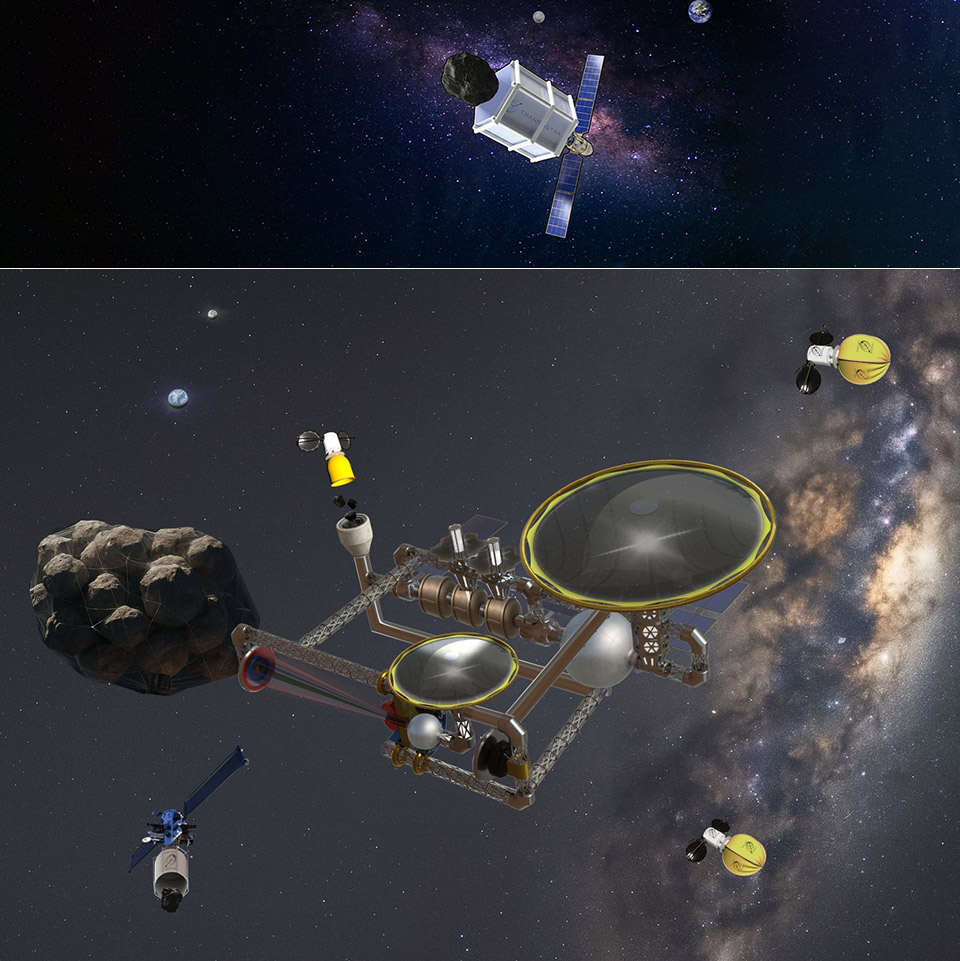
Small asteroids occasionally come close enough to Earth to provide potentially significant resources such as water for rocket fuel and metals for construction panels. TransAstra, a Los Angeles-based startup, has developed a device to grab the rocks whole and draw them into a nearby orbit, where personnel can break them down into useful components.
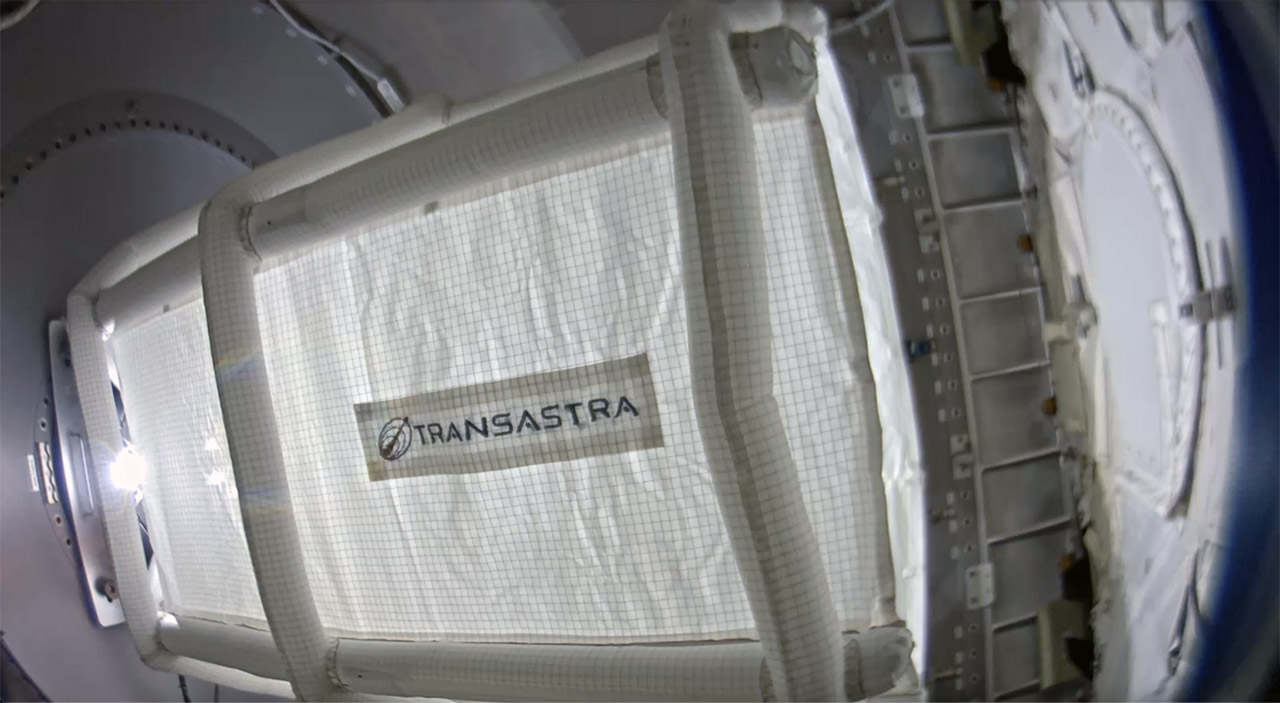
Engineers equip a spacecraft with the company’s capture mechanism before sending it out to meet one of approximately 260 tiny asteroids, each measuring barely 20 meters wide and weighing around 100 tons. At the capture site, the bag unfolds from its folded condition and wraps completely around the tumbling boulder. Once it has a firm grip on the entire object, the edges pull in tight to keep everything secure for the lengthy journey back to their destination. The bag, or capture device, is the center of the entire operation. It is made of robust laminates used in aerospace operations, which have the advantage of remaining flexible even in the extreme cold of space. Last fall, a 1-meter test version made it to the International Space Station, where it was inflated, opened, and closed several times in a vacuum chamber. The same design is now three stories tall thanks to a $2.5 million NASA contract and matching private funds. The full-scale prototypes will be tested at the Jet Propulsion Laboratory just before the first genuine asteroid run can begin.
BUILD AN OFFICIAL NASA ROCKET – Kids prepare to explore outer space with the LEGO Technic NASA Artemis Space Launch System Rocket (42221) building…
3-STAGE ROCKET SEPARATION – Young builders can turn the hand crank to watch the rocket separate in 3 distinct stages: solid rocket boosters, core…
STEM BUILDING TOY FOR KIDS – This educational rocket kit was created in collaboration with NASA and ESA to showcase the authentic system that will…
TransAstra originally called the first significant effort the New Moon mission. An investor and customer paid for a research that detailed every process, from locating the correct rock to carefully parking it. Researchers from the University of Central Florida, Purdue University, and the Jet Propulsion Laboratory all arrived to assess the flight trajectories, potential spacecraft requirements, and costs. The investigation is expected to be completed by the end of May, paving the way for a possible launch this year or next, with the spacecraft meeting its target between 2028 and 2029.
Once that bagged asteroid has arrived in a stable location within the Earth-Moon system, the real work begins. At the New Moon processing facility, robotic arms and heaters separate the water ice first. The water is converted into rocket fuel, which can later be utilized to power other spacecraft. The metals that remain are stamped into solar arrays or radiation shields, leaving only simple building blocks or shielding material, all of which remains in orbit, ensuring that nothing heavy is lifted off Earth.
For now the company is keeping its focus tight. Over the next decade the plan is to send reusable robotic craft on multiple runs, gradually gathering material from dozens or even hundreds of asteroids at a single processing location. Each mission is expected to bring back around 100 tons of material at a cost of a few hundred million dollars, which is a dramatic improvement over previous sample return missions that spent well over a billion dollars to retrieve little more than a handful of space dust. With so many potential targets within reach and missions stacking up over time, TransAstra believes the total haul could eventually climb to around a million tons of usable material. [Source]
A Lime e-scooter rider cruises past on the sidewalk in Seattle’s South Lake Union neighborhood, home to Amazon HQ. New tech on the scooters coming this summer will generate audible and app alerts warning riders to move to a safer riding area. (GeekWire Photo / Todd Bishop)
Lime scooters in Seattle are going to start policing their own riders, using cameras and AI to catch — and call out — bad behavior in real time.
The San Francisco-based micromobility company’s newly developed “Lime Vision” system will make its national debut in Seattle this summer, using a front-mounted camera and a trained AI model to detect whether a rider is in the road, a bike lane, or on the sidewalk.
When bad behavior is detected, the scooter emits an audible alert and sends a real-time notification to the Lime app, warning the rider to move to a safer location.
“The audible alert very clearly makes you and others around you aware that the vehicle is not where it’s supposed to be,” said Parker Dawson, Lime’s senior regional lead of government relations for the Pacific Northwest.
The rollout is part of a broader set of planned safety features aimed at protecting both riders and pedestrians, and will eventually extend to Lime’s e-bike fleet.
Advertisement
Reckless riding can be a serious problem, especially for riders who don’t wear a helmet. KUOW reported last year that Seattle’s Harborview Medical Center saw 163 serious injuries in 2024 from e-scooter or e-bike mishaps, many of them head injuries.
Lime scooters and bikes lined up in downtown Seattle. (GeekWire File Photo / Kurt Schlosser)
Half of Lime’s 7,000 standing scooters in Seattle will be outfitted with the Lime Vision by June 1 — utilizing a mix of new devices and retrofits — just in time for the massive influx of visitors expected for the FIFA World Cup. The remainder of the fleet will be completed in the following months.
Lime, which operates in more than 280 cities across nearly 30 countries, arrived in Seattle in July 2017, and counts the city as its oldest active market and a global testing ground for new hardware, including throttled e-bikes and the “LimeGlider” sit-down scooter.
With 15,000 deployed devices, including bikes, Lime riders recorded more than 10 million trips in Seattle in 2025, with Pike Place Market ranking as the top destination in all of North America last year.
Advertisement
To help manage the volume, the Seattle Department of Transportation began adding more than 200 new parking “corrals” downtown and around the city last fall to alleviate sidewalk clutter and encourage proper docking.
GeekWire is in touch with SDOT about the Lime Vision technology, and we’ll update this post when there’s more information to share.
Amazon burned its fingers with the Fire Phone back in 2014. The device, personally overseen by Jeff Bezos, lasted barely over a year before Amazon pulled the plug and wrote off $170 million in unsold inventory. Now, the company is taking another shot at the smartphone market.
According to Reuters, Amazon is developing a new phone internally under the codename “Transformer.” The project is part of a group called ZeroOne, which focuses on building breakthrough devices. It is led by J Allard, a former Microsoft executive who helped bring the Xbox and Zune to market.
What will the Amazon phone actually do?
The phone is being designed as a personalization device, one that keeps you connected to Alexa, Prime Video, Prime Music, and Amazon shopping throughout your day. A key focus is AI integration, which could eliminate the need for traditional app stores entirely. Think less scrolling through apps and more just asking Alexa to get things done.
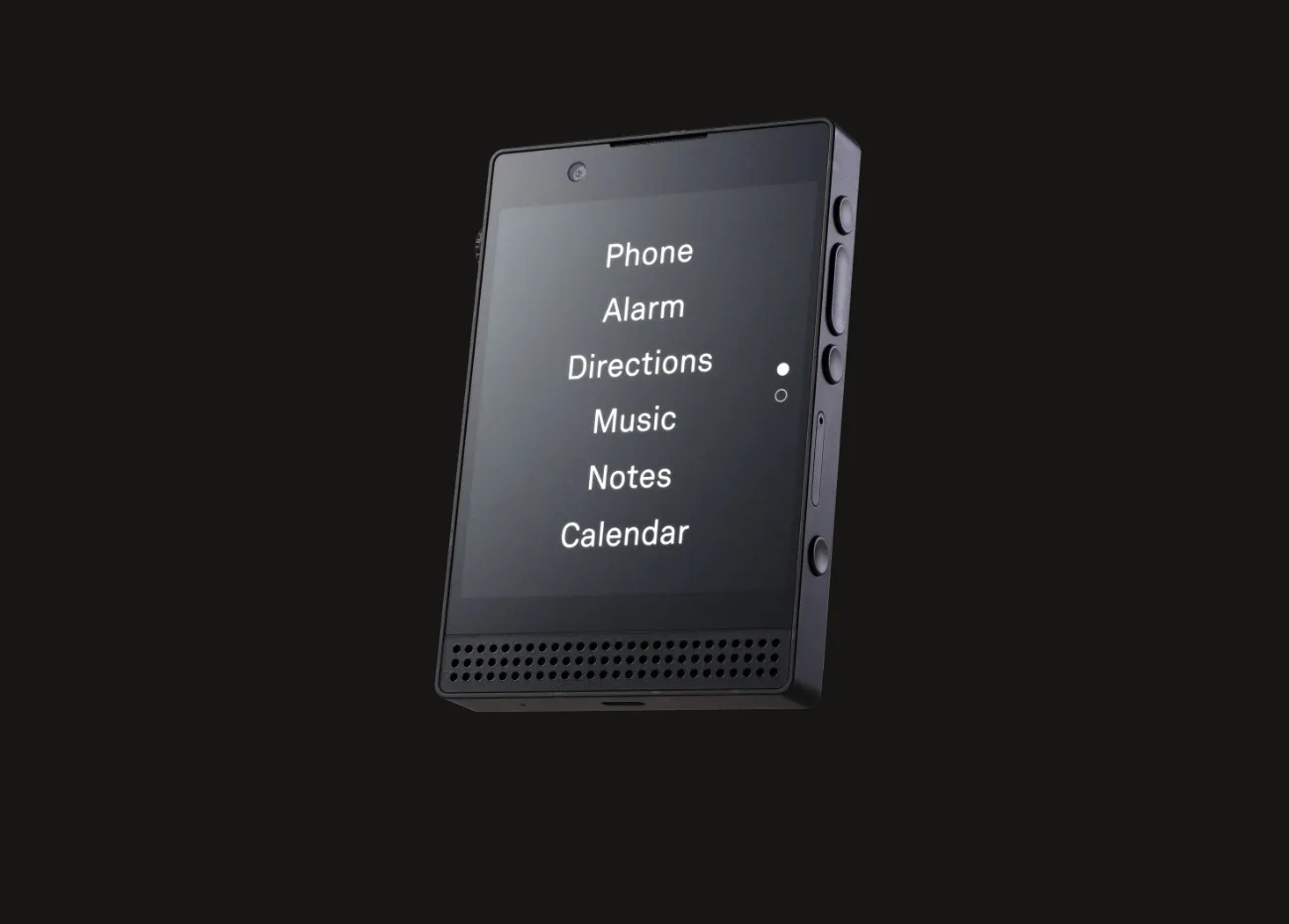
Interestingly, Amazon has also explored a “dumbphone” version with limited features, partly inspired by the Light Phone. A simpler device could help Amazon pitch it as a second phone that cuts through the noise rather than adding to it.
Light Phone
Will it actually work this time?
That’s the big question. The Fire Phone failed because it lacked popular apps, overheated, and gave people very little reason to ditch their iPhones or Android devices. Amazon faces the same challenge now, with Apple and Samsung still controlling roughly 40% of global smartphone sales between them.
Amazon is betting that a phone built around Alexa and its massive ecosystem might be different. Whether consumers agree is another story entirely. The timeline for Transformer remains unclear, and Reuters notes it could still be scrapped.
Amazon
In my opinion, the dumbphone idea would be a better starting point for Amazon. Competing in an already saturated smartphone market would be difficult, so positioning an AI-powered “dumbphone” as a secondary device that assists with shopping could be an idea users get behind.


























































You must be logged in to post a comment Login