
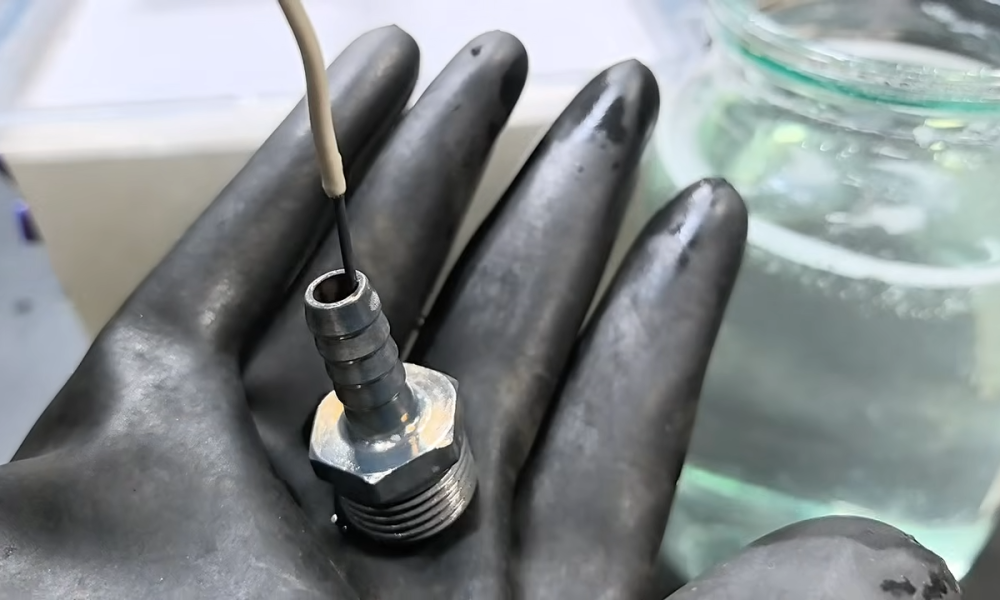
As useful as steel and iron are to the modern world, their tendency to rust is a major downside. There’s a spectrum of ways to prevent it, from quickly slapping on a coat of paint on the easy side to alloying, chromizing, or physical vapor deposition at the extremely difficult or industrial-only end. For a middle ground accessible to the home shop, galvanizing is a go-to method of rust prevention that deposits a layer of zinc onto the metal instead, but even this generally involves the use of strong acids. This method, though, makes galvanizing accessible without any acids. (Spoiler alert: substitute strong bases.)
Although the acids are omitted, the solution is caustic, so similar safety measures are still advised. The first step in the process is to dissolve sodium hydroxide into a container of distilled water. Metallic zinc can then be dissolved in the solution, with a bit of sugar and liquid soap to improve the finished quality of the coating. An electric current is applied to the solution, using a graphite plate at the anode and the part to be electroplated as the cathode. After some time, the part will be uniformly coated in a layer of zinc, which can then be brightened in a solution of only-mildly-acidic citric acid if needed.
One of the benefits of using a strong base to galvanize a metal part, beyond the preference of avoiding strong acids, is that this process can be better at plating parts that are non-uniform in shape, so things with deep crevices or other odd shapes that might coat unevenly in acid. If there’s a preference for electroplating with acid, there are some ways of producing one’s own using various methods.

You must be logged in to post a comment Login