Tech
Beethoven or Birds, Europe Puts Ten Fresh Designs for Its Next Euro Banknotes on Display

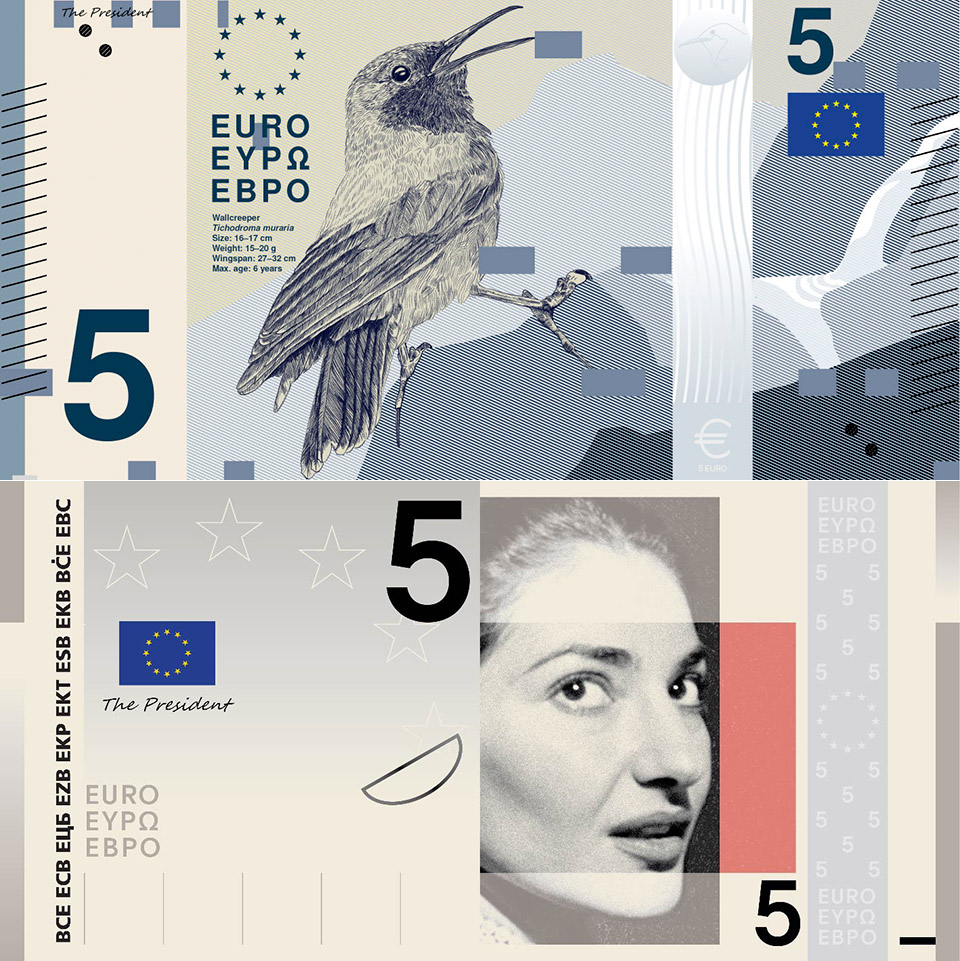
Europeans now get a direct look at the faces and landscapes that could soon fill their wallets. This week the European Central Bank unveiled ten shortlisted design proposals for the next series of euro notes and opened an online survey so the public can weigh in before a final choice arrives at the end of the year.


These proposals stem from two clear themes that were picked years ago after extensive public involvement and professional opinion was taken into account. One theme honors European culture in common places and concludes with some of Europe’s most well-known figures. The other walks down rivers from their mountain source to the sea, pairing each bit of water with a bird that lives there, as the one on the other side of the river is a key European institution. Both sets include the classic euro denominations from five to two hundred, and don’t worry, there will never be another 500 euro note.
Sale


Aneken Money Counter Machine with Value Count, Dollar, Euro UV/MG/IR/DD/DBL/HLF/CHN Counterfeit Bill…
- 【Professional and Precise Detection】Multiple detection modes can be used individually or simultaneously. When the cash is…
- 【Multiple Functions】Count-Count the number of bills. Add-Multiple bill counting batches can be added together. Batch-The money counter stops each…
- 【Count Value】The money counting machine can identify banknote denominations by manually setting the “Value”. In conjunction with the “Add…
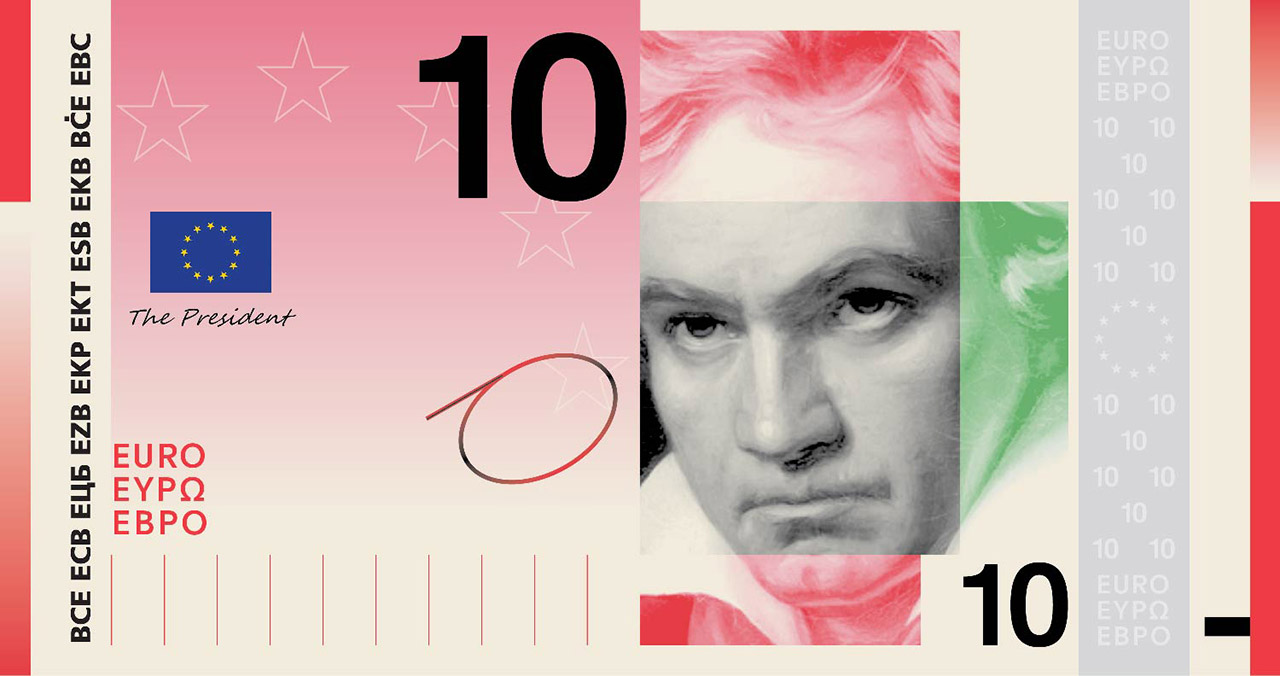
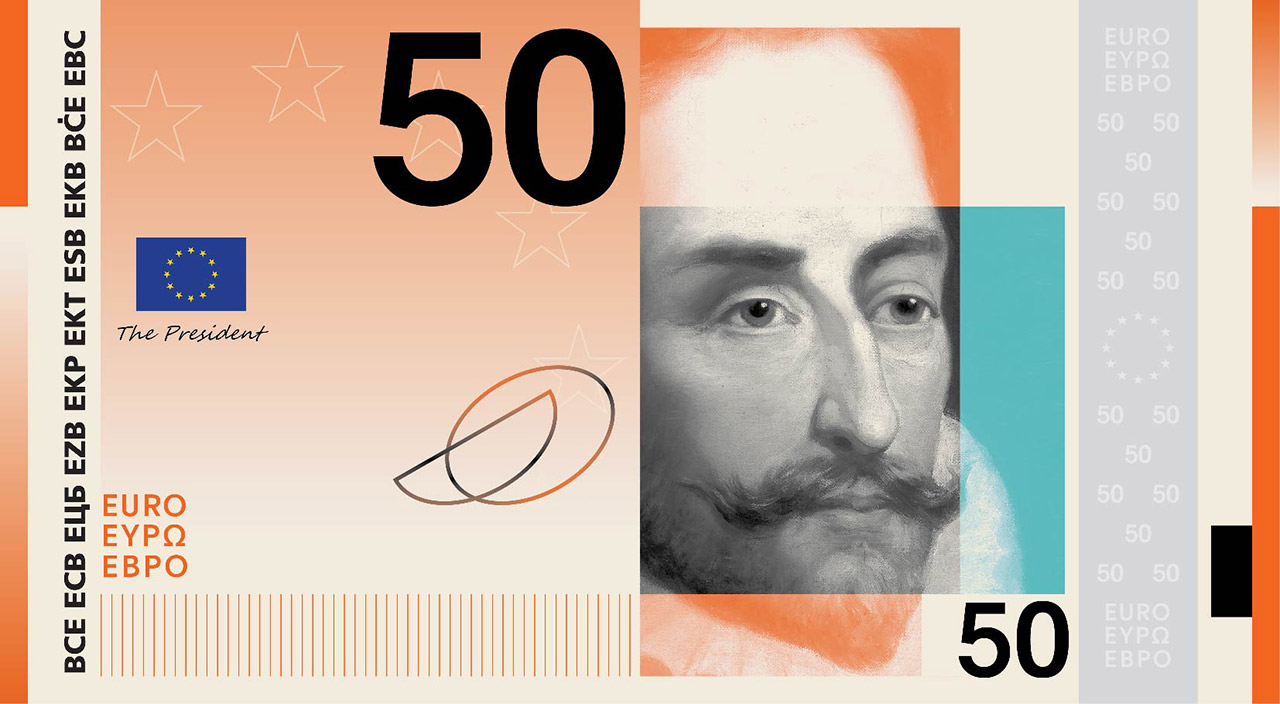
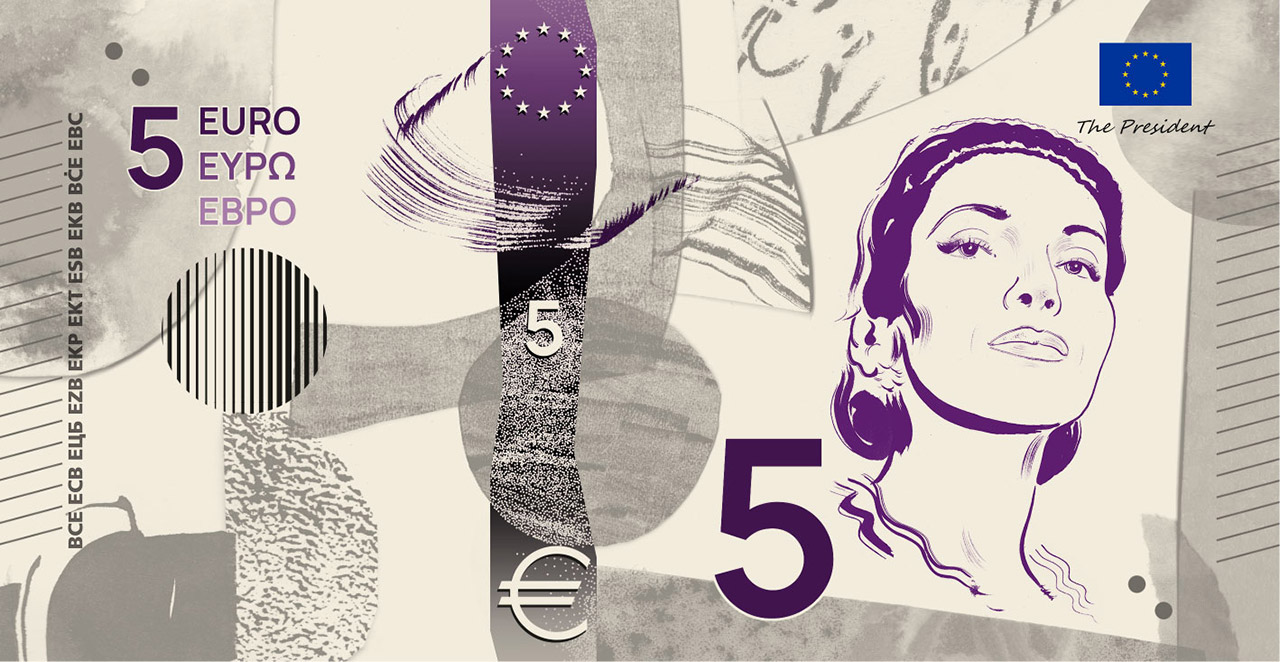
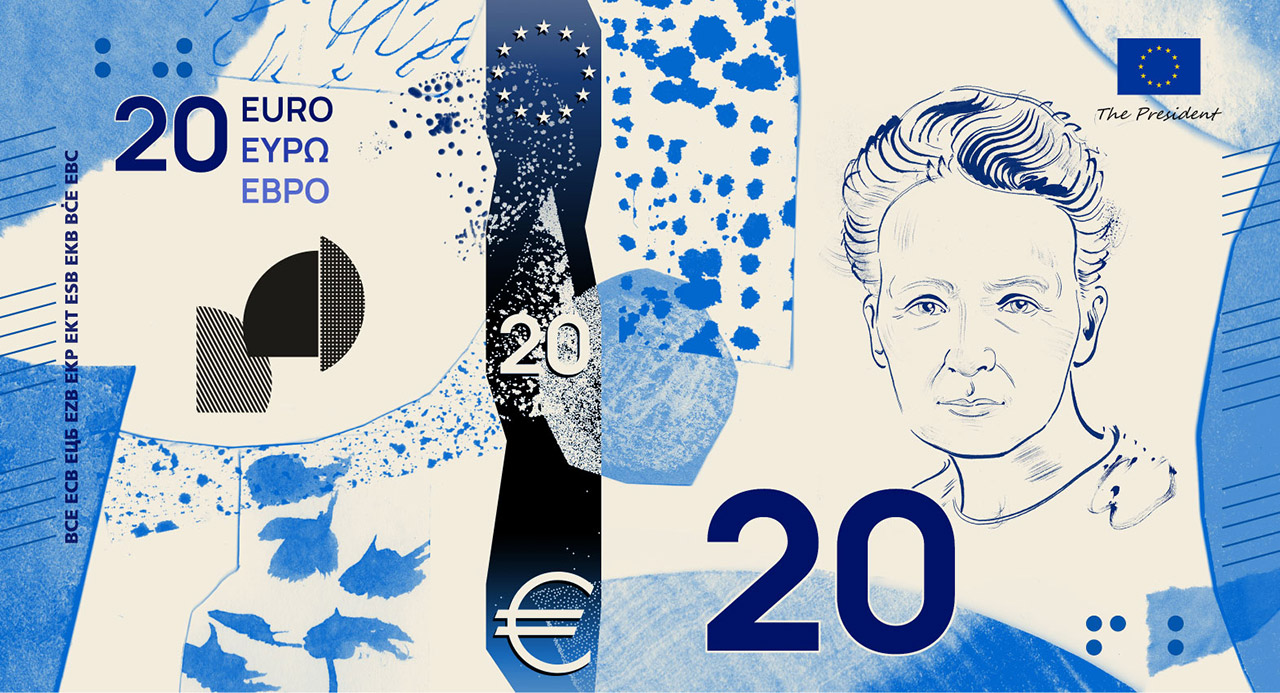
In the culture series, Maria Callas appears among a group of street performers on the five euro note. Ludwig van Beethoven appears on the tenth with a choir of young singers attending a festival. Marie Curie anchors the twenty in a classroom or at a university. Miguel de Cervantes gives the fifty to readers in a library. Leonardo da Vinci takes over the hundred, among children and adults learning art, while Bertha von Suttner, on the two hundred, has people gathered in a tree-lined square, as she was the first woman to receive the Nobel Peace Prize. The back of each note depicts ordinary Europeans participating in the cultural life associated with that figure.


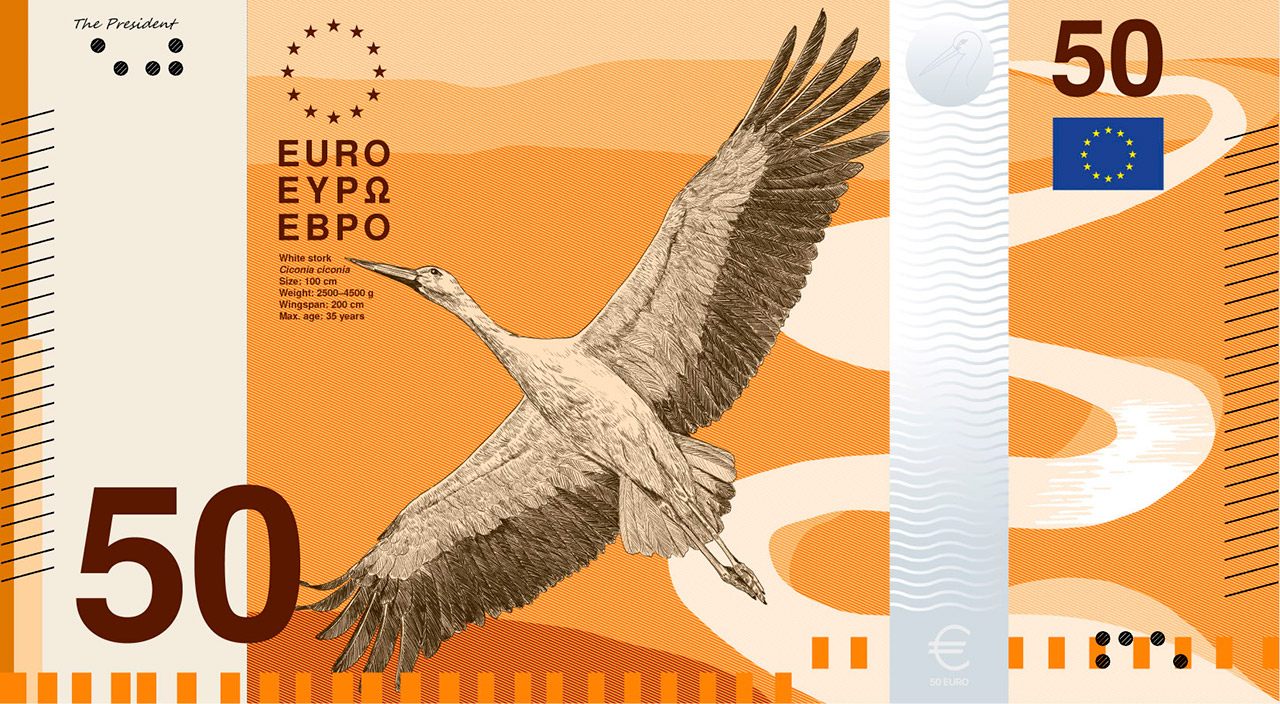
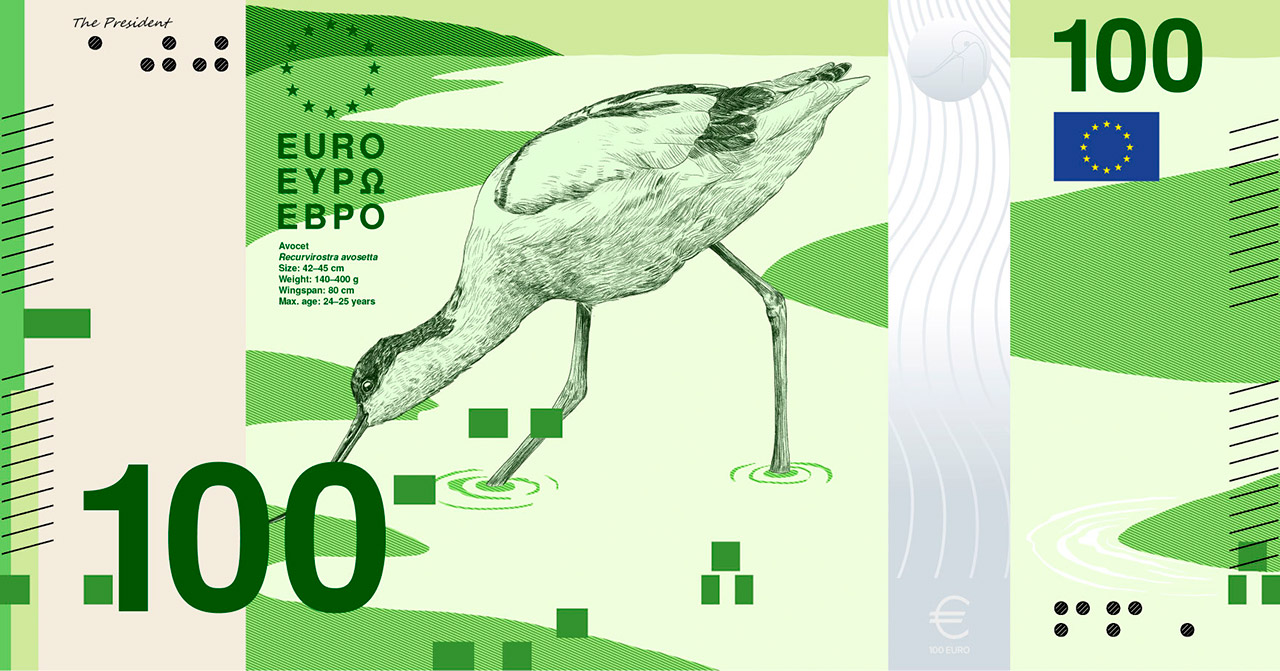
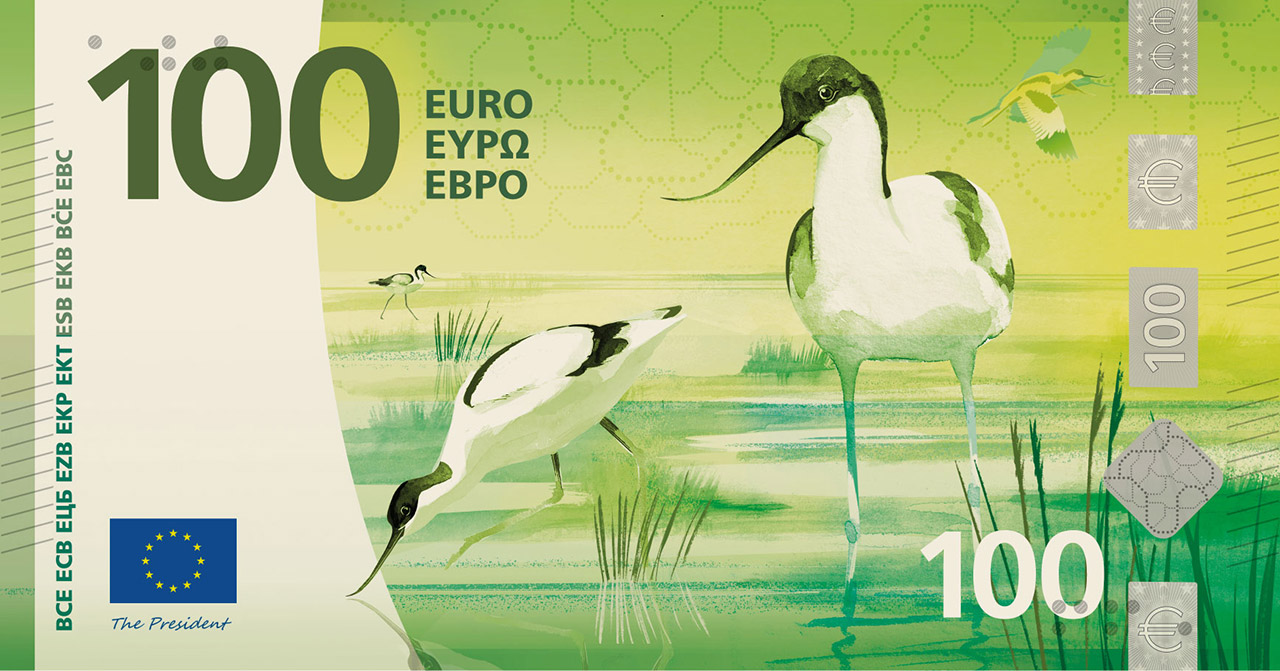
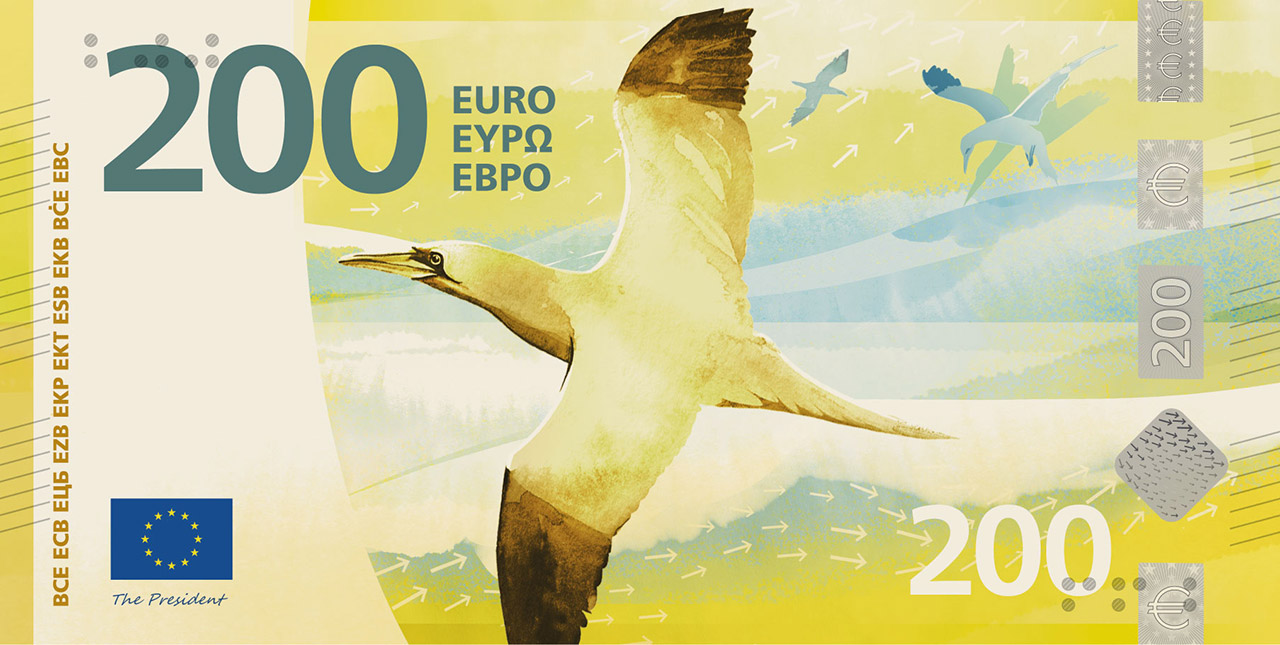
The Rivers and Birds series tells a very different story. On the five euro note, a wall creeper is depicted near the source of a river, with the European Parliament in the backdrop. On the tenth, a kingfisher waits by a waterfall, with the European Commission in the background. Bee-eaters are nesting in a sand bank along a river valley on the twentieth, and they are paired with the ECB building in Europe’s financial district. A white stork soars over a meandering river on the fifty, with the European Court of Justice in the background. An avocet is skimming across a river mouth on the hundredth anniversary of the European Council. A northern gannet is surfing the ocean waves on the two hundred, along with the European Court of Auditors. You can expect that water and wings are up front, whereas institutions are at the back.

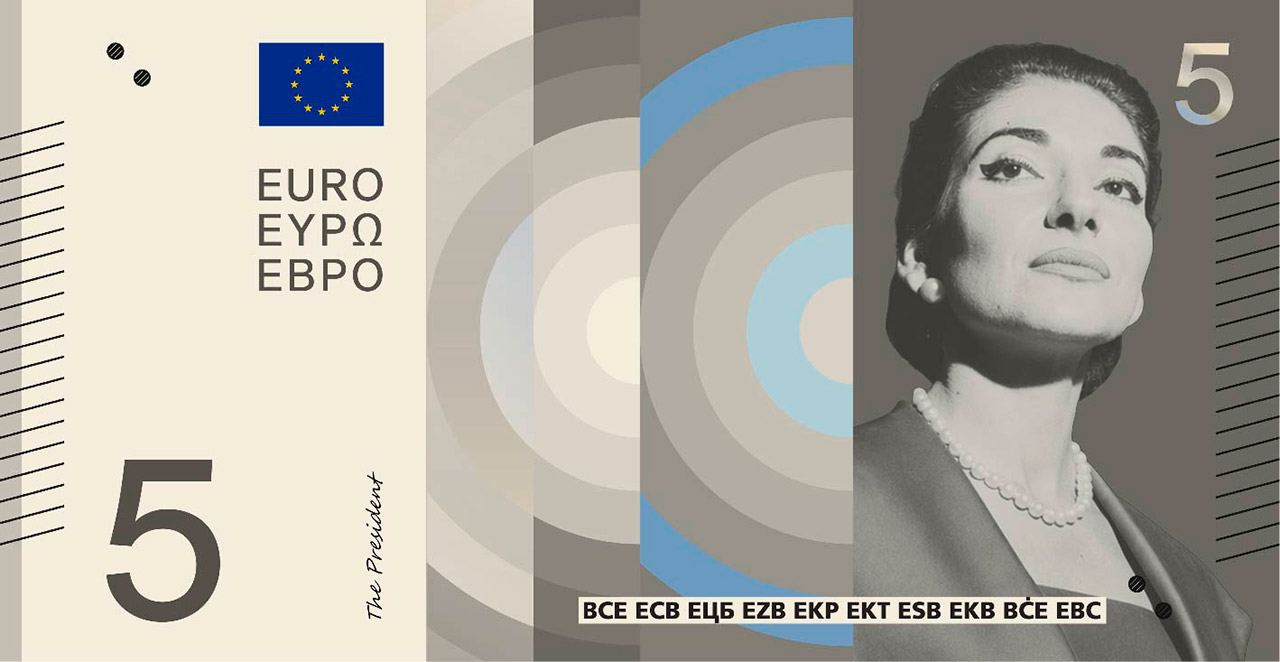
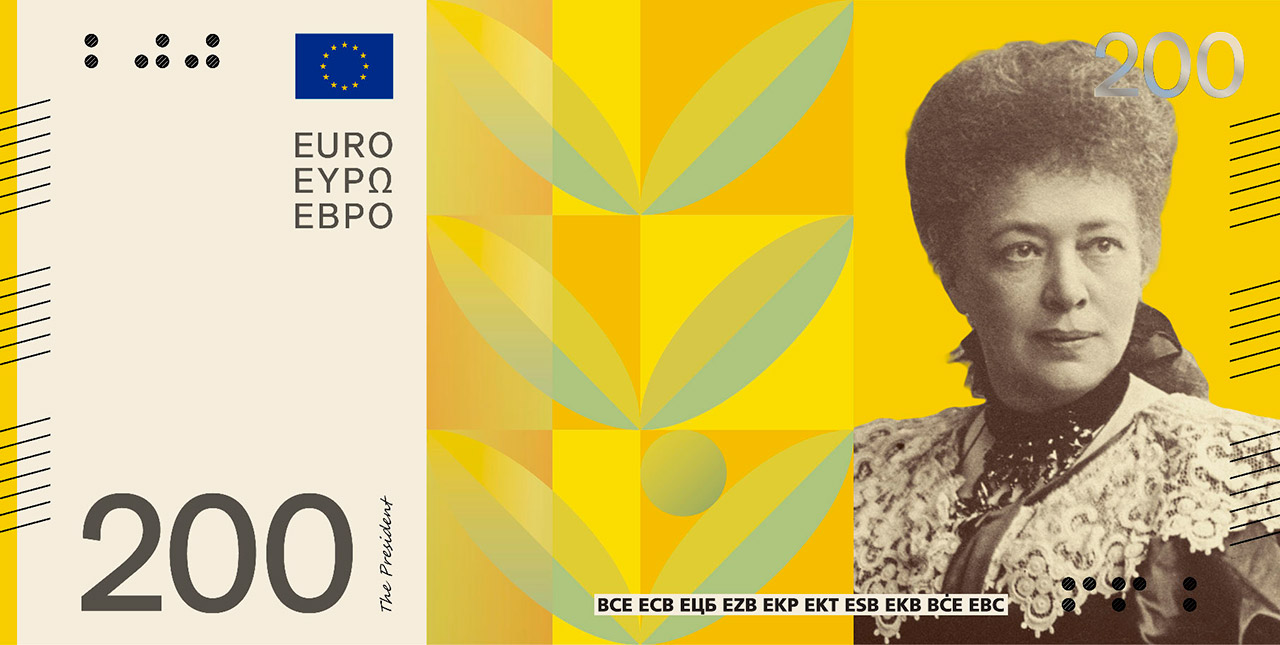
Five design teams worked on each theme. On the cultural side, one of the teams, Studio Joost Grootens, clipped historical pictures around the eyes and lips, leaving only observation and expression – it’s like a thread that runs across the designs. Another company, Neue Gestaltung GmbH, positioned the humans against the stars and purposefully selected some featureless modern people to fill out the scenes. Myrsini Vardopoulou organized a team based on circular symbols from each personality’s work in the culture portrait series. Meanwhile, Jan Robert Dünnweller created hand-drawn portraits with textured backgrounds. Rubio and del Amo, along with their sidekicks Cruz más Cruz, designed the notes to feature people gazing you directly in the eyes with the words “EURO” written in vertical blocks.


On the nature side, PunktFormStrich converts birdsong and aircraft speed into graphic data. Rudy Guedj and François Girard-Meunier pair those abstract landscapes with a continuous ribbon of light that evolves throughout the series. Meanwhile, Atelier Goppel-Toperngpong uses water as a metaphor for collective power in their work. Isabelle Daëron’s work combines hand-drawn elements with digital patterns to explore the relationship between mobility and interdependence. Ville Tietäväinen sequences the notes like a river, gradually approaching the sea with each successive value.

Getting to those ten proposals wasn’t easy. When the contest went live in 2025, more than 1200 graphic artists from throughout the EU applied. From there, 25 of them were requested to further develop their concepts into whole series, and by April 25th, a total of 39 complete proposals had arrived. An independent jury of 21 specialists, each selected by a different euro-area central bank, then began evaluating them in the dark (i.e., without knowing whose work they were reviewing). They reduced it down to five suggestions per subject based on criteria such as inventiveness, thematic clarity, accessibility, and how effectively the resulting designs will function in everyday life.
[Source]
You must be logged in to post a comment Login