


Connect with us

Tech

Before We Blame AI For Suicide, We Should Admit How Little We Know About Suicide

Published

on

from the the-human-brain-is-way-more-complicated dept

Warning: This article discusses suicide and some research regarding suicidal ideation. If you are having thoughts of suicide, please call or text 988 to reach the Suicide and Crisis Lifeline or visit this list of resources for help. Know that people care about you and there are many available to help.

When someone dies by suicide, there is an immediate, almost desperate need to find something—or someone—to blame. We’ve talked before about the dangers of this impulse. The target keeps shifting: “cyberbullying,” then “social media,” then “Amazon.” Now it’s generative AI.

There have been several heartbreaking stories recently involving individuals who took their own lives after interacting with AI chatbots. This has led to lawsuits filed by grieving families against companies like OpenAI and Character.AI, alleging that these tools are responsible for the deaths of their loved ones. Many of these lawsuits are settled, rather than fought out in court because no company wants its name in the headlines associated with suicide.

It is also impossible not to feel for these families. The loss is devastating, and the need for answers is a fundamentally human response to grief. But the narrative emerging from these lawsuits—that the AI caused the suicide—relies on a premise that assumes we understand the mechanics of suicide far better than we actually do.

Advertisement

Unfortunately, we know frighteningly little about what drives a person to take that final, irrevocable step. An article from late last year in the New York Times profiling clinicians who are lobbying for a completely new way to assess suicide risk, makes this painfully clear: our current methods of predicting suicides are failing.

If experts who have spent decades studying the human mind admit they often cannot predict or prevent suicide even when treating a patient directly, we should be extremely wary of the confidence with which pundits and lawsuits assign blame to a chatbot.

The Times piece focuses on the work of two psychiatrists who have been devastated by the loss of patients who gave absolutely no indication they were about to harm themselves.

In his nearly 40-year career as a psychiatrist, Dr. Igor Galynker has lost three patients to suicide while they were under his care. None of them had told him that they intended to harm themselves.

In one case, a patient who Dr. Galynker had been treating for a year sent him a present — a porcelain caviar dish — and a letter, telling Dr. Galynker that it wasn’t his fault. It arrived one week after the man died by suicide.

Advertisement

“That was pretty devastating,” Dr. Galynker said, adding, “It took me maybe two years to come to terms with it.”

He began to wonder: What happens in people’s minds before they kill themselves? What is the difference between that day and the day before?

Nobody seemed to know the answer.

Nobody seemed to know the answer.

Advertisement

That is the state of the science. Apparently the best we currently have in tracking suicidal risk is asking people: “Are you thinking about killing yourself?” And as the article notes, this method is catastrophically flawed.

But despite decades of research into suicide prevention, it is still very difficult to know whether someone will try to die by suicide. The most common method of assessing suicidal risk involves asking patients directly if they plan to harm themselves. While this is an essential question, some clinicians, including Dr. Galynker, say it is inadequate for predicting imminent suicidal behavior….

Dr. Galynker, the director of the Suicide Prevention Research Lab at Mount Sinai in New York City, has said that relying on mentally ill people to disclose suicidal intent is “absurd.” Some patients may not be cognizant of their own mental state, he said, while others are determined to die and don’t want to tell anyone.

The data backs this up:

According to one literature review, about half of those who died by suicide had denied having suicidal intent in the week or month before ending their life.

This profound inability to predict suicide has led these clinicians to propose a new diagnosis for the DSM-5 called “Suicide Crisis Syndrome” (SCS). They argue that we need to stop looking for stated intent and start looking for a specific, overwhelming state of mind.

Advertisement

To be diagnosed with S.C.S., Dr. Galynker said, patients must have a “persistent and intense feeling of frantic hopelessness,” in which they feel trapped in an intolerable situation.

They must also have emotional distress, which can include intense anxiety; feelings of being extremely tense, keyed up or jittery (people often develop insomnia); recent social withdrawal; and difficulty controlling their thoughts.

By the time patients develop S.C.S., they are in such distress that the thinking part of the brain — the frontal lobe — is overwhelmed, said Lisa J. Cohen, a clinical professor of psychiatry at Mount Sinai who is studying S.C.S. alongside Dr. Galynker. It’s like “trying to concentrate on a task with a fire alarm going off and dogs barking all around you,” she added.

This description of “frantic hopelessness” and feeling “trapped” gives us a glimpse into the internal maelstrom that leads to suicide. It also highlights why externalizing the blame to a technology is so misguided.

The article shares the story of Marisa Russello, who attempted suicide four years ago. Her experience underscores how internal, sudden, and unpredictable the impulse can be—and how disconnected it can be from any specific external “push.”

Advertisement

On the night that she nearly died, Ms. Russello wasn’t initially planning to harm herself. Life had been stressful, she said. She felt overwhelmed at work. A new antidepressant wasn’t working. She and her husband were arguing more than usual. But she wasn’t suicidal.

She was at the movies with her husband when Ms. Russello began to feel nauseated and agitated. She said she had a headache and needed to go home. As she reached the subway, a wave of negative emotions washed over her.

[….]

By the time she got home, she had “dropped into this black hole of sadness.”

And she decided that she had no choice but to end her life. Fortunately, she said, her attempt was interrupted.

Advertisement

Her decision to die by suicide was so sudden that if her psychiatrist had asked about self-harm at their last session, she would have said, truthfully, that she wasn’t even considering it.

When we read stories like Russello’s, or the accounts of the psychiatrists losing patients who denied being at risk, it becomes difficult to square the complexity of human psychology with the simplistic narrative that “Chatbot X caused Person Y to die.”

There is undeniably an overlap between people who use AI chatbots and people who are struggling with mental health issues—in part because so many people use chatbots today, but also because people in distress seek connection, answers, a safe space to vent. That search often leads to chatbots.

Unless we’re planning to make thorough and competent mental health support freely available to everyone who needs it at any time, that’s going to continue. Rather than simply insisting that these tools are evil, we should be looking at ways to improve outcomes knowing that some people are going to rely on them.

Advertisement

Just because a person used an AI tool—or a search engine, or a social media platform, or a diary—prior to their death does not mean the tool caused the death.

When we rush to blame the technology, we are effectively claiming to know something that experts in that NY Times piece admit they do not know. We are claiming we know why it happened. We are asserting that if the chatbot hadn’t generated what it generated, if it hadn’t been there responding to the person, that the “frantic hopelessness” described in the SCS research would simply have evaporated.

There is no evidence to support that.

None of this is to say AI tools can’t make things worse. For someone already in crisis, certain interactions could absolutely be unhelpful or exacerbating by “validating” the helplessness they’re already experiencing. But that is a far cry from the legal and media narrative that these tools are “killing” people.

Advertisement

The push to blame AI serves a psychological purpose for the living: it provides a tangible enemy. It implies that there is a switch we can flip—a regulation we can pass, a lawsuit we can win—that will stop these tragedies.

It suggests that suicide is a problem of product liability rather than a complex, often inscrutable crisis of the human mind.

The work being done on Suicide Crisis Syndrome is vital because it admits what the current discourse ignores: we are failing to identify the risk because we are looking at the wrong things.

Dr. Miller, the psychiatrist at Endeavor Health in Chicago, first learned about S.C.S. after the patient suicides. He then led efforts to screen every psychiatric patient for S.C.S. at his hospital system. In trying to implement the screenings there have been “fits and starts,” he said.

“It’s like turning the Titanic,” he added. “There are so many stakeholders that need to see that a new approach is worth the time and effort.”

Advertisement

While clinicians are trying to turn the Titanic of psychiatric care to better understand the internal states that lead to suicide, the public debate is focused on the wrong iceberg.

If we focus all our energy on demonizing AI, we risk ignoring the actual “black hole of sadness” that Ms. Russello described. We risk ignoring the systemic failures in mental health care. We risk ignoring the fact that half of suicide victims deny intent to their doctors.

Suicide is a tragedy. It is a moment where a person feels they have no other choice—a loss of agency so complete that the thinking brain is overwhelmed, as the SCS researchers describe it. Simplifying that into a story about a “rogue algorithm” or a “dangerous chatbot” doesn’t help the next person who feels that frantic hopelessness.

It just gives the rest of us someone to sue.

Advertisement

Filed Under: blame, generative ai, suicide

Source link

Advertisement
Continue Reading
Click to comment

Leave a Reply

Your email address will not be published. Required fields are marked *

Tech

Apple inks deal for IMAX screenings of live Formula 1 races

Published

on

Formula 1 has been receiving star treatment from Apple for awhile, and now the racing series will literally be getting even bigger. Apple is partnering with IMAX to show five races from the 2026 season. The Miami Grand Prix on May 3, the Monaco Grand Prix on June 7, the British Grand Prix on July 5, the Italian Grand Prix on September 6 and the United States Grand Prix on October 25 will be aired live at select IMAX theaters in the US.

Apple landed a five-year deal for the US broadcast rights to Formula 1 last fall and there’s already a dedicated channel for the car races on Apple TV ahead of the season’s start. It also got the rights for a splashy feature film about the racing league, which amassed more than $630 million at the global box office, including with some IMAX screenings. It’s unclear if IMAX will be paying to host more live F1 races at its theaters in future years, but it should be a fun way for fans to get the most immersive experience possible short of actually attending the racetrack.

Source link

Continue Reading

Tech

Seattle transit’s new ‘tap-to-pay’ feature goes live next week as region gears up for World Cup

Published

on

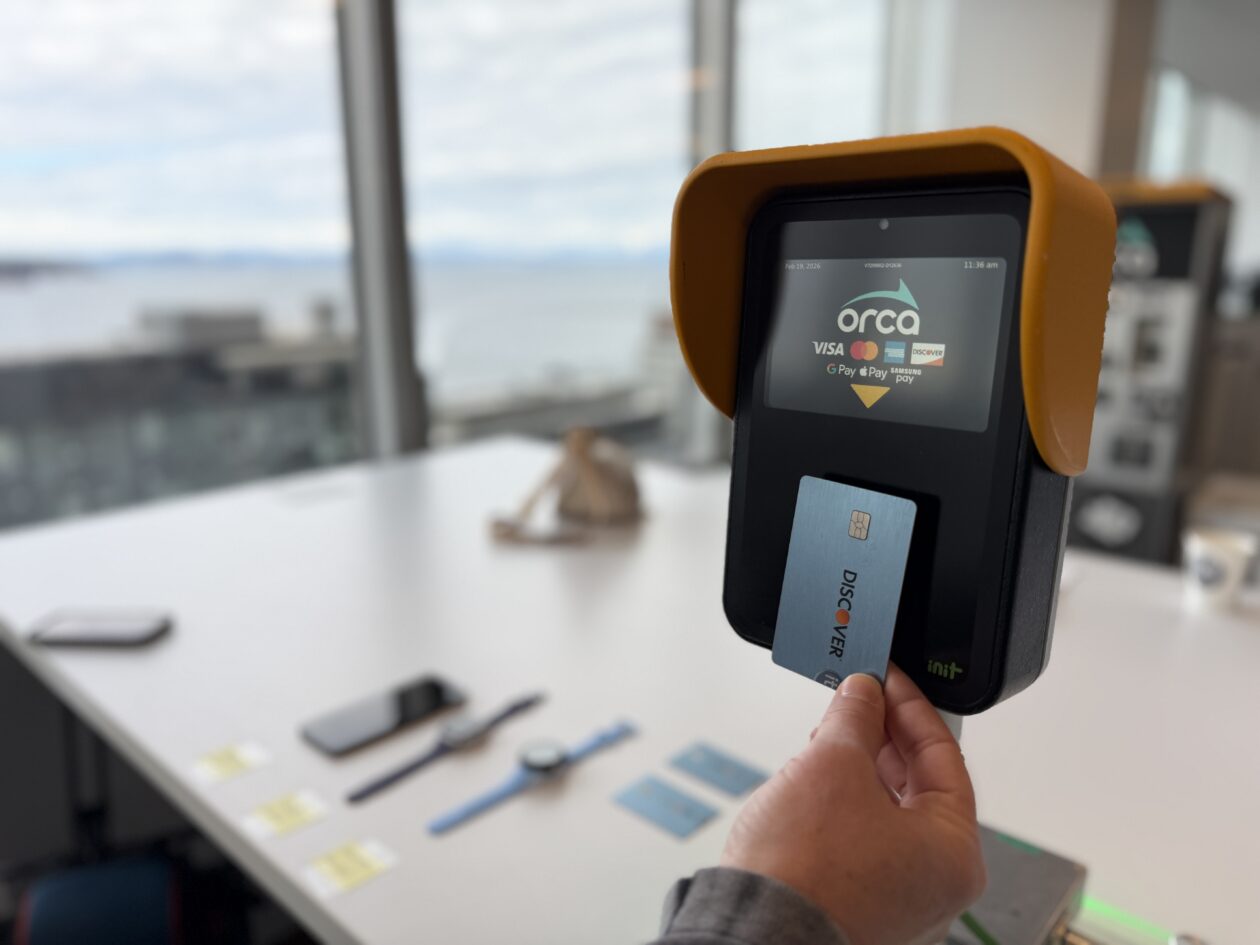
Seattle-area transit riders will soon be able to tap their physical credit cards or smartphone to pay for fares. (GeekWire Photos / Taylor Soper)

The ubiquitous tap-to-pay technology now common in grocery stores and coffee shops is coming to Seattle-area buses and trains next week.

Starting Monday, Feb. 23, ORCA will accept contactless credit and debit cards, along with digital wallets such as Apple Pay, Google Pay and Samsung Pay, across the Seattle region.

That means riders can simply tap their smartphones, digital watches, or physical cards against ORCA readers to pay for their fare.

“We know that people are very familiar with tapping credit cards and that contactless systems are just a part of our everyday life — and now that is part of public transit in the Puget Sound,” said ORCA Joint Board Chair Christina O’Claire.

GeekWire covered the news last month. A soft launch began earlier in February. ORCA and Sound Transit officials held a press conference Thursday to announce the launch date inside the downtown Seattle office of Init, the German tech company that helps power ORCA payment functionality.

Advertisement

The rollout comes as Seattle prepares to host the FIFA World Cup this summer, when hundreds of thousands of visitors are expected to rely on public transit.

“We are ready to welcome soccer-loving, transit-loving fans from around the world,” said Dow Constantine, CEO of Sound Transit.

It also comes ahead of next month’s debut of the new light rail line across Lake Washington connecting Seattle and Bellevue.

The technical upgrade is aimed at making transit easier for occasional riders, tourists, and anyone who doesn’t already carry an ORCA card — while modernizing fare payment across the region’s patchwork of transit agencies. By streamlining fare collection, agencies hope to speed up boarding during peak travel times and large events.

Advertisement

ORCA’s operations team worked with Init to implement Visa’s Mass Transit Transaction (MTT) payment model, which allows ORCA fare readers to function as point-of-sale devices capable of securely processing contactless credit card payments in real time.

Nadia Anderson, vice chair of the ORCA Joint Board and chief strategy officer for Sound Transit, demos the new tap-to-pay function for ORCA card readers.

The feature will be available on buses and bus rapid transit, as well as Sound Transit light rail, Sounder trains and the Seattle Streetcar. It will soon expand to Kitsap Transit fast ferries and the King County Water Taxi.

Tap-to-pay will not initially work on Washington State Ferries, the Seattle Monorail, King Country Metro Access, King Country Metro Vanpool, King County Metro DART, Metro Flex, Community Transit DART, Community Transit Zip Shuttle, Everett Paratransit, and Pierce Transit Runner. 

Some more details on how tap-to-pay works:

  • The tap-to-pay option charges the standard adult fare. Tap-to-pay riders will still receive the two-hour ORCA transfer benefit, meaning a rider who taps onto one service can transfer within two hours without paying twice.
  • Riders using discounted programs — including ORCA LIFT, senior, youth or employer-sponsored cards — should continue using their ORCA cards. Cash and physical tickets will still be accepted.
  • Each rider must use their own card or device. One credit card cannot be used to pay for multiple passengers. However, a rider with a physical credit card and the same card in their mobile wallet can use each for two separate fares. Youth aged 18 and under ride for free on Seattle-area transit.
  • Fare inspectors will not scan credit cards directly. Instead, riders may be asked to provide the last four digits of the card used to confirm payment. ORCA officials said they are working on a solution that allows fare inspectors to more quickly verify payment with their own devices.

Officials encouraged riders to take their credit cards or ORCA cards out of their wallet when they tap readers to avoid having the wrong card used.

For iPhone users looking to make their tap-to-pay experience even faster, Apple Wallet has a feature called Express Mode that lets transit riders pay for fares without waking or unlocking their device.

Advertisement

Using an ORCA card inside Apple Wallet is a separate feature and not part of this launch. ORCA launched a Google Wallet feature for Android users in 2024.

For those who want to purchase tickets via an app, Transit GO allows iOS and Android users to pay fares on King County Metro buses, Sound Transit trains, and other regional transit services using in-app ticketing.

Source link

Advertisement
Continue Reading

Tech

‘Toys are for play, but tech is for everything’: Woody in Toy Story 5 trailer shares the awful truth

Published

on

Toy Story 5 will be the first Woody-Buzz CGI fable in the film series, where I’ll take a pass. I don’t need to see comedy ensue as the iconic characters run headfirst into the hard reality of tech and childhood.

Pixar and Disney released the first full-length Toy Story 5 trailer on Thursday (February 19), delivering the clearest picture yet of what to expect from this once-groundbreaking but now aging franchise. The movie hits theaters on June 19.

Source link

Advertisement
Continue Reading

Tech

Dyson unveils its slimmest wet floor cleaner yet

Published

on

Dyson has announced the PencilWash, a new ultra-slim wet floor cleaner designed to make everyday mopping easier and more hygienic.

Weighing just 2.2kg and built around a 38mm pencil-thin handle, it’s the company’s most compact wet cleaner to date.

The PencilWash is engineered to lie almost flat — up to 170 degrees, reaching as low as 15cm. This allows it to clean under sofas, cabinets and low furniture without sacrificing suction or hydration performance. Dyson says the reduced diameter handle improves in-hand comfort and natural steering. It makes it feel closer to using a broom, rather than a bulky floor washer.

Unlike conventional wet-and-dry cleaners, the PencilWash uses a filter-free system. This eliminates internal filters that can trap dirt, retain moisture and generate odours over time. Instead, it combines hydration, agitation and extraction technologies to continuously wash the roller with fresh water. Furthermore, it simultaneously extracts dirty water and debris.

Advertisement

Advertisement

At the centre of the system is a high-density microfibre roller featuring 64,000 filaments per square centimetre. It spins rapidly to tackle both wet spills and stubborn stains. Meanwhile, an eight-point hydration system delivers controlled water flow across the roller. This ensures floors are cleaned using only fresh water. Dirty water is extracted on every rotation, helping maintain hygiene throughout the clean.

The 300ml clean water tank is rated to cover up to 100m² of flooring. It offers 30 minutes of runtime and includes a swappable battery option for extended sessions. Moreover, users can choose between two hydration modes to adjust water delivery depending on the surface or type of mess for a quicker-drying finish.

Dyson is also launching the 02 Probiotic hard-floor cleaning solution, a non-foaming formula designed to work alongside its wet-cleaning range including the PencilWash. The solution is described as safe for use around pets and children.

Advertisement

The Dyson PencilWash will be available from 4 March, priced at £299.99, through Dyson Demo Stores and Dyson’s online store.

Source link

Advertisement
Continue Reading

Tech

Logitech G435 Lightspeed Wireless Gaming Headset Offers Great Performance at an Even Better Price

Published

on

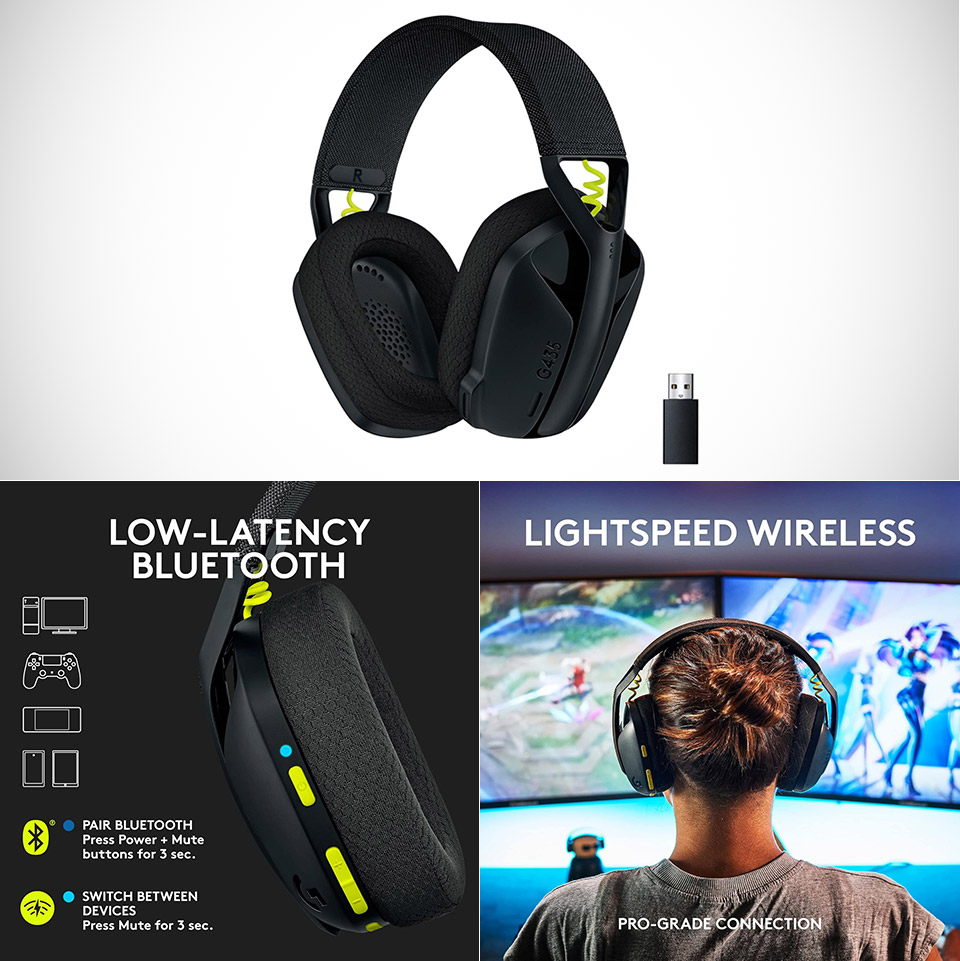
Logitech G435 Lightspeed Wireless Gaming Headset
The Logitech G435, priced at $39.99 (was $79.99), the type of quiet disruption budget gaming headsets need, delivers incredible lightness combined with respectable wireless performance, all without breaking the wallet. Logitech prioritized comfort when creating the G435. The thing disappears on your head during marathon gaming sessions, weighing just 165 grams (or around 5.8 ounces).


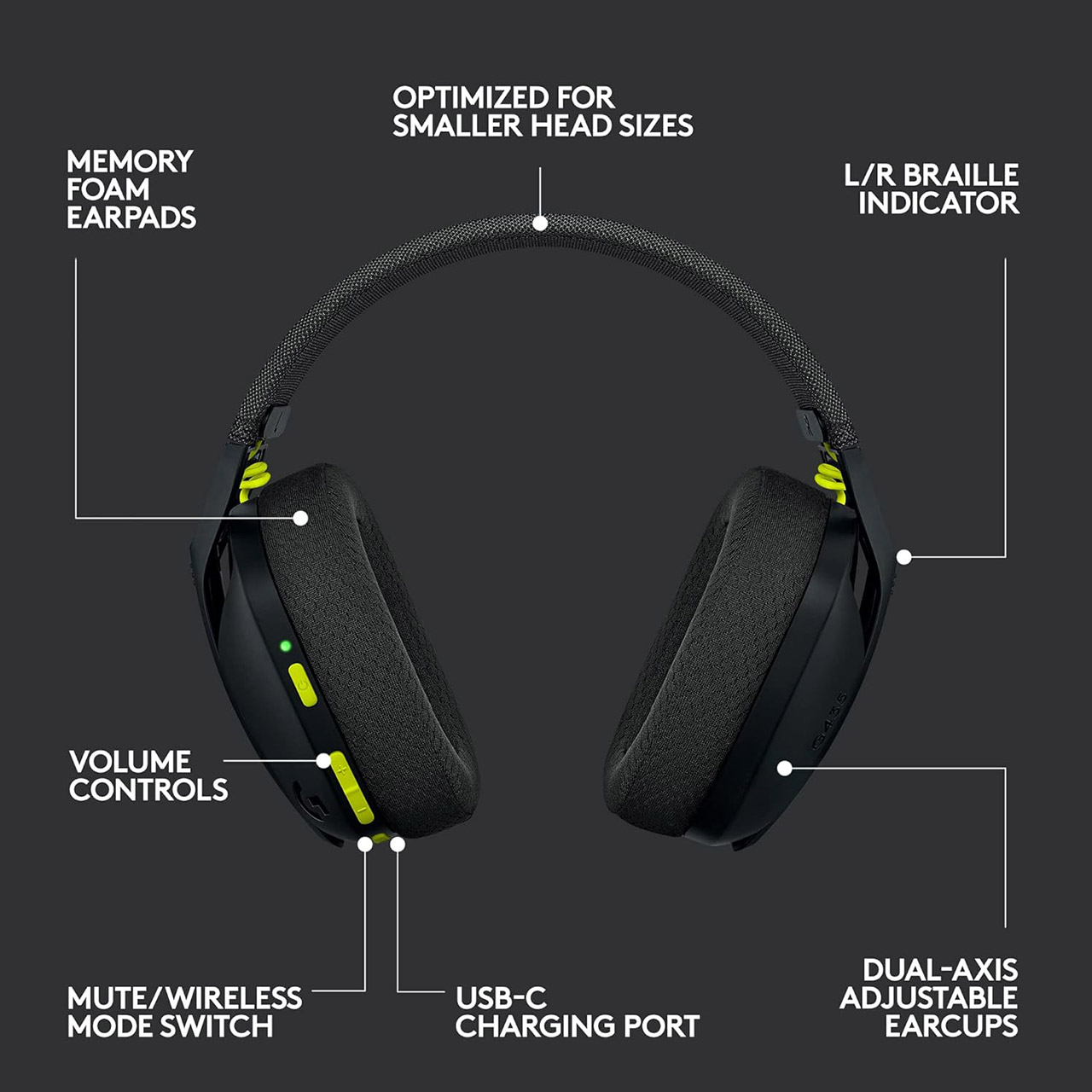
The earcups are constructed of soft, breathable fabric that keeps the heat at bay, and the headband has a thin layer of the same material stretched over some really basic padding. Users may wear the item for hours without breaking a sweat, and the only time they’ll feel tired is when it’s time to take it off. A wonderful addition is the braille indicators on the sides, which help you determine left from right as quickly as possible, demonstrating that Logitech thought about regular use.

Sale


Logitech G435 Lightspeed & Bluetooth Wireless Gaming Headset – Lightweight Over-Ear Headphones, Built-in…
  • Versatile: Logitech G435 is the first headset with LIGHTSPEED wireless and low latency Bluetooth connectivity, providing more freedom of play on PC…
  • Lightweight: With a lightweight construction, this wireless gaming headset weighs only 5.8 oz (165 g), making it comfortable to wear all day long
  • Superior voice quality: Be heard loud and clear thanks to the built-in dual beamforming microphones that eliminate the need for a mic arm and reduce…


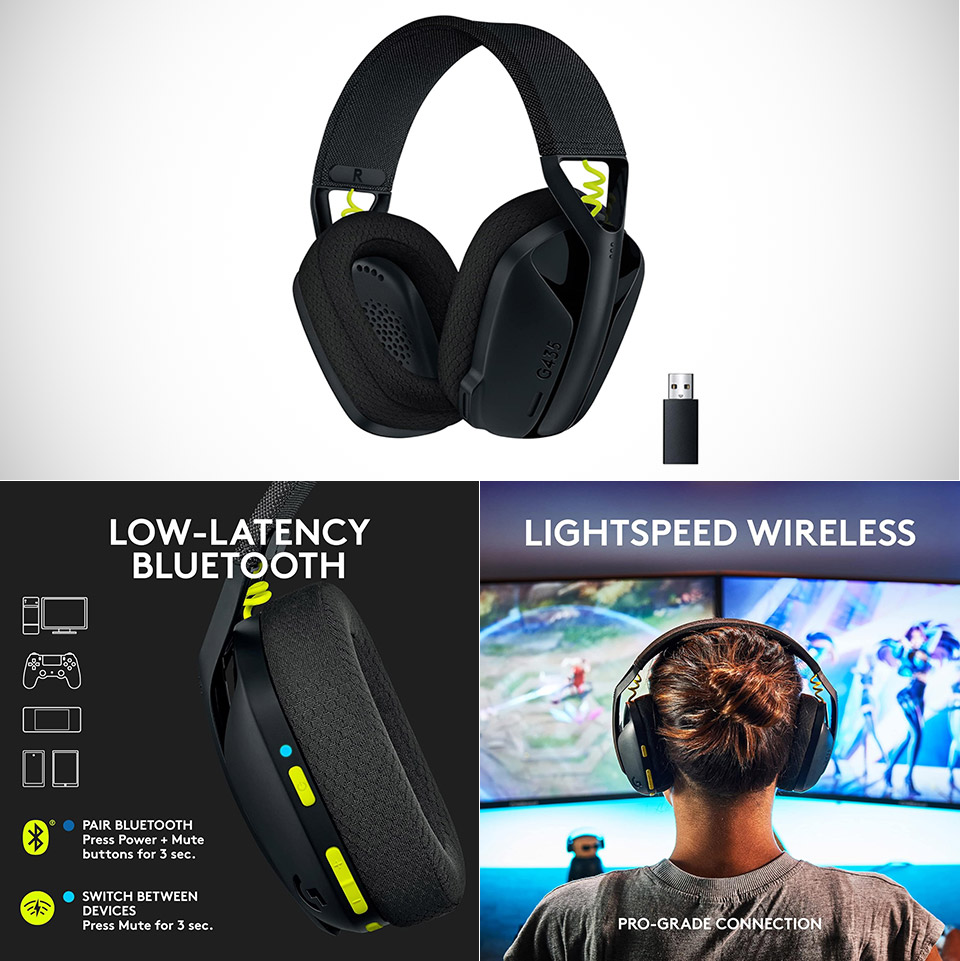
Connectivity is a major highlight here, with a USB dongle that supports LIGHTSPEED wifi for low-latency gaming on PC, Mac, PS consoles, and even Switch. Switch to Bluetooth for your phone or tablet, and it will handle music or calls without losing signal. Most configurations have a range of roughly 10 meters. The battery lasts about 18 hours per charge via USB-C, which is enough for a couple of nights of gaming without needing to recharge.

Advertisement

Logitech G435 Lightspeed Wireless Gaming Headset
The sound comes from 40mm speakers that have been adjusted for a balanced sound profile. The bass has a soft, relaxing touch that isn’t overpowering; the mids are crystal clear for voices and effects; and the highs gently roll off past 9kHz, so there’s no harshness. Many people find that the audio produces huge, full-bodied sound for both games and music, especially with a little EQ tweaking using Logitech’s PC software. Volume is limited to roughly 85 decibels in some versions for safety reasons, which is unfortunate if you enjoy cranking it up loud, but better safe than sorry.

Logitech G435 Lightspeed Wireless Gaming Headset
The mics are hidden into the left earcup as dual beamformers, picking up speech as crisp as a bell while reducing background noise without the use of a cumbersome boom arm. Clarity is quite impressive for the price, yet it lacks the isolation and richness found in higher-end models.

Source link

Continue Reading

Tech

Moonquakes: Understanding the Moon’s Tectonic Forces Could Protect Future Astronauts

Published

on

As humanity looks to the moon for science and economic opportunity in the coming years, understanding potential dangers lurking on the lunar surface could become increasingly important.

Ridges on the moon that signify moonquakes are the subject of a recent research paper, which delves into tectonic activity across the lunar maria, a vast network of dark plains that arose from ancient volcanic activity.

A team of researchers analyzed lunar formations called small mare ridges to create a global moon map, which is the first of its kind. The paper was originally published Dec. 24 in the Planetary Science Journal.

Advertisement

Cole Nypaver, a postdoctoral fellow at the National Air and Space Museum’s Center for Earth and Planetary Studies and one of the paper’s authors, told CNET that the ridges that were identified were formed by faults in the lunar subsurface, which are associated with moonquakes. 

“While those moonquakes are potentially hazardous for long-term lunar exploration missions or permanent outposts, they also present fantastic opportunities to learn more about the interior of the moon and how the moon formed,” Nypaver said.

The moon is shrinking 

Another of the paper’s authors is a scientist named Tom Watters. Back in 2010, Watters discovered that the moon is slowly shrinking because its core is cooling.

Advertisement

The moon’s contraction causes disturbances on its surface. The crust gets compressed and forces material up along faults, which creates ridges, similar to how mountains form on Earth. 

The most common of these ridges are called lobate scarps. They form on the lunar highlands, which are the bright spots we see when we look at the moon. But the small mare ridges only form in the lunar maria, which are the dark areas of the moon that contrast with the highlands.

This research is the first time scientists have documented the ridges throughout the lunar maria. In doing so, we now have a more complete understanding of the moon’s thermal and seismic history, which could give us a better idea of any potential moonquakes in the future. 

“Our results represent the most globally complete understanding of recent lunar tectonism to date,” Nypaver said. “The presence of these additional tectonic features in the lunar maria suggests that the moon may have experienced more global contraction in the recent past than previously thought.”

Advertisement
Close up of a small mare ridge.

A small mare ridge in Northeast Mare Imbrium taken by the Lunar Reconnaissance Orbiter Camera.

NASA/GSFC/Arizona State University

Moon missions

Humans setting up permanent footholds on the lunar surface have moved from science fiction to real plans for the near future. NASA’s Artemis II mission is set to launch in March at the earliest. And while this mission will only send astronauts to orbit the moon, future Artemis missions plan to land people on the lunar surface and build permanent infrastructure there.

University of Maryland professor Nicholas Schmerr helped NASA develop the Lunar Environment Monitoring Station for Artemis 3, which the crew of the third Artemis mission, currently scheduled for 2028, will deliver to the moon’s surface.

Advertisement

Schmerr said to CNET that this instrument will detect seismic activity in the lunar south polar region. 

“We’ll get a whole new picture of lunar seismic activity both on the South Pole and lunar farside,” Schmerr said. 

LEMS-A3 is a station designed to be self-sustaining, and Schmerr will act as the instrument’s deputy principal investigator for the mission. The LEMS-A3 will assess “tectonics-related seismicity of the region and any hazard the moonquakes (or, for that matter, impacts) could pose to future longer-lived infrastructure,” Schmerr said. 

Setting up shop

NASA isn’t the only one that’s looking to sustain long-term lunar operations. A company called Interlune also wants to set up mining operations on the moon to excavate helium-3, a valuable isotope that could be used for clean energy and quantum computers.

Advertisement

Elon Musk has been talking about building a moon base to launch AI satellites into orbit.

Getting up to speed on the areas of the moon that are more likely to experience moonquakes could influence where space agencies and private companies decide to build outposts in the future.

“There are several upcoming missions to the moon that will carry dedicated seismometers in hopes of detecting a moonquake from a small mare ridge or an asteroid impact on the moon,” Nypaver said. “By identifying a new population of tectonic features in the lunar maria, our work provides additional targets for those missions that seek to use moonquakes to better understand our closest celestial neighbor.”  

Advertisement

Source link

Continue Reading

Tech

Google Gemini 3.1 Pro first impressions: a ‘Deep Think Mini’ with adjustable reasoning on demand

Published

on

For the past three months, Google’s Gemini 3 Pro has held its ground as one of the most capable frontier models available. But in the fast-moving world of AI, three months is a lifetime — and competitors have not been standing still.

Earlier today, Google released Gemini 3.1 Pro, an update that brings a key innovation to the company’s workhorse power model: three levels of adjustable thinking that effectively turn it into a lightweight version of Google’s specialized Deep Think reasoning system.

The release marks the first time Google has issued a “point one” update to a Gemini model, signaling a shift in the company’s release strategy from periodic full-version launches to more frequent incremental upgrades. More importantly for enterprise AI teams evaluating their model stack, 3.1 Pro’s new three-tier thinking system — low, medium, and high — gives developers and IT leaders a single model that can scale its reasoning effort dynamically, from quick responses for routine queries up to multi-minute deep reasoning sessions for complex problems.

Advertisement

The model is rolling out now in preview across the Gemini API via Google AI Studio, Gemini CLI, Google’s agentic development platform Antigravity, Vertex AI, Gemini Enterprise, Android Studio, the consumer Gemini app, and NotebookLM.

The ‘Deep Think Mini’ effect: adjustable reasoning on demand

The most consequential feature in Gemini 3.1 Pro is not a single benchmark number — it is the introduction of a three-tier thinking level system that gives users fine-grained control over how much computational effort the model invests in each response.

Gemini 3 Pro offered only two thinking modes: low and high. The new 3.1 Pro adds a medium setting (similar to the previous high) and, critically, overhauls what “high” means. When set to high, 3.1 Pro behaves as a “mini version of Gemini Deep Think” — the company’s specialized reasoning model that was updated just last week.

The implication for enterprise deployment could be significant. Rather than routing requests to different specialized models based on task complexity — a common but operationally burdensome pattern — organizations can now use a single model endpoint and adjust reasoning depth based on the task at hand. Routine document summarization can run on low thinking with fast response times, while complex analytical tasks can be elevated to high thinking for Deep Think–caliber reasoning.

Advertisement

Benchmark Performance: More Than Doubling Reasoning Over 3 Pro

Google’s published benchmarks tell a story of dramatic improvement, particularly in areas associated with reasoning and agentic capability.

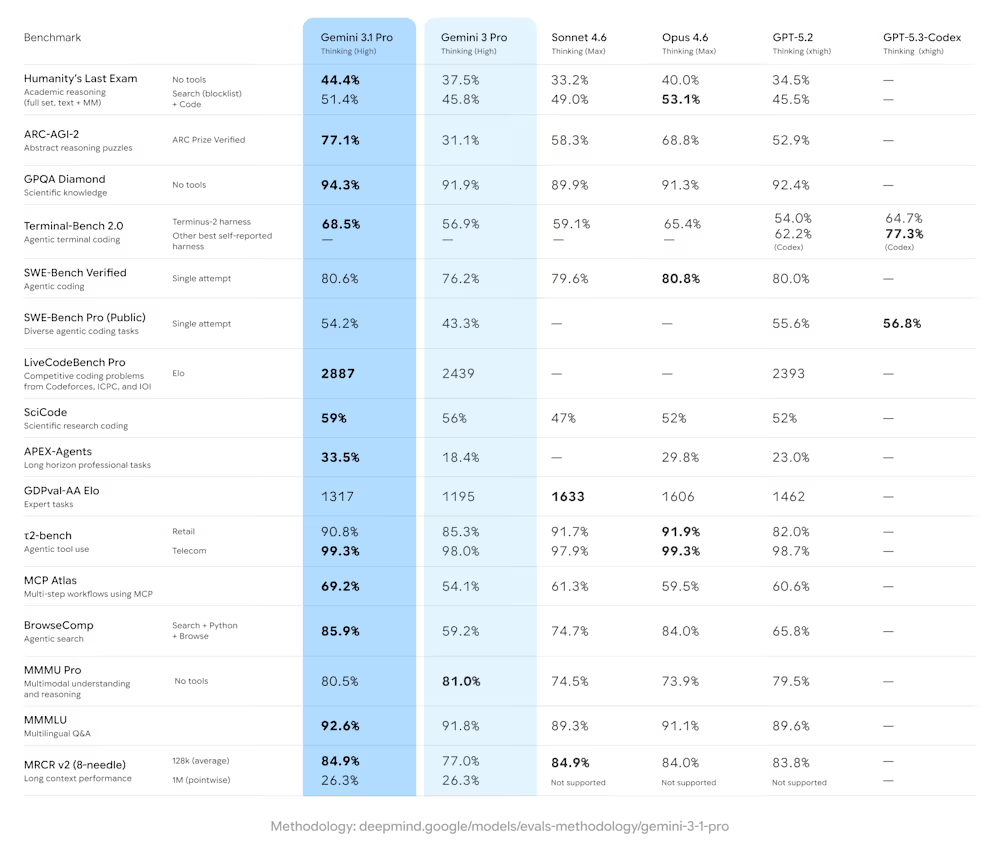
Google Gemini 3.1 Pro benchmark chart

Google Gemini 3.1 Pro benchmark chart. Credit: Google

On ARC-AGI-2, a benchmark that evaluates a model’s ability to solve novel abstract reasoning patterns, 3.1 Pro scored 77.1% — more than double the 31.1% achieved by Gemini 3 Pro and substantially ahead of Anthropic’s Sonnet 4.6 (58.3%) and Opus 4.6 (68.8%). This result also eclipses OpenAI’s GPT-5.2 (52.9%).

The gains extend across the board. On Humanity’s Last Exam, a rigorous academic reasoning benchmark, 3.1 Pro achieved 44.4% without tools, up from 37.5% for 3 Pro and ahead of both Claude Sonnet 4.6 (33.2%) and Opus 4.6 (40.0%). On GPQA Diamond, a scientific knowledge evaluation, 3.1 Pro reached 94.3%, outperforming all listed competitors.

Advertisement

Where the results become particularly relevant for enterprise AI teams is in the agentic benchmarks — the evaluations that measure how well models perform when given tools and multi-step tasks, the kind of work that increasingly defines production AI deployments.

On Terminal-Bench 2.0, which evaluates agentic terminal coding, 3.1 Pro scored 68.5% compared to 56.9% for its predecessor. On MCP Atlas, a benchmark measuring multi-step workflows using the Model Context Protocol, 3.1 Pro reached 69.2% — a 15-point improvement over 3 Pro’s 54.1% and nearly 10 points ahead of both Claude and GPT-5.2. And on BrowseComp, which tests agentic web search capability, 3.1 Pro achieved 85.9%, surging past 3 Pro’s 59.2%.

Why Google chose a ‘0.1’ release — and what it signals

The versioning decision is itself noteworthy. Previous Gemini releases followed a pattern of dated previews — multiple 2.5 previews, for instance, before reaching general availability. The choice to designate this update as 3.1 rather than another 3 Pro preview suggests Google views the improvements as substantial enough to warrant a version increment, while the “point one” framing sets expectations that this is an evolution, not a revolution.

Google’s blog post states that 3.1 Pro builds directly on lessons from the Gemini Deep Think series, incorporating techniques from both earlier and more recent versions. The benchmarks strongly suggest that reinforcement learning has played a central role in the gains, particularly on tasks like ARC-AGI-2, coding benchmarks, and agentic evaluations — exactly the domains where RL-based training environments can provide clear reward signals.

Advertisement

The model is being released in preview rather than as a general availability launch, with Google stating it will continue making advancements in areas such as agentic workflows before moving to full GA.

Competitive implications for your enterprise AI stack

For IT decision makers evaluating frontier model providers, Gemini 3.1 Pro’s release has to not only make them rethink which models to choose but also how to adapt to such a fast pace of change for their own products and services.

The question now is whether this release triggers a response from competitors. Gemini 3 Pro’s original launch last November set off a wave of model releases across both proprietary and open-weight ecosystems.

With 3.1 Pro reclaiming benchmark leadership in several critical categories, the pressure is on Anthropic, OpenAI, and the open-weight community to respond — and in the current AI landscape, that response is likely measured in weeks, not months.

Advertisement

Availability

Gemini 3.1 Pro is available now in preview through the Gemini API in Google AI Studio, Gemini CLI, Google Antigravity, and Android Studio for developers. Enterprise customers can access it through Vertex AI and Gemini Enterprise. Consumers on Google AI Pro and Ultra plans can access it through the Gemini app and NotebookLM.

Source link

Continue Reading

Tech

Major CarGurus data breach reportedly sees 1.7 million corporate records stolen

Published

on


  • CarGurus reportedly hit by ShinyHunters vishing attacks
  • Hackers claim to have stolen 1.7 million records
  • CarGurus is staying queit for now

Online car marketplace CarGurus is allegedly the latest company to fall prey to ShinyHunters’ vishing attacks.

The notorious hacking collective posted a new note on its data leak site warning CarGurus to act quickly or have their sensitive data posted on the dark web.

Source link

Advertisement
Continue Reading

Tech

A Mystery Phone, Found in the Desert, Slowly Reveals Its Secrets

Published

on

Everyone who loves mysteries secretly hopes that one day life will drop an intriguing puzzle into their lap for them to solve. Maybe not an Agatha Christie-type crime, but something that will send them on a real-world chase to connect the dots and land at a satisfying conclusion.

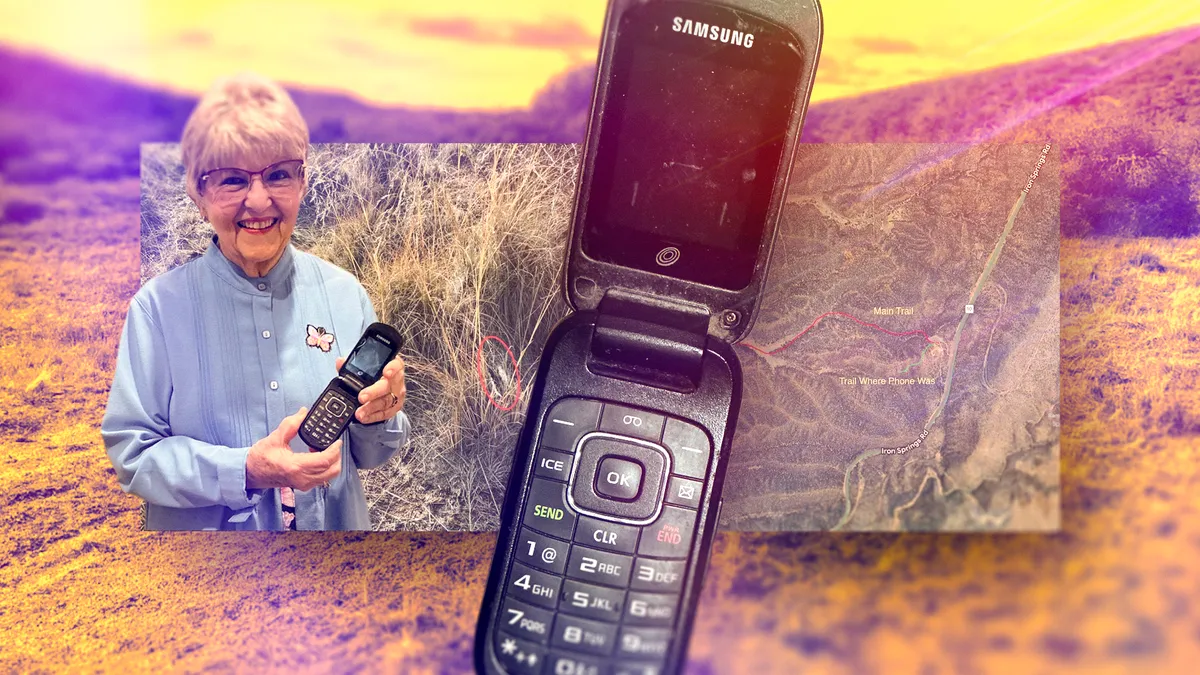
That’s exactly what happened to Katie Elkin, a retired teacher with a penchant for mysteries. “I’m 84 and I have lived a full, wonderful life,” she tells me over a video call from her home in Prescott, Arizona.

Until now, Elkin’s mysteries have largely been genealogy-based. She recounts an extraordinary story about making friends with a woman from California and discovering that their grandfathers had trained together in the Army and then shipped out to France in World War I on the same day. “That’s my whole life,” she says. “It’s coincidences.”

Advertisement

On this Friday in February, we’re talking about another coincidence in Elkin’s life — one of finding a phone, lost for a decade in the desert, and Elkin’s attempt to reunite it with its owner. 

Our phones are immensely personal items, serving both as memory banks that store our most precious data and as portals that connect us with every important person in our lives. These days, if we lose them, tracking technology means there’s every chance we could be quickly reunited with them, but that hasn’t always been the case. 

Those disappearances can be high-stress moments for anyone — just ask Apple about the unreleased iPhones it lost back in 2010 and 2011, which, coincidentally, were around the same time it introduced the Find My iPhone feature. But even today, recovering a lost phone means relying to an extent on the goodwill and honesty of the person who found it. Many people will choose to do the right thing in this scenario, and some — like Elkin — will go above and beyond to help out a stranger.

On a sunny day just before Thanksgiving, Elkin and her husband drove about 10 minutes west of the city to spend some time outdoors. Prescott is surrounded by national parks and ponderosa pine forest, but on this day, Elkin was headed to the desert — not for a hike, she says, but an “amble.”

Advertisement

Rather than taking the well-marked trail popular with hikers and ATVs, Elkin instead split off onto a lesser-known path “obliterated by the grasses and the weeds.”

It was Elkin’s dad who taught her that if she wanted to spot something, she should look for it — sage advice that’s served her well over the years. “He was always finding change,” she says. “And I can do that too. I always find animals. If we’re driving, I can see them in the woods … I’m always looking for something.”

Samsung Gusto 2

The phone found by Katie Elkin.

Advertisement

Katie Elkin/Jeffrey Hazelwood/CNET

Looking for a vague something can turn up the oddest of things, and on that particular day, the something Elkin found was a dusty, beaten 2012 Samsung Gusto 2 lying on its side, clamshell open in the scrub.

Elkin picked up the phone, thinking she would give it to a neighbor boy who liked to take electronics apart. But when she got it home, she was struck by another idea — what if she could get the phone to turn on? 

Like many of us with a drawer full of mystery cables, Elkin has kept all the cords and wires that have come with the electronics she’s purchased over the years. She dug through her stash and found a charger that fit the Gusto (she still has no idea what it was used for previously).

When CNET reviewed the Gusto 2 — a simple flip phone that came out the same year as the iPhone 5 and the Samsung Galaxy S3 — we said: “the construction seems strong enough to withstand multiple drops and endless opening and closing.” Our instincts about its potential resilience were, it turns out, correct.

Advertisement

“I couldn’t believe it when it came up charging,” Elkin says. It took a little while, but when the phone turned on, she was ecstatic. “I thought, ‘Oh my gosh, I wonder who this phone belongs to?’ And so that was when the mystery began.”

The quest for answers

Elkin went into the text messages and started to piece together the Gusto owner’s life, clue by clue. The owner worked in a cafe, she seemed to have family connections in Chicago, she was a renter and a keen hiker. Her name was Maddie.

The other thing Elkin noticed was that the last message was marked Saturday, May 16. It was the only evidence she had to indicate when exactly the phone might have been lost. She went to the internet and looked up which years May 16 had fallen on a Saturday. Two possible answers cropped up — 2020 and 2015.

Elkin’s internet research didn’t stop there. She took one of the commonly texted numbers in the phone and did a reverse lookup. “And bingo! I found a woman’s name that had that phone number,” she says. But when she called the number, it was disconnected.

Advertisement

“I said to myself, who would know where she is?” says Elkin. “Her dad would know.” She found a number listed under “daddio,” performed another reverse lookup and found the name of a man living in Chicago. “I was so excited because I was getting close,” she says.

On Dec. 30, Elkin’s birthday, she called the number, but no one picked up. She had to leave a message. “I was really disappointed, because I wanted to talk to somebody,” she says.

Ten minutes later, her phone rang, but when she picked up, it wasn’t a man on the other end of the line. “It was Maddie, the owner of the phone,” she says. “She had come to Chicago to visit her dad for the holidays.”

Elkin and Maddie talked for around 10 minutes. “She was amazed,” says Elkin. “We were both amazed.” Maddie didn’t want her phone back, but it turns out she had lost it in 2015 after hiking in the exact spot that Elkin had found it. 

Advertisement

The little phone that could

For a decade, the little Gusto had been lying out in the desert. Unlike some parts of Arizona, Prescott has four seasons, with all the minus temperatures, scorching heat, snowfall and summer storms that come with them. The Gusto weathered every storm, and battered and bruised as it was, it still came back to life.

We have little expectation these days that our phones will last us a long time, and we rarely get all the life out of our devices that they’re capable of offering us. Rather than seeking to get them repaired, once they fail us in one respect, we tend to seek out replacements. Most Americans hang onto their phones for an average of 2.5 years, according to a Reviews.org survey.

It turns out, though, that some phones are built to last, and the Gusto was one of them. After Elkin had spoken with Maddie, she reached out to Samsung to let them know her story. “I said to myself, ‘Does Samsung require some kudos for having a product that lasted that long?’”

Any tech company would. My own first phone, a 2002 Sagem MW 3020, gave up the ghost simply by being exposed to the concept of water while wrapped up inside a backpack on a rainy day. In spite of the best efforts of phone-makers to increase display resiliency, many people are still walking around out there with cracked screens.

Advertisement

For as long as we’ve had mobile phones, they’ve been vulnerable pieces of kit. But whatever secret sauce Samsung put inside the 2012 Gusto 2 shows that it was more robust than most — even though it was lying open with its main screen exposed when Elkin found it.

At the time we reviewed the Gusto 2, we gave it a score of 7 out of 10, with points knocked off for its subpar screen resolution and a smaller-than-usual headphone jack. It’s too late for us to go back and revise that score in light of what we know about how robust the phone is 14 years later, but it’s entirely possible that the “problems” we highlighted actually played into the Gusto’s long-term survival.

Elkin still doesn’t know what she’s going to do with Maddie’s Gusto, although a friend has suggested that Samsung clad it in gold and put it on a pole at headquarters. Samsung is clearly proud of the phone’s durability, having put me in touch with Elkin, but is also undecided about how to celebrate the life the Gusto 2 has lived. In spite of Elkin’s love for mysteries and my suggestion that the FBI recruit her, she isn’t about to start a detective agency to reunite other people with their lost possessions. “It’s just a hobby,” she laughs.

That’s a shame. As someone who’s lost more than one phone over the years, I would dearly love to be reunited with my missing technology, and I’m sure there’s a market for Elkin’s skills. Not every phone is as resilient as the Gusto. Most devices that have taken such a battering would likely refuse to even turn on. 

Advertisement

Perhaps there’s a longevity challenge for all phone-makers. I can’t promise CNET would be able to replicate this scenario in our reviews testing process, but in an age of disposable tech, it would be lovely to give extra points for truly hard-earned durability.

Source link

Advertisement
Continue Reading

Tech

Apple to open Dublin city office with 300-strong team planned

Published

on

Later this year, Apple will open its first permanent Dublin office at 4/5 Park Place in Dublin, to complement its 6,000-strong Cork campus team which it continues to develop.

The new Dublin office will house 300 people, and will complement the main Apple Cork Campus, according to Cathy Kearney, Apple’s vice-president of European Operations, who has long led Apple operations in Ireland.

“The whole team is very excited, they’re really looking forward to it,” Kearney told SiliconRepublic.com. “We already have a temporary office in Dublin and we have already started hiring, so it is off to a great start. The new office is close to the Iveagh Gardens, and is a really exciting location.”

Kearney explained that the office will house a whole range of activities and a mix of different teams, just as with the 6,000-strong Cork team, and she stressed that the office will be very much part of the wider Ireland operations, rather than a separate entity.

Advertisement

“Our focus to date with the team already there in Dublin is really building the Apple culture, making sure we’re starting that office as complementary to Cork,” said Kearney who has spent some 37 years at Apple. “But basically it’s one organisation, working for Apple, working for our customers, making sure we’re hiring the right talent, making sure we’re building the right culture with the team there, that they really get ingrained in Apple.”

To that end, the existing Dublin team already travels up and down to Cork regularly, meeting their colleagues and attending events, she says, and the management team spends time back and forth with them too.

Cork to the core

While the Dublin office is big news, the Cork campus continues to sit at the core of its European operations. Apple’s largest location outside the US, it has been more than 45 years since Apple opened its manufacturing facility in Cork with 135 team members. Today’s campus houses 6,000 people, with teams across the business – from operations, engineering and manufacturing to procurement, customer support and AppleCare.

Back in 2022 Apple further expanded its Hollyhill campus, opening a state-of-the-art test and engineering facility responsible for testing and analysing its products. Just today the state-of the art Hollyhill 5 building got its official launch by Taoiseach Micheál Martin, while the teams first began moving in back in June.

Advertisement

“I’m delighted to open this state-of-the-art new facility in Hollyhill today and to see first-hand the major investment that Apple is making here,” he said. “The contribution Apple has made in Cork and Ireland over the last 45 years cannot be overstated – creating thousands of highly-skilled roles and continually investing in their Irish operations.”

Watch out for the next episode of The Leaders’ Room podcast, which features Cathy Kearney, Apple’s vice-president of European Operations and Kristina Raspe, Apple’s vice-president of Places.

Don’t miss out on the knowledge you need to succeed. Sign up for the Daily Brief, Silicon Republic’s digest of need-to-know sci-tech news.

Advertisement

Source link

Continue Reading

Trending

Copyright © 2025