

Connect with us
DAPA Banner

Tech

Belkin Charging Case Pro for Switch 2 review: A more elegant solution

Published

on

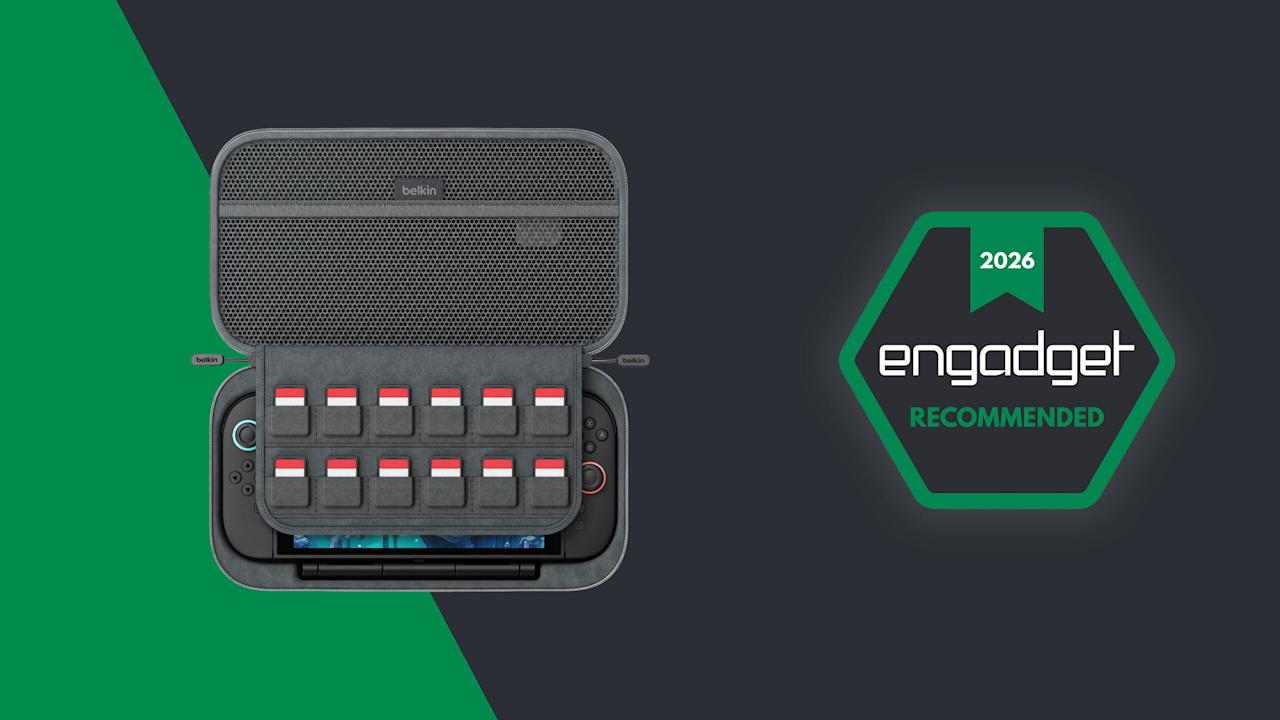
Last year, Belkin released a couple of cases for the Nintendo Switch 2 just in time for launch, including one that came with a handy battery pack. That one was simple and effective, but it felt a bit crude because it wasn’t much more than a basic travel pouch with a generic power cell tossed inside. Now, Belkin is back with a Pro version of its Charging Case for the Nintendo Switch 2, featuring a more sophisticated battery pack along with a higher price tag ($100 vs. $70). So here’s the question for any Switch 2 owners still looking for a way to protect their console while keeping it topped off: Is a more elegant charging solution really worth the extra money?

Image for the large product module

Belkin / Engadget

The pro version of Belkin’s Switch 2 charging case is a more sophisticated and versatile power solution. But it’s also more expensive, so unless you’re comfortable shelling out an extra $30 for the same basic features, you’re probably better off sticking with the non-pro option.

Pros
Advertisement
  • Included 10,000mAh battery pack
  • Battery pack also doubles as a stand
  • Built-in game storage
  • Solid construction
  • Hidden AirTag pouch
Cons
  • Costs more than the non-Pro version
  • A touch bigger and heavier too
  • No included USB-C cable

Case design

At 11.7 x 6.1 x 2.5 inches and weighing 1 pound 12 ounces, the Pro Charging Case is a touch larger and heavier than its non-pro sibling. It also features a very similar design with the same color options and materials, including a tough polyester outer shell that’s balanced by a softer, velvet-like material and cutouts for your Switch 2 on the inside.

The Pro Charging Case (bottom) is a touch bigger and heavier than the previous model, but aside from that its sports a nearly identical design.

The Pro Charging Case (bottom) is a touch bigger and heavier than the previous model, but aside from that its sports a nearly identical design. (Sam Rutherford for Engadget)

Once again, Belkin has done a good job of providing a snug cabin to store your console while still making it easy to take it in and out. That said, if your system also has an extra-thick protector or hardshell case like the Killswitch from Dbrand, it may not fit. There’s also a padded flap that swings down to protect your Switch 2’s screen that also pulls double duty as a place to stash up to 12 game cartridges, which is a very thoughtful touch.

However, the biggest change to the Pro Charging Case’s exterior design is a new cutout on the front edge, which allows you to top off other gadgets (or a Switch) by plugging a USB-C cable into Belkin’s included battery pack. Unfortunately, the case doesn’t come with a cord, which seems a bit odd until you take a closer look at the power pack’s layout. That’s because once you open up the case, you’ll see a second port designed to fit right into the bottom power jack on the Switch 2 without the need for a cable.

The inside of the Pro Charging Case features a handy mesh pocket, 12 slots for game carts and a hidden AirTag pouch.

The inside of the Pro Charging Case features a handy mesh pocket, 12 slots for game carts and a hidden AirTag pouch. (Sam Rutherford for Engadget)

Other small touches on Belkin’s Pro Charging Case include a mesh pocket for storing things like cables, Joy-Con straps or cleaning cloths, which is very handy. However, my favorite thing might be the AirTag pouch that’s also hidden inside that pocket, which could give you a fighting chance of recovering your system if it’s ever lost or stolen (though I wouldn’t count on it).

Battery pack

The arrangement of the included 10,000mAh battery pack and the placement of its internal USB-C port makes it a cinch to recharge your Switch 2 every time you put it in the case.

The arrangement of the included 10,000mAh battery pack and the placement of its internal USB-C port makes it a cinch to recharge your Switch 2 every time you put it in the case. (Sam Rutherford for Engadget)

Despite the increased size of the Pro Charging Case’s included battery, it has the same 10,000mAh capacity as what you get from its less expensive sibling. That means you’ll typically have enough juice for a little more than 1.5 recharges for your Switch 2 and its onboard 5,220mAh cell. Instead of relying on a simple external power pack like before, Belkin’s bundled battery comes with a second USB-C port and a kickstand. This makes it super easy to plug in your Switch 2 every time you put it in the case. This way, you know the next time you turn it on, it’ll be at 100 percent.

Advertisement
Here's what the battery pack looks like when you take it out of the case. As you can see, its size and shape means it's not a great standalone external power pack any more.

Here’s what the battery pack looks like when you take it out of the case. As you can see, its size and shape means it’s not a great standalone external power pack any more. (Sam Rutherford for Engadget)

Alternatively, you can raise the kickstand to prop up the Switch 2 and game on it while it stays nestled inside the case. This might seem a bit redundant as Nintendo’s console already has its own kickstand, but Belkin’s allows you to continue charging the system while you’re playing without needing a cord. There’s even a handy display on the side of the battery, so it’s super easy to see how much juice is left, even when the case is closed. Furthermore, when you need to recharge the power pack, you can do so without removing it from the case or disconnecting your Switch thanks to that bonus USB-C port on the outside. Compared to the previous model, this is certainly a more elegant solution that provides some subtle quality of life improvements. The one downside is that the battery pack is somewhat awkwardly shaped, so you won’t really want to use it on its own.

Wrap-up

There’s no doubt the Pro Charging Case’s new battery pack is a more premium solution that’s easier to use and manage. When you need to recharge it, you can do so from the outside without opening the pouch. It also lets you charge a Switch 2 without ever needing a cable. The built-in kickstand is another bonus that helps elevate the whole kit from a simple case to something closer to a tiny all-in-one gaming booth.

One of the neat things about giving the battery a kickstand is that it turns the case into a mini all-in-one. This makes me wish Belkin gave the included power pack some sort of docking functionality for connecting the Switch 2 to an external display.

One of the neat things about giving the battery a kickstand is that it turns the case into a mini all-in-one. This makes me wish Belkin gave the included power pack some sort of docking functionality for connecting the Switch 2 to an external display. (Sam Rutherford for Engadget)

That said, after using it for a couple of weeks, I’m still not sure the added convenience is worth an extra $30 over the original. Due to the battery packs’ new shape, it’s less useful as a standalone power cell, and the rest of the case’s design is largely unchanged. Of course, it’s always nice to have options, and if you’re the kind of person who doesn’t mind spending a little extra for a more streamlined and convenient kit, Belkin’s Pro Charging Case for the Switch 2 is still very much worth consideration.

Source link

Advertisement
Continue Reading
Click to comment

You must be logged in to post a comment Login

Leave a Reply

Tech

RAM crisis: Micron CEO forecasts spending increase to meet demands

Published

on


  • Micron CEO says company is unable to meet current demand
  • DRAM production is being prioritized for AI and datacenters
  • Consumers are reeling for the cheap RAM of yesteryear

Micron Technology Inc. CEO Sanjay Mehrotra has said that the company “are only able to supply, for our key customers in the midterm, about 50% to two-thirds of their requirements.”

Mehrotra’s statement reflects the growing demand by datacenters for components related to AI compute that will likely worsen the supply of memory.

Advertisement

Source link

Continue Reading

Tech

Australia’s Teen Social Media Ban Is Just Training A Generation In The Art Of The Workaround

Published

on

from the the-kids-are-alright dept

We’ve been covering Australia’s under-16 social media ban since before it went into effect, first noting the confusion and obvious implementation problems as pretty much everyone realized it was a total mess, and then documenting how the ban was actively harming kids with disabilities by cutting them off from critical support communities.

None of this was even remotely surprising. Critics around the world warned about all of it. The government went ahead anyway because doing something tends to poll better than doing something that actually works, especially when the thing that works is harder to explain. And government officials insisted (incorrectly) that the only ones who were complaining were the big tech companies or their proxies.

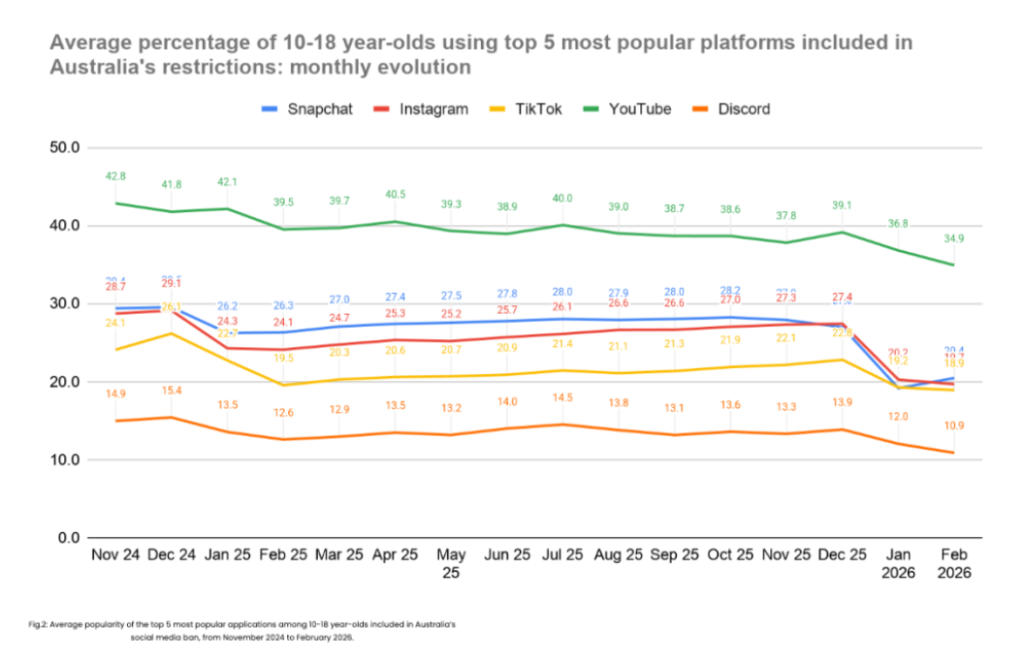
Now, three months in, the data is starting to arrive, and it confirms what should have been obvious from the start. New data from parental monitoring company Qustodio, provided to Crikey, shows that the ban has barely moved the needle:

While TikTok, YouTube and Snapchat all saw a decrease in use by Australians aged 10-15, the majority of teens who had been using the social media platforms pre-ban remained on the services afterwards.

That’s according to a new snapshot of data provided to Crikey by parental monitoring company Qustodio, adding to early evidence that there’s widespread circumvention of the government’s flagship tech policy.

Advertisement

The usage drop was only marginally larger than the normal seasonal dip that happens every year. In other words, the “world-first” ban achieved roughly the same effect as summer ending. There was definitely a drop, but it’s just not a particularly big one:

For what it’s worth, others are reporting the same thing. The Courier Mail found that the majority of teens who were using these apps before the ban were still using them afterwards.

Defenders of the ban will usually say something along the lines of: “We had to do something. Children were at risk. Even if it’s imperfect, at least we tried.” That argument might hold some water if the ban merely failed — if it just didn’t work and left things roughly where they were before. A swing and a miss. You dust yourself off and try something else.

But that’s not what happened. The ban didn’t leave things where they were. It made things actively worse, through a mechanism that was entirely predictable.

The ban is basically a test of technical sophistication, rather than a test of vulnerability. The kids who can’t figure out how to get around it — or who don’t have friends or older siblings to help them — are the kids who are already isolated or lack the technical skills to bypass a block. Those are the kids with disabilities who lost their support communities, the ones we wrote about last month. Those are the kids in rural areas or difficult home situations who relied on these platforms for connection. The ban selected for vulnerability and filtered against resourcefulness.

Advertisement

That’s a hell of a result for a child safety measure.

Meanwhile, the vast majority of kids — the ones the ban was supposedly protecting — just learned to route around it. Rather than learning responsible usage and digital literacy, they learned that age verification systems are obstacles to be defeated… which, congratulations, is probably the single least useful lesson you could teach a teenager about their relationship with technology.

Actually, it’s worse: Australian adults now have a false sense of security — the comfortable belief that they’ve magically protected kids from the evils of the internet.

When you pass a ban and declare the problem solved, you eliminate the political pressure to do the things that would actually help. Why fund digital literacy programs when kids aren’t supposed to be on social media at all? Why push platforms to develop better age-appropriate tools and experiences when under-16s are “banned”? Why have conversations with kids about healthy usage of something they’re not supposed to be using?

Advertisement

The ban creates a fiction — kids are off social media — that every politician and regulator has an incentive to maintain, even though the data says the fiction is exactly that. Kids are still using these platforms. They’re just doing it without guidance or access to real safety tools, and with the realization that the adults in charge don’t actually understand how any of this works.

So you end up with the worst possible outcome: nearly universal continued usage combined with policy complacency and zero institutional incentive to teach kids how to use these platforms safely. Kids using social media without supervision or education, while the government pats itself on the back for a ban that exists only on paper.

This was all foreseeable. It was all foreseen. Critics said so publicly, repeatedly, before the law passed. And the Australian government did it anyway, because “ban the thing” is a satisfying political narrative, even when — especially when — it doesn’t work.

And now that it’s failed, rather than admit that the plan was bad and dangerous… they’re doubling down by blaming the tech companies:

Advertisement

An eSafety spokesperson said that social media platforms need to take “continuous action” to find underage users on their platforms, including those who’ve created new accounts.

“eSafety is aware of reports some under-16s continue to access social media accounts and is actively engaging with platforms and their age assurance providers to probe weaknesses and encourage continuous improvement of implementation and settings while continuing to monitor for any systemic failures that may amount to a breach of the law,” they said.

The spokesperson foreshadowed further announcements in the coming weeks, adding: “We will provide further updates on age restricted platforms’ progress in meeting their obligations when it is appropriate to do so but we must be careful to not compromise the regulatory process currently underway or prejudice any enforcement action we may undertake in future.”

The blame will keep flowing toward the platforms. The kids will keep routing around the ban. And the adults will keep congratulating themselves for solving a problem they made worse.

Filed Under: australia, esafety, esafety commissioner, kids, safety, social media, social media ban, teens

Advertisement

Source link

Continue Reading

Tech

Report: Amazon is making another phone, this time for the AI era

Published

on

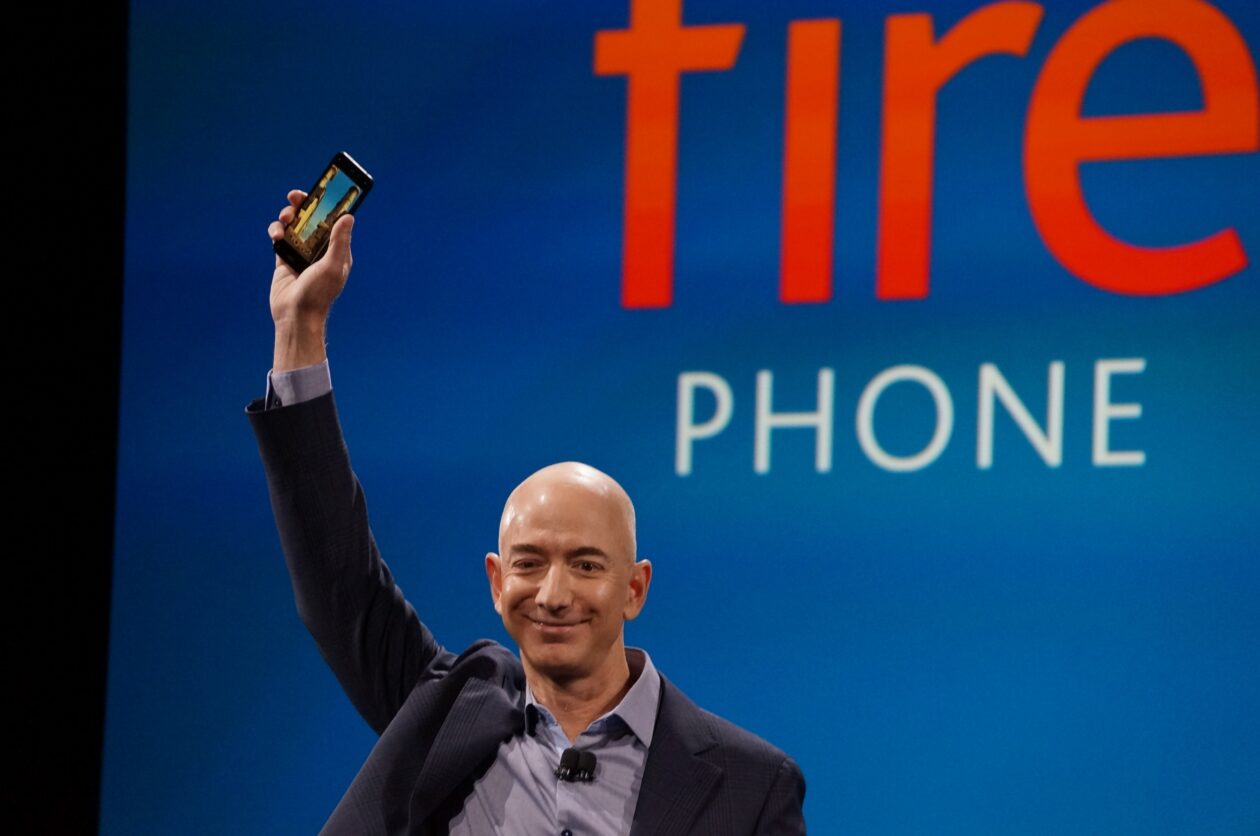
Different this time? Jeff Bezos unveils the Amazon Fire Phone in June 2014. (GeekWire File Photo / Todd Bishop)

Amazon is working on another phone.

That’s the jaw-dropper from Reuters this morning, reporting that the company is developing a new smartphone codenamed “Transformer” within its devices and services unit. 

The project is reportedly led by an internal team known as ZeroOne, a year-old group whose mandate is to create “breakthrough” gadgets, headed by J Allard, a former Microsoft executive known for his work on Xbox and Zune.

GeekWire first reported on Allard joining Amazon back in October 2024, working under another Microsoft veteran, Panos Panay, who leads Amazon’s broader devices and services organization.

The phone is envisioned as an AI-driven mobile personalization device that syncs with Alexa and serves as a persistent connection to Amazon’s ecosystem, including shopping, Prime Video, Prime Music, and food delivery through partners like Grubhub, according to the report.

Advertisement

A key focus is integrating AI capabilities, potentially sidestepping or bypassing standard app marketplaces, according to the sources cited by Reuters.

Of course, it’s not the first time Amazon has tried to crack the smartphone market. The company launched the Fire Phone in 2014 under the direct oversight of Jeff Bezos, packaging it with features like aa 3D display system and vision technology for identifying objects.

It flopped. The proprietary Fire OS lacked popular apps, the multi-camera 3D feature drained the battery and caused overheating, and consumers weren’t interested. Amazon slashed the price from $649 to $159, killed the phone after 14 months, and took a $170 million writedown.

This time, Amazon appears to be taking a different approach. According to Reuters, the company has explored both a conventional smartphone and a stripped-down device with limited features, aimed at countering screen addiction.

Advertisement

Alexa would be central to the experience but wouldn’t necessarily serve as the phone’s main operating system, Reuters reported. The company hasn’t started talks with wireless carriers yet, and the project’s timeline and budget remain undefined, according to the report.

Amazon declined to comment in response to GeekWire’s inquiry. 

Sources told Reuters the project could still be canceled.

Source link

Advertisement
Continue Reading

Tech

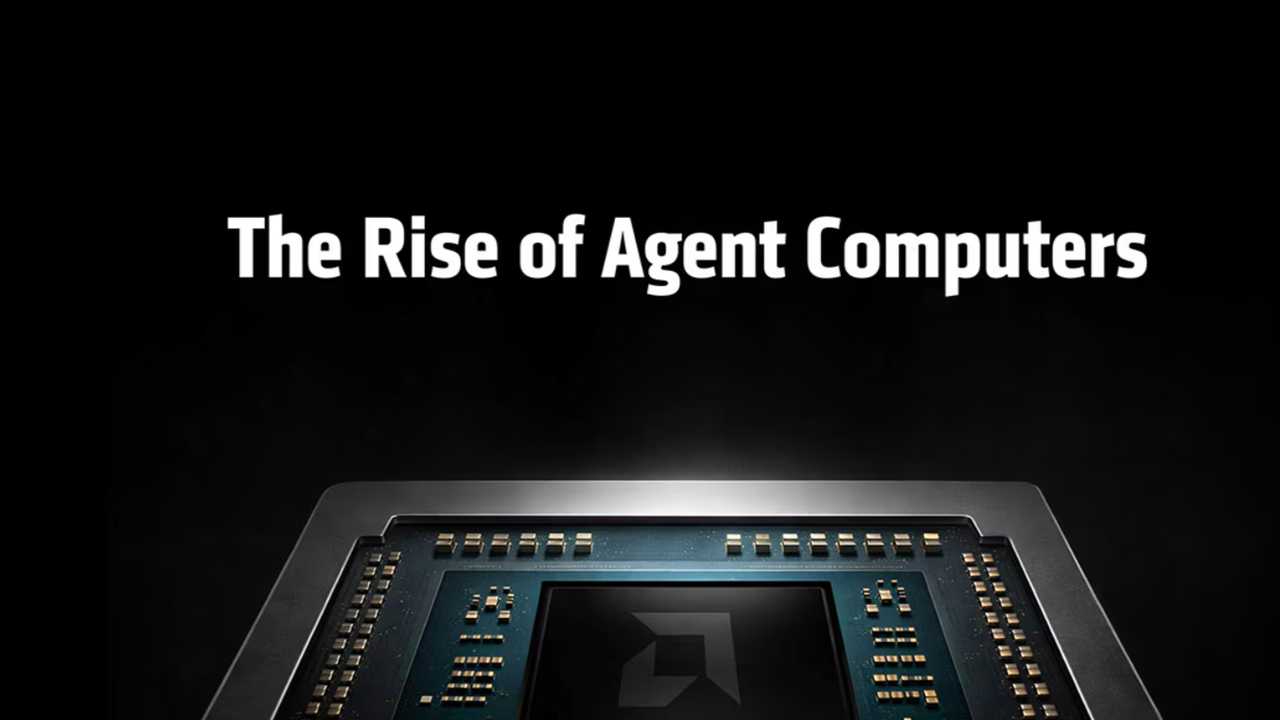
AMD bets Agentic AI will transform decades-old PCs into autonomous machines that work while users sleep

Published

on


  • Agentic AI enables PCs to autonomously execute multiple tasks in parallel
  • Persistent local AI reduces reliance on cloud computing for sensitive workflows
  • Professionals can delegate urgent tasks and wake to completed project summaries

The personal computer has been central to work and creativity for four decades, allowing users to write, build, design, and analyze with professional-grade tools – but PCs have largely remained tools operated directly by humans, opening apps and performing tasks manually.

However, AMD now suggests that Agentic AI could be the killer app for even decades-old PCs, transforming them into systems that autonomously execute tasks and manage workflows.

Source link

Advertisement
Continue Reading

Tech

Google is removing the hassle of remembering SIM codes on Android 17

Published

on

Google is working on a feature in Android 17 that could quietly remove one of the most annoying security steps on your phone. If you use a SIM PIN, you may soon not have to remember it or enter it every time you restart your device.

According to Android Authority, the feature, called automatic SIM lock protection, first appeared in Android 17 beta and is now live in the latest Canary build.

How does automatic SIM lock protection work?

A SIM PIN is different from your phone’s unlock PIN. It protects your SIM card itself and is required when you reboot your phone or insert the SIM into another device. Without it, your SIM cannot be used for calls, texts, or mobile data.

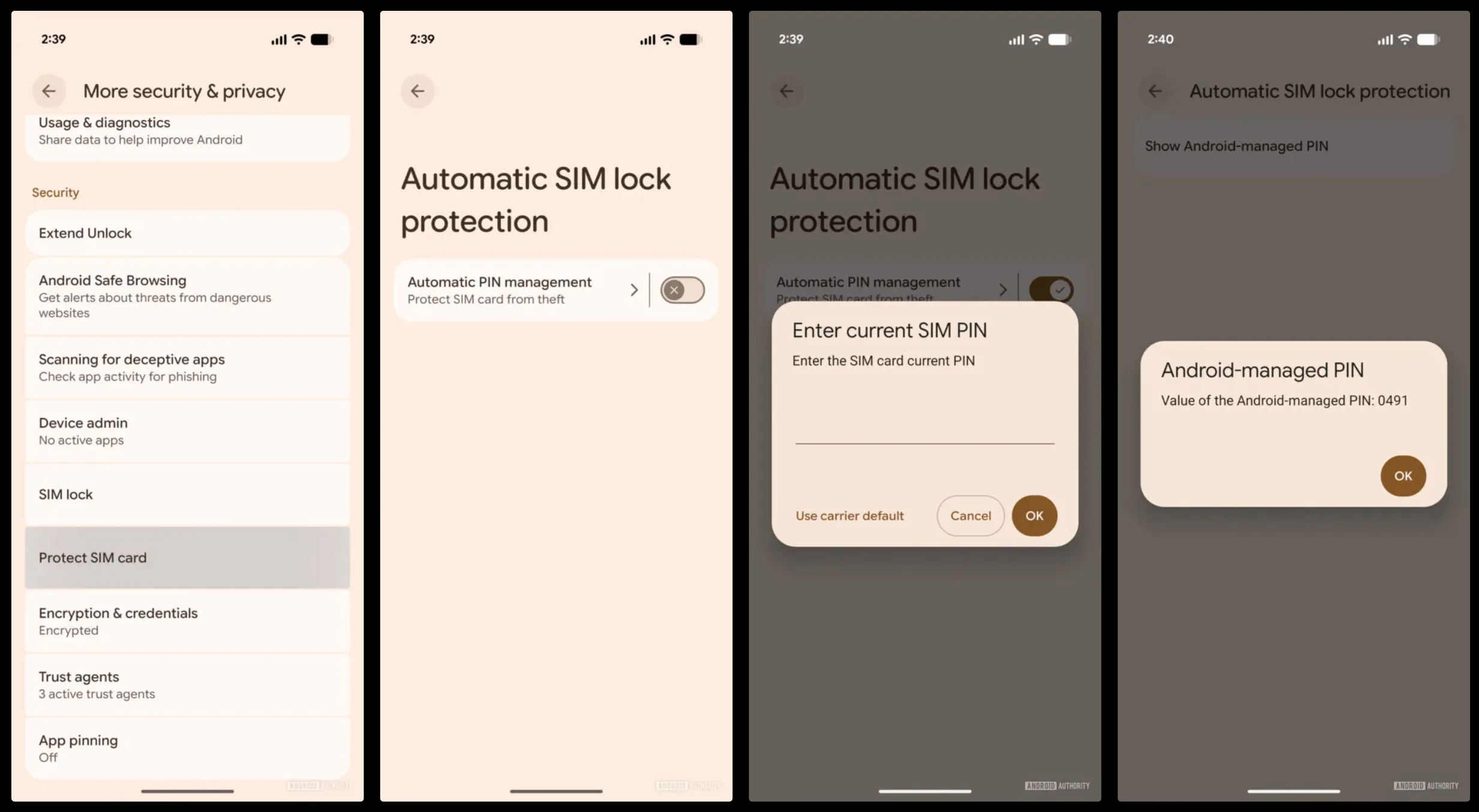
To set up the new feature, you enable Automatic PIN management, confirm your identity with your passcode or biometrics, and then enter your SIM’s current PIN. If you have not set one, you can use your carrier’s default code, which is usually something simple like 0000, 1111, or 1234.

Advertisement

You can find it by heading to Security and Privacy, > More security & privacy > Protect SIM card. You can also view the stored PIN inside the settings by using the ‘Show Android managed PIN’ option.

Once this is done, Android takes over. When you restart your phone and unlock it, the system automatically enters the SIM PIN for you.

Why does this matter?

The biggest issue with SIM PINs has always been convenience. You are already juggling multiple passwords, so remembering another code feels like a hassle. Automatic SIM lock protection removes that burden while keeping the protection in place.

Importantly, the SIM PIN still works as intended if your card is moved to another phone. In that case, the PIN must be entered manually, which helps protect your number from misuse in case of theft.

That makes this feature especially useful if you are worried about someone accessing your calls, messages, or two-factor authentication codes. It is a small change, but one that could make SIM level security more practical for everyday use.

Advertisement

Source link

Continue Reading

Tech

Android Finally Has A True Competitor To Apple’s iPad Pro

Published

on


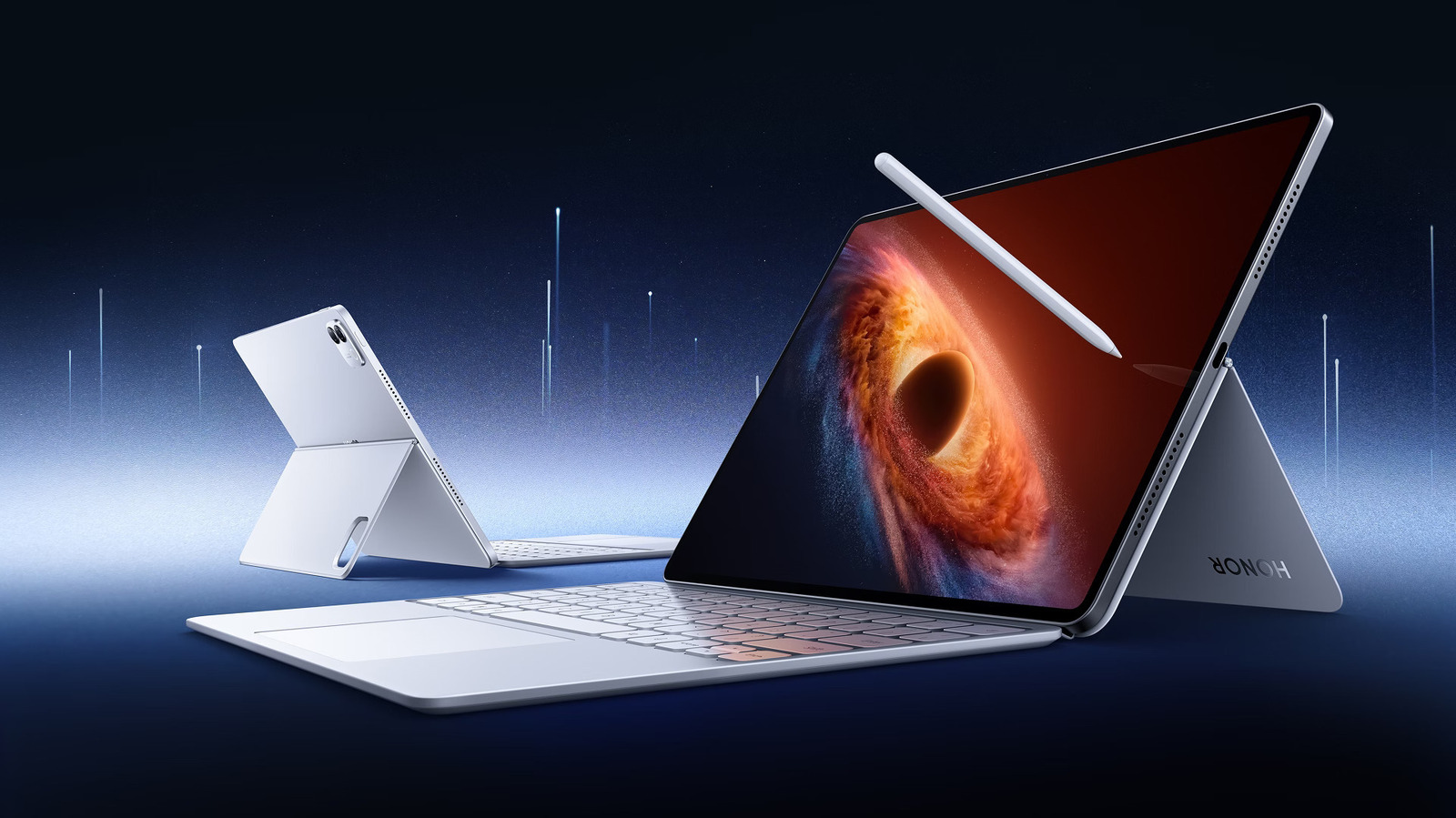
With a little over 50% share of the worldwide tablet market, Apple — with its formidable lineup of iPads — dominates the segment by a considerable margin. The only semblance of competition comes from Samsung, which has a respectable 26% share. The rest of the space in the tablet market share pie is taken up by players like Amazon, Xiaomi, Huawei, Lenovo, and Acer — all of them accounting for considerably less than 10% of the market. Honor is another company that regularly makes it onto the list, thanks to its decent lineup of affordable and mid-range tablets, though the company has been trying its hand in the premium tablets space for a while now, and its latest flagship grade tablet — the Honor MagicPad 4 — is the newest culmination of that effort, and succeeds last year’s MagicPad 3.

The Honor MagicPad 4 was unveiled a few weeks ago at MWC 2026, and has since then gone on sale in several markets globally. While not officially available in the U.S., it has grabbed the attention of tech enthusiasts and general consumers thanks to its impressive spec sheet. 

Advertisement

In several aspects, it even tops flagship offerings from Samsung and Apple. That’s why the MagicPad 4 is being touted by many as being a “true” Android-based competitor to the iPad Pro. In fact, a quick look at the spec sheet of the product would almost make it seem like the MagicPad 4 was designed from the ground up to topple the iPad Pro in terms of hardware specs. And the surprising thing is that Honor has almost managed to do that.

Advertisement

Honor Magic Pad 4 vs Apple iPad Pro: How the specs square up

When launched in October 2025, Apple touted the new M5-powered iPad Pro as one of the thinnest tablets ever. The 13-inch model was just 5.1mm thick at the edges. The Honor MagicPad in comparison is 4.8mm thick making it substantially thinner than the already thin iPad Pro. With its 12.3-inch display, it is a little over a half inch smaller than the 13-inch iPad Pro. As for display specs, the MagicPad 4’s 3,000 x 1,920 pixel OLED display offers a peak brightness of 2,400 nits, and claims a higher refresh rate (165Hz). In comparison, the iPad Pro gets a 2,752 x 2,064-pixel OLED panel that has a lower peak brightness value of 1,600 nits. The Honor also gets a higher screen-to-body ratio.

The Honor MagicPad 4 is powered by the Snapdragon 8 Gen 5 chipset, which is among the latest and most powerful SoCs currently available for Android based devices. That being said, the iPad Pro — which is powered by Apple’s self-designed M5 chip — finds itself in a performance league of its own. In terms of sheer performance, the M5 chip leaps ahead of the current Qualcomm offering. However, given that the MagicPad 4 is already equipped with the best available Android offering, this is more of an ecosystem restriction than a vote against the product itself.

In terms of camera specs, the iPad gets by with a single 12MP camera at the rear with 4K video support, and a 12MP selfie camera. The Honor’s camera setup includes a 13MP rear-facing camera with 4K video support (limited to 30 fps) and a 9MP selfie camera.

Advertisement

Honor tries hard, but Apple wins the ecosystem battle

There is no doubt about the fact that the Honor MagicPad 4 is a commendable effort from the Chinese consumer electronics manufacturer. Not only does it comfortably match the iPad Pro in several aspects, it actually does several things better. Like Apple, which touts support for the Apple Pencil as a revolutionary feature, Honor has its own stylus called the Honor Magic Pencil 3. The company offers consumers the option to bundle the aforementioned pencil along with Smart Keyboard at the time of purchase. The battery capacity is almost identical to that of the iPad, and at 450g, it is considerably lighter, and therefore easier to carry around.

Nevertheless, despite “losing” to the MagicPad 4 in some aspects, the iPad Pro will remain an overall better product for most people. And it all boils down to the fact that the iPad Pro will almost instantaneously become part of an existing Apple ecosystem. Honor has no such ecosystem pedigree to boast of, and despite excelling as a standalone device, its success is constrained by the weaknesses of Android as a platform and Honor as a brand

Advertisement

The Honor MagicPad 4 is already on sale in several countries across the globe, but isn’t available in the U.S. Offered in 12GB RAM + 256GB storage and 16GB+512GB options, UK prices start at £599.99 ($800), going up to £699.99 ($940) for the 512GB option. Additional purchase options include an Honor MagicPad 4 keyboard as well as the Honor Magic3 Pencil which cost an additional £31 each.


Advertisement

Source link

Continue Reading

Tech

User Repair Of A Not User-Repairable Victron CCGX Issue

Published

on

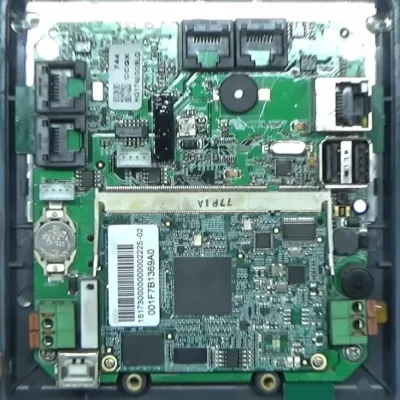
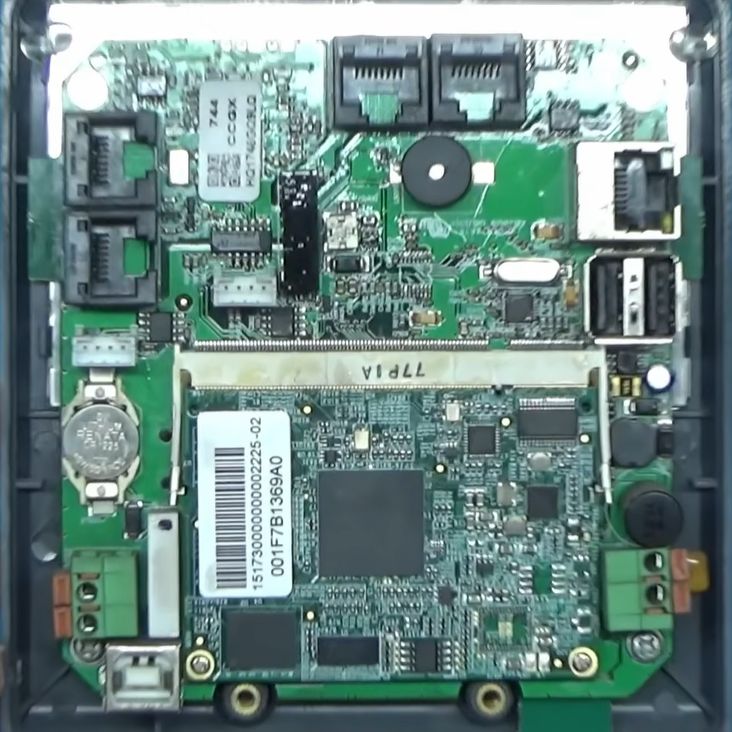
Power banks come in many sizes, and those that target construction sites are probably among the largest. The massive four ton unit based around lead-acid batteries which the [Buy it Fix it] YouTube channel got handed is a good example. Inside it are Victron CCGX inverters among a lot of other Victron electronics, with the control panel for the system throwing up an error that was deemed to be not user-serviceable. Naturally, this makes for a good challenge.

The exact error as thrown up on the central control panel is error #42, indicating a storage corruption issue on the device. According to the manual this means an issue with the internal flash memory that stores settings, serial numbers and WiFi credentials, requiring it to be shipped back to the manufacturer.

To further diagnose the issue, this Color Control unit was taken out of the power bank and coaxed onto a repair bench. This device has a whole host of Ethernet, CAN and other buses on the back, along with a USB host feature, but using the latter to reflash the firmware made no difference. Fortunately it’s just an embedded Linux system running on the System-on-Module and gaining remote SSH access was a snap due to easy root access.

Advertisement

Interestingly, running a diagnostic on the flash IC showed it to be still in good condition. Instead an ECC issue was logged that caused it to be marked as bad. This seems to have been due to the flash IC requiring 4 bits of ECC per 528 bytes, but the software using only a single bit. After reformatting and clearing the error it seems to have fixed the issue. Apparently it was just a weird configuration error that soft-bricked the device, raising the question of how that happened.

Advertisement

Source link

Continue Reading

Tech

OpenAI Plans to Combine Its AI Tools in a Desktop ‘Superapp’

Published

on

OpenAI is working toward creating a desktop “superapp” that will consist of its three tools: ChatGPT, the coding platform Codex and the Atlas browser, according to a report by The Wall Street Journal. OpenAI executives said the goal behind this new desktop app is to improve the user experience.

AI Atlas

The move comes after the Journal reported earlier this week that OpenAI CEO of applications Fidji Simo told employees the company wanted to focus on its core business instead of side projects.

In a Thursday memo to staff reported by the Journal, Simo, who leads development of the new app, said the company was spreading its “efforts across too many apps and stacks, and that we need to simplify our efforts.”

Advertisement

ChatGPT is the signature chatbot from OpenAI, Codex is a coding platform designed for software developers, and Atlas is the AI-first browser from the company, which acts like a traditional internet browser, but with ChatGPT as an assistant.

(Disclosure: Ziff Davis, parent company of CNET, in 2025 filed a lawsuit against OpenAI, alleging it infringed Ziff Davis copyrights in training and operating its AI systems.)

By creating a single app, OpenAI hopes to better compete with rivals like Anthropic. Responding to the Journal report in a post on X, Simo said the move is intended to build on the recent success of Codex, a competitor to Anthropic’s Claude Code.

“Companies go through phases of exploration and phases of refocus; both are critical,” Simo said. “But when new bets start to work, like we’re seeing now with Codex, it’s very important to double down on them and avoid distractions. Really glad we’re seizing this moment.”

Advertisement

A representative for OpenAI did not immediately respond to a request for comment.

Earlier this week, OpenAI announced its new GPT-5.4 mini and nano, smaller and faster versions of its ChatGPT 5.4 model. These coding models also highlight the company’s focus on supporting coders and enterprises instead of dabbling in various projects.

Source link

Advertisement
Continue Reading

Tech

This Compact Bose Soundbar Is $80 Off

Published

on

If you’re looking for an upgrade to your home audio, but you don’t have a lot of room to spare, the Bose Smart Soundbar is an excellent option. Normally $499, it’s currently marked down to just $419 on Amazon. With full Dolby Atmos spatial audio, a unique musical profile, and all the features you’d expect from a modern soundbar in a small package, there’s a reason it’s our favorite compact soundbar.

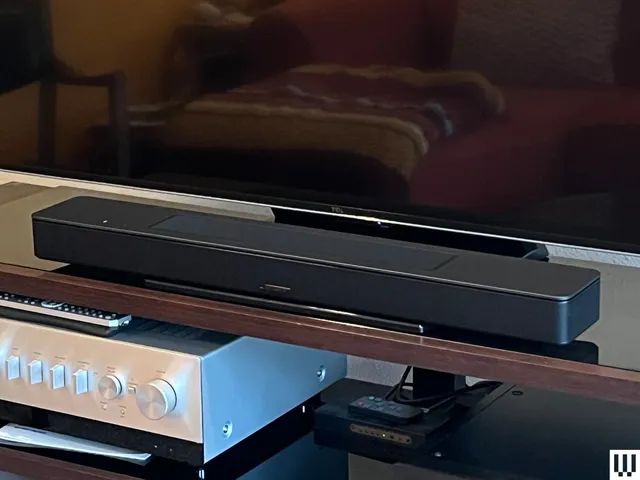
Bose Smart Soundbar, a long narrow black device, sitting at the base of a large flatscreen tv

The biggest selling point here is the design. The Bose Smart Soundbar has an impressively small footprint, perfect for apartment-sized entertainment centers and cramped living rooms. It’s just 2.2 inches tall, making it easy to slide under basically any screen, and its 27-inch width even makes it a viable option for smaller panels. There are a surprising number of speakers inside, including a pair of proper up-firing drivers, so you get real spatial audio and full Dolby Atmos support, something fairly uncommon for soundbars.

Despite the size, the Bose Smart Soundbar has a great audio profile and feature set that’s just as good as any full-size bar. It has a more musical quality than most, which works just as well for an action movie or catching up on your favorite show as it does for listening to some music while you hang out on the couch. If you have a pair of Bose Ultra Open Earbuds, you can even pair them up for a personal surround setup, a feature unique to the Bose.

If you often have trouble catching what characters are saying, there’s an AI Dialogue mode that boosts the clarity and volume of speech. It’s a feature we’ve seen on other soundbars, but it stands out here with its excellent implementation, bringing any dialog into sharp focus at the push of a button. You can really hear the difference when switching the feature on and off.

If you have a little more space under your TV, or you’re just curious what other options are out there, make sure to check out our full guide to the best soundbars. Otherwise, you can head to Amazon to grab the Bose Smart Soundbar for just $419.

Advertisement

Source link

Continue Reading

Tech

AMD releases Adrenaline 26.3.1 driver, adding FSR 4.1 support for Radeon RX 9000 GPUs

Published

on


FSR 4.1 builds on the FSR Redstone framework by enhancing image reconstruction quality, particularly in older games that natively support only lower-resolution input. It also delivers sharper visuals for machine learning – based upscaling, improving detail reconstruction and reducing artifacts in scenes with foliage and other fine textures. However, a…
Read Entire Article
Source link

Continue Reading

Trending

Copyright © 2025