Tech
Best in Show at AXPONA 2026: Must Hear High-End Audio

AXPONA 2026 didn’t feel like a show. It felt like a controlled demolition of your free time.
More than 750 brands, thousands of products, and three days that were not nearly enough. We had six people on the ground and still missed entire floors, rooms, and systems that probably deserved attention. That is not poor planning. That is scale. At this point, you could make a serious argument that AXPONA needs another two days just to keep it honest.
Two things hit hard the minute you started opening doors.
First, the money. Six figure systems were not rare. They were the baseline in a lot of rooms. In fact, there were more systems pushing past $200,000 than there were setups under $50,000. Let that sink in for a second. And yes, there were systems that were seven figures or damn close to it, because apparently restraint did not get an invite this year. The industry needs to have a conversation with itself because the next generation is not spending that kind of money anytime soon.
Second, despite all that excess, there were still real finds. We came across genuinely impressive gear under $5,000. The kind of products that do not require a second mortgage or a forgiving spouse. They did not dominate the floor, but they mattered, and we made sure to track them down.
2026 is not lacking for ambition. From Europe to Asia to North America, the level of engineering and execution across two channel and personal audio is on another level right now. Whether you are chasing a reference system or a killer headphone rig, the options have never been deeper or more expensive.
ATC EL50 Anniversary Edition

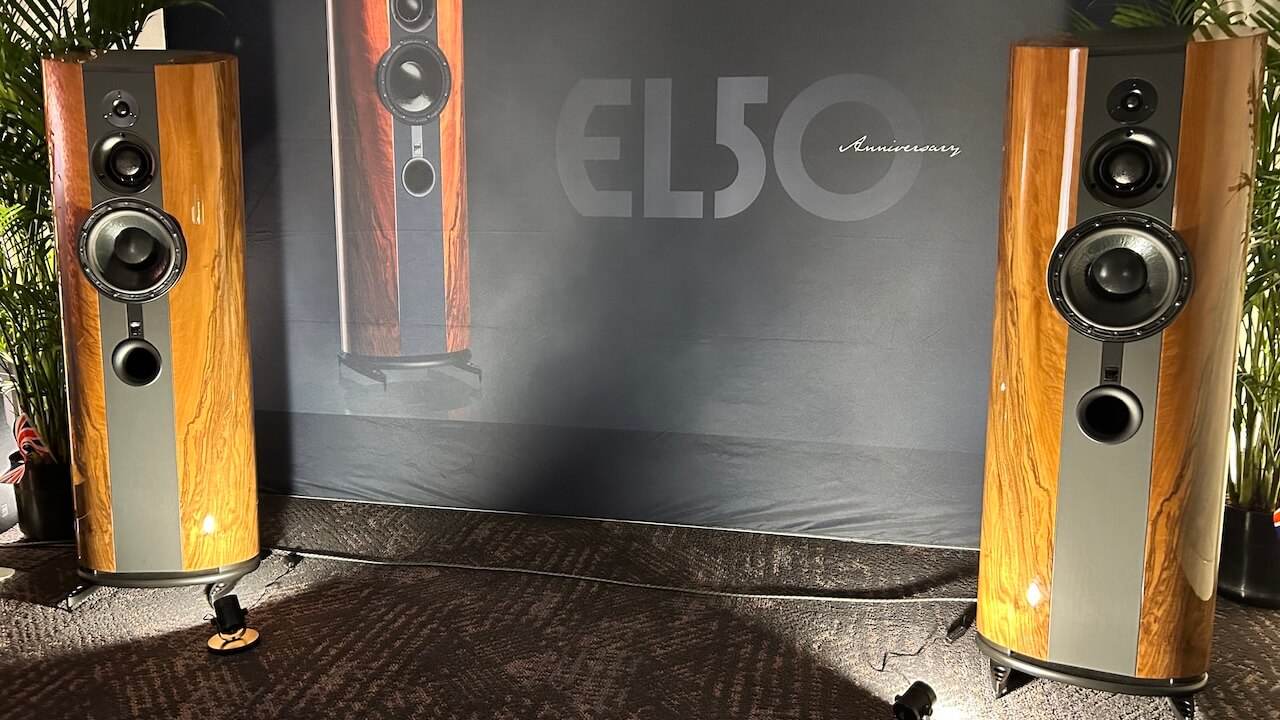
The ATC EL50 Anniversary makes its case quickly. At $99,999, this isn’t a passive tower that needs help. It’s a fully active three-way system where the amplification, crossover, and drivers are designed to work as one. The crossover is handled at line level using a fourth-order Linkwitz-Riley design at 380Hz and 3.5kHz, which gives ATC tighter control over each driver than a traditional passive network. Each driver has its own dedicated Class A/B MOSFET amplification channel, 200 watts for bass, 100 watts for midrange, and 50 watts for the tweeter, all running fanless with convection cooling. ATC also builds its own drivers in-house, which has been central to its design philosophy for decades. On paper, it covers 32Hz to 25kHz (-6dB), with very low distortion, tight pair matching, and enough output to handle large rooms without strain.
What stood out to me was how it behaved in a room that should not have worked. The space was small, and logic says a speaker like this should overload it. It didn’t. The bass was controlled, evenly distributed, and quick. No bloom, no sense of excess. The presentation had real scale and presence without turning aggressive. It felt composed, which is not something I say often about large systems in hotel rooms. Placement flexibility is always relative, but this demo suggests the EL50 is more forgiving than its size would imply.
I don’t usually get worked up over six-figure speakers. Reality tends to intervene. But this one earns the attention. The U.S. pricing will spark arguments, and not all of them will be wrong. Still, if you’ve been telling yourself that everything above $20K is just diminishing returns and marketing fluff, this is the kind of system that quietly ruins that narrative. Fair warning.
Devore Fidelity Orangutang O/Reference
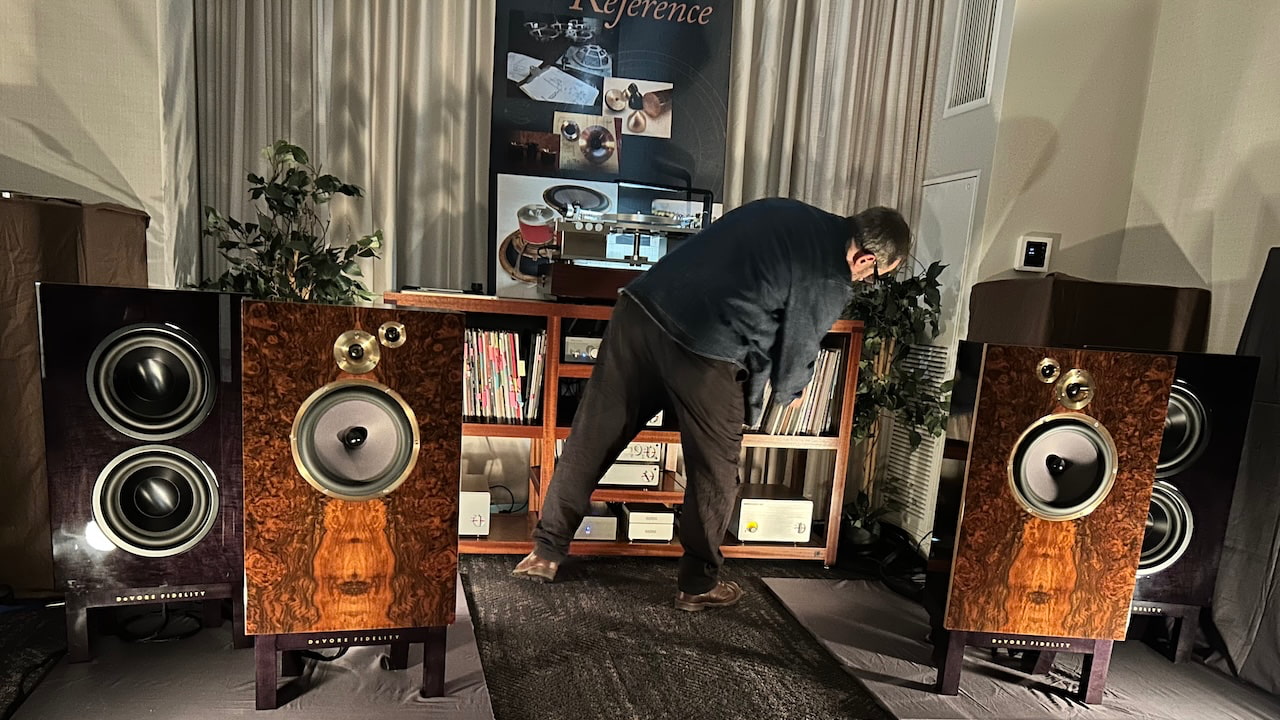
The DeVore Fidelity Orangutan O/Reference didn’t try to win AXPONA the usual way. John DeVore wasn’t chasing spectacle. In a show full of six-figure systems, this room didn’t lean on volume or flash. It just played music with weight, tone, and a sense of control that held up past the first few minutes. That alone separates it from a lot of rooms that impress quickly and then start to fall apart.
It’s a four-piece system with clear roles. The A module handles the main range with a 10-inch paper cone woofer built around an AlNiCo motor, copper Faraday rings, and a bronze phase plug. Above that, a silk dome tweeter and super tweeter are horn loaded in machined bronze for sensitivity and control without pushing the top end. The B module takes care of the low end with an 11-inch aluminum woofer and passive radiator, powered by a 700-watt Class D amplifier with analog controls for crossover, phase, and EQ. The key is integration. The bass section takes its signal from the same amplifier driving the A module, so it follows the same tonal structure instead of acting like a separate system.
What I heard was consistent from top to bottom. Piano had weight. Voices carried texture without being pushed forward. Nothing felt exaggerated or dissected. It didn’t behave like a microscope. It behaved like a system that understands how music is supposed to move in a room. And here’s where it gets uncomfortable. If you’re sitting there thinking the jump from this to a $500K or $1M system is going to unlock some hidden level of truth, it’s probably not. At that point, you’re not chasing better sound. You’re negotiating with your ego.
Quad ESL 2912X
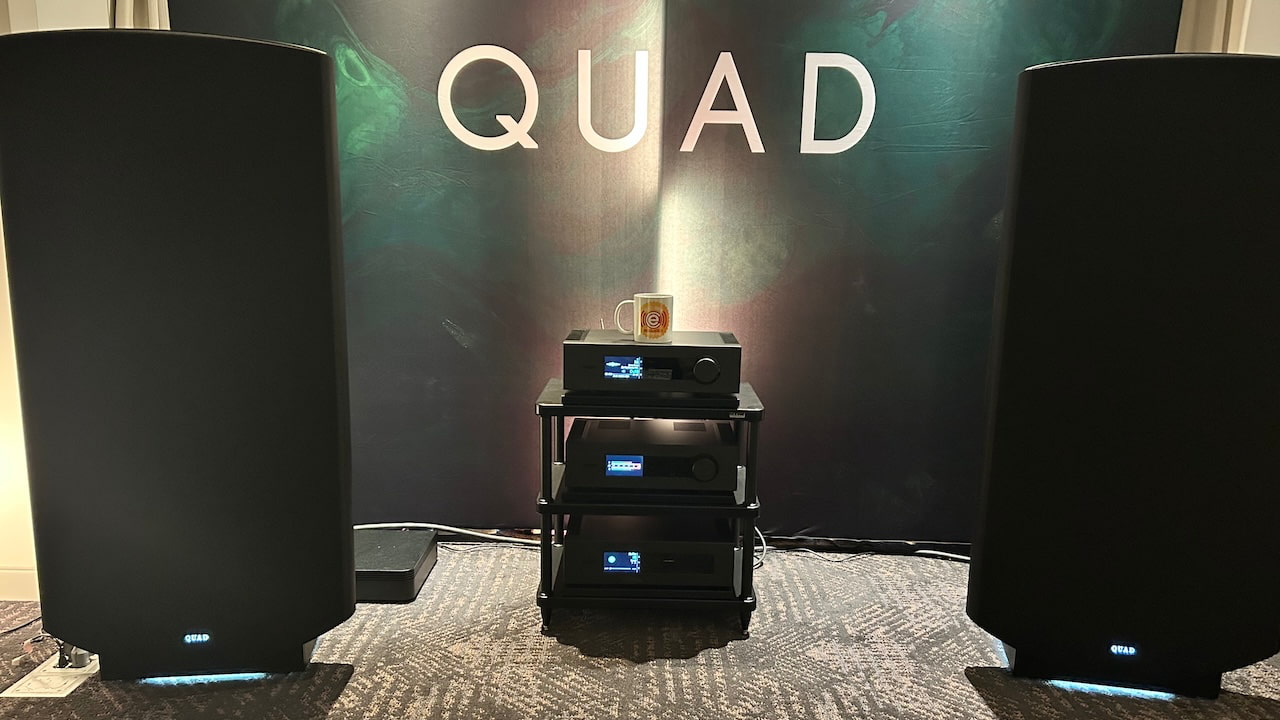
The QUAD ESL 2912X, shown by MoFi Distribution at AXPONA 2026, does something most electrostatics don’t bother trying. It keeps the clarity and speed intact, but adds just enough weight to make it feel like music instead of a lab demo. At $18,000, it’s a long way from the original QUAD panels in both price and expectation, but the core idea is still there. Strip away the noise and let the signal speak. The difference is that here, it doesn’t leave everything hanging in midair. There’s a sense of physical presence that grounds it without turning it into something it’s not.
They still look like QUAD electrostatics. Tall panels, about 58 inches, no attempt to hide what they are. In the room, they didn’t feel as imposing as that size suggests. The new all-black finish helps keep them visually restrained, and more importantly, they didn’t dominate the space sonically. What I heard was scale. Not from cabinet volume, but from how the speaker projects and organizes sound. There was width, height, and depth, but it never felt forced.
That’s what separates this from a lot of the oversized systems at the show. Bigger cabinets, bigger claims, and a lot of effort spent trying to prove something. The 2912X doesn’t play that game. It delivers presence without pushing, and connection without excess. If you think you need something twice the size and five times the price to get closer to the music, you might want to spend some time in front of these first. It won’t flatter your assumptions, but it might save you a lot of money.
Dynaudio Legend

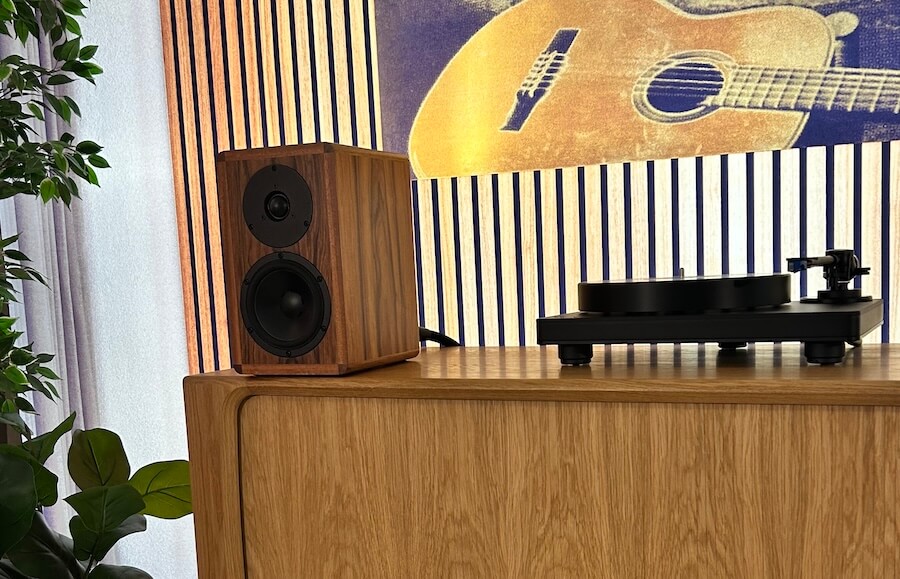
The Dynaudio Legend felt like one of the more important “real world” debuts at AXPONA 2026. In a show dominated by systems that cost more than most homes, this was one of the few new speakers that landed in a price range people might actually stretch for. Built in Denmark with hand-finished rosewood veneer and Jatoba hardwood accents, the Legend looks far better in person than the photos suggest. Online complaints about the finish miss the point. Up close, the fit and texture are exactly what you expect at this level.
It’s a compact two-way with a 28mm Esotar 3 tweeter and a 15cm MSP mid/bass driver, crossed at 3.5kHz. On paper, the 60Hz low-end spec and 83dB sensitivity don’t scream “room filler,” but that’s not how it played out. In the room, with proper amplification, I heard real bass presence. Not subwoofer territory, but far from the “nothing below 70Hz” takes floating around online. The midrange leans slightly warm but stays controlled, with vocals and instruments carrying proper weight. Up top, the Esotar 3 does what it always does. Open, extended, detailed, and clean without turning sharp. The overall presentation had more scale than I expected from a speaker this size, with a soundstage that pushed well beyond the cabinets.
Driven by a MOON by Simaudio network amplifier, the pairing made sense. These need current, and they reward it. For smaller rooms, offices, or a serious nearfield setup, this is one of the more complete packages I heard. If we’re talking about the “best” new affordable loudspeaker at the show, this is right there alongside Paradigm’s latest. And for the forum crowd losing their minds over the price, what exactly were you expecting, $2,500? That ship sailed a long time ago. These are the speakers I’m most likely to buy in 2026. That should tell you everything.
Western Acoustics Type 2.1
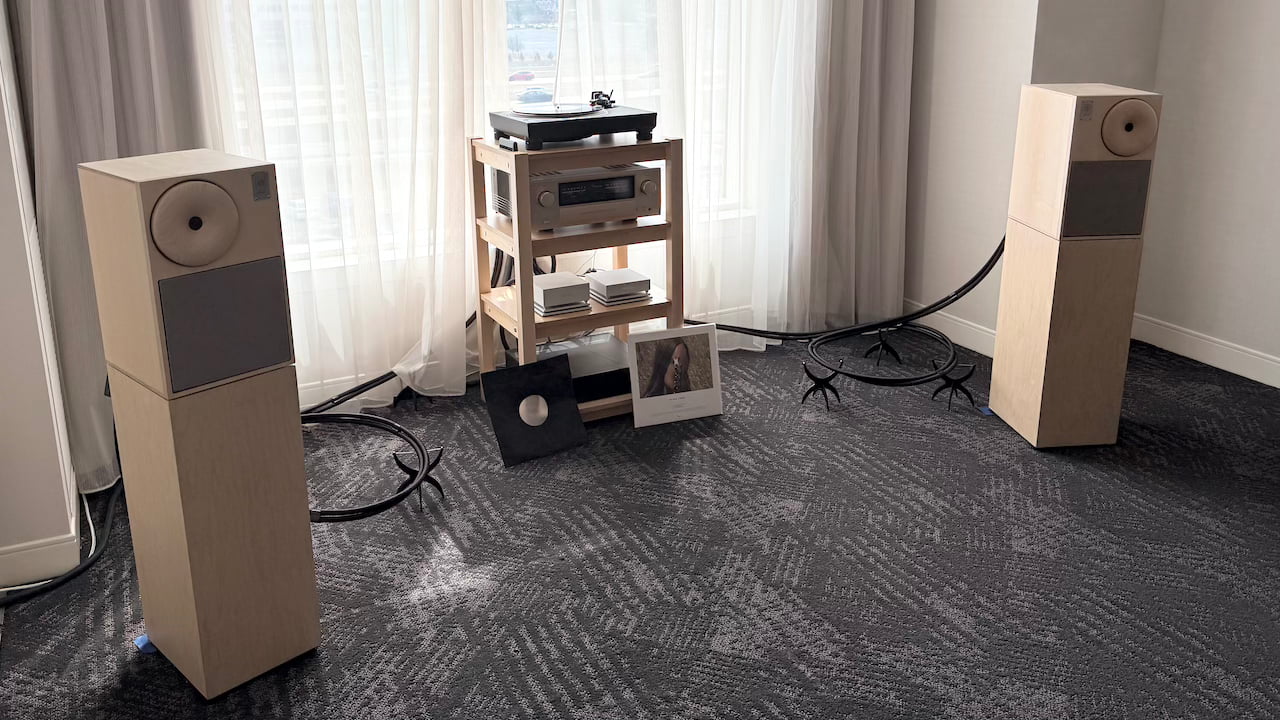
The Western Acoustics Type 2.1 didn’t look like a typical hi-fi play, and that was the point. New brand, simple Baltic birch cabinet, plywood stand, maple horn up front. Nothing about it screamed for attention. At $6,000 per pair, it sat in a system that wasn’t exactly modest either, anchored by an Accuphase integrated, a Technics turntable with a Dynavector moving coil, and a Nagra phono stage. It would have been easy for the speakers to get lost in that chain. They didn’t.
What I heard was unforced. No hype, no exaggerated bass, no artificial width. Just a stable, well-organized presentation that held together when things got busy. The combination of the Purifi PTT6.5X04 woofer and the FaitalPRO compression driver on a wide 110° waveguide explained a lot of that. Imaging was solid beyond a single seat, and the tonal balance stayed consistent as you moved around. The spec sheet lines up with what I heard. Real low-end reach into the high 30s, enough output to scale without strain, and a 4-ohm load that makes it clear these want proper amplification.
They’re also honest about placement. Rear-ported means you give them some room or you deal with it. Six inches or more off the back wall on a credenza would be a good starting point. These aren’t lifestyle speakers trying to fake credibility. They’re also not trying to be traditional hi-fi jewelry. This feels like a brand figuring out its identity in real time, and starting from the right place. If this is the baseline, Western Acoustics is worth keeping an eye on.
Amphion Argon7LX
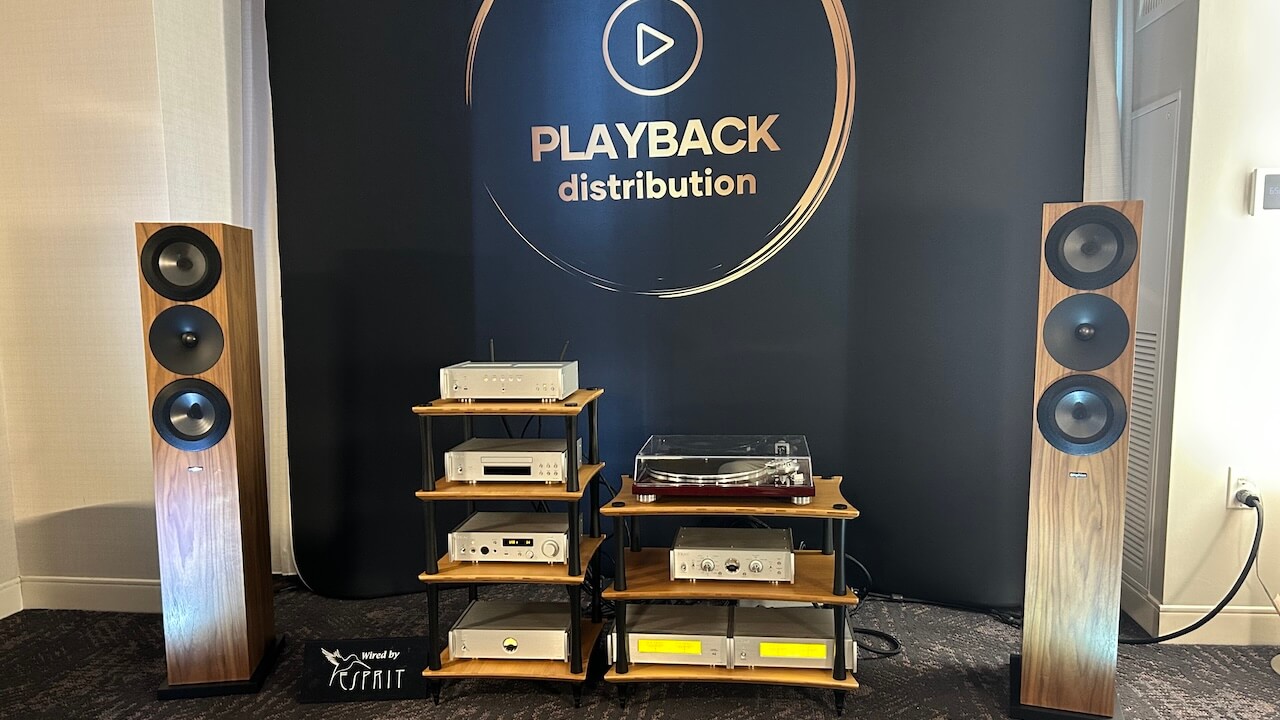
The Amphion Argon7LX doesn’t try to win you over with drama. It’s a straightforward design on paper. Two-way, dual 6.5-inch aluminum woofers, a 1-inch titanium tweeter, and a passive radiator handling the low end. What Amphion Loudspeakers brings is execution. Clean, controlled, and consistent. With expanded U.S. distribution through Playback Distribution, these aren’t a niche import anymore, and that matters.
In the room, the presentation leaned toward precision rather than spectacle. Imaging was stable, placement stayed locked in, and nothing shifted when the material got dense. The bass was controlled, but more importantly, it connected properly with the midrange and top end. That sense of cohesion is what stood out. It didn’t feel like drivers handing things off to each other. It felt like a single system doing its job without drawing attention to itself.
On the practical side, it’s a 4-ohm load with 91dB sensitivity, so it’s not difficult to drive, but it benefits from an amplifier with real current. Amphion’s 50 to 300 watt recommendation feels realistic. The rated 28Hz to 55kHz extension is more than enough for full-range listening in most rooms without a sub. No tricks here. Just a speaker that focuses on getting the fundamentals right. If you’re looking for fireworks, look elsewhere. If you want something that stays composed and gets out of the way, this is exactly that.
Michell Audio Gyro


The Michell Gyro has always been one of the more recognizable designs in analog. This new version doesn’t mess with that identity, but underneath, almost everything has been reworked. The acrylic base is gone, replaced by a solid aluminium slab, and the main chassis moves to a precision-machined 19mm aluminium tooling plate. It’s stiffer, better damped, and clearly aimed at reducing resonance. Brass weights are embedded for balance and vibration control, foam inserts manage reflections around the tonearm mount, and the whole structure sits on Sorbothane isolation feet. The motor remains freestanding, connected only by the belt, with both the motor and PSU housed in machined aluminium enclosures to limit interference. Add in the inverted bearing with improved lubrication, re-tuned suspension, and updated tonearm coupling, and it’s clear Michell didn’t just tweak this. They rebuilt it.
Visually, it still looks like a Gyro, but more substantial. More serious. From an industrial design standpoint, it’s hard to argue with. It was the anchor of the Opera/Unison Research system at the show and did exactly what it needed to do. Stable, quiet, and controlled, without drawing attention to itself. That’s the job. It let the rest of the system speak.
The bigger conversation is price. At $8,999 without a tonearm and $10,998 with the TA2, cartridge extra, this is a very different proposition than older Gyros. Michell is clearly aiming at the same buyers looking at VPI Industries, Clearaudio, Thorens, and Kuzma. Whether it earns that spot comes down to performance, and that’s not something a show floor can fully answer. It looks the part. It’s built like it belongs. But at this price, it has to prove it over time.
Opera Callas Diva Edizione Speciale

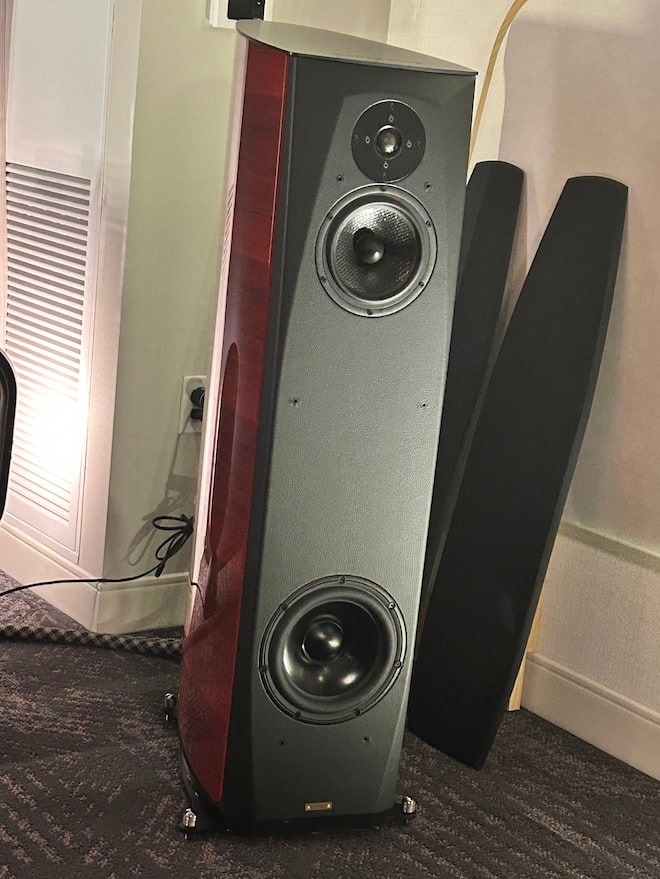
The Opera Callas Diva Special Edition leans into what Italian brands tend to do well. Materials, finish, and a clear voicing philosophy that favors tone and texture over clinical precision. At $13,999, this is a substantial, reflex-loaded floorstander with a rear-firing dipole element. Built with hand-crafted wood cabinetry and leather-clad baffles, it feels more like something out of an atelier than a factory. Distributed in the U.S. by Fidelity Imports, it’s also physically serious at 65 kg per speaker. Plan accordingly. This is not a solo lift unless you enjoy bad decisions.
The design combines a forward-facing array with a rear dipole tweeter system. Up front, there’s an 8-inch long-throw woofer, a 7-inch midrange with a polypropylene cone and phase plug, and a 1-inch Scan-Speak 9700 tweeter run without ferrofluid and using a double decompression chamber. Around back, dual 1-inch tweeters add ambient high-frequency energy. The crossover uses 12 dB per octave slopes at roughly 200 Hz and 2 kHz, which points to a focus on phase coherence rather than aggressive filtering. On paper, it runs 30 Hz to 25 kHz with 90 dB sensitivity and a 4-ohm load, so it’s reasonably friendly but still wants an amplifier with some stability and current.
In the room, the presentation followed that philosophy. Not neutral in the strict sense, but balanced in a way that emphasizes flow and texture. The rear array added space without turning things diffuse, and the timing stayed intact. It didn’t shout to get your attention, which is the whole point. If you’re looking for something analytical, this isn’t it. If you want a speaker that leans into musicality without losing control, it makes a strong case.
Focal Mu-so Hekla

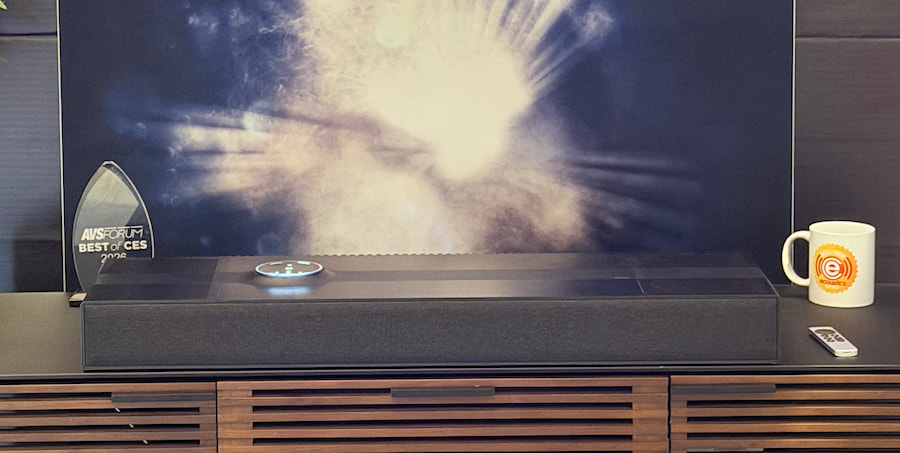
The Focal Mu‑so Hekla doesn’t pretend to be a soundbar, even if it lives in the same spot. At $3,600, it’s a single-box system built around Naim Audio’s Pulse platform, with Focal’s ADAPT room correction handling setup. Inside is a 15-driver array firing forward, sideways, and upward, designed to handle both stereo and Dolby Atmos without relying on external speakers. Setup is simple. No sweeps, no tones. You enter room dimensions in the app, and the system adjusts from there.
In use, it works. Atmos material has real width and height, and it doesn’t collapse into a front-heavy presentation. There’s enough spatial information that you start second-guessing where the sound is coming from. Bass extension is stronger than expected for the size, reaching into the low 30 Hz range, and it stays controlled. The overall presentation is composed. Effects move when they should, not because the system is trying to show off. Imaging holds together, and nothing drifts out of place.
Build quality is in line with the price. Brushed and bead-blasted aluminum, solid fit and finish, nothing flashy for the sake of it. It replaces a rack of gear, but the intent is performance, not convenience. It’s not cheap, and it doesn’t try to be. But it delivers in a way most soundbars don’t, which is probably the bigger point.
Advance Paris A-i190
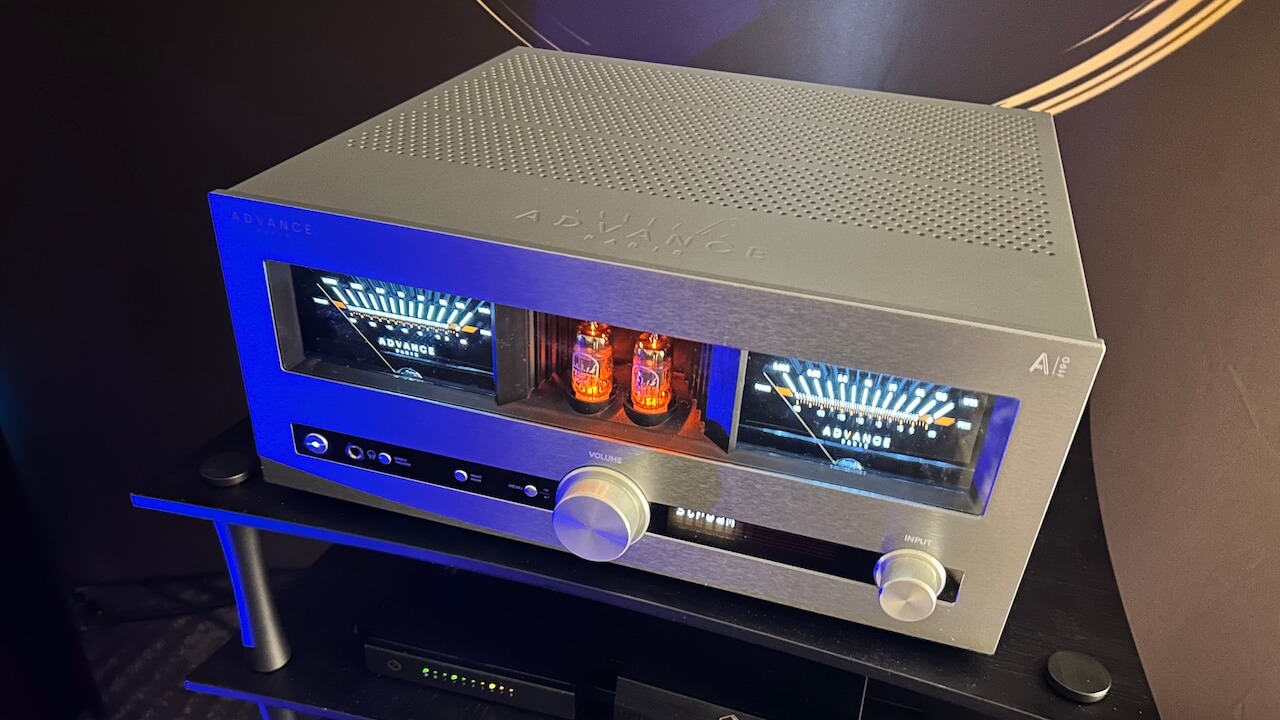
The Advance Paris NOVA A-i190 gets the balance right between design and function. Metal, glass, and VU meters that feel intentional and for the type of listener who favors a vintage look. The optional rotary remote is overbuilt in the best way. Heavy, solid, and clearly designed to last.
Inside, it’s a hybrid design with an ECC81 tube stage feeding a Class A/B output section. The ESS9017 DAC runs in Quad mode, backed by a 4-channel DSP handling EQ and up to dual subwoofer integration with proper crossover control. Connectivity is complete. HDMI eARC, USB with DSD, multiple digital inputs, five RCA inputs, MM phono, pre-outs, and dual sub outputs. Add the optional A-NTC streaming or A-BTC Bluetooth modules and you get full network audio or bi-directional wireless without adding boxes.
In the room, it sounded composed. Slight warmth through the midrange, open top end, and controlled low end with real weight. More importantly, it never felt pushed. There’s enough headroom here to run a serious system without stress.
Ruark Audio Talisman R

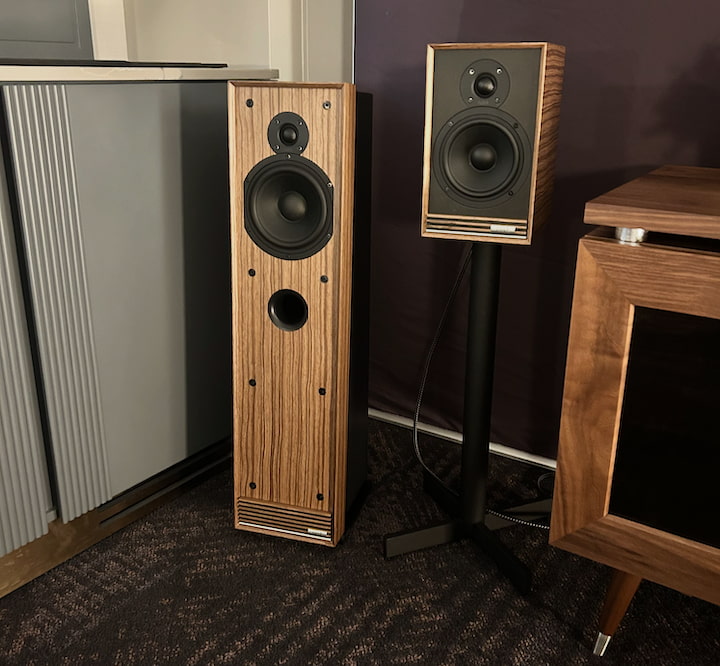
The Ruark Audio Talisman R was one of the more surprising debuts at AXPONA 2026. It’s Ruark’s first floorstander in about 20 years, and if pricing holds under $2,000 when it lands in the U.S. through Fidelity Imports, it’s going to get a lot of attention. At roughly 85 cm tall (about 33.5 inches), it’s compact for a floorstander, and details were limited. No full driver breakdown yet, with more expected when it shows in Vienna. It didn’t feel like a prototype, though. Fit, finish, and overall presentation looked ready.
In the room, driven by the Ruark R610, it came across bold, crisp, and articulate. The soundstage was wider than expected, especially with electronic material, and it held together well. This isn’t a laid-back tuning. It has some energy, and it benefits from proper amplification. Pair it with something in the $1,000 to $2,500 range with decent current and you’ll be in the right zone.
I wanted a pair within a few minutes, which usually tells me enough. Some of the older crowd didn’t love the music choice. That’s their problem. Ruark isn’t playing it safe here, and that’s a good thing. If this is where they’re heading, they’re back in the conversation. Just don’t expect them to wait politely for permission.


The Metaxas & Sins Tourbillon T‑RX MK.II is not subtle. At $52,000, it doesn’t try to be. This is an evolution of the original Tourbillon, with a redesigned output stage derived from the flagship Papillon studio deck and upgraded silver capacitors in both the output and EQ sections. Distributed by Reel Sound Distribution, it sits firmly in the “no compromises” corner of analog sources. The build reflects that. Dense, over-engineered, and visually unlike anything else at the show or anywhere this side of Coruscant.
I’ve spent time with the earlier version at Jeff Garshon’s place, so this wasn’t my first exposure. Jeff may look like he just discovered tape last week, but he’s been deep into this for decades. That system, running through Metaxas amplification and MartinLogan electrostatics, made a strong case for what high-end reel-to-reel can do when everything is aligned. The MK.II builds on that. It’s still built like a tank, still unapologetically mechanical, and still one of the most convincing analog sources I’ve heard.
The room at AXPONA reflected that interest. Tape fans were stacked at the front like it was an open house at Willy Wonka’s factory, minus the chaos. And honestly, it makes sense. This isn’t just about playback. It’s about presence. Compared to something like the Innuos Nazaré, which is a very well-engineered digital box, the Tourbillon T‑RX MK.II is something you interact with. You don’t just listen to it. You end up staring at it.
At AXPONA, it was paired with the Metaxas Emperor Omni, a full-range electrostatic design that looks as unconventional as the deck itself and carries a $159,000 price tag. The pairing made the intent clear. This is a system built to push analog playback to its limits, both in presentation and execution.
REL S/550

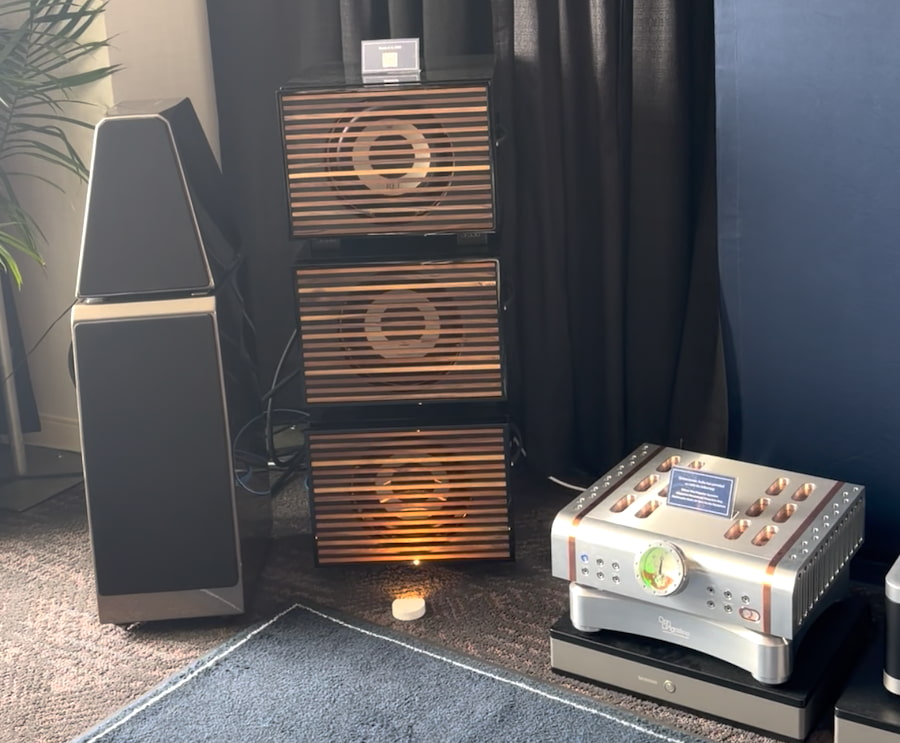
REL’s subwoofer demo was one of the more interesting rooms at AXPONA, and not for the usual reasons. Most sub demos chase impact. More slam, more pressure, more low-end theatrics. REL went in a different direction. Their focus was height. Not treble. Not volume. The vertical scale of the presentation and how much space the music occupies in the room.
The system didn’t exactly ease you into it. Wilson Audio WATT/Puppy speakers, a Dan D’Agostino Momentum MxV Integrated Amplifier, and a WADAX Studio Player put the room well past $200K before adding subs. REL added six REL S/550 units, about $20K more, stacked three per side.
REL kept the demo simple. Subs on, subs off. With the subs off, the soundstage didn’t just lose bass. It shrank. The presentation flattened and lost height. Turn them back on and the room opened up again. Vocals stood taller. Instruments had more air above them. It sounded bigger, not louder.
The room wasn’t large, which made the setup more surprising. Six subs in that space should have been too much. It wasn’t. The S/550s blended cleanly with the speakers and never drew attention to themselves. No bloat, no excess, no sense they were taking over.
Improving a system at this level is not easy. In this case, REL didn’t change the character. They extended it. And once you hear what happens when the subs go off, it’s hard to ignore.
VPE Elevon

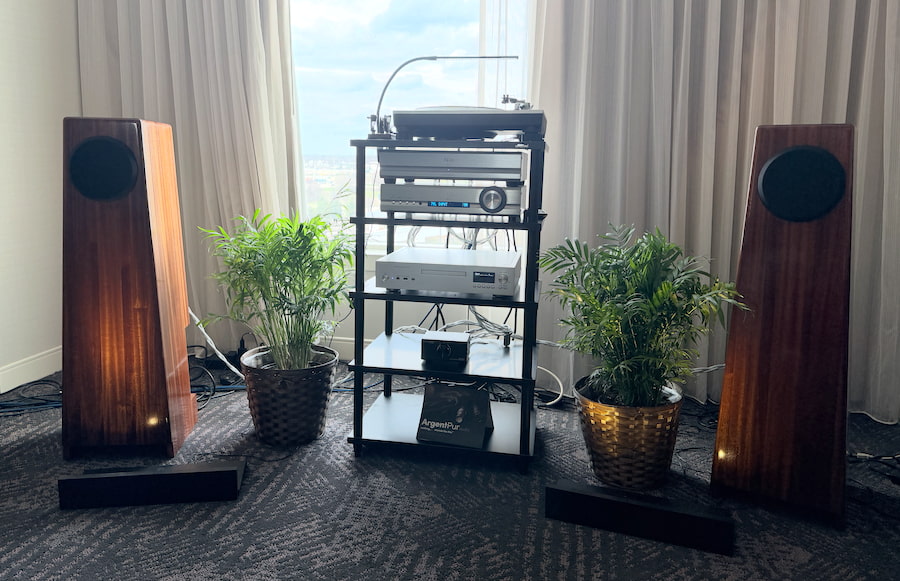
The VPE Elevon is the first active speaker from VPE Electrodynamics, a brand I’ve mostly associated with subwoofers. At $15,000 per pair, the slim floorstander didn’t stand out visually in a crowded show, but the engineering behind it is worth noting. It’s a three-way collaboration between VPE, SpeakerPower, and Orchard Audio.
Each speaker has 1,000 watts of built-in amplification. The driver layout uses a 7.5-inch SB Acoustics Satori coaxial driver and a 9.5-inch Satori woofer that fires downward through a front slot. The cabinet can also be configured as a dipole with removable side panels, but I didn’t hear that version.
In the room, the presentation was consistent and controlled. Anette Askvik’s “Liberty” can expose issues with balance and detail. The Elevon kept the vocal centered, with good separation and stable imaging. Low-level detail was there without being pushed forward.
These also managed to disappear in the room, which isn’t easily done. The soundstage extended beyond the cabinets with reasonable depth and width, and nothing felt exaggerated or disconnected. It’s a straightforward execution. The Elevon doesn’t lean on a specific sonic signature. It focuses on control, balance, and integration, and that came through in this setup.
Legacy Audio Talos

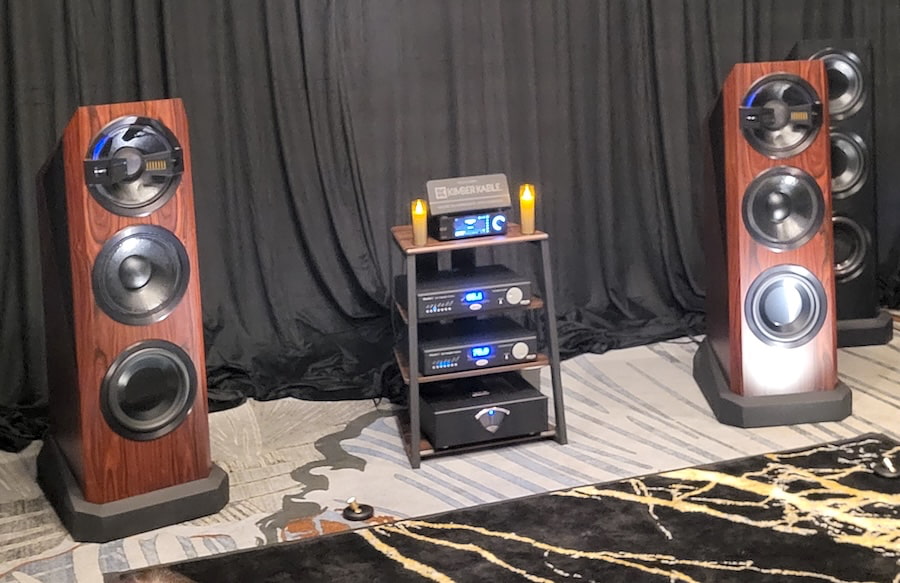
The Legacy Audio Talos ($65K-$75K/pair ) doesn’t try to hide what it is. My first impression was simple. Big, yet the Valor are even bigger. At nearly 4.5 feet tall and close to 250 pounds each, Talos are not speakers you casually reposition. The cabinets are well finished and the design is clean, but the scale dominates the room.
The driver array reflects that approach. Dual 12-inch woofers, dual AMT tweeters, a coaxially mounted 3-inch midrange, and dual 12-inch passive radiators, which are all powered by 3,000 watts of Class D amplification.
On paper, it reads like brute force. In the room, it didn’t come across that way.
Listening, the presentation was controlled and balanced rather than aggressive. The internal DSP, built around a 56-bit processor with a two-stage room correction process, is clearly doing a lot of the work. Instead of pushing the room, the system seemed to adapt to it.
What stood out most to me was imaging. There was a clear sense of height, width, and depth, and it didn’t feel tied to the cabinets. At times, it was hard to pin the sound to the speakers themselves, which is not what I expected walking in. The Talos is physically imposing and technically complex, but the result isn’t overwhelming. It’s measured, controlled, tonally accurate, and focused on placing everything where it should be in the space.
Acora Acoustics MRC 5.2D
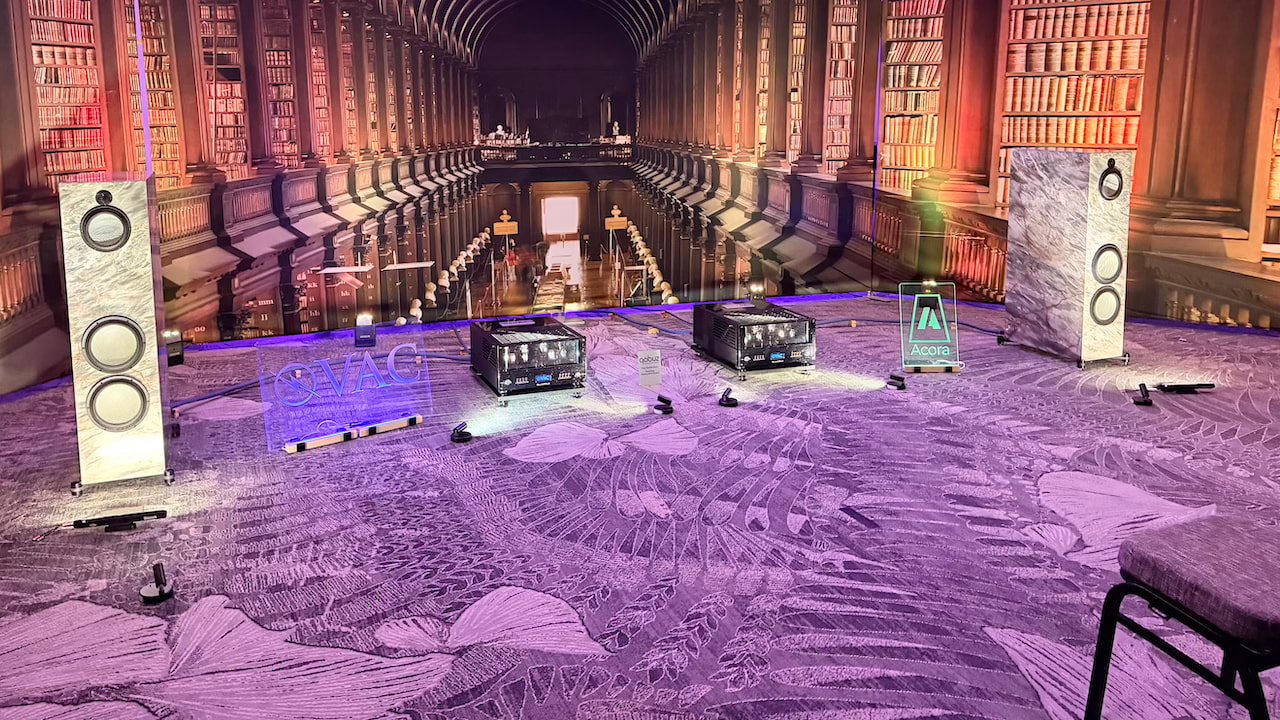
The Acora Acoustics MRC 5.2D caught my attention for a simple reason. It didn’t look like everything else. After walking through room after room at AXPONA, you start to notice how many speakers rely on the same formula. MDF cabinets, wood veneer, some variation of black or walnut. It works, but it all starts to blend together. A few brands tried to shake that up with painted finishes and custom artwork. That might land with a younger crowd, but it’s not for me.
Acora goes in the opposite direction. Stone. Granite and marble cabinets, machined and polished into something that looks more like sculpture than typical hi-fi gear. Every pair is cut from natural material, so no two are exactly the same. Even sitting idle, they draw attention. And they sound as gorgeous as they look!
What stood out to me is that the design isn’t just visual. Working with stone at this level is not trivial, and it shows in the execution. The cabinets feel solid and inert, which translates into a clean and controlled presentation in the room. No obvious cabinet coloration, no added resonance.
Even at $58,000 per pair the MRC 5.2D sit near the less expensive end of the Acora line which stretches up to $318,000 per pair for their flagship VRC in granite. Having heard both at different shows over the years, the MRC 5.2D gets dangerously close to the VRC’s flagship level performance, which actually makes them seem more accessible than expected.
Prodigio Audio WR2

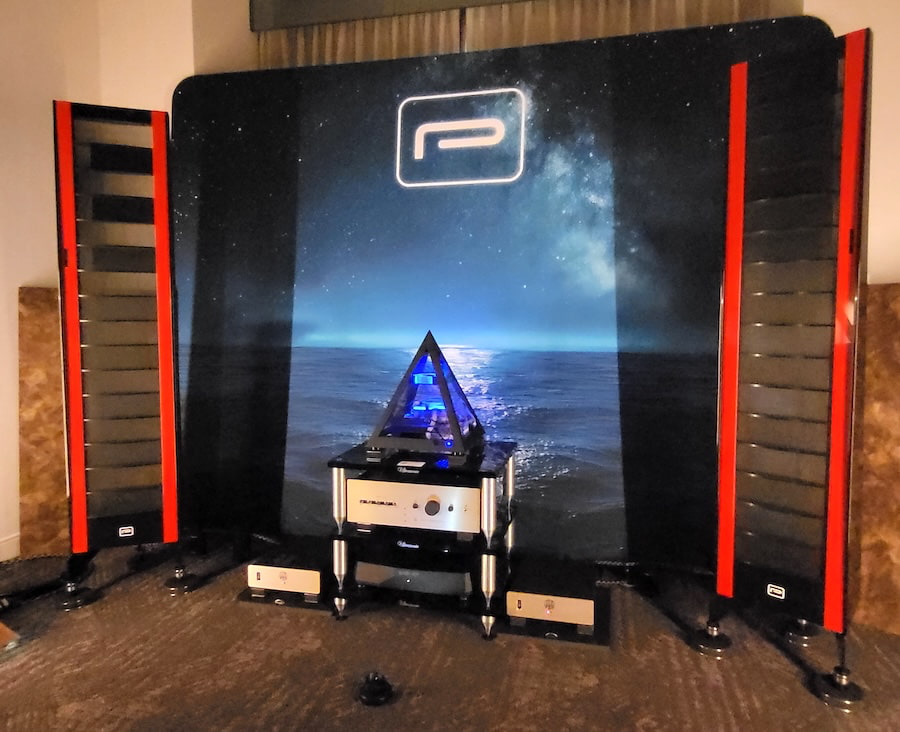
The Prodigio Audio (formerly Popori Acoustics) room stood out because the large Hungarian electrostatic/ribbon speakers (model WR2, $35K/pair) were paired with one of the more interesting technologies at the show. The pyramid placed between the roughly 5-foot-tall speakers housed the BACCH 3D system, and it fundamentally changed how the system presented sound.
This is very much a one-seat experience. Even sitting just off center, the effect drops off quickly. In the sweet spot, though, it’s unlike anything else I heard at the show. Sounds didn’t just extend beyond the speakers, they moved around the room in a way that felt deliberate and trackable. At one point, I heard a sound begin behind me to the left and travel forward across the room to the right. That’s not typical stereo imaging.
The BACCH 3D system is doing the heavy lifting here, creating a level of spatial control that goes well beyond traditional two-channel playback. Calling it a new dimension isn’t far off, but it’s also highly dependent on positioning and setup.
Without BACCH 3D engaged, the speakers stood on their own as a strong electrostatic design. I heard good bass extension for the type, along with clean mids and treble. There’s enough here for those who want a more conventional listening experience, but the real story is what happens when the BACCH system is in play.
In a home theater context, this kind of spatial manipulation could open up some interesting possibilities, assuming the setup and seating are dialed in correctly.
Noble Kronos IEM
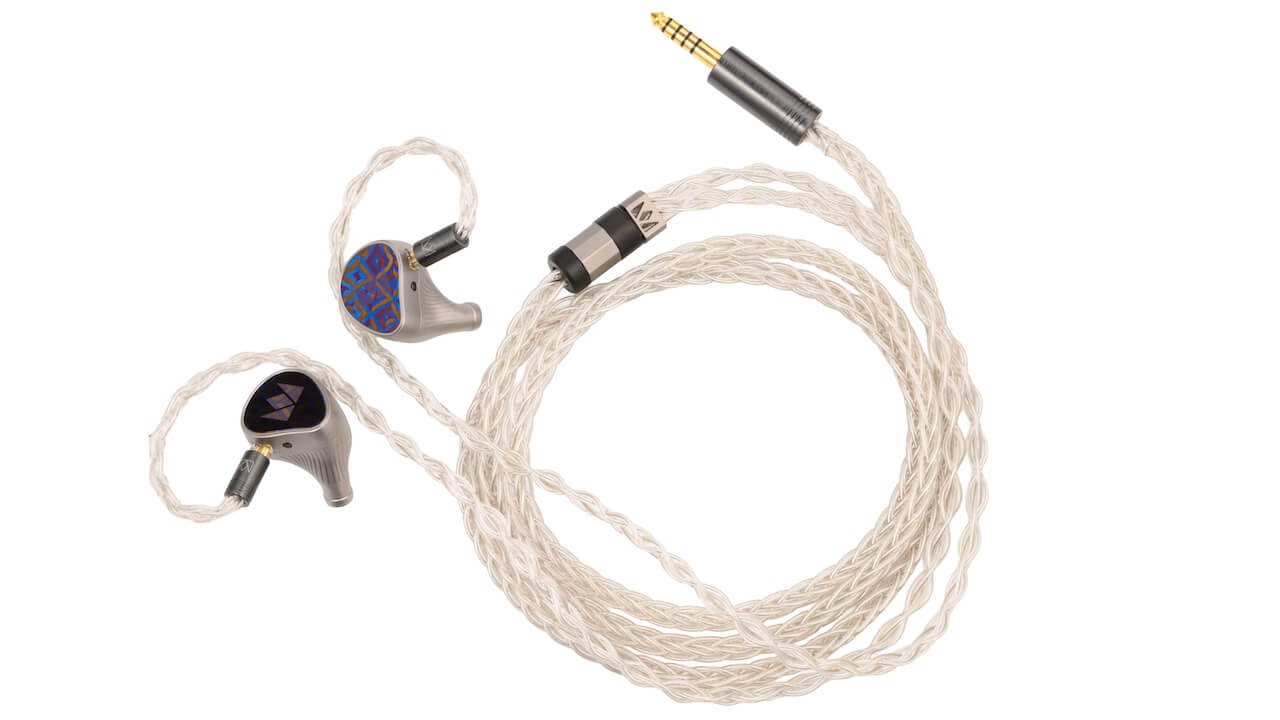
The Noble Audio Kronos took Best in Show for wired in-ears, and it wasn’t hard to see why. It combines design and engineering in a way that stands out even at a show like AXPONA.
The design starts with the titanium Damascus faceplates. They look striking, but they’re also difficult to execute. Working with titanium is already challenging, and applying a Damascus-style process adds another layer of complexity. It’s not just for show. It reflects a level of craftsmanship that most brands don’t attempt. The inner shells are also milled from titanium, which keeps the structure rigid without adding unnecessary weight.
Inside, the layout is just as ambitious. Each earpiece uses a multi-driver configuration that includes dynamic drivers for bass and sub-bass, balanced armatures for mids and highs, electrostatic drivers for the upper frequencies, and a bone conduction driver for added resonance. Getting that many driver types to work together in a small enclosure is not trivial, and the crossover design has to do a lot of work to keep things coherent.
What I heard was a detailed and controlled presentation that didn’t fall apart under that complexity. There’s a reason John Moulton has the “Wizard” nickname. The Kronos doesn’t rely on one aspect to stand out. It’s the combination of execution, materials, and tuning that makes it work.
T10 Bespoke

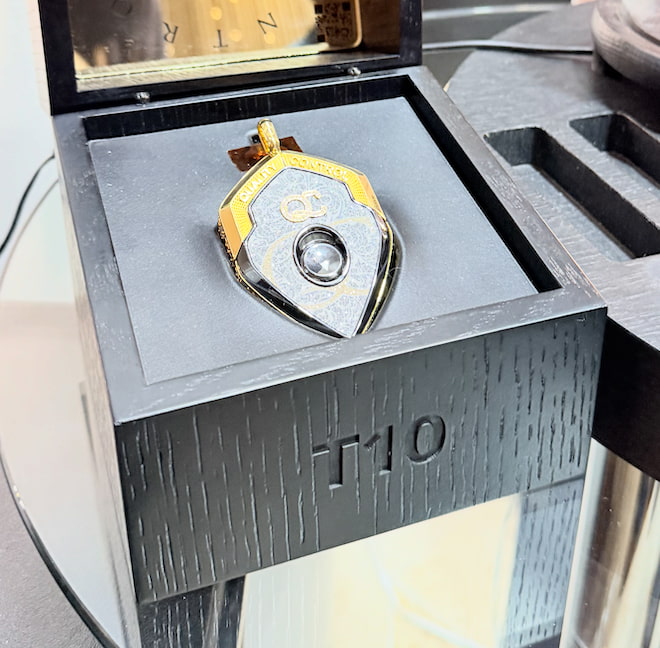
The Ear Micro Bespoke T10 will strike some people as expensive audio jewelry. I get that reaction, but it misses the point. What I heard and saw felt more like an early version of where wearable audio is going.
Bear Clark calls them ear-computers, not earphones, and that framing makes more sense once you understand the intent. The T10 isn’t just about playback. It’s built around a sensor suite and input methods that go beyond taps on a shell. The idea is subtle, low-visibility control. Small physical cues, like jaw or head movement, can be used to interact with the system. Some of the functionality is still in development, but the direction is clear.
In practice, that opens up use cases that current in-ears don’t address well. Discreet notifications, the ability to check or respond without pulling out a phone, or triggering actions without obvious gestures. There are also broader safety and accessibility angles. Quiet ways to signal for help or control connected devices without drawing attention. None of this is fully realized yet, but the foundation is there.
That’s why it stood out to me for innovation. The ceiling is defined more by software and ecosystem than by the hardware itself. As wearable tech continues to move toward connected, body-area systems, devices like this start to make more sense as part of that network.
It also works as an in-ear. The sound quality was solid, and the ability to tailor tuning to the user adds practical value beyond the concept. The design leans premium, and the price will limit the audience, but this feels less like a finished product and more like a preview of what could be standard down the line.
Jones & Ceretta Troubadour

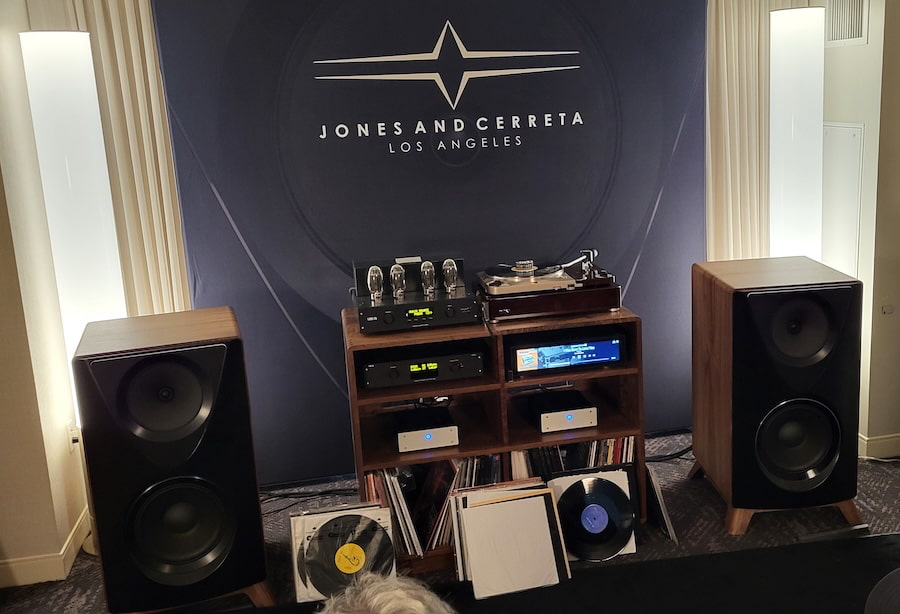
Andrew Jones has a long and storied history of loudspeaker design. From a pair of bookshelf speakers at Pioneer that sold for $129.99/pair to the flagship TAD tower speakers, the Reference One at $80,000/pair, Jones’ designs have run the gamut of price ranges and form factors, but all have offered exceptional sound quality. At Axpona, Jones announced his latest project – the Troubadour ($33,900/pair) – a floorstander with impressive dynamic range and extended frequency response. He also launched a new company, Jones and Cerutta, to make and sell the speakers.
The Troubadour uses an innovative concentric field coil driver architecture and a unique cabinet configuration which leads to precise imaging, extended bass and high sensitivity (95 dB @1W/1m)). As we have seen in Jones’ work at both KEF and ELAC, the designer favors concentric (coaxial) two-way drivers for midrange and treble for their time alignment, which allows the two speaker drivers to act as a single point source, thereby improving imaging. And by using an innovative powered field coil design, instead of a permanent magnet, the speaker is able to reach higher magnetic flux densities, reducing hysteresis of the driver which then leads to lower distortion as well as extremely high efficiency. You can power these bad boys with a single-ended tube amp, if that’s your cup of tea.
Jones explained the tech and demonstrated the new speakers to endless standing room only crowds at Axpona. The Troubadours offered precise imaging with a wide and deep soundstage, with exceptional dynamic range. And while they sell for nearly $34,000, they offer meticulous fit and finish and come with a free pair of floorstands to aim the drivers at the usual listening position. If there is a “rock star” among speaker designers, Andrew Jones is that guy, and the Troubadour will likely be a successful addition to his rich portfolio, built over 40+ years in the business.
Aretai Contra 200F

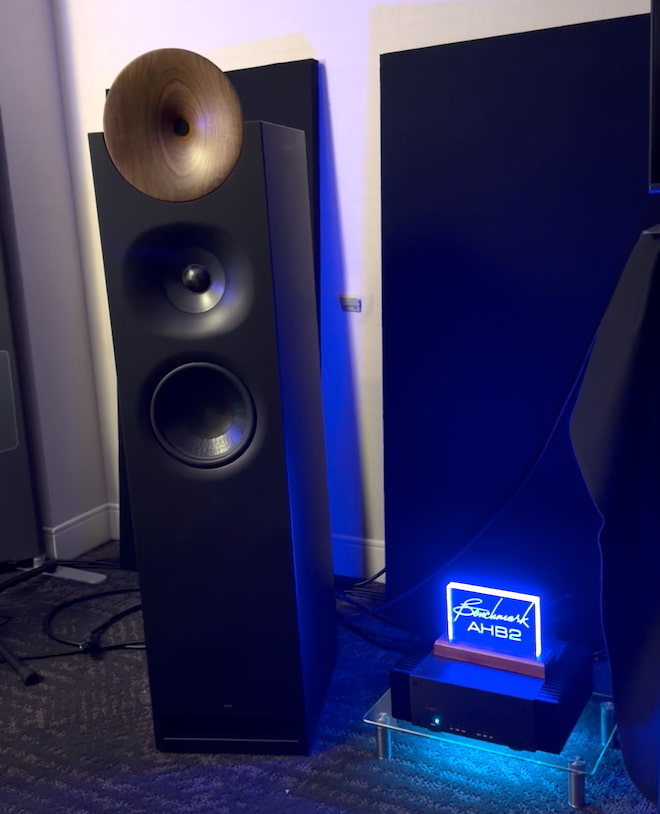
High-end speakers that look like plain black boxes sort of miss the point. If you’re going to charge upwards of $30,000/pair for speakers, you had better make sure they sound great, and look as good as they sound. Latvian speaker maker, Aretai, clearly understood the assignment as their Contra 200F tower speaker unites elegant cabinet design with impeccable sound.
Featuring a three-way design and a tweeter waveguide that looks like a horn instrument, the Aretei throws a realistic soundstage and can reach all the way down to about 25 Hz. It’s also highly efficient at 96 dB (@1W/1m) allowing it to be driven by virtually any high quality amplifier, tube or solid state. We got to see (and hear) the Aretai 200F with both its white gloss tweeter module and a wood-veneered tweeter, which was unveiled at Axpona.
Aretai’s new US distributor DreamScapes A/V paired the Aretai speakers with US-based amplifier maker Benchmark. At the show, the Aretai Contra 200F loudspeakers were driven by two Benchmark AHB2 power amplifiers, paired with a Benchmark HPA4 pre-amp/headphone amp. Benchmark is headquartered in Syracuse, NY, not far from DreamScapes A/V’s showroom.
It was clearly a successful pairing as the speakers presented a punchy and dynamic representation of everything from jazz to classical to EDM. And that 25 Hz bass extension made itself known, not just in your ears, but deep in your gut with visceral impact.
Arendal 1610 Tower 8

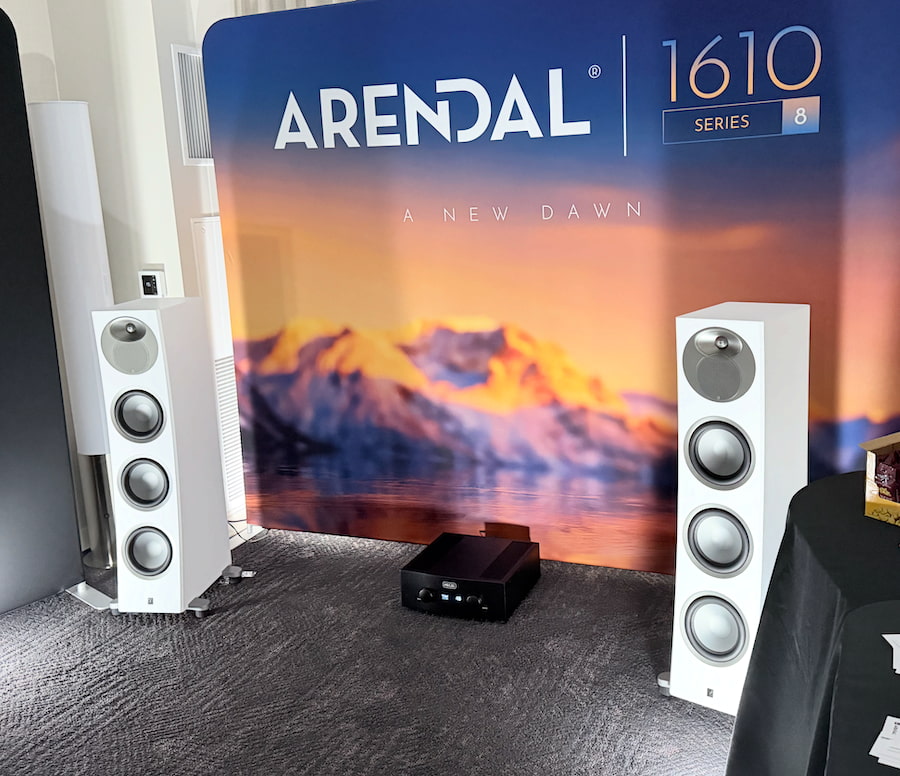
A small town in Norway houses a speaker company with big ambitions: to make some of the finest loudspeakers on the planet. And while our experience with the brand is admittedly fairly limited, they certainly made some of the best-sounding speakers we heard at Axpona 2026. Arendal is a direct to consumer company, now selling in the U.S. market to audiophiles who want something different from the traditional mainstream speaker brands.
The Arendal 1610 Tower 8 ($7,600/pair) is the company’s latest flagship tower loudspeaker, but not their largest. It features 3-way design with 1″ aluminum-magnesium tweeter and triple 8″ aluminum cone bass drivers. In the demos we heard at Axpona, these substantial speakers managed to virtually disappear, providing a deep soundstage with instruments and voices floating disembodied in three dimensional space. Micro and macro dynamics were excellent with fine details in piano, guitar and violin presented naturally, while also being able to reproduce the deep thunderous kick of a bass drum or tympani in a symphony orchestra.
The company offers other more affordable models, including the Bookshelf 8 ($3,600/pair), Slim 8 ($2,800/pair), and Center 8 ($2,100 each). While there are no showrooms in which you can audition the Arendal speakers, the company does offer free shipping and a full 60-day audition period with free return shipping in the unlikely event that you decide not to keep them. The company also offers a generous 10-year warranty on their products so you can feel comfortable in your investment.
Paradigm Premier 820F V2

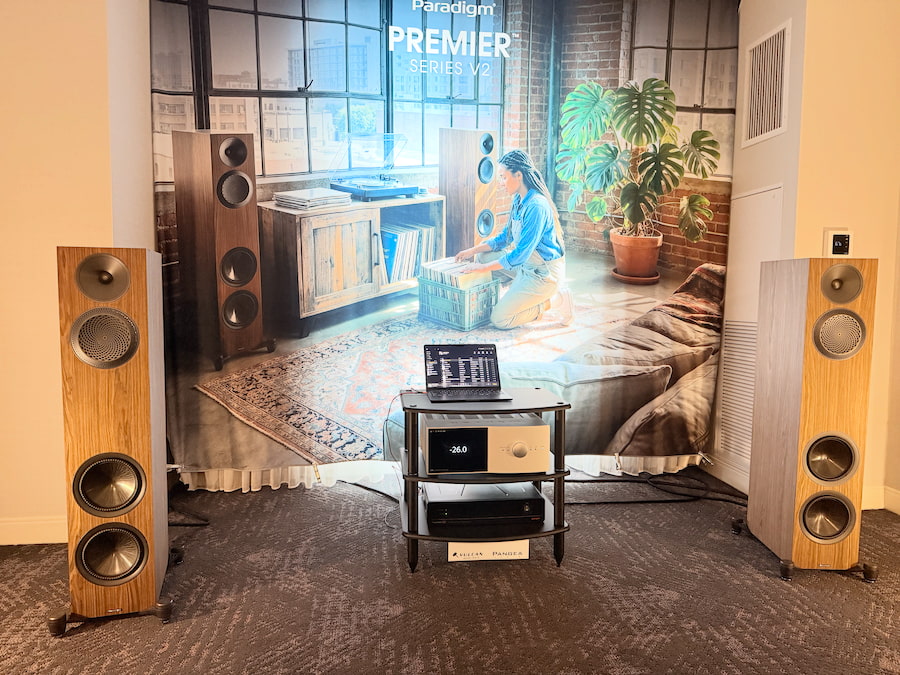
Walking from million dollar room to million dollar room, with some speaker systems alone selling for high six figures, it’s easy to get jaded at Axpona. That’s why walking into Paradigm’s room was such a revelation. The company’s new Premier Series 820F v2 tower loudspeaker offered up tight extended bass, precise imaging, and effortless reproduction of male and female vocals as well as excellent dynamic range on some pretty demanding music tracks. And their price was among the lowest we saw at the show. These elegant-looking tower loudspeakers sell for just $1,299/each ($2,598/pair). That leaves room in the budget for a nice integrated amp or A/V receiver to drive them.
The Premier Series feature trickle down technology from the company’s flagship Founder Series speakers which sell for up to $9,000/pair. This includes the company’s ALMAC (aluminum, ceramic, magnesium) concentric tweeter/midrange modules and ALMAG (aluminum magnesium) woofers. Company reps tell us the new towers can put out usable bass as low as 18 Hz, which is impressive for such an affordable speaker. If your needs are simpler (or your room is smaller), you can get into the Premier Series v2 starting at $798/pair for Premier 120B v2 bookshelf speaker. There are a total of six models in the new line-up including a new center channel speaker (Premier 620C v2) for $1,299, which features identical drivers to the 820F V2 tower but laid out differently for horizontal positioning. Home theater fans may want to check out the Premier 520LCR v2 (LCR Channel) which is priced at $899/each.
Paradigm’s Premier Series v2 speakers are expected to begin shipping in the United States in June, 2026.
Best Budget Subwoofer: SVS 3000 Micro R|Evolution

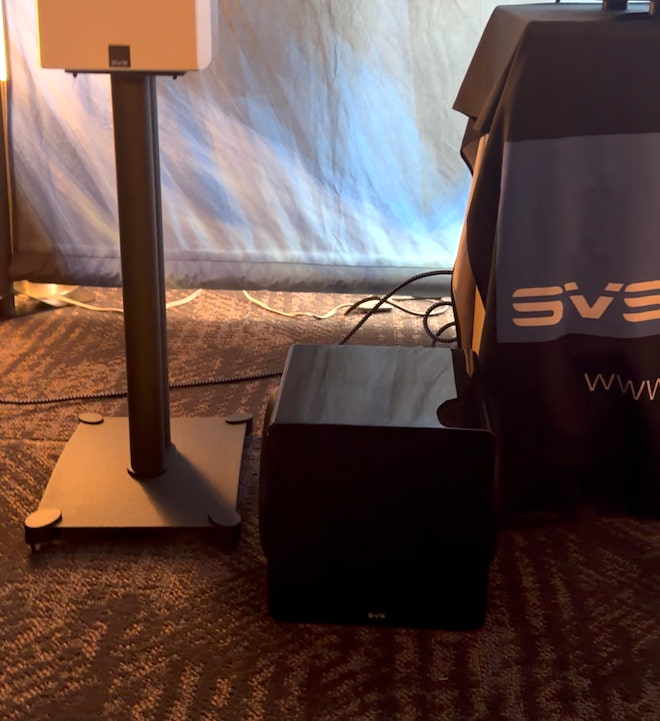
It wouldn’t be an audio show without something new from SVS, and for Axpona the latest entry was the company’s 3000 Micro R|Evolution powered subwoofer. We first saw this compact little dynamo at CES 2026, but now the company has officially launched the production version. Housed in a compact cube, measuring just 11 inches on each side, with dual opposing 9-inch drivers, SVS says the 3000 Micro can extend to 20 Hz. And the list price is just $999. This makes it the most affordable sub in the SVS line to feature trickle down power and processing tech from the company’s much larger (and much more expensive) flagship subwoofers.
SVS was showcasing the 3000 Micro with a pair of their smaller bookshelf speakers in the Ultra Evolution series, doing A/B comparisons with their flagship SVS Ultra Evolution Pinnacle tower speakers ($5,000/pair) to show just how close a bookshelf/subwoofer combo can come to a much larger, more expensive set of tower speakers for those with more limited space (and more limited budgets).
Loewe Stellar OLED TVs


I admit I have a bit of a soft spot for German TV maker Loewe as I owned one of their first HDTVs, a 38-inch 16:9 CRT TV which provided exceptional picture quality in its day (2002) and tipped the scales at over 200 pounds. With the demise of CRT and the rise of the flat panel, Loewe faded from the U.S. market, eventually filing for bankruptcy and insolvency. But in 2019, fresh investments brought the brand back from the brink with a revitalized operation, new factory in Germany and a whole new suite of products. Last year, the company announced their intention to return to the U.S market with both luxury TVs and headphones.
Built using the latest OLED panels from LG Display, and assembled by hand in Germany, Loewe has introduced a full line of OLED TVs sized from 42 to 97 inches. The sets support Dolby Vision HDR and Dolby Atmos sound with self-emissive OLED pixels providing outstanding contrast, color saturation and black levels. But Loewe’s TVs are more than just boring black rectangles that hang on your wall. They are built to be visible from all sides and feature luxury touches like motorized rotating stands that can give you the best picture performance from anywhere in your room, an elegant perfectly balanced aluminum remote with intuitive operation, and unique chassis design touches like lava-based concrete back plates on their models up to 65 inches. If you want your TV to look as good when it’s off as it does when it’s on, then Loewe’s new Stellar OLED TV line is worth a look.
Best Home Theater Sound: Theory Audio 9.2.4 Home Theater

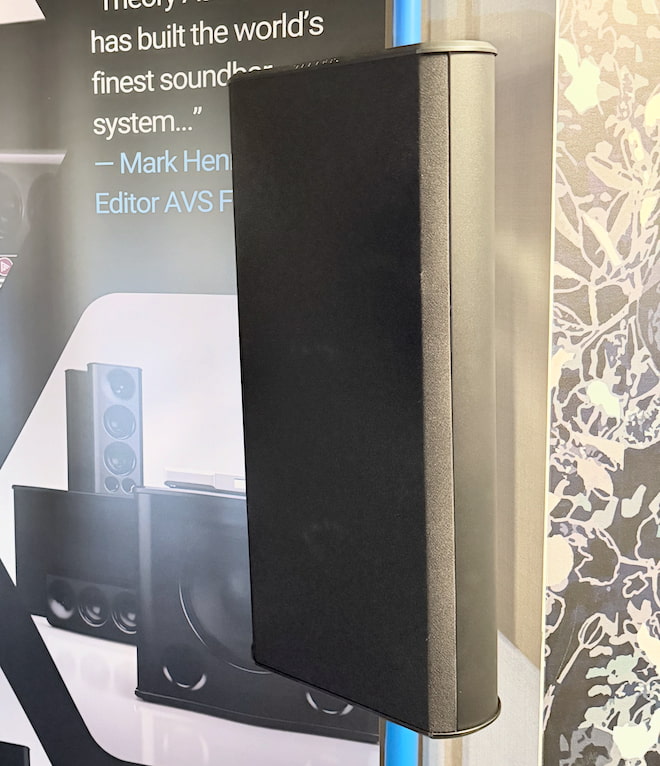
As a CI (custom installation) brand, Theory Audio isn’t as well known as the standard consumer speaker brands, but they may be one of the best kept secrets of home theater and whole home audio. The company’s high-efficiency compression drivers are the standout feature of the lineup, delivering punchy, dynamic sound for both music and movies. The speakers are available in on-wall, in-wall, in-ceiling, and pendant designs. All models require the company’s Distributed Loudspeaker Controllers (DLCs), which provide power, EQ, and DSP to optimize performance.
We’d previously only seen and heard Theory Audio speakers at CEDIA and have been impressed with what we’ve heard. And now we know that the magic captured at CEDIA carries over to other environments as well, even in a tiny little hotel suite. Custom installation firm DreamScapes A/V installed a full 9.2.4-channel Theory Audio system that rocked the walls of the little hotel room suite they were installed in. Because drilling big holes in the walls and ceilings at a hotel is generally frowned upon, the company built a cage structure out of 2x4s to support all 13 speakers and tossed in a couple of powered subwoofers for good measure.
Driven by a Kaleidescape Strato E 4K movie player and Mini Terra Prime SSD hard drive loaded up with a few dozen 4K movies in Dolby Vision and Dolby Atmos, the Theory Audio system sounded better than some premium movie theaters I’ve been in and superior to any other home theater speaker set-up we heard at the show.
Credit also goes to Dreamscapes A/V’s installation and engineering team. They managed to get the system installed, calibrated, and optimized to a very high level with less than a day to work with. If that’s what they can do in a hotel room, it raises expectations for what’s possible in a properly set up home.
Weirdest Looking Speaker System That Also Sounded Great: Fourier Sound

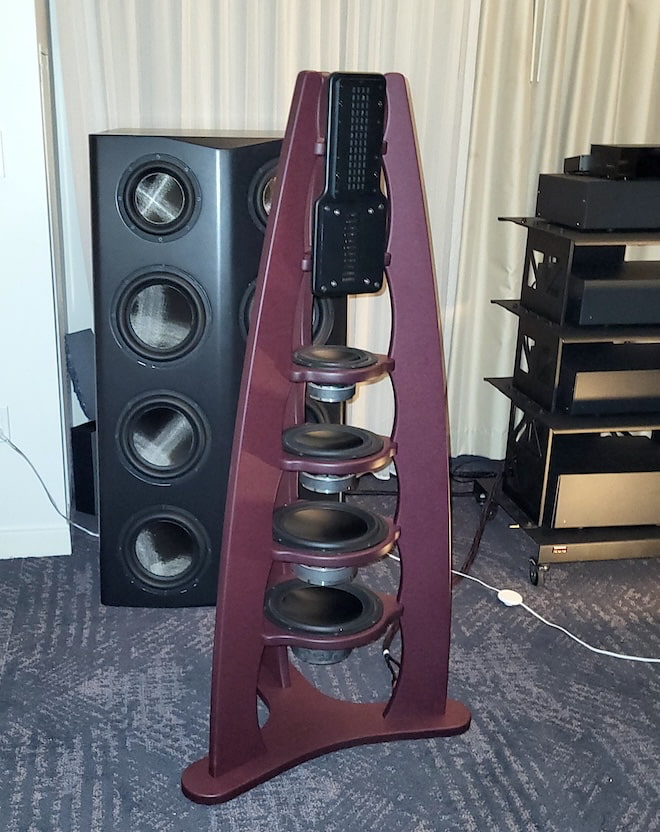
There were a whole lot of boring rectangular boxes at Axpona this year, but Fourier Sound’s Fourier Series 1 “Founders Edition” speaker system was anything but that. Featuring a tapering pyramid-like structure with horizontally mounted midrange drivers and front-firing tweeters, the Series 1 put out some of the most realistic sounding drum and percussion music I heard at the show, with outstanding dynamic punch and a wide expansive soundstage that filled the room. Vocals also came through cleanly and articulately in mellower singer/songwriter fare and the bass and synth notes of EDM tracks like “Alive” from Kx5/deadmau5 shook visitors to their core.
The system includes two multi-driver tower loudspeakers as well as the Fourier Foundation Bass Modules, which feature 8 separate bass drivers, delivering 4,000 total watts of power to the subwoofers.
The Fourier Founders System is priced at approximately $50,000 USD for the entire set. We don’t normally grant “best in show” awards to prototype systems (the Fourier Series 1 system is not yet in general production), but we felt that this system’s unique looks, innovative design and exceptional performance earned an exception. We hope the company managed to get some interest at Axpona to get these beauties into the hands of diehard music-lovers looking for something different from the usual black boxes.
You must be logged in to post a comment Login